What to look for in nature in Idaho this November
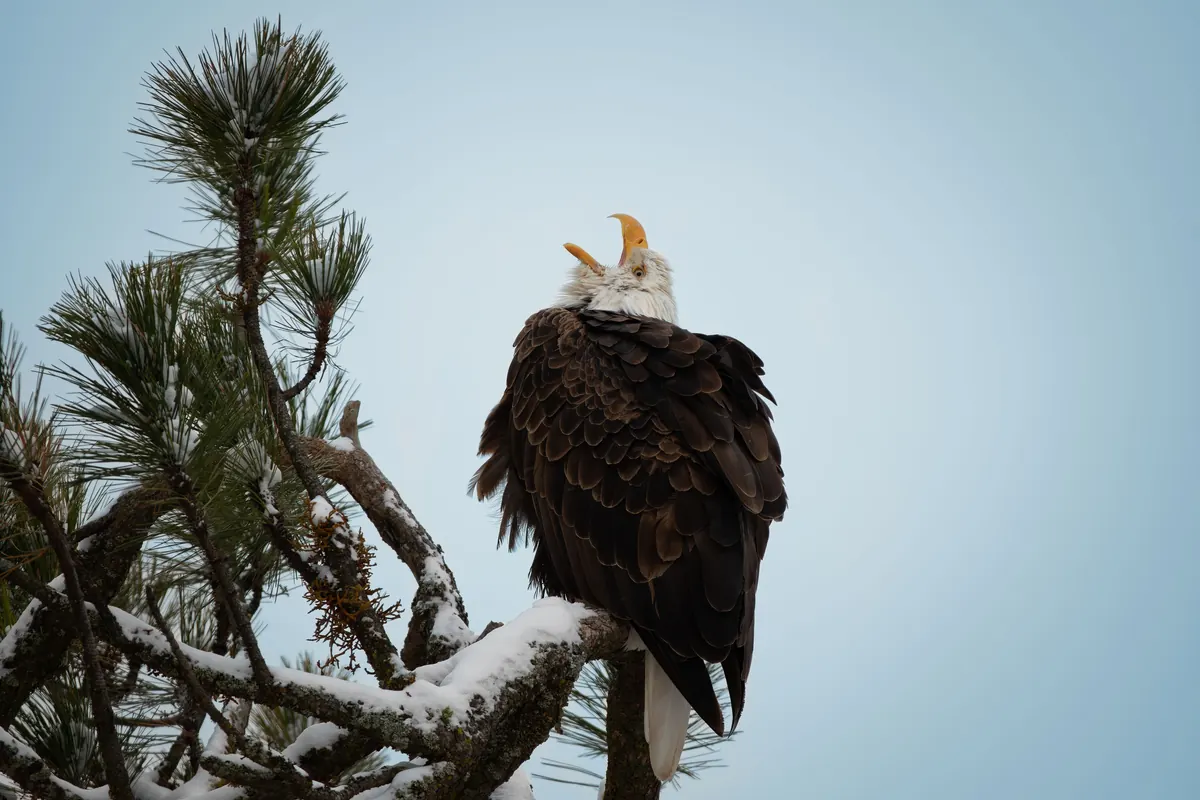
November is when Idaho’s winter visitors check in. Bald eagles drop onto Lake Coeur d’Alene to pick off spawned-out kokanee, trumpeter swans from Canada settle on the spring-fed Henrys Fork, and Canada geese crowd Lake Lowell by the thousands. Below Hells Canyon Dam, fall Chinook finish building their nests in the gravel, bighorn rams start butting heads along the Salmon River, and mule deer bucks stop caring about anything but does. Meanwhile the clocks fall back, the Panhandle’s sun sets before four by the end of the month, and snow starts to stick in the mountains. Here is the month a region at a time.
Other months in Idaho: October, December.
Start here
- Eagles over Wolf Lodge Bay. From mid-November, drive to Higgens Point or the Mineral Ridge boat ramp on the east arm of Lake Coeur d’Alene and scan the shoreline trees with binoculars. In 2025 the Bureau of Land Management’s weekly count reached 294 bald eagles on November 26, the day before Thanksgiving.
- Swans on the Henrys Fork. Trumpeter swans, North America’s largest native waterfowl, drift into Island Park as marshes to the north freeze, often from early November. The river between Last Chance and Harriman State Park stays open all winter, so the birds stay too; watch from a distance rather than walking up to the bank.
- A close full moon. The Beaver Moon is full on the morning of Tuesday, November 24 (7:53 a.m. Mountain, 6:53 a.m. Pacific), and it is a modest supermoon. Look for it rising in the east on the evenings of Monday the 23rd and Tuesday the 24th.
In the Naturalist’s Field Journal, give the first bald eagle and the first trumpeter swan of the winter a line each on “birds I have seen,” start a mammal watch page for rutting bucks and sparring rams, draw the first clear prints you find in fresh snow on “tracks to know,” and return to one riverbank or field you sketched in October for “the same place twice.” Date everything.
Regions used below: North Idaho and the Panhandle; Lewiston and the Clearwater country; Central Idaho mountains, McCall to the Sawtooths; Boise and the Treasure Valley; Magic Valley and the Snake River Plain; Eastern Idaho and the Upper Snake.
When do bald eagles gather at Lake Coeur d’Alene?
Every winter, from about November through February, migrating bald eagles stop on the big lakes of the Panhandle. They come for kokanee, the landlocked sockeye salmon introduced to Lake Coeur d’Alene in 1937, which spawn along the lakeshores late in the fall and die afterward. Idaho Fish and Game says shoreline spawning on the large northern lakes usually peaks around Thanksgiving, which is when the eagle numbers start to climb.
-
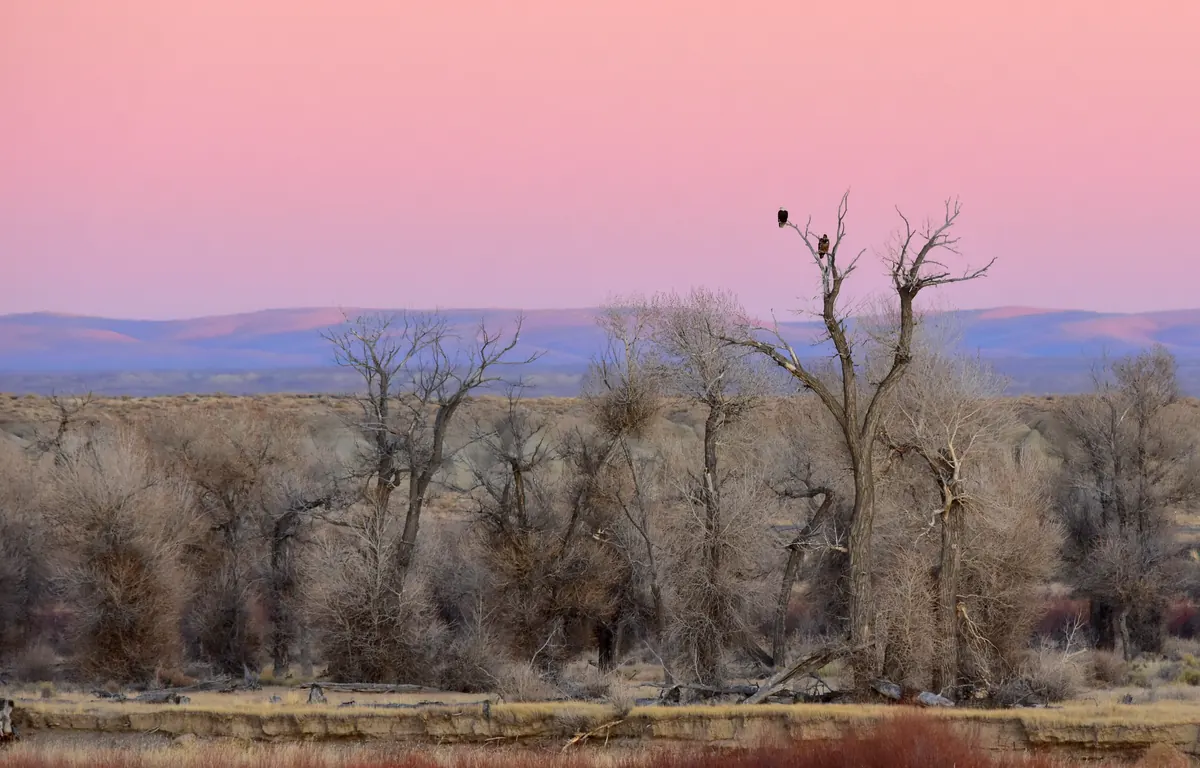
Wolf Lodge Bay and Higgens Point
Arrivals from mid-November; the biggest counts usually late November through December · East end of Lake Coeur d’Alene, about 11 miles east of the city off Interstate 90, exit 22, then Highway 97
The BLM has counted eagles around Wolf Lodge Bay since 1974. Its tally for the 2025–26 season peaked at 294 on November 26, then fell to 157 a week later and to 20 by December 19. The record so far is 409 birds (363 adults and 46 juveniles) on December 20, 2023, so the timing of the peak moves from year to year with the fish. The agency suggests three places to watch: Higgens Point, the Mineral Ridge boat ramp and the Mineral Ridge trailhead. Stay inside the car when birds are close, park well off the road, and never stop on the interstate or on Highway 97 to look.
-
Lake Pend Oreille
Late November onward · Bays and creek mouths around the lake, north of Coeur d’Alene
The same pattern plays out on Idaho’s largest lake, where kokanee also spawn along gravel shorelines and in the creeks. Fish and Game has described big groups of eagles collecting on both lakes and says spawned-out kokanee stay available to them well into January. When the fish run out, many of the birds drift south toward southern Idaho, Utah and the Klamath Basin.
-
How to tell an adult from a young eagle
All winter · Any shoreline perch
Only adults, at about five years old, wear the white head and tail. Younger birds are mottled brown and white and are easily mistaken for golden eagles. The BLM logs adults and juveniles separately: young birds were about one in nine during the 2023 record count but one in four on December 10, 2025. Count both on a crowded snag and write down the ratio, just as the surveyors do.
Coeur d’Alene Audubon volunteers set up spotting scopes, with stepping stools for children, at Higgens Point on December 5 and 6. If you can only go once, though, the end of November has lately brought the bigger crowds of birds.
Where can you see trumpeter swans and big flocks of geese in Idaho?
As ponds and marshes farther north freeze, waterfowl pile onto the open water that is left. In Idaho that means spring-fed rivers in the east, big irrigation reservoirs in the southwest, and the refuges along the Snake.
-
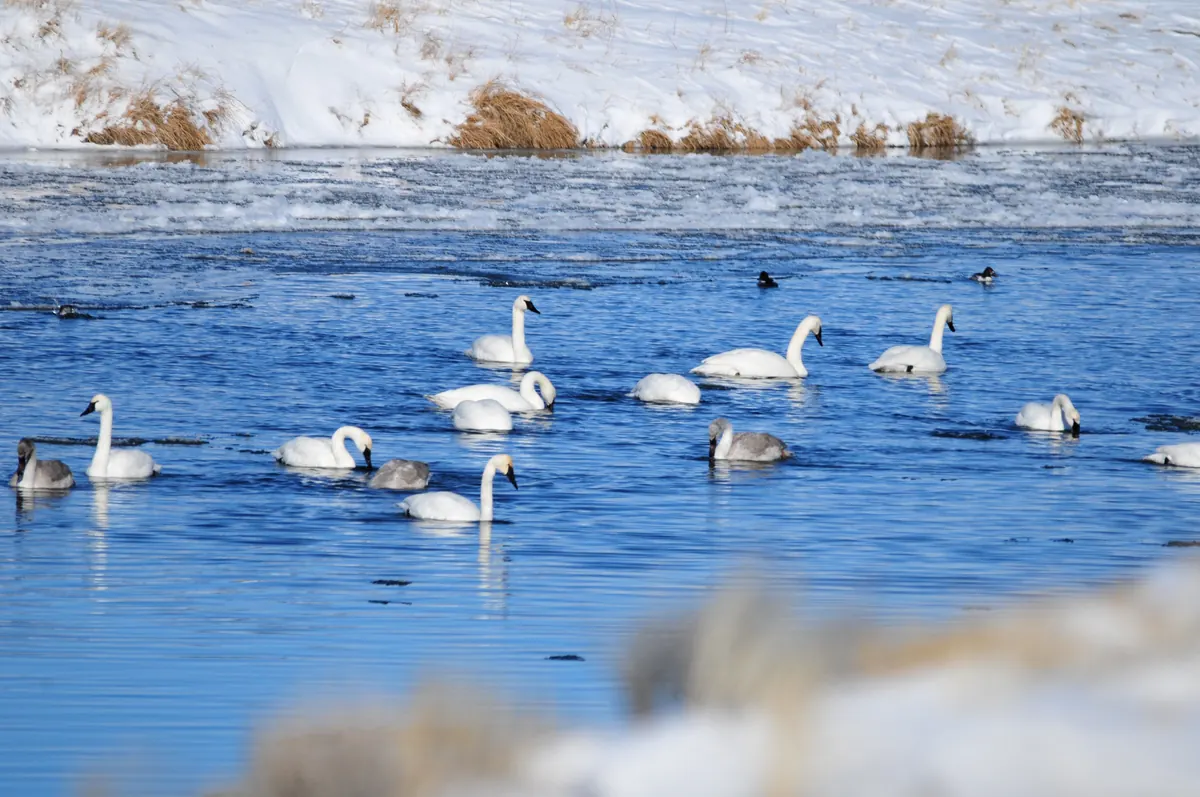
Trumpeter swans on the Henrys Fork
Arriving in early November; present through March · Island Park, between Last Chance and Harriman State Park; also the South Fork and Teton River corridors
The Henrys Fork rises from huge springs, so it runs at a steady temperature and stays ice-free where other rivers lock up. That keeps the underwater plants the swans eat within reach all winter. A Friends of Harriman State Park board member who watches them each fall writes that the first birds appear in early November, flying in from nesting marshes in Canada and Alaska. In its 2013 winter newsletter, Idaho Fish and Game put the number wintering along the stretch past Harriman at roughly 450, and said one midwinter aerial survey had found nearly 60 percent of the Rocky Mountain population, then about 5,500 birds, on rivers of the Upper Snake. Listen for the call: low, bugling and a little like a toy horn.
-
Geese and ducks on Lake Lowell
Geese peak in mid-November; ducks build toward a mid-December peak · Deer Flat National Wildlife Refuge, Lake Lowell, south of Nampa
The refuge says Canada geese on the lake top out at around 15,000 by the middle of November, while ducks, mostly mallards, keep arriving until mid-December, when there can be as many as 150,000. Bald eagles follow them in to pick off the weak and injured. The lake has been closed to boats since October, so the birds rest undisturbed on open water; a still, cold morning gives the best looks.
-
Swans and waterfowl at Camas refuge
Late fall migration · Camas National Wildlife Refuge near Hamer, north of Idaho Falls
Camas has a 3.5-mile and a 7-mile auto route through marsh and meadow and is open daily from just before sunrise until just after sunset. Tundra swans pass through in fall alongside the resident trumpeters, and the two take care to tell apart; a tundra is smaller and many show a dab of yellow on the bare skin before the eye. Call the refuge before driving out late in the month, since water and ice change fast.
Waterfowl seasons are open on parts of all three areas, so expect shotguns at dawn; refuge closed zones are signed.
Where do salmon spawn in Idaho in November?
The kokanee feeding the eagles are not the only fish finishing their lives this month. The sea-run fall Chinook of the Snake River, a threatened population, spawn late in the year in the big river below the dams, and steelhead keep moving up into the Clearwater and Salmon.
-
Fall Chinook below Hells Canyon Dam
Spawning from about early October through November · The Snake River from Hells Canyon Dam down toward Lewiston, and the lower Clearwater, Grande Ronde and Salmon rivers
NOAA Fisheries’ 2025 status summary describes these salmon spawning from early October through November in the mainstem Snake, with eggs that hatch over the winter and young fish that leave for the ocean in late spring. Idaho Power holds the river at a steady flow from Hells Canyon Dam during the spawning season so the nests, called redds, are not left high and dry. The story is a qualified comeback: only 78 wild fall Chinook passed Lower Granite Dam in 1990, and 6,755 naturally produced adults returned in 2024. The redds are deep and hard to see from shore, so the best way to share in it is a jet-boat or float trip, or simply a stop at a Hells Canyon overlook to think about what is happening in the gravel below.
-
Kokanee on the lakeshores
Shoreline spawning peaks around Thanksgiving · Lake Pend Oreille, Lake Coeur d’Alene and Priest Lake
While the stream runs near Sandpoint and Boise finished weeks ago, the big-lake kokanee spawn late on underwater gravel beaches. You will rarely see the spawning itself; the clue is a line of eagles perched along one stretch of shore.
-
Steelhead in a lean year
Fall season continues into December · Clearwater, Salmon and Snake rivers
Fish and Game forecast 61,500 steelhead at Bonneville Dam in 2026, the lowest on record, though more than 90 percent are big two-ocean fish. The statewide limit is two a day, and on the Clearwater only one of those may be longer than 28 inches. The bigger B-index fish, the ones Clearwater anglers wait for, are forecast at just 8,100. Check the current rules before any trip; the department has been adjusting them during the season.
When is the deer and bighorn sheep rut in Idaho?
The elk bugling of September is over. November belongs to the deer and the wild sheep, whose breeding seasons both run through this month and into December, and to the bears, which are heading underground.
-
Bighorn rams clashing
November and December · Salmon River road downstream of North Fork; Highway 93 between Kriley Gulch and Tower Rock; the Buffalo Jump area off Highway 75 south of Challis; Morgan Creek north of Challis
Idaho Fish and Game points to these roadside stretches of the upper Salmon for watching the rut. Mature rams square off, rear up on their hind legs and drop forward into each other with a crack you can hear across the river, sometimes for hours. Use binoculars from a pullout; the sheep often feed on slopes right above the highway, and stopping in a traffic lane on a canyon curve is the real danger here.
-
Mule deer bucks on the move
Rut in November and December · Foothills and winter range statewide, from the Boise Front to the Snake River Plain
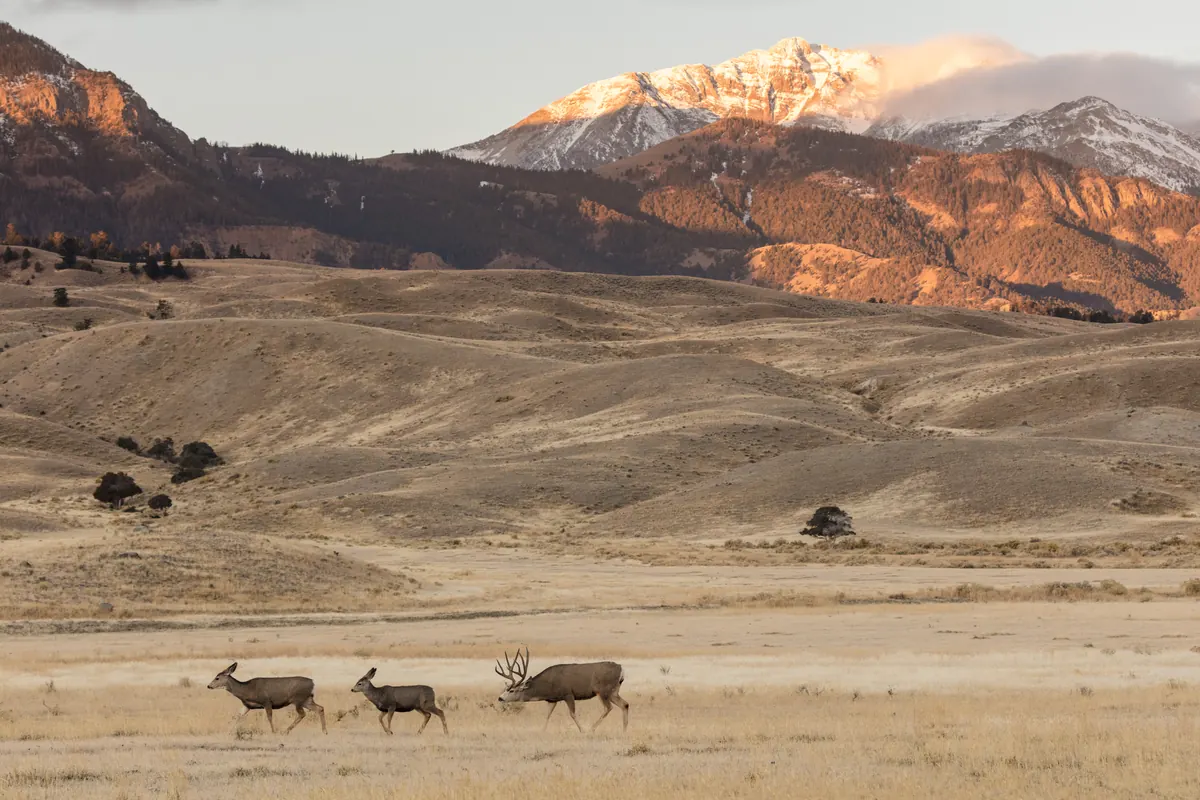
Mule deer breed in November and December, and Yellowstone’s biologists note that most of their deer leave the high country for lower winter range as the cold sets in; Idaho’s herds do the same. Rutting bucks with swollen necks follow does in the open, often at midday, and they cross roads without looking. Slow down at dusk on highways through the foothills, and watch for the big, mule-like ears and black-tipped tail that separate them from white-tailed deer.
-
White-tailed deer in the north
Rut peaks in November · Farm edges and river bottoms in the Panhandle, Palouse and Clearwater country
The north is white-tailed deer country, and the general white-tailed season there runs to December 1 because the rut makes bucks visible. Look for scrapes (pawed patches of bare dirt under a low branch) and rubs, saplings with the bark shredded by antlers, along field edges.
-
Bears going to bed
October to December · Mountains statewide; grizzlies in the Selkirks, Cabinet-Yaak and the Yellowstone border country
The U.S. Fish and Wildlife Service says grizzlies in the lower 48 states den between October and December, females before males, and stay in for four to six months without eating, drinking or relieving themselves. They usually dig on steep, high slopes where drifting snow piles deep. A bear out in late November is usually a male in no hurry, so keep carrying spray on Panhandle and Island Park trails until there is real snow on the ground.
Which winter birds come to Idaho backyards in November?
With the summer birds gone, feeders fill with juncos, chickadees and finches, and some years bring surprises from the north. November is also when the big backyard bird counts begin.
-
Project FeederWatch
November 1 through April 30 · Any yard, balcony or schoolyard with a feeder or a berry bush
The Cornell Lab of Ornithology runs FeederWatch through the winter, and you pick your own count days. Its six-month season begins on the same Sunday the clocks change, so the first count may be in the new afternoon dark. There is a modest annual fee that pays for the project.
-
Finches and crossbills
All winter · Conifers in the mountains and in town
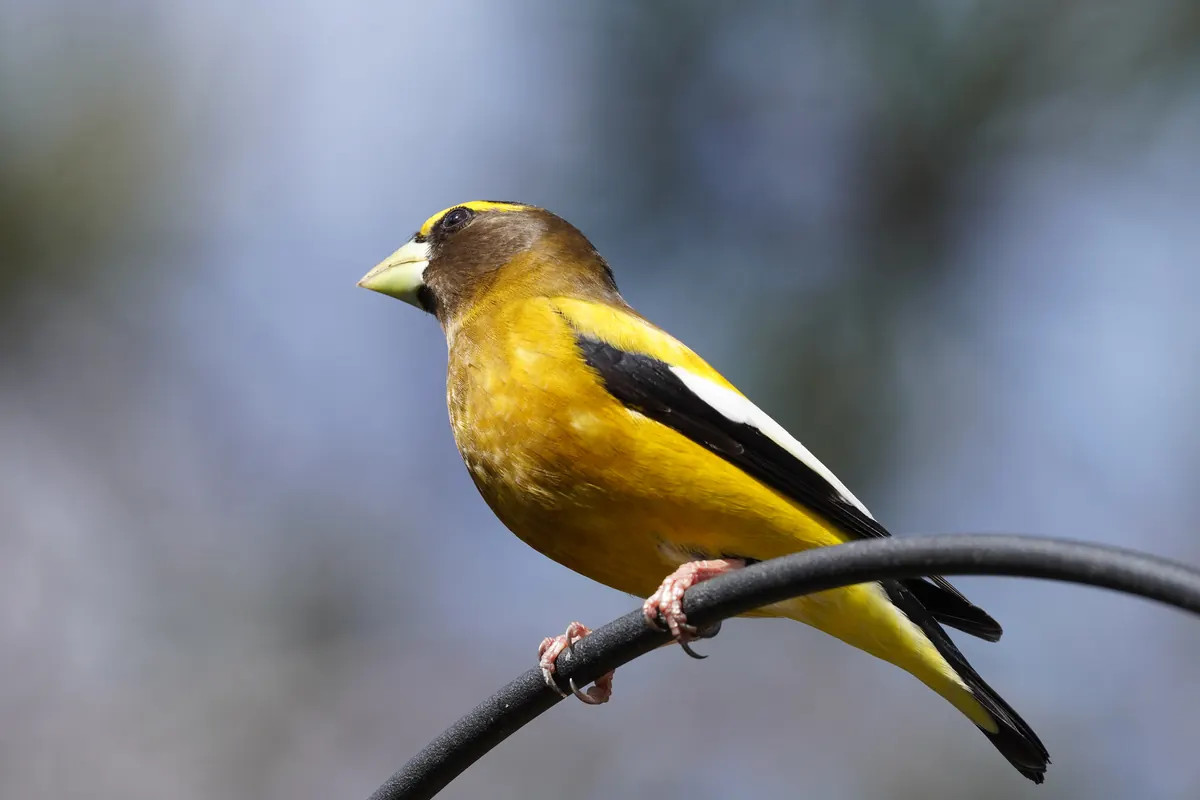
The Finch Research Network’s 2026–27 forecast concentrates on the East, but it flags a widespread failure of pine cones (limber, whitebark, ponderosa and pinyon) across the interior mountain West. That pushed some red crossbills east this summer and may leave Idaho’s mountain forests quieter than usual. Spruce and fir cones are a different story, so listen for crossbills’ hard “kip” notes wherever those trees have a crop, and report any evening grosbeaks or redpolls to eBird.
-
Get ready for the Christmas Bird Count
December 14, 2026, to January 5, 2027 · Count circles across Idaho
National Audubon’s count runs from mid-December into early January each year, and the local circles fill their teams in November. Contact your nearest Audubon chapter now if you want to join a field party or count at your feeder inside a circle.
Has the first freeze come yet in Idaho?
Almost certainly, unless you live in one of three low valleys. In half of all years from 1991 to 2020, McCall’s airport had frozen by Sep 10, Pocatello by Sep 18, Idaho Falls by Sep 20, Salmon by Sep 24, Sandpoint by Sep 28 and Twin Falls by Oct 9. The warm valleys follow: the medians are Oct 18 for Coeur d’Alene, Oct 21 for the Boise airport and Oct 26 for Lewiston. Only in the latest year in ten do those three reach November without a freeze, and the right-hand column shows the last stragglers: November 5 in Boise and Coeur d’Alene, November 12 in Lewiston. Deep in Hells Canyon, Brownlee Dam’s median of November 5 makes it the state’s late holdout.
| Station | One year in ten | Median | Nine years in ten |
|---|---|---|---|
| Sandpoint Experiment Station (Panhandle) | Sep 11 | Sep 28 | Oct 11 |
| Coeur D'Alene (Panhandle) | Oct 4 | Oct 18 | Nov 5 |
| Lewiston Nez Perce County Airport (Clearwater) | Oct 10 | Oct 26 | Nov 12 |
| Mccall Airport (central mountains) | Aug 29 | Sep 10 | Sep 25 |
| Salmon-Ksra (Lemhi Valley) | Sep 9 | Sep 24 | Oct 5 |
| Boise Air Terminal (Treasure Valley) | Oct 5 | Oct 21 | Nov 5 |
| Twin Falls-Kmvt (Magic Valley) | Sep 24 | Oct 9 | Oct 24 |
| Pocatello Regional Airport (southeast) | Sep 3 | Sep 18 | Oct 4 |
| Idaho Falls Fanning Field (Upper Snake) | Sep 1 | Sep 20 | Oct 4 |
If your garden in Lewiston or the Boise bench is still green on November 1, it is living on borrowed time; bring in hoses and drain sprinkler lines before the first hard freeze. The full list of stations, with last spring freezes as well, is on our frost dates for Idaho page.
How early does it get dark in Idaho in November?
Suddenly early. Clocks fall back overnight into Sunday, November 1, and that evening’s sunset reads an hour earlier: 5:35 p.m. MST in Boise and 4:29 p.m. PST in Coeur d’Alene. By November 30, Boise’s sun sets at 5:10 and Sandpoint’s at 3:55. Over the month the Panhandle gives up about 75 minutes of daylight and the southern cities about an hour.
| City | Nov 1 | Nov 30 | Lost | Per day |
|---|---|---|---|---|
| Sandpoint | 9 h 55 m | 8 h 40 m | 75 min | 2.6 min |
| Coeur d'Alene | 9 h 57 m | 8 h 44 m | 73 min | 2.5 min |
| Lewiston | 10 h 03 m | 8 h 53 m | 70 min | 2.4 min |
| McCall | 10 h 09 m | 9 h 04 m | 65 min | 2.2 min |
| Boise | 10 h 14 m | 9 h 13 m | 61 min | 2.1 min |
| Twin Falls | 10 h 18 m | 9 h 19 m | 59 min | 2.0 min |
| Pocatello | 10 h 18 m | 9 h 17 m | 61 min | 2.1 min |
| Idaho Falls | 10 h 15 m | 9 h 13 m | 62 min | 2.1 min |
The daily loss eases toward the solstice, and the earliest sunsets of the year arrive in early to mid-December. For any Idaho address, the daylight calculator shows sunrise, sunset and how long twilight lasts.
Does it snow in Idaho in November, and what might El Niño bring this winter?
November is the month the mountains go white for good. NOAA’s 1991–2020 normals give McCall 17.3 inches of November snow, up from about 2 inches in October, and Sandpoint 6.4 inches. The valleys see less: Pocatello averages 4.0 inches, Boise and Twin Falls about 2, and Lewiston just over an inch. It is also the wettest month so far for the north, with 4.72 inches of precipitation at Sandpoint and 3.34 at Coeur d’Alene, while Boise gets 1.18 inches. Boise’s November normals are 49 °F by day and 32 at night; Idaho Falls runs 43 and 22. On still, clear spells, cold air pools in the Treasure Valley and the Snake River Plain under a lid of warmer air, which is why a sunny ski hill can sit above a gray, chilly city.
Skiers and irrigators are already asking about the winter. Idaho goes into winter with a very strong El Niño building in the Pacific: in its mid-September ENSO update (dated the 10th), NOAA gave Idaho’s coming winter odds above nine in ten of running under that warm-water event. In the Panhandle, history leans toward less snow in those years: the Spokane weather office, which forecasts for north Idaho, found that El Niño winters averaged 56.0 inches at Sandpoint (80 percent of normal), 53.0 at Bonners Ferry (84 percent), 38.0 at Kellogg (71 percent) and 33.5 at Moscow (68 percent), and St. Maries fared worst at 64 percent. The office also points out the exceptions; the strong El Niño of 1997–98 left Spokane with under 20 inches, but one earlier El Niño buried it. Across southern Idaho the tilt is weaker and less reliable, so treat any talk of a thin snowpack there as a lean, not a forecast.
NOAA’s own December-to-February maps were still unpublished when this went up (they are due mid-October); look for them among the 90-day outlooks, and weigh them alongside the Spokane numbers above. Before crossing Lookout Pass, Lolo Pass or Galena Summit, see our current weather page.
What is in Idaho’s night sky in November?
Long nights and early darkness make November a good month to start children on the stars; by 7 p.m. the sky is fully dark. Idaho splits between two clocks, Pacific north of the Salmon River and Mountain to the south, so times below are given both ways. All are standard time.
-
The Beaver Moon, a supermoon
Evenings of Monday, November 23, and Tuesday, November 24 · Rising in the east-northeast around sunset
The moon is exactly full around sunrise on Tuesday the 24th, so the evenings on either side both look round, Tuesday’s a little closer to the moment. Perigee, the nearest point of the lunar orbit, follows on Wednesday afternoon, near enough to earn the supermoon label, though December’s Cold Moon will come closer still. In the small hours of the 24th it slides past the Pleiades, though its glare all but drowns the little cluster. The New Moon a fortnight earlier is the odd one out on Idaho calendars: just after midnight on the 9th in Boise, but still the evening of the 8th in Coeur d’Alene.
-
Leonid meteors
Before dawn on Wednesday, November 18 (active November 6 to 30) · Rising in the east after midnight; look anywhere high
On the IMO’s reckoning the Leonids crest at about 4:45 p.m. MST on the 17th, while the sun is still up over Boise, so Idahoans should plan on the next morning instead. A half-lit moon drops behind the western hills near midnight, and from then until the eastern sky pales Leo climbs through true darkness. Fifteen an hour from a black-sky site would be a decent haul; no outburst is due. Leonids hit the air at tremendous speed and now and then leave a smoky trail that glows for a second or two.
-
Taurid fireballs
Southern Taurids peak about November 5, Northern Taurids about November 12 · Taurus, high in the east and south by late evening
The two Taurid streams are crumbs of Comet Encke and a good night brings perhaps half a dozen meteors an hour. What they lack in number they make up in style: they drift slowly, and a few blaze as fireballs. With the new moon falling between the two peaks, the nights around November 8 and 9 are dark from dusk to dawn.
-
Mars meets Jupiter; Venus blazes at dawn
Mornings of November 15 and 16; Venus all month · East and southeast before sunrise
The morning sky is the busy one. Jupiter and fainter, orange Mars sit in Leo and pass just over a degree apart on the evening of the 15th Mountain time, so look before dawn on the 15th and the 16th when the pair are up. Venus, low in the east-southeast and climbing higher each morning, is near its brightest from about November 24 to 27, and on the 9th it passes close to Spica, the brightest star in Virgo. Mercury pops up briefly too: try about 45 minutes before sunrise between the 18th and the 25th, very low above the eastern horizon. The only bright planet in the evening is Saturn, in the south after dark.
-
Uranus at its best
Opposition on November 25 · In Taurus, not far from the Pleiades
Uranus reaches opposition on the 25th, among the stars of Taurus below the Pleiades. Binoculars and a finder chart turn it into a faint blue-green dot; leave it until early December, when the moon is out of the evening sky.
| Phase | Date | Time |
|---|---|---|
| Last quarter | Sunday, Nov 1 | 1:28 p.m. MST / 12:28 p.m. PST |
| New moon | Monday, Nov 9 (Mountain); Sunday, Nov 8 (Pacific) | 12:02 a.m. MST / 11:02 p.m. PST |
| First quarter | Tuesday, Nov 17 | 4:48 a.m. MST / 3:48 a.m. PST |
| Full moon, the Beaver Moon | Tuesday, Nov 24 | 7:53 a.m. MST / 6:53 a.m. PST |
| Last quarter | Monday, Nov 30 | 11:08 p.m. MST / 10:08 p.m. PST |
For moonrise in your own town use the moon phase calendar, and before a drive to a dark site check the cloud cover forecast.
What trees and shrubs are worth a look in Idaho in November?
-
Tamaracks dropping their needles
Early November · Northern and west-central Idaho, from McCall to the Panhandle
Western larch is a conifer that sheds every needle each autumn, and the last gold usually hangs on into the first days of November before a windstorm brings it down. Afterward the trees look dead until spring. Look at a bare twig with a hand lens: each needle grew from a little peg-like knob, and next year’s cluster of soft needles will sprout from the same spot.
-
Big sagebrush, winter’s pantry
Seeds ripen from October through December · Across southern Idaho’s high desert
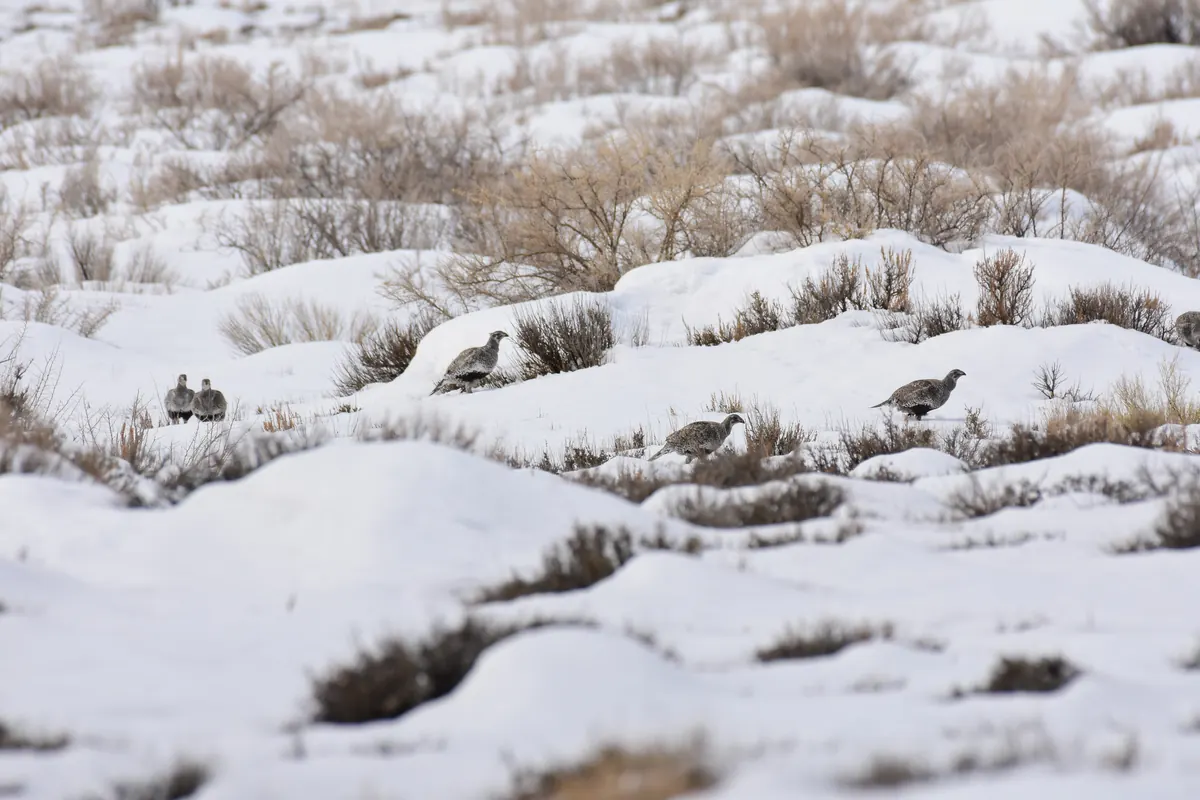
Sagebrush keeps its silvery leaves all winter, and the USDA calls it perhaps the most important shrub on western rangelands. Mule deer, elk, pronghorn and bighorn sheep browse it when grass is buried, and greater sage-grouse live almost entirely on its leaves in winter. Its seeds ripen late in the fall, so November is when the tiny seed heads on the flower stalks shed. Rub a leaf between your fingers; the smell after rain or snow is the smell of the Idaho desert.
What can Idaho families do outside in November?
- Sunday, November 1: start a FeederWatch season. Fill a feeder, choose a pair of back-to-back count days, and note the largest flock of juncos, chickadees or finches that shares the feeder at one moment. The season runs to April 30.
- Saturday, November 7: winter birds of Tubbs Hill with Coeur d’Alene Audubon, on the wooded point next to downtown Coeur d’Alene. The chapter posts the meeting time on its events page.
- Tuesday, November 17: Russian olive and river restoration, a Golden Eagle Audubon program at the Library at Cole and Ustick in Boise, 6:15 to 7:45 p.m., about how removing the invasive tree is helping birds at Kathryn Albertson Park.
- Tuesday to Sunday, all month: the Peregrine Fund’s raptor center on the hill south of Boise, 10 a.m. to 5 p.m., with live-bird programs at 11, 1 and 3. Tickets are $14 for adults and $9 for ages 4 to 16. It is closed on Thanksgiving Day.
- The last week of November: eagle watching at Higgens Point and the Mineral Ridge boat ramp. Bring binoculars, a thermos and patience, and keep to the parking areas.
- Friday, November 27: a day-after-Thanksgiving walk. Pick a greenbelt, a refuge auto route or a state park and look for tracks, nests and winter birds; the afternoon light goes early, so start by 2 p.m.
- Citizen science. Enter your eagle and swan counts in eBird, and sign up for a Christmas Bird Count circle before December 14.
Bring a Naturalist’s Field Journal to log what you find, and see other states on the nature guides hub.
Safety notes for November in Idaho
- Hunting continues across the state. In the Panhandle (Units 1 to 6) the general white-tailed deer season runs through December 1, and a muzzleloader white-tailed hunt runs November 10 to December 1 in Units 4, 7 and 9. In Units 10, 12, 14, 18, 23 and 24, from the Clearwater country down to the McCall area, white-tailed deer may be hunted through November 20, and the Selway units (16A, 17, 19 and 20) stay open for deer to the same date. General any-weapon elk hunts run into early November in several central zones, to November 8 in the Salmon and Sawtooth zones and November 18 in the Middle Fork Zone, and many controlled deer and elk hunts in southern Idaho run through late November. Bird seasons are open too: pheasant (residents October 15 to December 31), chukar and gray partridge (to January 31), and ducks across all three areas; In goose Area 3, which covers the counties not in Areas 1, 2 and 4, including the Panhandle and most of the Magic Valley and southeast, Canada goose season opens November 3; elsewhere it opened in October. Sharp-tailed grouse closes November 8.
- Hunter orange. Idaho requires blaze orange in only a few cases: pheasant hunters on stocked lands, where the Upland Game Bird Permit applies, must show at least 36 square inches above the waist, and organized hunts such as youth hunts require it too. Fish and Game encourages everyone else using hunting country to wear it anyway. On public land this month, put a bright orange hat or vest on yourself and your dog.
- Bears are still up. Grizzlies may not den until December, and late-season bears are hungry. Keep bear spray on your belt, not in the pack, in north Idaho and around Island Park, and do not leave game carcasses or food near camp.
- Thin ice. Ponds skim over this month, but Idaho Fish and Game says it takes three to four inches of solid ice to hold one person. That is rare before December, so keep children and dogs off the first ice, especially near inlets, springs and docks.
- Short days and early snow. A hike that started after lunch can end in the dark; carry a headlamp and a warm layer. Mountain roads and passes can turn icy overnight, and the first heavy snows often bring avalanche danger to backcountry slopes before forecast centers are fully running.
- Chronic wasting disease. If you hunt in the northern units where the disease has been found, Fish and Game rules on carcass transport and mandatory testing still apply through the late seasons; read the 2026 rules before you go.
Sources
- Bureau of Land Management: Lake Coeur d’Alene Eagle Watch (viewing sites, counts since 1974, 2025–26 season)
- Idaho Fish and Game: bald eagle migration reaches northern Idaho (eagles on Coeur d’Alene and Pend Oreille lakes)
- Idaho Fish and Game: kokanee salmon add color to Idaho streams (lakeshore spawning peaks around Thanksgiving)
- Coeur d’Alene Audubon Society: events (Tubbs Hill walk, Mica Bay survey, Higgens Point eagle watch)
- Montana Free Press (from Friends of Harriman State Park News): the arrival of Harriman’s trumpeter swans
- Idaho Fish and Game: Windows to Wildlife, Winter 2013 (swan viewing on the Henrys Fork, PDF)
- Idaho Parks and Recreation: Harriman State Park
- U.S. Fish and Wildlife Service: Deer Flat National Wildlife Refuge, species and seasonal waterfowl numbers
- U.S. Fish and Wildlife Service: Camas National Wildlife Refuge, visiting
- NOAA Fisheries: Snake River fall-run Chinook salmon status summary (2025, PDF)
- Idaho Fish and Game: 2026 Idaho steelhead update (September 15, 2026)
- Idaho Fish and Game: From the Field, bighorn sheep (rut viewing on the upper Salmon)
- National Park Service: mule deer in Yellowstone (rut timing and winter range)
- U.S. Fish and Wildlife Service: grizzly bear (denning)
- Idaho Fish and Game: Big Game 2026 Seasons and Rules (PDF)
- Idaho Fish and Game: Migratory Game Bird 2026–2027 Seasons and Rules (PDF)
- Idaho Fish and Game: Upland Game, Furbearer and Turkey 2026–2027 Seasons and Rules (PDF)
- Idaho Fish and Game: hunter orange
- Idaho Fish and Game: what hunters need to know about CWD requirements for 2026
- Idaho Fish and Game: ice fishing safety
- Project FeederWatch: how to participate
- Finch Research Network: winter finch forecast 2026–2027
- National Audubon Society: Christmas Bird Count
- Golden Eagle Audubon Society: events calendar (November 17, 2026 program)
- The Peregrine Fund: visit the World Center for Birds of Prey (hours, prices, Thanksgiving closure)
- USDA NRCS: plant guide for big sagebrush (PDF)
- U.S. Forest Service Fire Effects Information System: western larch
- NOAA NCEI: U.S. climate normals 1991–2020, monthly (Boise, Pocatello, Idaho Falls, Lewiston, McCall, Coeur d’Alene, Sandpoint, Twin Falls)
- NOAA Climate Prediction Center: ENSO diagnostic discussion, September 10, 2026
- NOAA Climate Prediction Center: seasonal (90-day) outlooks
- National Weather Service Spokane: El Niño and Inland Northwest snowfall
- NOAA Climate.gov: how El Niño and La Niña affect the winter jet stream and U.S. climate
- U.S. Naval Observatory: moon phases from November 1, 2026
- International Meteor Organization: 2026 meteor shower calendar (PDF)
- EarthSky: what is a supermoon (2026 full supermoons)
- EarthSky: best stargazing of 2026 (Mars and Jupiter, November 16)
- EarthSky: Mercury before sunrise, greatest western elongation
- EarthSky: Uranus at opposition
- NASA JPL Horizons: solar system ephemerides (planet and moon positions)
- NIST: daylight saving time
- NOAA Global Monitoring Laboratory: solar calculator (sunrise and sunset method)
- Photos via Wikimedia Commons; licenses and photographers are credited under each picture
