What to look for in nature in Idaho this March
March in Idaho is two seasons stacked together. Mountain towns are still deep in snow, but on the Kootenai floodplain the ice is leaving the ponds, and on the Snake River Plain sandhill cranes drop into the wet meadows. At first light on a sagebrush flat, male sage-grouse puff and strut on their dancing grounds. Violets and yellow bells open between puddles in the Boise foothills, burrowing owls return to the Snake River canyon, and spotted frogs stir in the shallows. For young deer and elk it is still the hardest stretch of the year. Here is what to look for around the state, and what to leave alone.
Other months in Idaho: October, November, December, January, February, April.
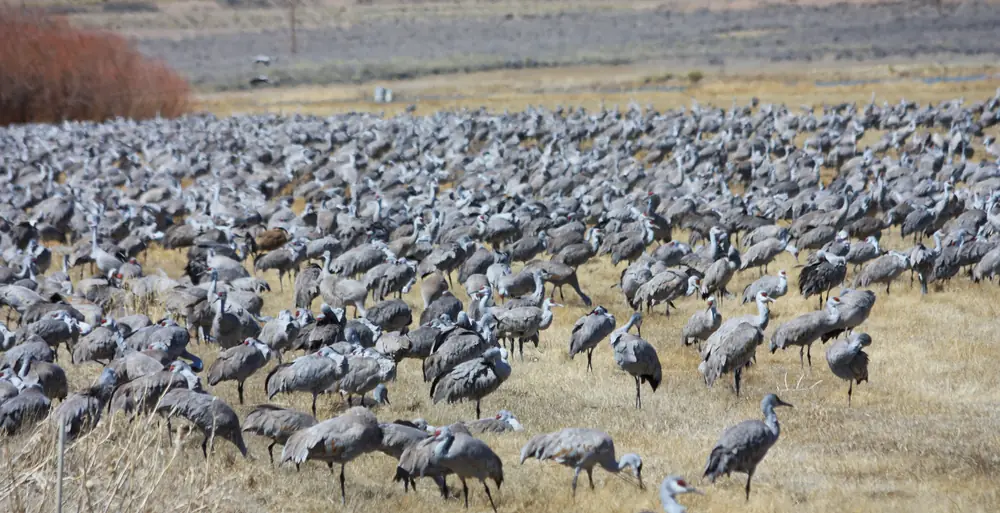
Start here
- Be at a pond edge at dawn. Choose one open pond or marsh near you and visit it at first light, once a week. Write down the first ducks, geese, cranes or frogs you hear, and the date, and you will have a local migration calendar by May.
- Stand on a lek, from the car. Find a sage-grouse viewing tour or a public road near a lek, get there an hour before sunrise, turn off the engine and stay inside. Do not leave until the birds do.
- Find a first flower. On a dry, frozen or cool morning, check a south-facing foothill slope for a violet, a yellow bell or a prairiestar.
Use the Naturalist’s Field Journal this month as follows. Put each first of spring on the “daily field log” (first crane, first frog call, first violet). Add cranes, snow geese, mallards and pintails to “birds I have seen.” Give a pond edge or a sage-grouse lek morning a page of “dusk and dawn watch.” Track a wood duck box or owl hole from one spot with “nest observed,” and use “the same place twice” to compare a slope in early and late March.
Regions used below: North Idaho and the Panhandle; Lewiston and the Clearwater country; Central Idaho mountains, McCall to the Sawtooths; Boise and the Treasure Valley; Magic Valley and the Snake River Plain; Eastern Idaho and the Upper Snake.
What is waking up in north Idaho’s wetlands in March?
March is when the ice leaves the Panhandle’s ponds. The place to see it is the Kootenai National Wildlife Refuge, a floodplain of ponds, fields and cottonwoods beside Bonners Ferry, whose own seasonal calendar lays the spring out month by month. Check road and weather status first: the auto-tour route can close in winter or in poor conditions.
-
Open water, and a duck peak
Mid-March, when most ponds have lost their ice · Kootenai National Wildlife Refuge near Bonners Ferry
The refuge’s wildlife brochure puts the mallard and pintail migration at its peak in mid-March, with Canada geese beginning to nest. Tundra swans have been arriving since late February. Watch from a pullout, stay in the car where you can, and let binoculars do the reaching. The refuge page says road improvements on Riverside Road close the auto-tour route to motor vehicles until the work is finished in fall 2026, so phone the office, (208) 267-3888, before planning a loop. Bear spray is on the refuge’s packing list.
-
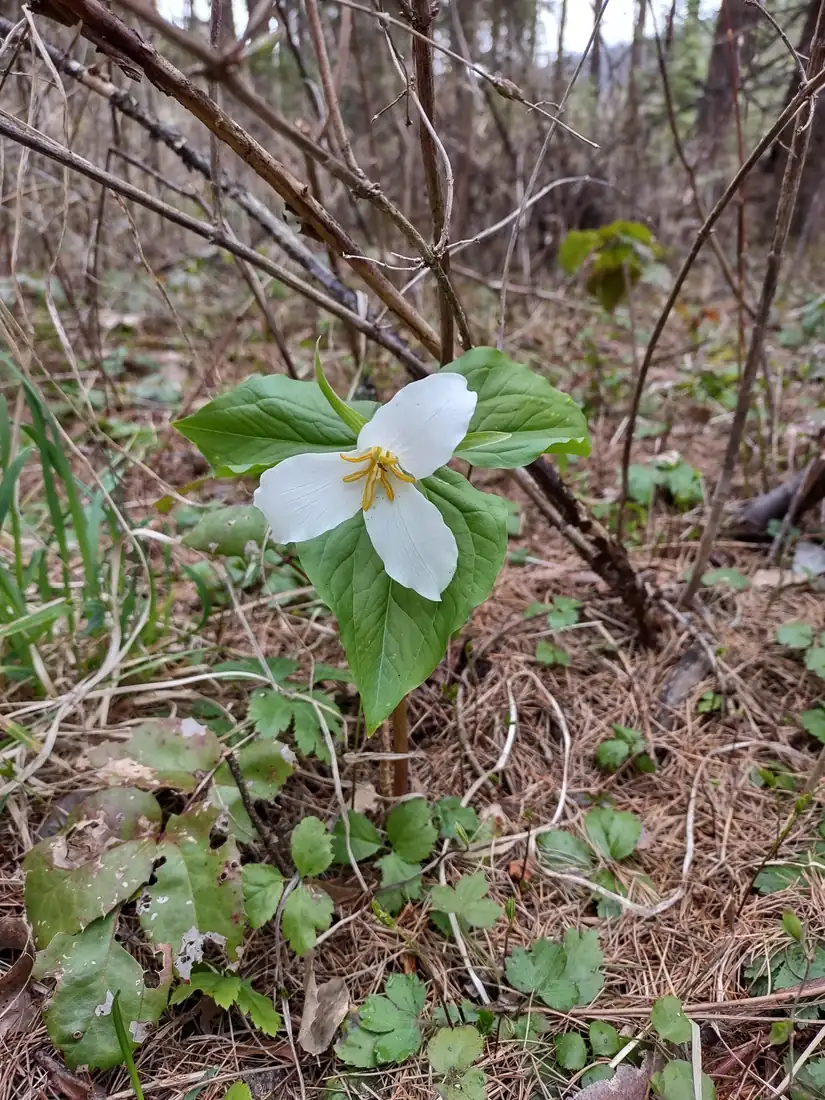
Trillium opens as the snow pulls back
Late March, as the first mountain bluebirds pass through · Forest edges and shaded slopes on and near the refuge
The same brochure ties two signs together: trillium begins to bloom in late March as the snow recedes, just as mountain bluebirds migrate through. Look for three broad leaves and a white, three-petaled flower, and admire it from the trail. The refuge expects ospreys and the start of bald eagle nesting in early April, then drumming ruffed grouse and winnowing snipe by mid-April.
-
Wood ducks go house hunting
As spring arrives, once pairs formed in autumn reach their territories · Wooded ponds, marshes and creeks; some northern birds winter farther south
Wood ducks nest in tree cavities, such as old woodpecker holes, and will use nest boxes. Scan dead snags over water for a pair circling a cavity, and keep your distance so the female is not scared off the hole.
This is the river where burbot spawn in midwinter; the Idaho February page tells that story.
Where can you watch sage-grouse dance on a lek in Idaho?
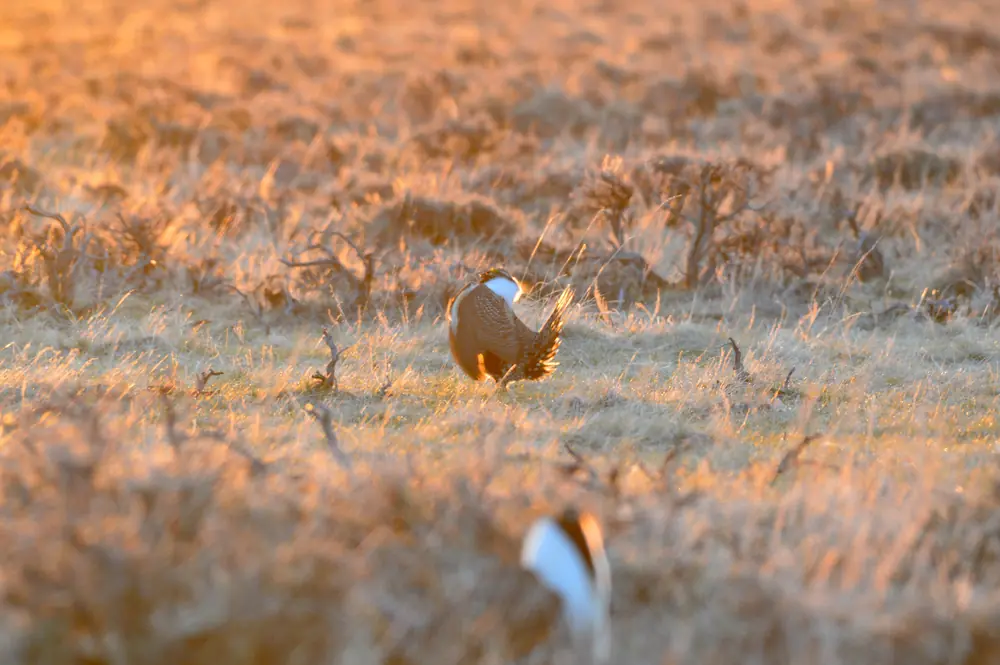
Each spring, sage-grouse return to traditional dancing grounds called leks on the sagebrush plains of southern Idaho. Males puff their chests, pop their air sacs and fan their tails, and the best of the display comes at first light. The USDA Sage Grouse Initiative says males display every spring morning at first light. Early spring can bring snow and mud, and it advises postponing a visit if the roads are soft.
-
The morning show
Spring mornings around first light; the weeks depend on weather and elevation · Sagebrush flats across southern and eastern Idaho; the same leks are used for many years
Leks are small open patches where males gather for the hens, and the shows are at their best at first light. Because the birds return to the same leks year after year, biologists count the males each spring to follow the population. Expect snow, mud and a late start in a cold spring, and plan a patient second try.
-
How to watch without disturbing the birds
Arrive in the dark; stay until the grouse leave · From a vehicle on a public road, or on an organized tour
The Sage Grouse Initiative, a USDA program, asks viewers to reach a lek at least an hour before sunrise, park well back from its edge, switch off the engine and lights, stay in the vehicle with binoculars or a scope, avoid loud noises and sudden movements, and wait for the birds to leave first. Pets stay in the vehicle or at home, and private land stays off limits. It calls late April the best time to visit, because most mating is finished while males are still strutting, which makes March the early edge of the season.
-
Forest grouse start up too
Ruffed grouse usually drum in April and May · Mixed forest in northern, central and southeastern Idaho
Forest grouse do not use leks. A male ruffed grouse beats his wings so fast that the drumming is a low thump people often feel before they hear it. The Kootenai refuge’s seasonal calendar places drumming in mid-April, so in March you are early; listen for it in April and May.
Which raptors are back at the Snake River Birds of Prey in March?
In February the canyon south of Kuna belonged to the first prairie falcons. In March the cast widens. The Bureau of Land Management says some 800 pairs of hawks, owls, eagles and falcons come here each spring to nest on cliffs up to 700 feet tall, and the area’s visitor guide marks mid-March as a prime time to look.
-
A mid-March window
The guide rates viewing best in mid-March, May and June, early and late in the day · Dedication Point Overlook and roads over the plateau
The guide suggests binoculars, a field guide and ideally a scope, and a visit when raptors are actively hunting. It adds that April viewing slows down because incubating birds sit tight. Fence posts and utility poles are the first places to scan.
-
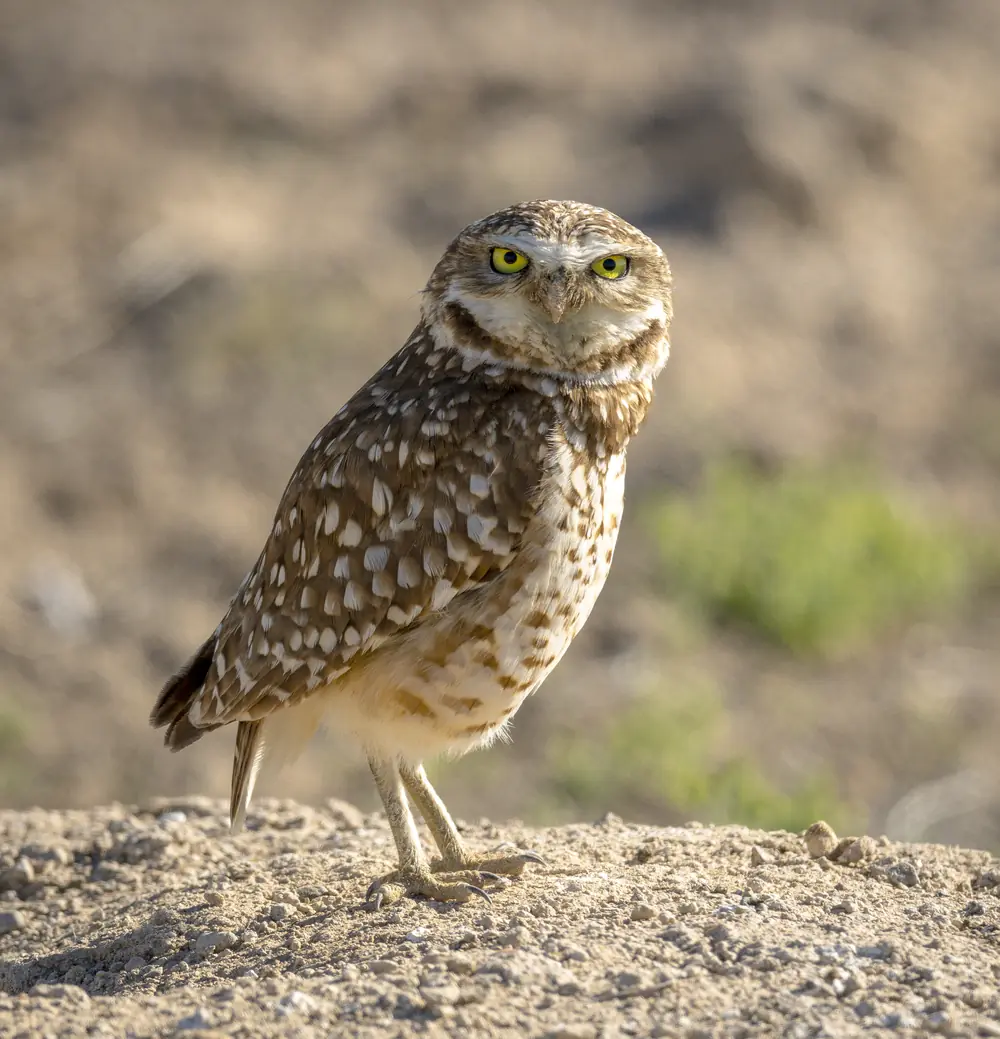
Burrowing owls return
Listed in the area from March through August · Open ground on the plateau
This is the one small owl you can see out in the open in daylight, and the guide notes that it nests and roosts in abandoned animal burrows. Scan mounds and fence posts for an upright, long-legged bird. The guide adds that young of several ground nesters here, burrowing owls among them, are often found on the ground later in the season and should be left alone.
-
Eagles and owls that never left
Year-round · Cliffs, rim rock and power poles
Golden eagles and great horned owls stay all year, so even a raw early-March morning can reveal a nesting pair. The Peregrine Fund’s World Center for Birds of Prey puts live raptors on show daily. Its page lists March-through-November hours as Tuesdays to Sundays from 10 a.m. until 5 p.m. (last entry 4:15 p.m.), adding Mondays from Memorial Day. Call 208-362-8687 to confirm.
The area has few facilities, and summer lightning has burned much of it, so bring water and fuel. Keep clear of nests and cliff edges.
Where do sandhill cranes and snow geese stop in eastern Idaho in March?
Fort Boise’s geese are nearly finished by March, but the marshes of the Upper Snake country are just opening. The Camas refuge’s own species guide places its waterbird migration between March and mid-May.
-
Camas National Wildlife Refuge
March through mid-May is the peak of waterbird migration · Camas NWR, near Hamer, off Interstate 15
The refuge’s species guide says up to 15,000 to 20,000 snow geese may be present at once at the height of their movement, with tundra and trumpeter swans arriving alongside and ducks following. But look at the refuge’s notice first. The refuge’s web page warns that Camas Creek flow was about 75 percent below average the previous year, that winter precipitation and snowpack were among the lowest on record, and that curtailed groundwater wells could leave the wetlands completely dry. A dry refuge holds few birds, so call before driving.
-
Market Lake Wildlife Management Area
Spring migration; marshes and dikes close to entry April 1 · Near Roberts, in the Upper Snake
Fish and Game says more than 1 percent of the whole snow goose population stops at Market Lake in spring, and a wildlife blind allows viewing without entering the marshes, which are closed April 1 through July 31.
-
Grays Lake and Bear Lake
Cranes reach the breeding grounds and begin to court in spring · Grays Lake NWR north of Soda Springs; Bear Lake NWR near Montpelier
Grays Lake is a 22,000-acre bulrush marsh that the refuge says holds the largest breeding population of sandhill cranes in North America. It is a long way from most services, so plan fuel and food. Bear Lake National Wildlife Refuge, 18,000 acres of cattail marsh and flooded meadow, lists cranes and trumpeter swans among its migrants.
-
Fort Boise, as it ends
The flocks usually leave by early April · Fort Boise WMA near Parma
The spring light goose season in southwest Idaho ends March 10, and the area manager has said that when the geese decide to leave, they are gone. If the ponds are still full in early March, go; by the end of the month they may be empty.
At Harriman State Park near Island Park, trumpeter swans, sandhill cranes and moose are spring regulars, but the winter ski and snowshoe trails give way to hiking routes, so check the park’s spring map.
Which frogs, fish and waterbirds are on the move in Idaho’s waters in March?
The thaw works through Idaho’s water in stages: amphibians wake in the shallows, steelhead spawn in the Clearwater, and the full frog chorus waits for April.
-
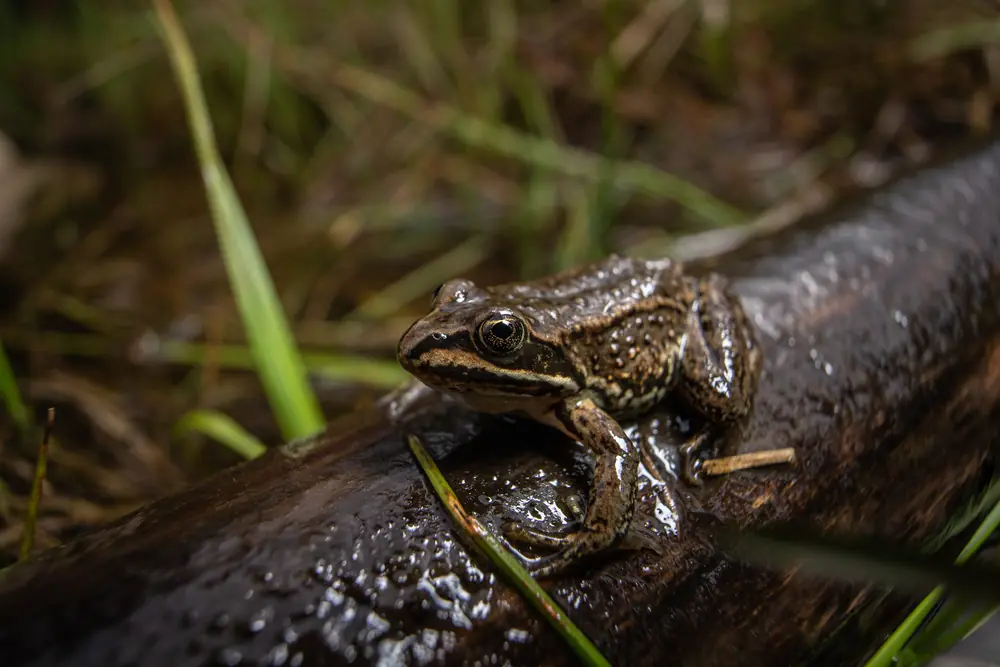
Columbia spotted frogs
After the snow melts and the water warms; the timing shifts with elevation and the spring · Ponds, springs, marshes and slow streams across northern Idaho and the southwest corner; not on the Snake River Plain
Fish and Game says spotted frogs breed once the snow has melted and the water warms. Males gather in shallow water and call during the day, and the eggs are laid in a ball-shaped mass of jelly. Timing shifts with elevation and the spring, so watch without handling, since the jelly must stay wet.
-
Pacific chorus frogs come next
North Idaho listeners say mid-April to early May · Ditches, ponds and yards in the Panhandle
A Fish and Game blog calls Pacific chorus frogs one of the first sounds of spring in north Idaho and says they sing for a few weeks beginning in mid-April, after dusk. In March expect silence on cold nights, and keep a note of the date of your first call.
-
Steelhead spawning in the Clearwater
Most spawn in March and early April · North Fork Clearwater below Dworshak Dam, and the main Clearwater below it
A Fish and Game regional manager has said most of the river’s steelhead spawn in March and early April, gathering near the places they were released. This year’s run was historically poor: the agency’s September 15, 2026 update says the count at Bonneville Dam was the weakest on record there, with a two-fish daily limit statewide and only one fish over 28 inches on the Clearwater. Spring 2027 rules had not been published when we wrote this, so read the current rules before fishing.
What wildflowers bloom in the Boise foothills in March?
February’s buttercups and salt-and-pepper lead the way. By mid-March the sunny slopes add a second wave of small natives you can miss if you hike fast. Ridge to Rivers says lupine and balsamroot arrive later and persist into higher country as the season climbs.
-
Violets, milkvetch and prairiestars
Mid-March to early April, according to a naturalist’s trail guide · Lydle Gulch, a short walk near Lucky Peak Dam and Foote Park
The Treasures of the Boise Front guide lists what is blooming, or about to, on its Lydle Gulch route: Beckwith’s violet (sagebrush pansy), woolly-pod milkvetch, sagebrush buttercup, miner’s lettuce, the bulbous woodland star called prairiestar, narrowleaf biscuitroot, dwarf pussytoes and Bolander’s yampah. The trail is about two miles round trip with modest climbing, and the heavy clay soil turns to gumbo when wet, so choose a dry or frozen morning and stay on the path.
-
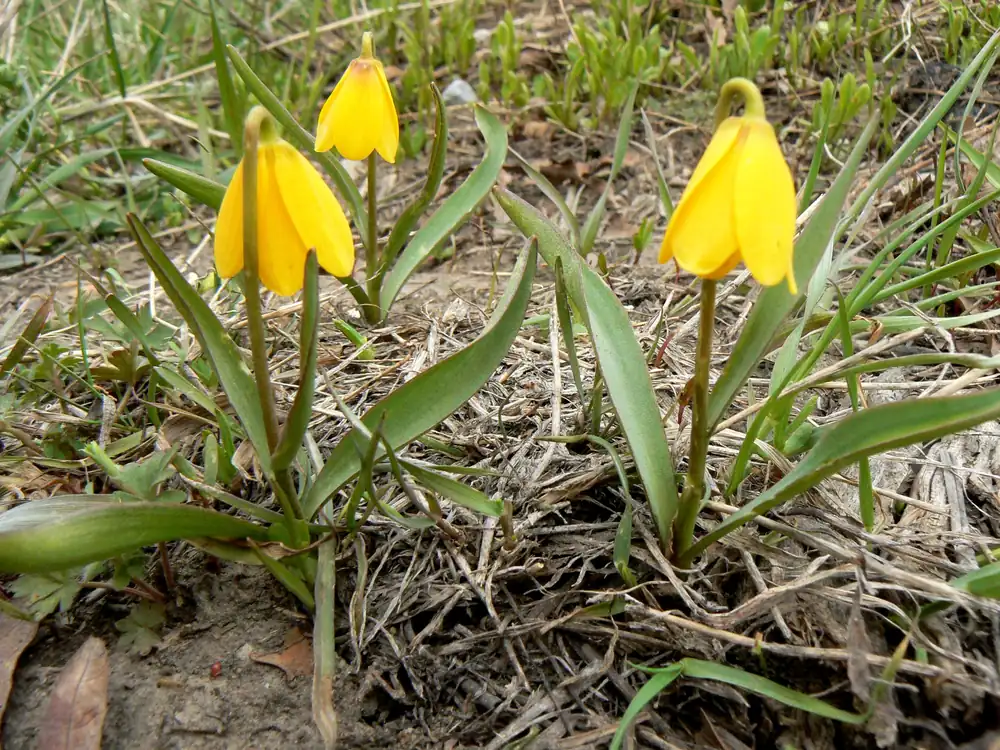
The yellow bell
Early to mid-spring, soon after the snow · Dry slopes in the foothills and at mid elevations
The nodding yellow bell (Fritillaria pudica) is on the same Lydle Gulch list and hangs a single yellow bell from a short stem, so it is easy to walk past. The guide also describes a mid-April to mid-May walk where it shows, so expect a second chance.
-
Meadowlarks and bitterbrush
The guide’s early-spring loop runs mid-February to late March · Lower Hulls Gulch and Red Cliffs trails, Boise
That guide’s five-mile foothills loop promises buttercups, orogenia and the song of meadowlarks, and points out that bitterbrush, a leafless-looking shrub that feeds wintering deer and elk, bursts into fragrant yellow bloom in mid-spring. The guide was written in 2022 and described a trail schedule that gave hikers even-numbered days and downhill cyclists odd ones on the last stretch, so check Ridge to Rivers for the current rules.
Note the date, place and weather beside each first bloom. In a few years your notebook will teach more than any chart.
How are Idaho’s deer, elk, bears and rabbits doing in March?
To people March feels like spring; to big game it is still winter, and the weak ones die now.
-
The hardest weeks for fawns and calves
Late March and April, according to Fish and Game · Winter ranges across southern and central Idaho
Fish and Game’s April 21, 2025 report on collared animals says 67 percent of mule deer fawns and 93 percent of elk calves had survived the 2024–25 winter through mid-March. The long-term fawn average is about 60 percent, and mid-March survival ran from 46 to 82 percent across the seven winters the agency listed. Late March and April are often the deadliest weeks, it adds, because fat reserves are spent and young digestive systems need time to adjust to green forage.
-
Bull elk shed their antlers
March into April for bull elk; mule deer drop theirs in December and January · Winter ranges, bedding areas and migration routes
Fish and Game’s March 13, 2025 shed-hunting advice says melting snow does not mean winter is over for wintering herds. It asks people to avoid the herds, glass slopes from a distance, control dogs and skip wet ground. There is no fixed shed season, but closures are possible after a hard winter, and nonresidents need an Idaho hunting license to pick up antlers.
-
Black bears wake slowly
As spring plants green up; a March bear is an early riser · Forests of northern and central Idaho
Fish and Game’s guidance on emerging bears says they start looking for food right away, eating mostly spring grasses and anything else that offers easy calories, and that a bear may need 15,000 to 20,000 calories a day to rebuild fat. Bears smell food from miles away. Keep garbage in a garage or shed until pickup day and take bird feeders down once bears are moving.
-
Pygmy rabbits under the sage
Breeding in spring and early summer · Tall sagebrush in southern and east-central Idaho
The state’s smallest rabbit needs tall sagebrush and deep, loose soil for burrows, eats little else in winter and tunnels under the snow. Females dig fur-lined dens and may raise up to three litters a season. Stay on established roads and trails to spare the burrows.
How much daylight does Idaho gain in March?
March is when daylight grows fastest. Each city in the table gains about an hour and a half by March 31. Sandpoint goes from 11 hours 2 minutes to 12 hours 49 minutes, a gain of 107 minutes or about 3.6 minutes a day, while Twin Falls gains the least, 87 minutes. Boise climbs from 11 hours 12 minutes to 12 hours 42 minutes. These lengths do not depend on the clock. The clock does change: at 2 a.m. on Sunday, March 14, Idaho’s Mountain-time majority and its Pacific-time north all move ahead an hour.
| City | Mar 1 | Mar 31 | Gained | Per day |
|---|---|---|---|---|
| Sandpoint | 11 h 02 m | 12 h 49 m | 107 min | 3.6 min |
| Coeur d'Alene | 11 h 04 m | 12 h 48 m | 104 min | 3.5 min |
| Lewiston | 11 h 07 m | 12 h 46 m | 99 min | 3.3 min |
| McCall | 11 h 10 m | 12 h 44 m | 94 min | 3.1 min |
| Boise | 11 h 12 m | 12 h 42 m | 90 min | 3.0 min |
| Twin Falls | 11 h 14 m | 12 h 41 m | 87 min | 2.9 min |
| Pocatello | 11 h 13 m | 12 h 41 m | 88 min | 2.9 min |
| Idaho Falls | 11 h 12 m | 12 h 42 m | 90 min | 3.0 min |
On the clock face the jump is abrupt. Boise’s sun rises at 7:01 a.m. and sets at 6:49 p.m. on Saturday, March 13 (standard time), then rises at 7:59 a.m. and sets at 7:50 p.m. the next day (daylight time); by March 31 sunrise is 7:28 a.m. and sunset 8:10 p.m. On March 14 the sun sets at 7:33 p.m. in Idaho Falls and 6:51 p.m. in Coeur d’Alene. All of these are U.S. Naval Observatory figures. The equinox arrives Saturday, March 20, at 2:25 p.m. Mountain daylight time (1:25 p.m. Pacific). Any address is on the daylight page.
What is March weather in Idaho, and when is the last spring freeze?
March is mud, snow showers and swings in temperature. By NOAA’s 1991–2020 normals, March highs average about 55 degrees in Boise and Lewiston, 47 at Idaho Falls and 43 at McCall. McCall also averages 15.5 inches of snow and a low of 20.5, and its ground stays white, an inch deep or more, on about 29 days. Sandpoint is the wettest of the eight stations at 3.58 inches of precipitation, against 1.33 in Boise and 0.81 in Idaho Falls. Even the warm valleys freeze at night: about 11 nights in Boise, 23 in Pocatello, 25 in Idaho Falls and nearly 29 in McCall.
| Station | One year in ten | Median | Nine years in ten |
|---|---|---|---|
| Sandpoint | Apr 23 | May 8 | May 25 |
| Coeur d'Alene | Apr 4 | Apr 22 | May 6 |
| Lewiston | Mar 20 | Apr 6 | Apr 26 |
| McCall | Jun 3 | Jun 22 | Jul 10 |
| Boise | Apr 27 | May 17 | Jun 10 |
| Twin Falls | Apr 25 | May 9 | May 28 |
| Pocatello | May 6 | May 23 | Jun 13 |
| Idaho Falls | May 20 | Jun 11 | Jul 1 |
Boise’s last freeze comes by April 27 in only one spring in ten, with a median date of May 17 and nine springs in ten done by June 10. The median is April 6 in Lewiston, May 9 in Twin Falls and May 8 at Sandpoint; McCall waits until June 22, Pocatello reaches May 23 and Idaho Falls June 11. A warm spell in March does not change those odds. Expect creeks to jump with rain on snow and snowmelt, unstable snow on mountain slopes when it warms or rains, deep mud on foothill trails and gusty winds ahead of fronts. National Weather Service Boise posts river and avalanche-weather products at weather.gov/boi, and NOAA’s Climate Prediction Center releases its seasonal outlooks around mid-month at the 90-day outlook page. Check the local forecast before you go, and look up your own town on the Idaho frost page.
What can you see in Idaho’s night sky in March 2027?
March brings no eclipse or meteor shower, but it does bring bright planets, a close Moon and the equinox. Times are Mountain time, with Pacific time for the Panhandle; clocks change on March 14, so anything after that date is daylight time.
-
Venus and a slim Moon at dawn
Thursday, March 4 and Friday, March 5 · Low in the east-southeast before sunrise
Venus blazes as a morning star all month, climbing out of the glow about two hours before sunrise at the start of March (a figure computed for the central United States, so allow half an hour either way in Idaho). A crescent Moon only 12 percent lit hangs near it those two mornings, before the clocks change.
-
Mercury at its best
Best from about March 8 to 25; widest from the Sun on the evening of Tuesday, March 16 in Idaho · Low in the east-southeast, roughly an hour before sunrise
Mercury is farthest from the Sun in the morning sky, 27.6 degrees west of it, at 04:20 UTC on March 17, which is evening on the 16th in Idaho. A spring morning appearance is shallow, so you need a flat horizon; Venus, much brighter, floats well above it.
-
Jupiter and the Moon
Thursday, March 18 and Friday, March 19 · High in the south after dark, in Leo
Jupiter, a month past opposition, rides high at magnitude minus 2.5, and a Moon nearly 88 percent lit slides within a degree of it on those two nights. On the night of March 30–31 Mars sits roughly four degrees away from Jupiter, a broad pairing worth a look. We computed these separations ourselves.
-
The equinox and the Worm Moon
Equinox Saturday, March 20; full moon Monday, March 22 · Rising in the east about 25 minutes before sunset on Sunday, March 21
The full Moon, which almanacs call the Worm Moon, occurs at 4:44 a.m. MDT (3:44 a.m. PDT) on the 22nd, before moonrise, so the evening to watch is the 21st. It rises at 7:34 p.m. in Boise, 7:17 p.m. in Idaho Falls and 6:38 p.m. in Coeur d’Alene.
-
Aurora, if the Sun cooperates
Any clear, dark night; storms cluster near the equinoxes · Looking north from the Panhandle, Stanley and other dark valleys
No agency forecasts aurora by season, but strong storms remain possible as the solar cycle fades and tend to cluster around the equinoxes. Check NOAA’s 30-minute aurora forecast on moonless nights near the March 8 new moon.
| Phase | Date | Time |
|---|---|---|
| New moon | Monday, Mar 8 | 2:29 a.m. MST / 1:29 a.m. PST |
| First quarter | Monday, Mar 15 | 10:25 a.m. MDT / 9:25 a.m. PDT |
| Full moon, the Worm Moon | Monday, Mar 22 | 4:44 a.m. MDT / 3:44 a.m. PDT |
| Last quarter | Monday, Mar 29 | 6:54 p.m. MDT / 5:54 p.m. PDT |
Local moonrises are on the moon phases page; the cloud forecast shows whether a drive above valley fog is worth it.
What can Idaho families do outside in March?
- Early March: cranes and snow geese. Pick a morning at Market Lake or Camas, call about water first, and listen for cranes before you see them.
- A dawn at a sage-grouse lek. Join an organized tour or watch from a vehicle on a public road, in the dark, as the viewing guidance describes.
- Skis and snowshoes at Craters of the Moon. The park service says the Loop Road is usually closed to vehicles from mid-November to mid-April and groomed for skiers and snowshoers from January to March as conditions allow. Ranger-led snowshoe hikes run on weekends only through February.
- Birds of prey up close. Presentations with live raptors are scheduled at 11, 1 and 3 at The Peregrine Fund’s center; confirm hours first.
- A Lydle Gulch walk. The botanical guide times it mid-March to early April. Go on a dry morning.
- Counting. Project FeederWatch runs through April 30. Log first frog calls and flowers on iNaturalist or eBird, and see the Golden Eagle Audubon society’s events calendar for field trips.
Pack a Naturalist’s Field Journal for every outing, and see the nature guides page for the other states. The Idaho February page covers eagles, owls and geese from earlier in the season.
Safety notes for March in Idaho
- What is open. No spring turkey or bear season begins in March. According to the 2026–2027 migratory bird rules, the spring light goose season ends March 10. Cottontail, snowshoe hare and river otter seasons, and fox in some regions, run through March 31; beaver, mink and muskrat trapping extends to April 15 in several regions; upland falconry runs to March 15. Bobcat season ended February 16, and wolf and mountain lion seasons continue into spring in many units. Spring controlled turkey applications closed March 1, with results by March 20 and leftover tags on sale March 25. Youth turkey hunts begin April 8 in most units, general turkey season April 15, and most spring bear seasons April 15 (some units April 1), so check the booklets in April.
- Orange. Hunter orange is required only for pheasant hunters where the upland permit applies and for sponsored hunts such as youth hunts, though the agency urges anyone out in hunting country to wear some.
- Bait sites. Bear baiting permits are issued from March 1, so a bait site may appear on a forest road before the season. Keep dogs close.
- Coyotes. Fish and Game advises leashing dogs on Boise Foothills trails from March to June.
- Mud. Clay trails turn to gumbo; turn back rather than widen them.
- Avalanches. Spring warmth and rain can destabilize snow. The Payette center had already ended its 2025–26 forecasts when this page was written, so check the Sawtooth, Payette and Panhandle centers for current status and carry rescue gear.
- Ticks. The CDC lists 16 tickborne diseases in the United States. Check skin and clothes after walking brush and grass.
- Deer and elk. Stressed animals still crowd winter ranges. Keep dogs leashed and back off, and slow down at dawn and dusk.
Sources (52)
- U.S. Fish and Wildlife Service: Kootenai National Wildlife Refuge watchable wildlife brochure (Seasons on the Refuge; PDF)
- U.S. Fish and Wildlife Service: Kootenai National Wildlife Refuge, seasons of wildlife
- U.S. Fish and Wildlife Service: Kootenai National Wildlife Refuge, visit (road work, auto tour, contact)
- U.S. Fish and Wildlife Service: Camas National Wildlife Refuge
- U.S. Fish and Wildlife Service: Camas National Wildlife Refuge, species and seasons
- U.S. Fish and Wildlife Service: Grays Lake National Wildlife Refuge
- U.S. Fish and Wildlife Service: Grays Lake National Wildlife Refuge, species (sandhill cranes)
- U.S. Fish and Wildlife Service: Bear Lake National Wildlife Refuge
- U.S. Fish and Wildlife Service: Deer Flat National Wildlife Refuge
- U.S. Fish and Wildlife Service: Minidoka National Wildlife Refuge
- Idaho Fish and Game: Market Lake Wildlife Management Area
- Idaho Fish and Game: See and hear a massive spring waterfowl migration at Fort Boise WMA
- Sage Grouse Initiative (USDA NRCS): How to watch the best mating dance in the West (March 29, 2022)
- Idaho Fish and Game: Sounds of spring, Pacific chorus frogs (April 2019)
- Bureau of Land Management: Morley Nelson Snake River Birds of Prey NCA visitor guide (PDF)
- Bureau of Land Management: Morley Nelson Snake River Birds of Prey National Conservation Area
- The Peregrine Fund: visit the World Center for Birds of Prey (hours)
- National Park Service: Craters of the Moon in winter
- Idaho Parks and Recreation: Harriman State Park
- Ridge to Rivers: Spring wildflowers
- Idaho Fish and Game: Idaho’s black bears are emerging from their winter dens (May 21, 2023)
- Idaho Fish and Game: Wildlife Express, rabbits and pygmy rabbits (April 2025; PDF)
- Treasures of the Boise Front: Common early spring flowers
- Treasures of the Boise Front: Lydle Gulch wildflower walk (mid March to early April)
- Treasures of the Boise Front: Get the Jump on Spring wildflower walk
- Treasures of the Boise Front: Fritillaria pudica (yellow-bells)
- Idaho Fish and Game: How mule deer fawns and elk calves fared through mid-March (April 21, 2025)
- Idaho Fish and Game: Shed hunt responsibly (March 13, 2025)
- Idaho Fish and Game: Steelhead move up the Clearwater as anglers prepare for the spring bite
- Idaho Fish and Game: 2026 Idaho steelhead update (September 15, 2026)
- Idaho Fish and Game: Spring steelhead seasons and rules
- Idaho Fish and Game: Upland Game, Turkey and Furbearer 2026 & 2027 Seasons and Rules (PDF)
- Idaho Fish and Game: Migratory Game Bird 2026–2027 Seasons and Rules (PDF)
- Idaho Fish and Game: Big Game 2026 Seasons and Rules, including 2027 spring black bear (PDF)
- Idaho Fish and Game: hunter orange
- Idaho Fish and Game: Be vigilant during coyote mating and denning seasons
- Golden Eagle Audubon Society
- Project FeederWatch: how to participate
- NOAA NCEI: U.S. climate normals 1991–2020, monthly (Boise, Pocatello, Idaho Falls, Lewiston, McCall, Coeur d’Alene, Sandpoint, Twin Falls)
- NOAA Climate Prediction Center: seasonal (90-day) outlooks
- National Weather Service Boise
- NOAA Global Monitoring Laboratory: solar calculator (sunrise and sunset method)
- U.S. Naval Observatory: Earth’s seasons, 2027 (equinox time)
- U.S. Naval Observatory: moon phases from March 1, 2027
- U.S. Naval Observatory: sunrise, sunset and moonrise for Boise, March 14, 2027
- U.S. Naval Observatory: sunrise, sunset and moonrise for Boise, March 21, 2027
- NOAA Space Weather Prediction Center: aurora 30-minute forecast
- Centers for Disease Control and Prevention: about ticks and tickborne disease
- Payette Avalanche Center
- Idaho Panhandle Avalanche Center
- Sawtooth Avalanche Center (U.S. Forest Service)
- Photos via Wikimedia Commons; licenses and photographers are credited under each picture