What to look for in nature in Indiana this April
April is when Indiana's woods and wetlands go from bare to busy within a few weeks. Along the Lake Michigan shore, hawks and then Blue Jays pour east past the dunes, and observers on a tower atop a high dune count them from first light. Inland, toads begin to trill in flooded ditches, the first warblers, whip-poor-wills and hummingbirds slip back from the south, and the forest floor turns white with trillium and blue with bluebells and wild hyacinth. Redbuds flower before their leaves open, dogwoods follow, and morel hunters start watching the weather. It is also the month when the weather swings hardest: Indiana's worst April storms and floods are well documented, and a hard freeze can still arrive after the first warm spell. Daylight time is in force all month. Clock times below are Eastern, as in most of the state, and the dozen counties on Central time near Gary and Evansville appear in parentheses.
Other months in Indiana: October, November, December, January, February, March.
Start here
- Spend a morning on the Longshore Tower. Climb the tower on the west side of Indiana Dunes State Park early on a clear day with a light wind from the south. Hawks, swallows, sandpipers and, from late April, flocks of Blue Jays pass overhead, and the counters will tell you what is moving.
- Walk a wooded trail for wildflowers. Choose a woodland trail in a state park, the Heron Rookery Trail at Indiana Dunes or the Hoosier National Forest, and go slowly. Look at ground level for trillium, Dutchman's breeches, Virginia bluebells and wild hyacinth, and leave every plant where it grows.
- Listen at a flooded ditch after dusk. On a mild evening after rain, stand quietly near a shallow pond or a wet field edge. The long, high trill is an American toad, the drawn-out snore a leopard frog, and the shorter bird-like trill a gray treefrog.
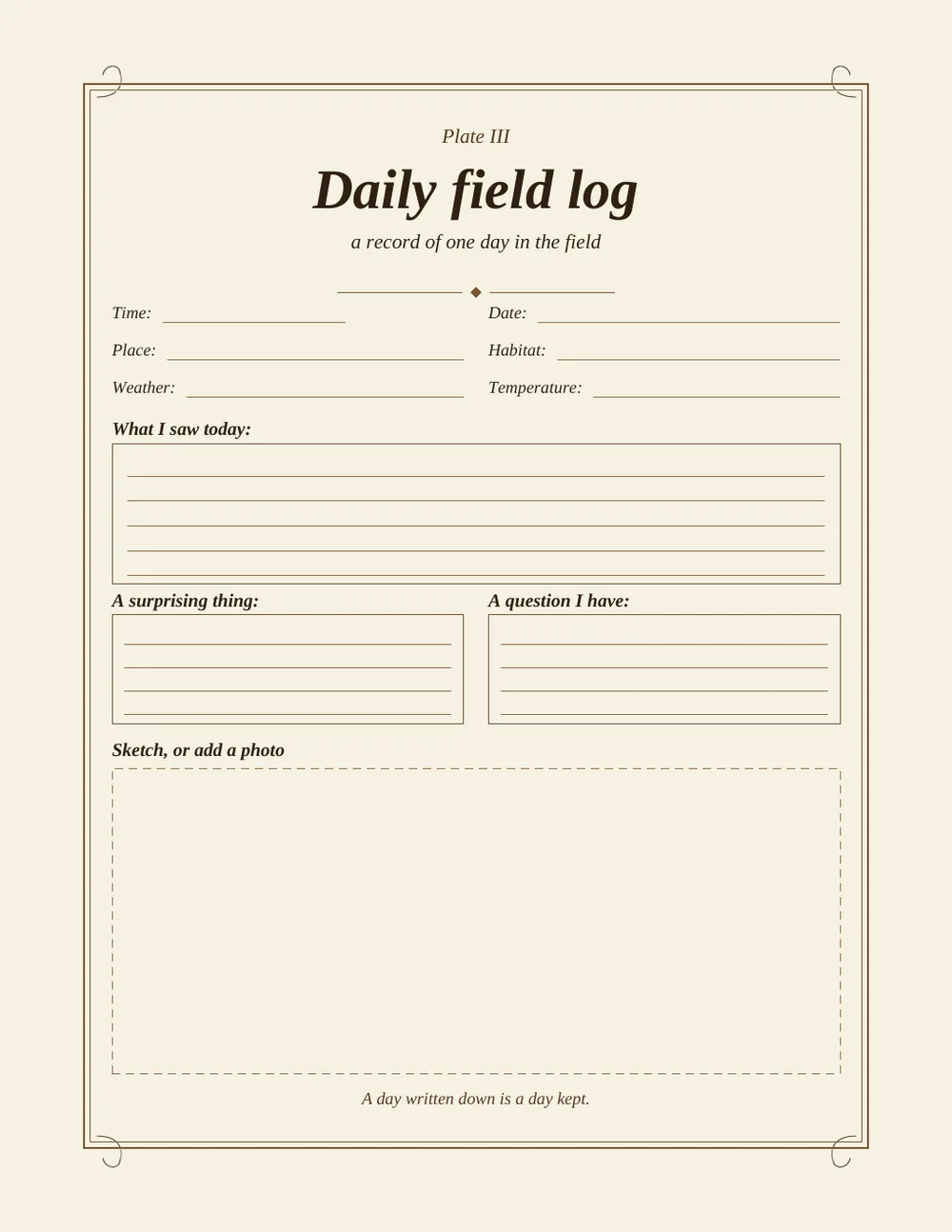
April fills the pages of the Naturalist's Field Journal quickly. Put each first arrival in birds I have seen, from the first Blue Jay flock to the first hummingbird, and note the date and the wind. The map of sounds suits a toad trill or a turkey gobble, and a tree through the seasons is the plate for a redbud as its flowers give way to leaves. A dusk and dawn watch fits the Pink Moon on April 20, the daily field log keeps the temperature swings honest, and the same place twice, begun now and repeated in July, shows how much the woods change.
Regions used below: Northwest Indiana and the Dunes; Northern Indiana (South Bend, Fort Wayne); Central Indiana (Indianapolis, Lafayette, Terre Haute); South-central hills (Bloomington, Brown County, Hoosier National Forest); Southwest and the Ohio River (Evansville, Madison).
Where can I watch Blue Jays and hawks migrate along Lake Michigan in April?
At the Indiana Dunes, where lake winds funnel the flight past a single high dune. Indiana Audubon counts the birds there. Its Spring Longshore Flight Project runs from early March through mid-May at the Longshore Tower, a platform atop a 60-foot dune on the west side of Indiana Dunes State Park near Trail 3. Indiana Audubon says visitors are welcome to join the observers on peak migration mornings, and that more than 290 species have been logged from the spot on eBird. In March the flight is mostly geese and cranes; April adds hawks, swallows, sandpipers and songbirds, and the Blue Jays come last.
The counts below are single days from earlier years, given to show what a good morning looks like. They are not forecasts, because wind and weather decide everything.
-
Blue Jay flights
Late April into mid-May, in the morning · The Dunes, Miller Beach and Michigan City on the lakeshore
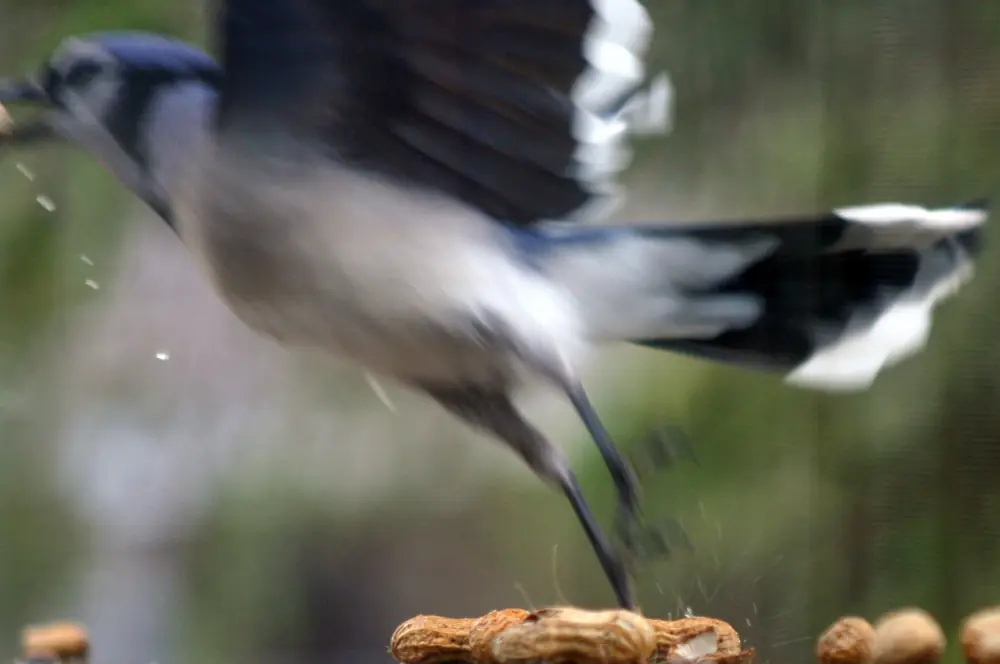
Indiana Audubon describes flocks streaming east along the shore, often 100 or more at a time. On April 28, 2025, Indiana Audubon counted over 2,000. Good mornings bring several thousand, big days pass 5,000, and Indiana Audubon says more than 50,000 may go by in a season at the Dunes, Miller Beach and Michigan City together. Watch the treetops and the horizon over the lake.
-
A hawk day
Mid-April; the count below was Friday, April 17, 2026 · Longshore Tower, Indiana Dunes State Park
In 7 hours 20 minutes the observers recorded 94 species and 1,752 birds, including 43 sharp-shinned hawks, 34 red-tailed hawks, 13 broad-winged hawks, 10 ospreys and a golden eagle. Indiana Audubon called it a surprisingly strong raptor flight along the lakefront. Hawks lean on warm air and favorable winds, so check the forecast before you drive.
-
Shorebirds on a south wind
Late April; the count below was Tuesday, April 21, 2026 · Longshore Tower
The observers counted 90 species in more than seven hours, among them 2,580 pectoral sandpipers, which they called the highest single-day total they have ever had at the tower. The same report listed chimney swifts, an eastern kingbird, a blue-headed vireo, a gray catbird, a Baltimore oriole and a northern parula, and said southerly winds kept birds moving along the shore. Shorebirds are an irregular treat, not a sure thing.
Dress for lake breezes, bring binoculars and ask the counters before you start spotting, since they are working. Check the Indiana Audubon page for current news, and see the families section for ways to join in.
Which songbirds and hummingbirds arrive in Indiana in April, and where should I look?
The main wave is still ahead, but the first ones are here. Big Oaks National Wildlife Refuge says April is the start of the main wave of songbird migration, which peaks around the second week of May. The Indiana Birding Trail calls late April, along with September, the peak for songbird migration at Muscatatuck National Wildlife Refuge. In 2026, Indiana Audubon's tower reports from the Dunes had eastern whip-poor-wills, chimney swifts, gray catbirds, yellow warblers, yellow-throated warblers, rose-breasted grosbeaks and indigo buntings on April 17, with kingbirds, orioles and a northern parula on April 21. Spring 2027 may run earlier or later, so use these as the order of arrival, not as dates.
-
Warblers and rails at Muscatatuck
Mid- to late April · Muscatatuck National Wildlife Refuge, near Seymour
The Birding Trail says prothonotary, yellow-throated and sometimes northern parula warblers can be found along wooded wetland edges. It also says sora and Virginia rails appear regularly in spring, and that a wide variety of ducks, and sometimes trumpeter swans, can be seen in the wetlands. The refuge is managed as an important stopover for migrants in spring and fall.
-
The first big songbird push at Big Oaks
April, building toward the second week of May · Big Oaks National Wildlife Refuge, Jefferson, Jennings and Ripley counties
Visitors need a public access permit, which the refuge lists at $3 a day or $15 for the year, and must attend a safety briefing, so plan to spend at least an hour at the office first. Stay in the assigned areas, since closed areas are off limits, and know that the refuge rules forbid searching for or removing unexploded ordnance. Turkey hunting is allowed in designated areas, so ask which parts are open to the public.
-
Ruby-throated hummingbirds
Around mid-April, according to Purdue Extension · Yards, woodland edges and gardens statewide
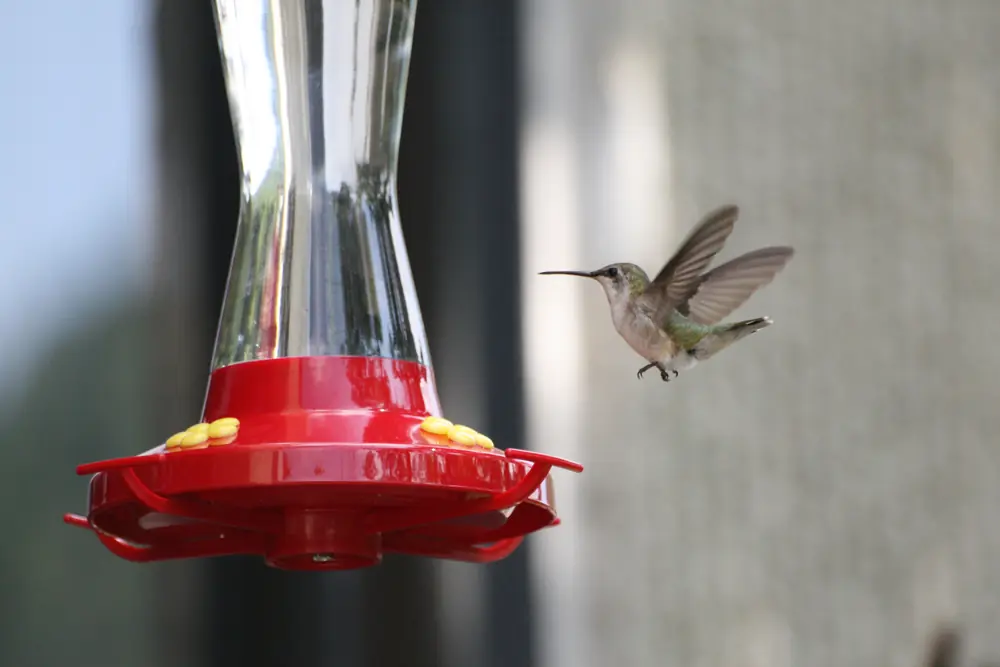
The ruby-throated is the only hummingbird that nests in Indiana. Purdue Extension says it arrives from its wintering grounds around mid-April and stays through the summer. Purdue's feeder guide gives the nectar as sugar and water in a 1 to 4 ratio, boiled two minutes to slow fermentation, and advises against honey, artificial sweeteners and food coloring. Hang the feeder before the first birds arrive, and keep it clean.
Which frogs and toads are calling in Indiana in April?
More species than in March. The spring peepers and chorus frogs that started in March are still going in many places (see the March page), and as the water warms the toads, leopard frogs and treefrogs take over the evening chorus. The Indiana Herp Atlas, which keeps the state's records, gives the timing for each. Listen from the road edge or a boardwalk, and keep out of the water so the egg masses are left alone.
-
American toads
Calling begins in late March and breeding runs through most of May; in northern Indiana breeding starts in April and may run into June · Woodland pools, marshes, shallow lake backwaters, stream pools and garden ponds
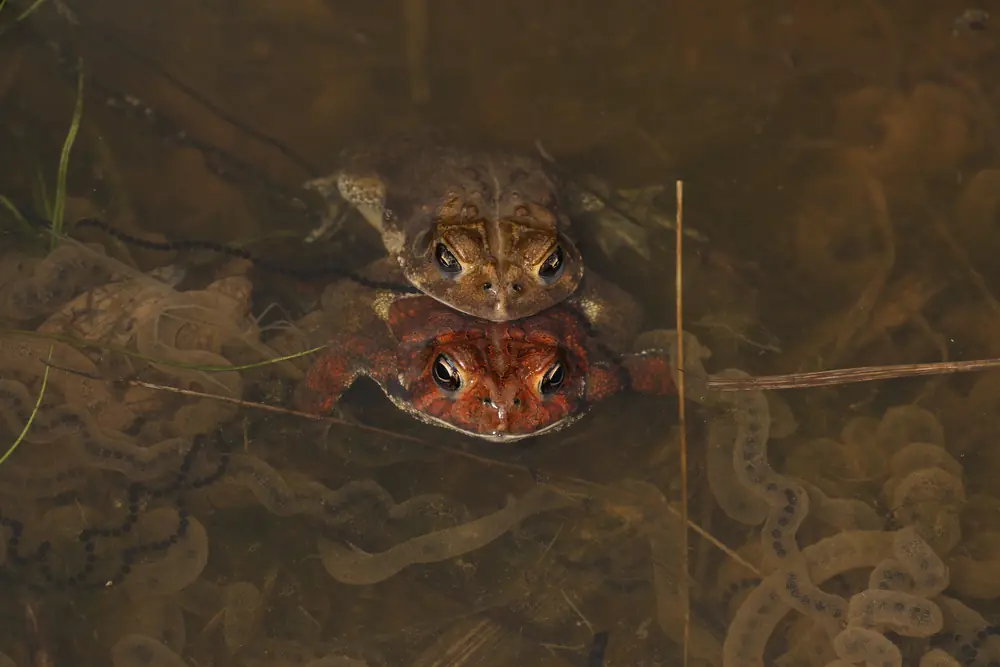
The Herp Atlas describes a high-pitched trill that generally lasts a few seconds and may last up to 30. Eggs hatch in a couple of days to a couple of weeks, and the tadpoles usually change into toadlets in June or July. A toad choir at dusk is one of the easiest April sounds to find.
-
Northern leopard frogs
Late March to early May after rainy weather · Marshes, wetlands and wet meadows
Listen for a snore lasting three or more seconds, sometimes trailed by short grunts. The Atlas notes that the frog tends to leap into tall grass rather than into the water when disturbed, so watch the meadow edge as well as the pond.
-
Gray treefrogs
Breeding from April through July; calling begins in April in some parts of the state · Flooded fields, ponds, ephemeral wetlands and swales, usually after heavy rain
Two look-alike species share the state. The eastern gray treefrog, mostly in the north, gives a slower, melodic, somewhat birdlike trill, while Cope's gray treefrog, more common in the south, trills faster and more abruptly. They overlap in central Indiana. By late April a warm evening may produce the first calls.
-
Crawfish frogs
March or April, when nights reach the mid-50s Fahrenheit and heavy rain falls; chorusing usually lasts one or two weeks · Southwestern pocket prairies and Big Oaks National Wildlife Refuge
This is a state endangered species, and the Atlas calls it near threatened worldwide. The call is a low, drawn-out snore that rises in pitch and falls at the end, and under ideal conditions it can be heard from up to two miles away. Hearing one is a rare treat; do not try to find or handle the frogs.
If you hear something you cannot place, record the call on your phone and compare it with the Atlas page. Note the date, the temperature and whether it had rained, which is exactly what the map of sounds plate in the Naturalist's Field Journal is for.
Where can I see spring wildflowers in Indiana in April?
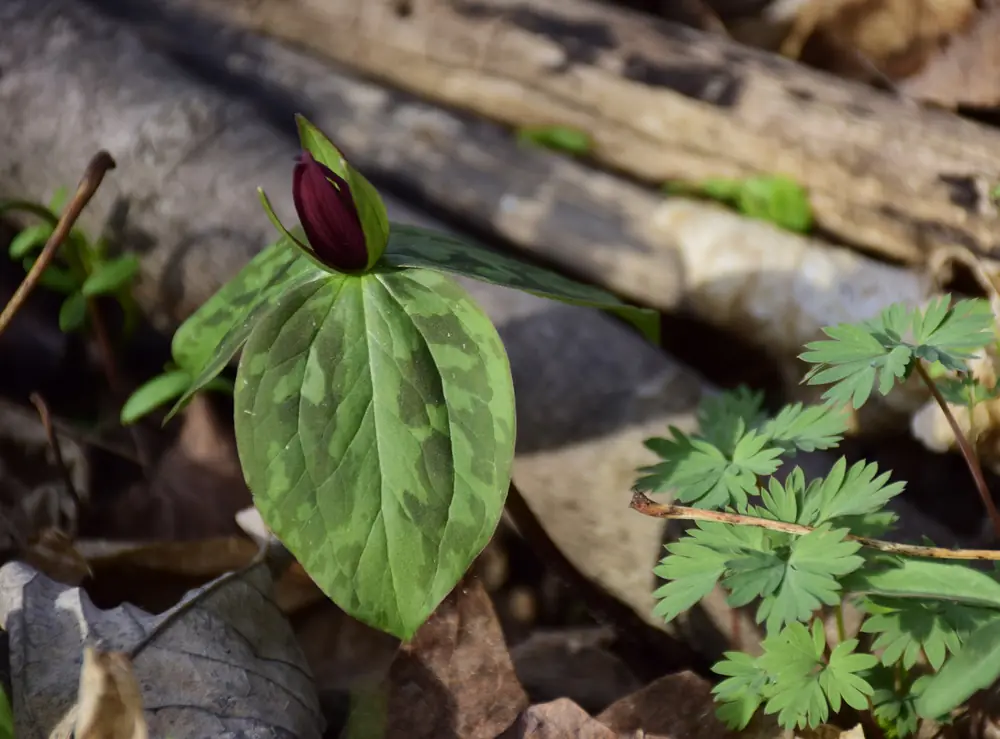
In almost any older woodland with a trail. The Indiana DNR's brochure on common spring wildflowers says that from late March through May, spring wildflowers carpet the woodlands of Indiana's state parks, and it reminds visitors that all plants are protected on DNR properties. The trick is to arrive before the trees leaf out, while sunlight still reaches the ground. The brochure's white-flowered list starts with snow trillium, harbinger of spring, sharp-lobed hepatica, bloodroot, cut-leaved toothwort and rue-anemone, and it also covers twinleaf, celandine poppy, Virginia bluebells, blue phlox and bluets. Wild geranium first opens in early May, it says.
-
The Heron Rookery Trail at the Indiana Dunes
In most years the wildflowers peak from late April through mid-May, per the National Park Service · Indiana Dunes National Park
The 3.3-mile loop takes 1.5 to 2 hours. The Park Service lists trillium, spring beauties and Dutchman's breeches on the trail. The great blue heron colony that gave the trail its name moved on after about 60 years, but the woods remain full of kingfishers, woodpeckers and migrating and nesting warblers.
-
The first bloomers on a steep slope
Late March into April, depending on the year · Rich, wooded hillsides in state parks and state forests
Snow trillium, the smallest of the trilliums, is often up on steep slopes with snow still around it. Harbinger of spring, also called salt-and-pepper, grows from an energy-rich bulb and tucks in beside logs and beech leaves. Bloodroot has a bright red juice and a poisonous root, so look and do not dig.
When do wild hyacinths bloom in the Hoosier National Forest, and what is the Wildflower Foray?
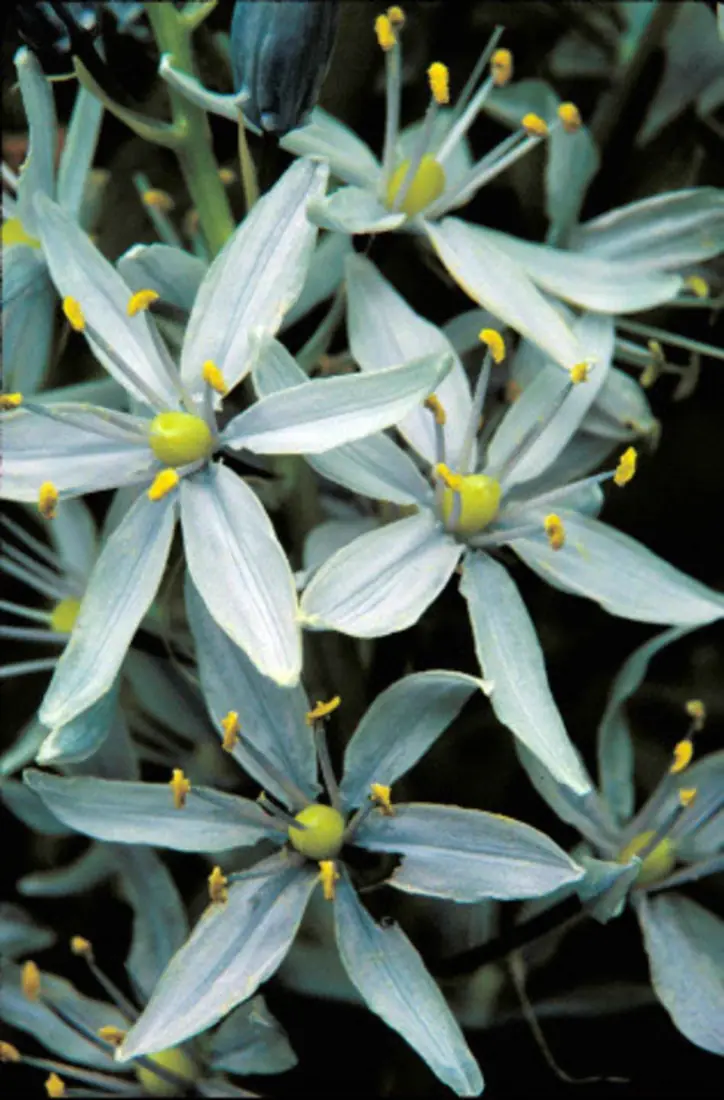
Wild hyacinths come in late April and early May, a little after the first spring flowers. In the Charles C. Deam Wilderness, the Forest Service says, many wildflowers such as twinleaf and trout lily begin blooming in March to early April, and the wild hyacinths flower a short time later, during late April and early May.
-
Wild hyacinth hikes
Late April to early May · Charles C. Deam Wilderness and other Hoosier National Forest trails
Wild hyacinth looks like a pale blue-violet star-flowered spike rising from a grass-like clump. The Forest Service has listed a Wild Hyacinth Hike among the outings it offers with the Foray. Check the Hoosier National Forest page for current programs, since none for 2027 had been listed when this page was written.
-
The Wildflower Foray
Annual, in late April; the 2025 edition ran April 25 to 27. Check with the organizers for 2027 · Brown and Monroe counties, including T.C. Steele State Historic Site, Brown County State Park, Monroe Lake and Yellowwood Lake
Local news coverage of the 40th Foray in 2025 described dozens of free guided hikes on wildflowers, native plants, birds and other wildlife, organized by the Indiana State Museum and Historic Sites with partners including the Hoosier National Forest and Monroe County Parks and Recreation. The organizers had not posted a 2027 schedule when this page went up, so hold off on travel plans until they do.
-
Caves stay closed to protect bats
Closed August 16 through May 14 · Caves in the Hoosier National Forest
The Forest Service closes the caves each year in that period because white-nose syndrome has decimated several bat species in Indiana, and it does not disclose cave locations. Plan wildflower trips on the surface.
What are redbuds, morels, turkeys and trout doing in Indiana in April?
The woods wake up in order. Purdue Extension says redbud's pink, lavender and magenta flower clusters appear in early spring before the leaves open, and that flowering dogwood blooms in April and May. That makes April a good month to learn two trees by their flowers, while their branches are still bare enough to see. Underneath, the same warming that opens the flowers brings up the morels, and out in the fields the turkeys are displaying.
-
Redbud, then dogwood
Redbud in early spring; dogwood in April and May · Woodland edges, fields and yards statewide
Redbud is the small tree with flowers all along bare twigs, found along woodland edges, open fields and brushy areas. Dogwood's white show comes a little later. Log the date of first flower on a tree you can revisit, for the tree through the seasons plate.
-
Morels
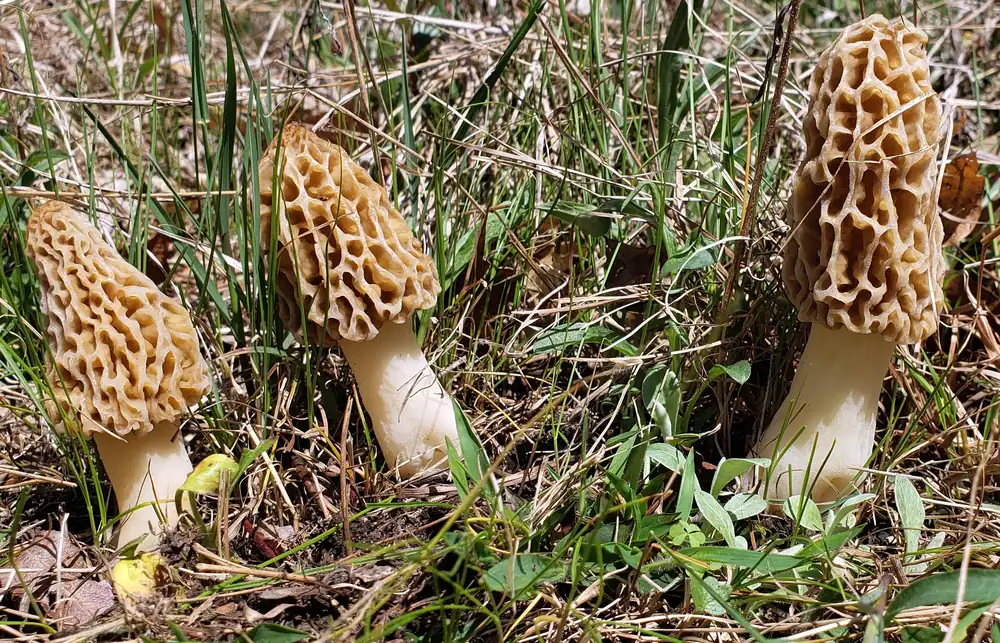
The DNR's State Parks brochure says the best time for morel hunting is April and May · Dead elms, tulip trees and beech-maple forests, and sometimes lawns
Indiana lets people hunt mushrooms for personal use in state parks, state forests and fish and wildlife areas without a license, though restrictions may apply, and picking mushrooms for sale on state park property is not permitted. The state's tourism office notes that mushrooms tend to appear for a few short weeks after air and ground temperatures warm and after a few days of rain, and that hunters watch for dogwoods in bloom or mayapples, trillium and dandelions. Ask permission before you go on private land. The DNR brochure warns that every edible mushroom has look-alikes that can be deadly, so if in doubt, throw it out. During spring turkey season, the DNR property rules require mushroom hunters on its fish and wildlife properties to stay out of the field until the hunting hours end.
-
Turkey gobblers
Displays run from February through May, per the DNR · Fields, woodland edges and clearings in all 92 counties
The DNR says males gobble and strut to attract hens, and that a nest holds 7 to 20 eggs, averaging 12, with a 28-day incubation. Turkeys are found in all 92 counties, after 2,795 trapped birds were released at 185 sites between 1956 and 2004. A gobble carries a long way on a still dawn.
-
Stream trout opener
The DNR lists the opening as the last Saturday in April after 6 a.m. local time, which is April 24 in 2027 · Stocked streams and lakes in 22 counties in 2026
In 2026 the DNR said it would stock nearly 52,000 trout in 37 waters in 22 counties for the April 25 opener. Anglers 18 and older need a license and a trout and salmon stamp, with five trout a day and a seven-inch minimum on inland waters in 2026. Check the DNR for the 2027 stocking list and rules.
What is April weather like in Indiana, and what should I watch for?
Mild days, cold nights and some of the state's worst storms. NOAA's 1991 to 2020 normals put the April average high at 59.0 degrees in South Bend and 68.4 in Evansville, with lows of 37.1 and 46.1. South Bend still averages 8.9 days with a low of 32 or colder in April; Evansville averages 2.3. Precipitation rises toward the south, from 3.49 inches at South Bend to 5.14 at Evansville, and snow is mostly a memory, with 1.0 inch at South Bend and none at Evansville.
The National Weather Service in Indianapolis keeps a record of April events in central Indiana. On April 3, 1974, it says, 21 tornadoes struck 39 Indiana counties, eight of them killers, with 47 dead and over 800 injured, as part of an outbreak that spawned 148 tornadoes in 13 states. The Palm Sunday outbreak of April 11, 1965, was the deadliest in the state's history: ten tornadoes struck 18 counties, and 137 people died. Cold can return too: Indianapolis had a record low for the date of 30 degrees on April 29, 2018. More recently, April 2025 was the fifth wettest April on record at Indianapolis, with 8.02 inches, widespread river flooding from the 5th to the 17th and 23 tornadoes in Indiana on April 2, which tied for the fifth-largest outbreak in the state since 1950 (preliminary figures).
Know where you would shelter, never drive into water covering a road, and treat a warm April evening with a strong wind as a reason to check the forecast. The Climate Prediction Center posts a fresh 90-day outlook each month around the middle of the month, on its outlook page. For the coming days, see our weather page.
| City | Average high | Average low | Precipitation | Snowfall | Days with a low of 32 °F or colder |
|---|---|---|---|---|---|
| South Bend | 59.0 °F | 37.1 °F | 3.49 in | 1.0 in | 8.9 |
| Fort Wayne | 60.9 °F | 39.4 °F | 3.74 in | 0.8 in | 6.9 |
| Indianapolis | 63.9 °F | 43.3 °F | 4.34 in | 0.2 in | 3.7 |
| Evansville | 68.4 °F | 46.1 °F | 5.14 in | 0.0 in | 2.3 |
When is the last spring freeze in Indiana?
Early April along the Ohio River, mid-April in the center of the state, and late April to May 1 in the north. Below are NOAA's 1991 to 2020 normals for the final 32-degree reading of spring at nine Indiana stations. Evansville's median is April 4 and Indianapolis's April 15, while South Bend's is May 1, with the Dunes lakeshore a little earlier. The last column marks the date by which nine springs in ten are over, so it is the cautious date for tender transplants. April is also when a warm week tempts flowers and fruit trees open, so a freeze after that can catch opened blossoms.
Purdue's Indiana State Climate Office publishes an average last-spring-freeze map along with freeze-probability tools. For a specific town, use our frost dates page.
| Station | One year in ten | Median | Nine years in ten |
|---|---|---|---|
| South Bend | Apr 16 | May 1 | May 17 |
| Indiana Dunes lakeshore | Apr 7 | Apr 22 | May 8 |
| Fort Wayne | Apr 10 | Apr 24 | May 10 |
| Lafayette | Apr 11 | Apr 26 | May 14 |
| Indianapolis | Apr 2 | Apr 15 | May 2 |
| Terre Haute | Apr 2 | Apr 16 | May 3 |
| Bloomington | Apr 3 | Apr 17 | May 5 |
| Evansville | Mar 22 | Apr 4 | Apr 19 |
| Madison | Mar 28 | Apr 11 | Apr 28 |
How much daylight does Indiana gain in April?
From 68 minutes at Evansville to 77 at South Bend, as the table shows, an average near two and a half minutes each day. By April 30 even Evansville has passed 13 hours 45 minutes of daylight. No clock change falls in April. The Central-time counties are six in the northwest (Jasper, Lake, LaPorte, Newton, Porter and Starke) and six in the southwest (Gibson, Perry, Posey, Spencer, Vanderburgh and Warrick).
| City | Apr 1 | Apr 30 | Gained | Per day |
|---|---|---|---|---|
| South Bend | 12 h 42 m | 13 h 59 m | 77 min | 2.7 min |
| Gary | 12 h 42 m | 13 h 58 m | 76 min | 2.6 min |
| Fort Wayne | 12 h 41 m | 13 h 56 m | 75 min | 2.6 min |
| Lafayette | 12 h 41 m | 13 h 54 m | 73 min | 2.5 min |
| Indianapolis | 12 h 40 m | 13 h 51 m | 71 min | 2.4 min |
| Terre Haute | 12 h 39 m | 13 h 50 m | 71 min | 2.4 min |
| Bloomington | 12 h 39 m | 13 h 49 m | 70 min | 2.4 min |
| Evansville | 12 h 37 m | 13 h 45 m | 68 min | 2.3 min |
Dawn and dusk for your own street are a quick lookup on our daylight calculator.
What is in the night sky over Indiana in April 2027?
The Pink Moon on the 20th, a weak Lyrid shower on the 22nd, and Jupiter and Mars high in the evening. No eclipse falls in April. Clock times run Eastern first, then Central in parentheses, and the Moon table follows suit.
-
The Moon beside Jupiter and Mars
Evenings of April 14 and 15 · High in the south and southwest after dark
At roughly two-thirds lit, the Moon makes its closest pass to Jupiter, under a degree, during the daytime on the 15th, so both evenings show them side by side. Mars sits a few degrees off the Moon on the 15th as well, near three. Jupiter is a late setter this month: on April 1 it stays up about nine hours past sunset.
-
The Lyrid meteors, a poor year
Peak around 9:41 p.m. EDT (8:41 p.m. CDT) Thursday, April 22, per the International Meteor Organization; active about April 14 to 30 · Looking east and northeast in the early evening, before the Moon rises
Three days past full, the Moon is some 95 percent lit and climbs over the horizon between about 9:50 and 11 p.m. across most of the country. Only the early evening is dark, and at that hour Lyra, where the meteors seem to radiate from, hangs low. SeaSky puts the usual peak at about 20 an hour, so expect only a few, perhaps with a bright one. Our own computation puts the peak about 14 minutes later.
-
The Milky Way before dawn
Roughly April 1 to 14 and April 28 to 30, around the April 6 new moon · Low in the south-southeast in the last dark hours, from a dark rural site
Our own calculation for 40 degrees north gives up to about 2.3 hours of moonless darkness with the bright core above the horizon in those windows, in the hours before dawn. It is a low, faint sight for a camera or a patient eye.
-
The Pink Moon
Full Tuesday, April 20, 6:27 p.m. EDT (5:27 p.m. CDT); best evening April 20 · Rising in the east shortly after sunset
The Moon is not literally pink. SeaSky explains that the name comes from early Native American tribes and the moss pink, a wild ground phlox that was among the first spring flowers. The same page lists Sprouting Grass, Growing, Egg and Fish as other names. It is not a supermoon.
| Phase | Date | Time |
|---|---|---|
| New moon | Tue, Apr 6 | 7:51 p.m. EDT (6:51 p.m. CDT) |
| First quarter | Tue, Apr 13 | 6:56 p.m. EDT (5:56 p.m. CDT) |
| Full moon, the Pink Moon | Tue, Apr 20 | 6:27 p.m. EDT (5:27 p.m. CDT) |
| Last quarter | Wed, Apr 28 | 4:18 p.m. EDT (3:18 p.m. CDT) |
Every phase of the year is listed on our moon phases page, and when clouds roll in, try the clouds page.
What can Indiana families do outdoors in April 2027?
- Sundays, April 4, 11, 18 and 25: turtles at McCormick's Creek State Park. The DNR's April 2027 calendar shows a 10:30 a.m. feeding at the Canyon Inn lobby, the single nature program listed so far, so look for additions.
- Any clear April morning: a visit to the Longshore Tower. Indiana Audubon welcomes visitors on peak migration mornings; bring binoculars and ask the counters what is flying.
- Around mid-April: put out the hummingbird feeder. Mix the nectar by Purdue's recipe, and write down the date of your first visitor.
- Tuesday, April 20: the Pink Moon. Watch it rise at dusk and listen for toads.
- Thursday, April 22: Earth Day. The Earth Day organizers' theme for 2027 is Food for Our Planet. The same evening is the Lyrids' peak, a weak show this year.
- Late April: the Wildflower Foray in Brown and Monroe counties. It has been held in late April for decades, with free guided hikes. Check with the organizers for 2027 dates.
- Friday, April 30: Arbor Day. Indiana's Arbor Day, per the DNR, is the final Friday in April, which matches the national date, and third graders can get free seedlings.
- Friday, April 30, through Monday, May 3: City Nature Challenge observations. Identifications follow on May 4 to 16, with results due May 20, according to the organizers. A local nature center can tell you whether your area takes part.
- Through April: Project FeederWatch. Its season ends with April, and the schedule is flexible, from every week to a single count.
- All spring: NestWatch and Journey North. NestWatch takes records of nests you follow, while Journey North gathers first sightings of hummingbirds, monarchs and others.
Programs change with the weather, so confirm before you go, and keep your finds in our Naturalist's Field Journal. The nature page has other states and months.
Safety notes for April in Indiana
- Spring turkey season. The DNR had not published 2027 dates when this page was written. Its page says the season opens by rule on the first Wednesday after April 20 and runs 18 days, with the youth weekend the weekend before;, so wait for the published 2027 dates. For comparison, 2026 had its youth weekend on April 18 and 19 and its main season from April 22 to May 10. The bag is one bearded or male turkey. On properties managed by the DNR's fish and wildlife division, spring hunting hours end at 1 p.m. Eastern (noon Central) and begin half an hour before sunrise.
- Hunter orange. Spring turkey is absent from the DNR's hunter orange guide, which names deer, woodcock, rabbit, quail and pheasant seasons, squirrel season in winter, and fall turkey only where it overlaps deer muzzleloader season. Turkey hunters wear camouflage, so wear bright clothing yourself, avoid hunting areas in the morning and make some noise on the trail.
- Other seasons. The DNR's season sheet for April 2026 through March 2027 shows green frog and bullfrog hunting open to April 30, 2027, at 25 a day. Coyote, skunk, beaver and turtle seasons ended in March.
- Severe weather. April is tornado season in Indiana. Know your shelter and do not wait for a siren if the sky looks wrong.
- Flooding. Heavy April rain sends creeks and rivers over their banks. Don't drive through water over a road, and keep away from slick, crumbling banks.
- Roads on rainy nights. Toads and frogs cross wet roads; slow down near ponds and woods.
- Ticks. Walk in the middle of trails, tuck pants into socks and check your skin and clothes after walking through leaf litter or brush.
- Mushrooms. Eat nothing you cannot identify with certainty. Poisonous amanitas look ghostly white and grow on the woodland floor.
- Bats and caves. The Hoosier National Forest caves are closed through May 14. Do not enter any cave that is closed or gated.
- Nests and young. Give eagle nests plenty of room and leave any young bird or animal alone unless it is clearly in danger. A fawn or fledgling lying still has a parent nearby.
- Leave the plants. All plants are protected on DNR properties, so look at wildflowers without picking or digging them.
Sources (52)
- Indiana Audubon: Lake Michigan surveys (Longshore Tower)
- Indiana Audubon: The Blue Jay river begins (April 28, 2025)
- Indiana Audubon: A hawkwatch day (April 17, 2026)
- Indiana Audubon: A big day of new arrivals at Indiana Dunes (April 21, 2026)
- Indiana Audubon: Spring migration begins (March 2025)
- Audubon: Birding in Indiana
- Indiana Birding Trail: Muscatatuck National Wildlife Refuge
- Indiana Birding Trail: Goose Pond Fish & Wildlife Area
- U.S. Fish and Wildlife Service: Big Oaks National Wildlife Refuge, seasons of wildlife
- U.S. Fish and Wildlife Service: Big Oaks National Wildlife Refuge
- U.S. Fish and Wildlife Service: Big Oaks rules and policies
- Purdue Extension: Hummingbirds in the Hoosier backyard (FNR-249-W)
- Purdue Extension Forestry and Natural Resources: hummingbird arrival post
- Indiana Herp Atlas: Gray treefrogs
- Indiana Herp Atlas: American toad
- Indiana Herp Atlas: Northern leopard frog
- Indiana Herp Atlas: Crawfish frog
- Indiana DNR: Spring wildflowers (state parks brochure)
- Indiana DNR: Common mushrooms of Indiana state parks brochure
- National Park Service: Heron Rookery Trail, Indiana Dunes
- U.S. Forest Service: Charles C. Deam Wilderness wildflowers
- U.S. Forest Service: Wildflower Foray story
- Bloomingtonian: 40th annual Wildflower Foray (2025)
- Friends of T.C. Steele: Wildflower Foray announcement
- U.S. Forest Service Hoosier National Forest: climbing and caving, cave closure
- Purdue Agriculture: Intro to Trees of Indiana, redbud
- Purdue Extension: ID That Tree, flowering dogwood
- Visit Indiana: Morel season
- WRTV: Mushroom hunting season in Indiana (DNR guidance)
- Indiana DNR: Fish & Wildlife property rules
- Indiana DNR: wild turkey
- Indiana DNR: wild turkey hunting biology and management (spring season rule)
- Indiana DNR: hunting and trapping seasons sheet, April 2026 to March 2027
- Indiana DNR: Hunter orange requirements
- Indiana DNR: Hunting and trapping
- Indiana DNR: fish stocking (inland trout season)
- State of Indiana events: trout stockings across Indiana (2026)
- Indiana DNR: Indiana Arbor Day
- Indiana DNR event calendar, April 2027
- NOAA NCEI: 1991-2020 monthly normals, Indianapolis, South Bend, Fort Wayne and Evansville airports
- National Weather Service Indianapolis: Central Indiana weather history, April
- National Weather Service Indianapolis: April 2025 preliminary weather summary
- NOAA Climate Prediction Center: 90-day outlooks
- Indiana State Climate Office (Purdue)
- U.S. Naval Observatory: moon phases 2027
- SeaSky: astronomy calendar 2027
- City Nature Challenge
- Project FeederWatch overview
- NestWatch (Cornell Lab of Ornithology)
- Journey North
- Earth Day Network
- Photos via Wikimedia Commons; licenses and photographers are credited under each picture
