What to look for in nature in Indiana this January
January is the heart of an Indiana winter. On average it is the coldest month of the year from South Bend to Evansville, and the state's all-time record low, 36 below zero, was set on a January morning. Yet this is one of the liveliest months to be outside with binoculars. Bald eagles gather wherever rivers and reservoir outlets stay open, trumpeter swans and tundra swans rest on southern wetlands, and great horned owls have begun incubating, sometimes with snow settling on their backs. Along Lake Michigan, waves and spray build ridges of shelf ice that look solid and are not. Overhead, January opens with a strong meteor shower and Earth's closest pass by the sun, and the biggest full moon of 2027 rises three weeks later. The days grow by 40 to 50 minutes over the month. Times in this guide are standard time: Eastern for most of the state, with Central for the corner counties near Chicago and Evansville.
Other months in Indiana: October, November, December, February.
Start here

- Find an eagle over open water. On a cold, clear morning, drive to the outlet of a big reservoir such as Monroe, Patoka or Salamonie, or walk to the Ice Box overlook on Sugar Creek at Turkey Run. Eagles perch in the tall trees beside the moving water and drop to it for fish. A spotting scope helps; so does staying well back.
- Look at shelf ice, from the dune. After a week of hard cold, Lake Michigan's edge piles up in ridges and mounds of ice. Admire them from the base of the first dune or from the top of the West Beach stairs, never from the ice itself, which the National Park Service warns is hollow and can give way under one person.
- Catch the Quadrantids. January's meteor shower has a short, sharp peak, and in 2027 it lands in the American night of Sunday, January 3, into Monday the 4th, with only a thin moon rising near dawn. Dress for deep cold, find a dark field, and watch the northeast sky in the hours before first light.
January gives the Naturalist's Field Journal some of its best winter entries. An eagle at a dam's outflow, a flock of swans or a stray crossbill all belong on birds I have seen, and a coyote trotting across a frozen field is one for the mammal watch plate. Note the hoots of a great horned owl pair, with the direction each call came from, on a map of sounds. Return to one frozen pond or creek bend each week and fill in the same place twice as the ice thickens and thaws. On the coldest morning of the month, try colours of the day: blue shadow on snow, rose light at dawn, the gray-brown of an oak that kept its leaves.
Regions used below: Northwest Indiana and the Dunes; Northern Indiana (South Bend, Fort Wayne); Central Indiana (Indianapolis, Lafayette, Terre Haute); South-central hills (Bloomington, Brown County, Hoosier National Forest); Southwest and the Ohio River (Evansville, Madison).
Where can you see bald eagles in Indiana in January?
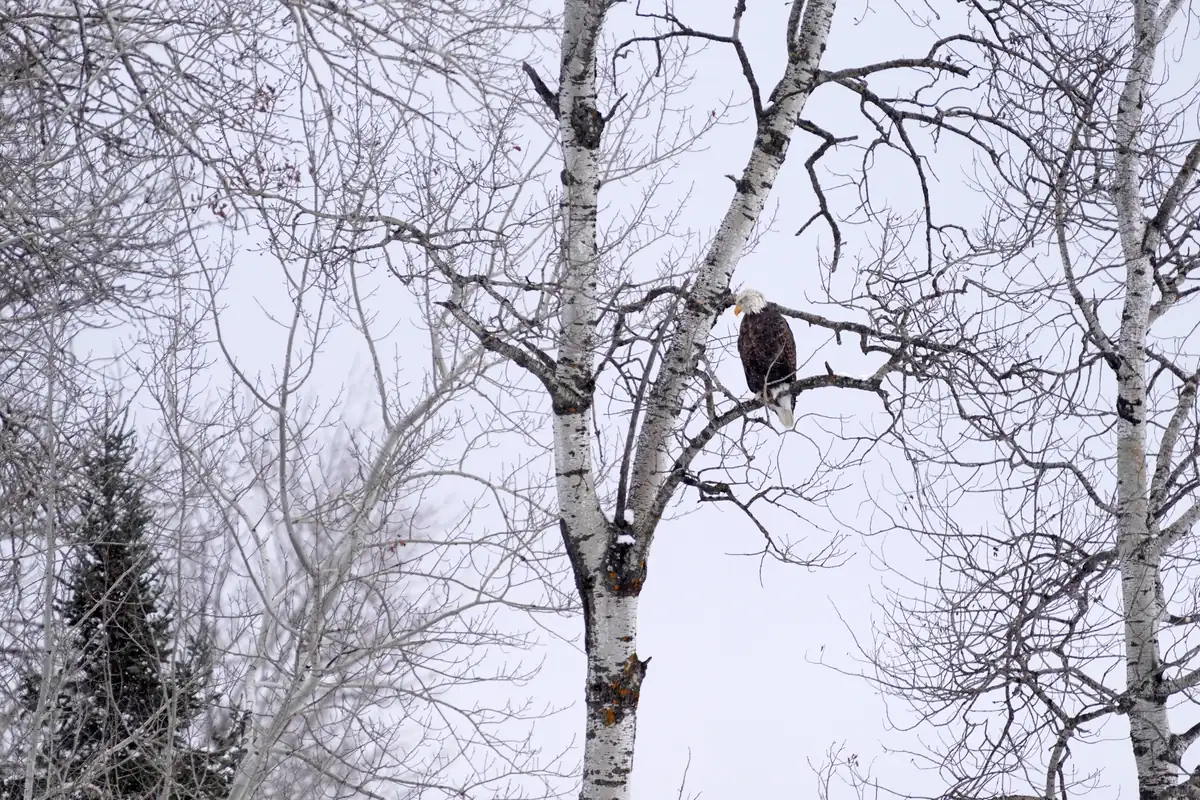
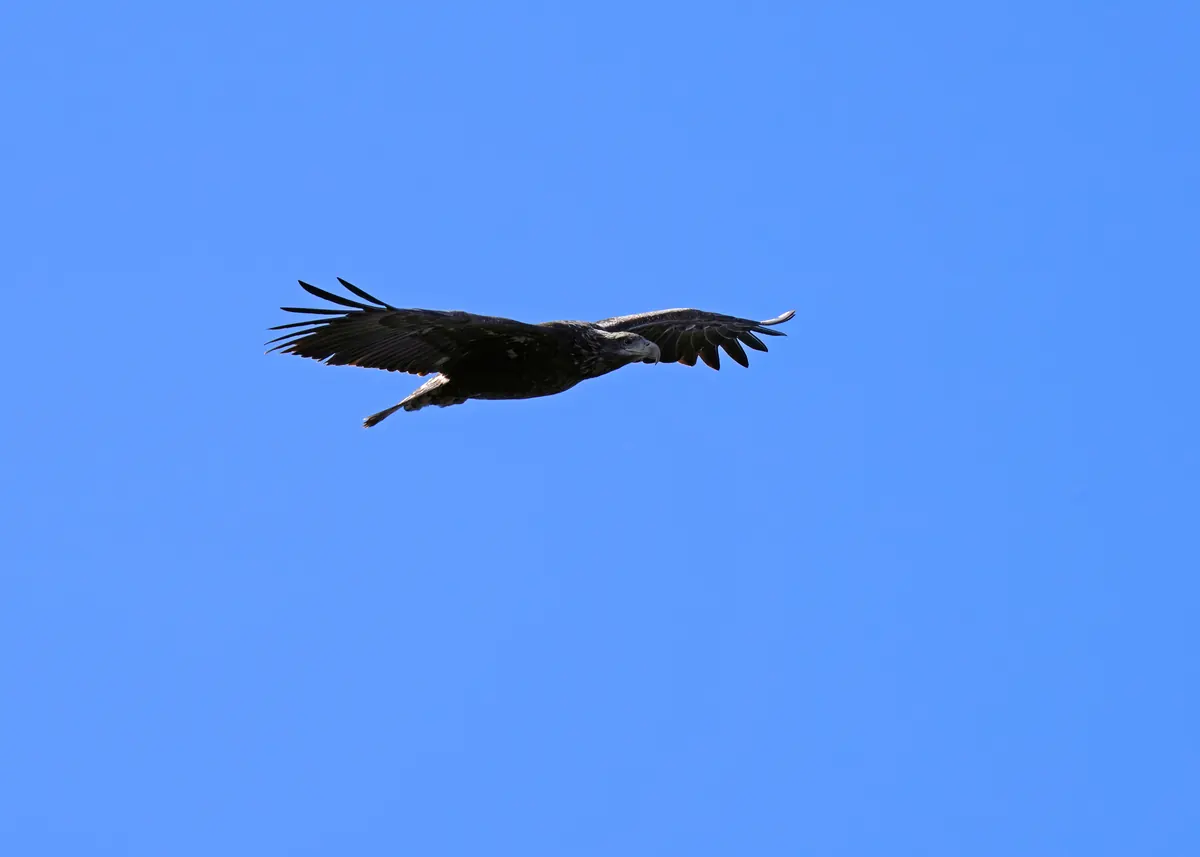
At open water, wherever it lasts. When ponds and backwaters freeze, eagles crowd onto the stretches that stay liquid: tailwaters below reservoir dams and the faster reaches of bigger rivers. Some of these birds are Indiana's own nesting adults; others are winter visitors from farther north. The Indiana DNR says wintering eagles want tall, mature trees beside large bodies of open water for daytime perches, and that they roost together in small groups at night. Its biologists ran mid-winter eagle surveys from 1979 to 2020, and those counts traced a dramatic rise in the number of eagles spending the winter in Indiana. The species came back from almost nothing: between 1985 and 1989 the DNR released 73 young eagles at Monroe Lake, and the first successful nests of the modern era followed in 1991. By 2020 observers reported more than 350 nests.
-
Eagles in Flight Weekend at Turkey Run
Friday, January 22, to Sunday, January 24, 2027 · Turkey Run Inn, Turkey Run State Park, near Marshall in Parke County
The DNR has already posted the 2027 dates for this winter weekend at Turkey Run. The listing promises wild bald eagles, an ambassador eagle you can see up close, owls and other birds of prey, and bird banding with the Indiana Audubon Society, along with activities for children. At the 2026 edition, the weekend began with a Friday evening mixer and then sent early risers out at 7 a.m. on Saturday and Sunday, following DNR vans to watch eagles leave their night roosts; there were field trips, raptor programs and an owl prowl after dark too. As of early October the park had not yet listed the 2027 times or prices; check its page before you go.
-
Sugar Creek, any January day
Early morning and late afternoon · The Ice Box overlook and Sunset Point (Trail 6) at Turkey Run; Prospect Point at nearby Shades State Park
You do not need the festival to see these birds. The Indiana Birding Trail calls Sugar Creek a major flyway for bald eagles, which watch the water for fish along the creek, and it points to the overlook near the Ice Box and to Sunset Point behind the inn as good lookouts. A big white head is easy to see against the dark sandstone walls; an immature eagle, mottled brown and white, is easier to miss and just as worth finding.
-
Reservoir eagle watches
Annual programs, usually in January; dates for 2027 not yet posted · Patoka Lake (Birdseye), Salamonie Lake (near Andrews), Monroe Lake (near Bloomington)
The DNR notes that Patoka Lake, Turkey Run and Salamonie Lake hold winter eagle programs every year, and it singles out Monroe and Patoka as fine places to look for eagles in winter. Patoka's Eagle Watch is an old tradition: the January 2025 program was billed as the 37th, a driving tour of eagle haunts around the lake from the nature center, with advance registration and a fee. That year it was called off for icy roads, a reminder that winter programs depend on the weather. Watch the DNR events calendar for the 2027 date, and call ahead.
Watch from a car or a pullout when you can. An eagle that flushes from its perch spends fat it cannot spare in the cold, so if a bird turns to watch you, back off.
Where do swans, cranes and ducks spend the winter in Indiana?
Southern Indiana is a wintering ground in its own right. As long as the marshes and lakes there stay at least partly open, ducks, geese, swans and some cranes ride out the cold instead of continuing south. A thaw sends them onto flooded fields; a deep freeze pushes them to the few open patches that remain, where they bunch up and are easy to watch.
-
Trumpeter swans
Through the winter; numbers build in the southwest · Wetlands and reservoirs in southwest Indiana; Muscatatuck National Wildlife Refuge near Seymour
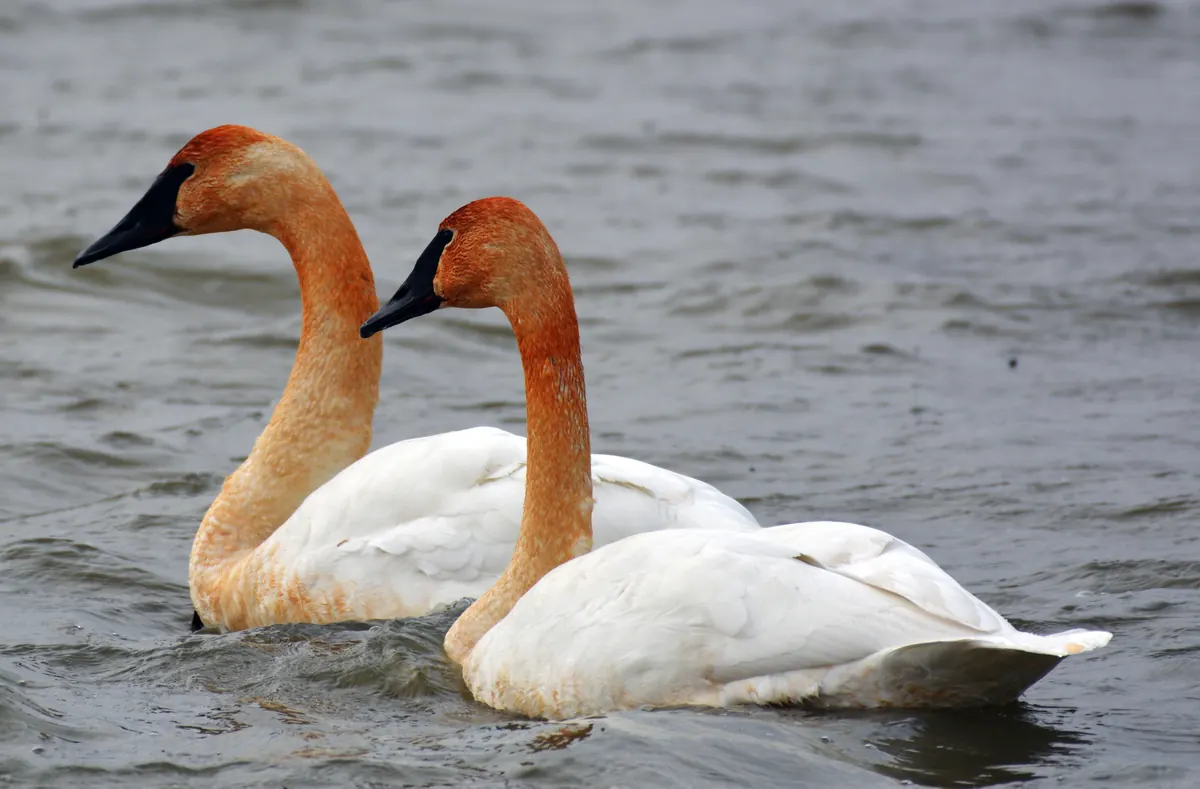
The trumpeter swan is state-endangered in Indiana. A DNR wildlife bulletin says its numbers increase in winter in southwest Indiana, while in spring and summer the birds are found more in the northern third of the state, where a small breeding population has taken hold. Muscatatuck has a special place in that story: in December 2001, four young trumpeters reached the refuge after following an ultralight aircraft 675 miles from Ontario, in an experiment in teaching swans a migration route, because its lakes and wetlands usually keep open water all winter. To tell a trumpeter from the introduced mute swan, look at the bill and neck. Trumpeters have all-black bills and legs and hold the neck straight up; mute swans have orange bills with a black knob and often curve the neck in an S.
-
Tundra swans
Passing through in winter; numbers vary · Muscatatuck NWR and other large wetlands
Tundra swans are smaller, and their black bill often carries a small yellow mark near the eye. The DNR notes that most of them winter around the Chesapeake but that migrants do pass through Indiana, and the Indiana Birding Trail lists them among Muscatatuck's winter waterfowl, with ducks, geese and grebes.
-
Cranes that stay
Peak usually December and January · Muscatatuck NWR; Goose Pond Fish & Wildlife Area near Linton
Not every sandhill crane leaves the state. The Indiana Birding Trail says a growing number of greater sandhill cranes winter around Muscatatuck, with peak numbers usually in December and January, and that endangered whooping cranes sometimes travel with them. Goose Pond, with nearly 5,000 acres of shallow wetlands and a bird list past 300 species, is worth a winter visit too, for whatever its open marshes are holding. If you find a whooping crane, enjoy it from your car and do not approach.
-
How to use the refuge in winter
Daylight hours · Muscatatuck NWR Auto Tour; Goose Pond levees
Muscatatuck's Auto Tour lets you look over the wetlands from the car, which disturbs birds least, but the birding trail guide warns that floods can close the drive and some roads, so check the refuge's website before a long trip. At Goose Pond the DNR asks every visitor to sign in at the property office or a self-service station, whatever the activity. South Zone duck season runs to January 24 and goose seasons to mid-February, so read the rules posted at any area open to hunting.
Which Indiana animals are nesting or mating in January?
For a handful of Indiana's hunters, the new nesting season opens in the coldest month. They time their families so that the young arrive in spring, when prey is plentiful, and have the whole summer to learn to hunt.
-
Great horned owls on eggs
Laying in January and February · Woodlots, river bottoms, parks and farm groves statewide
Purdue Extension notes that Indiana's great horned owls begin breeding in January and February, claiming an old hawk, crow or heron nest, adding a few sticks, and laying a clutch of about three eggs. The female does the incubating, for roughly a month, and her mate brings in the food. Audubon describes a female sitting tight as snow settles on her back. Their owlets stay with the parents through summer and into early fall, which is why the season starts so early. If you know of a big stick nest in a bare woodlot, check it with binoculars from well away; an incubating owl often shows only its ear tufts over the edge. Do not walk in close; a flushed owl leaves the eggs to freeze.
-
Coyotes pairing up
Mating mostly in January and February · Farm country, river corridors and city edges statewide
Coyotes are easier to see in winter, when crops are down and they travel more. The DNR's coyote page says they mate in February, with four to six pups on average born in a den in April, and a DNR winter release adds that in January coyotes are already looking for mates, which makes them more active. Young coyotes from last year are also leaving their parents to find territories of their own, and bare fields make all of them easier to see. The DNR says the rise in sightings is no cause for alarm; never feed a coyote. Keep pets leashed and bring small ones in at night.
-
Red foxes
Mating in winter; kits born March or April · Field edges, cemeteries, golf courses and suburbs
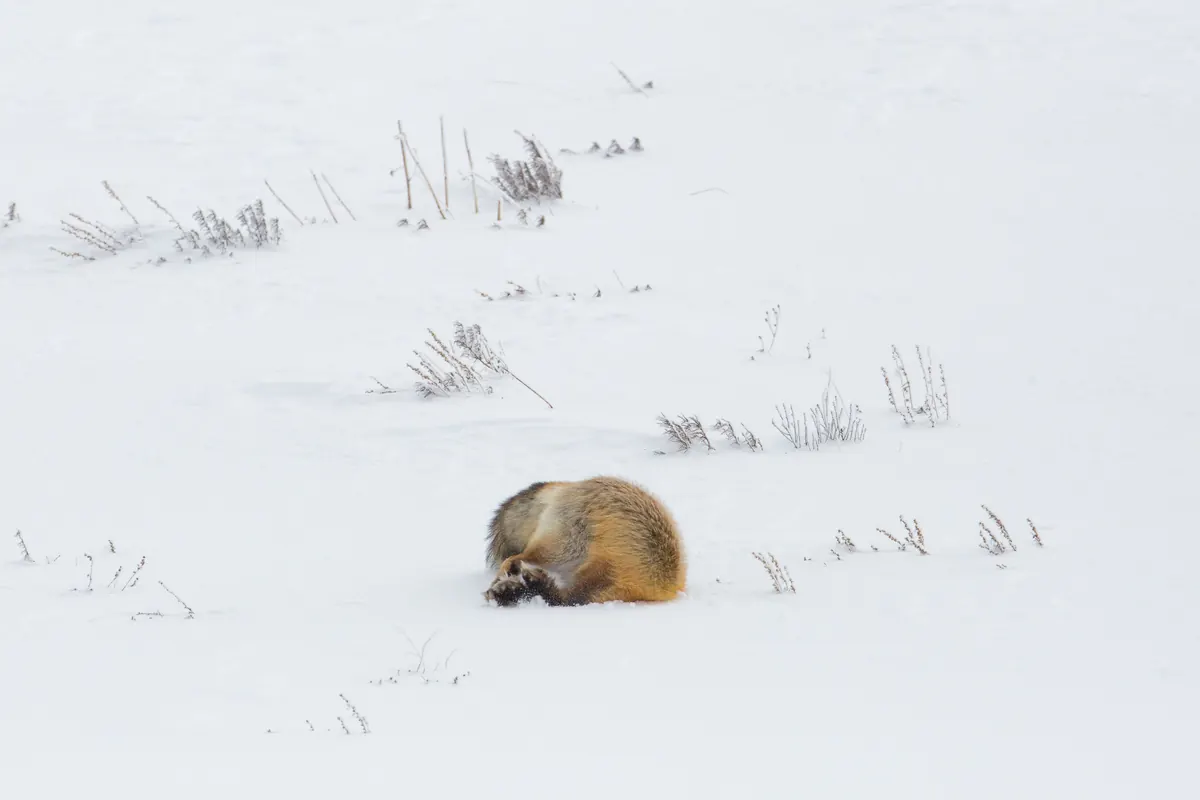
The DNR's red fox page gives a single litter each year, born in March or April about 51 days after mating, which puts courtship in the depths of winter. On a still night you may hear the vixen's harsh scream, startling if you don't know it. In fresh snow, fox tracks run in a neat, nearly straight line.
-
Bald eagles back at the nest
Nest repair through the winter · Big trees near rivers and lakes
Indiana's resident eagle pairs spend the winter near home and add sticks to their nests, which the DNR describes as the largest built by any North American bird, typically 5 to 6 feet wide. Eggs take about 35 days to hatch, so a pair seen carrying sticks this month may have chicks by spring.
Will winter finches and other northern birds come to Indiana this year?
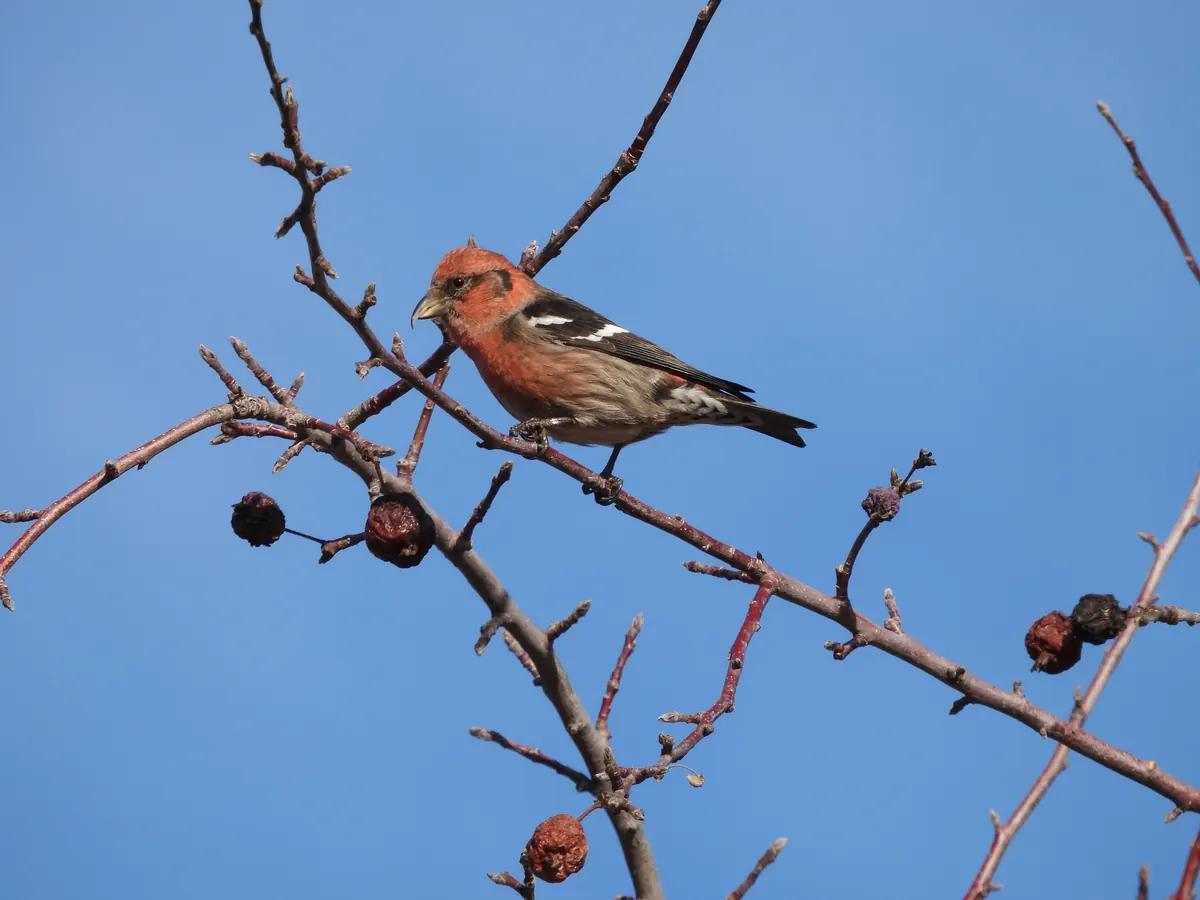
Some winters, flocks of pine siskins, redpolls or crossbills pour south out of Canada; other winters, hardly any come. It depends on the seed and cone crops in the northern forests. The Finch Research Network's winter finch forecast, written by Tyler Hoar and published on September 25, 2026, describes a mixed picture: strong cone and seed crops in the east, from central Ontario to the Maritimes and the northeastern states, and in the far west, but largely poor crops across the central boreal forest. Birds from that poor middle are expected to head toward eastern Canada, the Great Lakes region and the northeastern states, though plentiful cones there may keep many of them in the woods rather than at feeders.
-
Pine siskins
Any time from late fall, most often at feeders in midwinter · Nyjer and sunflower feeders; spruce and pine plantings
The forecast's best bet for a flight south of the boreal forest. It expects a sizable irruption into the Northeast and possibly a small to moderate movement farther south. Look for a small, heavily streaked brown finch with yellow edging in the wing and tail, traveling in chattering, wheezing flocks.
-
Crossbills and redpolls
Unpredictable; check eBird reports · Conifer stands, including planted pines and hemlocks
The forecast expects white-winged crossbills to wander the Great Lakes region in scattered flocks and allows for a small flight of common redpolls, especially toward the western Great Lakes. In Indiana that makes either a lucky find rather than a sure thing, most likely in the north. Listen for the dry chips of crossbills working pine cones overhead.
-
Evening grosbeaks and purple finches
If they come, mid to late winter · Feeders with black-oil sunflower seed
Only small movements are expected: a modest push of evening grosbeaks below the boreal forest, and at best a late, small flight of purple finches. According to the forecast, good cone crops should keep most red-breasted nuthatches in the north, and few pine grosbeaks or Bohemian waxwings should come south.
-
Count what comes
November 1 to April 30 · Your own feeder or yard
Project FeederWatch, a joint program of the Cornell Lab and Birds Canada, asks volunteers to count the birds at their feeders on days of their own choosing, on whatever schedule suits them, from November through April. U.S. participants pay an annual fee of $18. Those tallies are how scientists learn whether a forecast came true.
When does shelf ice form at Indiana Dunes, and is it safe to walk on?
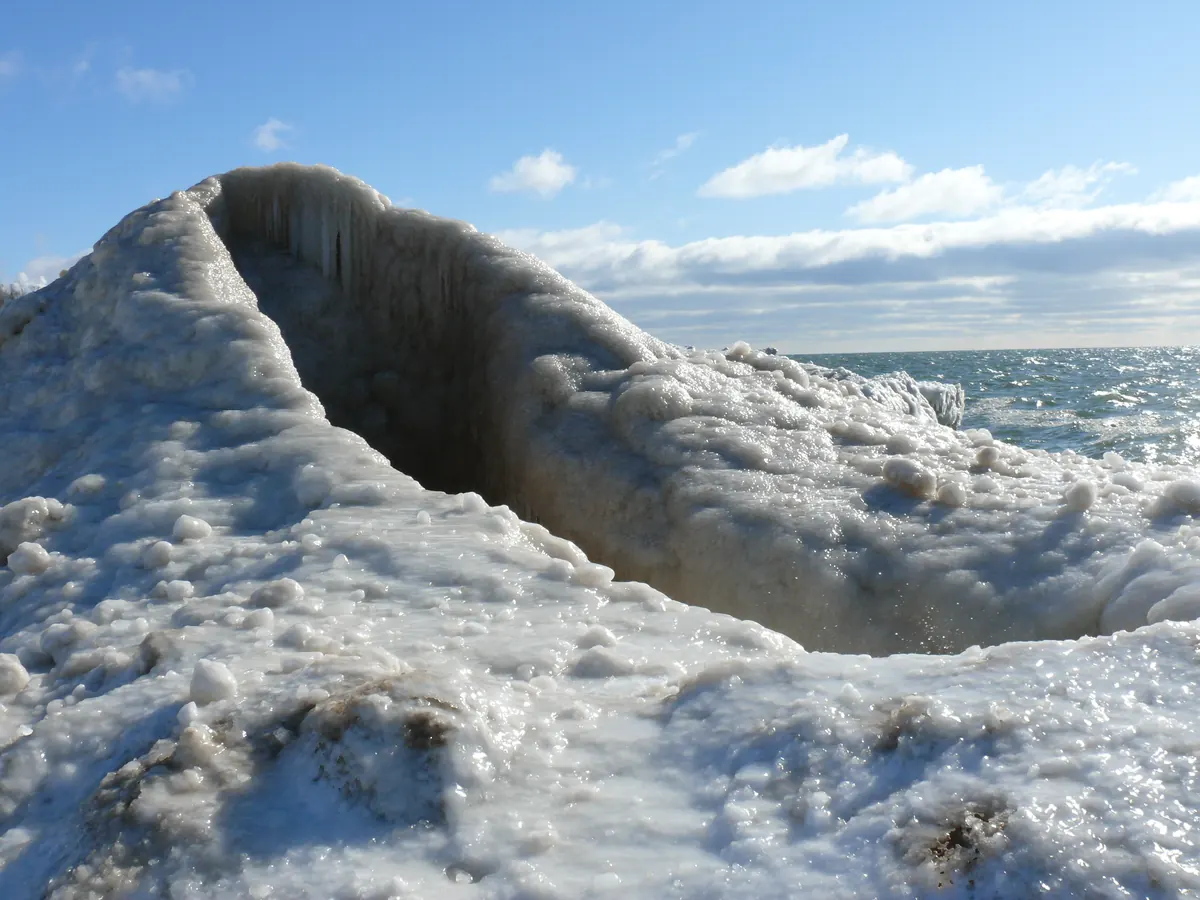
Shelf ice builds along Lake Michigan's southern shore after stretches of hard cold, when breaking waves and spray freeze and floating chunks of ice are driven ashore and stack up. The National Park Service explains that the result is a jumble full of cracks, crevices and hollows that builds outward from the beach and does not rest on the lake bottom. It can be beautiful, white ridges and frozen waves running to the horizon, and it is dangerous.
-
Ice volcanoes
During cold snaps with wave action · Along the shoreline of Indiana Dunes National Park and State Park
Where waves punch through the shelf, water keeps spurting up through the hole and freezing in layers, building a cone. The Park Service says these mounds can reach 20 feet or so in height and can hide hollow spaces inside. They are what most people photograph, and they are the most dangerous part of the shelf.
-
Where to view it safely
Daylight, after a cold week · The top of the stairs on the Dune Succession Trail at West Beach; the base of the first dune anywhere on the shore
The Park Service says shelf ice is inherently unstable, cannot be trusted to hold a person's weight, and may hide holes into freezing water. Someone who breaks through faces cold shock at once, hypothermia within minutes, and a rescue made almost impossible by waves and fragile ice. Its advice is simple: stay on solid ground, at the base of the first dune or farther inland, and never climb onto the ice. The West Beach stairs give the best overall view, though they can be slick in snow.
-
How much of the lake freezes
Maximum usually mid-February to early March · Lake Michigan
Lake Michigan rarely freezes over. NOAA's Great Lakes Environmental Research Laboratory gives a long-term average annual maximum ice cover of 40.2 percent; between 1973 and 2018 the peak ranged from 93.1 percent in 2014 to 12.4 percent in 2002. The lab notes that El Niño is one of four large climate patterns that steer how much ice the lakes make in a given winter, by shifting the jet stream.
-
Other winter outings at the Dunes
When there is snow · Paul H. Douglas Center (Miller Woods); Glenwood Dunes and Tolleston Dunes trails
Indiana Dunes National Park lends snowshoes free at the Paul H. Douglas Center for Environmental Education for the Paul H. Douglas Trail when 4 to 6 inches of snow is down. Cross-country skiers bring their own gear to the Glenwood Dunes loops, which add up to nearly 15 miles, or to the 2.9-mile Tolleston Dunes Trail, which the park rates for advanced skiers.
When are the coldest days of the year in Indiana?
In the middle of January, on average. NOAA's 1991 to 2020 normals make January the coldest month of the year at South Bend, Fort Wayne, Indianapolis and Evansville, colder on average than either December or February, and January is when the state's fiercest cold outbreaks have struck. The most famous came on January 19, 1994. Snow on January 16 to 18 left about 6 to 8 inches on the ground at Indianapolis, and then a sprawling Arctic high settled overhead with clear skies and light winds. NWS Indianapolis says the capital dropped to 27 below zero that morning, its all-time record, and New Whiteland, in Johnson County, reached 36 below, the coldest temperature ever officially recorded in Indiana.
As the 1994 cold showed, fresh snow under a clear, calm sky lets the ground lose heat fast. The north keeps far more of it: South Bend averages nearly 20 January days with an inch or deeper on the ground, against only 3 in Evansville, as the table shows, and in the lake-effect belt South Bend averages 21.6 inches of January snow, against 8.8 at Indianapolis.
| Station | Average high | Average low | Rain and melted snow | Snowfall | Snow-cover days | Nights below zero |
|---|---|---|---|---|---|---|
| South Bend | 31.2 °F | 17.0 °F | 2.66 in | 21.6 in | 19.6 | 3.2 |
| Fort Wayne | 32.6 °F | 18.4 °F | 2.54 in | 10.8 in | 14.7 | 3.3 |
| Indianapolis | 36.1 °F | 20.9 °F | 3.12 in | 8.8 in | 10.8 | 2.1 |
| Evansville | 41.7 °F | 25.5 °F | 3.35 in | 3.4 in | 3.0 | 0.6 |
Snow arrives late in some winters and skips whole weeks in others. Our frost dates for Indiana page gives the typical last spring freeze for towns across the state, something to look forward to in January.
Will El Niño bring a mild, low-snow January to Indiana?
The odds lean that way, with no guarantee. Federal forecasters rate a very strong event as close to certain: odds above nine in ten for fall and winter 2026 to 2027, in the CPC's ENSO discussion dated September 10. NWS Indianapolis says El Niño winters in Indiana are typically warmer than average with below-average precipitation, while warning that no two events play out the same way. A study by the NWS office in Cleveland of eight moderate to strong El Niño winters, using stations that included South Bend, Fort Wayne, Indianapolis and Evansville, found that November to March temperatures across the Ohio Valley and lower Great Lakes usually ran above normal, and that winter precipitation came up short in seven of the eight, which meant below-normal snowfall at many stations. Near the lakes, the authors add, lake-effect snow can hide the El Niño pattern in some years. In September, Indiana Public Media quoted an Indiana University climate researcher saying a relatively dry winter is expected, with the largest effects from November through January.
In practice, a mild-leaning January in Indiana still contains cold outbreaks. A single Arctic front can bring subzero nights, and South Bend and LaPorte can still be buried by lake-effect bands while open water lasts.
NOAA publishes its first look at the 2026 to 2027 winter on October 15 and refreshes it monthly; Indiana's shading for January is on the CPC seasonal maps. For the next several days, our weather page has the local forecast.
How much daylight does Indiana gain in January?
Between about 40 and 50 minutes, with the pace picking up week by week. In the first days of January the days lengthen by well under a minute a day, because the sun's track is changing slowly just after the solstice; by the end of the month they are growing by close to two minutes a day. Mornings are slowest to improve. Sunrise in Indiana stays at its latest through about the first week of January and only then starts creeping earlier, while sunsets have already been getting later since early December, so most of January's extra light comes at the end of the afternoon.
Indiana sits near the western limit of Eastern time, which is why its winter sunrises come so late, and the table shows how little latitude matters by comparison: from South Bend to Evansville the difference in day length is a little over 20 minutes.
| City | Jan 1 | Jan 31 | Gained | Per day |
|---|---|---|---|---|
| South Bend | 9 h 13 m | 10 h 01 m | 48 min | 1.6 min |
| Gary | 9 h 14 m | 10 h 02 m | 48 min | 1.6 min |
| Fort Wayne | 9 h 16 m | 10 h 04 m | 48 min | 1.6 min |
| Lafayette | 9 h 21 m | 10 h 06 m | 45 min | 1.5 min |
| Indianapolis | 9 h 25 m | 10 h 09 m | 44 min | 1.5 min |
| Terre Haute | 9 h 27 m | 10 h 11 m | 44 min | 1.5 min |
| Bloomington | 9 h 28 m | 10 h 12 m | 44 min | 1.5 min |
| Evansville | 9 h 35 m | 10 h 16 m | 41 min | 1.4 min |
Type in your own town on our sunrise and sunset calculator to see each day's times and twilight.
What can you see in the night sky over Indiana in January 2027?
Long, cold nights and a busy sky. All times here are standard time. Most of the state keeps Eastern; Central (one hour earlier) applies to the six northwestern counties around Gary and Michigan City and the six southwestern counties around Evansville.
-
Earth closest to the sun
Saturday, January 2, 9:33 p.m. EST (8:33 p.m. CST) · Everywhere
On Saturday evening the planet is as close to the sun as it gets all year, roughly 91.4 million miles. Worth remembering when the thermometer reads single digits: Indiana's winter has nothing to do with distance from the sun and everything to do with the sun's shallow winter slant, which spreads its light thin over the ground.
-
The Quadrantid meteor shower
Night of Sunday, January 3, into Monday, January 4 · Anywhere dark; look northeast after midnight
The Quadrantids can be one of the year's strongest showers, but the peak lasts only a few hours. Predictions for 2027 put it between about 10:30 p.m. EST on the 3rd (9:30 p.m. CST) and roughly 12:47 a.m. EST on the 4th (11:47 p.m. CST on the 3rd), squarely in the Indiana night. Their radiant lies below the end of the Big Dipper's handle; seen from Indiana it starts the night skimming the northern treetops and keeps climbing, so Monday's last dark hours before dawn should be the most productive. The moon is only a thin crescent that rises a few hours before sunrise. Away from all lights, counting several dozen in an hour would be a fine night; in town you may see a handful.
-
Venus in the morning
All month; greatest elongation Sunday, January 3 · Southeast before sunrise
Venus is the brilliant morning star, and on Sunday, January 3, it hangs farther west of the sun than at any other point in this morning apparition. In a small telescope it shows a half-lit disk this week.
-
The Wolf Moon, the biggest full moon of 2027
Full Friday, January 22, 7:17 a.m. EST (6:17 a.m. CST); best the night of Thursday the 21st · Rising in the east-northeast near sunset
Perigee, the moon's closest point for the month, falls about 14 hours before this full moon, so the Wolf Moon will be roughly 222,229 miles from us. So Hoosiers get 2027's nearest full moon here; whichever supermoon rule you prefer, this one qualifies. The moon is full just before dawn on Friday, so the night of Thursday the 21st, when it rises at dusk and sets near sunrise, is the night to watch. To the eye, Friday's moonrise brings an equally round disk. Then on Saturday, January 23, find Jupiter shining just beside the moon, with the star Regulus not far off.
-
Jupiter and Saturn in the evening
All month · Jupiter in the east; Saturn in the southwest after dusk
Jupiter rises in the evening and climbs higher each night, heading for opposition on February 10, when it will be up all night. Saturn is a pale, steady light in the southwest after dark, sinking lower as the weeks go by. By late in the month, Mercury may show itself low over the west-southwest horizon some 30 to 45 minutes after the sun goes down; it will be easier to see in the first week of February.
-
Dark-sky nights
Roughly January 3 to 12 · Rural parks and dark fields
With new moon on Thursday, January 7, the early-month evenings are moonless, the best stretch of January for the Milky Way's faint winter band and for aurora watching. Solar activity has passed its 11-year peak without switching off, so a strong geomagnetic storm can still, now and then, put a glow low in the north over Indiana; NOAA's Space Weather Prediction Center posts the aurora forecast.
| Phase | Date | Time |
|---|---|---|
| New moon | Thu, Jan 7 | 3:24 p.m. EST (2:24 p.m. CST) |
| First quarter | Fri, Jan 15 | 3:34 p.m. EST (2:34 p.m. CST) |
| Full moon, the Wolf Moon | Fri, Jan 22 | 7:17 a.m. EST (6:17 a.m. CST) |
| Last quarter | Fri, Jan 29 | 5:55 a.m. EST (4:55 a.m. CST) |
Before you head out for the Quadrantids, check the cloud forecast on Today's sky, and look up local moonrise on our moon calendar.
What can Indiana families do outdoors in January 2027?
- Friday, January 1: First Day Hikes. Guided New Year's Day hikes are a fixture at Indiana's state parks. For the start of 2026, 31 state parks and recreation areas took part, from a 2-mile Salt Creek Trail hike at Brown County to a beach and trail loop at Indiana Dunes State Park, and most hikes were free. When we checked in early October the 2027 list had not appeared; the DNR usually posts it on its events calendar in December.
- January 1 to 5: the Christmas Bird Count winds up. Audubon's count window runs from mid-December through January 5. Last season, the Muscatatuck refuge, Willow Slough, Jasper-Pulaski, Elkhart, Hamilton County, Posey County and Southern Lake County counts all fell in the first days of January. Indiana Audubon's list gives every circle's date and the compiler to contact, and new counters are wanted.
- Sunday mornings: turtle feeding at McCormick's Creek State Park, 10:30 a.m. in the Canyon Inn lobby, free with park entry. The park has listed it on Sundays through fall 2026; January dates were not posted in early October, so call the park first.
- Friday to Sunday, January 22 to 24: Eagles in Flight Weekend at Turkey Run State Park, with live raptors, bird banding and family activities (see the eagles section). Check the park's page for the schedule and fees.
- Eagle watches at the reservoirs. Patoka Lake and Salamonie Lake hold winter eagle programs each year, usually in January, with registration. Their 2027 dates were not posted in early October; check with each property.
- Snowshoes at the Dunes. When 4 to 6 inches of snow is down, borrow free snowshoes at Indiana Dunes National Park's Paul H. Douglas Center and try the trail through Miller Woods.
- All winter: Project FeederWatch. Count the birds at your feeder for Cornell Lab scientists, any days you choose, November through April.
- Coming next month: the Great Backyard Bird Count. It normally falls on a long weekend in the middle of February; confirm 2027's dates at birdcount.org, and use January to learn your feeder regulars.
Confirm any program the week before, because January weather cancels events. Keep notes from each trip in our Naturalist's Field Journal; reread the Indiana December guide for the crane departures and Christmas Bird Counts, and browse other months and states on our nature guides page.
Safety notes for January in Indiana
- Hunting seasons still open. Deer archery season ends Sunday, January 3, and the fall archery turkey season ends the same day in open counties. Hunting in the deer reduction zones continues to January 31, and the DNR requires every hunter in a reduction zone to wear hunter orange through that date. The 2026–27 Hunting and Trapping Guide lists the dates when deer hunters must wear hunter orange as the youth, firearms and muzzleloader seasons, the last of which closed December 20, plus November 14 to January 31 inside the reduction zones; outside those zones, the DNR’s hunter orange guide requires archers to wear it only where their season overlaps firearms or muzzleloader seasons, but it lists rabbit, quail and pheasant, and squirrel (November 1 to January 31) among the seasons when hunters must wear it, so expect orange in January woods and fields. Season dates are subject to change, so check the current guide. Rabbit season runs to February 28, squirrel to January 31, and quail south of I-74 to January 10. Duck hunting ends on January 10 in the Central Zone and on January 24 in the South Zone, the North Zone having closed in December, while Canada goose hunting continues statewide until February 14. On state forests, fish and wildlife areas and reservoir properties, wear something bright and give your dog a blaze-orange vest as well.
- Trapping season. Fox trapping, and both hunting and trapping of raccoon, opossum, mink, muskrat, weasel and bobcat, end January 31; coyote, beaver and river otter seasons continue to mid-March. Leash dogs along creeks, marsh edges and fencerows, where sets are most likely.
- Treat every frozen pond as suspect. The DNR's law enforcement division says that if you don't know how thick the ice is, you should stay off it. Its officers want 4 inches or more before anyone fishes through it and 5 under a snowmobile, measured with an auger, and advise never going out alone, telling someone your plans, wearing a life jacket or float coat, carrying ice picks and a rope, and avoiding rivers, streams and spots near springs, where ice is thinner than it looks.
- Stay off the shelf ice. On Lake Michigan, view the ice from the first dune or farther back. Ice mounds can be hollow and the water beneath is deadly cold.
- Cold, wind chill and short days. A clear, calm January night after fresh snow can fall well below zero, as January 1994 showed. Dress in layers with a windproof shell, cover your ears and fingers, and change out of wet socks quickly. Check the wind chill before a long walk, and carry a headlamp: even on January 31, days are only about 10 hours long.
- Winter driving to trailheads. Lake-effect squalls in the north and ice storms anywhere can close roads quickly. Park programs are canceled for hazardous roads, as Patoka's eagle watch was in 2025; check before you leave.
- Bats in caves. Hibernating bats are still in the caves of southern Indiana. On the Hoosier National Forest, caves are closed from August 16 to May 14; stay out of closed or gated caves anywhere.
Sources
- Indiana DNR: bald eagle (wintering habits, restoration at Monroe Lake, nest counts, winter eagle programs)
- Indiana DNR: 2027 Eagles in Flight Weekend, Turkey Run State Park, January 22 to 24, 2027
- Indiana DNR: Eagles in Flight Weekend 2026, Turkey Run State Park (schedule)
- Indiana Birding Trail: Turkey Run State Park (Sugar Creek eagle lookouts)
- Indiana DNR: Eagle Watch, Patoka Lake, January 11, 2025 (37th annual; canceled for weather)
- Indiana DNR: DNR events calendar, January 2027
- Purdue Extension Got Nature?: state-endangered trumpeter swans (DNR Wild Bulletin)
- Indiana DNR: mute swans (comparison with trumpeter and tundra swans)
- U.S. Fish and Wildlife Service: rare avian visitors coming back home to Indiana (trumpeter swans at Muscatatuck, 2001)
- Indiana Birding Trail: Muscatatuck National Wildlife Refuge (winter waterfowl, sandhill and whooping cranes)
- U.S. Fish and Wildlife Service: Muscatatuck National Wildlife Refuge
- Indiana DNR: Goose Pond Fish & Wildlife Area
- Purdue Extension: winter is a good time to bird (great horned owl nesting; Brian MacGowan)
- Audubon: why great horned owls start nesting in winter
- Indiana DNR: coyotes (living with wildlife)
- Indiana DNR: winter coyote sightings are no cause for alarm
- Indiana DNR: red fox
- Finch Research Network: Winter Finch Forecast 2026–2027 (Tyler Hoar, September 25, 2026)
- Project FeederWatch (Cornell Lab of Ornithology and Birds Canada): project overview
- National Park Service: shelf ice, Indiana Dunes National Park
- National Park Service: winter activities, Indiana Dunes National Park
- NOAA Great Lakes Environmental Research Laboratory: Great Lakes ice cover (Lake Michigan averages and records)
- NWS Indianapolis: record cold of January 1994
- NOAA NCEI: 1991–2020 monthly normals for South Bend, Fort Wayne, Indianapolis and Evansville (data API)
- Climate Prediction Center: ENSO diagnostic discussion, September 10, 2026
- Climate Prediction Center: 90-day outlooks (winter outlook issued October 15, 2026, and updated monthly)
- NWS Indianapolis: El Niño and Indiana winters
- NWS Cleveland: El Niño and the lower Great Lakes and Ohio Valley (study of eight events)
- Indiana Public Media: the impacts of the super El Niño on Indiana (September 16, 2026)
- U.S. Naval Observatory: moon phases (data API)
- U.S. Naval Observatory: Earth's seasons and perihelion, 2027
- Fred Espenak: Sky Event Almanac 2027 (planets, perihelion, Moon-planet pairings)
- American Meteor Society: meteor shower calendar (Quadrantids)
- EarthSky: what is a supermoon? (closest full moons)
- NOAA Space Weather Prediction Center: aurora forecast
- Wikipedia: time in Indiana (the twelve Central-time counties)
- Indiana DNR: state park properties offer First Day Hikes on New Year's Day (2026)
- Audubon: join the Christmas Bird Count (December 14 to January 5)
- Indiana Audubon: Christmas Bird Counts in Indiana (dates and compilers)
- Indiana DNR: Turtle Feeding, McCormick's Creek State Park (fall 2026 Sundays listed)
- Great Backyard Bird Count (dates each February)
- Indiana DNR: 2026–27 deer hunting seasons
- Indiana DNR: 2026–27 hunting and trapping seasons (PDF; furbearers, small game, waterfowl by zone)
- Indiana DNR Law Enforcement: always assume you are on thin ice (ice safety)
- Hoosier National Forest: climbing and caving (cave closure order, August 16 to May 14)
- Indiana Hunting and Trapping Guide 2026–27 (eRegulations): deer regulations and hunter orange dates
- Indiana DNR: hunter orange requirements (PDF)
- Photos via Wikimedia Commons; licenses and photographers are credited under each picture
