What to look for in nature in Indiana this December
Meteorological winter, the version climatologists use, starts on December 1 in Indiana: the coming three months are, on average, the coldest quarter of the year. Outdoors, the change shows fast. The great crane gathering at Jasper-Pulaski peaks and then breaks up, sometimes in a single cold week. Short-eared owls float over the northwest prairies at dusk, birders spread across some forty count circles, and hundreds of thousands of endangered bats hang in the caves of the south. Sunsets bottom out in the first week or so of the month, the 21st brings the solstice, and the closest full moon of the year rises on the 23rd. This guide follows the month from the Lake Michigan shore to the Ohio River, with times for both of the state's clocks.
Other months in Indiana: October, November.
Start here
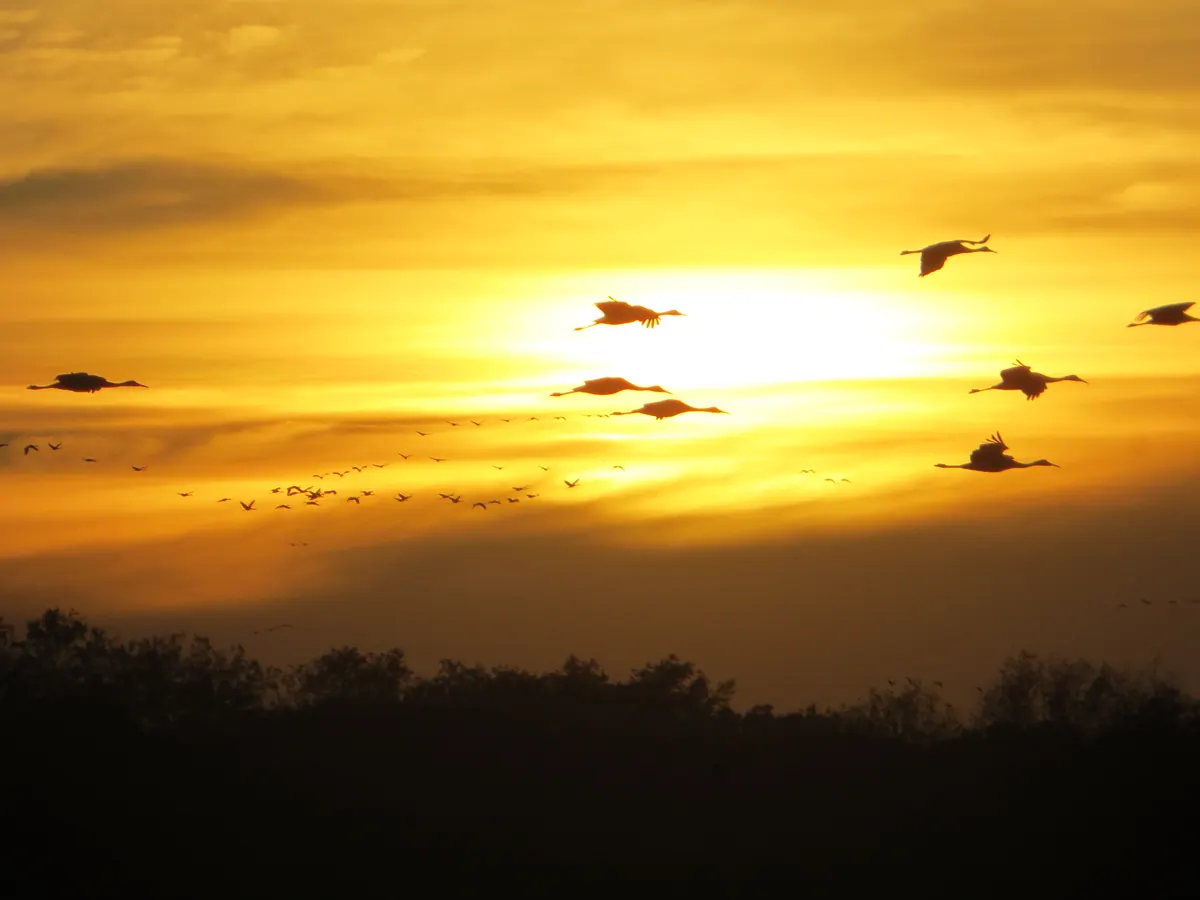
- Catch the cranes before they go. Jasper-Pulaski usually still holds thousands of sandhill cranes in the first week of December, but a hard cold front can send nearly all of them south within days. Check the DNR's Tuesday count, then go on the next calm evening and watch them drop into the marsh at sundown.
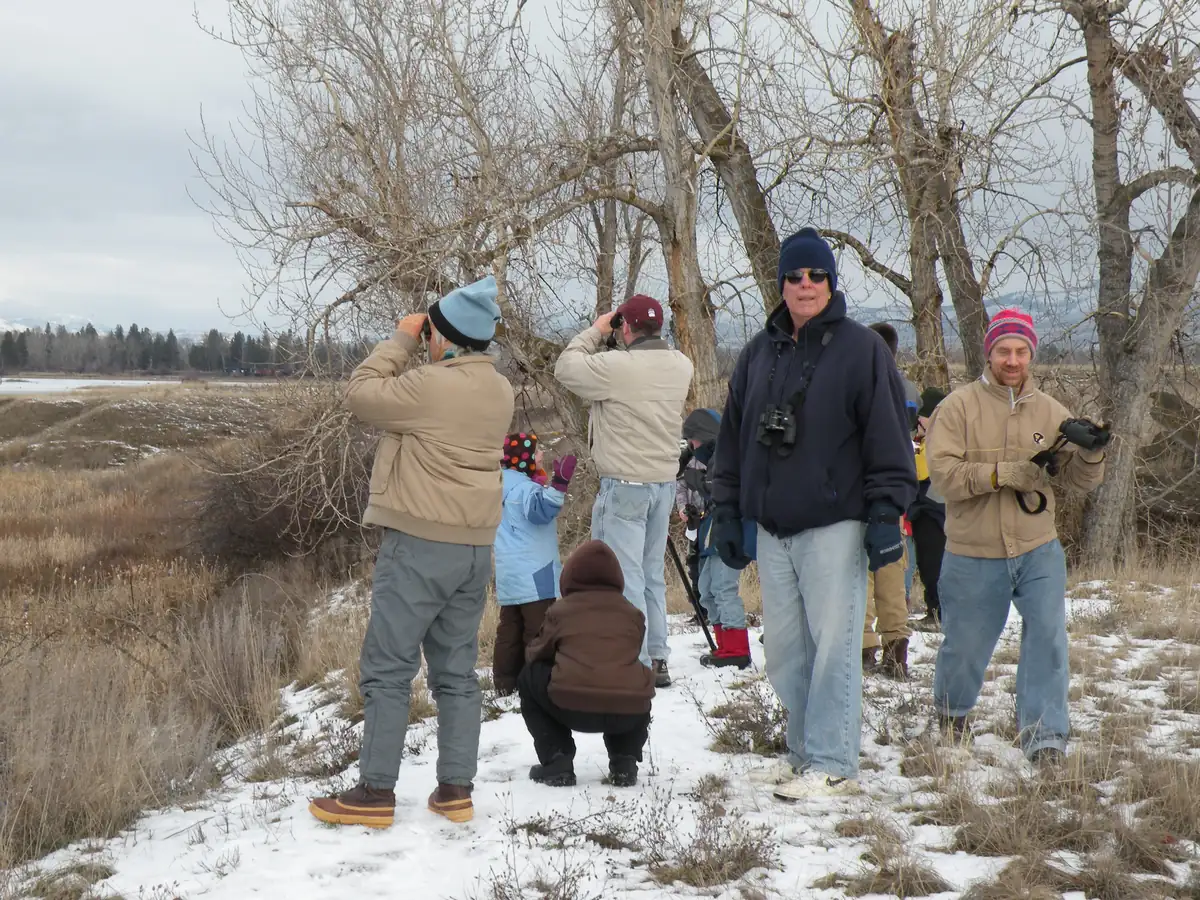
- Sign up for a Christmas Bird Count. Indiana has around forty count circles, and every one welcomes beginners who can walk a route with an experienced birder or watch a backyard feeder that falls inside a circle. Counts run December 14 to January 5; find the nearest compiler on Audubon's map and email early.
- Stay up for the Geminids. Geminid meteors, the year's best display, reach their maximum overnight from Sunday the 13th into Monday the 14th, and the crescent moon sets in the evening. From a dark field, after 10 p.m., you could see dozens an hour, with the best rates around 2 a.m.
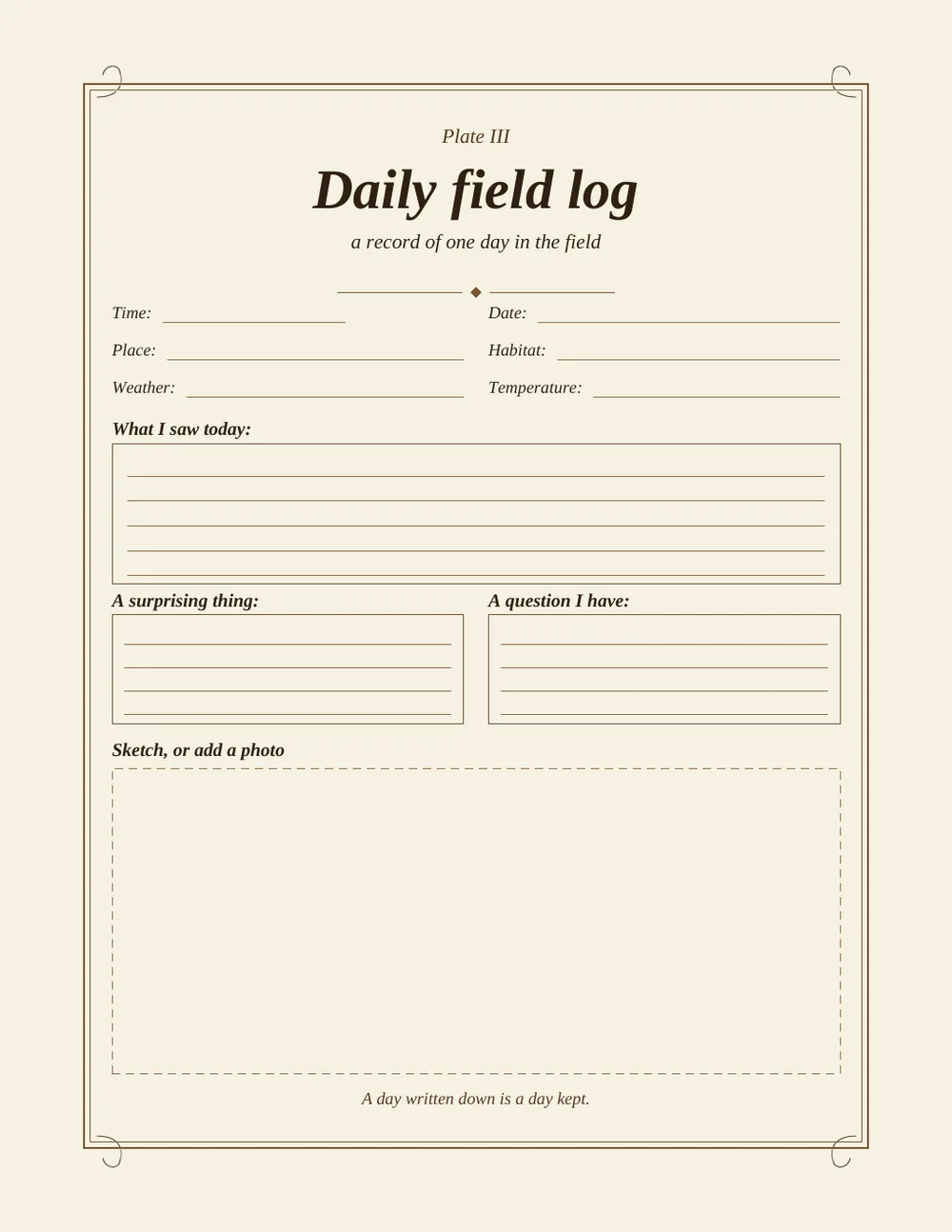
December's journal pages fill quickly. Inside the Naturalist's Field Journal, a sundown crane flight suits the dusk and dawn watch plate, and whatever you tally on a Christmas Bird Count goes on birds I have seen. After the first snow, the tracks to know plate is waiting: rabbit, deer, fox and squirrel prints along a fencerow. Press a hemlock or redcedar sprig onto the seeds, pods and cones plate. The solstice is a good day for colours of the day, when the low sun turns even a bare woods gold for an hour.
Regions used below: Northwest Indiana and the Dunes; Northern Indiana (South Bend, Fort Wayne); Central Indiana (Indianapolis, Lafayette, Terre Haute); South-central hills (Bloomington, Brown County, Hoosier National Forest); Southwest and the Ohio River (Evansville, Madison).
When do the sandhill cranes leave Jasper-Pulaski?
Most falls, sometime in December. The cranes that crowd Jasper-Pulaski Fish & Wildlife Area in late November are waiting on the weather, and the Indiana DNR's own counts show how differently that wait can end. In 2025 the flock stood at 16,400 on December 2 and had collapsed to 115 a week later: nearly every bird left within days. In 2024, by contrast, more than 11,000 cranes were still on the property the day after Christmas. The DNR describes the viewing season as running from mid-October through mid-December, so the first two weeks of the month are the safer bet.
-
The last Crane Saturdays
Saturdays, December 5, 12 and 19, 5:30 to 7:30 p.m. Eastern · Crane viewing tower, Jasper-Pulaski FWA, north of Medaryville
International Crane Foundation staff keep their Saturday evening watch at the tower through December 19, the final night of the 2026 season. They can help you pick a whooping crane out of the gray mass or tell a juvenile, with its rusty head and no red cap, from an adult. Their start comes after sunset this late in the year, so arrive an hour sooner for the flight.
-
Where the flock goes next
Departures from late November through December · Tennessee, Georgia and Florida, with some staying in Indiana
These birds belong to the Eastern Population of sandhill cranes, which nests around the Great Lakes. A U.S. Fish and Wildlife Service study that followed 29 cranes by satellite between 2009 and 2011 found that, on average, they reached their winter homes starting in mid-December. Tennessee was the most common wintering state, with Florida next, but 29 percent of the tracked birds wintered in Indiana. So a December drive past flooded fields in the southwest can still turn up cranes after Jasper-Pulaski has emptied.
-
Goose Pond in winter
December through February · Goose Pond Fish & Wildlife Area, near Linton in Greene County
Goose Pond keeps cranes and waterfowl into winter while its marshes stay open. On the Christmas Bird Count held there in the 2023 to 2024 season, counters recorded 12 whooping cranes, and the Goose Pond circle was one of only two in the state to top 100 species. View from the roads and parking areas, and give any whooping crane plenty of room.
| Fall | First December count | Second | Third | Fourth |
|---|---|---|---|---|
| 2022 | 31,970 (Dec 8) | 21,827 (Dec 13) | 17,432 (Dec 20) | not listed |
| 2023 | 18,944 (Dec 7) | 20,158 (Dec 12) | 12,639 (Dec 19) | not listed |
| 2024 | 20,535 (Dec 3) | 14,088 (Dec 10) | 11,713 (Dec 20) | 11,362 (Dec 26) |
| 2025 | 16,400 (Dec 2) | 115 (Dec 9) | 219 (Dec 16) | 98 (Dec 23) |
The DNR posts each week's number on its Jasper-Pulaski crane page. A count that drops by thousands from one Tuesday to the next means the exodus has begun.
How do you join a Christmas Bird Count in Indiana?
The 127th Christmas Bird Count opens on December 14, 2026, and closes on January 5, 2027. Every count has its own fixed circle and a single day picked by the volunteer who compiles it, and every bird seen or heard that day goes into a database that stretches back more than a century. Indiana Audubon listed 42 confirmed counts last season, from the Indiana Dunes and Pokagon in the north to Posey County and the Ohio River in the south.
-
Finding a count
Sign up in early December; dates are set by each compiler · Audubon's online count map; Indiana Audubon's list of Indiana counts
Last season's Indiana counts ran from December 14 at Grant County, Johnson County and Whitewater State Park to January 5 in southern Lake County, with circles at Jasper-Pulaski, Goose Pond, Muscatatuck National Wildlife Refuge, Big Oaks National Wildlife Refuge and several state parks. Dates for 2026 to 2027 had not been posted when we checked in early October. Audubon's map links each circle to its compiler. Anyone whose home sits within a count circle may report a feeder tally for that day.
-
What Hoosier counters find
Count day, usually dawn to dusk · Statewide
Audubon's regional editor reported that the 124th count, in the 2023 to 2024 season, had 900 observers on 46 counts and found 161 species, with Gibson County (105) and Goose Pond (103) leading the state. Counters set Indiana records that winter for American robins (20,820), white-throated sparrows (3,624) and bald eagles (435), and two counts each found a pair of limpkins, a tropical wading bird never before seen on an Indiana count. Most of any day's tally is ordinary birds, and that long record of commoners is the count's real value.
Where can you see owls in Indiana in December?
December is a good owl month in Indiana. The leaves are down, the nights are long, and the resident owls are getting ready to nest. Purdue Extension's wildlife specialist notes that three owl species are common year-round residents of Hoosier woods: the great horned owl, the barred owl and the eastern screech-owl. In the open country of the northwest, a winter visitor joins them.
-
Short-eared owls at Kankakee Sands
Late afternoon to dusk, fall through early spring · Kankakee Sands, The Nature Conservancy's prairie preserve along U.S. 41 near Morocco, Newton County
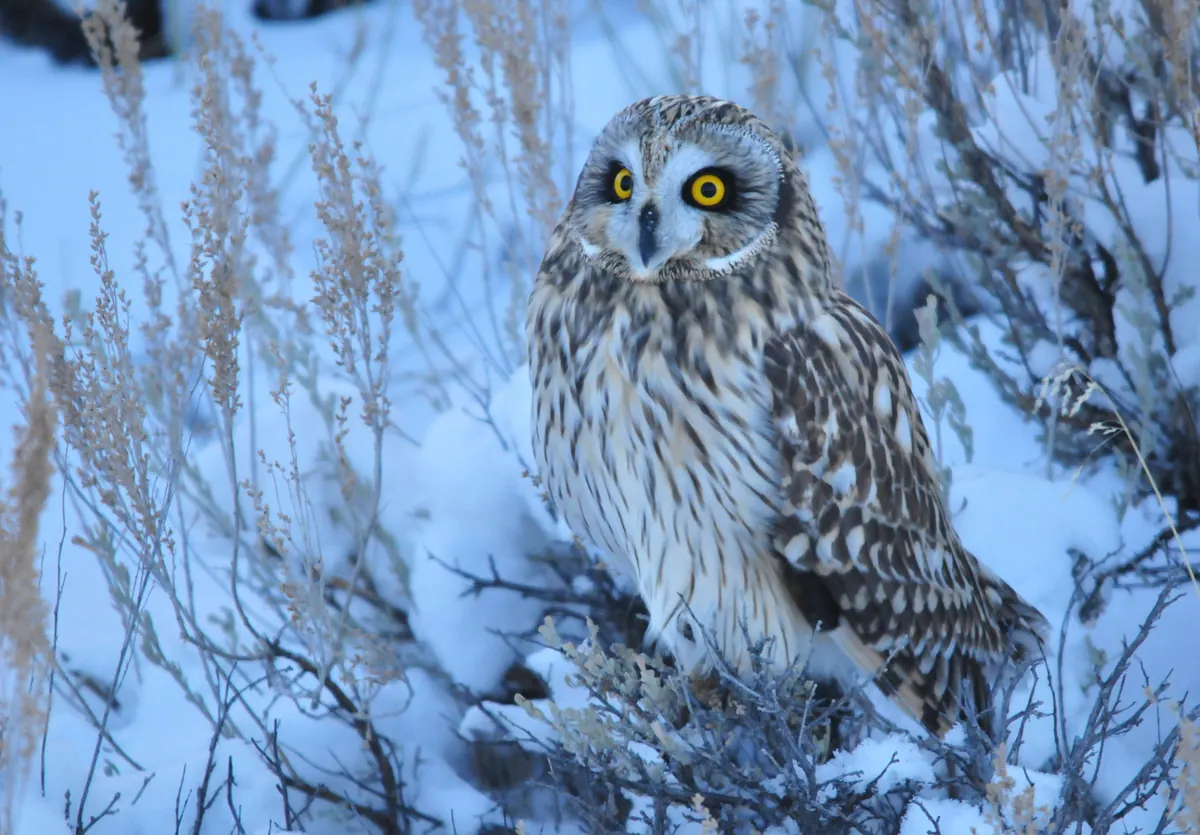
Short-eared owls nest on open ground in Canada and spend the winter on big grasslands farther south, and Kankakee Sands is one of the most reliable places in Indiana to find them. The Indiana Birding Trail describes a healthy wintering population hunting the prairie at dusk, flying low and buoyant like big moths. Northern harriers work the same fields by day, and the guide says rough-legged hawks are a winter possibility too. Park at the Bison Viewing Area, open 7 a.m. to sunset Central time, watch from the platform as the light fades, and stay on the roads and public areas.
-
Great horned owls start courting
Evenings from December; nesting from January · Woodlots, parks and farm groves statewide
Purdue's Brian MacGowan writes that great horned owls start breeding in January and February, taking over an old hawk or heron nest and adding fresh sticks. Pairs call to each other in the weeks before, so a December evening is the time to listen for the deep, soft, five- or six-note hoot, often answered by a slightly higher voice: the female. Step outside at dusk on a still night and wait a few minutes.
-
Snowy owls, some winters
November to March, unpredictably · The Michigan City harbor; big open farm fields in the north
Snowy owls from the Arctic reach Indiana in small numbers in some winters and not at all in others. The Indiana Birding Trail notes that they sometimes perch on the posts and structures of the Michigan City harbor. If one is reported, watch it from a distance; an owl that keeps turning to stare at you is being disturbed.
Where do Indiana's bats and other animals spend the winter?
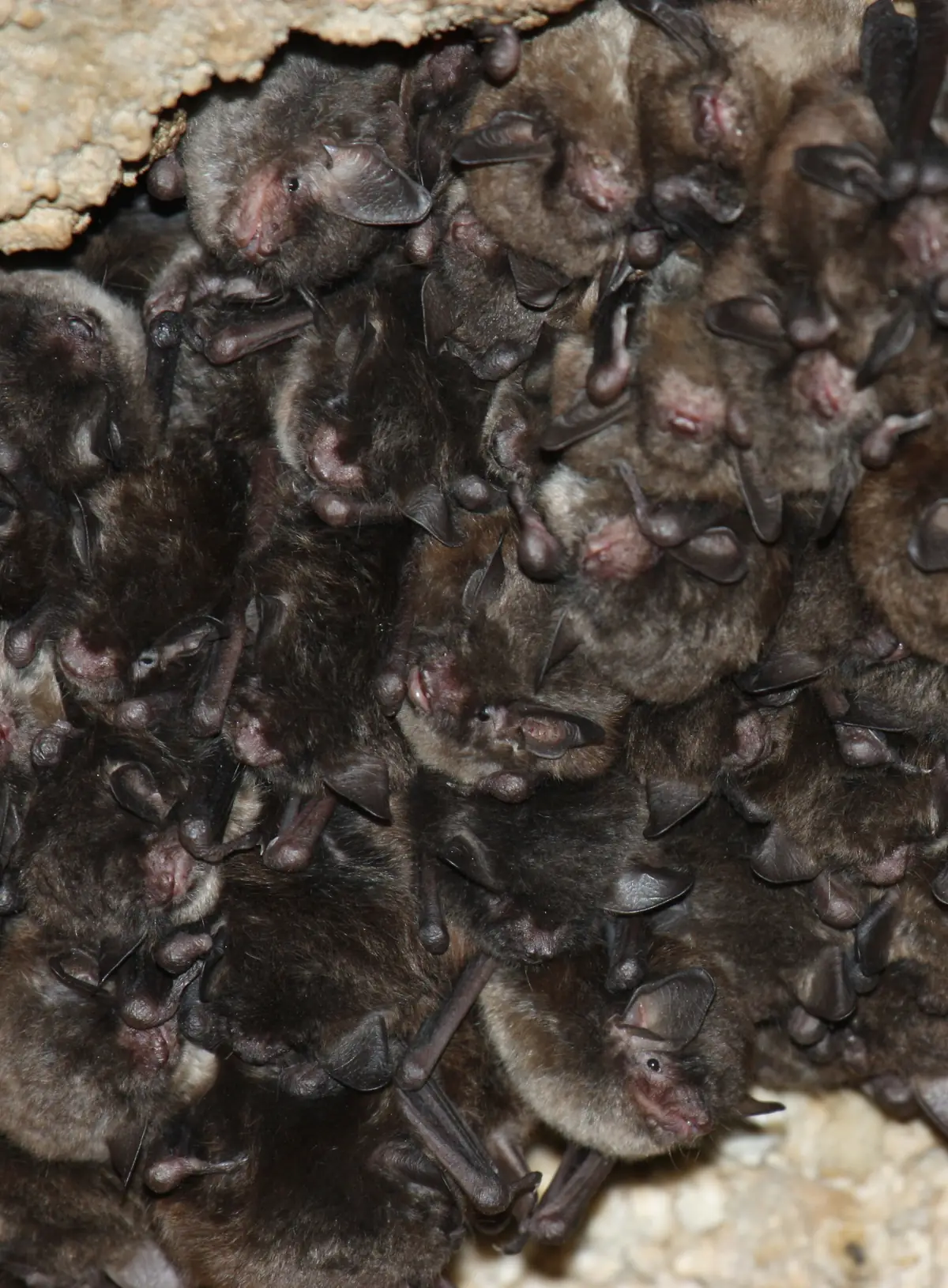
Indiana's limestone country, the band of caves and sinkholes running south from Bloomington toward the Ohio River, is one of the most important winter refuges in North America for an endangered bat named after the state. Other animals sleep out the winter in burrows, mud and leaf litter, and a few stay active all season.
-
Indiana bats in the caves
Hibernating from fall through spring · Wyandotte, Jug Hole and Ray's caves, among others, in southern Indiana
Indiana bats hang in tight clusters on cave ceilings, sometimes thousands together, in caves that stay cold but above freezing all winter. The U.S. Fish and Wildlife Service's 2024 status report estimated 631,786 Indiana bats across the species' range, and 234,657 of them, about 37 percent, hibernating in Indiana. Wyandotte Cave alone held an estimated 103,206, the second-largest winter colony anywhere, with Jug Hole Cave close behind at 99,695. The Indiana DNR counts the biggest sites only every other winter, to keep disturbance down; the DNR reports white-nose syndrome, the fungus that rouses sleeping bats until their fat runs out, in 38 caves in the state.
-
Leave the caves to the bats
August 16 to May 14 on the Hoosier National Forest · Caves on public land statewide
A bat roused from hibernation uses up fat it cannot replace until spring. The Hoosier National Forest closes every cave on its land from August 16 through May 14 under a forest order, and many other caves are gated. If you explore outside the closure, follow the decontamination steps posted at whitenosesyndrome.org so you do not carry the fungus from one cave to the next.
-
Woodchucks go deep
October or November to mid- or late February · Burrows under fencerows, barns and woodland edges
The woodchuck is one of the few true hibernators in the state. University of Illinois Extension's Wildlife Illinois guide says its body temperature drops from about 97 °F to 34 °F, its heart beats only four times a minute, and it breathes about once every six minutes.
Which evergreens are native to Indiana, and where can you see them?
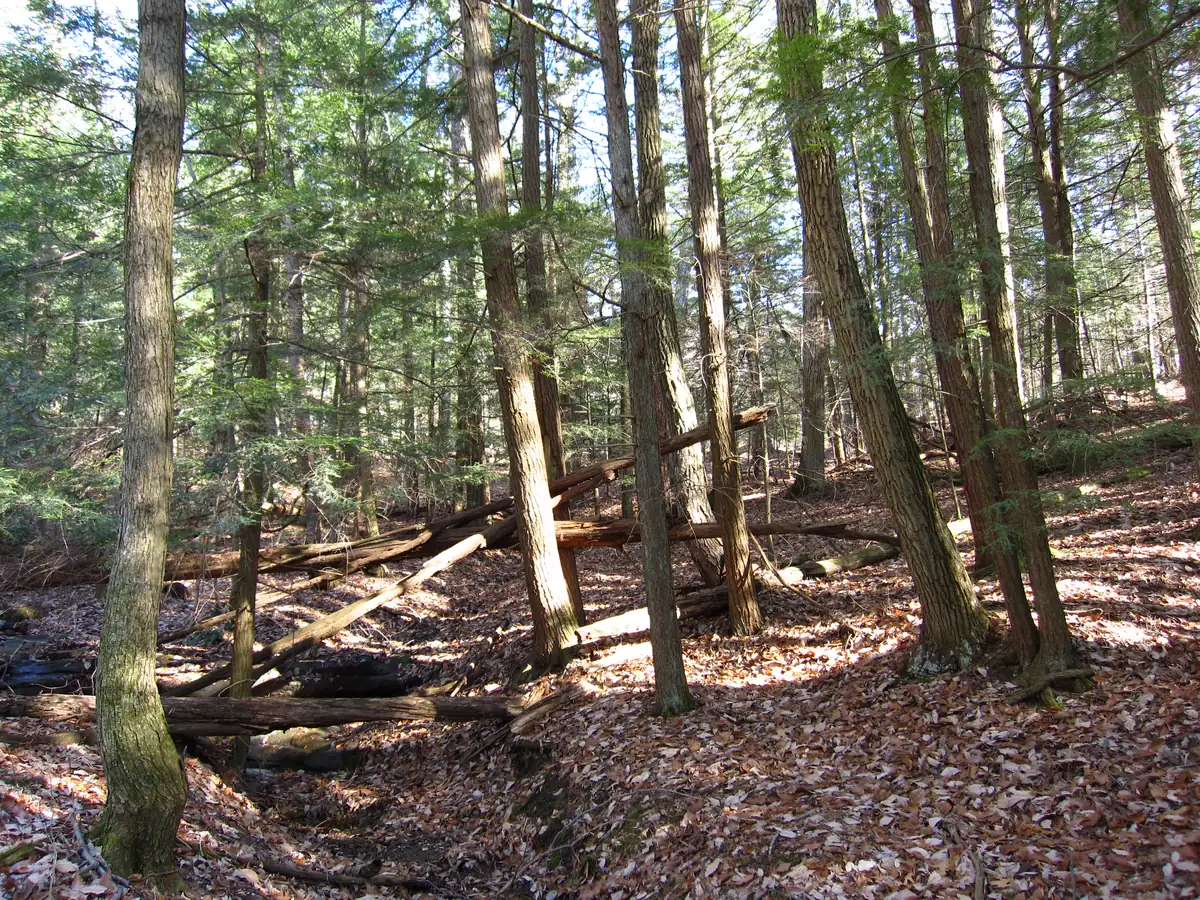
Most of Indiana's evergreens are planted: Norway spruce windbreaks, Scotch pine Christmas trees, white pine along suburban lots. Purdue Extension lists eight native conifers: eastern redcedar, jack pine, eastern white pine, Virginia pine, northern white-cedar, eastern hemlock, tamarack and baldcypress. Tamarack and baldcypress drop their needles each fall, so in December only six are green, and apart from redcedar each one grows wild in just a few places. Finding them is a fine winter project.
-
Hemlock and white pine left by the glaciers
Any winter day · Pine Hills Nature Preserve, inside Shades State Park, Montgomery County
Pine Hills was Indiana's first dedicated state nature preserve. The DNR's guide explains that its white pine, hemlock and Canada yew are relics that have hung on in its deep, cool gorges since just after the last glacier, when the climate was much colder, and that the pines and hemlocks are still reproducing. Trail 10 runs 1.32 miles one way over four narrow rock ridges called backbones, 70 to 100 feet high. It is steep, with bluffs and poor footing, so skip it when the rock is icy.
-
Hemlock Cliffs
Any winter day · Hoosier National Forest, between Highways 237 and 37, about 2 miles north of I-64
A one-mile loop in the Hoosier National Forest drops into a sandstone canyon of overhangs and rock shelters, where hemlocks thrive in the shaded, cool air. In winter the evergreens stand out against the bare hardwoods, and the Forest Service notes that the waterfall can freeze in hard cold. The Forest Service warns that parts of the trail are steep and slick when wet.
-
Jack pines on the dunes
Any winter day · Dune Succession Trail at West Beach; Paul H. Douglas Trail in Miller Woods
According to the National Park Service, the jack pines on Lake Michigan's southern shore grow farther south than this northern tree is found anywhere else in North America, a holdover from the colder centuries after the ice sheets melted back. Look for short, twisted trees with paired needles about an inch long and curved cones that cling to the branches for years.
-
How to tell them apart
All winter · Anywhere
Purdue's guide gives the basic key. Pines carry their needles in bundles of two, three or five (white pine has five, jack and Virginia pine two). Hemlock has short, flat needles, green above and with two whitish stripes beneath. Eastern redcedar and northern white-cedar have scale-like or short, prickly needles. Redcedar is the one in every old field and fencerow.
How much snow does Indiana get in December, and how often is Christmas white?
December is when Indiana's snow belt really separates from the rest of the state. Cold air crossing the open water of Lake Michigan picks up moisture and drops it on the counties east of the lake, so South Bend averages nearly twice the December snow of Fort Wayne and more than twice that of Indianapolis. Evansville, near the Ohio River, gets less than three inches in a typical December and more often sees rain. By now nearly every station on our Indiana frost dates page has had its first freeze.
-
The odds of a white Christmas
7 a.m. on December 25 · Statewide
The weather service counts a Christmas as white when at least an inch of snow lies on the ground on Christmas morning. By that measure, South Bend has had one in 43 percent of years since 1900 and Fort Wayne in 38 percent, according to NWS Northern Indiana. NWS Indianapolis puts the capital at 28 percent since 1898, with a trace in another 21 percent. In Evansville only 10 Christmases on record, 13 percent, have been white, though one of them, in 2004, came with 11 inches on the ground.
-
Reading tracks
The morning after a fresh snow · Field edges, creek banks, under feeders
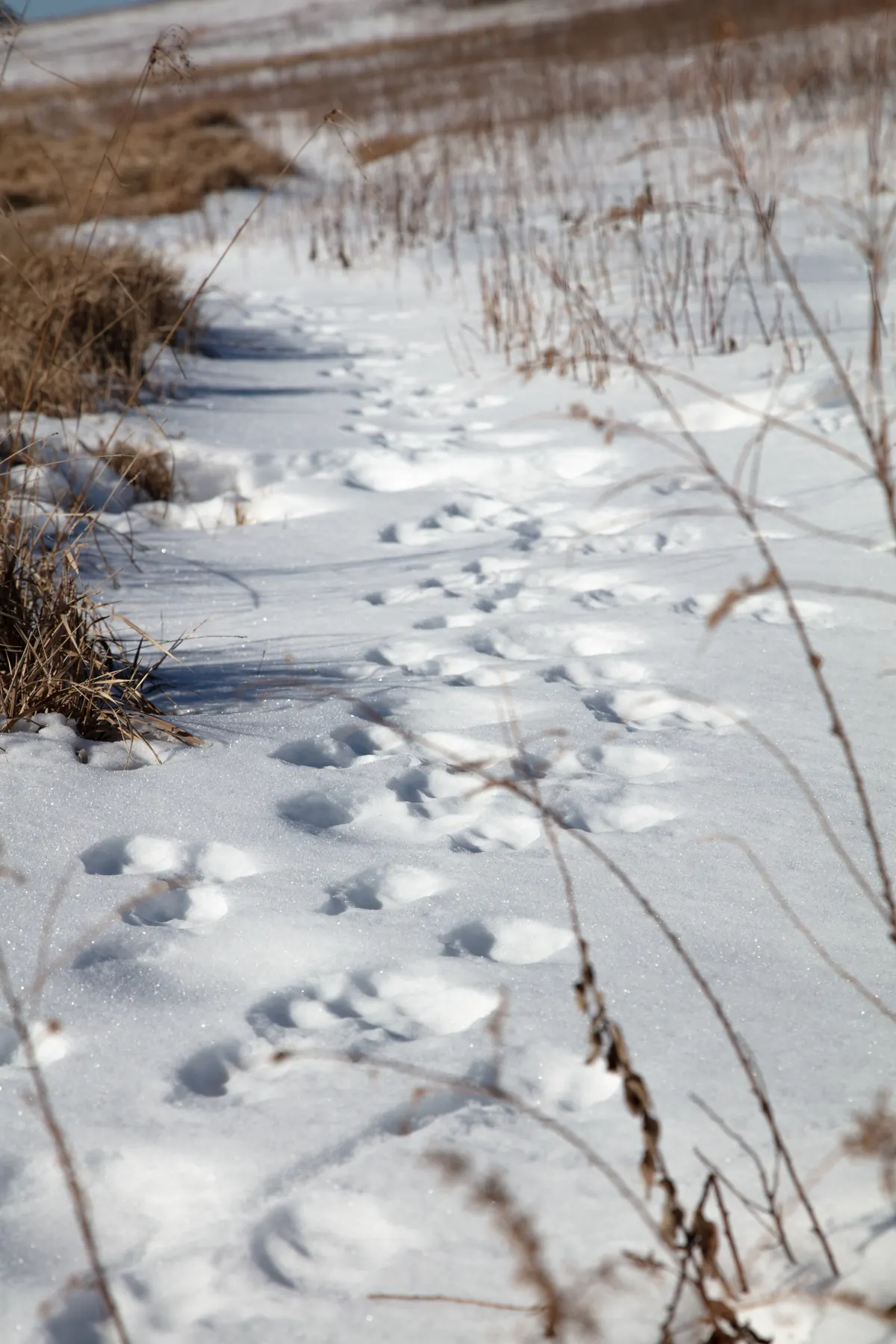
A thin, fresh snow over a hard base is the best tracking surface there is. Cottontails leave two big hind prints ahead of two small front ones, all in a tight group. Deer leave split hearts in neat lines. A red fox walks almost in a single file, each hind foot placed into the front print. Photograph each print beside a glove for scale.
| Station | Average high | Average low | Rain and melted snow | Snowfall | Snow-cover days |
|---|---|---|---|---|---|
| South Bend | 36.3 °F | 23.0 °F | 2.40 in | 13.7 in | 10.4 |
| Fort Wayne | 37.5 °F | 24.2 °F | 2.47 in | 7.6 in | 7.6 |
| Indianapolis | 40.4 °F | 26.2 °F | 2.92 in | 6.4 in | 6.3 |
| Evansville | 45.6 °F | 29.5 °F | 3.78 in | 2.8 in | 2.1 |
Will El Niño make this a mild December in Indiana?
It might tilt things that way. Forecasters at NOAA wrote on September 10 that they were better than nine-in-ten sure this El Niño would reach very strong status by winter; the central Pacific was already running 1.8 °C warm. The NWS office in Indianapolis says Indiana winters during El Niño usually run warmer than average and drier than average, and its El Niño page singles out 1982–83 and 1997–98 as two of the strongest events since 1950. The same office cautions that no two El Niño winters play out alike; the pattern shifts the odds and nothing more. In September, Indiana Public Media reported that the effect on the state is expected to be greatest from November through January, which puts December squarely in the window.
Even in a mild pattern, lake-effect snow needs only one blast of cold air over open water, so the northern snow belt can still be buried for a few days.
The government's December-to-February forecast is due October 15, posted with NOAA's other 90-day outlook maps. For the next few days, use our Weather now page.
When is the earliest sunset in Indiana?
Not on the solstice. The shortest day and the earliest sunset are a couple of weeks apart, because the clock time of solar noon keeps sliding later through December. In Indiana the evenings bottom out in the first week or so of December: Indianapolis holds its earliest sunset, 5:20 p.m. EST, for several days centered on December 8, and the river town of Evansville, on Central time, centers a little sooner, at 4:31 p.m. CST around December 6. The curve is so flat that each city's sunset sits on that same minute for days on either side, and by the solstice it is already a few minutes later. Mornings go the other way, getting darker until early January.
Indiana's two clocks make for an odd split. Gary, at the far eastern edge of the Central zone, has the state's earliest sunset, 4:19 p.m. CST, while Terre Haute, on Eastern time, keeps the sun until 5:26. On the solstice itself, Monday, December 21, South Bend and Gary get 9 hours 9 minutes of daylight and Evansville 9 hours 31 minutes. Between the solstice and New Year's Eve, the listed cities each regain three or four minutes.
| City | Dec 1 | Dec 21 | Dec 31 | Earliest sunset |
|---|---|---|---|---|
| South Bend | 9 h 22 m | 9 h 09 m | 9 h 12 m | 5:14 p.m., Dec 8 |
| Gary | 9 h 23 m | 9 h 09 m | 9 h 13 m | 4:19 p.m., Dec 8 |
| Fort Wayne | 9 h 27 m | 9 h 13 m | 9 h 16 m | 5:12 p.m., Dec 8 |
| Lafayette | 9 h 31 m | 9 h 17 m | 9 h 21 m | 5:21 p.m., Dec 8 |
| Indianapolis | 9 h 34 m | 9 h 21 m | 9 h 24 m | 5:20 p.m., Dec 8 |
| Terre Haute | 9 h 35 m | 9 h 23 m | 9 h 26 m | 5:26 p.m., Dec 7 |
| Bloomington | 9 h 37 m | 9 h 25 m | 9 h 28 m | 5:23 p.m., Dec 7 |
| Evansville | 9 h 44 m | 9 h 31 m | 9 h 35 m | 4:31 p.m., Dec 6 |
For the exact sunrise, sunset and length of twilight at your own address on any day this winter, try our daylight calculator.
What is in the night sky over Indiana in December?
The longest nights of 2026 come with a rich meteor shower, the closest full moon of 2026 and brilliant Venus before dawn. Times below are standard time. Most Hoosiers read Eastern; the twelve Central-time counties, half by Lake Michigan and half around Evansville, read one hour less.
-
The Geminids
Night of Sunday, December 13, into Monday, December 14 · Anywhere dark; the radiant in Gemini is high in the east by late evening
On paper the Geminids can deliver 150 meteors an hour; that International Meteor Organization figure assumes an ideal sky with Gemini straight overhead. Hoosier backyards will see a fraction of it, yet no other annual shower beats it. This year the moon is only a thin crescent at the peak and goes down by roughly 9 to 10 p.m. local time, leaving the rest of the night moonless. Start after about 10 p.m. and keep going: the radiant climbs highest around 2 a.m. local time, when rates are best. Geminids are often slow and bright, some with a yellowish tint. Bring a reclining chair and blankets, and let your eyes adapt for 20 minutes.
-
The Cold Moon, the closest of the year
Evening of Wednesday, December 23; nearly as full on Christmas Eve · Rising in the northeast around sunset
The moon turns full at 8:28 p.m. Eastern (7:28 Central) on the 23rd, and the moon swings closest to Earth for the month about seven hours after that. No full moon this year comes nearer or looks bigger; EarthSky and several almanacs list it as a supermoon. On the solstice evening, December 21, the swelling moon passes by the Pleiades star cluster. Brown County State Park leads a Cold Moon hike on the night it turns full; see the families section.
-
The solstice
Monday, December 21, 3:50 p.m. EST (2:50 p.m. CST) · Watch where the sun sets
At that moment the sun reaches its southernmost point, and astronomical winter begins. Mark the spot on your horizon where the sun goes down this week; it sets farther south than on any other day of the year, and from here it begins its slow walk back north.
-
Venus at dawn, Saturn at dusk
All month · Southeast before sunrise; south and southwest after dark
Venus is the dazzling morning star, rising well before the sun in the southeast. Early risers on Friday the 4th and Saturday the 5th can watch a waning crescent edge toward Venus, with the blue-white star Spica sitting between the two. Mars and Jupiter are in the morning sky too, and Jupiter clears the eastern horizon a few hours after dark by the last week of the month. The evening belongs to Saturn, an unblinking pale-gold light low in the south and southwest at nightfall that sets about four hours after the sun by month's end.
| Phase | Date | Time |
|---|---|---|
| Last quarter | Tue, Dec 1 | 1:08 a.m. EST (12:08 a.m. CST) |
| New moon | Tue, Dec 8 | 7:52 p.m. EST (6:52 p.m. CST) |
| First quarter | Thu, Dec 17 (Wed, Dec 16 on Central time) | 12:42 a.m. EST (11:42 p.m. CST) |
| Full moon, the Cold Moon | Wed, Dec 23 | 8:28 p.m. EST (7:28 p.m. CST) |
| Last quarter | Wed, Dec 30 | 1:59 p.m. EST (12:59 p.m. CST) |
Check Today's sky for cloud cover before the Geminid night; local moonrise times are on our moon calendar.
What can Indiana families do outdoors in December 2026?
- December 4 to 6 and 11 to 13: lights in the campgrounds. Lieber State Recreation Area at Cagles Mill Lake opens its drive-through Winter Lights in the campground from 6 to 9 p.m. on those six nights, with no gate fee and free-will donations. Friends of Versailles State Park run Santa's Lighted Forest, a drive-through display with a visit to Santa's lodge, on December 4, 5, 11 and 12.
- Friday, December 4: Holiday in the Village. Spring Mill State Park's Pioneer Village is decorated with cedar trees and lit by fires from 5 to 9 p.m., with music in the grist mill from 5:30. The park describes it as a Friday and Saturday event; check whether Saturday the 5th is included.
- Saturday, December 5: owls at the Dunes. Live owls with Humane Indiana Wildlife at Indiana Dunes State Park's Nature Center, 1 p.m. Central time; the park lists all its interpretive programs in Central time, whatever zone the state calendar displays.
- Sundays, December 6 and 13: feeding time. Turtle feeding (10:30 a.m.) and the Cold Blooded Buffet (2 p.m.) at McCormick's Creek State Park.
- From December 11: carols on the trail. Chain O'Lakes State Park's Christmas Carol Clue Hunt posts numbered stations along Trail 5; turn in your guesses by 4 p.m. on Monday, December 28, for a prize drawing.
- Saturday, December 12: Breakfast with Santa at The Farm at Prophetstown State Park, 9 a.m. to 12:30 p.m.
- From Tuesday, December 15: the Snowman Trail. Hunt for snowmen along the 1-mile Trail 3 loop at Summit Lake State Park near New Castle, with winter crafts at the park office on weekdays from 9 a.m. to 3 p.m.
- Saturday, December 19: two evening outings. Christmas on The Farm at Prophetstown (5:30 to 7:30 p.m.), or Spring Mill State Park's Cold Moon walk at 9 p.m., a short quarter-mile on Trail 6 from the Grissom Memorial; red flashlights required.
- Wednesday, December 23: the Cold Moon on Salt Creek. A park naturalist leads a 2-mile, hour-long night hike from Brown County State Park's Olympic Pool lot at 7 p.m.; no pets, and it is canceled below 0 °F.
- Thursday, December 24: Christmas Eve moon hike at Mounds State Park in Anderson, 5:30 p.m. from the Visitor Center; leashed pets welcome.
- December 14 to January 5: the Christmas Bird Count. Families can join a field party or count at a home feeder inside a circle.
- Friday, January 1, 2027: First Day Hikes. Indiana's state parks have led guided New Year's Day hikes every year since 2013, when 20 parks drew 581 hikers. On January 1, 2025, nearly 40 parks took part with entrance fees waived. Look for the 2027 lineup on the DNR events calendar later in December.
Confirm each listing the week before. Our Naturalist's Field Journal has room for every outing, the Indiana November guide covers the crane build-up, and the nature guides page links to other months and states.
Safety notes for December in Indiana
- Muzzleloader season, December 5 to 20. Bowhunters stay out until January 3, and hunting in the urban deer reduction zones lasts until January 31. The DNR’s deer regulations require hunter orange for every deer hunter, archers included, during muzzleloader season, and from November 14 through January 31 in a deer reduction zone; outside those days, archers on ordinary ground are not required to wear it. Camouflage-patterned orange does not count; it has to be solid fluorescent orange on an outer garment or headwear. If you walk on a state forest, fish and wildlife area or other land open to hunting, dress yourself and your dog in blaze orange.
- Other December seasons. Fall turkey reopens to archers from December 5 to January 3 in open counties. Pheasant season and quail season north of I-74 close December 15. Ducks: the North Zone season ends December 13 and reopens December 19 to 27; the Central Zone runs to January 10 and the South Zone to January 24. Goose seasons in all three zones run to February 14. Furbearer trappers are out all month too (beaver, otter, mink and muskrat sets went in from mid-November), so keep dogs leashed along creeks and marsh edges.
- No ice is safe ice. Indiana conservation officers advise assuming any ice is thin until proven otherwise. They recommend at least 4 inches of clear ice for ice fishing and 5 for a snowmobile, testing with an auger and never alone, and staying off rivers and streams, where current keeps the ice weak. Snow on top insulates ice and slows its growth. Keep dogs leashed near ponds until the ice is proven.
- Cold and dark. With sunset between about 4:20 and 5:30 p.m. for much of the month, a late start can leave you on the trail after dark. Carry a headlamp, a dry layer and a phone kept warm in an inside pocket, and tell someone your route. Wet clothing in a 35-degree rain chills you faster than a dry 20-degree day.
- Bats and caves. Stay out of closed caves; on the Hoosier National Forest the closure runs August 16 to May 14.
- Lake Michigan. December gales push big waves over the piers and breakwalls, and ice building along the beach can hide holes and break without warning. Watch the lake from the shore.
Sources
- Indiana DNR: sandhill crane fall migration at Jasper-Pulaski FWA (weekly counts, Sandhill Crane Saturdays)
- U.S. Fish and Wildlife Service: distribution, migration chronology and survival rates of Eastern Population sandhill cranes (Fronczak, 2014)
- Indiana DNR: Goose Pond Fish & Wildlife Area
- Audubon: the 124th Christmas Bird Count in Indiana (regional summary)
- Audubon: join the Christmas Bird Count (127th count, December 14, 2026, to January 5, 2027)
- Indiana Audubon: Christmas Bird Counts in Indiana (dates and compilers)
- Purdue Extension: winter is a good time to bird (owls; Brian MacGowan, 2022)
- Indiana Birding Trail: Kankakee Sands (wintering short-eared owls, rough-legged hawks)
- The Nature Conservancy: Kankakee Sands (bison viewing area hours, short-eared owls)
- Indiana Birding Trail: Michigan City Harbor
- Indiana DNR: Happy OWL-idays!, Indiana Dunes State Park, December 5, 2026 (programs listed in Central time)
- Indiana DNR: Indiana bat
- U.S. Fish and Wildlife Service: Indiana bat 2024 population status update (PDF)
- Purdue Forestry and Natural Resources: 2026 winter bat survey in progress (Indiana DNR)
- Hoosier National Forest: climbing and caving (cave closure order, August 16 to May 14)
- Wildlife Illinois (University of Illinois Extension): woodchuck or groundhog
- Indiana DNR: Turtle Feeding, McCormick's Creek State Park
- Indiana DNR: Cold Blooded Buffet, McCormick's Creek State Park
- Purdue Extension: identifying evergreens (Indiana's native conifers, 2026)
- Indiana DNR Division of Nature Preserves: Pine Hills Nature Preserve (PDF)
- Hoosier National Forest: Hemlock Cliffs special place and trail
- National Park Service: jack pines on Lake Michigan's southern shore
- NOAA NCEI: 1991–2020 monthly normals for South Bend, Fort Wayne, Indianapolis and Evansville (data API)
- NWS Northern Indiana: white Christmas statistics for South Bend and Fort Wayne
- NWS Indianapolis: Christmas climate statistics for Indianapolis
- NWS Paducah: Christmas Day climate statistics (Evansville)
- Climate Prediction Center: ENSO diagnostic discussion, September 10, 2026
- Climate Prediction Center: 90-day outlooks (winter outlook issued October 15, 2026)
- NWS Indianapolis: El Niño and central Indiana
- Indiana Public Media: the impacts of the super El Niño on Indiana (September 16, 2026)
- U.S. Naval Observatory: moon phases (data API)
- U.S. Naval Observatory: Earth's seasons, 2026 (solstice)
- International Meteor Organization: 2026 meteor shower calendar (archived copy)
- EarthSky: what is a supermoon? (2026 list)
- NASA JPL Horizons: solar system ephemerides (planet and moon positions)
- Wikipedia: time in Indiana (the twelve Central-time counties)
- Indiana DNR events calendar, December 2026
- Indiana DNR: Lieber Winter Lights, Lieber SRA (Cagles Mill Lake)
- Indiana DNR: Santa's Lighted Forest, Versailles State Park
- Indiana DNR: Holiday in the Village, Spring Mill State Park
- Indiana DNR: Christmas Carol Clue Hunt, Chain O'Lakes State Park
- Indiana DNR: Breakfast with Santa at The Farm, Prophetstown State Park
- Indiana DNR: Snowman Trail and Winter Craft Bonanza, Summit Lake State Park
- Indiana DNR: Christmas on The Farm, Prophetstown State Park, December 19, 2026
- Indiana DNR: Full Moon Hikes, Spring Mill State Park (Cold Moon hike, December 19)
- Indiana DNR: Full Moon Hike, Brown County State Park, December 23, 2026
- Indiana DNR: December Full Moon Hike, Mounds State Park, December 24, 2026
- WNIN: popularity of New Year's Day hikes in Indiana state parks (December 31, 2024)
- Indiana DNR: 2026–27 deer hunting seasons and hunter orange
- Indiana DNR: deer hunting questions and answers (hunter orange)
- Indiana DNR: 2026–27 hunting and trapping seasons (PDF; turkey, upland game, waterfowl by zone)
- Indiana Hunting & Trapping Guide 2026–27: deer regulations (hunter orange garments)
- Indiana DNR Law Enforcement: always assume you are on thin ice (ice safety)
- Photos via Wikimedia Commons; licenses and photographers are credited under each picture
