What to look for in nature in Indiana this November
November is when Indiana's big gatherings happen. Sandhill cranes pack the marshes at Jasper-Pulaski by the tens of thousands, loons and sea ducks stream past the Lake Michigan beaches on north winds, and a handful of endangered whooping cranes settle in for the winter. On land the woods go quiet and gray, except for the tamaracks of the northern bogs and the oaks and beeches that cling to their brown leaves. Clocks fall back on the 1st, firearms deer season opens on the 14th, and the first snow usually reaches the north before Thanksgiving. This guide covers each corner of the state, and gives sky times for both of Indiana's clocks.
Other months in Indiana: October, December.
Start here

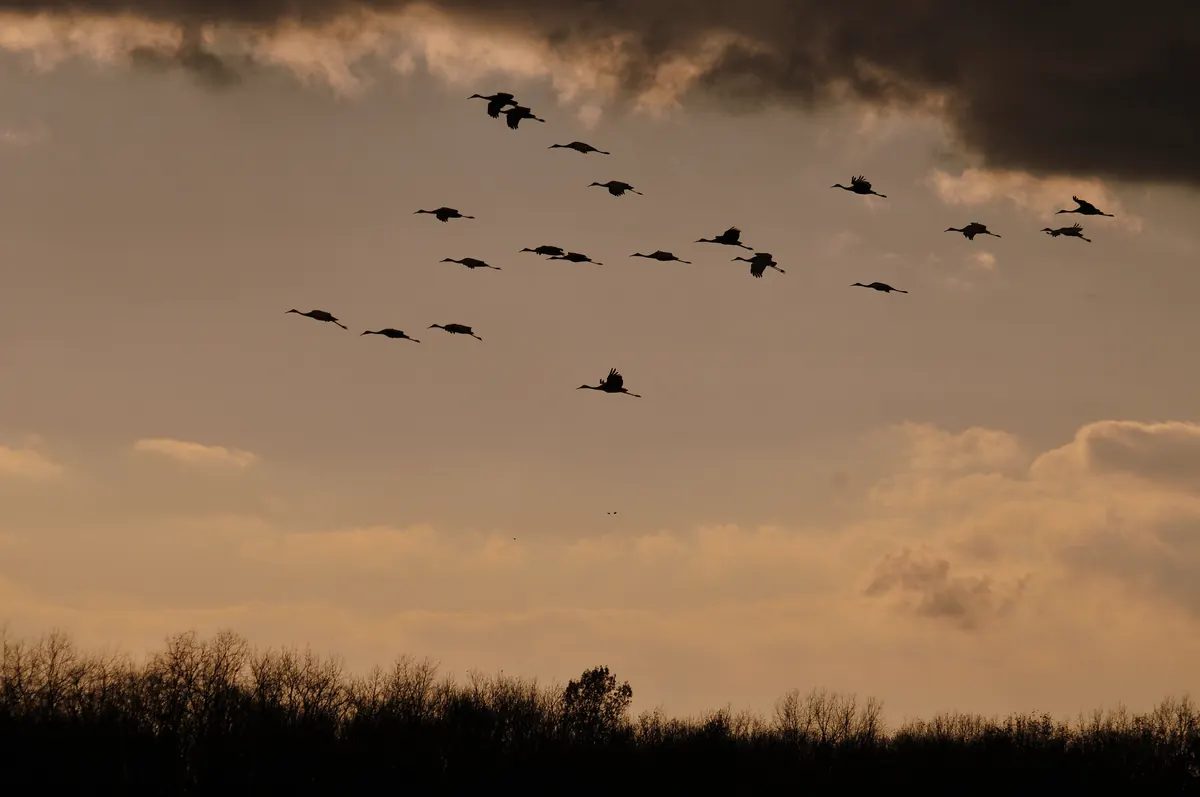
- Stand at the crane platform in late November. The biggest counts of the year at Jasper-Pulaski have landed between November 22 and December 3 in each of the last four falls. Pick a calm afternoon, arrive well before sunset, and listen for the rattling calls before you see the first lines of birds.
- Watch Lake Michigan on a north wind. After a cold front, flocks of loons, scoters and other diving ducks move along the southern shore of the lake. Give Miller Beach in Gary or the Michigan City jetty a morning hour with a scope.
- Set up a feeder before November 1. Pine siskins are on the move around the Great Lakes this fall, and Project FeederWatch begins its count on November 1. Clean the feeders, add a nyjer or sunflower tube, and keep a tally of who shows up.
Keep the journal close this month. In the Naturalist's Field Journal, the evening crane flight fits the dusk and dawn watch page; loons, siskins and juncos go on birds I have seen; a buck rub or scrape on a field edge fits reading the signs; and a tamarack cone or an acorn cap can go on the seeds, pods and cones plate. Walk the same trail on November 1 and November 30 for the same place twice pages, and note how much later the sun rises and how much earlier it sets.
Regions used below: Northwest Indiana and the Dunes; Northern Indiana (South Bend, Fort Wayne); Central Indiana (Indianapolis, Lafayette, Terre Haute); South-central hills (Bloomington, Brown County, Hoosier National Forest); Southwest and the Ohio River (Evansville, Madison).
When is the sandhill crane peak at Jasper-Pulaski?
Late November into the first days of December. The Indiana DNR's weekly counts at Jasper-Pulaski Fish & Wildlife Area show the high point of each fall landing in a narrow window: 31,975 cranes on November 22, 2022; 32,938 on November 28, 2023; 20,535 on December 3, 2024; and 16,400 on December 2, 2025. Between dawn and dusk the cranes fan out to glean waste grain in the surrounding farm fields, then return to the shallow marshes to sleep standing in the water. A cold snap with a north wind can empty the marsh within days, so the peak is never guaranteed to wait for a holiday weekend.
-
The evening flight
Every evening in November; the flight builds about an hour before sunset · Sandhill Crane Observation Area, Jasper-Pulaski FWA, north of Medaryville
Cranes spend the day in harvested fields across Jasper, Pulaski and Starke counties and come back to the shallow roosting marshes at dusk. They arrive in family groups and loose lines, wings cupped, legs dropped, filling the field below the viewing tower until the sound is almost continuous. By our calculation the sun sets near Medaryville at about 5:24 p.m. Eastern on November 21, so the main show runs from about 4:20 p.m. until dark. The roosting marshes stay closed to visitors, so bring binoculars.
-
Sandhill Crane Saturdays
Saturdays November 7, 14 and 21 (and on into December), 5:30 to 7:30 p.m. Eastern · The crane viewing tower, Jasper-Pulaski FWA
International Crane Foundation staff are at the tower on Saturday evenings from October 17 to December 19, skipping the Thanksgiving weekend, to answer questions about the cranes and help visitors pick out anything unusual in the flock. Their posted start falls just after sunset, so arrive earlier to watch the birds come in.
-
Whooping cranes among the sandhills
Arriving from late October; wintering through March · Jasper-Pulaski FWA; Goose Pond FWA near Linton; scattered fields in southern Indiana
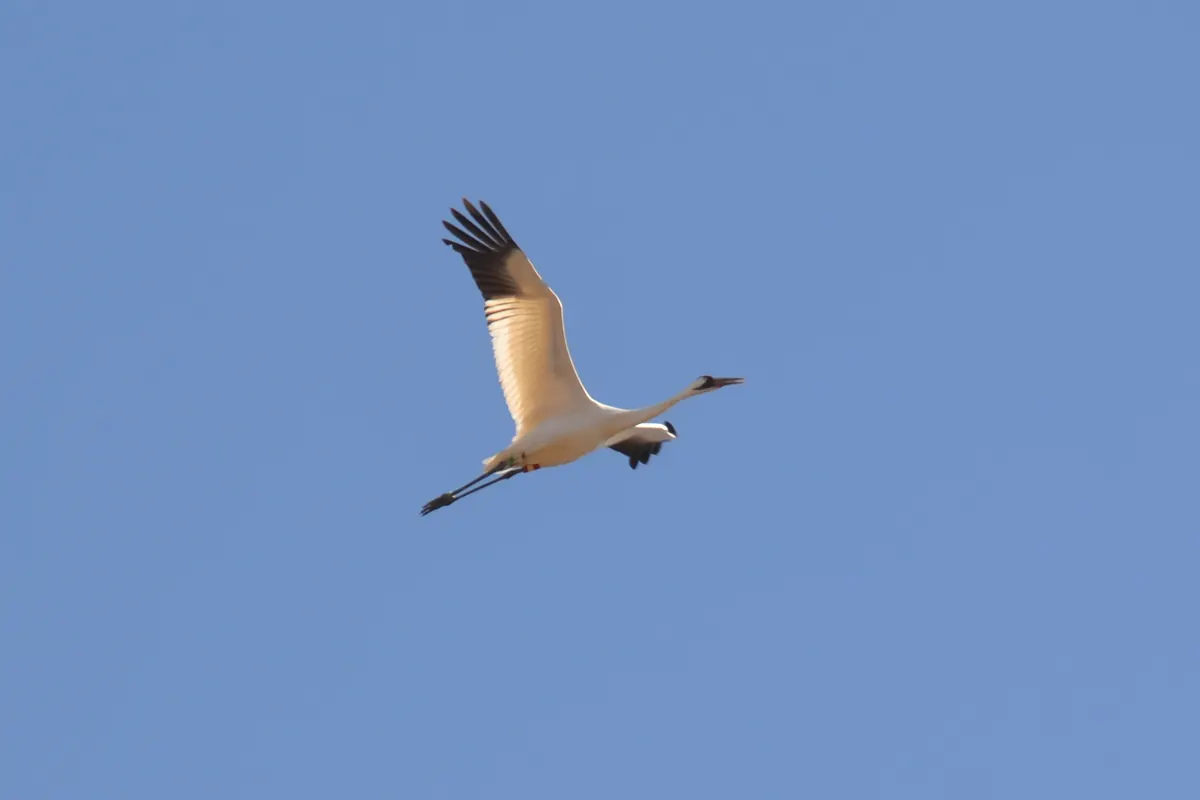
The tall white crane with black wingtips standing in a gray crowd of sandhills is a whooping crane, one of the rarest birds in North America. The International Crane Foundation estimated the eastern migratory flock, which breeds in Wisconsin, at 72 birds in November 2025, and its biologists say a few dozen spend the winter in Indiana, with Goose Pond and Jasper-Pulaski the main stops. The foundation asks watchers to stay at least 200 meters away, to park only in designated spots, to share sightings only to the county level, and to report any harassment to the DNR's 1-800-TIP-DNR line.
The DNR posts each new count on its Jasper-Pulaski crane page, usually after the Tuesday morning tally; numbers climbing past 10,000 are a good sign the peak is close.
What birds can you see along Indiana's Lake Michigan shore in November?
Indiana's short stretch of Lake Michigan shoreline sits at the bottom of a funnel. Waterbirds heading south down the lake run out of water at the Indiana shore and turn east or west along it, so a beach in Gary or Michigan City can show you birds that rarely touch down anywhere else in the state. The Indiana Birding Trail's site guides put it simply: fall lake watching is best on days with a brisk wind out of the north.
-
Loons and scoters on the move
Through November, best after a cold front · Marquette Park and Lake Street Beach at Miller, Gary
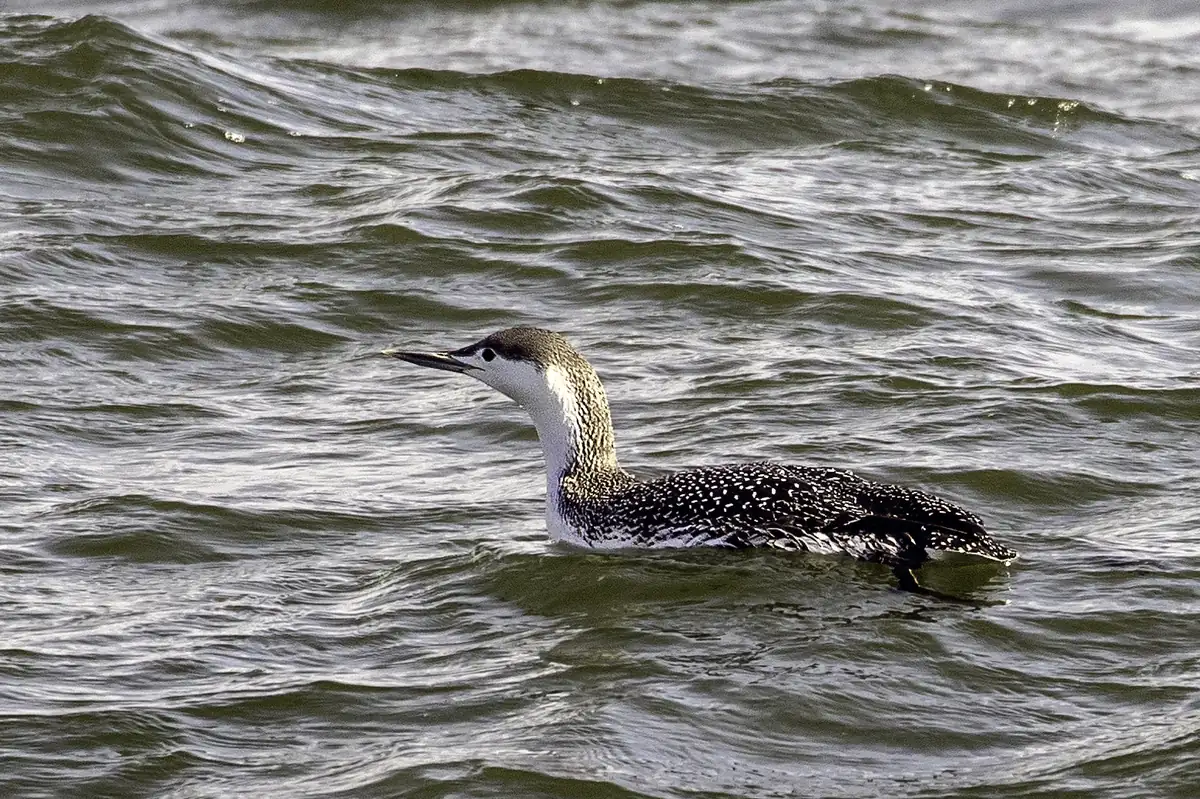
Loons, all three scoters and other diving ducks travel past in late fall, along with gulls. Numbers can be startling: the American Birding Association's regional report for fall 2016 logged 46 red-throated loons passing Miller in a single day on November 11. The Marquette Park concession stand is the spot birders use for jaegers, the gull-like pirates of the open sea that show up at Miller more often than anywhere else in Indiana.
-
The Michigan City harbor jetty
Mornings, late November and December · Washington Park and the jetty at the mouth of Trail Creek, Michigan City
The harbor is the state's best-known rarity trap; the Indiana Birding Trail notes that at least 40 percent of the rare and accidental species on the state list have turned up here. In late November, purple sandpipers have been found picking along the rocks by the jetty, and snowy owls sometimes sit on the posts in the yacht basin in November and December. Scan the harbor, the outer breakwall and the water beyond it from the jetty, but do not walk out on it in big waves.
-
Lake trout and winter steelhead
Lake trout mid-October to mid-November; winter-run steelhead from mid-November · Near the Port of Indiana; Trail Creek, the Little Calumet and Salt Creek
The salmon have spawned and died by early November, but the fish story is not over. The DNR's Lake Michigan office says lake trout gather to spawn along the shoreline near the Port of Indiana until about mid-November, and the Michigan strain of steelhead, the winter run, fishes best in the streams from mid-November to mid-March.
Which winter birds are arriving in Indiana this November?
Each autumn the Finch Research Network surveys cone, berry and seed crops in the northern forests to judge which boreal birds will wander south. The 2026 to 2027 forecast by Tyler Hoar, published September 25, describes good crops in the east, poor ones across the central boreal, and birds likely to spill into the Great Lakes region. For Indiana that points to one bird above all: the pine siskin.
-
Pine siskins
Arriving through November; could stay all winter · Feeders, birches, sweetgums and conifers statewide
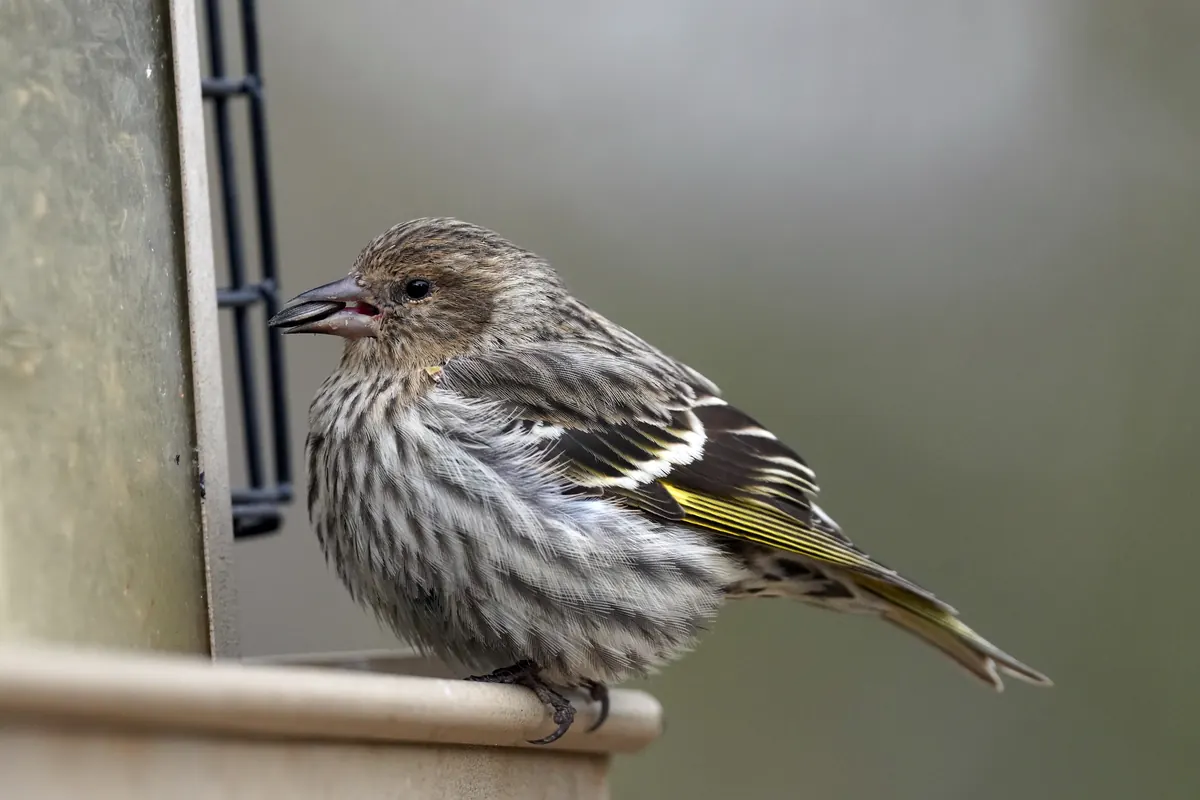
Siskins are small, streaky brown finches with a flash of yellow in the wing and a rising, wheezy call. Hundreds a day have been passing Tadoussac in Quebec and more than 1,000 on several days at Hawk Ridge in Minnesota; the forecast expects the biggest numbers to settle in the Northeast and around the Great Lakes, where cedar and white pine seed is plentiful, with a small to moderate flight possible farther south. They love nyjer and black-oil sunflower seed. Keep feeders clean, because crowded siskin flocks can spread salmonella; if you see a sick, fluffed-up bird, take the feeders down and wash them for a week or two.
-
Purple finches, crossbills and blue jays
November into winter · Woods edges, pines and spruces, feeders
The forecast also calls for many purple finches across the Great Lakes, scattered white-winged crossbills wandering in search of cones, and more red crossbills than usual, already showing in larger numbers along the upper Great Lakes. Blue jays have had a strong fall flight along the Great Lakes shorelines, with more than 13,000 counted at Hawk Ridge, helped by a good acorn and beechnut crop.
-
Bald eagles settle in
Arriving through November; staying until March · Monroe and Patoka lakes; Salamonie and other big reservoirs; the Ohio and Wabash rivers
Indiana's own eagles stay year-round, and the DNR counted more than 350 nesting territories in 2020, up from just two in 1989. In November they are joined by northern eagles that winter in the state through March, gathering wherever open water and fish are easy to find. Monroe Lake, where the DNR released 73 young eagles between 1985 and 1989 to bring them back, and Patoka Lake are the places the DNR suggests for a look.
-
The last saw-whet owls
Through about November 20 · Indiana Dunes State Park; Mary Gray Bird Sanctuary near Connersville
Indiana Audubon's Project Owlnet catches and bands these tiny night migrants until about November 20. Its Saw-Whets & S'mores evenings continue at Indiana Dunes State Park into mid-November (the society's calendar lists November 7, 8 and 13 to 15), and run at its Mary Gray Bird Sanctuary in Fayette County on November 14 and 21, with hands-on banding workshops there on November 13 and 20. Start times vary from night to night and between the two time zones, so check the registration page before you drive.
The Cornell Lab's Project FeederWatch counts from November 1 to April 30. Hoosier counters choose a pair of consecutive days and log, species by species, the biggest group visible in a single glance. This winter's siskins would make a good first season.
What trees still have color in Indiana in November?
By the first week of November most of Indiana's maples, hickories and tulip trees are bare. Three kinds of trees keep the woods interesting a while longer.
-
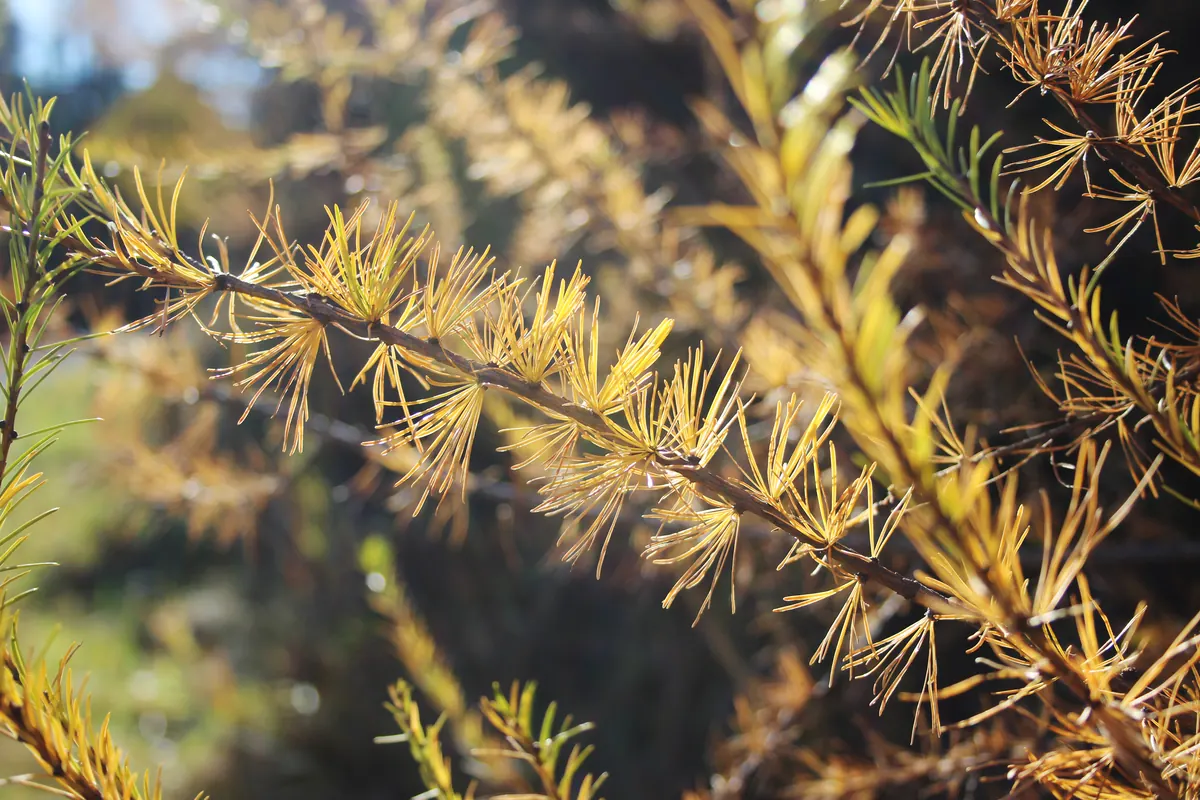
Tamaracks turn gold
Late October through mid-November · Bogs and fens of the northeast and the Dunes; Loon Lake Nature Preserve near Angola
Tamarack is the odd conifer out: it sheds all its needles each autumn, and first they turn a soft butter-gold. In Indiana it grows only in the cold, wet glacial bogs and fens of the north. On Saturday, November 21, from 1 to 2:30 p.m. Eastern, DNR ecologist Nate Simons leads a free one-mile walk at Loon Lake Nature Preserve in Steuben County, through oak woods to a lakeside sedge meadow where the tamaracks stand, with a stop at a huge open-grown white oak left from a more open landscape. Parking holds only about five cars and the meadow is squishy, so register and wear boots you do not mind soaking.
-
Oaks and beeches that will not let go
November into spring · Woodlots and ravines statewide; young trees and lower branches most of all
Walk a November woods and you will hear dry leaves rattling on trees that have shut down for the season. Many oaks, especially young ones, and American beeches hold their dead leaves through winter, a habit botanists call marcescence. Beech leaves fade to pale tan and almost glow in low sun; oak leaves stay leathery and brown. The new leaves push the old ones off in spring.
-
Seeds for next year
All month · Under oaks, walnuts and hickories; old fields
The good acorn crop that fed this fall's blue jay flight is lying on the ground now, and squirrels, deer and wild turkeys are making the most of it. McCormick's Creek State Park near Spencer explains how to grow trees from seed, cold treatment and all, on Saturday, November 7, at 2 p.m. Eastern, and hands out free seeds.
When is the deer rut in Indiana, and what else are mammals doing in November?
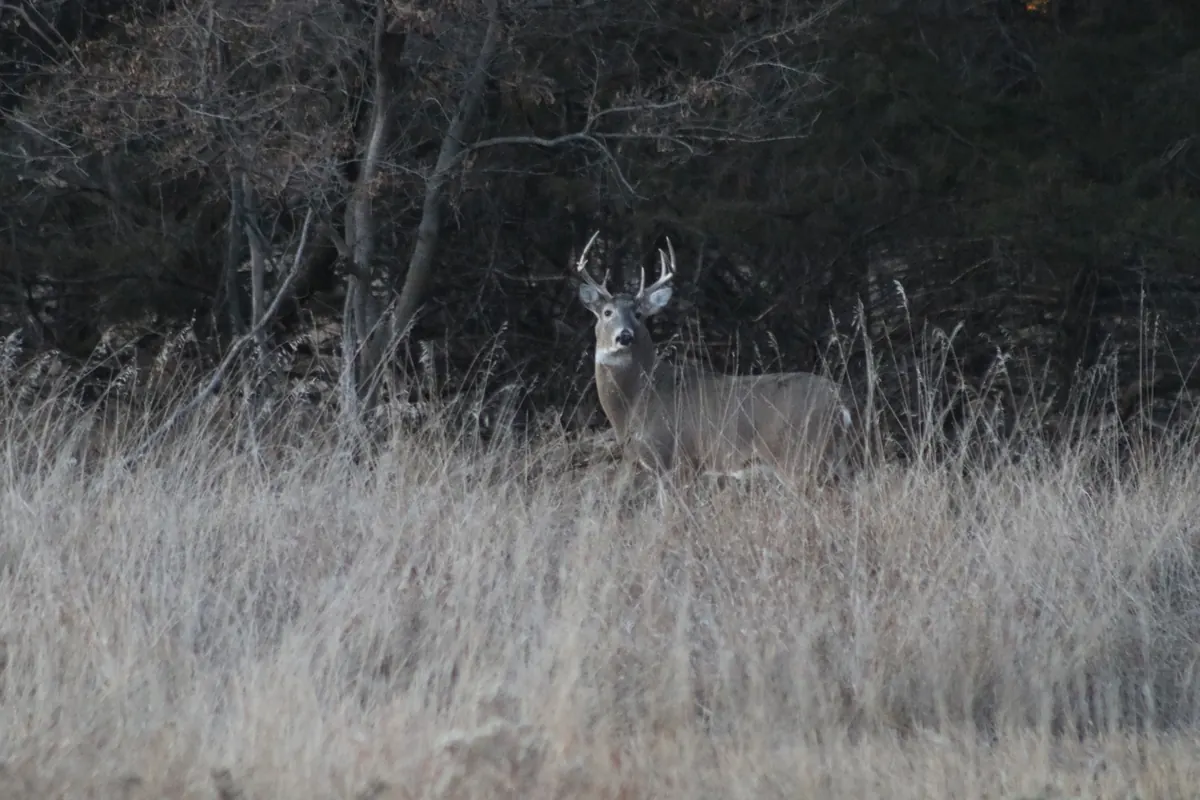
The white-tailed deer rut runs through October and November, and in much of the state November is when it is most obvious. The DNR estimates each county's peak breeding date from the day deer-vehicle crashes peak there, and posts the result on its Deer Info Map.
-
Bucks on the move
Most of November · Field edges, fencerows and creek corridors at dawn and dusk
Bucks spend the rut searching out does, and two that want the same doe will lock antlers and shove until one gives up. Look for what they leave behind: young trees with bark stripped by antlers, and scrapes, where a buck has pawed the leaf litter down to bare soil beneath a low twig he marks with scent. The same restlessness puts them on roads. The DNR says Indiana sees more than 15,000 reported deer-vehicle crashes a year, with an estimated $104.5 million in damage in 2024, most of them from September through December.
-
Beavers, muskrats and raccoons
All month, most active at night · Creeks, ponds and marsh edges
Beavers are finishing their food piles, underwater stacks of cut branches next to the lodge that they will eat under the ice. Look for fresh chew marks and pale, pointed stumps along streams. Muskrats are building their small domed houses of cattail in marshes. Raccoons and opossums are fattening up but do not truly hibernate; they hole up during cold spells and come out again when it warms.
Has Indiana had its first freeze by November?
In most years, yes. The median first fall freeze arrives in October at all of the stations in the table below, from October 18 at Lafayette and Terre Haute to October 31 on the Ohio River at Madison. November is when the holdouts give in. In one year in ten, Indianapolis has gone without a 32-degree night until after November 7, the Indiana Dunes station until after November 9, Evansville's airport until after November 11 and Madison until after November 14. Downtown Evansville, warmed by the river and the city, is the latest of all: its median first freeze is November 10, and once a decade or so the wait has stretched to about November 25.
| Station | One year in ten | Median | Nine years in ten |
|---|---|---|---|
| South Bend Michiana Regional Airport | Oct 5 | Oct 19 | Nov 1 |
| Indiana Dunes Nl (lakeshore) | Oct 15 | Oct 27 | Nov 9 |
| Fort Wayne International Airport | Oct 8 | Oct 21 | Nov 1 |
| Lafayette Purdue Univ Airport | Oct 4 | Oct 18 | Oct 31 |
| Indianapolis | Oct 13 | Oct 26 | Nov 7 |
| Terre Haute Hulman Regional Airport | Oct 4 | Oct 18 | Oct 31 |
| Bloomington Monroe County Airport | Oct 8 | Oct 22 | Nov 2 |
| Evansville Regional Airport | Oct 17 | Oct 29 | Nov 11 |
| Madison Sewage Plt (Ohio River) | Oct 15 | Oct 31 | Nov 14 |
If your garden somehow escaped October, look up your nearest station on the Indiana frost dates page; past the right-hand column, a hard freeze is a matter of days.
When does Indiana usually get its first snow?
It depends almost entirely on how close you live to Lake Michigan. NOAA's 1991–2020 normals give South Bend 5.1 inches of snow in an average November, Fort Wayne 1.9, Indianapolis 0.8 and Evansville 0.2. Cold northwest winds crossing the still-warm lake load up on moisture and unload it as lake-effect snow over LaPorte, St. Joseph and Elkhart counties.
-
The first flakes that stick
Early to mid-November in the north; late November in the middle; later along the Ohio · Statewide
The National Weather Service's northern Indiana office dates South Bend's first snow of 0.1 inch or more to November 8 in an average year, and Fort Wayne's to November 14; a first full inch follows around November 16 at South Bend and December 2 at Fort Wayne. The Indianapolis office, using the 1991–2020 normals, puts the city's first measurable snow at November 24 on average and the first inch at December 8. Along the Ohio River it usually comes later still: NOAA's normals give Evansville just 0.2 inch for the whole of November.
-
When November goes big
Any time after mid-month · The lake-effect belt; occasionally statewide
Lake-effect bands can be narrow and fierce. In November 2014, South Bend's airport measured 19.1 inches of snow, 14.3 inches above normal and its fourth-snowiest November on record, according to the weather service's 2014 climate summary. November is also the month the furnace comes on for good. NOAA's normals put the average November high at 47.7 °F in South Bend, 51.8 in Indianapolis and 56.2 in Evansville, with average lows from 31.8 in South Bend to 36.5 in Evansville. Evansville is also the wettest of the four, at 4.11 inches of precipitation for the month.
What will a strong El Niño mean for Indiana's winter?
The tropical Pacific is running hot. On September 10, NOAA's Climate Prediction Center said the chance of the event turning very strong by fall and winter tops 90 percent, adding that it could outrun every event measured since 1950. Indiana's share of that is indirect, since the biggest effects are in the tropics, but the usual tilt is toward a milder, drier winter than normal, according to NWS Indianapolis. In September, Indiana Public Media quoted Indiana University climate researcher Christopher Callahan expecting “a relatively dry winter,” and reported that the event should be felt most from November through January and tends to mean fewer tornadoes.
Snow is where it gets interesting. In a 1997 study of six strong El Niño winters, the Midwestern Climate Center found Indianapolis averaged about half its usual snowfall, but the totals ranged from 7 to 20 inches; South Bend, fed by the lake, ranged from 35 to 80 inches, so one of those El Niño winters was snowier there than an ordinary one. Indiana's state climatologist noted in 2023 that the two most recent comparable events, the strong El Niño of 2015–16 and the moderate one of 2006–07, both turned out wetter than average in Indiana. In other words, the odds lean mild, not the outcome.
Mid-October brings the government's own winter forecast: from October 15, Hoosiers can read it among the seasonal outlook maps from the Climate Prediction Center. For this week's forecast, start on the weather page.
How early does it get dark in Indiana after the clocks change?
Indiana sets its clocks back on Sunday, November 1, and the evenings collapse overnight. In Indianapolis the sun set at 6:44 p.m. EDT on October 31; on November 1 it sets at 5:42 p.m. EST, and by November 30 at 5:21. The northwest corner gets it worst, because Gary and the other Central-time counties sit at the far eastern edge of their zone: sunset there drops to 4:44 p.m. CST on the 1st and 4:20 by the 30th, the earliest in the state. Mornings get an hour brighter overnight, then darken again as the month goes on: Indianapolis sees sunrise at 7:13 a.m. on November 1 and 7:46 by the 30th.
Over November, Indiana gives up 50 to 59 minutes of daylight, close to two minutes each day. Gary and South Bend drop furthest, 59 and 58 minutes, and finish the month with barely nine and a half hours of sun, while Evansville keeps 9 hours 45 minutes at the end of the month.
| City | Nov 1 | Nov 30 | Lost | Per day |
|---|---|---|---|---|
| South Bend | 10 h 22 m | 9 h 24 m | 58 min | 2.0 min |
| Gary | 10 h 23 m | 9 h 24 m | 59 min | 2.0 min |
| Fort Wayne | 10 h 24 m | 9 h 28 m | 56 min | 1.9 min |
| Lafayette | 10 h 27 m | 9 h 32 m | 55 min | 1.9 min |
| Indianapolis | 10 h 29 m | 9 h 35 m | 54 min | 1.9 min |
| Terre Haute | 10 h 30 m | 9 h 37 m | 53 min | 1.8 min |
| Bloomington | 10 h 31 m | 9 h 38 m | 53 min | 1.8 min |
| Evansville | 10 h 35 m | 9 h 45 m | 50 min | 1.7 min |
The daylight calculator gives sunrise, sunset and twilight for any Indiana address on any date.
What is in the night sky over Indiana in November?
Long nights, a dark new moon on the 9th and four planets lined up before dawn make November a good month to look up. All times below are standard time: Eastern for most of Indiana, Central for the twelve counties in the northwest corner near Chicago and the southwest corner around Evansville.
-
The Leonids
Before dawn on Wednesday, November 18 (also the 17th and 19th) · Look high in the east and south after 1 a.m.
The Leonid maximum is due around 6:45 p.m. Eastern on November 17, by the International Meteor Organization's reckoning, when Leo is still below Indiana's horizon, so plan on the next morning instead. At a dark site you might see something like 15 meteors an hour at best; no outburst is predicted this year. A first-quarter moon lights the evening sky but sets around or soon after midnight, leaving the hours before dawn dark, which is also when Leo stands highest.
-
Taurid fireballs
Southern Taurids peak November 5; Northern Taurids November 12 · Overhead in the evening and around midnight
This shower is sparse, only a handful per hour (5 to 10 at best), yet famous for slow, bright fireballs. Its grit was left behind by Comet Encke. With the moon new on the 9th, midway between the peaks, the sky stays dark for both.
-
The Beaver Moon
Evenings of Monday, November 23 and Tuesday, November 24 · Rising in the east-northeast around sunset
Full phase arrives on Tuesday morning, the 24th, at 9:53 Eastern time (8:53 Central), so both evenings show a round moon. It counts as a modest supermoon, since perigee, the moon's nearest approach, follows the full phase by roughly 30 hours. Overnight from the 23rd into the 24th it slides very near the Pleiades, but moonlight washes the little star cluster nearly out. State parks lead full moon hikes all week; see the families section below.
-
Venus, Mars, Jupiter and Mercury before sunrise
All month; Mars and Jupiter closest on the mornings of November 15 and 16 · East and southeast before dawn
Venus, now a dawn object, gains altitude each morning and shines brightest around November 24 to 27. On the 9th it sits only about a degree from the star Spica. Higher up, Jupiter and Mars are in Leo, and they draw within about a degree of each other at dawn on November 15 and 16. Mercury joins them low in the east from about the 18th to the 25th. After dark, look south for Saturn, alone among the bright planets in the evening.
| Phase | Date | Time |
|---|---|---|
| Last quarter | Sun, Nov 1 | 3:28 p.m. EST (2:28 p.m. CST) |
| New moon | Mon, Nov 9 | 2:02 a.m. EST (1:02 a.m. CST) |
| First quarter | Tue, Nov 17 | 6:48 a.m. EST (5:48 a.m. CST) |
| Full moon, the Beaver Moon | Tue, Nov 24 | 9:53 a.m. EST (8:53 a.m. CST) |
| Last quarter | Tue, Dec 1 | 1:08 a.m. EST (12:08 a.m. CST) |
Before you head out, check the cloud cover on Today's sky, and look up the moon's rise and set for your town on our moon phase calendar.
What are the best November nature outings for Indiana families?
- Sunday, November 1: the first day of the counts. Project FeederWatch begins. At 10 a.m. Eastern, Clifty Falls State Park's nature center answers how wildlife gets through winter, and the Trail of Scarecrows at Prophetstown State Park has its last day.
- Friday, November 6, and Saturday, November 7. A short, accessible walk to the waterfall overlook at McCormick's Creek State Park (Friday at 10 a.m.) and the Trees to Seeds talk with free seeds there on Saturday at 2 p.m. Indiana Audubon leads a morning of birding at Brookville Lake on Saturday at 8 a.m.
- Wednesday, November 11: free national park entry. National parks, Indiana Dunes among them, waive entrance fees on Veterans Day for U.S. citizens and residents.
- Saturdays, November 14 and 21: owls in Fayette County. Saw-Whets & S'mores at Mary Gray Bird Sanctuary, 6:30 p.m. Eastern. Register ahead.
- Sunday, November 15: journaling the weather. The last class of Prophetstown State Park's autumn nature journaling series, for ages 15 and up, is on weather phenomena (paid series; register through the DNR calendar).
- Saturday, November 21: tamaracks by day, the moon by night. The Loon Lake tamarack hike near Angola (1 p.m. Eastern), then a full moon hike at Spring Mill State Park (one mile on Trail 5, 9 p.m., red flashlights required) or Charlestown State Park (a rugged 2.1 miles on Trail 3, 8 p.m.).
- Tuesday, November 24, and Wednesday, November 25: Beaver Moon walks. Mounds State Park in Anderson meets at the visitor center at 6 p.m. on the 24th; Brown County State Park's naturalist leads a 1.2-mile night hike around Lake Ogle at 7 p.m. on the 25th.
- Friday, November 27: get outside after Thanksgiving. McCormick's Creek State Park has an Opt Outside hike on its calendar, with details still to come; check the DNR events page before you go. Prophetstown's Turkey Trot 5K follows on Saturday the 28th.
- Any Saturday evening: the cranes. Crane Foundation staff are at the Jasper-Pulaski tower on November 7, 14 and 21.
- Citizen science. Count feeder birds for FeederWatch and enter lakefront and crane counts in eBird.
Times change and programs get rained out, so confirm on the organizer's page the week before. The Naturalist's Field Journal was made for days like these, and the nature guides page has the other months and states.
Safety notes for November in Indiana
- Firearms deer season, November 14 to 29. This is the busiest hunting fortnight of the year. Archery season continues through January 3, and deer reduction zones stay open through January 31. The DNR requires every deer hunter to wear hunter orange during firearms season, archers included, and deer hunters in reduction zones must wear it from November 14 through January 31. The orange must be solid, not a camouflage pattern. If you hike on state forests, fish and wildlife areas or other land open to hunting this month, wear a blaze-orange hat and vest yourself and put one on the dog. Check the DNR's property alerts before visiting a fish and wildlife area, since some host special hunts.
- Other seasons open now. Rabbit, pheasant and quail open November 1, raccoon and bobcat on November 8, and the trapping seasons for beaver, mink, muskrat and river otter on November 15. Waterfowl hunters are out in all three zones: the North Zone duck season runs through December 13; the Central Zone reopens on November 21, and the South Zone, after a two-day opener on November 7 and 8, reopens on November 28. Keep dogs leashed near marshes and creeks, where traps may be set.
- Deer on the road. The rut puts bucks across roads at any hour, but dawn and dusk are worst, and once clocks fall back on November 1, the drive home suddenly happens in twilight or darkness. Slow down where fields meet woods, and brake rather than swerve.
- Short days on the trail. By the end of the month the sun sets around 4:20 p.m. in Gary and before 5:30 everywhere in the state. Hit the trail by early afternoon, pack a headlamp, and let someone at home know which loop you chose.
- Lake Michigan in November. The lake's November gales are famous for good reason. Waves can sweep piers and breakwalls without warning, and the cold water can disable even a strong swimmer within minutes. Watch the waves from the beach.
- No ice yet. A few cold nights can skim ponds with ice that looks solid and is not. Keep children and dogs off it; safe ice is weeks away.
Sources
- Indiana DNR: sandhill crane fall migration at Jasper-Pulaski FWA (weekly counts, past peaks, Sandhill Crane Saturdays)
- Indiana DNR: Jasper-Pulaski Fish & Wildlife Area
- Indiana DNR: Goose Pond Fish & Wildlife Area
- International Crane Foundation: Whooping Crane eastern population update, November 2025
- International Crane Foundation: where do Wisconsin's whooping cranes winter? (Goose Pond and Jasper-Pulaski)
- International Crane Foundation: whooping cranes in the eastern population (viewing guidelines)
- Indiana Birding Trail: Marquette Park and Miller Beach
- Indiana Birding Trail: Michigan City Harbor
- American Birding Association, North American Birds: Illinois and Indiana, fall 2016
- Indiana DNR Lake Michigan Fisheries Office: fishing northwest Indiana's Lake Michigan shoreline and tributaries (PDF)
- Finch Research Network: Winter Finch Forecast 2026–2027 (Tyler Hoar, September 25, 2026)
- Project FeederWatch: how to participate (November 1 to April 30)
- Indiana Audubon: events, fall 2026 (Saw-Whets & S'mores, Mary Gray banding nights, Brookville Lake field birding)
- Indiana Audubon: Project Owlnet
- Friends of Indiana Dunes: events, November 2026
- Indiana DNR events calendar, November 2026
- Indiana DNR: guided hike, Loon Lake Nature Preserve, November 21, 2026
- Indiana DNR: Trees to Seeds, McCormick's Creek State Park, November 7, 2026
- Indiana DNR: Misty Morning Waterfall Hike, McCormick's Creek State Park, November 6, 2026
- Indiana DNR: Hibernate, Migrate, or Tough it Out, Clifty Falls State Park, November 1, 2026
- Indiana DNR: 2026 Nature Journaling Autumn Series, Prophetstown State Park
- Indiana DNR: Full Moon Hikes, Spring Mill State Park (Beaver Moon hike, November 21)
- Indiana DNR: November Full Moon Hike, Charlestown State Park, November 21, 2026
- Indiana DNR: November Full Moon Hike, Mounds State Park, November 24, 2026
- Indiana DNR: Full Moon Hike, Brown County State Park, November 25, 2026
- Indiana DNR: Opt Outside Hike 2026, McCormick's Creek State Park, November 27
- Indiana DNR: Turkey Trot at The Farm, Prophetstown State Park, November 28, 2026
- Indiana DNR: 17th annual Trail of Scarecrows, Prophetstown State Park
- National Park Service: 2026 fee-free days (November 11, U.S. citizens and residents)
- Indiana DNR: white-tailed deer biology (rut timing, peak breeding by county)
- Indiana DNR: deer-vehicle collisions
- Indiana DNR: bald eagle
- Wikipedia: marcescence (leaf retention in oaks and beeches)
- Indiana DNR: 2026–27 deer hunting seasons and hunter orange
- Indiana DNR: deer hunting questions and answers (hunter orange)
- Indiana DNR: 2026–27 hunting and trapping seasons (PDF; small game, furbearers, waterfowl by zone)
- Indiana Hunting & Trapping Guide 2026–27: deer regulations (solid hunter orange)
- NOAA NCEI: 1991–2020 monthly normals for Indianapolis, South Bend, Fort Wayne and Evansville (data API)
- NWS Northern Indiana: local snowfall statistics for South Bend and Fort Wayne (average first measurable and first one-inch snow)
- NWS Indianapolis: snowfall statistics for central Indiana (first measurable snow, 1991–2020 normals)
- NWS Northern Indiana: 2014 annual climate summary (South Bend, November 2014 snowfall)
- NOAA NCEI: U.S. climate normals, 1991–2020 (freeze dates)
- Climate Prediction Center: ENSO diagnostic discussion, September 10, 2026
- Climate Prediction Center: 90-day outlooks (winter outlook issued October 15, 2026)
- NWS Indianapolis: El Niño and central Indiana
- Midwestern Climate Center: El Niño may mean less snowfall in the Midwest (1997, PDF)
- Purdue Extension: El Niño signals warm, dry winter (state climatologist, 2023)
- Indiana Public Media: the impacts of the super El Niño on Indiana (September 16, 2026)
- U.S. Naval Observatory: moon phases (data API)
- International Meteor Organization: 2026 meteor shower calendar (archived copy)
- NASA JPL Horizons: solar system ephemerides (planet and moon positions)
- EarthSky: what is a supermoon? (2026 list)
- EarthSky: Uranus at opposition
- EarthSky: best stargazing of 2026 (Mars and Jupiter, November 16)
- Wikipedia: time in Indiana (the twelve Central-time counties)
- Photos via Wikimedia Commons; licenses and photographers are credited under each picture
