What to look for in nature in Indiana this October
October in Indiana moves from the lakeshore down to the Ohio River. Salmon crowd the dams in South Bend and Mishawaka, tiny owls funnel along the Lake Michigan dunes after dark, the first big flocks of sandhill cranes drop into the Jasper-Pulaski marshes, and the hills of Brown County turn in the last third of the month. Frost comes first to the open farm country of the north and west and last to the river towns. Here is what to watch, where, and when, with times for both of the state’s clocks.
Start here

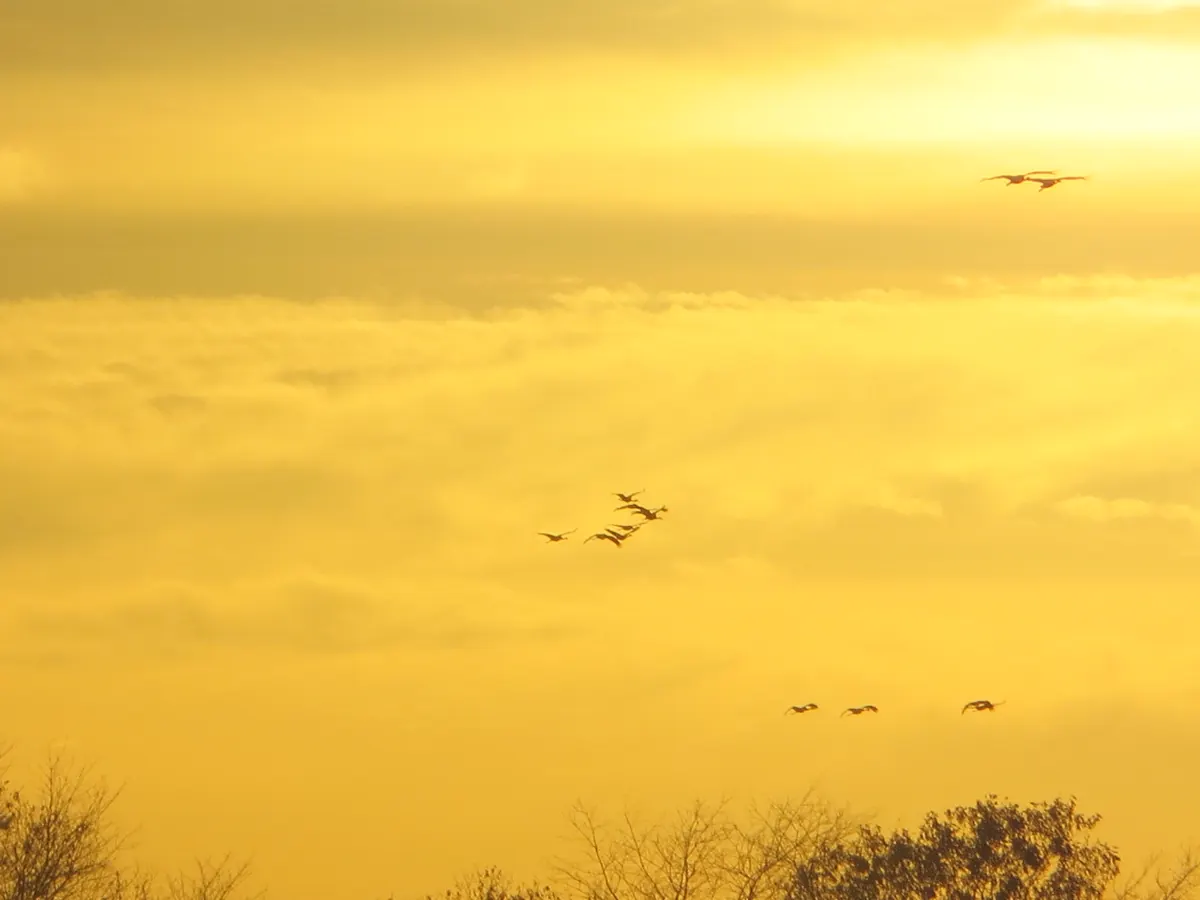
- Cranes at Jasper-Pulaski. Sandhill cranes begin gathering in the shallow marshes of Jasper-Pulaski Fish & Wildlife Area in mid-October. Numbers are still modest this month; the big counts come in late November and early December. Go to the observation platform for the last hour before sunset, when flocks glide in from the surrounding cornfields to roost.
- Salmon below the St. Joseph River dams. Coho and Chinook salmon from Lake Michigan push up the St. Joseph River from mid-September through October and pile up below the dams in South Bend and Mishawaka. Trail Creek in Michigan City and the Little Calumet get runs of their own, and the first winter-run steelhead follow late in the month.
- Jupiter vanishes behind the moon. Early on Tuesday, October 6, the thin old moon passes in front of Jupiter. In Indianapolis the planet disappears at about 4:19 a.m. EDT and returns at 5:18, both in full darkness; the Central-time corners see it an hour earlier on the clock. Find a spot with a clear view low in the east.
Write it down as the month goes. In the Naturalist’s Field Journal, cranes flying in to roost belong on the dusk and dawn watch page; juncos and fall sparrows go on birds I have seen; pawpaw seeds and walnut husks fit the seeds, pods and cones plate; and one sugar maple or sassafras on your daily route can fill a tree through the seasons page. Anything the Dunes wind leaves on the sand is for feather found. Note the date and temperature each time.
Regions used below: Northwest Indiana and the Dunes; Northern Indiana (South Bend, Fort Wayne); Central Indiana (Indianapolis, Lafayette, Terre Haute); South-central hills (Bloomington, Brown County, Hoosier National Forest); Southwest and the Ohio River (Evansville, Madison).
When do sandhill cranes arrive at Jasper-Pulaski?
Jasper-Pulaski Fish & Wildlife Area, near Medaryville between Rensselaer and Winamac, is Indiana’s best-known wildlife show. The Indiana DNR says thousands of sandhill cranes use its shallow marshes from mid-October to mid-December, and that more than 15,000 can stop there over a fall. October is the opening act: the first flocks arrive, bugling, and the numbers climb week by week. The crowd builds toward a peak in late November or early December; on the DNR’s own tally for last fall, the high count was 16,400 on December 2, and in some recent Decembers the total has run past 20,000.
-
Where and when to stand
Mid-October onward; sunrise or the hour before sunset · Sandhill Crane Observation Area and platform, Jasper-Pulaski FWA
At first light the birds leave the roosting marsh in noisy groups to feed in harvested fields. In the evening, starting roughly an hour before sunset, they come back from every direction and parachute into the field in front of the platform. A quarter-mile paved path leads out to it. The birds usually stay several hundred yards off, so bring binoculars or a spotting scope and a warm coat; an October evening on the open prairie cools fast once the sun drops.
-
The Tuesday count
Weekly, October through December · Posted on the DNR’s Jasper-Pulaski crane page
Four to six property staff count the cranes before sunrise each Tuesday, each parked in a different corner of the property, tallying small groups as they lift off the roost overhead. If weather stops them, they try again Thursday. The numbers go up on the DNR website, and they are the best way to decide when to make the drive. A mid-October visit may find hundreds rather than thousands.
-
Also in the marsh
October · Jasper-Pulaski; Goose Pond FWA near Linton
Ducks, geese and fall sparrows share the property, and Indiana Audubon runs a sparrow identification field trip there on Sunday, October 11. In the southwest, Goose Pond Fish & Wildlife Area near Linton, 9,098 acres of restored prairie and marsh with more than 300 bird species on its list, is the other big wetland to know; Indiana Audubon’s sparrow trip visits it on Saturday, October 10.
When is peak fall color in Indiana?
Color runs north to south, about two weeks apart from end to end. A 2026 model reported by the Hoosier Enquirer puts the north near October 14, the middle of the state around October 19, Brown County and the south-central hills from October 20 to the end of the month, and the Evansville and Mount Vernon area in late October. Treat those as rough guides; they come from a private foliage model, not the DNR. The DNR’s own advice holds every year: sunny, warm days and crisp nights with enough soil moisture make the brightest leaves, while a lingering warm spell delays them and a dry spell rushes them to brown.
-
Brown County and the hill country
Usually October 23–25 · Brown County State Park, Yellowwood and Morgan-Monroe state forests, Hoosier National Forest
The park’s naturalist, Eli Major, told WRTV that its peak color day has fallen on October 23 to 25 for as long as he has worked there, and that heat lingering into fall “tricks the trees” into holding summer mode. Sugar maple, sassafras, hickory and tulip tree, Indiana’s state tree, make most of the show. The park runs short naturalist-led color hikes on the Discovery Trail (Sunday, October 4, 9 a.m.) and around Lake Strahl (Tuesday, October 6, 1 p.m.).
-
The north and the lakeshore
Mid-October · Pokagon State Park, Chain O’Lakes, Potato Creek, the Dunes
The glacial lake country of the northeast turns first. Pokagon State Park has a naturalist-led 8-mile Hell’s Point Challenge hike on Saturday, October 10, and Potato Creek near South Bend a one-mile tree identification walk the same afternoon. At Indiana Dunes, the National Park Service leads fall color walks from the Chellberg Farm lot on Saturdays, October 24 and 31, at 3:30 p.m. Central.
-
Central Indiana
Around the third week · Fort Harrison State Park, Turkey Run, Shades, Parke County
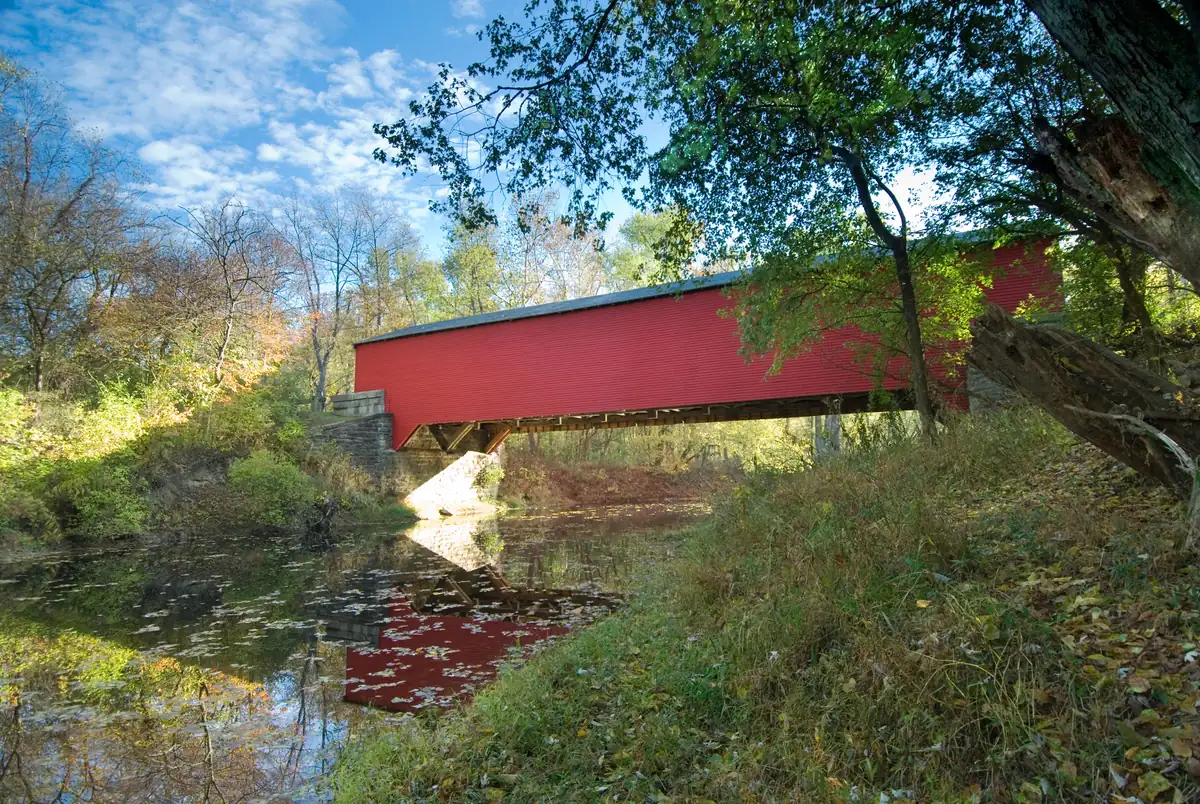
Fort Harrison, on the northeast side of Indianapolis, has a 1.5-mile foliage walk along Fall Creek on Saturday, October 10, at 11 a.m. West of the city, the sandstone ravines of Turkey Run and Shades pair well with the Parke County Covered Bridge Festival, which runs October 9 through 18.
What birds are migrating through Indiana in October?
Indiana sits under a busy flyway, and Lake Michigan concentrates it. The National Park Service explains that birds heading south along the lake’s shore are funneled into the Indiana dunes, and Indiana Dunes National Park has more than 350 confirmed species, among the most of any national park. October is the month the warblers thin out and the sparrows, kinglets, juncos and ducks take over.
-
Saw-whet owls at the Dunes
October 1 to November 20; public banding evenings from October 16 · Indiana Dunes; Mary Gray Bird Sanctuary near Connersville
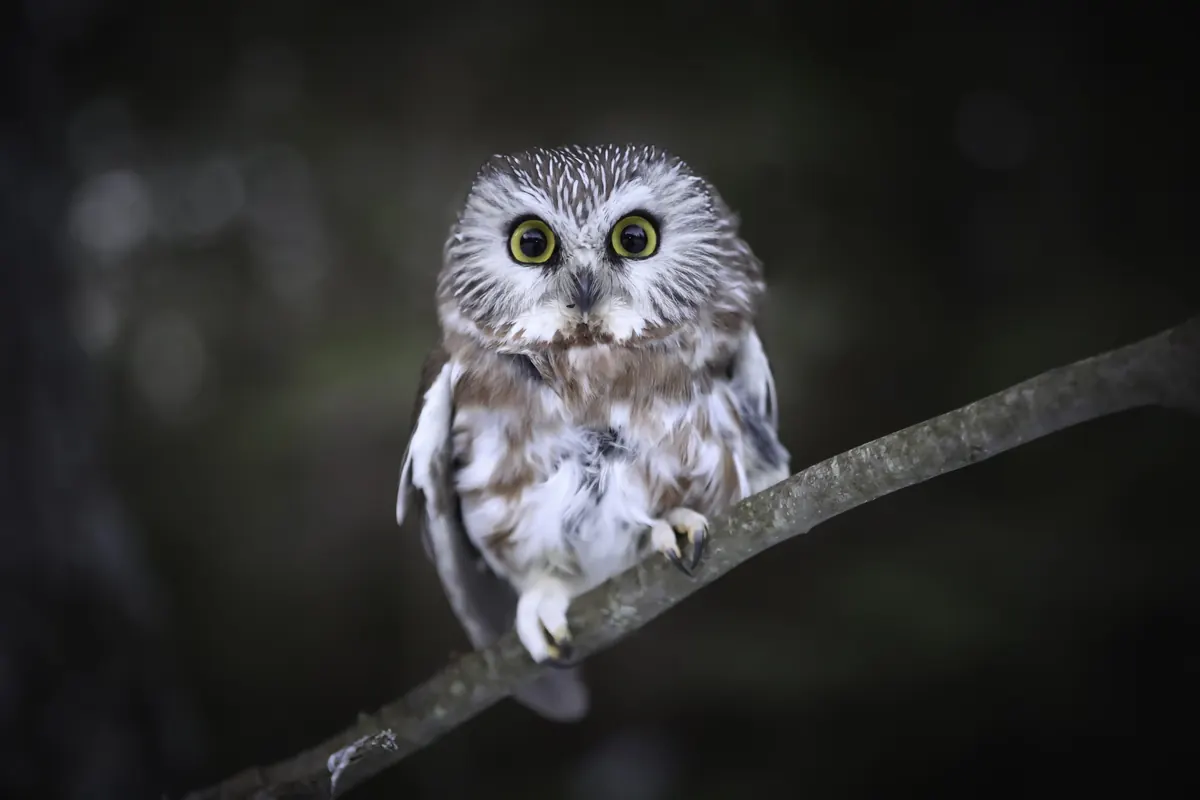
The northern saw-whet owl, smaller than a robin, migrates at night, and Indiana Audubon’s Project Owlnet has banded hundreds of them over more than a decade at two stations. The fall season runs from about October 1 to November 20. On its Saw-Whets & S’mores evenings at the Dunes (7 p.m. Central on October 16, 17, 18, 23, 24 and 25, with more dates into November) researchers show guests the owls as they are caught, banded and released. Register ahead through Indiana Audubon.
-
Sparrows, juncos and kinglets
Early October into November · Brushy field edges statewide
White-throated sparrows, dark-eyed juncos and both kinglets arrive for the winter; fox, Lincoln’s and swamp sparrows pass through. Indiana Audubon runs a fall sparrow identification workshop on Thursday, October 8 (in person or online) before its field trips to Goose Pond and Jasper-Pulaski on the 10th and 11th.
-
Hawks and waterbirds on the lakeshore
October · The foredunes; the Great Marsh; Lake Michigan off the state park
From the foredunes on a northwest wind you can watch hawks tracking the shore, and the open water offshore starts collecting the diving ducks and other waterbirds that will winter there. The Dunes-Calumet Audubon Society hosts a Breakfast with the Birds at the Paul H. Douglas Center in Gary on Sunday, October 4, 9:30 to 11 a.m.
-
Count birds for science
October 10–11 · Anywhere
The global October Big Day on eBird falls on Saturday the 10th, while the Big Sit! runs from midnight Saturday through Sunday, October 11: birders stay inside a 17-foot circle all day and tally what they detect from it. Indiana Audubon also leads Big Day hikes with a land-trust partner that morning.
When do salmon run up Indiana’s Lake Michigan streams?
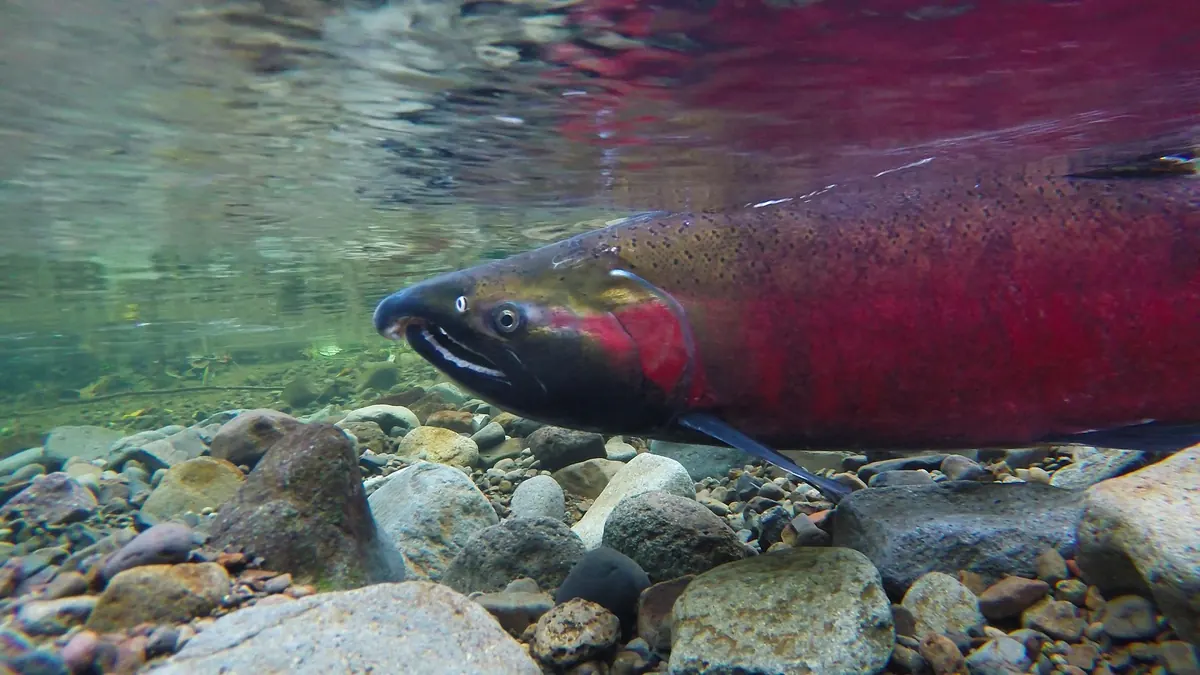
Indiana’s short stretch of Lake Michigan shore has a fall salmon run that surprises people who have never seen it. The fish were stocked as youngsters in the streams by the DNR and return to them as adults. The DNR’s Lake Michigan guide says Chinook and coho come back to spawn from late August to early November and die afterward; lake trout gather along the shore near the Port of Indiana from mid-October to mid-November; and winter-run steelhead start entering the streams in mid-to-late October.
-
The St. Joseph River in South Bend and Mishawaka
Mid-September through October · Below the dams; Leeper, Keller and Central parks; Twin Branch Dam
Visit South Bend describes the Chinook and coho run as lasting from about mid-September through October and reaching as far up as Twin Branch Dam in Mishawaka. The DNR switched to stocking the river with 60,000 larger spring-yearling coho, and its biologist Ben Dickinson told MidWest Outdoors that the change raised the coho count through the South Bend Fish Ladder from about 1,300 fish to nearly 6,000 in September and October. Watch from the riverwalks near the dams.
-
Trail Creek and the Little Calumet
Late September through October · Michigan City; the East Branch of the Little Calumet near Porter
Trail Creek, which reaches the lake at Michigan City, and the East Branch of the Little Calumet River both get salmon and Skamania steelhead in fall. Much of their banks are private, so fish or watch from public access sites only.
Check license and trout-and-salmon stamp rules before you cast; the DNR’s Lake Michigan office in Michigan City answers questions at (219) 874-6824.
When is the first freeze in Indiana?
Indiana freezes in an odd pattern: not strictly north to south but open country first, lakeshore and river valleys last. The flat farm country of the west and north is coldest on a clear, calm night; Crawfordsville 6 SE and Rockville have a median first freeze of October 12, and Cambridge City 3 N, up on the high ground east of Indianapolis, October 9. Lake Michigan keeps the Indiana Dunes station frost-free until a median of October 27, later than much of central Indiana. The Ohio River towns come last: Madison on October 31 and Evansville Regional Airport on October 29, with the downtown Evansville Museum station holding out until November 10.
| Station | One year in ten | Median | Nine years in ten |
|---|---|---|---|
| South Bend Michiana Regional Airport | Oct 5 | Oct 19 | Nov 1 |
| Indiana Dunes Nl (lakeshore) | Oct 15 | Oct 27 | Nov 9 |
| Fort Wayne International Airport | Oct 8 | Oct 21 | Nov 1 |
| Lafayette Purdue Univ Airport | Oct 4 | Oct 18 | Oct 31 |
| Indianapolis | Oct 13 | Oct 26 | Nov 7 |
| Terre Haute Hulman Regional Airport | Oct 4 | Oct 18 | Oct 31 |
| Bloomington Monroe County Airport | Oct 8 | Oct 22 | Nov 2 |
| Evansville Regional Airport | Oct 17 | Oct 29 | Nov 11 |
| Madison Sewage Plt (Ohio River) | Oct 15 | Oct 31 | Nov 14 |
Frost can whiten a low field a week or more before the thermometer at the airport hits 32. Every station in the state, including the one nearest you, is listed on the Indiana frost dates page. Pick the green tomatoes, bring in the pots, and write down the morning you first scrape the windshield.
How much daylight does Indiana lose in October?
Between 70 and 80 minutes, depending on latitude. South Bend and Gary lose 80 minutes over the month, about 2.7 a day; Evansville, 250 miles south, loses 70. Because most of Indiana sits at the far western edge of the Eastern time zone, its mornings are famously late: in Indianapolis the sun comes up at 7:41 a.m. EDT on October 1 and at 8:12 a.m. on October 31, when it sets at 6:44 p.m. Clocks in both Indiana zones go back an hour early on Sunday, November 1 (officially at 2 a.m.), so Sunday’s sunrise already comes an hour sooner by the clock.
| City | Oct 1 | Oct 31 | Lost | Per day |
|---|---|---|---|---|
| South Bend | 11 h 45 m | 10 h 25 m | 80 min | 2.7 min |
| Gary | 11 h 45 m | 10 h 25 m | 80 min | 2.7 min |
| Fort Wayne | 11 h 45 m | 10 h 26 m | 79 min | 2.6 min |
| Lafayette | 11 h 45 m | 10 h 29 m | 76 min | 2.5 min |
| Indianapolis | 11 h 46 m | 10 h 32 m | 74 min | 2.5 min |
| Terre Haute | 11 h 46 m | 10 h 32 m | 74 min | 2.5 min |
| Bloomington | 11 h 47 m | 10 h 33 m | 74 min | 2.5 min |
| Evansville | 11 h 47 m | 10 h 37 m | 70 min | 2.3 min |
Type any Indiana address into the Field almanac to get that spot’s sunrise, sunset and twilight, and how fast the days are shrinking this week.
What is October weather like in Indiana, and what will El Niño mean for the winter?
October is mild and usually one of the pleasanter months. NOAA’s 1991–2020 normals give average highs of 61.8 °F at South Bend, 63.7 at Fort Wayne, 65.6 at Indianapolis and 70.1 at Evansville, with lows from 42.1 at South Bend to 47.1 at Evansville. Rain averages 2.95 inches at Fort Wayne, 3.22 at Indianapolis, 3.39 at Evansville and 3.72 at South Bend, where the lake adds showers when cold air starts crossing it. October snow averages a tenth or two of an inch. The lake-effect belt around South Bend averages 5.1 inches in November, against 0.8 at Indianapolis.
Winter is where the interest lies this year. In its update of September 10, NOAA’s Climate Prediction Center put the odds of El Niño reaching very strong status this fall and winter above 90 percent. NWS Indianapolis sums up the usual pattern for the state: temperatures above average and precipitation below. Snow tends to follow. When the Midwestern Climate Center compared six strong El Niño winters from 1957–58 to 1991–92 with other winters, Indianapolis averaged 12 inches of snow instead of 27, Evansville 8 instead of 15, and South Bend 61 instead of 77, the lake keeping its snow machine running. There are caveats. State climatologist Beth Hall of Purdue has pointed out that the moderate-to-strong events of 2006–07 and 2015–16 left Indiana wetter than average, and that drier does not always mean less snow. Expect the odds to lean mild and dry, with the largest effect from November through January, as Indiana Public Media reported this month. October itself will feel little of it. NOAA issues its official winter outlook in mid-October.
For the week ahead, check the Weather now page before planning a crane or salmon trip.
What can you see in the night sky over Indiana in October?
Indiana runs on two clocks. Most of the state is on Eastern time; six counties in the northwest near Chicago (Lake, Porter, LaPorte, Newton, Jasper and Starke) and six in the southwest around Evansville (Vanderburgh, Posey, Warrick, Gibson, Spencer and Perry) are on Central. A sky event happens at one instant statewide; Central clocks just read an hour less.
-
The moon covers Jupiter
Tuesday, October 6, about 4:19 to 5:18 a.m. EDT (about 3:20 to 4:18 a.m. CDT) · Low in the east; moon about 10 degrees up at the start, 20 at the end
In Indianapolis the old crescent, 18 percent lit, clears the horizon around 3:15 a.m. EDT with Jupiter close by. The International Occultation Timing Association calculates that the planet disappears at the moon’s bright limb at 4:19 a.m. EDT in Indianapolis and Terre Haute (4:20 at Peru) and reappears at the dark edge at 5:18 (5:17 in Terre Haute), with dawn still two hours away. In the northwest, Chicago’s times of 3:22 and 4:17 a.m. CDT fit Gary and Valparaiso. Evansville is not on IOTA’s list; Louisville, just upriver, has 4:18 and 5:18 EDT, so allow about 3:18 and 4:18 a.m. CDT. Binoculars show it; a small telescope also catches Jupiter’s moons vanishing one by one. The only real requirement is a flat, clear eastern horizon.
-
The Hunter’s Moon
Evenings of Sunday, October 25 and Monday, October 26 · Rising in the east-northeast near sunset
The exact moment of full is 12:12 a.m. EDT on the 26th, or 11:12 p.m. CDT on the 25th, so the moon looks round on both evenings. Indianapolis sees it come up at 6:18 p.m. on Sunday, 33 minutes ahead of the 6:51 sunset, and at 6:51 on Monday, level with sunset. Gary’s moonrise times are 5:19 and 5:51 p.m. CDT. Despite what some headlines say, this one is not a supermoon. Indiana Dunes State Park leads a Full Moon Hike along the lake on Saturday, October 24, 6 to 8 p.m. Central.
-
Orionid meteors
Before dawn on October 21 and 22 · Away from city lights; look high in the south and east
The Orionids, fast streaks from dust shed by Halley’s Comet, are active from early October into early November with a broad peak on the 21st and 22nd; expect 10 to 20 an hour at best from a dark site. A bright gibbous moon is up in the evening, so wait for it to set. On the morning of the 22nd, moonset is 4:04 a.m. EDT in Indianapolis and about 3:10 a.m. CDT in Gary and Evansville, leaving a few dark hours before dawn.
-
Draconid meteors
Evening of Thursday, October 8 · Face north after dark
Unlike most showers, this one peaks in the hours after dusk, which suits young stargazers, and there is no moonlight to spoil it. Tippecanoe River State Park holds a two-hour meteor watch on the open play field the following night, Friday the 9th, at 8 p.m.; bring a blanket and bug spray.
-
Saturn all night, Jupiter and Mars before dawn
Saturn at opposition October 4; Mars at the Beehive October 11; Venus early in the month only · East at dusk for Saturn; east before sunrise for Jupiter and Mars
On October 4 Saturn lies directly opposite the sun from us, which means Hoosiers can find it low in the east at nightfall and well up in the south after midnight; a fat gibbous moon slides past it on October 23–24. Venus is a low evening sight only during October’s first days, and on the 23rd it passes between us and the sun. Before sunrise, look east for Jupiter, the brightest planet up, with Mars higher; on the 11th, Mars drifts through the Beehive cluster in Cancer, a pretty view in binoculars. Brown County State Park sets up a telescope at Hoen Point on Friday, October 9, from 8 to 10 p.m., one night before new moon.
| Phase | Eastern time (most of Indiana) | Central time (12 corner counties) |
|---|---|---|
| Last quarter | Sat, Oct 3, 9:25 a.m. EDT | Sat, Oct 3, 8:25 a.m. CDT |
| New moon | Sat, Oct 10, 11:50 a.m. EDT | Sat, Oct 10, 10:50 a.m. CDT |
| First quarter | Sun, Oct 18, 12:12 p.m. EDT | Sun, Oct 18, 11:12 a.m. CDT |
| Full moon, the Hunter’s Moon | Mon, Oct 26, 12:12 a.m. EDT | Sun, Oct 25, 11:12 p.m. CDT |
| Last quarter | Sun, Nov 1, 3:28 p.m. EST | Sun, Nov 1, 2:28 p.m. CST |
Tonight’s cloud forecast lives on Today’s sky, worth a glance before any late drive; for local rise and set times of the moon, open moon phases.
What is ripening and blooming in Indiana in October?
October is fruit season in Indiana’s woods, and a few late flowers keep the last pollinators fed.
-
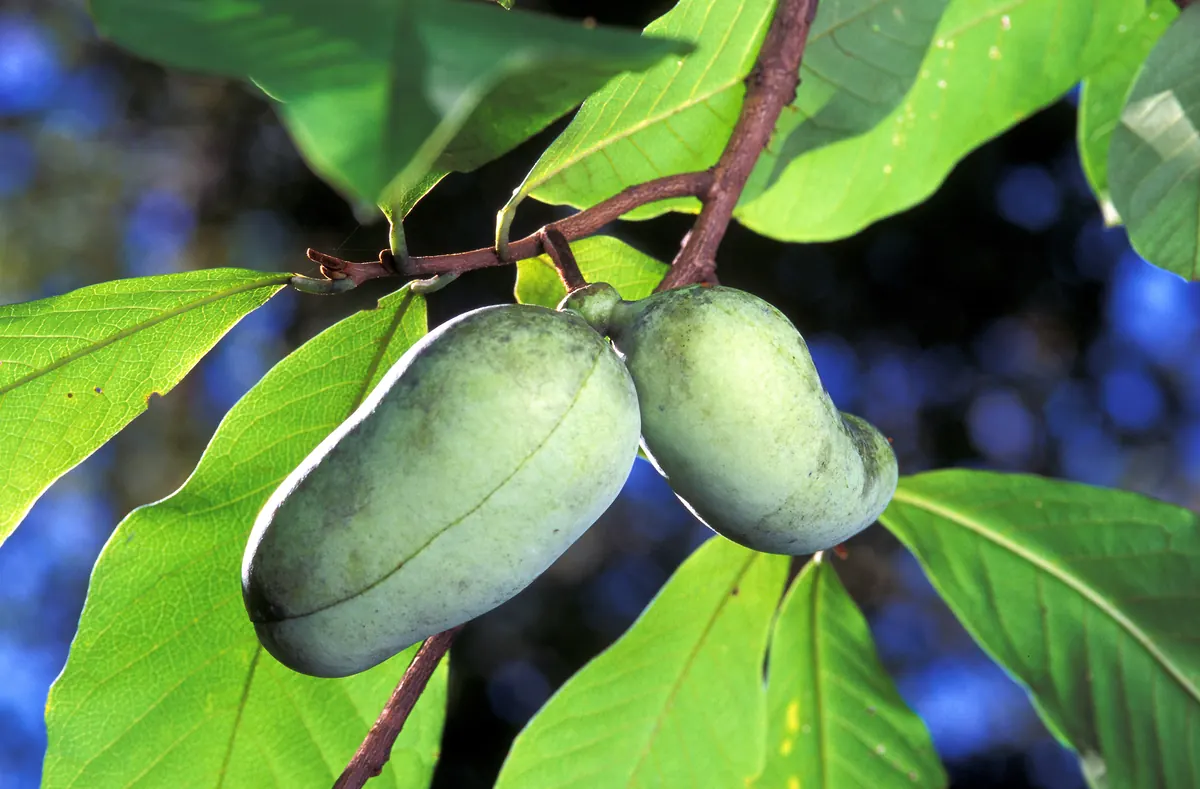
Pawpaws, the Indiana banana
September into early October · Moist bottomland woods and stream banks statewide
North America’s largest native fruit grows on small understory trees in patches along creeks. The fruit is ripe when it gives a little under the thumb and smells of banana and mango; it bruises and spoils within days, which is why you rarely see it in stores. Pokagon State Park leads a 2.5-mile pawpaw hunt from the CCC Shelter lot on Saturday, October 3, at 2 p.m.
-
Persimmons
Late September through October · Old fields and fencerows, mostly in southern Indiana
Persimmons turn orange long before they are fit to eat; an unripe one puckers the mouth. Let them go soft, even wrinkled, and they turn sweet; many ripen fully only after dropping. Southern Indiana bakes it into persimmon pudding, and deer, raccoons, opossums and foxes clean up whatever falls.
-
Walnuts, hickories and acorns
All month · Woodlots, yards and roadsides
Black walnuts drop in green husks that stain hands for a week, so wear gloves. Squirrels and blue jays spend the month burying hickory nuts and acorns.
-
Witch hazel and the last asters
Witch hazel from mid-October; asters and goldenrods into early October · Ravines and slopes in the south-central hills; prairies and roadsides
American witch hazel blooms after its leaves turn yellow, hanging thin, crinkled yellow petals on bare-looking twigs in the ravines of Brown County and the Hoosier National Forest. In the prairies and old fields, New England aster and the goldenrods are finishing, and they are the last big nectar source for bees and migrating monarchs.
What are deer, monarchs and other Indiana animals doing in October?
-
Deer in the rut
October and November · Statewide, especially field edges at dusk and dawn
The Indiana DNR says the rut runs mainly through October and November, triggered by shortening days. Bucks rub saplings, scrape the ground and chase does, and they cross roads carelessly. The DNR maps each county’s peak breeding time from the dates of deer-vehicle collisions, which tells you how closely the two go together.
-
The last monarchs
Stragglers into early October · Aster and goldenrod patches; southern Indiana
Monarch Watch puts peak migration at 41° N, the latitude of Fort Wayne, from September 8 to 20, and at 37° N from September 19 to October 1, so Indiana’s main push is over by the start of the month. A few late butterflies still drift south on warm afternoons. Report them to Journey North. On Thursday, October 1, DNR staff lead a milkweed seed harvest at Prudential Game Bird Area in Newton County, 8 to 11 a.m. Central, to plant at Willow Slough.
-
Spotted lanternfly egg-laying
September until a hard frost · Confirmed populations in Porter, St. Joseph, Elkhart, Huntington and Switzerland counties
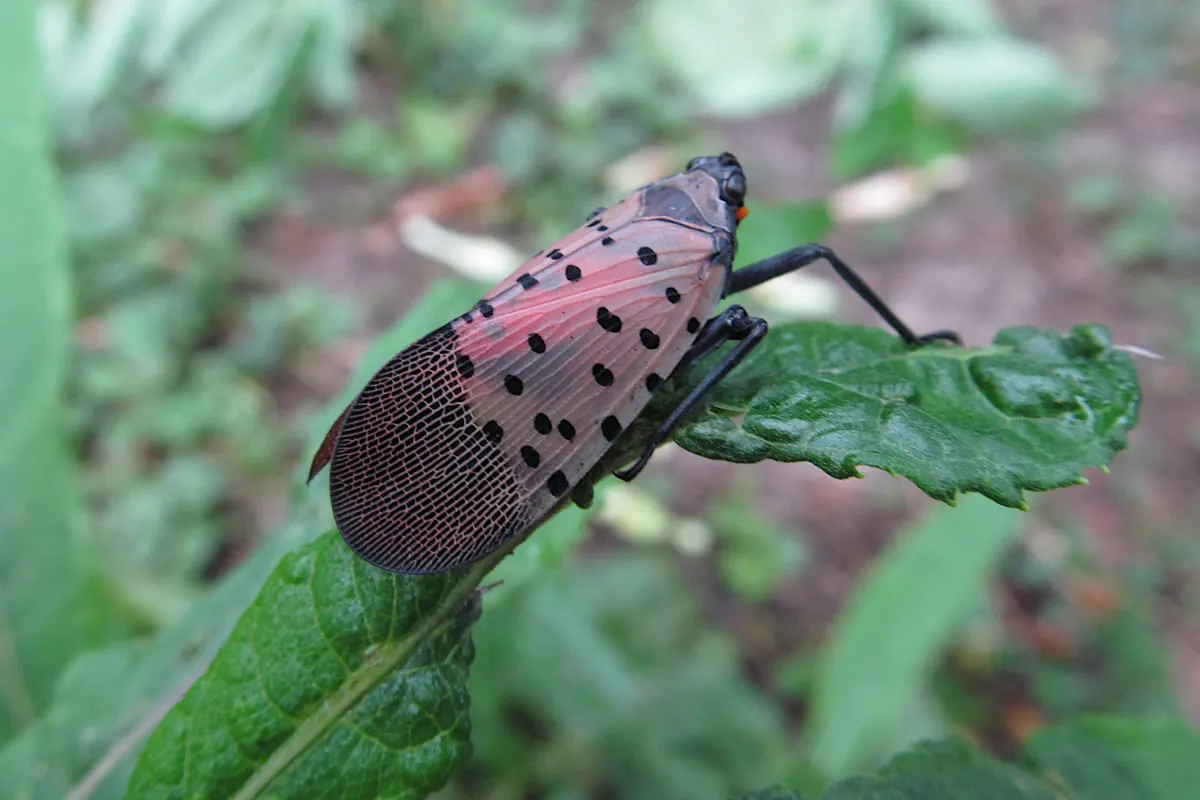
The adults of this invasive planthopper, pinkish-gray with red hind wings, mate and lay eggs from September until a hard frost, smearing mud-colored egg masses of 30 to 50 eggs on bark, firewood, trailers and patio furniture. If you find one outside the known counties, photograph it and report it to the DNR at 866-NO-EXOTIC (866-663-9684).
-
Woolly bears, chipmunks and snakes
Warm October afternoons · Trails, roads and sunny rocks
Banded woolly bear caterpillars wander across roads looking for a place to spend the winter frozen solid. On a warm afternoon, snakes bask near the rock ledges where they will overwinter; in Brown County that includes the timber rattlesnake, an endangered species in Indiana that should be admired from a distance and left alone.
What are the best October outings for Indiana families?
- Saturday, October 3: pawpaws or old growth. The pawpaw hike at Pokagon State Park (2 p.m.), or a guided walk through Hemmer Woods Nature Preserve, an old-growth forest in Gibson County, with a DNR ecologist and the Old-Growth Forest Network (10 a.m. to noon Central). The Indiana Audubon young birders meet at Eagle Creek Park in Indianapolis at 10 a.m.
- October 8–10: the dark-moon stretch. Draconids after dark on the 8th, the meteor watch at Tippecanoe River State Park or the Hoen Point telescope in Brown County on the 9th, and the new moon on the 10th.
- Saturday, October 10: a full day. Log Cabin Day at Muscatatuck National Wildlife Refuge near Seymour (10 a.m. to 2 p.m.) has old-time music, pioneer chores for kids and a free ham-and-bean lunch, and opens National Wildlife Refuge Week, October 10–17. Prophetstown State Park near Lafayette holds its Fall Funfest on The Farm (11 a.m. to 3 p.m.), and Indiana Dunes State Park a fall phenology walk from the Nature Center at 2 p.m. Central.
- October 16–25: owls at night. Saw-Whets & S’mores evenings at the Dunes, with Indiana Audubon’s owl banders. Book ahead.
- Saturday, October 17: Brown County State Park Fall Festival. The event formerly called Halloween in the Hills runs from noon to 9 p.m., with a pumpkin-carving contest.
- All month. The 17th annual Trail of Scarecrows lines a paved mile at Prophetstown from October 1 to November 1, and naturalists there run Phenology Fridays at the overlook deck at 8:30 a.m. National parks, including Indiana Dunes, are free on Tuesday, October 27.
- Citizen science. Log birds for the October Big Day on the 10th or the Big Sit on the 10th and 11th, report late monarchs to Journey North, report spotted lanternflies to the DNR, and enroll a backyard feeder in Project FeederWatch before counting starts on November 1.
Our Naturalist’s Field Journal has pages for all of this, and the nature hub links to the other state guides.
Safety notes for October in Indiana
- Deer on the road. The DNR counts more than 15,000 deer-vehicle crashes a year in Indiana, most of them from September through December and especially in October and November, at dawn and dusk. It advises braking hard and staying in your lane rather than swerving, using high beams where you can, and expecting a second deer behind the first.
- Hunting seasons. Deer archery season opens October 1 and runs to January 3, and the deer reduction zones have been open since September 15. Fall turkey is open to archers October 1 to November 1 and to firearms hunters October 21 to November 1 in listed counties; woodcock opens October 15; squirrel is open all month. The youth and veteran waterfowl weekends fall on October 17–18 (North), October 24–25 (Central) and October 31–November 1 (South); ducks open October 24 in the North Zone and October 31 in the Central Zone. Rabbit, pheasant and quail open November 1.
- Hunter orange. Indiana requires solid (not camouflage) fluorescent orange, such as a vest, coat, jacket, coveralls, hat or cap, for all deer hunters during youth season, the firearms season (November 14–29) and muzzleloader season (December 5–20). Archers must wear it too from the opening of firearms season, and in a deer reduction zone every hunter wears it from November 14 through January 31. October’s archery season has no orange rule, so hunters in the woods this month may be dressed in camouflage. Hikers on fish and wildlife areas and state forests are wise to wear blaze orange regardless; a bright collar or vest helps the dog too.
- Lake Michigan. Fall storms raise big waves and dangerous currents along the Dunes beaches, and the water is cold enough by late October to incapacitate a swimmer quickly. Stay off the piers and breakwalls in high surf.
- Ticks. Purdue entomologists note that adult blacklegged ticks, which carry Lyme disease, are active from late summer into fall. Check yourself, your children and the dog after every walk in brush.
- Plants and fungi. Never eat a wild mushroom unless an expert has identified it in hand, and leave any fruit you cannot name for the wildlife.
Sources
- Indiana DNR: sandhill crane fall migration at Jasper-Pulaski FWA (weekly counts, viewing times)
- Indiana DNR: Jasper-Pulaski Fish & Wildlife Area
- Purdue Forestry and Natural Resources Extension: experience Indiana’s sandhill crane fall migration
- NWI Times: sandhill crane population at Jasper-Pulaski reaches 20,000 before marshes freeze
- Indiana DNR: Goose Pond Fish & Wildlife Area
- Hoosier Enquirer: Indiana fall color timing for 2026 (September 20, 2026)
- WRTV: predicting peak fall color at Brown County State Park (naturalist Eli Major)
- Indiana DNR events calendar, October 2026 (state parks, lakes and nature preserves)
- Indiana DNR: Fall Color Hike, Discovery Trail, Brown County State Park (October 4, 2026)
- Indiana DNR: Fall Festival (formerly Halloween in the Hills), Brown County State Park, October 17, 2026
- Indiana DNR: Stargazing at Hoen Point, Brown County State Park, October 9, 2026
- Indiana DNR: Paw Paw Hike, Pokagon State Park, October 3, 2026
- Indiana DNR: Fall Foliage Hike, Fort Harrison State Park, October 10, 2026
- Indiana DNR: Parke County Covered Bridge Festival at the Mansfield Roller Mill, October 9–18, 2026
- Indiana DNR: Draconids meteor watch, Tippecanoe River State Park, October 9, 2026
- Indiana DNR: guided hike, Hemmer Woods Nature Preserve, October 3, 2026
- Indiana DNR: milkweed seed harvest, Prudential Game Bird Area, October 1, 2026
- Indiana DNR: 17th annual Trail of Scarecrows, Prophetstown State Park
- Indiana DNR: Fall Funfest at The Farm, Prophetstown State Park, October 10, 2026
- Indiana DNR: Fall Phenology Hike, Indiana Dunes State Park, October 10, 2026
- Friends of Indiana Dunes: Indiana Dunes State Park events, October 2026 (Full Moon Hike, October 24)
- National Park Service: Indiana Dunes National Park programs and events, October 2026
- National Park Service: birds of Indiana Dunes National Park
- Indiana Audubon: upcoming trips and events, fall 2026
- Indiana Audubon: Project Owlnet (northern saw-whet owl banding)
- The Big Sit! 2026 (October 10–11)
- BirdsCaribbean: October Big Day 2026 (Saturday, October 10)
- Project FeederWatch: how to participate (season begins November 1)
- Indiana DNR Lake Michigan Fisheries Office: fishing northwest Indiana’s Lake Michigan shoreline and tributaries (PDF)
- MidWest Outdoors: salmon anglers flock to the St. Joe River (DNR biologist Ben Dickinson)
- Visit South Bend: fall fishing on the St. Joseph River
- The Republic: Muscatatuck refuge hosts two free fall family events (Log Cabin Day, October 10, 2026)
- NOAA NCEI: 1991–2020 monthly normals for Indianapolis, South Bend, Fort Wayne and Evansville (data API)
- NOAA NCEI: U.S. climate normals, 1991–2020 (source of the freeze dates)
- Climate Prediction Center: ENSO diagnostic discussion, September 10, 2026
- NWS Indianapolis: El Niño and central Indiana winters
- Midwestern Climate Center: El Niño may mean less snowfall in the Midwest (snowfall in six strong El Niño winters, PDF)
- Purdue Extension: El Niño signals warm, dry winter (state climatologist Beth Hall, 2023)
- Indiana Public Media: the impacts of the super El Niño on Indiana (September 16, 2026)
- U.S. Naval Observatory: sunrise, sunset, moonrise and moonset (data API; example for Indianapolis, October 1)
- U.S. Naval Observatory: moon phases, 2026 (data API)
- International Occultation Timing Association: lunar occultation of Jupiter, October 6, 2026
- EarthSky: visible planets and night sky guide
- EarthSky: meteor shower guide (Draconids, Orionids)
- Wikipedia: time in Indiana (the twelve Central-time counties)
- Monarch Watch: peak migration dates by latitude
- Journey North: monarch sightings and fall roost reports
- Missouri Department of Conservation field guide: pawpaw
- Missouri Department of Conservation field guide: persimmon
- USDA Forest Service: American witchhazel, plant of the week
- Indiana DNR: white-tailed deer biology (rut timing)
- Indiana DNR: Timber! Understanding the Timber Rattlesnake, Brown County State Park (October 2026 program)
- Indiana DNR: deer-vehicle collisions
- Indiana DNR Entomology: spotted lanternfly
- Indiana DNR: 2026–27 deer hunting seasons and hunter orange
- Indiana DNR: deer hunting questions and answers (hunter orange)
- Indiana Hunting & Trapping Guide 2026–27: deer regulations (hunter orange garments)
- Indiana Hunting & Trapping Guide 2026–27: hunting season dates
- Indiana Hunting & Trapping Guide 2026–27: waterfowl and migratory bird seasons
- Purdue Extension Entomology: ticks in Indiana
- Photos via Wikimedia Commons; licenses and photographers are credited under each picture
