What to look for in nature in Iowa this April
April is when Iowa's woods and ponds wake up all at once. Virginia bluebells and Dutchman's breeches carpet the southern valleys, white pelicans stop at the big reservoirs, tiger salamanders and the first frogs head for fishless ponds on wet nights, and walleye work the riffles below the dams. Turkey season opens on April 9, redbuds and serviceberries bloom, and the days lengthen by roughly 2.7 minutes each day. Each section below covers one subject.
Other months in Iowa: October, November, December, January, February, March.
Start here
- Walk a wooded valley in the middle of the month. Hunt for Virginia bluebells, Dutchman's breeches, spring beauty and bloodroot, and jot down when each one first opens. The DNR's weekly wildflower reports will tell you which region is peaking.
- Go out after dark on the first warm, wet night. Listen at a pond edge for chorus frogs, leopard frogs and peepers, and watch the road for slow-moving tiger salamanders.
- Visit a big reservoir on a clear morning. Coralville, Red Rock, Rathbun and Saylorville all draw white pelicans in April, and shorebirds, gulls and the first warblers pass through the same shores.
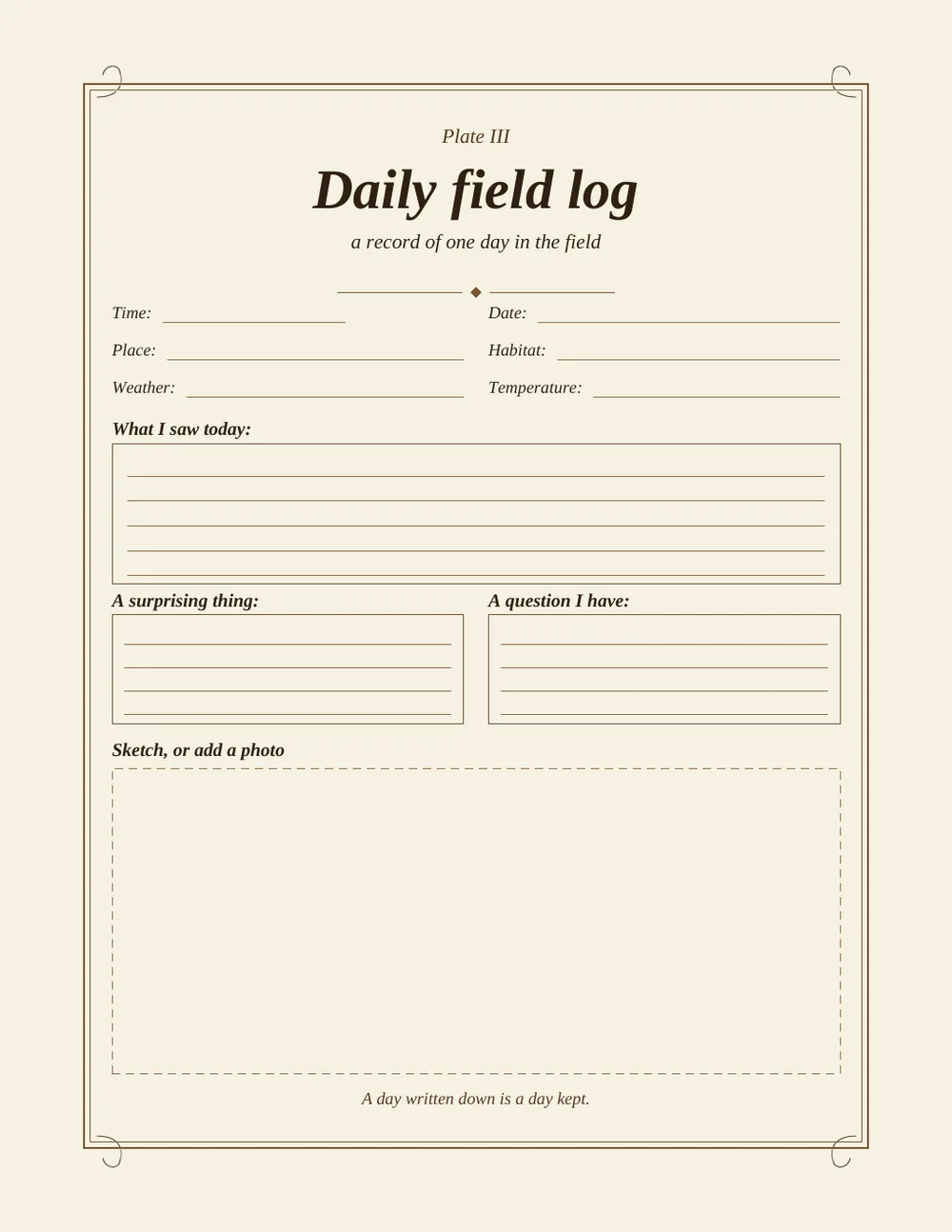
Use the Naturalist's Field Journal this month as follows: the "birds I have seen" plate for a first brown thrasher, hummingbird and pelican, "a map of sounds" for a pond's changing chorus, "a tree through the seasons" for a branch from bud to leaf, "seeds pods and cones" for last year's seedheads still standing in the prairie, and "daily field log" for the temperature and weather of each outing.
Regions used below: Northeast Iowa and the Driftless; Eastern Iowa and the Mississippi River; Central Iowa and Des Moines; Northwest Iowa and the Iowa Great Lakes; Western Iowa and the Loess Hills; Southern Iowa.
When do Iowa's woodland wildflowers peak in April, and when is the last freeze?
April is the month the forest floor puts on its show. Spring ephemerals race through bloom before the canopy closes, so a trail that looked bare on April 1 can be carpeted three weeks later. The Iowa DNR publishes a weekly Woodland Wildflowers report through the season, split into northern, central, southern and western Iowa, and its 2026 series ended with a report dated May 18 and 19. Those reports are the best guide to what is open right now, and you can subscribe by email from the DNR page.
To show how the sequence runs, here is what the DNR's southern Iowa reports described in 2025, as relayed by KCII Radio. On April 19 the list included bloodroot, common blue violet, Dutchman's breeches, rue anemone, spring beauty, Virginia bluebells and sharp-lobed hepatica, with spring beauty and Dutchman's breeches at peak in Henry County and the first trout lilies just opening. A week later the same reports described valley floors covered in Virginia bluebells in Henry and Des Moines counties, with wild geranium and prairie trillium joining in. By May 3 the large-flowered bellwort and late Dutchman's breeches were nearly done and wild geranium was new. Treat the dates as one year's example, because a cold April pushes everything back.
-
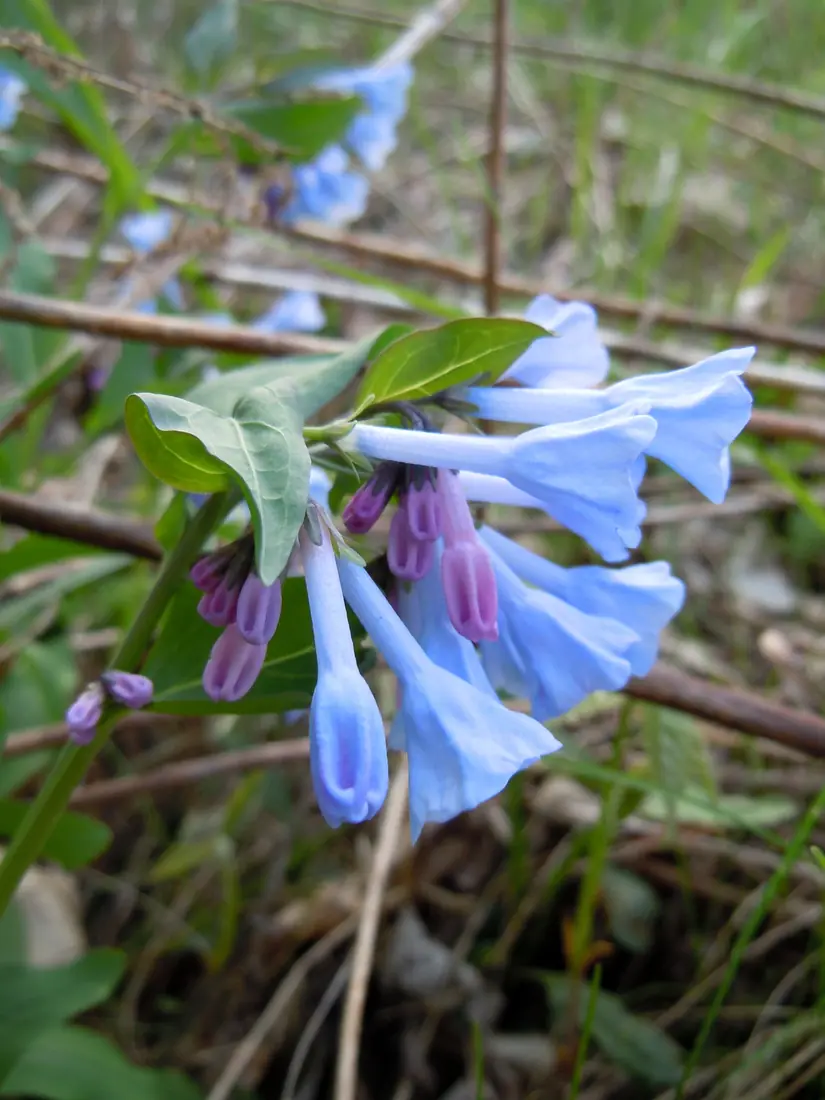
Virginia bluebells
Usually mid to late April in the south; later farther north · Wooded river bottoms and valley floors, such as the trails of Jefferson County Park and the Des Moines and Henry county woods
Pink buds open into clusters of sky-blue bells. The DNR's southern Iowa reports in 2025 had them plentiful along trails by late April and still plentiful on May 3, which makes this one of the longer-lasting displays of the season. -
Dutchman's breeches and spring beauty
April; at peak in Henry County in the DNR's April 19, 2025 report · Rich, shaded slopes and bottomland forest
Dutchman's breeches carry rows of white, pantaloon-shaped flowers, and spring beauty is a low, pink-veined star. In 2025 both were reported at peak in the same week. -
Pasque flowers, last of the season
Bloom in March and April, per the Iowa Natural Heritage Foundation · Dry, thin-soil prairie hilltops
The foundation notes that pasque flowers sometimes grow only about 2 inches tall, so look low. March is the main month for them, and this story is covered on the March page. -
Look, but do not pick
All spring · Public conservation areas
The DNR reminds visitors that it is illegal to pick wildflowers in public conservation areas. A photo or a sketch is the legal souvenir.
| Station | One year in ten | Median | Nine years in ten |
|---|---|---|---|
| Estherville Municipal Airport (northwest) | Apr 19 | May 2 | May 14 |
| Mason City Municipal Airport (north central) | Apr 19 | May 3 | May 15 |
| Decorah (northeast) | Apr 19 | May 3 | May 16 |
| Sioux City Gateway Airport (west) | Apr 16 | Apr 29 | May 14 |
| Cedar Rapids Municipal Airport (east central) | Apr 13 | Apr 27 | May 11 |
| Des Moines International Airport (central) | Apr 4 | Apr 18 | May 2 |
| Clarinda (southwest) | Apr 11 | Apr 25 | May 7 |
| Burlington Municipal Airport (southeast) | Apr 2 | Apr 15 | May 1 |
The table above is the frost side of the same story. Each row gives the last 32 °F night of spring in the 30-year station record. At these stations the median falls between April 15 at Burlington and May 3 at Mason City and Decorah, and the late column, the date nine springs in ten beat, runs from May 1 at Burlington to May 16 at Decorah. Gardeners should treat the median as the earliest date to set out frost-tender plants, and the late column is the safer one. Look up your own town on the Iowa frost page.
Which birds arrive in Iowa in April, and where are the pelicans?
April moves quickly. The Audubon Society of Omaha, whose calendar covers the Missouri Valley in southwest Iowa, breaks the month into weeks. Early April brings purple martins, tree swallows, hermit thrushes and a run of sparrows (chipping, field, savannah and fox). By mid-month the list adds Franklin's gulls, Swainson's hawks in large numbers, shorebirds such as yellowlegs and willets, brown thrashers, yellow-rumped warblers, and vesper, lark and grasshopper sparrows. The last third of April brings upland, spotted, solitary and least sandpipers, eastern kingbirds, bank swallows, blue-gray gnatcatchers, and the first orange-crowned, black-and-white and northern parula warblers. Woodcock and ruby-crowned kinglets stay through the month. That calendar belongs to the Omaha area, so treat its weeks as a guide and expect them to shift across the state with the weather. The main wave of warblers waits for May: the Iowa Natural Heritage Foundation puts the warblers' arrival at late April or early May.
-
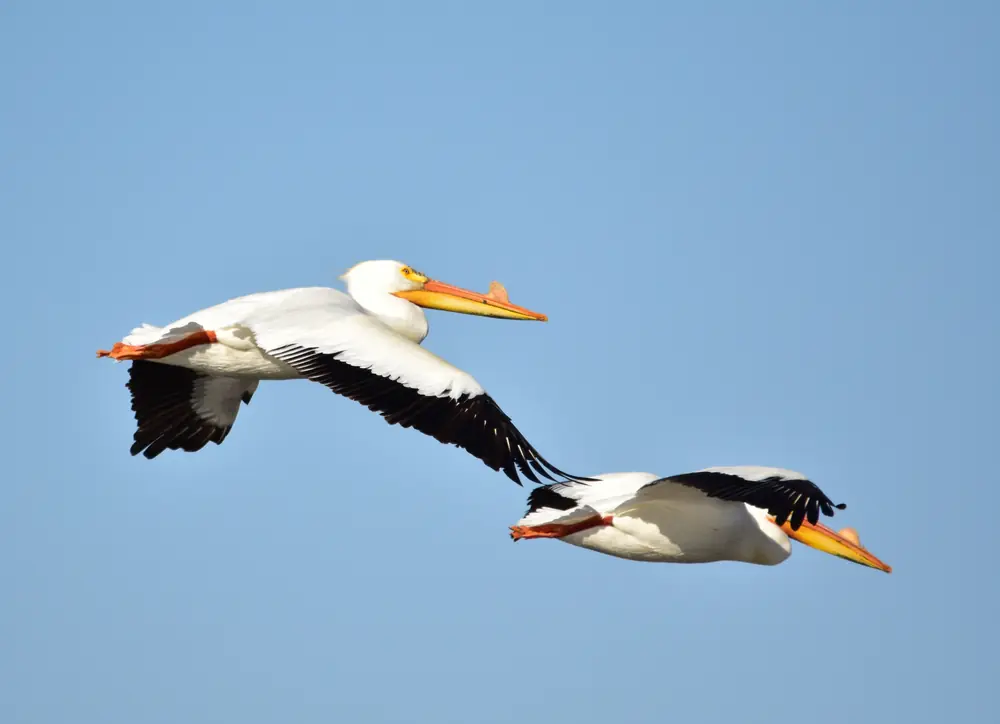
American white pelicans
Usually April, and again in late summer and fall · The big reservoirs: Coralville, Red Rock, Rathbun and Saylorville; also farm ponds and small lakes
These are among the largest birds in Iowa, with a wingspan the DNR puts near 10 feet, though other sources say eight or nine. They fish in groups, herding fish into shallows and dunking their heads together. They nest farther north, so Iowa sees them mostly in passage, although the DNR notes that hundreds spend the summer on Iowa wetlands and that a large number nest on islands in the Mississippi River. -
DeSoto National Wildlife Refuge opens up on April 15
From April 15 to October 14 · DeSoto National Wildlife Refuge, Harrison County, on the Missouri River
The refuge says it opens more areas for public use from April 15 to October 14, including the South Gate Recreation Area and the full auto tour loop. Its page also lists thousands of birds migrating along the Missouri River corridor, with songbirds more abundant later in spring. Check the refuge before you go for current visitor-center hours and any closed roads. -
Peregrine falcons on eggs
Egg-laying usually begins in early April; incubation is 31 to 33 days · Cliff ledges, building alcoves and nest structures
The DNR's restoration of peregrines has lifted the state from two nesting pairs in 1994 to 16 territorial pairs that produced at least 21 young in 2022. A nesting pair is a good reason to keep your distance and bring binoculars. The young fledge at about six weeks old, so the eggs laid in early April hatch around May. -
Ruby-throated hummingbirds
Late April or early May in a typical year · Backyards, woodland edges, gardens
The state's only breeding hummingbird usually shows up in the last days of April or the first of May. Journey North reported that in 2026 the leading edge reached the Upper Midwest by mid-April, so a very early bird is possible. Skip the dyed commercial mixes and stir your own, a quarter cup of sugar per cup of water, and plant cardinal flower or bergamot, which the birds also visit.
Write the date beside each first arrival in the Naturalist's Field Journal; after two or three springs you will have a personal arrival calendar.
When do frogs, toads and salamanders move in Iowa in April?
The DNR's frog and toad call page says Iowa has 16 species and gives an approximate start for each, with the warning that timing varies with the weather and your place in the state. The boreal chorus frog, whose call is likened to running a finger along a fine-toothed comb, starts in March or April. Plains leopard frogs, with a rhythmic, slightly rubbery chuck, and spring peepers, which sound like baby chicks, usually start in April. American toads, with a long, high trill, begin near the end of April to early May. Woodhouse's and Fowler's toads and Cope's gray treefrogs follow in May. April is therefore the month you can hear the changeover from the first thin chorus to a pond with several voices.
-
Chorus frogs, peepers and leopard frogs
April, on warm evenings after the ice has gone · Shallow ponds, flooded ditches, wetland edges, and fishless pools
Stand still near the water at dusk and listen for the layers of sound. The Iowa Natural Heritage Foundation notes that evenings are the best time to look and that most Iowa species prefer a semi-permanent, shallow body of water to breed. -
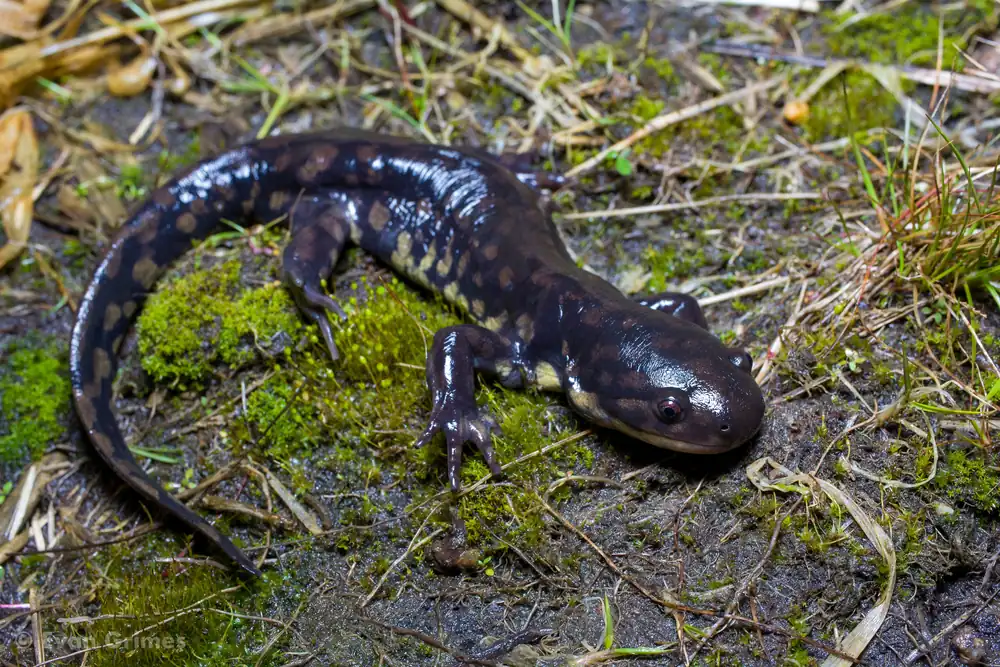
Tiger salamanders
Breeding begins early, in March for many; rainy nights are the time to see them moving · Fishless ponds and marshes statewide, more common in the north
The DNR calls the eastern tiger salamander Iowa's most widespread and common salamander of five. It migrates slowly at night, mostly in wet weather, to breeding wetlands. The state agency notes that big migrations are now more sparse or missing in places, and that preserving wetlands of all kinds is the key to keeping the species. If you find one crossing a road, move it a short way in the direction it was heading. -
Join the frog and toad call survey
Spring and early summer · Routes across the state
Volunteers listen at fixed wetlands and record which species call. The DNR page explains the requirements and has a route finder, and new routes can be set up where none exist. The Iowa Natural Heritage Foundation says the program has gathered data for over 30 years.
A pond that is silent on an April night is not necessarily empty. The DNR says its timing for each species varies with the year's weather and your place in the state, so come back on the next mild, damp evening.
What fish runs and openers happen in Iowa in April?
Fish follow warming water the way birds follow insects. According to the DNR, spawning starts at water temperatures of 42 to 54 degrees, normally in early April here, and the females move into the shallows at night with several males. The fish are not feeding much during the spawn, so catching one is harder, so watching is often better than fishing.
-
Walleye at dams and riffles
Usually early April, when water is 42 to 54 degrees · Rivers below dams, rocky riffles, and spawning shoals on natural lakes
The DNR advises fishing a stretch farther downstream, where deeper resting pools hold migrating fish. In a cold spring the run slips later. -
Paddlefish snagging
On the Missouri and Big Sioux rivers the 2026 season ran February 1 to April 30; on the Mississippi the rule is March 1 to April 15 · The Missouri and Big Sioux rivers; below Mississippi River navigation dams, within 500 yards
The DNR's January 2026 release set the Missouri-side season, and the administrative code sets the Mississippi season. A special paddlefish license and transportation tag are required on the Missouri, and the 2027 season dates and license sales will be posted by the DNR, so check before planning a trip. -
Trout stocking in northeast Iowa
Begins around the start of April; the 2026 season started March 30, and the 2027 start has not been posted · Streams and ponds of northeast Iowa
The DNR stocked about 320,000 catchable rainbow trout into 45 streams and three ponds from early April through October in 2026, and about 50,000 Iowans and 7,000 nonresidents fish for trout each year. The DNR says the streams are open year-round and that the program is paid for by license sales and trout fees. Use the DNR's stocking calendar for the week's locations.
The DNR's trout page has a map and the stocking calendar, and walleye and paddlefish rules are on its fishing pages.
When is spring turkey season in Iowa in April 2027?
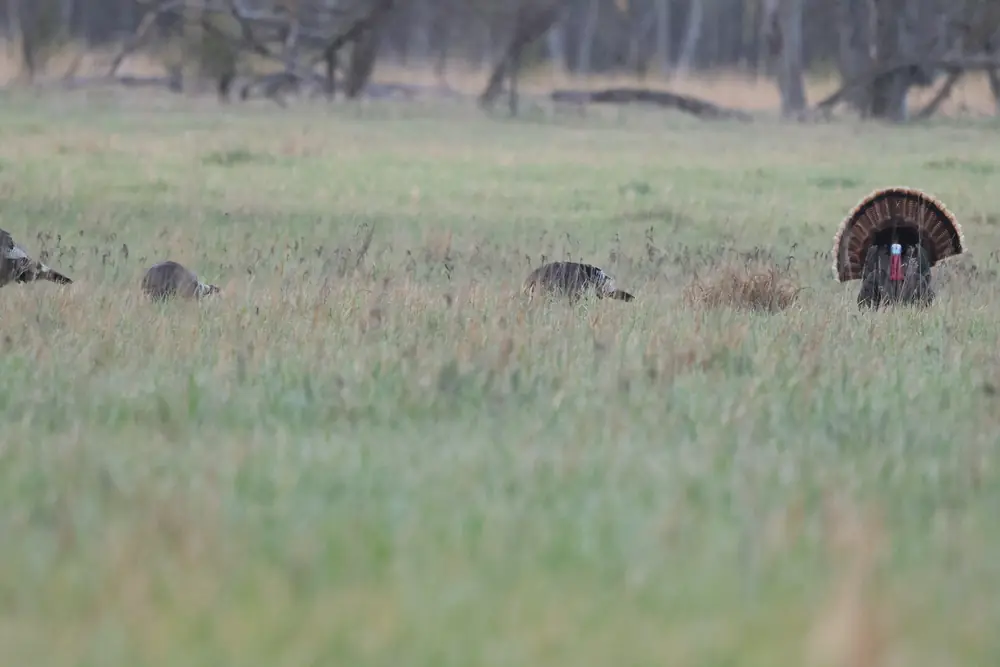
Spring turkey hunting is a major April activity in Iowa's woods, and it affects how every other visitor should plan a walk. The Iowa DNR's 2027 dates are these. Youth hunters, residents only, get April 9 to 11 to themselves; season 1, April 12 to 15; season 2, April 16 to 20; season 3, April 21 to 27; and season 4, April 28 to May 16. Archery-only licenses run April 12 to May 16. Gun hunters may shoot from 30 minutes before sunrise to sunset. The bag limit is one bearded or male turkey for each license and tag. The DNR's 2025 preview noted a record harvest of more than 16,000 birds in 2024 and that historically only about one hunter in five tags a bird. Hunters need a license, the habitat fee and a turkey permit, and harvest must be reported by midnight the following day.
-
Watching toms display
Dawn is best, through April · Field edges and open woodland, especially on public wildlife areas
The DNR's biologist said in 2025 that winter flocks break up in spring and the birds spread across the landscape. A U.S. Fish and Wildlife Service photo caption describes toms strutting for hens during the spring mating season. Watch from a distance, and keep clear of anyone who is set up and calling. -
Jakes, young males, answer calls
Spring seasons · Woodlots of any size
The DNR's 2025 preview said two-year-old jakes usually respond to calls more readily than older toms and sometimes arrive in groups, and that smaller woodlots are often good places to hunt.
If you are not hunting, dress in bright colors in the woods until the seasons end, and leave red, white and blue clothing at home, since those are a tom's colors. See the safety section for the orange rules.
When do morel mushrooms come up in Iowa?
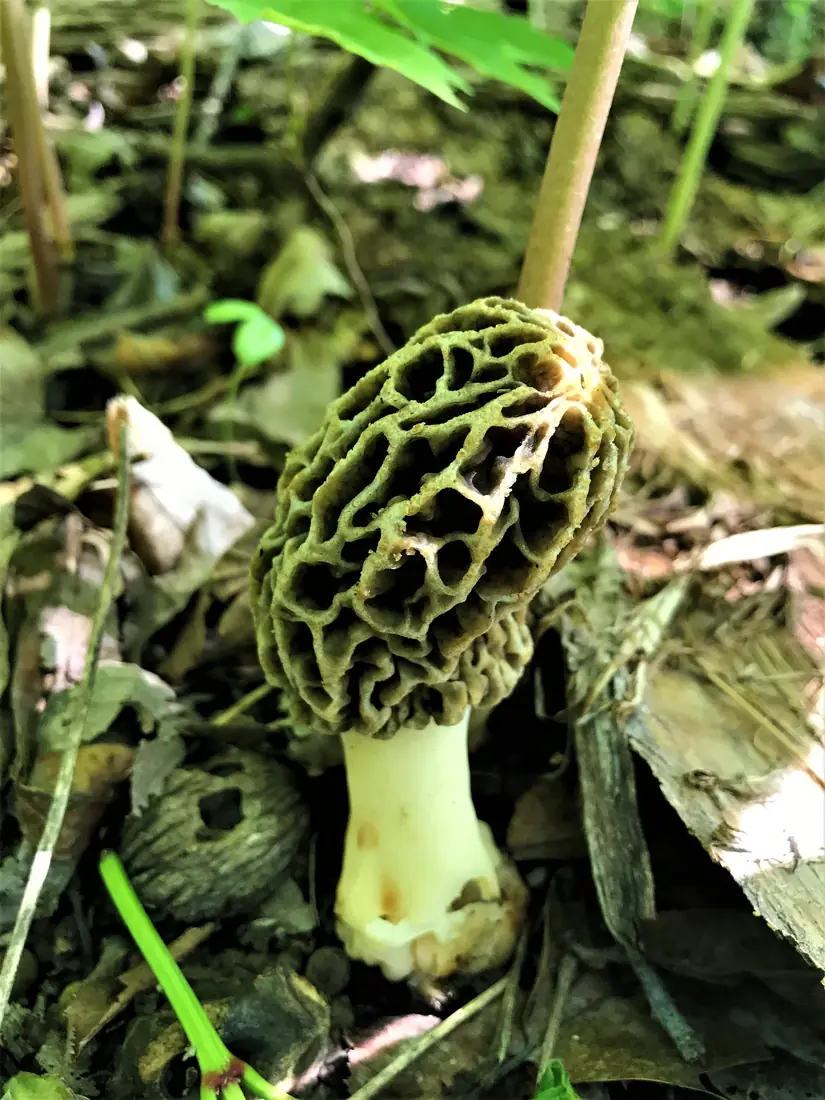
The Iowa DNR's guide to spotting morels says to start looking in early April and keep going through mid-May. The season depends on the weather. The DNR says to begin when soil reaches 53 degrees, and that daytime temperatures in the 60s with nights in the 50s improve the odds. Its field signs are lilacs budding and ready to flower, oak leaves the size of squirrel ears, open mayapple leaves, and other woodland wildflowers in bloom. The DNR gives no calendar date for any year, and neither do we.
-
Reading the signs
Typically early April to mid-May, weather dependent · Woodlands where oaks, mayapples and wildflowers are leafing out
The DNR's 2025 turkey preview added that rain and a little heat make a good morel year, and that the leaf-out and the turkey seasons overlap. -
Safe handling
Every hunt · Home kitchen
The DNR's rules: collect from pesticide-free places, do not mix species, skip damaged mushrooms, use a basket or mesh bag rather than plastic, and always cook morels, which are not safe to eat raw. Cook before freezing. -
Sharing the woods with turkey hunters
Early morning and late afternoon · Public hunting areas
The DNR recommends wearing blaze orange, avoiding red, white and blue, and thinking twice about morel hunting in the early morning or late afternoon, when turkey hunters are most active.
Ask permission before looking for mushrooms on private land, and check county park rules first.
When do Iowa's trees bloom and leaf out in April, and when is Arbor Day?
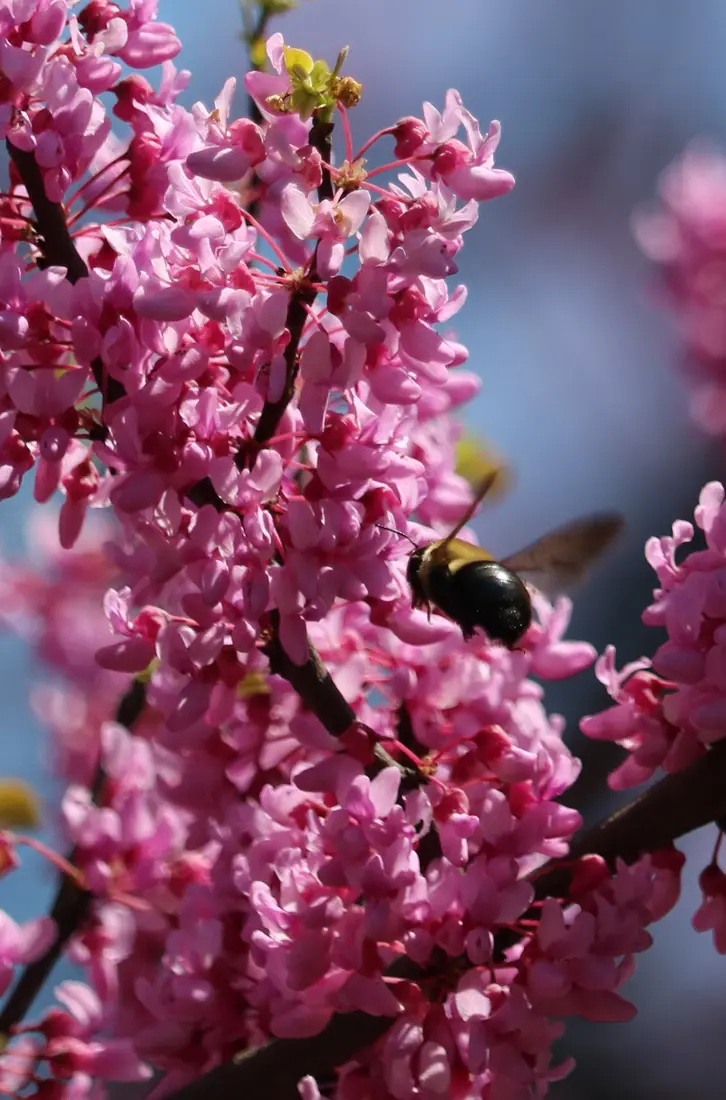
Iowa State University Extension gives dates for the showy spring trees: redbud flowers appear from mid-April to early May, before the leaves, serviceberry has white flowers in mid to late April, and magnolias bloom in mid to late April, and Extension adds that the saucer magnolia does best in southern Iowa. The DNR's morel guide gives a bud-stage clock for oaks, whose leaves look like squirrel ears when morels start.
Arbor Day in Iowa is set by law: the last Friday in April, with the week it falls in observed as Arbor Week, and the governor issues a proclamation each year. In 2027 that is Friday, April 30.
-
Eastern redbud
Mid-April to early May, per Iowa State Extension · Woodland edges, hillsides in the southern half of the state, and yards
Pinkish-purple blossoms open before the leaves. Extension notes that trees from a northern seed source are hardier in Iowa. -
Serviceberry
Mid to late April · Woodland edges and gardens
Extension includes serviceberry among its spring-flowering trees for Iowa. -
Arbor Day, Friday, April 30, 2027
The last Friday of April, by Iowa Code · Schools, cities and parks statewide
Local plantings are common, and the date is fixed by statute, but each community announces its own program. Check with the city or county conservation board.
The "a tree through the seasons" plate in the Naturalist's Field Journal works well here: draw one branch with its buds on April 1 and again on April 30.
What is April weather like in Iowa, and what could go wrong?
April is warmer and wetter than March, and more erratic than almost any other month. On the 30-year normals, a typical April afternoon reaches 62 °F in Des Moines and 58 °F in Mason City and Dubuque, while nights range from the mid-30s in the north to about 41 °F in Des Moines. Precipitation totals 3 to 4 inches, and 6 to 8 days a month bring at least a tenth of an inch. Snow averages 1 to 3 inches. The state climatologist's monthly summaries show the range. April 2021 was dry: 1.51 inches statewide, 2.00 inches below normal and the 16th driest April in 149 years of records, with a high of 93 °F at DeSoto on the 26th and a low of 11 °F at Estherville and Battle Creek on the 1st. April 2024 was wet, with 4.16 inches, 0.49 inch above normal, a snowy start (5.7 inches at Dubuque on the 2nd), a low of 9 °F at Elkader on the 6th and an 89 °F high at Spencer and Winterset on the 13th and 14th.
| Station | Average high | Average low | Precipitation | Snowfall | Days with 0.10 in or more |
|---|---|---|---|---|---|
| Mason City (north central) | 57.5 °F | 34.5 °F | 4.15 in | 3.0 in | 7.6 |
| Waterloo (northeast) | 60.9 °F | 37.9 °F | 4.04 in | 1.7 in | 7.2 |
| Dubuque (Mississippi River) | 57.7 °F | 37.2 °F | 4.06 in | 1.9 in | 7.3 |
| Sioux City (west) | 61.1 °F | 36.7 °F | 3.15 in | 2.3 in | 6.0 |
| Des Moines (central) | 62.0 °F | 40.6 °F | 4.02 in | 1.2 in | 7.5 |
Three things to watch. First, severe storms: the monthly summary for April 2024 recorded a tornado near Minburn on the 16th that stayed on the ground nearly seven miles, an EF-1 at Rockwell City, a longer EF-2 near Salem, 2-inch hail at Massena on the 30th and a weak tornado near Millerton the same day. Know where your shelter is, keep a weather alert on, and see the Des Moines forecast office's preparedness page for the year's awareness dates. Second, flooding: April rain on saturated or frozen ground fills creeks quickly, and the table shows six to eight days with measurable rain in a typical April. Third, late freezes, covered in the first section. The Climate Prediction Center issues fresh three-month outlooks each month on its 90-day page. For current conditions open the forecast page; the cloud guide explains what an approaching front looks like.
How much daylight does Iowa gain in April?
Between April 1 and April 30 every Iowa city on the table gains between 75 and 81 minutes, which works out to roughly 2.6 to 2.8 minutes more light each day. The northern cities gain the most. By the last day of the month the sun is up for just under 14 hours in Burlington and Des Moines and 14 hours 6 minutes in Decorah. These are sunrise-to-sunset lengths, so the clock does not affect them, and the gain is slightly slower than in March because the rate peaks at the equinox and eases toward the June solstice.
| City | Apr 1 | Apr 30 | Gained | Per day |
|---|---|---|---|---|
| Decorah | 12 h 45 m | 14 h 06 m | 81 min | 2.8 min |
| Mason City | 12 h 44 m | 14 h 05 m | 81 min | 2.8 min |
| Dubuque | 12 h 43 m | 14 h 02 m | 79 min | 2.7 min |
| Sioux City | 12 h 43 m | 14 h 02 m | 79 min | 2.7 min |
| Cedar Rapids | 12 h 43 m | 14 h 00 m | 77 min | 2.7 min |
| Des Moines | 12 h 42 m | 13 h 58 m | 76 min | 2.6 min |
| Council Bluffs | 12 h 41 m | 13 h 58 m | 77 min | 2.7 min |
| Burlington | 12 h 41 m | 13 h 56 m | 75 min | 2.6 min |
Use the daylight calculator for your own town. All of April is on daylight time, so sunrise and sunset clock times sit an hour later than they did in early March.
What can you see in Iowa's night sky in April 2027?
Jupiter owns the April evenings, shining in Leo and Cancer and staying up into the small hours. The Moon glides past it on the 14th and 15th, about two-thirds lit, and the faint reddish dot of Mars sits roughly 3 degrees from the Moon on the 15th. Before dawn, brilliant Venus is already above the eastern horizon some 75 minutes before sunrise on April 1 (a rough number worked out for mid-America), with a thin waning crescent hanging beside it at dawn on April 3 and 4. Saturn cannot be seen this month, because it passes behind the Sun on April 7. Every time below is Central Daylight Time.
-
The Pink Moon
Full on Tuesday, April 20, 5:27 p.m. CDT; looks full the evenings of April 19, 20 and 21 · Rising in the east in the evening
SeaSky lists other names for April's full moon, among them the Sprouting Grass Moon, the Egg Moon and the Fish Moon. -
The Lyrid meteor shower, a poor year
Strongest on the night of Thursday, April 22; the International Meteor Organization predicts the maximum near 8:41 p.m. CDT, and our own check puts it about 14 minutes later · Anywhere dark; the radiant is in Lyra, low in the northeast in the evening
SeaSky rates the Lyrids as a middling shower, about 20 an hour in perfect conditions, and cautions that this year's near-full Moon will drown out the dim ones. Moonrise comes around 10 p.m. or a bit later, so the only dark stretch is the early evening, while Lyra is still low. Count on a few an hour. The shower is known for occasional bright meteors with trails that linger for seconds.
| Phase | Date | Time |
|---|---|---|
| New moon | Tuesday, Apr 6 | 6:51 p.m. CDT |
| First quarter | Tuesday, Apr 13 | 5:56 p.m. CDT |
| Full moon, the Pink Moon | Tuesday, Apr 20 | 5:27 p.m. CDT |
| Last quarter | Wednesday, Apr 28 | 3:18 p.m. CDT |
The new moon on the 6th brings the month's darkest evenings. For other months' phases, see the moon phases page.
What can Iowa families do outdoors in April?
- Wednesday, April 14: Homeschool in the Hills, Geometry in Nature, at Hitchcock Nature Center in the Loess Hills, listed on the Pottawattamie County Conservation calendar as two sessions, 10 to 11 a.m. and 1 to 2 p.m., at $5 for each child.
- Tuesday, April 20: the Pink Moon at dusk. Go out after supper and look east.
- Thursday, April 22: Earth Day. Pick up litter on a stream bank, plant a native shrub or start a nature journal.
- Friday, April 30: Iowa's Arbor Day, set by statute as the last Friday of April. Plant a tree, or visit one you planted.
- Spring wildflower walks. In 2026 Story County Conservation cosponsored free walks, led by Outdoor Alliance of Story County volunteers, on April 23, April 30 and May 7 at Reactor Woods, Robison Wildlife Area and Soper's Mill. The 2027 dates have not been posted, so check with Story County Conservation.
- Nature centers. Indian Creek Nature Center in Cedar Rapids, Hartman Reserve in Cedar Falls and other county nature centers post their April programs close to the date; their 2027 calendars were still blank when we looked, so call or check their sites.
- Every day: be a field observer. Subscribe to the DNR's wildflower emails, volunteer for its frog and toad listening routes, and write down the day you first hear an American toad or see a purple martin. Journey North takes hummingbird reports.
March's guide is at /nature/iowa/march; the nature hub has every state.
Safety notes for April in Iowa
- Spring turkey season. By the DNR's 2027 dates, April 9 to 11 is the youth window, seasons 1 to 3 run April 12 to 15, 16 to 20 and 21 to 27, and season 4 runs April 28 to May 16. Other open seasons that overlap April include beaver hunting and trapping through April 15, coyote hunting and trapping, which are continuous, and the light goose conservation order through May 1, 2027.
- Blaze orange. Iowa's orange law, Iowa Code 481A.122, names firearm deer hunting and upland game birds, not turkeys, and the DNR's turkey page mentions no orange requirement. Even so, the DNR's morel guide recommends orange for mushroom hunters and warns against red, white and blue clothing when turkey hunters are out.
- Prescribed burns. One DNR wildlife unit's 2025 notice said its prescribed burns usually fall between mid-March and mid-May, starting mid to late morning and wrapping up by late afternoon or early evening. Keep out of any unit with a crew on site, and do not drive through smoke.
- Ticks. The DNR's turkey biologist warned in 2025 that ticks were already out by April 8. Wear repellent, cover your legs, and look yourself over once you are back at the car.
- Snakes. Most Iowa snakes are harmless. Timber rattlesnakes live in eastern Iowa's rocky bluff country and are protected by state law. Anyone who is bitten should stay calm and seek medical attention. Give any snake room.
- Cold water and swift streams. April rivers are high, cold and fast. Keep children and dogs back from banks and stay off ice remnants.
- Storms and floods. Never drive through water on a road, and follow the tornado watches and warnings that come with the first strong April fronts.
- Nests and young. Peregrines and many other birds are on eggs in April. Watch from a distance and leave eggs and young animals alone.
Sources (38)
- Iowa DNR: woodland wildflowers and weekly reports (final 2026 report dated May 18-19)
- KCII Radio: wildflowers blooming across southern Iowa (DNR weekly report, April 19, 2025)
- KCII Radio: wildflowers continue to bloom as April makes way for May (DNR weekly report, April 26, 2025)
- KCII Radio: wildflower show (DNR weekly report, May 3, 2025)
- Iowa Natural Heritage Foundation: spring phenology (March 21, 2023)
- Iowa Natural Heritage Foundation: spring peeping (April 20, 2023)
- Audubon Society of Omaha: April bird migration information
- Iowa DNR: 7 cool facts to know about Iowa pelicans (September 1, 2016)
- U.S. Fish and Wildlife Service: DeSoto National Wildlife Refuge
- U.S. Fish and Wildlife Service: Neal Smith National Wildlife Refuge
- Iowa DNR: peregrine falcons
- Journey North: looking back at the 2026 ruby-throated hummingbird migration
- Iowa State University News Service: as monarchs migrate northward, experts ask Iowans to keep habitat in mind (May 1, 2019)
- Iowa DNR: Iowa frog and toad calls and call survey
- Iowa DNR Wildlife Diversity News: tiger salamanders (Iowa Department of Natural Resources bulletin)
- Iowa DNR: walleye (spawning timing and temperature)
- Iowa DNR: Missouri and Big Sioux rivers paddlefish season opens February 1, 2026
- Iowa Administrative Code 571-81.2: exceptions to seasons and limits (paddlefish, Mississippi River)
- Iowa DNR: trout stocking in northeast Iowa streams starts March 30 (2026)
- Iowa DNR: trout stocking in northeast Iowa streams starts April 1 (March 12, 2024)
- Iowa DNR: spring turkey hunting, 2027 seasons
- Iowa DNR: Iowa hunting seasons, 2026-2027
- Iowa DNR: Iowa's spring turkey season is here (April 8, 2025)
- Iowa Code 2026, section 481A.122: hunters' orange apparel (PDF)
- Iowa DNR: top tips to spot morel mushrooms (March 27, 2025)
- Iowa State University Extension: spring flowering trees for Iowa
- Iowa Code 2026, section 1C.10: Arbor Day and Week (PDF)
- NOAA NCEI: 1991-2020 monthly normals for Iowa stations (data API)
- Iowa Department of Agriculture and Land Stewardship: Iowa monthly weather summary, April 2021
- Iowa Department of Agriculture and Land Stewardship: Iowa monthly weather summary, April 2024
- NWS Des Moines: severe weather preparedness
- Climate Prediction Center: three-month outlooks
- U.S. Naval Observatory: moon phases (data API)
- SeaSky: astronomy calendar 2027 (Pink Moon names, Lyrid meteors)
- Pottawattamie County Conservation: events calendar (Hitchcock Nature Center, April 2027)
- Discover Ames: spring wildflower walks (Story County Conservation, 2026 series)
- Iowa DNR: annual spring burning, Clear Lake Wildlife Unit (March 11, 2025)
- Photos via Wikimedia Commons; licenses and photographers are credited under each picture