What to look for in nature in Iowa this February
Iowa’s winter, by the forecasters’ calendar, closes with February, and the month can deliver the season’s biggest snow totals: at Des Moines and Sioux City the normal February snowfall tops January’s. Yet the year has already turned. Iowa’s bald eagles settle onto their eggs in the second half of the month, great horned owl chicks are hatching in old hawk nests, and on the first mild south wind the snow geese push up the Missouri River valley. Sap starts to run in the sugar maples, and by the 28th an Iowa day runs close to two hours longer than it did on January 1. Here is what to watch for, subject by subject.
Other months in Iowa: October, November, December, January.
Start here

- Watch an eagle nest on camera, then find one near you. The Decorah eagles, filmed by the Raptor Resource Project, laid their first egg of 2026 on the night of February 17. Leave the live feed running while you work, then look for big stick nests in the bare cottonwoods along your nearest river, and watch from well back.
- Look for the first snow geese. Snow geese reach southwest Iowa once fields lose their snow and roosting water opens, which the DNR says can be as early as mid-February. Forney Lake near Thurman and DeSoto National Wildlife Refuge near Missouri Valley are the places to scan, whenever a mild southerly breeze sets in.
- Two planets at their brightest, nine days apart. Jupiter is opposite the Sun on Wednesday evening, February 10, rising at sunset and shining all night. Mars follows on Friday, February 19. On the evening of Saturday the 20th, the full Snow Moon rises among them in Leo.
In the Naturalist’s Field Journal for February, mark the date of your first red-winged blackbird on “birds I have seen,” fill in “nest observed” for an eagle or hawk nest you can watch from a road, sketch a skunk’s or fox’s trail on “tracks to know,” keep a dusk and dawn watch on the lengthening evenings, and use “reading the signs” for the day you first see sap dripping from a broken maple twig. Note the high and low temperature beside each entry; maple sap and migrating geese both follow the thaw.
Regions used below: Northeast Iowa and the Driftless; Eastern Iowa and the Mississippi River; Central Iowa and Des Moines; Northwest Iowa and the Iowa Great Lakes; Western Iowa and the Loess Hills; Southern Iowa.
When do bald eagles lay eggs in Iowa?
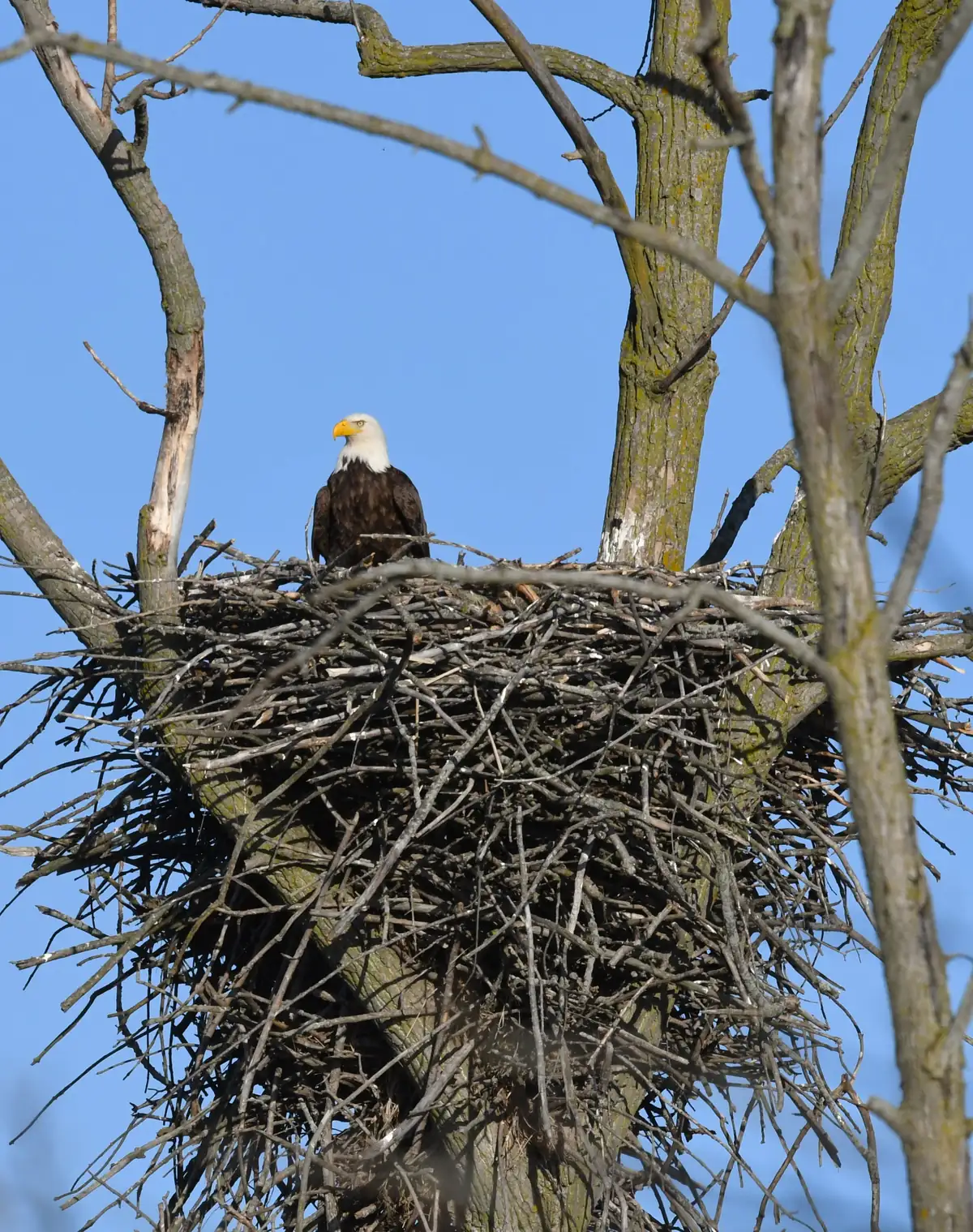
The crowds of wintering eagles on the rivers in January were mostly visitors from the north. February belongs to the birds that live here. Nesting in Iowa stretches over eight months, January to August, according to the DNR, and peaks between February and July. Pairs that have spent the winter adding sticks to the same nest now settle in, and in most of Iowa the female lays one to three eggs in the second half of the month. Incubation takes 35 to 40 days, so the first chicks hatch in late March.
-
The Decorah nest
First egg usually mid- to late February · Near the trout hatchery in Decorah, Winneshiek County; watch online
The Raptor Resource Project has kept a camera on the eagles nesting near the Decorah fish hatchery for many years, and viewers around the world follow the live feed. In 2026, by the project’s account, the current female, HM2, laid her first egg on the night of February 17 and a second on February 21. The first eaglet of the year, which the project named DH3, tumbled out of its shell at 7:01 a.m. on March 27, and her mate, HD, came in soon after to see it. RRP also runs a second camera on the Decorah North nest.
-
Finding a nest near you
Bare trees make February the easiest month · Tall cottonwoods and sycamores along rivers, lakes and gravel pits in every county
Iowa had a single known eagle nest in 1977; in February 2026 the director of the Iowa Raptor Project told The Daily Iowan that more than 1,590 nesting territories had since been recorded, in all 99 counties. The DNR describes Iowa nests as 4.5 to 7 feet across and 3 to 10 feet deep, and some pairs keep a spare nest within about a quarter mile and switch between them. Look for a dark mass in the crotch of the tallest tree near water, often with an adult perched close by. A bird lying flat in the nest, with only its white head showing, is probably on eggs.
-
Give them room
Through the whole nesting season · Any active nest
Eagles disturbed early in incubation may leave the nest, and the eggs chill fast in February. The DNR asks people to stay at least 400 yards from a perched eagle; watch through binoculars or a scope from the roadside, keep to your vehicle where possible, and never walk toward a nest tree.
Eagles still gather below the dams on the Mississippi and the Des Moines in early February, especially after a cold snap, but the numbers thin as ice opens upstream and the northern birds start home. If you find a nest that is new to you, note the tree and the date; the same pair will likely be back next winter.
When do great horned owl chicks hatch in Iowa?
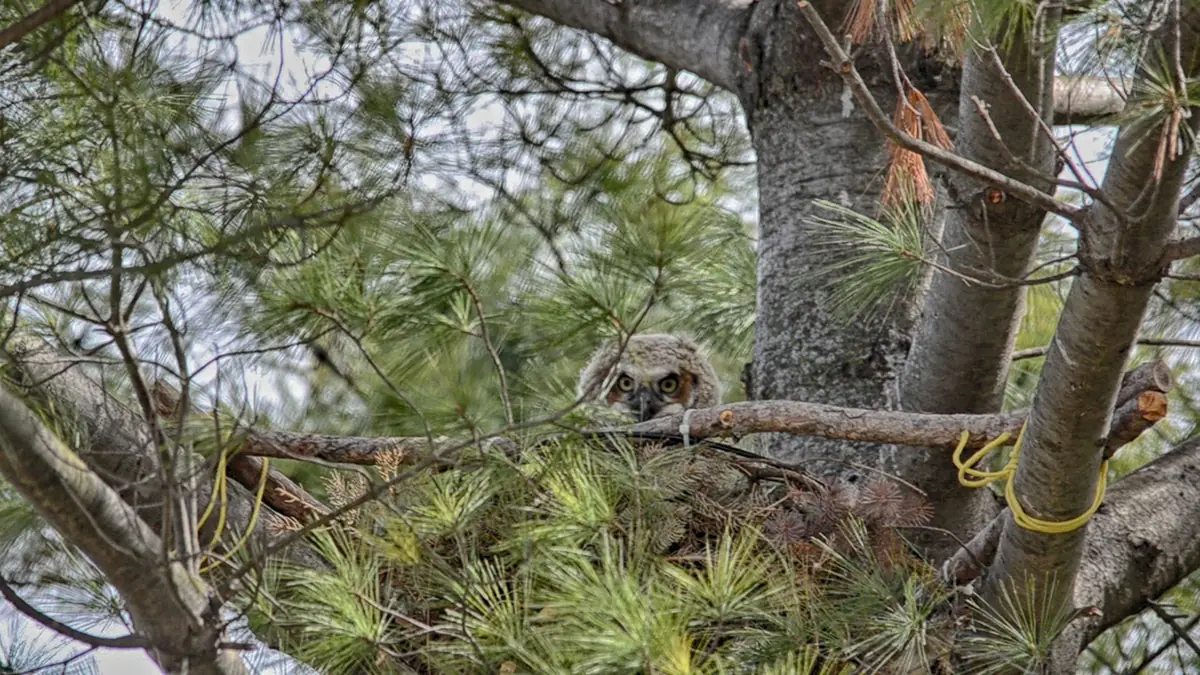
A great horned owl that laid her eggs in January has chicks in February. Marion County Conservation describes great horned owls as Iowa’s earliest nesters, usually laying two eggs (occasionally up to four) in late January or early February. Incubation takes about a month, so hatching runs from late February into March, depending on when the eggs were laid.
-
White heads in a hawk nest
Late February into March · Old red-tailed hawk, crow or squirrel nests in woodlots, shelterbelts, parks and cemeteries
The female broods the chicks almost constantly at first, so what you usually see is her ear tufts over the rim of the nest. Once the owlets are a couple of weeks old, look for fluffy, gray-white heads beside her. The young start clambering out onto branches at about six weeks, so the “brancher” stage, when they clamber about in the nest tree, comes in April.
-
Barred owls starting
Eggs from February · Big bottomland timber, especially along eastern Iowa rivers
Barred owls are a little behind. Marion County Conservation notes they can nest as early as February, laying two to four eggs, usually in a large tree cavity. Late-winter evenings are when pairs call back and forth most excitedly, a jumble of hoots, cackles and caterwauling that sounds like a fight.
If you find an owl nest, watch it from a distance and keep the visit short; crows and other birds sometimes mob an owl that people have flushed. Never climb toward a nest or use calls to provoke a reaction.
When do snow geese migrate through Iowa in spring?
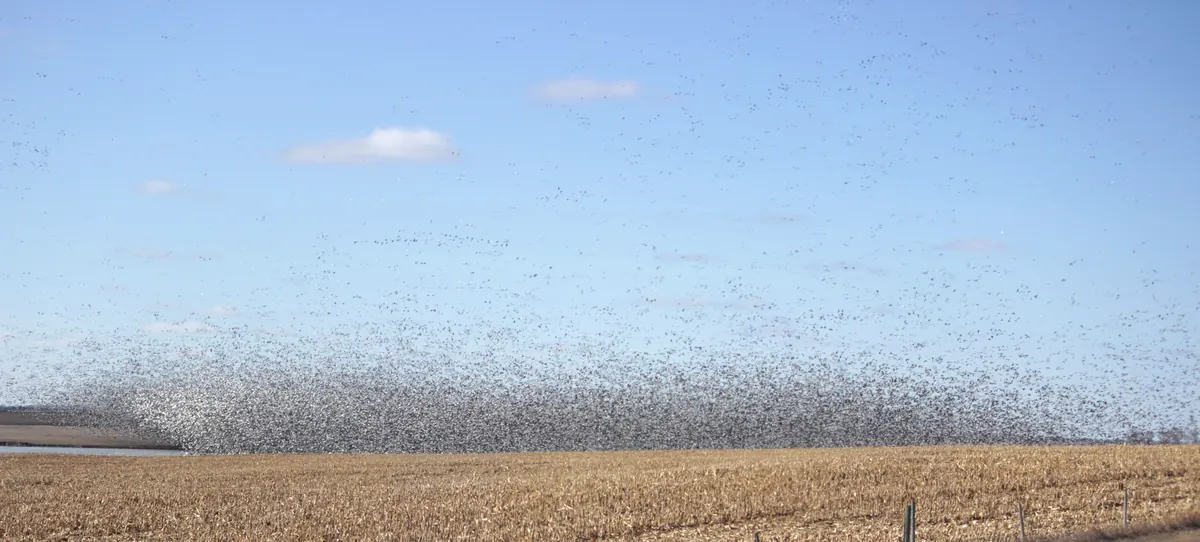
The northbound flight of the light geese (snow geese and their smaller cousins, Ross’s geese) follows the thaw line. The Iowa DNR explains that snow geese move into southwest Iowa when the ground is free of snow and they have open water to roost on at night, which can happen anywhere from mid-February to mid-March. On a warm day with a south wind the flocks may fly a long way north to feed, then return south to roost if the lakes ahead are still frozen.
-
Forney Lake Wildlife Area
From mid-February in mild years · Northwest Fremont County near Thurman, about 30 miles south of Council Bluffs
The DNR manages this 1,317-acre area of lake, marsh, upland and timber in the Missouri River valley, where the department says most of Iowa’s snow geese are found. Riverton Wildlife Area, also in Fremont County, is another place to check. Watch from the roads at dawn and dusk, when skeins lift off the water by the thousand, and listen for the high, yelping chorus.
-
DeSoto National Wildlife Refuge
Late winter into March · On the Missouri River between Missouri Valley, Iowa, and Blair, Nebraska
DeSoto once held some of the biggest spring concentrations in the Midwest, though the DNR notes that numbers there have dropped a great deal over the past decade. In the off season the refuge opens its roads and trails daily from just before dawn until just after dusk, keeps its visitor center open Tuesday through Saturday, and more of the refuge reopens to visitors on April 15.
-
Swans heading north
Late February · Open quarries and ponds where trumpeters wintered
The trumpeter swans that wintered at open water start leaving as the ice breaks up. In the winter of 2024–25 the flock at Schildberg Quarry in Atlantic left on February 24, according to Cass County Conservation. If you have been watching a wintering flock, note the last day you see it.
Iowa’s light goose conservation order, a special hunt meant to reduce overabundant flocks, runs January 24 to May 1, 2027. Expect shooting near the marshes and fields where geese feed, and give hunters’ decoy spreads a wide berth.
Which birds are the first signs of spring in Iowa?
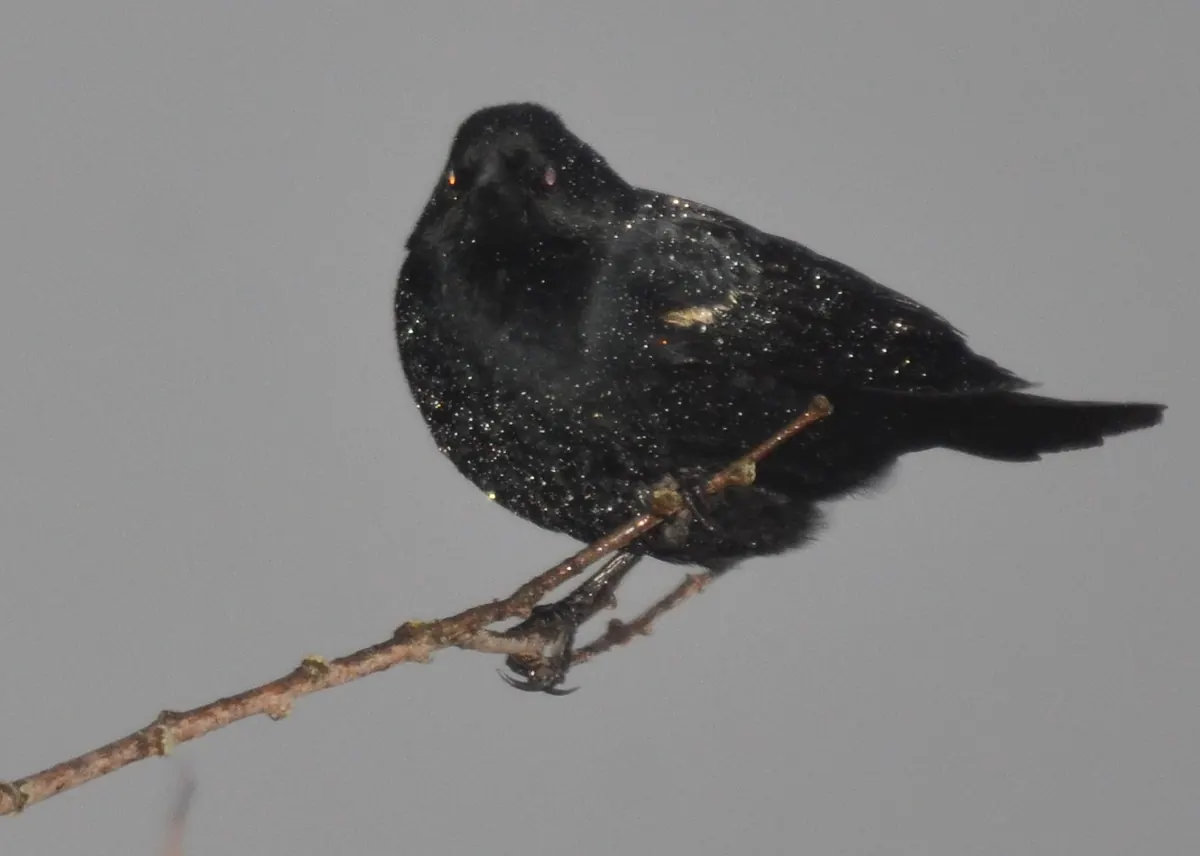
A few species don’t wait for March. The Iowa Ornithologists’ Union calls the red-winged blackbird the bird that announces spring in Iowa: the males turn up as soon as the snow melts, in late February or March, and stake out territories in the cattails and ditches.
-
Red-winged blackbirds
Males from late February in mild years · Marshes, wet ditches, cattail sloughs and fencerows
The first arrivals are all males, jet black but for scarlet epaulets with a buff-yellow lower border. Each one perches on a cattail or fence post, spreads its shoulders and sings a gurgling “conk-la-ree” to claim his patch. The duller, streaky brown females come weeks later. Log your first each year.
-
The Great Backyard Bird Count
Friday, February 12, to Monday, February 15, 2027 · Anywhere: a window, a park, a farmyard
Audubon says the 30th count runs across Presidents’ Day weekend, February 12 to 15. Watch for a quarter of an hour or longer, on any of the four days, and submit what you saw by the methods explained at birdcount.org. Iowa lists in mid-February are a snapshot of winter’s end: juncos and tree sparrows still here, and perhaps an early blackbird or killdeer if the weather has been mild.
Project FeederWatch keeps going through April 30, so a feeder count you started in the fall can carry on until spring. If northern finches did reach your yard this winter, February is often when the flocks are largest.
When does maple sap start running in Iowa?
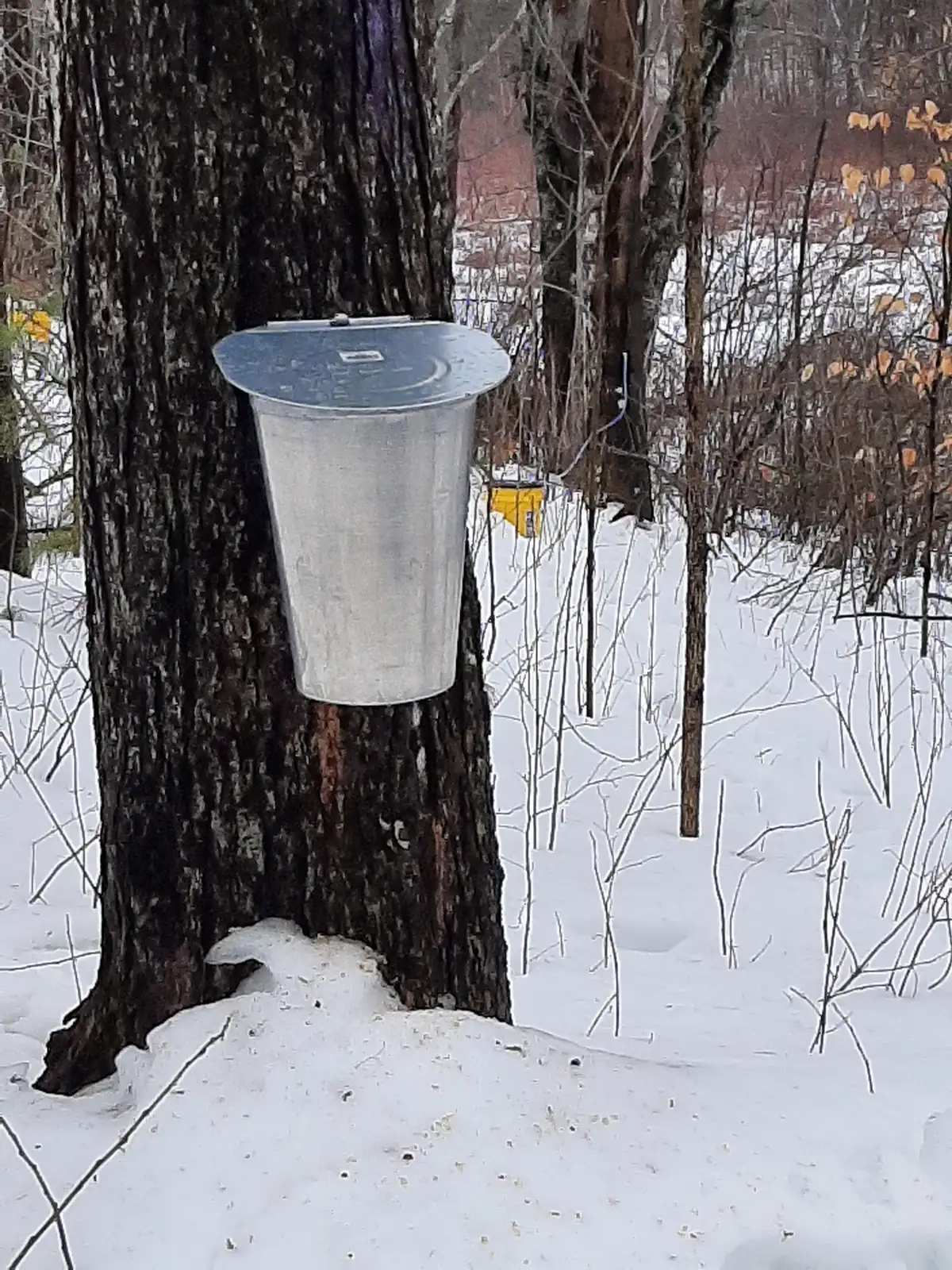
Maple sap flows when nights freeze and days thaw. Iowa State University Extension says Iowa’s sap collection typically runs from mid-February through early March; its AnswerLine adds that the season usually starts in late February or early March and lasts four to six weeks. The freeze-thaw swings build pressure inside the trunk, and sap drips from any wound or tap hole when a bright afternoon follows a frozen night.
-
Which trees to tap
Mid-February to March · Sugar maples, mostly in eastern Iowa; silver maples and boxelders statewide
ISU calls sugar maple the best of the maples for syrup, and black maple runs close behind. Sugar maple grows west to about central Iowa and is far more common in the east, on moist lower slopes facing north or east. Silver maple and boxelder, both common along Iowa rivers, can be tapped too, but their sap is less sweet. Extension advises tapping only trees at least 10 inches across, adding a second tap on trees of 18 inches or more.
-
Forty to one
Any sugaring day · Backyard and nature center sugar shacks
Straight from the tree the sap carries roughly 2 percent sugar, which means it takes about 40 gallons of sap to make one gallon of syrup, boiled down until the sugar content reaches 66 to 67 percent. The season ends when the buds start to swell and open, which gives the syrup an off flavor, and when the nights stop freezing.
-
Sugaring at nature centers
Tapping usually mid-February; festivals in March · Indian Creek Nature Center, Cedar Rapids; Hartman Reserve Nature Center, Cedar Falls
Indian Creek Nature Center has made its own syrup for more than 40 years, from about 100 maples in three sugar bushes, and its volunteers usually tap in mid-February. Black Hawk County Conservation holds its Maple Syrup Festival with a pancake breakfast at Hartman Reserve every March (reservations only). Neither had posted 2027 details by early October, so check their sites in February.
Silver maples are among the first trees to flower, their tight red flower clusters opening as early as March. On a February walk, look for the plump red buds in clumps along their twigs, and break off a dead maple twig on a warm afternoon to see whether the sap is running.
Which Iowa mammals are breeding in February?
For several of Iowa’s mid-sized mammals, late winter is mating season. That puts animals on the move on mild nights, and their trails show up in fresh snow and, unfortunately, on the roads.
-
Striped skunks
Breeding in February and March · Farmsteads, field edges, town outskirts
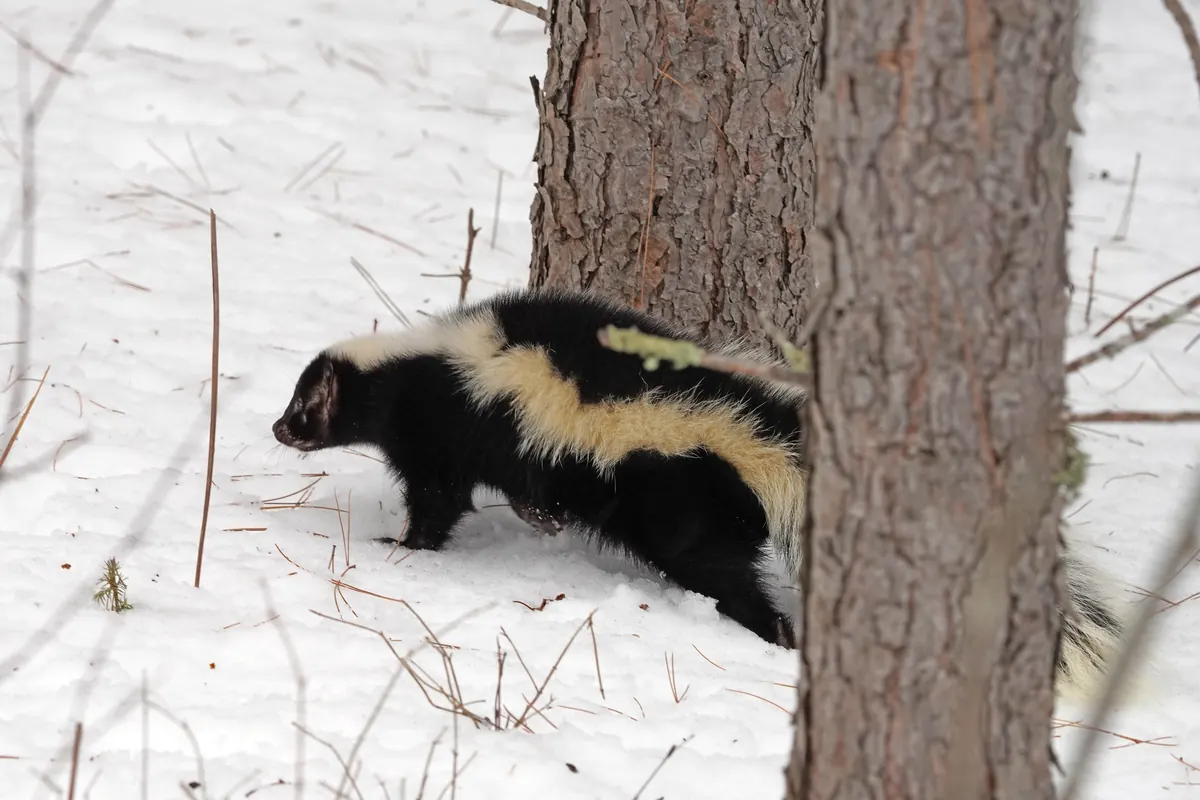
Iowa’s trapper education course says skunks breed in February and March and have their young in April and May, after about 63 days. Skunks are not true hibernators: they sleep through the coldest spells (several females often share one den, while males den alone) but wake for good when it warms. Smell one after dark this month and it is most likely a roaming male hunting for a mate. Their tracks show five toes on each foot, with long claws on the front feet, in a short, shuffling pattern.
-
Red foxes
Breeding from late January into March · Farmland, pastures and the edges of towns
The same course gives the red fox a breeding period from late January into March and a gestation of 50 to 53 days, with four to six kits in a typical litter. For the birth the vixen often takes over a den dug by a woodchuck or an earlier fox. A fox’s trail is a neat single line of small oval prints; on a snowy morning after a mild night you may find two trails running together.
-
Groundhogs, Groundhog Day and the truth
February 2; emergence later · Burrows at field edges, fencerows and roadside banks
Groundhogs (woodchucks) are true hibernators. Jefferson County Conservation in Fairfield explains that they go underground in late October or early November, letting their body temperature drop to about 39 to 40 °F and losing about a quarter of their weight. Males may surface briefly in February to visit females’ burrows, then go back down until mating in March; the young are born in early April. So if you see a woodchuck on February 2 in Iowa, it is more likely looking for a mate than a shadow.
Most of Iowa’s furbearer seasons, skunks and foxes included, close on February 28, before the young are born. To keep a pet out of trouble with a skunk, turn on a yard light and check the yard before letting a dog out at night.
When does lake ice get dangerous in Iowa in late winter?
Late-season ice can look as solid as it did in January while rotting from within. In February 2026, a mild, snowless stretch ended ice fishing early on the Iowa Great Lakes and Clear Lake. The DNR reported that much of the north side of Spirit Lake was open, that ice heaves near the Clear Lake shore had opened, and that within two days a UTV broke through on East Okoboji and a pickup dropped to its frame on West Okoboji.
-
Why it changes so fast
Any warm, sunny spell · All lakes and ponds
Snow insulates ice and slows melting even on mild days. Without it, the DNR warns, sunshine and warm temperatures make the ice crack and contract and become unpredictable. The edges usually go first, so the walk out from the bank can be the most dangerous part of the trip. Dark patches, slush and gray, honeycombed ice are signs to turn back. Four inches of clear ice remains the DNR’s minimum for walking out, and the department advises going out on foot late in the season, testing every few steps with a spud bar and carrying a throwable float with at least 50 feet of rope.
-
Shelters off the ice
Before ice-out · State-owned lakes, ramps and parking lots
In 2026 the DNR required unattended ice fishing shelters to be removed from state-owned lands and waters by March 1 or before the ice melted, whichever came first, and reminded owners that a shelter that falls through is theirs to haul out. Check the 2027 rule on the DNR’s ice fishing page.
-
Ice jams on rivers
Late-winter thaws, especially with rain · Sharp bends and bridges on the Des Moines, Raccoon, Cedar and Iowa rivers and smaller streams
When a thaw breaks up river ice, the slabs float downstream and pile up at meanders and bridge piers, backing water up behind them. After a cold, snowy February in 2019, a mid-March storm brought rain and warmth; NASA’s Earth Observatory reported ice jams that flooded homes at Lehigh on the Des Moines River, shoved slabs into yards in Cedar Falls and left ice chunks the size of dinner tables near Iowa Falls. Stay well back from a river during a thaw, and never stand on the ice or a jam to look.
Rivers are never safe for walking on, and spring-fed ponds, aerators and inlets keep thin ice all winter. If someone goes through, call 911 and reach or throw something to them from shore rather than going out.
Is February the snowiest month in Iowa, and what could El Niño bring?
It can be. NOAA’s 1991–2020 normals give Des Moines 10.2 inches of snow in an average February against 9.4 in January, and Sioux City 8.7 against 7.7. In the northeast the two months run about even, and Mason City’s January is still a little snowier. February storms tend to be wetter and heavier as the air warms, and three or so days a month bring an inch or more. Snow on the ground also lasts: Mason City averages more than 22 February days with at least an inch of cover.
The cold is easing. Normal February highs run from 28.5 °F at Mason City to 35.7 °F at Des Moines, and nights below zero are fewer than in January, from about 7 at Mason City to fewer than 3 at Des Moines.
| Station | February snowfall | January snowfall | Days with 1 inch or more on the ground | Nights below 0 °F |
|---|---|---|---|---|
| Mason City (north central) | 10.0 in | 11.3 in | 22.4 | 6.6 |
| Waterloo (northeast) | 9.3 in | 10.1 in | 18.3 | 5.7 |
| Dubuque (Mississippi River) | 10.6 in | 10.7 in | 18.2 | 4.4 |
| Des Moines (central) | 10.2 in | 9.4 in | 15.0 | 2.6 |
| Sioux City (west) | 8.7 in | 7.7 in | 14.5 | 4.5 |
This February may break the pattern. The warm Pacific is the wild card: as of early September, government climate scientists rated the chance that El Niño stays very strong for Iowa’s whole winter at better than nine in ten. Federal seasonal outlooks for the coming months (the winter edition came out October 15, with monthly revisions) can be found on the CPC three-month outlook page. For history, the Des Moines weather office’s review of strong El Niño events found Iowa winters running about 2.5 to 3.5 °F warmer than normal, and found that the wet signal of fall tends to carry into winter before precipitation drifts back toward normal heading into early spring. The La Crosse office adds that Upper Mississippi Valley snowfall averages as much as 10 inches below normal for the season in strong events, though roughly one strong-event winter in three still brought above-normal snow. A mild, gray February with rain mixed into the storms is the likelier bet, not a certainty. Check today’s weather before a long drive, and when you start thinking about the garden, the Iowa frost dates show when the last freeze usually comes near you.
How much daylight does Iowa gain in February?
More than in any other winter month. Between February 1 and 28, Iowa cities gain 67 to 74 minutes of daylight, between 2.5 and 2.7 minutes each day on average, and the pace keeps quickening into March. Groundhog Day, February 2, sits a day or two before the true astronomical midpoint of winter, which falls on February 3 to 4 this year, halfway between the solstice and the equinox.
| City | Feb 1 | Feb 28 | Gained | Per day |
|---|---|---|---|---|
| Decorah | 9 h 56 m | 11 h 10 m | 74 min | 2.7 min |
| Mason City | 9 h 57 m | 11 h 10 m | 73 min | 2.7 min |
| Dubuque | 9 h 59 m | 11 h 11 m | 72 min | 2.7 min |
| Sioux City | 9 h 59 m | 11 h 11 m | 72 min | 2.7 min |
| Cedar Rapids | 10 h 02 m | 11 h 12 m | 70 min | 2.6 min |
| Des Moines | 10 h 04 m | 11 h 13 m | 69 min | 2.6 min |
| Council Bluffs | 10 h 05 m | 11 h 13 m | 68 min | 2.5 min |
| Burlington | 10 h 07 m | 11 h 14 m | 67 min | 2.5 min |
Decorah and Mason City, short-changed most at the solstice, gain the most now, and by the end of February every Iowa city has more than 11 hours of daylight. Clocks spring forward on Sunday, March 14. For sunrise, sunset and twilight wherever you are, use the daylight calculator.
What can you see in Iowa’s night sky in February 2027?
February’s evening sky has Iowa’s best planet show of the winter: Jupiter, then Mars nine days later, each line up straight out from Earth on the side away from the Sun, both in Leo, and the full moon joins them.
-
Jupiter at opposition
Wednesday evening, February 10 (6:21 p.m. CST) · Rising in the east at sunset; high in the south around midnight
Earth overtakes Jupiter on the inside track this week, which puts the giant planet opposite the Sun in our sky: it comes up in the east as daylight fades, sets around dawn, and at magnitude −2.5 outshines every star. Rest binoculars on a car roof or fence rail to spot the tiny star-like moons strung out on either side of the disk. The new moon of February 6 leaves the evenings dark through the opposition week.
-
Mars at opposition
Friday, February 19; closest to Earth February 20 · In Leo, east after dark, near Jupiter and the star Regulus
Mars shines a steady orange at about magnitude −1.2 and comes within roughly 63 million miles of Earth. Because Mars is near the outer end of its oval orbit, this approach is a modest one and the disk looks tiny through a telescope; still, it is the nearest the red planet gets to us before 2029. Compare its color with Jupiter’s creamy white and blue-white Regulus nearby.
-
The Snow Moon and a faint eclipse
Full at 5:23 p.m. CST on Saturday, February 20 · Rising in the east around sunset
The Moon also slips through the outer, lighter part of Earth’s shadow that evening, a penumbral eclipse. Greatest eclipse is at 5:13 p.m. CST, before moonrise in Iowa, and it ends at 7:13 p.m., so Iowans see only the fading stage, low in twilight. At best, one edge of the Moon looks faintly gray; most people will notice nothing. A few almanacs count it as a supermoon, but January’s full moon was nearer. On the night of the 19th the Moon, one night short of full, slides right past Jupiter.
-
Mercury in the evening
Late January to about February 10; farthest from the Sun February 2–3 · Low in the west-southwest, 30 to 45 minutes after sunset
No other evening this winter gives a better look at the innermost planet. Find a low western view; the slimmest of young Moons hangs just beside Mercury on Sunday, February 7, in the twilight. Venus stays a brilliant morning star before dawn all month, and Saturn sinks lower into the evening twilight in the west.
| Phase | Date | Time |
|---|---|---|
| New moon | Saturday, Feb 6 | 9:56 a.m. |
| First quarter | Sunday, Feb 14 | 1:58 a.m. |
| Full moon, the Snow Moon | Saturday, Feb 20 | 5:23 p.m. |
| Last quarter | Saturday, Feb 27 | 11:16 p.m. |
The Sun is eclipsed into a ring on Saturday the 6th, but it is a Southern Hemisphere event (Chile, Argentina, the South Atlantic and West Africa), invisible from all fifty states, Iowa included. Solar activity has passed its peak but storms still happen, so northern lights over north Iowa are not out of the question; watch the alerts from NOAA’s Space Weather Prediction Center. Check Today’s sky for cloud cover, and the moon phases page for moonrise times where you live.
What can Iowa families do outdoors in February?
- Tuesday, February 2: Groundhog Day. Visit a fencerow burrow, and make your own prediction from the eagle nests, sap and blackbirds instead.
- Wednesday, February 10: Homeschool in the Hills, Animal Adaptations at Hitchcock Nature Center near Honey Creek, 10 to 11 a.m. or 1 to 2 p.m. ($5 per child).
- Wednesday, February 10, and Saturday, February 13: Preschool Trail Trekkers, Feathered Friends, a 10 a.m. bird walk for preschoolers at Cedar Rapids’ Indian Creek Nature Center, a birdwatching outing for small children and an adult; check the center’s site for the fee.
- Wednesday evening, February 10: Jupiter at opposition. Let children spot the brightest “star” in the east after supper and look at it through binoculars.
- Friday to Monday, February 12–15: count birds for science. The Great Backyard Bird Count needs only a quarter hour of watching; let the kids hold the clipboard and you do the typing.
- Saturday, February 20: the Snow Moon rising in the east around sunset, with Mars and Jupiter nearby.
- Mid- to late February: maple tapping. Nature centers and county conservation boards often run sugaring programs as the sap starts; watch Indian Creek, Black Hawk County and your own county’s calendar.
- All month: an eagle nest. Watch the Decorah camera together, then find a nest along a nearby river and check it each weekend.
Last month’s guide is at /nature/iowa/january, and every state’s months are on the nature hub. Late-winter weather cancels programs at short notice, so call or check online before you drive.
Safety notes for February in Iowa
- Hunting and trapping in February. The Iowa DNR’s 2026–27 dates show that the deer, pheasant, quail, partridge, grouse and squirrel seasons have all closed by February. Still open: cottontail rabbits and the furbearer seasons (opossum, badger, mink, striped skunk, muskrat, fox, weasel and raccoon on public land) through February 28, beaver to April 15, crows January 14 to March 31, and coyotes and pigeons all year. The light goose conservation order runs January 24 to May 1, 2027, with electronic calls and unplugged shotguns allowed, so expect shotgun fire near goose marshes and fields.
- Blaze orange. Iowa Code 481A.122 requires solid blaze orange outerwear only for firearm deer hunting, and at least half-orange apparel for upland bird hunting, and both seasons are closed in February. Hikers on public hunting land will still be seen better in a bright hat or vest, and so will a dog.
- Rotten ice. Ice weakens quickly in February sun, from the shore outward. Go out on foot, check thickness every few steps, wear picks around your neck, bring rope, and stay off rivers entirely.
- Thaws and ice jams. A warm rain on snow can raise creeks fast and send river ice downstream. Keep children and dogs away from swollen, ice-choked banks, and turn around rather than drive into a flooded road.
- Late-winter storms. February brings some of Iowa’s heaviest snowfalls and ice storms, and wind on open farmland can whip fresh snow into a whiteout. Dress in layers, keep a winter kit in the car, and check the forecast before setting out.
Sources
- Iowa DNR: bald eagle (nesting season, eggs, incubation, viewing distance)
- Raptor Resource Project: Decorah eagles nest camera
- Raptor Resource Project: How long does it take a bald eagle to lay an egg? (HM2’s first 2026 egg, February 18, 2026)
- Raptor Resource Project: Hatch watch 2026 is on (eggs of February 17 and 21, March 24, 2026)
- Raptor Resource Project: Decorah eaglet DH3 is here (March 27, 2026)
- Raptor Resource Project: Decorah North nest camera
- The Daily Iowan: winter freeze brings record numbers of bald eagles to the Iowa River (Iowa Raptor Project director on nesting territories, February 24, 2026)
- Iowa DNR: owls of Iowa
- Marion County Conservation: Owls, our early nesters
- Iowa DNR: geese (spring snow goose migration, light goose conservation order)
- Iowa DNR: Forney Lake management public meeting (1,317-acre Forney Lake Wildlife Area, May 14, 2024)
- U.S. Fish and Wildlife Service: DeSoto National Wildlife Refuge
- Iowa Wildlife Federation: On the move, spring snow geese (Lowell Washburn, February 9, 2024)
- Cass County Conservation Board: Conservation Quarterly, fall 2025 (Schildberg Quarry swans)
- Iowa Ornithologists’ Union: Migration mysteries (red-winged blackbird)
- National Audubon Society: Great Backyard Bird Count (February 12–15, 2027)
- Great Backyard Bird Count
- Project FeederWatch: how to participate
- Iowa State University Extension and Outreach: A sweet science, the basics of making maple syrup
- Iowa State University Extension and Outreach, AnswerLine: Let’s go maple syruping (February 23, 2023)
- Iowa State University Forestry Extension: Maple syrup production in Iowa (PDF)
- Iowa State University Extension and Outreach Forestry: sugar maple
- Iowa State University Extension and Outreach Forestry: silver maple
- Indian Creek Nature Center: The sweet science of maple syrup
- Hartman Reserve Nature Center: Maple Syrup Festival
- Iowa trapper education course (hunter-ed.com, Iowa DNR provider): skunk
- Iowa trapper education course (hunter-ed.com, Iowa DNR provider): red fox
- Jefferson County Conservation (Iowa): Creature feature, groundhog
- Iowa DNR: Spring-like weather bringing Iowa’s ice fishing season to early end (February 18, 2026)
- Iowa DNR: Caution advised as ice conditions rapidly deteriorate (February 9, 2026)
- Iowa DNR: Ice fishing shelters must be removed by March 1 (February 17, 2026)
- Iowa DNR: ice fishing
- NASA Earth Observatory: Icy floodwaters grind through Iowa (March 2019)
- National Weather Service: flooding in Iowa
- NOAA NCEI: 1991–2020 monthly normals for Iowa stations (data API)
- NOAA NCEI: U.S. Climate Normals 1991–2020
- Climate Prediction Center: ENSO diagnostic discussion, September 10, 2026
- Climate Prediction Center: three-month outlooks
- NWS Des Moines: El Niño impacts in Iowa (Craig Cogil, PDF)
- NWS La Crosse: temperatures and precipitation in the ten strongest El Niño winters
- U.S. Naval Observatory: moon phases (data API)
- U.S. Naval Observatory: Earth’s seasons and apsides, 2027
- Fred Espenak: Sky Event Almanac 2027
- NASA Goddard: lunar eclipses 2021–2030
- NASA Goddard: solar eclipses 2021–2030
- EarthSky: Jupiter at opposition
- Sea and Sky: astronomy calendar 2027
- Old Farmer’s Almanac: eclipses
- NOAA Space Weather Prediction Center: aurora forecast
- Indian Creek Nature Center, Cedar Rapids: events, February 2027
- Pottawattamie Conservation: events calendar (Hitchcock Nature Center, February 2027)
- Iowa DNR: Iowa hunting seasons, 2026–2027
- Iowa Code 2026, section 481A.122: hunters’ orange apparel (PDF)
- Photos via Wikimedia Commons; licenses and photographers are credited under each picture
