What to look for in nature in Iowa this November
November is the month Iowa’s big water fills with white birds. Tundra swans settle on the Mississippi backwaters below the Minnesota line, snow geese pour down the Missouri toward DeSoto, and bald eagles begin to follow both. On land, bucks are at their most restless in the first week, oaks hang on to their brown leaves after every maple is bare, and brook trout spawn in the cold spring creeks of the northeast. Standard time returns before dawn on November 1, so by Thanksgiving the sun sets before five everywhere in the state. Here is what to look for, where, and when.
Other months in Iowa: October, December.
Start here
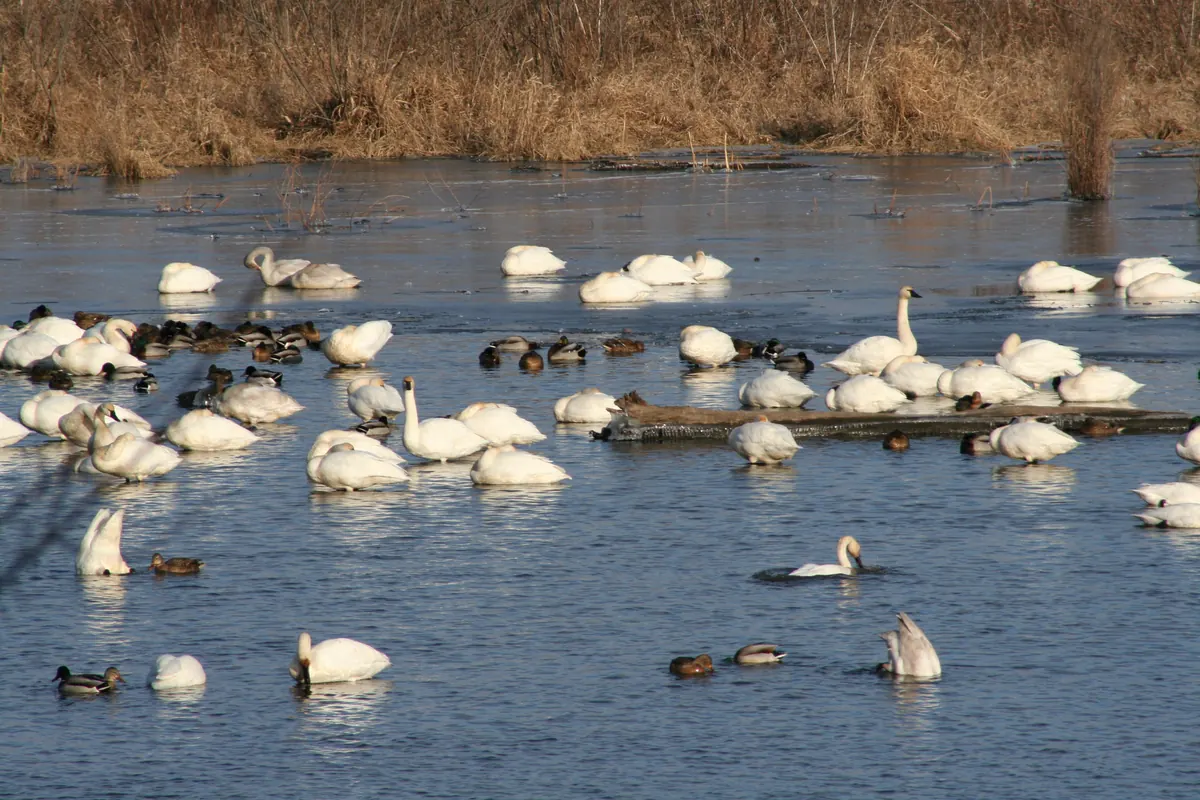
- Swans below the Lansing bluffs. The Upper Mississippi River refuge expects its tundra swans in mid-November, with 10,000 to 45,000 on the river at the peak, staying until the pools freeze. On Saturday, November 14, at 11 a.m., Allamakee County Conservation gives a free talk on fall migration and waterfowl identification at the Driftless Area Education and Visitors Center in Lansing, then sends people out to nearby overlooks.
- Deer on the move in the first week. The Iowa DNR puts the peak of deer movement in the breeding season around the first week of November. Bucks travel by day as well as at dusk and dawn, so slow down on roads through timber and river bottoms, and look for fresh rubs and scrapes along woodland edges.
- Leonids and a Beaver supermoon. The Leonids peak on the evening of Tuesday, November 17; the best hours are after the moon sets around midnight until dawn on the 18th. A week later the full Beaver Moon, a modest supermoon, peaks at 8:53 a.m. Central on Tuesday, November 24, and should look round to the eye on both Monday and Tuesday evenings.
For the Naturalist’s Field Journal this month: count the swans and the first rough-legged hawk on the “birds I have seen” list, draw a deer track from a muddy field edge on “tracks to know,” use “reading the signs” for buck rubs and scrapes, keep a white goose feather on the “feather found” page, and spend one clear evening on the dusk and dawn watch, noting the minute the sun goes down. Put the place and the date beside each entry.
Regions used below: Northeast Iowa and the Driftless; Eastern Iowa and the Mississippi River; Central Iowa and Des Moines; Northwest Iowa and the Iowa Great Lakes; Western Iowa and the Loess Hills; Southern Iowa.
When do tundra swans and snow geese come through Iowa?
The ducks of October give way to bigger birds in November. Iowa sits between the Mississippi and the Missouri, and each river has its own spectacle this month: swans in the northeast, snow geese in the west. Both stay until hard ice pushes them south.
-
Tundra swans on Pool 9
Mid-November until freeze-up · Upper Mississippi River National Wildlife and Fish Refuge, Lansing, New Albin and Harpers Ferry
Tundra swans nest on the Arctic tundra and spend the winter on the Atlantic coast, and the Upper Mississippi River refuge is one of their main resting stops on the way. The Fish and Wildlife Service says they arrive in mid-November and that the river can then hold anywhere from 10,000 to 45,000, which leave only when the river ices over. Allamakee County Conservation has pointed birders to Army Road at New Albin and Red Oak Road near Harpers Ferry on the Iowa side, and to the Brownsville overlook just across the line in Minnesota, where the refuge keeps mounted spotting scopes through mid-November. Canvasbacks raft up on the same open water, so scan for the long sloping heads among the white.
-
Fall Migration Birding Day
Saturday, November 14, 11 a.m. · Driftless Area Education and Visitors Center, 1944 Columbus Road, Lansing
A county naturalist gives a program on fall migration and basic waterfowl identification in the center’s lower level, and visitors are encouraged to take a self-guided trip afterward to one of the local hotspots. Registration is not required. The center, beneath limestone bluffs with a view of the river, is free and open on weekend afternoons from noon to 4 p.m.
-
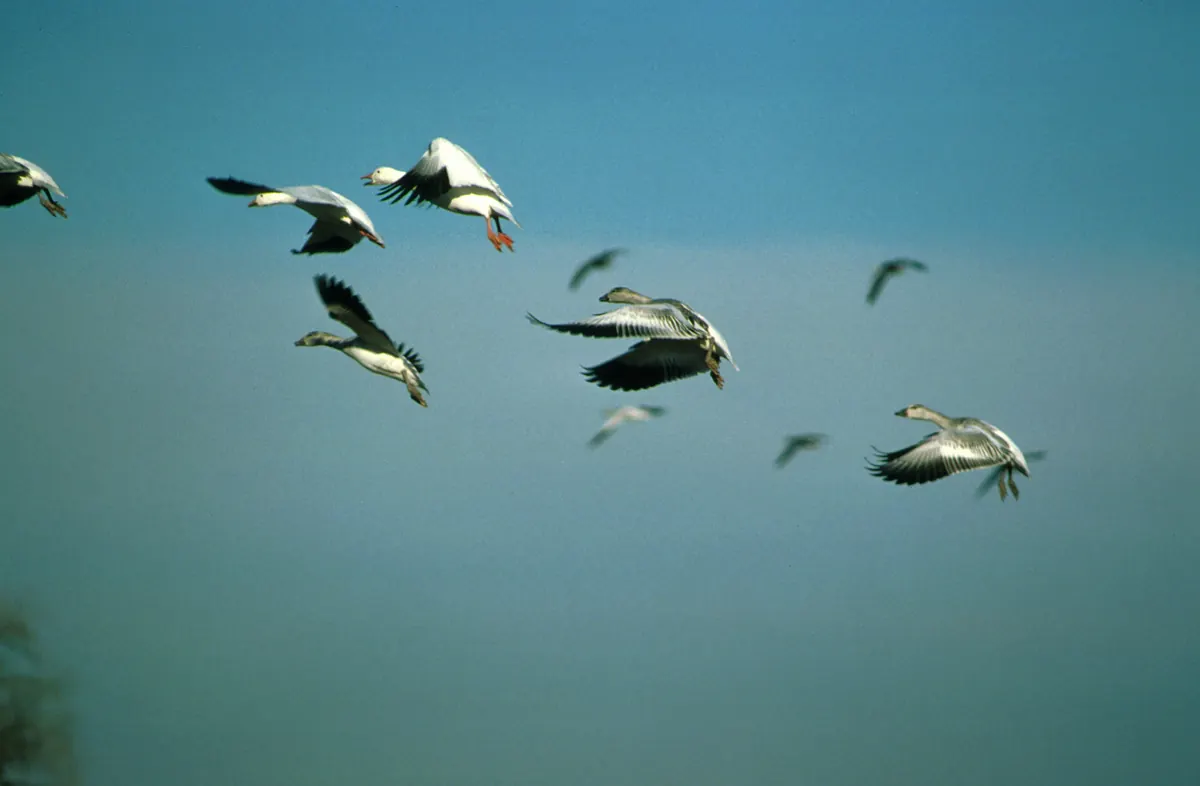
Snow geese at DeSoto
Peak from late October into early December · DeSoto National Wildlife Refuge, Missouri Valley, Harrison County
On the Missouri side, the refuge names late October through early December as its peak months, and at the height of the flight Iowa PBS has put as many as 500,000 geese in the area at once. The refuge says snow geese and trumpeter swans rest on the open parts of DeSoto Lake in late fall. Look for the dark “blue” form mixed in with the white birds. The refuge opens 30 minutes before sunrise and closes 30 minutes after sunset; the visitor center’s windows overlook the lake from Tuesday to Saturday, 8:30 a.m. to 4:30 p.m., except on Thanksgiving Day. The Missouri River Overlook and the Bob Starr Wildlife Overlook blind are the other recommended spots.
-
Trumpeter swans, Iowa’s own
All month; more join from the north as it gets colder · Marshes, ponds and river backwaters statewide
Trumpeters were gone from Iowa by the early 1880s. The DNR began restoring them in 1993, the first modern nest was found in Dubuque County in 1998, and in 2025 the birds attempted 158 nests, a record. Some of Iowa’s trumpeters head for Missouri and Arkansas in winter while others stay, joined by swans from farther north; the 2025 midwinter waterfowl survey counted more than 4,700 swans in the state. Trumpeters are larger than tundra swans, with a deeper, horn-like call.
Fronts move birds. After a cold northwest wind, the next morning is often the best day of the week on the river, and the Weather now page shows when one has come through.
When do bald eagles arrive in Iowa?
Iowa’s winter eagles follow the waterfowl. They arrive from farther north through November and gather wherever open water offers fish and injured ducks. The busiest weeks for migrating eagles start this month; the river crowds at the locks and dams come later, in the depths of winter.
-
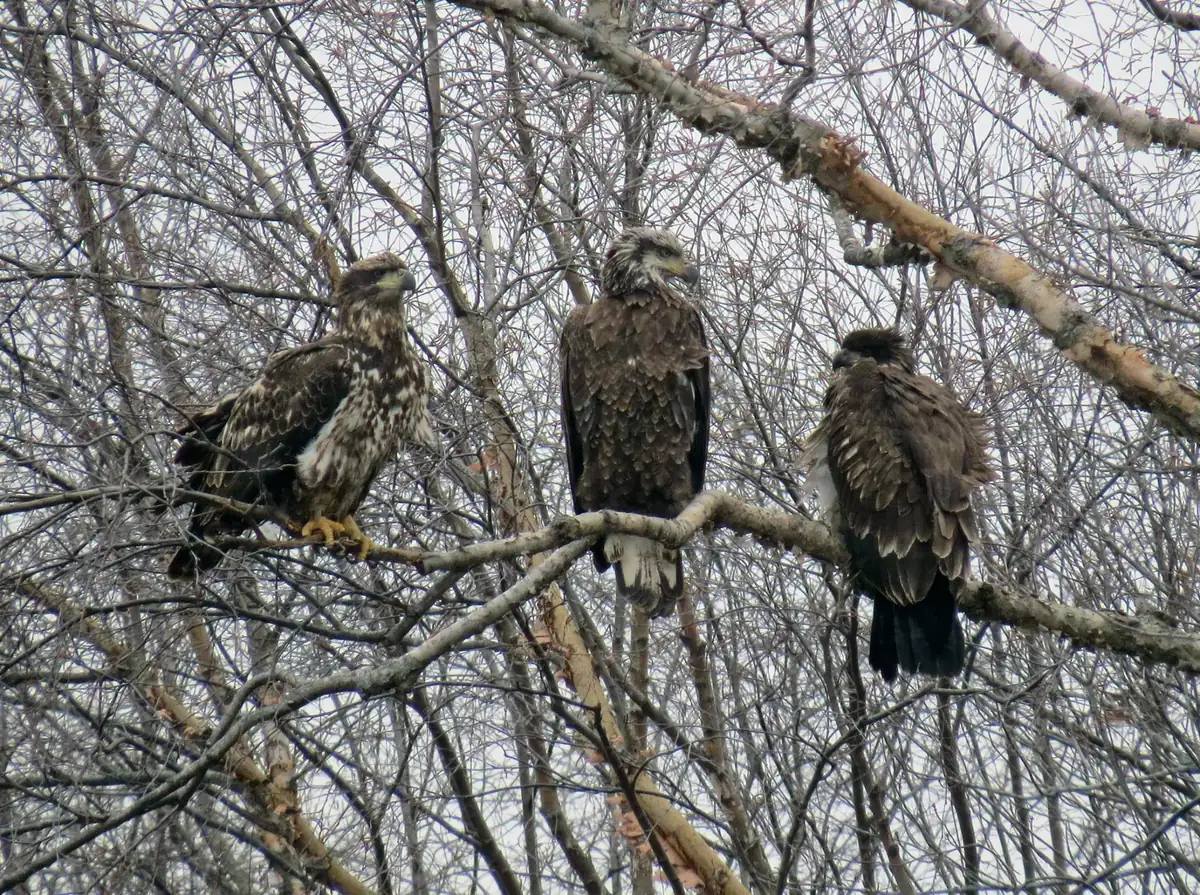
The late flight over Hitchcock
Bald eagles from early November into December; the count runs into mid-December · Hitchcock Nature Center, north of Council Bluffs
The hawk watch on the Loess Hills does not stop when the October crowds do. According to its HawkCount record, Hitchcock averages about 724 bald eagles a season, and its three biggest eagle days on file came on November 11, 2012 (150 birds), November 16, 2005 (140) and December 4, 2011 (130). November is also the month for golden eagles, which average only about 17 a season and are always a highlight; the best golden eagle day on record there was November 27, 2022. Rough-legged hawks, Arctic hunters with feathered legs and dark wrist patches, turn up from mid-November, averaging 27 a fall. Pottawattamie County Conservation gives the official season as running to December 13, and HawkCount lists the count period through December 20; either way, pick a cold, clear November day after a northwest wind has set in.
-
Eagles at DeSoto and along the Missouri
Building in November; peak in December · Edges of DeSoto Lake and the Missouri River
The refuge says bald eagle numbers usually peak in December, with a second, smaller peak in late February, and that the eagles hunt along the edge of the lake and the river. Scan the shoreline cottonwoods for white heads.
Tally white-headed adults and mottled brown young birds separately each visit; the young ones, not yet five years old, are bald eagles too.
When is the deer rut in Iowa?
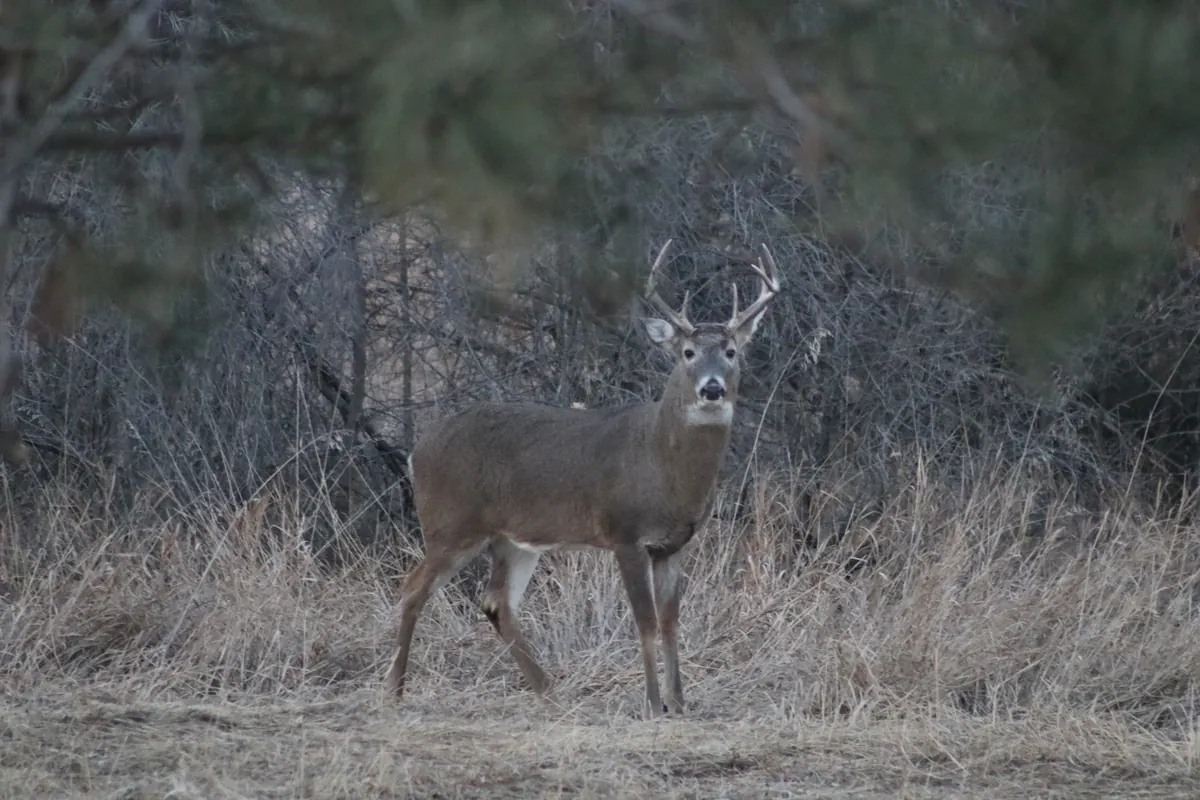
The whitetail rut is the main event in Iowa’s woods in November. The DNR says deer movement rises through the breeding season and peaks around the first week of the month, and that during this stretch deer travel at all hours, often in groups, along the timber and river corridors where most of the state’s deer live.
-
Rubs, scrapes and chasing
Late October through mid-November · Woodland edges, creek bottoms, fence lines
Bucks strip the bark from saplings with their antlers, leaving pale scars at about knee to waist height, and paw bare scrapes in the leaf litter under a low branch, which they mark with scent from glands near their eyes. In the early part of the rut you may see a buck trotting nose-down behind a doe for long minutes, ignoring everything else, including you.
-
Deer on the roads
Dawn and dusk especially, now an hour earlier by the clock · Rural highways crossing wooded valleys; city edges
With the shift back to standard time on November 1, the drive home from work lands in the deer’s busiest hours. The DNR asks drivers to slow down and leave more room between cars, and, if a crash cannot be avoided, to stay in their lane, brake and keep control rather than swerve. One deer crossing usually means more behind it. Iowa law lets a driver who hits a deer keep the meat with a salvage tag from the county sheriff, but the whole animal must be taken; keeping only the antlers is illegal.
-
Bison Day at Botna Bend
Saturday, November 7, 11 a.m. to 2 p.m. · Botna Bend Park, near Hancock, Pottawattamie County
The county marks National Bison Day by inviting visitors to see its herd and learn about bison conservation. Entry is $3 per vehicle or a park membership. On the far side of the state, the bison and elk at Neal Smith National Wildlife Refuge east of Des Moines are in their thick winter coats now; the five-mile auto tour and the trails stay open every day although the Prairie Learning Center remains closed after storm damage.
-
Furbearers and tracks
Trapping season opens November 7 · Creeks, marsh edges, field borders
Furbearers are in prime winter fur now, and their tracks are easy to find in the mud along creeks once the leaves are down: the hand-like prints of a raccoon, a fox’s neat straight line, the small paired bounds of a mink. Draw one on the journal’s tracks plate.
When do trout spawn in Iowa?
Iowa has trout because of the Driftless: the northeast corner escaped the last glaciers and kept its limestone, its sinkholes and its cold springs. Those springs feed creeks that stay near 50 degrees all year, and in November the trout in them spawn.
-
Wild brook trout
Early November · South Pine Creek, Winneshiek County, and other spring creeks
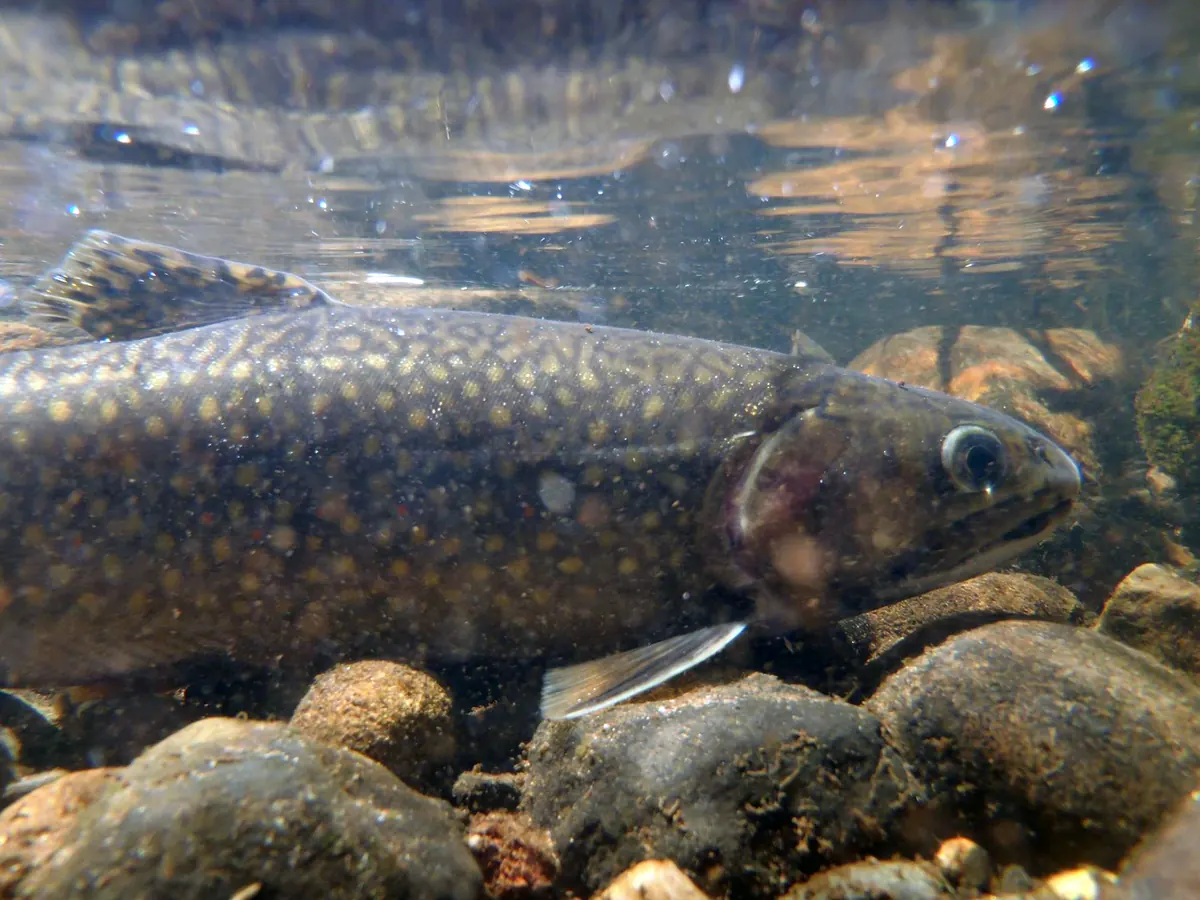
Brook trout are the trout native to these coldwater streams. The DNR collects eggs for its hatchery program streamside from the wild brook trout of South Pine Creek, usually in early November. The males are at their brightest now, with orange-red bellies, white-edged fins and pale spots ringed with blue.
-
Brown trout on their own
October and November · More than 100 northeast Iowa streams
The DNR reports natural reproduction, mostly brown trout with some brook trout, in more than 100 streams in the northeast. In 2025 the wild brown trout were doing well enough that the hatchery did not need to collect any brown trout eggs at all. Spawning trout dig shallow nests called redds in clean gravel, which show up as oval patches brighter than the streambed around them. If you fish or wade this month, step around them; the eggs lie in the gravel all winter.
-
Rainbows at the hatchery
December and January · Manchester Fish Hatchery, Delaware County
Rainbow trout, the backbone of the state’s stocking program, are spawned at the hatchery through December and January, about 750,000 eggs in a season. The DNR also stocks catchable trout into a handful of town ponds each fall; check its community trout schedule for this year’s dates.
What happens in Iowa’s woods and prairies in November?
By early November most of Iowa’s maples, ashes and walnuts are bare and the woods open up. It is the best month to spot old nests, tree cavities and dens.
-
Oaks that keep their leaves
All winter · Woodlots, parks, young oaks along roadsides
Look for the trees still holding leaves after the first snow. Many oaks, especially young ones and pin oaks, keep their dried brown leaves well into winter, and they rattle on a windy day. Bur oaks, Iowa’s classic savanna tree, drop most of theirs but stand out by shape: wide crowns, crooked limbs and corky ridges on the twigs. A Saturday workshop at Hitchcock Nature Center on November 14 (morning, $15, for teens and adults) pairs decomposers with winter tree identification.
-
Bats go into the caves
Caves close November 15 · Maquoketa Caves State Park, Jackson County
The caves at Maquoketa shelter hibernating bats, so the DNR closes them every year from November 15 to April 1. The bats wake briefly from time to time in winter, and each waking burns fat they cannot replace; being disturbed can starve them before spring. If you visit in the first half of the month, read the park’s signs on white-nose syndrome and do not bring gear that has been in another cave. All nine of Iowa’s bat species eat insects.
-
Prairie seed and winter seed heads
Saturday, November 7, 10 to 11 a.m., and all month · Sugar Grove Farm near Cedar Rapids (with Indian Creek Nature Center); any prairie
Tallgrass prairie plants have gone to seed, and Indian Creek Nature Center invites volunteers to Sugar Grove Farm to help collect it. On your own walks, the seed heads that stand through winter are easy to name: the three-fingered heads of big bluestem, the fluffy plumes of Indiangrass, the dark cones of purple coneflower, which goldfinches pick at, and the round, bristly heads of rattlesnake master.
Has Iowa had its first freeze yet?
Almost certainly, by the time November arrives. Even in the warmest corner of Iowa, nine years in ten have brought the first 32 °F night by November 2, and in the north half of all years have frozen by about the end of September. The table repeats the station dates shown on our October page; the full list for every station is on the Iowa frost dates page.
| Station | One year in ten | Median | Nine years in ten |
|---|---|---|---|
| Estherville Municipal Airport (northwest) | Sep 17 | Sep 30 | Oct 13 |
| Mason City Municipal Airport (north central) | Sep 18 | Oct 1 | Oct 15 |
| Decorah (northeast) | Sep 25 | Oct 7 | Oct 21 |
| Sioux City Gateway Airport (west) | Sep 22 | Oct 5 | Oct 18 |
| Cedar Rapids Municipal Airport (east central) | Sep 25 | Oct 11 | Oct 23 |
| Des Moines International Airport (central) | Oct 4 | Oct 20 | Nov 1 |
| Dubuque L&D 11 (Mississippi River) | Oct 7 | Oct 21 | Nov 2 |
| Clarinda (southwest) | Sep 26 | Oct 11 | Oct 24 |
| Burlington Municipal Airport (southeast) | Oct 6 | Oct 20 | Nov 1 |
The northwest, the north and the northeast have nearly always frozen by mid- to late October, and the west and east-central stations by about October 24. Only the warmest places can still be waiting as the month opens: the Des Moines airport with the city around it, Burlington in the southeast, and the lock and dam at Dubuque, where the river keeps the air mild. In about one year in ten they reach November without a freeze, and the first one then comes in the opening days of the month.
How early does it get dark in Iowa in November?
Two things shorten Iowa evenings this month. First comes the time change: Iowans set their clocks an hour behind on Sunday the 1st, and the Des Moines sunset jumps from 6:10 p.m. on Saturday to 5:09 p.m. on Sunday. Then the days keep shrinking: between November 1 and November 30, Iowa cities lose between 55 minutes (Burlington) and 61 or 62 minutes (Mason City and Decorah) of daylight, about two minutes a day.
| City | Nov 1 | Nov 30 | Lost | Per day |
|---|---|---|---|---|
| Decorah | 10 h 16 m | 9 h 14 m | 62 min | 2.1 min |
| Mason City | 10 h 16 m | 9 h 15 m | 61 min | 2.1 min |
| Dubuque | 10 h 19 m | 9 h 19 m | 60 min | 2.1 min |
| Sioux City | 10 h 19 m | 9 h 19 m | 60 min | 2.1 min |
| Cedar Rapids | 10 h 21 m | 9 h 22 m | 59 min | 2.0 min |
| Des Moines | 10 h 23 m | 9 h 24 m | 59 min | 2.0 min |
| Council Bluffs | 10 h 24 m | 9 h 26 m | 58 min | 2.0 min |
| Burlington | 10 h 25 m | 9 h 30 m | 55 min | 1.9 min |
By November 30 the sun sets at 4:31 p.m. in Dubuque, 4:33 in Decorah, 4:45 in Des Moines and 4:54 in Sioux City. Because Iowa spans a wide slice of the Central time zone, the west gets its light later at both ends of the day: on the 30th the sun rises at 7:08 a.m. in Burlington and 7:35 in Sioux City. For your own town’s sunset and twilight times, open the Field almanac.
What is November weather like in Iowa, and what will El Niño do to the winter?
November is the month Iowa’s average high drops through the 40s. NOAA’s 1991–2020 normals put the typical November high at 43.6 °F in Mason City, 44.8 °F in Dubuque, 47.1 °F in Waterloo, 48.3 °F in Des Moines and 49.8 °F in Burlington, about 15 or 16 degrees cooler than in October. Average lows run from 24.3 °F at Mason City to 32.3 °F at Burlington. It is a drier month than October, with normal precipitation from 1.27 inches at Sioux City to 1.91 at Des Moines and 2.29 at Burlington. Snow usually arrives, though not much of it: normal November snowfall is 2.7 inches at Des Moines, 2.8 at Dubuque, 3.0 at Mason City, 3.1 at Waterloo and 3.2 at Sioux City. December normally brings two to four times as much.
This year Iowa heads into winter with El Niño under way in the tropical Pacific, and forecasters expect it to grow very strong. NOAA’s ENSO team, in its September 10 update, rated a very strong peak for the coming cold season as better than 90 percent likely. NOAA’s seasonal outlook for December through February comes out on October 15; you can read it, and its monthly updates, at the CPC seasonal outlook maps.
What has a strong El Niño meant for Iowa before? A National Weather Service study from the Des Moines office found that in the strongest events Des Moines averaged about 2.6 °F above normal for December through February, and that falls in El Niño years tend to run slightly wet, with the wetness lasting into winter when the event is strong, especially in southern Iowa. The La Crosse office, which covers the northeast corner, notes that four of Iowa’s ten warmest winters on record came during the ten strongest El Niños since 1900, and that these winters usually bring less snow than normal to the Upper Mississippi Valley, though about a third have brought more. None of it is a promise: the Des Moines study points out that El Niño years also gave Iowa the frigid winters of 1976–77 and 1977–78. And November itself owes little to the Pacific.
What can you see in Iowa’s night sky in November?
The good news about the early sunsets is that the stars come out in time for supper. With the moon new on November 9, mid-month nights are dark, and four planets crowd the dawn.
-
The Leonids
Active November 6–30; best after moonset on the morning of Wednesday, November 18 · Radiant in Leo, rising in the east around midnight
The International Meteor Organization puts the Leonid maximum at 23:45 Universal Time on November 17, which is 5:45 p.m. Central, before the radiant has risen in Iowa. That makes the following predawn hours the practical choice. The first-quarter moon sets shortly after midnight, and the radiant climbs higher toward dawn, so the best rates come late. Expect about 15 meteors an hour at most under dark skies; no outburst is expected. These are swift meteors, and the bright ones can leave a glowing train for a second or two.
-
Taurid fireballs
Southern Taurids peak November 5; Northern Taurids November 12 · Radiant in Taurus, up most of the night
The Taurids are slow, sparse and sometimes spectacular: only 5 to 10 an hour, but they include bright fireballs that drift across the sky. The moon is new between the two maxima, so neither is washed out. They are debris from Comet Encke.
-
Mars beside Jupiter
Before dawn on November 15 and 16 · High in the south before sunrise, in Leo
Reddish Mars passes just over a degree from much brighter Jupiter on these two mornings, close enough to share the view in binoculars. Brilliant Venus is the morning star, low in the east-southeast before sunrise and climbing higher all month; Venus is at its most dazzling over Thanksgiving week, and between roughly the 18th and the 25th Iowans with a flat eastern horizon can add Mercury, the faintest of the four planets in the dawn row.
-
The Beaver Moon
Full at 8:53 a.m. CST on Tuesday, November 24; looks full the evenings of November 23 and 24 · Rising in the east-northeast around sunset
This full moon is a modest supermoon, with the moon’s closest approach of the month coming about a day and a quarter after full. Late Monday night and toward Tuesday’s dawn, Iowa watchers will find the moon brushing past the Pleiades, though moonlight drowns all but the brightest stars of the cluster. After dark, Saturn shines alone among the planets, in the south. Faint Uranus is opposite the sun on November 25; with a finder chart, binoculars pick it out a little way from the Pleiades.
| Phase | Date | Time |
|---|---|---|
| Last quarter | Sunday, Nov 1 | 2:28 p.m. |
| New moon | Monday, Nov 9 | 1:02 a.m. |
| First quarter | Tuesday, Nov 17 | 5:48 a.m. |
| Full moon, the Beaver Moon | Tuesday, Nov 24 | 8:53 a.m. (looks full the evenings of Nov 23 and 24) |
| Last quarter | Tuesday, Dec 1 | 12:08 a.m. |
Before you drive out of town, check Today’s sky for clouds, and the moon phases page to see when the moon will be up where you are.
What birds come to Iowa feeders in November?
Once the leaves fall and the insects vanish, the winter feeder crowd settles in. Dark-eyed juncos and American tree sparrows arrive from the north and stay until spring, joining the year-round chickadees, nuthatches, cardinals, blue jays and woodpeckers.
-
Project FeederWatch begins
November 1 through April 30 · Any yard, balcony or schoolyard
The Cornell Lab of Ornithology’s FeederWatch season opens on November 1. Iowa backyards can join with a two-day watch whenever it suits, at most weekly; for every species you log only the largest flock visible at one moment, so no bird is counted twice. Indian Creek Nature Center in Cedar Rapids runs open FeederWatch sessions in its Bird Room on November 10, 11, 17, 18, 24 and 25, a good way to learn the count before trying it at home.
-
A quiet finch winter, probably
All winter · Feeders with nyjer and sunflower seed; conifers
The Finch Research Network’s September 25 outlook expects poor seed crops across the central boreal forest to send many finches east, into the Great Lakes and the Northeast, where big white pine and cedar crops should keep them in the woods more than at feeders; it foresees no large flight to the south. It allows for a small redpoll movement in the western Great Lakes and scattered, wandering white-winged crossbills, and pine siskins have already been passing Hawk Ridge in Minnesota by the thousand. For Iowa, off to the southwest of all that, any redpoll, crossbill or evening grosbeak is a real find; report it to eBird.
-
Juncos, the snowbirds
Arriving in late October and November · On the ground under feeders and along brushy edges
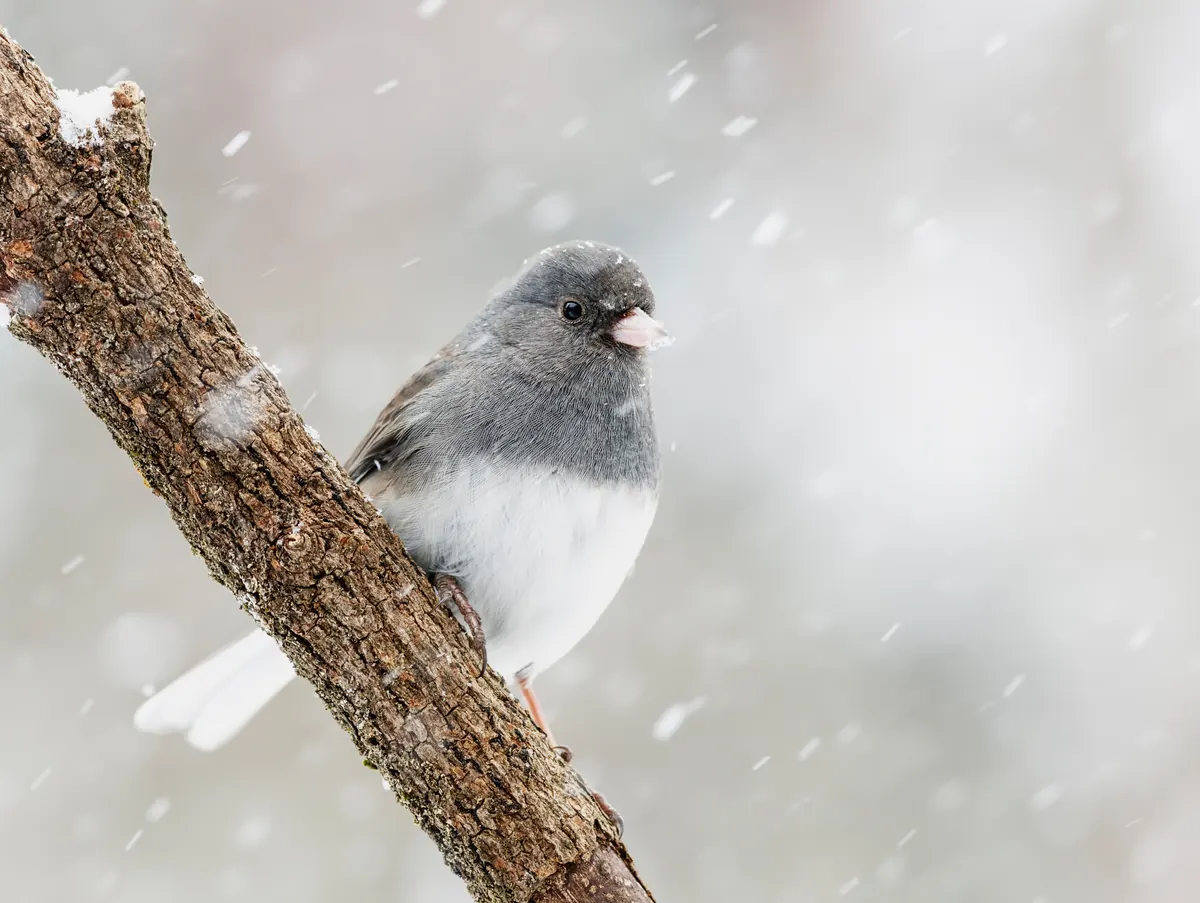
Juncos are slate gray above and white below, with pale pink bills and white outer tail feathers that flash when they fly up. Tree sparrows, with a rusty cap and a single dark spot in the middle of a plain gray breast, often feed with them.
What are the best November outings for Iowa families?
- Saturday, November 7: Bison Fest at Botna Bend Park near Hancock, 11 a.m. to 2 p.m., free with the $3 vehicle entry. The same morning, Indian Creek Nature Center collects prairie seed at Sugar Grove Farm from 10 to 11.
- Sunday, November 8: live raptors in Cedar Rapids. Indian Creek Nature Center hosts Raptology’s non-releasable birds of prey from noon to 12:45 p.m.
- Saturday, November 14: swans and ducks at Lansing. The Fall Migration Birding Day at the Driftless Area Education and Visitors Center starts at 11 a.m.; no registration needed. In the Loess Hills the same morning, Hitchcock’s winter tree workshop runs 9 to noon ($15, ages 14 and up).
- Before November 15: Maquoketa Caves. The last chance until April to walk through the caves before they close for the bats.
- Tuesday night, November 17, into the 18th: the Leonids. For children, an hour before dawn on the 18th is easier than staying up.
- Monday, November 23: Full Moon Hike at Indian Creek Nature Center, 7 to 8 p.m. under the nearly full Beaver Moon; it is a small guided group, so check the center’s calendar.
- Friday, November 27: a day-after-Thanksgiving walk. Any state park or county area will do. Count the swans, geese or eagles you see and add them to eBird.
- Citizen science all month. Start a FeederWatch count, and log every swan flock you find in eBird, noting whether they are tundra swans or trumpeters.
Pages for every other state, and for other months, start at the nature hub. Plans change with weather; confirm with the organizer before you set out.
Safety notes for November in Iowa
- Hunting seasons open this month. From the Iowa DNR’s 2026–27 season list: pheasant runs from October 31 to January 10 and bobwhite quail from October 31 to January 31; gray partridge and ruffed grouse are open all month, as are rabbit and squirrel. Deer archery continues to December 4, and fall turkey (gun or bow) runs October 12 to December 4. Duck seasons are open in all three zones for most of the month (north zone to December 8, central to December 15, south to December 22), and Canada geese are in season too. Woodcock closes November 16, and furbearer trapping opens November 7. The first shotgun deer season begins December 5.
- Blaze orange. Iowa Code section 481A.122 requires anyone hunting upland game birds, which in November means the many pheasant and quail hunters, to have on at least one outer garment, a cap counts, made of 50 percent or more solid blaze orange. Firearm deer hunters need a full solid-orange upper garment, but no gun deer season is open in November. The law does not cover bowhunters or waterfowlers, so do not count on seeing orange in the woods. Hikers on wildlife areas and state forests should wear orange anyway, and an orange collar or vest belongs on any dog.
- Deer and dark roads. With the rut peaking early in the month and sunset an hour earlier on the clock, the evening drive home overlaps the busiest deer hours. Slow down, especially near timber and creeks.
- No ice is safe yet. Ponds may skim over by late November, but that thin ice will not hold a person. The DNR’s minimum for walking or ice fishing is four inches of clear ice, and river ice is weaker than lake ice. Keep children and dogs off it.
- Cold water and short days. The Mississippi and the reservoirs chill quickly in November, and a fall overboard is dangerous even on a mild afternoon. Wear a life jacket in a boat or kayak. On hikes, carry a light and an extra layer, and plan to be back at the car by sunset, which is before 5 p.m. by month’s end.
- First snow on the roads. Before driving to the river or the Loess Hills, look at Weather now.
Sources
- U.S. Fish and Wildlife Service: Upper Mississippi River National Wildlife and Fish Refuge, wildlife watching (tundra swans, canvasbacks, Brownsville overlook)
- Allamakee County Conservation: Driftless Area Education and Visitors Center, hours and events (Fall Migration Birding Day, November 14, 2026)
- Allamakee County Conservation: Fall Migration Birding Day event listing
- Allamakee County Tourism: Driftless Birding Day (2024 listing of Iowa and nearby hotspots, Army Road and Red Oak Road)
- U.S. Fish and Wildlife Service: DeSoto National Wildlife Refuge, visit (fall season hours, peak months, overlooks)
- U.S. Fish and Wildlife Service: DeSoto National Wildlife Refuge, species (snow geese, trumpeter swans, bald eagles)
- Iowa PBS: snow geese migration at DeSoto National Wildlife Refuge
- Iowa DNR: Iowa’s trumpeter swan population continues to grow (December 30, 2025)
- HawkCount (Hawk Migration Association of North America): Hitchcock Nature Center site profile, species averages and top days
- Pottawattamie Conservation: Hitchcock Nature Center HawkWatch
- Pottawattamie Conservation: events calendar, November 2026 (Bison Fest, winter tree workshop)
- Iowa DNR: deer movements increase as peak breeding season nears (October 21, 2025)
- U.S. Fish and Wildlife Service: Neal Smith National Wildlife Refuge (trail, auto tour and visitor center status)
- Iowa DNR: fall trout spawn in full swing (November 18, 2025)
- Iowa DNR: fall community trout stockings (November 4, 2025)
- Iowa DNR: Maquoketa Caves State Park (winter cave closure for bats)
- Iowa DNR: celebrate bats (October 28, 2025)
- Indian Creek Nature Center, Cedar Rapids: events calendar, November 2026
- NOAA NCEI: U.S. Climate Normals 1991–2020 (first-freeze dates)
- NOAA NCEI: 1991–2020 monthly normals for Iowa stations, November temperature, precipitation and snowfall (data API)
- Climate Prediction Center: ENSO diagnostic discussion, September 10, 2026
- Climate Prediction Center: three-month outlooks (winter outlook issued October 15, 2026)
- NWS Des Moines: El Niño impacts in Iowa (PDF)
- NWS La Crosse: temperatures and precipitation in the ten strongest El Niño winters
- U.S. Naval Observatory: moon phases (data API)
- NASA: phases of the moon, 2001 to 2100 (Espenak)
- International Meteor Organization: 2026 meteor shower calendar (PDF)
- EarthSky: what is a supermoon (2026 list)
- EarthSky: best stargazing of 2026 (Mars and Jupiter, November 16)
- EarthSky: Mercury’s greatest western elongation
- EarthSky: Uranus at opposition
- Sea and Sky: astronomy calendar 2026
- NOAA Space Weather Prediction Center: solar cycle progression
- Project FeederWatch: how to participate
- Finch Research Network: winter finch forecast 2026–2027 (posted September 25, 2026)
- Iowa DNR: survey finds Iowa pheasant population second highest in a decade (September 1, 2026)
- Iowa DNR: Iowa’s pheasant hunting Thanksgiving tradition (November 25, 2025)
- Iowa DNR: Iowa hunting seasons, 2026–2027
- Iowa Code 2026, section 481A.122: hunters’ orange apparel (PDF)
- Iowa DNR: stay safe on the ice this winter (December 9, 2025)
- Photos via Wikimedia Commons; licenses and photographers are credited under each picture
.jpg)