What to look for in nature in Iowa this March
March is Iowa’s month of changeover, and it can swing from a blizzard to a 70-degree afternoon within a week. Its signs come from the ground up: woodcock spiral over damp fields at dusk, prairie chickens boom on the short grass at Kellerton, snow geese and swans ride the thaw north, and the first chorus frogs, pasque flowers and bloodroot appear before the trees show a leaf. Clocks spring forward on Sunday, March 14, the equinox arrives on the 20th, and Iowa’s days gain nearly three minutes of light each day. The sections below take the month one subject at a time.
Other months in Iowa: October, November, December, January, February, April.
Start here
- Stand at the edge of a damp field at dusk. Listen for a nasal peent every few seconds, then watch the sky for a small, round-bodied bird spiraling up against the last light. The woodcock’s courtship flight is one of Iowa’s first signs of spring, and it needs only a quiet spot and ten minutes.
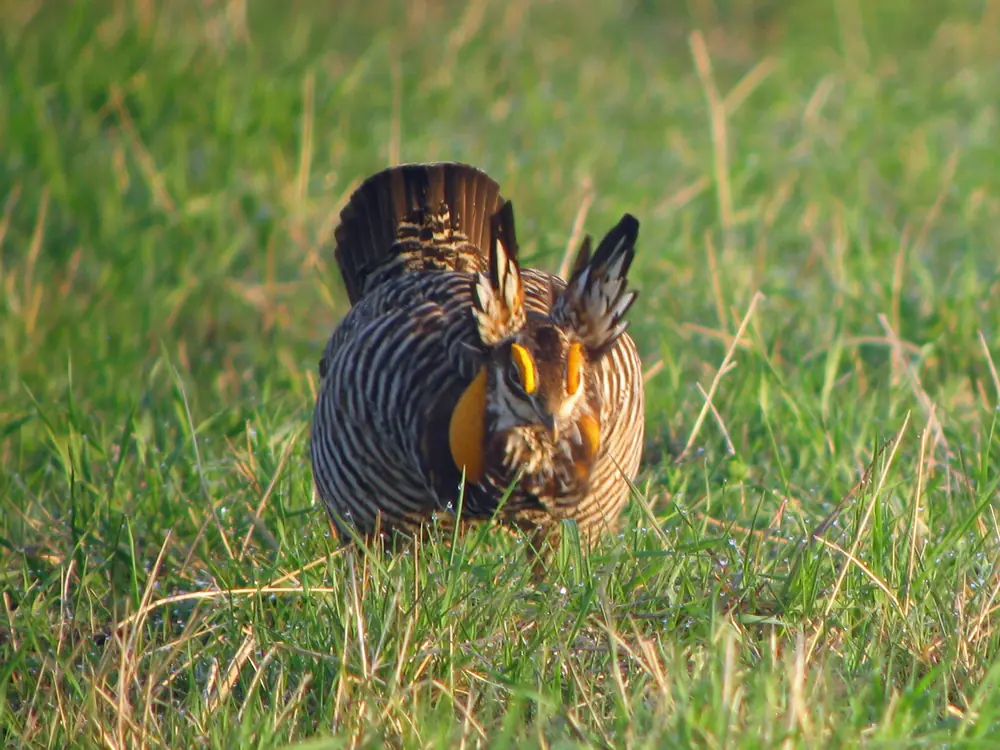
- Rise before dawn for the prairie chickens. Late March is when the booming begins on the lek near Kellerton, in far southern Iowa. The DNR’s viewing platform is the place to watch from, and a thermos and warm layers are part of the plan.
- Find the first flowers. Look for pasque flowers on a sunny prairie slope and for hepatica, bloodroot and snow trillium in the woods, and log the date of your first of each. Photograph them rather than picking them.
In the Naturalist’s Field Journal for March, fill in “birds I have seen” with your first killdeer, phoebe and bluebird, “dusk and dawn watch” for a woodcock evening or a prairie chicken morning, “nest observed” for a raptor’s nest watched from afar, “a map of sounds” for a pond’s frog chorus, and “the same place twice” for a woodlot visited in early and late March. Note the temperature beside each entry.
Regions used below: Northeast Iowa and the Driftless; Eastern Iowa and the Mississippi River; Central Iowa and Des Moines; Northwest Iowa and the Iowa Great Lakes; Western Iowa and the Loess Hills; Southern Iowa.
Where can you see prairie chickens boom in Iowa in March?
Once snow leaves the short-grass hilltops of far southern Iowa, male greater prairie chickens return to the same patch of ground at first light and perform. The Iowa DNR says the last known wild nesting here was in 1952, and that a restoration effort begun in the early 1990s built the small population near Kellerton, in Ringgold County, that survives today, though its numbers have swung up and down.
-
The lek at Kellerton
Late March to early May, best near sunrise · Kellerton Bird Conservation Area, southern Iowa
Males gather on a communal display ground called a lek. The DNR gives late March to early May as the viewing window, from a platform that overlooks the lek, where males display on a communal ground at first light. Arrive before first light, stay on the platform, speak softly, and check the DNR page for current directions and access notices.
-
How many are left
Counts vary year to year · Southern Iowa, from Adair and Madison counties south to Wayne
The population is small: the DNR brought in birds from Nebraska from 2012 to 2017 to strengthen it. It lists sightings as possible in nine southern counties (Adair, Madison, Adams, Union, Clarke, Taylor, Ringgold, Decatur and Wayne) and asks people to report any they see through its online form.
Bring a thermos and warm layers.
When and where can you see a woodcock sky dance in Iowa?
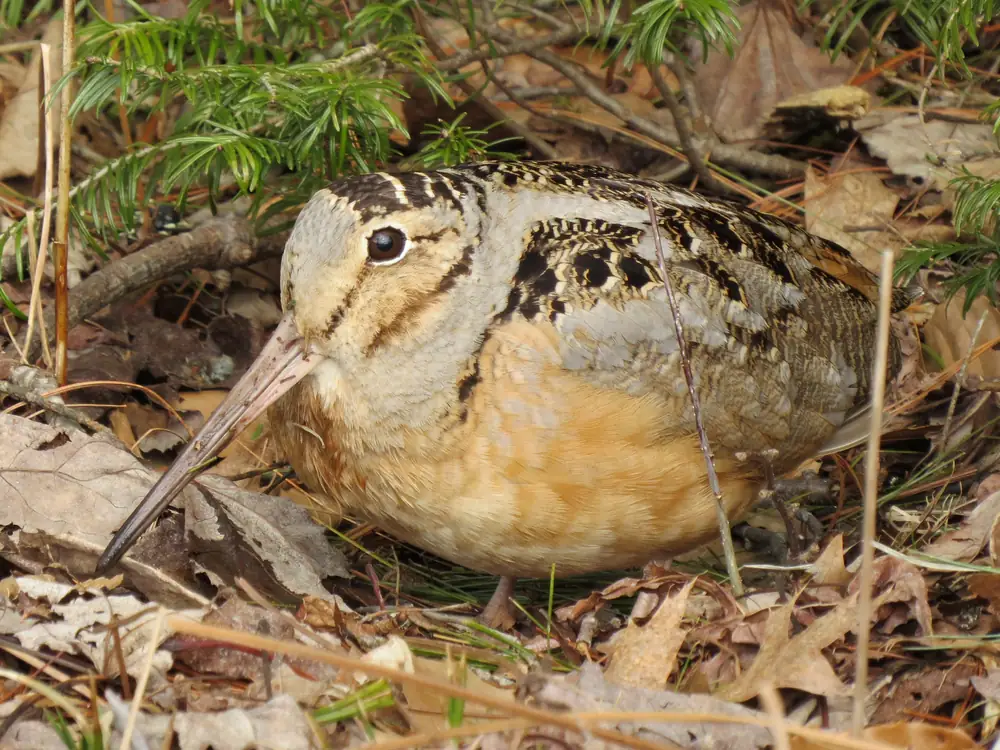
Few birds are as odd as the American woodcock, a round, long-billed creature of damp thickets and wet meadows that is among the earliest migrants home to Iowa. In March the male’s courtship flight turns the last light of the day into a performance.
-
The sky dance
Dusk, and again at first light; from the first thaw through April · Damp, open ground next to brush and young woods
Missouri’s conservation department describes the display well. The male stands on the ground, giving a raspy, nasal “peent” every few seconds, then takes off in a spiral that climbs 200 to 300 feet, twittering, before dropping with chirping notes and landing near his starting point, often to begin again. The display runs from the first thaw in February through April. Stand still at the edge of a wet field or shrubby clearing about when the light starts to go, listen for the peent, and watch the sky above the sound. A bat-sized silhouette against the last light is a woodcock.
-
Places to try
March evenings · Lake Manawa, Council Bluffs; wet, brushy edges of wildlife areas and nature centers in every region
The Omaha-area Audubon migration calendar names the hiking trail at Lake Manawa in Council Bluffs as a spot for woodcocks in March. In 2026 the Iowa Young Birders group and Lime Creek Nature Center in Mason City held a woodcock evening on March 21, with a short program followed by a sunset walk through the prairie. The 2027 date was not yet public in early October, so ask the nature center or the group. Many county conservation boards run similar walks; ask yours.
Go at dusk, dress for a cold wait and use a flashlight sparingly, if at all. Each time a bird is flushed from its display ground, the male loses time he cannot spare.
Which geese, swans and cranes pass through Iowa in March?
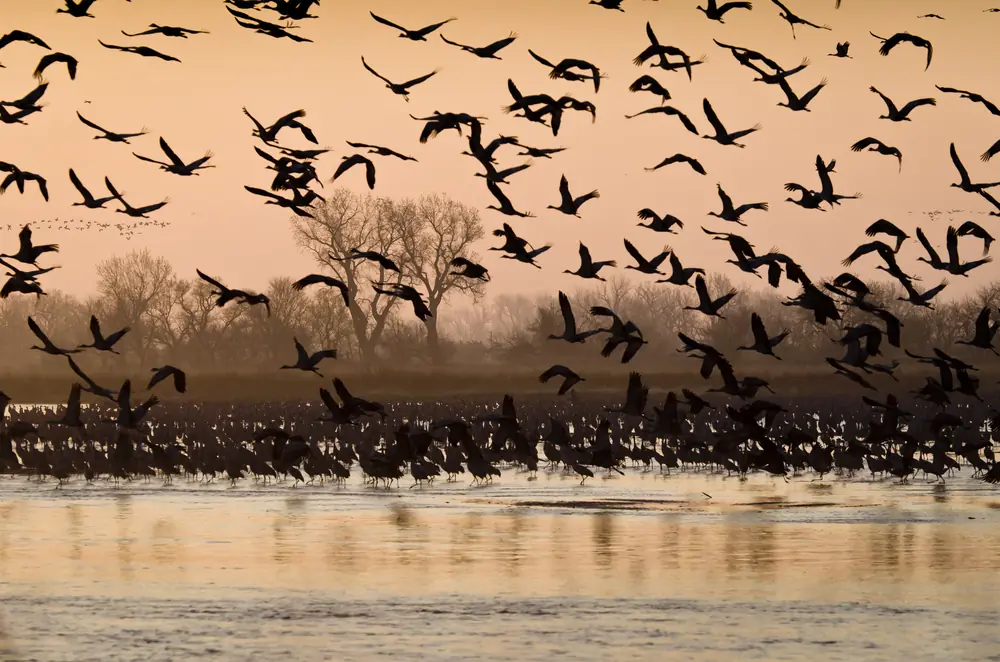
March is the month the big flocks move. Open water moves north from the Missouri River and the Mississippi, and the flocks follow it.
-
Snow geese in the Missouri Valley
Mid-February to mid-March in southwest Iowa, depending on the thaw · DeSoto National Wildlife Refuge; Riverton Wildlife Area, Fremont County
The DNR says snow geese flow into southwest Iowa when the ground is bare of snow and open water is available for roosting, and that warm southerly winds pull them north while snow cover upstream can hold them back. DeSoto, between Missouri Valley and Blair, Nebraska, once held the biggest flocks, but the DNR notes numbers there have dwindled over the past decade. Its roads and trails are open daily, from thirty minutes before sunrise until thirty minutes past sunset, the visitor center is open Tuesday through Saturday, and an entry permit is required. The full auto tour loop opens on April 15. The Omaha-area Audubon calendar also lists Riverton for March geese, and Lake Manawa at Council Bluffs for ducks and bald eagles.
-
Trumpeter swans claim their ponds
As the ice goes out · Wetlands and farm ponds statewide, most in the north
Iowa’s trumpeter swans, once gone from the state, now number in the thousands. The DNR counted a record 158 nest attempts in 2025, of which 98 hatched, with 4.4 cygnets per successful nest on average, and its midwinter survey that year found more than 4,700 swans. The birds do best on big, semi-permanent wetlands in the prairie pothole region of the north. If you see a swan wearing a neck collar or leg band, the DNR asks you to note the color and code and report it.
-
Sandhill cranes returning
Mid-March onward · Wet meadows and marshes, such as Chichaqua Bottoms Greenbelt and Ham Marsh
The Iowa Natural Heritage Foundation writes that crane season approaches in mid-March. These tall gray birds began nesting in Iowa again in 1992, and the DNR says they have nested in the Iowa River Bird Conservation Area ever since. Listen first: the rolling, bugling call carries for miles.
On the Mississippi, the refuge that manages the floodplain reports early arrivals in March and a peak in April and May. The light goose conservation order, a hunt aimed at overabundant snow and Ross’s geese, runs through May 1, 2027, so expect shooting near the geese and watch for hunters before you stop on a road.
Which birds come back to Iowa in March?
The first week of March can still be wintry, and the last can feel like April. Between them the first insect-eaters arrive and resident birds start to sing and pair up.
-
Blackbirds, killdeer and snipe
Throughout March · Cattail marshes, wet ditches, flooded fields and gravel bars
The Omaha-area Audubon calendar lists killdeer and common snipe as arriving through the month, and the Mississippi refuge says red-winged blackbirds return to the wetlands in March. Look for a killdeer’s black double collar on bare fields, and a snipe’s long bill at a flooded pasture’s muddy edge.
-
Later March arrivals
Final fortnight of March, per the Omaha-area calendar · Southwest Iowa and the Missouri Valley
The same calendar expects the eastern phoebe and the fox sparrow in the final fortnight, the loggerhead shrike by mid-March, and Bonaparte’s gulls late in the month, while the northern shrikes of winter depart by mid-March. These dates are from the Omaha area, so expect them to come a little later in northern Iowa.
-
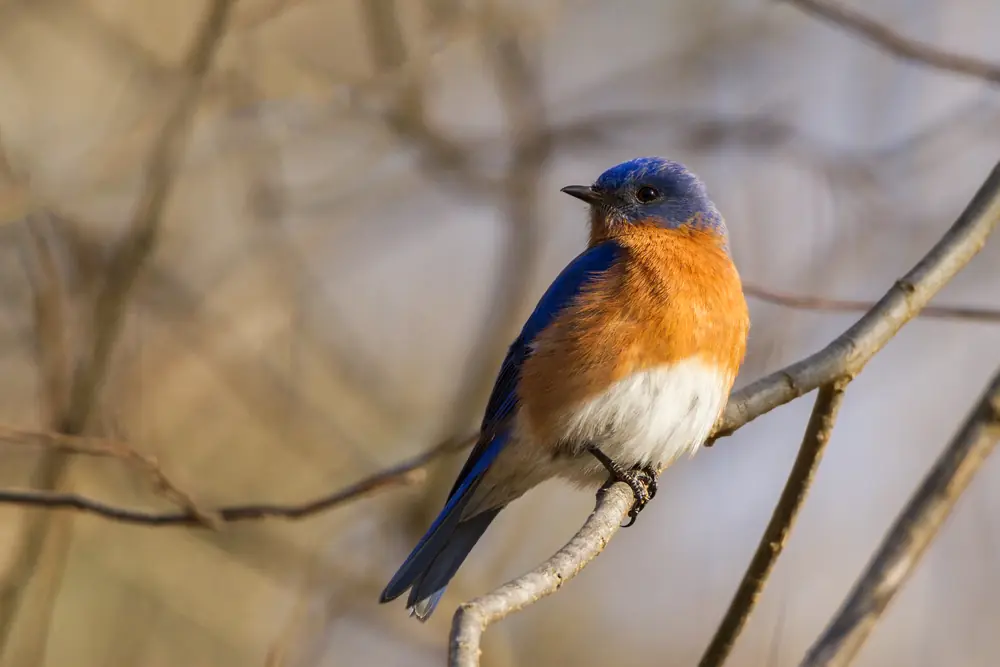
Eastern bluebirds
Put boxes up before nesting starts · Open country with scattered trees; nest boxes
The DNR says many summer bluebirds winter in the southeastern U.S., though a few stay in Iowa all year, and that the species is declining across much of the Midwest. It advises placing nest boxes at least 100 yards from buildings, and in pairs, one for bluebirds and one for swallows, so the two do not compete.
-
Eagles and owls already on nests
Late March for eggs laid in mid-February · Cottonwoods by rivers; old hawk nests in woodlots
Iowa’s bald eagle nesting season, per the DNR, runs from January to August and peaks February through July, with 35 to 40 days of incubation, so pairs that laid in mid-February would have chicks roughly around the end of March, and the young take their first flight about 75 days after hatching. The DNR calls this a critical time and says not to approach any nest. Great horned owls, Iowa’s earliest nesting raptor, often lay in January, so their owlets are growing in old stick nests now.
Project FeederWatch runs until April 30, so a feeder count begun in November can run through the spring changeover. The DNR counted 54 active osprey nests in 2025 and says the birds usually lay in May, so look for them soon on towers and platforms.
When do frogs start calling in Iowa?
A warm, wet evening after the ice leaves a pond is the signal. The DNR’s frog and toad call survey training material lists, by month, what calls when in Iowa: boreal chorus frogs in March and April, plains leopard frogs and spring peepers in April, American toads in late April and early May, then Woodhouse’s or Fowler’s toads, gray treefrogs and cricket frogs in May, and bullfrogs and green frogs in June.
-
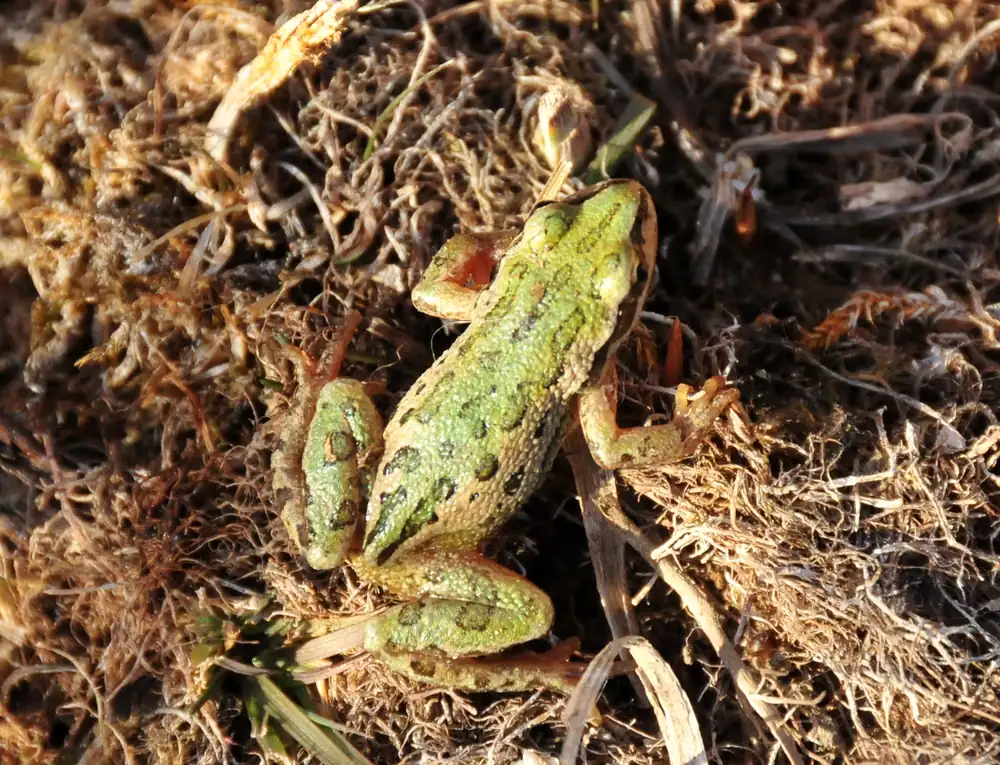
Chorus frogs
Late March into April · Shallow ponds, flooded ditches, field edges and prairie pools
Boreal chorus frogs are tiny and rarely seen, but their rising trill, like a thumbnail run along a comb, is the first real frog sound of the year. Walk toward a flooded field edge at dusk, stop every few steps, and the chorus will stop as you approach. Wait a minute and it will restart.
-
Spring peepers
Mostly April; earlier in a mild spring · Small ponds and wetlands
The Iowa Natural Heritage Foundation says peepers are among the earliest amphibians to call, starting after the ice melts on small wetlands and ponds. Their call is one high peep, repeated by hundreds. They are tiny and hard to see, so listen first.
-
Join the survey
Calling-survey season runs through spring and early summer · Routes statewide
The DNR has collected frog and toad data from volunteers for more than 30 years. In 2023 observers recorded calls at 851 sites and identified 16 species, with chorus frogs, cricket frogs, American toads and eastern gray treefrogs the four most common. The department says volunteers can also set up a new route where no existing one is nearby. Evening, with a flashlight and a notebook, is best, because most amphibians are active at dusk or after dark.
At night, keep your light low, wear boots and do not handle frogs with sunscreen or repellent on your hands; their skin breathes and drinks.
What blooms first in Iowa in March, and when is the last freeze?
The first flowers do not wait for the snow to finish. Spring ephemerals bloom, set seed and go dormant within weeks, using the short window when sunlight reaches the forest floor before the trees leaf out. The Iowa DNR lists bloodroot, common blue violet, rue anemone, spring beauty and white trout lily among the early bloomers, and sends weekly bloom reports for northern, central, southern and western Iowa in season.
-
Snow trillium, hepatica and bloodroot
March into April, with hepatica and bloodroot from late March · Limestone slopes and wooded bottoms, such as Starr’s Cave Park and Preserve near Burlington
Des Moines County Conservation describes the order in southeast Iowa: snow trillium from March to early April, sometimes pushing through melting snow; hepatica from late March through April, in pink, purple or white; bloodroot, whose white petals open only in sunlight, from late March into April. These are one county’s typical windows; weather shifts them.
-
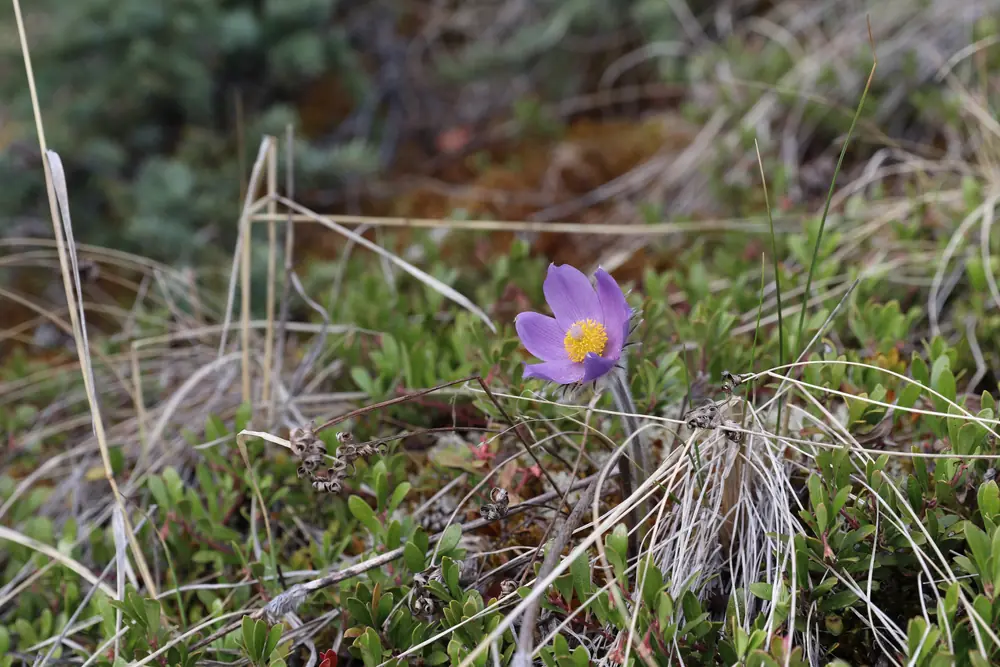
Pasque flowers on prairie hilltops
Late March into April, on the first warm days · Dry, thin-soil prairie remnants, such as Kothenbeutel Heritage Prairie
The Iowa Natural Heritage Foundation’s spring calendar lists the pasque flower among its March bloomers: a low, silky plant with five to seven blue, purple or white sepals, about an inch across. Staff lead springtime hikes to see them at Kothenbeutel, though dates for 2027 were not yet public in early October. Remnants are rare: the Fish and Wildlife Service puts what is left of Iowa’s prairie at under a tenth of one percent, and is restoring tallgrass at Neal Smith National Wildlife Refuge near Prairie City.
-
Look, but do not pick
Throughout bloom · Public conservation areas
Picking wildflowers on public conservation land is illegal, the DNR reminds visitors, and photographs are encouraged. It also notes that ticks are active from March through November, so tuck pants into socks and check yourself after a woodland walk.
| Station | One year in ten | Median | Nine years in ten |
|---|---|---|---|
| Estherville Municipal Airport (northwest) | Apr 19 | May 2 | May 14 |
| Mason City Municipal Airport (north central) | Apr 19 | May 3 | May 15 |
| Decorah (northeast) | Apr 19 | May 3 | May 16 |
| Sioux City Gateway Airport (west) | Apr 16 | Apr 29 | May 14 |
| Cedar Rapids Municipal Airport (east central) | Apr 13 | Apr 27 | May 11 |
| Des Moines International Airport (central) | Apr 4 | Apr 18 | May 2 |
| Clarinda (southwest) | Apr 11 | Apr 25 | May 7 |
| Burlington Municipal Airport (southeast) | Apr 2 | Apr 15 | May 1 |
The table shows the typical last spring freeze at eight stations: around the start of May in the north, and days to weeks earlier in central and southern Iowa. A warm March does not move those dates, and early blooms can still be caught by a late freeze. For your own town, see the Iowa frost dates.
Is it still maple sugaring season in Iowa in March?
It can be. Indian Creek Nature Center says collection typically happens in late February or March, and nature centers that tap trees tend to hold their syrup festivals in March. Sap runs best on a frozen night followed by a thawing day, so the run is over once the nights stay above freezing.
-
Indian Creek Maple Syrup Festival
Saturday and Sunday, March 20 and 21, 2027, 8 a.m. to 12:30 p.m., per the center’s calendar · Indian Creek Nature Center, Cedar Rapids
The center’s events calendar lists the festival on both days, with syrup-making demonstrations and its pancake breakfast. The center’s blog describes more than four decades of syrup-making from roughly 100 maples, and the hard arithmetic of boiling: with sap this thin (about 2 percent sugar), a gallon of syrup costs some 40 gallons of sap. For younger children, the same calendar lists “Preschool Trail Trekkers: Maple Syruping,” 10 to 11 a.m. on Wednesday, March 10, and Saturday, March 13, in which children tap a tree and visit the sugarhouse.
-
Hartman Reserve Maple Syrup Festival
Annual, in March; dates posted after February 1 · Hartman Reserve Nature Center, 657 Reserve Drive, Cedar Falls
Black Hawk County’s pancake breakfast is reservations only, and the reserve’s page says tickets are posted each year after February 1 on the county parks website. In the past reservations were $10 for adults and $5 for ages 3 to 15, and the page says to call (319) 277-2187 with questions. The 2027 date was not yet public in early October; reservations open on February 1.
If you tapped a tree this winter, pull the taps once the nights stay above freezing, then wash the buckets and spiles.
What is March weather like in Iowa, and what could go wrong?
March is a tug-of-war between winter and spring. NOAA’s 1991–2020 normals put the average March afternoon at 49 °F in Des Moines and 42 °F in Mason City, with nights near 30 °F in Des Moines and in the low 20s in the north. Snowfall in a normal March is 4 to 7 inches at these stations, less than in February at every one of them. State weather summaries show how far March can swing: in 2019 it ran 4.8 °F below the statewide normal, with a bomb cyclone on March 12 to 14 that brought rain and a warm wind on top of deep snow and frozen ground, and historic flooding in western Iowa, where all the levees below Council Bluffs breached. In 2021, by contrast, March averaged 6.4 °F above normal, with a statewide low of 7 °F at Elkader on March 2 and a high of 78 °F at DeSoto on the 29th.
| Station | Average high | Average low | Precipitation | Snowfall | Days with 0.10 in or more |
|---|---|---|---|---|---|
| Mason City (north central) | 42.1 °F | 23.6 °F | 2.29 in | 7.0 in | 4.9 |
| Waterloo (northeast) | 46.5 °F | 26.9 °F | 1.98 in | 4.6 in | 4.7 |
| Dubuque (Mississippi River) | 44.1 °F | 26.3 °F | 2.25 in | 5.7 in | 5.4 |
| Sioux City (west) | 47.6 °F | 25.9 °F | 1.76 in | 5.7 in | 3.8 |
| Des Moines (central) | 49.2 °F | 29.6 °F | 2.17 in | 4.4 in | 5.0 |
Three things to watch. First, snowmelt and ice: the National Weather Service lists flash floods, river floods, ice and debris jams and snowmelt among the ways Iowa floods, and frozen ground sheds March rain almost like pavement. Second, severe storms: tornado and hail season begins, and in March 2021 a front on the 10th and a storm on the 24th brought hail and a brief tornado near Fort Madison. NWS Des Moines holds a Severe Weather Awareness Week and statewide tornado drill in March (in 2026, March 23 to 27, with the drill on Wednesday the 25th at 10 a.m.); look for the 2027 dates on its page. Third, late freezes, which the table in the flower section shows can reach into May. For the government’s seasonal outlooks, which are reissued monthly, go to the CPC 90-day page. For today’s conditions, see the weather page.
How much daylight does Iowa gain in March?
About 85 minutes, spread over the month. From March 1 to 31 Iowa cities gain 81 to 89 minutes of daylight, 2.7 to 3.0 minutes a day on average. These are sunrise-to-sunset lengths, untouched by the clock change, and after the equinox on March 20 every day outlasts its night.
| City | Mar 1 | Mar 31 | Gained | Per day |
|---|---|---|---|---|
| Decorah | 11 h 12 m | 12 h 41 m | 89 min | 3.0 min |
| Mason City | 11 h 13 m | 12 h 41 m | 88 min | 2.9 min |
| Dubuque | 11 h 14 m | 12 h 40 m | 86 min | 2.9 min |
| Sioux City | 11 h 14 m | 12 h 40 m | 86 min | 2.9 min |
| Cedar Rapids | 11 h 15 m | 12 h 40 m | 85 min | 2.8 min |
| Des Moines | 11 h 16 m | 12 h 40 m | 84 min | 2.8 min |
| Council Bluffs | 11 h 16 m | 12 h 39 m | 83 min | 2.8 min |
| Burlington | 11 h 17 m | 12 h 38 m | 81 min | 2.7 min |
Decorah and Mason City, farthest north, gain the most, and every city here ends the month with at least 12 hours 38 minutes of light. Clocks move at 2 a.m. on March 14, and every sunrise and sunset lands an hour later by the clock: Chicago’s sunset moves from 5:55 p.m. on the 13th to 6:56 p.m. on the 14th, and Iowa’s, farther west in the zone, comes a little later still. A time printed for early March is standard time, and one after the 14th is daylight time. The daylight calculator gives times for your own town.
What can you see in Iowa’s night sky in March 2027?
March gives early risers two planets and gives the evening crowd two more. Jupiter and Mars, the bright pair that dominated the winter evenings, are still up after dark, while Venus and Mercury show before dawn.
-
Jupiter, Mars and the Moon
Evenings all month; Moon beside Jupiter on March 18 and 19 · High in the east and south after dark
Jupiter, in Leo, stays up until about dawn on the first of the month and sets earlier each week. Look on both the 18th and 19th: the Moon, nearly 90 percent lit, hangs within about a degree of the planet, closest in the small hours of the 19th. On Tuesday evening, March 30, Mars stands about 4 degrees from Jupiter, well up in the sky by 8 p.m. The young Moon also passes the Pleiades on the 13th and Regulus overnight on March 19 to 20.
-
Mercury and Venus before sunrise
Mercury best from about March 8 to 25, farthest from the Sun on the night of March 16 · Low in the east and southeast, in the hour before sunrise
Mercury clears the horizon only an hour or so ahead of dawn early in the month, so find an open southeast view. Venus is brighter and higher, a brilliant morning star that sinks toward the Sun in the months ahead, and the thin last crescent of the old Moon rides near it at the start of the month. Saturn, lost to the dusk, has gone by early April.
-
The equinox and the Worm Moon
Equinox Saturday, March 20, 3:25 p.m. CDT; full Moon Monday, March 22, 5:44 a.m. CDT · Moonrise around sunset on Sunday, March 21
The equinox falls on Saturday afternoon, when the Sun crosses the celestial equator. The Moon turns full before sunrise on Monday the 22nd, so the full Moon clears the eastern horizon at dusk on Sunday the 21st, and again, a shade past full, on Monday. Almanacs call it the Worm Moon, for the softening soil. Moonrise on the 21st is shortly after 6:30 p.m. in Chicago and about 7 p.m. in Minneapolis, so Iowa lands in between.
| Phase | Date | Time |
|---|---|---|
| New moon | Monday, Mar 8 | 3:29 a.m. CST |
| First quarter | Monday, Mar 15 | 11:25 a.m. CDT |
| Full moon, the Worm Moon | Monday, Mar 22 | 5:44 a.m. CDT |
| Last quarter | Monday, Mar 29 | 7:54 p.m. CDT |
The new moon of March 8 leaves the early evenings dark for a week. Northern lights are possible from Iowa only when a strong geomagnetic storm strikes, and storms tend to cluster near the equinoxes; NOAA’s 30-minute aurora map gives short notice. The Today’s sky page shows cloud cover, and moon phases has moonrise for your town.
What can Iowa families do outdoors in March?
- Wednesday, March 10, and Saturday, March 13: Preschool Trail Trekkers, Maple Syruping, 10 to 11 a.m., in Cedar Rapids at Indian Creek Nature Center, where small children tap a maple and visit the sugarhouse; the fee is on the center’s website.
- Wednesday, March 10: Homeschool in the Hills, Nest Engineers, at Hitchcock Nature Center, with a morning session (10 to 11 a.m.) and an afternoon one (1 to 2 p.m.), $5 per child, for kindergarten through early high school.
- Sunday, March 14: clocks spring forward. Evenings stay light an hour longer by the clock, which suits a woodcock watch.
- Saturday, March 20: the equinox. Compare today’s sunrise and sunset on the daylight calculator with the same day in December.
- Both days of the weekend, March 20 and 21: the Indian Creek Maple Syrup Festival, morning only, 8 a.m. to 12:30 p.m.
- Sunday evening, March 21: the Worm Moon rising at dusk.
- Dusk, any clear evening: a woodcock watch at the edge of a damp field, then a frog listen at the nearest pond.
- All month: citizen science. Sign up for the DNR’s frog and toad call survey, keep your feeder tally for Project FeederWatch until April 30, and write down the day the first red-winged blackbird, killdeer and eastern phoebe appear. Journey North, a long-running tracking project, takes hummingbird and monarch sightings once they begin, later in the spring.
The previous month’s guide is at /nature/iowa/february; the nature hub has every state.
Safety notes for March in Iowa
- Hunting seasons that overlap March. By the Iowa DNR’s 2026–27 dates, crow hunting runs through March 31, 2027, and beaver hunting and trapping through April 15. Coyotes and groundhogs have a continuous open season, and the light goose conservation order runs through May 1, so expect shotgun fire near goose marshes. Spring turkey does not open in March: the youth season is April 9 to 11, 2027, and the four regular seasons run April 12 to May 16, with gun hunting from half an hour before sunrise until sunset.
- Blaze orange. The orange rule, Iowa Code 481A.122, names firearm deer hunting (solid orange) and upland game birds (half orange); it does not name turkeys, and the DNR’s turkey page lists no orange requirement. If you hike on public hunting land in April, bright clothing makes sense.
- Ticks. The DNR says they are active from March through November. Use repellent on skin, permethrin on clothing, tuck pants into socks, and check yourself after woodland or prairie walks.
- Prescribed burns. The DNR burns public areas from about mid-March to mid-May, usually from mid to late morning to late afternoon or early evening. Stay out of an area where a crew is working, do not drive through smoke, and call the area’s wildlife biologist with questions.
- Rotten ice and cold water. Ice shelters must come off DNR ice by March 1 or before the ice melts, whichever is first, and four inches of clear ice is the DNR’s minimum for walking out. By March, treat all ice as suspect, and keep children and dogs off rivers.
- Floods and storms. Never drive into water on a road; warm rain on snow and frozen soil can send a creek over its banks within hours. Know your shelter, keep a weather alert on, and treat the March tornado drill as a real rehearsal.
- Nests. Eagle, owl, goose and swan pairs are on eggs. Stay well back from any nest, and never walk toward a nest tree or lek.
Sources (44)
- Iowa DNR: greater prairie chicken
- Missouri Department of Conservation: American woodcock
- Visit Mason City: Lime Creek Woodcock Walk (March 21, 2026)
- Audubon Society of Omaha: birding calendar, March migration timing
- Iowa DNR: geese (spring snow goose migration, light goose conservation order)
- U.S. Fish and Wildlife Service: DeSoto National Wildlife Refuge
- Iowa DNR: trumpeter swans
- Iowa DNR: Iowa’s trumpeter swan population continues to grow (December 30, 2025)
- Iowa Natural Heritage Foundation: the scoop on sandhill cranes
- Iowa DNR: habitat variety attracts birds and birders to Iowa River Bird Conservation Area (November 25, 2024)
- U.S. Fish and Wildlife Service: Upper Mississippi River NWR, birding and spring migration
- Iowa DNR: eastern bluebird
- Iowa DNR: bald eagle (nesting season, incubation, fledging)
- Iowa DNR: owls of Iowa
- Iowa DNR: osprey
- Project FeederWatch: how to participate
- Journey North: migration tracking projects
- Iowa DNR: frog and toad call survey (what calls when in Iowa)
- Iowa Natural Heritage Foundation: spring peeping
- Iowa Natural Heritage Foundation: spring phenology (March 21, 2023)
- State of Iowa publications: Frog and Toad Call Survey results for Iowa, 2023
- Des Moines County Conservation: chasing ephemerals
- Iowa DNR: woodland wildflower reports
- Iowa DNR: woodland wildflowers
- Indian Creek Nature Center, Cedar Rapids: events, March 2027
- Indian Creek Nature Center: the sweet science of maple syrup
- Hartman Reserve Nature Center: Maple Syrup Festival
- Pottawattamie Conservation: events calendar (Hitchcock Nature Center, March 2027)
- Iowa DNR: annual spring burning (Clear Lake Wildlife Unit, March 11, 2025)
- NOAA NCEI: 1991–2020 monthly normals for Iowa stations (data API)
- Iowa Department of Agriculture and Land Stewardship: Iowa monthly weather summary, March 2019
- Iowa Department of Agriculture and Land Stewardship: Iowa monthly weather summary, March 2021
- National Weather Service: flooding in Iowa
- NWS Des Moines: severe weather preparedness (awareness week and tornado drill dates)
- Climate Prediction Center: three-month outlooks
- NOAA Space Weather Prediction Center: aurora forecast
- U.S. Naval Observatory: moon phases (data API)
- U.S. Naval Observatory: Earth’s seasons and apsides, 2027
- Iowa DNR: Iowa hunting seasons, 2026–2027
- Iowa DNR: turkey hunting (spring 2027 seasons)
- Iowa Code 2026, section 481A.122: hunters’ orange apparel (PDF)
- Iowa DNR: ice fishing
- U.S. Fish and Wildlife Service: Neal Smith National Wildlife Refuge
- Photos via Wikimedia Commons; licenses and photographers are credited under each picture
