What to look for in nature in Iowa this October
Iowa’s October starts in the northeast corner. The bluffs above the Mississippi turn first, around the second weekend, while hawks stream down the Loess Hills on the far side of the state, bison graze bronze prairie east of Des Moines, and diving ducks gather in rafts on the river pools. By Halloween the southern oaks are rust-colored, the first snow geese are over the Missouri, and pheasant season opens. The first freeze usually reaches Mason City three weeks ahead of Burlington. What follows goes region by region, with dates and sources.
Start here

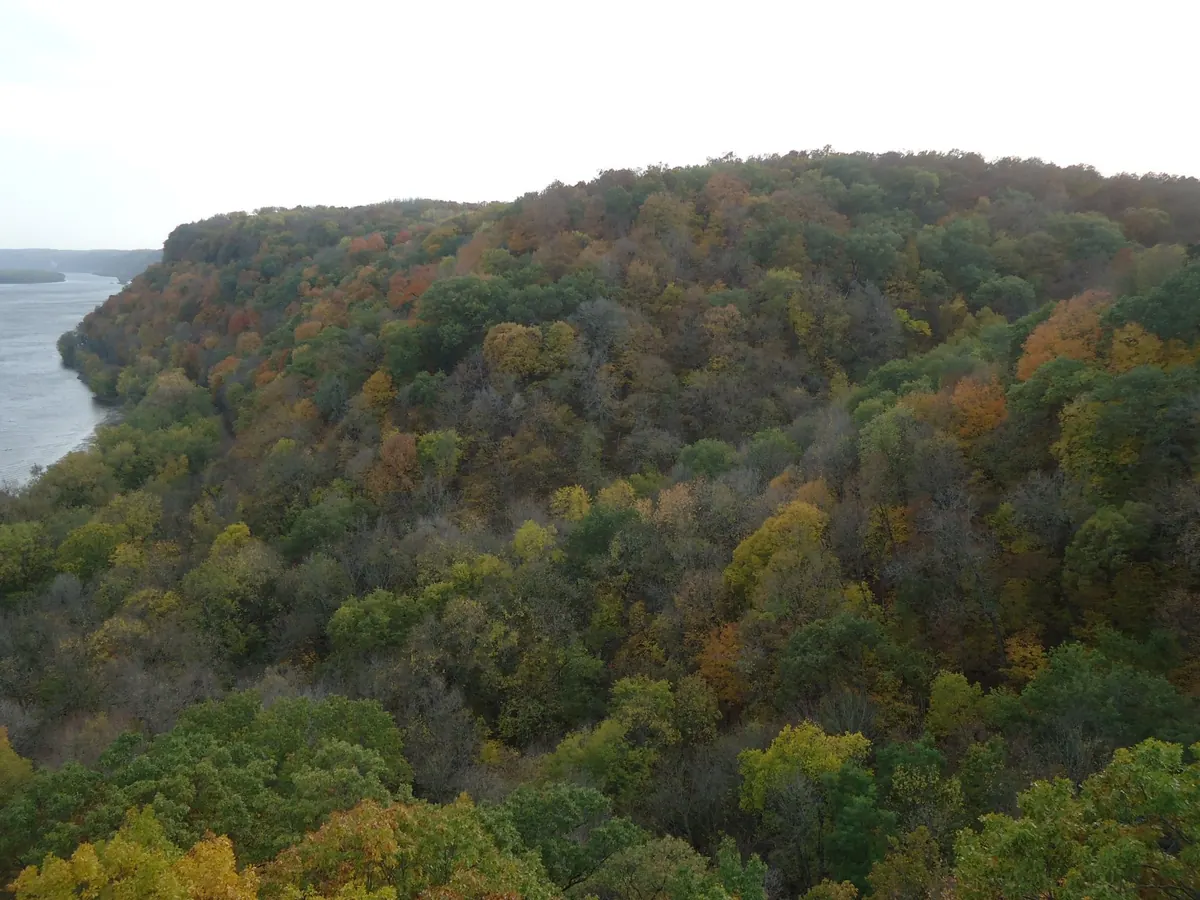
- Color in the Driftless first. The Iowa DNR says northeast Iowa peaks, on average, on the weekend nearest October 10, and the rest of the state follows over the next two to three weeks, with the northwest and southeast last. Effigy Mounds, Pikes Peak and Yellow River State Forest are the classic places; the DNR’s weekly color report started September 30.
- Hawks over the Loess Hills. Hitchcock Nature Center, north of Council Bluffs, counts raptors every day from its lodge tower, and its best stretch runs from about September 20 to October 20. The count turns 35 this fall, with a celebration on Saturday, October 3, from noon to 4 p.m.
- Jupiter disappears behind the moon. Early on Tuesday morning, October 6, a 20-percent crescent swallows Jupiter at about 3:22 a.m. Central and lets it go about 4:14. The first half happens barely above the horizon; the second is the one to plan for. The Hunter’s Moon reaches full late Sunday evening, October 25, at 11:12 Central.
For the Naturalist’s Field Journal this month: tally the hawks and the first junco on the “birds I have seen” list, give one sugar maple or bur oak its page in “a tree through the seasons,” press prairie seed heads, walnuts and acorns into “seeds, pods and cones,” and use the dusk and dawn watch for the morning Jupiter slips behind the moon. Write the date and place beside each one.
Regions used below: Northeast Iowa and the Driftless; Eastern Iowa and the Mississippi River; Central Iowa and Des Moines; Northwest Iowa and the Iowa Great Lakes; Western Iowa and the Loess Hills; Southern Iowa.
When is peak fall color in Iowa?
Iowa’s color runs north to south and a little east to west. The DNR’s foresters put the northeast at its best around the weekend closest to October 10, then move the peak later the farther south you go. Their September 29 report called the landscape “mostly green” in the southeast, with walnuts, cottonwoods, elms and sumac beginning to turn. The DNR’s own two outlooks differ by a week or so for the north and south, so treat the table as a guide and watch the weekly report, which runs from September 30 into late October.
| Region | Reference places | Typical peak |
|---|---|---|
| Northeast Iowa and the Driftless | Effigy Mounds, Pikes Peak, Yellow River State Forest, Backbone | Mid-October, near the 10th |
| Central Iowa | Ledges, Pine Lake, Brushy Creek, Dolliver Memorial | Mid-October |
| Northwest Iowa | Iowa Great Lakes, Little Sioux valley | Late October |
| Western Iowa and the Loess Hills | Hitchcock, Loess Hills State Forest, Waubonsie | Not given; usually with central and southwest Iowa |
| South-central Iowa | Lake Rathbun, Stephens State Forest | Mid-to-late October |
| Southeast Iowa | Shimek State Forest, Lacey-Keosauqua | Late October |
What turns which color, by the DNR’s list: hard maples go a brilliant flame red, red oaks a brilliant red, white oaks a subdued purple before browning, bur oaks buff to yellow, hickories yellow then brown, green ash yellow and white ash yellow with a purple cast. Sumac and Virginia creeper are already red. The Mississippi bluffs are the showpiece: Pikes Peak State Park looks over the meeting of the Wisconsin and Mississippi rivers, and Effigy Mounds rangers lead a four-mile Fall Colors Hike on the flat old county road in the Heritage Addition at 1 p.m. on Saturday, October 10. In the west, the ridge trails of the Loess Hills State Forest (more than 60 miles across four units, visitor center in Pisgah) mix oak and walnut draws with prairie ridges that go russet. For your own town, the Field almanac tracks green-up and leaf-off from satellite data. Photograph one tree from the same spot every Sunday and write down the day it stands bare.
Where can you watch the hawk migration in Iowa?
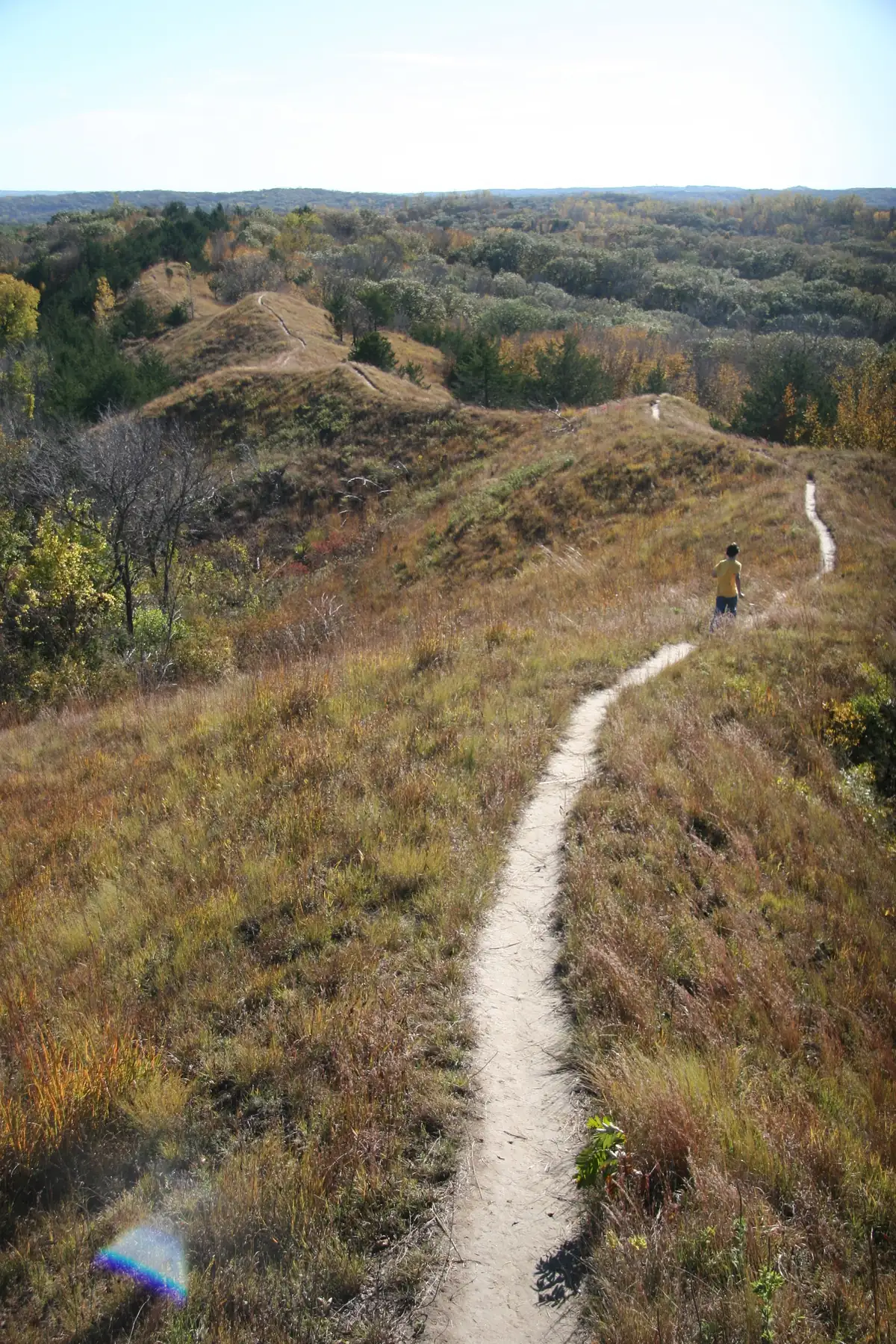
Iowa has no mountain ridge or Great Lake shore to funnel hawks, but it has the Loess Hills, a strip of wind-built bluffs along the Missouri River where west winds lift off the slopes. Hitchcock Nature Center in Pottawattamie County sits on top of them, and volunteers have counted there every fall since 1992.
-
The Hitchcock HawkWatch
Counted daily September 1–December 20; best from about September 20 to October 20 · Hitchcock Nature Center, Honey Creek, north of Council Bluffs
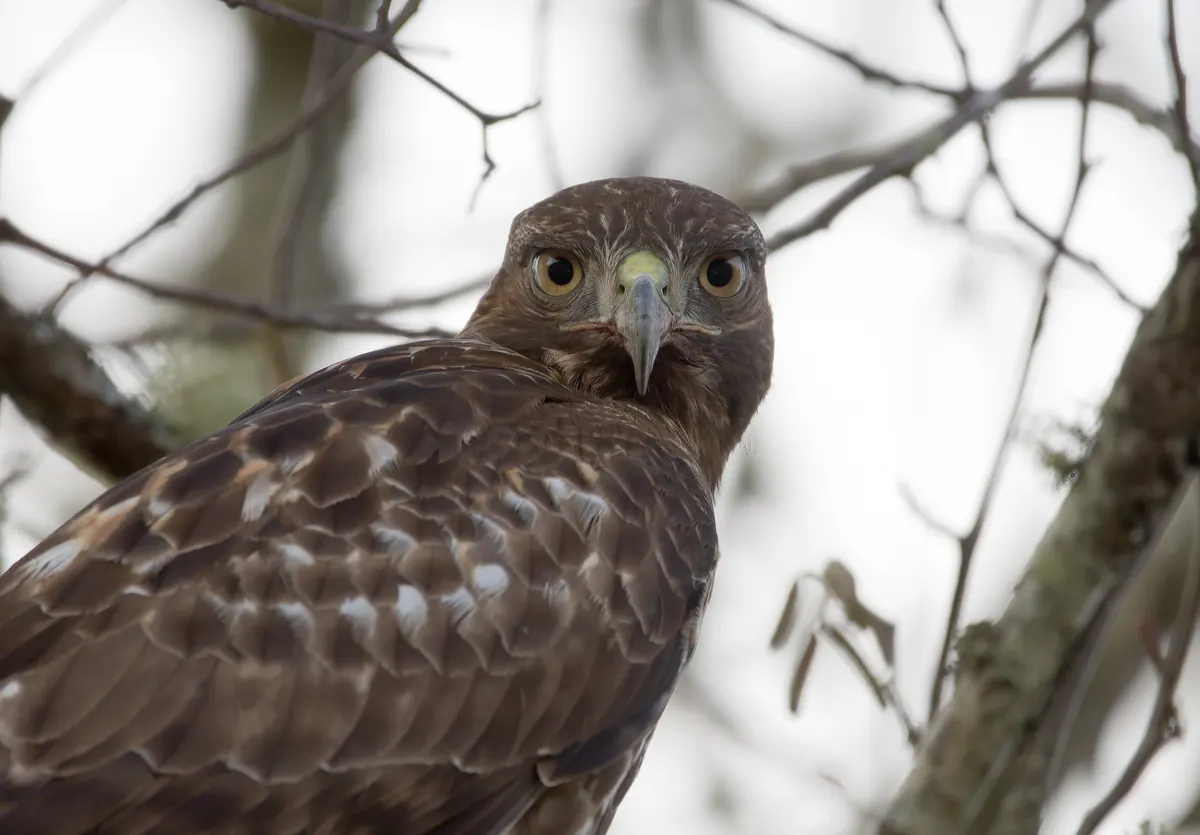
Pottawattamie County Conservation puts the fall average near 13,000 raptors, and a BirdWatching site guide says about 11,000 of 18 to 20 species; either way it is the biggest count in the state. Visitors can climb the tower on the Loess Hills Lodge daily from 9 a.m. to 4 p.m. North or northwest winds are usually best, though the site guide notes good flights under many conditions in the peak weeks. Most turkey vultures and broad-winged hawks have gone through by October; what October brings is a long procession of red-tailed hawks, sharp-shinned and Cooper’s hawks, kestrels and the odd peregrine, with bald eagles building later and peaking from mid-November into early December. White pelicans, snow geese and blue jays ride the same winds. Entry is $5 per vehicle.
-
Thirty-five years of counting
Saturday, October 3, noon to 4 p.m.; HawkWatch 5K the next morning · Hitchcock Nature Center
The county’s celebration of the count’s 35th season opens with a learn-to-hawkwatch clinic on silhouettes and flight styles at 12:15 p.m., brings live raptors from Fontenelle Forest to the lodge patio from 1 to 2 p.m., and ends with a 2:15 talk by wildlife photographer Ty Smedes on Iowa’s raptors. The volunteers log more than 3,000 hours a season and have lately banded diurnal raptors and studied the health of saw-whet owls. The 21st annual HawkWatch 5K walk and run is Sunday, October 4, at 9 a.m. ($40).
-
Saw-whet owls at night
October into November · Loess Hills woods and eastern Iowa thickets
Hitchcock began banding northern saw-whet owls in October 2009. These owls are barely the size of a fist, migrate at night and roost by day deep in cedars and grape tangles, where most people never see them. If you do find one at eye level, look, then walk away.
-
Banding in Cedar Rapids and a second tower
Saturdays, October 3 and 10, 8:30–11:30 a.m. · Indian Creek Nature Center, Cedar Rapids; Grammer Grove, Marshall County
Indian Creek Nature Center invites the public to watch ornithologists net and band birds at its barn on both October Saturday mornings; admission to the center is free. In central Iowa, the Grammer Grove hawkwatch near Liscomb also reports its counts to the Hawk Migration Association’s HawkCount database, as does the Iowa Raptor Project near Solon, so you can see what moved the day before you go.
-
Sparrows, juncos and the winter finch outlook
All month · Brushy fencerows, prairie edges, feeders
October is when the sparrow flocks arrive: white-throated, white-crowned, Harris’s in the west, and the first dark-eyed juncos. In its September 25 winter outlook, the Finch Research Network expects big cone and seed crops to hold many northern finches in the north this winter; it calls for plenty of pine siskins, a possible small redpoll movement that would favor the western Great Lakes, and red-breasted nuthatches mostly staying put. Iowa is at the southern edge of all of that, so any siskin or redpoll is a note worth making.
Two dated counts: The Big Sit (October 10–11) challenges birders to list every species seen or heard without leaving a 17-foot circle, and Saturday the 10th is also eBird’s worldwide October Big Day. Put the tower tally and the first junco on the journal’s “birds I have seen” list.
When do ducks, geese and swans pass through Iowa?
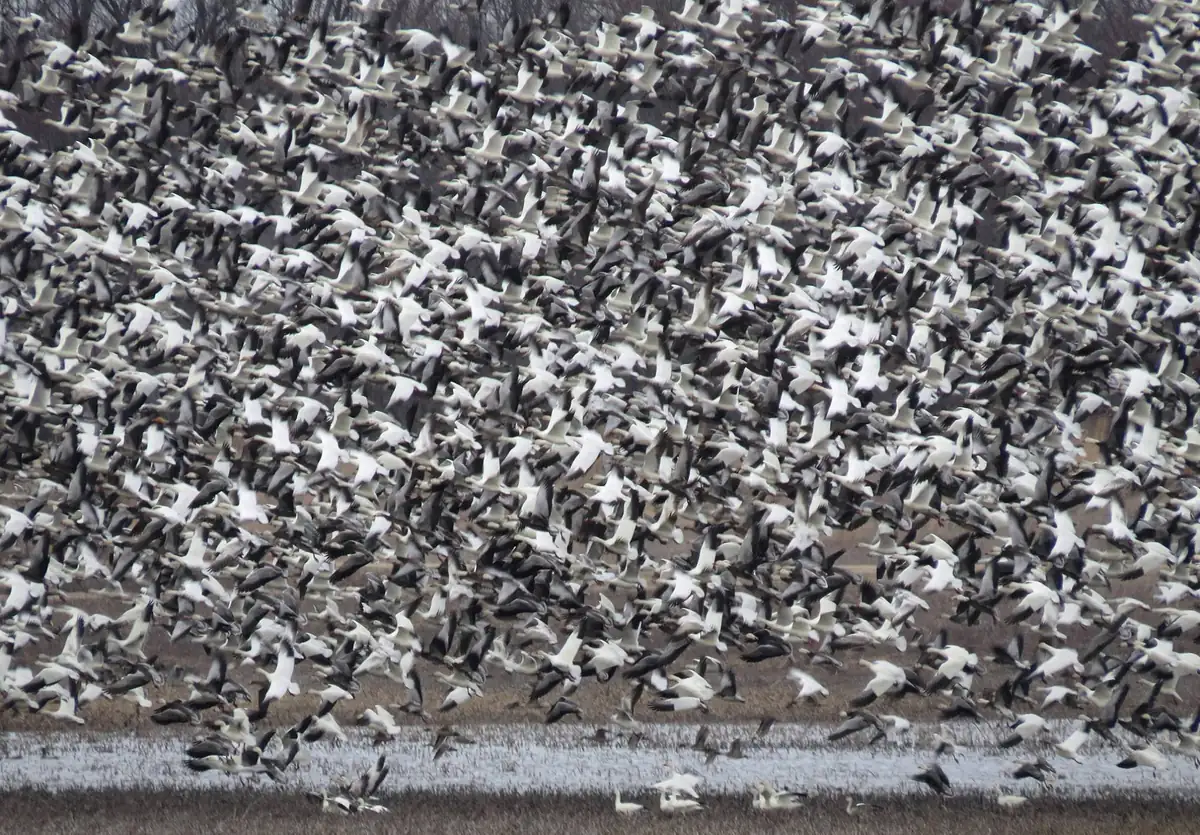
Iowa lies between two great flyway rivers. The Mississippi on the east carries canvasbacks and, later, tundra swans; the Missouri on the west carries snow geese in numbers that can darken a field. October is the build-up month on both.
-
Rafts of diving ducks on the Mississippi
Building from early October; canvasbacks and tundra swans from mid-October to freeze-up · Upper Mississippi River National Wildlife and Fish Refuge, from the Minnesota line past Dubuque
The refuge, 261 river miles long across four states including Iowa, says dabbling ducks such as wood ducks, teal, pintails, gadwalls and shovelers build on the backwaters in September, and that diving ducks follow, forming rafts on open water by late September or early October. The big shows, huge rafts of canvasbacks and flocks of tundra swans, run from mid-October until the river freezes; the swans mostly arrive in mid-November, when there can be anywhere from 10,000 to 45,000 on the river. The Fish and Wildlife Service estimates that 40 percent of the nation’s waterfowl use the Mississippi corridor in fall migration. The high overlooks at Pikes Peak and Effigy Mounds give a long view of the pools; bring a spotting scope.
-
DeSoto and the snow geese
Late October through early December; November is the peak · DeSoto National Wildlife Refuge, near Missouri Valley, Harrison County
DeSoto’s fall migration season begins October 15, when the south gate closes and the refuge keeps half-hour-before-sunrise to half-hour-after-sunset hours until April 14. Peak waterfowl use runs from late October into early December, and bald eagles peak in early December. Iowa PBS reports up to half a million snow geese over the area at a time during peak migration. The visitor center, which also holds the cargo of the steamboat Bertrand, sunk in 1865, is open Tuesday through Saturday, 8:30 a.m. to 4:30 p.m., with viewing windows over DeSoto Lake.
Duck hunting opens by zone, from October 3 in the north to October 17 in the south (dates in the safety notes below). Canada geese, pelicans and cormorants also move with fronts in October. After a strong northwest wind, check the biggest water near you the next morning; the Weather now page shows when a front has passed.
What is happening on Iowa’s prairies and in the woods in October?
Tallgrass prairie once covered about 85 percent of Iowa; the Fish and Wildlife Service says less than a tenth of one percent is left, in scattered fragments. What remains, and what has been rebuilt, is at its most colorful now: big bluestem goes wine-red and bronze, Indiangrass turns gold, and the seed heads stand ready to harvest.
-
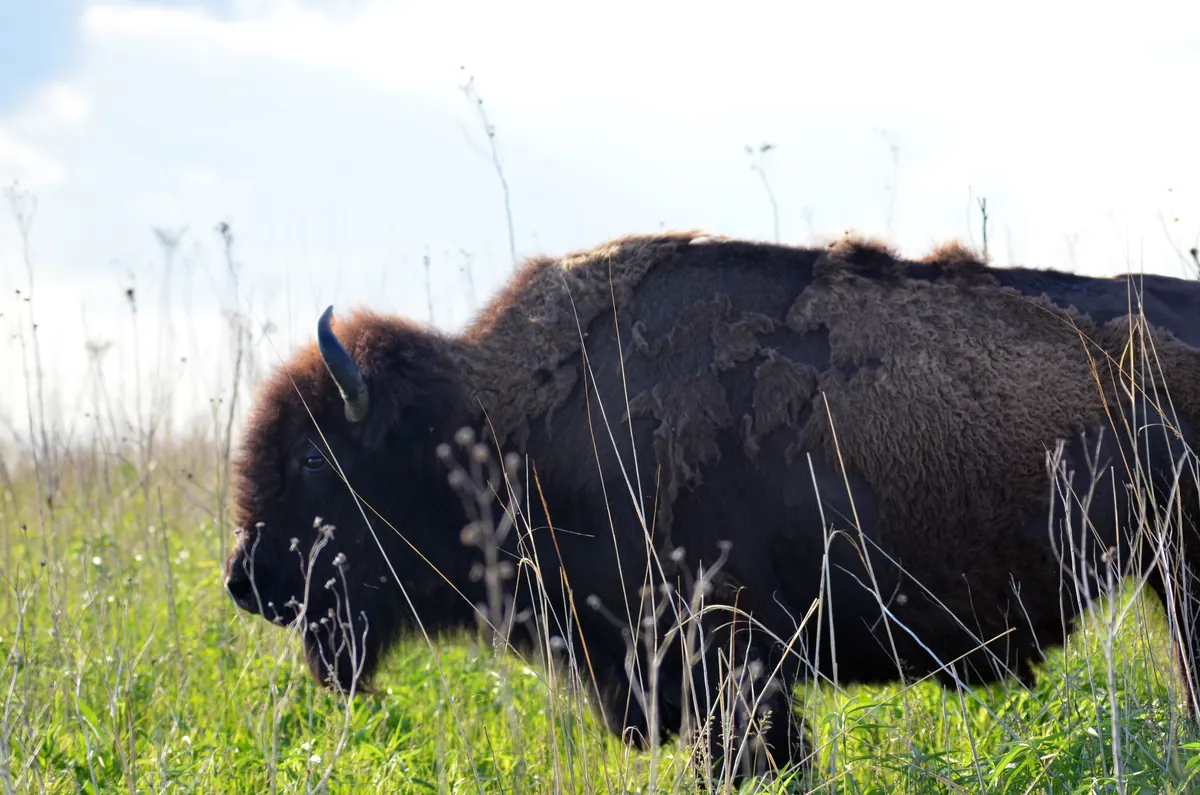
Bison and rebuilt prairie at Neal Smith
All month; trails open sunrise to sunset · Neal Smith National Wildlife Refuge, Prairie City, Jasper County
Twenty miles east of Des Moines, the refuge has reconstructed some 4,000 of its 6,000 acres into tallgrass prairie from local seed since 1990, and keeps herds of bison and elk that you can look for from the five-mile auto tour. The Prairie Learning Center is closed after storm damage and the refuge phones are out, so email ahead with questions; the land and trails stay open daily. The Friends group’s photography contest takes entries through October 14.
-
Seed harvest under the Hunter’s Moon
Monday, October 26, 5–6:30 p.m. · Hitchcock Nature Center
Golden Hills Resource Conservation and Development and the county invite everyone to help collect native prairie seed on the Loess Hills ridges at a free evening event called Full Moon Seeds & Cider. The moon rises over Council Bluffs at 6:26 p.m. that evening, at the same minute the sun sets, so stay to the end.
-
Loess Hills prairie
October color on the ridges · Loess Hills State Forest, Harrison and Monona counties; Hitchcock; Waubonsie State Park
On the dry west-facing slopes, the DNR lists big and little bluestem, Indiangrass and sideoats grama among the grasses, with bur oak, black walnut and hickories in the draws. Brent’s Trail, eight miles over ridges in the state forest, shows it best. Smooth sumac spreading up the slopes turns scarlet early and is one of the first colors of the season here.
-
Asters to the end
Until a hard freeze · Roadsides, prairie plantings, gardens
Iowa State University Extension horticulturist Aaron Steil rates native asters highly as late food for bees and migrating monarchs, since so little else blooms now. New England aster, aromatic aster and smooth aster all carry on until frost; aromatic aster is often among the last purple on a dry prairie hill. Goldenrods go to fluff alongside.
-
Walnuts, acorns and hickory nuts
Falling now · Woodlots and town streets
Black walnuts drop in their green husks, bur oak acorns in their shaggy cups, and shagbark hickory nuts split out of four-part shells. Squirrels, jays and turkeys move through the woods collecting them. Pick up one of each and draw it on the journal’s seeds, pods and cones plate.
When is the first frost and freeze in Iowa?
For much of northern Iowa the median first freeze falls in the first week of October, so in an ordinary year the garden’s last tomatoes go early this month. The river towns in the southeast hold out longest. The table gives three dates for each station from NOAA’s 1991–2020 normals: the date by which one year in ten has already frozen, the median, and the date by which nine years in ten have. Every station and town is on our Iowa frost dates page.
| Station | One year in ten | Median | Nine years in ten |
|---|---|---|---|
| Estherville Municipal Airport (northwest) | Sep 17 | Sep 30 | Oct 13 |
| Mason City Municipal Airport (north central) | Sep 18 | Oct 1 | Oct 15 |
| Decorah (northeast) | Sep 25 | Oct 7 | Oct 21 |
| Sioux City Gateway Airport (west) | Sep 22 | Oct 5 | Oct 18 |
| Cedar Rapids Municipal Airport (east central) | Sep 25 | Oct 11 | Oct 23 |
| Des Moines International Airport (central) | Oct 4 | Oct 20 | Nov 1 |
| Dubuque L&D 11 (Mississippi River) | Oct 7 | Oct 21 | Nov 2 |
| Clarinda (southwest) | Sep 26 | Oct 11 | Oct 24 |
| Burlington Municipal Airport (southeast) | Oct 6 | Oct 20 | Nov 1 |
Two things stand out. Cold air pools in low ground, so rural stations often freeze well before a city airport nearby: Ames 8 WSW has a median of October 14 while Des Moines International, about 30 miles south with the city around it, is October 20. And water keeps its neighbors warm: the lock and dam at Dubuque has a median of October 21, ten days later than the Dubuque airport up on the prairie at October 11. Frost can form on clear, still nights with the thermometer in the middle 30s, since the official reading is taken about five feet up. If the northern third of the state has not frozen by the time you read this, it usually will soon.
How much daylight does Iowa lose in October?
Between October 1 and October 31 every Iowa city loses about an hour and a quarter of daylight, a little under three minutes a day. The north loses the most: Mason City gives up 85 minutes, Burlington 77. Then, at 2 a.m. on Sunday, November 1, standard time returns, and that shift moves the Des Moines sunset from 6:10 p.m. on Halloween to 5:09 p.m. the next day.
| City | Oct 1 | Oct 31 | Lost | Per day |
|---|---|---|---|---|
| Decorah | 11 h 43 m | 10 h 19 m | 84 min | 2.8 min |
| Mason City | 11 h 44 m | 10 h 19 m | 85 min | 2.8 min |
| Dubuque | 11 h 44 m | 10 h 22 m | 82 min | 2.7 min |
| Sioux City | 11 h 44 m | 10 h 22 m | 82 min | 2.7 min |
| Cedar Rapids | 11 h 44 m | 10 h 24 m | 80 min | 2.7 min |
| Des Moines | 11 h 45 m | 10 h 25 m | 80 min | 2.7 min |
| Council Bluffs | 11 h 45 m | 10 h 26 m | 79 min | 2.6 min |
| Burlington | 11 h 45 m | 10 h 28 m | 77 min | 2.6 min |
Iowa straddles a wide stretch of the Central time zone, so sunrise comes later in the west: on October 31, Burlington sees the sun at 7:34 a.m. and Sioux City at 7:58. Hawks and ducks keep to the sun, not the clock; the morning flight at Hitchcock starts later in the day than a Mississippi River dawn. For any Iowa town, the Field almanac lists the times of sunrise, sunset and civil twilight.
What is October weather like in Iowa, and what could El Niño mean this winter?
October is usually a pleasant, drying month in Iowa, the time when combines run late into the night. NOAA’s 1991–2020 normals give average highs from 59.9 °F at Mason City and Dubuque to 63.4 °F at Des Moines and 64.5 °F at Burlington, and average lows from 36.6 °F at Mason City to 44.0 °F at Burlington. Rain averages 2.20 inches at Sioux City, 2.78 at Des Moines, 2.93 at Dubuque and 3.09 at Burlington. Snow is possible but slight: normal October snowfall is 0.8 inch at Sioux City, 0.5 at Des Moines and 0.3 at Waterloo, rising in November to between 2.7 inches at Des Moines and 3.2 at Sioux City.
The state enters October unevenly. The DNR’s September water summary found about 26 percent of Iowa abnormally dry and about 9 percent in moderate drought, worst in the northwest and west, and expected the western drought to hold through October. A week later, heavy rain flooded several communities. Dry prairie and crop residue burn easily in a windy October, so watch county burn bans.
The winter ahead leans on the Pacific. An El Niño Advisory is in force, and on September 10 federal forecasters at the Climate Prediction Center gave better than nine-in-ten odds that this El Niño peaks as a very strong one over the coming cold season; the agency’s winter outlook follows in mid-October. A study by the Des Moines weather office found that Iowa winters in El Niño years since 1950 ran about 1 to 2 °F above normal, and the strongest ones 2.5 to 3.5 °F above, with Des Moines and Waterloo mild in six of eight strong cases. It is a tilt, not a promise: two very cold winters, 1976–77 and 1977–78, came during El Niño. Precipitation is less certain. The same study found strong events leaning wetter, especially in the south, while the La Crosse office points out that Iowa’s second- and third-driest winters on record, 1930–31 and 1982–83, also came in strong El Niños, alongside its tenth-wettest. October’s own weather owes little to any of this, so enjoy the month on its own terms.
What can you see in Iowa’s night sky in October?
-
The moon covers Jupiter
Tuesday, October 6, about 3:22 to 4:14 a.m. CDT · Very low in the east; a flat horizon is essential
The International Occultation Timing Association predicts that the waning crescent, 20 percent lit, slides over Jupiter at 3:22 a.m. in Des Moines and 3:24 in Sioux City, with the moon only 4 to 5 degrees above the horizon, having risen about 40 minutes earlier (2:43 a.m. in Des Moines). Jupiter comes back out from behind the moon’s dark edge at about 4:14 in Des Moines and 4:13 in Sioux City, with the moon 13 to 15 degrees up and dawn more than two hours away. The reappearance is the half most Iowans can realistically see: set up a small telescope or steady binoculars with a clear line to the east, and watch Jupiter’s moons pop out one after another. Eastern Iowa has the moon a few degrees higher than the west.
-
The Hunter’s Moon
Full at 11:12 p.m. CDT on Sunday, October 25; looks full on the evenings of the 25th and 26th · Rising in the east-northeast around sunset
In Des Moines the moon clears the horizon at 5:44 p.m. on the 25th, about 34 minutes ahead of the 6:18 sunset, and at 6:16 p.m. on the 26th, just a minute ahead of it. It is not a supermoon; the moon is too far from its closest approach this month.
-
Orionid meteors
Active October 2–November 7; best before dawn on October 21 and 22 · Anywhere dark; the radiant is in Orion, high in the south before dawn
Orionids are grains shed by Halley’s Comet, fast and often bright, typically 10 to 20 an hour at best. The waxing moon spoils the evening, but it sets at 3:34 a.m. in Des Moines on the morning of the 22nd (3:21 in Dubuque, 3:45 in Sioux City), leaving more than three hours of dark before twilight starts around 7. On the 21st it sets an hour earlier still.
-
Draconids and a star party
Evening of Thursday, October 8 · Face north after dark; Whiterock Conservancy near Coon Rapids
The Draconids are an early-evening shower, usually weak and sometimes surprising, and this year the crescent stays below the horizon until past 5 a.m., leaving the evening fully dark. By coincidence, the Iowa Star Party at Whiterock Conservancy’s Starfield near Coon Rapids begins at 6 p.m. that Thursday and runs through the weekend; check Whiterock’s calendar for fees and registration. The moon is new on Saturday the 10th.
-
Saturn, Venus, Jupiter and Mars
Saturn at opposition October 4; the moon beside it October 23–24; Mars and the Beehive the morning of October 11 · Saturn east at dusk; Jupiter and Mars east before dawn
Saturn reaches opposition on Sunday, October 4, climbing out of the east at dusk and lingering overhead through the whole night, a steady yellowish point in an empty patch of autumn sky. A fat waxing moon drifts past Saturn on the 23rd and 24th. As for Venus, it is a low evening sight in the west for just the opening days of October; by October 23 it passes between us and the sun. Jupiter outshines everything in the predawn east. Higher and fainter, ruddy Mars threads through the Beehive cluster in Cancer as October 11 dawns; binoculars show it framed by the cluster’s faint stars.
| Phase | Date | Time |
|---|---|---|
| Last quarter | Saturday, Oct 3 | 8:25 a.m. CDT |
| New moon | Saturday, Oct 10 | 10:50 a.m. CDT |
| First quarter | Sunday, Oct 18 | 11:12 a.m. CDT |
| Full moon, the Hunter’s Moon | Sunday, Oct 25 | 11:12 p.m. CDT (looks full the evenings of Oct 25 and 26) |
| Last quarter | Sunday, Nov 1 | 2:28 p.m. CST |
Check Today’s sky for the night’s cloud forecast before driving out of town, and our moon phases page for moonrise and moonset where you live.
What are Iowa’s pheasants, deer, monarchs and bats doing in October?
-
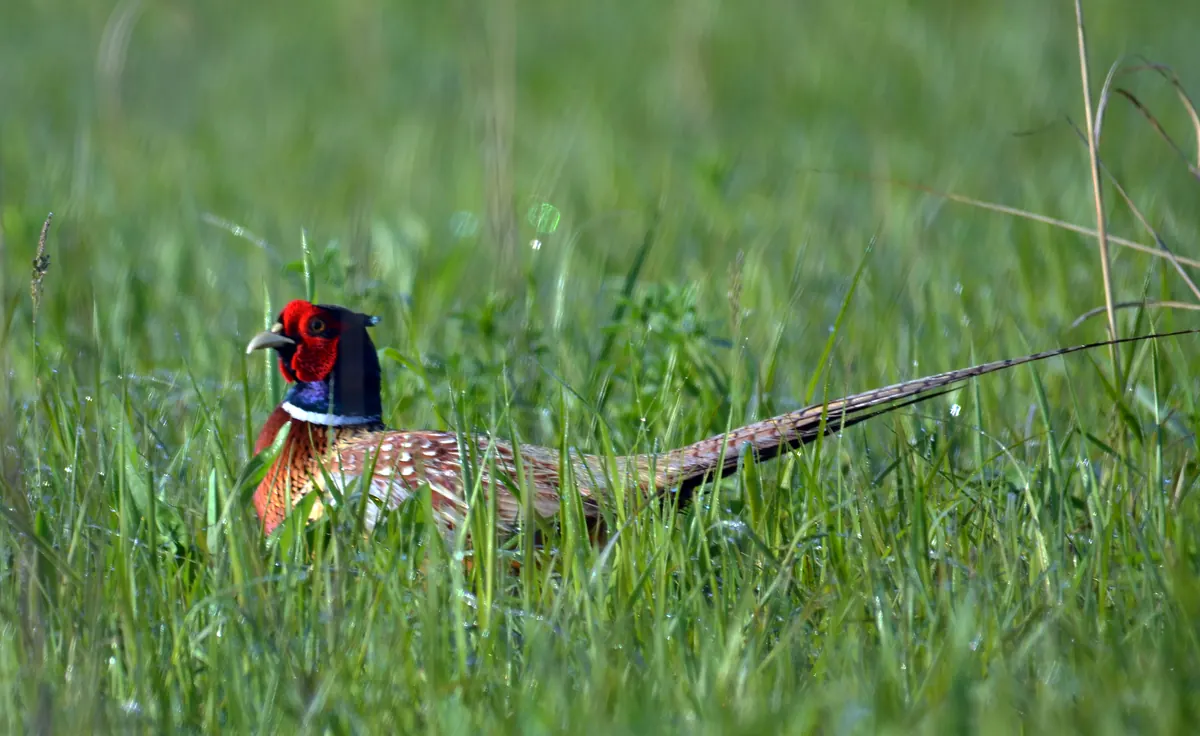
A good pheasant year
Youth season October 24–25; regular season opens Saturday, October 31 · Grassland and crop edges, strongest in the northwest, north-central and west-central regions
The DNR’s August roadside survey, 225 routes of 30 miles each, averaged 23 pheasants per route, the second-highest count since 2015, beaten only by 2025. Numbers look much like last year in the northwest, north-central and west-central regions, with the biggest decline in the northeast. Cottontails are at their highest since 2014, about 30 percent above the ten-year average, while bobwhite quail are down 21 percent but still at their ten-year average. On a frosty morning, listen for the rooster’s two-note crow from a fencerow.
-
Deer on the move
All month, building toward the November rut · Statewide, especially along wooded creeks and river corridors
Bucks rub small trees and scrape the ground under overhanging branches as October goes on, and deer move more at dusk and dawn as the rut approaches, which puts more of them on the roads. Look for fresh rubs at knee-to-waist height, and draw the prints you find in creek mud on the journal’s tracks-to-know plate.
-
The last monarchs
Stragglers into early October · Aster and goldenrod patches
By Monarch Watch’s latitude table, migrants crest between September 8 and 20 at 41 degrees north, the latitude of Des Moines and Iowa City, and between September 3 and 15 at 43 degrees, along the Minnesota line. By late September Journey North was receiving the first roost reports from Texas, Oklahoma and Colorado. So an Iowa monarch in October is a late one: report it to Journey North, and note which flower it was on.
-
Bats heading for the caves
October; caves close November 15 · Maquoketa Caves State Park, Jackson County
Maquoketa Caves serves as a winter roost for bats, and the DNR closes the caves from November 15 to April 1 while they hibernate. That makes October the last full month to explore the caves this year. Read the park’s signs on white-nose syndrome before you go in, and do not wear clothes or boots that have been in other caves.
-
Woolly bears on the road
Warm afternoons all month · Sidewalks, gravel roads, trail edges
The black-and-rust caterpillars crossing the pavement are hunting for leaf litter or a log to hide in, where they will freeze solid until spring, which they survive with a natural antifreeze. The La Crosse weather office, which covers northeast Iowa, is clear about the folklore: the width of the brown band reflects how long the caterpillar has fed and how old it is, not the winter to come.
What are the best outdoor outings for Iowa families in October?
- Saturday, October 3: hawks at Hitchcock. The 35 Years of HawkWatch Celebration, noon to 4 p.m., with live raptors from 1 to 2 p.m.; $5 per vehicle. The HawkWatch 5K is Sunday morning.
- Saturdays, October 3 and 10: bird banding in Cedar Rapids. Indian Creek Nature Center, 8:30 to 11:30 a.m.
- Thursday, October 8: dark skies. The Draconids in a moonless evening, and the start of the Iowa Star Party at Whiterock Conservancy near Coon Rapids.
- Saturday, October 10: Effigy Mounds Fall Colors Hike at 1 p.m., about four fairly level miles. The monument follows with the Marching Bears hike on Saturday, October 17 (steep, about four miles) and an Old Military Road history hike on Sunday, October 25, both at 1 p.m.; hour-long ranger pop-up programs run at 2:30 p.m. on Fridays, Saturdays and Sundays through October 31.
- October 10–11: count birds. The Big Sit and eBird’s October Big Day.
- Saturday, October 17: Why Leaves Change Color, a morning workshop at Hitchcock inspired by Aldo Leopold, 9 a.m. to noon; $15, ages 14 and up.
- Monday, October 26: Full Moon Seeds & Cider at Hitchcock, 5 to 6:30 p.m., free, collecting prairie seed as the Hunter’s Moon rises.
- Any day: a state park hike. The DNR’s autumn picks include Palisades-Kepler, Backbone, Pikes Peak, Wildcat Den, Ledges and Waubonsie. Landowners and woodland owners can register for ISU Forestry Extension field days at Shimek State Forest (October 6) and Yellow River State Forest (October 8).
- Citizen science. Any monarch seen after the first week of October belongs on Journey North’s map, the Hitchcock volunteers welcome new counters, and Project FeederWatch takes sign-ups now for its November-to-April count.
A printable October checklist is on the Field almanac, and every other state’s page is linked from our nature hub. Event times can change; check with the organizer on the day.
Safety notes for October in Iowa
- Hunting seasons this month. From the Iowa DNR’s 2026–27 dates: the youth and disabled hunter deer season runs through October 4; deer archery opens October 1 and runs to December 4; the early muzzleloader deer season is October 17–25; fall turkey with gun or bow opens October 12 (archery-only October 1). Ruffed grouse opens October 3, gray partridge October 10, youth pheasant October 24–25, and pheasant and bobwhite quail October 31. Ducks open October 3 in the north zone, October 10 in the central zone and October 17 in the south, each with a split and a second segment; woodcock runs October 3–November 16. The shotgun deer seasons are December 5–9 and 12–20.
- Iowa’s blaze orange law. Under Iowa Code section 481A.122, anyone hunting deer with a firearm must wear at least one piece of outer clothing in solid blaze orange (a vest, coat, jacket, sweatshirt, sweater, shirt or coveralls; a hat alone does not count), and anyone hunting upland game birds must wear at least one item, which may be a hat or cap, that is at least half solid blaze orange. That covers the youth deer days through October 4, the early muzzleloader season and every pheasant, quail, partridge and grouse hunter. Archers and waterfowlers are not required to wear it. Hikers on wildlife areas and in state forests such as Loess Hills, which the DNR says is open to hunting nearly everywhere, should wear orange anyway and put some on the dog.
- Harvest traffic and deer. Combines, grain carts and tractors share the county roads, often at dusk; slow down over hilltops. Deer collisions climb into November. If a deer steps out, brake hard in a straight line rather than swerve.
- Dry fields and fire. With drought in the west, a spark from equipment or a tossed cigarette can run through crop residue or prairie on a windy day. Check the Weather now page for wind before burning anything, and follow county burn bans.
- Ticks, mushrooms and the river. Ticks stay active until hard freezes, so do a tick check once you are home; leave wild mushrooms uneaten unless an expert has identified them; and wear a life jacket on the Mississippi, where the water is cooling fast.
Sources
- Iowa DNR Forestry: fall color report (weekly; report of September 29, 2026)
- Iowa DNR: find fall colors and family traditions in Iowa’s outdoors (September 11, 2026; forestry field days)
- Iowa DNR: 11 unforgettable autumn hiking spots in Iowa (September 14, 2026)
- Iowa DNR: Loess Hills State Forest
- Effigy Mounds National Monument events through October (KCTN, 2026)
- National Park Service: Effigy Mounds pop-up ranger programs, May 22–October 31, 2026
- Pottawattamie Conservation: Hitchcock Nature Center HawkWatch
- Pottawattamie Conservation: 35 Years of HawkWatch Celebration, October 3, 2026
- Pottawattamie Conservation: events calendar, October 2026 (HawkWatch 5K, Why Leaves Change Color, Full Moon Seeds & Cider)
- HawkCount (Hawk Migration Association of North America): Hitchcock Nature Center site profile
- HawkCount: Iowa hawk watch sites (Grammer Grove, Hitchcock, Iowa Raptor Project)
- BirdWatching: Hitchcock Nature Center hotspot guide (timing, winds, species)
- Nebraska Ornithologists’ Union: Hitchcock hawk watch and saw-whet owl banding
- Indian Creek Nature Center, Cedar Rapids: events, October 2026 (bird banding)
- Finch Research Network: winter finch forecast 2026–2027 (posted September 25, 2026)
- The Big Sit! 2026 (October 10–11)
- BirdsCaribbean: October Big Day 2026 (Saturday, October 10)
- U.S. Fish and Wildlife Service: Upper Mississippi River National Wildlife and Fish Refuge, about
- U.S. Fish and Wildlife Service: Upper Mississippi River refuge, wildlife watching (fall migration timing)
- U.S. Fish and Wildlife Service: DeSoto National Wildlife Refuge, visit (seasonal hours, migration peak)
- Iowa PBS: snow geese migration at DeSoto National Wildlife Refuge
- U.S. Fish and Wildlife Service: Neal Smith National Wildlife Refuge (visitor center closure, prairie, bison and elk)
- Friends of Neal Smith National Wildlife Refuge (photo contest, trail status)
- Iowa State University Extension: asters and mums, more than just fall color (September 21, 2026)
- NOAA NCEI: 1991–2020 monthly normals, Iowa stations (data API)
- NOAA NCEI: U.S. Climate Normals 1991–2020 (first-freeze dates)
- Iowa DNR: water summary update, August drought in northern and western Iowa (September 10, 2026)
- Iowa DNR: heavy rainfall causes flooding in several communities (September 18, 2026)
- Climate Prediction Center: ENSO diagnostic discussion, September 10, 2026
- NWS Des Moines: El Niño impacts in Iowa (PDF)
- NWS La Crosse: temperatures and precipitation in the ten strongest El Niño winters
- Iowa Public Radio / Harvest Public Media: what a super El Niño means for fall and winter (September 11, 2026)
- International Occultation Timing Association: occultation of Jupiter, October 6, 2026 (predictions for Des Moines, Sioux City, Omaha)
- U.S. Naval Observatory: sun and moon rise and set (data API; example for Des Moines, October 22)
- U.S. Naval Observatory: moon phases 2026 (data API)
- American Meteor Society: 2026 meteor shower calendar
- EarthSky: meteor shower guide
- EarthSky: visible planets, October 2026
- Whiterock Conservancy: event calendar (Iowa Star Party, October 8, 2026)
- Iowa DNR: survey finds Iowa pheasant population second highest in a decade (September 1, 2026)
- Monarch Watch: peak migration dates by latitude
- Journey North: monarch migration news, fall 2026
- Iowa DNR: Maquoketa Caves State Park (cave closure for hibernating bats)
- NWS La Crosse: the woolly bear caterpillar
- Project FeederWatch: how to participate
- Iowa DNR: Iowa hunting seasons, 2026–2027
- Iowa DNR: 2026–27 Iowa migratory game bird hunting seasons and limits (PDF)
- Iowa DNR: Iowa’s youth deer season begins September 19 (September 15, 2026)
- Iowa DNR: safety first during the gun deer seasons (minimum blaze orange for firearm deer hunters)
- Iowa Code 2026, section 481A.122: hunters’ orange apparel (PDF)
- Photos via Wikimedia Commons; licenses and photographers are credited under each picture
