What to look for in nature in Louisiana this April
April is when Louisiana’s coast fills with birds. After a cold front, warblers, tanagers, orioles and buntings that have flown across the Gulf drop into the live oaks of Grand Isle and the chenier woods of Cameron Parish, and the rookeries are busy with nests. Irises are still blooming at the wet edges, the crawfish season carries on, and the storms of the severe-weather season roll through. Below, each event comes with its source.
Other months in Louisiana: October, November, December, January, February, March.
Start here

- Go to the coast the morning after a front. After a cold front passes and the wind turns north, visit a patch of oaks at Grand Isle or Peveto Woods and look up. Note the wind, the weather and every species you can name.
- Visit a rookery with binoculars. Walk the levee at Lake Martin or watch a colony from a road, and look for chicks being fed. Stay on the path and keep your voice low.
- Listen for a treefrog on a warm, wet night. Stand near a pond or ditch after dark and listen for the short, nasal quonk of a green treefrog, then write down the date, the hour and the temperature.
Keep April in the Naturalist’s Field Journal. Put each new warbler, tanager or bunting in the daily field log and the birds I have seen plate. A colony you revisit goes on nest observed, the frogs you hear on a map of sounds, the wind and sky of each fallout day on reading the signs, and the same live oak seen every week on the same place twice.
Regions used below: North Louisiana (Shreveport, Monroe and the northern hills); Central Louisiana and the Kisatchie country; Southwest Louisiana and the Chenier Plain; Acadiana and the sugarcane parishes; Baton Rouge and the Florida Parishes; New Orleans and the southeast marshes.
When is spring bird migration at its peak in Louisiana, and where do I look?
April is the month. Audubon’s Louisiana guide puts the peak of the spring “fallout” at Grand Isle around mid-April, when northbound birds that have crossed the Gulf of Mexico drop out of the sky to rest and feed, and adds that the morning after a front is when the most birds are down. Visit Lake Charles names mid-April through mid-May as the southwest window, with strong north winds behind the biggest drops. Peveto Woods in Cameron Parish builds from mid-March to a peak in late April, by Audubon’s account.
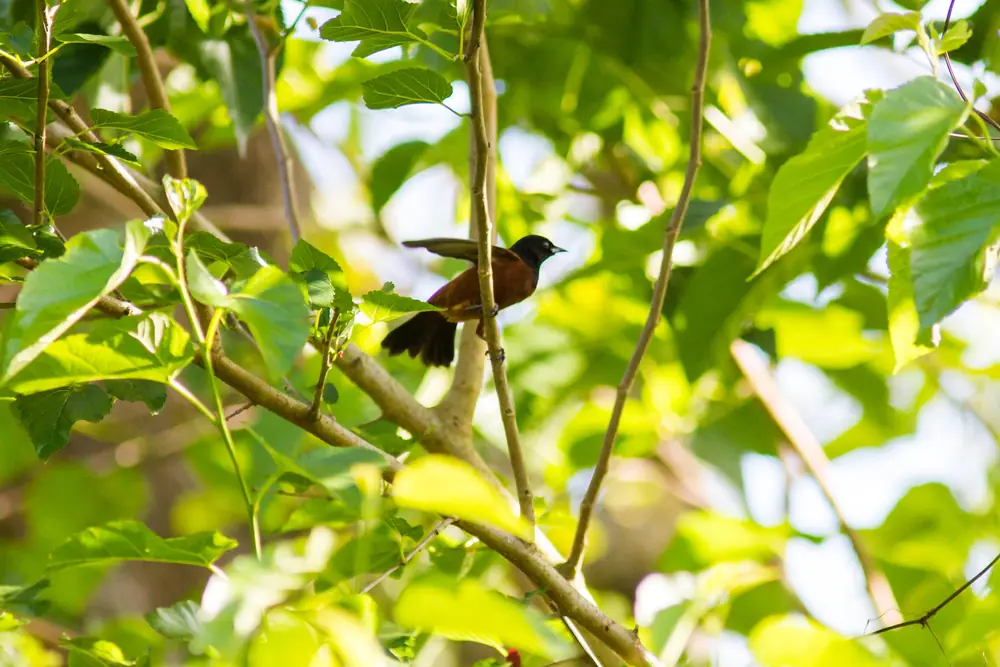
The pattern to learn is weather, not date. On a quiet night many migrants can carry on inland without stopping. A cold front or storm line makes tired birds land at the first trees they find, and on this coast those trees can be a handful of live oaks on a barrier island. In mid-April 2018, Journey North’s songbird report singled out Louisiana and Alabama as the only places with real fallouts that week, and one birder on Grand Isle counted 150 indigo buntings and 130 orchard orioles, along with scarlet tanagers and the first Tennessee warblers and Swainson’s thrushes of the spring.
-
Grand Isle and Elmer’s Island
Peak around mid-April, best the day after a front · Live oak and hackberry woods, dunes and mangroves at the south end of Jefferson Parish
Grand Isle is one of the best fallout sites on the Gulf. On a good morning Audubon says every tree seems to hold a birder looking up at warblers, tanagers and catbirds. Nearby Elmer’s Island Beach has a checklist of 215 species, and in migration its dunes and mangroves host 22 warbler species, nine sparrows and five vireos. Parts of the beach are roped off for nesting birds, so read the signs.
-
Peveto Woods and the Cameron Parish farm fields
Mid-April through mid-May for the southwest; a front can bring a fallout of 40 or more species · A 40-acre sanctuary in Cameron Parish, with open farmland along Highway 27
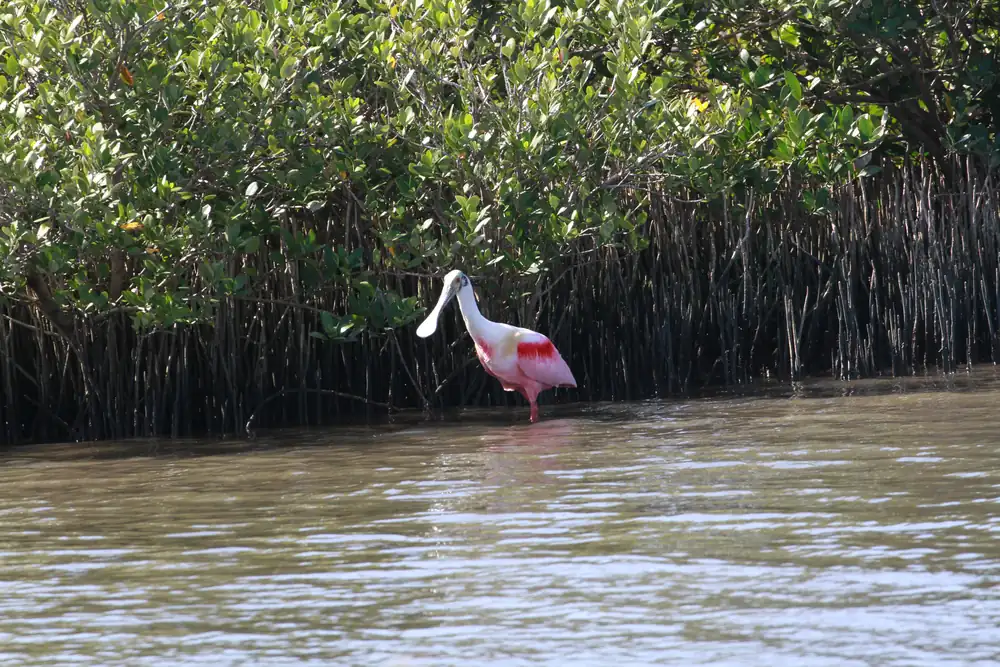
Peveto, run by the Baton Rouge Audubon Society, has a small grass parking area, foot trails and a walk-up display, and its list passes 318 species. After a cold front, thousands of northbound birds can crowd its trees, and a single day can include 20 or more warbler species, including Blackburnian, bay-breasted, chestnut-sided and Canada. Visit Lake Charles adds that the farm fields between Corbina Road and Highway 27 are good for shorebirds, that Pintail Loop is the place for purple gallinules, and that spoonbills and painted buntings are among the sought-after sights. Fields change with every rain, so look first, drive slowly and stay on the road.
-
Swallow-tailed and Mississippi kites over the swamp forests
April through August, according to Bogue Chitto National Wildlife Refuge · Bottomland forest and river swamp, from the Pearl River basin to the Atchafalaya
Both kites arrive in spring. Audubon’s field guide describes the swallow-tailed kite as a bird of wooded river swamps and cypress forests, white below with a deeply forked black tail, and the Mississippi River Delta program says it nests in extensive bottomland hardwood forests such as the Atchafalaya and Pearl River basins. Bogue Chitto National Wildlife Refuge, on the Pearl River, says both kite species soar overhead there from April through August, and lists prothonotary warblers, northern parulas and yellow-throated warblers among the singing nesters. The 1.5-mile Holmes Bayou Trail is best in spring.
-
Painted buntings and levee birding on the Teche
Spring migration, with no exact dates · Brushy edges and thickets; the levee trails of Bayou Teche National Wildlife Refuge
Audubon says painted buntings in Louisiana favor semi-open country with dense low growth, such as hedgerows, thickets, roadsides and gardens, and that males sing from exposed perches. The species is listed as near threatened. The Fish and Wildlife Service recommends bird-watching from the levee trails at Bayou Teche refuge during spring migration. Hiking trails there are open from February 1 to September 30, daylight hours only.
Keep your own record: the date, the wind direction and the weather of the last 24 hours, next to every bird you list. The cloud outlook helps with fronts, and the weather page shows the wind. Write the first of each species in the Naturalist’s Field Journal.
What is nesting in Kisatchie’s longleaf pines in April?
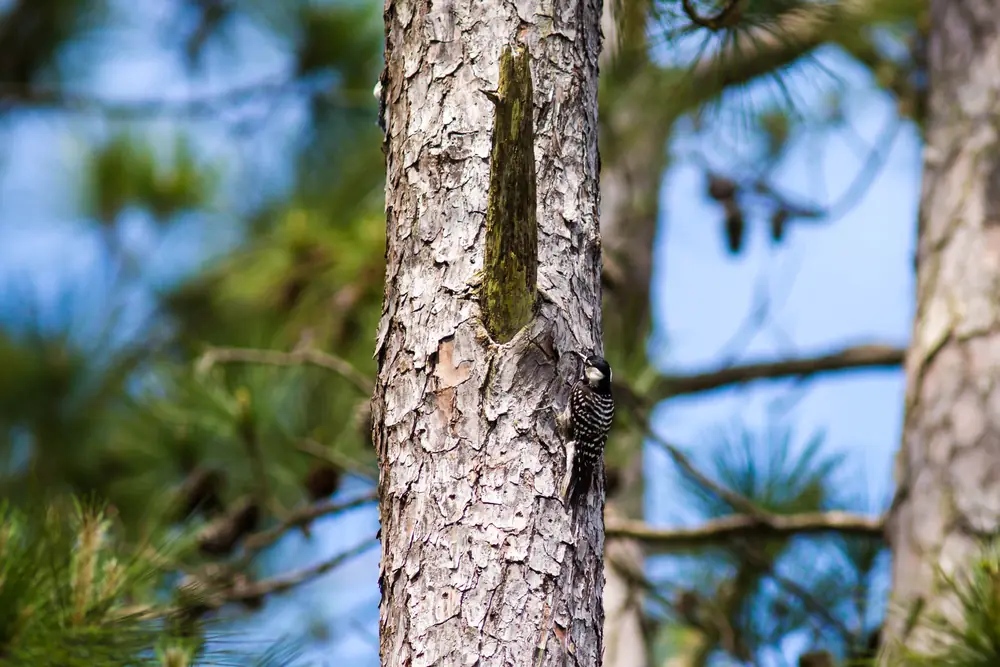
Red-cockaded woodpeckers, an endangered species, and Bachman’s sparrows, one of the shyest birds in the South. The birding guide for the forest’s Vernon Unit near Leesville says the woodpeckers nest in longleaf pines marked with white bands, can be active all day in the breeding season (March to May), and are best watched in early morning and late afternoon. The same guide says the sparrow, a year-round resident that is normally hard to find, becomes easy to hear in March and April, when males climb to the tops of shrubs in the understory to sing.
-
Red-cockaded woodpeckers
March to May, early morning and late afternoon · Open longleaf pine woods with banded trees, such as the Vernon Unit
Scan the older pines for white bands on the trunks, which the guide says mark the trees these birds nest in. Bring binoculars, stay well back from a banded tree, and leave the birds to their own routine.
-
Bachman’s sparrows
Singing most easily in March and April · Shrub thickets in the same longleaf habitat
Listen for a singer perched at the very top of a shrub, since that is where the guide says males go in March and April. The most accessible stop on the unit is the Little Cypress Recreation Area, with a half-mile trail around a three-acre spring-fed lake lined with cypress. The guide lists pine and hooded warblers, great-crested flycatchers and eastern kingbirds among the unit’s seasonal breeders.
-
Pitcher plants and bog flowers
The Forest Service says March to May is the best time · Cooter’s Bog in the Kisatchie National Forest
The Forest Service calls March to May the most rewarding season for the bog complex, with winged pitcher plants, sundews, butterworts and bladderworts in bloom, plus toothache grass and bog buttons. The page adds that prescribed fire, on schedules that vary from one to three years, helps different species bloom at different times. Look closely: the variety is easy to miss from a distance.
The Forest Service lists 88 recreation sites on the Kisatchie. The supervisor’s office in Pineville (318-473-7160) can tell you about trail closures and fire conditions before you drive out.
Where are birds nesting in Louisiana in April, and how do I watch without disturbing them?
On the lake rookeries, the beaches and a few flooded fields. All three are places where one step too close can cost a chick, so the rule is the same everywhere: use binoculars, stay on the boardwalk or road, and keep dogs away.
-
Lake Martin rookery
Birds nest from mid-January to the end of August; the rookery is closed to boats February 1 through July 31 · The southern third of Lake Martin, between Lafayette and Breaux Bridge
More than 20,000 nesting pairs of herons, egrets, ibises, spoonbills and anhingas use the protected rookery, according to My New Orleans and Louisiana Sportsman. Tour guide Bryan Champagne, quoted in My New Orleans, recommends February through May. Great egrets are among the earliest nesters, arriving in late January, and Loyola University’s rookery guide notes that the nests sit over water in cypress and tupelo, which keeps most predators away. In season the adults fly out to find food for their nestlings and return to feed them through the day, so a morning on the levee trail lets you watch the commute. The 2.5-mile trail, maintained by The Nature Conservancy, closes from June through October for alligator nesting.
-
Beach nesters: Wilson’s plovers, snowy plovers and least terns
Birds arrive in late winter and early spring; by late April and early May breeding is under way · Barrier islands and headland beaches, including Grand Isle, Elmer’s Island and Fourchon
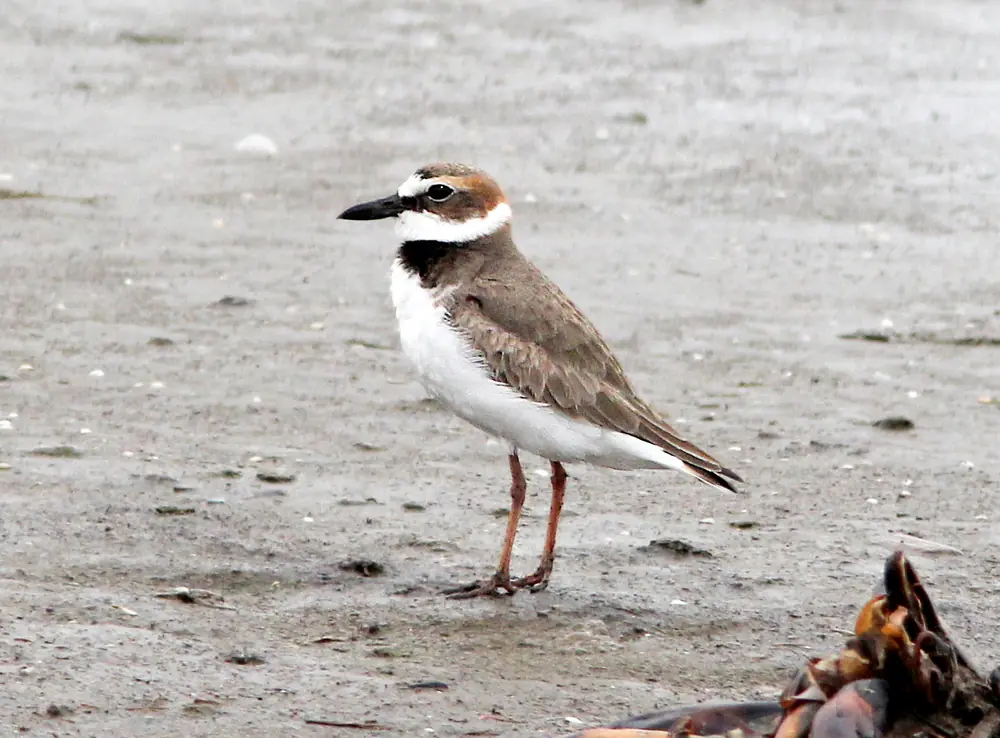
A fact sheet from the Barataria-Terrebonne National Estuary Program says tens of thousands of birds raise their young on Louisiana’s sandy shores. Wilson’s and snowy plovers nest alone, a short distance from the next pair, while least terns nest in colonies. The program has surveyed the 13-mile Caminada Headland, which includes Elmer’s Island and Fourchon Beach, twice a year since 2010. Elmer’s Island’s own page warns that areas may be roped off for Wilson’s plover, common nighthawk and least tern nesting. Eggs and chicks can be hard to see, so obey the ropes and signs and keep dogs on a leash or at home.
-
Whooping cranes
Nests and chicks from late winter; the first 2026 chick hatched in the week before March 23 · Parishes such as Jeff Davis and Avoyelles; watch from public roads
Louisiana’s flock dates from the reintroduction that began in 2011 at White Lake in Vermilion Parish. In 2026 an experienced pair in Jeff Davis Parish produced the season’s first chick the week before March 23, and KPLC counted three more chicks soon after, one of them in Avoyelles Parish. LDWF’s July 2026 release called the season a record, with 10 fledged chicks. The first chick hatched in the wild here in more than 75 years appeared in April 2016. Watch from a road, never walk toward a bird, and report sightings through LDWF’s whooping crane page. The enforcement line is 1-800-442-2511.
For a few seasons at a time you can follow one colony. Log each visit as a nest-watching entry in the Naturalist’s Field Journal, noting the species, the count and what the adults are doing.
What is blooming in Louisiana in April, and where do I look?
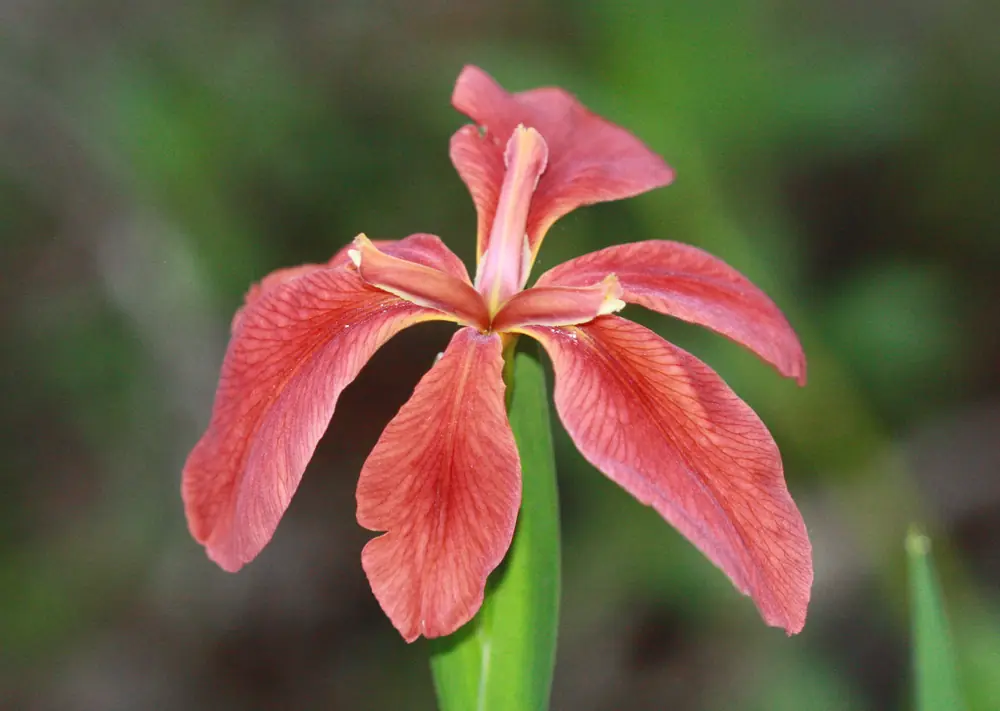
Irises are still the headline, and the roadsides and prairies join them. The Louisiana Native Plant Society says Louisiana irises bloom in March and April, in a range of colors by species, in freshwater marshes, swamps and wet prairies across the state. The Forest Service’s Cooter’s Bog guide, above, says March to May is the best season for bog flowers.
-
Louisiana irises
March and April, per the Louisiana Native Plant Society · Marshes, swamps, wet prairies and ditches across the state
The society’s page names six wild kinds: Virginia, zigzag, copper, giant blue, dixie and Abbeville red. Copper iris nectar attracts hummingbirds, and the plants feed native caterpillars and birds. If the spot is wet, flat and sunny, scan the edge for sword-shaped leaves and a tall flower stalk. Enjoy them where they grow.
-
Roadside and median wildflowers
Spring, before the first mowing · Highway medians and rights-of-way across the state
Louisiana’s Department of Transportation and Development asks the public to report wildflowers on its program page, and in 2025 it marked parts of Highways 27 and 82 in Cameron Parish as a wildflower management area, with signs, according to KPLC, a designation that rests on a survey of fall-blooming species. In March 2026 the same station reported that the department planned to mow the I-210 median in Lake Charles between March 19 and April 18, and that southwest Louisiana naturalists asked it to wait because bees and butterflies were just emerging. The department said it usually mows before mid-May. The lesson for 2027 is to enjoy the verges early and to tell your parish office if you want them left alone.
-
Cajun prairie at Eunice
The society holds tours and meetings; check for a spring date · 650 E. Magnolia Avenue, Eunice
A Fox 8 television report described a small restoration site and a roadside garden at Eunice as what is left of Louisiana’s original Cajun prairie. The Cajun Prairie Habitat Preservation Society, founded in 1989, holds tours and talks; its 2024 fall meeting, on September 7, included a tour at the peak of blazing star. No spring 2027 date was posted when we looked, so contact the society before you go.
Set aside a patch of your own: milkweed and nectar plants for monarchs, and a copper iris for the hummingbirds. Draw one wildflower a week in the Naturalist’s Field Journal.
What are Louisiana’s frogs, alligators and bears doing in April?
Frogs. Loyola University’s natural-history note says the spring peeper and the upland chorus frog, two of the winter breeders, vanish from their breeding sites in March or thereabouts, and the warm-season callers take over. The guide Amphibians and Reptiles of Louisiana says the green treefrog breeds from mid-March to late August and gives a short, nasal “quonk” once or twice a second; it lives from brackish marsh to upland forest and turns up around porch lights. Loyola University’s call guide lists 27 frogs and toads across the state, with recordings for the Louisiana Amphibian Monitoring Program, a mostly volunteer calling survey coordinated in part by LDWF since 1996. A warm, wet evening is the time to stand on a porch with a recorder.
Alligators. Lake Martin’s preserve holds about 1,200 alligators in 9,500 acres, Louisiana Sportsman reports, and its walking trail closes from June through October for nesting. Bayou Teche refuge staff ask visitors to watch for alligators in canals and not to feed or disturb them.
Bears. Louisiana black bears live on the Bayou Teche refuge, according to the Fish and Wildlife Service. Keep food and trash locked up in bear country, and give any bear plenty of room.
A phone recording of a calling frog, with the date, time and temperature, is the beginning of a map of sounds in your Naturalist’s Field Journal.
Is April a good time for crawfish and spawning fish in Louisiana?
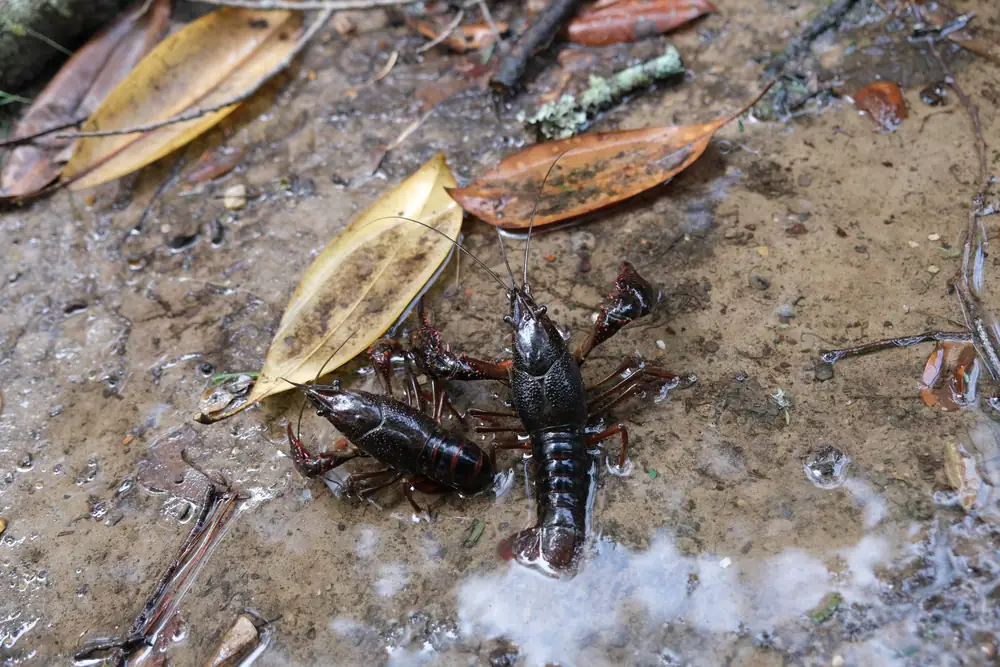
Yes on both counts. Crawfish are in the late part of their season: an old bait-crawfish paper by J. V. Huner and J. W. Avault Jr. describes the usual Louisiana pond cycle as flooding in the fall and draining by May or June, when the crawfish burrow underground to reproduce and the ponds stay dry through the summer. So an April trap still has weeks to run, and Gambill and Midway’s study of the wild fishery, centered on the Atchafalaya basin, found that river rises in the first two months of the year predicted bigger catches in March and April.
Fish. A Game & Fish magazine feature on April bass says early April means the spawn is in full swing in south Louisiana lakes, while lakes in the north had not yet peaked. A Louisiana Sportsman April column says the big speckled trout are ready for their first spawn by the end of the month, and names Grand Isle near Elmer’s Island as a prime area. LSU Sea Grant says crappie, which Louisianans call sac-a-lait, spawn when the water reaches 61 °F and abandon nests in muddy water.
If you fish, release bass you find on nests and handle spawners gently. Both articles are from earlier years, so ask a local bait shop what the water is doing this spring.
What is April weather like in Louisiana, and what are the risks?
Warm, humid and stormy. NOAA’s 1991–2020 normals put April highs near 77 °F to 79 °F everywhere, with lows from the mid-50s in the north to about 62 °F at New Orleans. Rain averages 4.4 inches at Lake Charles to 5.8 inches at Monroe. A freeze in April is rare for these stations, as the table shows.
| Station | Average high | Average low | Rain | Freezing nights |
|---|---|---|---|---|
| Shreveport | 77.5 °F | 54.3 °F | 5.19 in | 0.0 |
| Monroe | 76.8 °F | 54.2 °F | 5.83 in | 0.0 |
| Alexandria | 78.1 °F | 55.1 °F | 4.94 in | 0.1 |
| Lake Charles | 79.0 °F | 59.3 °F | 4.44 in | 0.0 |
| Lafayette | 79.0 °F | 59.3 °F | 4.91 in | 0.0 |
| Baton Rouge | 79.1 °F | 56.9 °F | 5.08 in | 0.0 |
| New Orleans (International Airport) | 78.5 °F | 61.7 °F | 5.22 in | 0.0 |
Severe storms. The National Weather Service offices in Shreveport and Lake Charles keep long lists of April events. Shreveport’s includes tornadoes on April 12 and 13, 2022, the Shreveport-Princeton tornado during the April 13–14, 2018 outbreak, the Ruston tornado of April 24–25, 2019, and an EF2 tornado between Hosston and Plain Dealing on April 27–28, 2014. Lake Charles lists the De Ridder tornado of April 19, 2015, and a Bunkie supercell on April 5, 2012.
Flooding. The Lake Charles office’s write-up of April 2, 2017 describes at least six tornadoes, quarter- to ping-pong-ball-size hail across western Lafayette Parish, and 8 to 11 inches of rain over Rapides and Vernon parishes in a few hours. Two people died when a tornado destroyed a mobile home in Lafayette Parish. The National Weather Service says 12 inches of rushing water can carry away most cars, and that over half of flood drownings follow a vehicle driven into floodwater.
Turn around when roads flood, pick your storm shelter before the sky darkens, and keep warnings switched on, by radio or phone. The Climate Prediction Center publishes a new 90-day outlook each month on its federal outlook page. Frost odds for individual parishes are on our Louisiana frost page, and tonight’s forecast is on the weather page.
Is a freeze still possible in Louisiana in April?
Rarely, and mostly in the north hills. By NOAA’s 1991–2020 normals, Homer in the north hills has its median last freeze on March 30 and is finished with freezing by April 16 in nine springs out of ten, which leaves about one spring in ten with a later one. At every other main station in the table, nine springs in ten are finished by March 29 at the latest. In the table, the first date column is an early date that only the luckiest tenth of springs beat, and the last is the date by which 90 percent of springs have had their final freeze.
| Station | One year in ten | Median | Nine years in ten |
|---|---|---|---|
| Homer 1 N (north hills) | Mar 9 | Mar 30 | Apr 16 |
| Monroe Regional Airport | Feb 16 | Mar 8 | Mar 25 |
| Shreveport | Feb 16 | Mar 9 | Mar 29 |
| Alexandria International Airport | Feb 6 | Mar 2 | Mar 25 |
| Baton Rouge Ryan Airport | Jan 29 | Feb 25 | Mar 19 |
| Lafayette Regional Airport | Jan 13 | Feb 13 | Mar 10 |
| Lake Charles | Jan 16 | Feb 14 | Mar 11 |
| New Orleans International Airport | Dec 29 | Jan 30 | Feb 27 |
Low, still hollows can be colder than the airport that sets the number. Before setting out tender plants, check your parish on the frost page and watch for clear, calm nights.
How much daylight does Louisiana gain in April?
Between 49 and 55 minutes over the month, with the northern cities gaining the most. Louisiana’s days lengthen by about 1.7 to 1.9 minutes each day in April, and by April 30 every city in the table has more than 13 hours of daylight. The clocks do not change this month: they stay on daylight time from March 14 until early November.
| City | Apr 1 | Apr 30 | Gained | Per day |
|---|---|---|---|---|
| Shreveport | 12 h 32 m | 13 h 27 m | 55 min | 1.9 min |
| Monroe | 12 h 31 m | 13 h 26 m | 55 min | 1.9 min |
| Alexandria | 12 h 30 m | 13 h 22 m | 52 min | 1.8 min |
| Lake Charles | 12 h 30 m | 13 h 19 m | 49 min | 1.7 min |
| Lafayette | 12 h 30 m | 13 h 19 m | 49 min | 1.7 min |
| Baton Rouge | 12 h 30 m | 13 h 20 m | 50 min | 1.7 min |
| New Orleans | 12 h 29 m | 13 h 18 m | 49 min | 1.7 min |
| Houma | 12 h 28 m | 13 h 17 m | 49 min | 1.7 min |
The northern cities pick up a few minutes more than the coast. The day length calculator works for any town.
What is in the Louisiana night sky in April?
-
The Pink Moon, full on Tuesday evening, April 20
Full late that afternoon, 5:27 p.m. CDT; watch it rise that evening · Rising in the east just after sunset
The Pink Moon reaches full late that afternoon, so by the time it clears the eastern horizon it is already past the full instant and as round as it will look. Moonrise on the evening of April 20 is about 7:58 p.m. at Houston by our own calculation, so southern Louisiana should be within a few minutes. SeaSky says the name comes from the early spring wildflowers.
-
Lyrid meteors, hampered by the Moon
Meteors from about April 14 to 30, predicted strongest near 8:41 p.m. CDT on April 22, a Thursday · Lyra rises in the northeast after dark
Three days past full, the Moon is still nearly round and comes up around 10 p.m. (by our own calculation moonrise at Houston that night is 10:02 p.m.). Darkness lasts only through the early evening, while the constellation Lyra still hangs low. The International Meteor Organization expects poor conditions, so count on very few, perhaps several an hour at best, with a slim chance of a short outburst.
-
Jupiter and Mars with the Moon
The Moon sweeps past Jupiter on April 14 and 15 and Mars on the 15th · High in the south after dark
Jupiter shines high in the south among the stars of Leo and Cancer and stays up until the small hours. About two-thirds of the Moon is lit on those nights, and it passes less than a degree from the planet, then within roughly 3 degrees of orange Mars on the 15th. A porch is enough.
-
Venus at dawn, Saturn out of sight, and the Milky Way
Venus all month, with the Moon on April 3 and 4; Milky Way core April 1 through 15 and again April 27 to 30 · Venus low in the east before sunrise; the core low in the south before dawn
Venus shines at about magnitude −3.9 in the east before sunrise. For the central United States it rises about 75 minutes ahead of the Sun on April 1, and in Louisiana the lead may differ by as much as half an hour. A thin crescent Moon, 9 percent lit, keeps it company on the 3rd and 4th. Saturn slips behind the Sun at its April 7 conjunction and does not reach the dawn glow until about early May. For the Milky Way’s core, our own calculation for 30° N gives moonless windows April 1 through 15 and again April 27 to 30, in the dark hours before dawn. Add or subtract a day for the eastern parishes.
| Phase | Date | Time |
|---|---|---|
| New moon | Tuesday, Apr 6 | 6:51 p.m. CDT |
| First quarter | Tuesday, Apr 13 | 5:56 p.m. CDT |
| Full moon, the Pink Moon | Tuesday, Apr 20 | 5:27 p.m. CDT |
| Last quarter | Wednesday, Apr 28 | 3:18 p.m. CDT |
Clear dark nights are easiest to plan with the cloud outlook and the moon phases page.
What can families do outside in Louisiana in April 2027?
Grand Isle Migratory Bird Celebration. An annual weekend in April timed to the migration peak, with guided walks on the Grand Isle Birding Trail, State Park and Elmer’s Island, a Louisiana Department of Wildlife and Fisheries banding demonstration and kayak tours. The town’s page shows April 17 and 18 for 2026 and no 2027 date yet, so check with the town of Grand Isle before planning a trip.
Big Branch Marsh refuge, Lacombe. Free Nature Explorers for children up to six runs on the first and third Fridays, and Homeschool Fridays on the fourth Friday, with registration. No April 2027 events were posted; ask the ranger.
Baton Rouge Audubon. Its calendar lists guided bird walks usually on the first Saturday of each month at Bluebonnet Swamp, with a park fee, quarterly walks at Oakley Plantation, and monthly talks on the last Wednesday from January to May. No April 2027 dates were posted; check the calendar.
Earth Day. April 22 is a Thursday. Louisiana plants its trees in January: state law sets Arbor Day on the third Friday of that month.
City Nature Challenge. The 2027 counting days are April 30 to May 3; no Louisiana city appeared on its participant list in October.
Citizen science. Report cranes to LDWF, frog calls through the Louisiana Amphibian Monitoring Program, and first-of-year monarchs and hummingbirds to Journey North.
Every organizer page above was read on October 7, 2026. Programs get moved or rained out, so confirm first. Sightings go in the Naturalist’s Field Journal; our March page covers the earlier stage of the season, and /nature lists every state.
Safety notes for April in Louisiana
Turkey season. In LDWF’s 2026–27 hunting schedules, the general spring turkey season opens April 3 in all three turkey areas on private land (the turkey table in the final hunting schedule is a graphic, so we confirmed the dates in LDWF’s commission document of proposed 2027 dates); Area A stays open to May 2, Area B to April 25 and Area C to April 18; public lands, refuges and federal lands keep their own schedules. The youth and physically challenged hunt is March 26 to 28. A spring squirrel season runs May 1 to 23, after this month, and is closed on Kisatchie National Forest and some refuges and management areas. The schedule does not list bag limits or the hunter-orange rule; read LDWF’s hunting regulations pamphlet, and wear something bright on public land during any hunting season.
Storms and floods. April is a season of squall lines and flash floods (see the weather section). Turn around, do not drive through water.
Alligators and insects. Stay back from alligators, keep dogs leashed near water, and never feed them. Bayou Teche refuge asks visitors to bring insect repellent and sunscreen.
Beaches. The National Weather Service warns that a rip current can form on a calm, sunny day, and advises swimming only at beaches with lifeguards. Keep out of roped nesting areas.
Boats and refuges. Motorized boats are restricted in certain Bayou Teche canals from September 1 through April 15; check the refuge’s rules before launching.
Sources (53)
- Town of Grand Isle: Grand Isle Migratory Bird Festival (2026 dates shown)
- Audubon magazine: birding in Louisiana
- Visit Lake Charles: Southwest Louisiana spring migration guide
- Birding Louisiana: Peveto Woods Bird and Butterfly Sanctuary
- Birding Louisiana: Elmer’s Island Beach
- Journey North: migration heavy in some places, sporadic in others (April 18, 2018)
- USFWS: birding at Bogue Chitto National Wildlife Refuge
- USFWS: visit Bayou Teche National Wildlife Refuge
- Mississippi River Delta program: swallow-tailed kite
- Audubon field guide: swallow-tailed kite
- Audubon field guide: painted bunting
- Birding Louisiana: Kisatchie National Forest, Vernon Unit
- USDA Forest Service: Kisatchie National Forest recreation
- USDA Forest Service: Cooter’s Bog, Kisatchie National Forest
- My New Orleans: swamp birding in Lake Martin
- Louisiana Sportsman: Lake Martin really is for the birds
- Loyola University New Orleans: egret and heron rookeries
- Barataria-Terrebonne National Estuary Program: Louisiana nesting shorebird surveys (PDF)
- KPLC: Jeff Davis Parish whooping cranes welcome the state’s first chick of the season (March 23, 2026)
- LDWF: whooping crane population adds record 10 fledged chicks during 2026 nesting season (July 22, 2026)
- Louisiana Native Plant Society: Louisiana irises
- Louisiana Native Plant Society: Tour of the Eunice Prairie (fall 2024 event page)
- Louisiana LandCAN: Cajun Prairie Preservation Society
- Fox 8 Live, Heart of Louisiana: Cajun Prairie
- KPLC: native wildflowers along I-210 face mowing (March 19, 2026)
- KPLC: parts of the Creole Nature Trail designated as a wildflower area (April 15, 2025)
- Louisiana DOTD: Wildflower Program
- Loyola University New Orleans: Louisiana frog calls
- Amphibians and Reptiles of Louisiana: Louisiana Amphibian Monitoring Program
- Amphibians and Reptiles of Louisiana: green treefrog
- Louisiana Sportsman: April’s best bets (April 15, 2018)
- Louisiana Sea Grant / LSU: sac-a-lait (crappie) fact sheet
- J. V. Huner and J. W. Avault Jr., Producing crawfish for fish bait (NOAA Central Library repository PDF)
- Gambill and Midway, History and ecology of wild-captured crawfish in Louisiana, North American Journal of Fisheries Management, 2024 (abstract)
- NOAA NCEI: April climate normals 1991–2020 for seven Louisiana airports (data API)
- National Weather Service Lake Charles: severe weather and flooding, April 2, 2017
- National Weather Service Shreveport: past significant weather events
- National Weather Service Lake Charles: significant weather events
- National Weather Service: Turn Around Don’t Drown
- National Weather Service: rip current safety
- Game & Fish magazine: Louisiana’s best bets for April bass (April 3, 2012)
- Loyola University New Orleans: Louisiana’s winter breeding frogs
- Climate Prediction Center: seasonal outlooks (updated monthly)
- NOAA Global Monitoring Laboratory: solar calculator (sunrise, sunset and day length)
- U.S. Naval Observatory: moon phases, April 2027 (data API)
- Sea and Sky: astronomy calendar of celestial events, 2027
- USFWS: Big Branch Marsh National Wildlife Refuge events
- Baton Rouge Audubon Society: events and calendar
- City Nature Challenge: 2027 dates
- Louisiana Legislature: R.S. 1:57, Arbor Day
- Earth Day Network
- LDWF 2026–2027 Louisiana hunting schedules (PDF; 2027 turkey area schedules, spring squirrel)
- Photos via Wikimedia Commons; licenses and photographers are credited under each picture