What to look for in nature in Louisiana this November
November is when Louisiana fills up with winter guests. Ducks and geese pour down the Mississippi and Central flyways into the coastal marsh and the flooded rice country, a western hummingbird or two claims a backyard feeder for the season, and bald cypress swamps turn the color of an old penny. Bucks are rutting in the western pine woods while deer in the Florida Parishes are still weeks away from it, and black bears eat acorns for hours on end before they hole up. Hurricane season ends on the 30th, and the northern parishes usually see their first freeze. Here is what to watch for, where, and the sources behind each date.
Other months in Louisiana: October, December.
Start here

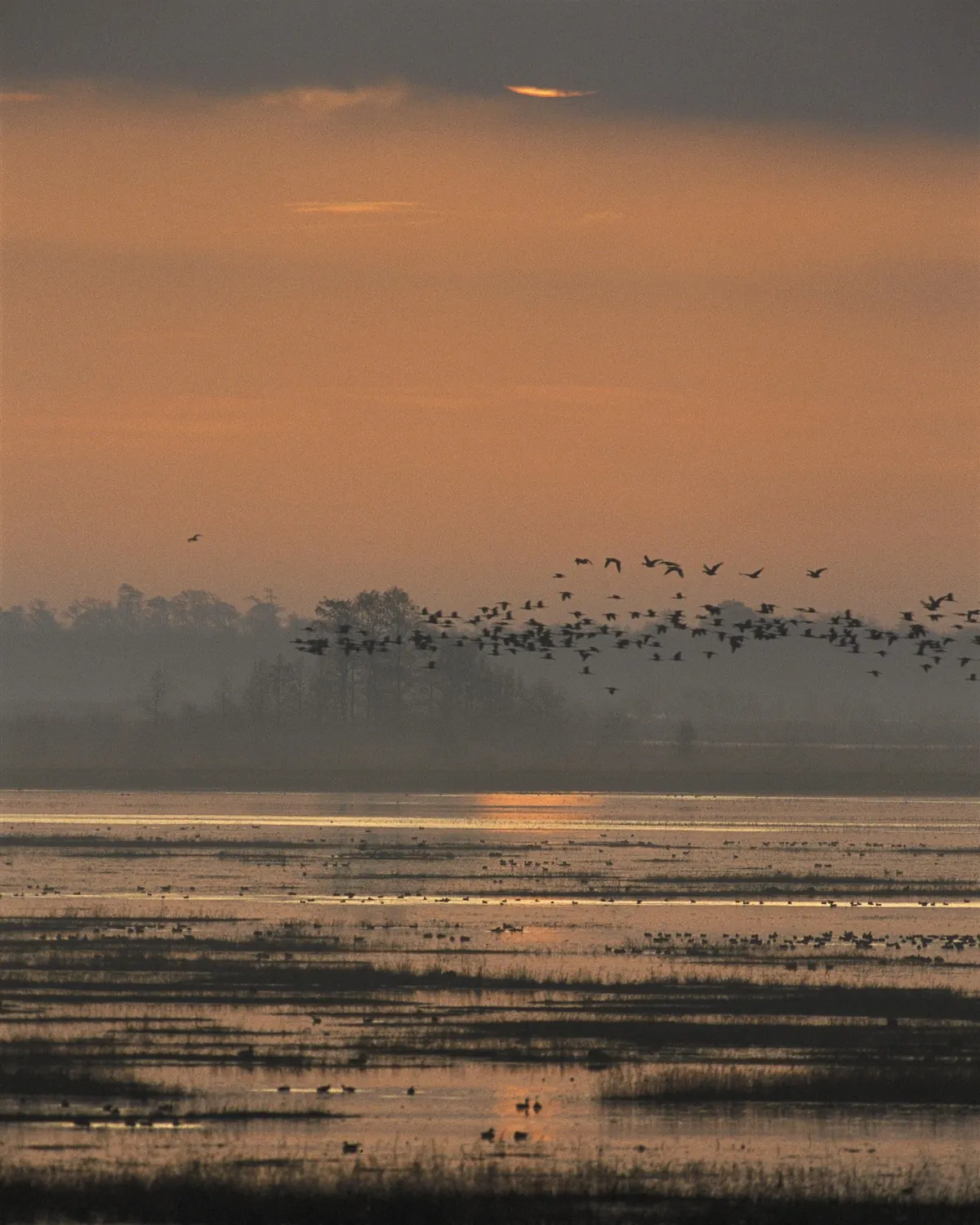
- Watch the duck count. Biologists from the state wildlife department fly low over the coastal marshes in early November and publish how many ducks they estimate are present. Read the report, then visit Lacassine Pool or Pintail Wildlife Drive at Cameron Prairie and see the flocks the numbers describe.
- Two planets side by side before dawn. On the mornings of Sunday, November 15, and Monday, November 16, ruddy Mars and brilliant Jupiter sit only a little more than a degree apart in the southern sky before sunrise, with Venus blazing lower in the east.
- Keep one feeder up. A hummingbird at a Louisiana feeder between November and February is very likely a western species spending the winter here. Leave a clean feeder out, photograph any visitor, and report it to Baton Rouge Audubon.
Keep it in the Naturalist’s Field Journal. List the first pintails, the speckle-bellied geese and any winter hummingbird among your “birds I have seen.” Mars meeting Jupiter and the Leonid morning belong on the dusk-and-dawn watch plate; give one bald cypress the tree-through-the-seasons plate as it goes copper and bare, the seeds, pods and cones plate for sweetgum balls and cypress cones, and the mammal watch plate for deer sign and rubs along a woods edge.
Regions used below: North Louisiana (Shreveport, Monroe and the northern hills); Central Louisiana and the Kisatchie country; Southwest Louisiana and the Chenier Plain; Acadiana and the sugarcane parishes; Baton Rouge and the Florida Parishes; New Orleans and the southeast marshes.
When do the ducks arrive in Louisiana, and how many come?
Louisiana is one of the country’s great wintering grounds for ducks and geese, and November is when the state takes its first real head count of the season. The Louisiana Department of Wildlife and Fisheries flies an aerial survey every month from September through January. A fixed-wing plane cruises at about 125 feet and roughly 100 mph along 27 north-to-south lines running from the Gulf up to U.S. Highway 90, and the crew tallies every duck by species and habitat within a strip a quarter mile wide. Those counts are then expanded statistically into an estimate for the whole coastal zone. Separate counts cover Catahoula Lake and the Little River basin in central Louisiana and parts of the northeast and northwest.
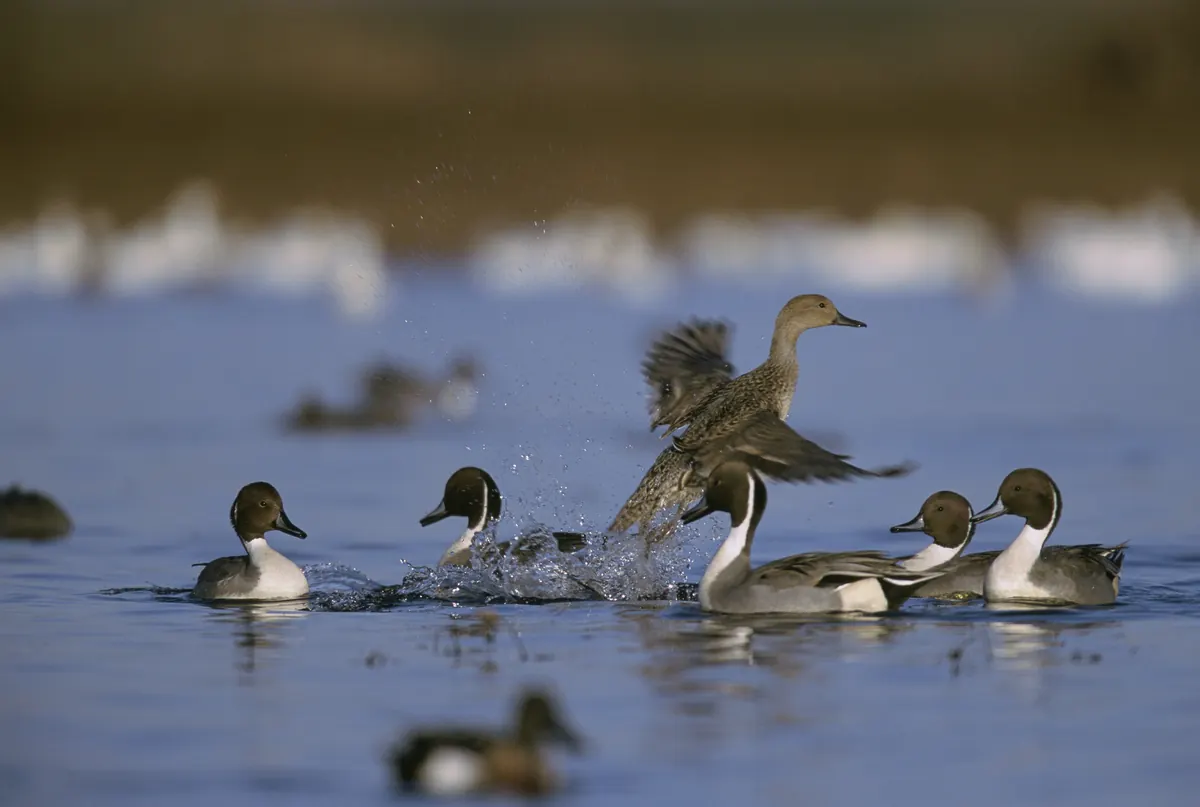
The November number swings hard with the weather that shaped the birds’ summer and fall. In November 2023, after a punishing drought had dried up Lacassine Pool, Cameron Prairie and most of the flooded rice and crawfish ground, the survey found 584,000 ducks, then the lowest November estimate on record, and November 2024 went lower still, to about 510,000. Two years later the picture had flipped: LDWF’s November 2025 report, as published by Louisiana Sportsman, put the total at 1,238,000, with 704,000 in the southwest, 414,000 in the southeast and 120,000 in the Little River basin, where pintails made up about half the birds. The agency put the most recent five-year November average at 885,000 and the ten-year average at 1.2 million. Gadwall, green-winged and blue-winged teal and pintails make up the largest share of the state’s wintering ducks, LDWF says, and ring-necked ducks can arrive in surprising numbers.
The November survey is usually flown early in the month; in 2023 the crews were in the air November 6–8 and the report came out the next day. Wherever water stands in the marsh or in a pumped-up rice field, the ducks gather. Good public places to watch them include the Lacassine Pool at Lacassine National Wildlife Refuge and Pintail Wildlife Drive at Cameron Prairie, both in the southwest, and the edges of Catahoula Lake for pintails in central Louisiana. Duck season opens in the West Zone on Saturday, November 14, and in the East Zone a week later, so the flocks move around more once shooting starts; see the safety notes below.
When is the deer rut in Louisiana?
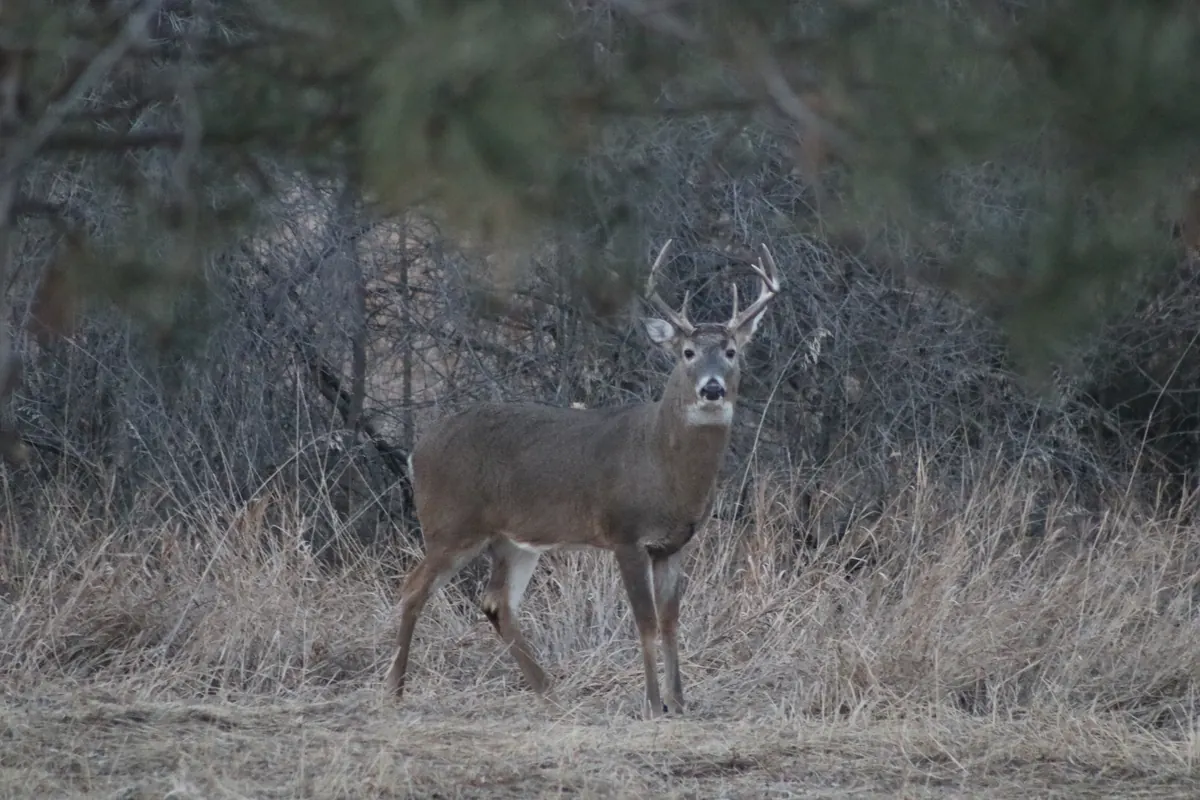
It depends on where you stand, and the answer changes by months from one parish to the next. Louisiana’s wildlife department has estimated breeding dates from the length of fetuses in does collected across the state, and its map of the average two-week peak runs from late September to the end of February. Part of the spread comes from history: LDWF says several parishes hold two or more breeding periods because deer with different breeding times were stocked alongside native deer.
Read roughly off the state’s map, the pattern looks like this:
- Already over: the marsh-edge prairies of Cameron, Vermilion and southern Iberia, where peaks fall from late September into October.
- November: the western pine country, from De Soto and Sabine down through Natchitoches, Vernon, Beauregard, Allen and western Rapides, where the shading falls between late October and November 20. Much of the far northwest, including Caddo, Bossier and Webster, along with Winn and Grant in the middle of the state, peaks from November 21 to December 4.
- December and January: the Mississippi Delta parishes of the northeast and the coastal parishes from Terrebonne east to St. Bernard and Plaquemines.
- January into February: the Florida Parishes, the Atchafalaya Basin and the country around Baton Rouge.
LDWF adds two cautions. The whole breeding season is longer than the mapped peak, and the time when bucks travel most is usually one to two weeks before peak breeding, not during it. For a naturalist, that means fresh rubs on saplings, scrapes pawed in the leaf litter along woods edges, and deer crossing roads at odd hours of the day. Drive slowly at dawn and dusk in the western half of the state this month.
Where do Louisiana black bears go in winter?
Into a hollow tree, often enough. The state’s black bear management plan describes autumn, September through November, as a feeding frenzy biologists call hyperphagia, when a bear may take in about four times its usual calories to lay down fat for winter. In Louisiana that late-fall diet is mostly acorns and hickory nuts, with dwarf palmetto fruit and corn close behind. Wide-ranging fall foraging is also when bears get into the most trouble around people, so this is the month to keep feed, garbage and pet food locked away in bear country, in places such as the Tensas and Atchafalaya basins.
Louisiana bears enter their dens from November into early January. The plan notes that pregnant females go first, then mothers with yearlings, then young bears, and finally the big males, some of which stay active all winter in this mild climate. The preferred dens are large hollow bald cypress and tupelo trees along swamps and bayous; others den on the ground in thick cover. The cubs, usually two, are born in the den in winter, and LDWF biologists visit dens each winter to see how many cubs survive. Black bears are not true hibernators, the plan explains: their body temperature and heart rate drop and their metabolism slows by about half, and they may go without eating or drinking for the whole winter. If you find a big hollow cypress with a scratched trunk this month, admire it from a distance and leave it be.
Is that hummingbird at my feeder in November a winter visitor?
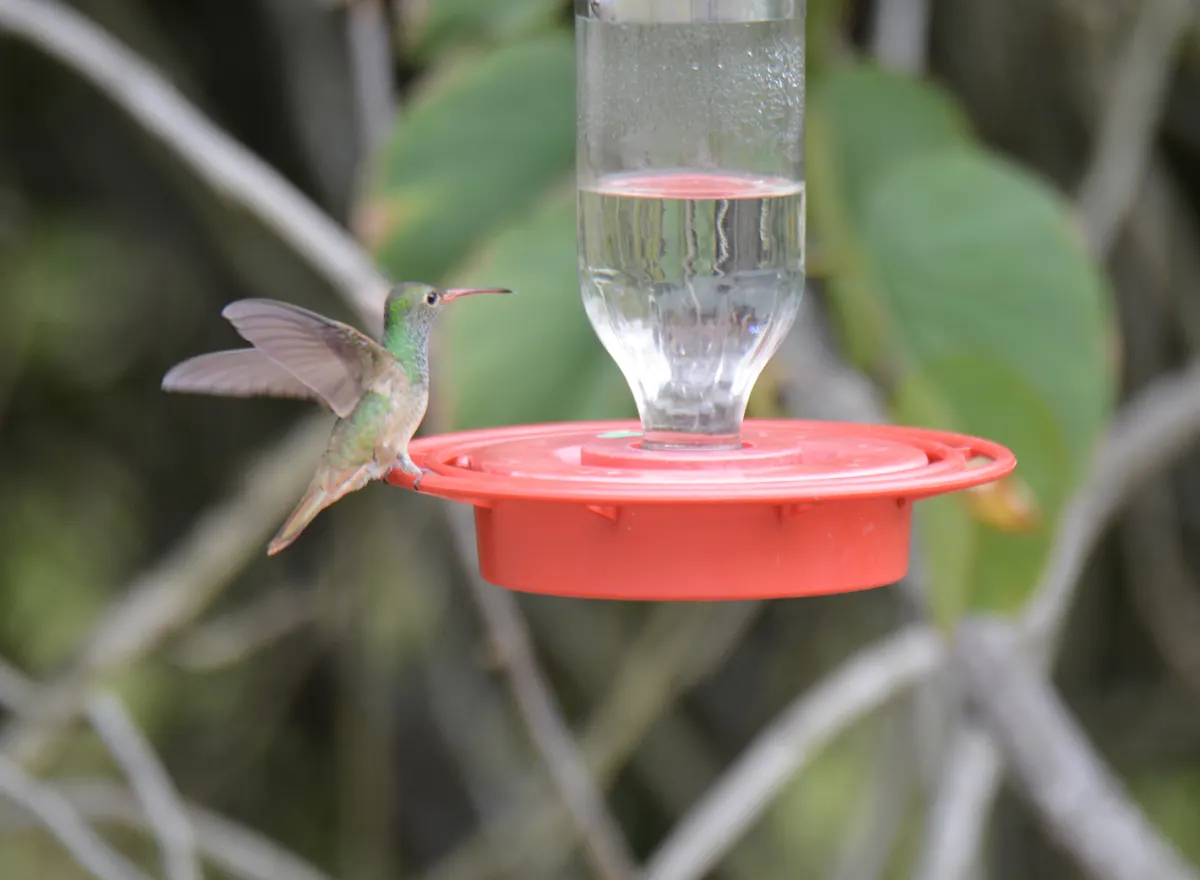
Almost certainly. Ruby-throated hummingbirds, the one species that normally summers east of the Mississippi, have mostly left for Mexico and Central America by now. Baton Rouge Audubon Society advises that a hummingbird in a Louisiana yard between November and February is very likely a western bird that has chosen to winter along the Gulf Coast. Rufous is the most frequent, though it cannot be told safely from the very similar Allen’s hummingbird without a bander’s close look, so birders call these rusty birds Rufous/Allen’s. Black-chinned is next, followed by the buff-bellied hummingbird, nearly twice the size of a ruby-throat and wearing a vivid green throat. Calliope, the smallest North American hummingbird, has been turning up more often, and broad-tailed, broad-billed and Anna’s have all been found in the state.
Most winter hummingbirds pick a territory and hold it until February or March. To give one a reason to stay, the chapter suggests evergreen cover such as camellias, sweet olive and hollies, a few cold-season bloomers such as shrimp plant, cuphea and firespike, and a feeder of one part sugar to four parts water with no dye, refreshed about once a week in cool weather. Then watch, photograph the tail and flanks, note the date, and send a report to the chapter. Louisiana’s volunteer banders track these birds closely, and some will ask to come band a bird so its travels can be followed.
What other birds come to Louisiana in November?
-
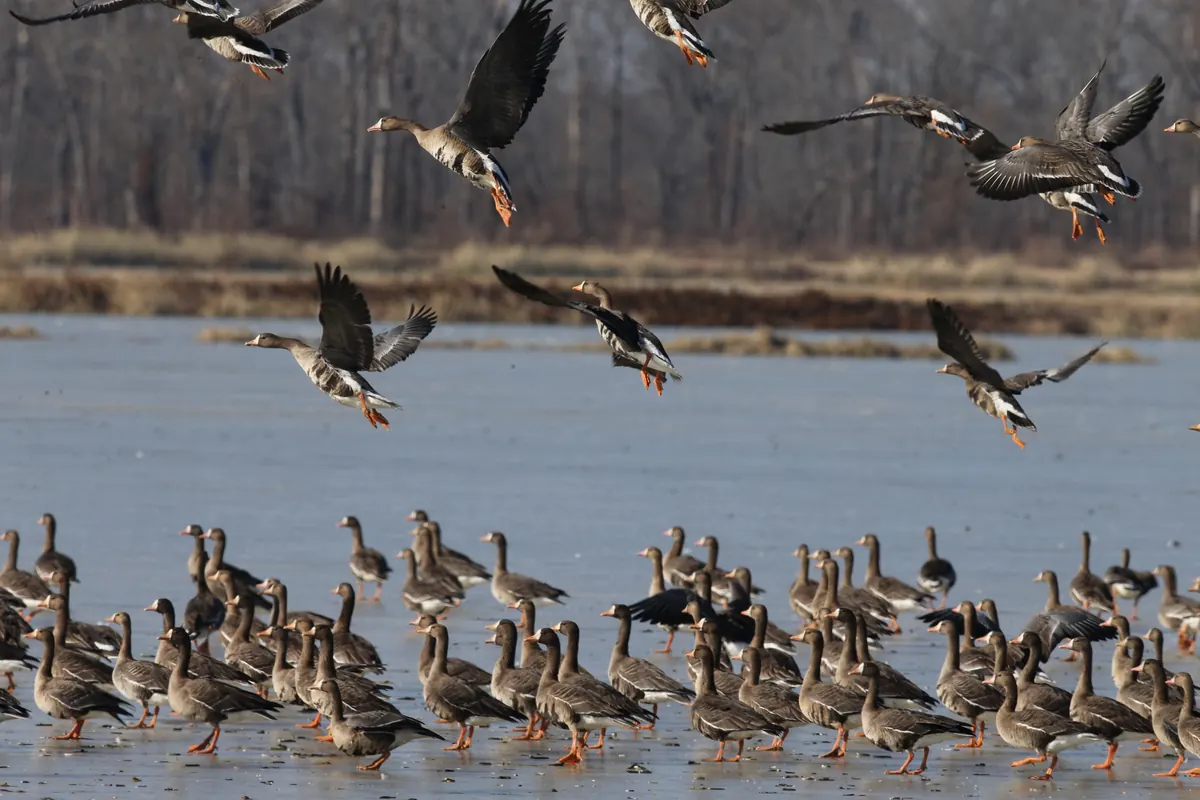
Geese on the rice prairies
Building through November; goose season opens November 14 · Southwest rice and crawfish country; Lacassine and Cameron Prairie refuges
Flocks of greater white-fronted geese, known locally as specks or speckle-bellies, and snow geese, both white and dark “blue” birds, spread over harvested rice fields and pastures in the southwest. The Lacassine refuge’s pool is one of their traditional gathering places. Listen for the laughing yelps of white-fronts overhead at first light, and scan the white flocks for the smaller, stubby-billed Ross’s goose.
-
American woodcock
Arriving through late fall; hunting season opens December 18 · Moist thickets and young woods, statewide
LDWF says Louisiana winters more woodcock than any other southern state. These plump, long-billed birds start south in September and spend the cold months probing for earthworms in damp thickets with open ground beneath and dense cover overhead. Biologists have banded more than 3,000 of them on state lands. Walk a wet woods edge at dusk and you may flush one with a twittering rush of wings.
-
Bald eagles on camera
Nesting through the cool months · Kincaid Lake, Kisatchie National Forest, near Alexandria; live online
Louisiana’s eagles raise their young in winter, so the next few months are the season to watch. The Kisatchie National Forest runs a live camera on eagle nests built more than 100 feet up in loblolly pines beside Kincaid Lake, west of Alexandria, and the forest’s resident eagles can be seen along that shore or soaring over the pines. LDWF’s account says pairs usually lay up to three eggs and incubate them for about 35 days.
-
Winter finches and nuthatches
November through March · Feeders and pine woods, mostly in the north
The Finch Research Network’s 2026–27 forecast expects no big finch irruptions into the southeastern states this winter, because seed crops are good in the eastern boreal forest. Pine siskins could still make a small to moderate flight into the Southeast. Red-breasted nuthatches, which reached the Gulf states in large numbers last winter, are expected to stay north this time. Any purple finch or siskin at a north Louisiana feeder is worth noting.
-
Project FeederWatch
Season opens November 1 · Any yard, balcony or schoolyard
The Cornell Lab of Ornithology’s FeederWatch season begins on November 1. Choose a pair of back-to-back count days, record the largest flock of each kind seen together, and enter the results online. Louisiana counts are valuable because so few winter hummingbirds, sparrows and warblers show up at feeders farther north.
When do Louisiana’s cypress swamps turn copper?
-
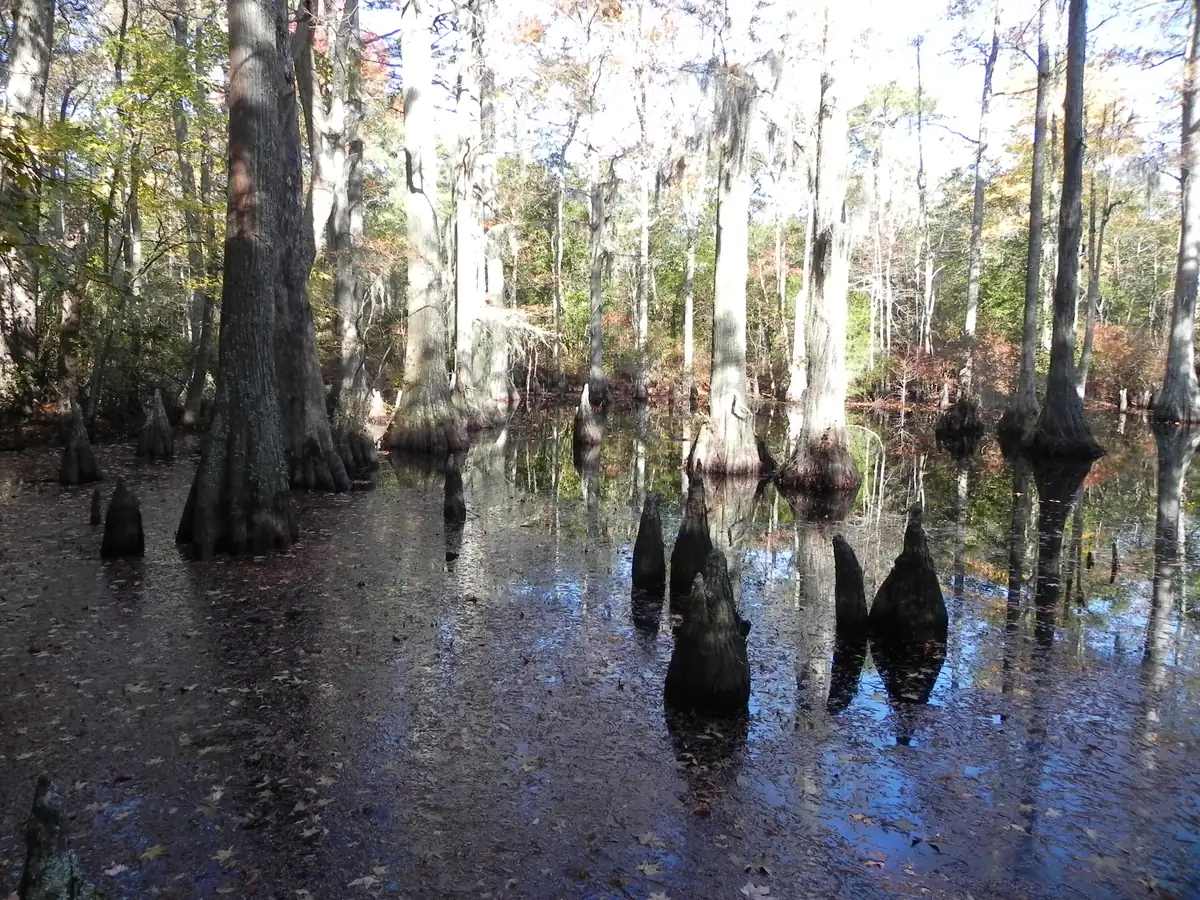
Bald cypress
Peak color around Thanksgiving · Swamps, lake edges, bayous and parking lots statewide
Unlike pines, bald cypress sheds all of its needles each fall, which is where the “bald” comes from. The Lady Bird Johnson Wildflower Center describes the feathery leaves turning copper before they fall and tells gardeners to enjoy the terra cotta color around Thanksgiving; a warm fall can push it later. The boardwalks at Barataria Preserve, the cypress and tupelo shoreline of Corney Lake in Kisatchie’s Caney district, and any landing in the Atchafalaya Basin are good places to watch it happen.
-
Tupelo, sweetgum and other color
Through November · Bottomlands, pine-hardwood forests, roadsides
Water tupelo, the swollen-based partner of cypress in deep swamps, turns yellow and carries dark fruits. Sweetgum is one of the showiest fall trees in Louisiana woods and yards, and its spiky seed balls feed several kinds of birds. In the western pine country, Longleaf Vista in the Kisatchie Ranger District sits on a ridge overlooking the 8,700-acre Kisatchie Hills Wilderness, a fine spot to watch the season change.
-
Holly berries and palmetto fruit
Ripe now, many lasting into winter · Woods edges, fence rows, bottomland understory
Possumhaw, a deciduous holly, drops its leaves to show clusters of red berries on gray twigs, and opossums, raccoons and songbirds eat them. Evergreen yaupon carries shiny red fruit that many birds leave until late winter, after several freezes have softened it. Dwarf palmetto in the swamp understory bears long sprays of dark fruit that birds and mammals eat, Louisiana black bears among them.
Will Louisiana get its first freeze in November?
The northern half of the state usually does; the coast usually does not. The NOAA 1991–2020 normals behind the site’s frost pages show the pattern. The north Louisiana hills go first: half of all years have brought a 32 °F night by November 6 at Homer, November 15 at Monroe and November 18 at Shreveport, and central Louisiana follows, with Alexandria’s main airport at November 17. Baton Rouge’s median lands on November 26, right around Thanksgiving.
| Station | One year in ten | Median | Nine years in ten |
|---|---|---|---|
| Homer 1 N (north hills) | Oct 23 | Nov 6 | Nov 22 |
| Monroe Regional Airport | Nov 1 | Nov 15 | Dec 3 |
| Shreveport | Nov 2 | Nov 18 | Dec 5 |
| Alexandria International Airport | Nov 1 | Nov 17 | Dec 9 |
| Baton Rouge Ryan Airport | Nov 7 | Nov 26 | Dec 19 |
| Lafayette Regional Airport | Nov 13 | Dec 4 | Jan 5 |
| Lake Charles | Nov 14 | Dec 7 | Jan 7 |
| Houma | Nov 23 | Dec 17 | Jan 13 |
| New Orleans International Airport | Dec 1 | Dec 31 | Jan 31 |
Still waiting at the end of the month: Acadia and the southwest prairie, with medians of December 4 at Lafayette and December 7 at Lake Charles, and the whole southeast coast, where Houma’s median is December 17 and New Orleans International Airport’s is December 31. Even there an early year can bring frost in late November, so keep an old sheet handy for tender plants and the satsumas. The Louisiana freeze-date page has the same three dates for every station in the state, from Monroe 26 N to Boothville.
How short do the days get in Louisiana in November?
Louisiana’s clocks go back one hour early on the first Sunday, November 1, and from that evening on darkness arrives an hour sooner. In New Orleans the sun sets at 6:14 p.m. on Saturday, October 31, and at 5:13 p.m. the next day; by November 30 it sets at 5:00. Shreveport goes from 6:25 p.m. to 5:24 p.m. overnight and is down to 5:09 by the end of the month. Over November as a whole, daylight shrinks by 36 minutes at Houma and 41 at Shreveport and Monroe, or about a minute and a quarter each day.
| City | Nov 1 | Nov 30 | Lost | Per day |
|---|---|---|---|---|
| Shreveport | 10 h 52 m | 10 h 11 m | 41 min | 1.4 min |
| Monroe | 10 h 52 m | 10 h 11 m | 41 min | 1.4 min |
| Alexandria | 10 h 55 m | 10 h 17 m | 38 min | 1.3 min |
| Lake Charles | 10 h 58 m | 10 h 21 m | 37 min | 1.3 min |
| Lafayette | 10 h 59 m | 10 h 21 m | 38 min | 1.3 min |
| Baton Rouge | 10 h 58 m | 10 h 21 m | 37 min | 1.3 min |
| New Orleans | 10 h 59 m | 10 h 22 m | 37 min | 1.3 min |
| Houma | 11 h 00 m | 10 h 24 m | 36 min | 1.2 min |
For any spot in the state, the daylight calculator gives sunrise, sunset and the length of twilight, which is worth knowing when a duck blind or a deer stand has to be reached in the dark.
What is November weather like in Louisiana, and what will El Niño bring this winter?
November is the month the cold fronts start to stick. In NOAA’s 1991–2020 normals the average high drops by about 9 to 12 °F from October: from 79 °F to 68 °F at Shreveport, and from about 81 °F to 71 °F at New Orleans International Airport. Average lows fall to about 44 °F at Monroe and 45 °F at Shreveport, but stay near 51 °F at Lake Charles and 54 °F at New Orleans. Rain averages a little under 4 to about 4.6 inches across the state’s main weather stations, and December is wetter at all seven of the main stations.
The Atlantic hurricane season officially ends on Monday, November 30. Late storms are uncommon but not unheard of, so check the National Hurricane Center before a trip to the coast during the first half of the month.
The larger story is the winter ahead. Federal forecasters are unusually sure of the setup. The Climate Prediction Center’s ENSO update of September 10 put the odds above nine in ten that this cool season brings an El Niño of the very strong kind. Of all the ways El Niño reaches the United States, a wet Gulf Coast is the most dependable: NOAA’s Climate.gov notes that the coast from Texas to Florida has come out wetter than average in better than four of every five El Niño winters across roughly a hundred years of records. NWS forecasters in Jackson, Mississippi, whose territory takes in northeast Louisiana, describe the pattern: the jet stream sags south, a deep trough sets up over the middle of the country, more Gulf moisture streams inland, and the Southeast tends to run cooler than average. El Niño usually peaks between December and April, so November itself will feel little of it. NOAA’s formal winter forecast is due October 15; find it among the CPC’s three-month outlooks, and the weather page follows each front as it crosses the state.
What can you see in the Louisiana night sky this November?
-
Mars meets Jupiter
Before dawn, Sunday, November 15, and Monday, November 16 · High in the south and southeast before sunrise
Jupiter, the brightest point in the predawn sky after Venus, and the much fainter, orange-red Mars drift together in Leo, coming within about 1.2 degrees of each other on the evening of the 15th, when they are below the horizon. The two mornings on either side of that moment are the ones to watch. Binoculars fit both in one view.
-
The Leonid meteors
Before dawn, Wednesday, November 18 (also the 17th and 19th) · Anywhere dark; face east to south
Leonids fly from November 6 to 30. The meteor organization IMO puts this year’s maximum near 5:45 p.m. CST on Tuesday the 17th, a modest shower of roughly 15 an hour in ideal skies, with no storm predicted. The half-lit moon is down by around midnight, and the radiant in Leo rises late in the evening and climbs highest before dawn, so the best hours are from about 1 a.m. until first light on the 18th.
-
Taurid fireballs
Peaks November 5 and November 12 · Most of the night, high in the east and south
Two slow, long-running Taurid streams, both shed by Comet Encke, peak a week apart, with the new moon of November 9 between them. Expect only about five to ten an hour, but Taurids are known for occasional bright, slow fireballs.
-
Venus at its brightest, and Mercury low at dawn
Venus all month, brightest about November 24–27; Mercury best about November 18–25 · Low in the east-southeast before sunrise
Fresh from its late-October pass on the near side of the sun, Venus rises higher before sunrise each week, and shines brightest of all around November 24–27. On the morning of November 9 it passes just over a degree from the star Spica. At dawn on Saturday, November 7, a hairline crescent moon hangs near Venus barely above the eastern horizon, a hard but rewarding catch. Mercury reaches its greatest distance west of the sun on November 20, so the week around that date is the time to look for it, low in the brightening east.
-
Saturn and Uranus in the evening
All month; Uranus at opposition November 25 · Saturn in the south after dusk; Uranus in the east near the Pleiades
Once dusk fades, the steady yellowish light in the southern sky is Saturn, the lone bright planet of the evening. Uranus comes to opposition on November 25; with a star chart, binoculars and a dark site, hunt for its small blue-green point a few degrees from the Pleiades.
-
The Beaver Moon
Full Tuesday, November 24, at 8:53 a.m. CST · Rising in the east-northeast at sunset on the 23rd and 24th
The moon is full on the morning of the 24th, so it looks round on the evenings of both Monday the 23rd and Tuesday the 24th. It also counts as a modest supermoon, about a day ahead of its closest approach to Earth. Late on Monday night the bright moon slides past the Pleiades and all but drowns that star cluster in its glare.
| Phase | Date | Time |
|---|---|---|
| Last quarter | Sunday, Nov 1 | 2:28 p.m. |
| New moon | Monday, Nov 9 | 1:02 a.m. |
| First quarter | Tuesday, Nov 17 | 5:48 a.m. |
| Full moon, the Beaver Moon | Tuesday, Nov 24 | 8:53 a.m. (looks full on the evenings of Nov 23 and 24) |
| Last quarter | Tuesday, Dec 1 | 12:08 a.m. |
Clouds decide everything in a Louisiana November; check the night’s cover on the sky forecast, and the moon calendar lists moonrise and moonset for your parish.
What can families do outside in Louisiana in November 2026?
- First Saturday bird walk, Saturday, November 7, 7 a.m. Baton Rouge Audubon Society leads a free walk with experienced birders on the first Saturday of every month at BREC’s Bluebonnet Swamp Nature Center, 10503 North Oak Hills Parkway. No registration is needed; bring binoculars and the $3 park admission.
- A swamp walk at Barataria Preserve. Rangers from Jean Lafitte National Historical Park and Preserve lead a free one-hour walk along the mile-long Wetland Trace boardwalk at 1 p.m. on Wednesdays and Thursdays through November (November 4, 5, 11, 12, 18, 19, 25 and 26), meeting at the trailhead at 4917 City Park Street in Jean Lafitte. Young children can also join Read with a Ranger, a story hour with a craft, at 11 a.m. on Thursday, November 5, at the Lafitte library.
- A boat ride on Bayou Lafourche. The park’s Wetlands Acadian Cultural Center in Thibodaux runs a two-hour guided boat tour at 10 a.m. on Fridays and Saturdays, $15 per person, with reservations required by phone or email; tickets are sold at the center.
- Louisiana Ornithological Society field trips for members: piney woods birding in Kisatchie National Forest from Leesville on Monday, November 2; waterfowl and shorebirds at the Yates Tract of Red River National Wildlife Refuge on Saturday, November 7; and a rice farm near Monroe on Sunday, November 8. Spaces are limited and sign-up is by email through the society.
- At home: start Project FeederWatch on November 1, keep a hummingbird feeder up, and check the Kisatchie eagle camera on a rainy afternoon. On Thanksgiving week, find a cypress near you and note the day it looks most copper.
We checked each of these dates against the organizers’ own calendars on October 2; confirm before you go, because weather and staffing can cancel programs. Every other state and month is on the nature calendar.
Safety notes for November in Louisiana
- Duck and goose seasons open. Under LDWF’s 2026–27 schedule, ducks, coots and mergansers open November 14 in the West Zone and November 21 in the East Zone, both running to December 6 before a split. The West Zone covers the part of the state west of a line running south from the Arkansas border on LA 79, LA 9, LA 147 and US 167 to Lafayette, then along US 90 to the Mississippi line. Youth and veterans waterfowl days are November 7 in the West Zone and November 14 in the East. Canada, white-fronted and light geese open statewide on November 14. Expect shooting before sunrise near marshes, refuges and flooded fields.
- Deer firearms seasons widen. Across Deer Areas 1, 4, 5, 6 and 9 (the northeast Delta parishes, the Florida Parishes, the Atchafalaya Basin, the parishes around Pointe Coupee and West Feliciana, and the southeast coast), primitive firearms run November 14–20 and modern firearms open November 21, with some bucks-only days in Areas 5 and 9; the youth and veterans season on private land there runs October 31 to November 6. In Area 2, the northwest, firearms season has been open since October 31. In Areas 3, 7 and 8, still-hunting continues through November 29 and hunting with dogs begins November 30. In Area 10, the coastal prairie parishes from Cameron and Vermilion east to Lafayette, firearms still-hunting has been open since October 17. Quail opens November 21. Wildlife management areas and the national forest have their own dates.
- Hunter orange or blaze pink. Whenever a firearms deer season is open, a hunter after any game who carries a centerfire gun, a primitive firearm, slugs or buckshot must wear no less than 400 square inches, in total, of one of those two colors on the head, chest or back. Private-land hunters may substitute a cap or hat in one of those colors, and hunters in elevated stands on private land are exempt once in the stand but not while walking to and from it. On WMAs, every hunter except those after waterfowl or doves needs both the 400 square inches and a hat or cap in orange or pink. LDWF encourages everyone outdoors during hunting seasons to wear the colors too; a bright hat and vest are good sense for hikers and birders on public land this month.
- Cold water and early dark. Air on a November morning can be pleasant while marsh and lake water is cold enough to cause cold shock; wear a life jacket in boats and kayaks, and leave word with someone ashore about where you are paddling. With sunset near 5 p.m., carry a light on any afternoon walk.
- Bears and roads. Bears roam widely this month in search of food and cross highways in the river basins; secure garbage and feed, and slow down near bear-crossing signs. Rutting deer are also on the move.
- Hurricane season lasts through November 30. Alligators are slower in cool weather but still bask on sunny days; give them room.
Sources
- LDWF: aerial waterfowl surveys (methods and schedule)
- LDWF: Louisiana aerial waterfowl survey, November 2023 (PDF)
- Louisiana Sportsman: the November 2025 waterfowl population estimates (LDWF report)
- LDWF: Louisiana waterfowl
- USFWS: Lacassine National Wildlife Refuge, about the refuge
- USFWS: Cameron Prairie National Wildlife Refuge, about the refuge
- USFWS: Catahoula National Wildlife Refuge
- LDWF: estimated deer breeding periods (map)
- LDWF: deer research, management and reports
- LDWF: Louisiana Black Bear Management Plan, January 2015 (PDF)
- LDWF: Louisiana black bear
- LDWF: Louisiana BearWise
- Baton Rouge Audubon Society: feeding hummingbirds and winter hummingbirds in Louisiana
- Baton Rouge Audubon Society: events and calendar (first Saturday bird walks)
- LDWF: woodcock research and management
- USDA Forest Service: Kisatchie National Forest (eagle nest cams, ranger districts)
- Kisatchie National Forest eagle cam live streams
- LDWF: Rare Animals of Louisiana, bald eagle fact sheet (PDF)
- Finch Research Network: Winter Finch Forecast 2026–2027
- Project FeederWatch: how to participate
- Lady Bird Johnson Wildflower Center: bald cypress (Taxodium distichum)
- Lady Bird Johnson Wildflower Center: water tupelo (Nyssa aquatica)
- Lady Bird Johnson Wildflower Center: sweetgum (Liquidambar styraciflua)
- Lady Bird Johnson Wildflower Center: possumhaw (Ilex decidua)
- Lady Bird Johnson Wildflower Center: yaupon (Ilex vomitoria)
- Lady Bird Johnson Wildflower Center: dwarf palmetto (Sabal minor)
- NOAA NCEI: U.S. Climate Normals 1991–2020 (first-freeze probabilities, as used on the site’s Louisiana frost page)
- NOAA NCEI: monthly normals 1991–2020 for New Orleans, Baton Rouge, Lake Charles, Shreveport, Monroe, Lafayette and Alexandria (data API)
- National Hurricane Center: tropical cyclone climatology
- Climate Prediction Center: ENSO diagnostic discussion, September 10, 2026
- Climate Prediction Center: seasonal outlooks (winter outlook issued October 15, 2026)
- NOAA Climate.gov: United States El Niño impacts
- NWS Jackson, Mississippi: El Niño and La Niña in the Lower Mississippi Valley
- U.S. Naval Observatory: moon phases (data API)
- NOAA Global Monitoring Laboratory: solar calculator (sunrise and sunset)
- International Meteor Organization: 2026 meteor shower calendar (PDF, archived copy)
- EarthSky: what is a supermoon? (2026 full supermoons)
- EarthSky: Mercury at greatest western elongation
- EarthSky: Uranus at opposition
- In-The-Sky.org: Venus at greatest brightness, November 2026
- Star Walk: planetary conjunctions (Mars and Jupiter, November 2026)
- NASA JPL Horizons ephemeris system (planet and moon positions)
- National Park Service: Jean Lafitte National Historical Park and Preserve calendar
- National Park Service: boat tours of Bayou Lafourche
- BREC: Bluebonnet Swamp Nature Center
- Louisiana Ornithological Society: fall 2026 field trips (PDF)
- Louisiana Ornithological Society: meetings and field trips
- LDWF: 2026–2027 Louisiana hunting and WMA regulations (PDF; deer areas, migratory bird seasons, hunter orange and blaze pink)
- LDWF: hunting seasons and regulations
- Photos via Wikimedia Commons; licenses and photographers are credited under each picture
