What to look for in nature in Louisiana this October
Louisiana’s October belongs to the harvest, and the wildlife keeps close to the machines. Combines working the southwest rice country flush yellow rails out of the stubble, cane trucks and drifting field smoke announce grinding season along the bayous, and the first wintering rufous hummingbirds turn up at backyard feeders. The air dries out, the first real cold fronts come through, and a freeze is still weeks off for nearly everyone. This guide goes region by region, with the dates and the sources behind them.
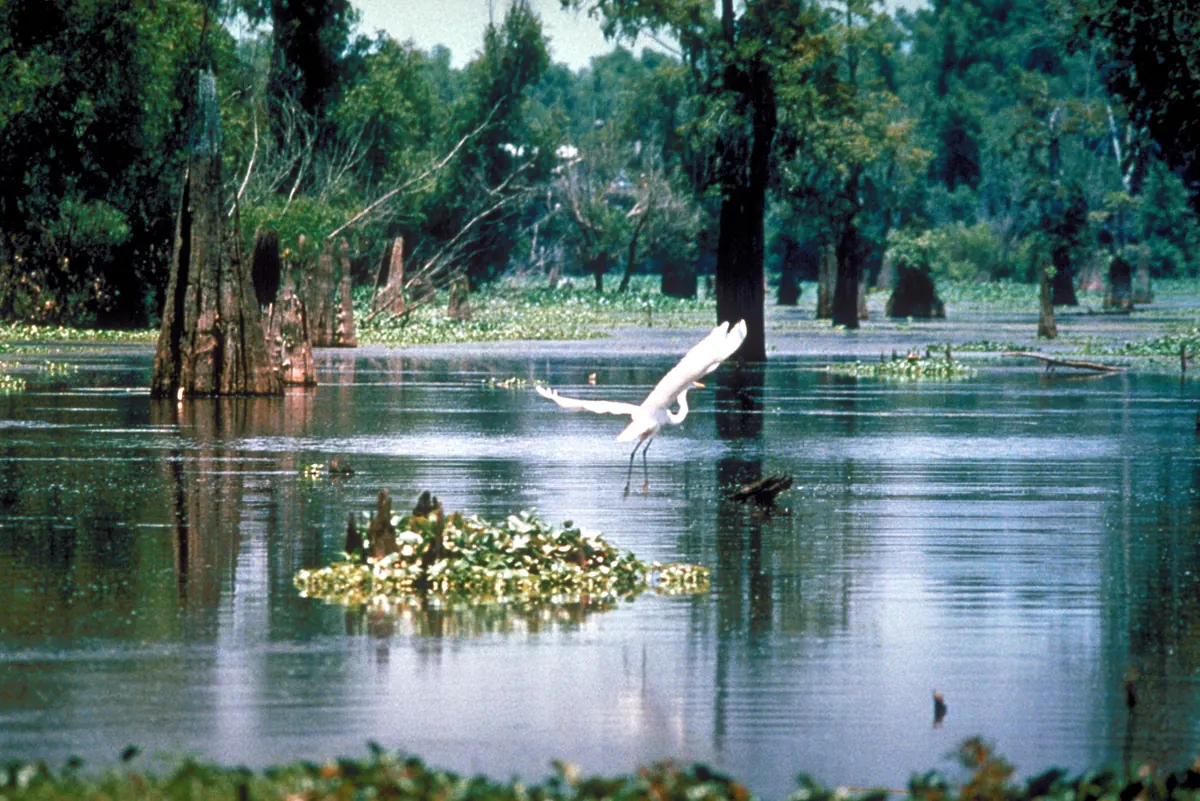
Start here

- Rails in the rice. Yellow rails reach southwest Louisiana around the end of October, and the most reliable way to see one is to stand beside a rice field while it is cut. The Louisiana Ornithological Society rides along with a Jefferson Davis Parish harvest on Friday, October 23, with the 24th held back in case of rain.
- Jupiter slips behind the moon. Early on Tuesday, October 6, a sliver of waning moon passes in front of Jupiter. Across Louisiana the planet pops back out from the moon’s dark edge between about 4:10 and 4:12 a.m. Central time, low in the east. Binoculars and a clear eastern horizon make it easy.
- Winter hummingbirds. Rufous hummingbirds from the Northwest build in number through October, and most of the birds that will spend the winter here settle in from late October into December. Keep one clean feeder filled and note the first day a hummingbird with rusty sides turns up.
Keep it in the Naturalist’s Field Journal. Rails, rufous hummingbirds and the first duck flights belong on the “birds I have seen” page. Use the dusk-and-dawn watch plate for the Jupiter morning and the Orionids, the pollinator watch plate for monarchs working goldenrod, and the tree-through-the-seasons plate for one bald cypress, visited weekly until it turns the color of rust.
Regions used below: North Louisiana (Shreveport, Monroe and the northern hills); Central Louisiana and the Kisatchie country; Southwest Louisiana and the Chenier Plain; Acadiana and the sugarcane parishes; Baton Rouge and the Florida Parishes; New Orleans and the southeast marshes.
When can you see yellow rails in the Louisiana rice fields?
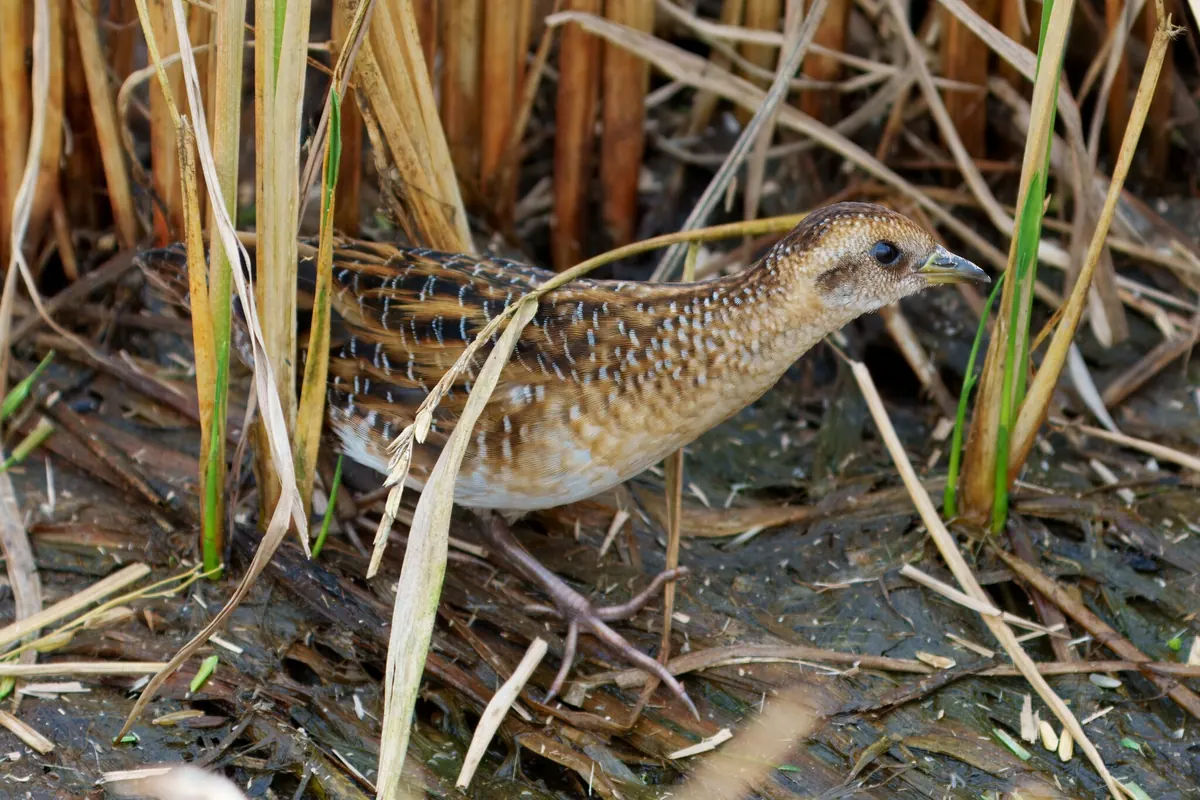
The yellow rail is a famously elusive marsh bird, high on many birders’ wish lists. It spends the winter hidden in wet grass and marsh along the Gulf and Atlantic coasts and seldom leaves cover. Southwest Louisiana found the trick: when a combine cuts a rice field, rails flush ahead of the header. USA Rice reports that the birds reach the southwest parishes at the end of October every year, and the small town of Thornwell calls itself the “Yellow Rail Capital of the World.”
Two ways to go this year:
- Louisiana Ornithological Society rail trip, Friday, October 23 (rain date October 24). Leaders take members to the cutting of private rice fields in Jefferson Davis Parish to look for yellow rails, LeConte’s sparrows and whatever else the machines kick up. Cutting starts no earlier than 10 a.m., because the rice has to be dry, and the site is announced only that morning. Sign-up opens by email at 8 a.m. on October 9, with a limit of 20 and a signed waiver.
- The Yellow Rails and Rice Festival, based in Jennings, has run for well over a decade around the turn of October into November; in 2024 it opened with an orientation in Jennings on October 31. We could not confirm the 2026 dates from the organizers, so check with them before planning a trip. In past years farmers have let registered birders ride on the combines.
The same flat country of rice and crawfish ponds is home to Louisiana’s reintroduced whooping cranes. LDWF and its partners released ten juvenile cranes at the White Lake Wetlands Conservation Area in 2011 to start a flock that stays in the state all year; the International Crane Foundation has led festival field trips into these fields to look for them. If you see one, enjoy it from the road and report it to LDWF. Snipe season opens October 31, so hunters in the rice country need to know a crane when they see one.
When does sugarcane harvest start, and why are fields burning?
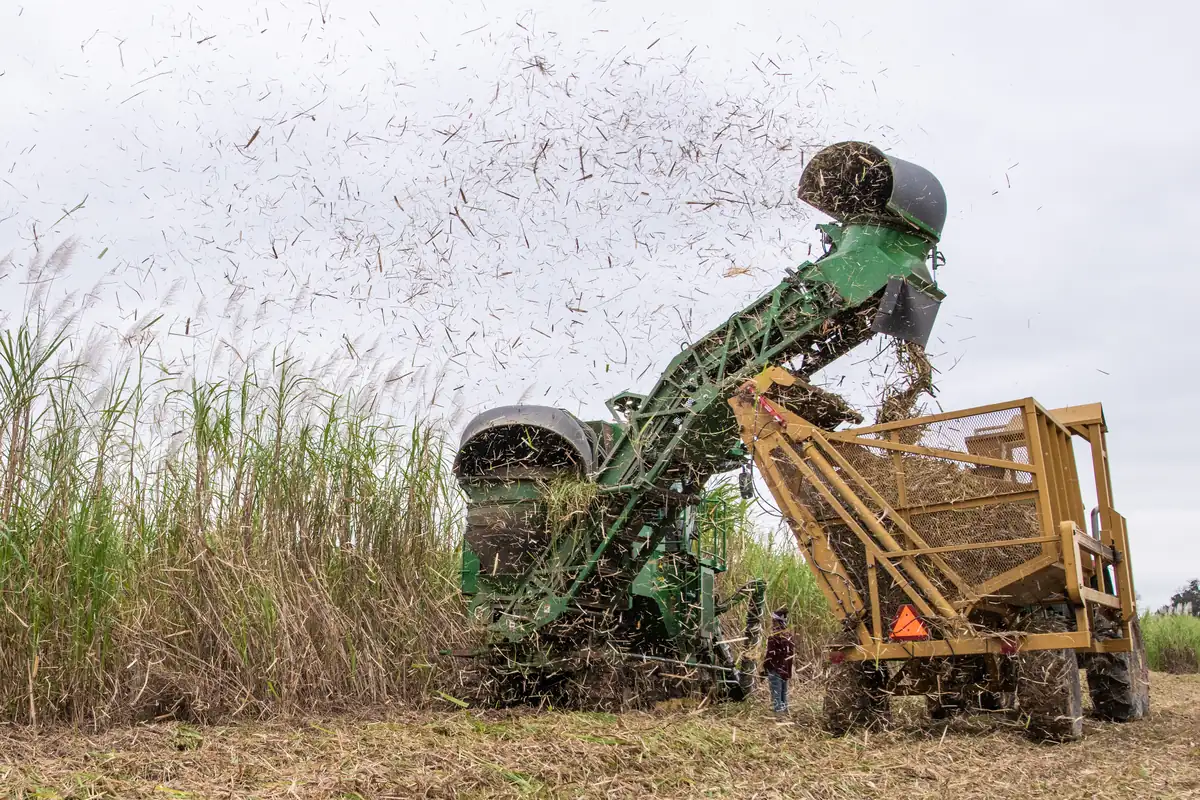
From Pointe Coupee down through the River Parishes and across Bayou Teche and Bayou Lafourche, fall is grinding season: sugarcane is cut in the fields and trucked to the mills. The start moves a little each year. In 2017, for example, the American Sugar Cane League reported that grinding began in the last week of September at Raceland and in the first week of October at Lafourche Sugars, and that some mills keep going into January. In July the LSU AgCenter expected a larger crop in 2026, with federal estimates of 5,000 to 6,000 more acres than last year, tempered by an invasive pest, the pasture mealybug, found in 14 parishes including Iberia and Pointe Coupee.
The smoke columns you see on fall afternoons are prescribed burns. Burning removes 30 to 50 percent of the leafy trash on the stalks, and that trash is a fifth to a quarter of the plant’s weight, so it saves hauling, fuel and wash water at the mill, according to LSU AgCenter researchers. Growers are trained through a Certified Prescribed Burn Manager program run by the Louisiana Department of Agriculture and Forestry, and the state’s smoke guidelines tell them to keep smoke off highways and away from schools, clinics and neighborhoods. The National Weather Service offices in Shreveport, Lake Charles and New Orleans put out a daily smoke-dispersion Category Day that burners use to decide whether conditions allow a burn.
For a naturalist, a cane field in harvest is worth a slow drive past: note what gathers on the freshly cut rows and the field edges, and write down the date the first trucks roll in your parish. If you meet smoke across a road, slow down and turn on your headlights.
When do winter hummingbirds arrive in Louisiana?
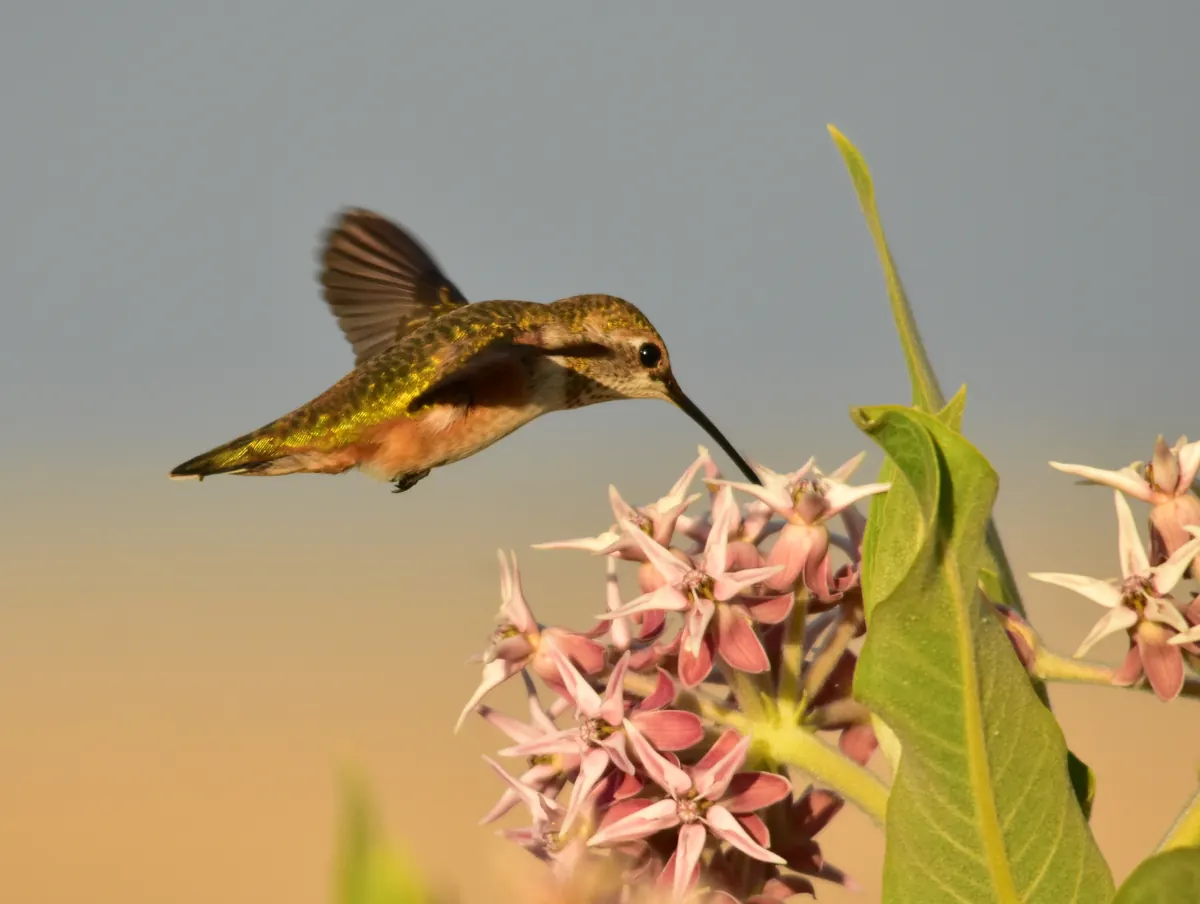
Few eastern states offer better odds of a winter hummingbird than Louisiana, and October is when the winter crowd starts to build. The Louisiana Ornithological Society’s account of the rufous hummingbird, which nests from southern Alaska to Oregon and Idaho and normally winters in western Mexico, lays out the calendar: a few “fall” birds arrive as early as late July, numbers build gradually into October, and most of the wintering birds arrive between late October and December, staying until February, March or even April. Many of the early ones are adults returning to a yard where they survived a previous winter. Rufous is the state’s most common winter hummingbird, with totals ranging from several dozen to several hundred a winter.
Females and young birds of the rufous group are very hard to tell from their close relatives, so a clear photo of the tail and the date is worth more than a quick guess. Keep at least one feeder clean and filled with fresh sugar water through the fall; a rufous that finds it in October may stay until spring. Put the first-arrival date in the Naturalist’s Field Journal and set it beside next year’s.
What other birds arrive in Louisiana in October?
-
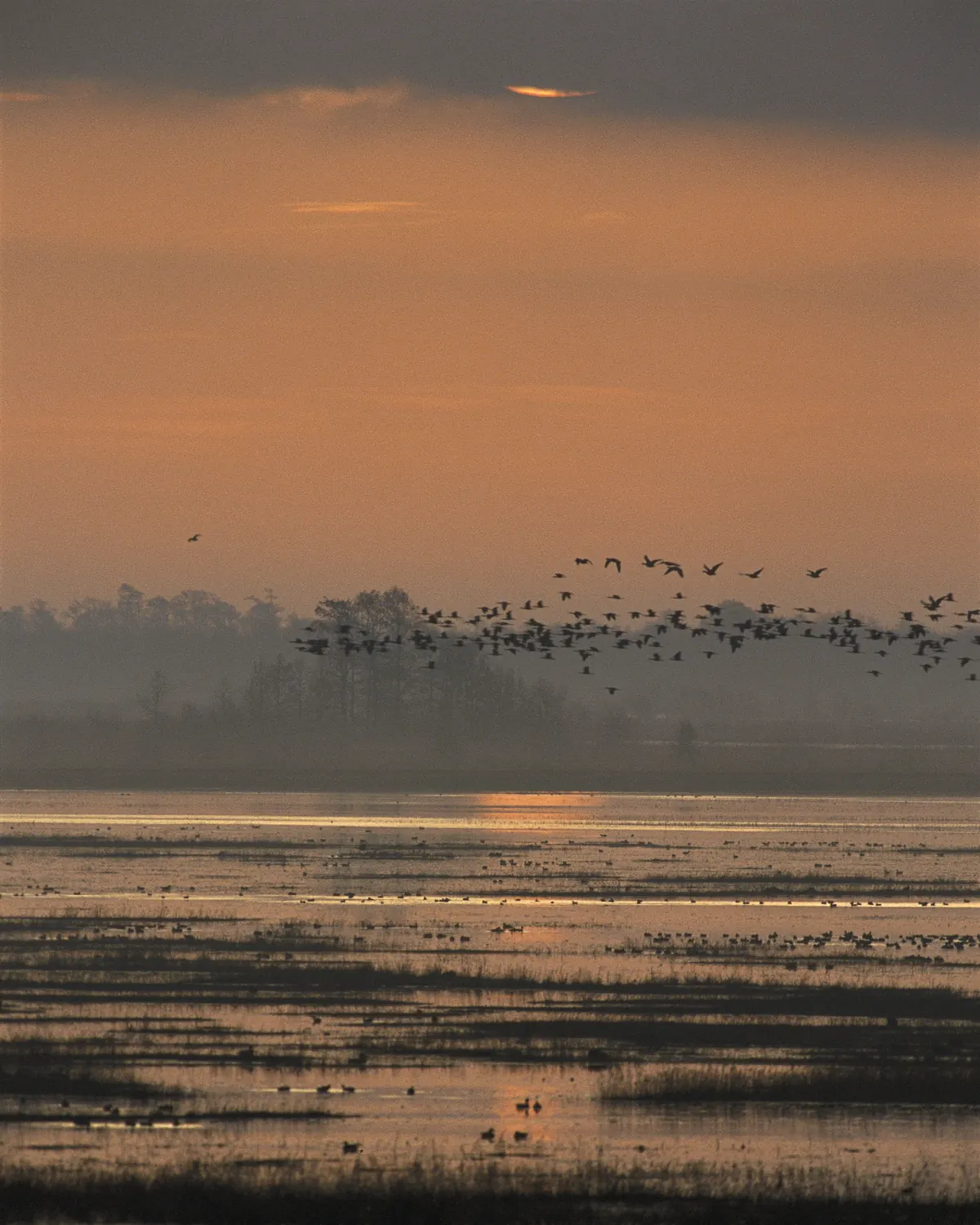
Ducks and geese on the Chenier Plain
Building through the fall; biggest numbers in winter · Lacassine, Cameron Prairie and Sabine refuges
These refuges sit at the southern end of the Mississippi and Central flyways and were created for wintering waterfowl. Lacassine Pool is a sanctuary where white-fronted and snow geese gather with pintails, teal, mallards, gadwalls, shovelers and wigeon; Cameron Prairie adds ring-necked ducks, snipe and, in its shallow water, yellowlegs and dowitchers. Crested caracaras have become a regular winter sight at Cameron Prairie. Pintail Wildlife Drive there is a good place to count the first flocks as they come in.
-
Black-bellied whistling ducks
All year; special season October 3–11 · Rice country, refuges and suburban ponds
These long-legged, pink-billed ducks whistle rather than quack and often perch in trees. Louisiana now holds an experimental hunting season for them, October 3–11, with a permit and mandatory harvest reporting. Listen for the high, squeaky whistle overhead at dusk.
-
Bald eagles on a winter calendar
Nesting through winter and early spring · Southeastern coastal parishes; some large northern and central lakes
Louisiana’s eagles nest in winter and early spring, the reverse of the northern birds. LDWF’s rare animal account says they build in the tops of cypress trees near open water, mostly in the southeastern coastal parishes, and reuse nests that can reach about 8 feet across. Watch from a distance: disturbance at the nest is one of the threats the state lists.
-
Migrants in the chenier woods
Early and mid-October · Peveto Woods, Holly Beach, Sabine NWR
The oak-covered ridges along the Cameron Parish coast are the last woods southbound migrants pass over before open Gulf water, and they can hold warblers and flycatchers after a front. The Louisiana Ornithological Society holds its fall meeting in Hackberry, October 9–10. On October 10 its members’ field trips cover Cameron Prairie, Rockefeller Refuge, Rutherford Beach, Peveto Woods, the Holly Beach area and the trails at Sabine NWR that are open.
-
October Big Day
Saturday, October 10 · Anywhere
eBird’s October Big Day asks everyone to go birding on the same day and submit what they see; last year about 900,000 people took part worldwide. A backyard list counts.
When do monarchs migrate through Louisiana?
Monarch Watch publishes the peak of the fall migration by latitude, built from years of tag recoveries. Louisiana spans about four degrees, so the peak sweeps from the Arkansas line to the Gulf across roughly three weeks of October:
| Latitude | Louisiana places near it | Midpoint | Peak window |
|---|---|---|---|
| 33° N | Homer, Farmerville, Bastrop (the Arkansas line) | Oct 7 | Sept 29 – Oct 11 |
| 31° N | Alexandria, Leesville, Marksville | Oct 12 | Oct 4 – 16 |
| 29° N | Grand Isle, Venice and the outer coast | Oct 18 | Oct 10 – 22 |
Shreveport and Monroe sit just south of 33° N, and Lake Charles, Lafayette, Baton Rouge and New Orleans lie near 30°, halfway between the last two rows. Monarch Watch warns that the pattern bends along coasts, where headwinds and storms, or the winds behind a front, can sweep monarchs toward the shore and bunch them up. Look for them on warm afternoons on tall goldenrod, blue mistflower, swamp sunflower and groundsel bush, all blooming now, and check sheltered trees at dusk for roosts. Send roost sightings to Journey North; tagging kits from Monarch Watch are made for exactly this passage.
When is the first freeze in Louisiana?
Not in October, for almost everyone. Of the 93 Louisiana stations in the site’s NOAA freeze data, not one has a median first freeze in October. The earliest medians belong to the northern hills: November 5 at Monroe 26 N and at the Calhoun Research Station, November 6 at Homer 1 N. In the northern and central hills a one-year-in-ten freeze can come in late October, as early as October 20 at Monroe 26 N and October 26 at Leesville and Alexandria Esler Regional Airport; farther south, even the early dates fall in November or later. Toward the coast the first freeze slides into December and, at New Orleans International Airport, to a median of December 31.
| Station | One year in ten | Median | Nine years in ten |
|---|---|---|---|
| Homer 1 N (north hills) | Oct 23 | Nov 6 | Nov 22 |
| Monroe Regional Airport | Nov 1 | Nov 15 | Dec 3 |
| Shreveport | Nov 2 | Nov 18 | Dec 5 |
| Alexandria International Airport | Nov 1 | Nov 17 | Dec 9 |
| Baton Rouge Ryan Airport | Nov 7 | Nov 26 | Dec 19 |
| Lafayette Regional Airport | Nov 13 | Dec 4 | Jan 5 |
| Lake Charles | Nov 14 | Dec 7 | Jan 7 |
| Houma | Nov 23 | Dec 17 | Jan 13 |
| New Orleans International Airport | Dec 1 | Dec 31 | Jan 31 |
Big water keeps nights milder. On the Northshore, Covington 4 NNW has a median of November 18, weeks earlier than the south shore of Lake Pontchartrain. Look up your own town on the Louisiana first-frost page, which lists every station in the NOAA set. Across nearly all of Louisiana, tender plants are safe through October.
How much daylight does Louisiana lose in October?
Close to an hour: 58 minutes in Shreveport and 51 in New Orleans and Houma, or roughly 1.7 to 1.9 minutes a day. In New Orleans the sun rises at 6:54 a.m. on October 1 and at 7:13 on the 31st, and it sets at 6:46 p.m. at the start of the month and 6:14 at the end. Once the clocks fall back an hour at 2 a.m. that first Sunday, November 1, sunrise jumps back to before 6:30 for a few weeks.
| City | Oct 1 | Oct 31 | Lost | Per day |
|---|---|---|---|---|
| Shreveport | 11 h 51 m | 10 h 53 m | 58 min | 1.9 min |
| Monroe | 11 h 50 m | 10 h 54 m | 56 min | 1.9 min |
| Alexandria | 11 h 51 m | 10 h 57 m | 54 min | 1.8 min |
| Lake Charles | 11 h 52 m | 11 h 00 m | 52 min | 1.7 min |
| Lafayette | 11 h 51 m | 10 h 59 m | 52 min | 1.7 min |
| Baton Rouge | 11 h 52 m | 10 h 59 m | 53 min | 1.8 min |
| New Orleans | 11 h 52 m | 11 h 01 m | 51 min | 1.7 min |
| Houma | 11 h 52 m | 11 h 01 m | 51 min | 1.7 min |
The Field almanac works out sunrise, sunset and twilight for any point you choose, along with the minutes lost since last week.
Is October dry in Louisiana, and what will El Niño do this winter?
October is when the steam goes out of the air. At New Orleans International Airport no month of the year is drier in the NOAA 1991–2020 normals: 3.7 inches on average, and the average high there drops from 88 °F in September to about 81 °F. Elsewhere October is a middling month for rain, 4.6 to 5.0 inches at Shreveport, Monroe, Alexandria, Baton Rouge, Lafayette and Lake Charles.
Hurricane season runs through November 30, and October has hit Louisiana hard within recent memory. Hurricane Delta came ashore near Creole in Cameron Parish on October 9, 2020, with 100 mph winds, about 12 miles east of where Laura had landed six weeks earlier. On October 28 of the same year Zeta made landfall near Cocodrie in Terrebonne Parish as a category 3 storm. Keep the hurricane kit stocked until December.
Bigger news concerns the coming winter. Better than nine chances in ten: that is how the El Niño watchers at the Climate Prediction Center, in a mid-September note dated the 10th, scored the odds that today’s Pacific warming grows into a very strong El Niño for the 2026–27 cool season. The Jackson, Mississippi, office of the National Weather Service, which covers northeast Louisiana, sums up the usual result for the Deep South: a winter and spring that run wetter and cooler than normal, as a strong southern jet stream steers storms and Gulf moisture across the region. A study it cites of the 15 biggest tornado outbreaks, each with at least 40 tornadoes, found only one during an El Niño, and El Niño generally suppresses Atlantic hurricanes, though a quiet season is never a promise. October weather feels little of this; the signal grows as winter sets in. NOAA issues its winter outlook in mid-October; meanwhile the Weather now page shows each front as it comes through.
What can you see in the Louisiana night sky this October?
-
The moon covers Jupiter
Tuesday, October 6, about 4:10–4:12 a.m. CDT · Low in the east; an open horizon helps
A crescent only about 20 percent lit comes up around 2:50 a.m. in New Orleans and slides over Jupiter at about 3:14, when the moon is only one to four degrees above the horizon, too low to see in most places. The reappearance is the part to watch. Timings from the International Occultation Timing Association have Jupiter reappearing from the moon’s dark edge at about 4:10 a.m. in Lake Charles and Lafayette, 4:11 in Baton Rouge and New Orleans, and 4:12 in Shreveport and Monroe, with the moon 13 to 16 degrees up. Watch the unlit side of the moon with binoculars a few minutes early.
-
Saturn at its best
Opposition October 4; the moon passes it October 23–24 · Up in the east at sunset, across the sky all night
Saturn’s opposition falls on October 4. The planet climbs out of the east at dusk, rides highest near midnight and sets around sunrise. It is the steady, yellowish point in an otherwise dim region of the southeastern evening sky. A fat waxing moon parks beside the ringed planet on the 23rd and again on the 24th. Any small telescope shows the rings.
-
Draconid meteors
Evening of Thursday, October 8 · Look north and high after dark
Expect only a few slow meteors an hour, but this shower favors early evening, and this year the thin old moon does not rise until close to dawn. It suits young watchers with an early bedtime.
-
Orionid meteors
Before dawn on October 21 and 22 · Anywhere dark; face east and south
The Orionid season spans October 2 through November 7, with a wide maximum on October 21–22 that can yield 10 to 20 meteors per hour where there are no city lights. The moon is waxing, so wait for moonset: about 2:30 a.m. on the 21st and 3:28 a.m. on the 22nd in New Orleans (2:42 and 3:41 in Shreveport). After that you have until roughly 6 a.m., when dawn twilight begins to wash out the faint ones.
-
Venus leaves; Jupiter and Mars rule the mornings
Venus only in the first days of the month · West after sunset; east before dawn
Venus is a bonus for the first few October evenings only, glinting just over the western skyline after sundown; then Louisiana loses it to the sun’s glare, and it passes the sun’s near side on October 23. Early risers get Jupiter, blazing in the east ahead of dawn, and dimmer, ruddy Mars above it. Mars crosses the Beehive star cluster on October 11, worth a look through binoculars.
-
The Hunter’s Moon
Sunday, October 25 and Monday, October 26 · A low eastern horizon, such as a levee or lakefront
In New Orleans the moon rises at 5:50 p.m. on the 25th, while the sun is still up, and at 6:31 p.m. on the 26th, just after sunset. Either evening gives a big orange moon over the water. Despite what some calendars say, this full moon is not a supermoon.
| Phase | Date | Time |
|---|---|---|
| Last quarter | Saturday, Oct 3 | 8:25 a.m. |
| New moon | Saturday, Oct 10 | 10:50 a.m. |
| First quarter | Sunday, Oct 18 | 11:12 a.m. |
| Full moon, the Hunter’s Moon | Sunday, Oct 25 | 11:12 p.m. (looks full on the evenings of Oct 25 and 26) |
| Last quarter | Sunday, Nov 1 | 2:28 p.m. CST |
Check the cloud forecast for your parish on Today’s sky, and get moonrise and moonset for your own town from the moon phase calendar.
What is blooming, turning and on the move in Louisiana woods and marshes?
-
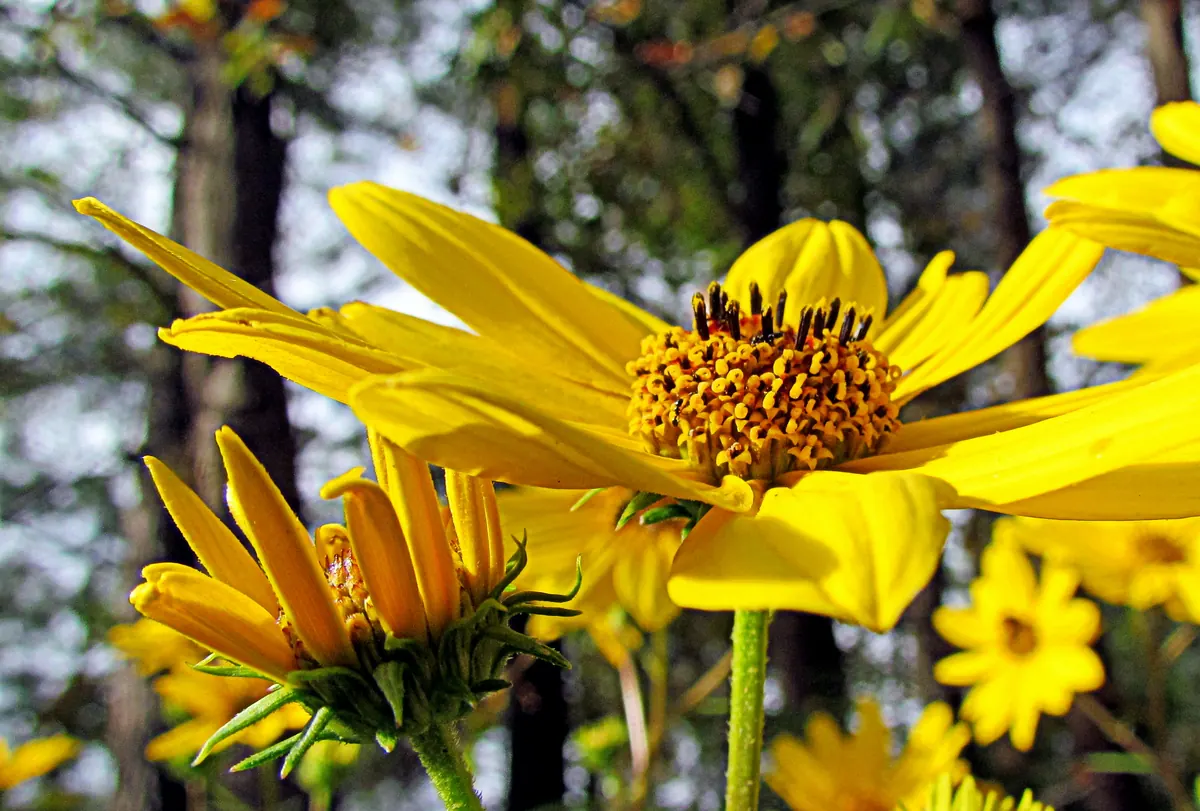
Fall wildflowers
Through October, several into November · Roadsides, ditches, marsh edges, pine flatwoods
The Lady Bird Johnson Wildflower Center lists tall goldenrod and swamp sunflower blooming August into November, blue mistflower from July into November, and groundsel bush, the shrubby white “sea myrtle” of coastal ditches and marsh edges, from August through October. All feed late butterflies and bees. Swamp sunflower grows naturally in floodplains and bottomlands and can turn a wet roadside solid yellow.
-
Berries and fall color
Berries now; leaf color late in the fall · Woods edges, swamps, Kisatchie National Forest
American beautyberry carries clusters of glossy purple fruit that last after the leaves drop. Winged sumac turns reddish-purple, blackgum goes scarlet, and bald cypress in the swamps turns a warm rust before shedding its needles. Louisiana’s color comes late and patchy, following the cool fronts. The Forest Service singles out the mixed pine and hardwood forest of one of its central Louisiana districts for contrasting fall scenery; Kisatchie, the state’s only national forest, covers more than 604,000 acres.
-
Black bears near homes
Fall · Forested bottomlands and river basins
The Louisiana black bear is the state mammal and came off the federal threatened list in 2016. LDWF says the most common complaint about bears involves unsecured garbage, and that a bear that finds food once will come back. In bear country, take down bird feeders when bears are active, keep garbage in a shed until pickup day, and never feed or approach a bear.
-
Alligators and snakes
Active on warm days · Marshes, bayous, swamp trails
Alligators are still basking on warm October afternoons before their winter slowdown; Sabine refuge schedules its lottery alligator hunt for September, after hatching and before hibernation. Give them plenty of room and keep dogs leashed near water. LDWF’s snake guide lists six venomous species in Louisiana: the copperhead, cottonmouth, harlequin coralsnake and three rattlesnakes. The cottonmouth lives statewide. Watch your feet on boardwalks and in leaf litter.
What can families do outside in Louisiana in October 2026?
- Wild Things, Saturday, October 10, 10 a.m. to 4 p.m. The Southeast Louisiana National Wildlife Refuges throw a free outdoor festival at refuge headquarters in Lacombe, with live animals, hayrides, canoe paddling, music and children’s activities. Admission and parking are free.
- A ranger walk at Barataria. Jean Lafitte National Historical Park and Preserve leads a one-hour Wetland Trace walk along a mile of boardwalk every Wednesday and Thursday in October at 1 p.m., meeting at 4917 City Park Street in the town of Jean Lafitte. On Thursday, October 15, at 10 a.m., Junior Scientists: Birding Basics teaches binocular use and then walks the trail slowly; a few loaner binoculars are available.
- October Big Day, also Saturday, October 10. Count birds for any length of time and enter them in eBird. The same weekend the Louisiana Ornithological Society meets in Hackberry, October 9–10, with coastal field trips for members on the 10th.
- PlantFest at LSU’s Hilltop Arboretum, Baton Rouge, the arboretum’s fall plant sale: Saturday, October 10, 9 a.m. to 4 p.m., and Sunday, October 11, noon to 4 p.m. Bring home one native plant for butterflies and keep a list of what visits it.
- Watch the sky together. The Draconids on the evening of October 8 need no alarm clock; the Hunter’s Moon rising on October 25 or 26 needs only a clear view east. Sign up for Project FeederWatch, whose season runs November 1 through April 30, and log your wintering hummingbirds.
All of these dates were checked against each organizer’s published calendar on September 30; confirm before you drive, especially if weather threatens. Other states and months are gathered on the nature calendar.
Safety notes for October in Louisiana
- Deer seasons open in stages. The state is split into ten deer areas. Archery is already open in the southwest and coastal areas (3, 7, 8 and 10) and opens October 1 elsewhere, bucks-only for the first half of the month in Areas 5, 6 and 9. Primitive firearms run October 10–16 in Areas 3, 7, 8 and 10, and modern firearms open there on October 17. In Area 2, the northwest parishes from Caddo and Bossier to Union and Winn, primitive firearms run October 24–30 and firearms open October 31. Youth and honorably discharged veterans hunt private land October 10–16 in Area 2 and October 31–November 6 in Areas 1, 4, 5, 6 and 9. Wildlife management areas and national forests set their own schedules.
- Other October openers: squirrel and rabbit October 3; black-bellied whistling duck October 3–11; doves again from October 10 (North Zone) and October 17 (South Zone); snipe October 31.
- Hunter orange or blaze pink. During the firearms deer season, anyone hunting any wildlife while carrying buckshot, slugs, a primitive firearm or a centerfire gun must display a combined 400 square inches or more of Hunter Orange or Blaze Pink on the head, chest or back; on private land a cap of either color will do, and a hunter using an elevated stand on private land may go without it once up in the stand but needs it on the walk in and out. On WMAs every hunter, archers and small-game hunters included, needs the 400 square inches plus an orange or pink cap during firearms deer season; only waterfowl and dove hunters are exempt. Hikers and birders are not required to wear it but are encouraged to, and it is simple sense on public land this month.
- Visiting a WMA to bird or hike still needs paperwork for adults: the Louisiana Ornithological Society reminds members that access requires a qualifying license, with a $20 yearly or $5 five-day option; people 17 and under are exempt.
- Hurricane season lasts through November 30. Field-burning smoke can cross highways in cane country; slow down. Give alligators room, look before stepping on trails, and keep food and garbage away from bears.
Sources
- USA Rice: Rain won’t stop the Yellow Rails & Rice Festival (November 1, 2024)
- Louisiana Ornithological Society: meetings and field trips (Fall Meeting, Hackberry, October 9–10, 2026)
- Louisiana Ornithological Society: fall 2026 field trips (rails in rice country, October 23)
- Louisiana Ornithological Society: LOS News no. 270, fall 2026
- International Crane Foundation: Yellow Rails and Rice Festival field trip
- Cornell Lab of Ornithology, All About Birds: Yellow Rails and Rice Festival listing
- LDWF: whooping crane reintroduction in Louisiana
- American Sugar Cane League: sugarcane grinding season winding down (2017)
- LSU AgCenter: for Louisiana sugarcane producers, huge harvest tempered by arrival of invasive insect (July 16, 2026)
- LSU AgCenter: prescribed burns help the sugarcane industry and reduce smoke and ash problems
- LSU AgCenter and partners: Louisiana smoke management guidelines for sugarcane harvesting (PDF)
- Louisiana Ornithological Society: let’s take another look at “rufous” hummingbirds
- USFWS: Lacassine National Wildlife Refuge, about the refuge
- USFWS: Cameron Prairie National Wildlife Refuge, about the refuge
- USFWS: Sabine National Wildlife Refuge, visiting and hunting
- LDWF: Rare Animals of Louisiana, bald eagle fact sheet (PDF)
- eBird: October Big Day, October 10, 2026
- Monarch Watch: peak migration dates by latitude
- Monarch Watch: tagging program
- Journey North: monarch sightings and roost reports
- NOAA NCEI: U.S. Climate Normals 1991–2020 (first-freeze probabilities, as used on the site’s Louisiana frost page)
- NOAA NCEI: monthly normals 1991–2020 for New Orleans, Baton Rouge, Lake Charles, Shreveport, Monroe, Lafayette and Alexandria (data API)
- U.S. Naval Observatory: sunrise, sunset, moonrise and moonset (data API; example for New Orleans, October 1)
- U.S. Naval Observatory: moon phases 2026
- National Hurricane Center: tropical cyclone climatology
- NWS Lake Charles: Hurricane Delta, October 4–10, 2020
- National Hurricane Center: tropical cyclone report, Hurricane Delta (PDF)
- National Hurricane Center: tropical cyclone report, Hurricane Zeta (PDF)
- Climate Prediction Center: ENSO diagnostic discussion, September 10, 2026
- NWS Jackson, Mississippi: El Niño and La Niña in the Deep South (including northeast Louisiana)
- NOAA Climate.gov: United States El Niño impacts
- International Occultation Timing Association: occultation of Jupiter, October 6, 2026 (predictions for Louisiana cities)
- American Meteor Society: 2026 meteor shower calendar
- EarthSky: meteor shower guide
- EarthSky: visible planets tonight
- Fred Espenak: full moons at perigee, 2001–2100
- Lady Bird Johnson Wildflower Center: tall goldenrod (Solidago altissima)
- Lady Bird Johnson Wildflower Center: swamp sunflower (Helianthus angustifolius)
- Lady Bird Johnson Wildflower Center: blue mistflower (Conoclinium coelestinum)
- Lady Bird Johnson Wildflower Center: groundsel bush (Baccharis halimifolia)
- Lady Bird Johnson Wildflower Center: American beautyberry (Callicarpa americana)
- Lady Bird Johnson Wildflower Center: winged sumac (Rhus copallinum)
- Lady Bird Johnson Wildflower Center: blackgum (Nyssa sylvatica)
- Lady Bird Johnson Wildflower Center: bald cypress (Taxodium distichum)
- USDA Forest Service: Kisatchie National Forest
- LDWF: Louisiana black bear
- LDWF: Louisiana BearWise
- LDWF: snake species field guide (venomous snakes)
- LDWF: northern cottonmouth
- USFWS: Big Branch Marsh NWR events (Wild Things, October 10, 2026)
- National Park Service: Jean Lafitte National Historical Park and Preserve calendar (Barataria Preserve programs)
- LSU Hilltop Arboretum: PlantFest 2026 and calendar
- Project FeederWatch: how to participate
- LDWF: 2026–2027 Louisiana hunting and WMA regulations, updated August 7, 2026 (PDF; deer areas, seasons, hunter orange and blaze pink)
- Photos via Wikimedia Commons; licenses and photographers are credited under each picture
