What to look for in nature in Louisiana this February
February is the month Louisiana turns the corner. The days stretch noticeably, the swamp red maples color the bottomlands, and along the coast the first ruby-throated hummingbirds of the year come in off the Gulf. Out on the prairie, whooping cranes start building nests in flooded fields and marsh, while in the bottomland forests mother bears nurse newborn cubs in hollow trees. It can still freeze, and it can also storm hard. Below: the month’s best sights, where to find them, and the source behind every date.
Other months in Louisiana: October, November, December, January.
Start here

- Stand at a field edge at dusk. On a calm, mild evening, find an old field or clearing beside damp woods and wait for the light to fade. A buzzy, nasal call from the grass, then a twittering flight overhead, is a male woodcock putting on his show before the flight north.
- Hang a clean hummingbird feeder. Baton Rouge Audubon Society suggests getting feeders up in February. Ruby-throated hummingbirds return to the Gulf Coast in late February and March, and a feeder is the easiest way to note your yard’s first one.
- Count birds for the Great Backyard Bird Count. Between Friday the 12th and Presidents’ Day, Monday the 15th, watch birds for 15 minutes and submit what you saw. A backyard, a bayou bank or a levee all count.
Keep February in the Naturalist’s Field Journal. A woodcock evening at the field edge belongs on the dusk and dawn watch, and the buzz, peep and whistle of that same hour make a good map of sounds. A mayhaw or red maple you sketch now, and again when it fruits in spring, starts a tree through the seasons page. The first hummingbird at the feeder and the geese passing north go on birds I have seen, with each first date jotted in the daily field log.
Regions used below: North Louisiana (Shreveport, Monroe and the northern hills); Central Louisiana and the Kisatchie country; Southwest Louisiana and the Chenier Plain; Acadiana and the sugarcane parishes; Baton Rouge and the Florida Parishes; New Orleans and the southeast marshes.
When do whooping cranes start nesting in Louisiana?
Nesting starts in late winter, and some of the earliest nests are already built in February. Louisiana’s flock of whooping cranes is a non-migratory one: it began in 2011 when LDWF released 10 young birds on its White Lake property in Vermilion Parish, the first wild whoopers in the state since the last one was captured at White Lake in 1950. The cranes now live year round in the flat farm and marsh country of the southwest, and in the past few winters they have begun raising their own young.
LDWF’s report on the 2024 breeding season gives a clear picture of the calendar. That year 15 pairs made 24 nests in seven parishes. The first was started on January 23, and the first attempts of the other pairs followed in a spread: one in January, four in February, seven in March and three in April, with late re-nests running into June. One chick hatched on February 23 in Calcasieu Parish. The surprise is where the birds chose to build: 18 of the 24 nests were on private farmland, and all but two of those sat in fields that were actively being crawfished. The other six were in marsh, two of them at White Lake.
The 2026 season set a record. LDWF announced in July that 18 of the 20 pairs that nested hatched at least one chick and that 10 young cranes fledged, the most for this project or for any whooping crane reintroduction. That brought the Louisiana flock to 84 birds, 32 of them hatched in the wild here. The first wild-hatched chick in Louisiana came in April 2016, the state’s first hatch in more than 75 years.
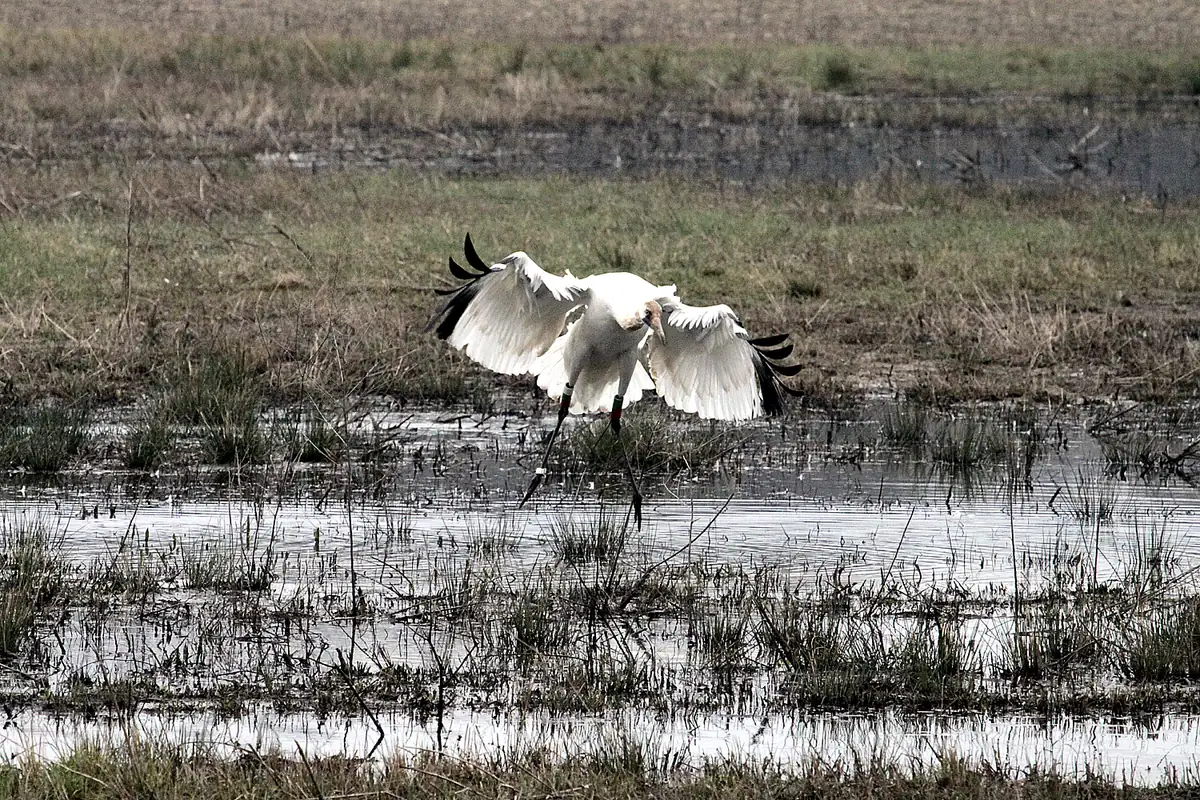
Whooping cranes stand about five feet tall, are white with a red crown and a black face mark, and show black wing tips in flight, with neck and legs stretched straight out. LDWF tracked the flock across 24 parishes in 2023–24, and the 2024 nests and chicks the report describes were in Jefferson Davis, Calcasieu, Cameron and Vermilion parishes, among others. If you see one this month, especially a pair standing close together in a flooded field, stay in your car, keep well back, and report the sighting on LDWF’s whooping crane page. The birds are protected by federal and state law, and LDWF asks anyone who sees one harassed to call its enforcement line at 1-800-442-2511.
Where do Louisiana’s woodcock go at the end of winter?
North, and many of them leave in February. American woodcock come to Louisiana for the winter from breeding grounds that stretch from the Great Lakes to Maine and southern Canada. Hunting season closed January 31, and from here to early March the state’s woodcock are getting ready to go.
Two studies with LDWF biologists show how that happens. In the early 1980s, the department examined woodcock taken in Louisiana in the first half of February. More than nine in ten of the 262 males were already in breeding condition, but only 2.4 percent of the 376 females were close to laying, and the authors concluded that woodcock nesting in Louisiana is uncommon, scattered through the north and center of the state and only part of the south. Three decades later, researchers fitted satellite transmitters to woodcock wintering in Louisiana and Texas and followed them north. Across the 40 tagged birds they followed through spring, the average departure was February 22 (the median was February 19), with the earliest leaving on February 1 and the latest on March 16. The average trip lasted about 53 days with six or so stopovers and covered roughly 1,900 kilometers, about 1,180 miles, in a straight line. Several of the birds caught in Louisiana and Texas ended up nesting as far away as Ontario and Quebec.
Before they leave, the males sing. The federal wildlife agency’s spring singing-ground survey counts males by this show: a buzzy ground call, the “peent,” followed by a spiraling flight upward and a fluttering, chirping descent, with sound made by both voice and wings. LDWF’s habitat work on Sherburne WMA found that woodcock use old fields with scattered brush at night, for both courtship and feeding, and damp thickets by day.
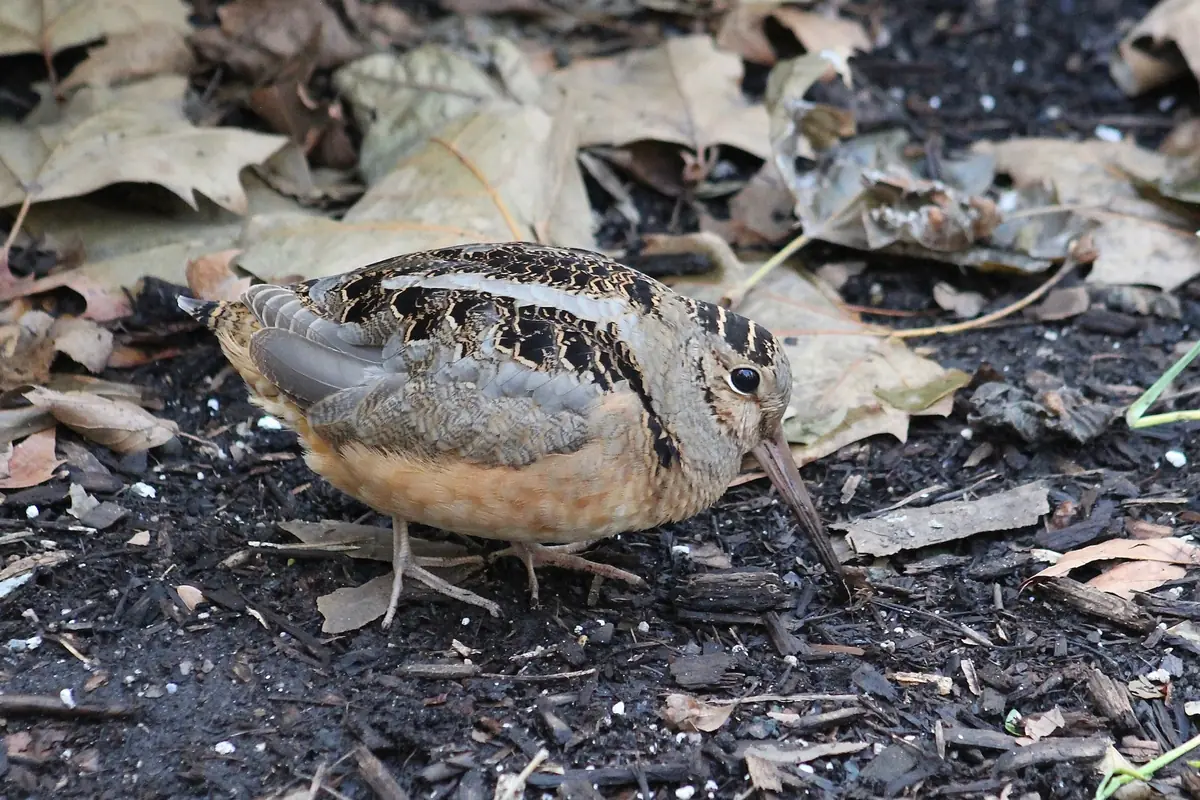
To hear one, go out on a still evening early in the month, when more birds are still here. Stand quietly at the edge of an overgrown field beside moist woods, in the Atchafalaya bottoms or the pine and hardwood country of central and north Louisiana, starting about 15 minutes after sunset. Listen for the peent from the ground, then watch the dim sky for a small, chunky bird on whistling wings.
When do sac-a-lait start spawning in Louisiana?
Usually beginning in February, as shallow water warms. Sac-a-lait, the Cajun French name for crappie (north Louisianans call them white perch), are Louisiana’s official state freshwater fish, and the state has two kinds. LSU’s Sea Grant fact sheet explains that black crappie prefer clear, still lakes and back swamps, while white crappie favor the moving, muddier water of rivers and bayous. They are the earliest spawners of their family, ahead of bass and bream, and begin to spawn in earnest once water reaches about 61 °F.
LDWF’s winter fishing forecast describes the move. When the water is in the 50s or colder, sac-a-lait hold in deep water along river channels, creek bends and deep cover. As surface temperatures climb into the 60 to 65 degree range, they shift toward shallow spawning areas, gathering in large numbers near brush, laid-down trees, cypress knees and the edges of grass beds, and they nest at the base of that cover. The forecast notes that crappie and bass head to their spawning grounds in February, with sunfish close behind to feed on the eggs. In its March forecast, the department says sac-a-lait are still spawning in parts of the state, and that the peak is over by April.
The fish are touchy about water clarity. The Sea Grant sheet cites research showing that adults abandon nests when muddy water darkens the bottom, so a stretch of heavy rain can shut down a spawn that looked ready to go.
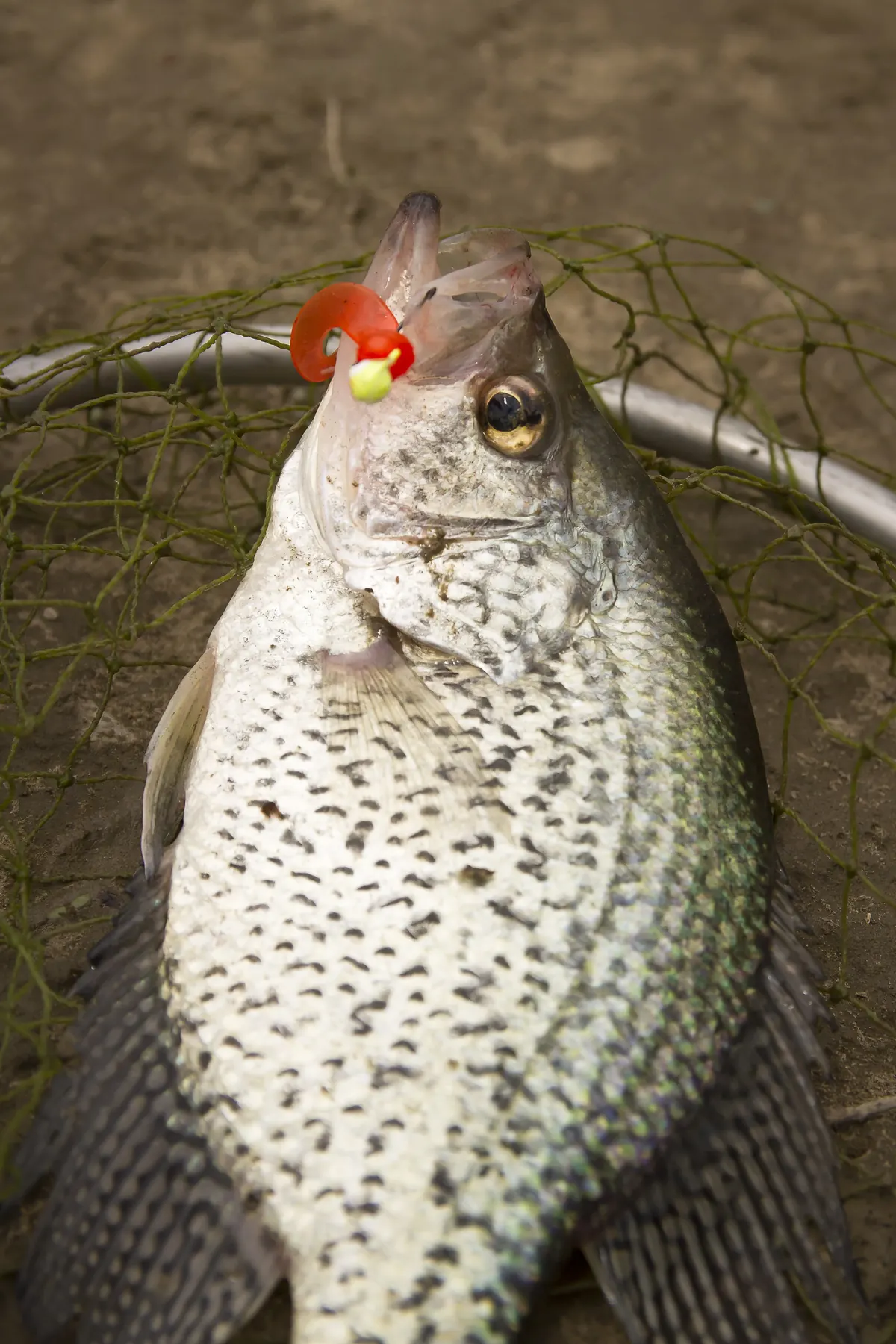
If you are not fishing, a quiet paddle or a walk along a clear, shallow bayou on a warm afternoon may show you the fish holding near stumps and knees. Kids can practice at one of LDWF’s Get Out & Fish! ponds, described in the families section.
When do ruby-throated hummingbirds come back to Louisiana?
The first ones usually arrive late in February. Baton Rouge Audubon Society’s guide to feeding hummingbirds explains that ruby-throats spend the winter in Mexico and Central America and generally return to the Gulf Coast in late February and March. Because they nest all the way from the coast to Canada, the wave of returning birds keeps moving north through the state and beyond for a month or more. The society’s advice is simple: hang feeders in February, and keep the nectar fresh.
At the same time, a different set of hummingbirds is about to leave. According to the society, almost any hummingbird at a Louisiana feeder from November through February belongs to a western species, and these winter visitors usually stay through February or March before setting off across the continent. Rufous hummingbirds are the most frequent; black-chinned and the larger, green-throated buff-bellied hummingbird come next. So a feeder in late February can host a departing western visitor and an arriving ruby-throat in the same week.
An adult male ruby-throat shows a glittering red throat and green back; a rufous is washed with orange-brown on the sides and tail. Females and young are far harder, and banders often need the bird in hand.
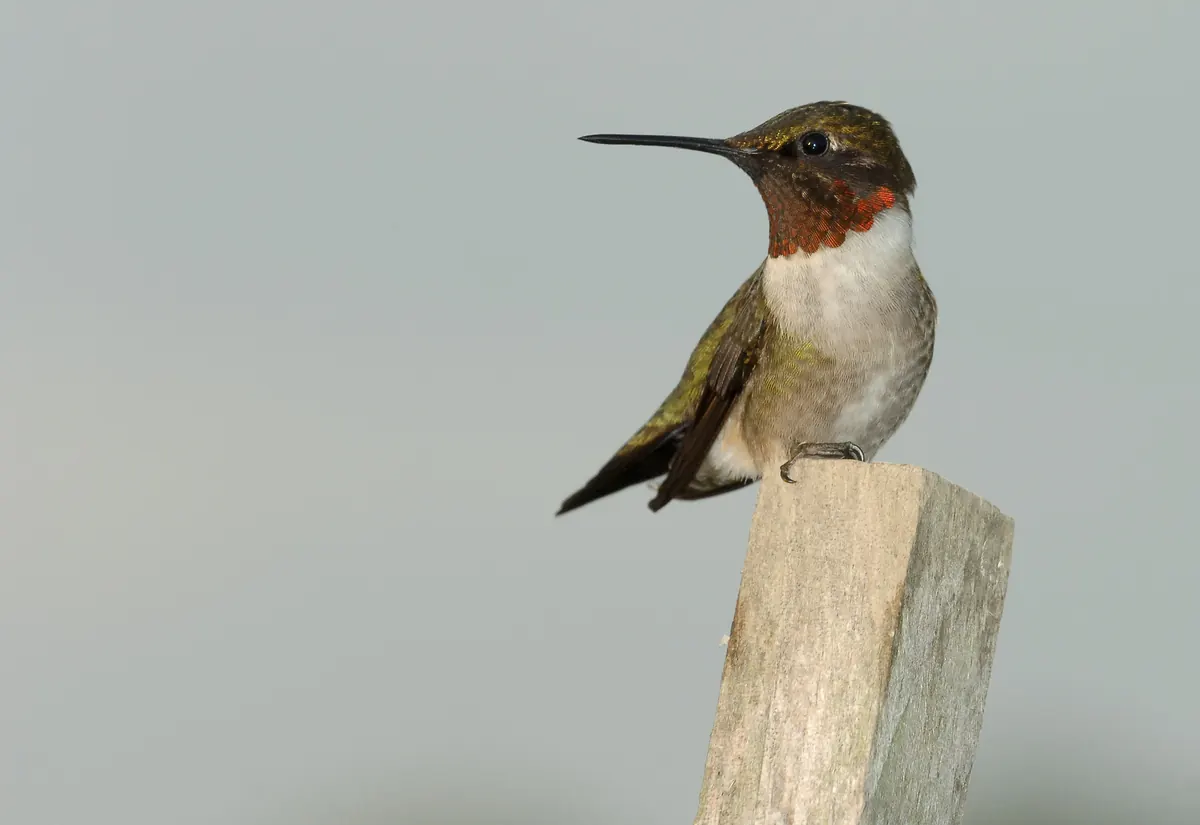
Report your first ruby-throat of the year to Journey North’s hummingbird map, which charts the spring arrival across the continent, and report any western hummingbird to the society so local banders can follow it. The society’s recipe is a quarter cup of plain table sugar to each cup of water, with no red coloring, and it says to discard the mix and wash the feeder once it turns cloudy.
Are Louisiana black bear cubs born in February?
Many of them are. LDWF’s fact sheet on the Louisiana black bear says females produce one to five cubs, two on average, every other year in January or February. The cubs are born in the den, which for this subspecies can be a large tree cavity, a slash pile, a thicket or simply a bed in thick vegetation, and they stay inside with their mother until spring.
The state’s bear management plan explains why mothers stay put even in a mild winter. Some Louisiana males remain active all season when food is around, but a pregnant female must den, because cubs are born only in the winter den. During dormancy, the plan notes, a bear’s metabolism drops by half and it may go without eating or drinking. When the dormant period ends in March or April, females with new cubs are usually the last bears to come out. The cubs spend the next winter denned with their mother as yearlings and stay with her until they are about 15 to 18 months old.
Biologists have used this denning season to help the population grow. From 2001 to 2009, according to the plan, crews moved 48 adult females, together with 104 cubs, in winter from the Tensas River basin to east-central Louisiana to start a new breeding group. LDWF’s fact sheet places today’s bears in three main areas: around Tensas River National Wildlife Refuge in the northeast, the northern Atchafalaya Basin near Pointe Coupee Parish, and the lower Atchafalaya, mostly in St. Mary Parish.
February is not a month to go looking for bears. If you come on a big hollow cypress or a brush pile with fresh digging in bear country, back away and leave it undisturbed. A mother flushed from her den may abandon the cubs.
What blooms in Louisiana in February?
Spring comes early to Louisiana woods and wet bottoms. These five are worth a walk to find.
-
Mayhaw
Late February to mid-March · Wet woods, creek and river bottoms; backyard orchards
Louisiana adopted the mayhaw as its official state fruit tree in 2014, and mayhaw jelly is one of its two official state jellies. LSU AgCenter horticulturists say the trees usually flower between late February and mid-March, with white flowers about an inch across, and the tart red fruit ripens in late April or early May, hence the name. The Wildflower Center lists the species native to Louisiana as a tree of low, wet woods and river bottoms.
-
Swamp red maple
Flowering February through April · Swamps, bottomlands and wet woods statewide
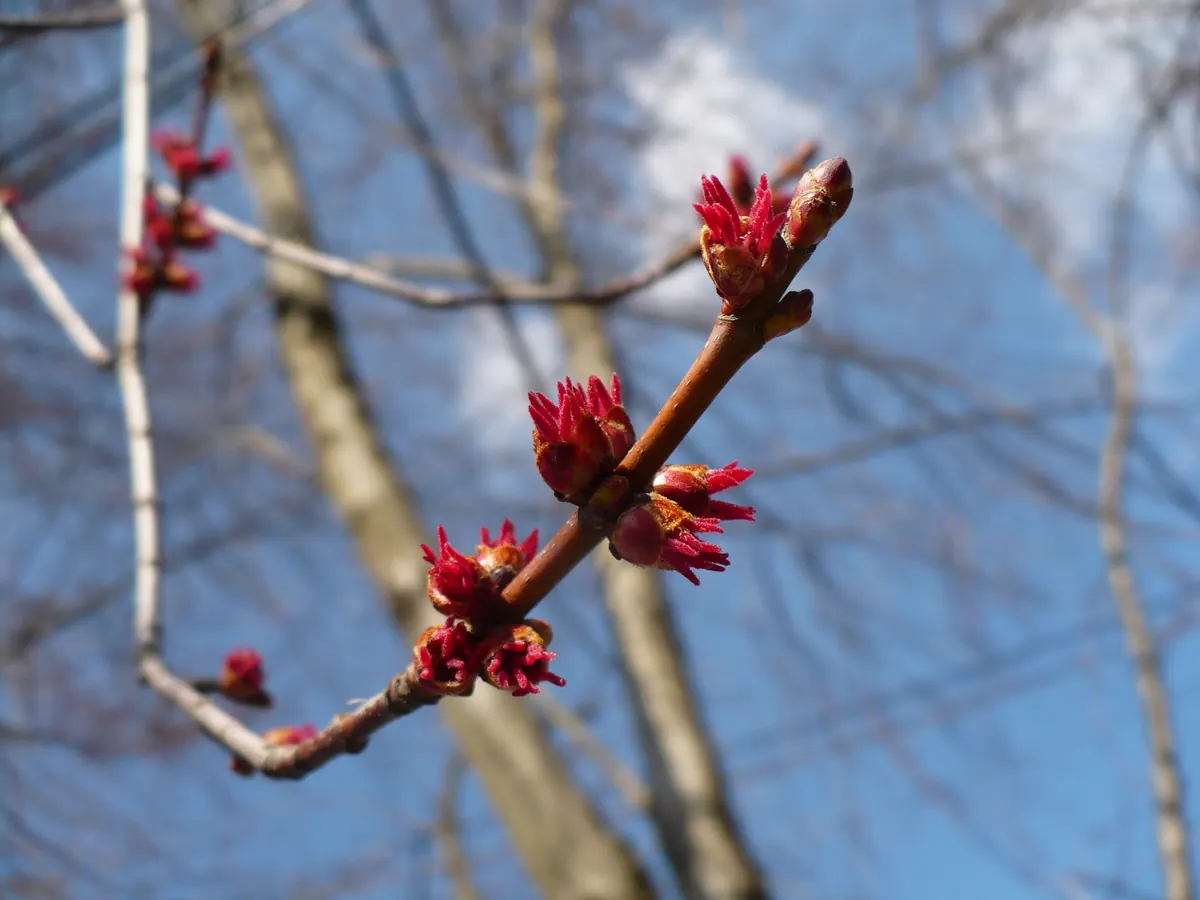
In January the buds were swelling; now the clusters of small red flowers open on bare twigs, and soon after, the winged seeds (samaras) ripen in shades of red. Drummond’s red maple, the swamp form of the species, is the one in Louisiana’s wet woods. From a bridge or levee, a bottomland in late February can look tinged with red from end to end, weeks before any leaves appear.
-
Spring beauty
Flowers from January into May · Rich, moist woods and thickets
A low wildflower with loose clusters of white or pale pink flowers striped with darker pink veins, held on slender stems 4 to 16 inches tall with a single pair of grass-like leaves. It grows from an underground tuber and can carpet the ground in large patches.
-
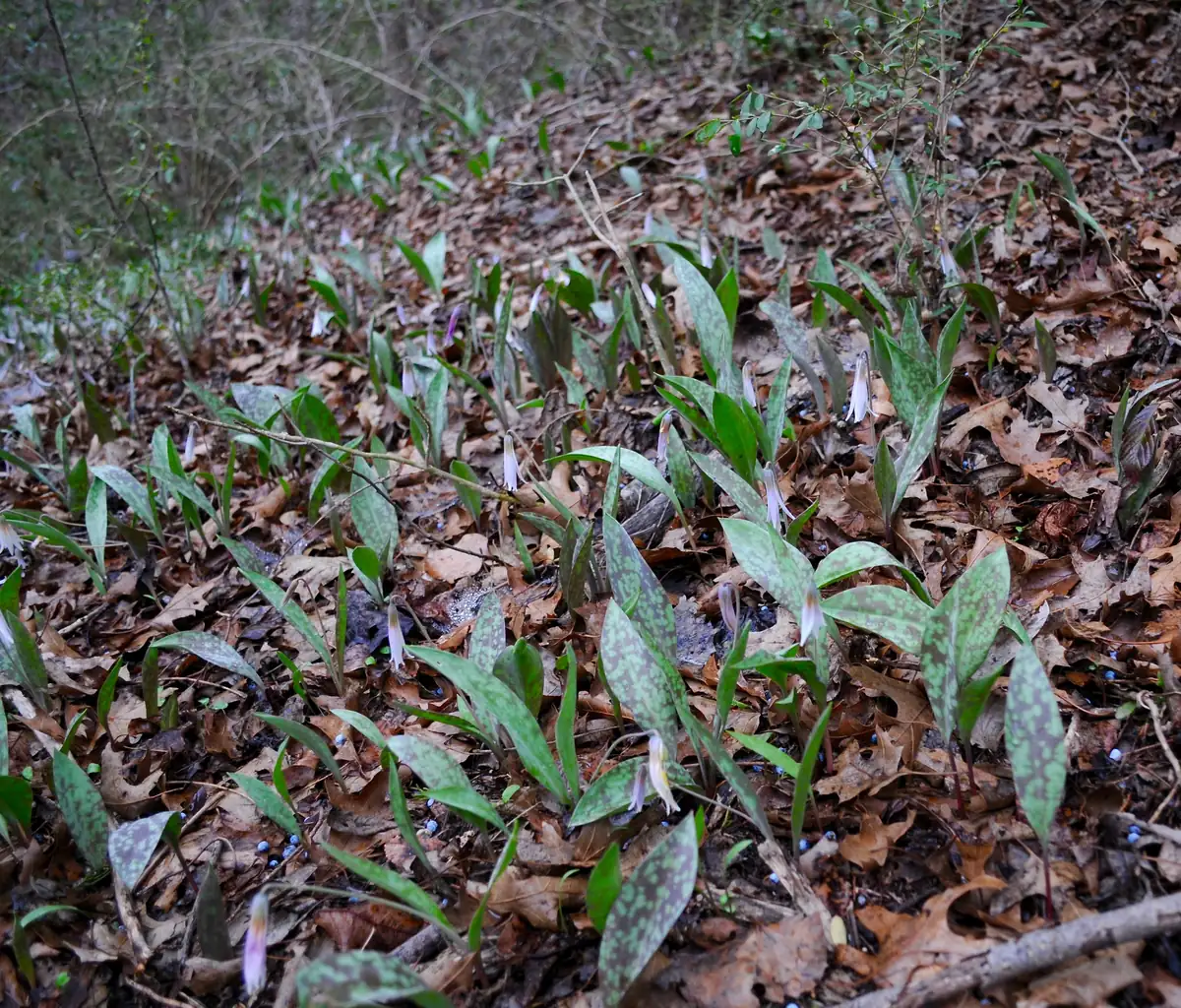
White trout lily
February to April · Low hardwood woods and floodplains
A nodding white bell, 1 to 2 inches long, on a stalk a few inches tall, its petals curled back to show brown stamens. The leaves at ground level are often mottled with maroon, which gives the plant its fishy name. Many plants carry only a single leaf and no flower; the Wildflower Center notes that a plant may take up to six years to bloom.
-
Mexican plum
February to April · Open woods, river bottoms and woodland edges
A small native tree whose fragrant white flowers open before the leaves, making it stand out in a gray woodland edge. Mature trunks turn a satiny blue-gray.
What else is happening with Louisiana birds in February?
-
Snow geese heading north
Through February, with flocks thinning toward March · Rice and crawfish country of the southwest and Acadiana
After the regular goose seasons close on February 7, LDWF’s conservation order for light geese (snow, blue and Ross’s geese) runs from February 8 to March 7 in both zones. It allows unlimited bags, electronic calls and shooting until half an hour after sunset. For a birder, the flocks of white and blue birds lifting off harvested fields are still worth a stop, but expect shooting near them. Marked waterfowl sanctuaries on the Biloxi, Boeuf and Russell Sage WMAs stay closed to the public until the conservation order ends.
-
The Great Backyard Bird Count
Friday, February 12, to Monday, February 15 · Anywhere: yards, parks, refuges
Audubon and Birds Canada, two of the organizations behind it, list the 30th count for February 12–15, 2027 (the official site is birdcount.org). Give it a quarter hour or more on any of the four days, list every bird you see, and send it in through eBird or the Merlin app. February checklists from Louisiana catch both wintering birds, such as sparrows, ducks and yellow-rumped warblers, and the first spring arrivals.
What is February weather like in Louisiana, and what might El Niño change?
Milder than January, wet, and changeable. In NOAA’s 1991–2020 normals, February highs average from about 61 °F at Monroe to 67 °F at Lake Charles, and every station in the table gets fewer freezing nights than in January. Monroe still averages between six and seven February nights at or below 32 °F, while New Orleans International Airport averages less than one. Rain is spread evenly, with roughly 3 to 5 inches in a normal February.
| Station | Average high | Average low | Rain | Freezing nights |
|---|---|---|---|---|
| Shreveport | 62.6 °F | 41.0 °F | 4.30 in | 5.5 |
| Monroe | 61.1 °F | 40.2 °F | 4.65 in | 6.6 |
| Alexandria | 63.6 °F | 42.2 °F | 4.22 in | 5.2 |
| Lake Charles | 66.7 °F | 47.1 °F | 3.26 in | 1.8 |
| Lafayette | 66.1 °F | 47.4 °F | 4.07 in | 1.7 |
| Baton Rouge | 66.6 °F | 45.3 °F | 4.42 in | 3.4 |
| New Orleans (International Airport) | 66.4 °F | 49.7 °F | 4.13 in | 0.9 |
February is also when the spring severe weather season can wake up. On February 7, 2017, the National Weather Service in Slidell rated an EF-3 tornado with 150 mph winds in eastern New Orleans; it damaged 638 homes and at least 40 businesses. Last winter, the Louisiana Office of State Climatology counted at least 20 tornadoes in a squall line on the evening and night of February 14–15, 2026, none stronger than EF-1, after weather offices issued 33 tornado warnings in seven and a half hours. That same February was otherwise warm and very dry: 1.85 inches of rain statewide by the preliminary estimate, the lowest February total since 2000, and an average temperature 4.3 degrees above normal.
This winter brings a different setup. In the September 10 ENSO discussion, the federal Climate Prediction Center put the chance that El Niño reaches the very strong category this winter at better than nine in ten. In a June interview with WWNO, state climatologist Jay Grymes said that a lingering El Niño typically makes the coastal parishes wetter than normal in winter and spring, which raises the flood threat, and that in the southern half of the state wet winters tend to run a little warm, with more Gulf air and cold snaps that are shorter and less intense. On tornadoes, NOAA’s ENSO blog says the strongest signal in Louisiana and its neighbors favors more activity in La Niña, not El Niño, but adds that the year-to-year range is huge, and some El Niño years are still active. NOAA refreshes its seasonal forecast monthly; the newest maps are on the federal 90-day outlook page. For the odds of a late frost in your own town, see the Louisiana frost dates, and check the weather forecast page before a trip to the marsh.
How much daylight does Louisiana gain in February?
From about 43 minutes on the coast to 50 in the far northwest, and the pace keeps picking up. Each day now adds a little more light than the one before, and sunrises are moving earlier as well as sunsets later. Groundhog Day is Tuesday, February 2. Astronomically, though, the middle of winter (the instant midway between solstice and equinox) falls on February 3–4.
| City | Feb 1 | Feb 28 | Gained | Per day |
|---|---|---|---|---|
| Shreveport | 10 h 38 m | 11 h 28 m | 50 min | 1.9 min |
| Monroe | 10 h 39 m | 11 h 28 m | 49 min | 1.8 min |
| Alexandria | 10 h 43 m | 11 h 29 m | 46 min | 1.7 min |
| Lake Charles | 10 h 47 m | 11 h 31 m | 44 min | 1.6 min |
| Lafayette | 10 h 46 m | 11 h 31 m | 45 min | 1.7 min |
| Baton Rouge | 10 h 45 m | 11 h 31 m | 46 min | 1.7 min |
| New Orleans | 10 h 47 m | 11 h 32 m | 45 min | 1.7 min |
| Houma | 10 h 48 m | 11 h 31 m | 43 min | 1.6 min |
North Louisiana gains a few more minutes than the coast, because the farther a place is from the equator, the faster its days lengthen toward spring. Daylight saving time begins Sunday, March 14, and the clock change shifts sunset an hour later in one night. For your own parish, the day length calculator lists sunrise, sunset and twilight for any date.
What is in the Louisiana night sky in February?
-
Jupiter at opposition
Wednesday, February 10 · Rising in the east at sunset, high in the south around midnight
Our planet slips directly between the giant planet and the sun on February 10 at 6:21 p.m. Central time, and from Louisiana Jupiter lifts above the eastern trees at dusk and is up all night, shining at magnitude −2.5, about as bright as it ever gets. It sits in Leo. Binoculars braced on a fence post show its bright moons.
-
Mars at opposition
Friday, February 19 · East at dusk, near Jupiter in Leo
Nine days after Jupiter, Mars reaches opposition, and on February 20 it comes nearest Earth, about 63 million miles away. Because this opposition falls near the far point of the Martian orbit, the planet shines at only about magnitude −1.2, a steady orange point, fainter than Jupiter close by. Mars won’t come nearer to us than this before 2029.
-
The Snow Moon and a faint eclipse
Saturday, February 20; full at 5:23 p.m. CST · Rising in the east around sunset
February’s full moon, called the Snow Moon, is counted as a supermoon by some almanacs, though not every list includes it. That evening also brings a penumbral eclipse of the moon, already in progress at moonrise: the moon passes through the pale outer part of Earth’s shadow from 3:12 to 7:13 p.m. CST, deepest at 5:13 p.m. In Louisiana the moon rises a little after that deepest point, so at best one rim may look slightly dusky against the bright twilight, a tint that is gone by 7:13. Most people will see nothing unusual. Look too for Jupiter, Mars and the star Regulus near the moon that night, and the moon passing very close to Jupiter on the night of February 19–20.
-
Mercury after sunset, Venus before dawn
Mercury best around February 2–3; Venus all month · Low in the west-southwest at dusk (Mercury); southeast before sunrise (Venus)
This is the winter’s finest chance at the innermost planet after sunset: it stands at its widest from the sun on the 3rd. Scan low toward the west-southwest soon after sundown, from the 1st through roughly the 10th. A day-old crescent moon hangs just beside Mercury on the evening of Sunday the 7th. Venus remains the brilliant morning star in the southeast, and Saturn is slipping lower in the west after dark each week.
| Phase | Date | Time |
|---|---|---|
| New moon | Saturday, Feb 6 | 9:56 a.m. |
| First quarter | Sunday, Feb 14 | 1:58 a.m. |
| Full moon, the Snow Moon | Saturday, Feb 20 | 5:23 p.m. |
| Last quarter | Saturday, Feb 27 | 11:16 p.m. |
The annular solar eclipse of February 6 belongs to the Southern Hemisphere (its ring path crosses southern South America before running out over the ocean toward Africa), and Louisianans will see none of it. The darkest evenings for stars come around that new moon, roughly February 2 through 11. Look over the cloud cover forecast first, and see the lunar calendar for moonrise and moonset times.
What can families do outside in Louisiana in February 2027?
- Great Backyard Bird Count, February 12–15. Free, and a 15-minute count from a kitchen window is enough.
- Bayou Gardens Open House, Saturday, February 27, 2027. The Southeast Louisiana National Wildlife Refuges headquarters in Lacombe, built around a historic camellia and azalea garden, opens for free guided garden and history tours, gardening workshops and talks, with native plants for sale to support the refuge friends group. The same visitor center runs free Nature Explorers sessions for children up to age 6, held twice a month on Fridays (the first and the third), and a fourth-Friday Homeschool Friday for children from kindergarten up to grade 8; the refuge had not posted the February 2027 date when we checked, so confirm it and register by email with the refuge ranger.
- Bird walks with Baton Rouge Audubon. The society runs regular monthly bird walks, including one at BREC’s Bluebonnet Swamp Nature Center and one at the Audubon State Historic Site at Oakley in St. Francisville (both charge a small entry fee). The society had not yet listed its February 2027 dates and times in early October; check with the organizer on its calendar before going.
- Eagle Expo on the Cajun Coast. The Cajun Coast Convention and Visitors Bureau’s Eagle Expo, based in Morgan City, is an annual February event with boat tours into the Atchafalaya Basin and the bayous to see bald eagles and their nests, plus talks by birders and wildlife experts. The 2025 edition ran in the third week of February. No 2027 schedule was posted when we checked; watch cajuncoast.com.
- Trout fishing in a city park. LDWF stocks rainbow trout in its Get Out & Fish! ponds in community parks from mid-January to early February, depending on water temperature. A light line, a small hook and a little corn or a small spinner are all a child needs. Check the program page for pond locations and rules.
- Hummingbird and crane reports. Report the year’s first ruby-throat to Journey North, and any whooping crane you see to LDWF.
We checked each organizer’s page on October 2, 2026. Dates change and cold rain cancels outdoor programs, so confirm before you go. Other months for Louisiana, and every other state, are in our seasonal nature guides, including the January page on eaglets and ducks. A first-hummingbird date or a woodcock evening fits neatly on one page of the Naturalist’s Field Journal.
Safety notes for February in Louisiana
- What is still open. In LDWF’s 2026–27 regulations, the last statewide deer season this month is archery, which runs to February 15 in Deer Areas 5, 6 and 9 only; all firearms deer seasons have closed. Quail, rabbit and squirrel stay open through February 28, and so does snipe (reopened January 25). Duck seasons are over except for an East Zone youth and veterans day on Saturday, February 6. The regular goose seasons close February 7, and the light-goose conservation order follows from February 8 to March 7, with shooting allowed until half an hour after sunset. Furbearer trapping continues to March 31.
- Hunter Orange and Blaze Pink in February. Because no firearms deer season is open, the statewide requirement for 400 square inches of either color does not apply this month. Some WMA rules still do. Quail and woodcock hunters on WMAs, and anyone in a special dog season for rabbit, squirrel or feral hogs, must wear at least an orange or pink cap. During the special shotgun feral hog seasons on four coastal WMAs (Atchafalaya Delta, Pass-a-Loutre, Pointe-aux-Chenes and Salvador), hunters must show the full 400 square inches plus a cap; check each WMA’s schedule for its dates. LDWF encourages everyone afield in hunting season to wear the colors, and a bright hat is sensible for hikers on public land.
- Storms. February squall lines can bring tornadoes after dark. Set your phone to receive warnings, keep a weather radio handy, and pick a shelter spot at home and at camp before the season starts.
- Flooding and high water. A rainy El Niño season can put low roads, trails and boat launches underwater fast. Turn around rather than drive through water on a road, and look up river stages before launching a boat.
- Cold water and fog. Air on a sunny February afternoon may feel like spring while lakes and bayous remain cold enough to trigger cold shock. Put on a life jacket before stepping into a canoe or kayak. Dense fog on calm mornings is common near the coast, the big lakes and the Atchafalaya; slow down and use low beams.
- A last freeze. Hard freezes are still possible, especially in the north. Hold off on setting out tender plants until your parish’s typical last frost has passed.
- Wildlife. Alligators bask on warm February days and can be quick. Keep dogs leashed near water and give every gator plenty of room.
Sources
- LDWF: whooping crane reintroduction in Louisiana
- LDWF: 2023–2024 Louisiana whooping crane report (PDF)
- LDWF: whooping crane population adds record 10 fledged chicks during 2026 nesting season
- LDWF: woodcock research and management
- Olinde and Prickett (LDWF), Gonadal characteristics of February-harvested woodcock in Louisiana, Wildlife Society Bulletin, 1991 (PDF)
- Moore et al., Migration phenology and patterns of American woodcock in central North America derived using satellite telemetry, Wildlife Biology, 2021 (PDF via LDWF)
- Moore et al., Assessment of the American woodcock singing-ground survey zone timing and coverage (PDF via LDWF)
- USFWS: American woodcock singing-ground survey
- Louisiana Sea Grant / LSU: Louisiana fisheries fact sheet, sac-a-lait (crappie)
- LDWF Angling Insider, Vol. 7: freshwater fishing forecast for January and February (PDF)
- LDWF Angling Insider, Vol. 2: freshwater fishing forecast for March (PDF)
- LDWF: Get Out & Fish! stocked ponds (rainbow trout stocking)
- Baton Rouge Audubon Society: feeding hummingbirds and winter hummingbirds in Louisiana
- Journey North: hummingbird migration sightings
- LDWF: Rare Animals of Louisiana, Louisiana black bear fact sheet (PDF)
- LDWF: Louisiana Black Bear Management Plan, January 2015 (PDF)
- LSU AgCenter: native hawthorns and crabapples provide fruit and spring flowers (mayhaw bloom and fruit)
- LSU AgCenter: Mayhaw, a native jewel (state fruit tree)
- Lady Bird Johnson Wildflower Center: mayhaw (Crataegus opaca)
- Lady Bird Johnson Wildflower Center: Drummond’s red maple (Acer rubrum var. drummondii)
- Lady Bird Johnson Wildflower Center: Virginia springbeauty (Claytonia virginica)
- Lady Bird Johnson Wildflower Center: white trout lily (Erythronium albidum)
- Lady Bird Johnson Wildflower Center: Mexican plum (Prunus mexicana)
- National Audubon Society: Great Backyard Bird Count (February 12–15, 2027)
- Birds Canada: Great Backyard Bird Count
- Great Backyard Bird Count (official site)
- NOAA NCEI: monthly climate normals 1991–2020 for seven Louisiana airports (data API)
- National Weather Service New Orleans/Baton Rouge: February 7, 2017, eastern New Orleans tornado
- Louisiana Office of State Climatology (LSU): Louisiana monthly climate review, February 2026 (PDF)
- WWNO: Q&A with Louisiana state climatologist Jay Grymes on the 2026 hurricane season and El Niño (June 2, 2026)
- NOAA Climate.gov ENSO blog: ENSO and tornadoes
- Climate Prediction Center: ENSO diagnostic discussion, September 10, 2026
- Climate Prediction Center: seasonal outlooks (winter outlook issued October 15, 2026, updated monthly)
- NOAA Global Monitoring Laboratory: solar calculator (sunrise, sunset and day length)
- U.S. Naval Observatory: moon phases, December 2026 to 2027 (data API)
- U.S. Naval Observatory: Earth’s seasons, 2027 (data API)
- Fred Espenak: Sky Event Almanac 2027
- NASA Goddard: lunar eclipses 2021–2030
- NASA Goddard: solar eclipses 2021–2030
- EarthSky: Jupiter at opposition
- Sea and Sky: astronomy calendar of celestial events, 2027
- Old Farmer’s Almanac: eclipses
- USFWS: Big Branch Marsh National Wildlife Refuge events (Bayou Gardens Open House, Nature Explorers, Homeschool Fridays)
- Baton Rouge Audubon Society: events and calendar
- Cajun Coast Visitors and Convention Bureau: Eagle Expo (20th annual, February 2025)
- eBird: submit sightings
- LDWF: 2026–2027 Louisiana hunting regulations (PDF; deer areas, hunter orange and blaze pink, WMA rules)
- LDWF 2026–2027 Louisiana hunting regulations, season schedules (deer archery by area, migratory birds, conservation order, small game)
- LDWF 2026–2027 Louisiana hunting regulations: wildlife management areas (hunter orange and blaze pink caps, special feral hog seasons)
- LDWF: hunting seasons and regulations
- LDWF: furbearers (trapping season November 20 to March 31)
- Photos via Wikimedia Commons; licenses and photographers are credited under each picture