What to look for in nature in Louisiana this May
May is nesting season on Louisiana’s islands and in its swamp forests. Pelicans, terns and skimmers sit on the coast’s protected rookeries, prothonotary warblers raise second broods in tree holes over the water, alligators begin to wander and defend, and fawns lie hidden in the grass. Magnolias open, crawfish traps stay legal and the heat comes up. Below, each fact comes with its source.
Other months in Louisiana: October, November, December, January, February, March, April.
Start here
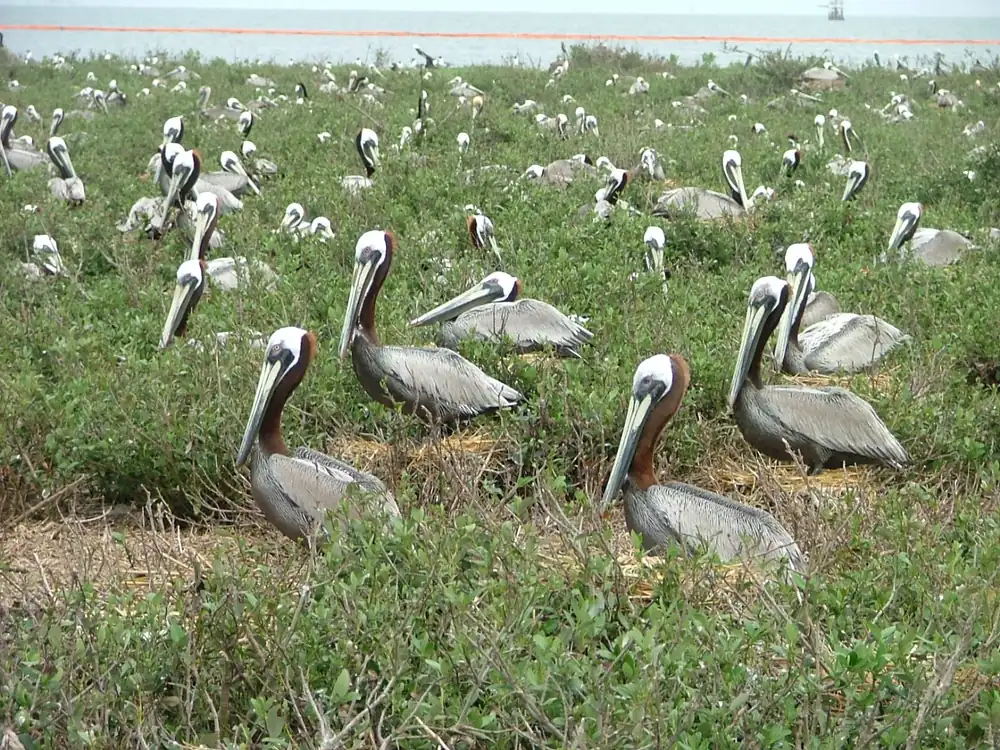
- Watch a rookery from a distance. On a calm morning, go to a levee, a boat ramp or a beach near a bird colony with binoculars. Stay beyond the ropes and signs, and count how many adults are on nests and how many are feeding young.
- Look up in a big magnolia. Find a tall southern magnolia in bloom on a warm morning and stand under it for ten minutes. Note the flowers, the insects and any birds in the crown.
- Leave a fawn where it lies. If you find a young deer or a baby bird alone, back away quietly and note the place and time. The parent is almost always nearby, and the state asks you not to touch it.
Keep May in the Naturalist’s Field Journal. A pelican or tern colony watched from a distance belongs on the nest observed plate, with counts by the week. First hummingbirds and painted buntings are entries for birds I have seen; weather and wind belong in the daily field log. A bayou chorus of frogs fits a map of sounds, the hum of the evening on dusk and dawn watch, a fawn or alligator on mammal watch, and the same cypress or magnolia visited each month on the same place twice.
Regions used below: North Louisiana (Shreveport, Monroe and the northern hills); Central Louisiana and the Kisatchie country; Southwest Louisiana and the Chenier Plain; Acadiana and the sugarcane parishes; Baton Rouge and the Florida Parishes; New Orleans and the southeast marshes.
Where are Louisiana’s pelicans, terns and skimmers nesting in May, and can I watch?
The coast’s island colonies are the great nurseries of May, and almost all of them are closed to visitors on purpose. The state’s agency keeps people off the exposed land of its bird islands because one boat landing can scatter a colony and leave eggs to cook in the sun. What you can do is look from open water or from a mainland beach with binoculars or a long lens, and learn what the birds are doing from the details below.
None of the sources we read gives a month-by-month calendar for Louisiana’s coastal colonies, so we do not claim a peak week. Treat what you see on the day as the guide, and keep a distance that lets the adults stay on their nests.
-
Queen Bess Island and the return of the brown pelican
The nesting season runs through the warm months; the state agency gives no exact dates · A 37-acre refuge off Grand Isle in Jefferson Parish, reached only by boat; landing is prohibited without a permit
The brown pelican is Louisiana’s state bird, and it came close to vanishing from the state. The Department of Wildlife and Fisheries says pelicans stopped nesting here in 1961 and had almost disappeared from the coast by 1963, with the pesticide DDT as the main cause. From 1968 to 1976 the agency brought young pelicans from Florida to coastal Louisiana, and in 1971 eleven nests on little Queen Bess Island marked the first successful return.
Today the island is a state wildlife refuge that produces more than 4,400 nests a year, making it the fourth largest pelican rookery in the state and the source of 15 to 20 percent of the state’s nesting. About ten kinds of colonial waterbird share it, including tricolored herons, great egrets and royal terns. A 2020 construction project grew the island’s usable nesting ground from 5 to 37 acres.
Audubon’s species guide adds what to expect at a pelican colony: usually three eggs, incubated by both parents for 28 to 30 days, and young in ground nests that may leave the nest after about five weeks and gather in groups. A rookery that looks half empty can simply have its young bunched together out of sight.
-
Raccoon Island and the Isles Dernieres
Nesting waterbird season, with no dates given by the agency · Four barrier islands in Terrebonne Parish, about 15 miles southwest of Cocodrie, reached only by boat
The agency says one of its main goals for the Isles Dernieres refuge is to protect habitat for nesting waterbirds, and calls Raccoon Island one of the most important waterbird nesting areas on the Louisiana coast. Public access to the exposed land, the wetlands and the inner waterways is prohibited without a permit. Boats may travel in the open Gulf and bay water next to the islands, but not into their interior waterways or landlocked water.
In practice that means a slow pass in open water, binoculars in hand, engine low, and no attempt to get closer when the birds lift. The refuge is also an erosion barrier: the same pages say the islands shield the mainland north of them from waves and storms, and that several projects over three decades have rebuilt them.
-
Royal terns and black skimmers on open sand
Both nest in colonies; Louisiana dates are not stated in the guides we read · Sandy islands, shell banks and beaches; the Elmer’s Island refuge lists black skimmers among its birds
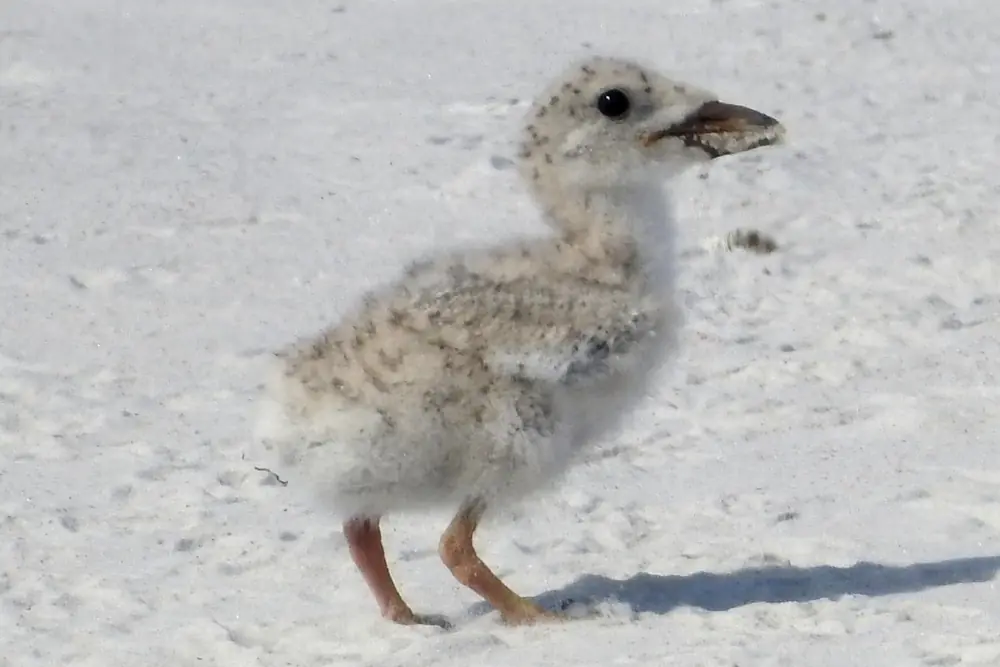
Audubon’s guide says the royal tern generally lays a single egg, that both parents incubate it for 28 to 35 days, usually 30 or 31, and that within two or three days of hatching the chick leaves the nest and joins a crowd of other chicks called a creche. Parents and chicks recognize each other by voice, so each adult feeds only its own young.
The black skimmer nests in colonies on open sandy beaches, shell banks and sandbars, in a shallow scrape. Clutches run four or five eggs, incubation is 21 to 23 days, and the chicks fly at about 23 to 25 days. Audubon calls the species “still very sensitive to disturbance in nesting colonies.” If danger comes, a chick may lie flat on the sand and kick up a little cloud to hide, which means a chick is easy to step on without seeing it. Where a beach is roped off, the ropes are the colony.
Seeing a colony without disturbing it is its own skill. Write down the species, how many birds you count and how the adults behave on the nest observed plate of the Naturalist’s Field Journal, and compare with a visit a month later.
Where do I find black bears, prothonotary warblers and a 1,500-year-old cypress in May?
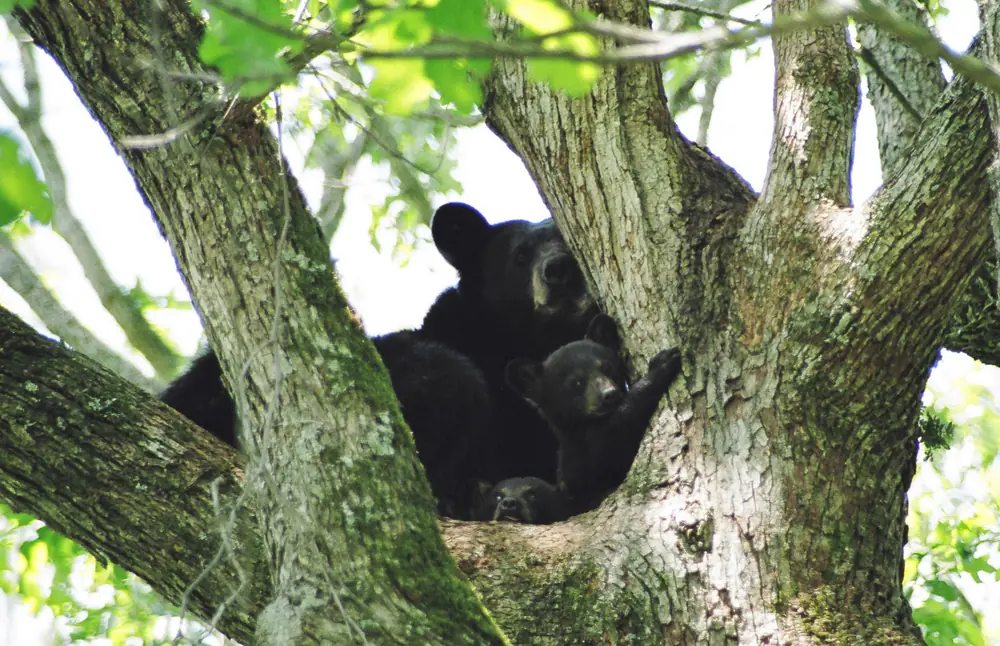
In the bottomland forests, which are the wooded floodplains along Louisiana’s rivers. May is when they are greenest and busiest. Songbirds are on their second nests, and the Louisiana black bear, once a threatened subspecies, is back to being the state’s most talked-about mammal. The Department of Wildlife and Fisheries says the bear was listed as threatened in 1992 after years of hunting and forest clearing, and removed from the list in 2016.
-
Tensas River National Wildlife Refuge
Open year round; the refuge page lists no May events · Northeast Louisiana, in the Tensas River basin
The Fish and Wildlife Service says the refuge has the state’s largest population of Louisiana black bears, and that more than 400 species of mammals, birds, reptiles, amphibians and fish live in its bottomland hardwood forest. Bears are secretive, so go for the forest itself, and treat a bear as a bonus.
The state agency monitors its bears with winter den checks, hair sampling and, in summer, walk-ins to families to count cubs that survived. If you find a bear on your own land or camp, the agency’s BearWise advice is plain: never feed or approach a bear, secure garbage and pet food, remove bird feeders while bears are about, clean and store grills, and never run.
-
Cat Island National Wildlife Refuge
Open year round; flooding shapes the forest through the year · Near St. Francisville, about 30 miles north of Baton Rouge
This refuge protects some of the last naturally functioning bottomland hardwood forest in the region, and it holds a national champion bald cypress. The Service’s page puts the tree at about 1,500 years old, 96 feet tall, with a diameter of 17 feet and a circumference of 56 feet. The page also names the prothonotary warbler as one of the refuge’s migratory songbirds and Louisiana black bears among its residents.
A champion tree is a good fixed point for a long project. Photograph it from the same spot each season, and note the leaves, the water level and the birds in the canopy.
-
Prothonotary warblers: second broods in tree holes
Males arrive early April, about a week before the females; two broods a year are common · Wooded swamps and flooded river-bottom forest, such as Black Bayou Lake in Monroe and Cat Island
Audubon’s guide says this golden warbler breeds in wooded swamps, especially flooded river-bottom hardwoods and cypress, and nests in a hole or stump usually 5 to 10 feet above standing water. Old downy woodpecker holes are common nest sites. Clutches run four to six eggs, the female incubates for 12 to 14 days, and chicks fledge 10 to 11 days after hatching. Pairs may raise two broods, so a nest cavity can turn over twice in a season.
Black Bayou Lake National Wildlife Refuge at Monroe lists prothonotary warblers among its birds, with a boardwalk through the bottomlands and a pier for watching the lake. The refuge covers about 5,300 acres around a 1,600-acre lake and names alligators, anhingas, great blue herons and broad-banded water snakes among its wildlife.
-
Catahoula National Wildlife Refuge
Nesting season; Birding Louisiana says the refuge is best known as a winter waterfowl site · Near Jena and Jonesville, with a nine-mile drive around Little Lake
Audubon lists barred owls, red-headed woodpeckers, Kentucky and hooded warblers and painted buntings among the nesting birds. The Birding Louisiana page describes a nine-mile Wildlife Drive circling Little Lake near the headquarters, driven clockwise so the lake stays on your right, with several short unimproved trails to the shore. It says 132 species have been recorded. Facilities are limited to parking and signs, and the site is not accessible for wheelchairs.
Floodplain forests change with the river. Ask the refuge about roads and trails before driving far, and bring insect repellent (see the safety section below).
Which other birds are nesting in Louisiana in May, and where?
May is a month of building, sitting and feeding. The big migration fallouts of April thin out, but not all at once: Audubon’s Louisiana guide says Peveto Woods still sees “some songbird migration continuing through May.” Beyond that tail, these are the nesters worth a trip.
-
Ruby-throated hummingbirds
Audubon gives no Louisiana nesting dates; a pair may raise one to three broods a year · Gardens, yards and wood edges
Audubon’s species guide says the female builds a compact cup of grasses and plant fibers on a horizontal branch, 10 to 20 feet up in a tree or large shrub, bound with spider webs and camouflaged with lichens. She lays two eggs, incubates them for 12 to 14 days alone, and the young fledge at 20 to 22 days. Most pairs raise one or two broods, and some three. The guide adds that many birds may skirt the Gulf along the Texas coast rather than cross it.
Journey North maps hummingbird sightings as they move north and takes reports from anyone; its page says most sightings arrive between spring migration and fall. The Louisiana dots are a good reason to log your own first sighting.
-
Purple gallinules, whistling-ducks and least bitterns in the southwest
Nesting season; Audubon names these as targets for the nesting season, without dates · Lacassine and Cameron Prairie National Wildlife Refuges, near Lake Charles
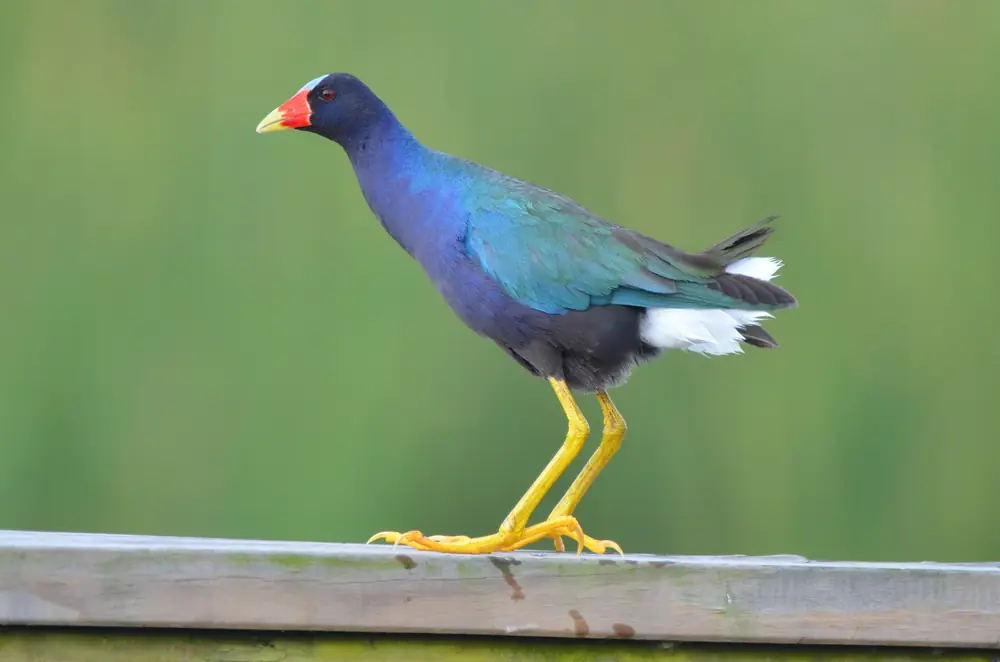
Audubon’s Louisiana article names the purple gallinule, the least bittern and the painted bunting as nesting-season targets at Lacassine, and says the purple gallinule nests at Cameron Prairie, where both kinds of whistling-duck also breed in the area. The Fish and Wildlife Service describes a three-mile auto tour at Lacassine Pool with signs along the way, and asks visitors to stay in their vehicles to limit disturbance. Cameron Prairie’s visitor center was listed as open Tuesday through Thursday, 9 a.m. to 3:30 p.m., when we read the page, so call before you go.
Birding Louisiana notes the big flocks of geese, ducks and wading birds are a late-fall-to-early-spring spectacle, so expect May to be quieter and more private.
-
Wood ducks in nest boxes
The agency checks boxes from February through May · Wooded wetlands, wildlife management areas and some state parks with boxes
Wood ducks nest in tree cavities, and cavities are scarce, so since 1990 the Department of Wildlife and Fisheries has put up boxes with metal predator guards on its management areas and on some private wetlands, state parks and Army Corps land. Biologists band hens as they check the boxes. In 2024 and 2025 the agency banded 269 and 260 nesting hens, and the page says the state has banded more wood ducks than any other southeastern state since 1990. If you find a banded duck, the agency asks you to report it to the federal Bird Banding Laboratory.
-
Barataria Preserve and the swamp breeders
Breeding birds as listed by Audubon, without dates · Jean Lafitte National Historical Park and Preserve, south of New Orleans
The Barataria Preserve covers more than 23,000 acres of swamp, marsh, trails and waterways. The park lists alligators, armadillos, otters and hundreds of bird species. Audubon’s article names yellow-crowned night-herons, Mississippi kites, prothonotary warblers, hooded warblers, northern parulas, yellow-throated warblers and painted buntings among its breeding birds.
Elmer’s Island refuge calls itself a popular birding destination, especially in migration: its page lists piping plovers, red knots, reddish egrets, marbled godwits, black skimmers and magnificent frigatebirds as birds to look for. A free beach shuttle ran Friday through Sunday from February to May and every day from June in the schedule we read, and the gates are open from a half hour before sunrise until a half hour after sunset, with no glass and no camping. Check the schedule for 2027.
What are alligators and fawns up to in Louisiana in May, and what if I find one?
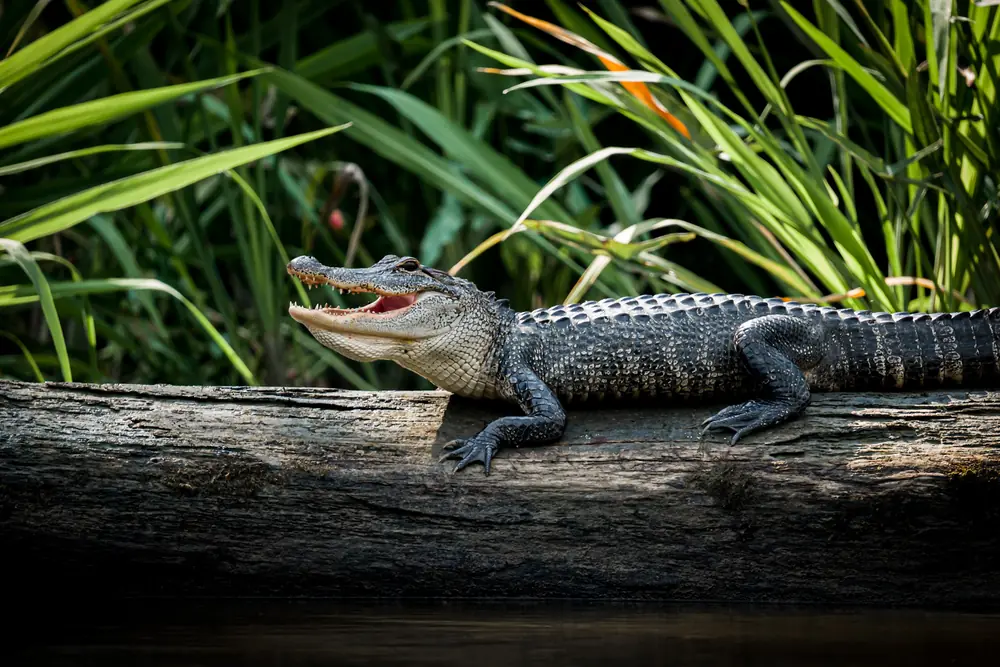
Alligators. The state agency says Louisiana now has more than 3 million wild alligators, up from fewer than 100,000 about fifty years ago, plus nearly a million on farms. In spring and summer, it says, alligators move to breed or to find new territory, and many of the ones seen in strange places are small animals pushed out of good habitat by larger ones. The agency expects most of these to leave on their own in one to two weeks, so if the animal is not approaching people, it suggests waiting a few days before calling. Alligators under 4 feet are naturally fearful of humans and are generally not considered a threat.
Later in the warm season, nesting females stay by their nests rather than slipping into the water, and a female protecting a nest might charge a person who gets close, then hurry back. A hiss is a warning that you are too close: back away slowly. Keep dogs leashed and away from the water’s edge, do not feed alligators, and never try to move one, since the agency says it is dangerous and illegal for the public to handle them. An alligator that comes straight at you out of the water is the kind to report, to the nearest agency office or to Operation Game Thief at 800-442-2511 after hours.
Fawns. The agency says Louisiana deer fawn from March through September. A doe hides her fawn in a still spot and walks off to feed, so a lone fawn is almost never lost. The advice is to back away and leave it. Picking one up is illegal, and permitted wildlife rehabilitators are not allowed to take in white-tailed deer. For fawns, call the nearest office or 800-442-2511.
Other babies. The same page says adults frequently leave their young to forage but rarely abandon them, and that handling a young animal can lead a parent to desert it. Check the agency’s guides for baby mammals and baby birds before you intervene.
On the coast. If you see a sick, injured or stranded sea turtle, call 844-732-8785. A stranded or dead marine mammal goes to the NOAA stranding network at 877-942-5343. Feeding wild dolphins is a problem, too: NOAA Fisheries notes that dolphins that learn to take handouts or bait from fishing gear become more vulnerable to boat strikes and to entanglement.
What is blooming in Louisiana in May, and where do I look?
The iris season of March and April is over, but the state is far from bare. Big white magnolia blossoms open in the woods, the first hot-weather prairie flowers come on, and the pine-hills bogs still have a little bloom left. Bloom times below come from the Forest Service and the Lady Bird Johnson Wildflower Center; the bloom itself varies with the year’s weather.
-
Southern magnolia
April through June, per the Wildflower Center · Lowland and coastal woods across the Coastal Plain, from southeastern Virginia to eastern Texas
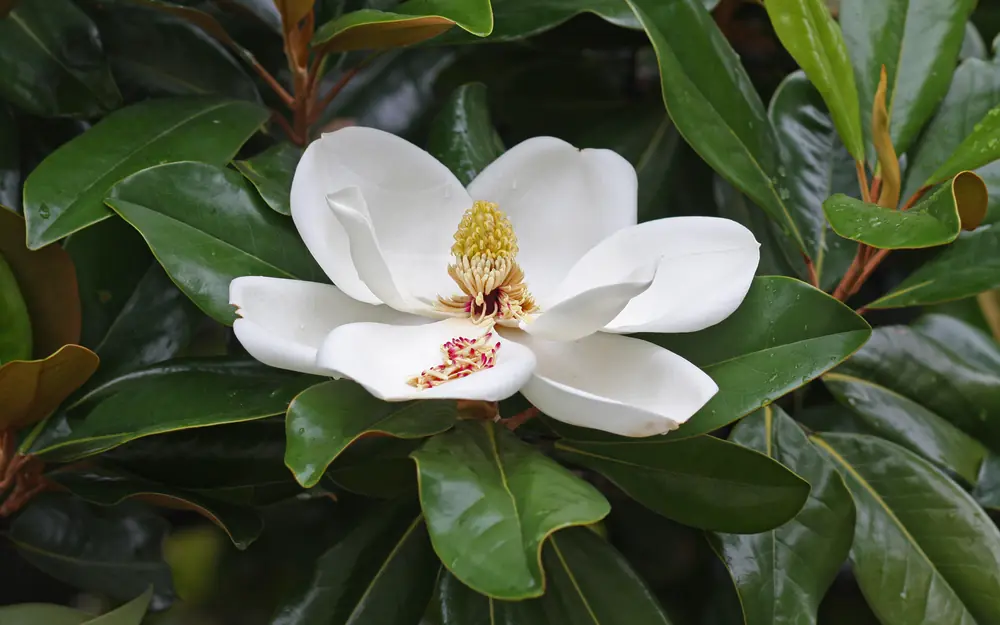
The Wildflower Center describes this evergreen tree as growing up to about 100 feet, with white flowers about six inches across and a cone-like fruit made of clustered follicles. It lists Louisiana in the tree’s native distribution, and says the species prefers rich, acid soil, in sun or part shade. A walk under a big magnolia in May is a lesson in how many beetles and bees one flower can hold.
-
Indian blanket
May through August, longer if rains are plentiful · Dry, open ground, roadsides and prairies; native range runs from Kansas to Louisiana
Indian blanket, also called firewheel, is an annual up to two feet tall with red, yellow and brown flowers. The Wildflower Center calls it a major wildflower of prairies and meadows and says it reseeds readily. Look for it where soil is sandy or well drained and mowing has been late. Leave patches unmown if you control the land, so seed can set before the mower comes.
-
The last of the pitcher plant season
March through May is prime time at Cooter’s Bog, per the Forest Service · Hillside bogs in Vernon Parish, Kisatchie National Forest, Calcasieu Ranger District
The Forest Service describes the bog complex as spread over more than 130 acres of Forest Service land, with winged pitcher plants, sundews, butterworts, toothache grass, sunbonnets and bog buttons. It says prescribed burns every one to three years, timed differently from year to year, help different species bloom at different times. May is the end of the best stretch, so go early in the month.
Draw one bloom a week. A seeds-pods-and-cones page can then follow the magnolia from flower to fruit in the autumn.
What can I catch in Louisiana in May, and is crawfish season over?
Crawfish, shrimp and saltwater fish all stay on the menu, and the rules are simple enough to learn in an afternoon.
Crawfish. The recreational season is open all year in state waters, except on some management areas and refuges. A basic fishing license covers crawfish traps, and the limit is no more than 35 traps per person and 150 pounds a day, with no size limit. Traps must carry a waterproof tag with your license number. Traps are barred on some state and federal public lands, so read the rules for the water you plan to fish.
Shrimp. The agency says white and brown shrimp are the state’s two most common species, and that shrimp is its most valuable commercial fishery, with Louisiana the nation’s top shrimp harvester every year since 2000. The Legislature, the Wildlife and Fisheries Commission and the department manage the fishery in the state’s inside and outside waters, and we found no 2027 season dates, so check the department’s seasons page for the current ones.
Freshwater and surf. For crappie, which Louisianans call sac-a-lait, the statewide limit in most waters is 50 fish a day, with a possession limit of 100, and some lakes have their own rules. At Elmer’s Island, the agency lists blue crab, spotted and sand seatrout, sea catfish, red drum and southern flounder as top surf and bank species.
How hot and stormy does Louisiana get in May?
Hot, humid and stormy. NOAA’s 1991 to 2020 normals put May highs between about 84 and 86 degrees at the seven stations below, and lows from 63 degrees in the north to 69 degrees at New Orleans. Rainfall normals run from 3.94 inches at Alexandria to 5.64 inches at New Orleans. Clocks do not change this month: Louisiana is on daylight time all of May.
| Station | Average high | Average low | Rain |
|---|---|---|---|
| Shreveport | 84.6 °F | 63.5 °F | 4.46 in |
| Monroe | 84.4 °F | 63.1 °F | 4.43 in |
| Alexandria | 85.4 °F | 63.7 °F | 3.94 in |
| Lake Charles | 85.4 °F | 67.3 °F | 5.40 in |
| Lafayette | 85.9 °F | 67.2 °F | 5.44 in |
| Baton Rouge | 85.8 °F | 65.1 °F | 5.23 in |
| New Orleans (International Airport) | 85.3 °F | 69.0 °F | 5.64 in |
Severe storms. The National Weather Service office in Shreveport lists May tornadoes in north Louisiana in its archive, including a tornado at Minden on May 28, 2021, a brief tornado near Hosston on May 22, 2022, two tornadoes in northeast and north central Louisiana on May 2, 2021, and a tornado in Natchitoches Parish on May 18 and 19, 2019. The Lake Charles office’s archive includes May tornado and storm events from 2008, 2009, 2011, 2017 and 2019, and its write-up of May 9 and 10, 2019 describes supercell thunderstorms with hail larger than two inches across southeast Texas and southwest Louisiana, followed by a squall line.
Flooding. The same archive lists a Lake Charles and Beaumont flood on May 17, 2021, and record flooding from May 12 to 20, 1953. A storm system that lingered from April 26 to May 2, 2016 produced flash flooding along the Interstate 10 corridor on May 1 and closed Interstate 49 for several hours. A May downpour can fill ditches in an hour, so know your low spots.
Hurricane season starts next month. The Atlantic season runs June 1 to November 30. For 1991 to 2020, the National Hurricane Center puts an average season at 14 named storms, 7 hurricanes and 3 major hurricanes, with the first named storm typically forming in mid to late June. May is the month to build a plan, not to wait for one.
Heat. The Weather Service warns against leaving a child, a disabled person or a pet alone in a parked car at any time of year: cars heat quickly, and hot-car deaths have been reported as early as April and continue into December in southern states. Check on neighbors who live alone or lack air conditioning.
A fresh 90-day outlook appears every month on the federal outlook page; forecasters explain their reasoning there. Today’s forecast is on our weather page, and the cloud outlook shows where skies are likely to clear for the night sky events below.
Can Louisiana still get a freeze in May?
Almost never. The NOAA 1991 to 2020 normals show the last freeze was over by April 16 in all but one spring in ten even in the north hills, and by late March in most of the state. The table gives three dates: the one only the earliest tenth of springs beat, the typical date, and the late date when ninety springs in a hundred are through. A May freeze would be a rare late arrival, and a low, calm hollow may be colder than the nearest airport reading.
| Station | One year in ten | Median | Nine years in ten |
|---|---|---|---|
| Homer 1 N (north hills) | Mar 9 | Mar 30 | Apr 16 |
| Monroe Regional Airport | Feb 16 | Mar 8 | Mar 25 |
| Shreveport | Feb 16 | Mar 9 | Mar 29 |
| Alexandria International Airport | Feb 6 | Mar 2 | Mar 25 |
| Baton Rouge Ryan Airport | Jan 29 | Feb 25 | Mar 19 |
| Lafayette Regional Airport | Jan 13 | Feb 13 | Mar 10 |
| Lake Charles | Jan 16 | Feb 14 | Mar 11 |
| New Orleans International Airport | Dec 29 | Jan 30 | Feb 27 |
Look up a parish on our Louisiana frost page before setting out tender plants.
How much daylight does Louisiana gain in May?
Daylight grows by 36 to 40 minutes across the month, a bit faster in the north than on the coast. Days lengthen by about 1.2 to 1.3 minutes each day in May, and by May 31 every city in the table has nearly 14 hours of daylight or more. The gain is smaller than in April because the Sun’s climb toward the June solstice is slowing. The clocks do not change this month, so sunrise and sunset stay on daylight time.
| City | May 1 | May 31 | Gained | Per day |
|---|---|---|---|---|
| Shreveport | 13 h 28 m | 14 h 08 m | 40 min | 1.3 min |
| Monroe | 13 h 28 m | 14 h 08 m | 40 min | 1.3 min |
| Alexandria | 13 h 24 m | 14 h 03 m | 39 min | 1.3 min |
| Lake Charles | 13 h 20 m | 13 h 57 m | 37 min | 1.2 min |
| Lafayette | 13 h 21 m | 13 h 58 m | 37 min | 1.2 min |
| Baton Rouge | 13 h 22 m | 13 h 59 m | 37 min | 1.2 min |
| New Orleans | 13 h 20 m | 13 h 56 m | 36 min | 1.2 min |
| Houma | 13 h 19 m | 13 h 55 m | 36 min | 1.2 min |
The north-south spread is about four minutes by month’s end. Numbers for any town are on the day length calculator, and the sun’s slow turn toward the solstice means the very longest days of the year are about three weeks off.
What is in the Louisiana night sky in May?
All times below are Central daylight time. Planet positions and moonrise times come from our own calculations, cross-checked against the U.S. Naval Observatory, and they can shift by up to half an hour across the state.
-
The Flower Moon, a seasonal Blue Moon, full before sunrise Thursday, May 20
Full at 5:59 a.m. CDT Thursday, May 20; look the evening of Wednesday, May 19 · Rising in the east-southeast after sunset
The full moon of May is called the Flower Moon. This one is also a seasonal Blue Moon: four full moons fall between the spring equinox and the summer solstice this year, on March 22, then April 20, then May 20, then June 19, and under the older seasonal count the third of the four is the Blue Moon. SeaSky lists it that way. Under the modern calendar-month rule 2027 has none, so say “seasonal” if you use the name.
Because the moment of full is just before dawn on the 20th, the roundest moonrise is Wednesday evening. The Naval Observatory table has moonrise at 7:29 p.m. in New Orleans and 7:35 p.m. in Baton Rouge that evening, a little later toward the north and west, so most Louisiana places will see it between about 7:30 and 8 p.m.
-
Eta Aquariid meteors, mornings of May 5, 6 and 7
Active from about April 19 to May 28; best the last hours before dawn May 5 to 7 · Anywhere with a clear eastern horizon, away from lights
The Eta Aquariids come from Halley’s Comet and favor southern latitudes. The new moon falls on May 6 at 5:58 a.m. CDT, so the sky is moonless, and SeaSky calls it an excellent year. The exact peak (10:26 a.m. CDT on May 6) falls in daylight, so the nights before and after are as good as any. Its source point, in the constellation Aquarius, climbs over the eastern horizon just an hour or two ahead of sunrise, which is why the last stretch of the night gives the best counts. A fair guess for Louisiana is ten to thirty meteors an hour at best, in the final stretch before dawn, and fewer earlier in the night.
-
Mercury in the evening, with Jupiter and Mars in the south
Mercury at greatest elongation Friday, May 28 (8:14 a.m. CDT); look the evenings of May 27 and 28, and from about May 12 to June 5 · Low in the west-northwest, 45 to 90 minutes after sunset
Mercury stands 22.8 degrees east of the Sun on May 28, its best evening of the spring for us. On May 15, our calculation for 40 degrees north has it setting roughly 97 minutes after the Sun, at about magnitude minus 0.6; by June 1 it is fainter, and Louisiana’s own times may be earlier or later by as much as thirty minutes. You need a flat, clear horizon and binoculars to start. Jupiter blazes high in the south after dark, in Leo and Cancer. On May 12 the first quarter Moon sits within about 1.2 degrees of Jupiter, and around May 13 it is within roughly three degrees of Mars, so look near the Moon on both evenings. Mars fades from about magnitude 0 in April toward +0.8 by June.
-
Dawn planets and the Milky Way
Venus all month; the Milky Way core in the dark hours before dawn, roughly May 1 to 14 and May 25 to 31 · Venus low in the east before sunrise; the core low in the south
In early May, Venus is up only about 60 minutes before the Sun, and Saturn, back in the morning sky after its April conjunction, rises about 40 minutes before sunrise on May 1. Our own calculation puts the pair about a degree apart at dawn on the 6th and the 8th, very low in the east, which is a challenge without binoculars. The Milky Way’s bright core is moonless at the dates above for a latitude like central Illinois, 40 degrees north. Louisiana lies farther south, so the core climbs higher there, but treat the dates as approximate.
| Phase | Date | Time |
|---|---|---|
| New moon | Thursday, May 6 | 5:58 a.m. CDT |
| First quarter | Wednesday, May 12 | 11:44 p.m. CDT |
| Full moon, the Flower Moon | Thursday, May 20 | 5:59 a.m. CDT |
| Last quarter | Friday, May 28 | 8:58 a.m. CDT |
For a clear night, check the cloud outlook first, then the moon phases page for when the Moon rises and sets.
What can families do outside in Louisiana in May 2027?
World Migratory Bird Day. The campaign is held each May and October. Its site listed May 9 and October 10 for the 2026 events and no 2027 dates when we read it, so look for the 2027 date before you plan around it, and watch for a local walk.
State parks. Louisiana State Parks’ events page, read in October 2026, listed nothing dated in May 2027; its latest listed event was in April. Check the calendar closer to the date.
Elmer’s Island. The beach shuttle is a good family stop in May. See the nesting birds section above for the schedule as we read it, and check 2027 hours first.
Memorial Day. The last Monday in May is May 31, 2027. Pick a refuge early in the day, before the heat.
Citizen science. Report hummingbirds to Journey North. LDWF’s whooping crane page explains that the state’s flock was reintroduced starting in 2011 with 10 juveniles released at White Lake, that the goal is a self-sustaining population in the southwest, and how to report a sighting; it is one of the rarest birds in the world. Report any banded wood duck to the Bird Banding Laboratory.
At home. LDH asks households to remove standing water, which is where mosquitoes breed, and to clean bird baths weekly.
Every organizer page above was read in October 2026. Dates and hours shift, so call ahead. Our April page covers the stage before this one, and /nature lists every state.
Safety notes for May in Louisiana
Hunting. LDWF’s 2026 to 2027 schedule lists a spring squirrel season of May 1 to 23, with a daily limit of 3 and a possession limit of 9. It is closed on the Kisatchie National Forest, on some national wildlife refuges, on U.S. Army Corps of Engineers property and on some state management areas, so read the pamphlet for the land you plan to hunt. The schedule’s spring turkey dates are in a graphic we could not read as text, so check the LDWF hunting pamphlet for any days that carry into early May. Put on bright clothing on public land whenever a hunting season is open.
Alligators. Keep dogs leashed, stay back from the water’s edge, and never feed alligators or try to move one. See the wildlife section above.
Bears. In bear country, lock up garbage, pet food and coolers. The agency’s advice for an encounter is to stay calm, never run, stand your ground and speak in a calm voice, and back away slowly.
Ticks and mosquitoes. The CDC says ticks find hosts by sensing breath, body odor, heat, moisture and vibration, can bite without being noticed, and can spread about 16 diseases. Check yourself after a walk in tall grass. For mosquitoes, LDH advises an EPA-registered repellent, tight screens, and no standing water around the house. West Nile virus has spread through Louisiana since it was first detected in the state in 2002.
Storms and heat. Pick your shelter before the sky darkens, turn around when a road floods, and drink water early on hot days. See the weather section.
Nesting areas. Stay out of roped areas on beaches and islands, and leash dogs, or leave them home. Disturbance is the main way people harm a colony.
Sources (61)
- Audubon magazine: birding in Louisiana
- Birding Louisiana: home page and regions
- Birding Louisiana: Catahoula National Wildlife Refuge
- Birding Louisiana: Lacassine National Wildlife Refuge
- LDWF: Queen Bess Island Wildlife Refuge
- LDWF: Isle Dernieres Barrier Islands Refuge
- LDWF: Elmer’s Island Wildlife Refuge
- LDWF: nuisance alligators
- LDWF: alligator management
- LDWF: alligator program
- LDWF: injured and orphaned wildlife
- LDWF: Louisiana black bear
- LDWF: Louisiana BearWise
- LDWF: wood duck banding and nesting boxes
- LDWF: commercial shrimp
- LDWF: recreational freshwater finfish and crawfish
- LDWF: wild turkey
- LDWF: whooping crane
- LDWF: bats in Louisiana
- LDWF: seasons and regulations
- LDWF 2026–2027 Louisiana hunting schedules (PDF; spring squirrel season)
- USFWS: Tensas River National Wildlife Refuge
- USFWS: Cat Island National Wildlife Refuge
- USFWS: Black Bayou Lake National Wildlife Refuge
- USFWS: Bayou Teche National Wildlife Refuge
- USFWS: Lacassine National Wildlife Refuge
- USFWS: Cameron Prairie National Wildlife Refuge
- USFWS: Sabine National Wildlife Refuge
- USFWS: Atchafalaya National Wildlife Refuge
- National Park Service: Jean Lafitte National Historical Park and Preserve, nature
- Audubon field guide: brown pelican
- Audubon field guide: roseate spoonbill
- Audubon field guide: royal tern
- Audubon field guide: black skimmer
- Audubon field guide: ruby-throated hummingbird
- Audubon field guide: prothonotary warbler
- Journey North: hummingbirds
- World Migratory Bird Day
- Louisiana State Parks: events and park news
- Louisiana Native Plant Society
- USDA Forest Service: Cooter’s Bog, Kisatchie National Forest
- Lady Bird Johnson Wildflower Center: southern magnolia
- Lady Bird Johnson Wildflower Center: Indian blanket
- NOAA Fisheries: common bottlenose dolphin
- NOAA NCEI: May climate normals 1991–2020 for seven Louisiana airports (data API)
- National Weather Service Shreveport: past significant weather events
- National Weather Service Lake Charles: significant weather events
- National Weather Service Lake Charles: severe weather, May 9 and 10, 2019
- National Weather Service Lake Charles: severe weather and flooding, late April and early May 2016
- National Hurricane Center: climatology of tropical cyclones
- National Weather Service: hurricane safety
- National Weather Service: heat safety
- Climate Prediction Center: seasonal outlooks (updated monthly)
- CDC: about ticks and tickborne disease
- Louisiana Department of Health: West Nile virus
- U.S. Naval Observatory: moon phases, May 2027 (data API)
- Sea and Sky: astronomy calendar of celestial events, 2027
- NOAA Global Monitoring Laboratory: solar calculator (sunrise, sunset and day length)
- U.S. Naval Observatory: New Orleans sun and moon times, May 19, 2027
- U.S. Naval Observatory: Baton Rouge sun and moon times, May 19, 2027
- Photos via Wikimedia Commons; licenses and photographers are credited under each picture