What to look for in nature in Louisiana this December
Winter in Louisiana is a season of arrivals and quiet beginnings. Bald eagles sit on eggs in the tops of coastal cypress, frogs sing in the December rain, and birders fan out across the state’s Christmas Bird Count circles while snow geese whiten the rice stubble. Alligators sink out of sight, bears den in hollow trees, and on the coldest nights the coast finally gets its first freeze. A strong El Niño may make it a wet season. This guide covers what to look for, where to find it, and the sources behind every date.
Other months in Louisiana: October, November.
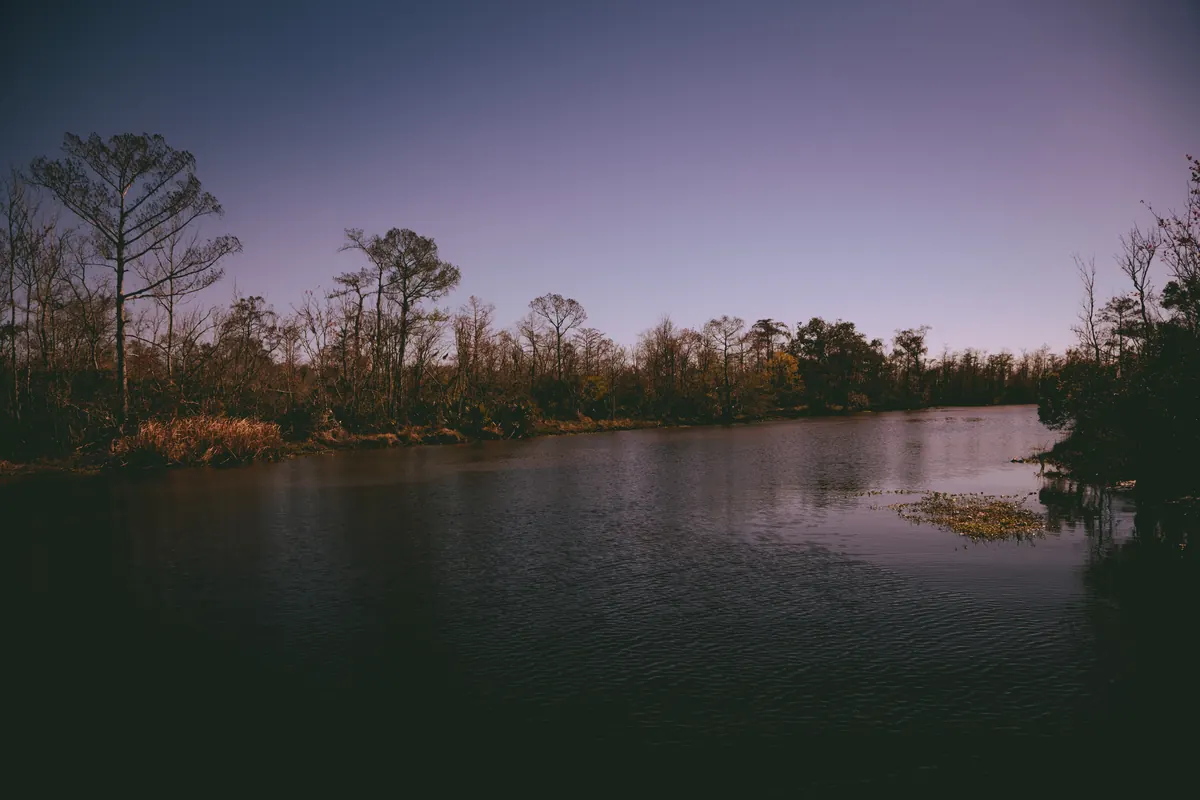
Start here

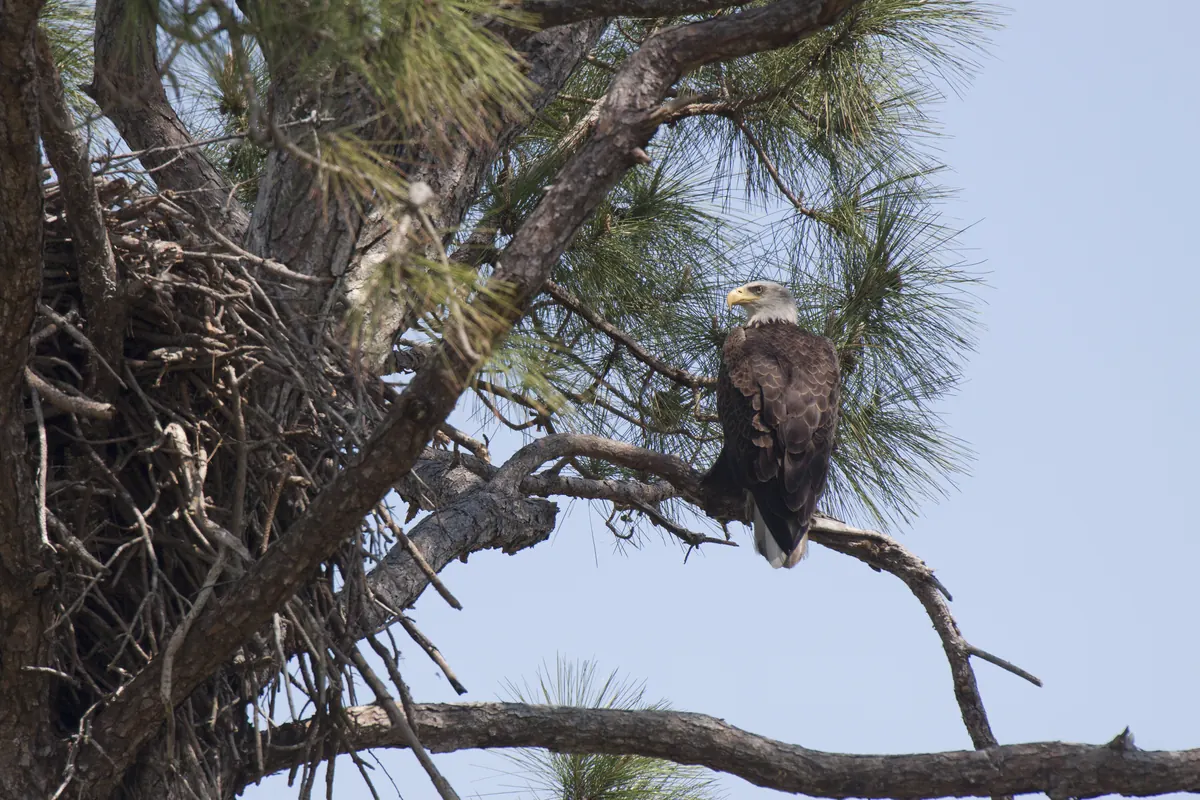
- Find a nesting eagle. Eagles in the coastal parishes lay their eggs in November and December. Scan big cypress and pine snags beside open water, especially around Lake Verret and Lake Palourde, for a white head sitting low in a bulky nest, and watch from far off.
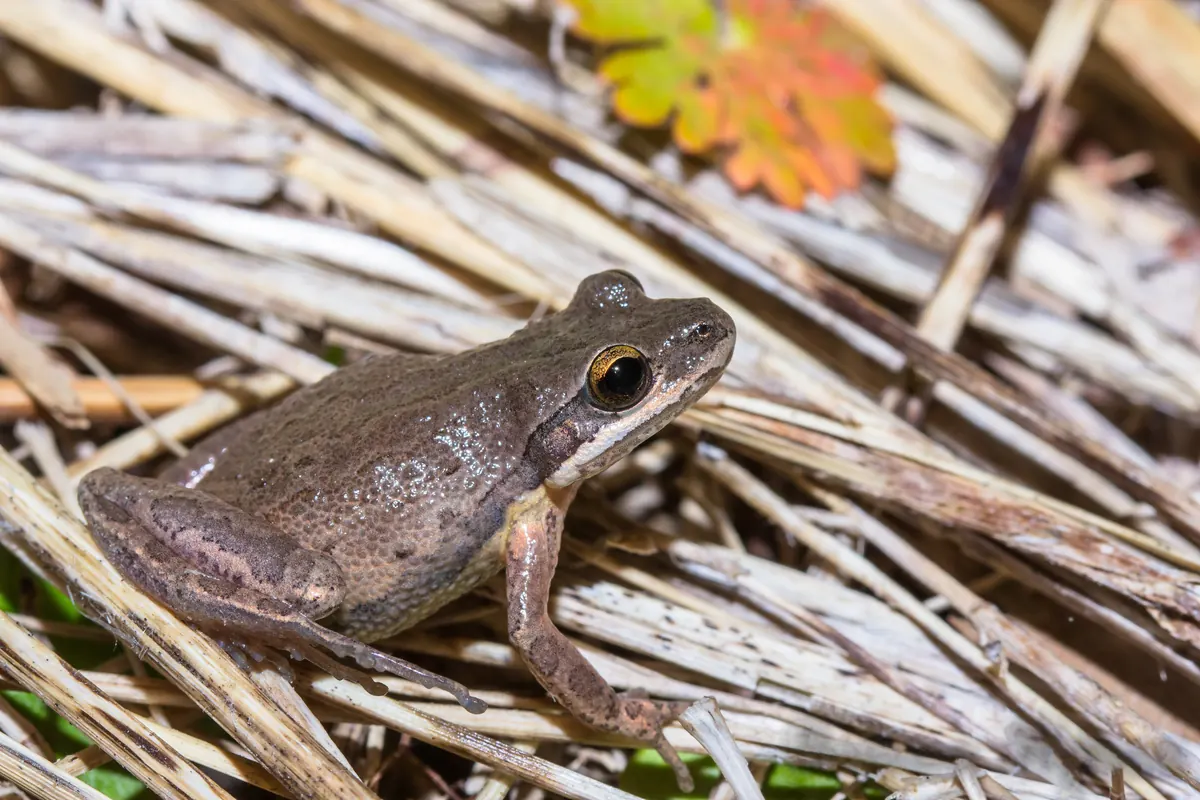
- Listen for winter frogs. On the next mild, rainy night, stand by a flooded ditch or pond for five minutes. Chorus frogs, spring peepers and leopard frogs breed in winter here, and a full chorus can drown out conversation.
- Count birds for Audubon. Louisiana’s Christmas Bird Counts run between December 14 and January 5. Look up the nearest circle on Audubon’s online map and email the person who runs it; newcomers and feeder watchers are welcome.
Keep it in the Naturalist’s Field Journal. An incubating eagle belongs on the nest observed page and your count-day list on birds I have seen. A rainy night of frog calls makes a fine map of sounds; the Geminid night and the solstice sunset go on the dusk-and-dawn watch; and one live oak, or a hackberry hung with mistletoe, can start a tree-through-the-seasons page you return to in spring.
Regions used below: North Louisiana (Shreveport, Monroe and the northern hills); Central Louisiana and the Kisatchie country; Southwest Louisiana and the Chenier Plain; Acadiana and the sugarcane parishes; Baton Rouge and the Florida Parishes; New Orleans and the southeast marshes.
When do bald eagles lay eggs in Louisiana?
Right about now. Louisiana’s bald eagles run on a calendar that surprises visitors from the north: they court and repair nests in the early fall, and the eggs, usually two or three, go into the nest in November and December. By February most of the chicks have hatched. LDWF’s ornithologist calls them fall-winter-spring nesters, which suits the biologists, because a nest in a bare cypress is easy to spot from the air before the trees leaf out.
The department times its aerial nest survey for the weeks when eggs are in the nests, then flies the same nests again in spring to learn how many young made it. The most recent survey it has published, flown in 2017–18 over the band of coastal parishes from the New Orleans area west past Morgan City where most of the state’s eagles live, found 264 active nests, and nesting success was close to 100 percent. Terrebonne and St. Mary parishes held some of the densest clusters, with many nests packed around Lake Palourde and Lake Verret. In the early 1970s, after DDT, the state had only five to seven active nests.
To see one, scan the tallest cypress and pine snags along big open water in the southeastern parishes, or the lakes of the Atchafalaya Basin’s eastern edge, and look for a white head sitting low and still in a bulky stick nest. Keep well back. LDWF counts disturbance at nests among the threats eagles face, and federal law still protects the birds and their nests. Once the chicks are about ten weeks old the biologists count a nest as a success; they can fly at about twelve weeks, which puts first flights in this year’s nests in the spring. For the Kincaid Lake eagle camera near Alexandria, see the Louisiana November guide.
How do you join a Christmas Bird Count in Louisiana?
Since 1900 Audubon’s Christmas Bird Count has asked volunteers to spend one winter day counting birds, and Louisiana gives them more to count than most states. On a single day chosen by each circle’s organizer, inside the official window (this winter, from Monday, December 14, until Tuesday, January 5), volunteers spread out across a fixed circle 15 miles wide and record every bird they can find. Audubon’s compiler list for the 2024–25 count names more than two dozen Louisiana circles, spread from the hills to the Gulf, among them:
- North: Shreveport, Claiborne, D’Arbonne, Red River National Wildlife Refuge, Natchitoches and Franklin.
- Central: Catahoula National Wildlife Refuge, Cheneyville-Lecompte, Fort Polk and Pine Prairie.
- Southwest and the Chenier Plain: Lake Charles, Johnsons Bayou, Sabine National Wildlife Refuge, Sweet Lake-Cameron Prairie National Wildlife Refuge, Lacassine National Wildlife Refuge-Thornwell, White Lake and Crowley.
- Acadiana: Lafayette and Palmetto Island.
- Baton Rouge, the Northshore and the southeast: Baton Rouge, St. Tammany Parish, Northshore-Slidell, Reserve-Bonnet Carre Spillway, New Orleans, Thibodaux, Grand Isle and Venice.
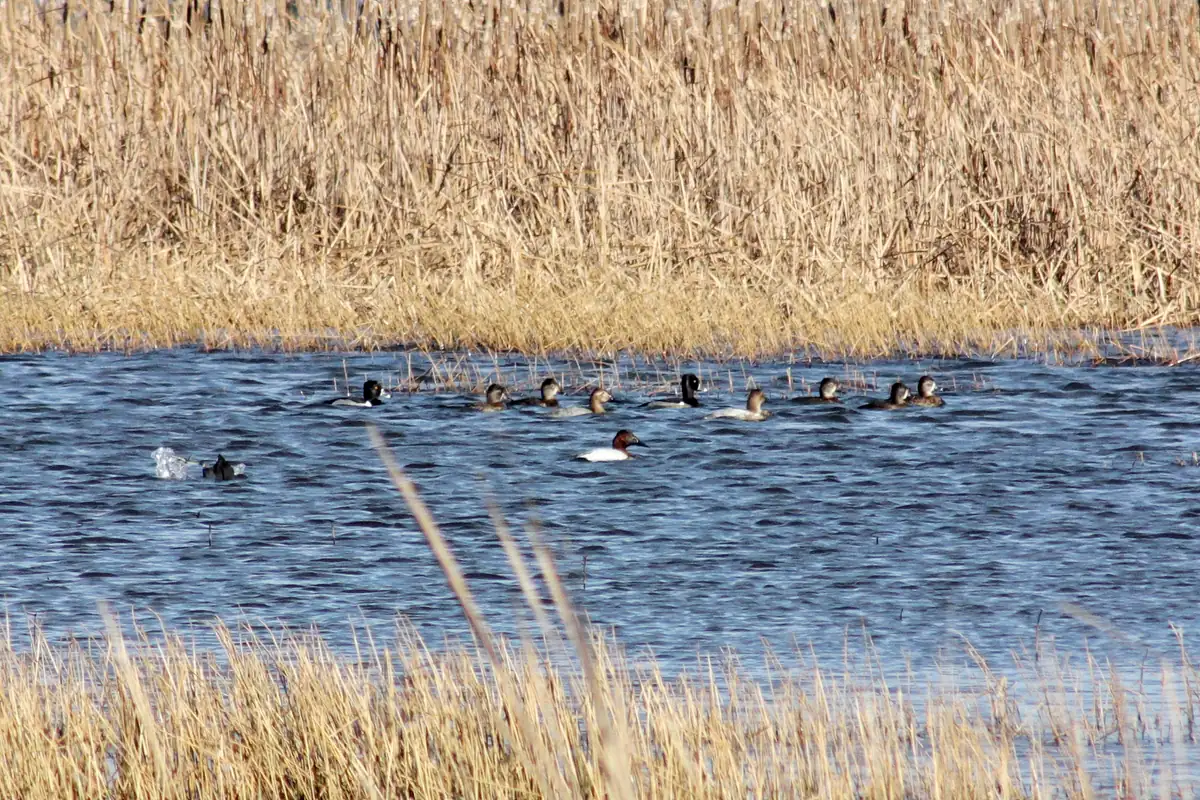
The state’s winter mix is what makes these counts so rich: northern ducks and sparrows share the marsh edges with lingering warblers, western hummingbirds and wading birds that never leave. The table below shows the leaders from Audubon’s Louisiana summary of the 2020–21 count; that winter the state’s counts together found 250 species. In the 2024–25 count, Audubon’s list of the season’s top tallies credits Louisiana with the national high count for 18 species, including 51,001 canvasbacks on the Catahoula National Wildlife Refuge count, 13,165 white-faced ibis on Lacassine NWR-Thornwell, ten yellow rails on Sweet Lake-Cameron Prairie and 1,100 Sandwich terns at Venice.
You do not need to be an expert. Organizers team newcomers with seasoned birders, and a person whose yard lies inside a circle can often help by counting the feeder. Each circle’s 2026 date and its compiler appear on Audubon’s Christmas Bird Count map as compilers register them, so check it from late November and reach out early, because some circles assign territories weeks ahead.
| Count circle | Region | Species found |
|---|---|---|
| Lacassine NWR-Thornwell | Southwest rice country and Chenier Plain | 157 |
| New Orleans | Southeast marshes and city | 156 |
| Palmetto Island | Vermilion Parish, Acadiana | 154 |
| Baton Rouge | Baton Rouge and the Florida Parishes | 147 |
If a count circle covers your yard, a winter hummingbird at your feeder can become part of the official tally.
Why are frogs calling in Louisiana in December?
Because for a handful of Louisiana frogs, winter is the breeding season. Step outside on a mild, rainy December night near a flooded ditch, a pasture puddle or a woods pond and you may hear a din that sounds more like April. Louisiana’s volunteer frog survey, the Louisiana Amphibian Monitoring Program, listened along roadside routes three times a year from 1997 to 2017, and its scientists sorted the state’s frogs into winter, spring and summer callers. Five species belonged to the winter round:
- Cajun chorus frog, a small, striped frog whose call sounds like a thumbnail run along the teeth of a comb.
- Spring peeper, a thumb-sized treefrog marked with a dark X, whose single rising peep carries a long way.
- Southern leopard frog, the spotted green-and-brown frog of ditches, with a chuckling, clucking call.
- Crawfish frog, a stocky frog that hides in crawfish burrows and snores; the survey found it in south Louisiana.
- Pickerel frog, a square-spotted cousin of the leopard frog.
Three of them, the leopard frog, the Cajun chorus frog and the spring peeper, made up more than 95 percent of all the winter-round records in every part of the state. Leopard frogs were the frog most often heard in south Louisiana overall; peepers led in the north and in the Florida Parishes. The researchers set the winter listening window in north Louisiana, above about 31°41′ N (a line just south of Natchitoches), about a month later than in the south, because frogs there start calling later in colder winters.
To listen, pick a still, mild night after rain, stand quietly by water for five minutes, and note what you hear and how loud it is. Stay well off rural roads and wear something reflective.
Which winter birds are easiest to find in Louisiana in December?
-
Woodcock in the thickets
All winter; hunting season opens December 18 · Damp young woods and thickets statewide
American woodcock settle into Louisiana for the cold months in larger numbers than anywhere else in the South, LDWF says. They spend the cold months probing soft soil for earthworms in damp thickets with bare ground under dense cover, and biologists band them on state lands to follow their travels. Walk a wet woods edge slowly in the last light and one may burst up at your feet on whistling wings.
-
Snow geese, blue geese and specks
Flocks at their winter peak · Rice and crawfish country of Acadiana and the southwest; Lacassine and Cameron Prairie refuges
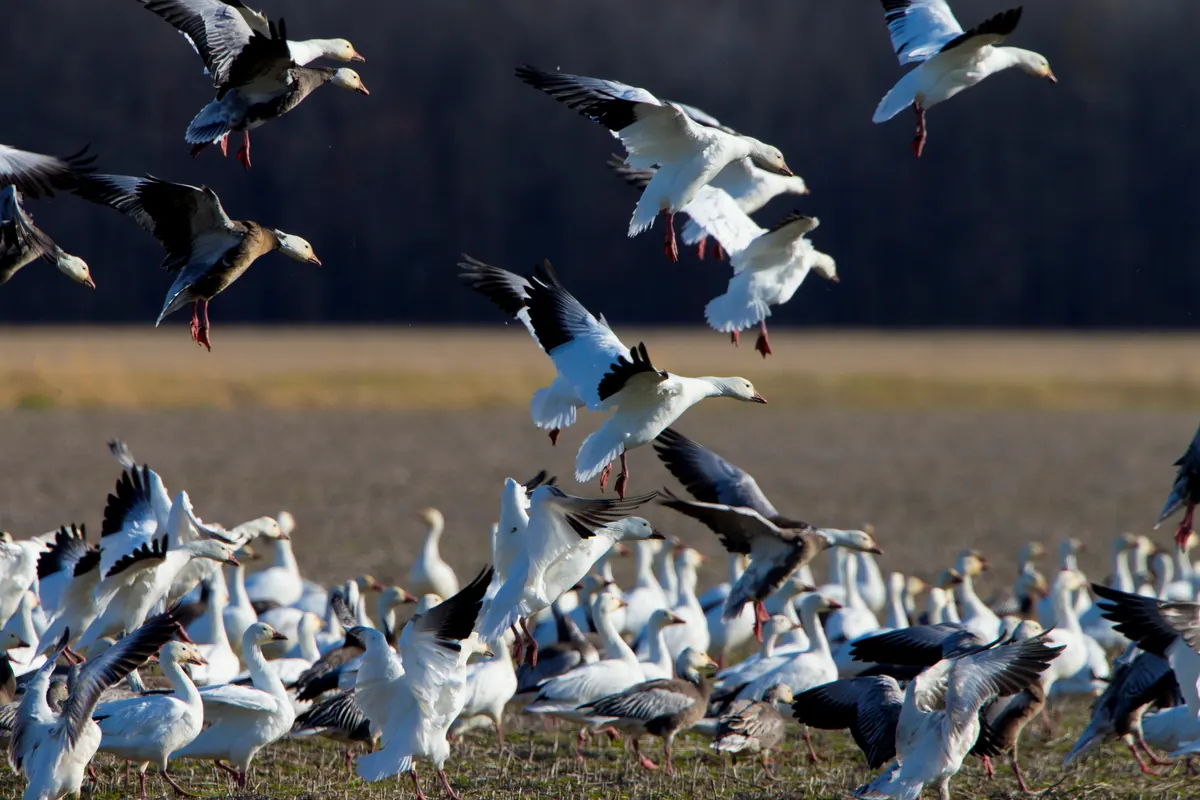
White flocks on the harvested rice ground are snow geese, mixed with the dark-bodied “blue” form of the same species and a few smaller Ross’s geese. LDWF holds a special conservation order on these light geese from December 7 to 18, so expect extra shooting in goose fields those days. Watch from the road, and look for white-fronted geese among them.
-
Ducks between the splits
Seasons close December 6 and reopen December 19 in both zones · Coastal marsh, Catahoula Lake, flooded fields
The twelve-day break in the middle of the duck season is a good window for watching waterfowl on public marshes and refuges, and the state’s biologists keep flying their monthly aerial counts of the coastal zone through January. Their reports appear on LDWF’s aerial survey page; set the December total beside November’s and see how many birds arrived with the cold fronts.
How do Louisiana alligators, bears and deer get through the winter?
-
Alligators go quiet
Through the cool months; out basking on warm afternoons · Swamps, marshes, bayous and ponds
An alligator’s appetite is set by the water around it. The National Park Service’s account from the Everglades notes that alligators stop feeding when the water falls below about 68 to 73 °F, and that they dig dens into banks for shelter when winter turns cold. They can even tolerate short spells of freezing weather. So December gators mostly stay hidden, hauling out on a sunny bank after a cold front to warm up, sluggish but never tame. Keep your distance and keep dogs leashed near water all the same.
-
Bears in hollow trees
Most denned by early January · Tensas and Atchafalaya river basins
Most Louisiana black bears are now settling into dens, many in big hollow cypress and tupelo trunks. Pregnant females give birth in the den during the winter, usually to two cubs. Big males sometimes skip denning altogether in Louisiana’s mild winters, so keep garbage and feed locked up even now.
-
The rut moves east
December into February, depending on the parish · Mississippi Delta parishes, the southeast coast, then the Florida Parishes
LDWF’s map of breeding dates puts the peak in December and January in the northeast Delta parishes and along the coast from Terrebonne to Plaquemines, and in January and February around Baton Rouge, the Atchafalaya and the Florida Parishes. Bucks travel most in the week or two before the peak, so expect deer crossing roads at odd hours in those parishes now.
What stays green in Louisiana in winter?
-
Live oak and Spanish moss
Green all winter · Yards, campuses, cheniers and ridges near the coast
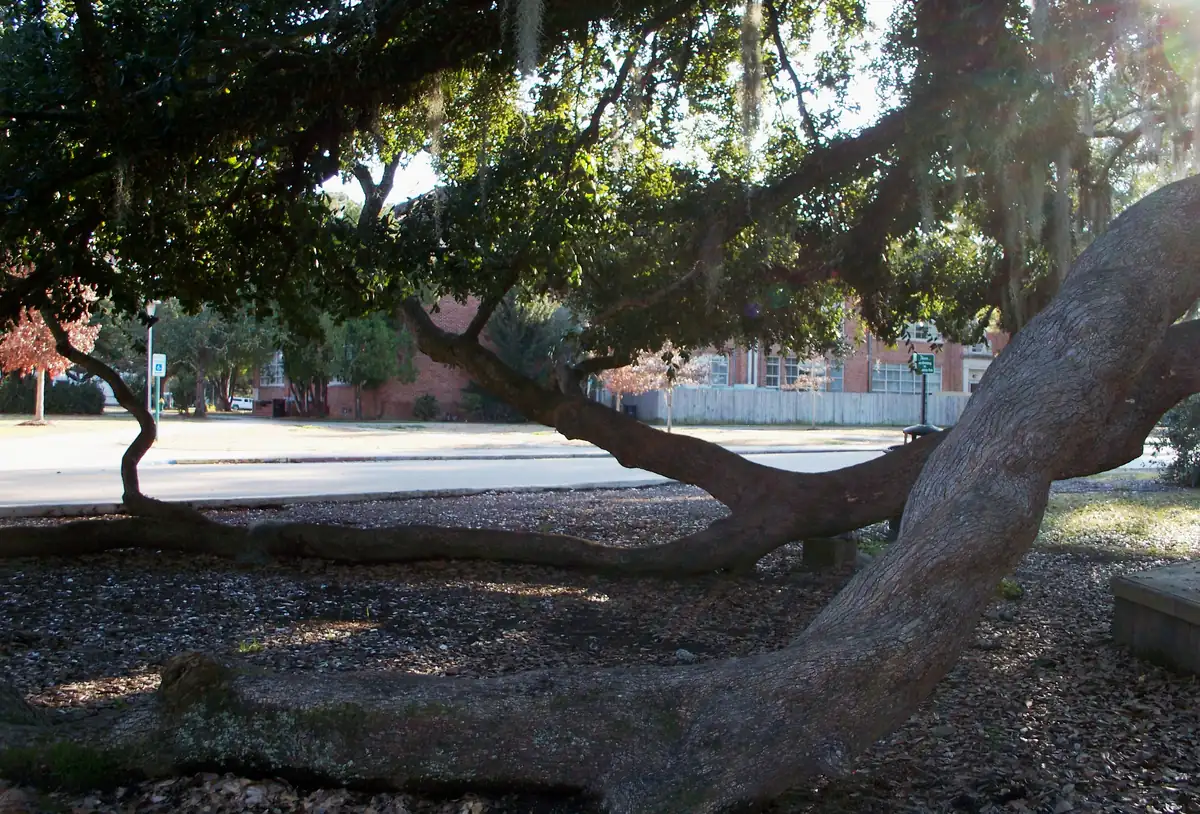
Louisiana’s signature tree keeps its dark, waxy leaves through the winter and drops them only in spring, just as the new ones open, the Lady Bird Johnson Wildflower Center notes. The gray curtains hanging from its limbs are Spanish moss, which is neither a moss nor a parasite: it is a flowering air plant that makes its own food from sunlight and takes water and minerals from rain and the drip off the leaves above.
-
Mistletoe in bare crowns
Most visible from December, once leaves have fallen · High in the crowns of bare hardwoods
Once the hardwoods go bare, the round green clumps of oak mistletoe stand out high in the crowns. The plant is a semi-parasite, making some of its own food but drawing water and nutrients from its host. Its white berries are poisonous to people but a favorite of cedar waxwings and bluebirds, which spread the sticky seeds when they wipe their bills on branches.
-
American holly and southern magnolia
Holly berries red through winter · Woods, bottomland edges and older neighborhoods
American holly carries its red fruit only on female trees, and only when a male of the same species grows nearby; many songbirds and small mammals eat the bitter berries. Southern magnolia’s leathery leaves are glossy green above and rusty below.
-
Camellias and beautyberry
Camellias blooming now; beautyberry fruit hanging on · Old gardens, refuge grounds, woods edges
Camellias, planted across south Louisiana for generations, flower in the dead of winter; the grounds of the Bayou Lacombe Visitor Center, the old Bayou Gardens, hold many varieties. Beautyberry, a native shrub, often keeps clusters of purple fruit on its bare stems into December, a late meal for birds.
When is the earliest sunset in Louisiana, and how short is the shortest day?
Daylight reaches its low point at the solstice, which arrives at 2:50 in the afternoon, Central Standard Time, on December 21. The earliest sunset does not: it comes nearly three weeks earlier, centered on December 2 to 4 depending on the city, at about 5:00 p.m. in New Orleans and 5:09 in Shreveport, because the sun’s noon position keeps drifting later on the clock through December. That is why evenings start to stretch again well before Christmas while mornings keep darkening into January. On the solstice itself, daylight bottoms out at 10 hours 1 minute in Shreveport and Monroe and 10 hours 14 minutes in Houma.
| City | Dec 1 | Dec 21 | Dec 31 | Earliest sunset |
|---|---|---|---|---|
| Shreveport | 10 h 10 m | 10 h 01 m | 10 h 03 m | 5:09 p.m., Dec 3 |
| Monroe | 10 h 11 m | 10 h 01 m | 10 h 03 m | 5:03 p.m., Dec 4 |
| Alexandria | 10 h 16 m | 10 h 06 m | 10 h 09 m | 5:07 p.m., Dec 3 |
| Lake Charles | 10 h 20 m | 10 h 12 m | 10 h 14 m | 5:12 p.m., Dec 2 |
| Lafayette | 10 h 20 m | 10 h 12 m | 10 h 14 m | 5:07 p.m., Dec 2 |
| Baton Rouge | 10 h 20 m | 10 h 10 m | 10 h 13 m | 5:04 p.m., Dec 2 |
| New Orleans | 10 h 21 m | 10 h 13 m | 10 h 15 m | 5:00 p.m., Dec 2 |
| Houma | 10 h 23 m | 10 h 14 m | 10 h 16 m | 5:03 p.m., Dec 2 |
Use the sunrise and sunset calculator to find the exact minute for your own parish, along with how long twilight lasts after the sun drops.
What is December weather like in Louisiana, and will El Niño make it wetter?
Climate records file December 1 as Louisiana’s first winter day, because December, January and February form the coldest three-month block on average, three weeks ahead of the solstice that calendars use. In Louisiana the season arrives as a parade of cold fronts, each followed by a few crisp, blue days and then a swing back to mild, damp Gulf air. In NOAA’s 1991–2020 normals, December highs average about 60 °F at Shreveport and Monroe and 64 to 65 °F from Baton Rouge to Lake Charles, and the north sees eight to ten freezing nights in a typical December while New Orleans International Airport sees about one. December is a wet month everywhere, around 4.5 to 5.3 inches.
| Station | Average high | Average low | Rain and melted snow | Freezing nights | Snowfall |
|---|---|---|---|---|---|
| Shreveport | 59.9 °F | 39.0 °F | 4.94 in | 8.6 | 0.1 in |
| Monroe | 59.0 °F | 38.6 °F | 5.22 in | 9.6 | – |
| Alexandria | 61.2 °F | 40.6 °F | 5.28 in | 7.9 | – |
| Lake Charles | 65.3 °F | 45.3 °F | 4.56 in | 3.0 | – |
| Lafayette | 64.4 °F | 45.3 °F | 4.96 in | 3.0 | – |
| Baton Rouge | 64.3 °F | 43.3 °F | 5.32 in | 5.4 | 0.2 in |
| New Orleans | 64.8 °F | 48.4 °F | 4.82 in | 1.0 | 0.0 in |
December is also when the coast finally freezes, in a typical year. NOAA’s freeze-date medians fall on December 4 at Lafayette, December 7 at Lake Charles, December 17 at Houma and December 31 at New Orleans International Airport; the Louisiana frost and freeze table lists every station in the state. Cover tender plants and citrus whenever a hard front is forecast.
The Pacific may tip the odds toward a soggy winter. Odds above nine in ten for an exceptionally powerful Pacific warm event this winter: that was the mid-September verdict in the Climate Prediction Center’s monthly ENSO discussion, which calls it a very strong El Niño. Forecasters at the National Weather Service in Lake Charles once studied six strong El Niño events between 1957 and 1992 and found that Lake Charles averaged about 14 percent more rain than normal over the two years of each event, and that in the twelve months starting each September, as the events peaked, every month ran 5 to 80 percent wetter than normal. They cautioned that it was a study of just two stations and that other places may behave differently, and they noted that El Niño winters tend to run slightly cooler than normal across the southern states.
The New Orleans office points to a vivid example: during the moderate El Niño of 2009–10, a run of Gulf lows made December 2009 the wettest month ever recorded at New Orleans International Airport, breaking the record on December 18, and Baton Rouge had its second wettest December. The government’s seasonal winter forecast is scheduled for October 15; read it on the Climate Prediction Center’s outlook page once it is posted.
Does it ever snow in Louisiana in December?
Snow is rare, and December snow rarer still, but it happens. A few storms stand out in National Weather Service records: on Christmas Day 2004, Chalmette got 1 to 3 inches, enough for snowmen; on December 11, 2008, a band of 6 to 8 inches fell from lower Livingston Parish across Tangipahoa into St. Tammany and Washington parishes, with 3 inches at Baton Rouge; snow on December 4–5, 2009, was the earliest the New Orleans and Baton Rouge office had ever recorded; and on December 8, 2017, snow fell from Alexandria to Acadiana and the southwest.
The Lake Charles office of the National Weather Service keeps a list of every measurable snowfall at its main stations back to 1895. December accounts for only a handful, and not one of these stations has ever measured snow in November.
| Station | December snowfalls | Biggest December snow | Earliest snow on record |
|---|---|---|---|
| Alexandria | 6 | 8.0 in, Dec 29, 1901 | Dec 2, 1896 |
| Lake Charles | 4 | 2.1 in, Dec 8, 2017 | Dec 4, 2009 |
| Lafayette | 3 | 1.7 in, Dec 8, 2017 | Dec 4, 2009 |
| New Iberia | 3 | 2.4 in, Dec 8, 2017 | Dec 8, 2017 |
The truly big snows in this list came later in the winter: 22 inches at Lake Charles on February 14–15, 1895, and, on January 21, 2025, 5.5 inches at Lake Charles and 9 inches at Lafayette. When a hard front is due, keep an eye on the current conditions and forecast; a rare white morning starts there.
What is in the Louisiana night sky in December?
-
The Geminid meteors
Night of Sunday, December 13, best from late evening until dawn on the 14th · Anywhere dark; the radiant rises in the east-northeast after dusk
The richest meteor shower of the year peaks on December 14, and this time the moon cooperates: only a thin crescent, it goes down in the evening and the hours after that are moonless. The International Meteor Organization puts the shower’s rate at about 150 an hour in a perfect sky with the radiant overhead; a Louisiana backyard with haze and city glow will show far fewer, though still plenty after midnight. Meteors seem to spring from a point near Castor and Pollux in Gemini, which climbs highest around 2 a.m. Geminids are slow and often bright, and they start early, so children can watch for a while before bed.
-
The solstice
Monday, December 21, 2:50 p.m. CST · Note where the sun sets on your horizon
At the solstice the noon sun stands lower than on any other day, a little over 36 degrees above the southern horizon in New Orleans and about 34 in Shreveport, and it rises and sets as far south of east and west as it ever does. After dark that evening, look east for a nearly full moon sliding past the Pleiades.
-
The Cold Moon, closest full moon of 2026
Full Wednesday, December 23, at 7:28 p.m. CST · Rising in the east-northeast around sunset
Only about seven hours separate this full moon from perigee, the point where the moon’s orbit brings it nearest Earth, so it is the closest full moon of 2026 and counts as a supermoon. Look on the night of the 23rd, or a night later on Christmas Eve, when it still appears round. Nobody can see the extra size without a camera and a comparison photo, but the low, orange moon rising over a marsh or levee is worth the trip either night.
-
Venus, Jupiter and Mars before dawn; Saturn after dusk
All month · East and south before sunrise; southwest in the evening
Every clear morning this month Venus outshines everything in the predawn southeast except the moon. A waning crescent moon drifts past it, with the star Spica nearby, on the first Friday and Saturday mornings of the month. Jupiter, high in the south at dawn, rises earlier each night and is up by mid-evening late in the month, with fainter, orange Mars nearby and gradually brightening. After dusk, Saturn shines alone low in the southwest as the evening’s only bright planet, and it sets a little earlier each week.
-
Ursids, and a look ahead to the Quadrantids
Ursids December 22; Quadrantids the night of January 3 to 4 · North (Ursids) and northeast (Quadrantids)
The small Ursid shower peaks on the 22nd under a nearly full moon, so expect little. The Quadrantids, a short, sharp shower, peak in the evening of January 3 by Central time, with only a thin waning crescent rising before dawn; try the predawn hours of January 4.
| Phase | Date | Time |
|---|---|---|
| Last quarter | Tuesday, Dec 1 | 12:08 a.m. |
| New moon | Tuesday, Dec 8 | 6:52 p.m. |
| First quarter | Wednesday, Dec 16 | 11:42 p.m. |
| Full moon, the Cold Moon | Wednesday, Dec 23 | 7:28 p.m. |
| Last quarter | Wednesday, Dec 30 | 12:59 p.m. |
Winter fronts can leave the clearest skies of the year behind them. Check the cloud cover forecast before heading out, and the moon phase page for moonrise in your town.
What can families do outside in Louisiana in December 2026?
- Cajun Christmas, Saturday, December 12, from 2 until 4 in the afternoon. The refuge complex for southeast Louisiana hosts a free holiday afternoon at the Bayou Lacombe Visitor Center in Lacombe with Santa, nature crafts, cookies and the refuge’s wildlife displays. The trails and the camellias of the old Bayou Gardens are open to explore. The same visitor center runs Nature Explorers, a free 45-minute program for children up to age 6, on the first and third Fridays of each month (December 4 and 18).
- Swamp walks at Barataria Preserve. Jean Lafitte National Historical Park and Preserve rangers lead a free hour-long walk on the Wetland Trace boardwalk at 1 p.m. on December 2, 3, 9, 10, 16, 17, 23, 24, 30 and 31. On Thursday, December 3, at 11 a.m., Read with a Ranger brings a story hour and craft to the Lafitte library.
- Bayou Lafourche by boat. From the Wetlands Acadian Cultural Center in Thibodaux, park rangers take visitors out on the bayou for two hours, starting at 10 a.m. on December 4, 5, 11, 12, 18, 19 and 26. Reservations are needed.
- First Saturday bird walk, December 5, 7 a.m. Baton Rouge Audubon Society’s monthly walk at BREC’s Bluebonnet Swamp Nature Center needs no registration; bring binoculars and the $3 admission. The society lists it as a standing first-Saturday walk, so confirm on its calendar nearer the date.
- Count birds. Join a Christmas Bird Count circle between December 14 and January 5, and keep your Project FeederWatch counts going through the holidays.
- First Day Hikes on Friday, January 1, 2027. Louisiana State Parks takes part in the national First Day Hikes program; last New Year’s the parks waived admission on January 1 and 2 and pointed hikers to trails from Bogue Chitto to Poverty Point. Check the state parks’ site in late December for this year’s list.
We checked these dates against each organizer’s calendar on October 2; programs can change or cancel in bad weather, so confirm before you go. The full set of state and month guides lives on the nature calendar, and a page of the Naturalist’s Field Journal is a good place to keep each outing.
Safety notes for December in Louisiana
- Deer seasons with dogs. In LDWF’s 2026–27 schedule, deer hunting with or without dogs is already open in Areas 3, 7 and 8 (from November 30) and opens December 10 in Area 2, the northwest; Areas 1, 4, 5, 6 and 9 follow on December 12. Areas 5 and 9 are bucks-only December 14–18 and again from December 21. In Area 10, the coastal prairie parishes, still-hunting runs through January 3. Wildlife management areas and Kisatchie National Forest set their own days, so check before walking public land.
- Birds: duck seasons close December 6 and reopen December 19 in both zones; the light-goose conservation order runs December 7–18; doves reopen December 12 in the South Zone and December 19 in the North Zone; woodcock opens December 18.
- Hunter Orange or Blaze Pink. As long as any firearms deer season is open, a hunter of any species who carries buckshot, slugs, a muzzleloader or other primitive firearm, or a centerfire rifle or pistol must show at least 400 square inches, combined, of orange or pink on head, chest or back. On private property, a cap of either color can substitute, and deer hunters in elevated stands on private land may go without once in the stand, though not on the walk in or out. On WMAs every hunter except waterfowl and dove hunters needs the 400 square inches and an orange or pink hat or cap; quail and woodcock hunters there need at least the hat. Birders and hikers are not required to wear it, but a bright vest and cap on public land this month cost nothing.
- Cold water and fog. A fall into December lake or marsh water can trigger cold shock, the involuntary gasp that drowns people; wear a life jacket in a canoe or kayak. Dense fog forms on calm winter mornings over the Atchafalaya and the coastal parishes, so slow down on bridges.
- Ice and freezing rain. Louisiana roads and bridges are not built for ice. When a hard freeze or freezing rain is forecast, postpone the trip, and protect pipes, pets and plants.
- Short days. With sunset near 5 p.m., start afternoon hikes early and carry a light. Cane burning continues in sugar country into January; slow down and use headlights in smoke.
Sources
- LDWF: Louisiana bald eagle population shows growth according to latest nest survey
- LDWF: Rare Animals of Louisiana, bald eagle fact sheet (PDF)
- National Audubon Society: Christmas Bird Count
- National Audubon Society: count circles, codes and compilers in the 125th Christmas Bird Count (PDF)
- National Audubon Society: the 121st Christmas Bird Count in Louisiana
- National Audubon Society: 125th Christmas Bird Count high counts of species in the United States
- Carter, Johnson, Boundy and Vermillion (2021): the Louisiana Amphibian Monitoring Program from 1997 to 2017, PLOS ONE
- Louisiana Amphibian Monitoring Program: a quick guide to when and where frogs call in Louisiana (PDF)
- LDWF: woodcock research and management
- LDWF: aerial waterfowl surveys
- LDWF: Louisiana waterfowl
- USFWS: Lacassine National Wildlife Refuge
- USFWS: Cameron Prairie National Wildlife Refuge
- National Park Service, Everglades National Park: American alligator
- National Park Service, Jean Lafitte National Historical Park and Preserve: animals of the Barataria Preserve
- LDWF: Louisiana Black Bear Management Plan, January 2015 (PDF)
- LDWF: Louisiana BearWise
- LDWF: estimated deer breeding periods
- Lady Bird Johnson Wildflower Center: live oak (Quercus virginiana)
- Lady Bird Johnson Wildflower Center: Spanish moss (Tillandsia usneoides)
- Lady Bird Johnson Wildflower Center: oak mistletoe (Phoradendron leucarpum)
- Lady Bird Johnson Wildflower Center: American holly (Ilex opaca)
- Lady Bird Johnson Wildflower Center: southern magnolia (Magnolia grandiflora)
- Lady Bird Johnson Wildflower Center: American beautyberry (Callicarpa americana)
- NOAA Global Monitoring Laboratory: solar calculator (sunrise, sunset and day length)
- U.S. Naval Observatory: Earth’s seasons, 2026 (solstice time)
- U.S. Naval Observatory: moon phases (data API)
- NOAA NCEI: monthly climate normals 1991–2020 for seven Louisiana airports (data API)
- NOAA NCEI: U.S. Climate Normals 1991–2020 (freeze dates, as used on the site’s Louisiana frost page)
- National Weather Service Lake Charles: snow climatology for southwest Louisiana and southeast Texas
- National Weather Service New Orleans/Baton Rouge: 2000–2009 decade weather review
- National Weather Service Lake Charles: precipitation departures from normal along the northwest Gulf Coast during several strong El Niño events
- Climate Prediction Center: ENSO diagnostic discussion, September 10, 2026
- Climate Prediction Center: seasonal outlooks (winter outlook issued October 15, 2026)
- International Meteor Organization: 2026 meteor shower calendar (PDF, archived copy)
- EarthSky: what is a supermoon? (2026 full supermoons)
- BBC Sky at Night Magazine: supermoons in 2026
- EarthSky: Venus before sunrise, greatest elongation
- Royal Astronomical Society of Canada: lunar occultations 2026, Observer’s Handbook (PDF)
- NASA JPL Horizons ephemeris system (planet and moon positions)
- USFWS: Big Branch Marsh National Wildlife Refuge events (Cajun Christmas, Nature Explorers)
- National Park Service: Jean Lafitte National Historical Park and Preserve calendar
- National Park Service: boat tours of Bayou Lafourche
- Baton Rouge Audubon Society: events and calendar
- BREC: Bluebonnet Swamp Nature Center
- Project FeederWatch: how to participate
- Louisiana Radio Network: Louisiana State Parks free admission for First Day Hikes (December 31, 2025)
- Louisiana State Parks: First Day Hikes
- LDWF: 2026–2027 Louisiana hunting and WMA regulations (PDF; deer areas, migratory bird seasons, hunter orange and blaze pink)
- LDWF: hunting seasons and regulations
- Teche Today: grinding season begins at LaSuCa (finish expected in the first half of January)
- Photos via Wikimedia Commons; licenses and photographers are credited under each picture
