What to look for in nature in Louisiana this March
March is the month Louisiana’s wetlands wake up. Egrets and pelicans return to the rookeries, wild irises open in the marsh, and whooping cranes settle onto nests in flooded fields that were crawfish ponds a month ago. The last winter frogs are finishing their choruses just as the first spring migrants cross the Gulf. It is also the month the clocks jump forward, the days pass 12 hours, and storms and flood rains can still arrive. What follows is a field guide to the month, with a source behind every date.
Other months in Louisiana: October, November, December, January, February, April.
Start here

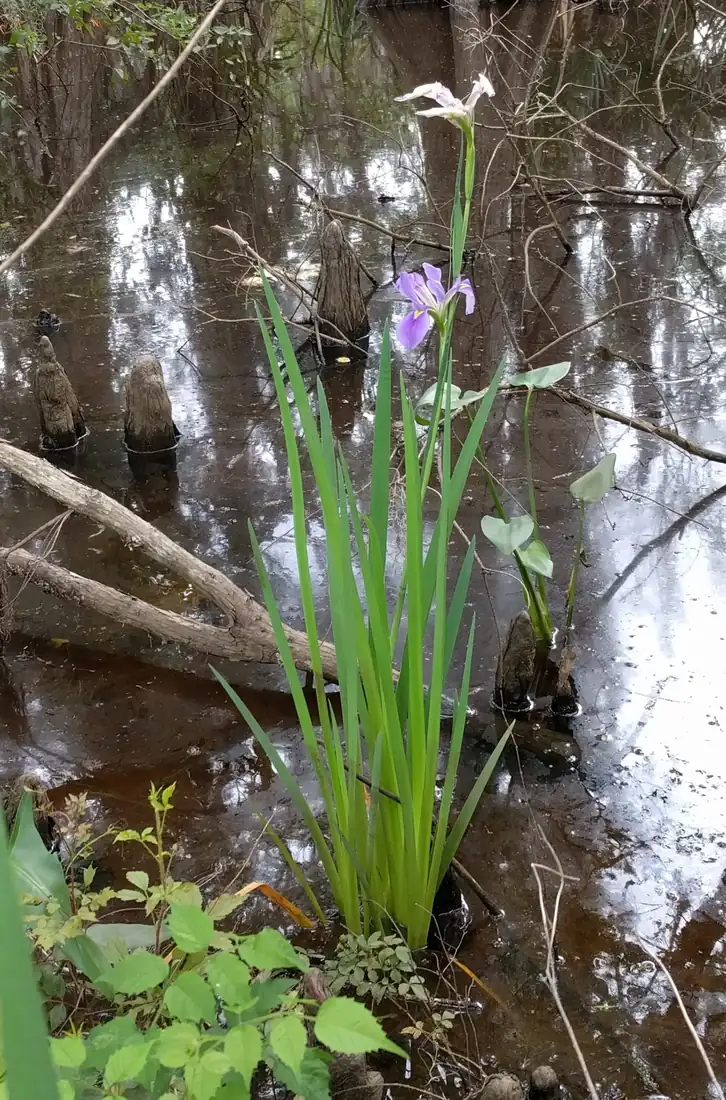
- Look for a wild iris at a wet edge. On a mild morning, scan the edges of a marsh, swamp or roadside ditch for tall blue or violet flowers on sword-shaped leaves. Louisiana irises bloom in March and April, and finding the first one is a good reason to walk a bayou trail.
- Scan a flooded field for a pair of tall white birds. From the car on a farm road in the southwest, use binoculars to look for whooping cranes standing together near a nest. Stay on the road and report any you see to LDWF.
- Listen at dusk for the last winter chorus. On a damp evening beside a ditch, listen for the click of chorus frogs and the whistle of spring peepers before they fall silent. Note the date you hear the last one.
Keep March in the Naturalist’s Field Journal. Log a first kite, hummingbird or monarch on the birds I have seen plate, dated in the daily field log. Sketch an iris or redbud now and again when it sets seed for a tree through the seasons page. The last winter frog choruses suit a map of sounds, a distant rookery or crane nest goes on nest observed, and visiting the same bayou edge every week gives you the same place twice.
Regions used below: North Louisiana (Shreveport, Monroe and the northern hills); Central Louisiana and the Kisatchie country; Southwest Louisiana and the Chenier Plain; Acadiana and the sugarcane parishes; Baton Rouge and the Florida Parishes; New Orleans and the southeast marshes.
Are whooping crane chicks hatching in Louisiana in March?
Some are, and this is the busiest month for starting nests. In LDWF’s report on the 2024 season, seven of the 15 pairs made their first nesting attempt in March, more than in any other month. The flock lives year round in the southwest, so nothing migrates in or out: pairs build a mound of trampled vegetation in a flooded field or marsh and sit on it. (The February page covers the earliest nests.)
The same report shows how hard the first weeks are. Of 15 chicks hatched in the wild that year, ten vanished or died within their first 15 days, and five survived to fledge, the earliest by day 74. A chick hatched in Calcasieu Parish on February 23 left the nest with its parents on the morning of March 2 and was gone by evening. A chick hatched on April 7 in Jefferson Davis Parish died after strong wind moved its nest, and a trail camera caught a large snake crawling onto another nest at night. A pair that loses a nest often tries again, on average about 17 days later.
The long-run trend is upward. After the 2026 season LDWF counted 84 cranes in Louisiana, 32 of them born in the state’s wild, and a record 10 chicks fledged that year, beating the earlier record of eight set in 2022.
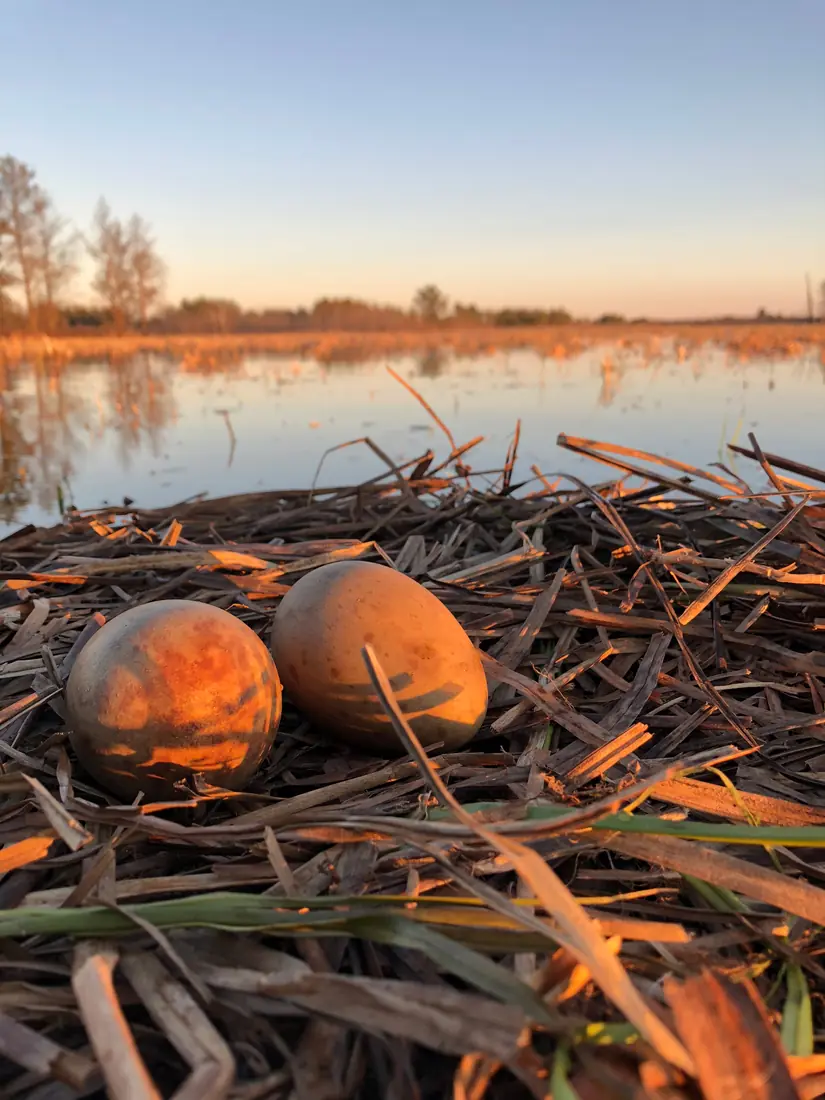
On farm roads in the southwest, scan flooded fields from the car window with binoculars. An adult stands about five feet tall, with a wingspan of seven to eight feet, and is white with a red crown and black face markings. Enjoy it from the road: federal and state law protect the species, and a nest is no place for visitors. Report a sighting on LDWF’s whooping crane page, and call LDWF’s enforcement line, 1-800-442-2511, if you see one harassed.
When do egrets, spoonbills and pelicans return to Louisiana’s rookeries?
Early March for many of them. At Avery Island in Iberia Parish, the McIlhenny family’s Jungle Gardens holds Bird City, one of the oldest bird sanctuaries in the country. Edward McIlhenny started it in 1895 with eight snowy egrets he had raised and released, at a time when plume hunters for the hat trade had almost wiped the species out. By 1911 the population had grown to an estimated 100,000 egrets, according to The Cultural Landscape Foundation. A 2024 article in Southbound says the staff set out dried bamboo on raised platforms each winter, ready for “the early March arrival” of thousands of water birds, which leave again when the young can fly at summer’s end.
On the coast, brown pelicans, Louisiana’s state bird, nest on low barrier islands. Queen Bess Island, northeast of Grand Isle in Jefferson Parish, was rebuilt with Deepwater Horizon settlement money. Before the work, only 5 of its 36 acres were usable for nesting. NOAA’s 2020 announcement calls it the fourth-largest brown pelican colony in the state, holding 15 to 20 percent of Louisiana’s pelican nesting, and says the finished island was ready for the pelicans’ arrival that March. The Fish and Wildlife Service reports 18 species nesting there in the first season, among them roseate spoonbills, reddish egrets, tricolored herons and great and snowy egrets.
Inland, Audubon’s magazine guide points to Lake Martin near Lafayette, where hundreds of herons, egrets, night-herons, ibises and roseate spoonbills nest in plain view from March through May. In the southwest, Sabine National Wildlife Refuge on the Creole Nature Trail is where visitors tend to find spoonbills and purple gallinules.
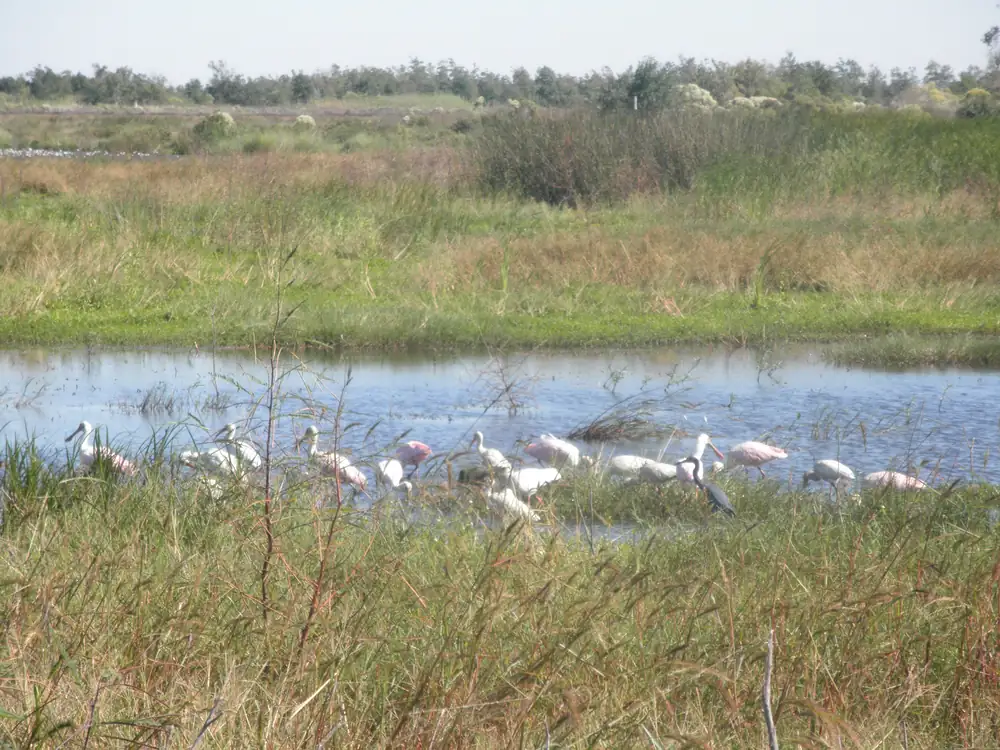
Watch colonies from a boardwalk, a road or a boat well away from the nests, and never land on a nesting island.
What blooms in Louisiana in March, and where do I look?
The wild show moves from the redbud and the first wetland irises to the azaleas and bog plants of the pine hills. These are good bets, with the times each source gives.
-
Louisiana irises
March and April · Freshwater marshes, swamps, wet prairies and ditches; also at refuges and preserves
The Louisiana Native Plant Society counts six native species: zigzag, copper, giant blue, dixie, Abbeville red and Virginia irises. They bloom in March and April and grow as scattered populations in freshwater marshes, swamps, wet prairies and other wetlands. The group notes that copper iris nectar feeds hummingbirds. Admire them from the trail or road; wild plants are not for picking or digging.
-
Abbeville red iris
Later than the other irises; look for buds in March · Vermilion Parish, where it was discovered, and in gardens
The Abbeville red iris (Iris nelsonii) is the red-flowered native of Vermilion Parish, its blooms running from red-purple to bright red. It opens later than the copper and giant blue irises, so in March look for buds rather than flowers.
-
Eastern redbud
Mid-February to late March · Woodland edges, fence rows, yards and parks statewide
LSU AgCenter horticulturists say redbuds usually start flowering in mid-February and continue through late March, so this month is the tail end of the show. In Kisatchie National Forest, one magazine writes, spring turns the woods “redbud pink and dogwood white.”
-
Wild azaleas
Spring; local reports put the peak between March and early April · Spring-fed creek banks along Kisatchie’s Wild Azalea Trail near Woodworth
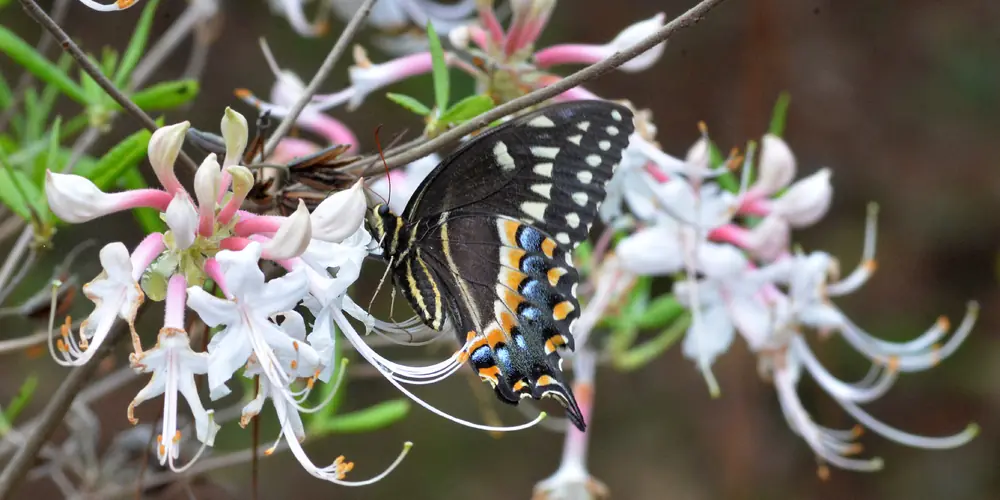
The Wild Azalea National Recreation Trail in Kisatchie National Forest, Louisiana’s only national forest, runs 31 miles through upland pine, ridges and creek bottoms. Local television coverage of the trail puts the bloom of the native azaleas between March and early April, clustered along shallow spring-fed creek banks, with butterflies as pollinators. The trail is free and well marked.
-
Pitcher plants and bog flowers
March to May is the best viewing, per the U.S. Forest Service · Cooter’s Bog, Vernon Parish, in the Calcasieu Ranger District
Cooter’s Bog is a complex of hillside pitcher plant bogs covering more than 130 acres of national forest land. The Forest Service lists winged pitcher plants, sundews, butterworts and bladderworts among the carnivores, plus black snakeroot and bog buttons. The agency gives March through May as the best viewing time. It also warns of diamondback rattlesnakes and water moccasins, ticks, chiggers and mosquitoes, and recommends long pants, long sleeves and waterproof boots.
The Louisiana Native Plant Society lists its 2027 annual conference for March 5–7; check lnps.org for the place, registration and field trips.
Which migrant birds show up in Louisiana in March?
The first trans-Gulf crossers, mostly in the second half of the month. Audubon’s magazine guide says spring migration runs from mid-March through May, with April the best, and that the day after a cold front brings the most birds.
So March is the quiet start. The famous coastal woods, Grand Isle and Peveto Woods in Cameron Parish, are best known for April and early May. Peveto, a sanctuary run by the Baton Rouge Audubon Society, is birded hardest from March to May and has more than 318 species on its list. Audubon calls Grand Isle’s woodlands one of the best fallout sites for spring migration, peaking around mid-April.
-
Swallow-tailed kites
Arrive from late winter into March; stay until late summer · Over bottomland forests, rivers and swamps
Audubon’s field guide says Florida’s birds arrive in February and March and leave in August and September, and the American Bird Conservancy places the southeastern breeding population from South Carolina to Florida and west to Louisiana and eastern Texas. Louisiana’s birds should be on a similar schedule, so start looking up in March. A kite is hard to confuse: white head and belly, black back, deeply forked tail.
-
First warblers and other trans-Gulf migrants
Mid-March onward; the main waves come in April · Coastal woods, chenier ridges and bottomland forest
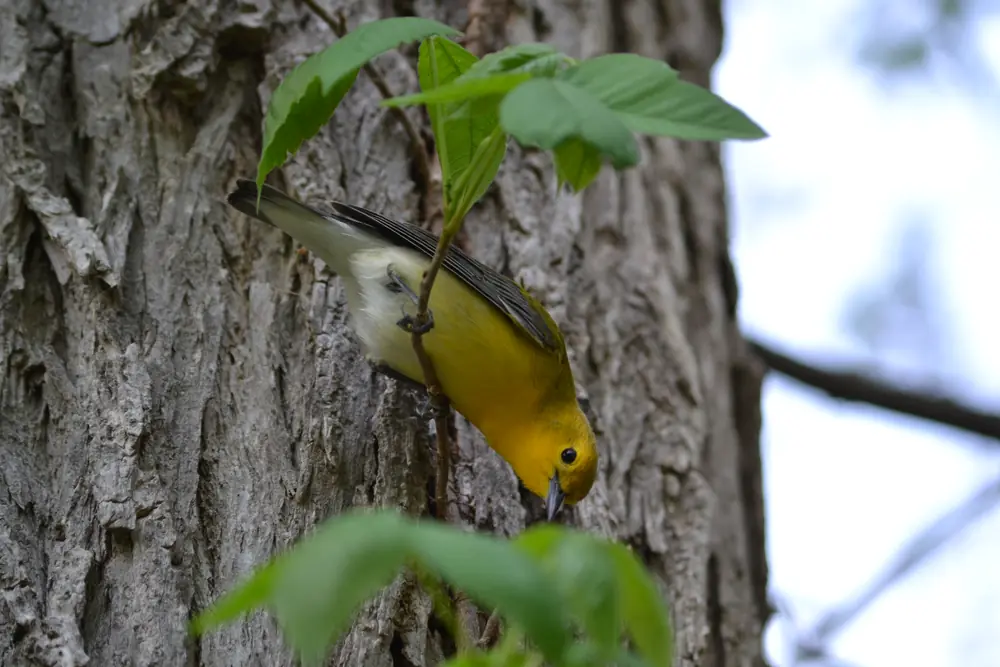
Prothonotary warblers, golden birds of wooded swamps, are among the species coastal birders hope for as the season opens. A good April morning at Peveto can bring 20 or more warbler species, the site’s birding guide says. In March, expect only a handful of early arrivals, so log each as a first of the year.
-
Ruby-throated hummingbirds
Late February and March on the Gulf Coast · Feeders and gardens, especially with native plants such as copper iris
Baton Rouge Audubon says the migrants wintering in Mexico and Central America generally arrive on the Louisiana coast from late February into March. Feeders go quiet from the end of April until around the Fourth of July, once the birds are busy nesting. Western hummingbirds that wintered in Louisiana usually leave in February or March, so a March feeder may briefly host both.
-
Monarchs
Mid- to late March reports from the Gulf Coast · Gardens and refuge edges with nectar flowers and young milkweed
Journey North’s first spring report for 2024, posted March 27, described monarchs in Lafayette, where a volunteer had just planted native milkweed and nectar plants, and at the Peveto sanctuary, where a worn male fed on dewberry flowers. The project asks for the first adult monarch and the first egg you see.
Note the date, the weather and the wind direction with each first-of-year sighting; fronts decide when migrants drop into your yard.
What are Louisiana’s frogs, alligators and black bears doing in March?
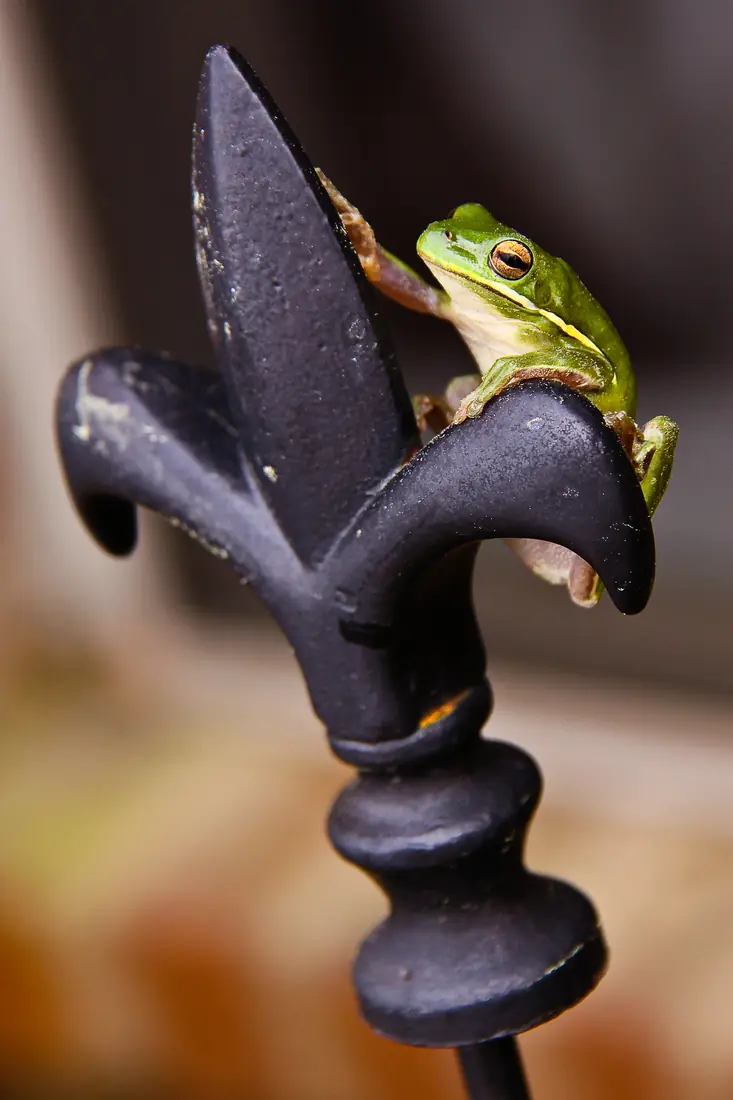
Frogs. The winter chorus ends this month. A Loyola University article by Bob Thomas explains that spring peepers and Cajun (upland) chorus frogs breed in the cool season and “disappear from the breeding sites in March or thereabouts,” and that their tadpoles transform about the time the spring breeders become active. The southern leopard frog, whose call is a series of chuckles, breeds in every month but prefers the cold ones. Brad Glorioso’s guide to Louisiana’s reptiles and amphibians gives the Cajun chorus frog’s breeding season as November through April, in ditches and temporary pools, and notes that the frogs stop calling when approached. Most toads and treefrogs call on the warm, wet nights that follow; Loyola’s call guide lists them for volunteers in the Louisiana Amphibian Monitoring Program.
Alligators. LDWF says the wild population tops 3 million, up from under 100,000 about 50 years ago. Its nuisance-alligator page explains that in spring and summer alligators move to breed or find new habitat, and many of the travelers are smaller animals pushed out by larger ones, who usually move on within a week or two. Basking gators normally slide into the water as you approach; the worry is one that leaves the water and comes straight toward people.
Black bears. LDWF’s management plan puts the winter dormancy of Louisiana black bears at roughly December to March, though some males stay active all winter where there is food. At the end of dormancy, March to April, females with cubs are usually the last to leave the den. Litters average two cubs, and cubs stay with their mother until they are 15 to 18 months old.
Watch alligators and bears from a distance and never feed them. In bear country, secure garbage, bird feed and pet food.
What is spawning in Louisiana’s lakes and bayous in March, and is crawfish season at its peak?
Largemouth bass are at their peak. LDWF’s freshwater fishing forecast (Angling Insider, issue 2) says March and April mark the height of bass spawning in Louisiana: any bass not on a nest is about to be or just was. Crappie, which Louisianans call sac-a-lait, are finishing up in some waters, and their peak is over by April. LSU’s Sea Grant fact sheet says crappie begin to spawn actively when the water reaches 61 °F, earlier than bass or bream. Redear sunfish (shellcrackers) start in early April, and the forecast adds a courtesy for anglers: bass on beds can be caught, but taking them harms local spawning, so catch and release is kinder.
Catfish are in pre-spawn mode while waters climb toward 70 degrees, feeding hard to rebuild winter weight. LDWF says the first channel catfish stockings of the year at its Get Out & Fish! community ponds come at the end of March and the beginning of April; the stocking schedule is on the program page. Anglers 17 and under fish free.
Crawfish are the other water story. LSU researchers Gambill and Midway report that the wild fishery averaged 5 million kilograms a year, worth about $10 million, with 90 percent of landings from the Atchafalaya basin, and that high river stage in January and February raised March and April landings. Flooded crawfish fields also feed wading birds and, as the crane report shows, host whooping crane nests.
Polarized glasses let you spot round bass beds in clear, shallow water from the bank; keep your distance.
What is March weather like in Louisiana, and what are the risks?
Mild, wet and changeable, with a real chance of storms. In NOAA’s 1991–2020 normals, March highs average about 69 °F at Monroe and 73 °F at Baton Rouge and Lake Charles, and average lows run from about 47 °F at Monroe and Shreveport to 55 °F at New Orleans. Rain totals from about 3.7 inches at Lake Charles to 5.2 inches at Monroe. Freezing nights are down to roughly two on average at Shreveport and well under one in the south. By April, those averages fall to nearly zero everywhere, and highs reach the upper 70s.
| Station | Average high | Average low | Rain | Freezing nights |
|---|---|---|---|---|
| Shreveport | 70.4 °F | 47.7 °F | 4.90 in | 1.9 |
| Monroe | 69.1 °F | 47.2 °F | 5.21 in | 1.6 |
| Alexandria | 70.7 °F | 49.0 °F | 4.92 in | 1.1 |
| Lake Charles | 73.1 °F | 53.1 °F | 3.67 in | 0.6 |
| Lafayette | 72.6 °F | 53.3 °F | 3.72 in | 0.6 |
| Baton Rouge | 73.0 °F | 51.0 °F | 4.46 in | 0.8 |
| New Orleans (International Airport) | 72.3 °F | 55.3 °F | 4.36 in | 0.2 |
Flood. The National Weather Service in Shreveport’s write-up of March 8–11, 2016, shows how much March rain can fall: very heavy rain began on the afternoon of March 8 and continued off and on through March 12, and a few places recorded more than 20 inches. Preliminary totals included 22.25 inches at Swartz and 20.26 inches at Monroe in Ouachita Parish and 18.84 inches at Barksdale Air Force Base. Roads were closed, homes and businesses were evacuated, and rescues were carried out in northern Louisiana.
Tornadoes. The Shreveport office’s list of past events includes tornadoes in Caddo, Bossier and Webster parishes on March 9, 2019, tornadoes across East Texas and northwest Louisiana on March 27, 2021, and squall-line tornadoes in north Louisiana on March 30, 2022. Set up phone alerts, keep a weather radio, and know where you will shelter.
The Climate Prediction Center posts its 90-day outlook on the federal outlook page, updated monthly; check it for the latest. For your own town’s frost odds, see our Louisiana frost dates, and for tonight’s forecast the weather page.
When is the last spring freeze in Louisiana?
Median dates run from late January at New Orleans to the end of March at Homer in the north hills, and the latest springs reach mid-April. The table gives NOAA’s 1991–2020 normals at the main station for each place. “One year in ten” is a date so early that only the earliest tenth of springs are already done with freezing; “nine years in ten” is when 9 of 10 springs are finished. In the far south, a March freeze is unusual. At Monroe and Shreveport, a freeze after late March is roughly a one-in-ten event.
| Station | One year in ten | Median | Nine years in ten |
|---|---|---|---|
| Homer (north hills) | Mar 9 | Mar 30 | Apr 16 |
| Monroe Regional Airport | Feb 16 | Mar 8 | Mar 25 |
| Shreveport | Feb 16 | Mar 9 | Mar 29 |
| Alexandria International Airport | Feb 6 | Mar 2 | Mar 25 |
| Baton Rouge Ryan Airport | Jan 29 | Feb 25 | Mar 19 |
| Lafayette Regional Airport | Jan 13 | Feb 13 | Mar 10 |
| Lake Charles | Jan 16 | Feb 14 | Mar 11 |
| Houma | Jan 6 | Feb 5 | Mar 7 |
| New Orleans International Airport | Dec 29 | Jan 30 | Feb 27 |
A low-lying farm or a calm hollow can freeze weeks after the airport does. Check your own parish on the Louisiana frost page, and watch the forecast for clear, still nights before setting out tender plants.
How much daylight does Louisiana gain in March, and when do the clocks change?
Close to an hour in the month, and then the clocks add another. Louisiana’s days are lengthening by about two minutes each day around the equinox, which the U.S. Naval Observatory puts at Saturday, March 20, 3:25 p.m. CDT (20:25 UTC). Everywhere in the table, daylight tops 12 hours before April.
On Sunday, March 14, clocks leap ahead at 2 a.m.; that night is an hour short, and from then on the clock shows both sunrise and sunset an hour later. In Houston, the nearest city in our sky data, the sun sets at 6:29 p.m. on the 13th and at 7:29 p.m. on the 14th. Louisiana lies east of Houston in the same time zone, so its sunsets come somewhat later. Any clock time for a sunrise or sunset on a date before the 14th is standard time, and from the 14th on it is daylight time.
| City | Mar 1 | Mar 31 | Gained | Per day |
|---|---|---|---|---|
| Shreveport | 11 h 29 m | 12 h 29 m | 60 min | 2.0 min |
| Monroe | 11 h 30 m | 12 h 30 m | 60 min | 2.0 min |
| Alexandria | 11 h 31 m | 12 h 28 m | 57 min | 1.9 min |
| Lake Charles | 11 h 33 m | 12 h 28 m | 55 min | 1.8 min |
| Lafayette | 11 h 33 m | 12 h 27 m | 54 min | 1.8 min |
| Baton Rouge | 11 h 32 m | 12 h 28 m | 56 min | 1.9 min |
| New Orleans | 11 h 33 m | 12 h 27 m | 54 min | 1.8 min |
| Houma | 11 h 33 m | 12 h 27 m | 54 min | 1.8 min |
The table shows sunrise-to-sunset time, which the clock change cannot alter, and the northern cities pick up a few more minutes than the coast. For any parish, use the day length calculator, which also lists twilight.
What is in the Louisiana night sky in March?
-
The Worm Moon, full before sunrise Monday
Full on Monday, March 22, at 5:44 a.m. CDT; look Sunday evening, March 21 · Rising in the east around sunset
The Worm Moon of almanac lore (some lists say Crow Moon or Sap Moon) arrives at its full instant on Monday morning. The exact full instant comes before breakfast on the 22nd, which makes Sunday evening the best sunset-time moonrise (Houston’s is at 7:05 p.m.); the nights on either side look nearly as round.
-
Mercury and Venus in the dawn
Mercury at its widest from the sun on the night of March 16; best March 8 to 25. Venus all month · East-southeast, low, in the hour before sunrise
Mercury swings out to 27.6 degrees from the sun, its widest this spring, late on the night of the 16th (11:20 p.m. CDT). It is a faint, low object that clears the horizon about an hour before sunrise in early March, so find a levee, field or lake shore with open view. Venus is far brighter, about magnitude −4.1, and higher up, rising roughly two hours ahead of sunrise at the start of the month. Venus has the slender morning crescent for company on the 4th and again on the 5th.
-
Jupiter and Mars after dark
All month; the moon passes Jupiter March 18 and 19; Mars and Jupiter pair up on the evening of March 30 · High in the east and south after dark
Jupiter, in Leo, is the steady, very bright light, about magnitude −2.5, and it does not set until close to dawn in the first days of the month. Mars, orange and fainter, keeps it company. A moon 88 percent lit sweeps within a degree of Jupiter on the 18th and 19th, a pairing you can enjoy from the porch. On the evening of Tuesday, March 30, the two planets stand 4.3 degrees apart, easy to spot high overhead around 8 p.m.
-
Saturn’s last evenings and the Milky Way’s core
Saturn through early March; the Milky Way’s core around March 3 to 17, and again on March 31 · Saturn low in the west after sunset; the core low in the south-southeast before dawn
Saturn is leaving the evening sky: it sets about 2.5 hours after the sun on March 1 and about 1.5 hours after on the 15th, and is lost in the sun’s glare after its April 7 conjunction. For the Milky Way’s bright core, which sits low in the south before dawn, the moonless stretch surrounding the March 8 new moon gives the longest view; our own calculation for 95° west and 30° north allows up to about 2.4 hours (treat that figure as approximate). East Louisiana may be off by a day.
| Phase | Date | Time |
|---|---|---|
| New moon | Monday, Mar 8 | 3:29 a.m. CST |
| First quarter | Monday, Mar 15 | 11:25 a.m. CDT |
| Full moon, the Worm Moon | Monday, Mar 22 | 5:44 a.m. CDT |
| Last quarter | Monday, Mar 29 | 7:54 p.m. CDT |
Easter Sunday falls on March 28. Pair the dark nights with our cloud outlook and the moon phases page.
What can families do outside in Louisiana in March 2027?
- Louisiana Native Plant Society conference, March 5–7, 2027. The society’s home page has a “save the date” for the 2027 annual conference but gave no location in early October; check lnps.org for registration, speakers and field trips.
- Wild azaleas and pitcher plants in Kisatchie National Forest. The Wild Azalea Trail’s bloom runs March into early April, and the Forest Service rates Cooter’s Bog best from March to May. The forest office, 318-473-7160, can tell you about trail conditions and closures.
- Bird City and the rookeries. Jungle Gardens at Avery Island expects its egrets from early March, and Lake Martin has boardwalk and roadside viewing. Check each site’s hours first.
- Big Branch Marsh refuge, Lacombe. The refuge runs free Nature Explorers for toddlers and preschoolers twice a month (first and third Fridays, it says) and a monthly Homeschool Friday for older children, with registration by email. No March 2027 events were posted when we looked; ask the ranger.
- Baton Rouge Audubon outings. The society lists a monthly walk at Bluebonnet Swamp (small fee) and evening programs through May, but no March 2027 dates were posted in early October.
- Catfish for kids. LDWF’s Get Out & Fish! ponds usually receive their first channel catfish at the end of March and start of April; see the program page for the stocking schedule.
- Citizen science. Send first-of-year hummingbirds and monarchs to Journey North and any whooping crane to LDWF. The Louisiana Amphibian Monitoring Program is a mostly volunteer calling-frog survey, coordinated in part by LDWF. The City Nature Challenge’s 2027 observation days are April 30 to May 3, and its site did not list participating Louisiana cities when we checked.
We checked each organizer’s page on October 7, 2026. Dates shift and storms cancel outdoor programs, so confirm before you go. Our February page has the first crane nests and the woodcock, your first-of-year sightings belong in the Naturalist’s Field Journal, and each state’s seasonal guide is listed at /nature.
Safety notes for March in Louisiana
- Turkey season. In LDWF’s 2026–27 regulations, the 2027 spring turkey season opens with a youth and physically challenged hunt on Friday through Sunday, March 26–28, on private land only in turkey Areas A, B and C. The general season opens April 3 (to May 2 in Area A, April 25 in Area B, April 18 in Area C); public lands keep separate schedules, and a proposed rule on WMAs could change methods for 2027. Hunters need a basic hunting license and turkey tags (youths need the youth license). The limit is one adult gobbler a day and two a season, and hens, dogs, baiting and electronic calls are prohibited.
- Other seasons. The light-goose conservation order ends March 7. Quail, rabbit and squirrel seasons ended February 28, and a spring squirrel season runs May 1–23. Furbearer trapping runs to March 31.
- Orange and pink. LDWF’s 400-square-inch hunter orange or blaze pink rule is tied to firearms deer seasons and certain dog seasons on WMAs, and the statewide turkey rules do not state it. A bright hat is still wise on public land during any hunting season, and each WMA posts its own rules.
- Storms and flooding. March brings squall lines and heavy rain; the 2016 flood in the north shows how fast roads close. Turn around rather than drive through water, and keep a weather radio handy.
- Snakes, ticks and insects. The Forest Service’s Cooter’s Bog warning applies across the piney woods: diamondback rattlesnakes, water moccasins, ticks, chiggers and mosquitoes. Wear long pants and boots, and check for ticks afterward.
- Alligators and bears. Give every alligator room, keep dogs leashed near water, and report one that approaches people to LDWF. In bear country, store garbage and pet food securely and never feed a bear.
- Cold water. Bayous and lakes are still cold. Wear a life jacket afloat, and slow down in fog.
Sources (47)
- LDWF: whooping crane reintroduction in Louisiana
- LDWF: 2023–2024 Louisiana whooping crane report (PDF)
- LDWF: whooping crane population adds record 10 fledged chicks during 2026 nesting season
- Southbound magazine (via Atlanta Magazine): at Jungle Gardens, visitors can see thousands of migrating water birds
- The Cultural Landscape Foundation: Jungle Gardens, Avery Island (Bird City, 1895 to 1911)
- NOAA Gulf Spill Restoration: Queen Bess Island restored in time for nesting season (February 14, 2020)
- USFWS: “A04” returns to Queen Bess Island
- Audubon magazine: birding in Louisiana
- Birding Louisiana: Peveto Woods Bird and Butterfly Sanctuary
- Audubon field guide: swallow-tailed kite
- American Bird Conservancy: swallow-tailed kite
- Baton Rouge Audubon Society: feeding hummingbirds and winter hummingbirds in Louisiana
- Journey North: 2024 spring eastern monarch report #1 (archive)
- Louisiana Native Plant Society: Louisiana irises
- Louisiana Native Plant Society: home page (2027 annual conference, March 5–7)
- LSU AgCenter: redbud tree gives early flower color
- My New Orleans: springtime in Kisatchie
- Fox 8 Live, Heart of Louisiana: Kisatchie National Forest’s Wild Azalea Trail (2020)
- USDA Forest Service: Cooter’s Bog, Kisatchie National Forest
- USDA Forest Service: Kisatchie National Forest recreation
- Loyola University New Orleans: Louisiana’s winter breeding frogs
- Loyola University New Orleans: common Louisiana frogs and vocalizations
- Amphibians and Reptiles of Louisiana: Cajun chorus frog
- Amphibians and Reptiles of Louisiana: Louisiana Amphibian Monitoring Program
- LDWF: alligator management
- LDWF: nuisance alligators
- LDWF: Louisiana Black Bear Management Plan, January 2015 (PDF)
- LDWF Angling Insider, Vol. 2: freshwater fishing forecast for March (PDF)
- LDWF: Get Out & Fish! community fishing program
- Louisiana Sea Grant / LSU: Louisiana fisheries fact sheet, sac-a-lait (crappie)
- Gambill and Midway, History and ecology of wild-captured crawfish in Louisiana, North American Journal of Fisheries Management, 2024 (abstract)
- NOAA NCEI: monthly climate normals 1991–2020 for seven Louisiana airports (data API)
- National Weather Service Shreveport: March 8–11, 2016, heavy rain and flooding
- National Weather Service Shreveport: past significant weather events
- National Weather Service Lake Charles: significant weather events
- Climate Prediction Center: seasonal outlooks (updated monthly)
- NOAA Global Monitoring Laboratory: solar calculator (sunrise, sunset and day length)
- U.S. Naval Observatory: moon phases, March 2027 (data API)
- U.S. Naval Observatory: Earth’s seasons, 2027 (data API)
- Sea and Sky: astronomy calendar of celestial events, 2027
- USFWS: Big Branch Marsh National Wildlife Refuge events
- Baton Rouge Audubon Society: events and calendar
- City Nature Challenge: 2027 dates
- LDWF: 2026–2027 Louisiana hunting regulations (PDF; turkey rules, hunter orange and blaze pink, WMA rules)
- LDWF 2026–2027 Louisiana hunting schedules (PDF; 2027 turkey area schedules, resident game, conservation order)
- LDWF: furbearers (trapping season November 20 to March 31)
- Photos via Wikimedia Commons; licenses and photographers are credited under each picture