What to look for in nature in Maine this April
April in Maine is the month the north finally lets go. The ice leaves the big lakes, loons drop onto open water, the first warblers arrive on a warm southerly night, piping plovers scratch out nests on southern beaches, and the first alewives push up streams toward their ponds. Hepatica opens on rocky trails, ostrich ferns uncoil on riverbanks, bears come out hungry, and harbor seal pups appear on the ledges. Snow can still fall, and the last freeze is weeks away in much of the state, but each town adds well over an hour of daylight by the month’s end. The sections below follow the season from Kittery to Fort Kent.
Other months in Maine: October, November, December, January, February, March.
Start here
- Watch a lake open. Pick a lake near you and visit it every few days in April. Note the first open water along the shore and the date the whole lake is clear, then report it to Lake Stewards of Maine. Loons return right after.
- Listen for the first warblers. On the first mild morning after a southerly night, step outside at dawn. Yellow-rumped, palm and pine warblers are the first to return, so listen for trills in the pines and look for yellow patches at the edge of the woods.
- Find hepatica on a rocky trail. Walk a sunny, south-facing hillside trail in the second half of April and look at the ground for small round-lobed hepatica flowers, purple fading to white, before the trees leaf out.
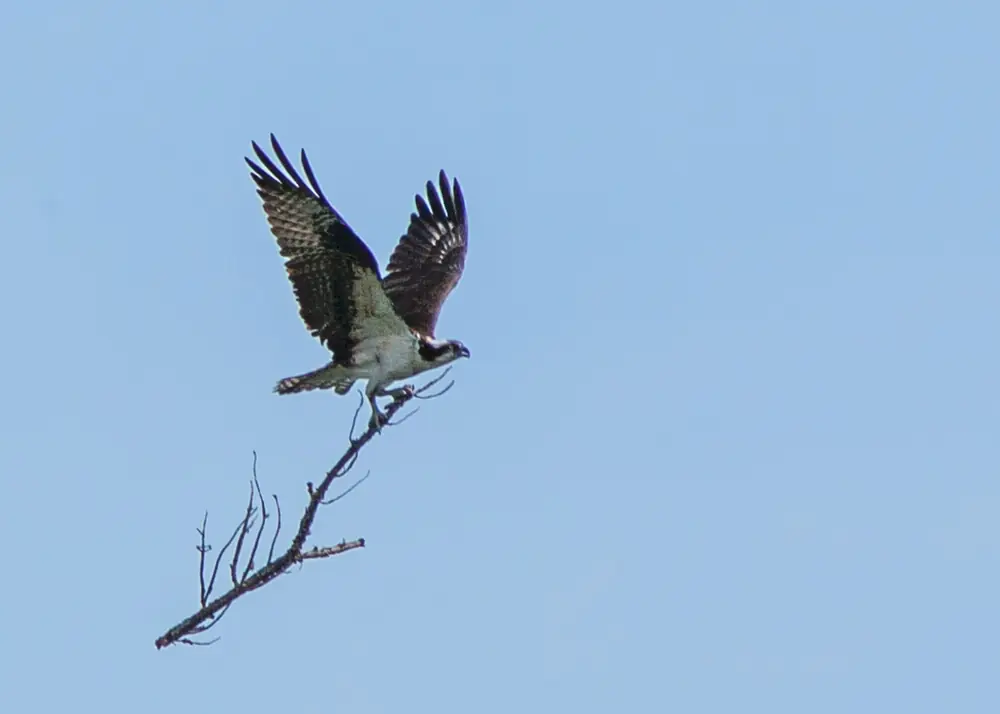
Keep a record: ice-out and first-bird dates go in the Naturalist’s Field Journal, on its daily field log plate. The first warbler or osprey belongs on birds I have seen, hepatica and trout lily leaves on the same place twice, a toad chorus on a map of sounds, and a bear track or a seal on a ledge on tracks to know and mammal watch.
Regions used below: Southern Maine and Casco Bay; Midcoast and Penobscot Bay; Downeast and Acadia; Western mountains and lakes; The Highlands, Moosehead and Katahdin; Aroostook County.
When does the ice go out on Maine’s lakes, and when do the loons come back?
Ice-out is the day a lake turns from a frozen sheet into open water, and in April much of Maine is waiting for it. Moosehead Lake, the state’s largest, keeps the best record, and ice-out there is declared when the steamship Katahdin can make the run from Greenville to Northeast Carry. Records go back to 1848: the earliest date on the books is April 14, 1945, and the latest is May 29, 1878. The Bangor Daily News lists recent years as April 29 in 2025, April 20 in 2024, April 25 in 2023, April 28 in 2022, April 16 in 2021 and May 4 in 2020, and reports that the lake went out on May 1 in 2026. Anglers still measured about two feet of ice on April 8 that year.
The U.S. Geological Survey studied 29 New England lakes, 22 of them in Maine, and found that ice-out came significantly earlier between 1850 and 2000: by 9 days in northern and mountain areas, and by 16 days in more southerly places. Lake Stewards of Maine defines ice-out as the moment a lake becomes navigable or mostly ice-free.
-
Moosehead Lake
Anywhere from mid-April to early May in the last several years · Greenville and the southern end of Moosehead, in the Highlands
A lake this size goes out in stages: open water shows along the shores and at stream mouths while the middle holds on. Ice can carry weight in one place and none in another, so never judge a lake by its edge.
-
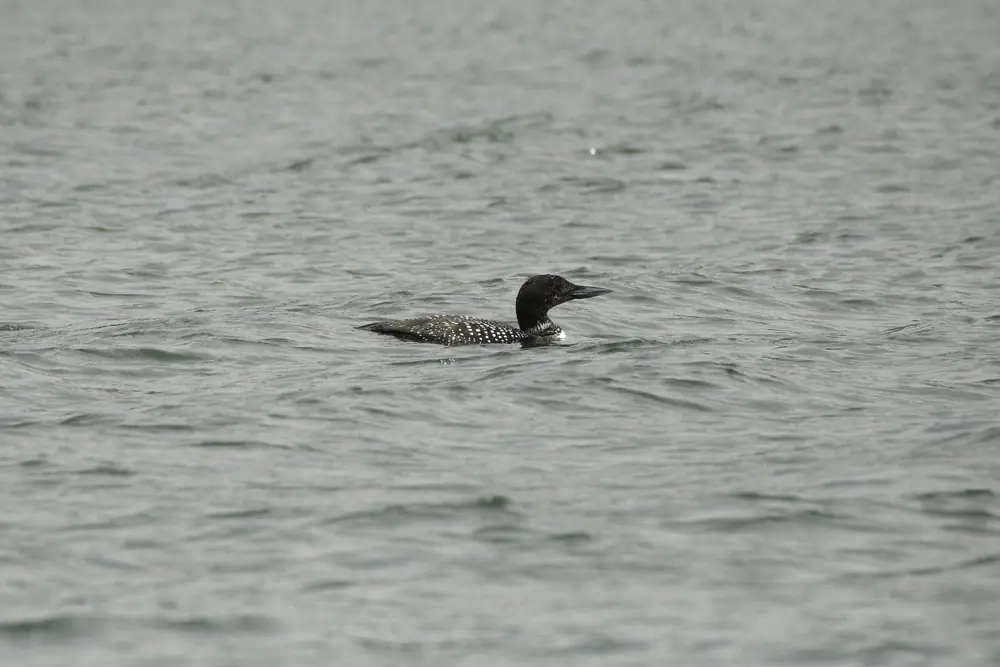
Common loons return
Right after ice-out, followed by about a month of courtship · Lakes and large ponds statewide, especially quiet coves and islands
Inland Fisheries and Wildlife (IFW), the state agency, says in its loon calendar that that common loons return to Maine’s lakes right after ice-out and spend about a month establishing territories and bonding with their mates. Nesting follows in May and June, on the shore or on small islands. A loon in breeding dress has a black head, a necklace of white stripes and a checkered back, while wintering birds along the coast are dull gray and white.
-
Open water for anglers
Open-water seasons start April 1 in the 2026 lawbook; check the 2027 edition · Lakes, ponds, rivers and streams statewide
IFW’s 2026 fishing lawbook, the newest edition we could read, opens lakes and ponds in the north zone to open-water fishing from April 1 to September 30, and rivers, streams and brooks in both zones from April 1 to August 15. In the south zone, lakes and ponds are open to ice and open-water fishing all year. A license is required, and the 2027 free fishing weekends, February 13 and 14 and June 5 and 6, miss April. IFW’s loon brochure notes that lead sinkers and jigs are the leading cause of death for adult loons in Maine, so choose lead-free tackle.
If you live on a lake, note the day it opens and report it to Lake Stewards of Maine through its ice coverage form. A few seasons of your own entries start to tell the story of your water, and they continue the thaw and flood watch from our March page.
Which birds return to Maine in April, and when do the warblers arrive?
The first wave of April migrants is not the rainbow of May warblers. It is made of birds that did not go far. Bob Duchesne, the longtime Maine birding columnist for the Bangor Daily News, writes that yellow-rumped, palm and pine warblers come back first, and that travelers wait for good weather and then go all at once: one day the woods are quiet and the next they are noisy. The National Audubon Society field guide notes that the yellow-rumped warbler migrates earlier in spring than other warblers and can winter near the coast on bayberry and juniper berries, because it can digest the wax on their coating.
-
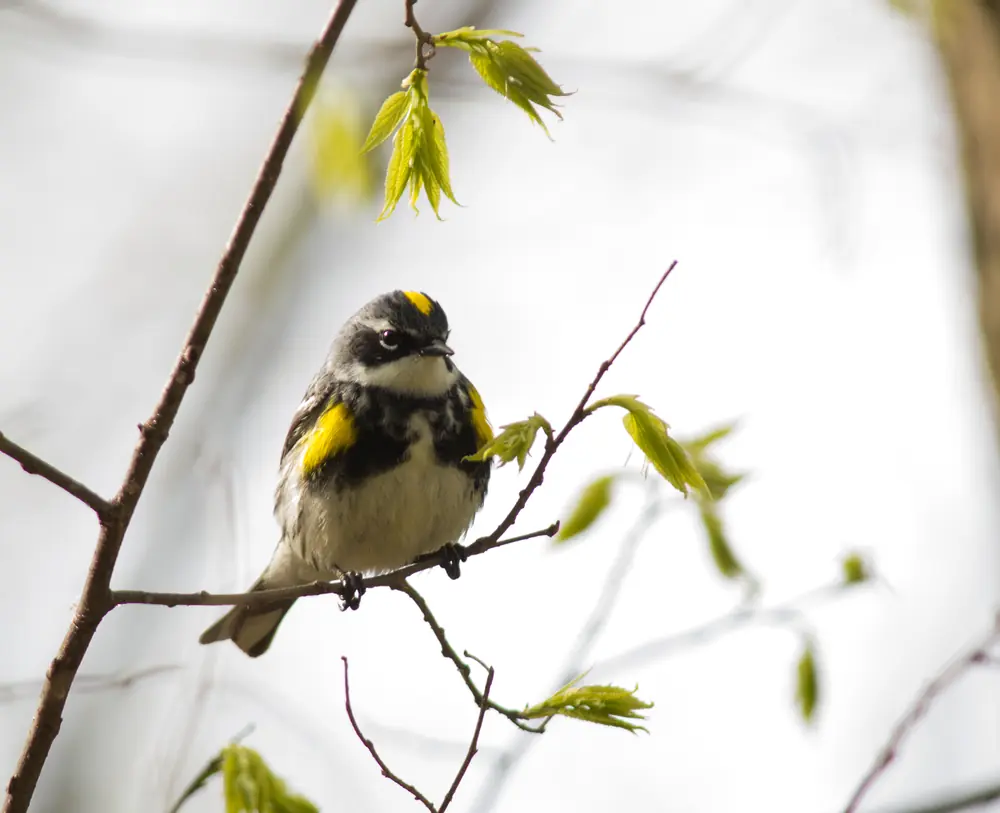
Yellow-rumped and palm warblers, ruby-crowned kinglets
Early April, on the first warm night with a southerly breeze · Backyards, hedgerows, shorelines and woodland edges, with southern and coastal Maine first
Duchesne counts yellow-rumped warblers, palm warblers and ruby-crowned kinglets among the first arrivals of April. The yellow-rump has a bright patch above its tail and a yellow cap, and often flits out from a branch after the first flying insects. The palm warbler pumps its tail as it forages. Many yellow-rumps winter on the mid-Atlantic coast, and palm and pine warblers pass the winter only a little south of Maine, which is how they beat the rest of the migration home.
-
Pine warblers
Typically mid to late April; a 2016 Bangor Daily News birding column put the return around the third weekend of April · Stands of white and red pine, especially in the south
A pine warbler flies straight to the pines where it nests. Listen for a musical trill high in the crowns on a mild morning, and look for a yellow-breasted bird with white wing bars.
-
Hermit thrushes and winter wrens
Typically mid-April, though they may stay quiet until the weather warms · Moist woods, brushy edges and stream corridors
Duchesne writes that hermit thrushes and winter wrens typically come back in mid-April but do not sing much until things warm up. A russet-tailed bird bobbing its tail on the forest floor is probably a hermit thrush, and the tiny, stub-tailed wren often pops up from a brush pile.
-
Ospreys at the nest
Late March into April, per the Maine wildlife agency; eggs come later in spring · Coastal bays, rivers and lakes, on poles, platforms and tall dead trees
IFW calls the osprey an abundant, widely distributed raptor in Maine that has never been listed as threatened or endangered. According to the Audubon field guide, ospreys lay one to four eggs, incubate them for 36 to 42 days and often reuse a nest for years.
Choose one patch of yard or trail and return to it on the same mornings each week. The birds-I-have-seen and nest-observed plates of the Naturalist’s Field Journal suit these visits. IFW notes that at least 2,000 bald eagles live in Maine outside midwinter, so an eagle overhead is ordinary, but one on a nest deserves a long look from far away.
What is happening on Maine’s beaches and rivers in April?
Along the coast, April belongs to sand-beach nesters first and to sea-run fish second. Piping plovers are back on southern Maine beaches, and the first alewives start up the streams toward lakes and ponds. Neither event is at its peak yet, which makes April a good month to learn where to look.
-
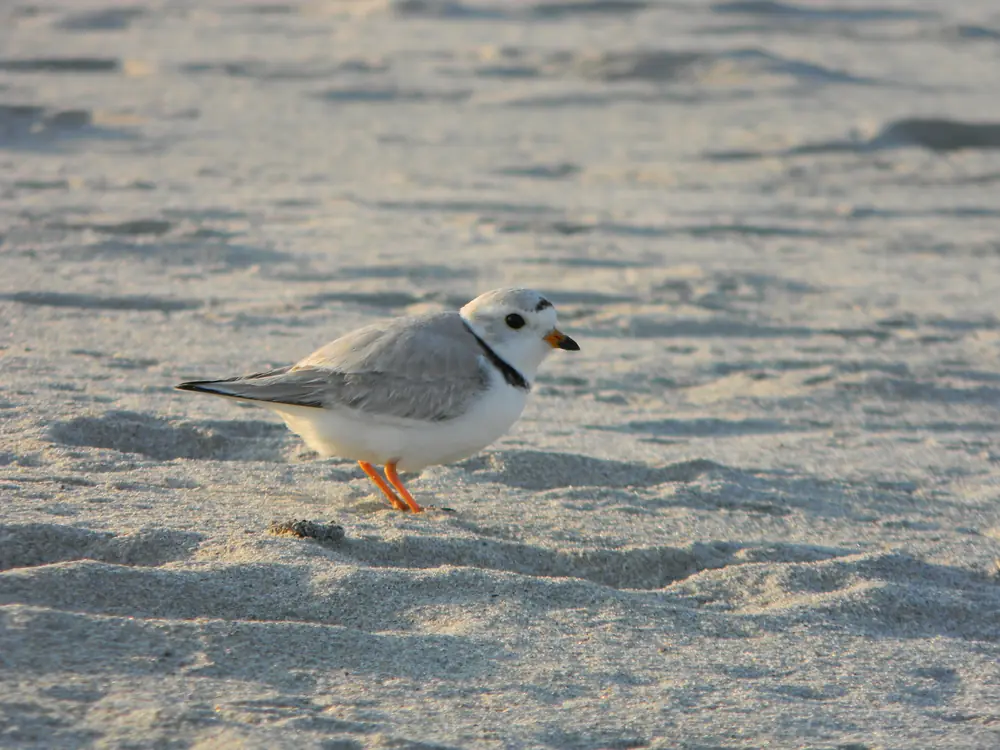
Piping plovers
Arrive from March; the first nests often come in the second half of April · Southern and midcoast sand beaches such as Wells, Ogunquit, Scarborough, Kennebunk and Old Orchard Beach
Maine Audubon’s Coastal Birds Project reported the first plover of 2025 at Higgins Beach in Scarborough on March 11, and the first nest on April 18 at Wells Beach, which tied the earliest nest on record, set on April 18, 2012. By late April 2025 the crew had logged 122 pairs and 24 nest attempts, 16 pairs of them at Wells. A cold, snowy spring can hold nesting back to the end of April, as in 2016. IFW’s shorebird blog says plovers and least terns nest on southern Maine beaches, and that plovers fell to just 6 pairs in 1983. Incubation takes about 25 days. Stay out of fenced and posted areas and keep dogs leashed or at home, because a parent chased off her nest leaves the eggs exposed.
-
Alewives and blueback herring
April to late May, peaking around the week of Mother’s Day · Streams and rivers with a lake upstream, from Cape Elizabeth to the Kennebec and Penobscot
The Maine Department of Marine Resources (DMR) writes that alewives return from April to late May, with the peak of the run the week of Mother’s Day, which falls on May 9 in 2027. April is the leading edge. DMR says the fish favor sunny days and rivers swollen by spring rain, and enter most coastal streams that have a lake in the watershed. DMR’s release names the Presumpscot River in Westbrook, the Brunswick dam, Payson Park in Warren and several ponds on the Blue Hill peninsula as viewing spots. Access and hours vary by year, so call the town first.
Pick a warm day after rain, and watch from a distance. The weather page helps you time a trip, and the same courtesy applies on every shoreline: let the birds and fish go about their business.
Which frogs, toads and turtles are out in Maine in April?
The first rush of wood frogs and spotted salamanders described on our March page is over in the south, but the amphibian season keeps going. As ponds thaw, new voices take over the evenings and turtles begin to stir. IFW counts nine frogs and toads, eight turtles and nine snakes among the state’s reptiles and amphibians, and runs the Maine Amphibian and Reptile Atlas, where the public can submit observations online.
-
Spring peepers
Evenings wherever the pools are open and the nights are mild · Shrubby wetlands, pond edges and swamps
The spring peeper is Maine’s smallest frog, 0.8 to 1.5 inches long, grayish or orangish brown with a dark X on its back. IFW says it lives in forests near ponds, marshes and swamps, climbs trees and shrubs, and gives a high peep.
-
American toads
Breeding runs mid-April through mid-May · Shallow, open water in ponds, lakes, ditches and flooded fields statewide
IFW describes American toads as explosive breeders, with most populations done within 15 days of starting. The male’s call is a high-pitched trill that lasts more than 20 seconds. Toad skin gives off a toxic secretion that protects it from predators, so look but do not handle.
-
Wood turtles
As streams and ponds warm in spring · Slow, sandy or silty streams, vegetated floodplains and nearby forest
IFW lists the wood turtle as a State Special Concern species that hibernates in small ponds or beneath undercut banks of slow streams and rivers. A quiet stream bank on a sunny afternoon is the place to look. Do not move one, and if you find a turtle of any kind, send the date and place to the atlas.
The field journal includes a map of sounds, a good place to record the date, the temperature and each voice you can tell apart.
Which wildflowers and fiddleheads come up in Maine in April?
The Coastal Mountains Land Trust calls mid-April the start of spring wildflower season in the midcoast. These plants are spring ephemerals: the Maine Coast Heritage Trust notes that they flower early to use the sunlight before the trees leaf out, and that they make leaves, flowers and seed in just a few weeks before going dormant. Snow cover, slope and elevation shift the dates, so the north and mountains run later.
-
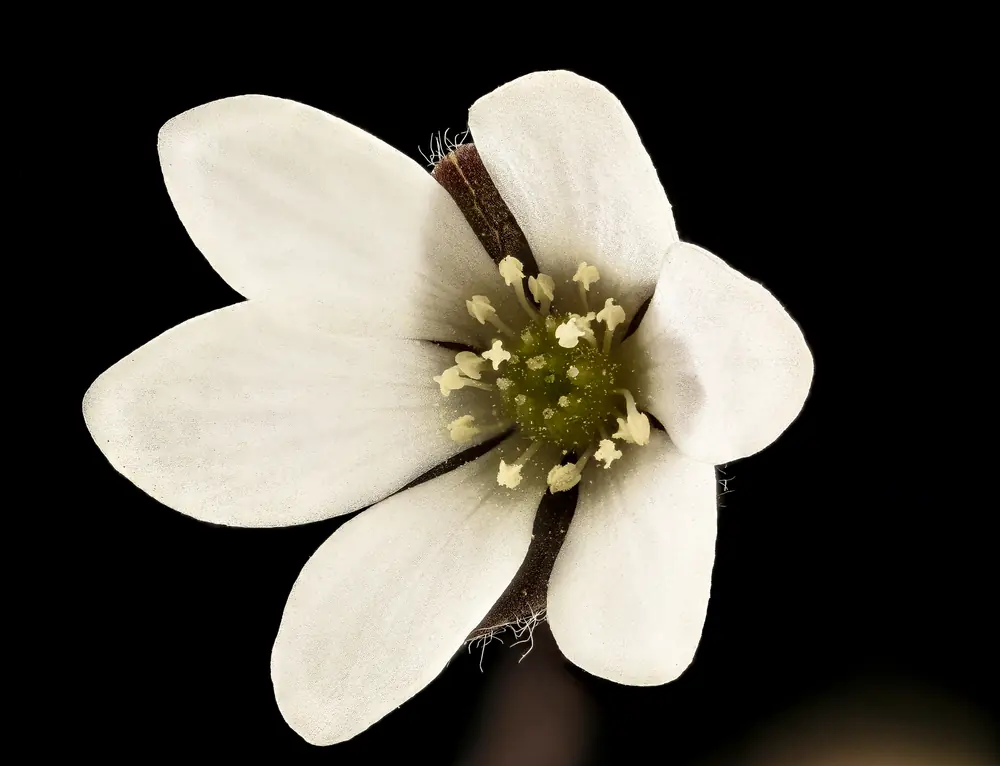
Coltsfoot, hepatica and round-leaved violet
Starting about mid-April in the midcoast; later inland and uphill · Roadsides, mountain trails and rocky woods
The Coastal Mountains Land Trust lists coltsfoot, a dandelion lookalike of poor roadside soil; round-lobed hepatica, often the first flower on mountain trails, changing from purple to white; and the small yellow round-leaved violet, which likes dry soil near rocks. The trust names the last quarter mile of the Maiden Cliff Trail near Camden as a reliable hepatica spot, and says trailing arbutus blooms through the month.
-
Trout lily and red trillium
Late April into May, depending on snowmelt · Moist hardwood woods, woodlands and river banks
The Maine Coast Heritage Trust describes the trout lily by its mottled green and brown leaves that look like a brook trout, with a single yellow bloom on a slender stalk, and the red trillium by its threes: three leaves, three sepals and three maroon petals. The leaves come up first, so look down for mottled blades in the leaf litter. Leave the flowers where they grow.
-
Fiddleheads
Late April through early June · Stream and river banks and floodplains, on private land only with permission
University of Maine Cooperative Extension says the fiddleheads to eat are the young fronds of the ostrich fern, which have a brown, papery covering and a deep U-shaped groove on the inside of the stem. Harvest them when they stand 1 to 2 inches above the ground, and always ask the landowner first. Extension’s rule is firm: never eat them raw or undercooked. Boil them for 15 minutes or steam them for 10 to 12 minutes, because a 1994 outbreak of illness was linked to raw or undercooked fiddleheads, with symptoms that include nausea, vomiting and cramps. Use them within a week of refrigerating.
Sketch one flower and one fern a week in the field journal and write down when each opens. Ephemerals make a dependable calendar of the season.
What are Maine’s bears, deer, moose and seals doing in April?
April is lean for wild mammals, and every animal that wintered in the north is looking for the first green food. It is also the month when people create the most avoidable trouble for wildlife, by feeding, approaching or moving animals that need no help.
-
Black bears out of their dens
Early April, earlier in a warm spring · Lowlands and wetlands first, then forest edges statewide
IFW says female bears give birth to one to four cubs in the winter den in January, and that bears leaving their dens look for early spring vegetation, typically found in lowlands and wetlands, because natural food is scarce at first. IFW’s advice for bird feeders is blunt: take them down and store them inside between April 1 and November 1. Secure garbage, clean grills, store pet food indoors and latch dumpsters.
-
White-tailed deer leaving their yards
Through April, as new growth appears · Southern farmland and northern deeryards
IFW writes that deer begin leaving their winter yards in April as new vegetation emerges. Fawns come later, with a peak in mid-June, and IFW asks that any found alone be left alone.
-
Moose and winter ticks
Ticks drop off in spring; calves are born in May · The Highlands, western mountains and northern Maine
Winter ticks, which cling to moose for months, drop off in spring so that females can lay eggs in the leaf litter. IFW describes loads of 40,000 to 60,000 ticks on a moose and says a calf can lose 20 to 30 percent of its body weight between January and March or April. In parts of the core moose range, more than half of calves under a year have died. Slow down on northern roads at night.
-
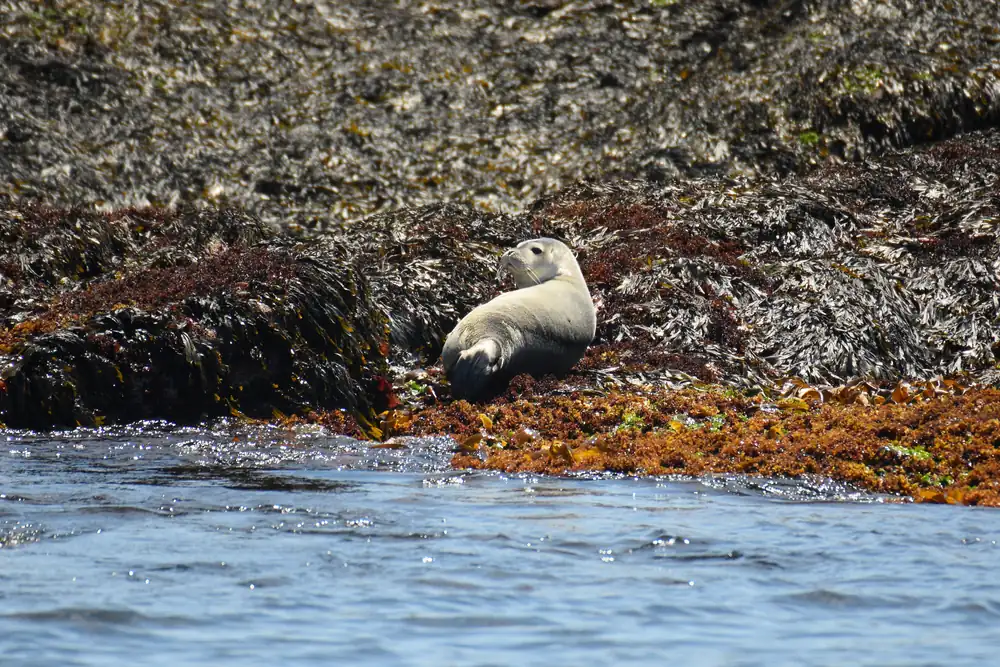
Harbor seal pups
Spring; the season is getting going · Rocky ledges, beaches and islands along the coast
DMR says that spring is harbor seal pupping season in northern New England. A pup alone on a beach is not necessarily abandoned, since mothers may leave pups for up to 24 hours while they feed. It is illegal to handle a seal without authorization under the Marine Mammal Protection Act. For a seal that seems truly stranded, hurt or stuck on a busy beach, the number to call is the state’s marine animal hotline, 1-800-532-9551. Keep your distance.
Fresh mud beside a stream or a thawing snow patch holds the best tracks of the year, and the mammal watch plate in the field journal suits a sighting of a bear, deer or seal.
What is April weather like in Maine, and what hazards should you watch for?
April is the most changeable month in Maine. According to NWS Caribou’s climate page, the average high there climbs from 40 °F at the start of the month to 56 °F at its end, with lows rising from 23 °F to 36 °F, that snowpack usually melts in the first half of April, with a typical melt-out date of April 12 and as late as early May, and that snow can linger in the woods for a couple of weeks after it is gone from town. Thunderstorms are uncommon in April. The table below shows 1991 to 2020 normals for six stations, taken from NOAA’s climate-data service.
| Station | Average high | Average low | Precipitation | April snowfall |
|---|---|---|---|---|
| Portland International Jetport | 53.8 °F | 35.4 °F | 4.41 in | 2.8 in |
| Eastport | 49.7 °F | 34.3 °F | 4.45 in | 4.1 in |
| Bangor International Airport | 53.2 °F | 32.4 °F | 3.61 in | 3.7 in |
| Farmington | 52.3 °F | 30.0 °F | 4.34 in | 5.3 in |
| Presque Isle | 49.6 °F | 29.3 °F | 2.79 in | 6.3 in |
| Caribou Municipal Airport | 47.7 °F | 29.4 °F | 2.99 in | 8.3 in |
Flooding. The Maine Emergency Management Agency says spring flooding comes from snowmelt combined with rain, and that ice jams are a separate hazard that can flood suddenly where broken river ice piles up. The state’s River Flow Advisory Commission, set up after the 1983 floods, tracks snowpack and river conditions. The National Weather Service office in Gray posts river forecasts, fire weather forecasts and local warnings.
Fire. Dry, windy days before the leaves open make April a wildfire month. Maine’s online burn-permit system says open burning can only be done after 5 p.m. and before 9 a.m., except in rain or when snow covers the ground, with some town variations. A 2025 Millinocket Fire Department notice says burning from April 1 to May 31 is allowed only after 5 p.m. Check with your town’s fire warden first.
Late freezes. Frost can come well after the first warm spell, and the freeze table below shows how late. Our weather page collects forecasts and warnings, and the NOAA Climate Prediction Center posts its latest seasonal outlooks at cpc.ncep.noaa.gov.
How fast do the days lengthen in Maine in April?
April adds daylight steadily. Between April 1 and April 30, Kittery gains 81 minutes and Fort Kent 94, and each town in the table picks up close to three minutes a day. Every place ends the month with over 14 hours of light, and the far north has the most.
| City | Apr 1 | Apr 30 | Gained | Per day |
|---|---|---|---|---|
| Kittery | 12 h 44 m | 14 h 05 m | 81 min | 2.8 min |
| Portland | 12 h 45 m | 14 h 07 m | 82 min | 2.8 min |
| Augusta | 12 h 45 m | 14 h 10 m | 85 min | 2.9 min |
| Bangor | 12 h 46 m | 14 h 12 m | 86 min | 3.0 min |
| Bar Harbor | 12 h 46 m | 14 h 11 m | 85 min | 2.9 min |
| Eastport | 12 h 46 m | 14 h 13 m | 87 min | 3.0 min |
| Millinocket | 12 h 48 m | 14 h 17 m | 89 min | 3.1 min |
| Fort Kent | 12 h 50 m | 14 h 24 m | 94 min | 3.2 min |
Use our sunrise and sunset calculator for exact clock times at any Maine address. The gain slows a little as May goes on and stops at the June solstice.
When is the last spring freeze in Maine?
April is not the month to set out tender plants. NOAA’s 1991 to 2020 normals put the median last freeze near the end of April on the southern coast and Mount Desert Island, in the first half of May around Bangor and the Highlands’ edge, and in late May or early June in the Allagash and the Rangeley region. The right-hand column shows how far a bad spring can run, since one year in ten still freezes after that date.
| Station | One year in ten | Median | Nine years in ten |
|---|---|---|---|
| Allagash (North Maine Woods) | May 21 | Jun 2 | Jun 21 |
| Caribou Municipal Airport | Apr 27 | May 7 | May 24 |
| Rangeley (western mountains) | May 10 | May 23 | Jun 3 |
| Millinocket Municipal Airport | Apr 27 | May 8 | May 24 |
| Bangor International Airport | Apr 24 | May 4 | May 17 |
| Augusta State Airport | Apr 15 | Apr 27 | May 7 |
| Portland International Jetport | Apr 16 | Apr 26 | May 7 |
| Acadia National Park (Mount Desert Island) | Apr 15 | Apr 27 | May 8 |
| Eastport (Passamaquoddy Bay) | Apr 16 | Apr 29 | May 11 |
Our Maine frost page lets you look up the dates for your own town, and these are averages, not guarantees. Peas and spinach shrug off a light frost, but tomatoes and beans do not.
What can you see in Maine’s night sky in April 2027?
All times below are Eastern Daylight Time.
-
The Pink Moon
Full on Tuesday, April 20, at 6:27 p.m. EDT · Rising in the east after sunset
Sea and Sky traces the name to moss pink, an early-blooming creeping phlox, rather than to any tint in the Moon. The full moment comes before the Moon clears the Maine horizon. In Boston it rises at about 7:41 p.m. that evening, and Maine’s times run a few minutes to a quarter hour earlier, with the Moon rising soonest in the far east, so look low in the east soon after sunset on April 20.
-
The Lyrid meteors, a poor year
Active about April 14 to 30; predicted maximum around 9:41 p.m. EDT on Thursday, April 22 · Radiating from Lyra, low in the northeast in early evening
The International Meteor Organization gives the maximum as 01:41 UT on April 23, or 9:41 p.m. EDT the evening before (our own check puts it about 14 minutes later), while Sea and Sky warns that a nearly full Moon will drown out the fainter streaks. Moonrise comes around 10 p.m. in Boston on the 22nd, so only the first few hours after dusk are truly dark, and a Moon that nearly full washes out the rest of the night. Expect a few meteors per hour at most, with an occasional bright one.
-
Jupiter, Mars and the Moon in the evening
Evenings of April 14 and 15 · High in the south and southwest after dark
Jupiter, the brightest evening planet this spring, stays up until the small hours and sets roughly nine hours after the Sun at the start of April. Look on April 14 and 15 for the Moon, roughly two-thirds lit, which comes within 1 degree of Jupiter on the 15th and sits about 3 degrees from Mars that night.
-
Venus before sunrise
Through April, rising about an hour or more before the Sun · Low in the east-southeast before dawn
Venus is the brilliant morning star but sinking toward the Sun. Its lead over the Sun shrinks week by week, from about 75 minutes at the start of April at 40 degrees north, and a bit more or less in Maine. A thin waning crescent hangs close to it before dawn on April 3 and 4.
| Phase | Date | Time |
|---|---|---|
| New moon | Tuesday, Apr 6 | 7:51 p.m. EDT |
| First quarter | Tuesday, Apr 13 | 6:56 p.m. EDT |
| Full moon, the Pink Moon | Tuesday, Apr 20 | 6:27 p.m. EDT |
| Last quarter | Wednesday, Apr 28 | 4:18 p.m. EDT |
The moon phase calendar covers other dates, and use the cloud guide to read the daytime sky. No other naked-eye planets are worth chasing: Saturn is lost near the Sun after its early-April conjunction, and Mercury never climbs clear of the twilight glow this far north.
What can Maine families do outdoors in April 2027?
Few organizers have posted April 2027 dates yet, so check before you go.
- Thursday, April 22: Earth Day. Local land trusts and conservation groups often schedule walks or cleanups near it; ask about 2027.
- Friday, April 30, to Monday, May 3: the organizers give these as the City Nature Challenge observation days, with identification running May 4 to 16. Check their city list to see whether a Maine community has signed up, since anyone with a phone and the iNaturalist app can still contribute.
- Maine Arbor Week: state law sets the third full week of May, not April. Look for the governor’s proclamation for the 2027 dates.
- All month: report your lake’s ice-out to Lake Stewards of Maine, your frog and turtle sightings to IFW’s atlas and your arrivals to Journey North.
- Nests: the Cornell Lab’s NestWatch project shows how to record what you find.
Take a notebook to the same pond, field edge or stream three times this month. The field journal has a same-place-twice plate for it, and our other state guides show how the season looks elsewhere.
Safety notes for April in Maine
Hunting and trapping. IFW’s 2026–27 schedule lets crows be hunted until April 15 in districts 1 to 6, and coyote, woodchuck, porcupine and red squirrel stay open all year. Beaver trapping closes April 30 in districts 1 to 6 and 8 to 11, and April 15 in 7 and 12 to 29; a leash keeps a dog out of trouble near beaver flowages. The spring turkey season opens May 3, 2027, with a youth day on April 30 in IFW’s published schedule; check IFW for any second youth day. IFW’s orange rules cover firearms and muzzleloader deer seasons and moose districts, not turkey hunting, though walkers are safer in bright colors in any hunting season.
Ticks. The Maine Center for Disease Control and Prevention reported another record year for tickborne disease in 2025. Adult deer ticks can come out whenever temperatures rise above freezing. Use repellent, wear light clothing so ticks show, check yourself and your pets, and shower after being outdoors. Send a tick you find to the University of Maine’s Tick Lab for identification.
Ice, water and mud. Rivers run cold and fast with snowmelt, lake ice is unreliable, and dirt roads and trails are soft. Baxter State Park posts a daily conditions line at 207-723-9500.
Wildlife and food. Take bird feeders down, give moose and seals a wide berth, leave fawns and pups alone, and cook fiddleheads fully.
Current seasons and rules sit on IFW’s hunting and fishing pages, so look them up before any outing.
Sources (50)
- Maine Department of Marine Resources: Maine alewife season underway
- Maine Coast Heritage Trust: a sneak peek at spring, Maine’s first flowers
- Coastal Mountains Land Trust: early spring wildflowers, mid-April
- Maine Department of Inland Fisheries and Wildlife: hunting season dates and bag limits
- Maine Department of Inland Fisheries and Wildlife: 2026–27 Maine hunting seasons (PDF)
- Maine Department of Inland Fisheries and Wildlife: partnerships protecting Maine’s endangered shorebirds
- Maine Audubon: piping plover season update
- Maine Public: piping plovers begin breeding season on Maine beaches
- Maine Department of Inland Fisheries and Wildlife: laws pertaining to hunting equipment (hunter orange)
- Maine Department of Inland Fisheries and Wildlife: trapping laws and rules
- Maine Legislature: Title 1, section 111-A, Arbor Week
- National Weather Service Caribou: April climate facts for Caribou
- NOAA National Centers for Environmental Information: 1991–2020 monthly normals for Maine stations
- U.S. Geological Survey: historical ice-out dates for 29 lakes in New England
- Lake Stewards of Maine: ice-in and ice-out tracking
- Bangor Daily News: Moosehead Lake ice-out 2026
- Maine Department of Marine Resources: seals
- Maine Department of Inland Fisheries and Wildlife: raptors
- Maine Department of Inland Fisheries and Wildlife: seabirds
- Maine Department of Inland Fisheries and Wildlife: moose
- Maine Department of Inland Fisheries and Wildlife: moose and winter ticks
- Maine Department of Inland Fisheries and Wildlife: black bear
- Maine Department of Inland Fisheries and Wildlife: be bear wise
- Maine Department of Inland Fisheries and Wildlife: white-tailed deer
- Bangor Daily News: time for the pine warblers to come back
- National Audubon Society field guide: yellow-rumped warbler
- National Audubon Society field guide: osprey
- Maine Department of Inland Fisheries and Wildlife: living with loons (brochure)
- Maine Department of Inland Fisheries and Wildlife: American toad
- Maine Department of Inland Fisheries and Wildlife: spring peeper
- Maine Department of Inland Fisheries and Wildlife: wood turtle
- Maine Department of Inland Fisheries and Wildlife: reptiles and amphibians
- University of Maine Cooperative Extension: Bulletin 4198, facts on fiddleheads
- Maine Department of Inland Fisheries and Wildlife: fishing
- Maine Department of Inland Fisheries and Wildlife: 2026 fishing lawbook (PDF)
- Maine Emergency Management Agency: River Flow Advisory Commission on ice jams and spring flood potential
- National Weather Service Gray, Maine
- Maine Forest Service: open burning permit system
- Millinocket Fire Department: 2025 open burn permits and state open burning laws (PDF)
- Maine Center for Disease Control and Prevention: tick bite prevention (October 2025)
- Maine Public: Maine set another record for tickborne diseases in 2025
- University of Maine Cooperative Extension: Tick Lab
- Baxter State Park
- City Nature Challenge
- Journey North
- NestWatch, Cornell Lab of Ornithology
- Climate Prediction Center: seasonal outlooks
- U.S. Naval Observatory: moon phases, 2027
- Sea and Sky: astronomy calendar of celestial events 2027
- Photos via Wikimedia Commons; licenses and photographers are credited under each picture
.jpg)