What to look for in nature in Maine this October
Maine’s October starts with the north woods already at peak and ends with the last red maples glowing along Casco Bay. Moose are rutting in the cutovers, the hawk counters on Cadillac pack up in mid-month, wild salmon dig their nests in a handful of Downeast and midcoast rivers, and the frost that reached Allagash in September finally finds the islands and harbors. Below, each season’s marker is tied to a place and, wherever the record allows, a date.
Start here

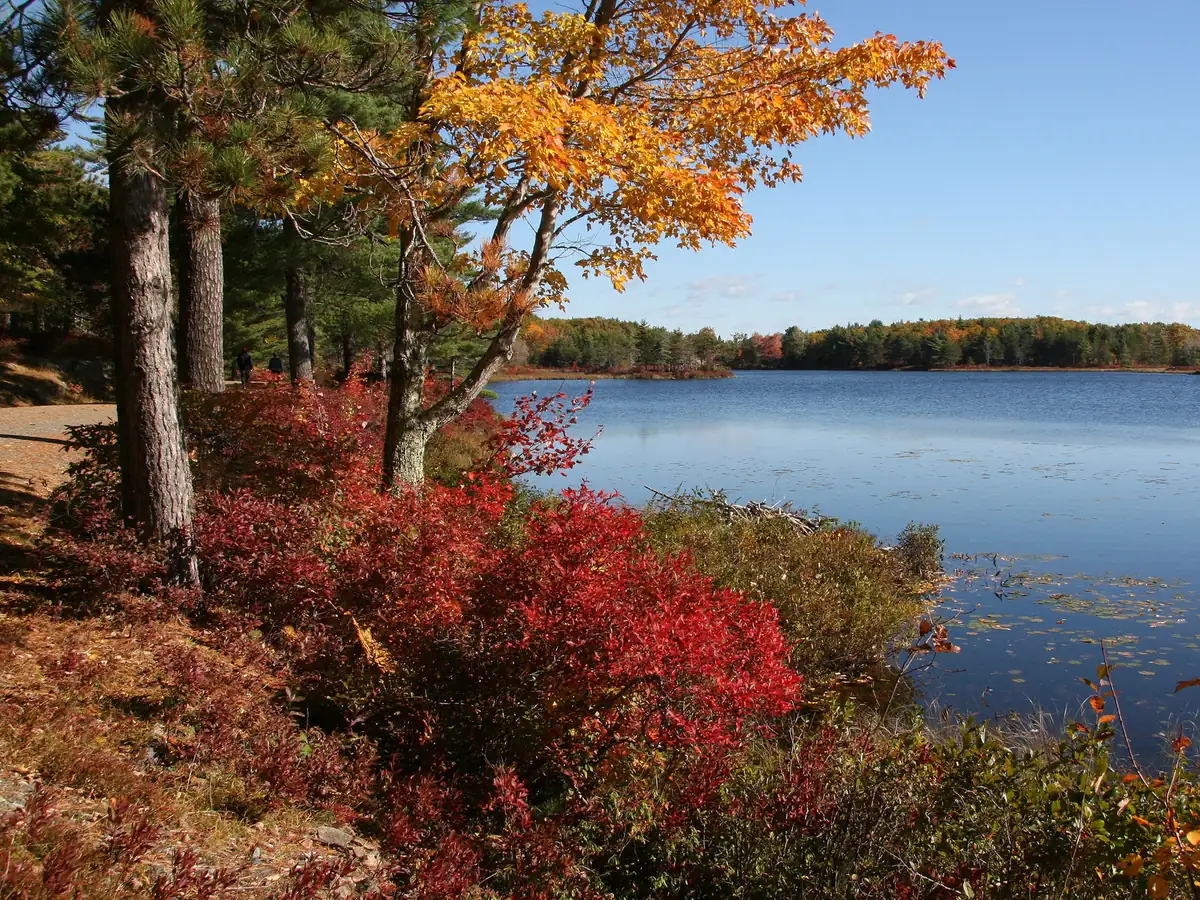
- Follow the color south. The Maine Forest Service’s September 30 report put Aroostook, the northwest woods and the western mountains at peak, with low leaf drop. Bangor, Augusta and the Downeast coast normally follow in the second week of October, and the coast from Camden to Kittery holds out until the middle and end of the month.
- Last weeks on Cadillac. Park rangers keep the weekday hawk watch going on Cadillac Mountain, 9 a.m. to noon, through Friday, October 16. Driving the summit road still needs a $6 vehicle reservation through Sunday, October 25.
- Jupiter disappears before dawn. Jupiter gets covered by the waning crescent moon before sunrise on Tuesday, October 6. From Bangor, the planet vanishes at about 4:31 a.m. and comes back at about 5:31, high enough in the east to see over most trees and well before the sky brightens.
Keep a record: the Naturalist’s Field Journal’s tree-through-the-seasons page is made for a single red maple or a tamarack at the edge of a bog, “birds I have seen” can take the last loon on your lake and the first flock of siskins, the dusk and dawn watch fits an evening at a moose bog, and the seeds, pods and cones plate has room for white pine cones and a witch hazel capsule. Write the date and the temperature beside each one.
Regions used below: Southern Maine and Casco Bay; Midcoast and Penobscot Bay; Downeast and Acadia; Western mountains and lakes; The Highlands, Moosehead and Katahdin; Aroostook County.
When does fall foliage peak in Maine?
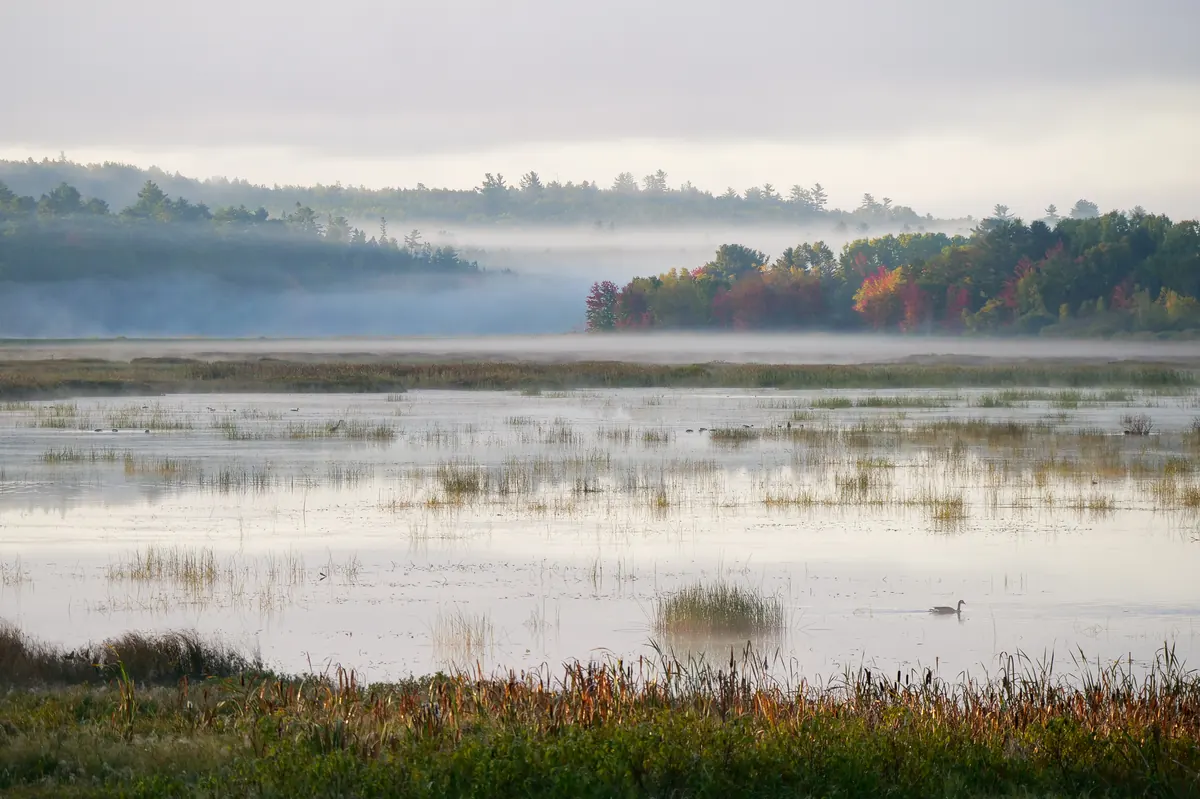
Maine’s color runs downhill and toward the sea. The Maine Forest Service splits the state into seven zones and, through the season, sends out a weekly report on each. Its September 30 report found peak color in the three northern and western zones, high color in the northern part of eastern Maine, and moderate color everywhere south of Bangor, with less than 30 percent of leaves down anywhere. The weekend nor’easter brought rain the woods needed without stripping trees. Spokesperson Gale Ross called the first October weekend “the gem of all gems” for leaf watchers in the north. Clear, cool days and cold nights that stay above freezing bring out the brightest reds, the forest service says, so a string of blue-sky afternoons now matters more than anything else.
| Region | Reference places | Typical peak |
|---|---|---|
| Northern Maine (zones 6 and 7) | Fort Kent, Caribou, Presque Isle, the North Maine Woods | Last week of September into the first week of October |
| Western mountains (zone 5) | Rangeley, Bethel, Greenville, the Bigelow Range | Second week of October |
| Central and southwestern Maine (zone 3) | Bangor, Augusta, Fryeburg | Second week of October |
| Eastern Maine and Downeast (zones 2 and 4) | Houlton, Millinocket, Calais, Machias, Bar Harbor | Second week of October |
| Midcoast and south coast (zone 1) | Camden, Portland, Kennebunkport, Kittery | Mid-to-late October |
A few places worth timing. At Ferry Beach State Park in Saco, black gum, or tupelo, a tree uncommon this far north, turns crimson in late September or early October, ahead of everything around it. The North Loop at Wolfe’s Neck Woods State Park in Freeport goes bright yellow around mid-October. From the 800-foot top of Mount Battie in Camden Hills State Park you look down on color running to the harbor, and Bradbury Mountain in Pownal gives a view over Casco Bay’s islands. Downeast, the Bold Coast Scenic Byway passes the wild blueberry barrens, whose low leaves turn a deep maroon-purple in fall; Maine has some 38,000 acres of these commercial fields, tended by 485 growers, on glacial sandplains and ridgetops where the plant has grown since the ice left. The last gold of the year belongs to tamarack, a conifer that yellows and then drops every needle, standing in bogs after the maples are bare. Pick one tree near home, photograph it on the same day each week, and note when it is empty.
What is happening in Acadia and on Maine’s mountains in October?
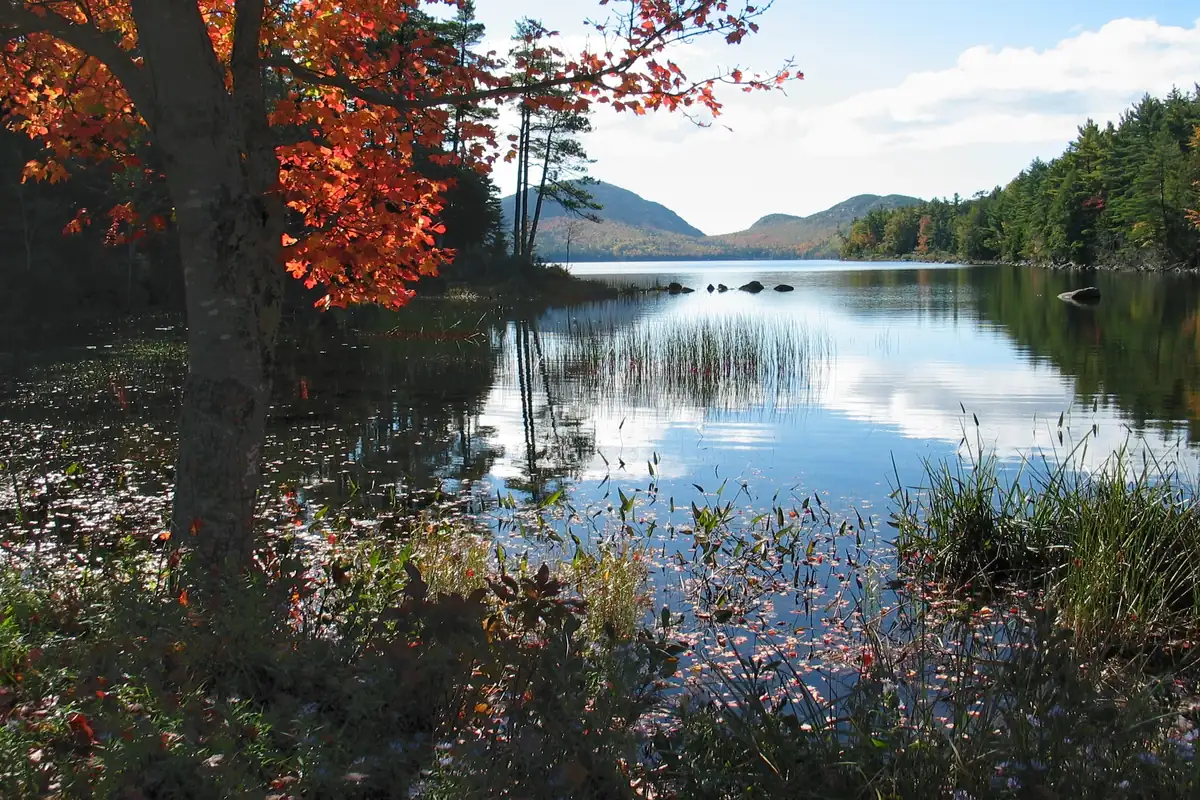
Acadia in October is the park at its most colorful and, after the middle of the month, its quietest. The hawk count and the summit road reservations both wind down on known dates, and farther inland Baxter State Park closes its high trails for the shoulder season.
-
The Cadillac Mountain hawk watch
Weekdays 9 a.m. to noon through Friday, October 16 · About 200 yards down the North Ridge Trail from the Cadillac east summit parking lot
Acadia National Park, Schoodic Institute and Friends of Acadia have counted migrating raptors from Cadillac since 1995, more than 71,000 of them in 30 years, and about 3,500 visitors a year stop to watch. Rangers are on hand weekdays from 9 until noon through October 16; drop in any time in that window and bring binoculars and a warm layer, since the ground is rocky and the wind is steady. The count now starts in August, because some raptors are moving earlier than they used to. The best single day so far this fall was 573 birds in mid-September, but the counters told the Bangor Daily News that 2026 may come in below the 30-year average, with good flying weather and fewer birds than they expected. By October the big mid-September days are over and the count thins out, but a north wind behind a cold front can still bring a good morning. For comparison, the whole 2025 season came to about 1,949 raptors in just under 249 hours of watching, a little under eight an hour, and the running totals are posted on hawkcount.org.
-
Driving the summit road
Reservations required through Sunday, October 25 · Cadillac Summit Road, Mount Desert Island
A $6 vehicle reservation from Recreation.gov is needed to drive up Cadillac until October 25. The sunrise entry window is 5:30 to 7 a.m. from October 1 to 15, then 6 to 7:30 a.m. through the 25th. The Park Loop Road, the carriage roads and Jordan Pond need no reservation. Eagle Lake and the Beech Cliff trail above Echo Lake are good places to see the birches and maples against the granite.
-
Katahdin before the shoulder season
Summit hikes recommended before October 15; camping ends October 22 · Baxter State Park
Baxter State Park strongly advises hikers to finish any Katahdin climb before October 15, because the mountain’s trails close for a stretch between October or November and December 1, and any of them, the Hunt Trail included, can be shut on short notice for weather. Summer camping in the park ends after October 22. Above treeline, October can bring ice and snow, so pack for winter conditions and be ready to turn back early.
East of Baxter, Katahdin Woods and Waters National Monument is an International Dark Sky Sanctuary, certified in 2020; see the night-sky section below.
What birds are migrating through Maine in October?
By October the warblers that fill the coast in September have mostly gone through, and the month belongs to seed-eaters, raptors and water birds. Two things set this fall apart: a big crop of conifer seed in the north, and loons leaving the lakes for salt water.
-
Siskins and crossbills in the spruce
October onward · Spruce, fir, pine and cedar woods statewide
The Finch Research Network’s forecast, published September 25, rates the eastern white pine and northern white cedar crops in Maine, northern New England and the Maritimes as very good, with red spruce especially strong inland. That points to a lot of pine siskins, a trickle of type 2 red crossbills arriving from the west to join the resident birds, a small-to-moderate showing of evening grosbeaks, and moderate numbers of purple finches. With so much wild food around, expect more of these finches in the woods than at your feeder. Redpolls, pine grosbeaks, bohemian waxwings and most red-breasted nuthatches should stay north, held there by good birch, mountain-ash and cone crops. Listen for crossbills’ hard “kip” calls over the treetops before you see them.
-
Loons leave the lakes
Through the fall · Inland lakes, then bays and harbors
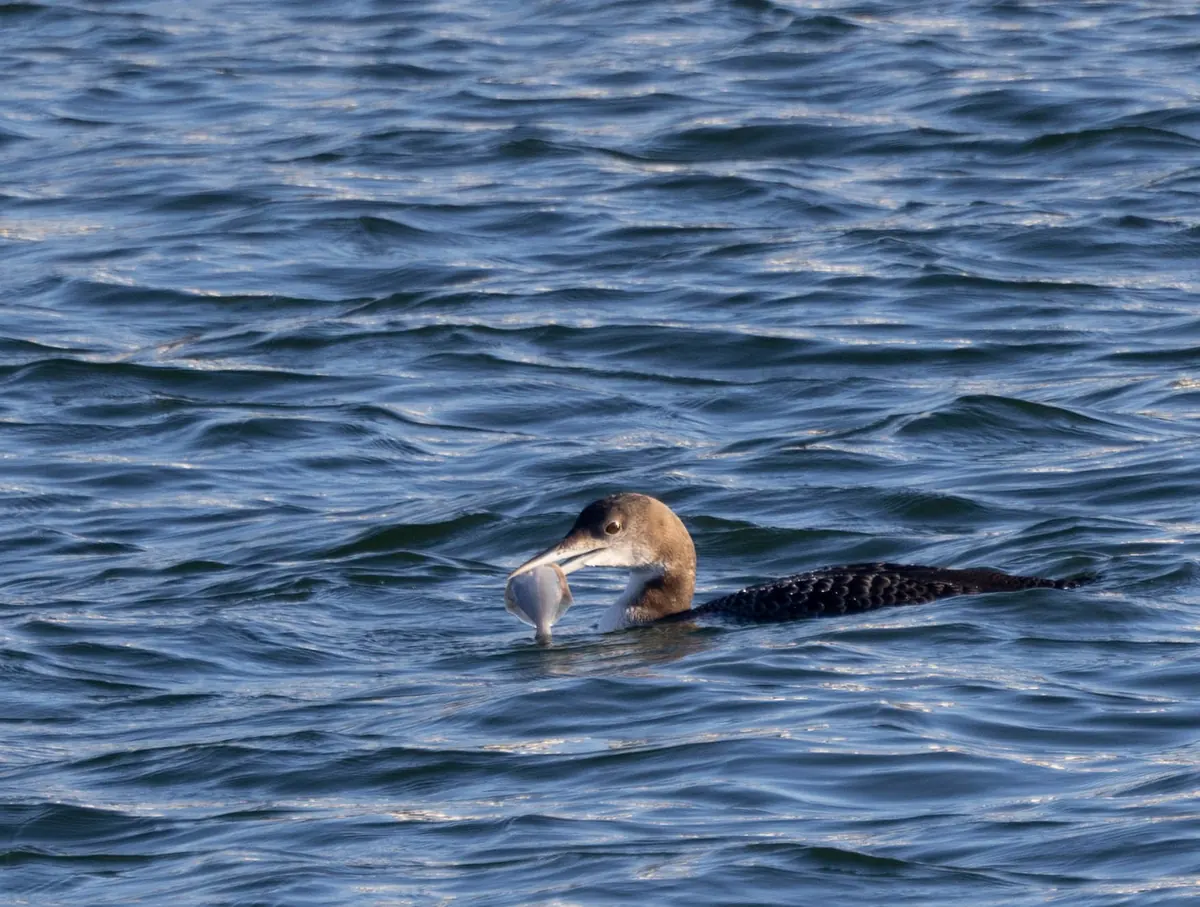
Maine Audubon, which has run its loon project for more than four decades, notes that loons spend the winter on the ocean. Over the fall they trade the lakes for the coast, where you will find them in duller winter gray in the bays and harbors, diving for fish. The date you last hear or see a loon on your own pond is exactly the kind of note the journal is for.
-
Woodcock country Downeast
Fall · Moosehorn National Wildlife Refuge, Baring and Edmunds
Moosehorn, nearly 30,000 acres of woods, bogs, lakes and shore near Calais, is where American woodcock have long been studied intensively, and the refuge lists more than 225 bird species. In autumn the same trails turn up moose, black bears and the occasional bobcat. At the Edmunds Division the tide can rise and fall as much as 24 feet twice a day, so time a shoreline walk to the tide table.
-
Salt marsh on the south coast
All month · Rachel Carson National Wildlife Refuge, Kittery to Cape Elizabeth
The refuge was set up with the state in 1966 to protect salt marshes and estuaries for migratory birds, and its 11 divisions stretch along about 50 miles of York and Cumberland county shoreline. The refuge trail runs through woods and past the marsh to the sea, an easy hour with binoculars on a falling tide.
Monarchs are almost done: Monarch Watch puts the peak flight at 45° N, near Bangor, between August 29 and September 10, and at 43° N, near Kittery, from September 3 to 15. An October monarch in Maine is a straggler worth reporting to Journey North. Two dated counts share one weekend: on Saturday, October 10, birders everywhere submit eBird lists for October Big Day, and The Big Sit, which in which teams stay put in a 17-foot ring and tally whatever flies over or calls, runs October 10 and 11. Maine Audubon’s free Thursday bird walks at Gilsland Farm in Falmouth start at 7 a.m.; its calendar lists October 1.
Where can you see moose in Maine in October, and is it rut season?
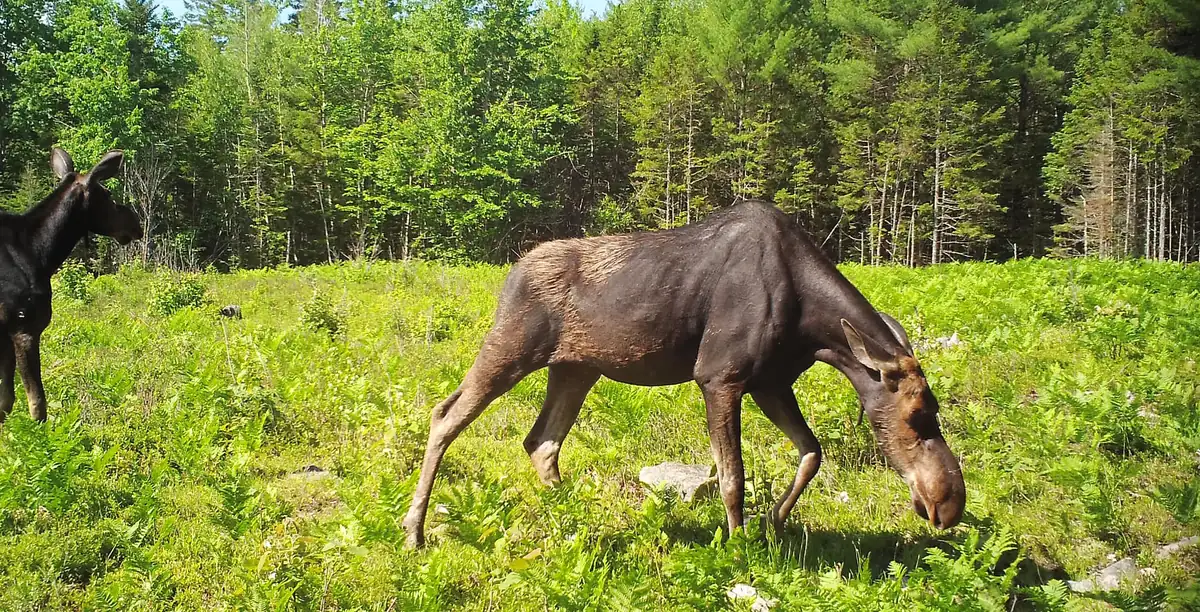
Yes, at the start of the month. Maine’s Department of Inland Fisheries and Wildlife says the moose rut begins in late September and runs into early October, when bulls, antlers finished and polished, go looking for cows and pay less attention to roads and people than usual. The department estimated about 76,000 moose statewide in 2012, most of them in the northern commercial forest, and they move mostly at dusk and dawn.
-
Where to look
The hour after sunrise and the hour before dark · Cutovers, bogs and logging roads north and west of Bangor; Moosehead Lake, the Rangeley Lakes, Aroostook
Look along bog edges and regrowing clearcuts at first and last light. Drive slowly, pull fully off the road, and watch from the car; a rutting bull can charge, and a cow will defend her calf. The Route 11 drive from Sherman up through Patten, Ashland and Eagle Lake to Fort Kent, which the forest service recommends for color, also comes with its own warning to watch for deer and moose crossing.
-
The October moose hunt
Bull-only October 12–17; antlerless-only October 26–31, by permit · Most northern and western wildlife management districts
Maine’s moose season runs in three permit weeks, the first ending October 3. The second, bulls only, is October 12–17 across much of the north and west; the third, antlerless only, is October 26–31 in districts 1 through 6 and 8. Harvest and road kills together take 2,000 to 3,500 moose a year, according to IFW. If you are walking or photographing in the north woods in those weeks, wear orange (see the safety section).
Moose tracks in the mud of a logging road, heart-shaped and as long as your hand, are a good first entry for the tracks-to-know plate.
Are Atlantic salmon and brook trout spawning in Maine this fall?
They are. October and November are spawning months for Maine’s two famous cold-water fish, and both need clean gravel and cold water to do it.
-
Wild Atlantic salmon
Nest digging begins in the fall, once the water drops below 50 °F · The Sheepscot, Sandy, Ducktrap, Penobscot, Union, Narraguagus, Machias, East Machias and Dennys rivers
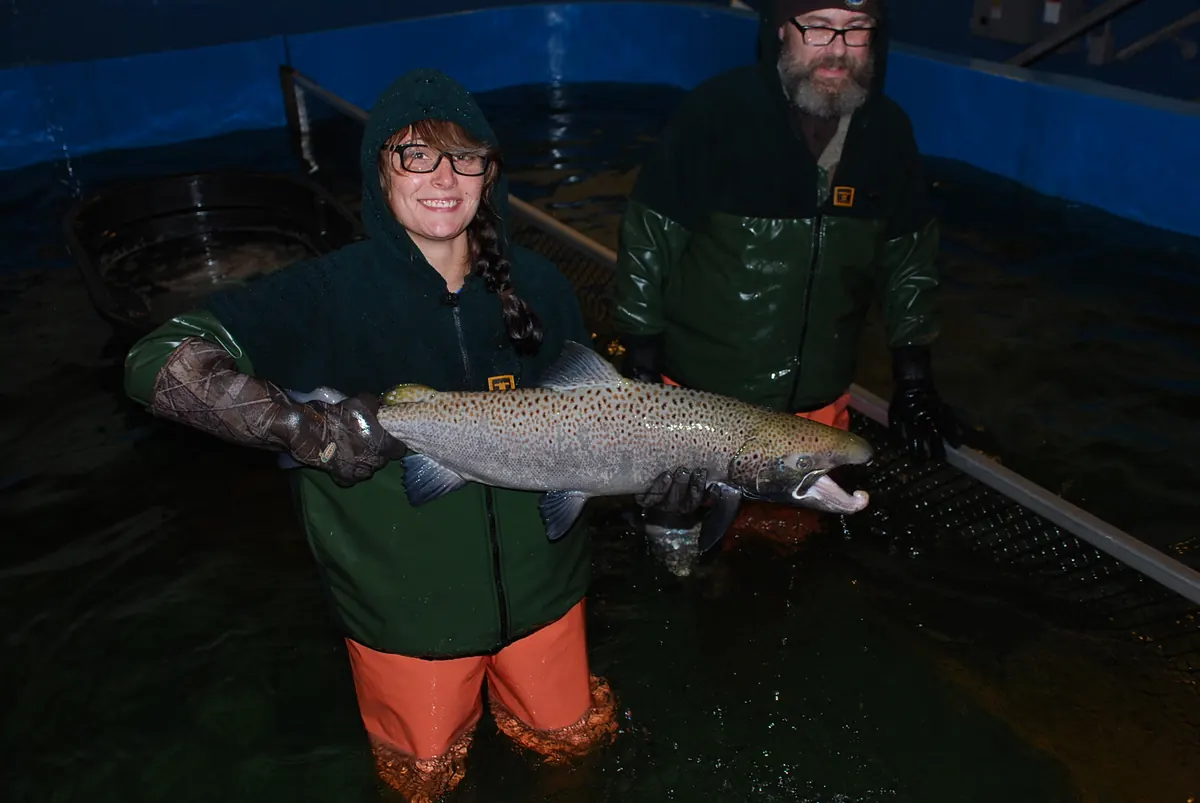
The last Atlantic salmon that still spawn naturally in the United States return to this short list of Maine rivers, and together they have been listed as endangered since 2000. Adults come in from the sea mostly in spring and summer, wait out the warm months in cool pools, and then, according to the Department of Marine Resources, the females begin digging nests called redds in the fall once the water falls below 50 °F. Before the Civil War about 100,000 salmon a year came up the Penobscot alone. It is illegal to fish for sea-run salmon anywhere in Maine. If you see a large fish working the gravel in one of these rivers, watch from the bank and leave it be.
-
Brook trout
Tributary spawners in early October; shoreline spawners from mid-November · Moosehead Lake and wild trout waters across the north
IFW notes that Moosehead’s brook trout spawn in the lake’s tributaries in early October, while a separate group spawns along the lake’s shores from mid-November, some of them into January. Spawning males color up with orange bellies and white-edged fins. Stay off the gravel bars in small streams this month; a single boot print can crush a nest.
A stream thermometer is a good tool to add to the pack. Record the water temperature on the daily field log each time you visit the same brook, and in a year or two you will know when your stream crosses 50 degrees.
When is the first frost and freeze in Maine?
For most of inland Maine, the first freeze has already happened. The median date is September 15 at Allagash and September 27 at Rangeley, and Caribou and Millinocket reach theirs by October 1. Bangor’s median is October 4. October is when the freeze moves out to the coast, where the Gulf of Maine keeps nights mild: Portland’s median first freeze is October 15, Augusta’s October 16, the Acadia station’s October 22, and Eastport, surrounded by cold, fast-moving tidal water, holds out until October 25. By Halloween, nine years in ten, every station in the table has frozen except the Acadia and Eastport ones. A light frost on grass and car windows can come on a clear, calm night when the thermometer reads a few degrees above freezing, so gardeners on the coast usually see white lawns before the official freeze.
| Station | One year in ten | Median | Nine years in ten |
|---|---|---|---|
| Allagash (North Maine Woods) | Aug 29 | Sep 15 | Sep 30 |
| Caribou Municipal Airport | Sep 17 | Oct 1 | Oct 14 |
| Rangeley (western mountains) | Sep 14 | Sep 27 | Oct 9 |
| Millinocket Municipal Airport | Sep 19 | Oct 1 | Oct 14 |
| Bangor International Airport | Sep 23 | Oct 4 | Oct 21 |
| Augusta State Airport | Oct 2 | Oct 16 | Oct 31 |
| Portland International Jetport | Oct 2 | Oct 15 | Oct 30 |
| Acadia Np (Mount Desert Island) | Oct 6 | Oct 22 | Nov 5 |
| Eastport (Passamaquoddy Bay) | Oct 8 | Oct 25 | Nov 7 |
More Maine stations, from York County to the St. John valley, are on our Maine frost dates page. On the coast, keep an old sheet by the door for the first still, starry night; inland, the growing season is already over, and the jobs are pulling the garlic mulch into place and draining hoses. Mark the first morning of hard frost in your journal, since your own garden may run a week ahead of or behind the nearest station.
How fast is Maine losing daylight in October?
Faster than in most of the country, because Maine reaches so far north. Over the month, Portland gives up 86 minutes of daylight, Bangor 90, and Presque Isle 96, about three minutes a day. In Portland the sun comes up at 6:39 a.m. on October 1 and at 7:16 a.m. on the 31st, while sunset slides from 6:22 p.m. to 5:33 p.m. Daylight saving time ends overnight into Sunday, November 1, and that afternoon Eastport, the easternmost city in the country, sees the sun go down at about 4:17.
| City | Oct 1 | Oct 31 | Lost | Per day |
|---|---|---|---|---|
| Portland | 11 h 43 m | 10 h 17 m | 86 min | 2.9 min |
| Lewiston | 11 h 43 m | 10 h 16 m | 87 min | 2.9 min |
| Augusta | 11 h 43 m | 10 h 15 m | 88 min | 2.9 min |
| Bangor | 11 h 42 m | 10 h 13 m | 89 min | 3.0 min |
| Bar Harbor | 11 h 42 m | 10 h 14 m | 88 min | 2.9 min |
| Eastport | 11 h 42 m | 10 h 13 m | 89 min | 3.0 min |
| Millinocket | 11 h 42 m | 10 h 10 m | 92 min | 3.1 min |
| Presque Isle | 11 h 41 m | 10 h 05 m | 96 min | 3.2 min |
Type any Maine address into the Field almanac to see its sunrise, sunset and twilight, plus how much light it loses this week.
What is October weather like in Maine, and will El Niño change the winter?
October in Maine cools quickly and can be wet. The 1991–2020 normals give Portland an average October high of 59.5 °F and low of 41.0 °F, Bangor 58.2 and 38.2, and Caribou 53.2 and 35.9. Rain is plentiful near the coast: Portland’s normal October total is 5.25 inches, Bangor’s 4.58, Caribou’s 3.99. A nor’easter or the remnant of a tropical storm can deliver much of that in a day or two.
Snow is a real possibility up north. Caribou averages 1.7 inches in October and 10.4 in November, and in half of the 1991–2020 seasons its first snowfall of 0.1 inch or more had come by about October 28. Its earliest on record came on September 29, 1991, and 9.4 inches fell there on October 29, 1963. On the coast, the typical first measurable snow in the same 30 years came in the last week of November at both Portland and Bangor, but October storms are not unheard of: on October 29, 2000, Bangor got 7.0 inches, and the pre-Halloween storm of October 29–30, 2011 left 6.0 inches at Bangor and 2.7 at Portland.
What matters more is the winter ahead. An El Niño Advisory is in effect. In a discussion dated September 10, NOAA’s Climate Prediction Center says the warm phase is building and gives it more than a 90 percent chance of reaching very strong levels over the 2026–27 cold season, plus three-in-four odds that the October–December warmth in the tropical Pacific tops +2.5 °C, a historic strength. NOAA’s Climate.gov maps of past El Niño winters show less snow than usual across interior New England, and the most recent strong event gives a sense of what that looks like here. In the winter of 2023–24, Maine’s statewide snowfall came to 97.4 inches, some 30 inches below its long-term average of 128; Portland ended 35.9 inches short, Bangor 34.4 and Caribou 22.1. “We typically see more moisture with El Niño events, but that moisture comes with warmer air masses,” NWS Gray meteorologist Derek Schroeter told Maine Public, and much of it fell as rain. No two El Niño winters are alike, and a single big coastal storm can erase a snow deficit in a day. El Niño has little grip on October weather anyway; its effect on the United States is strongest from December through February. The CPC revisits its forecast on October 8; NOAA issues the seasonal outlook for December through February in mid-October.
For the week ahead in your part of the state, open our weather page.
What is in Maine’s night sky this October?
-
The moon covers Jupiter
Tuesday, October 6, about 4:30 to 5:30 a.m. EDT · East, the moon about 25 degrees up at the start
The crescent moon, 18 percent lit, rises around 2 a.m. with Jupiter just ahead of it. According to the International Occultation Timing Association, Jupiter slips behind the moon’s sunlit edge at 4:31 a.m. at Bangor, 4:33 at Millinocket, 4:35 at Presque Isle and 4:36 at Caribou, with the moon 25 to 27 degrees above the eastern horizon. It comes back into view on the moon’s unlit side close to an hour later, at 5:30 or 5:31 in all four towns, with the moon near 36 degrees up. Portland is not on IOTA’s list, but it falls between Boston (4:27 and 5:30) and Bangor, so plan on roughly 4:30 and 5:30 there. Civil twilight does not begin until 6:10 at Bangor and 6:16 at Portland, so both events happen in a dark sky. Binoculars will show the planet’s four large moons disappearing one by one as well.
-
The Hunter’s Moon
Evenings of Sunday, October 25 and Monday, October 26 · Low in the east-northeast at dusk
Because the exact moment of full moon comes at 12:12 a.m. on Monday the 26th, the moon looks round on both evenings. On the 25th it comes up at 5:05 p.m. in Portland, a little over half an hour before the 5:42 sunset, and at 4:56 p.m. in Bangor; on the 26th Portland sees it rise at 5:34 p.m., within minutes of sunset. It is not a supermoon this year.
-
Orionid meteors
Before dawn on October 21 and 22 · Anywhere dark; face southeast to south
The Orionids, debris from Halley’s Comet, are around from early October into November and peak on October 21, typically producing 10 to 20 per hour. Moonlight spoils the evening, so go out after moonset. On Thursday the 22nd, the gibbous moon drops below the horizon at 2:54 a.m. in Portland and 2:47 in Bangor, leaving about three hours of dark sky before morning twilight.
-
Draconid meteors
Evening of Thursday, October 8 · Face north after dark
Draconid meteors are best right after dark, an easy one for young stargazers, and the crescent moon stays below the horizon until after 4 a.m. EarthSky expects up to ten an hour at best, and often fewer.
-
Planets
All month · Saturn in the evening; Jupiter and Mars before dawn
Saturn reaches opposition on October 4, which means it rises around sunset and is up the whole night; on the 23rd and 24th the fattening moon pairs with it. As for Venus, you will need a clear western horizon in the first days of the month to catch it in the afterglow, and on the 23rd it reaches inferior conjunction, lined up between Earth and the sun. Toward dawn, Jupiter outshines everything in the eastern sky, and reddish Mars shows higher up. The morning of the 11th puts Mars inside the Beehive, a loose star cluster that binoculars turn into a scatter of sparks around the red planet.
-
The darkest sky in the state
Clear, moonless nights, best around the October 10 new moon · Katahdin Woods and Waters National Monument; Lunksoos picnic area
Katahdin Woods and Waters was certified as an International Dark Sky Sanctuary in 2020, only the second in the National Park Service. Sky-quality readings there have reached 21.88, among the darkest measured east of the Mississippi. Call ahead to check road conditions before driving in, and bring a red flashlight.
| Phase | Date | Time |
|---|---|---|
| Last quarter | Saturday, Oct 3 | 9:25 a.m. EDT |
| New moon | Saturday, Oct 10 | 11:50 a.m. EDT |
| First quarter | Sunday, Oct 18 | 12:12 p.m. EDT |
| Full moon, the Hunter’s Moon | Monday, Oct 26 | 12:12 a.m. EDT (looks full on the evenings of Oct 25 and 26) |
| Last quarter | Sunday, Nov 1 | 3:28 p.m. EST |
Check the sky and cloud forecast before a late-night drive, and use our moon calendar for rise and set times where you live.
What is blooming and dropping in Maine’s woods in October?
-
Witch hazel
Late September into December · Moist woods and stream banks in southern and central Maine
Witch hazel waits until the rest of the woods has finished flowering, then opens fragrant yellow flowers whose petals look like crumpled ribbons, often opening as the leaves are turning gold or after they fall. Its woody seed capsules, left from last year, dry out and throw their seeds up to 30 feet, which is why an old name for it is snapping hazelnut. On a warm, dry day a patient listener can catch the snap.
-
Tamarack
October · Bogs and wet lowlands, especially north and Downeast
Tamarack is a conifer that loses its needles. They grow in soft tufts of 10 to 20 and, according to the Forest Service’s species account, turn yellow before they drop. Its small cones shed their seed over a short stretch in fall; in a Minnesota study, nearly all of it was down by the end of October. A bog ringed with gold tamaracks after the maples are bare is a very Maine sight.
-
Wild blueberry barrens
Color through October · Washington and Hancock counties, along the Bold Coast Scenic Byway
Lowbush blueberry is native to northern New England and Atlantic Canada. The Wildflower Center in Austin describes its fall leaves as maroon-purple, a color that paints whole hillsides of barrens a deep wine color. A single field can hold as many as 1,500 genetically distinct plants spreading by underground stems, which is why neighboring patches can look a little different. Many fields are mowed or burned after harvest in alternate years, so you will see some bare ground among the color.
What can Maine families do outdoors in October 2026?
A short list of dated events and a few projects that need nothing but a notebook. Dates are as posted by the organizers in late September; check before you drive.
- Saturday, October 3: Maine Audubon’s Fall Frolic at Gilsland Farm in Falmouth, 10 a.m. to 1 p.m., a family festival of nature activities ($9). The same morning, Autumn Adventure at Bradbury Mountain State Park in Pownal runs 10 a.m. to 5 p.m., with Leave No Trace booths, search-and-rescue dog demonstrations, a treats trail hike and campfire s’mores; park day-use fees apply.
- October 4–11: Fryeburg Fair, billed as Maine’s largest agricultural fair, with livestock shows and steer and oxen pulling, right in peak color week for the Fryeburg area.
- October 1–30, weekdays: older kids and adults can volunteer with the trail crew rebuilding the Ridge Trail at Camden Hills State Park and learn how erosion is fixed; no experience needed.
- Saturday, October 10: October Big Day on eBird. Any list of birds from a yard, a school field or a park counts; the Big Sit fills the same weekend, October 10–11.
- Saturday, October 17: Haunted Tides at Reid State Park in Georgetown, 5 to 9:30 p.m., with bat walks, night wildlife programs, campfire stories and night-sky viewing; regular park fees ($1 for children 5 to 11).
- Weekdays through October 16: the ranger-led hawk watch on Cadillac Mountain (a summit road reservation is required to drive up).
- From November 1: the Cornell Lab of Ornithology’s Project FeederWatch begins its 2026–27 season of backyard feeder tallies, which continues to April 30 (there is a participation fee).
Projects for any day: report a late monarch to Journey North; keep a week-by-week photo diary of one tree; watch for the Draconids after supper on October 8; and on a cold, still morning go looking for frost feathers on the car roof. Each of these has a matching plate in the Naturalist’s Field Journal, and our nature this month pages cover other states and seasons.
Safety notes for October in Maine
Hunting seasons. Maine’s 2026–27 dates from the Department of Inland Fisheries and Wildlife: deer archery October 3–30; youth deer days Friday and Saturday, October 23–24; the residents-only deer day Saturday, October 31; regular deer firearms season November 2–28, then muzzleloader November 30 to December 5 statewide and December 7–12 in some districts. Moose permit weeks run October 12–17 (bulls) and October 26–31 (antlerless). Bear season is open August 31 to November 28, ruffed grouse and pheasant from September 26, woodcock September 26 to November 17, and fall turkey to November 7 in the districts where it is open. Hunting is not allowed on Sundays in Maine, which makes Sunday the calmest day for a woods walk in the fall.
Orange. Anyone hunting with a firearm, muzzleloader or crossbow during the deer firearms or muzzleloader seasons must wear two pieces of hunter orange: a solid orange hat and a garment covering most of the torso that is at least half orange. One piece is required for firearm hunters in any district open to moose hunting while that season runs. Bowhunters are exempt, though IFW recommends one piece. It also recommends that everyone wear at least one article of orange; for walkers, a hat and vest cost little and are sensible from the youth days on, and in the north woods during the moose weeks.
Moose on the road. Moose feed along roadsides at dawn and dusk, and a moose’s body sits at windshield height. Slow down after dark in the north and west, use high beams when you can, and scan the shoulders.
Ticks. Deer ticks do not quit in the fall: the adults, the stage most likely to find you now and the carriers of Lyme disease, hunt from October to May whenever the day stays above freezing. Tuck in pant legs on leafy trails, check yourself and the dog afterward, and send a tick you are worried about to the UMaine Tick Lab in Orono for identification or testing.
Browntail moth. Along the coast and up to about 60 miles inland, and worst in the midcoast and around Augusta, browntail caterpillars spin tight white winter webs at the tips of oak and apple branches in late fall. Their microscopic hairs cause an itchy rash and can linger in leaf litter for up to three years. Rake on damp days or early in the morning, wear long sleeves, and clip reachable webs between October and March.
Mountains and tides. Katahdin and the western peaks can see ice and snow above treeline any time this month; Baxter advises finishing summit hikes by October 15. Downeast, tides of 20 feet and more come in fast over mudflats and ledges, so check the tide chart before walking out.
Sources
- Maine Forest Service: fall foliage report, September 30, 2026
- WABI: fourth foliage report brings peak colors to northern and western Maine (September 30, 2026)
- MaineFoliage.com: when and where to visit
- MaineFoliage.com: frequently asked questions (typical peaks, what brings out color)
- MaineFoliage.com: Southern Maine, zone 1 (Ferry Beach tupelo, Wolfe’s Neck, Mount Battie, Bradbury)
- MaineFoliage.com: Eastern Maine and Downeast, zones 2 and 4 (Bold Coast Scenic Byway)
- MaineFoliage.com: Northern Maine, zones 6 and 7 (Route 11 drive)
- MaineFoliage.com: Western Maine, zone 5
- MaineFoliage.com: Central Maine, zone 3
- National Park Service: Acadia hawk watch program (weekdays through October 16, 2026)
- Bangor Daily News: Acadia counts migrating hawks (September 24, 2026)
- Schoodic Institute: 31st year of the Cadillac Mountain hawk watch (2025 season totals)
- Acadia National Park: Cadillac Summit Road vehicle reservations 2026
- Baxter State Park: the Appalachian Trail and Katahdin (October 15 advice, shoulder-season closures)
- National Park Service: stargazing at Katahdin Woods and Waters National Monument
- Finch Research Network: winter finch forecast 2026–2027 (September 25, 2026)
- Maine Audubon: Maine Loon Project
- Maine Audubon: events calendar (Fall Frolic, Gilsland Farm bird walks)
- U.S. Fish and Wildlife Service: Moosehorn National Wildlife Refuge
- U.S. Fish and Wildlife Service: Rachel Carson National Wildlife Refuge
- Monarch Watch: peak migration dates by latitude
- Journey North: monarch sightings
- BirdsCaribbean: October Big Day 2026 (Saturday, October 10)
- The Big Sit! 2026 (October 10–11)
- Maine Department of Inland Fisheries and Wildlife: moose
- Maine Department of Inland Fisheries and Wildlife: 2026–27 Maine hunting seasons
- Maine Department of Inland Fisheries and Wildlife: laws pertaining to hunting equipment (hunter orange)
- Maine Department of Inland Fisheries and Wildlife: brook trout
- Maine Department of Marine Resources: Atlantic salmon
- NOAA National Centers for Environmental Information: U.S. climate normals 1991–2020 (freeze dates; October temperature, precipitation and snowfall)
- NOAA Regional Climate Centers: SC-ACIS daily records for Portland, Bangor and Caribou (first snow dates, October snowstorms)
- Climate Prediction Center: ENSO diagnostic discussion, September 10, 2026
- NOAA Climate.gov: how El Niño affects snowfall over North America
- NOAA Climate.gov: United States El Niño impacts
- Maine Public: Maine’s snowfall in the 2023–24 winter was 30 inches below normal
- U.S. Naval Observatory: moon phases 2026
- U.S. Naval Observatory: sun and moon rise, set and twilight (data API), Portland
- U.S. Naval Observatory: sun and moon rise, set and twilight (data API), Bangor
- International Occultation Timing Association: lunar occultation of Jupiter, October 6, 2026 (city timings)
- EarthSky: meteor shower guide (Draconids, Orionids 2026)
- EarthSky: visible planets and night sky guide
- Lady Bird Johnson Wildflower Center: American witch hazel (Hamamelis virginiana)
- Lady Bird Johnson Wildflower Center: lowbush blueberry (Vaccinium angustifolium)
- USDA Forest Service Fire Effects Information System: tamarack (Larix laricina)
- UMaine Cooperative Extension: Maine’s native wild blueberry
- Maine DACF events calendar (Fryeburg Fair, Bradbury Autumn Adventure, Haunted Tides, Camden Hills trail work)
- Maine DACF: Haunted Tides at Reid State Park, October 17, 2026
- Maine DACF: Autumn Adventure at Bradbury Mountain State Park, October 3, 2026
- Maine DACF: Fryeburg Fair, October 4–11, 2026
- Maine DACF: Ridge Trail rehabilitation at Camden Hills State Park, October 2026
- Project FeederWatch: how to participate (November 1 to April 30)
- University of Rhode Island TickEncounter: blacklegged tick (adults active October–May)
- UMaine Cooperative Extension: Tick Lab
- Maine Forest Service: browntail moth information
- Photos via Wikimedia Commons; licenses and photographers are credited under each picture
