What to look for in nature in Maine this November
November is the month Maine turns from a destination back into a home. The leaf traffic is gone, the coastal bays fill with eiders, scoters and long-tailed ducks down from the Arctic, bucks are chasing does in the woodlots, and most black bears have already crawled into their dens. Clocks fall back on the first morning, and from then on the light leaves early: by the last days of the month, the sun sets before 3:50 in the afternoon at the top of Aroostook County. Below are the things worth going out for, with the places and dates that go with them.
Other months in Maine: October, December.
Start here
- Walk on Sundays. Maine law bans hunting on Sundays, so November 8, 15 and 22, the three Sundays inside the November 2–28 deer firearms season, are the calmest days for a long woods walk. Wear orange anyway, on any day this month.
- Drive Cadillac while you still can. Acadia’s summit road needs no vehicle reservation after October 25, and the Park Loop Road, Cadillac included, stays open to cars until December 1, weather permitting. A clear November sunrise from the top is yours without a booking.
- Start a feeder count. Project FeederWatch opens its season on November 1 and runs until April 30. Choose your count days, note the most birds of each kind you saw at one moment, and send in the tally; a school, library or backyard feeder in Maine all count.
Keep a record: the Naturalist’s Field Journal’s birds-I-have-seen page has room for your first eider raft and the purple sandpipers on a ledge, the reading-the-signs plate fits a buck scrape or a pawed-up patch of beechnuts, mammal watch is the place for a deer at dusk, and the same-place-twice spread works well for one cove photographed on November 1 and again on the 30th. Note the sunset time beside each entry.
Regions used below: Southern Maine and Casco Bay; Midcoast and Penobscot Bay; Downeast and Acadia; Western mountains and lakes; The Highlands, Moosehead and Katahdin; Aroostook County.
What sea ducks and shorebirds arrive on the Maine coast in November?
The coast is where Maine’s November birding happens. The Maine Birding Trail sums up the season this way: in November and December, wintering sea ducks pour onto the coast, along with grebes, loons and black guillemots, and most of them can be found almost anywhere there is salt water. They stay until spring, so the arrivals you see now are your neighbors for the next five months.
-
Eiders, scoters and long-tailed ducks
Building through November and December · Bays, harbors and headlands from Kittery to Lubec; Marginal Way in Ogunquit, Biddeford Pool, Cape Elizabeth, Pemaquid, Schoodic Point
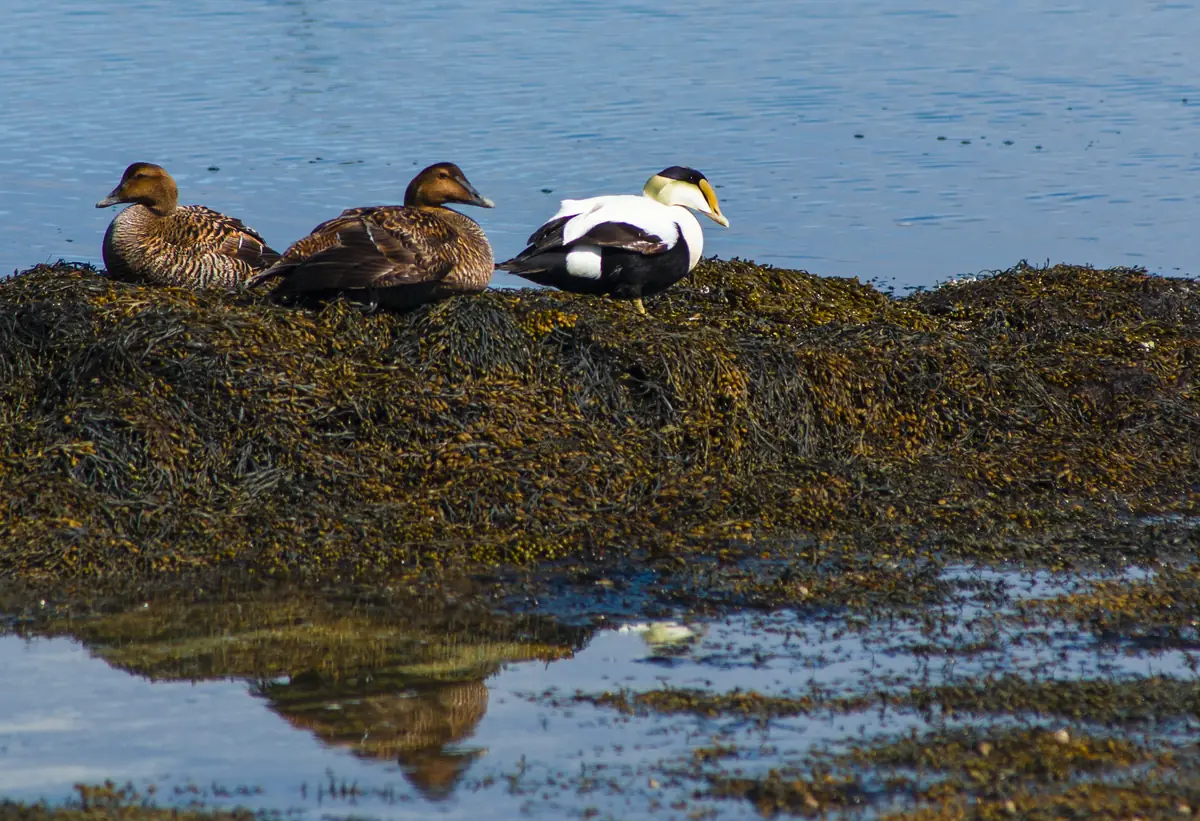
Common eiders live on the Maine coast year round, but their numbers swell as northern birds join them, and the occasional king eider turns up in the rafts. Watch for all three scoters (surf, black and white-winged), long-tailed ducks with their yodeling calls, buffleheads and common goldeneyes, plus horned and red-necked grebes and red-throated loons. A rising tide on a calm morning, scanned from a headland with a spotting scope, is the easiest way to sort them out. The Coastal Zone duck season reopens on November 5, so expect decoys and gunfire in some coves on weekdays and Saturdays.
-
Harlequin ducks
Late fall through early spring · The southern shore of Isle au Haut and the ledges of outer Jericho Bay; a few at Marginal Way, Pemaquid and farther Downeast
Harlequins breed on whitewater rivers in Canada and spend the winter in the roughest surf they can find. In the 1990s the islands around Isle au Haut held the largest wintering flock in eastern North America, often more than 200 birds in a day. The Maine Natural History Observatory, repeating surveys that date to 1988, now counts about 70 to 80 per survey there, while numbers farther Downeast are climbing. The birds are remarkably loyal: the same ducks come back not just to the same island but to the same side of it. From the mainland, a calm day at a rocky point with a scope is your best chance.
-
Purple sandpipers
November into April · Seaweed-covered ledges and jetties; Rockland breakwater, Pemaquid Point, Biddeford Pool, Cape Neddick
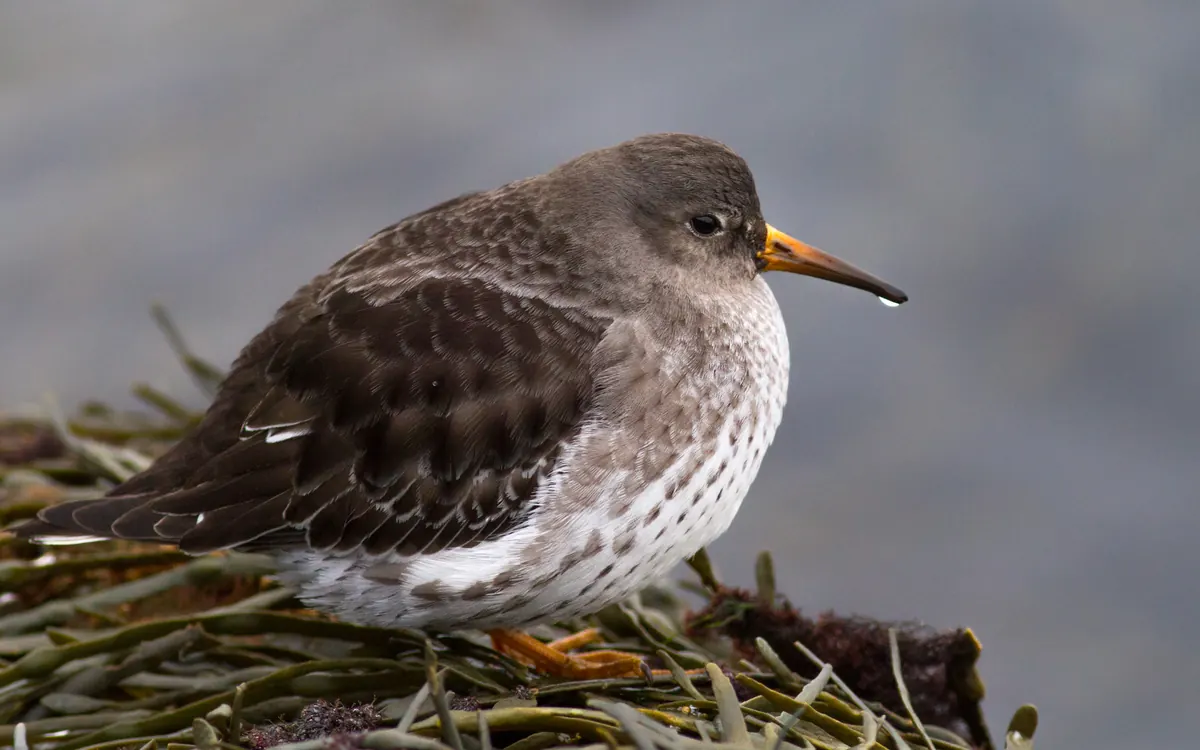
The hardiest shorebird on the East Coast spends the winter picking snails and small crustaceans off wet rockweed at the tide line, often a few feet from breaking waves. They are slate gray with orange-yellow legs and bill base and sit so still on dark rock that the Maine Birding Trail calls them common only for the experienced eye. Look at mid to low tide on outer ledges, and scan any rock that seems to be moving.
Loons that left the lakes in October are now in full winter gray on the same bays; compare a common loon’s heavy bill with the thin, slightly upturned one of a red-throated loon.
Will snowy owls and winter finches come to Maine this year?
Every Maine winter has a few visitors from the boreal forest and the tundra, and every few winters there is a flood of them. Which kind of year 2026–27 will be depends on seed crops and lemmings far to the north, and the first clues arrive in November.
-
Snowy owls
Late fall into winter, in flight years · Open coastal ground: beaches, salt marshes, airports, harbor breakwaters and island ledges
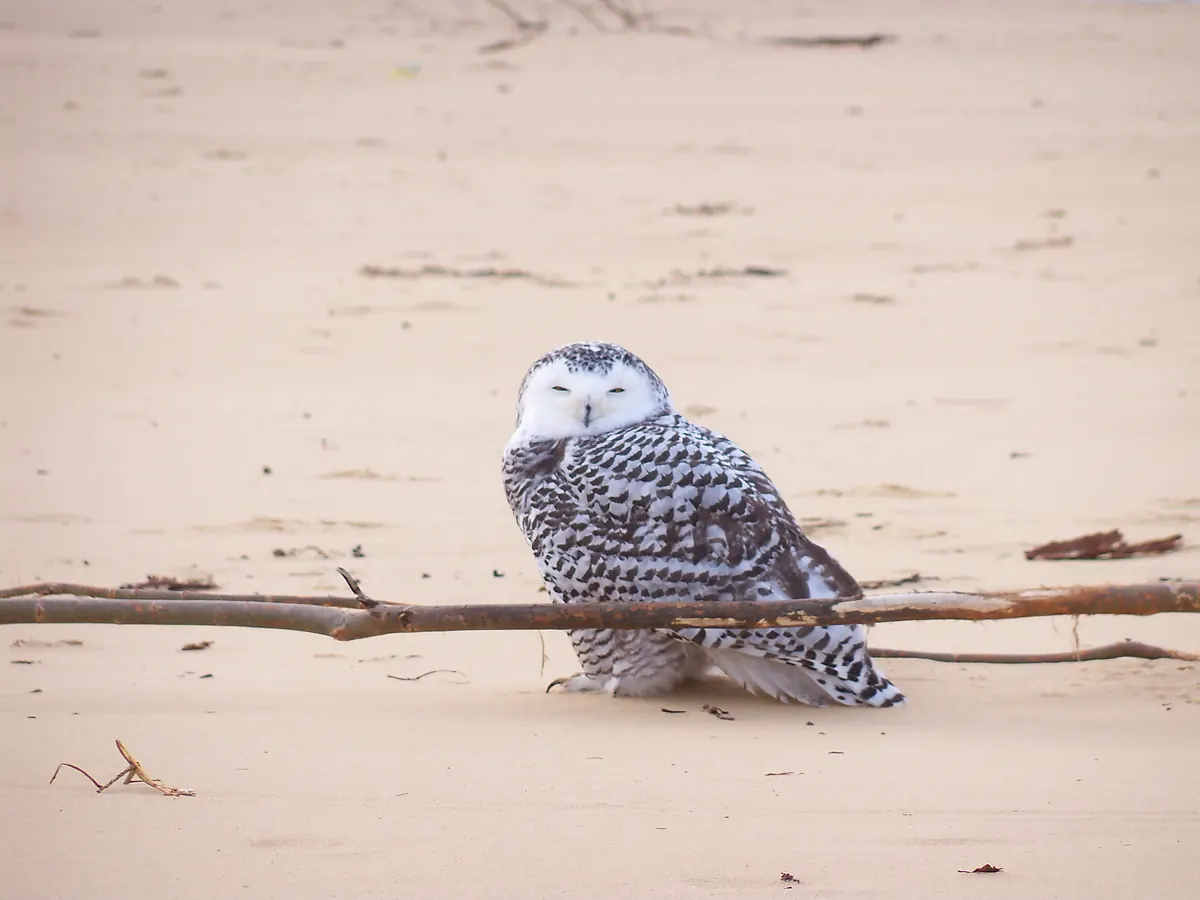
Snowy owls do not come every winter. Maine Audubon explains that they show up mainly after a summer of high breeding success in the Arctic, when plentiful lemmings and voles let the parents raise many young, and a good share of those young birds then wander south. In Maine they favor flat, open ground with plenty of food, which usually means the coast, where they catch many sea ducks. So the same headlands you visit for eiders are worth a long look. Maine Audubon’s rule for watching them is simple: if your presence changes what the owl is doing in any way, you are too close.
-
Winter finches
November onward · Conifer woods statewide; feeders more in the north
The Finch Research Network’s 2026–27 forecast, issued September 25, calls this year’s crops of white pine and white cedar seed across the Northeast very good. That is welcome news for the pine siskins already moving in large numbers and for red crossbills, which are staging a wide irruption from west to east this fall. Other species look quieter. Strong mountain-ash crops farther north should hold most pine grosbeaks and Bohemian waxwings in the boreal forest, and only a small southward push of evening grosbeaks is expected. A small redpoll flight would not surprise the forecasters. With so much wild seed in the woods, a quiet feeder this winter is likely a sign of good wild food, not missing birds.
-
Snow buntings and other open-country birds
Late fall and winter · Beaches, dunes and plowed fields, from Scarborough to the potato country of Aroostook
Flocks of snow buntings, which flash white wings as they lift off a beach or a stubble field, are one of the season’s small pleasures. Look for them with horned larks on bare ground near the coast, and on the big open farmland of the County.
The Maine Birding Trail notes that northern owls such as great gray and northern hawk owl are rare but do appear in the right winter, so any sighting is worth reporting.
When is the deer rut in Maine?
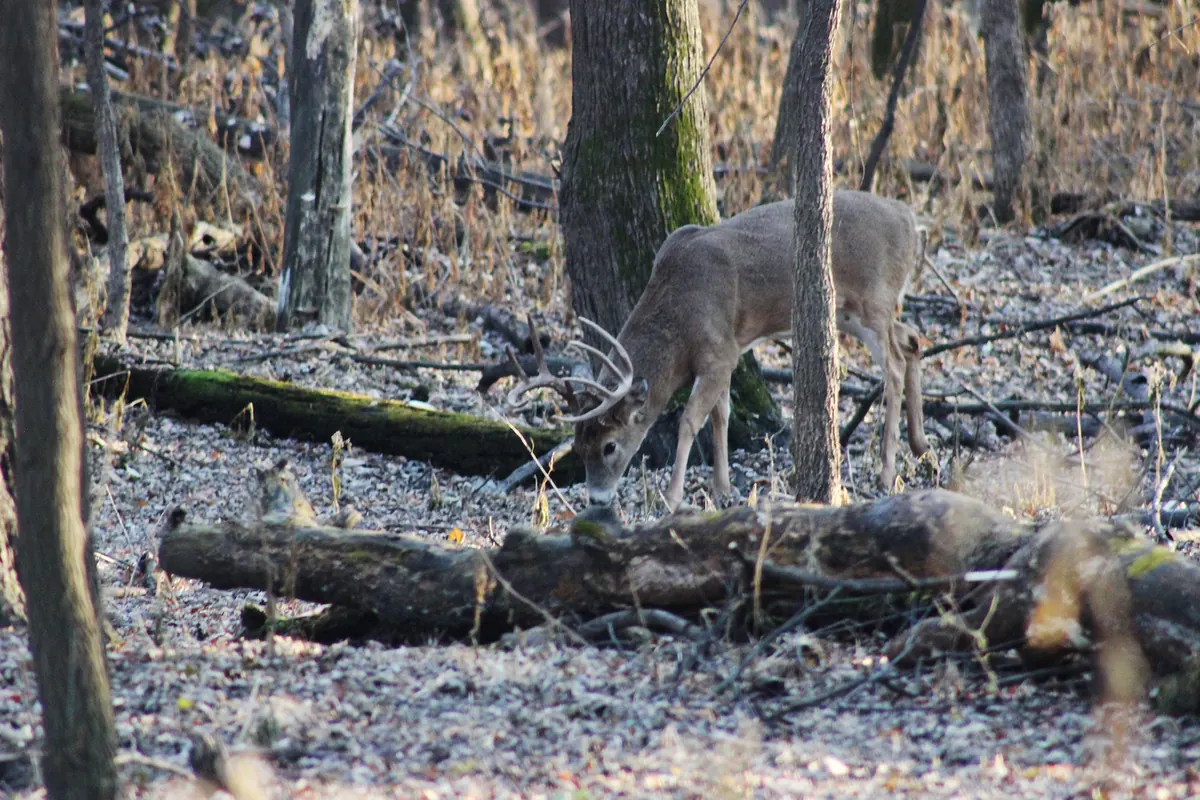
Right now. According to Maine’s Department of Inland Fisheries and Wildlife, white-tailed deer breed mostly in mid-November, with a few does bred as early as October or as late as January. Shortening days set off the timing. For a few weeks, bucks travel widely, follow does closely and pay much less attention to roads.
-
Signs of the rut
Early to late November · Field edges, old orchards and woodlots, especially in central and southern Maine
Look for rubs, saplings with the bark scraped off at knee to chest height where a buck has polished his antlers, and scrapes, bare patches of pawed-up ground under an overhanging branch. Bucks are most visible at first and last light, often trailing a doe across an opening with their nose down. Southern and central Maine carry far more deer, around 15 to 40 per square mile in places, than the big northern woods, where IFW estimates one to five.
-
Deer on the roads
Dusk and dawn all month · Statewide
After clocks fall back on November 1, the evening commute moves into the hour when deer are most active, and the rut keeps them moving. Slow down near field edges and wooded stream crossings, and when one deer crosses, expect another to follow.
-
Heading for the yards
As snow deepens, usually December onward · Dense softwood stands, often along streams and lakeshores
Once the rut is done and snow builds, Maine deer gather in wintering areas: stands of mature spruce, fir, hemlock or cedar taller than about 30 feet, with crowns closed enough to catch snow and break the wind, and hardwoods nearby to browse. IFW says that kind of shelter covers only about 2 to 25 percent of the land in different parts of the state, which is why biologists protect it.
Antlers stay on until bucks drop them between late December and early March. Any deer track pressed into the first snow is a good one to draw on the tracks-to-know plate, beside a measurement of its length.
Where do Maine’s bears and bats go in November?
Two of Maine’s mammals spend November mostly out of sight, and how early they go depends on food.
-
Black bears den up
Most are denned by November; some forage into early December · Statewide, about 25,000 bears
IFW estimates Maine’s bear population at about 25,000, one of the largest in the East. In late fall, bears drop their body temperature and slow their metabolism in a state called torpor, and they will not eat, drink or relieve themselves until spring. Cubs are born in the den in January, after a gestation of about 60 days. When beechnuts are scarce, bears quit feeding and den early; in a good beech year they keep eating well into the month. That is why, in the north, a big beech crop has been tied to more cubs the following winter.
-
Bats in hibernation
Since late September or October, until April or May · Caves, old mines, tunnels, talus slopes, wells and attics
Five of Maine’s eight bat species stay the winter and hibernate: big brown, little brown, northern long-eared, eastern small-footed and tri-colored. The other three, the hoary, silver-haired and eastern red bats, migrate south. White-nose syndrome, a fungal disease, has cut hibernating colonies that once held hundreds down to a handful, and three Myotis bats were listed as threatened or endangered in Maine in 2015. Biologists have recently found bats wintering deep in the crevices of talus, the jumbled rock at the base of cliffs. If you find bats in a cave or an old mine this winter, leave quickly and quietly; every waking costs them fat they cannot replace.
Other animals are still busy. Red squirrels are caching cones, chickadees are hiding seeds one at a time in bark crevices, and beavers are finishing their food piles of branches sunk beside the lodge before the ponds freeze over.
Can you still drive up Cadillac Mountain in November?
Yes, and for most of the month without a reservation. The vehicle reservation system for the Cadillac Summit Road ends on October 25. After that, the Park Loop Road and the summit road stay open to cars until December 1, weather permitting, when they close until April 14. November is the quietest month to see Acadia by car.
-
Sunrise on Cadillac
Any clear morning before December 1 · Cadillac Summit Road, Mount Desert Island
From November 1 the sun comes up around 6:10 a.m. at Bar Harbor, and by the 30th not until about 6:48, so a November sunrise does not require a 4 a.m. alarm. The summit is often icy and windy; bring a hat and gloves even if town feels mild. The road can close at short notice for ice or snow, so check the park’s alerts before you set off.
-
What stays open in winter
From December 1 · Ocean Drive and Jordan Pond Road
Two pieces of road remain open to cars all winter: Ocean Drive from Schooner Head Road to Otter Cliff Road, and Jordan Pond Road from Seal Harbor. The closed sections of the Loop are left to walkers, cyclists and, once snow falls, skiers. The Hulls Cove Visitor Center closed for the season on October 31, but the automated pass machine there and the entrance station at Schooner Head Road keep selling passes. Acadia allows no winter camping.
From any of Acadia’s outer headlands, the November reward is on the water: rafts of eiders and scoters off Otter Point and Schoodic Point, and maybe a passing gannet far out.
Which trees still have leaves in Maine in November?
By November the maples and birches are bare almost everywhere, but a few trees and shrubs carry the color into the gray months.
-
American beech
All winter · Hardwood ridges statewide
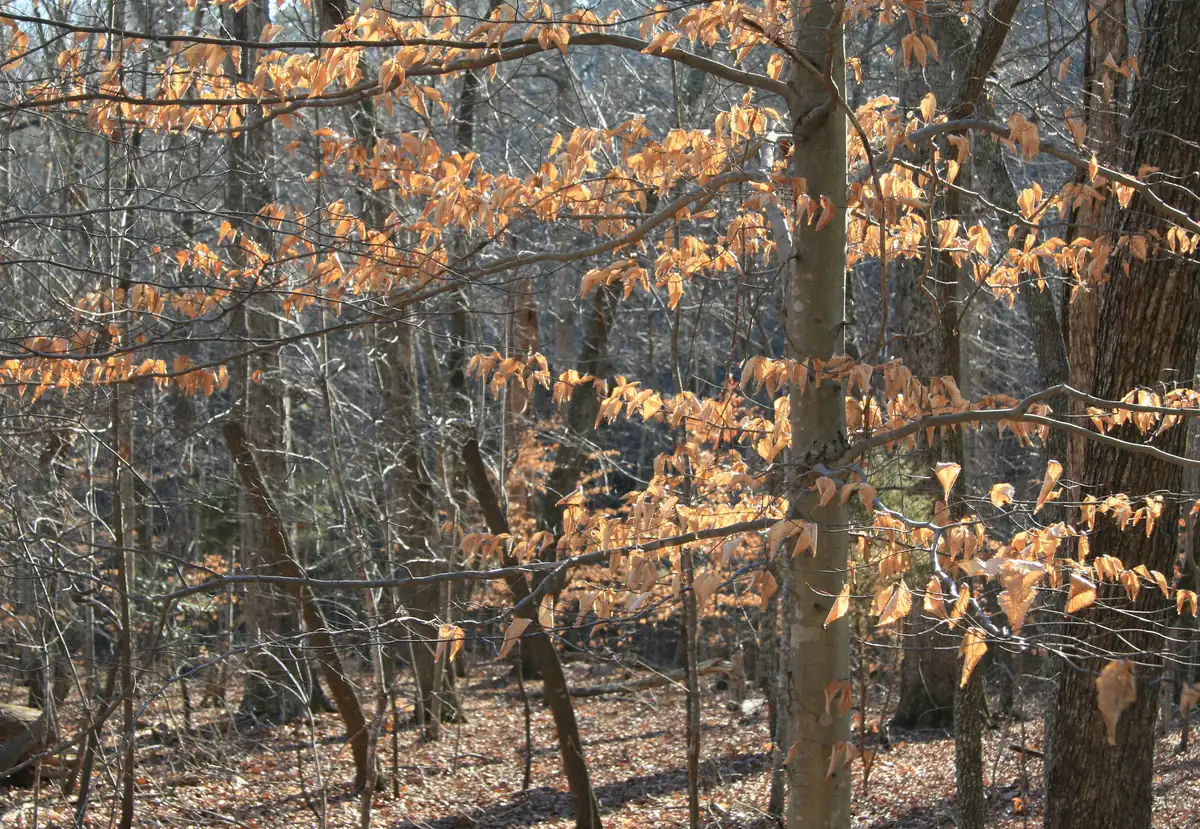
Young beech trees, and the lower branches of older ones, hold their papery, copper-tan leaves long after other hardwoods have dropped theirs; the Wildflower Center notes they hang on for most of the winter. The habit, called marcescence, makes beech the brightest thing in a snowy woodland. Beech is also the nut tree that matters most in the northern Maine woods. The Forest Service says beechnuts drop in October or November after frost, and big crops come only every two to eight years.
-
Red oak
Early to mid-November · Southern and coastal Maine, the Kennebec and Androscoggin valleys
Oaks tend to turn after the maples are done. Northern red oak goes russet, deep red or golden orange, and many oaks keep their dry brown leaves well into the month. Acorns are still on the ground, food for turkeys, deer, jays and squirrels. Southern Maine’s oak woods are the place to see this late color.
-
Winterberry
November through winter · Swamp edges, stream banks and lakeshores
Once its leaves drop, this native holly turns into bare twigs packed with bright red berries, visible from a car at the edge of any wetland. Only female plants bear fruit, and they need a male nearby. Birds come to the fruit through the cold months, so a loaded winterberry is a good bush to watch from a window.
A beech twig is easy to tell in winter: its long, slender, pointed buds look like cigars. Sketch one on the seeds, pods and cones plate next to a red oak acorn cap.
Has Maine had its first frost, and when does the first snow fall?
By November, the first freeze is behind every part of Maine in a typical year. All nine stations below have a median first-freeze date in September or October. Only on the outer coast, at the Acadia and Eastport stations, does roughly one fall in ten still wait into the first week of November for a 32 °F night, because the open ocean keeps nights mild.
| Station | One year in ten | Median | Nine years in ten |
|---|---|---|---|
| Allagash (North Maine Woods) | Aug 29 | Sep 15 | Sep 30 |
| Caribou Municipal Airport | Sep 17 | Oct 1 | Oct 14 |
| Rangeley (western mountains) | Sep 14 | Sep 27 | Oct 9 |
| Millinocket Municipal Airport | Sep 19 | Oct 1 | Oct 14 |
| Bangor International Airport | Sep 23 | Oct 4 | Oct 21 |
| Augusta State Airport | Oct 2 | Oct 16 | Oct 31 |
| Portland International Jetport | Oct 2 | Oct 15 | Oct 30 |
| Acadia Np (Mount Desert Island) | Oct 6 | Oct 22 | Nov 5 |
| Eastport (Passamaquoddy Bay) | Oct 8 | Oct 25 | Nov 7 |
Snow is the bigger November story, and it arrives from the north. NOAA’s 1991–2020 normals give Caribou 10.4 inches of snow in an average November, Bangor 4.3 inches and Portland just 2.3 inches. December is when the rest of the state catches up: the normals jump to 25.2 inches at Caribou and about 14.7 inches at both Bangor and Portland. In practice, the County is often white before Thanksgiving, central Maine sees its first real snow in some Novembers and not others, and the southern coast usually waits until December. For dates at more towns, see our Maine frost and freeze calendar.
How early does it get dark in Maine in November?
Very early, and all at once. When Maine sets its clocks back on Sunday the 1st, a full hour of late-afternoon light vanishes: Portland’s sunset goes from 5:33 p.m. on October 31 to 4:32 p.m. on November 1. Over the rest of the month, Maine gives up a little more than another hour of daylight, from 62 minutes at Kittery to 71 at Fort Kent, and sunset keeps creeping earlier. By November 30, the sun sets at 4:06 p.m. in Portland, 3:56 in Bangor and 3:47 in Fort Kent.
| City | Nov 1 | Nov 30 | Lost | Per day |
|---|---|---|---|---|
| Kittery | 10 h 17 m | 9 h 15 m | 62 min | 2.1 min |
| Portland | 10 h 15 m | 9 h 12 m | 63 min | 2.2 min |
| Augusta | 10 h 12 m | 9 h 08 m | 64 min | 2.2 min |
| Bangor | 10 h 10 m | 9 h 05 m | 65 min | 2.2 min |
| Bar Harbor | 10 h 12 m | 9 h 07 m | 65 min | 2.2 min |
| Eastport | 10 h 10 m | 9 h 05 m | 65 min | 2.2 min |
| Millinocket | 10 h 06 m | 8 h 59 m | 67 min | 2.3 min |
| Fort Kent | 9 h 59 m | 8 h 48 m | 71 min | 2.4 min |
The loss slows down toward the end of the month as the solstice nears. Type in your town on our daylight calculator and it will list that spot’s dawn, dusk and day length for every date in November.
What is November weather like in Maine, and what could El Niño mean for the winter?
November in Maine is the gray month: cold rain on the coast, the first real snow inland, and the season’s first nor’easters. NOAA’s 1991–2020 normals give Portland an average November high of 48.4 °F and low of 31.7 °F, with 4.25 inches of precipitation and 2.3 inches of snow. Bangor averages 45.8 and 28.8 °F, 3.84 inches of precipitation and 4.3 inches of snow. Caribou, much colder, averages 39.5 and 25.6 °F and 10.4 inches of snow. A single coastal storm can bring rain to Portland and a foot of snow to the mountains on the same day.
What El Niño could mean for Maine. Out in the tropical Pacific, the warm phase keeps building. In their September 10 discussion, NOAA forecasters rated a very strong event more than 90 percent likely to be in place through the cold season, possibly one of the most intense on record. The official December–February outlook is due October 15, too late for us to describe here; the maps will be posted with the other 90-day outlooks. NOAA’s Climate.gov finds that El Niño winters tend to bring less snow than usual to interior New England, while warning that individual winters vary a great deal.
A NOAA drought information system summary for the Gulf of Maine adds a second point: in an El Niño winter, storms run up the East Coast more often, so a wetter season than normal is more likely. Whether that falls as rain or snow depends on how mild the air is, and past El Niño winters in Maine have ranged from mild and thin on snow to cold and snowy. El Niño tilts the odds toward a milder, less snowy Maine winter; it does not promise one.
For your town’s forecast this week, see our weather page, and check the cloud and sky forecast before a night out under the stars.
What can you see in Maine’s night sky this November?
Long, dark evenings make November a good month for stargazing in Maine, if you can find a clear one. All times are Eastern Standard Time.
-
The Beaver Moon, a supermoon
Evenings of Monday, November 23 and Tuesday, November 24 · Rising in the east-northeast around sunset
The moon is exactly full at 9:53 a.m. on Tuesday the 24th, so it looks round on both evenings. In Portland on the 24th, it rises at 3:48 p.m., about 20 minutes before the 4:09 sunset, a good chance to see it come up over the water in daylight. EarthSky and other almanacs list it as a supermoon, if only just, since perigee, the moon’s nearest approach, comes a day and a quarter later. Overnight into the 24th it slides past the Pleiades, whose faint stars will be lost in the glare.
-
Leonid meteors
Before dawn on Wednesday, November 18 (also the 17th and 19th) · Anywhere dark; the radiant in Leo rises in the east around midnight
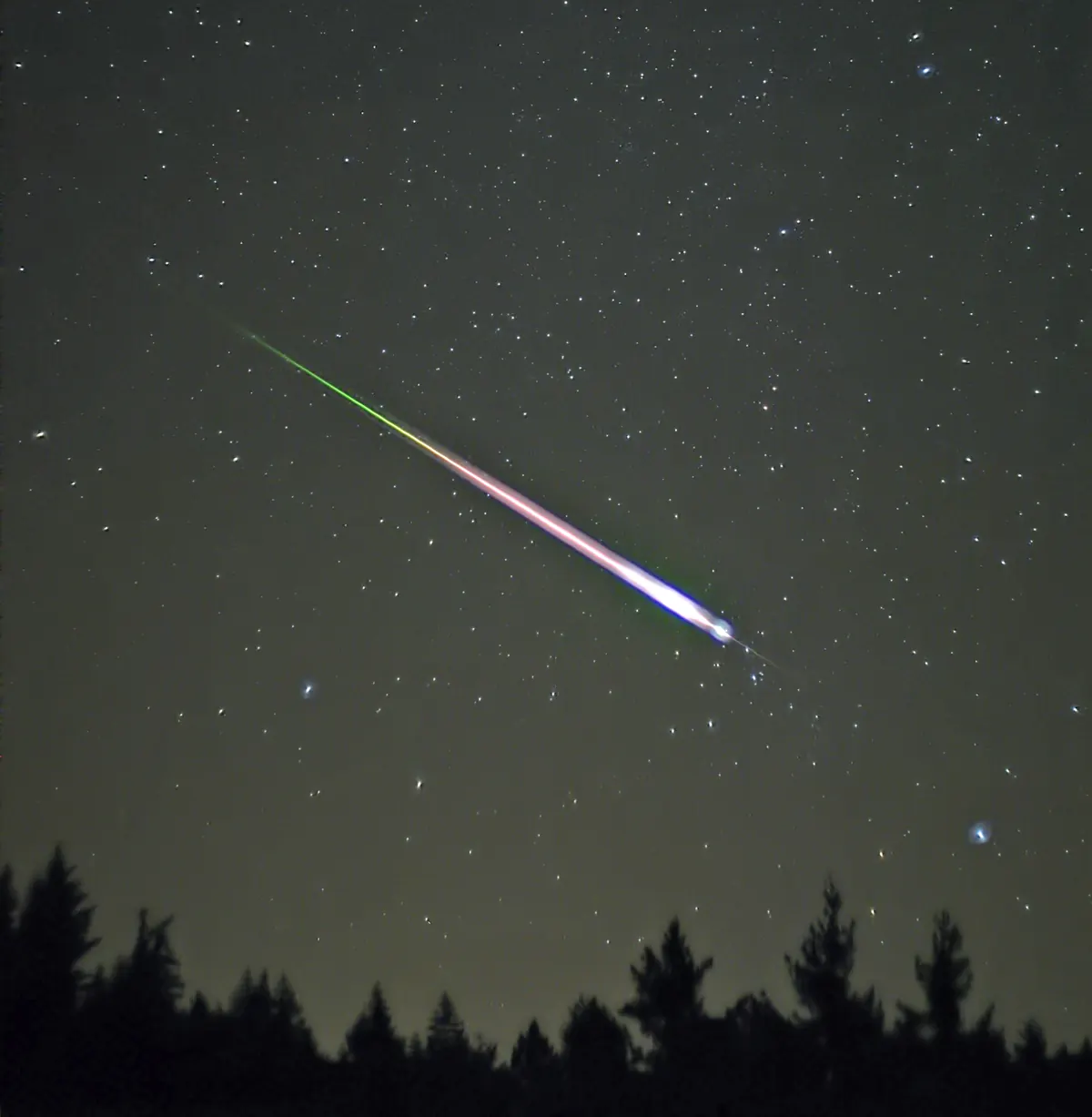
The International Meteor Organization predicts an ordinary return this year, around 15 per hour in ideal darkness and no storm. On the night of November 17–18 the half-lit moon sets at 11:36 p.m. in Portland, leaving the hours after midnight dark. Leonids are fast and sometimes leave glowing trails.
-
Taurid fireballs
Peaks around November 5 and November 12 · High in the south and east from late evening
The two Taurid streams, debris from Comet Encke, are thin, only five to ten an hour, yet they drift slowly across the sky, and a few each year are brilliant fireballs. With new moon on the 9th sitting between the two maxima, the whole stretch from about the 5th to the 13th is dark after the crescent sets.
-
Planets before dawn
All month · East and south in the hour before sunrise
The morning sky holds the show. Venus climbs a little higher out of the dawn glow each day and reaches its peak brightness in the days around Thanksgiving. Mars and Jupiter pass about 1.2 degrees apart in Leo; look on the 15th and 16th, before first light, when the pair is tightest. Look low toward the east-southeast between roughly the 18th and the 25th for Mercury, which stands farthest from the sun on the 20th. In the evening only Saturn is up, in the south after dark.
-
Northern lights
Any clear night, without warning · Low in the north; best away from town lights, especially in Aroostook and the North Woods
The sun passed the peak of its 11-year cycle in late 2024, according to NOAA’s Space Weather Prediction Center, and activity is declining, but strong storms still happen in this phase. Maine’s northern latitude and long nights give it better odds than most states. Check NOAA’s aurora forecast when a storm is announced.
| Phase | Date | Time |
|---|---|---|
| Last quarter | Sunday, Nov 1 | 3:28 p.m. |
| New moon | Monday, Nov 9 | 2:02 a.m. |
| First quarter | Tuesday, Nov 17 | 6:48 a.m. |
| Full moon, the Beaver Moon | Tuesday, Nov 24 | 9:53 a.m. (looks full the evenings of Nov 23 and 24) |
| Last quarter | Tuesday, Dec 1 | 1:08 a.m. |
For the moon’s rising and setting times in your own Maine town on any night, see our moon phase calendar.
What can Maine families do outdoors in November 2026?
A short list of dated events and projects. Dates and prices come from each organizer’s own 2026 listing; check before you go, as weather can cancel programs.
- Sunday, November 1 onward: Project FeederWatch begins its 2026–27 season. Families in the U.S. pay a small fee to join; the count runs until April 30, and you choose your own count days.
- Through Wednesday, November 11: The Maine Wildlife Park in Gray, run by IFW, is open daily 9:30 a.m. to 3:30 p.m. (the gate closes then, and visitors may stay until 5) before it closes for the winter. Admission is $15 for ages 11 to 64, $10 for ages 2 to 10, $12 for seniors and free under 2.
- Sunday, November 8, 8 a.m. to noon: Penobscot Valley Audubon’s free field trip, Fall Migration in Central Maine, visits Plymouth Pond, Sebasticook Lake, Sprague’s Mill and Corinna Bog for late waterfowl and shorebirds. Meet at the park-and-ride east of I-95 exit 174 in Carmel.
- Thursdays, 7 to 9 a.m.: Maine Audubon’s free bird walks at Gilsland Farm in Falmouth, with no registration; they are listed weekly into October, so confirm the November dates on Maine Audubon’s events calendar. Every other Wednesday, 8 to 9:30 a.m., a field naturalist leads a free nature walk there (registration requested); check the calendar for November dates. The Gilsland Farm visitor center is closed November 11, 26 and 27; trails stay open from sunrise to sunset.
- From Saturday, November 14: Gardens Aglow begins at Coastal Maine Botanical Gardens in Boothbay, running Thursday to Sunday and select dates, 4 to 9 p.m., through January 2. Tickets must be bought in advance, and it is closed Thanksgiving.
- Friday, November 27: The day after Thanksgiving is a good one for a family walk. It is a Friday in deer season, so pick a park, preserve or town trail where hunting is not allowed, or dress everyone in orange.
An easy project for kids: put one apple, one pinecone and a few sunflower seeds on a stump and check them every morning for a week. Note what disappears and draw any tracks around them. More ideas for the month are on our nature guides page.
Safety notes for November in Maine
Hunting seasons. November is the heart of Maine’s hunting year. Here are IFW’s 2026–27 dates that fall in the month: regular deer firearms season November 2–28 statewide; muzzleloader season November 30 to December 5 statewide, then December 7–12 in some districts; expanded archery in designated areas until December 12. Bear season ends November 28; fall turkey season ends November 7; woodcock ends November 17; ruffed grouse and pheasant run through December 31; snowshoe hare and gray squirrel are open all month. Ducks are open in the North Zone through December 5, in the South Zone from October 29 to December 26, and in the Coastal Zone from November 5 to January 5. Hunting is not allowed on Sundays.
Blaze orange. During the firearms and muzzleloader deer seasons, every hunter carrying a gun, muzzleloader or crossbow, whatever the quarry, needs two orange items: a hat that is solid hunter orange, plus a coat, vest or poncho over most of the upper body that is orange for at least half its surface. Archers and waterfowl hunters in a blind, boat or over decoys are exempt. The law does not cover hikers, but in November it is common sense: wear an orange hat and vest, put an orange vest or bandanna on the dog, and stay on marked trails.
Cold water and early dark. Lakes and the ocean are already cold enough to cause cold shock if you fall in, and it can be dark by 4 p.m. Wear a life jacket in any boat or canoe, carry a headlamp on every hike, and give yourself an hour of daylight to spare. Do not walk on the first skim ice on ponds; it is never safe in November.
Ticks. Grown blacklegged ticks, Lyme disease carriers, go on looking for hosts from October through May whenever the daytime temperature is above 32 °F. Check yourself, your children and your dogs after walks in tall grass or leaf litter, even in November.
Storms. Early season nor’easters can bring heavy wet snow that brings down branches and power lines, especially before the leaves have fully dropped from oaks. Keep a flashlight and extra layers ready.
Record what you saw: the Naturalist’s Field Journal has plates for birds, tracks, trees and signs that fit a November walk in Maine.
Sources
- Maine Department of Inland Fisheries and Wildlife: 2026–27 Maine hunting seasons
- Maine Department of Inland Fisheries and Wildlife: migratory game bird seasons 2026–27
- Maine Department of Inland Fisheries and Wildlife: laws pertaining to hunting equipment (hunter orange)
- Maine Department of Inland Fisheries and Wildlife: white-tailed deer
- Maine Department of Inland Fisheries and Wildlife: black bears
- Maine Department of Inland Fisheries and Wildlife: bats
- Maine Wildlife Park: hours and fees, 2026
- Maine Birding Trail: birding seasons in Maine
- Maine Natural History Observatory: harlequin ducks in Jericho Bay
- Maine Audubon: snowy owls in winter 2024–25 (Arctic breeding, coastal habits, watching distance)
- Finch Research Network: winter finch forecast 2026–2027 (September 25, 2026)
- Project FeederWatch: how to participate (November 1 to April 30)
- Maine Audubon: Gilsland Farm Audubon Center 2026 (hours and closures)
- Maine Audubon: Thursday bird walks at Gilsland Farm
- Maine Audubon: Wednesday morning nature walks at Gilsland Farm, fall 2026
- Penobscot Valley Audubon: Fall Migration in Central Maine, November 8, 2026
- Coastal Maine Botanical Gardens: Gardens Aglow 2026
- Acadia National Park: operating hours and seasons
- Acadia National Park: visiting in winter (closures from December 1)
- Acadia National Park: Park Loop Road closes to motor vehicles for the season
- Lady Bird Johnson Wildflower Center: American beech (Fagus grandifolia)
- Lady Bird Johnson Wildflower Center: northern red oak (Quercus rubra)
- Lady Bird Johnson Wildflower Center: common winterberry (Ilex verticillata)
- USDA Forest Service Fire Effects Information System: American beech
- MaineFoliage.com: frequently asked questions
- NOAA National Centers for Environmental Information: U.S. climate normals 1991–2020 (freeze dates; November temperature, precipitation and snowfall)
- NOAA National Integrated Drought Information System: Gulf of Maine quarterly climate impacts and outlook, December 2023 (El Niño winters)
- Climate Prediction Center: ENSO diagnostic discussion, September 10, 2026
- Climate Prediction Center: seasonal outlooks (winter outlook issued October 15, 2026)
- NOAA Climate.gov: how El Niño affects snowfall over North America
- U.S. Naval Observatory: moon phases from November 2026
- U.S. Naval Observatory: sun and moon data, Portland, November 24, 2026
- U.S. Naval Observatory: sun and moon data, Portland, November 17, 2026
- International Meteor Organization: 2026 meteor shower calendar (archived copy)
- EarthSky: what is a supermoon? (2026 supermoons)
- BBC Sky at Night: supermoons in 2026
- Farmers’ Almanac: November’s full Beaver Moon
- EarthSky: best stargazing of 2026 (Mars and Jupiter, November 16)
- EarthSky: Mercury before sunrise, greatest western elongation
- In-The-Sky.org: Venus at greatest brightness, November 2026
- NOAA Space Weather Prediction Center: solar cycle progression
- University of Rhode Island TickEncounter: blacklegged tick (adults active October–May)
- Photos via Wikimedia Commons; licenses and photographers are credited under each picture
