What to look for in nature in Maine this February
Meteorological winter ends with February in Maine, and in the north and the western hills it often brings more snow than January. Yet the season is quietly turning. Black bear cubs have just been born in dens under the snow, great horned owls are sitting on eggs, coyotes are pairing off, and on a mild afternoon the chickadees start whistling their two-note spring song. Along the coast, seals from the far north haul out on beaches and docks. In southern Maine the first sap may run before the month is out, and every town in the state gains well over an hour of daylight between February 1 and 28. Here is what to look for, from Kittery to Fort Kent.
Other months in Maine: October, November, December, January.
Start here
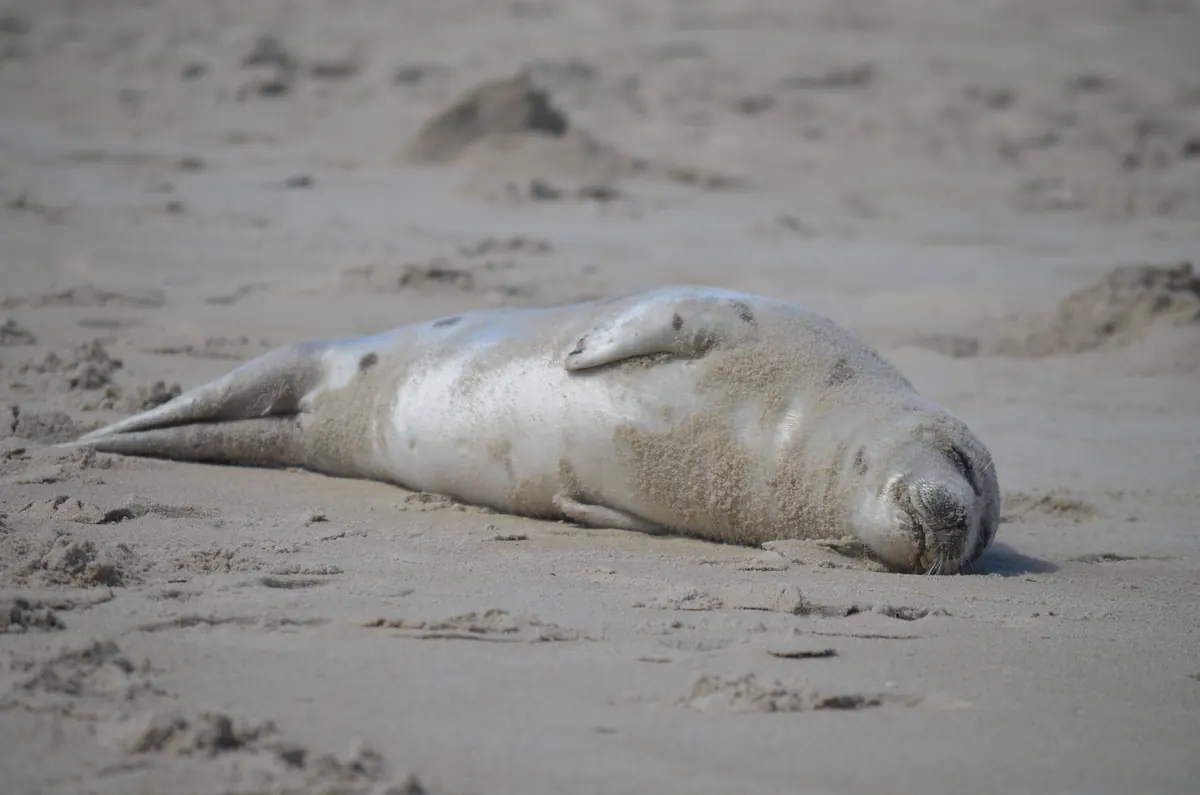
- Look twice at a seal on the beach. A seal resting on sand, a dock or an ice floe in February may be a harp or hooded seal down from the Arctic. Stay at least 50 yards away and call the Maine marine animal hotline, 1-800-532-9551, if it looks hurt.
- Fish free on February 13 and 14. No license is needed anywhere in Maine over the February 13–14 Free Fishing Weekend. All other rules still apply, and so does common sense about the ice.
- Listen for fee-bee. On the first calm, sunny mornings of late winter, male chickadees begin their clear, falling two-note whistle. Note the date you first hear it, and compare it with next year.
Keep a record: put the date of the first chickadee fee-bee and the first sap drip on the Naturalist’s Field Journal’s daily field log, and draw the paired tracks of a coyote couple on the tracks-to-know plate. Any seal you see goes on the mammal watch page, from a safe distance. A tapped sugar maple suits a tree through the seasons, the snow-flea swarm around a tree trunk belongs on reading the signs, and a pair of great horned owls dueting at dusk fills a map of sounds.
Regions used below: Southern Maine and Casco Bay; Midcoast and Penobscot Bay; Downeast and Acadia; Western mountains and lakes; The Highlands, Moosehead and Katahdin; Aroostook County.
Which seals can you see on the Maine coast in February?
Winter is the one season when a walk on a Maine beach could turn up any of four seal species. Harbor and gray seals live in the Gulf of Maine all year. Harp and hooded seals, which breed on the pack ice off Newfoundland and in the Gulf of St. Lawrence, swim south for the winter, and Marine Mammals of Maine, the rescue group for southern and midcoast Maine, says the Gulf now has a fairly regular harp seal season.
-
Harp seals hauled out
Usually from early or mid-January until the seals head north in March or April · Beaches, floats, docks, river ice and the occasional backyard along the coast
Harp seals are pale gray with dark spots or, in older adults, a dark harp-shaped band across the back. Marine Mammals of Maine reports that they turn up on beaches, floats and ice floes from January on, ranging as far south as New Jersey before migrating north again in March or April. Ice seals lean on snow and ice for water, so a winter with little of either can leave them dehydrated. A seal lying quietly on the sand is often simply resting. Do not pour water on it, push it back into the sea or let a dog near it.
-
Gray seal pups on the outer islands
Born mid-December to early February, peaking in mid-January · Offshore islands such as Seal Island, Green Island, Matinicus Rock and Wooden Ball, off the midcoast
Gray seals, the big seals with long, horse-like heads, give birth on land in the depth of winter. NOAA Fisheries says a newborn weighs about 35 pounds, wears a white coat called lanugo, and gains roughly three pounds a day on its mother’s rich milk during about three weeks of nursing before the white fur is shed. Seal Island National Wildlife Refuge, a 65-acre island 22 miles out from Rockland, holds the largest gray seal nursery in Maine and the third largest in the country, and pupping there runs to early February. Because each pup nurses for only about three weeks, by late February the season’s pups are weaned and on their own. The colonies are far offshore and closed to visitors, so this is a story to know rather than to see.
-
The rules of seal watching
All year · Anywhere on the coast
Federal law, the Marine Mammal Protection Act, covers every seal, and handling one is illegal. NOAA asks people to watch from at least 50 yards and for no more than half an hour. The Maine Department of Marine Resources notes that seals bite and asks that anyone who finds a stranded, injured or sick seal call the Maine Marine Animal Reporting Hotline at 1-800-532-9551 rather than approach it.
Hooded seals are much rarer winter visitors. Photograph any unusual seal from a distance and pass the picture to the hotline.
When are black bear cubs born in Maine?
In the middle of winter, in a den you would almost certainly walk past without noticing, Maine’s next generation of black bears is arriving. Maine’s wildlife agency (the Inland Fisheries and Wildlife department, or IFW) estimates the population at around 25,000 bears, and its biologists have followed radio-collared females for decades.
-
Cubs born in the den
Mostly January, with some from late December into February · Dens under fallen trees, brush piles, rock crevices and snow-covered thickets statewide
Black bears breed in early summer, yet the embryo does not implant until fall, and only a well-fed mother carries her pregnancy through. After about 60 days of gestation, IFW says, a female gives birth in the den to one to four cubs. Each weighs around 12 ounces, about as much as a can of soup, and is nearly hairless. The cubs nurse and sleep against their mother while she stays in torpor, living off her fat. IFW’s 1999 bear assessment notes that a female usually has her first litter at four to six years old, often two cubs, with later litters averaging three.
-
What biologists learn
Each winter · Study areas in different parts of the state
Between 50 and 100 females wearing radio collars are monitored each year. Biologists track them to their dens in winter and count the cubs, which tells IFW what share of females gave birth and how many young survive to their first birthday. The record now runs back several decades.
If you ever come on a den by accident, back away quietly the way you came. A mother disturbed this early may abandon the cubs. IFW says the cubs grow to 4 to 10 pounds by mid-April, when the mother leads them away from the winter den.
When do great horned owls and bald eagles nest in Maine?
Two of Maine’s largest birds start their families while the snow is still deep. In January the story was pairing up; in February it is eggs and nests.
-
Great horned owls on eggs
First eggs perhaps by mid-February, later in the north · Old hawk, heron or crow nests and tree cavities, often in conifers, statewide
The Maine Nightjar Monitoring Project, run by the Maine Natural History Observatory, notes that the owls’ territorial hooting usually stops when the first eggs are laid, perhaps by mid-February, so a woodlot that rang with hoots in January may fall quiet now. That silence is a clue. The female sits tight, sometimes with snow on her back, while the male hunts and roosts nearby. Most calls come within an hour after sunset, and some research suggests clear, moonlit nights bring more of them. If you know of a nest, enjoy it from far off; the project strongly discourages getting close to nesting owls.
-
Bald eagles repairing nests
Courtship and nest building pick up in February and March; the earliest eggs come about February 25 on the coast · Big white pines and other tall trees near the coast, lakes and rivers
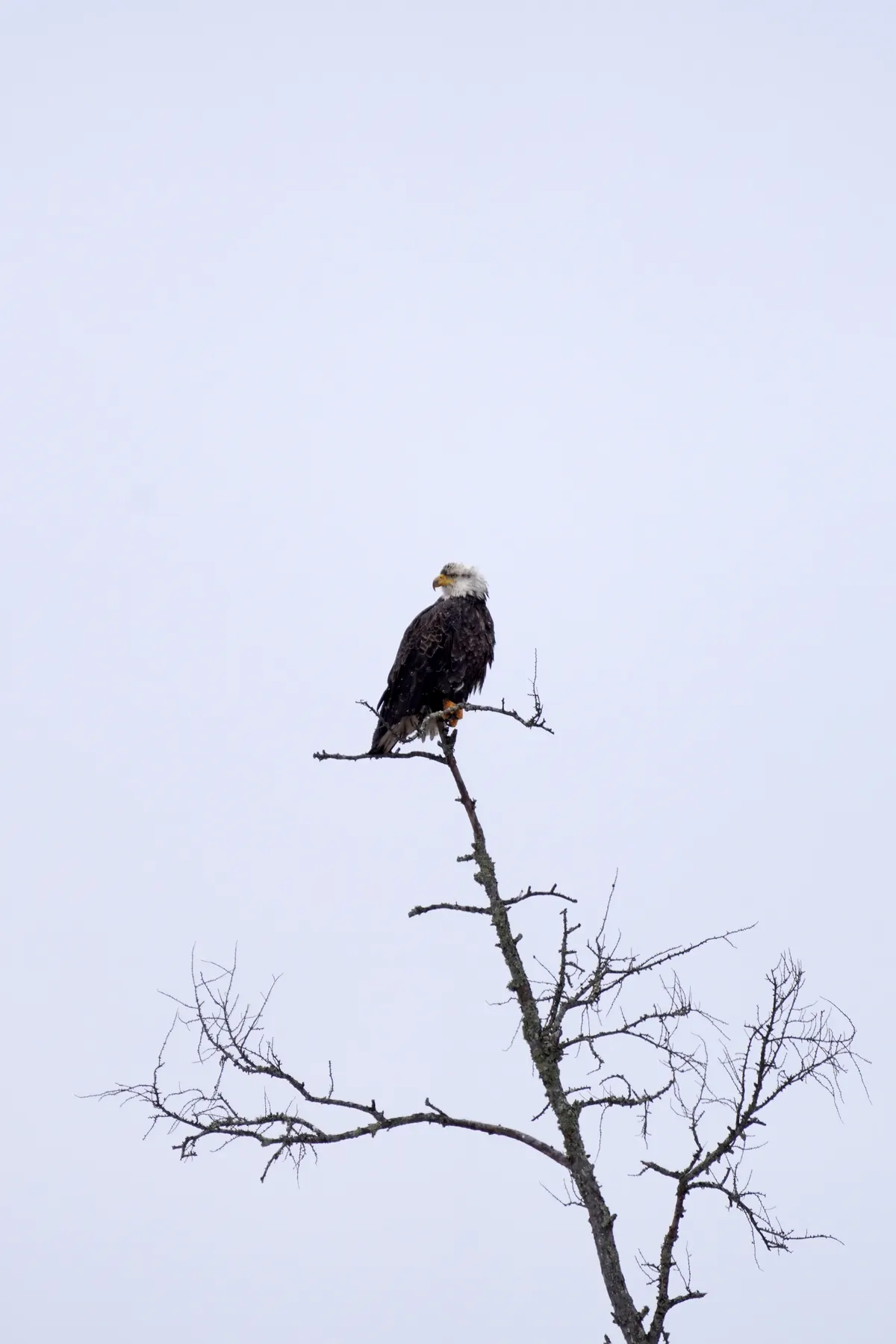
IFW’s species assessment says Maine’s eagle pairs often stay attached to their nests through the winter, and that territorial claims, courtship flights and nest repairs all intensify in February and March. Watch for pairs soaring together, locking talons or carrying sticks. The earliest clutches of one to three eggs have been laid as early as February 25 along the coast, and inland clutches have been laid as late as early May. The eggs take about 35 days to hatch.
Barred owls start courting later in the winter and are still calling “who cooks for you” through February and March. For the open-water places where eagles gather in midwinter, see our Maine January guide.
Is February mating season for coyotes and foxes in Maine?
Yes. Late winter is courtship time for Maine’s wild dogs, and fresh snow makes it easy to read.
-
Eastern coyotes
Breeding in February; pups born in April and May · Statewide, from farm country and suburbs to the North Woods
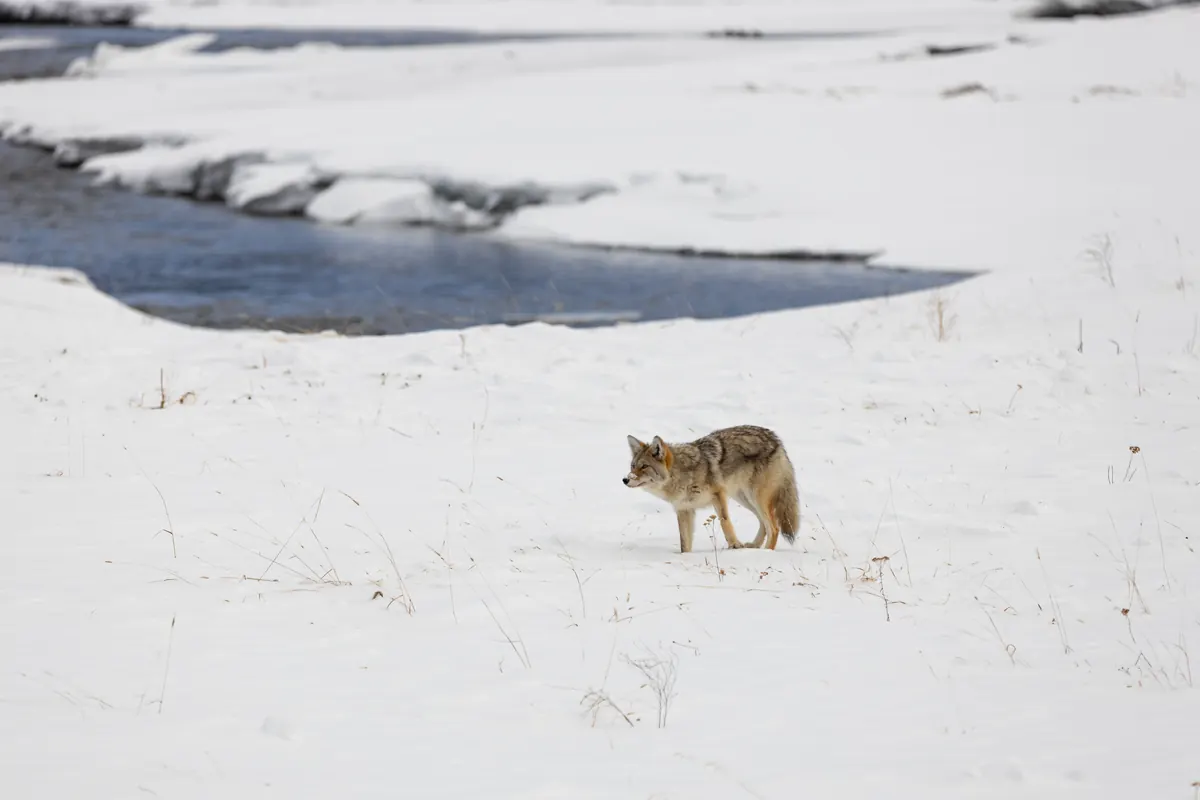
IFW puts the winter coyote population at 10,000 to 12,000 animals and the breeding season in February. After a pregnancy of 63 days, the female has five to nine pups in April or May. An eastern coyote averages 30 to 35 pounds, and in deep snow pairs and family groups sometimes take turns chasing deer that are floundering. You may hear more howling and yipping on February nights, and you may find two sets of tracks traveling side by side, a sign of a mated pair.
-
Red foxes
Breeding from December through March, busiest around late January · Field edges, farmland and woods statewide
IFW’s red fox assessment puts the peak of breeding in late January, with kits born in March and early April, five to a litter on average. Foxes are still restless in early February. Listen at night for the short, harsh barks and screams of foxes calling to each other, and look for the neat, single-file line of prints, one placed almost exactly in front of the other.
Fox and coyote prints are easy to confuse. The Maine December guide covers lynx and hare tracks, and our field journal has a page for sketching what you find.
What are the first signs of spring in Maine in February?
Spring is still weeks away in Maine, but in February some animals act as if they know it is coming. Most of these signs show up on a mild, sunny day after a cold snap.
-
Snow fleas
Mild, sunny days in late winter, and above all during thaws · On the snow around tree trunks, in footprints and along woodland trails
Those black specks dotting the snow beside a maple trunk may suddenly jump. These are springtails, tiny relatives of insects, and the Maine Forest Service names two common species: the snowflea, which is dull sooty black, and the snowmelt springtail, which is a dull rusty red. They live in leaf litter and moss, feed on microscopic fungi and algae, and swarm on the snow surface during thaws. They do not bite, and a swarm lasts only a few days. Maine Audubon notes they gather especially around the bases of trees.
-
The chickadee’s spring song
Late winter, on calm mornings · Woodlots, backyards and feeders statewide
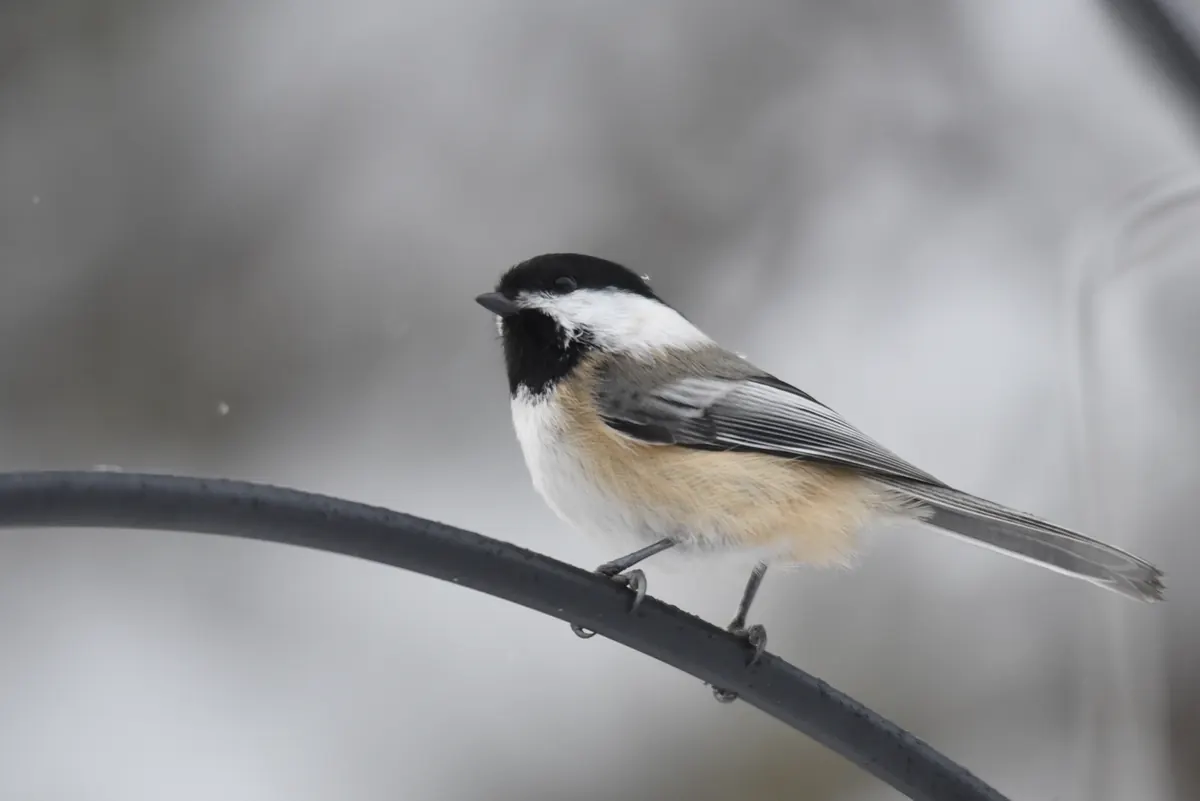
Maine’s state bird has two famous voices. Its chick-a-dee-dee-dee call is heard all year, but the clear, whistled fee-bee, the first note higher than the second, is the male’s song, used to court a mate and claim a territory. The Maine Secretary of State’s atlas describes it as the sound that begins just when Mainers are convinced winter will never end. Both the black-capped chickadee and, in the North Woods, the brown-capped boreal chickadee live here.
-
Woodpeckers drumming
Late winter into spring · Dead limbs, hollow snags and the occasional metal gutter
A rapid burst of tapping that lasts a second or two and repeats from the same spot is not a woodpecker feeding. It is drumming, a woodpecker’s version of a song, meant to attract a mate and warn off rivals. Woodpeckers pick the most resonant branch they can find, and on a windless dawn the rattle can be heard far through the woods.
-
Goldeneyes courting
Late winter and early spring, before the ducks fly north · Open harbors, coves and river mouths along the coast
The Harpswell Heritage Land Trust describes the common goldeneye drake’s head-throw kick: he snaps his head straight back until it touches his back and kicks so hard that his body pops up out of the water, often in front of a small group of females. Goldeneyes also have wings that whistle in flight, and on a quiet day you can hear a flock before you see it.
Maine Audubon’s naturalist warns against treating robins as spring birds here: some stay in Maine right through the winter. The truer early signs are often small and easy to miss.
When does maple sugaring season start in Maine?
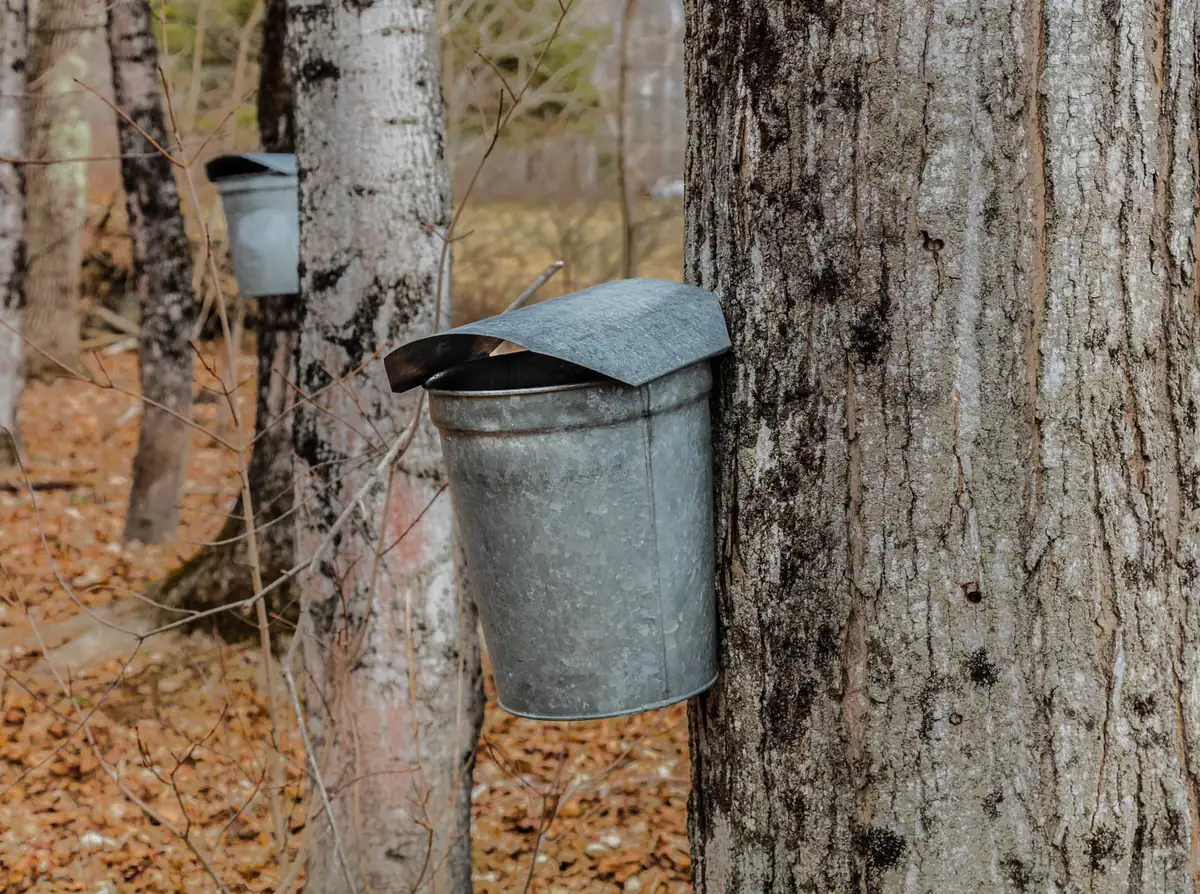
Sap flows when the wood of a maple swings between freezing and thawing. According to UMaine Extension’s tapping bulletin, sap runs best on days that reach about 40 °F or warmer after nights below freezing.
-
The first runs in the south
From mid-February in southern Maine; mid-March in the north · Sugarbushes and backyard maples, starting in York and Cumberland counties
Extension’s guide to tapping puts the freeze-and-thaw season at mid-February to early April in southern Maine and mid-March to late April in northern Maine, so the first steam rises from sugarhouses near the coast while Aroostook is still locked in snow. Producers watch the forecast closely, and a warm spell can bring an early run.
-
Tapping a tree at home
Just before a forecast thaw · Healthy sugar or red maples, at least 10 inches across
Leave any maple narrower than 10 inches alone, Extension advises, measuring the trunk about 4 1/2 feet off the ground. Sugar maples give the sweetest sap, though sap sugar runs only about 1.5 to 3 percent, so it takes 10 to 15 gallons of sap to boil down one quart of syrup. That is a lot of steam, so most home sugarmakers boil outdoors.
-
Maine Maple Sunday
The fourth Sunday in March · Sugarhouses statewide
The Maine Maple Producers Association’s open-house weekend is always on the fourth Sunday of March, with some sugarhouses open on the Saturday too. It is outside this month, but February is when the sap season that leads up to it begins. The association lists participating farms ahead of time.
A red maple’s buds swell and redden as the sap starts moving, which is one more reason to keep visiting the tree you sketched in January.
When is Maine’s free fishing weekend, and is the ice still safe in February?
February is the heart of the ice-fishing season on Maine lakes, and IFW opens it to everyone for one weekend.
-
Free Fishing Weekend
Saturday and Sunday, February 13 and 14, 2027 · Any water open to ice fishing
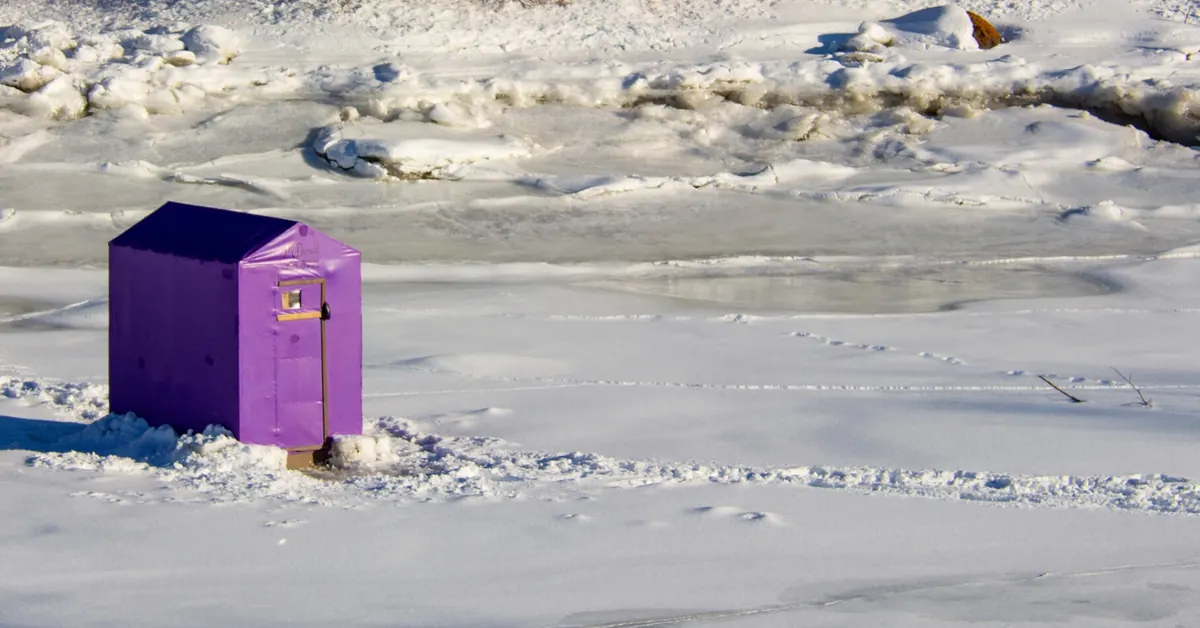
On these two days, IFW says, anyone except a person whose license has been suspended or revoked may fish without a license, and all other laws and rules apply. It is a good chance to try tip-ups with a friend who already has the gear. Check the lawbook for the special rules on the lake you choose, since many waters have their own limits and seasons.
-
Late-winter ice
Through February, worse during thaws and rain · Inlets, outlets, springs, narrows, docks and anywhere snow sits deep
By February the ice on most Maine lakes is thick, but it is also aging. A thaw or a rain can turn the surface to slush, a deep snow insulates the ice and loads it down, and current keeps eating at it from below near any stream. Old, cloudy or slushy ice is weaker than clear new ice of the same thickness. Drill test holes as you go, carry ice picks and a rope, never go alone, and give smelt shacks and pressure ridges a wide berth.
IFW’s ice thickness guide is summarized in our January page for Maine. On tidal water, sea-run smelt may be fished through the ice in the zone from the New Hampshire line to Rockland from February 1 under the Department of Marine Resources’ 2026 rules; check for any 2027 changes.
How much daylight does Maine gain in February?
February is when the longer days become impossible to ignore. From February 1 to 28, Fort Kent’s day grows by 85 minutes, and even Kittery, the southernmost town in the table, adds 73 minutes. Every day’s gain is slightly bigger than the last, a pace that keeps building until the March equinox. Astronomically, winter is half over on February 3 to 4, midway from solstice to equinox; Groundhog Day, on Tuesday, February 2, is a day or two early.
| City | Feb 1 | Feb 28 | Gained | Per day |
|---|---|---|---|---|
| Kittery | 9 h 57 m | 11 h 10 m | 73 min | 2.7 min |
| Portland | 9 h 54 m | 11 h 08 m | 74 min | 2.7 min |
| Augusta | 9 h 51 m | 11 h 08 m | 77 min | 2.9 min |
| Bangor | 9 h 48 m | 11 h 06 m | 78 min | 2.9 min |
| Bar Harbor | 9 h 51 m | 11 h 07 m | 76 min | 2.8 min |
| Eastport | 9 h 48 m | 11 h 06 m | 78 min | 2.9 min |
| Millinocket | 9 h 45 m | 11 h 05 m | 80 min | 3.0 min |
| Fort Kent | 9 h 36 m | 11 h 01 m | 85 min | 3.1 min |
Sometime in February, sunset in every town in the table moves past 5 p.m., first in the southwest of the state and last along the Downeast coast. Our sunrise and sunset calculator works for any Maine address.
Is February Maine’s snowiest month, and what might El Niño do?
It depends where you live. In NOAA’s 1991–2020 normals, February brings a little more snow than January in the interior, at Caribou, Presque Isle and Farmington, and a little less at Portland, Bangor and Eastport on or near the coast. Temperatures start to climb: Caribou’s average high, the National Weather Service office there notes, rises from about 20 °F on February 1 to 28 °F by month’s end. February extremes at Caribou run from 41 below zero on February 1, 1955, to 59 °F on February 20, 1994, and the snowiest February on its books, in 2008, brought 47.7 inches, while 1987 managed only 4.1.
| Station | Average high | Average low | Precipitation | February snowfall | January snowfall |
|---|---|---|---|---|---|
| Portland International Jetport | 35.0 °F | 17.3 °F | 3.54 in | 16.6 in | 18.6 in |
| Eastport | 31.9 °F | 17.1 °F | 3.20 in | 13.7 in | 15.3 in |
| Bangor International Airport | 31.2 °F | 10.9 °F | 2.38 in | 17.5 in | 18.6 in |
| Farmington | 30.1 °F | 6.8 °F | 3.15 in | 22.9 in | 20.7 in |
| Presque Isle | 25.9 °F | 5.3 °F | 1.92 in | 21.7 in | 21.1 in |
| Caribou Municipal Airport | 24.1 °F | 4.4 °F | 2.42 in | 25.3 in | 25.0 in |
El Niño and the end of a Maine winter. When the Climate Prediction Center reviewed the tropical Pacific on September 10, the warm event out there looked set, with better than 90 percent odds, to be very strong and to last through the winter months. The meaning for a Maine February is a matter of tendencies, not promises. In a climate.gov analysis of past El Niño winters, NOAA’s Michelle L’Heureux and Brian Brettschneider mapped a snowfall shortfall that is most marked around the Great Lakes, the northern Rockies and inland New England. The regional El Niño summary that NOAA wrote with the Northeast Regional Climate Center adds two cautions. Storms tend to run up the Atlantic coast in these winters, and research it cites finds roughly two extra nor’easters coming up from off Cape Hatteras in El Niño winters, chiefly in strong ones; and in the record 2015–16 event the whole region ran warm while New England came up short on snow. Put together, those sources point toward milder weather and thinner snow inland, with a real chance that one big coastal storm changes the picture in a day. The official winter outlook appeared on October 15 and is redone monthly; see the newest maps, which are worth a look in late January, on the 90-day outlook page.
Closer to the day, our forecast page has the week ahead, and the cloud cover map helps you choose a night for the planets below.
What can you see in Maine’s night sky in February 2027?
Both giant Jupiter (on the 10th) and red Mars (on the 19th) come opposite the sun this month, in Leo. The month also has a faint lunar eclipse at moonrise and a solar eclipse that cannot be seen from anywhere in the United States. Times are Eastern Standard Time.
-
Mercury in the evening twilight
Late January to about February 10; greatest elongation February 3 · Low in the west-southwest, 30 to 45 minutes after sunset
For an evening look at Mercury, this is the season’s pick. On February 3 it reaches 18 degrees from the sun, its widest gap; a frozen lake or a big open field gives the low view you need. On Sunday evening, February 7, a crescent moon barely a day old hangs very close to it; binoculars will help you find both in the glow.
-
Jupiter at opposition
Wednesday, February 10, at 7:21 p.m. · Rising in the east at sunset, highest in the south around midnight
At opposition Jupiter lies opposite the sun, about 405 million miles from Earth, and outshines every star at magnitude −2.5, visible from dusk to dawn. Hold binoculars steady against a fence post or a tree and you should pick out up to four of its largest moons in a line beside it, shifting from one night to the next.
-
Mars at opposition
Friday, February 19; nearest Earth February 20 · East at dusk, in Leo near Jupiter and the star Regulus
Mars is a steady orange-red point this month, at its brightest of this two-year cycle. Its nearest approach, about 63 million miles, is fairly distant by Mars standards since Mars is nearly at aphelion, its greatest distance from the sun, and a telescope shows only a small disk. Overnight from Friday the 19th into Saturday, a nearly full moon slides right up beside Jupiter, and the next evening the full moon, Jupiter, Mars and Regulus make a bright group in Leo.
-
The Snow Moon and a faint penumbral eclipse
Saturday, February 20; full at 6:23 p.m., eclipse deepest at 6:13 p.m., over at 8:13 p.m. · Low in the east, rising around sunset
February’s full moon rises around sunset in Maine with the eclipse already under way. Only the outer, pale part of Earth’s shadow touches it, so the most you can hope for is a slight dusky tint along one limb while the moon is still low in the twilight; many people will notice nothing at all. Call it a near-supermoon: a few almanacs give it the title, while EarthSky’s tighter list leaves it out. As for the annular solar eclipse on February 6, Mainers will miss it entirely, since even the partial phase stays over South America, Antarctica and southern and western Africa, nowhere near North America.
| Phase | Date | Time |
|---|---|---|
| New moon | Saturday, Feb 6 | 10:56 a.m. |
| First quarter | Sunday, Feb 14 | 2:58 a.m. |
| Full moon, the Snow Moon (penumbral eclipse) | Saturday, Feb 20 | 6:23 p.m. |
| Last quarter | Sunday, Feb 28 | 12:16 a.m. |
Moonless evenings last from roughly February 2 until the 11th, a good window for the winter Milky Way from the Katahdin region or the Downeast barrens. The sun is easing off after its 2024 maximum, yet big storms can still erupt, and northern Maine is better placed than most of the lower 48 for a glimpse of aurora; watch NOAA’s Space Weather Prediction Center for warnings. For moonrise and moonset each day, open our moon calendar.
What can Maine families do outdoors in February 2027?
Only a few organizers have posted February 2027 dates so far, and those few are below. Snow and ice can cancel anything, so check before you go.
- Tuesday, February 2: Groundhog Day. Maine’s woodchucks are true hibernators and will almost certainly stay asleep, so look for the shadows of trees instead and see how much shorter they are than in December.
- Presidents’ Day weekend, February 12 to 15: the 30th Great Backyard Bird Count, a joint project of Birds Canada, National Audubon and Cornell’s Lab of Ornithology. Count birds for at least 15 minutes on any of the four days and enter them in eBird or the Merlin app. A Maine feeder in February might hold chickadees, nuthatches, juncos, finches and woodpeckers.
- Saturday and Sunday, February 13 and 14: IFW’s Free Fishing Weekend, a fine time for a family first try at ice fishing with an experienced friend.
- Monthly, on a Saturday: Northern Songlines and the Chebeague and Cumberland Land Trust hold a free tracking club on each month’s third Saturday; the meeting place comes with registration through Northern Songlines. It is for ages 12 and up, and younger children need an adult.
- All month: Project FeederWatch continues through April; a count at your own feeders takes as little as a few minutes.
Maine Audubon usually runs winter programs at Gilsland Farm in Falmouth and its other centers; its events calendar lists them as they are announced. At home, try a snow-flea hunt on the next thaw with a magnifying glass. Our state-by-state nature guides cover every month.
Safety notes for February in Maine
Hunting and trapping. Deer, duck and goose seasons have all closed, but IFW’s 2026–27 schedule keeps some seasons open. Bobcat hunting runs through Saturday, February 20, and fox through February 27. Snowshoe hare stays open through March 31 (February 27 on Vinalhaven). Crow seasons are open all month, until April 15 in the northern districts 1 to 6 and until March 31 in districts 7 through 29. Coyotes may be hunted in daylight all year, and night hunting for coyotes is allowed through the winter. Falconers have special seasons for gray squirrel and some migratory birds into late February. The general trapping season ended December 31, but beaver trapping continues until mid- or late April depending on the district, so keep dogs leashed near beaver flowages. No hunting is allowed on Sundays.
Hunter orange. IFW’s orange rules are tied to the firearm and muzzleloader deer seasons and to moose hunting districts, none of which is open now, so February hunters need none. Walkers may still like to wear something bright, and to dress the dog in orange too.
Ice. Late-season ice can look solid and be rotten. Stay off it near inlets and outlets, after rain, and anywhere you see slush or dark patches.
Snow, cold and roofs. February can bring both nor’easters and bitter cold, especially in Aroostook. Dress in wool or synthetic layers, cover your face in the wind, and watch for heavy snow loads and ice dams on roofs after big storms.
Wildlife. Give harp seals and other hauled-out marine mammals at least 50 yards. Never approach a bear den, and keep dogs from chasing deer floundering in deep snow, which can be fatal to the deer.
Indoors, the Naturalist’s Field Journal gives every February first a place to live, and our frost dates for Maine show when the garden season can start.
Sources
- Marine Mammals of Maine: ice is nice for ice seals
- Marine Mammals of Maine
- Maine Department of Marine Resources: seals
- NOAA Fisheries: gray seal
- NOAA Fisheries: researchers return to study gray seal pups in New England (February 5, 2020)
- NOAA Fisheries: the adventure continues on Seal Island, Maine (February 11, 2020)
- NOAA Fisheries: aerial surveys monitor growing gray seal populations in the northeastern United States
- Maine Department of Inland Fisheries and Wildlife: black bears
- Maine Department of Inland Fisheries and Wildlife: black bear assessment and strategic plan (1999)
- Maine Nightjar Monitoring Project (Maine Natural History Observatory): great horned owl
- Maine Audubon: backyard bird of the month for February, great horned owls
- Maine Department of Inland Fisheries and Wildlife: owls
- Maine Department of Inland Fisheries and Wildlife: bald eagle species assessment
- Maine Department of Inland Fisheries and Wildlife: Maine’s wildlife uses different strategies to deal with winter (March 16, 2017)
- Maine Department of Inland Fisheries and Wildlife: coyote
- Maine Department of Inland Fisheries and Wildlife: red fox assessment (1986)
- Maine Forest Service: springtails and snowfleas
- Maine Audubon: welcome (but not so charismatic) signs of spring
- Maine Secretary of State, Maine Atlas: chickadee
- Harpswell Heritage Land Trust: nature notes, common goldeneye
- University of Maine Cooperative Extension: Bulletin 7036, how to tap maple trees and make maple syrup
- Maine Maple Producers Association: Maine Maple Sunday Weekend
- Maine Department of Inland Fisheries and Wildlife: fishing (Free Fishing Weekends, February 13–14, 2027)
- Maine Department of Inland Fisheries and Wildlife: ice safety tips
- Maine Department of Marine Resources: 2026 sea-run rainbow smelt regulations
- NOAA National Centers for Environmental Information: 1991–2020 monthly normals for Maine stations
- National Weather Service Caribou: February climate facts for Caribou
- Climate Prediction Center: ENSO diagnostic discussion, September 10, 2026
- Climate Prediction Center: seasonal outlooks
- NOAA Climate.gov: how does El Niño affect snowfall over North America? (October 26, 2023)
- NOAA and Northeast Regional Climate Center: El Niño impacts and outlook, Northeast region (October 2018)
- U.S. Naval Observatory: moon phases from December 30, 2026
- U.S. Naval Observatory: Earth’s seasons, 2027
- Fred Espenak: Sky Event Almanac 2027
- Sea and Sky: astronomy calendar of celestial events 2027
- EarthSky: what is a supermoon?
- EarthSky: Jupiter at opposition
- NASA eclipse website: lunar eclipses 2021–2030
- NASA eclipse website: solar eclipses 2021–2030
- Old Farmer’s Almanac: eclipses
- NOAA Space Weather Prediction Center: solar cycle progression
- National Audubon Society: Great Backyard Bird Count (February 12–15, 2027)
- Great Backyard Bird Count
- Chebeague and Cumberland Land Trust: Casco Bay Wildlife Tracking Club
- Project FeederWatch: how to participate
- Maine Audubon: events
- Maine Department of Inland Fisheries and Wildlife: 2026–27 Maine hunting seasons
- Maine Department of Inland Fisheries and Wildlife: migratory game bird seasons 2026–27
- Maine Department of Inland Fisheries and Wildlife: trapping laws and rules
- Maine Department of Inland Fisheries and Wildlife: laws pertaining to hunting equipment (hunter orange)
- Photos via Wikimedia Commons; licenses and photographers are credited under each picture
