What to look for in nature in Maine this May
May is the month when Maine comes alive all at once. Warblers pour into the new leaves on the first warm southerly night, loons settle onto their nests, bears and moose go hungry and then give birth, bats leave their winter caves, and the last frost of the year finally gives up in the far north. Spring turkey season opens on May 3, and the Downeast Spring Birding Festival fills the Memorial Day weekend with boat trips to the outer islands. The Eta Aquariid meteors peak around the new moon of May 6, and May 20 brings the Flower Moon, which some call a seasonal Blue Moon. Daylight gains slow but never stop, and every town in the state ends May with more than 15 hours of light. The stories below run from Kittery on the southern coast to Fort Kent on the northern border.
Other months in Maine: October, November, December, January, February, March, April.
Start here
- Go out early on a warm morning after a southerly night. Stand at a woodland edge at first light and listen. Black-throated green warblers and northern parulas are among the first of the month, and a morning of song can appear overnight.
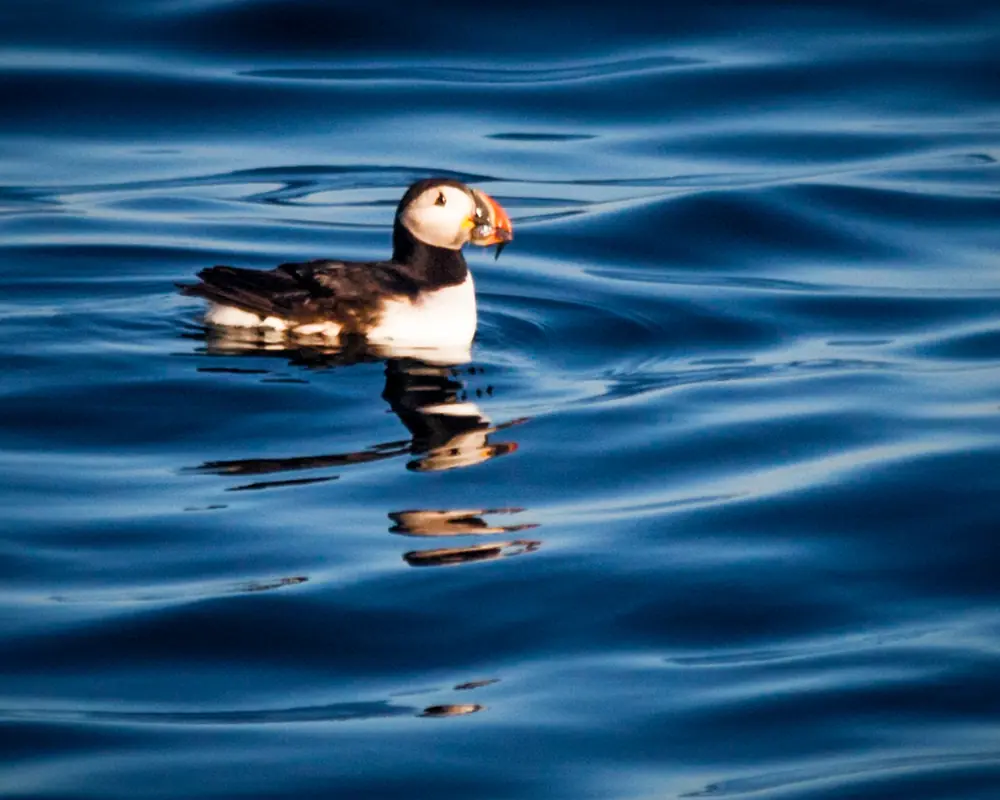
- Take a boat to see puffins. Book a trip with a licensed operator to Eastern Egg Rock, Petit Manan or Machias Seal Island, and stay on the boat or the marked path so the nesting birds are left in peace.
- Slow down near water and roads. Keep boat wakes small within 200 feet of shore for the loons, give any moose or bear a wide berth, and watch for turkeys crossing with chicks later in the month.
Keep a record: the first warbler, oriole and hummingbird of the year go on birds I have seen, a loon on a nest or a bat at dusk on dusk and dawn watch, and the date a trailing arbutus or red trillium opens on a tree through the seasons or the same place twice. A bear or moose track fits tracks to know and mammal watch, the trills, buzzes and gobbles you hear can be mapped on a map of sounds, and a nest you find belongs on nest observed.
Regions used below: Southern Maine and Casco Bay; Midcoast and Penobscot Bay; Downeast and Acadia; Western mountains and lakes; The Highlands, Moosehead and Katahdin; Aroostook County.
When do the warblers arrive in Maine in May, and which other birds come back?
April brings the birds that wintered close to home. May brings the long-distance travelers, and the change can happen overnight. Bob Duchesne, who writes about birds for the Bangor Daily News, has described how migrants wait for a favorable wind and then move all at once, so that a quiet woodlot on Friday can be full of song on Saturday. The best habit for the month is to step outside early on any morning after a southerly night.
-
Warblers that wintered in Florida
Around the first of May, according to a Bangor Daily News birding column · Woodland edges, shrubby wetlands and any tall tree with new leaves, starting in the south
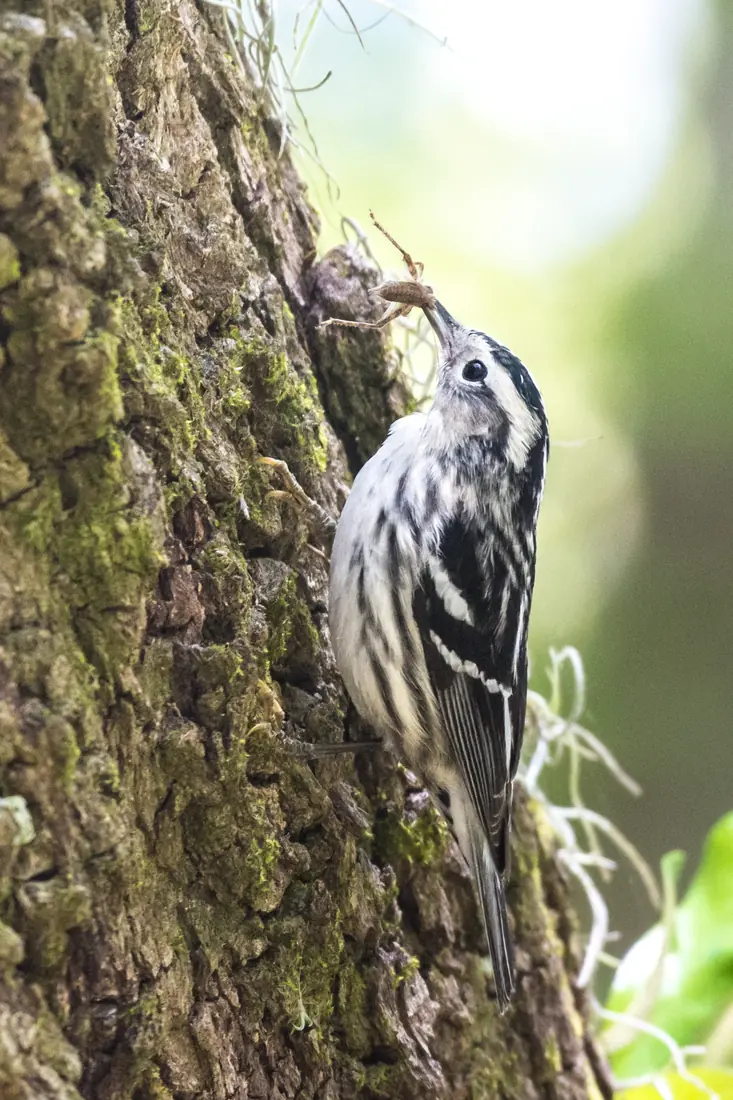
Duchesne wrote that the warblers wintering in Florida begin to arrive around the first of May. He added that a few black-throated green warblers and northern parulas should be back by May Day, with the rest following within about a week, and that black-and-white warblers wintering closest to Maine come back first. The column dates from 2016, so treat its dates as a guide to what is usual, not a promise for 2027. Warblers are small, quick and high in the leaves, so listen first: the black-throated green has a buzzy, lisping song in conifers, and the parula’s rising trill ends in a sharp note.
-
Hummingbirds and orioles
Males lead the way; Audubon gives no Maine date, so follow Journey North’s maps for 2027 · Gardens, feeders and the edges of tall deciduous trees
Audubon’s field guide notes that the male ruby-throated hummingbird moves north ahead of the female, and that these birds weigh no more than 0.1 to 0.2 ounce. Its feeder advice: skip red dye and clean them often. Baltimore orioles, which hang their pouch nests from drooping branches, also come to sugar water and fruit. Check Journey North’s sighting maps before hanging a feeder, since they track the first arrivals week by week.
-
Barn swallows over the fields
Maine Audubon says to listen from late April, so they are already settling in by May · Farm fields, barns, bridges and open water
Maine Audubon’s backyard-bird feature describes a bouncy, high-pitched chatter over fields as the sign that barn swallows are back from a journey of more than 4,500 miles from Central and South America. The same article warns that falling insect numbers threaten these birds.
-
Bobolinks in the hayfields
Males come first, then the females; Audubon gives no dates · Open hayfields and damp meadows
National Audubon reports that most bobolinks in the eastern United States now nest in hayfields, hide the nest on the ground in dense grass, and raise one brood a year. The young leave the nest 8 to 14 days after hatching, before they can fly, so a nest hidden in the grass is easy to trample. Audubon names the loss of nesting habitat as a likely cause of the species’ decline.
-
Peregrine falcons on Acadia’s cliffs
The nesting season runs through summer · Precipice Trail and the cliffs of Mount Desert Island
The National Park Service says hikers usually cannot use the Precipice Trail in summer, a limit that protects peregrines during their annual nesting period. Visitors can still watch from the parking lot through the Peregrine Watch program, using spotting scopes. The Maine wildlife agency lists the peregrine as a State Endangered Species and credits recovery efforts for its return.
The park service reports a record 338 bird species at Acadia, which shows how much one corner of Maine can hold. The Naturalist’s Field Journal has pages made for logging it.
Where can you see puffins, loons and other water birds in Maine in May?
The islands of the Gulf of Maine and the lakes behind them both fill with nesting birds this month. Some of the best viewing happens from a boat or a long lens, and the most important rule is the same in both places: stay back.
-
Atlantic puffins
Nesting through the summer; boat trips and festivals begin in late spring, and no source gives a firm return date for 2027 · Eastern Egg Rock, Petit Manan Island and Machias Seal Island
Project Puffin began in 1973 to bring puffins back to former nesting islands off Maine, and National Audubon calls the effort a major success. A puffin lays usually one egg, in a burrow or rock crevice three to seven feet deep. Incubation takes 36 to 45 days, usually 39 to 42, and both parents share it. Maine’s wildlife agency says tens of thousands of people join puffin cruises each year. Festival programs include boat trips to the outer colonies, so go with an organized trip and stay on the boat or marked path rather than trying to reach a colony on your own.
-
Eiders, terns and the other island nesters
Late spring and early summer · About 500 Maine islands, mostly in the Midcoast and Downeast
Maine’s wildlife agency says 13 seabird species nest on the state’s islands, and that about 500 islands hold nesting seabirds and common eiders. The agency has designated 21 roseate tern islands as Essential Habitat. Hens that lose their own broods become “aunts” that help guard others’. A bird that flushes from a nest is a bird you got too close to, so keep your distance from shore and your boat well back.
-
Common loons on their nests
Nest-sitting is under way in May on lakes that opened in April · Quiet coves and the shores of islands in lakes and ponds
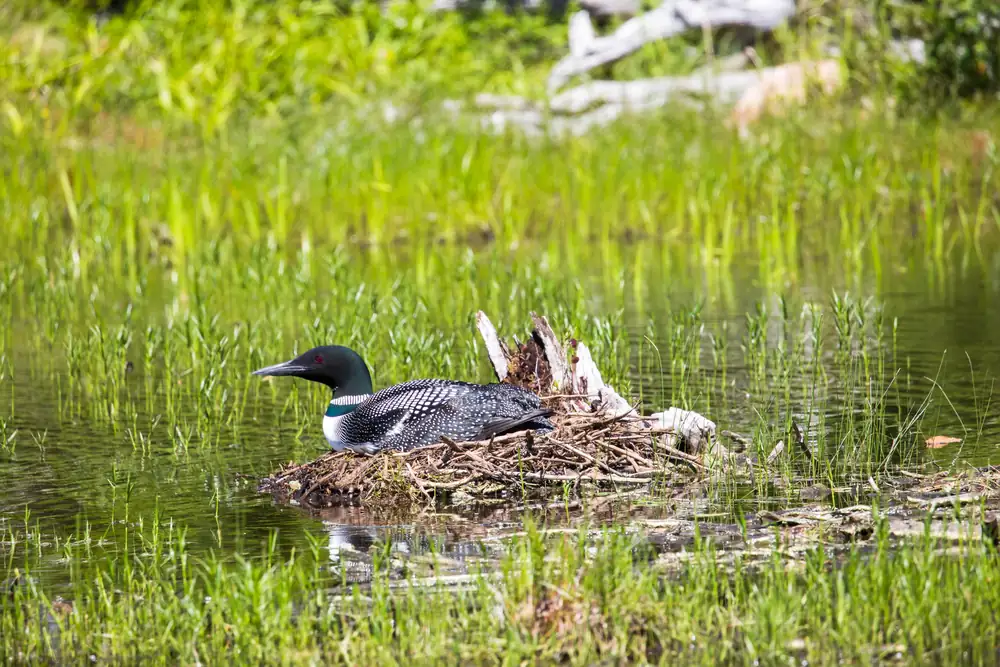
The wildlife agency’s loon brochure lists three signals that mean you are too close: a loon splashing upright across the water in what it calls the penguin dance, a quavering tremolo call, and a loon lying flat on the shoreline with its head down on a nest. Paddlers, who slip easily into shallow water, often startle nesting loons without knowing it. Use binoculars, back away at the first sign, and keep fishing lines out of coves where loons are nesting. Boat wakes can flood a shoreline nest.
Maine law calls for no wake within 200 feet of any shoreline, and the loon brochure singles out the Memorial Day and July 4 holidays as especially hard on loons. Memorial Day falls on Monday, May 31, in 2027, so slow down on every lake that weekend.
When is Maine’s spring turkey season in 2027, and what are the birds doing?
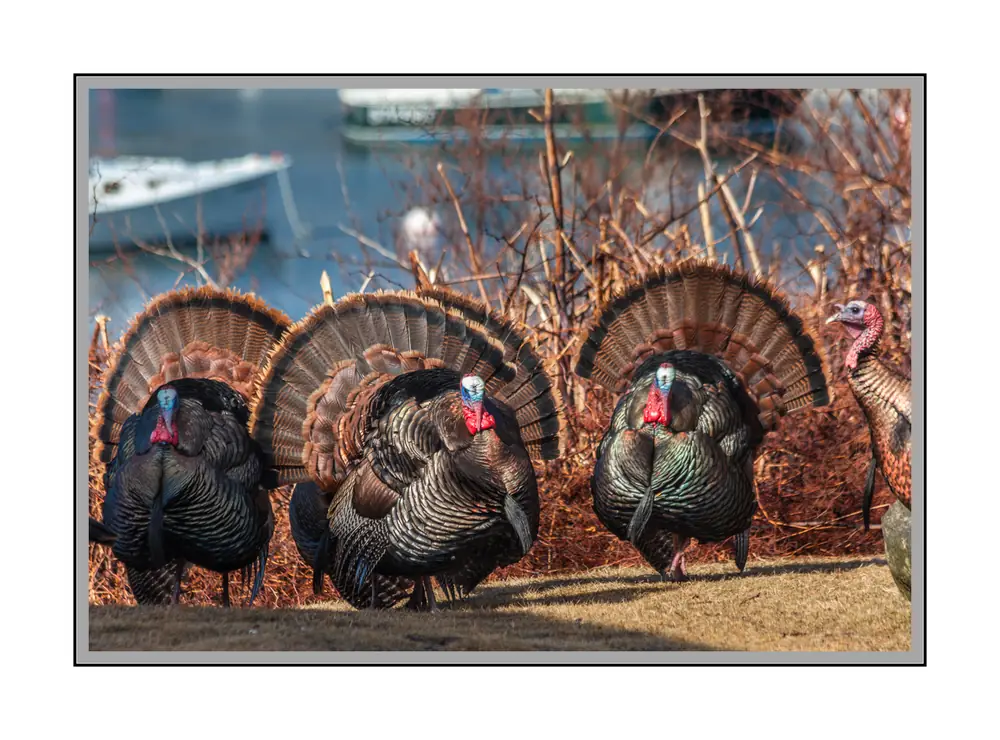
Wild turkeys are a comeback story that most Mainers now take for granted. The state’s wildlife agency says turkeys were gone from Maine by the early 1800s because forests were cleared and hunting was unregulated. Releases began with 24 birds on Swan Island in Sagadahoc County in 1942, and several club releases in the 1960s failed to establish wild populations. Later efforts included 41 birds brought from Vermont to York and Eliot in 1977 and 1978 and 70 more from Connecticut in 1987 and 1988.
-
Gobbling, strutting and nesting
Breeding in April and May, then egg laying and incubation · Field edges, forest openings and wooded hillsides in every county
IFW says dominant toms do most of the breeding and draw hens with strutting and gobbling. A hen then scrapes a shallow nest on the ground, lays an egg a day for up to 10 to 12 days and sits for 26 to 28 days. Poults leave the nest the day they hatch and feed on insects near field edges for their first weeks. They begin roosting in trees at five to six weeks. The agency estimates a spring population of about 70,000 turkeys, a figure that leaves out the year’s hatch, and says snow depth is the main thing limiting where they live.
-
The 2027 spring season
Monday, May 3, through Saturday, June 5, 2027, with a youth day on April 30 · Wildlife Management Districts across the state
IFW’s published 2026–27 schedule opens the spring season for archery equipment or shotgun on May 3, 2027, and closes it on June 5. In Wildlife Management Districts 7 and 9 through 29 a hunter may take two bearded turkeys, and in districts 1 through 6 and 8 the limit is one. Youth days fall on April 30. Rules can change in a new lawbook, so confirm them on the agency’s hunting pages before heading out.
A turkey in the road or a gobble from a hillside is normal in May. Slow down for hens crossing with poults, and if you walk in the woods this month, wear something bright so no hunter mistakes you for a bird.
What are Maine’s moose, bears and bats doing in May?
May is a month of birth and emergence for mammals. It is also the month when most close encounters with wildlife happen by accident, because the animals are hungry or protecting something.
-
Moose calving
Cows give birth in May, per the Maine wildlife agency · Spruce-fir lowlands, wet thickets and the edges of ponds, especially in the North Woods
IFW says cows give birth in May, usually to one or two calves, and that a calf remains at its mother’s side for roughly twelve months, until she drives it off shortly before the next calf arrives. Newborns are vulnerable to predators such as bears. A cow with a calf will defend it, so a moose beside a road or trail in late May deserves a wide, calm detour. Winter ticks are part of this story too: the agency says fully fed female ticks drop off moose in late spring and lay up to 4,000 eggs in the leaf litter, and that winter ticks are the leading cause of death for moose under a year old.
-
Black bears out and hungry
Cubs left the den in mid-April; breeding runs May through August · Lowlands, wetlands, field edges and anywhere there is easy food
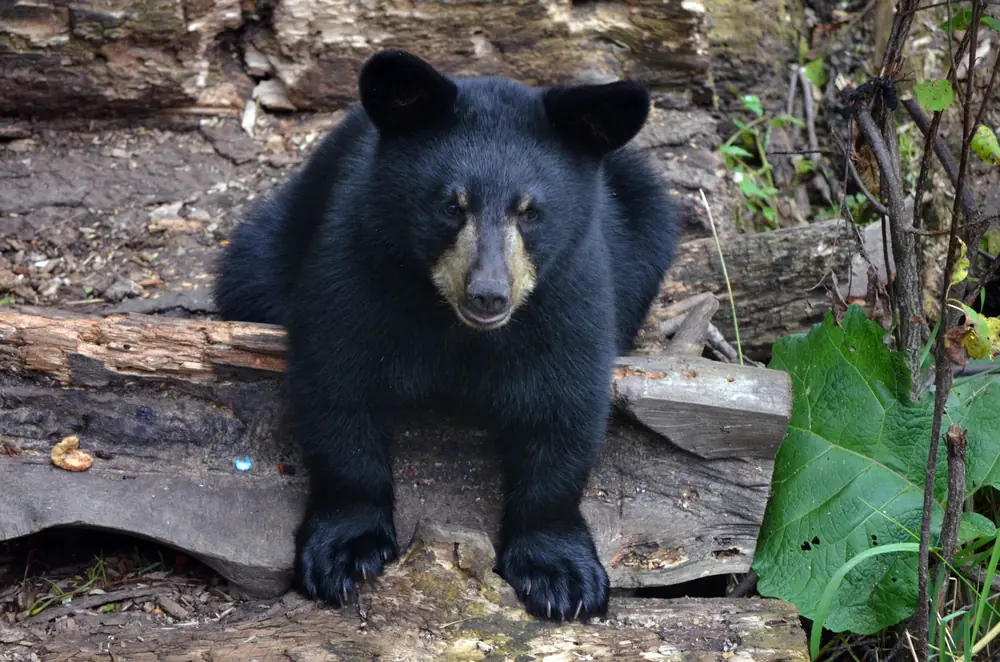
IFW says bears feed on early grasses, clover and hardwood buds in spring, often in wet lowlands, and calls this a time of food stress because little natural food is available. It estimates about 25,000 bears in Maine, a number that has been fairly steady since 2008. The agency’s advice is to bring feeders in during the active season, April 1 to November 1, and to rake up spilled seed and store the rest indoors. Most conflicts, the agency says, can be prevented by removing food around homes.
-
Bats returning to their summer roosts
Hibernation lasts until April or early May; pups are born in May, June or July · Attics, barns, tree cavities and the air above ponds at dusk
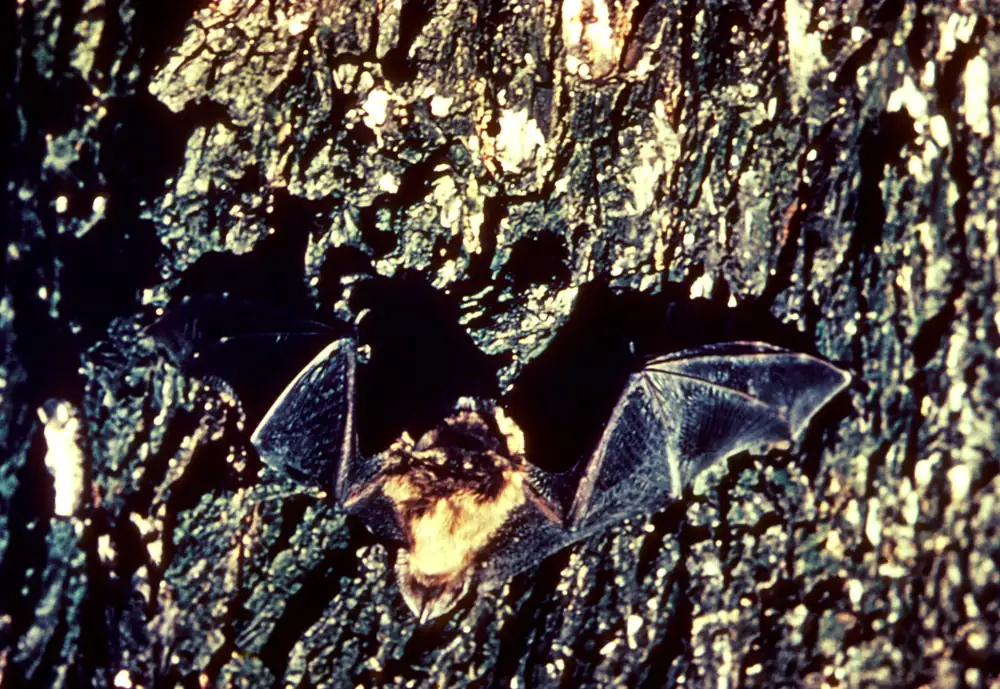
Maine has eight bat species, five of which hibernate here and three of which migrate south. White-nose syndrome has emptied caves that once held hundreds of bats, and IFW and the U.S. Fish and Wildlife Service installed a gate at the largest hibernation site. Most Maine bats have one pup a year, and pups cannot fly for about a month. The agency warns that disturbing a colony in spring can make mothers abandon or drop their young, and its recommended exclusion-free period, when bats should not be shut out of a building, runs from May 15 to August 15. If bats use your attic, count them in early June and again in late July to see whether the number rises as the pups learn to fly.
IFW puts peak fawning in mid-June, so the deer fawns people mistakenly rescue are mostly a June matter. The rule for any young animal in May is the same: look, photograph from far off and leave.
What is blooming and which insects are out in Maine in May?
The ephemeral flowers of the forest floor race against the leaves. The Maine Coast Heritage Trust describes the early woodland flowers as plants that flower ahead of the tree canopy and finish growing within a few weeks. Miss them by a week and you wait a year.
-
Trailing arbutus, the Mayflower
In flower from mid-April for roughly a month, so still blooming in early May · Sandy, acidic soil under pines and oaks, and along rocky trails
A Coastal Mountains Land Trust writer noted in mid-April that trailing arbutus would be flowering for the next month or so. The plant is a low, creeping evergreen with small pink or white flowers. Look low and kneel, because it is easy to step on. If you find a bloom in your town, record the date in the field journal, since the timing of early bloom shows whether a spring runs early or late.
-
Red trillium and the long wait to bloom
A few weeks, ending when the canopy closes · Rich hardwood woods and shaded slopes
The Heritage Trust says a red trillium takes an average of 15 years to grow big enough to flower and can live 30 years. That is a good reason to leave one where it grows. Wild strawberry blooms nearby, and the trust notes it will bear red fruit by June.
-
Browntail moth caterpillars
Out of their webs and feeding since mid-April; treatment works best before late May · Coastal Maine and up to 60 miles inland, most heavily in the Midcoast and the capital region
The Maine Forest Service says browntail caterpillars leave their winter webs and begin feeding in mid-April. Their hairs, which come from caterpillars, cocoons and shed skins, cause a rash, and the agency advises avoiding heavily infested areas from April to August. The agency also says to avoid leaf blowers and lawnmowers on dry days in infested areas and to do yardwork on wet days instead.
-
Black flies near running water
Seasonal timing varies with the stream and the weather · Wherever there is fast or slow running water, including the North Woods
UMaine Extension’s fact sheet explains that black flies need running water to breed, unlike mosquitoes, which prefer standing water, and that only the females bite. Because their breeding is sensitive to pollution, the flies serve as a sign of clean water.
Pages in the field journal are set aside for a tree through the seasons and for seeds, pods and cones. Revisiting one stand of woods each week makes the month easy to follow.
What is May weather like in Maine, and what hazards should you watch for?
May is when Maine finally turns warm, but not everywhere at once. NWS Caribou’s climate page shows the average high there rising from 56 °F on May 1 to 68 °F by month’s end, with lows from 36 °F to 45 °F. It puts sunrise at Caribou at 5:17 a.m. and sunset at 7:42 p.m. on the first, and 4:42 a.m. and 8:18 p.m. on the 31st. The next table gives 1991 to 2020 normals for six places from NOAA’s climate-data service, a different record from the one behind the Caribou page’s own tallies.
| Station | Average high | Average low | Precipitation | May snowfall |
|---|---|---|---|---|
| Portland International Jetport | 64.2 °F | 45.5 °F | 3.67 in | 0.0 in |
| Eastport | 60.4 °F | 42.6 °F | 3.27 in | 0.0 in |
| Bangor International Airport | 65.7 °F | 43.3 °F | 3.34 in | 0.0 in |
| Farmington | 65.4 °F | 40.7 °F | 3.87 in | 0.2 in |
| Presque Isle | 65.2 °F | 41.3 °F | 3.29 in | 0.2 in |
| Caribou Municipal Airport | 63.0 °F | 41.4 °F | 3.46 in | 0.8 in |
Frost and snow. The Caribou page gives May 15 as the average last freeze there, and says frost stays possible until around Memorial Day, so its date runs later than the 1991–2020 airport median in the freeze table below. Sources and base periods differ. It also says measurable snow falls at Caribou in about one May in three, and that two May days on average bring a thunderstorm. Severe thunderstorms are reported somewhere in northern Maine about every other May.
Fire. The Maine Forest Service says open burning is allowed only after 5 p.m. and before 9 a.m., with exceptions for steady rain or snow-covered ground, and that a permit is required. Call your town warden or the service’s line at (800) 750-9777 first. Forecasts and warnings are gathered on our weather page, and the newest seasonal outlooks come from the Climate Prediction Center at cpc.ncep.noaa.gov.
How fast do the days lengthen in Maine in May?
May is the gentlest month for daylight. Between May 1 and May 31, Kittery gains 61 minutes and Fort Kent 72, a pace of about two minutes a day that is slowing toward the solstice. Every town in the table starts May with more than 14 hours of light and ends it with more than 15, and Fort Kent ends the month with 15 hours and 39 minutes.
| City | May 1 | May 31 | Gained | Per day |
|---|---|---|---|---|
| Kittery | 14 h 07 m | 15 h 08 m | 61 min | 2.0 min |
| Portland | 14 h 09 m | 15 h 12 m | 63 min | 2.1 min |
| Augusta | 14 h 13 m | 15 h 16 m | 63 min | 2.1 min |
| Bangor | 14 h 15 m | 15 h 20 m | 65 min | 2.2 min |
| Bar Harbor | 14 h 13 m | 15 h 17 m | 64 min | 2.1 min |
| Eastport | 14 h 15 m | 15 h 20 m | 65 min | 2.2 min |
| Millinocket | 14 h 19 m | 15 h 26 m | 67 min | 2.2 min |
| Fort Kent | 14 h 27 m | 15 h 39 m | 72 min | 2.4 min |
Exact clock times for any Maine address are on the sunrise and sunset calculator. By the June 21 solstice the gain has dwindled to nothing.
When is the last spring freeze in Maine?
May is the real planting month, and it is also the last month a frost can wreck a garden. In the NOAA data the typical final freeze comes in late April along the southern coast and at Mount Desert Island, in the first or second week of May around Bangor, Caribou and Millinocket, and not until late May or early June in Rangeley and the Allagash. The first column shows how early a lucky spring can finish, and the last shows how long a bad one can drag on.
| Station | One year in ten | Median | Nine years in ten |
|---|---|---|---|
| Allagash (North Maine Woods) | May 21 | Jun 2 | Jun 21 |
| Caribou Municipal Airport | Apr 27 | May 7 | May 24 |
| Rangeley (western mountains) | May 10 | May 23 | Jun 3 |
| Millinocket Municipal Airport | Apr 27 | May 8 | May 24 |
| Bangor International Airport | Apr 24 | May 4 | May 17 |
| Augusta State Airport | Apr 15 | Apr 27 | May 7 |
| Portland International Jetport | Apr 16 | Apr 26 | May 7 |
| Acadia National Park (Mount Desert Island) | Apr 15 | Apr 27 | May 8 |
| Eastport (Passamaquoddy Bay) | Apr 16 | Apr 29 | May 11 |
For a specific town, open the Maine frost page. A tender seedling put out after Memorial Day has better odds than one planted on the median date, and a cold frame or an old sheet beats guessing. Every figure here is an average, not a promise.
What can you see in Maine’s night sky in May 2027?
Times are in Eastern Daylight Time. The dark of the Moon comes on May 6 and the full Moon on May 20, which makes the first week the best for faint objects.
-
Eta Aquariid meteors, at new moon
Peak night May 6 into the morning of May 7; the mornings of May 5 to 7 are all good · Radiating from Aquarius, low in the east-southeast in the last hours before dawn
These meteors are dust from Halley’s comet. Sea and Sky calls 2027 an above-average year with up to 60 meteors an hour at best and roughly half that from the north, and notes that the new moon leaves the sky dark all night. In Maine expect fewer than those figures, because the radiant in Aquarius is still low in the east when the sky begins to brighten this far north. Go out in the last two hours before dawn, find a dark horizon to the east and southeast and give your eyes 20 minutes.
-
The Flower Moon, a seasonal Blue Moon
Full on Thursday, May 20, at 6:59 a.m. EDT; best evening to watch it rise is Wednesday, May 19 · Rising in the east-southeast after sunset
The full Moon arrives after sunrise on the 20th, so the evening of the 19th is the best view of a nearly full Moon rising. The Naval Observatory table has moonrise at 7:48 p.m. in Portland and 7:46 p.m. in Bangor that evening, so start looking toward the east-southeast soon after sunset. Sea and Sky also lists May 20 as a Blue Moon, by the old almanac habit of naming the third full Moon in a season that holds four. Nothing qualifies under the newer calendar-month rule this year.
-
Mercury at its best evening showing of the year
Greatest eastern elongation on May 28, with the best evenings from about May 12 to June 5 · Low in the west-northwest, 45 to 90 minutes after sunset
Sea and Sky marks May 28 as the night Mercury stands highest above the western horizon after sunset, with 22.9 degrees between it and the Sun. By our own figures for the central United States, Mercury lingers roughly 90 minutes after sunset in mid-May and a bit longer at the start of June, which makes this Maine’s best evening try of 2027. Treat the minutes as approximate, since they shift with latitude. You need a clear, low horizon over the water or a field.
-
The Moon beside Jupiter, then Mars
Evenings of May 12 and 13 · Jupiter high in the south-southwest after dark; Mars farther east
Our own calculation puts the closest approach of the first-quarter Moon to Jupiter at 5:52 p.m. EDT on May 12, in daylight, so the best view is after dark that evening, with the Moon just next to the planet. On the 13th the Moon moves on to within about 3 degrees of Mars. Jupiter stays up late all month, and the same calculation has it setting some seven hours after sunset on May 1.
| Phase | Date | Time |
|---|---|---|
| New moon | Thursday, May 6 | 6:58 a.m. EDT |
| First quarter | Thursday, May 13 | 12:44 a.m. EDT |
| Full moon, the Flower Moon | Thursday, May 20 | 6:59 a.m. EDT |
| Last quarter | Friday, May 28 | 9:58 a.m. EDT |
For other dates, see the moon phase calendar, and for daytime sky-watching try the cloud guide. Our own calculations are not an official forecast, so check the U.S. Naval Observatory for exact local times.
What can Maine families do outdoors in May 2027?
Few organizers have posted May 2027 dates, so check with each before you go.
- Friday, May 28, to Monday, May 31: the Downeast Spring Birding Festival, based at the Cobscook Institute with trips around Lubec and Campobello Island. The organizer’s page gives these dates, which cover the Memorial Day weekend, and lists boat tours to Machias Seal Island, Petit Manan Island and Head Harbor Passage, plus hikes, paddles and plant walks. Its fees and trip details are labeled for 2026, so confirm 2027 details with the coordinator.
- Mid-May: Wings, Waves, and Woods in Deer Isle and Stonington is an annual volunteer-run festival with boat trips to see puffins and razorbills. Maine Audubon’s list gave its 2026 dates as May 13 to 17, but the organizer’s page shows no 2027 dates, so check with the Island Heritage Trust.
- Thursday, June 3, to Sunday, June 6: the Acadia Birding Festival, just after the month ends. Its pelagic trip is Saturday, June 5.
- Arbor Week: Maine’s statute asks the governor to proclaim the third full week in May, so watch for the 2027 proclamation to learn the exact days.
- World Migratory Bird Day: the organizers’ website listed only 2026 dates when this page was written, so look there for the 2027 date.
- Year-round tools: Journey North for first hummingbirds and orioles, NestWatch for nests you find, and IFW’s Maine Amphibian and Reptile Atlas for turtle and frog photos.
Sunday, May 9, is Mother’s Day, which makes a good morning for a short nature walk. The Maine April guide covers the arrivals that come first, and the nature index shows how May looks in other states.
Safety notes for May in Maine
Turkey hunters and walkers. The spring turkey season runs from May 3 to June 5, 2027, in IFW’s published schedule. IFW’s hunter-orange page says no orange is required to hunt turkey with a firearm or crossbow unless the district is open to moose hunting at that time, so walkers are the ones who should dress brightly. IFW’s schedule shows no bear hunting season in May, and the general bear season begins August 31, 2026. It lists coyote hunting with no closed season, and a night-hunting period that runs to August 31, 2027.
Moose and bears. Give a cow with a calf plenty of room. Do not feed bears, and take feeders down during the active season, which IFW dates from April 1 to November 1.
Ticks. The Maine CDC’s tick guidance is to use an EPA-approved repellent on skin, treat clothing with permethrin, check yourself, family and pets after outdoor time, shower, and run dry clothes on high heat for 15 minutes before washing. The UMaine Tick Lab will identify a tick you submit.
Water and fire. Rivers run cold, lake water is far colder than the air, and boats should stay at headway speed within 200 feet of shore. Follow the burn-hour rules in the weather section and check Baxter State Park’s daily conditions line at 207-723-9500 before heading north.
Seals and turtles. A harbor seal pup alone on a beach may not be abandoned, since the Department of Marine Resources says pups are often left alone up to 24 hours; do not touch one, and phone the state’s marine animal hotline, 1-800-532-9551, if it looks injured or sick. IFW says snapping turtles nest in June, including on gravel road shoulders, and that they are aggressive on land.
Look up current rules on IFW’s hunting and fishing pages before any trip. IFW lists the 2027 free fishing days as a February weekend and June 5 and 6, so none land in May.
Sources (48)
- Maine Department of Inland Fisheries and Wildlife: 2026–27 Maine hunting seasons (PDF)
- Maine Department of Inland Fisheries and Wildlife: laws pertaining to hunting equipment (hunter orange)
- Maine Department of Inland Fisheries and Wildlife: wild turkey
- Maine Department of Inland Fisheries and Wildlife: seabirds
- Maine Department of Inland Fisheries and Wildlife: waterfowl
- Maine Department of Inland Fisheries and Wildlife: raptors
- Maine Department of Inland Fisheries and Wildlife: living with loons (brochure)
- Maine Department of Inland Fisheries and Wildlife: moose
- Maine Department of Inland Fisheries and Wildlife: moose and winter ticks
- Maine Department of Inland Fisheries and Wildlife: black bear
- Maine Department of Inland Fisheries and Wildlife: white-tailed deer
- Maine Department of Inland Fisheries and Wildlife: bats
- Maine Department of Inland Fisheries and Wildlife: mammal species index
- Maine Department of Inland Fisheries and Wildlife: reptiles and amphibians
- Maine Department of Inland Fisheries and Wildlife: snapping turtle
- Maine Department of Inland Fisheries and Wildlife: fishing (Free Fishing Days in 2027)
- Maine Department of Marine Resources: seals
- Maine Forest Service: browntail moth
- Maine Forest Service: open burning permit system
- Maine Legislature: Title 1, section 111-A, Arbor Week
- Maine Center for Disease Control and Prevention: tick bite prevention (October 2025)
- University of Maine Cooperative Extension: Tick Lab
- University of Maine Cooperative Extension: black flies
- Maine Audubon: events and spring birding festivals
- Maine Audubon: backyard bird of the month, barn swallow
- Bangor Daily News (April 2016): time for the pine warblers to come back
- Downeast Spring Birding Festival, Cobscook Institute
- Acadia Birding Festival
- Island Heritage Trust: Wings, Waves, and Woods
- National Audubon Society: Seabird Institute and Project Puffin
- National Audubon Society field guide: Atlantic puffin
- National Audubon Society field guide: ruby-throated hummingbird
- National Audubon Society field guide: bobolink
- National Audubon Society field guide: Baltimore oriole
- National Park Service: birds of Acadia National Park
- Journey North
- World Migratory Bird Day
- Maine Coast Heritage Trust: a sneak peek at spring, Maine’s first flowers
- Coastal Mountains Land Trust: early spring wildflowers, mid-April
- Baxter State Park
- National Weather Service Caribou: May climate facts for Caribou
- NOAA National Centers for Environmental Information: 1991–2020 monthly normals for Maine stations
- Climate Prediction Center: seasonal outlooks
- U.S. Naval Observatory: moon phases, 2027
- Sea and Sky: astronomy calendar of celestial events 2027
- U.S. Naval Observatory: Portland sun and moon times, May 19, 2027
- U.S. Naval Observatory: Bangor sun and moon times, May 19, 2027
- Photos via Wikimedia Commons; licenses and photographers are credited under each picture
.jpg)