What to look for in nature in Maryland this April
April is when Maryland turns from early spring to full spring. The woodland pools quiet down, and the toads, pickerel frogs and upland chorus frogs take over the evenings. American shad climb the Potomac and Susquehanna as the water crosses 55 degrees, hickory shad crowd the tributaries, and hatchery trucks keep stocking trout in the central and western counties. Along the Potomac, bluebells open in the floodplain woods while toadshade trillium and Dutchman's breeches bloom on the slopes above them. Ruby-throated hummingbirds return, marsh birds fill Blackwater, and piping plovers claim the beaches of Assateague. Wild turkeys gobble from first light, and the state's spring turkey season opens on April 19. The Pink Moon is full on the evening of April 20, and the Lyrids peak two nights later under a bright, nearly full Moon.
Other months in Maryland: October, November, December, January, February, March.
Start here

- Walk a Potomac floodplain wood for bluebells. Pick a mild morning on the C&O Canal towpath or a nearby river trail, and look for pink buds opening to blue. Stay on the path, since the plants grow in the soft, damp soil beside it, and leave every flower where it is.
- Sit by a pond at dusk and sort the voices. Listen first for the long trill of American toads and the snore of a pickerel frog. By the last week, a green frog may be plucking its banjo string.
- Check a tidal river for the first warm, calm evening. Shad and white perch move upstream as the water warms. Note the water temperature on the day you first see fish, a number worth keeping from one year to the next.
Good plates for April: a map of sounds for one pond edge on three evenings running; nest observed for an eagle or osprey nest watched from far off; the same place twice for a towpath, once with bluebell buds and again two weeks on; birds I have seen for the year’s first hummingbird or oriole; and the daily field log, because April brings more firsts than any other month.
Regions used below: Western Maryland (Garrett and Allegany); Hagerstown Valley and the Blue Ridge; Central Maryland and the Baltimore–Washington corridor; Southern Maryland; Eastern Shore and the Atlantic coast.
Which frogs and toads are calling in Maryland in April?
The March pools belong to wood frogs and peepers. DNR lists spring peeper breeding as February and March, so those choruses fade through April, and the loudest voices come from species that like warmer, shallower water in ditches, flooded fields and pond edges. DNR’s field guide gives breeding months for each, and the overlap makes April evenings busy.
-
Upland chorus frogs
February through April, per Maryland DNR · Wet woods, floodplains, vernal pools and wet meadows west of the Susquehanna River, reaching the edge of the Allegheny Plateau in Allegany County
DNR describes the call as the sound of a finger running along a comb, a rising rattle. The range matters: DNR places this species west of the Susquehanna, so it is a Piedmont, Blue Ridge and western Maryland sound, not one for the Eastern Shore.
-
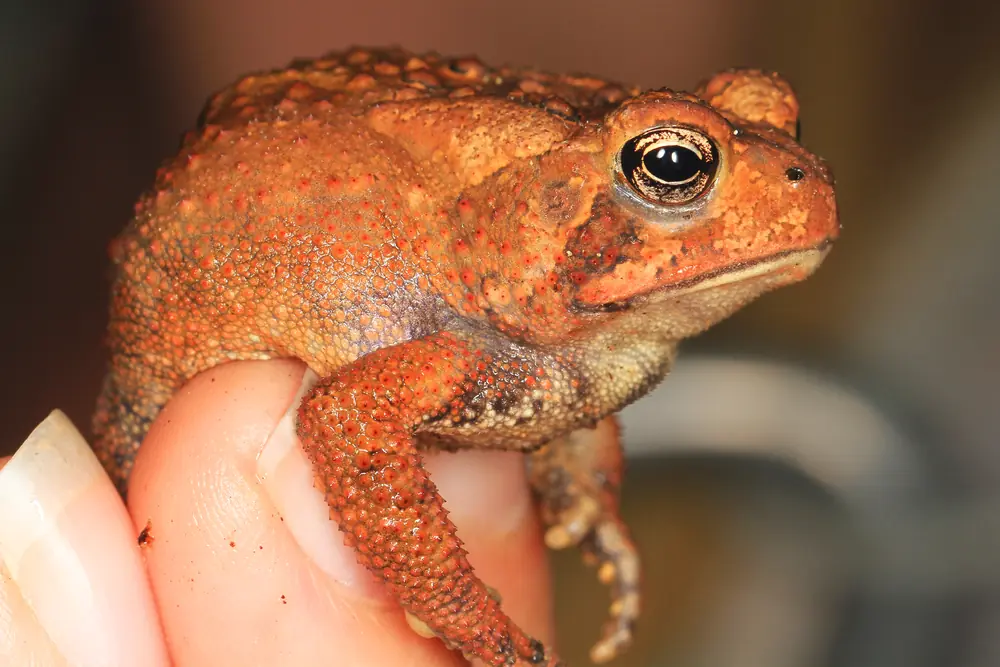
American toads
March through July, with the trill heard on warm, humid nights, per DNR · Almost anywhere there is shallow water, including yards, ditches and even tire ruts
The call is a long musical trill that lasts about 6 to 30 seconds. DNR notes that the toad breeds in any shallow wet depression and will happily live around buildings, where it hunts insects under porch lights. If you hear a steady trill that seems to have no beginning or end from a flooded corner of a field, a toad is the likely singer.
-
Pickerel frogs
March and April, per DNR · Streams, sphagnum bogs and floodplain swamps
DNR describes a low-pitched snore repeated at intervals of one to two seconds, usually from only one or a few animals at a given spot rather than a chorus. The frog calls by day as well as at night. In summer it wanders into drier meadows, but in April it is near water.
-
Green frogs
Late April through July, per DNR · Roadside ditches, pond and lake edges, stream banks and flooded pastures statewide
The call is a characteristic broken banjo string, a single loud note or three or four notes that trail off, and it is given day and night. This is the frog that tells you the water has warmed. Expect to hear the first ones in the last week or two of April, and many more in May.
Cope’s gray treefrog is listed by DNR for May through July, so it belongs to a later page. Write down what you hear, the temperature and whether it rained, and compare with the March page for Maryland to see the cast change.
Are shad running in Maryland in April, and what about trout?
April is the month the Bay’s migratory fish reach their upstream spawning grounds. The water temperature decides the timing. DNR’s April 8, 2026 report put the main Bay in the low to mid 50s and smaller streams in the upper 40s to low 50s; a week later the April 15 report said the Bay and river mouths had reached the low 60s. Those were 2026 conditions, so treat the dates below as a typical pattern, not a promise for 2027.
-
American shad
Peak spawning mid-April through early June at 55 to 68 degrees, with 64 degrees ideal, per DNR · The lower Potomac and the Susquehanna below Conowingo Dam
DNR’s April 8, 2026 report noted the first American shad near Fletcher’s Landing, and by April 15 catch-and-release fishing was good in the Potomac below Chain Bridge. Maryland’s American shad fisheries have been closed since 1980, so only catch and release is allowed. DNR says a shad can travel more than 12,000 miles in its years at sea before returning to its natal river.
-
Hickory shad
Spawning at 55 to 65 degrees, DNR’s April 15, 2026 report says · Conowingo Dam pool, the mouth of Deer Creek and Octoraro Creek; the Potomac below Chain Bridge and the Mason Branch of Mattawoman Creek
DNR’s fishing reports show hickory shad arriving before the larger American shad. The April 15 report listed bright sinking flies, shad darts and flashy spoons as the lures working that week.
-
The Conowingo Dam fish lift
Operates in spring, April through May or June, per the U.S. Fish and Wildlife Service · Conowingo Dam, Susquehanna River
The lift catches migrating fish below the dam, sorts them and trucks shad and river herring upstream. Fish and Wildlife Service data show 2,051 American shad counted in 2025 and 4,054 for April and May of 2026, compared with a peak of 193,574 in 2001. The 2026 weekly counts show how late the lift’s peak can come: 18 shad in the week starting April 12, 19 in the week of April 19 and 266 in the week of April 26, then 1,269 in the week of May 3. The facility also removed 369 invasive northern snakeheads and 3 blue catfish in 2026.
-
Stocked trout, at their busiest
Stocking continues through April in the central and western counties, per DNR · More than 100 waters across 19 counties
Maryland’s cold-water hatcheries raise about 240,000 adult rainbow, golden rainbow and brown trout a year for put-and-take waters, DNR says. In put-and-take areas the creel limit is five a day, and brook trout must be released. DNR’s stocking page posts updates; in 2026 it noted that low water kept trout out of the Lower Gunpowder River in April, so check it before you drive.
-
Striped bass, catch and release
In 2026, catch and release in the Bay from January 1 to April 30; spawning rivers closed to targeting from March 1 through May 31 · Chesapeake Bay tributaries and the upper Bay
Those were the 2026 rules, which DNR announced for that year, so check the 2027 regulations before you fish. What does not change is the spawn: striped bass spawn in low-salinity water, and DNR’s April 15, 2026 report put the spawning range at 57 to 66 degrees.
A tidal river thermometer and a notebook turn the shad run into real data. Write down the date, the water temperature and what you saw, and your log will show you how closely the run follows the thermometer.
Which birds are arriving or nesting in Maryland in April?
March brings the early arrivals, and April brings the crowd. Songbird migration builds through the month and reaches its peak at the end of April and in early May, but several of the state’s best-known birds are already on their territories by the first week.
-
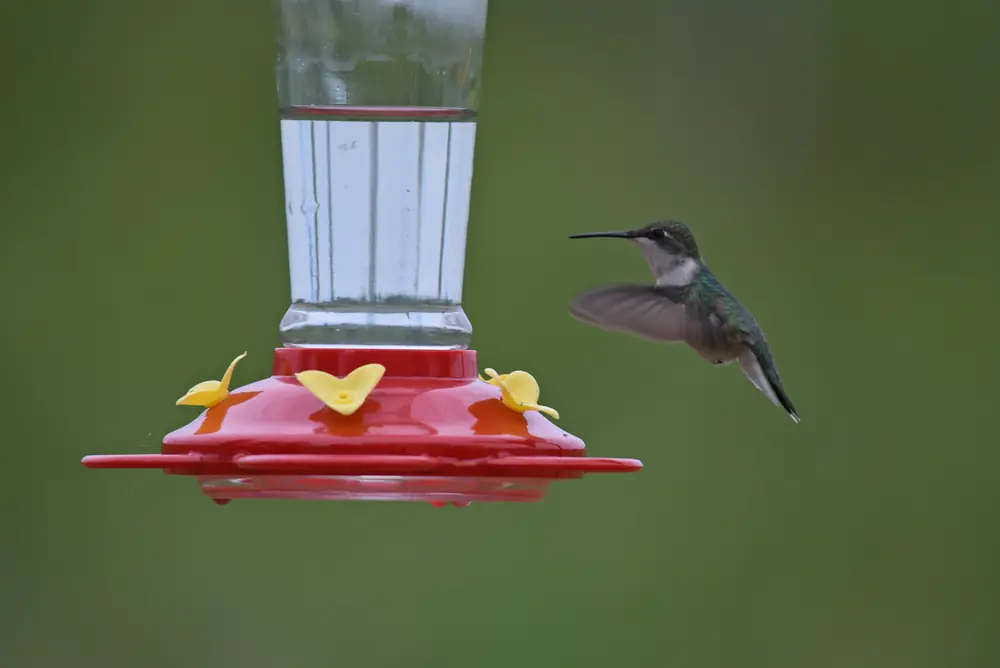
Ruby-throated hummingbirds
Generally return in early April, per Maryland DNR · Gardens, woodland edges and feeders statewide
DNR says the tiny migrants usually come back in early April and start breeding soon after. The female builds a thimble-sized nest from dandelion and thistle fluff bound with spider silk and covered with moss and lichen, so it blends in with a branch. If you hang a feeder, DNR suggests mixing one part white sugar with four parts water, and keeping the feeder clean and free of mold. Journey North features hummingbird tracking, so your first sighting can become a data point.
-
Baltimore orioles
DNR says look for them to return in March through April; nest eggs are laid in May and June · Open woods with tall deciduous trees, parks and tree-lined suburbs
Maryland’s state bird is named for the colors on the Calvert family’s coat of arms, DNR explains, with orange and black in the male. DNR also says the birds will use short pieces of colored yarn, no longer than four inches, for nest building, a small way to help in late April. Caterpillars are a main food, and fruit comes second.
-
Wild turkeys gobbling and starting to nest
Gobbling is at its height in early spring; females begin laying about one egg a day in mid-April, per the Chesapeake Bay Program · Forest edges and fields statewide
The Bay Program says a hen lays roughly a dozen eggs, sits on them for about four weeks and hatches them around the first week of June. The male’s courtship includes gobbling, a fanned tail and dragged wings.
-
Bald eagle chicks growing
Eggs hatch by mid-April, per the Maryland Bird Conservation Partnership; young remain in the nest 11 to 14 weeks · Large trees near the Bay, tidal rivers and big reservoirs
The partnership says nestlings’ heads rise above the rim of the nest at around four to five weeks, so by late April a nest that looked empty for weeks may show a bobbing head. Keep far back and use binoculars, since an adult scared off the nest leaves the chicks exposed.
-
The songbird wave
Songbird migration northward peaks in late April to early May, per Eastern Neck National Wildlife Refuge · Refuge woodlands, such as the Duck Inn Trail at Eastern Neck
The refuge calls the Duck Inn Trail one of its best for migrating warblers, thrushes and kinglets, and says tanagers, vireos and flycatchers also use its woods. Bring binoculars and go early.
Keep a list of the species you find each week and the date a bird first sings near home. The naturalist’s field journal has room for exactly that.
What can you see on Assateague and at Maryland’s marshes in April?
The Atlantic coast and the Eastern Shore marshes are the places where April’s birdlife is most concentrated. The beaches are partly closed to protect nesting birds, and the marshes fill up as their migrants return.
-
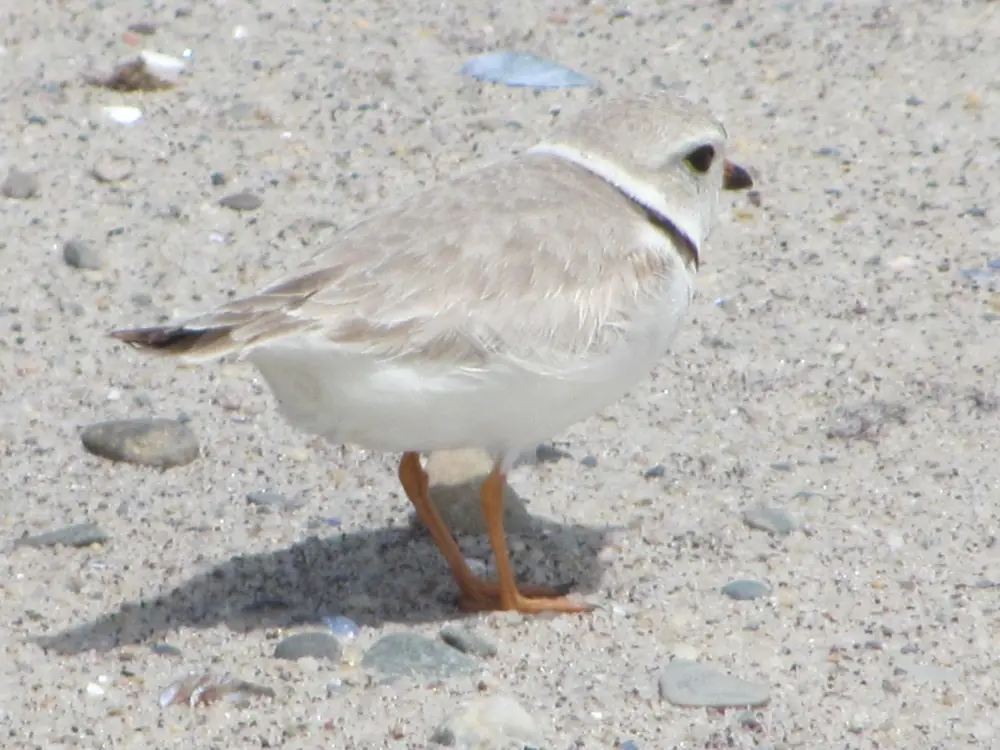
Piping plovers on Assateague Island
Arrive in early spring; the National Park Service monitors nests from April to September; the 2026 closure took effect April 2 · Assateague Island National Seashore, the state’s only piping plover nesting site
The federally threatened plover nests on open sand, where eggs and chicks are hard to see. The Park Service’s 2026 closure order, issued March 26 and effective April 2, kept visitors out of the north end, the island interior beach habitat between kilometer markers 0.5 and 9.5, and two short sections of the over-sand vehicle zone, until further notice. Pine Tree Campground and Fox Hills Road stayed open. Signs go up about 200 meters (218 yards) from nesting or feeding spots. The park sets closures each season, so check its page before a 2027 visit.
-
Marsh birds and shorebirds at Blackwater
Most migrant marsh birds are back by mid-April; shorebird migration peaks in late April and early May, per the refuge · Blackwater National Wildlife Refuge, Dorchester County
The refuge’s seasonal list adds that resident ducks and geese are incubating, blue-winged and green-winged teal are passing through, ospreys are starting to nest and wild turkeys and bobwhites begin nesting. Eastern Neck refuge, on the Chester River, reports the same teal passage in April.
Read the signs, respect every closure, and view nesting areas through binoculars.
Where are the bluebells and other wildflowers in Maryland in April?
The woodland wildflowers of the Potomac and the Piedmont peak in April. These plants spend most of the year underground and flower while sunlight still reaches the forest floor, so a patch can come and go in two or three weeks. Plan to go more than once.
-
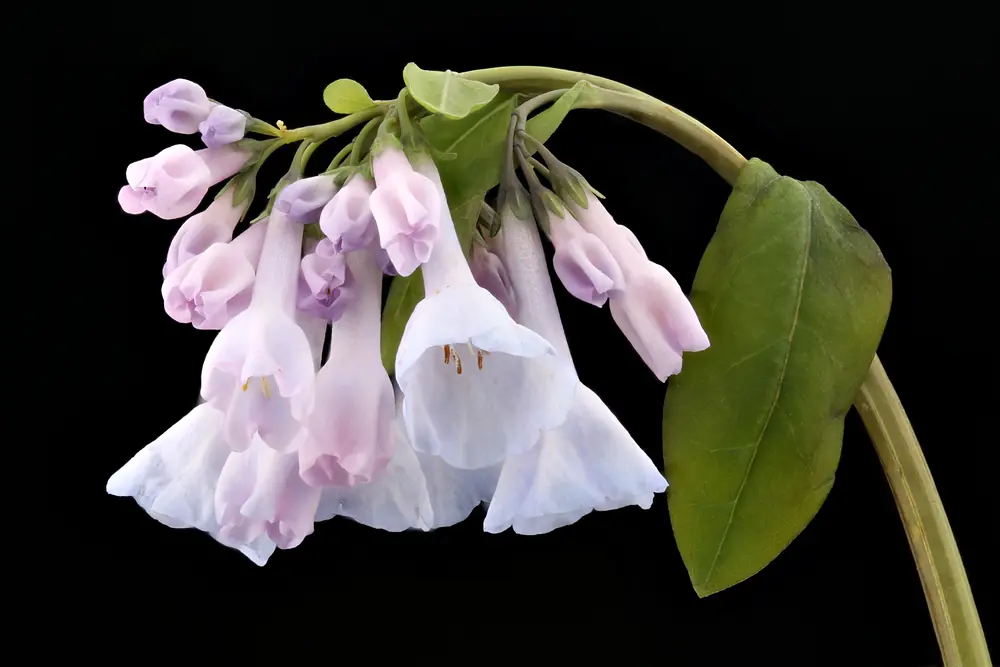
Virginia bluebells
Bloom in March or April for about three weeks, per the Chesapeake Bay Program · Shaded, moist floodplain woods along the Potomac, such as the Great Falls area of the C&O Canal and the stretch between Harpers Ferry and Weverton Cliffs
The Canal Trust lists large swaths of bluebells at Great Falls and along the towpath between Harpers Ferry and Weverton Cliffs. Buds start pink and open blue, the Bay Program says, and the plant goes dormant by midsummer. The National Park Service asks visitors not to pick flowers, since plants need them to reproduce.
-
Toadshade trillium
Late March into early May, per Maryland DNR · Calcium-rich woods and riverbanks, including the Ferry Hill and Lock 38 area of the C&O Canal near Sharpsburg
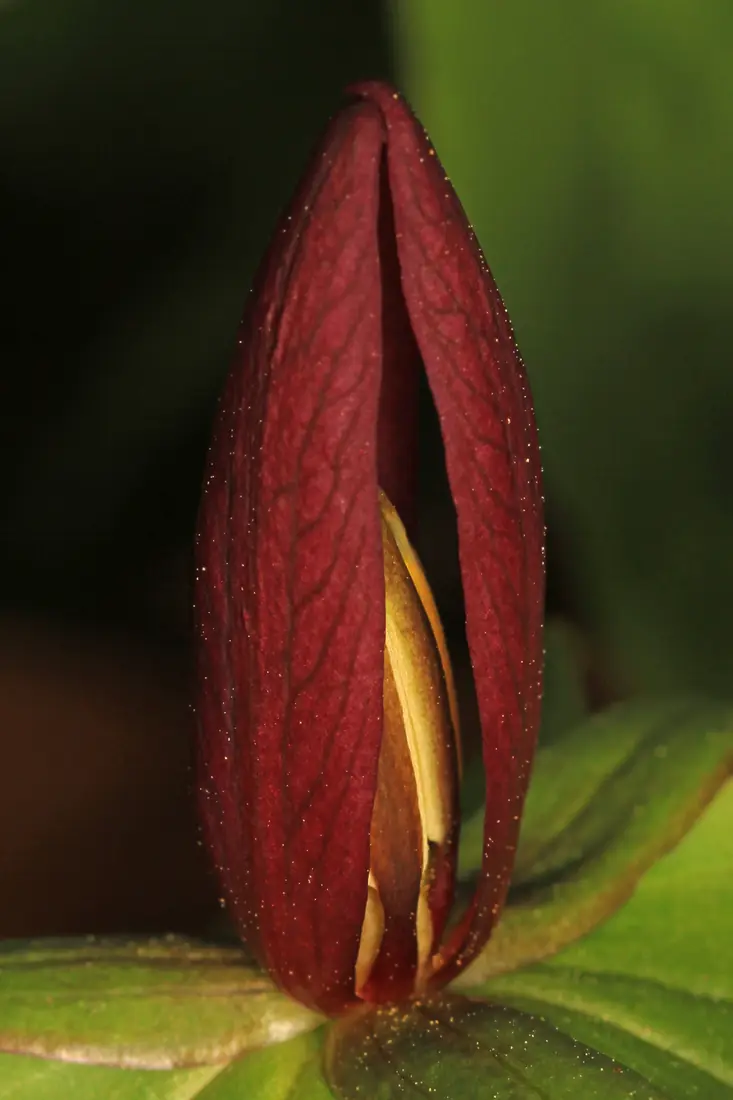
DNR describes three deep burgundy petals above mottled leaves and a smell like carrion, which draws flies to pollinate it. Ants carry the seeds away for the food packet attached to each. Maryland has ten trillium species, DNR says, and this one grows along riverbanks with Virginia bluebells.
-
Dutchman’s breeches
March to April, per the Chesapeake Bay Program · Shady, moist woods with rich soil
Bumblebees are the main pollinators, since their tongues are long enough to reach the nectar. The plant is toxic, and the Bay Program notes a folk name, little blue staggers, from the way livestock stumbled after grazing on it.
-
Flowering dogwood
Mid-March to mid-May, per the Chesapeake Bay Program · Woodland edges and understory, statewide
The white parts that look like petals are four bracts around a small cluster of yellow flowers. According to the Bay Program, 36 bird species eat the fruit, and the tree hosts the spring azure butterfly. Because the bloom window runs from mid-March to mid-May, it is a good tree to follow in the tree through the seasons plate.
-
Spicebush, yellow trout lily and mayapple
April, per the Canal Trust and the National Park Service · The Ferry Hill and Lock 38 stretch (spicebush and mayapple) and the Great Falls trails (yellow trout lily)
The Canal Trust describes spicebush lining the towpath with yellow flowers at Ferry Hill and Lock 38, with mayapple there too, and yellow trout lily on the Great Falls forest floor. The Park Service says the canal park holds over 600 wildflower species.
Record each patch with the date in the same place twice plate, and return in a week. The March page for Maryland covers the first flowers, bloodroot and spring beauty.
What are Maryland’s mammals and reptiles doing in April?
Warmer days wake the reptiles and bring new young into the world for the mammals that breed early.
-
Delmarva fox squirrels and their young
Litters of one to four are born from February through April, per DNR · Mature forests along streams and bays on the Eastern Shore; Blackwater National Wildlife Refuge is one of the best places
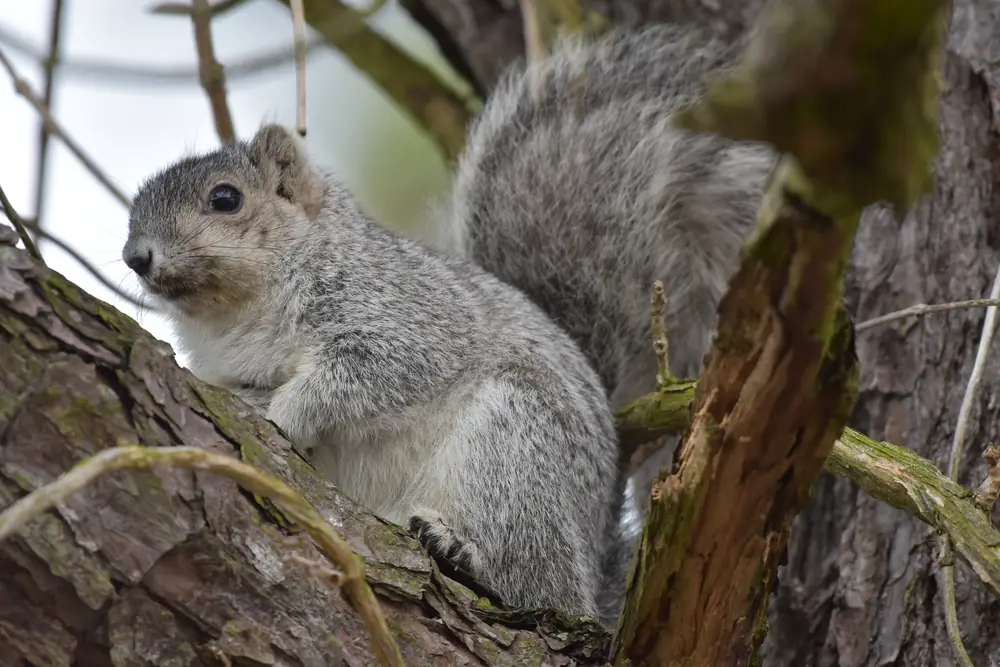
DNR calls it the largest tree squirrel in the Western Hemisphere, up to 30 inches long and 3 pounds, with a silver-gray coat and whitish feet, and says it spends a lot of time on the ground. Pups depend on the mother for about 9 to 12 weeks. The species left the endangered list in December 2015, after being listed in 1967. Blackwater’s seasonal list also notes the young are born around now.
-
Timber rattlesnakes
Most active in spring after hibernation, per DNR · Rocky, forested uplands and talus slopes from Frederick County west to Garrett County
Maryland’s only rattlesnake is active by day in spring and fall, and by night in summer, DNR says. The snake is shy, avoids people and bites only if provoked, but a bite is serious and needs immediate medical attention. If you see one on a trail, keep your distance and walk around it.
If you come across a nest, den or young animal, leave it where it is and back away. A turkey hen on her nest or a squirrel pup does not need help.
How much daylight does Maryland gain in April?
Baltimore has 12 hours 39 minutes of daylight on April 1 and 13 hours 50 minutes on April 30, a gain of 71 minutes, or about 2.4 minutes a day. Oakland, Cumberland, Hagerstown, Frederick and Annapolis also gain 71, Ocean City 69 and Salisbury 68. Every city on the list is past 13 hours 45 minutes by April 30. The gain is a little slower than in March, and it keeps easing toward the June solstice. Clocks changed on March 14, so April sunrises and sunsets are on daylight time throughout.
| City | Apr 1 | Apr 30 | Gained | Per day |
|---|---|---|---|---|
| Oakland | 12 h 39 m | 13 h 50 m | 71 min | 2.4 min |
| Cumberland | 12 h 40 m | 13 h 51 m | 71 min | 2.4 min |
| Hagerstown | 12 h 40 m | 13 h 51 m | 71 min | 2.4 min |
| Frederick | 12 h 39 m | 13 h 50 m | 71 min | 2.4 min |
| Baltimore | 12 h 39 m | 13 h 50 m | 71 min | 2.4 min |
| Annapolis | 12 h 38 m | 13 h 49 m | 71 min | 2.4 min |
| Salisbury | 12 h 38 m | 13 h 46 m | 68 min | 2.3 min |
| Ocean City | 12 h 37 m | 13 h 46 m | 69 min | 2.4 min |
Sunrise and sunset for any town and date are on the daylight page.
Is the last spring freeze over in Maryland by April?
April is the month when most of Maryland passes its median last freeze. NOAA’s 1991–2020 station normals put that median date at March 23 for Annapolis, April 2 for Frederick, April 3 for Salisbury, April 7 for Hagerstown and Ocean City, April 10 for Baltimore-Washington International and April 15 for Cumberland. Oakland, high in Garrett County, is the late one: its median is May 6, and nine springs in ten are over by May 23. In the Baltimore area the late date is April 25, and at Hagerstown it is April 21.
These are odds, not promises. Roughly one year in ten still has a freeze after the late date. After a warm March, an April freeze can nip dogwood bracts, new leaves and orchard blossoms. The earlier columns also show the lowland coast can see its last frost in March. The Maryland frost dates page has the figures for many more places.
| Station | One year in ten | Median | Nine years in ten |
|---|---|---|---|
| Oakland | Apr 21 | May 6 | May 23 |
| Cumberland | Apr 2 | Apr 15 | May 5 |
| Hagerstown | Mar 25 | Apr 7 | Apr 21 |
| Frederick | Mar 17 | Apr 2 | Apr 15 |
| Baltimore | Mar 27 | Apr 10 | Apr 25 |
| Annapolis | Mar 8 | Mar 23 | Apr 6 |
| Salisbury | Mar 18 | Apr 3 | Apr 25 |
| Ocean City | Mar 24 | Apr 7 | Apr 23 |
The Maryland frost dates page lists many more towns. Your own yard may run colder or warmer than the nearest station, so a low reading noted each morning on a fence-post thermometer is a good check.
What is April weather like in Maryland, and what are the hazards?
April is mild but changeable. At Baltimore-Washington International, NOAA’s 1991–2020 normal for the month is a high of 66.5 °F and a low of 43.6 °F, with 3.39 inches of precipitation and 2.4 nights at or below freezing. Up in Garrett County, Oakland’s normal April day peaks at 61.3 °F, its normal night bottoms out at 36.7 °F, 11.8 nights reach freezing and the snowfall normal is still 3.7 inches. Frostburg has a 1.8 inch snowfall normal, and Cumberland and Emmitsburg about a tenth or two of an inch. Hagerstown has no snowfall normal for April.
Three hazards deserve attention. The first is severe weather. State emergency managers and the National Weather Service mark a Severe Storms Awareness Week each April, with a statewide tornado drill and a hazard for each day: flooding, damaging winds, tornadoes, hail and lightning. A 2019 state release counted nearly 100 tornadoes in Maryland over the previous decade; ask the emergency management agency for the 2027 dates. The second is fire. Maryland averages about 150 wildfires a year burning roughly 3,600 acres, the Forest Service says, and wildfire occurrence is highest in spring when fuels are driest. Debris burning causes 36 percent of fires. The third is a late freeze: the table above shows that Oakland can still freeze in the third week of May in one year out of ten.
NOAA’s Climate Prediction Center issues its seasonal outlooks once a month, near mid-month. For the latest maps, open the CPC’s 90-day outlooks.
| Station | High | Low | Nights ≤ 32 °F | Precipitation | Snowfall |
|---|---|---|---|---|---|
| Oakland 1 SE (Garrett County) | 61.3 | 36.7 | 11.8 | 4.33 | 3.7 |
| Frostburg 2 (Allegany County) | 59.4 | 36.8 | 9.6 | 4.00 | 1.8 |
| Cumberland 2 | 66.3 | 40.9 | 4.2 | 3.41 | 0.1 |
| Hagerstown 1 E | 65.0 | 41.2 | 5.3 | 3.87 | – |
| Emmitsburg 2 SE (Frederick County) | 64.0 | 39.6 | 5.9 | 3.88 | 0.2 |
| Baltimore Washington Intl Airport | 66.5 | 43.6 | 2.4 | 3.39 | 0.0 |
| Mechanicsville 5 NE (St. Mary’s County) | 67.3 | 42.5 | 3.5 | 3.31 | 0.1 |
| Salisbury Wicomico Regional Airport | 66.1 | 44.1 | 3.9 | 3.42 | 0.2 |
Look at the local forecast before a trip to the mountains or the shore, and see the clouds guide for how to read a sky that is about to change.
What is in Maryland’s night sky in April 2027?
-
The Pink Moon
Full at 6:27 p.m. EDT on Tuesday, April 20 · Rising in the east-southeast around sunset
The full moment comes a little before moonrise over Maryland, so the Moon looks round on the 19th and 20th, and the 20th is the better night to watch it rise. SeaSky notes this Moon was named for early spring wildflowers, and it lists Sprouting Grass Moon among the alternatives.
-
The Lyrid meteor shower, a poor year
Peak predicted around 9:41 p.m. EDT on Thursday, April 22 by the International Meteor Organization (shower active about April 14 to 30) · The sky around Lyra, rising in the northeast; the Moon is the problem
With the Moon about 95 percent full and rising near 10 p.m. EDT, the dark window is short, just the hours after dusk and before moonrise. SeaSky warns that moonlight will wash out the fainter streaks, and a good peak is only about 20 meteors an hour, so plan on far fewer.
-
Venus before dawn, Jupiter in the evening
All month · Venus low in the east before sunrise; Jupiter in the evening sky
Venus remains a brilliant morning star, though it climbs a little less each week before sunrise. Jupiter is the evening planet, staying up into the small hours at the start of April and setting earlier each week. The Moon, a waxing gibbous after first quarter on the 13th, passes close to Jupiter on the 14th and 15th, a chance to pick out the planet.
-
Saturn passes behind the Sun
Conjunction with the Sun on April 7 · Not visible
Saturn is out of sight this month, in line with the Sun on the 7th, and returns to the dawn sky around the start of May.
| Phase | Date | Time |
|---|---|---|
| New moon | Tuesday, Apr 6 | 7:51 p.m. EDT |
| First quarter | Tuesday, Apr 13 | 6:56 p.m. EDT |
| Full moon, the Pink Moon | Tuesday, Apr 20 | 6:27 p.m. EDT |
| Last quarter | Wednesday, Apr 28 | 4:18 p.m. EDT |
| New moon | Thursday, May 6 | 6:58 a.m. EDT |
Faint stars show best around the April 6 new moon, and every time here is daylight time. Moonrise for your own town is in the moon phase pages, and clouds will decide whether you see any of it.
What can families do outdoors in Maryland in April 2027?
- Plant a tree on Maryland Arbor Day. DNR says the state celebrates it traditionally on the first Wednesday in April, which would be April 7 in 2027, and the governor proclaims the date each year, so confirm it with DNR. The national date is the last Friday, April 30.
- Mark Earth Day, April 22. It falls on a Thursday in 2027. Parks and watershed groups post their own cleanup schedules.
- Join the City Nature Challenge. According to the organizers, observations count from April 30 through May 3, 2027, and identifying continues until May 16. The National Aquarium’s Baltimore page says only that it returns in spring 2027, so ask them about local events. The iNaturalist app is all you need.
- Listen for the first frog on a mild evening.
- Look for bluebells and trillium on the C&O Canal towpath. The Park Service describes the towpath at Shepherdstown as flat and accessible to pedestrians, bikes, wheelchairs, strollers and leashed pets.
- Report what you see. Journey North follows migrating hummingbirds, and the USA National Phenology Network runs Nature’s Notebook for logging leaf-out and flowers at home.
- Blackwater and Eastern Neck refuges. Both are good for migrating birds in late April. Blackwater’s event calendar shows no events for April 2027 yet, so check the refuge for any programs.
Our field journal for naturalists gathers these sightings, and the state and month guides help you plan trips.
Safety notes for April in Maryland
- Spring turkey season. The Maryland hunting calendar for 2026–27 sets the Junior Turkey Hunt for Saturday, April 17, 2027 statewide, plus Sunday, April 18 in certain counties. The regular spring season opens Monday, April 19 and ends May 24, with hunting from one half hour before sunrise to noon through May 10, then to sunset from May 11. Sunday hunting is allowed in some counties. If you hike in the early morning on hunted land, wear bright colors.
- Fluorescent orange. DNR’s orange or pink rule exempts hunters of wild turkey, crows, furbearers and waterfowl, among others, so do not count on seeing a hunter.
- Fishing rules. The striped bass details here are 2026 rules, so read DNR’s current regulations before you fish.
- Severe storms. If thunder rumbles, get indoors quickly, and never drive through floodwater. The Severe Storms Awareness Week each April is a good moment to review your family plan.
- Snakes. The copperhead and timber rattlesnake are Maryland’s only venomous species. Step and reach with care, and give any snake room.
- Fire. Wildfires peak in spring. Under the Forest Service’s rules, debris burning is limited to the hours of 4 p.m. to midnight unless snow covers the ground, and it needs a 10-foot fire break and someone present until the fire is out.
- Bears and wildlife. Bears are hungry after winter, and DNR asks residents to take down bird feeders from April through November. Never feed a bear, and leave young animals where you find them.
- Cold water. Spring rivers run high, cold and fast. Wade carefully and check upstream rain.
Sources (51)
- Maryland DNR: field guide, upland chorus frog
- Maryland DNR: field guide, American toad
- Maryland DNR: field guide, pickerel frog
- Maryland DNR: field guide, green frog
- Maryland DNR: field guide, spring peeper
- Maryland DNR: field guide, Cope’s gray treefrog
- Maryland DNR: Maryland Fishing Report, April 8, 2026
- Maryland DNR: Maryland Fishing Report, April 15, 2026
- Maryland DNR fish facts: American shad
- U.S. Fish and Wildlife Service: Susquehanna River fish passage
- Maryland DNR: trout stocking
- Maryland DNR: set to adopt changes to Chesapeake Bay recreational striped bass season (March 2026)
- Maryland DNR: ruby-throated hummingbird
- Maryland DNR: Baltimore oriole
- Chesapeake Bay Program field guide: Baltimore oriole
- Chesapeake Bay Program field guide: wild turkey
- Maryland Bird Conservation Partnership: bald eagle biology
- U.S. Fish and Wildlife Service: Eastern Neck National Wildlife Refuge, species and seasons
- U.S. Fish and Wildlife Service: birding at Eastern Neck National Wildlife Refuge
- U.S. Fish and Wildlife Service: Blackwater National Wildlife Refuge, species and seasons
- Friends of Blackwater: event calendar
- National Park Service: Assateague Island birds
- National Park Service: Assateague Island piping plover resource brief
- National Park Service: Assateague Island administrative closure order for nesting shorebirds, 2026
- Chesapeake & Ohio Canal Trust: spring ephemeral hotspots on the C&O Canal
- National Park Service: wildflowers of the C&O Canal
- National Park Service: finding wildflowers at Antietam and the C&O Canal
- Chesapeake Bay Program field guide: Virginia bluebells
- Chesapeake Bay Program field guide: Dutchman’s breeches
- Chesapeake Bay Program field guide: flowering dogwood
- Maryland DNR: Native Plant Profile, toadshade (April 2026)
- Maryland DNR: Delmarva fox squirrel
- Maryland DNR: field guide, timber rattlesnake
- Maryland Park Service: snakes in parks
- NOAA NCEI: monthly normals, 1991–2020, for the eight Maryland stations in the April table (data service)
- NOAA solar calculator equations (sunrise, sunset and day length)
- Maryland Emergency Management Agency: Severe Storms Awareness Week focuses on spring hazards
- Maryland Emergency Management Agency: flooding, thunderstorms, tornadoes among spring weather threats (2019)
- Maryland DNR: Maryland Forest Service offers safety rules and tips for spring wildfire season (April 2026)
- Climate Prediction Center: seasonal (90-day) outlooks
- U.S. Naval Observatory: phases of the moon, April to May 2027
- SeaSky: astronomy calendar of celestial events, 2027
- Maryland DNR: Maryland Arbor Day 2025 celebrates growing interest in tree planting
- EARTHDAY.ORG
- City Nature Challenge
- National Aquarium: Baltimore City Nature Challenge
- Journey North: tracking migrations and seasons
- USA National Phenology Network: Nature’s Notebook
- Maryland DNR: hunting seasons calendar for 2026–2027 (PDF)
- Maryland DNR: fluorescent orange and/or pink clothing requirements and exceptions
- Photos via Wikimedia Commons; licenses and photographers are credited under each picture
