What to look for in nature in Maryland this January
Halfway through meteorological winter, January is, going by the 1991–2020 normals, Maryland’s chilliest month. It is also when the next generation gets started. Great horned owls settle onto eggs late in the month, a few bald eagle pairs in the southern counties lay theirs, and red foxes and beavers pair off in the cold. Volunteers count eagles at Blackwater, biologists fly the Bay to tally its ducks and geese, and the Garrett plateau gets its deepest snow of the year while the Shore usually sees only a few inches. Evenings stretch a little each day, and the closest full moon of 2027 rises on January 21. Below, from the mountains to Assateague, is where to look.
Other months in Maryland: October, November, December, February.
Start here

- Find an eagle pair on the nest. Most Maryland eagles lay in February, but the Maryland Bird Conservation Partnership says some southern pairs start in January. A bird that sits low in the nest for hours, barely showing its white head, is probably incubating. Watch with binoculars from 100 yards or more.
- Scrape a lanternfly egg mass. The gray, mud-like patches on tree trunks, fences and patio furniture each hold 30 to 50 spotted lanternfly eggs, the Maryland Department of Agriculture says. Scrape them off with a plastic card into rubbing alcohol, then report what you found.
- Stay up for the Quadrantids. January’s meteor shower peaks briefly overnight from Sunday, January 3, to Monday, and only a thin crescent moon to compete with it. The hours before Monday’s dawn are the best bet from Maryland.
Keep a record: a pair of eagles or a great horned owl on its nest belongs on the nest observed plate (Naturalist’s Field Journal); fox, deer and rabbit prints in fresh snow go on tracks to know; Quadrantid sightings and owl calls before dawn suit the dusk and dawn watch; and the same frozen creek or marsh visited on the 1st and the 31st makes a fine entry for the same place twice. Write the temperature beside each date.
Regions used below: Western Maryland (Garrett and Allegany); Hagerstown Valley and the Blue Ridge; Central Maryland and the Baltimore–Washington corridor; Southern Maryland; Eastern Shore and the Atlantic coast.
How many bald eagles spend January at Blackwater, and when do Maryland eagles lay eggs?
January is census month for eagles. Wintering birds from farther north are still here, local pairs are tied to their nests, and two long-running counts take stock of them. Nationally, the Midwinter Bald Eagle Survey, begun by the National Wildlife Federation in 1979 and run since 2013 by the Army Corps of Engineers, sends observers along fixed routes during the first two weeks of January, the U.S. Geological Survey explains, so early January is when eagle numbers are measured most carefully.
-
The Mid-Winter Eagle Survey at Blackwater
Held each winter; ask Friends of Blackwater for the 2027 date · Blackwater National Wildlife Refuge, south of Cambridge
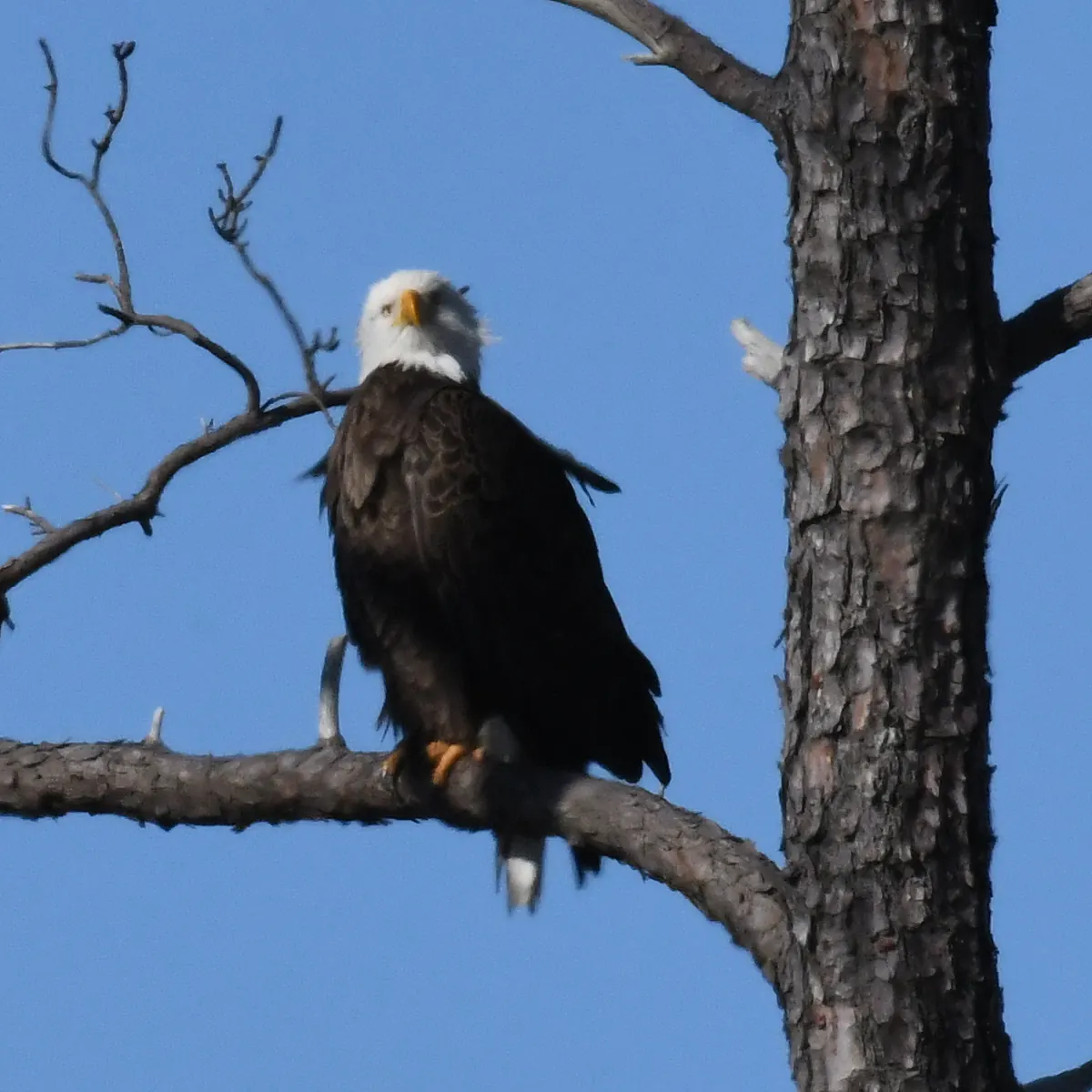
Friends of Blackwater has run a volunteer eagle count on the refuge every midwinter since 1980. The first one found just 24 eagles. The 2026 survey counted 329, more than thirteen times as many, a recovery the Friends credit to Endangered Species Act protection and decades of conservation work. The group asks would-be volunteers to contact it through its website; its calendar showed no January 2027 date in early October. Maryland DNR names Blackwater among the places where winter eagle roosts can hold 100 to 200 birds, so a slow drive around the refuge shows you what the counters see.
-
The first eggs of 2027
Usually February; some Southern Maryland pairs start in January · Tall pines and hardwoods near the Bay and its tidal rivers
The Maryland Bird Conservation Partnership says eggs usually come in February, with pairs in the southern part of the state occasionally laying in January. Incubation starts as soon as the first egg appears and takes about 35 days. Before laying, the partnership notes, pairs mate, keep adding to the nest and chase other eagles from the territory. One adult hunkered low in the bowl of sticks while its mate perches nearby is the clearest sign of a clutch.
-
The Blackwater eagle cam
Live in nesting season, if birds use the camera nest · Online, from a nest on the refuge
Friends of Blackwater has streamed an eagle nest since 2004, and its notes put egg laying there in January or early February, with hatching around early March. Occupancy is never certain: the original pair abandoned their nest, great horned owls have since moved into the camera nest, raising an owlet in 2024, and the page reported no nesting birds on the cam in 2026. Look in January to see who has claimed it.
Stay 100 yards or more from an active nest. Friends of Blackwater has already posted its 2027 Eagle Festival for Saturday, March 13, by which time many of January’s eggs will have hatched.
When do great horned owls nest in Maryland?
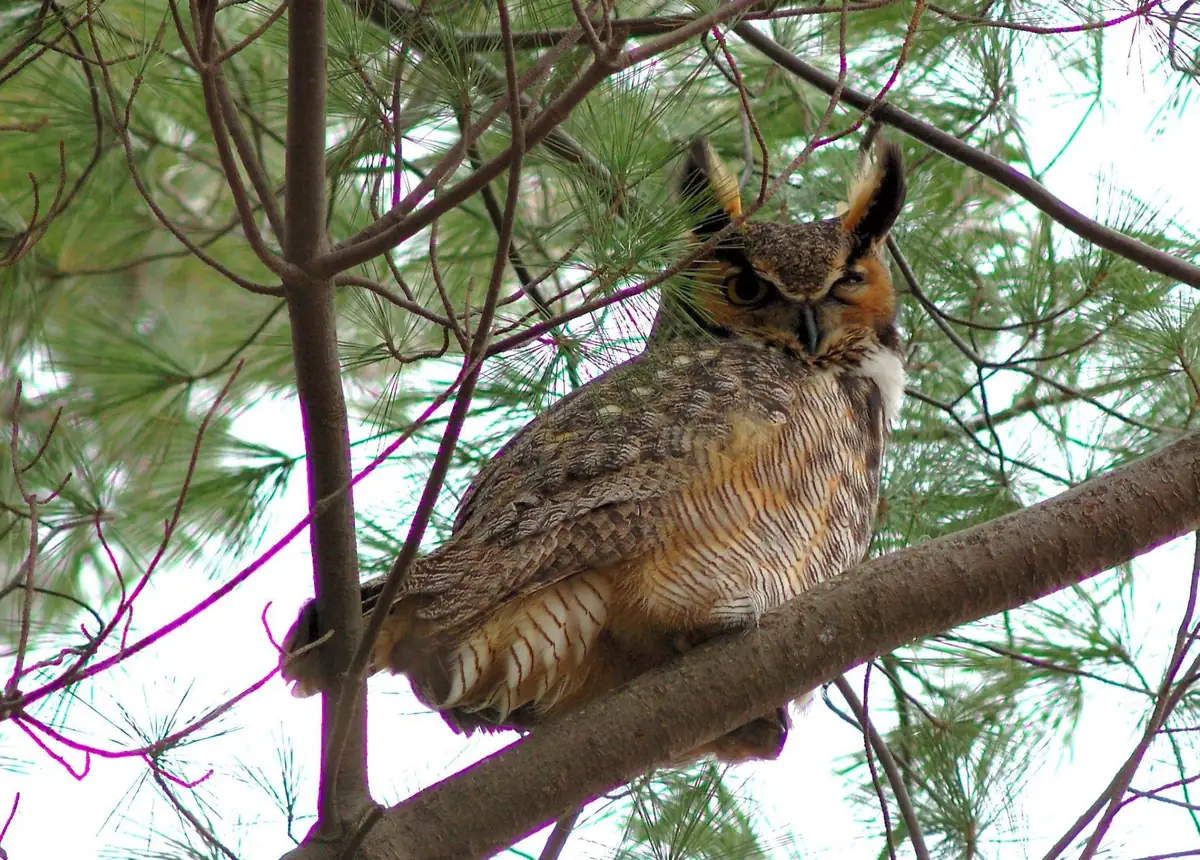
Earlier than any other bird in the state. Maryland DNR says great horned owls usually have mates chosen by December and breed from late January into early February, so the hooting duets of early winter give way to quieter nights once the female is on eggs. Barred owls are deep in courtship too.
-
Great horned owls on eggs
Laying from late January into early February · Woodlots beside fields, river bottoms, parks and old stick nests statewide
Great horned owls rarely build their own nest. DNR says they usually move into one left by a larger bird, and also use tree cavities, cliffs and empty buildings. The female lays two eggs on average, sometimes one to four, and sits on them for 30 to 37 days, fed by her mate the whole time. Before laying, a courting male bows and puffs out the white feathers of his throat. By late January, scan old hawk nests in bare trees for a pair of ear tufts showing over the edge.
-
Barred owls in full voice
Breeding season runs December through March · Wet woods, river bottoms and swamps, from the Potomac gorge to the Pocomoke
The Chesapeake Bay Program puts the barred owl breeding season at December through March. Pairs stay together for life and nest in tree holes, and courting birds add cackles, gurgles and caws to the familiar eight- or nine-note “who-cooks-for-you” call. The two owls share the woods uneasily: a barred owl shifts to another part of its territory when a great horned owl turns up. Go out on a still evening soon after sunset, stop for ten minutes at each spot, and note the time of every call.
Each call belongs on the map of sounds plate, marked by direction and rough distance from where you stood. The December page for Maryland covers the other owls that winter here.
How are the Chesapeake Bay’s ducks counted in January?
From the air. In the first week of January, pilot and biologist teams from Maryland DNR and the U.S. Fish and Wildlife Service fly the shorelines and open water for the Midwinter Waterfowl Survey, which DNR uses to build a long-term picture of how many ducks, geese and swans winter here and where.
-
The survey plane overhead
First week of January · Low over the Bay shoreline, the tidal Potomac and the Atlantic coastal bays
A small plane flying slow and low along a shoreline in early January may be the survey crew. The January 2026 flights tallied 926,900 waterfowl, up from 705,300 a year earlier, and DNR said the jump in Canada geese and diving ducks probably came from the cold that gripped the region that December and January. Scaup reached 105,800 and ruddy ducks 72,300. Results have come out in early February in recent years.
-
Long-tailed ducks in the open Bay
All winter, often far from shore · The main stem of the Bay, the mouths of the big rivers and the Ocean City inlet
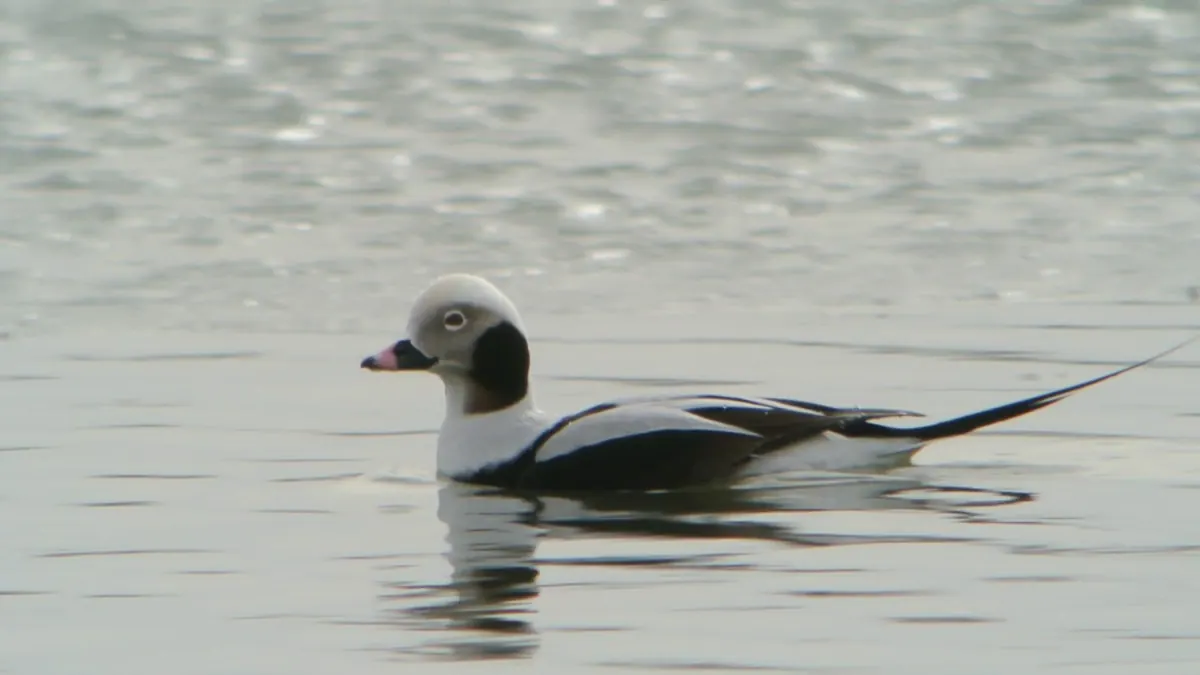
Long-tailed ducks are the yodelers of the winter Bay; the Chesapeake Bay Program renders the drake’s call as a loud “ow-owoooleee,” and a raft of them carries across calm water. In the Chesapeake they usually dive about 25 feet for clams, crustaceans and small fish, swimming mostly with their wings. Winter drakes are white with dark patches and trail two long, thin tail feathers.
-
When the creeks freeze
During and after a hard cold spell · Tidal river mouths, marinas and other water that stays open
In a long freeze the shallow coves ice over first, and ducks, geese and swans crowd into whatever leads stay open, sometimes close to a pier or bridge. Scan the ice edge as well as the water, and keep your distance: every time a cold, hungry flock flushes, it burns energy it cannot spare.
December’s page has the table from the last two surveys. A duck tally taken weekly from the same pier, with the ice cover and wind, makes a good daily field log.
Which Maryland animals mate in the middle of winter?
Several of the state’s mammals court in the cold so their young arrive in spring, when food is easy. Snow, mud and ice keep a record of where they have been.
-
Red foxes
Mating January through March · Farm edges, suburbs, parks and marsh borders statewide
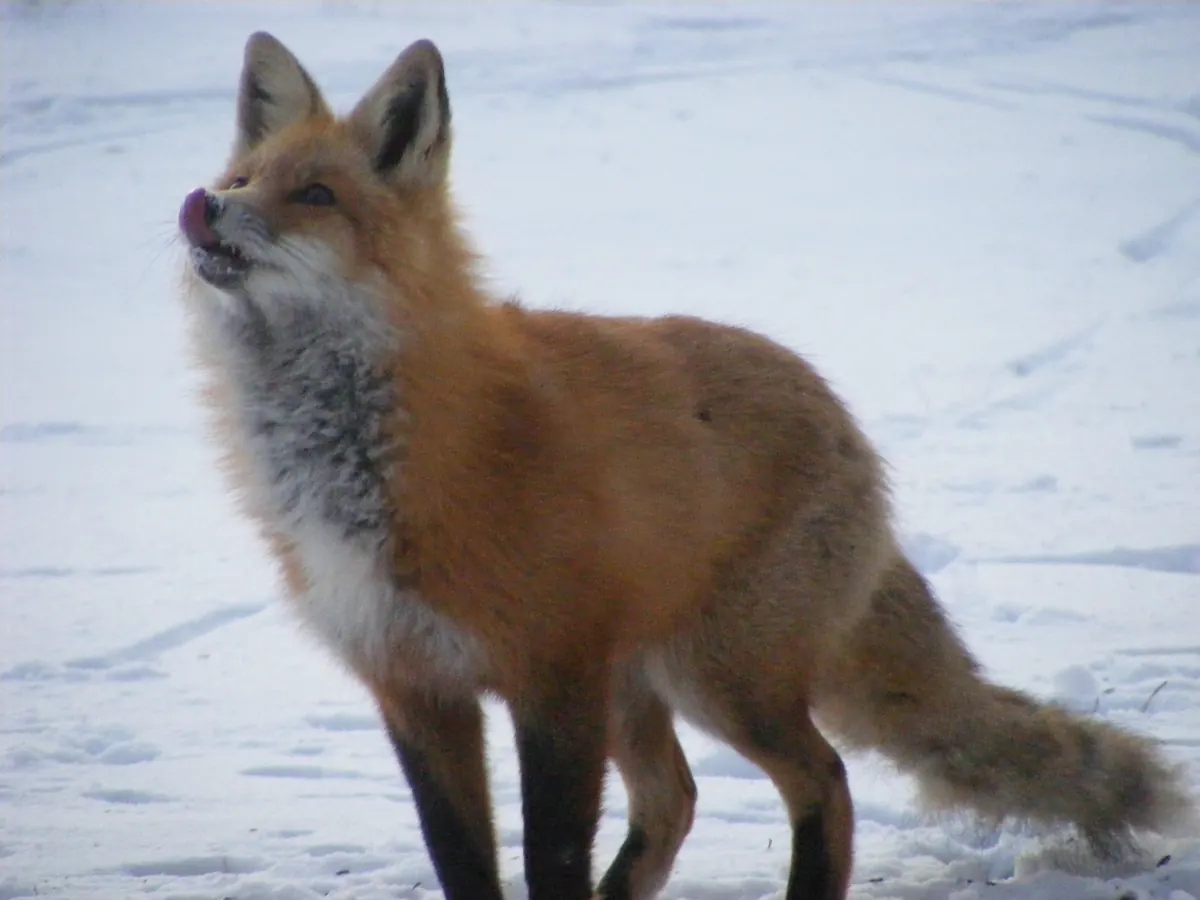
Maryland DNR says red foxes mate from January through March, with four or five pups on average born 51 to 53 days later. This is when foxes are loudest: besides a sharp “yap, yap,” DNR lists screeches, yells and long howls, and a vixen screaming on a January night can sound startlingly human. Pairs look for a den, often an enlarged groundhog burrow or the space under a shed or deck.
-
Beavers
Mating in January and February · Ponds, slow streams and marsh creeks with lodges and gnawed stumps
The Chesapeake Bay Program says beavers mate in January and February, and two to four kits, furred and open-eyed, follow about four months later. Each colony has one breeding pair, mated for life, and they spend the winter eating branches stockpiled by the lodge. Fresh, pale chew marks on a willow or red maple mean the colony is active.
-
River otters
Active all winter; mating in late winter and early spring · Rivers, marsh creeks and lakes, from Deep Creek to the lower Shore
Otters ignore the cold. The Chesapeake Bay Program notes that they slide down paths of snow, mud or ice into the water and leave flattened rolling spots on the bank. Look for a trough in the snow between sets of webbed prints along a frozen creek, at dawn or toward evening.
-
Delmarva fox squirrels
Courtship in late winter and early spring · Woods and field edges on the Eastern Shore
Bigger and paler than a gray squirrel, with a white belly and black-edged tail, the Delmarva fox squirrel came off the endangered list in 2015. The Chesapeake Bay Program says courting animals whine and scream, and the young are born from February to April. Rather than leaping between trees, they usually climb down and cross the ground, which makes them easier to spot.
Draw one clear print of each animal you track at life size on the tracks to know plate, noting whether the snow was powdery or wet.
Can you see Assateague’s wild horses and the winter seals in January?
Yes, and with far fewer people than in summer. Assateague and the beaches north to Ocean City are quiet in January, which makes horses and seals easier to find.
-
Wild horses in winter coats
All winter · Marshes and dune edges on Assateague Island, in the national seashore and Assateague State Park
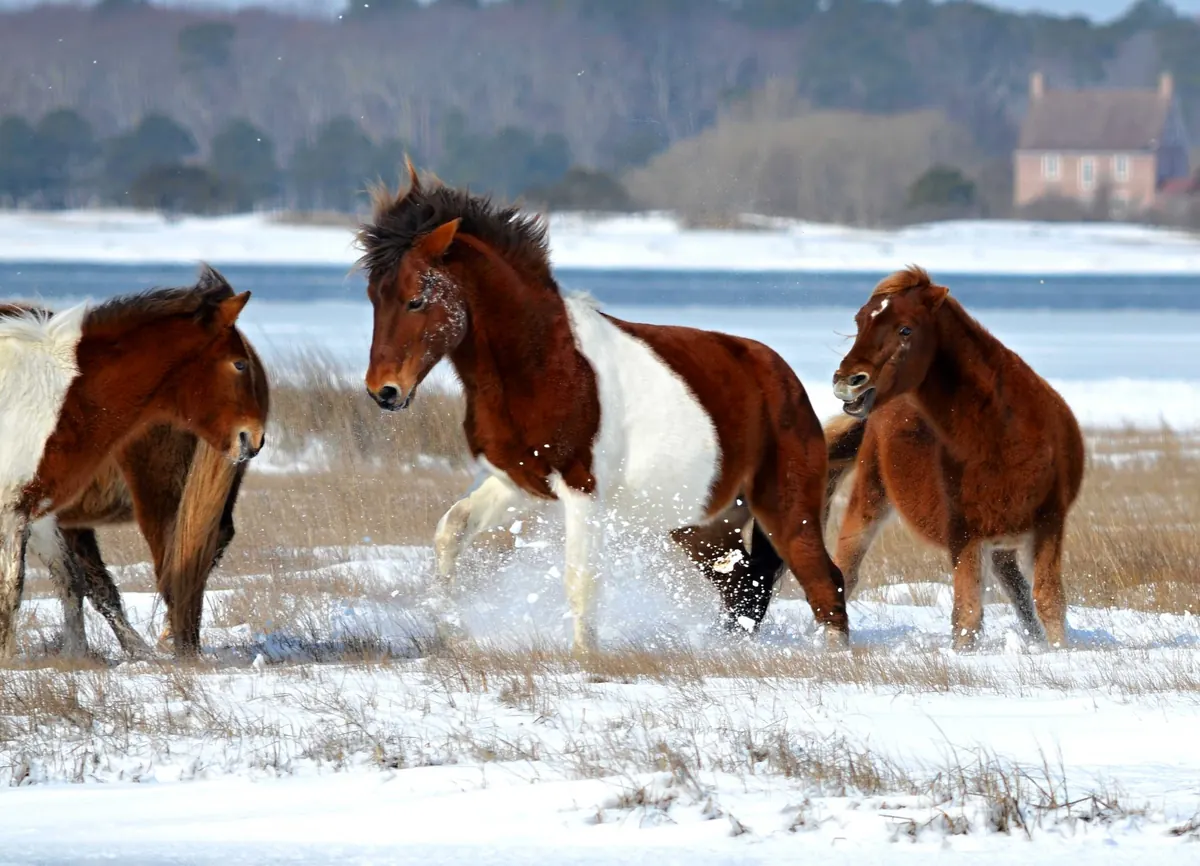
Maryland DNR counts about 78 horses in the Maryland herd, and about 150 more at the Virginia end of the island. Their coats grow thick in winter against the harsh ocean wind, so they look shaggier and rounder than in summer. Stay at least a bus length, 40 feet, away, and farther if a horse reacts to you. Touching or feeding them brings a citation; they bite and kick, and fed horses learn to loiter by the road, where cars hit them.
-
Seals on the beach
Usually from late December into April · Ocean City and Assateague beaches, the inlet jetties and Assawoman Bay
DNR’s stranding program has recorded harbor, harp and hooded seals in Maryland, with harbor seals the most frequent. A seal asleep on the sand is usually fine: the National Aquarium’s stranding coordinator told the Town of Ocean City that nine in ten are just resting and leave within about a day. The Chesapeake Bay Program notes that a harbor seal’s winter blubber can be 30 percent of its weight. Keep people and dogs well back, and report a thin, hurt or tangled seal to the stranding hotline, 1-800-628-9944.
Offshore on the same walk, look for loons, scoters and gannets. Note the tide and the wind direction with each sighting.
What can you find on Maryland’s trees in January?
Bare branches show what leaves hide all summer, including two invasive insects that are easiest to find now, and the twigs and bark that let you name a tree without its leaves.
-
Spotted lanternfly egg masses
All winter; the eggs hatch from about April to June · Tree trunks, especially tree of heaven, plus fences, stones, vehicles and outdoor furniture
Lanternflies lay eggs from September until the first frost, in rows covered with a grayish coating that dries to look like a smear of mud. The Maryland Department of Agriculture says winter removal works, and every mass destroyed means 30 to 50 fewer lanternflies in spring. Scrape it off with a plastic card or putty knife, drop it in rubbing alcohol or hand sanitizer, and report the find with a photo on the department’s online form. As of 2025, MDA’s quarantine covered 20 of the 23 counties and Baltimore City, so check before moving firewood or outdoor gear.
-
Hemlock woolly adelgid
Present all year; feeding through the winter · Eastern hemlocks in stream valleys and ravines, and in yards
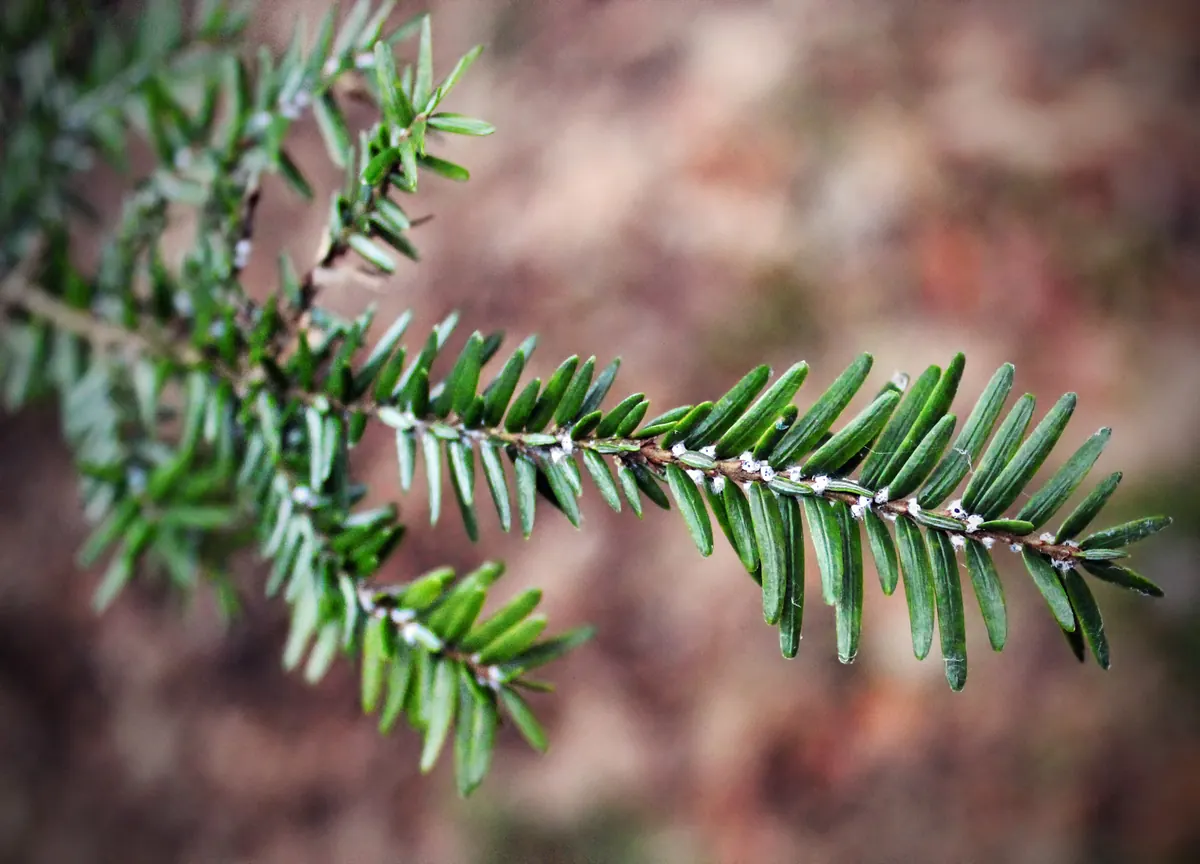
Turn over a hemlock twig and look at the bases of the needles. White tufts like cotton are the waxy cover of this tiny sap-sucking pest from eastern Asia. The Maryland Department of Agriculture calls it a cool-weather species that does most of its development from October through May: the nymphs feed through the winter and mature by spring, and adults lay eggs under the wool in April and May. It has been found in most Maryland counties where hemlocks grow, and heavy infestations kill branches and whole trees.
-
Twigs and bark
All month · Any woods, street or park
Red maple, the Chesapeake Bay Program notes, is named partly for its red twigs, and its smooth gray bark turns dark and scaly with age. White oak, Maryland’s state tree, has light gray bark in shallow, scaly furrows. Skunk cabbage, which warms its hood 20 degrees above the air, belongs mainly to February and March, but in a mild end to January check the wettest corner of a swampy woods for the first mottled maroon spathes.
Adopt one tree near home: a sketched twig and a rubbing of its bark start the tree through the seasons plate, and the buds will tell you when to go back.
Where is there snow and ice to enjoy in Maryland in January?
Mostly in Garrett County, on a plateau where January snow is normal rather than news. Its state parks become a winter playground when the cover is deep enough.
-
Cross-country skiing at New Germany
When there is enough snow · New Germany State Park, near Grantsville
When conditions allow, New Germany’s staff groom and track the ski trails, with a flat, open run for beginners and winding hillside routes for stronger skiers; snowshoers are asked to stay off the tracks. Skis and snowshoes rent at the Lake House from 8:30 a.m. to 4 p.m. daily, weather permitting, and are due back by sunset. Call 301-895-5453 to ask about snow before you drive.
-
Swallow Falls in winter
Best after several cold days · Swallow Falls State Park, north of Oakland
Muddy Creek Falls drops 53 feet beside a trail of about a mile and a quarter under tall hemlocks. After a run of hard frosts, spray can freeze on the rocks and fallen logs. The park is open 8 a.m. to sunset; steps and rocks glaze over, so wear traction cleats and keep children back from the edges. Ask about conditions at 301-387-6938; the park’s page lists Herrington Manor’s office, 301-334-9180, for February and March.
-
Ice on Deep Creek Lake
Variable, never guaranteed · Deep Creek Lake, Garrett County
Maryland DNR warns that pockets of warm spring water and rising air bubbles leave Deep Creek with weak ice or open water even during a cold snap. Admire it from shore unless you know the lake well.
Fresh snow suits the reading the signs plate: who passed, which way, and how long ago. Check the forecast for your route before heading into the mountain counties.
How much daylight does Maryland gain in January?
The days lengthen, and the pace picks up as the month goes on. Baltimore starts January with 9 hours 28 minutes of daylight and ends it with 10 hours 12 minutes, a gain of 44 minutes, and the other cities in the table gain between 41 and 45. Almost all of that comes in the evening. Mornings are darkest in the first days of January and brighten only a little by the 31st, while sunsets slide steadily later: Baltimore’s is back after 5 p.m. by the second week, and Oakland, near the western edge of the time zone, has no sunset before 5 all month. The coast gains slightly less than the mountains because it lies farther south.
| City | Jan 1 | Jan 31 | Gained | Per day |
|---|---|---|---|---|
| Oakland | 9 h 27 m | 10 h 11 m | 44 min | 1.5 min |
| Cumberland | 9 h 25 m | 10 h 10 m | 45 min | 1.5 min |
| Hagerstown | 9 h 25 m | 10 h 09 m | 44 min | 1.5 min |
| Frederick | 9 h 27 m | 10 h 11 m | 44 min | 1.5 min |
| Baltimore | 9 h 28 m | 10 h 12 m | 44 min | 1.5 min |
| Annapolis | 9 h 29 m | 10 h 13 m | 44 min | 1.5 min |
| Salisbury | 9 h 34 m | 10 h 15 m | 41 min | 1.4 min |
| Ocean City | 9 h 34 m | 10 h 16 m | 42 min | 1.4 min |
Type any Maryland address into the day-length calculator to see its own sunrise, sunset and twilight.
Is January Maryland’s coldest month, and will El Niño bring snow?
Yes, on average. At BWI the 1991–2020 normals give January a high of 43.2 °F and a low of 25.4 °F, colder than either December or February. Garrett County lives in another climate: Oakland averages 30.2 inches of January snow and about nine days with an inch or more, while Salisbury averages 2.5 inches with a median under one. Oakland and Frostburg average two or three January nights at or below zero; near the Bay such nights are almost unknown. And the season is far from over in January: BWI’s normal February snowfall, 7.5 inches, is a little higher than January’s 6.4.
Over all of this hangs El Niño. Tropical Pacific waters were warming fast in September, and federal forecasters gave this warm spell better than nine chances in ten of cresting as a very strong episode over the winter (Climate Prediction Center, September 10). The Weather Service’s Baltimore–Washington office has found that strong El Niño winters here tend to run mild and wet, yet snow swings from plenty to almost none, depending on whether cold air is waiting when the southern storms arrive. The 2015–16 event showed both faces. Baltimore topped 70 degrees on Christmas Eve and Christmas Day, then on January 22–23 a blizzard dropped 38.5 inches at North Potomac, 34 at Frostburg and 32.1 at Reisterstown, according to the Weather Service. NOAA revises its winter outlook every month, and you can find the current version on the CPC seasonal outlook maps.
| Station | High | Low | Nights ≤ 32 °F | Nights ≤ 0 °F | Precipitation | Snowfall, average | Snowfall, median | Days with 1 in. of snow |
|---|---|---|---|---|---|---|---|---|
| Oakland 1 SE (Garrett County) | 36.7 | 18.3 | 27.4 | 2.8 | 3.90 | 30.2 | 28.4 | 9.0 |
| Frostburg 2 (Allegany County) | 33.9 | 18.5 | 27.7 | 2.0 | 3.36 | 19.0 | 15.4 | 5.7 |
| Cumberland 2 | 39.2 | 22.5 | 25.3 | 0.5 | 2.79 | 8.2 | 4.0 | 2.6 |
| Hagerstown 1 E | 39.8 | 22.3 | 23.7 | 0.0 | 3.23 | – | – | – |
| Emmitsburg 2 SE (Frederick County) | 40.0 | 22.3 | 25.7 | 0.7 | 3.50 | 8.7 | 6.4 | 2.7 |
| Baltimore Washington International Airport | 43.2 | 25.4 | 24.0 | 0.1 | 3.08 | 6.4 | 3.8 | 1.5 |
| Mechanicsville 5 NE (St. Mary’s County) | 44.2 | 24.8 | 23.8 | 0.1 | 3.29 | 5.0 | 3.0 | 1.5 |
| Salisbury Wicomico Regional Airport | 45.5 | 28.0 | 22.3 | 0.2 | 3.51 | 2.5 | 0.9 | 0.7 |
Where the median sits well below the average, as at BWI, a few big storms carry the long-term number and most Januaries get less. The Maryland frost page shows when spring’s last freeze usually comes.
What is in Maryland’s night sky in January 2027?
-
The Quadrantids
Night of Sunday, January 3, into dawn Monday the 4th · Anywhere dark; face northeast and look up
This shower’s peak is narrow, about six hours, and this year it arrives while it is dark over Maryland. The American Meteor Society’s forecast puts the maximum around 10:30 p.m. EST on the 3rd; EarthSky’s, a couple of hours later, at 12:47 a.m. on the 4th. Because the radiant climbs through the night, the best Maryland hours are after midnight and before Monday’s dawn. The moon is no trouble, just a thin waning sliver that comes up in the small hours. From a truly dark site you might see a few dozen meteors an hour, fewer near the cities.
-
Earth at perihelion
Saturday, January 2, 9:33 p.m. EST · Nothing to see, but worth knowing
Earth passes closest to the Sun that evening, about 91.4 million miles away, by the U.S. Naval Observatory’s figures. Maryland is cold now because the Northern Hemisphere tilts away from the Sun, not because of distance.
-
Venus at its best before dawn
All month; greatest elongation Sunday, January 3 · Low in the southeast before sunrise
Venus hangs farthest from the Sun on January 3, a full 47 degrees, the widest gap of this morning run, and outshines everything but the moon all month; through a small telescope it looks half lit. Mercury edges into the evening twilight late in the month; try a clear, low view toward the west-southwest roughly half an hour after sundown, ahead of its best showing of the season in early February. Saturn sits in the southwest after dark.
-
The Wolf Moon, the year’s closest
Full at 7:17 a.m. EST, Friday, January 22 · Rising in the east-northeast at dusk on the 21st
January’s full moon is the nearest of 2027, about 222,229 miles away, and every source counts it as a supermoon. Full comes at 7:17 a.m. on the 22nd, close to moonset, so plan to catch it coming up over a field or the water at dusk on Thursday the 21st; it still looks round the next evening. A night later, January 23, the moon slides past bright Jupiter, with Regulus in Leo nearby.
| Phase | Date | Time |
|---|---|---|
| New moon | Thursday, Jan 7 | 3:24 p.m. EST |
| First quarter | Friday, Jan 15 | 3:34 p.m. EST |
| Full moon, the Wolf Moon | Friday, Jan 22 | 7:17 a.m. EST (a supermoon, the closest full moon of 2027) |
| Last quarter | Friday, Jan 29 | 5:55 a.m. EST |
| New moon | Saturday, Feb 6 | 10:56 a.m. EST |
Moonless evenings around January 7 are the best for faint stars. Look at current cloud cover before setting out, and at the moon calendar for local moonrise times.
What can families do outdoors in Maryland in January 2027?
- First Day Hikes on January 1. Maryland State Parks sets up New Year’s hikes each winter, some with a ranger and some on your own. No 2027 schedule was up when this page was written; it typically appears on the park service’s First Day Hikes page in December.
- A final Christmas Bird Count. Audubon’s count period runs to January 5, and a handful of Maryland circles sometimes pick a date in those first days of the year; a local bird club will know.
- Count eagles at Blackwater. Friends of Blackwater recruits volunteers for its Mid-Winter Eagle Survey; contact the group for this winter’s date.
- Ski or snowshoe in Garrett County. New Germany State Park rents both when the snow is deep enough. Call first.
- A lanternfly egg hunt. Walk the block with a plastic card and a jar of hand sanitizer, scrape every gray egg mass you find and report them to the Maryland Department of Agriculture. Children are good at spotting them.
- The National Wildlife Visitor Center, Patuxent Research Refuge, near Laurel. Wednesday to Saturday, 10 to 4, closed on federal holidays including New Year’s Day; the paved Loop Trail suits strollers and wheelchairs.
- Adopt an eagle nest. The Maryland Bird Conservation Partnership trains volunteers to watch a nest at least three times between January and July.
- Citizen science at home. Count feeder birds for Project FeederWatch, which runs into April, or log any walk on eBird. Mid-February usually brings the Great Backyard Bird Count, four days long; watch birdcount.org for the 2027 dates.
Write each outing up in a naturalist’s field journal, and browse the state-by-state nature guides for other months.
Safety notes for January in Maryland
- Deer seasons. DNR’s 2026–27 calendar closes muzzleloader season on January 2. Archery is open statewide January 3–7 and 11–31, and also January 8–10 in Region A (Garrett, Allegany and western Washington County). A three-day firearms season runs January 8–10 in Region B, the rest of the state. Sunday deer hunting is allowed on January 3, 10, 17, 24 and 31 in many counties, mostly on private land, with morning-only hours in several Southern Maryland and Shore counties; Baltimore, Howard and Prince George’s counties allow none.
- Turkeys, waterfowl and small game. A statewide winter turkey season runs January 21–23. Ducks, Atlantic Population Canada geese and brant are open to January 30, snow geese to February 6, and rabbit and squirrel seasons through February. Furbearer trapping continues all winter.
- Orange or pink. Anyone hunting in Maryland, and anyone helping, must be dressed in fluorescent orange or pink. Any one of these satisfies the law: a solid-colored cap, an outer vest or jacket carrying 250 square inches of color on both front and back panels, or camouflage clothing above the waist that is half fluorescent or more. Waterfowl, turkey, crow and furbearer hunters are exempt, as are deer bowhunters with some exceptions. Hikers are not covered, but orange on you and your dog makes sense on state forests and wildlife areas, above all January 8–10.
- Ice. DNR wants at least 4 inches before anyone walks out, checked in several spots with an auger or spud bar, and warns that snow on top hides cracks and open water. Wear a float coat, carry ice picks, never go alone, and if someone breaks through call 911 or Natural Resources Police, 410-260-8888.
- Cold and wind. On the Garrett and Allegany ridges, wind turns an ordinary walk into a hypothermia risk. Dress in layers, keep feet dry and pack a spare hat and gloves for children.
- Winter storms. One coastal storm can bury the west in snow while the Shore gets wind and tidal flooding. Check the forecast before long drives, carry a blanket and drinking water, and never drive into a flooded road.
- Short days. Afternoons are lengthening, but light still fades early; start hikes by midday and pack a headlamp.
Sources
- Friends of Blackwater: Mid-Winter Eagle Survey
- Friends of Blackwater: eagle cam
- Friends of Blackwater: event calendar (Eagle Festival, March 13, 2027)
- U.S. Geological Survey Data Series 753: Midwinter Bald Eagle Survey records
- National Wildlife Federation: annual bald eagle survey celebrates 40 years
- Maryland DNR: bald eagle
- Maryland Bird Conservation Partnership: bald eagle biology
- Maryland Bird Conservation Partnership: Bald Eagle Nest Monitoring Program
- Maryland DNR: great horned owl
- Chesapeake Bay Program field guide: barred owl
- Maryland DNR: midwinter waterfowl survey shows second consecutive increase (February 2026)
- Chesapeake Bay Program field guide: long-tailed duck
- Maryland DNR: the red fox
- Chesapeake Bay Program field guide: beaver
- Chesapeake Bay Program field guide: river otter
- Chesapeake Bay Program field guide: Delmarva fox squirrel
- Maryland Park Service: Assateague State Park wild ponies
- Maryland DNR: Marine Mammal and Sea Turtle Stranding Response Program
- Town of Ocean City: Ocean City has become a popular resting spot for migrating seals (PDF)
- Chesapeake Bay Program field guide: harbor seal
- Maryland Department of Agriculture: spotted lanternfly
- Maryland Department of Agriculture: hemlock woolly adelgid forest pest leaflet (PDF)
- University of Maryland Extension: hemlock woolly adelgid on trees
- Chesapeake Bay Program field guide: red maple
- Chesapeake Bay Program field guide: white oak
- Chesapeake Bay Program field guide: eastern skunk cabbage
- Maryland Park Service: New Germany State Park winter activities
- Maryland Park Service: Swallow Falls State Park
- Maryland DNR: practice ice safety awareness as temperatures drop (January 2026)
- NOAA solar calculator equations (sunrise, sunset and day length)
- NOAA NCEI: U.S. climate normals, 1991–2020
- NOAA NCEI: monthly normals, 1991–2020, for the eight Maryland stations in the January table (data service)
- Climate Prediction Center: ENSO diagnostic discussion, September 10, 2026
- Climate Prediction Center: seasonal (90-day) outlooks
- NWS Baltimore/Washington: El Niño and Washington–Baltimore winters
- NWS Baltimore/Washington: ENSO, the NAO and local winter snowfall
- NWS Baltimore/Washington: the Blizzard of 2016, January 22–23 (PDF)
- U.S. Naval Observatory: phases of the moon, December 2026 to March 2027
- U.S. Naval Observatory: Earth’s seasons and perihelion, 2027
- American Meteor Society: meteor shower calendar
- EarthSky: what is a supermoon?
- Fred Espenak: Sky Event Almanac 2027 (GMT)
- Audubon: Christmas Bird Count
- Maryland Park Service: First Day Hikes
- U.S. Fish and Wildlife Service: Patuxent Research Refuge visitor center
- Project FeederWatch: project overview
- Great Backyard Bird Count
- eBird
- Maryland DNR: hunting seasons calendar for 2026–2027, with Sunday deer hunting (PDF)
- Maryland DNR: fluorescent orange and/or pink clothing requirements and exceptions
- Maryland DNR 2026–27 Guide to Hunting and Trapping (eRegulations edition): deer seasons and bag limits (Region B firearms January 8–10, 2027)
- Maryland DNR 2026–27 Guide to Hunting and Trapping (eRegulations edition): turkey seasons (winter season January 21–23, 2027, statewide)
- Maryland DNR 2026–27 Guide to Hunting and Trapping (eRegulations edition): migratory game bird seasons
- Photos via Wikimedia Commons; licenses and photographers are credited under each picture
