What to look for in nature in Maryland this May
May is the month Maryland fills with young and travelers. Songbirds stream through the new leaves, hummingbirds sit on thimble-sized nests, and fawns lie hidden in the grass while their mothers feed. On the coast, horseshoe crabs come ashore at evening high tides, terns and plovers settle onto the beaches and an artificial island in Chincoteague Bay, and diamondback terrapins and box turtles cross roads to find nesting ground. In 2026 the Bay warmed from about 60 degrees to the low 70s over the month; blue crabs begin to mate and cownose rays arrive. The Eta Aquariids fall under a new moon on May 6, the Flower Moon rises full on the evening of May 19, and Mercury shows low in the west at dusk at the end of the month.
Other months in Maryland: October, November, December, January, February, March, April.
Start here

- Visit the Ocean City Inlet at an evening high tide near the new or full moon. Horseshoe crabs spawn at evening high tides around those moons. Stay back from the waterline, use a dim light, and gently turn over any crab stranded on its back.
- Take a dawn walk in a woodlot after a night of migration. Peek at the BirdCast map the evening before. Look for warblers and tanagers in the new leaves, and note the day you first hear a red-eyed vireo.
- Help a turtle across a road, if it is safe. Check for traffic, lift it by the back of the shell with both hands and set it down on the far side. Leave fawns and fledglings where they are.
Four plates suit May. Use nest observed for an eagle nest you watch from far off, a map of sounds for one woodlot at first light, dusk and dawn watch for the Eta Aquariid mornings and Mercury in the evening, and the daily field log for turtle counts and the month's firsts.
Regions used below: Western Maryland (Garrett and Allegany); Hagerstown Valley and the Blue Ridge; Central Maryland and the Baltimore–Washington corridor; Southern Maryland; Eastern Shore and the Atlantic coast.
Is May still a big month for songbirds and hummingbirds in Maryland?
Yes, though no Maryland agency publishes a single peak date. Eastern Neck National Wildlife Refuge says the fall and spring months are the best times to see migratory songbirds, and that warblers, tanagers, flycatchers and vireos use its woodlands to fuel their trips. Cornell’s BirdCast keeps its live migration maps running from March 1 to June 15, which is a fair hint that the flow of birds continues through May and into the first days of June. Travelers land at dawn, so the first hours after sunrise are the best time to look.
-
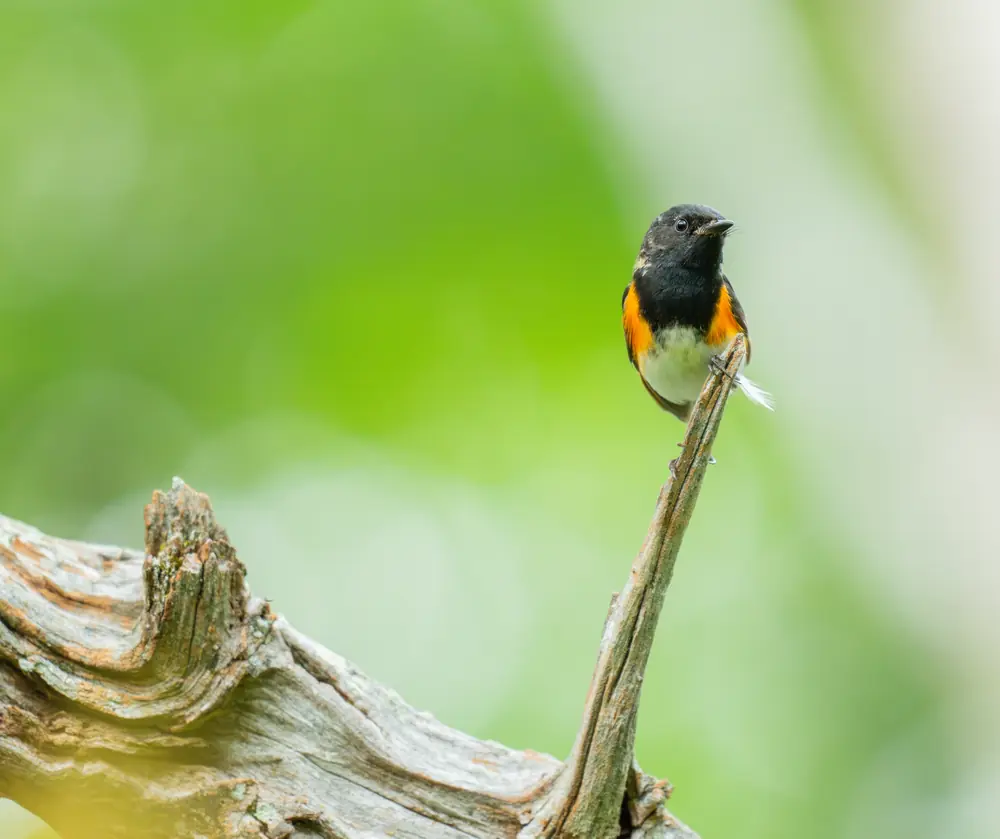
American redstarts and the rest of the warbler wave
Through May; the refuge names spring as one of its two best seasons but gives no peak date · Woodlots and river forests statewide, including Eastern Neck on the Chester River side of Kent County and the big forest blocks at Patuxent Research Refuge
At Patuxent Research Refuge, the Fish and Wildlife Service notes that large unbroken forest suits deep-woods songbirds such as the scarlet tanager. Walk slowly, look up into the new leaves, and note the date each species first appears, a pattern worth comparing from year to year.
-
Radar forecasts of the night flight
March 1 to June 15 for the live maps · Anywhere you have a screen
BirdCast turns weather radar into maps of birds aloft, with arrows for direction and a county dashboard for the lower 48. It notes that most migratory species in North America fly after dark. Looking at the map the evening before is a cheap way to guess whether a morning walk will be busy.
-
Red-eyed vireos singing from the canopy
Breeding season runs from mid-April through August · Forests and open woodlands across the Chesapeake watershed
The Chesapeake Bay Program says a male sings short, repeated phrases through the day, up to 20,000 times. The female builds a compact nest in a shrub and lays three to five eggs. It is a good first song to learn, since it keeps going when other birds fall quiet.
-
Ruby-throated hummingbirds raising young
Returning in early April, then breeding; chicks need three to four weeks after hatching · Gardens, woodland edges and flowering shrubs
Maryland DNR says the female builds a thimble-sized nest of plant down and spider silk, camouflaged with moss and lichen, and raises two chicks alone. DNR’s feeder advice is a nectar of one cup of sugar to four of water, no dye, kept clean of mold. Journey North’s map collects sightings if you want to report your first one.
World Migratory Bird Day is usually observed in May; its organizers set the date each year, so look it up before planning an event. The bird list grows by the week this month; the birds-I-have-seen plate in our Naturalist’s Field Journal is a place to keep it.
Which terns, plovers and other birds are nesting on Maryland’s coast in May?
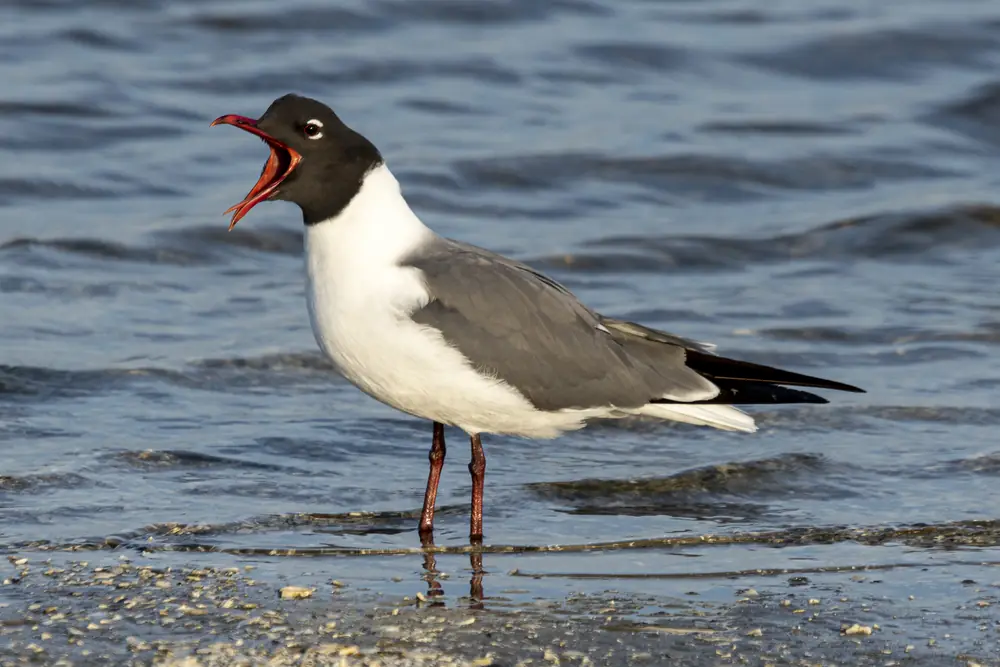
The Atlantic beaches and coastal bays are nesting grounds for several birds that are threatened or endangered in Maryland, and May is the month when the nests go down. If a bird screams at you, dives at you or leads you away with a broken-wing act, you are too close.
-
Terns on the floating island
Terns breed in summer; the raft is reassembled each spring · Chincoteague Bay, Worcester County
DNR, the Maryland Coastal Bays Program and Audubon Mid-Atlantic built a wooden-framed raft with crushed clam shell and chick shelters, first used in 2021. In 2025 royal terns nested on it for the first time, and more than 350 tern chicks fledged that year. DNR counts more than 1,100 common tern nests over five seasons.
-
Posted islands near Ocean City
Nesting season runs April 1 to September 15, per a DNR notice · Islands in the coastal bays
A DNR notice names the black skimmer, royal tern and common tern, all endangered in Maryland, among the birds that nest on sandy islands created for them near Ocean City. Landing a boat or setting foot on a posted island is illegal during the season. The Chesapeake Bay Program adds that skimmer colonies scatter when people come too close, and that the species has not been seen nesting on the Bay itself since 2020.
-
Piping plovers on Assateague
Arrive in early spring, raise chicks through summer, leave in late August · Assateague Island National Seashore
The Park Service describes the threatened piping plover as a bird of sandy, storm-washed beaches. Closures around nests change through the season, so use the park’s alerts page or call before you go.
-
Least terns and oystercatchers
Least tern eggs are usually laid from late May through June; oystercatchers nest in spring · Sandy beaches, shell patches and Tangier Sound shorelines
The Bay Program says least terns lay two eggs that hatch in about 21 days, nest in colonies of up to 200 birds, and dive at intruders. American oystercatchers scrape a shallow hollow, may make up to five nests to confuse predators, and lay two to four eggs. Both are vulnerable to people and dogs on beaches.
Leash dogs where required and carry out all trash, since scraps draw gulls toward nests.
What is happening in Maryland’s bays and rivers in May?
Spring spawners such as striped bass are finishing, warm-water fish are moving in, and horseshoe crabs arrive on the beaches. DNR’s weekly fishing reports put main Bay surface water near 60 degrees in early May 2026 and in the low 70s by the third week.
-
Horseshoe crabs spawning on the beach
Spawning runs May through July and peaks in June, per DNR; the Bay Program says May and June; DNR’s yearly announcements over the past decade came between May 16 and June 1 · Sunset Park near the Ocean City Inlet and other sandy shores of the coastal bays and Chesapeake
DNR calls this possibly the world’s oldest wildlife migration. Spawning peaks at evening high tides near the full and new moons, and a female leaves about 20,000 eggs on average, food for shorebirds heading to northern Canada. In 2027 the moons fall on May 6 (new), May 20 (full) and June 4 (new), so check a tide table for those evenings. The crabs neither bite nor sting; DNR says to turn a stranded one over gently with both hands and never lift it by the tail.
-
Blue crabs mating, and the winter survey results
The Bay Program says blue crabs mate from May through October; DNR has released winter dredge survey results each spring · Brackish Bay waters and tidal rivers
In late May 2026, DNR reported recreational crabbers running trotlines and collapsible traps, with the lower Eastern Shore best. The winter dredge survey, run by DNR and the Virginia Institute of Marine Science at 1,500 sites, reported its 2026 results on May 18: about 349 million crabs, up 46 percent, and about 228 million juveniles, up 121 percent. The 2027 results had not been released at the time of writing.
-
Cownose rays arriving
The Bay Program says they visit the lower and middle Bay from May to October · Lower and middle Chesapeake, as far north as Kent Island
Males leave for the ocean in June or July, and females stay until October. They travel in schools that can be very large.
-
The last of the spring striped bass
Spawning runs April to early June, per the Bay Program · Tidal rivers and the upper Bay
Striped bass swim upstream to spawn in fresh water. In 2026 a 19- to 24-inch slot opened below the Brewerton Channel on May 1, the tidal Potomac opened May 16, and the Susquehanna Flats stayed closed to targeting until June 1. DNR sets the 2027 rules separately, so read its current regulations.
-
Warm-water fish moving in
Reported in May 2026 · Tidal rivers, Tangier Sound and the lower Bay
In 2026, white perch moved to summer spots near oyster bars and piers, black drum showed up in Tangier Sound, and the first spot and croaker came by May 20. Trout stocking shifted from the central region toward the west as the month warmed.
Check the forecast and wind before heading out in a small boat.
Why are turtles crossing Maryland roads in May and June?
Females look for open, sunny, loose ground for eggs, and a road is no hazard to them in their minds. DNR says turtles travel to nesting sites in spring and summer. Common road-crossers are eastern box turtles, snapping turtles, painted turtles, red-eared sliders and, near the coast, the diamondback terrapin, Maryland’s state reptile.
-
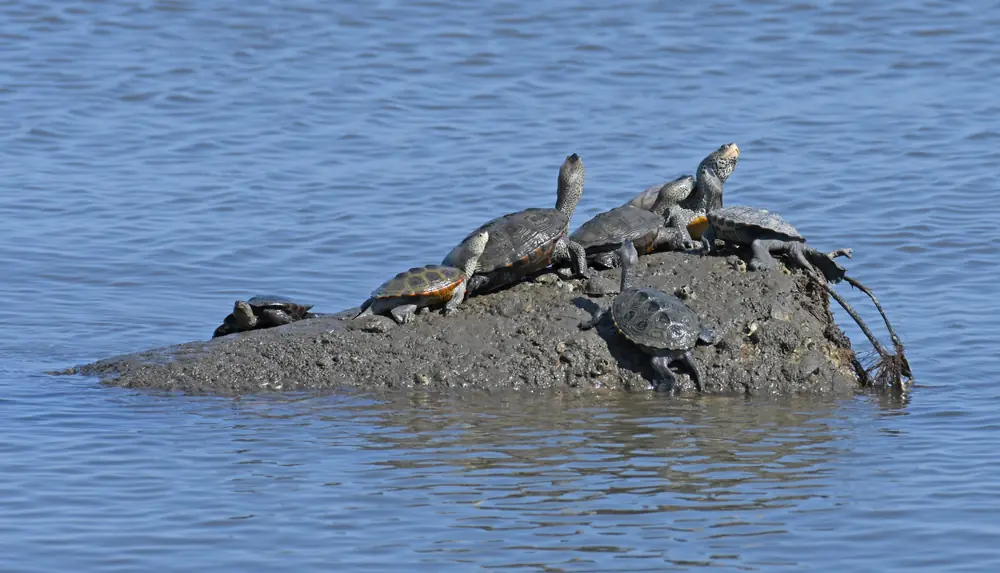
Diamondback terrapins
The Bay Program says they mate in the water, usually at night, in May; females then come onto beaches to nest · Brackish marshes and sandy shores of the Bay and coastal bays
A clutch holds 10 to 15 pinkish-white eggs, and a female may lay several clutches in a season. Eggs take 60 to 100 days to hatch. On Deal Island Road, where nesting females were being killed on a road berm, the State Highway Administration and DNR installed a roughly 6,300-foot barrier to keep turtles off the pavement.
-
Helping a turtle across
Whenever you meet one on a road · Any road near water or woods
DNR’s advice is to check for traffic, then lift the turtle by the back of the shell with both hands and put it on the other side of the road, pointed the way it was traveling. Do not return it to where it started, since turtles keep home ranges, and do not take a wild turtle home. Use extra caution with a snapping turtle. Do not put a pregnant female in water: all Maryland turtles lay eggs on land.
Counting the turtles you see on one stretch of road across May and June makes a good small project for the field journal.
What should I do if I find a fawn, a young bird or another baby animal?
Almost always, leave it where it is. DNR has posted fawn reminders in most springs since 2015, between late March and mid-May. Its May 18, 2026 notice calls “rescuing” a fawn unnecessary, dangerous and illegal, and keeping deer taken from the wild is illegal in Maryland. Questions about young wildlife can go to the state wildlife hotline, 877-463-6497.
-
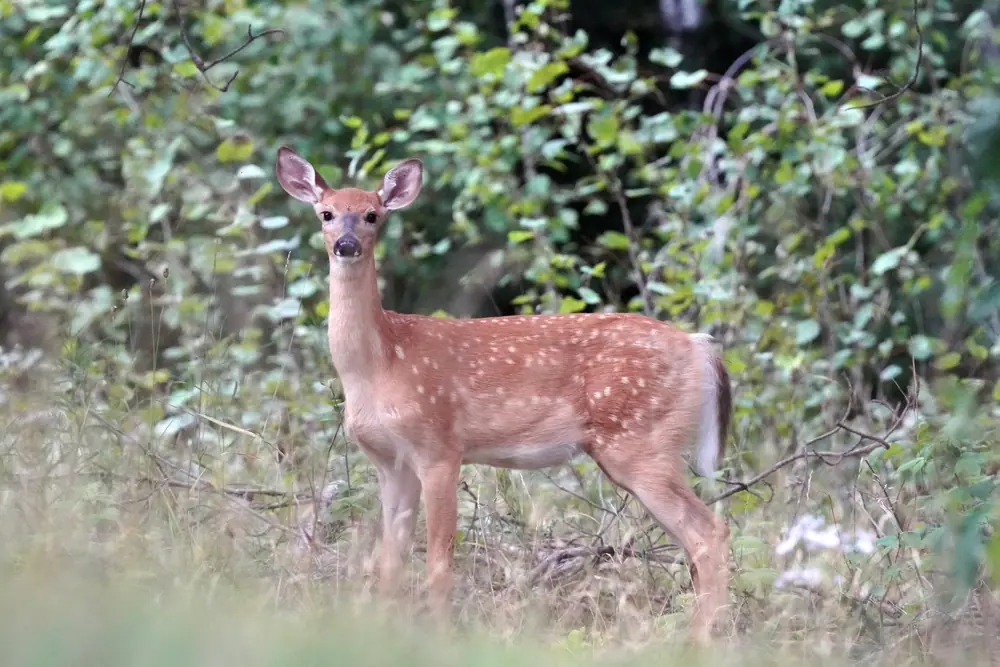
White-tailed deer fawns
The Bay Program says births come between May and June; DNR says late spring · Fields, wood edges and suburban yards
A doe usually feeds nearby and returns to nurse when it is safe; the fawn’s stillness is its defense. If no adult is in sight, the mother is probably close. Keep dogs and children back, and do not feed or handle the fawn.
-
Wild turkey nests and poults
Hens lay one egg a day from mid-April, incubate about four weeks, and hatching is around the first week of June, per the Bay Program · Forest edges and brushy fields
A hen lays about a dozen eggs, often at the base of a tree with cover above. The poults leave the nest within a day and can fly at about eight days.
-
Bald eagle fledglings
The Bay Program says chicks usually fledge at 10 to 12 weeks, between May and July · Large trees near water; the densest breeding in the Bay is in Dorchester County
The Bay Program estimated about 3,000 breeding pairs in the Chesapeake in 2020. Young eagles depend on their parents for weeks after the first flight, so a big brown bird on a low branch may simply be learning. Watch from far off.
-
Bats and their pups
Little brown bat females give birth in June or July, per the Bay Program · Barns, attics and tree cavities for little browns; tree canopy for eastern red bats
Little brown bat females raise one pup a year in nursery roosts, per the Bay Program. Eastern red bats roost in tree canopy four to ten feet up through spring and summer.
-
Black bears
DNR says boars travel long distances in June and July to mate · Mainly Garrett, Allegany, Washington and Frederick counties; sometimes elsewhere in spring
DNR says cubs are born in January and stay with the sow for about 18 months. Bears will eat garbage, crops and bird food, so secure trash if one is about.
Watch from a distance, take a photograph and move on.
What is blooming in Maryland in May, and where?
May belongs to flowers that bloom under new shade and to orchids that wait for the canopy to close. Which spring ephemerals are still showing depends on elevation and on how warm April was, so check a recent report from the place you plan to visit.
-
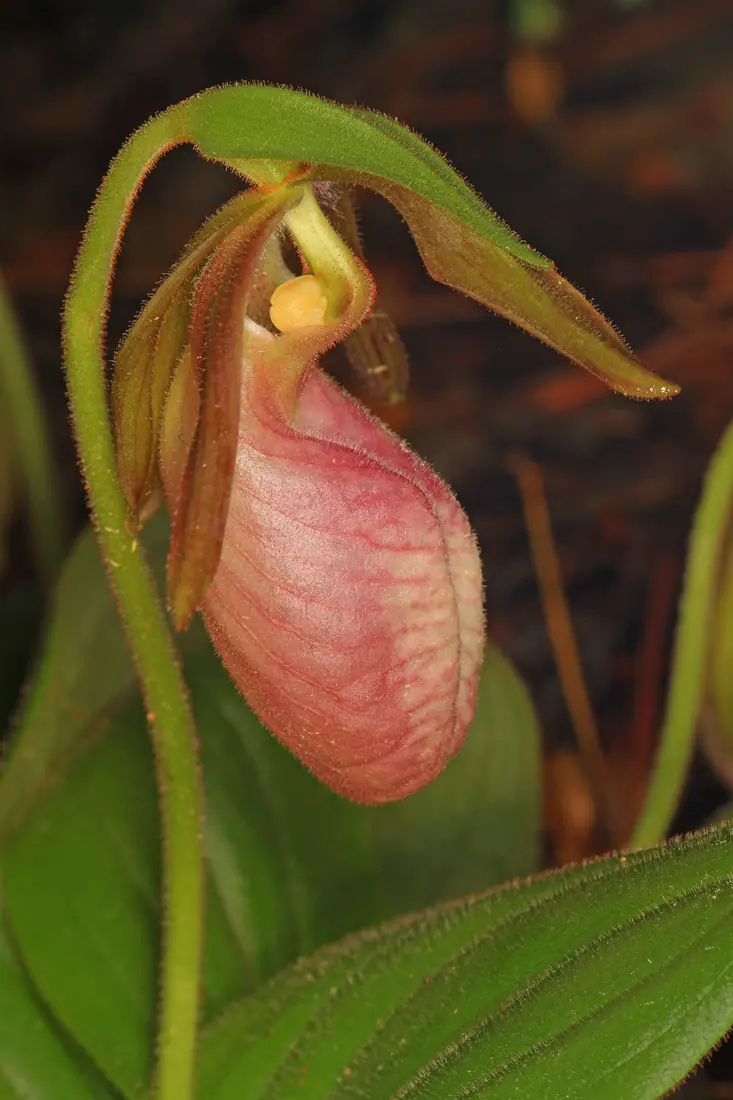
Pink lady’s slipper
The Bay Program gives late May to mid-July · Shaded, acidic woods
The plant relies on a fungus that is hard to reproduce, so transplants usually die, and the Bay Program discourages picking. DNR says Maryland has lady’s slippers in pink, yellow and rare white forms, and asks that photographs not carry precise location, even in metadata.
-
Wild geranium
Blooms for about a month in late spring and early summer, per the Bay Program · Deciduous woodlands, meadows, gardens and yards
Its pink or purple flowers have five rounded petals, and the plant grows in dense clumps. Bees and syrphid flies are the most common visitors.
-
Woodland ephemerals along the C&O Canal
Timing varies by year; the park can say what is out · Chesapeake & Ohio Canal National Historical Park, Washington and Frederick counties
The Park Service lists wild ginger, Jack-in-the-pulpit, spring beauty, mayapple, trout lily, Dutchman’s breeches, blue phlox, bloodroot and violets as native spring wildflowers on the canal; the park phone is 301-739-4200. At Catoctin Mountain Park, picking wildflowers is prohibited.
-
A northern bog in the mountains
Open during daylight hours all year; water levels have been high · Cranesville Swamp Preserve, Garrett County
The Nature Conservancy says peat from sphagnum moss underlies open areas of sundew, cranberry and sedge, with tamarack, red spruce and hemlock the main trees. A 1,500-foot boardwalk crosses the wettest part, and the page warns visitors to expect wet feet. The preserve also records more than 100 bird species, including the alder flycatcher and Blackburnian warbler.
-
Black-eyed Susan, not yet
Blooms June through October, per the Bay Program · Fields, meadows and roadsides in full sun
Maryland’s state flower is a flower of summer, so do not expect the yellow petals until June.
The April page covers bluebells and trillium, the flowers of the early woods.
How much daylight does Maryland gain in May?
Baltimore has 13 h 52 m of daylight on May 1 and 14 h 44 m on May 31, a gain of 52 min, or about 1.7 min a day. Oakland gains 53 min, Salisbury 51 min and Ocean City 50 min. Across the eight cities the gain runs from 50 to 53 minutes, about 20 minutes less than April added, because the days are nearing the June 21 solstice, when the gain stops. None of the eight lacks fourteen hours of light by the 31st. Clocks stay on daylight time all month.
| City | May 1 | May 31 | Gained | Per day |
|---|---|---|---|---|
| Oakland | 13 h 52 m | 14 h 45 m | 53 min | 1.8 min |
| Cumberland | 13 h 53 m | 14 h 46 m | 53 min | 1.8 min |
| Hagerstown | 13 h 53 m | 14 h 46 m | 53 min | 1.8 min |
| Frederick | 13 h 52 m | 14 h 45 m | 53 min | 1.8 min |
| Baltimore | 13 h 52 m | 14 h 44 m | 52 min | 1.7 min |
| Annapolis | 13 h 51 m | 14 h 42 m | 51 min | 1.7 min |
| Salisbury | 13 h 48 m | 14 h 39 m | 51 min | 1.7 min |
| Ocean City | 13 h 48 m | 14 h 38 m | 50 min | 1.7 min |
For a date and town not listed, try the daylight page.
Is the danger of a spring freeze over in Maryland by May?
By May, most of Maryland has seen its last freeze. NOAA’s 1991–2020 station normals put the median last freeze at April 10 for Baltimore-Washington International and Salisbury, April 11 at Hagerstown, April 15 at Cumberland and April 17 at Mechanicsville. The mountains run later: Frostburg’s median is April 29 and Oakland’s is May 6, and the late dates there are May 15 and May 23.
A freeze after the late date can still happen about one spring in ten, so wait to set out tender plants in the mountains, and pack a warm layer for a May night in Garrett County. The Maryland frost dates page lists more towns.
| Station | One year in ten | Median | Nine years in ten |
|---|---|---|---|
| Oakland 1 SE (Garrett County) | Apr 21 | May 6 | May 23 |
| Frostburg 2 (Allegany County) | Apr 14 | Apr 29 | May 15 |
| Cumberland 2 | Apr 2 | Apr 15 | May 5 |
| Hagerstown 1 E | Mar 29 | Apr 11 | Apr 27 |
| Baltimore-Washington International | Mar 27 | Apr 10 | Apr 25 |
| Mechanicsville 5 NE (St. Mary’s County) | Mar 31 | Apr 17 | May 2 |
| Salisbury | Mar 28 | Apr 10 | Apr 30 |
What is May weather like in Maryland, and what are the hazards?
May is the first month that feels like summer to many people. NOAA’s normal May high is 75.5 °F at Baltimore-Washington International, 74.4 °F at Salisbury and 74.6 °F at Cumberland. In Garrett County, Oakland’s normal high is 70.0 °F, and the typical low is 47.7 °F, with 2.3 nights still at or below freezing. Oakland and Frostburg are also the wettest of the eight stations, at 5.34 and 5.18 inches, and BWI and Salisbury the driest, at 3.85 and 3.73 inches.
Four hazards stand out. The first is thunderstorms. Lightning is a year-round risk, according to the NWS, which puts annual U.S. deaths near 20. The second is flash flooding: six inches of moving water can topple an adult, and the NWS says it is never safe to walk or drive into floodwater. The third is early heat: a child left in a car can die in about 10 minutes, and the NWS notes that such deaths have occurred as early as April. The fourth is fire. The Maryland Forest Service says spring wildfires are most frequent while fuels are dry, with debris burning the leading cause at 36 percent.
New seasonal outlooks come out around the middle of each month from NOAA’s Climate Prediction Center; the latest maps are on its 90-day outlooks page.
| Station | High | Low | Nights ≤ 32 °F | Precipitation |
|---|---|---|---|---|
| Oakland 1 SE (Garrett County) | 70.0 | 47.7 | 2.3 | 5.34 |
| Frostburg 2 (Allegany County) | 68.1 | 46.8 | 0.9 | 5.18 |
| Cumberland 2 | 74.6 | 51.2 | 0.3 | 4.22 |
| Hagerstown 1 E | 74.1 | 53.0 | 0.7 | 4.31 |
| Emmitsburg 2 SE (Frederick County) | 72.4 | 50.5 | 0.6 | 4.31 |
| Baltimore Washington Intl Airport | 75.5 | 53.3 | 0.0 | 3.85 |
| Mechanicsville 5 NE (St. Mary’s County) | 73.7 | 52.0 | 0.0 | 4.32 |
| Salisbury Wicomico Regional Airport | 74.4 | 53.2 | 0.3 | 3.73 |
Read the local forecast before a trip, and use the clouds guide to spot towering cumulus.
What is in Maryland’s night sky in May 2027?
Times here are Eastern Daylight Time, which Maryland keeps all month. The month opens with a moonless meteor shower, brightens to a full moon in the middle, and ends with Mercury low in the evening twilight.
-
The Eta Aquariid meteor shower, a good year
Best before dawn on May 5, 6 and 7 · East and southeast, in the last two hours before sunrise
No moon interferes: the new moon arrives at 6:58 a.m. on May 6. SeaSky rates the shower above average, with a ceiling near 60 an hour. At Maryland’s latitude, plan on somewhere around ten to thirty an hour in the final stretch of night, because Aquarius clears the horizon only shortly before sunrise, so the window is short. The meteors are bits of Halley’s comet.
-
The Flower Moon, a seasonal Blue Moon
Full at 6:59 a.m. on Thursday, May 20; look the evening before · Rising in the east-southeast near 8 p.m. on Wednesday, May 19
Full arrives after the moon has set for the night in Maryland, so Wednesday evening, when the moon rises nearly round (7:59 p.m. in Baltimore, by the Naval Observatory table), gives the better view, and Thursday evening is nearly as good. This spring holds four full moons (the Worm, Pink, Flower and Strawberry), and by the old seasonal rule SeaSky gives the extra name Blue Moon to the third. No calendar month in 2027 holds two full moons, so the modern kind of Blue Moon does not occur. Flower Moon is a traditional name from the Old Farmer’s Almanac.
-
Mercury at dusk
Best from about May 12 to June 5; widest from the Sun at 9:14 a.m. on Friday, May 28 · Low in the west-northwest, 45 to 90 minutes after sunset
Mercury reaches 22.8 degrees from the Sun by day on the 28th, so the best sightings come on May 27 and 28. It is about as bright as a bright star in mid-May and fades into June. Use binoculars and a clear western horizon. Northern observers get their most favorable dusk look of the year.
-
Jupiter and Mars in Leo
All month · Jupiter high in the south-southwest after dark; Mars in the same constellation
By our own sky calculations, the first-quarter moon stands beside Jupiter on Wednesday, May 12, closest in late afternoon, and comes within a few degrees of Mars the next night. The same calculations have Jupiter setting well after midnight in early May and near midnight by June 1, and Mars going down around 2 a.m. on May 1 and earlier as the weeks pass.
-
Venus and Saturn low before sunrise
Around May 7 · Low in the east, before sunrise
Venus climbs only an hour before the Sun, and Saturn is back in the morning sky after passing behind the Sun on April 7. Our own calculation puts them roughly a degree apart on May 6 and 8 and closest on May 7. It is a single-source computation, not a published event, so see it as a reason to check a flat eastern horizon on a clear morning.
-
The Milky Way returns
Near the new moon: May 1 to 14 and May 25 to 31 · A dark site with a clear southern horizon, in the last hours of night
Our own computation for about 40 degrees north has the bright core up in full darkness for a few hours at most near the new moon, and only just before dawn. Town lights will wash it out.
| Phase | Date | Time |
|---|---|---|
| New moon | Thursday, May 6 | 6:58 a.m. EDT |
| First quarter | Thursday, May 13 | 12:44 a.m. EDT |
| Full moon, the Flower Moon | Thursday, May 20 | 6:59 a.m. EDT |
| Last quarter | Friday, May 28 | 9:58 a.m. EDT |
| New moon | Friday, Jun 4 | 3:40 p.m. EDT |
Look up any date on the moon phases page, and the clouds guide helps you judge whether a night will be clear.
What can families do outdoors in Maryland in May 2027?
- Visit the Ocean City Inlet at an evening high tide. Choose a night close to the May 20 full moon or the June 4 new moon, bring a dim light, and remember to turn over any stranded horseshoe crab gently with both hands.
- Finish up the City Nature Challenge. The organizers’ schedule for 2027 is April 30 to May 3 for observing, May 4–16 for identifying and May 20 for results. The National Aquarium says only that the Baltimore event returns in spring 2027, so ask about local events.
- Do a dawn bird walk. Check BirdCast the night before, then walk a woodlot in the first hours of daylight with a notebook.
- Report and record. Journey North takes hummingbird sightings, and Nature’s Notebook, a USA-NPN program, lets you log leafing and flowering at home.
- Find the date for World Migratory Bird Day. It is usually in May; look up the 2027 date with the organizers and ask a refuge or Audubon chapter near you about programs.
- Keep a turtle tally. Count the turtles on one road through May and June.
- Plan for the holiday weekend. Memorial Day falls on Monday, May 31, 2027. Ocean City’s page says lifeguards begin on the Saturday of that weekend, which would be May 29; confirm with the Beach Patrol.
Two plates in our Naturalist’s Field Journal fit May well: nest observed, and the daily field log.
Safety notes for May in Maryland
- Turkey hunters afield. The 2026–27 DNR hunting calendar keeps the spring turkey season open through May 24, 2027. Through May 10 hunting ends at noon, and from May 11 it can last until sunset. Certain counties allow Sunday hunts. Turkey hunters are exempt from the orange or pink rule, so wear bright colors on hunted land at dawn. DNR counted 5,094 birds taken in 2026.
- Ticks. The CDC’s advice: keep to trail centers, put 0.5 percent permethrin on clothing, use an EPA-registered repellent, take a shower soon after coming in (within two hours), and look over children and pets.
- Storms and floods. Go indoors at the first thunder, and turn around at flooded roads.
- Beaches. The NWS says to swim only at beaches with lifeguards, and warns that rip currents form on bright days too. Ocean City’s patrol starts on the Saturday of Memorial Day weekend; the Park Service said in October 2026 that Assateague’s beaches had no lifeguards.
- Nesting areas. Keep out of roped-off beaches and posted islands. DNR says the island nesting season near Ocean City runs through September 15.
- Copperheads. DNR says copperheads are fairly common on forested rock outcrops in central and western Maryland and bite readily if provoked. Look before you step or reach.
- Bears and young animals. In bear country, secure trash and feeders. Leave fawns, fledglings and other young animals alone.
- Burning. Maryland Forest Service rules for debris fires call for a 10-foot firebreak, enough people and equipment, and someone on site until the last spark is out, and, in the agency’s April 2026 notice, limit burning to the hours between 4 p.m. and midnight; confirm the rule that applies in May with your local fire authority.
- Fishing rules. The striped bass details above are from 2026. Read DNR’s current regulations.
- Cold water. Rivers stay cold into May even when the air is warm.
Sources (62)
- Maryland DNR: Horseshoe Crab Spawning Migration Arriving in Maryland (May 19, 2026)
- Maryland DNR news: horseshoe crab announcements, 2017 to 2026
- Chesapeake Bay Program field guide: horseshoe crab
- Chesapeake Bay Program field guide: blue crab
- Maryland DNR: 2026 Chesapeake Bay blue crab winter dredge survey
- Chesapeake Bay Program field guide: cownose ray
- Chesapeake Bay Program field guide: striped bass
- Maryland DNR: Maryland Fishing Report, May 6, 2026
- Maryland DNR: Maryland Fishing Report, May 13, 2026
- Maryland DNR: Maryland Fishing Report, May 20, 2026
- Maryland DNR: Maryland Fishing Report, June 3, 2026
- Chesapeake Bay Program field guide: diamondback terrapin
- Maryland DNR: Maryland’s wild turtles are on the move (2021)
- Maryland DNR: Terrapin Station, Deal Island partners create a protective barrier (2022)
- Maryland DNR news: terrapin and turtle articles
- Chesapeake Bay Program field guide: eastern painted turtle
- Maryland DNR: Marylanders reminded to leave fawns alone (May 18, 2026)
- Maryland DNR news: fawn reminders, 2015 to 2026
- Chesapeake Bay Program field guide: white-tailed deer
- Chesapeake Bay Program field guide: wild turkey
- Maryland DNR: Maryland spring turkey hunters report harvest of 5,094 birds (June 1, 2026)
- Maryland DNR: hunting seasons calendar for 2026–2027 (PDF)
- Maryland DNR: fluorescent orange and/or pink clothing requirements and exceptions
- Chesapeake Bay Program field guide: bald eagle
- Chesapeake Bay Program field guide: osprey
- Chesapeake Bay Program field guide: little brown bat
- Chesapeake Bay Program field guide: eastern red bat
- Maryland DNR: black bear fact sheet
- Chesapeake Bay Program field guide: pink lady’s slipper
- Chesapeake Bay Program field guide: wild geranium
- Chesapeake Bay Program field guide: black-eyed Susan
- Maryland DNR: Native Plant Profile, Maryland orchids (2024)
- National Park Service: wildflowers of the C&O Canal
- National Park Service: plants of Catoctin Mountain Park
- The Nature Conservancy: Cranesville Swamp Preserve
- U.S. Fish and Wildlife Service: birding at Eastern Neck National Wildlife Refuge
- U.S. Fish and Wildlife Service: Patuxent Research Refuge
- BirdCast, Cornell Lab of Ornithology and partners
- Chesapeake Bay Program field guide: red-eyed vireo
- Maryland DNR: ruby-throated hummingbird
- Journey North: hummingbird migration
- Maryland DNR: where do birds that leave Maryland for the winter go? (2025)
- Maryland DNR: Maryland’s tern raft celebrates five successful years (2025)
- Maryland DNR: colonial waterbirds return to Ocean City islands (2017)
- Chesapeake Bay Program field guide: least tern
- Chesapeake Bay Program field guide: black skimmer
- Chesapeake Bay Program field guide: American oystercatcher
- National Park Service: Assateague Island birds
- National Park Service: Assateague Island current conditions
- Town of Ocean City: Beach Patrol
- National Weather Service: rip currents
- National Weather Service: lightning safety
- National Weather Service: turn around, don’t drown
- National Weather Service: heat safety
- Centers for Disease Control and Prevention: preventing tick bites
- Maryland DNR: field guide, copperhead
- Maryland DNR: Maryland Forest Service safety rules and tips for spring wildfire season (April 2026)
- NOAA NCEI: monthly normals, 1991–2020, for the eight Maryland stations
- Climate Prediction Center: seasonal (90-day) outlooks
- U.S. Naval Observatory: phases of the moon, May 2027
- U.S. Naval Observatory: Baltimore sun and moon times, May 19, 2027
- Photos via Wikimedia Commons; licenses and photographers are credited under each picture
