What to look for in nature in Maryland this February
February closes out meteorological winter, and in Maryland it is the month when winter begins to fray. Snow can still bury the Garrett plateau and, every so often, Baltimore, yet on the first mild, rainy evening the woodland pools fill with the clucking of wood frogs and the sleigh-bell chorus of spring peepers. Woodcock drift in from the south, yellow perch nose up the Bay’s tributaries to spawn, maple sap starts to drip in the western counties, and skunk cabbage warms a path for itself through cold swamp mud. Eagles are sitting on eggs, tundra swans are fattening for the flight north, and the days stretch by more than two minutes from one to the next. In the sky, Jupiter and then Mars reach opposition, and on February 20 the full Snow Moon rises with a barely visible eclipse. The sections below say where and when, from the Alleghenies to the Atlantic.
Other months in Maryland: October, November, December, January.
Start here

- Listen at a woodland pool after dark. Maryland DNR lists February and March as calling time for spring peepers and wood frogs. Pick an evening when it is raining or damp and near 50 degrees, stand quietly by a flooded woodland hollow or ditch, and give the frogs a few minutes to start up again.
- Count birds for the Great Backyard Bird Count. The National Audubon Society lists the 2027 count for February 12 to 15, Friday to Monday. A quarter hour spent watching on any one of those days, from a window or a park bench, earns a checklist.
- Catch Jupiter and Mars at their best. Jupiter reaches opposition at 7:21 p.m. EST on Wednesday, February 10, and climbs out of the east as daylight fades; Mars has its turn nine days later, on the 19th. Both shine in Leo, and on the 20th the full moon slides in beside them.
Keep a record: the first night of frog calls belongs on a map of sounds plate (Naturalist’s Field Journal), noting how warm it was and whether rain was falling; a woodcock peenting at dusk suits the dusk and dawn watch; a skunk cabbage patch visited weekly makes a fine the same place twice; and every Great Backyard Bird Count tally can go on birds I have seen. Write down the date of each first, so next February has something to beat.
Regions used below: Western Maryland (Garrett and Allegany); Hagerstown Valley and the Blue Ridge; Central Maryland and the Baltimore–Washington corridor; Southern Maryland; Eastern Shore and the Atlantic coast.
When do frogs start calling in Maryland?
Earlier than most people expect. Maryland’s first frogs breed in late winter, in shallow pools that fill with snowmelt and rain and dry up by summer, so no fish survive in them to eat the eggs. A mild, wet night in February is often enough to start them calling, and a hard freeze the following week silences them again until the weather relents.
-
Spring peepers
February and March, loudest on mild, damp evenings · Shallow ponds, flooded ditches and wet woods statewide, especially near brushy second growth
Maryland DNR describes the peeper’s call as a shrill, high whistle given about once a second, and says a big chorus heard from a distance has been compared to sleigh bells. The singers measure only ¾ to 1¼ inches, tan with a dark X across the back, and very hard to find even when one is shrilling a few feet away. DNR lists peepers as found all over Maryland and calling from February into March.
-
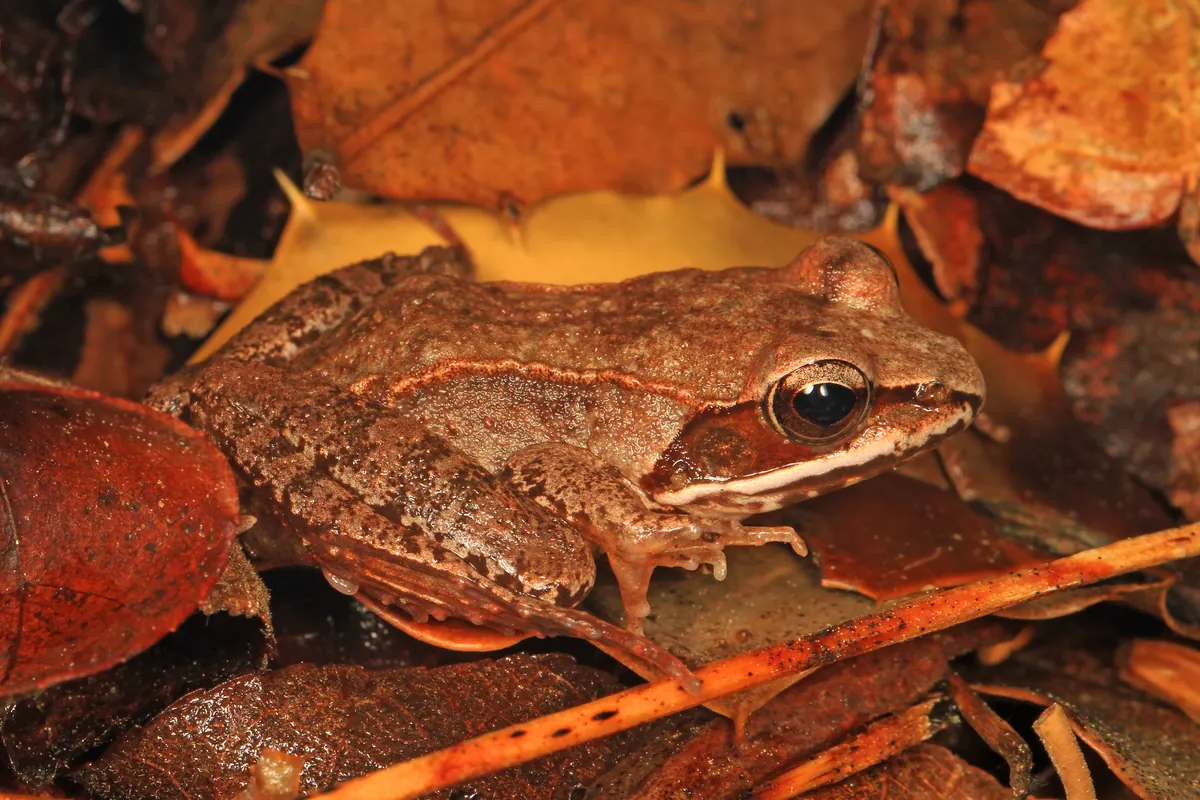
Wood frogs
Rainy or humid nights in February and March · Vernal pools and fishless ponds inside deciduous and mixed woods
A pool full of wood frogs sounds like a flock of ducks muttering to itself; DNR compares the call to hoarse quacking. These are the brown frogs with a dark robber’s mask that spent December and January frozen solid under the leaf litter. DNR says to listen for them on rainy or humid nights in February and March.
-
Upland chorus frogs
Late winter into early spring · Wet fields, floodplains and roadside pools west of the Bay and the Susquehanna
DNR counts four chorus frog species in Maryland, including the spring peeper and the mountain chorus frog, which is state endangered. The upland chorus frog’s call is a rising “crrreeek,” the sound of a thumbnail drawn along the teeth of a comb, and DNR notes that reports of it start coming in each year as winter winds down.
-
Spotted salamanders, waiting for rain
Usually from early March, after heavy rain; a warm late-February storm can start them sooner · Mature forest with vernal pools, statewide
Big, black and dotted with yellow, spotted salamanders pass the winter below ground and travel to breeding pools when rain soaks the forest at night, sometimes hundreds in a single evening. The Maryland Biodiversity Project, which compiles records from across the state, gives their breeding season as early March into May, with March the usual month for the big nights. In a mild year, keep an eye on the forecast at the end of February: a soaking rain with temperatures in the 40s or 50s after dark is the signal.
On rainy nights near woodland pools, drive slowly: frogs and salamanders cross roads to reach the water, and so do the volunteers who help them.
Which birds are arriving in Maryland in February, and which are leaving?
Bird migration in February runs both ways. A few early migrants push north into Maryland from the Southeast, while the Arctic birds that spent the winter on the Bay begin to look restless.
-
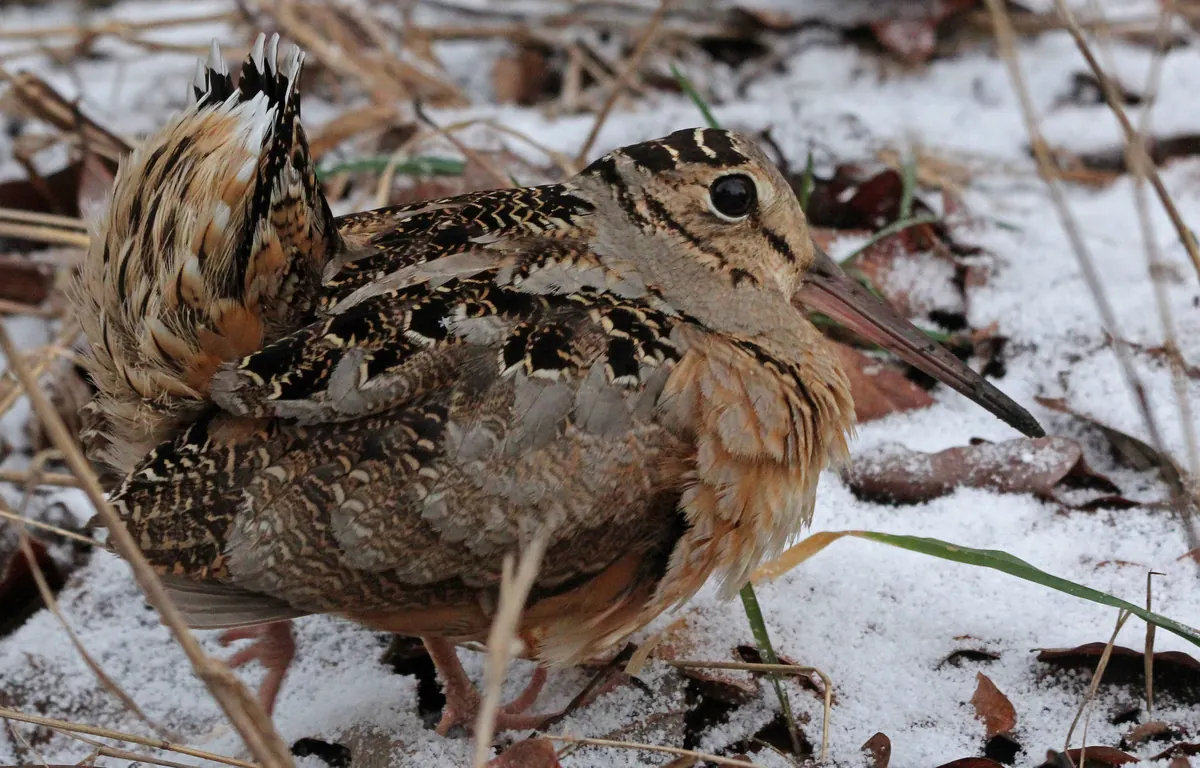
American woodcock
Arriving late January through February; displays mostly mid-March to early April · Young forest, brushy old fields and clearings; DNR manages Millington and Mt. Nebo wildlife management areas for them
Maryland DNR says woodcock pass through the state from late January through February on their way to breeding grounds farther north, and that males perform their courtship flights at dusk from mid-March to early April. The Alliance for the Chesapeake Bay notes that people in the southern part of the watershed may catch a display as early as mid-February. On a calm evening late in the month, wait at the edge of a brushy field in Southern Maryland or on the Shore as the light fades. A nasal “peent” rising from the grass means a male is warming up; next comes a musical twitter of wings as he spirals as high as 300 feet and drops back to the same patch.
-
Tundra swans
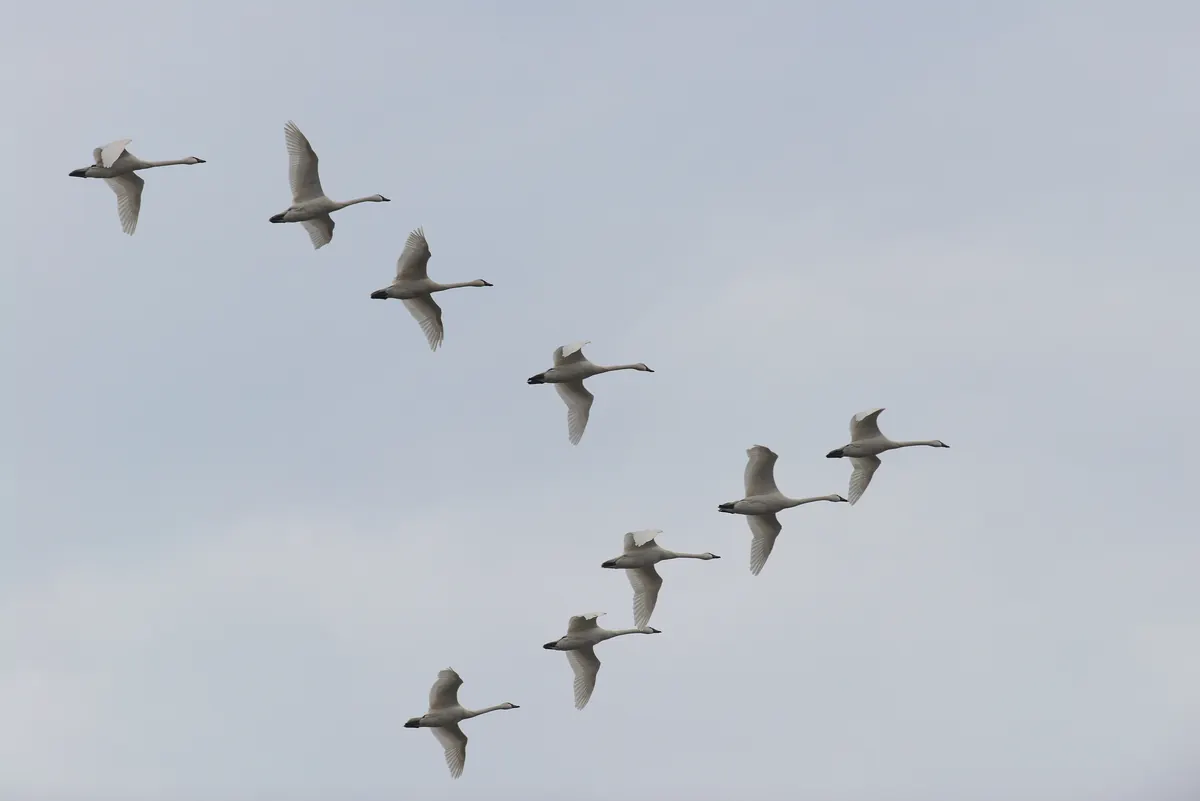
On the Bay through February; most leave from the first thaw into March · Eastern Neck National Wildlife Refuge near Rock Hall, the ponds near Hurlock, Blackwater and other shallow coves on the Shore
February is the last full month of swan season on the Chesapeake. Maryland DNR says tundra swans start leaving their wintering grounds after the first spring thaw, and the flocks pass north toward the Great Lakes from the first week of March into early April, bound for nesting grounds on the Arctic tundra. Until then, listen for their high-pitched calls, which DNR likens to those of snow geese, carrying across the coves on calm mornings.
-
Eastern bluebirds house hunting
DNR advises having boxes up by the third week of February · Open fields, farms, parks and large lawns with scattered trees
Bluebirds are among the first Maryland songbirds to think about nesting. DNR’s backyard habitat guide asks landowners to put boxes up by the third week of February, four to six feet off the ground on a pole with a predator guard, in a big open area, with no perch on the box. A female lays about five eggs, which hatch roughly twelve days later, and a pair can raise a second brood before fall.
For the waterfowl that are still here, see the December page for Maryland, which has the winter survey numbers.
Which Maryland birds are already sitting on eggs in February?
Two big predators get a head start on everything else. By February the courtship of early winter has given way to the long, quiet business of incubation.
-
Bald eagles
Most eggs laid in February; hatching about five weeks later · Tall pines and hardwoods along the Bay, its tidal rivers and larger reservoirs
The Maryland Bird Conservation Partnership says most of the state’s eagles lay in February. A clutch holds one to three eggs, the parents keep the eggs covered nearly every minute from the first one on, and incubation averages 35 days, so a nest that held eggs on Valentine’s Day may have chicks in late March. Watch from at least 100 yards away: an eagle hunkered so low that only its head shows, and a mate bringing fish or sticks, mean the season is under way. The Eagle Festival at Blackwater National Wildlife Refuge, run by Friends of Blackwater, is on the calendar for Saturday, March 13, 2027.
-
Great horned owls
Incubating through February; owlets hatch from about early March · Old hawk, crow and squirrel nests, tree cavities and ledges, statewide
Females that laid in late January or early February sit for 30 to 37 days, Maryland DNR says, so February is the quiet middle of their nesting season, and the male does the hunting for both. Old stick nests high in leafless trees are the places to check; two feathered tufts poking over the rim give a sitting owl away.
An eagle or owl nest checked once a week through hatching fills the nest observed plate nicely; note the date you first see a chick’s head.
When is the yellow perch run in Maryland?
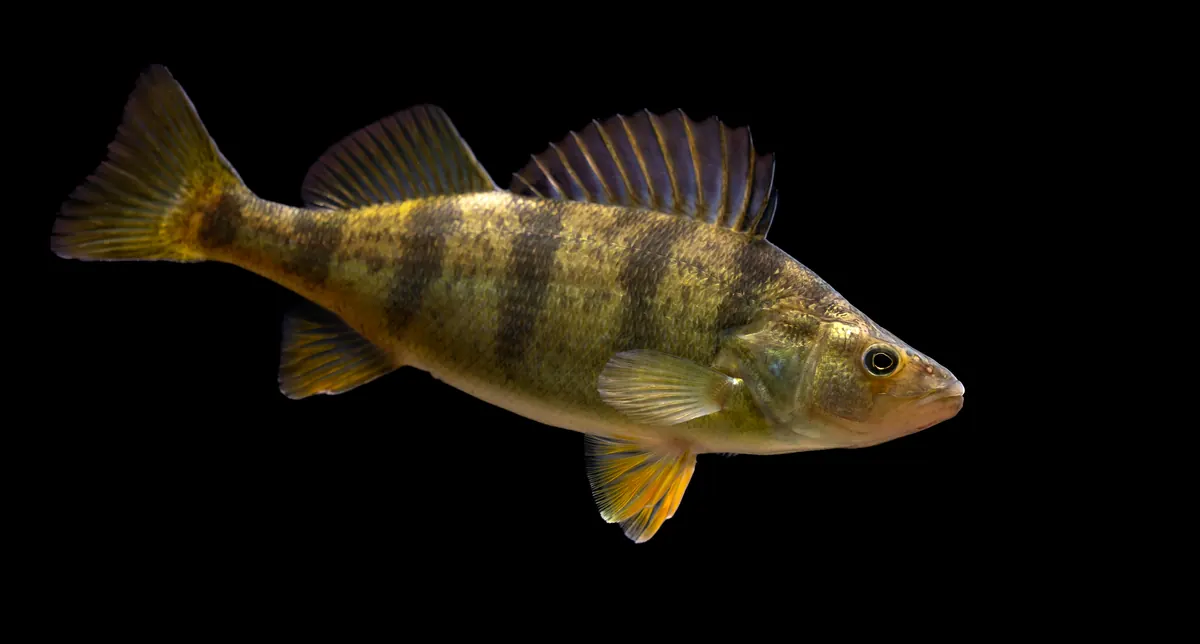
Late in February, Maryland DNR says, adult yellow perch in the Chesapeake region begin moving from the lower stretches of the tributaries up toward the shallow fresh water where they spawn.
-
The run upstream
Starting in late February in the Bay’s tributaries; April in Deep Creek Lake · Upper reaches of the Bay’s tidal rivers, such as the Northeast, Bush, Sassafras, Chester, Magothy, Choptank and Tuckahoe
Males reach the spawning grounds first and stay until the females have come and gone, according to DNR’s fish facts. Water temperature sets the pace: in 2026 a cold early March kept the fish staged in deeper water below the spawning reaches, and DNR’s March 18 fishing report found them moving up once the water neared 50 degrees. So a warm February can bring an early run, and a cold one pushes it into March.
-
Egg strands
During and just after spawning · Brush, roots and fallen branches in shallow, slow water
Yellow perch lay their eggs in long, jelly-like strands, often draped over snags or debris, which several males then fertilize. DNR says the eggs hatch in 11 to 27 days depending on water temperature. From a bridge or bank on a clear day, look for pale, accordion-folded ribbons caught on submerged branches.
-
A smaller catch limit
Announced January 9, 2026; check DNR for 2027 rules · Tidal waters and freshwater streams and rivers of the Bay and its tributaries
DNR announced in January 2026 that the recreational limit for that year would drop from ten yellow perch a day to five, with the 9-inch minimum unchanged, after six years of low recruitment. Winter trawl surveys in the upper Bay showed the population had dropped by more than half. Biologists suspect poor reproduction, degraded habitat, predation or disease more than fishing itself. Reservoirs, lakes and ponds are not covered by the change.
A note of each run you visit, with the water temperature if you can get it, makes a useful daily field log entry.
When does maple sap run in Maryland?
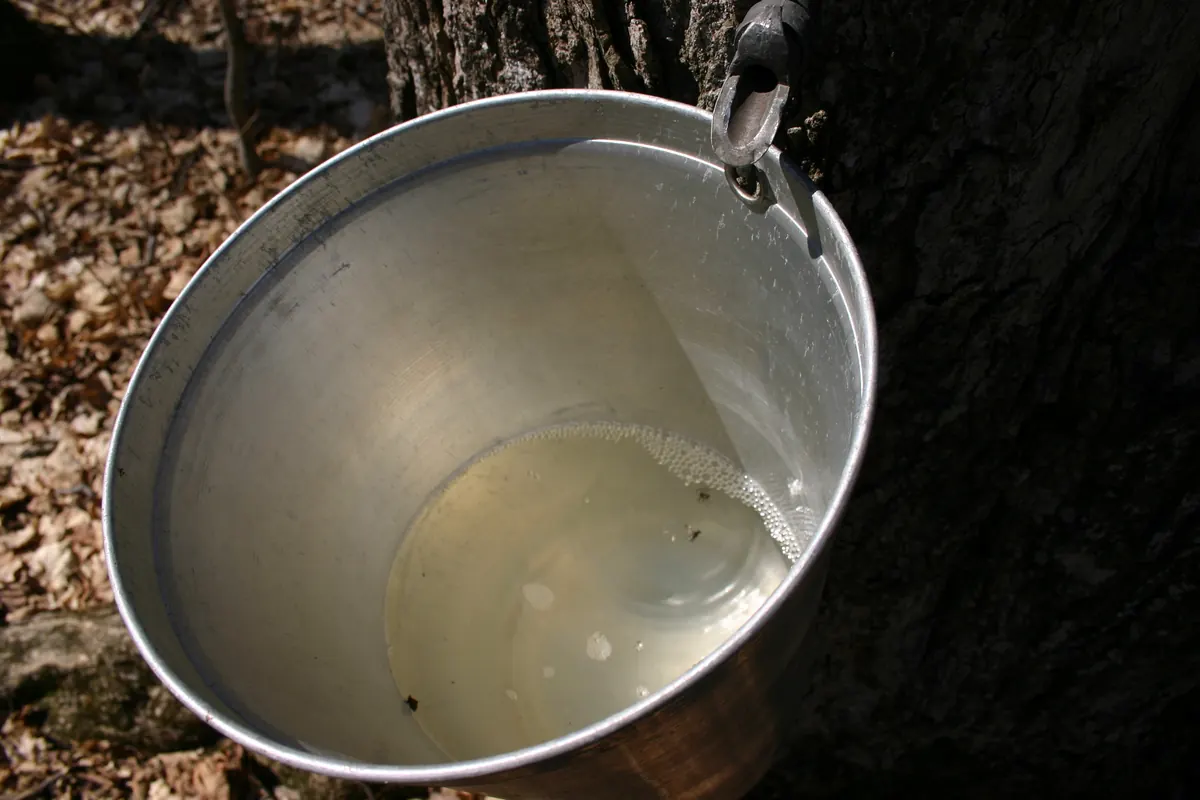
Maple sugaring needs a particular kind of weather: nights below freezing followed by days above 40 degrees, Maryland State Parks explains. The swing in temperature makes pressure inside the trunk rise and fall, and sap flows out of a tap hole on the warm afternoons. In Maryland that pattern usually settles in during February.
-
Sap season in the western counties
Beginning in February and lasting up to about six weeks · Farm sugarbushes, mostly in Garrett County
About 25 Maryland farms make syrup today, according to My Maryland Farmers, a site funded by the state’s soybean and grain checkoff boards, close to 4,000 gallons a year between them, most of it from Garrett County. The same source says the season starts in February and lasts up to six weeks, depending on the weather, and that one Garrett farm needs about 80 gallons of sap per gallon of syrup because most of its trees are red maples, which run less sweet than sugar maples.
-
The sugar shack at Cunningham Falls
Demonstrations on two weekends in March; 2027 dates not yet posted · William Houck Area, Cunningham Falls State Park, near Thurmont
Maryland State Parks has run a maple syrup festival at Cunningham Falls for more than 50 years, with rangers boiling sap in the Sugar Shack at the far end of the lake parking lot and a self-guided Sugar Bush hike. Park staff note that maple sap is up to 98 percent water and that they need 40 gallons of it for one gallon of syrup. The 2026 festival ran March 14–15 and 21–22; call the park office, 301-271-7574, or watch DNR’s news page for the 2027 dates.
On a sunny February afternoon after a frosty night, look closely at a fresh break or wound on any maple twig: a bead of clear sap there means the run has started in your neighborhood.
What is the first wildflower to bloom in Maryland?
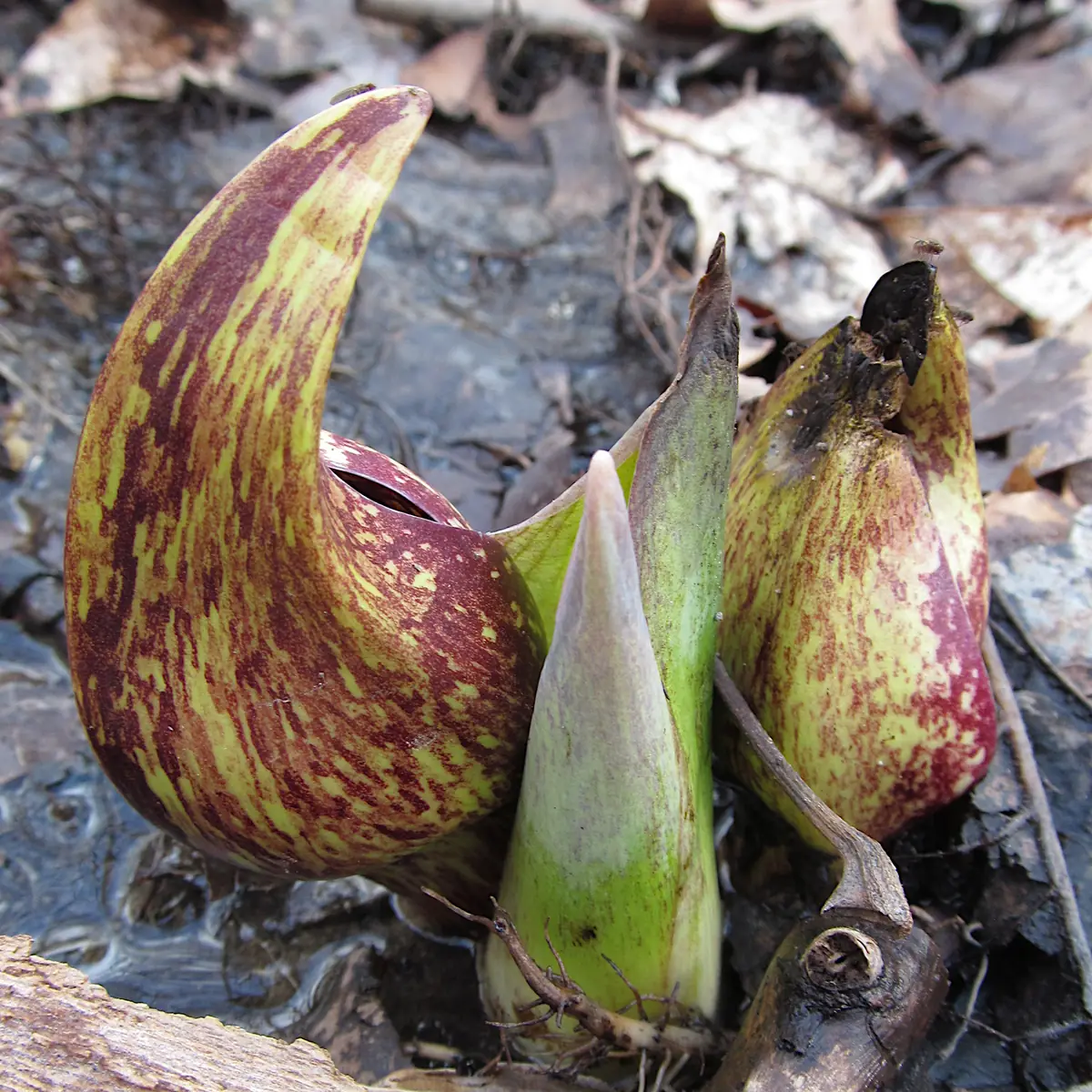
In most years it is skunk cabbage, and it does not wait for spring. In the colder parts of the watershed, the Chesapeake Bay Program notes, it can melt its way up through late-winter snow.
-
Skunk cabbage
Late winter, from February in milder spots · Seeps, springs, stream banks and swampy woods throughout the Chesapeake region
The first thing to appear is a hood rather than a leaf: a smooth, shell-shaped spathe streaked maroon and yellow-green, curled around a stubby flower head studded with tiny blooms. The plant makes its own warmth, a process called thermogenesis; the Chesapeake Bay Program says the air inside the hood often runs about 20 degrees above the outside temperature, enough to thaw the ground around it. The rank smell that gives the plant its name lures early insects, which carry pollen from plant to plant. Only after flowering do the big green leaves unroll, up to three feet long, and they wither once the tree canopy closes overhead.
-
Red maple buds
Swelling through February; flowers open in March and April · Swamps, floodplains and upland woods statewide
Red maples flower in March and April, according to the Chesapeake Bay Program, but in February the round flower buds clustered along the twigs fatten and redden week by week. On a late-winter drive, swampy woods with a faint red haze across the treetops tell you the bloom is close.
Draw a skunk cabbage hood life-size on the tree through the seasons plate or a blank journal page, then go back in April to draw its leaves in the same spot.
Are groundhogs really awake on Groundhog Day in Maryland?
Mostly not. This year the holiday lands on Tuesday, February 2, and Maryland’s groundhogs, or woodchucks, generally sleep through it.
-
Woodchucks in their burrows
Hibernating from late October or November; out from late February into early March · Field edges, roadside banks, hedgerows and suburban yards
Maryland DNR says a hibernating woodchuck’s heart slows from about 80 beats a minute to 4 or 5, and its body cools from 98 degrees to as low as 38. Most come out for good between late February and early March, and they mate from early March into April. The Chesapeake Bay Program adds a twist: males often leave their burrows in February to go visiting females nearby, then retreat underground until March.
-
The true middle of winter
February 3–4 · Everywhere
Groundhog Day sits close to an old seasonal marker, the halfway point between the winter solstice and the spring equinox. In 2027 the Sun reaches that midpoint on the evening of February 3 or in the early hours of the 4th, depending on how you count it, so the groundhog is a day or two early. From here on, the days lengthen faster each week until the equinox on March 20.
Note the first day a woodchuck shows itself at a burrow you know; it makes a good reading the signs entry.
How much daylight does Maryland gain in February?
More than an hour over the month, and faster every week. Baltimore has 10 hours 13 minutes of daylight on February 1 and 11 hours 17 minutes on the 28th, a gain of 64 minutes, about 2.4 minutes per day. Oakland, Cumberland, Hagerstown and Frederick gain the same 64 minutes, Annapolis 62, and Salisbury and Ocean City 61, since the lower Shore sits farther south, where the seasonal swing in day length is a little smaller. On February 28 all eight cities fall short of twelve hours of daylight by only about three quarters of an hour. The daily gain keeps growing until the equinox on March 20, and on Sunday, March 14, the switch to daylight saving time pushes sunset an hour later overnight.
| City | Feb 1 | Feb 28 | Gained | Per day |
|---|---|---|---|---|
| Oakland | 10 h 13 m | 11 h 17 m | 64 min | 2.4 min |
| Cumberland | 10 h 12 m | 11 h 16 m | 64 min | 2.4 min |
| Hagerstown | 10 h 12 m | 11 h 16 m | 64 min | 2.4 min |
| Frederick | 10 h 13 m | 11 h 17 m | 64 min | 2.4 min |
| Baltimore | 10 h 13 m | 11 h 17 m | 64 min | 2.4 min |
| Annapolis | 10 h 15 m | 11 h 17 m | 62 min | 2.3 min |
| Salisbury | 10 h 17 m | 11 h 18 m | 61 min | 2.3 min |
| Ocean City | 10 h 17 m | 11 h 18 m | 61 min | 2.3 min |
For your own street, the day-length tool works out sunrise, sunset and twilight on any date.
Is February Maryland’s snowiest month, and what could El Niño do?
At BWI, on average, yes. The 1991–2020 normals give the airport 7.5 inches of February snow, more than January’s 6.4 and far more than December or March, and Salisbury and St. Mary’s County show the same February peak. The catch is in the medians: BWI’s typical February brings only 2.6 inches, because a handful of huge storms lift the long-run figure. Baltimore’s record book is full of them. Its largest three-day snowfall, 26.8 inches, fell February 16–18, 2003, and its third-largest single-day total, 22.8 inches, came on February 11, 1983, the Weather Service’s Baltimore–Washington office records. Garrett County is a different world: Oakland averages 22 inches this month and keeps getting snow well into March. All eight stations warm up a little from January’s readings; BWI’s normal afternoon high climbs about three degrees.
This year the Pacific is primed. In mid-September (the September 10 ENSO discussion), Climate Prediction Center scientists rated the warm event likely, at better than 90 percent, to stay very strong from fall right through Maryland’s winter. Looking back at the seven strong events since 1950, the Weather Service’s Baltimore–Washington office found these winters warmer and wetter than normal as a group, and more so the stronger the event, but snowfall split sharply: heavy in four of those winters and almost absent in the other three. The February 1983 storm came during an El Niño that NOAA’s Climate.gov counts, with 1997–98, among the record-strong events. Strong El Niño years load the southern storm track; whether those storms bring rain or a blizzard to Maryland depends on cold air being in place. NOAA reissues its seasonal outlook every month; for the newest February odds, open the CPC’s 90-day outlook maps.
| Station | High | Low | Nights ≤ 32 °F | Nights ≤ 0 °F | Precipitation | Snowfall, average | Snowfall, median | Days with 1 in. of snow |
|---|---|---|---|---|---|---|---|---|
| Oakland 1 SE (Garrett County) | 40.3 | 19.8 | 25.1 | 1.7 | 3.56 | 22.0 | 17.7 | 6.8 |
| Frostburg 2 (Allegany County) | 37.2 | 19.9 | 24.8 | 1.2 | 3.03 | 19.0 | 16.0 | 5.7 |
| Cumberland 2 | 43.4 | 23.9 | 23.2 | 0.2 | 2.38 | 7.7 | 6.0 | 2.7 |
| Hagerstown 1 E | 43.5 | 24.7 | 18.0 | 0.0 | 2.66 | – | – | – |
| Emmitsburg 2 SE (Frederick County) | 42.8 | 22.9 | 23.0 | 0.3 | 2.55 | 8.8 | 5.3 | 2.4 |
| Baltimore Washington International Airport | 46.4 | 26.9 | 21.0 | 0.0 | 2.90 | 7.5 | 2.6 | 1.5 |
| Mechanicsville 5 NE (St. Mary’s County) | 47.6 | 26.2 | 20.7 | 0.1 | 2.97 | 6.2 | 2.0 | 1.5 |
| Salisbury Wicomico Regional Airport | 48.2 | 29.2 | 19.7 | 0.1 | 3.25 | 3.4 | 1.1 | 0.9 |
Late-winter storms often come with strong northeast winds and high tides on the Bay and the coast. Check the local forecast before a long drive, and the Maryland frost dates before setting out early seedlings.
What is in Maryland’s night sky in February 2027?
-
Mercury’s best evening show of the winter
Roughly February 1–10; farthest from the Sun early on February 3 · Low in the west-southwest, 30 to 45 minutes after sunset
Mercury reaches its greatest angle east of the Sun, about 18 degrees, at 1 a.m. EST on February 3, so the evenings of the 2nd and 3rd are the peak, and it stays findable for about a week on each side. Then, at dusk on the 7th, look for a one-day-old moon, a mere thread of light, just beside Mercury; binoculars help.
-
Jupiter at opposition
Wednesday, February 10, 7:21 p.m. EST · Rising in the east at sunset, high in the south around midnight
At opposition our planet sits directly in line between the Sun and Jupiter, which lifts above the eastern rooftops at dusk, crosses the south around midnight and sets at dawn, gleaming at magnitude −2.5. Its distance that day, about 405 million miles, is the smallest of the year.
-
Mars at opposition
Friday, February 19, about 10 a.m. EST; closest to Earth the next day · Rising in the east around sunset, in Leo near Jupiter
This is a modest opposition. Mars is close to aphelion, the outer end of its oval orbit, and its nearest pass, roughly 63 million miles on February 20, leaves the disk small in a telescope. To the eye it is still a striking orange-red point of magnitude −1.2, best seen in the hours around midnight when it stands highest.
-
The Snow Moon and a faint eclipse
Full at 6:23 p.m. EST, Saturday, February 20; eclipse 4:12 to 8:13 p.m. EST · Rising in the east-northeast at dusk
A penumbral eclipse is under way when this full moon comes up. Only Earth’s pale outer shadow, the penumbra, falls on the Moon, which misses the dark inner umbra entirely, with the deepest point at 6:13 p.m. EST, and in Baltimore it rises at 5:45 p.m., four minutes before sunset, according to the U.S. Naval Observatory. So the best moment arrives while the Moon is barely clear of the horizon in a bright sky. At best you might sense a light gray dusky tint on one side, and many viewers will notice no change at all. Some almanacs call it a supermoon; by stricter lists it falls just short. Later that evening, Jupiter, Mars and the star Regulus cluster around the Moon in Leo, and on the night before, the Moon, not quite full, slips very close by Jupiter.
-
Venus and Saturn
All month · Venus low in the southeast before dawn; Saturn low in the southwest after sunset
Venus still blazes before sunrise, and Saturn, low after dusk, sinks a little deeper into the twilight each week.
| Phase | Date | Time |
|---|---|---|
| New moon | Saturday, Feb 6 | 10:56 a.m. EST (an annular solar eclipse, visible from South America, Antarctica and parts of Africa, not from North America) |
| First quarter | Sunday, Feb 14 | 2:58 a.m. EST |
| Full moon, the Snow Moon | Saturday, Feb 20 | 6:23 p.m. EST (with a faint penumbral lunar eclipse) |
| Last quarter | Sunday, Feb 28 | 12:16 a.m. EST |
| New moon | Monday, Mar 8 | 4:29 a.m. EST |
For faint stars, aim for the moonless evenings around February 6. Check the cloud outlook for gaps over your county before driving to a dark spot; local moonrise times are on the moon calendar. That February 6 new moon also brings an annular solar eclipse, seen from South America, Antarctica and parts of Africa but not from Maryland or anywhere else in North America.
What can families do outdoors in Maryland in February 2027?
- The Great Backyard Bird Count, February 12–15. Watch for 15 minutes or longer on one or more days, at home or in a park, and enter the tally on eBird or the Merlin app. Children can be in charge of counting the most numerous species.
- A frog walk on a mild, rainy evening. Take a flashlight and boots to the nearest wet woods or flooded ditch and see who can first tell a peeper from a wood frog. Keep to paths and leave the egg masses where they are.
- Put up a bluebird box. DNR’s target is the third week of February. Mount it on a pole with a guard in an open lawn or field and keep a log of the first visit.
- Look for skunk cabbage. Any swampy patch of woods along a stream will do. Bring a thermometer and compare the air inside a hood with the air outside.
- Plan ahead for maple days. The Cunningham Falls Maple Syrup Festival is held each March, usually over two weekends; check with the park for 2027. Friends of Blackwater’s Eagle Festival is set for Saturday, March 13, 2027.
- Patuxent Research Refuge, near Laurel. Hours at the National Wildlife Visitor Center are 10 a.m. to 4 p.m., Wednesday to Saturday, except federal holidays. The paved Loop Trail beside the parking lot works for strollers, and a bird blind overlooks an open field.
A naturalist’s field journal keeps all of this in one place, and there are guides for each state and month to plan the next outing.
Safety notes for February in Maryland
- Deer. Maryland’s regular archery season closes January 31. DNR has set Primitive Deer Hunt Days for February 1–3, 2027, limited to longbows, recurve bows and flintlock or sidelock percussion muzzleloaders. Wear something bright in the woods those three days, especially on public land.
- Geese and other small game. Snow goose (light goose) hunting is open statewide to February 6, then again February 8 to March 10 in the Eastern Zone only; DNR announced on October 1, 2026 that Maryland and the other Atlantic Flyway states have paused the light goose conservation order for 2026–27 because greater snow geese have declined, so this late segment is a regular season in which hunters may use electronic calls and shotguns holding more than three shells. Late resident Canada goose seasons in western and southern Maryland run to March 10. Rabbit and squirrel seasons last through February 28, crow hunting continues on Wednesdays through Saturdays, and trapping of beaver, fox, muskrat and other furbearers goes on into February and March depending on county; see DNR’s 2026–27 calendar.
- Fluorescent orange or pink. Anyone hunting in Maryland, plus anyone assisting, must show fluorescent orange or pink, DNR says: a solid-color cap, or outerwear on the torso showing 250 square inches front and back, or a camouflage top above the waist that is 50 percent or more orange or pink. Goose, duck, crow, turkey and furbearer hunters are among those exempt, but rabbit and squirrel hunters are not. Hikers on hunted public land should wear bright colors too, and so should their dogs.
- Thin ice. February thaws rot ice from below while it still looks solid. DNR asks for at least 4 inches before walking out, checked with an auger or spud bar in several places, and warns that snow hides cracks and open water and that Deep Creek Lake has warm springs that keep some spots thin. Carry ice picks, wear a float coat, and if someone goes through, dial 911; Natural Resources Police dispatch is 410-260-8888.
- Nor’easters and tidal flooding. A single coastal storm can drop heavy snow in the west while pushing high water into Annapolis, Crisfield and Ocean City. Never drive through a flooded road.
- Cold on the ridges. Wind on the Allegheny Front and Backbone Mountain can make a mild-looking day dangerous. Dress in layers and turn back if feet get wet.
Sources
- Maryland DNR: spring peeper
- Maryland DNR: wood frog
- Maryland DNR: native animal profile, chorus frogs (March 2023)
- Maryland Biodiversity Project: spotted salamander
- Chesapeake Bay Program: five signs of spring in the Chesapeake Bay region
- Maryland DNR: American woodcock
- Alliance for the Chesapeake Bay: big romantic gestures from the little American woodcock
- Maryland DNR: tundra swan
- Maryland DNR, Maryland’s Wild Acres: eastern bluebird
- Maryland Bird Conservation Partnership: bald eagle biology
- Maryland DNR: bald eagle
- Friends of Blackwater: event calendar (Eagle Festival, March 13, 2027)
- Maryland DNR: great horned owl
- Maryland DNR fish facts: yellow perch
- Maryland DNR: Maryland takes action to protect yellow perch following low recruitment (January 2026)
- Maryland DNR: Maryland Fishing Report, March 4, 2026
- Maryland DNR: Maryland Fishing Report, March 18, 2026
- Maryland Park Service: Maple Sugarin’ at Cunningham Falls State Park
- Maryland DNR: Cunningham Falls State Park hosts 2026 Maple Syrup Festival two weekends in March
- My Maryland Farmers: things are getting sappy in Maryland
- Chesapeake Bay Program field guide: eastern skunk cabbage
- Chesapeake Bay Program: the first blooms bring the heat
- Chesapeake Bay Program field guide: red maple
- Maryland DNR: woodchuck
- Chesapeake Bay Program: Groundhog Day comes out of the shadows
- U.S. Naval Observatory: Earth’s seasons, 2027
- NOAA solar calculator equations (sunrise, sunset and day length)
- NOAA NCEI: U.S. climate normals, 1991–2020
- NOAA NCEI: monthly normals, 1991–2020, for the eight Maryland stations in the February table (data service)
- NWS Baltimore/Washington: snowfall and cold, with Baltimore’s top 1-, 2- and 3-day snowfalls
- NWS Baltimore/Washington: El Niño and Washington–Baltimore winters
- NWS Baltimore/Washington: ENSO, the NAO and local winter snowfall
- NOAA Climate.gov: 2015 State of the Climate, El Niño came, saw, and conquered
- Climate Prediction Center: ENSO diagnostic discussion, September 10, 2026
- Climate Prediction Center: seasonal (90-day) outlooks
- U.S. Naval Observatory: phases of the moon, December 2026 to March 2027
- U.S. Naval Observatory: sun and moon rise and set for Baltimore, February 20, 2027
- NASA eclipse website: lunar eclipses, 2021–2030
- NASA eclipse website: solar eclipses, 2021–2030
- Fred Espenak: Sky Event Almanac 2027 (GMT)
- EarthSky: what is a supermoon?
- Old Farmer’s Almanac: eclipses
- SEDS: Mars opposition 2027
- National Audubon Society: Great Backyard Bird Count (February 12–15, 2027)
- Great Backyard Bird Count
- Project FeederWatch: project overview
- eBird
- U.S. Fish and Wildlife Service: Patuxent Research Refuge visitor center
- Maryland DNR: hunting seasons calendar for 2026–2027 (PDF)
- Maryland DNR: 2026–27 archery deer season opens September 11 (Primitive Deer Hunt Days, February 1–3, 2027)
- Maryland DNR: waterfowl hunting schedule confirmed after federal light goose conservation order paused for 2026–27 (October 1, 2026)
- Maryland DNR: fluorescent orange and/or pink clothing requirements and exceptions
- Maryland DNR: practice ice safety awareness as temperatures drop (January 2026)
- Photos via Wikimedia Commons; licenses and photographers are credited under each picture
