What to look for in nature in Massachusetts this April
April in Massachusetts is the month when spring stops being a rumor. River herring climb fish ladders from Brewster to Plymouth, swallows return over the ponds, and piping plovers settle on the beaches behind string fences. Right whales reach their usual peak in Cape Cod Bay, hepatica and trout lilies open on forest floors, and saucer magnolias flare in Boston, then drop their petals in a hot afternoon. The weather still swings between snow flurries and 70-degree days, and brush fires are more frequent now than in any other month. Boston gains about 79 minutes of daylight between April 1 and April 30, and every clock reading is on daylight time. The windows below come from agencies, sanctuaries and published counts, and where no organizer had posted 2027 plans, we say so and suggest asking them.
Other months in Massachusetts: October, November, December, January, February, March.
Start here
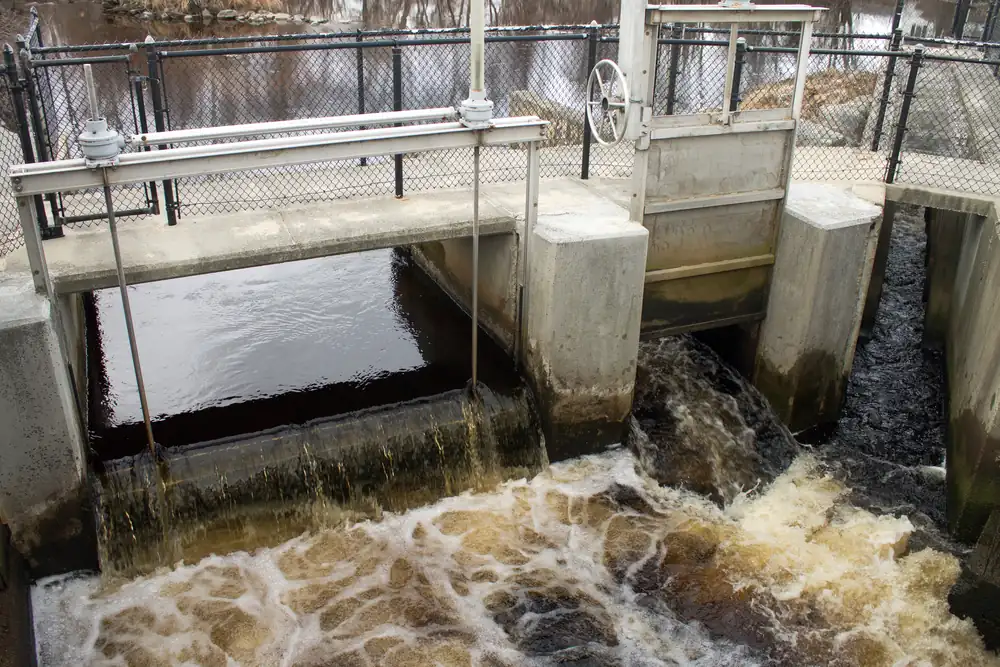
- Watch a herring run. On a mild April afternoon, stand beside a fish ladder in Plymouth, Brewster or Bournedale and watch silvery alewives fight upstream. Look, count if you like, and never take a fish: river herring cannot be possessed in Massachusetts.
- Look for ephemerals before the leaves. Walk a rich hardwood slope in mid to late April and look low for hepatica, bloodroot and trout lily. Keep to the trail, leave every flower in place, and come back a week later to see what has changed.
- Listen at dusk for toads. On a warm evening after rain, stand near a pond or flooded field and listen for the long, steady trill of the American toad. Wait for the peepers to pause and you will hear it clearly.
April fills several plates of the Naturalist’s Field Journal. Write the first barn swallow or ruby-throated hummingbird onto “birds I have seen,” and put the evening the toads begin to trill into your daily field log. Follow a magnolia or a red maple from bud to leaf under “a tree through the seasons,” give a quiet half hour at a fish ladder or a pond edge a page of “reading the signs,” and visit one woodland twice, a week apart, on “the same place twice.”
Regions used below: The Berkshires and the Hilltowns; The Pioneer Valley; Central Massachusetts and Worcester County; Greater Boston, the North Shore and Merrimack Valley; The South Shore and South Coast; Cape Cod and the Islands.
When do river herring and shad run in Massachusetts?
Most of April, and the runs overlap. Two silvery fish, the alewife and the blueback herring, leave the ocean for the freshwater ponds where they hatched, and in many towns they have to climb a fish ladder past an old mill dam to get there. Further inland, American shad head up the Connecticut River. The dates below are windows from published guides and counts, and the fish follow water temperature rather than the calendar, so a cold spring runs late.
-
River herring at the fish ladders
Late March through May; most viewing windows open in mid to late April · Plymouth, Brewster, Bournedale, Middleborough, Wareham, Essex, Newbury and Weymouth
Marine Fisheries staff publish a viewing guide with a window for each run. Its listings include April 1 to May 2 on the Nemasket River in Middleborough, April 15 to May 20 at Stony Brook in Brewster, April 20 to May 20 at Town Brook in Plymouth, and April 20 to May 30 at the Monument River fishway in Bournedale. That guide is an older printing, so treat the windows as typical rather than promised. Plymouth’s own page says its run usually begins in late March and lasts into early June, and its table puts the visual counts at 202,851 fish in 2024, 119,820 in 2025 and 62,075 in 2026. A bench and an observation platform at the Jenney Grist Mill dam off Spring Lane are open to the public.
-
What volunteer counts say about timing
First fish in late March to late April; busiest counts mid-April to mid-May · Stony Brook, Brewster, and other Cape Cod runs
The Association to Preserve Cape Cod and the Massachusetts Bays National Estuary Partnership have compiled volunteer counts from 2007 to 2023. At Stony Brook in Brewster, the first fish of the season was logged between March 23 and April 24, depending on the year, and the busiest ten-minute count fell between April 16 and May 16 in every year that has data. The last fish was counted from late May into June. Volunteers count for ten minutes at a time, which is why the numbers are estimates, and many watershed groups welcome new counters.
-
The rules at the water
All year · Every river herring run in the state
Massachusetts has had a statewide moratorium on possessing and selling river herring since 2006, so taking a fish from a run is illegal. Plymouth’s page adds that young eels, called glass eels or elvers, are also protected: harvesting or possessing eels under 9 inches long can bring heavy fines. Look, count and photograph, and leave the fish where they are.
-
American shad on the Connecticut River
Beginning in late April, building into May and June · The Holyoke fish lift and the Turners Falls fishway on the Connecticut River
At Holyoke, fish cannot pass the dam on their own, so most of the Connecticut River’s migrants are lifted over it. One local news report counted more than 3,000 shad passing between April 22 and April 29 in a year when the lift was running. The U.S. Fish and Wildlife Service’s 2025 fishway report listed 324,172 American shad through Holyoke by September 3 of that year, against 437,553 the year before, so numbers swing from season to season. The Turners Falls fishway has underwater viewing windows, but the 2026 viewing season ran May 9 to June 7, so expect May rather than April and check with FirstLight for 2027 dates. Holyoke’s own public fishway has been closed for maintenance at times, so ask before driving there.
Every spring, the herring show up in surges as the water warms, so one visit may find a trickle and the next a crowd.
Which birds arrive in Massachusetts in April?
Swallows, marsh birds and the first warblers, with the biggest wave of songbirds still to come in May. Mass Audubon’s weekly sightings reports, printed in The Boston Globe, give a feel for the month: the arrivals below come from late-April and early-April reports in several years, so treat them as the usual cast, not a schedule.
-
Barn swallows and other swallows
Early April for the first scouts; barn swallows mostly from mid to late April · Ponds, marshes, barns and bridges statewide
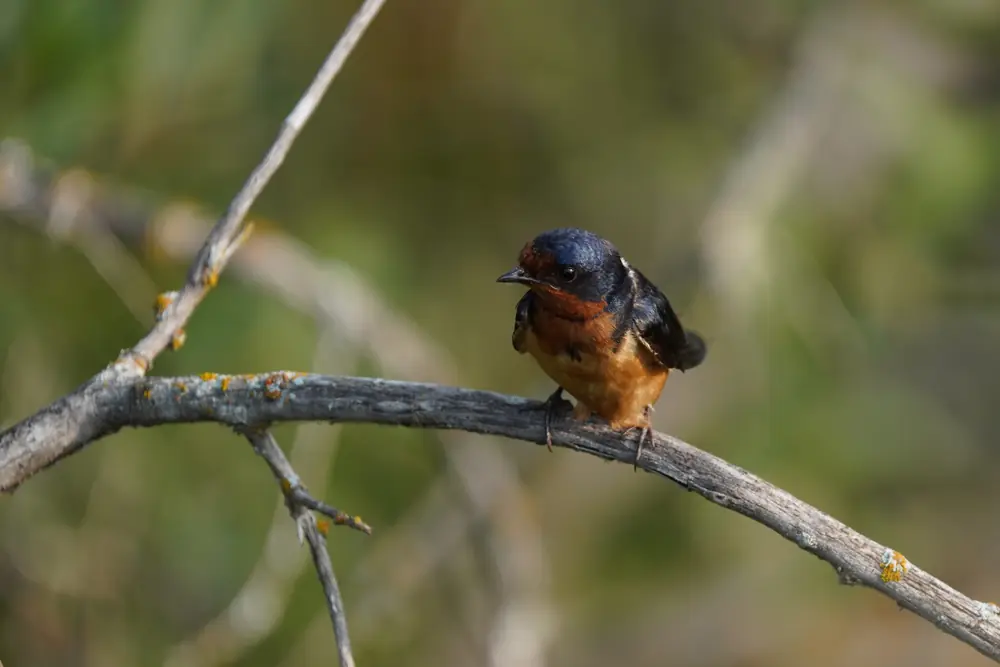
Mass Audubon’s breeding bird atlas says the first male barn swallows return from mid to late April, depending on warm weather, and that the most frequent arrival date at one Cape Cod colony is April 18. Most of the nesting population is back by mid-May. In an early spring, one 2023 report described a flock at Santuit Pond in Mashpee with a cliff swallow, barn swallows, northern rough-winged swallows and purple martins, all birds that seldom appear before early April. Barn swallows prefer to reuse old mud nests under eaves and bridges.
-
Marsh birds and sandhill cranes at Burrage Pond
Late April to mid-May is probably the best stretch for cranes and rails · Burrage Pond Wildlife Management Area, Hanson and Halifax
Bird Observer describes Burrage Pond, a state wildlife management area of about 1,700 acres built from old cranberry bogs, swamp and cedar woods, as a place with annually breeding sandhill cranes and, in 2016, a breeding pair of king rails. Mass Audubon sightings from late April of two different years list sandhill cranes there, along with American bitterns and soras. The management area is state hunting land, and Hanson’s trail page notes that hunting is allowed except on Sundays, so wear something bright in the woods during turkey season.
-
Warblers, waterthrushes and early hummingbirds
Late April, with the main waves in May · Wooded wetlands and streamsides, then thickets and parks
One late-April 2023 report described the widespread arrival of green herons and several warblers, including yellow warblers, northern waterthrushes and Louisiana waterthrushes, along with whip-poor-wills, chimney swifts and ruby-throated hummingbirds. In a cold spring, expect the same birds a little later. Journey North collects hummingbird sightings and keeps maps showing their progress north, a good way to judge when to hang a feeder.
The Globe’s sightings column and eBird’s county lists are the quickest ways to see which birds are around this week.
What are piping plovers doing on Massachusetts beaches in April?
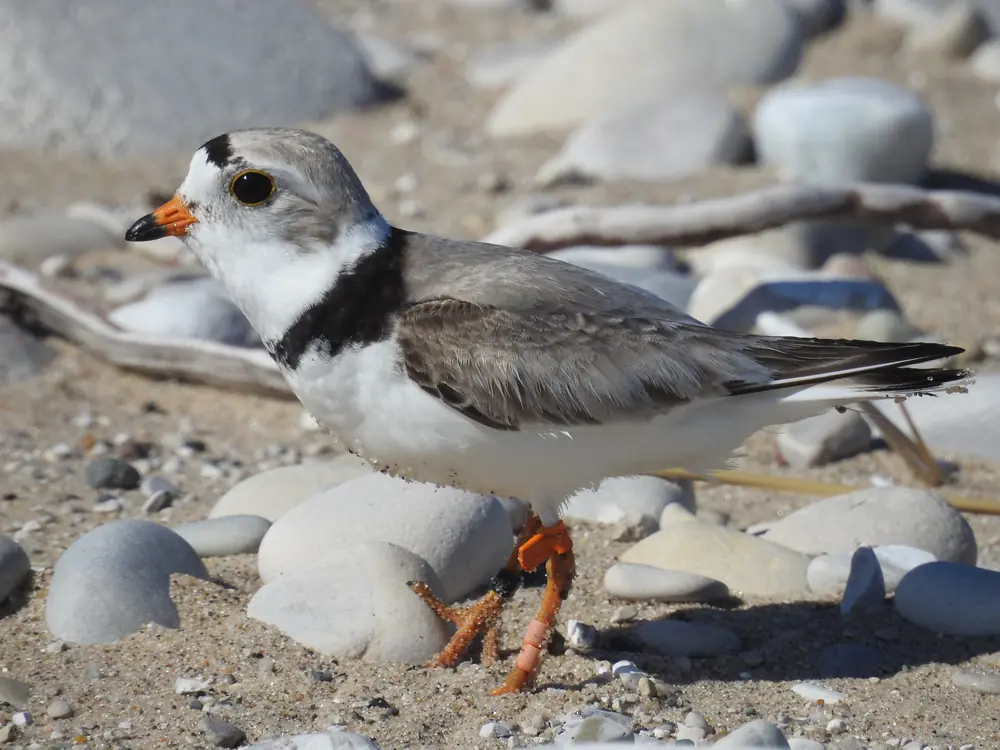
Nesting, or getting ready to. Piping plovers arrive between late March and early April, according to a Mass Audubon interview on WBUR, and Massachusetts now holds roughly 1,200 breeding pairs, the largest breeding population on the Atlantic coast. In the mid-1980s, when the species was listed, the state was down to about 135 pairs.
-
Fenced nests on the sand
Nesting begins in April and can run into early September · Crane Beach, Wollaston, Sandy Neck, the National Seashore and other fenced beaches
Boston 25 News reports that nesting begins in April, though some plovers start later and can nest into early September, and lists beaches with restrictions including Crane Beach, Revere, Winthrop, Wollaston, Sandy Neck and the National Seashore. The Department of Conservation and Recreation says string-and-post fencing with signs goes up to protect nesting habitat, and Mass Audubon is its contractor for monitoring and fencing. Eggs and chicks are tiny and the color of sand, so nests are easily stepped on. If a nest is destroyed, the pair may lay again, which stretches the season into summer.
-
Sharing the beach
From April to the end of the nesting season · State and town beaches
Stay out of fenced areas, follow each beach’s posted dog rules and carry out your trash, advice echoed by the Mass Audubon coastal waterbird director. Parker River National Wildlife Refuge, on Plum Island, closes at times for capacity or management, so check its page before you go.
Are right whales still in Cape Cod Bay in April?
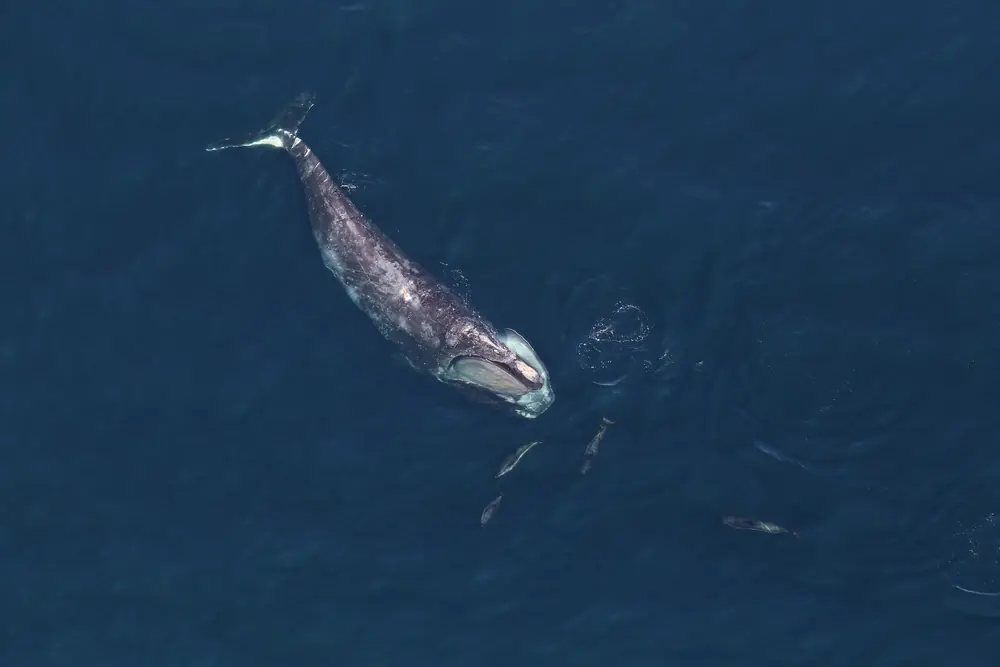
Yes, and April is usually when they are densest. The Division of Marine Fisheries said in an April 2025 advisory that April is typically the peak of the right whale season, when whales feed in tight groups at or just below the surface and are hard for boaters to see. The Center for Coastal Studies says spring brings the whales to feed on zooplankton here and farther offshore, and that they travel north as they feed.
-
Rules that peak with the whales
March 1 to May 15 for the small-vessel speed limit; the agency can end it early · Cape Cod Bay and waters north of the Cape
In 2025 the state’s speed limit of 10 knots for vessels under 65 feet ran from March 1 to May 15 in waters of Cape Cod Bay south of 42° 08’ north and in waters north of the Cape west of 70°10’ west. Trap and gillnet closures also ran to May 15, and the agency said it might lift them sooner if whales left. Both state and federal law forbid coming within 500 yards of one. NOAA Fisheries puts the species at about 380 whales.
-
Humpbacks and the whale-watch season
Boston-area trips can begin at the end of March; most boats run May through October · Boston, Gloucester and Hyannis
A Boston.com guide quotes a Boston operator saying its season starts at the end of March and runs to mid-November, while most boats run from May to October. Humpbacks are described as probably the most common species on Massachusetts trips, and right whales are occasionally seen in spring. Ask an operator what is in the area before booking a trip in April, because the schedule is shorter than in summer.
When do wildflowers and trees wake up in Massachusetts in April?
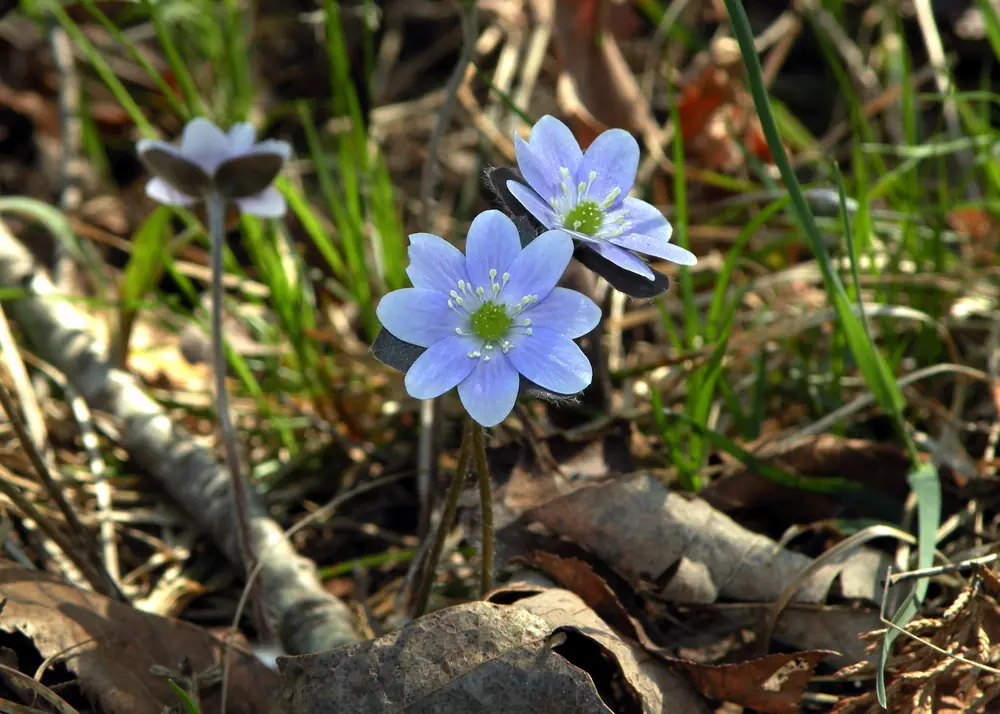
First the woodland floor, then the street trees. In hardwood forests, small perennials called spring ephemerals race to bloom before the canopy leafs out; MassWildlife’s field guide lists wood anemone, spring beauty, Dutchman’s breeches, trout lily, hepatica, bloodroot and red trillium among them, and notes that they give over-wintering bumblebee queens, mining bees and early butterflies their first nectar and pollen. The guide asks visitors not to pick them, because each plant’s survival depends on setting seed.
-
Hepatica, bloodroot, trout lily and red trillium
The first flowers in the last third of April in a warm spring; Mass Audubon points to the first week of May for the main show · Rich hardwood slopes and floodplain woods; the Connecticut Valley and Berkshires for variety
Bloom dates vary with elevation and temperature. Mass Audubon’s wildflower-walk guide says to get out during the first week of May for Dutchman’s breeches, squirrel corn, spring beauty, bloodroot and trout lily, finds hepatica on rich forest floors in May, and puts the greatest diversity around the middle of May, when red trillium and marsh marigold are among the showiest. April is therefore the early edge of the season. Check warm, south-facing slopes and lowland woods first, and expect higher ground to follow. Trout lily leaves are mottled like a brook trout, and the Native Plant Trust notes that in most populations non-flowering plants outnumber flowering ones, so a patch of leaves without flowers is normal.
-
Magnolias and forsythia in Boston
Saucer magnolias are typically in full bloom in the middle of April for about seven to ten days · Boston’s streets and gardens, including Commonwealth Avenue
A Boston Globe article on the 2026 bloom says the saucer magnolia is typically in full bloom in the middle of April and lasts about seven to ten days, depending on the heat. A mid-April day in the 80s will bring the petals down quickly, whereas days in the 40s and 50s with gentle rain are ideal. In the same article, forsythia and early cherries were opening, while true cherries and eastern redbuds were still to come.
-
Red maples leaf out
Around mid-April in a typical year; later in cold springs · Woodlands and streets, as seen at the Arnold Arboretum in Boston
The Arnold Arboretum’s horticulturists reported red maple leaves emerging around April 15 in 2020, while sugar, paperbark and Nikko maples still showed very little bud development as of April 20. That is one year, and the Arboretum is in Boston, so higher woods in the west usually run later. Pick one red maple near home and note the day its leaves unfurl; the record becomes useful when it spans several springs.
-
Fiddleheads
Late April, May and early June, depending on location · Riverbanks, brooks and moist woods
The University of Maine Cooperative Extension says ostrich fern fiddleheads emerge in late April, May and early June, and are best harvested an inch or two above ground. Its guidance is firm: boil them 15 minutes or steam them 10 to 12 minutes, because raw or undercooked fiddleheads sickened people in a 1994 outbreak, and sautéing or microwaving is not recommended. Ask the landowner before you pick.
Keep a note of the day each flower opens. Our March page covers the red maple flowers and skunk cabbage that come first.
What is calling after dark in Massachusetts in April?
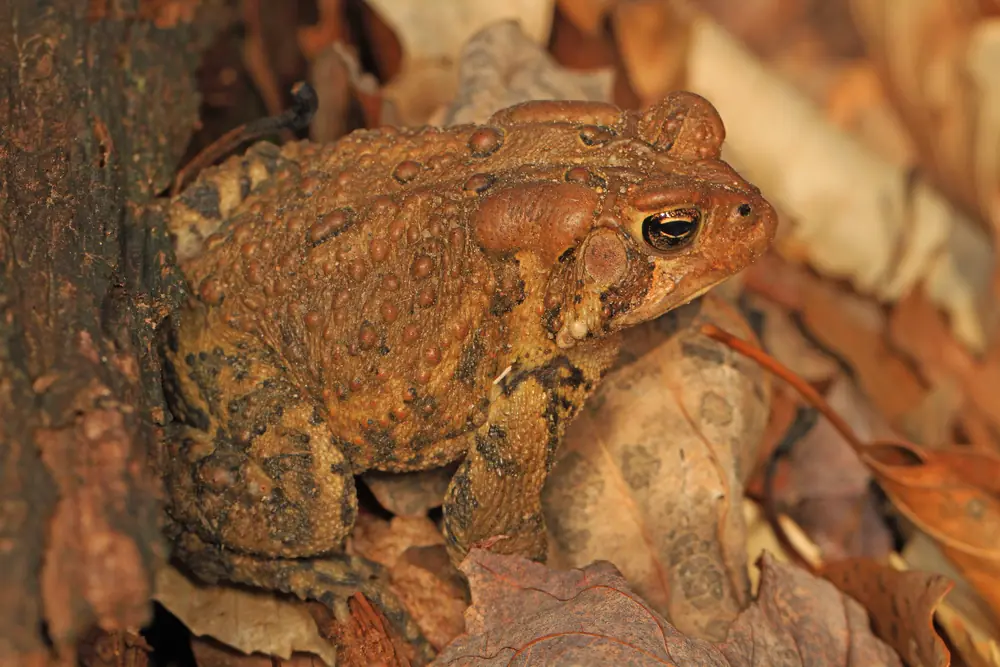
Wood frogs and peepers carry on from March, and American toads join them. MassWildlife says that on warm, rainy nights during April and May, amphibians emerge from their winter retreats and cross roads on the way to breeding pools. Mass Audubon’s frog guide says the American toad’s long trill is heard in spring and summer, the gray treefrog calls around dusk from spring through summer, the spring peeper whistles in spring, and the wood frog quacks.
-
American toads
Warm, rainy evenings in April and May · Ponds, ditches and flooded fields statewide
Listen for a steady, high, musical trill that can go on for many seconds. It is a toad in a pool, and several often call at once. Because toads are small and slow, they are easy to run over on wet evenings. MassWildlife asks drivers to watch for amphibians and invites people who see a crossing hot spot to report it to the Linking Landscapes for Massachusetts Wildlife project.
-
Vernal pools after the first rush
April, as the pools fill and begin to shrink · Temporary woodland pools
Mass Audubon explains that fairy shrimp hatch and develop early in the season, before most predators arrive, and that certified vernal pools receive the highest level of protection under the Massachusetts Wetland Protection Act. Look from the edge, never wade in, and keep dogs out. Staying out of the water protects eggs and young.
-
Turtles basking
Early spring, on sunny days · Ponds, swamps and slow streams
MassWildlife’s page on the spotted turtle says early spring is its peak activity season, when it basks singly or in groups on partially submerged logs, rocks and sedge tussocks, and that its courtship runs from March through May. The page reports a decline of nearly 50 percent over 25 to 30 years in studied populations and lists illegal collection as a threat. Watch from a distance and never take a turtle home.
How much daylight does Massachusetts gain in April?
Between 77 and 79 minutes, depending on the town. Boston goes from 12 h 43 m of daylight on April 1 to 14 h 02 m on April 30, about 2.7 minutes more each day, and the Pittsfield and Lowell figures match it. Nantucket, the southernmost city in the table, lags by a couple of minutes and ends the month two minutes shy of 14 hours. Daylight time began March 14 and does not alter how long a day is, so the table of lengths is what counts. For any other Massachusetts town, try the daylight tool.
| City | Apr 1 | Apr 30 | Gained | Per day |
|---|---|---|---|---|
| Pittsfield | 12 h 43 m | 14 h 02 m | 79 min | 2.7 min |
| Springfield | 12 h 43 m | 14 h 00 m | 77 min | 2.7 min |
| Worcester | 12 h 43 m | 14 h 01 m | 78 min | 2.7 min |
| Lowell | 12 h 43 m | 14 h 02 m | 79 min | 2.7 min |
| Boston | 12 h 43 m | 14 h 02 m | 79 min | 2.7 min |
| Plymouth | 12 h 42 m | 14 h 00 m | 78 min | 2.7 min |
| Provincetown | 12 h 42 m | 14 h 00 m | 78 min | 2.7 min |
| Nantucket | 12 h 41 m | 13 h 58 m | 77 min | 2.7 min |
When is the last spring freeze in Massachusetts?
Early April on the coast, early May in the hills and the valley. The median last freeze in the NOAA 1991–2020 data is April 4 at Boston Logan, April 13 on Nantucket, April 22 at Hyannis, April 23 at Worcester, April 28 at Bedford and May 2 at Taunton; Pittsfield and Amherst both reach May 5. For tender seedlings, the right-hand column is the cautious one: May 21 at Pittsfield and May 19 at Amherst, against April 17 at Logan.
| Station | One year in ten | Median | Nine years in ten |
|---|---|---|---|
| Pittsfield Municipal Airport (Berkshires) | Apr 23 | May 5 | May 21 |
| Amherst (Pioneer Valley) | Apr 23 | May 5 | May 19 |
| Worcester Regional Airport (central hilltop) | Apr 11 | Apr 23 | May 5 |
| Bedford Hanscom Field (MetroWest) | Apr 13 | Apr 28 | May 12 |
| Boston Logan International Airport | Mar 25 | Apr 4 | Apr 17 |
| Taunton Municipal Airport (Southeast) | Apr 19 | May 2 | May 16 |
| Hyannis Barnstable Municipal Airport (Cape Cod) | Apr 9 | Apr 22 | May 5 |
| Nantucket Memorial Airport | Apr 2 | Apr 13 | Apr 27 |
Each row is one station, so a frost pocket or a hilltop in your own yard can freeze later than its row. Find your town on the Massachusetts frost page.
What is April weather like in Massachusetts, and what hazards come with it?
Changeable, with big differences between the hills, the valley and the coast. In NOAA’s 1991–2020 normals the average April high is 55 to 59 °F at most stations, but only 51 °F at Chatham and 52 °F at Nantucket, where the cold ocean holds the afternoons down. Normal April precipitation runs from about 3.4 inches at Pittsfield to 4.8 inches at Blue Hill, and snowfall normals range from 4.4 inches at Ashfield to half an inch at Chatham. Sea air also keeps nights milder at the coast: Boston’s average low is 40.8 °F, against 33.8 °F at Pittsfield.
-
Brush fires and open burning
All of April, with the open-burning season ending May 1 · Statewide, especially dry woods and fields with last year’s grass
April is the busiest month for brush fires in Massachusetts, according to state fire officials quoted in the Groton Herald, and the dry leaf litter and grass left after snowmelt burn easily on breezy, low-humidity days. The state allows open burning only from January 15 to May 1, between 10 a.m. and 4 p.m., with a permit from the local fire department, and it is prohibited in 22 densely built cities and towns, including Boston, Springfield and Worcester. The deputy state fire marshal warns that a sudden wind change is how most open burning gets out of control, which is why the state advises burning early, while snow is still on the ground. Ask your town before lighting anything.
-
A late snow or frost
Occasional; check the forecast before uncovering plants · The Berkshires, Hilltowns and central hills first
The snowfall normals show how rarely, but not never, April brings snow: 1.6 inches at Logan and 4.4 inches at Ashfield. A freeze after buds and flowers have opened can brown magnolia petals, so the freeze table above is worth a look before you uncover tender plants. Higher ground and the Pioneer Valley are the last to be done with frost.
-
Rain, runoff and rivers
After heavy rain or rapid melt · Streams and rivers statewide, low roads and underpasses
April brings 3.4 to 4.8 inches of precipitation at these stations, and after snowmelt the ground can still be saturated. The National Weather Service’s Boston/Norton office keeps river forecasts and flood information on its website, so check the river you plan to paddle or cross. Never drive into water over a road.
| Station | Average high | Average low | Precipitation | April snowfall | March snowfall |
|---|---|---|---|---|---|
| Pittsfield Municipal Airport (Berkshires) | 55.2 °F | 33.8 °F | 3.38 in | no normal | no normal |
| Ashfield (Hilltowns, 1,340 ft) | no normal | no normal | 4.17 in | 4.4 in | 18.0 in |
| Amherst (Pioneer Valley) | 58.2 °F | 34.4 °F | 3.79 in | 1.0 in | 7.3 in |
| Worcester Regional Airport (central hills) | 55.7 °F | 36.5 °F | 4.08 in | 1.9 in | 13.7 in |
| Blue Hill, Milton (south of Boston, 625 ft) | 56.3 °F | 37.9 °F | 4.76 in | 2.8 in | 15.0 in |
| Boston Logan International Airport | 56.4 °F | 40.8 °F | 3.63 in | 1.6 in | 9.0 in |
| Plymouth-Kingston (South Shore) | 59.2 °F | 38.4 °F | 4.69 in | 1.0 in | 8.5 in |
| Chatham (Cape Cod) | 51.1 °F | 39.5 °F | 4.01 in | 0.5 in | 3.8 in |
| Nantucket Memorial Airport | 52.2 °F | 38.8 °F | 3.60 in | no normal | no normal |
NOAA’s Climate Prediction Center updates its 90-day outlook around mid-month, and the newest map is on the CPC page. For forecasts, see our weather page, and for sky watching, our cloud guide.
What can you see in the Massachusetts night sky in April 2027?
A Pink Moon, a meteor shower the Moon will mostly wash out, and bright planets at both ends of the night. Every clock time below is Eastern Daylight Time. The moon phases page has the whole year.
-
The Pink Moon
Full at 6:27 p.m. EDT on Tuesday, April 20; best evening April 20 · Rising in the east-southeast around sunset
Traditional almanac lists name April’s full Moon the Pink Moon, a reference to spring wildflowers and not to the Moon’s own color. In Boston it should rise about 7:41 p.m. on April 20, a little over an hour after the exact full instant. The Moon looks full the evening before and after as well.
-
The Lyrids, in bright moonlight
Peak night April 22 to 23; one listing puts the maximum near 9:41 p.m. EDT on Thursday, April 22 · Look toward the east-northeast, where the constellation Lyra rises
This is a poor year for the Lyrids. The Moon, roughly 95 percent lit three days after full, rises near 10 p.m. in Boston, so the sky is truly dark only in the early evening, with Lyra still low in the east and northeast. SeaSky calls the Lyrids an average shower with a best rate near 20 meteors an hour and says the bright Moon will drown out the faint ones, while brighter streaks can still be seen after midnight. Expect far fewer than the textbook rate.
-
Jupiter, Mars and the Moon
Evenings of April 14 and 15 · High in the southern to southwestern sky after dark
Jupiter, in Leo and Cancer, rules the evening sky until summer and in early April stays up for about nine hours after sunset. By our own calculation, a waxing gibbous Moon, roughly two-thirds lit, sits just under a degree from it on April 15, and the pair is worth a look on the 14th as well. Mars, near magnitude 0.0 and drifting through Leo, lies about three degrees from the Moon the same night.
-
Venus before dawn
Early morning all month; a thin crescent Moon nearby on April 3 and 4 · Low in the east before sunrise
Venus is still a brilliant morning star but is sliding toward the dawn glow, by our own calculation its head start over the Sun is about 75 minutes on the first and shrinks week by week. On April 3 and 4 a slim waning crescent, lit about 9 percent, hangs roughly three degrees from the planet. Saturn, buried in the Sun’s glare, reaches conjunction on April 7 and is not a target this month.
| Phase | Date | Time |
|---|---|---|
| New moon | Tuesday, Apr 6 | 7:51 p.m. EDT |
| First quarter | Tuesday, Apr 13 | 6:56 p.m. EDT |
| Full moon, the Pink Moon | Tuesday, Apr 20 | 6:27 p.m. EDT |
| Last quarter | Wednesday, Apr 28 | 4:18 p.m. EDT |
Under the Pink Moon, a walk in the dark is easy without a flashlight. Let your eyes adapt for ten minutes.
What can Massachusetts families do outdoors in April?
- Herring run visit. Plymouth’s Town Brook has benches and an observation platform at the Jenney Grist Mill dam off Spring Lane, open to the public, and Brewster’s Stony Brook, Bournedale and Essex also have viewing places. Plan on a mild, bright afternoon, and check each town’s page for current conditions.
- Nantucket Daffodil Festival. The Nantucket Chamber of Commerce’s page gives April 22 to 25, 2027, with an antique car parade, a tailgate picnic in ’Sconset, a hat pageant, a flower show and a bazaar. The 2026 festival ran April 23 to 26, so confirm the 2027 schedule and ferry or flight bookings with the chamber.
- Earth Day, Thursday, April 22. Earth Day’s 2027 theme is Food for Our Planet. Local land trusts and Mass Audubon sanctuaries often schedule cleanups and walks around the date; no 2027 listings were posted as of early October 2026, so look closer to the day.
- Arbor and Bird Day, Friday, April 30. Under state law the governor sets apart the last Friday in April as Arbor and Bird Day. Many towns plant trees that day, and the town tree warden is the person to ask.
- City Nature Challenge. Participants photograph wild plants and animals from April 30 through May 3, 2027, then upload and identify finds through May 16, with results on May 20. Look on the contest site for participating Massachusetts regions, and use the iNaturalist app.
- Citizen science that fits April. Log first-of-year swallows and hummingbirds on eBird or Journey North, and report road-crossing amphibian hot spots to the Linking Landscapes for Massachusetts Wildlife project MassWildlife points to.
March’s guide is here. Plates in the Naturalist’s Field Journal suit first arrivals and return visits to one spot, and the nature calendar lists every other state and month.
Safety notes for April in Massachusetts
- Spring turkey hunting. MassWildlife’s rule sets the spring season from the last Monday in April to the fourth Saturday after, with the youth hunt on the Saturday before. By the calendar that is April 26 to May 22 for the regular season and April 24 for the youth hunt in 2027, but MassWildlife’s pages listed only the 2026 dates (April 27 to May 23, youth hunt April 25) in October 2026, so confirm 2027 with the agency before you plan. Shooting ends at noon in spring and begins half an hour before sunrise, the limit is two bearded birds, and Sundays are off limits. Spring turkey hunters need not wear blaze orange, though MassWildlife suggests it for the walk in and out, and the agency tells hunters not to wear red, white, blue or black, the colors of a male turkey’s head. If you are walking wildlife management land on a weekday morning in season, wear bright orange and stay on trails.
- Brush fires. Call your fire department before burning anything, carry out only permitted burns, and never leave a fire unattended.
- Ticks. The state Department of Public Health describes tick activity as peaking from late March or early April through August. Use repellent, stay on trails, and check yourself, children and pets after every walk.
- Right whales. Boaters and kayakers should stay far back, and the state’s seasonal speed rule for Cape Cod Bay ran to May 15 in 2025.
- Beaches and nests. Stay clear of the string fencing, obey posted dog rules, leave wildflowers unpicked and let basking turtles be.
- Cold water. April ponds, rivers and ocean water are still cold; keep away from swollen streams and use a life jacket in a boat.
Sources (49)
- Massachusetts Division of Marine Fisheries: guide to viewing river herring in coastal Massachusetts (viewing windows by run, volunteer groups)
- Town of Plymouth: Town Brook herring and eel run information (timing, counts, harvest ban, viewing platform)
- Association to Preserve Cape Cod and MassBays: summary of Cape Cod herring counts, 2007 to 2023
- U.S. Fish and Wildlife Service: Connecticut River basin fishway passage counts, September 5, 2025
- FirstLight: Turners Falls Fishway (2026 viewing hours)
- WWLP: thousands of American shad migrate upstream along the Connecticut River in Holyoke
- Mass Audubon breeding bird atlas: barn swallow
- The Boston Globe: bird sightings by Mass Audubon, April 1, 2023
- The Boston Globe: bird sightings by Mass Audubon, April 22, 2023
- The Boston Globe: bird sightings by Mass Audubon, April 30, 2022
- Bird Observer: birding Burrage Pond Wildlife Management Area, Hanson and Halifax
- Town of Hanson: Burrage Pond Conservation Area trail page
- Journey North: hummingbird migration maps and sightings
- WBUR: piping plovers on Massachusetts beaches (interview with Mass Audubon's coastal waterbird director)
- Boston 25 News: piping plover population bouncing back, which may mean more beach restrictions
- Massachusetts Department of Conservation and Recreation: living with piping plovers
- U.S. Fish and Wildlife Service: Parker River National Wildlife Refuge
- Massachusetts Division of Marine Fisheries advisory, April 11, 2025: right whales present in large numbers
- Center for Coastal Studies: right whale research
- NOAA Fisheries: North Atlantic right whale
- Boston.com: everything to know about going on a whale watch
- MassWildlife: spring ephemeral flowers field guide
- Mass Audubon: take a walk on the wildflower side
- Native Plant Trust Go Botany: American trout-lily
- The Boston Globe: Boston cherry blossoms and magnolias, April 2026
- Arnold Arboretum: spring comes to the maples
- University of Maine Cooperative Extension: facts on fiddleheads (Bulletin 4198)
- Boston.com: Massachusetts wildlife officials urge drivers to watch for frogs
- Mass Audubon: frogs in Massachusetts
- Mass Audubon: about vernal pools
- MassWildlife: spotted turtle
- NOAA NCEI: 1991-2020 monthly normals for nine Massachusetts stations
- The Westfield News: state advises to conduct open burning early
- Groton Herald: April, the cruelest month for brush fires in Massachusetts
- National Weather Service Boston/Norton: forecast office home page (river flooding and severe weather links)
- NOAA Climate Prediction Center: 90-day outlooks
- U.S. Naval Observatory: moon phases for April 2027
- SeaSky: astronomy calendar 2027 (Pink Moon and Lyrids)
- MassWildlife: wild turkey hunting regulations (season framework, hours, orange rule)
- MassWildlife: 2026 spring turkey hunting season
- MassWildlife: 2026 hunting and freshwater fishing season summary
- Massachusetts General Laws, chapter 6, section 15 (Arbor and Bird Day)
- Nantucket Chamber of Commerce: Daffodil Festival
- Nantucket Chamber of Commerce: Daffodil Festival dates, 2026
- Earth Day: Earth Day 2027
- City Nature Challenge: 2027 dates
- WBUR: tick season in Massachusetts and climate
- Massachusetts Department of Fire Services: open burning safety (season, hours, permit, prohibited communities)
- Photos via Wikimedia Commons; licenses and photographers are credited under each picture
