What to look for in nature in Massachusetts this November
November is when Massachusetts trades its fall visitors for winter ones. Snowy owls drop out of the Arctic onto the runways at Logan and the dunes of Plum Island, harlequin ducks settle among the granite ledges of Rockport, and rafts of eiders and long-tailed ducks gather around the Cape and Islands. On the bayside beaches of Cape Cod, volunteers start walking the high-tide line in the dark, looking for sea turtles stunned by cold water. Inland, deer are in the rut, bears are looking for dens, and standard time returns in the small hours of November 1. Every date below has a source.
Other months in Massachusetts: October, December.
Start here
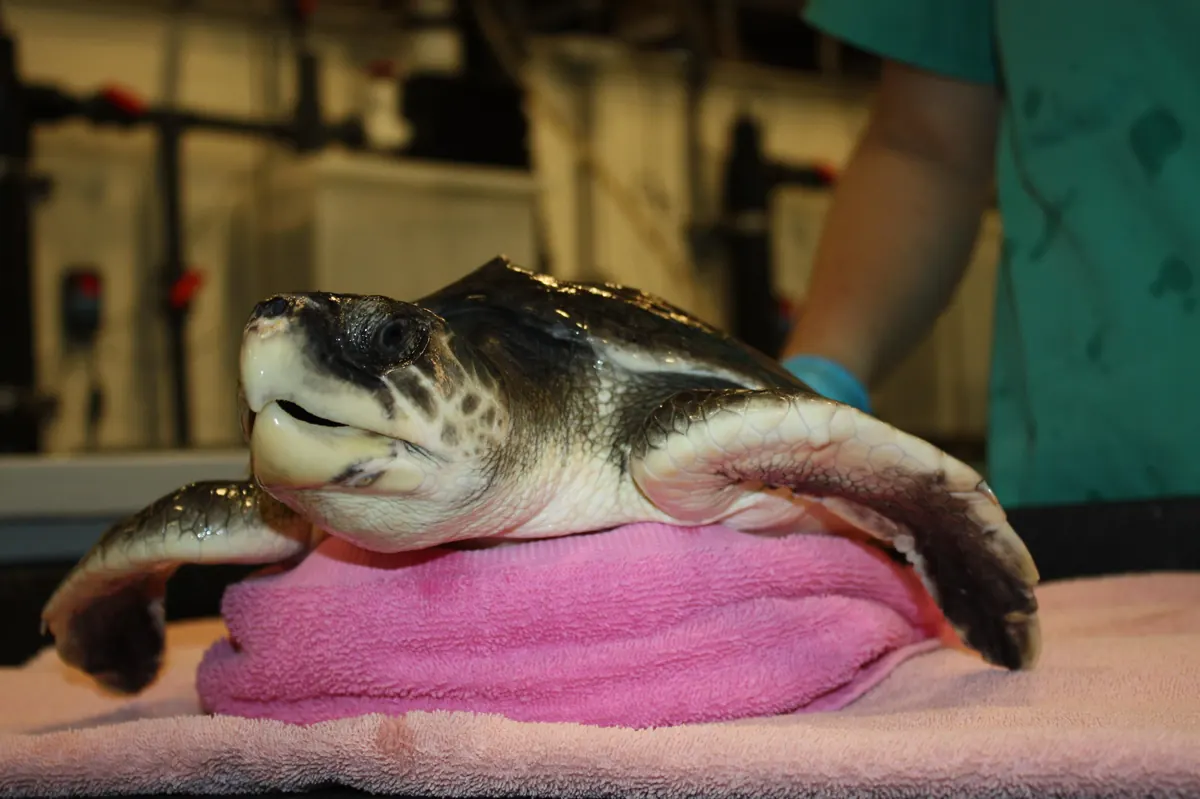
- Walk a Cape Cod Bay beach after a cold blow. Once Cape Cod Bay cools below about 55 °F, onshore winds start pushing chilled sea turtles onto its beaches. A stranded turtle may look lifeless and still be alive. Move it above the wrack line, cover it with seaweed, mark the spot and call Mass Audubon’s Wellfleet Bay hotline at 508-349-2615, option 2.
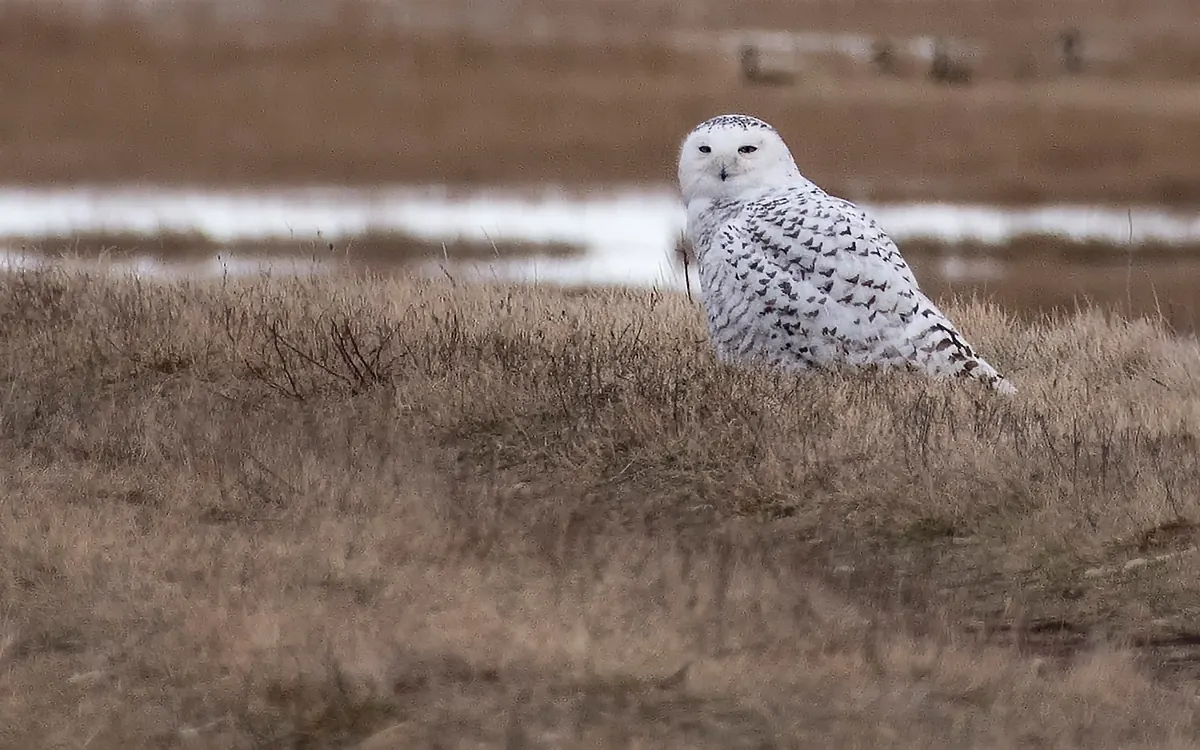
- Look for the first snowy owl. Snowy owls usually reach Massachusetts in November and stay until spring, favoring flat, open ground that resembles tundra: airports, salt marshes and wide beaches such as Plum Island. Keep at least 50 yards away and use binoculars; an owl that stretches its neck and stares at you is telling you to back off.
- Supermoon over the Pleiades. November’s Beaver Moon turns full on Tuesday morning, the 24th, at 9:53 EST, slightly closer to us than a typical full moon. Watch it rise on Monday or Tuesday evening. Late on the 23rd it drifts across the Pleiades, though most of the little cluster will be lost in the glare.
For your November notes in the Naturalist’s Field Journal: a snowy owl, a raft of eiders or your first pine siskin goes on the “birds I have seen” plate; a scraped patch of leaves under a low branch, a rubbed sapling or a shredded acorn cap belongs on “reading the signs”; the Leonid and Venus mornings fit the dusk-and-dawn watch; and a return trip to an October spot, now bare, is just what “the same place twice” is for. On the daily field log, record the date of your first flakes of snow and the first night that the birdbath freezes.
Regions used below: The Berkshires and the Hilltowns; The Pioneer Valley; Central Massachusetts and Worcester County; Greater Boston, the North Shore and Merrimack Valley; The South Shore and South Coast; Cape Cod and the Islands.
Why do sea turtles wash up on Cape Cod beaches in November?
Young sea turtles ride warm water north into New England every summer and feed in Cape Cod Bay. The trouble comes in fall. The Cape’s hooked arm blocks the easy way south, and when the water cools quickly the turtles become too cold to swim, a condition called cold-stunning. Mass Audubon says strandings run mainly from November to mid-January, starting once the bay falls below about 55 °F, and that onshore winds carry the turtles to the beaches lining Cape Cod Bay.
-
Kemp’s ridleys, mostly
Mostly mid-November into January · The Cape Cod Bay shore, from the Upper Cape to Provincetown
Most of the turtles are juvenile Kemp’s ridleys, the smallest sea turtle and the most endangered; green turtles and loggerheads come ashore too. Last year started fast: by November 20, 2025, Mass Audubon counted 232 turtles recovered from the bay beaches, 179 of them Kemp’s ridleys, nearly 200 more than on the same date a year earlier. Recovered turtles go to the New England Aquarium’s sea turtle hospital for slow rewarming and weeks of care before release in warmer water.
-
More turtles than there used to be
A trend since the 2010s · Cape Cod Bay
NOAA Fisheries reports that Massachusetts averaged 739 cold-stunned turtles a year over a recent five-year span, against about 139 a year two decades earlier. Scientists link the rise to the Gulf of Maine warming faster than most other bodies of water on Earth, which draws more turtles north in summer and leaves more of them stranded when the cold arrives.
-
What to do if you find one
Any day, but especially after a cold northwest wind · The wrack line on the bayside
- Do not put it back in the water.
- Carry it above the high-tide line, holding the shell, not the head or flippers.
- Cover it fully with seaweed, not sand.
- Mark the spot with driftwood or an arrow in the sand.
- Call the Wellfleet Bay hotline, 508-349-2615, option 2, and wait for instructions.
Since 1979 Wellfleet Bay staff and a corps of more than 200 trained volunteers have patrolled these beaches at every high tide through the cold months, often after dark and in sleet.
When do snowy owls come to Massachusetts, and where do they go?
Snowy owls nest on the Arctic tundra and some of them, often young birds, come south for the winter. Mass Audubon says they usually reach Massachusetts in November and leave in early April; the earliest one on record arrived on October 22. They hunt by day as well as at night, and they choose wide, flat, treeless places where they can watch for prey from a low perch.
-
Logan Airport
Usually from early November · East Boston, on restricted airport land
Logan holds the largest known gathering of snowy owls in the Northeast. Since 1981 a Mass Audubon researcher long based at the Blue Hills Trailside Museum has trapped owls that settle near the runways and carried them to safer marshes and beaches farther away, fitting some with transmitters to follow them back to the Arctic. The public cannot enter the airfield, so look for the airport’s owls only from public ground, or follow the project’s tracking results online.
-
Salt marshes and big beaches
November to April · Plum Island and Joppa Flats in Newburyport, the Boston Harbor Islands, large coastal marshes
Scan the tops of dunes, hummocks of marsh grass, fence posts and duck blinds for a pale lump that does not move. Older males are nearly pure white; young birds and females are heavily barred with brown. Big, open farm fields inland can hold one too.
-
How close is too close
Every visit · Anywhere an owl is resting
Mass Audubon asks viewers to stay at least 50 yards off, about half a football field. An owl that stretches its neck tall and opens its eyes wide is alarmed; step back at once. Each flush burns energy a bird needs to get through a cold night, so do not follow it when it moves.
Some winters bring many snowy owls and others very few, so a quiet November is not a sign of trouble. For a sure look, the Blue Hills Trailside Museum in Milton keeps two snowy owls that cannot be released.
Which winter ducks and birds of prey arrive in Massachusetts in November?
The coast changes cast this month. Summer terns and shorebirds have gone, and in their place come sea ducks from Labrador, Hudson Bay and the high Arctic, which spend the winter diving for mussels, clams and crabs in cold, rough water. Inland, the last migrating hawks ride north and northwest winds along the ridges.
-
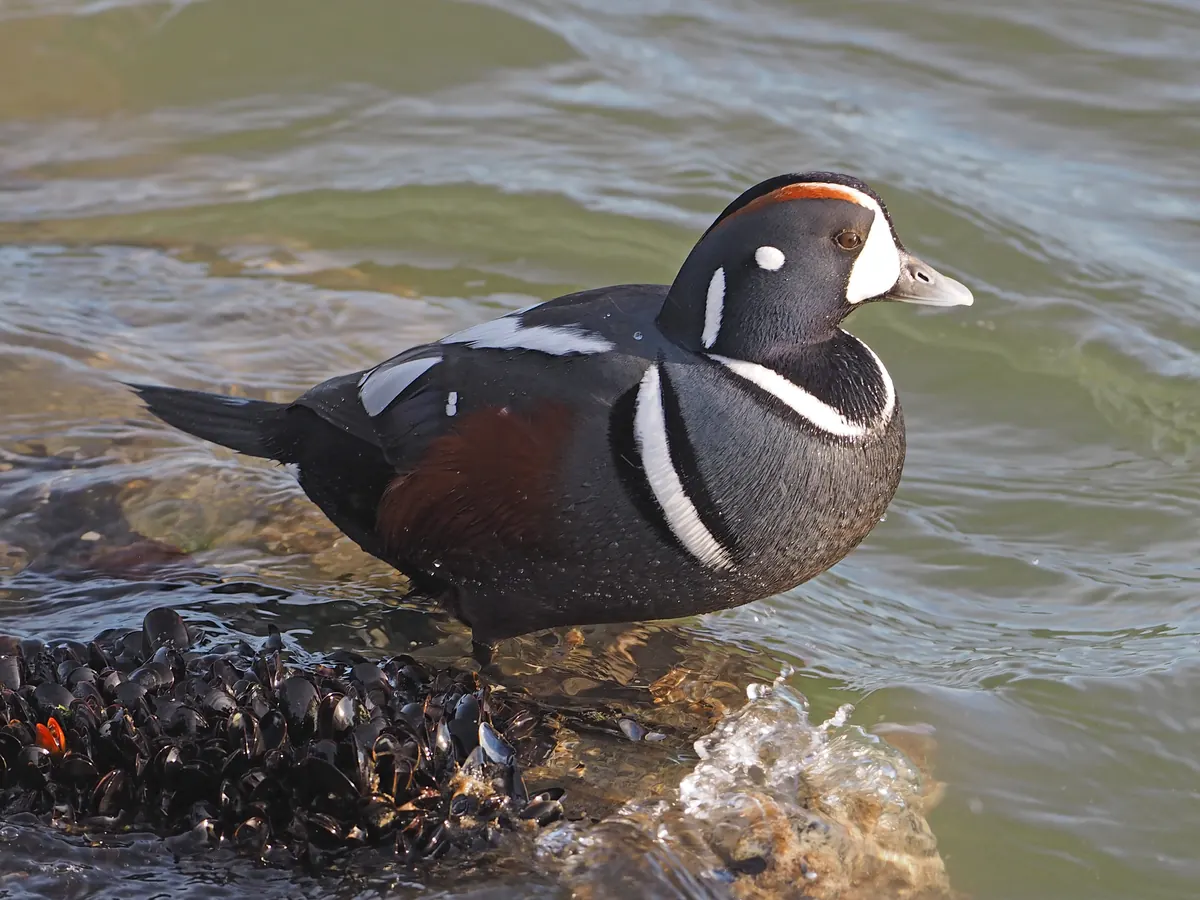
Harlequin ducks on the Rockport ledges
Most arrive by mid-November and stay into spring · Andrews Point and Halibut Point State Park, Rockport
Mass Audubon lists the Rockport headlands as an Important Bird Area partly for its large wintering flock of harlequin ducks. Drakes are slate blue with chestnut flanks and bold white stripes, as if painted on. They feed in the surf right against the granite, bobbing up after each wave, so from the rocks you can often watch them at close range. Purple sandpipers pick along the wet rock below.
-
Long-tailed ducks off Nantucket
November through March · Nantucket Sound and Nantucket Shoals; watch from the Nantucket and Martha’s Vineyard shores
A Mass Audubon telemetry study for the federal government describes hundreds of thousands of long-tailed ducks wintering in Nantucket Sound from November to March, along with common eiders and all three scoters. Many fly out to feed on Nantucket Shoals at dawn and come back toward the Sound at dusk. The Nantucket Christmas Bird Count once tallied 525,505 of them in a single day, in 2002.
-
The last hawks and a chance of a golden eagle
Through about mid-November · Mount Watatic in Ashburnham, Wachusett Mountain in Princeton, Pinnacle Rock in the Middlesex Fells
The Eastern Massachusetts Hawk Watch says most red-tailed and red-shouldered hawks pass between mid-October and mid-November, with a few northern goshawks and golden eagles mixed in. A golden eagle here is a big, dark bird with a golden nape, gliding on flat wings; it is rare enough that any sighting is worth a careful note and photo.
A spotting scope helps, and so does a day of light wind: diving ducks are much easier to count on flat water. Before a coastal drive, check the wind and cloud on our sky and cloud forecast.
Which winter finches might reach Massachusetts feeders this year?
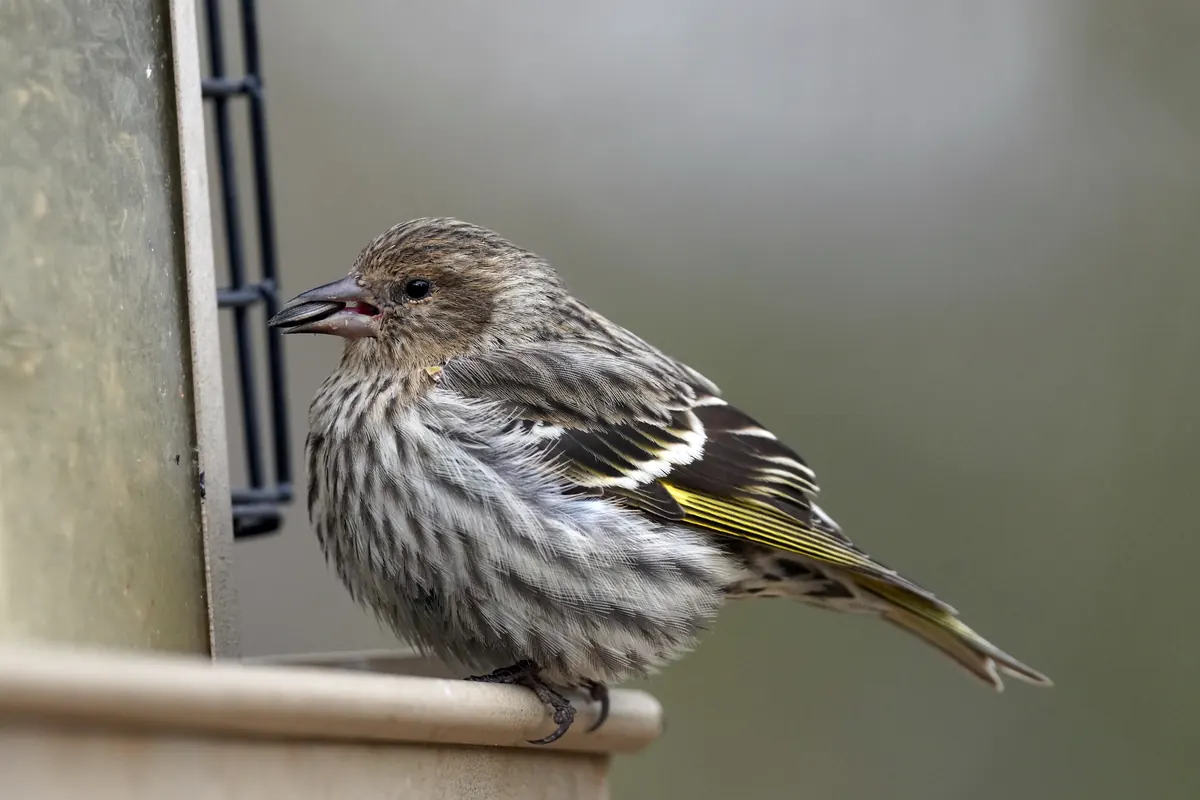
A mixed winter is what the Finch Research Network expects in its annual finch forecast, posted September 25 for 2026–27. It reports good seed crops in the eastern boreal forest, very good ones on eastern white pine and northern white cedar, but poor across much of central Canada. Finches from the middle of the continent may drift east into New England, yet with plenty of cones in northeastern woods, many will probably feed in the woods and only drop in at feeders now and then.
-
Pine siskins and crossbills
Arrivals possible from November · Pine, hemlock and spruce woods; feeders with nyjer or sunflower
Siskins, little brown-streaked finches with yellow wing bars, are the best bet this winter: the forecast expects them to concentrate in the Northeast. Red crossbills are likely in northeastern conifers too, and white-winged crossbills in the far east of the continent. A crossbill works pine cones open with its crossed bill tips; you may hear their kip notes before you see them.
-
Evening grosbeaks and purple finches
If they come, late in the year · Feeders and fruiting trees
The forecast mentions a small southward movement of evening grosbeaks, the chunky yellow-and-black finches of the north, that could reach as far as Massachusetts. Purple finches have moved south two winters running; any flight this year is expected to be late and small. Pine grosbeaks and redpolls are less likely, and so is a big push of red-breasted nuthatches. Blue jays are forecast to move in above-average numbers, though the forecasters single out Lake Ontario and Lake Erie shores, not New England.
-
Project FeederWatch
Season runs November 1 through April · Your yard, a nature center, a park bench
This long-running winter survey is organized by Cornell’s ornithology lab together with Birds Canada. You choose the spot and the days, count the most birds of each kind you see at once, and send in the tallies. U.S. participants pay a modest yearly fee that keeps the project going, and you do not even need a feeder.
One caution for feeder keepers in central and western Massachusetts: MassWildlife advises not putting out feeders where bears live, because bird seed teaches bears to visit yards. Its fact sheet says most bears are denned from mid-December through February, and it suggests waiting until then if you do feed birds, then bringing feeders in at the first sign of a bear.
What is still colorful in the Massachusetts woods in November?
By early November the maples are bare across most of the state, but the woods are not empty of color. The late show belongs to a deciduous conifer, to the oaks and beeches, and to one shrub that blooms when everything else is done.
-
Golden tamaracks
Late October into November · Bogs, fens and swamps statewide
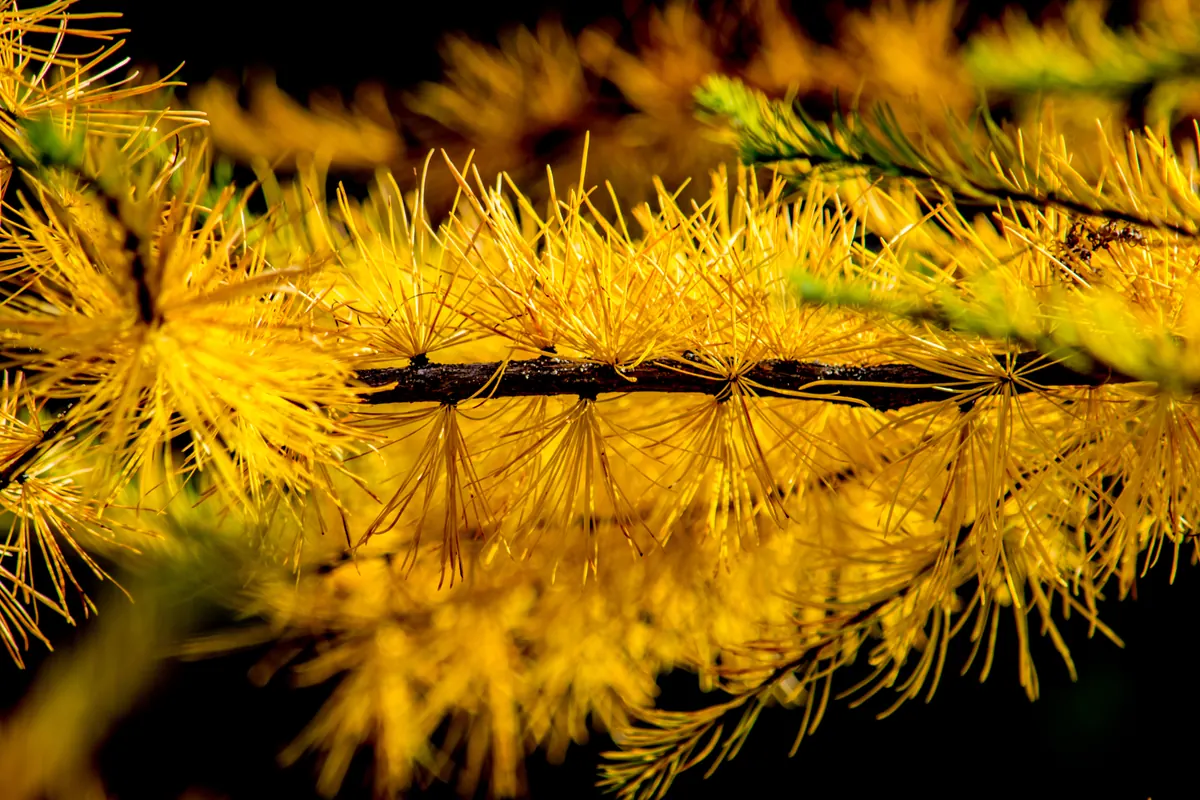
Tamarack, or American larch, is a conifer that drops its needles every fall. Native Plant Trust ranks it widespread in Massachusetts, mostly in bogs and fens. Before they fall, the soft needles turn a clear butter yellow, so a bog edge lined with tamaracks glows after the hardwoods around it have gone gray.
-
Oaks and beeches that hold on
All winter · Any oak or beech woods, especially young trees
Young beeches and oaks often keep their dead leaves until spring, a habit called marcescence. Beech leaves bleach to pale parchment and rattle in the wind; oak leaves stay leathery brown. No one is sure why, though ideas include shielding buds, saving a fresh layer of mulch for spring and making twigs less tasty to deer and moose.
-
Witch hazel, the last flower
Into November · Woods edges and stream banks
Witch hazel’s thin yellow petals can still be found on bare twigs well into November, after almost every other native shrub has finished. Native Plant Trust lists it as common across the state.
-
Moths at the porch light
Mid-to-late November, often before Thanksgiving, into January · Mostly eastern and coastal Massachusetts
Small tan moths fluttering around porch lamps and holiday lights on a mild November night are probably winter moths, a European insect whose caterpillars have stripped oaks, maples, apples and blueberries in eastern Massachusetts since outbreaks began in the late 1990s. Only the males fly; the gray females are nearly wingless and crawl up tree trunks to lay eggs. UMass Extension credits a parasitic fly, released here to attack the moth, with a decline in its numbers.
Bare branches make this the season to find bird nests you walked past all summer. Leave them where they are, but sketch one on the “nest observed” plate.
When is the deer rut in Massachusetts, and when do bears den?
Two of the state’s big mammals are on very different schedules this month. Deer are at their most active of the year; bears are winding down.
-
The deer rut
Peak breeding November 6 to 20 · Statewide, including suburbs and the Cape
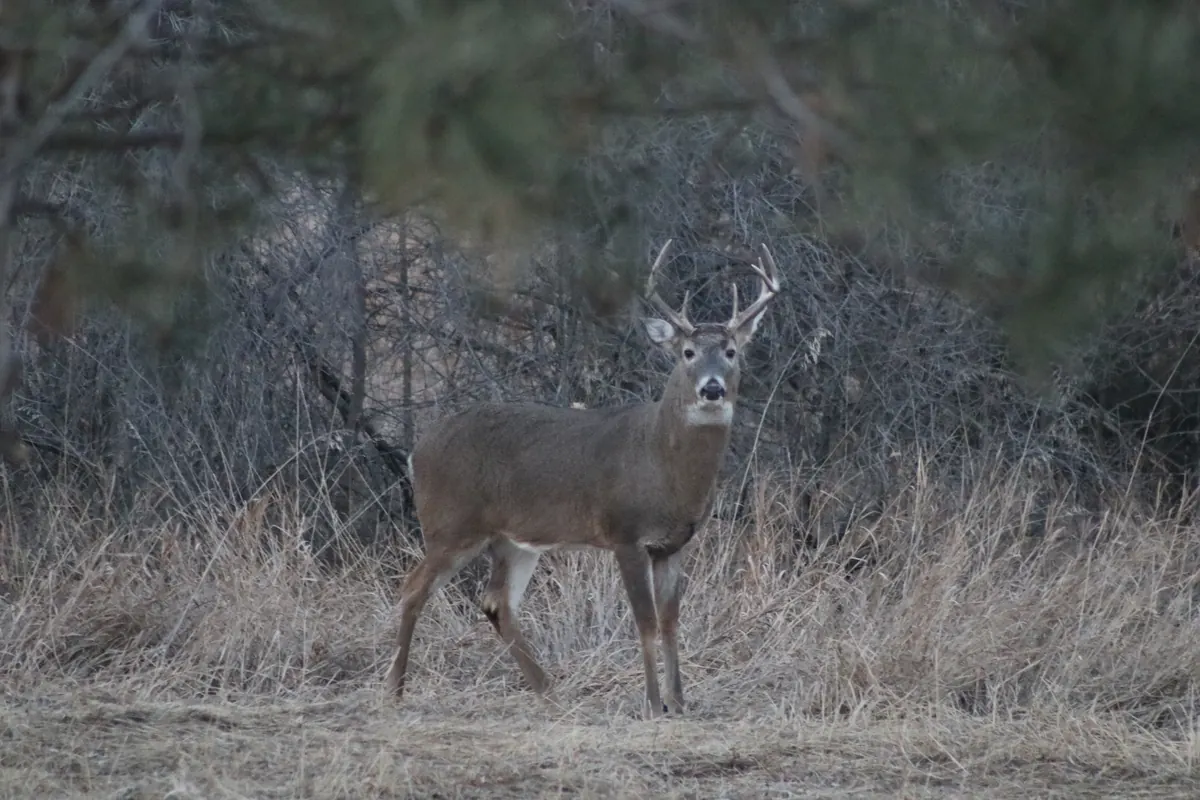
MassWildlife puts the peak of the rut between November 6 and November 20. The timing is set by shortening days, not by weather or the moon. Bucks give up their usual daytime bedding and spend hours trailing does, sometimes for days, and some lose a fifth of their body weight in the process. Two signs give a buck away: a sapling scraped raw where he polished his antlers on it, and a scrape, a bare oval of pawed-up soil beneath an overhanging limb. Distracted deer cross roads without looking, so collisions climb in November, above all around dawn and dusk.
-
Bears heading into dens
Mid-November to early December · Worcester County, northern Middlesex County and west; young males east of Route 495
The state’s black bear population tops 4,500, by MassWildlife’s estimate. Depending on food and snow, they den from mid-November to early December in brush piles, under fallen trees, among rocks or in mountain laurel thickets, and come out between early March and mid-April. Cubs arrive in mid-to-late January, while the mother sleeps through much of the winter. A good acorn and beechnut crop can keep bears out a little longer, and so can easy food from feeders and trash.
After the first snow or on a muddy trail, the “tracks to know” plate helps separate a deer’s split heart-shaped print from a coyote’s neat oval one.
Has the first freeze usually happened in Massachusetts by November?
Across most of the state, yes. By November 1 the median first freeze has passed at every station in the table except two, and in the Berkshires, the Pioneer Valley and the low ground of central Massachusetts it typically came three or four weeks earlier. The holdouts are the places surrounded by sea water. Boston’s Logan Airport has a median first freeze of Nov 9, and Nantucket’s comes on Nov 8, so in half of all years the first 32 °F night at those two stations falls in the second week of November or later.
| Station | One year in ten | Median | Nine years in ten |
|---|---|---|---|
| Pittsfield Municipal Airport (Berkshires) | Sep 23 | Oct 5 | Oct 22 |
| Amherst (Pioneer Valley) | Sep 28 | Oct 8 | Oct 23 |
| Barre Falls Dam (central hills, valley floor) | Sep 18 | Oct 1 | Oct 15 |
| Worcester Regional Airport (central hilltop) | Oct 6 | Oct 21 | Nov 3 |
| Bedford Hanscom Field (MetroWest) | Sep 28 | Oct 10 | Oct 28 |
| Boston Logan International Airport | Oct 29 | Nov 9 | Nov 22 |
| Taunton Municipal Airport (Southeast) | Sep 25 | Oct 8 | Oct 25 |
| Hyannis Barnstable Municipal Airport (Cape Cod) | Oct 13 | Oct 28 | Nov 11 |
| Nantucket Mem Airport | Oct 25 | Nov 8 | Nov 23 |
Hyannis, with a median of Oct 28, has usually frozen by now, but in about one year in ten it still has not frozen by November 11. Worcester’s hilltop airport, median Oct 21, has frozen by November 3 in nine years out of ten. Logan and Nantucket have the latest nine-in-ten dates, November 22 and 23, so tender pots on a harbor-side porch can sometimes stay out until Thanksgiving week. Find the dates for your own town on the Massachusetts freeze-date tables.
How early does it get dark in Massachusetts in November?
Each town in the table gives up close to an hour of daylight over the month, roughly two minutes a day. Lowell, the farthest north, loses the most at 61 minutes and finishes November with 9 hours 18 minutes between sunrise and sunset; Nantucket and Provincetown lose 58 minutes, and Nantucket still has 9 hours 26 minutes on November 30. The bigger shock is the clock. Then Boston turns its clocks back an hour in the dark early hours of Sunday the 1st, and its sunset leaps from 5:39 p.m. on Saturday, October 31 to 4:37 p.m. EST on Sunday.
| City | Nov 1 | Nov 30 | Lost | Per day |
|---|---|---|---|---|
| Pittsfield | 10 h 19 m | 9 h 19 m | 60 min | 2.1 min |
| Springfield | 10 h 21 m | 9 h 22 m | 59 min | 2.0 min |
| Worcester | 10 h 21 m | 9 h 21 m | 60 min | 2.1 min |
| Lowell | 10 h 19 m | 9 h 18 m | 61 min | 2.1 min |
| Boston | 10 h 19 m | 9 h 20 m | 59 min | 2.0 min |
| Plymouth | 10 h 22 m | 9 h 23 m | 59 min | 2.0 min |
| Provincetown | 10 h 20 m | 9 h 22 m | 58 min | 2.0 min |
| Nantucket | 10 h 24 m | 9 h 26 m | 58 min | 2.0 min |
From there the evenings keep shrinking. By November 30 Boston’s sun rises at about 6:53 a.m. and sets at about 4:13 p.m., and Pittsfield’s sets only eight minutes later. Boston’s earliest sunset of 2026 is still a week away when November ends: about 4:11 p.m. around December 8, almost two weeks before the solstice. Mornings keep getting darker into early January. The daylight calculator gives sunrise and sunset for any address.
What is November weather like in Massachusetts, and what could a very strong El Niño mean this winter?
November is the month the state turns gray and raw. Boston’s November normals for 1991–2020, from NOAA, are a high of 51.6 °F and a low of 37.9 °F, with 3.66 inches of precipitation and 0.7 inch of snow. Worcester, on its hill, averages 47.9 and 32.5 °F with 4.00 inches of precipitation and 1.9 inches of snow. Pittsfield has the coldest nights, at 29.2 °F, while Nantucket’s low stays at 40.0 °F and Hyannis averages a high of 53.5 °F. Expect a few hard frosts, the first snowflakes in the hill towns, and gusty northwest winds behind each cold front.
The El Niño question. Writing on September 10, federal forecasters gave odds above 90 percent that this El Niño will reach the very strong category this winter (Climate Prediction Center). Its official December-to-February outlook is published on October 15, after this page was written, so we do not describe it here; you can see the maps on CPC’s 90-day outlook page.
Published research pulls in two directions for Massachusetts. A NOAA and Northeast Regional Climate Center briefing written during the strong 2015 event noted that storms tracking up the coast from south of Cape Hatteras become more frequent in El Niño winters, about two extra per season in one study, especially in strong events, and that seasonal snow near the Northeast coast has often run above average. The same report said strong El Niños tend to push mild air farther into the Northeast, and that the record event of 1997–98 left most of the region warm and short of snow. NOAA’s Climate.gov, looking at all El Niño winters, finds less snow than usual in interior New England. Taken together: a mild tilt overall, more nor’easters than usual, and a winter whose snow total may hinge on where the rain-snow line sets up in a handful of big coastal storms.
For the coming days rather than the coming season, check the Massachusetts forecast and radar.
What can you see in the Massachusetts night sky in November 2026?
-
The Beaver Moon, a supermoon
Full at 9:53 a.m. EST, Tuesday, November 24 · Rising in the east around sunset
Both Monday and Tuesday evenings show a round moon; Tuesday is the closer of the two to the exact moment of full. It counts as a supermoon, though a modest one, since its closest approach to Earth comes about 30 hours after it is full. Overnight from Monday to Tuesday it slides past, and partly over, the Pleiades. Moonlight will drown most of the cluster.
-
Taurid fireballs
Southern Taurids peak about November 5; Northern Taurids about November 12 · High in the southeast and south in the late evening
Neither shower is rich, with a peak rate of five to ten an hour under a dark sky, yet the Taurids are slow and sometimes very bright. They are dust from Comet Encke. The moon is new on November 9, so the week between the peaks has dark evenings, and on November 5 the crescent does not rise until the small hours.
-
Leonid meteors
Best before dawn on Wednesday, November 18 · Rising Leo, in the east after midnight
Expect around 15 an hour under dark skies, with no outburst forecast. Moonset comes around midnight, give or take half an hour, and Leo’s sickle climbs higher toward dawn, so the hours before first light are the time to watch.
-
Planets before sunrise
All month; Mars and Jupiter closest on the mornings of November 15 and 16; Mercury best about November 18 to 25 · East and southeast before dawn
Venus has jumped to the morning sky and climbs fast, blazing low in the east-southeast; its peak brilliance falls between November 24 and 27. Higher up, in Leo, are Jupiter and fainter orange Mars, only about 1.2 degrees apart before dawn on November 15 and 16. In the week around November 20, look lower in the brightening east for Mercury. On November 9 Venus sits about a degree from Spica.
-
Saturn and Uranus in the evening
All month; Uranus at opposition November 25 · Saturn in the south after dusk; Uranus in Taurus near the Pleiades
After dusk, look south for Saturn, the one bright planet in the evening sky this month. Uranus reaches opposition on November 25; in binoculars it is a faint star among the stars of Taurus, not far from the Pleiades. Moonlight around the full moon will make it hard that week.
| Phase | Date | Time |
|---|---|---|
| Last quarter | Sunday, Nov 1 | 3:28 p.m. EST |
| New moon | Monday, Nov 9 | 2:02 a.m. EST |
| First quarter | Tuesday, Nov 17 | 6:48 a.m. EST |
| Full moon, the Beaver Moon | Tuesday, Nov 24 | 9:53 a.m. EST (looks full on the evenings of Nov 23 and 24) |
| Last quarter | Tuesday, Dec 1 | 1:08 a.m. EST |
The moon calendar gives rising and setting times for your own town, handy for timing the Leonids around moonset.
What can Massachusetts families do outdoors in November?
Dates below were checked against each organizer’s 2026 listing where one exists. Programs fill up; register ahead.
-
Family night hike and owl prowl
Friday, November 6, 4–5:30 p.m. · Mass Audubon Drumlin Farm Wildlife Sanctuary, Lincoln
For families with children 5 to 12. Handle owl wings, skulls and talons in the nature center, then head out at dusk to listen for screech, barred and great horned owls. A fee applies; bring a flashlight with a red setting if you have one.
-
Gratitude After Gravy hikes
Friday, November 27, the day after Thanksgiving (2026 list not yet posted) · DCR parks around the state
DCR staff have led free, easy hikes of one to four miles on the day after Thanksgiving since 2009, first as Go Green on Black Friday; 2025 was the 17th year. Last year’s walks ran in parks in Amherst, Andover, Boston, Falmouth, Lanesborough, Sterling, Taunton and Turners Falls, with no parking fee at the host parks. Watch DCR’s page in November for this year’s locations.
-
Owls up close and in the wild
Friday, November 27, 5–7 p.m. · Mass Audubon Museum of American Bird Art Education Center, Canton
An evening for children 5 to 17 with an adult: meet a live owl, then walk the grounds in the dark listening for wild ones. A fee applies, and it is a calm way to end the day after Thanksgiving.
-
Visit the sea turtle coast
From mid-November · Mass Audubon Wellfleet Bay Wildlife Sanctuary, Wellfleet
The sanctuary trails cross pine woods, salt marsh and a bay beach, and staff can explain the turtle patrols that run from here. Check the sanctuary calendar for walks and talks.
-
Citizen science
All month · Anywhere
Sign up for Project FeederWatch, submit an eBird checklist when you see a snowy owl or a flock of siskins, and post photos of fungi, tracks and late insects to iNaturalist. MassWildlife also welcomes reports of bear and moose sightings.
A quiet idea for a gray Saturday: pick one tamarack bog or beech grove and sit for twenty minutes, writing down every sound in the Naturalist’s Field Journal. More states and months live on the nature calendar, and last month’s guide is at Massachusetts in October.
Safety notes for November in Massachusetts
- Hunting seasons. MassWildlife’s 2026 calendar has archery deer season and the fall wild turkey season open until Saturday, November 28, ruffed grouse also to November 28, and pheasant, quail, cottontail rabbit and coyote open through the rest of the month, with fox season opening November 2. Bear season runs until December 12. Shotgun deer season opens Monday, November 30 and runs to December 12; during it, every other small-game season closes except bear, coyote and waterfowl. Waterfowl hunters are on the marshes too: the coastal duck season reopens on November 27 under the 2026–27 migratory bird rules. There is no hunting on Sundays in Massachusetts.
- Blaze orange. On wildlife management areas stocked with pheasant or quail, every hunter must wear an orange hat. From November 30, during shotgun deer season, every hunter needs a minimum of 500 square inches of blaze orange covering the chest, back and head, and waterfowl hunters on coastal waters and salt marshes must wear it walking to and from their blinds. Hikers, runners and dog walkers should wear orange too, on a hat, vest or dog collar.
- Early dark. From November 1 on, no Massachusetts town sees the sun set later than 5 p.m. Carry a headlamp on afternoon hikes, and plan to be off the trail before sunset.
- Deer on the roads. Peak rut lands in the same weeks the evening commute moves into darkness. Slow down at dusk, watch for a second deer behind the first, and call the Environmental Police (1-800-632-8075) if you hit a deer or moose.
- Cold water and wind. Sea and pond water can now trigger cold shock in a sudden fall, so paddlers need a life jacket on, not stowed; check the marine forecast before beach walks: November nor’easters bring high surf and coastal flooding.
- Ice. Thin skim ice forms on ponds on clear, still nights late in the month. It will not hold a person. Keep children and dogs off it.
- Ticks. Adult deer ticks stay active on any day above freezing; do a tick check after every walk.
Sources
- Mass Audubon: protecting sea turtles on Cape Cod (cold-stun season, 55 °F, hotline)
- Mass Audubon Wellfleet Bay: a dramatic start to the cold-stunned sea turtle season
- NOAA Fisheries: Massachusetts cold-stunned sea turtles, a sign of climate change?
- Mass Audubon: Snowy Owl Project at Logan Airport
- Mass Audubon: snowy owls are back in Massachusetts, viewing guidance (November 2025)
- Mass Audubon: Important Bird Areas, Rockport Headlands and Inshore Waters
- Bird Observer: a guide to winter birding on Cape Ann
- Allison, Perkins and Perry (2009), Determining night-time distribution of long-tailed ducks using satellite telemetry, OCS Study MMS 2009-020
- Eastern Massachusetts Hawk Watch: when to hawk watch
- Eastern Massachusetts Hawk Watch: where to go hawk watching
- Finch Research Network: winter finch forecast 2026–2027
- Cornell Lab All About Birds: finches in the forecast
- Project FeederWatch: project overview (season November 1 to April)
- MassWildlife: living with black bears fact sheet (denning dates, bird feeders)
- MassWildlife: frequently asked questions about black bears
- Native Plant Trust Go Botany: American larch (tamarack)
- Northern Woodlands: why some leaves persist on beech and oak trees into winter
- Native Plant Trust Go Botany: American witch hazel
- UMass Extension: winter moth, Operophtera brumata (insect and mite guide)
- UMass Extension: winter moth in Massachusetts, history and biological control
- MassWildlife: hunting deer during the rut (peak November 6 to 20)
- MassWildlife: a closer look at deer breeding season
- NOAA NCEI: U.S. Climate Normals 1991–2020 (first freeze dates, as on the site’s frost page)
- NOAA NCEI: monthly normals 1991–2020 for Boston, Worcester, Pittsfield, Nantucket and Hyannis
- Climate Prediction Center: ENSO diagnostic discussion, September 10, 2026
- Climate Prediction Center: 90-day seasonal outlooks (winter outlook issued October 15, 2026)
- NOAA and Northeast Regional Climate Center: Eastern Region El Niño impacts and outlook (October 2015)
- NOAA Climate.gov: how El Niño affects snowfall over North America (2023)
- U.S. Naval Observatory: moon phases, November 2026 to January 2027
- U.S. Naval Observatory: sunrise and sunset data
- International Meteor Organization: 2026 meteor shower calendar (archived copy)
- EarthSky: what is a supermoon? (2026 full supermoons)
- BBC Sky at Night Magazine: supermoons in 2026
- EarthSky: best stargazing of 2026 (Mars and Jupiter, November 16)
- EarthSky: Mercury at greatest western elongation
- In-The-Sky.org: Venus at greatest brightness, November 27, 2026
- EarthSky: Uranus at opposition
- Mass Audubon Drumlin Farm: family night hike and owl prowl, November 6, 2026
- Mass Audubon Museum of American Bird Art: owls up close and in the wild, November 27, 2026
- Massachusetts DCR: Gratitude After Gravy hikes
- Massachusetts DCR: families invited to Gratitude After Gravy hikes (2025 locations)
- Mass Audubon: Wellfleet Bay Wildlife Sanctuary
- eBird
- iNaturalist
- MassWildlife: 2026 hunting and freshwater fishing season summary
- MassWildlife: general hunting regulations (blaze orange, Sunday hunting, shotgun-season closures)
- MassWildlife: migratory game bird hunting regulations (2026–27 duck seasons by zone)
- MassWildlife: deer hunting regulations
- University of Rhode Island TickEncounter: blacklegged tick
- Photos via Wikimedia Commons; licenses and photographers are credited under each picture
