What to look for in nature in Massachusetts this May
May is the month when Massachusetts fills with birds. Warblers pour through Cambridge and the coast, orioles and tanagers show up in the treetops, hummingbirds arrive at feeders, and on the beaches horseshoe crabs and least terns begin their season. Wildflowers reach their fullest bloom on the forest floor before the leaves close overhead, toads and bullfrogs take over the night chorus, and turtles start crossing roads. The sky adds the Eta Aquariid meteors at a new moon, an unusual two-name full Moon, and a fine evening run for Mercury. The windows below come with sources, and wherever organizers had no 2027 plans posted, ask them directly.
Other months in Massachusetts: October, November, December, January, February, March, April.
Start here
- Take a dawn walk at a migrant trap. Pick a wooded cemetery, park or pond edge and arrive at first light in the second or third week of May. Stand still, listen first, and write down every species you can name.
- Hang a feeder for hummingbirds. Put out clean nectar in the last week of April or the first week of May, and log the day your first ruby-throat visits.
- Check a quiet beach at high tide. Around the new and full moons, visit a calm, sandy shoreline at an evening high tide and look for horseshoe crabs, from the wet sand and well away from fenced nests.
May fills many plates of the Naturalist's Field Journal. Add each warbler, oriole and tanager to “birds I have seen,” note the dawn of your first wood thrush in the daily field log, and draw a blooming tree on “a tree through the seasons.” Give a nest you watch from a distance its own page under “nest observed,” give the dawn chorus a page of “a map of sounds,” and visit one wood twice, two weeks apart, on “the same place twice.”
Regions used below: The Berkshires and the Hilltowns; The Pioneer Valley; Central Massachusetts and Worcester County; Greater Boston, the North Shore and Merrimack Valley; The South Shore and South Coast; Cape Cod and the Islands.
When is peak warbler migration in Massachusetts?
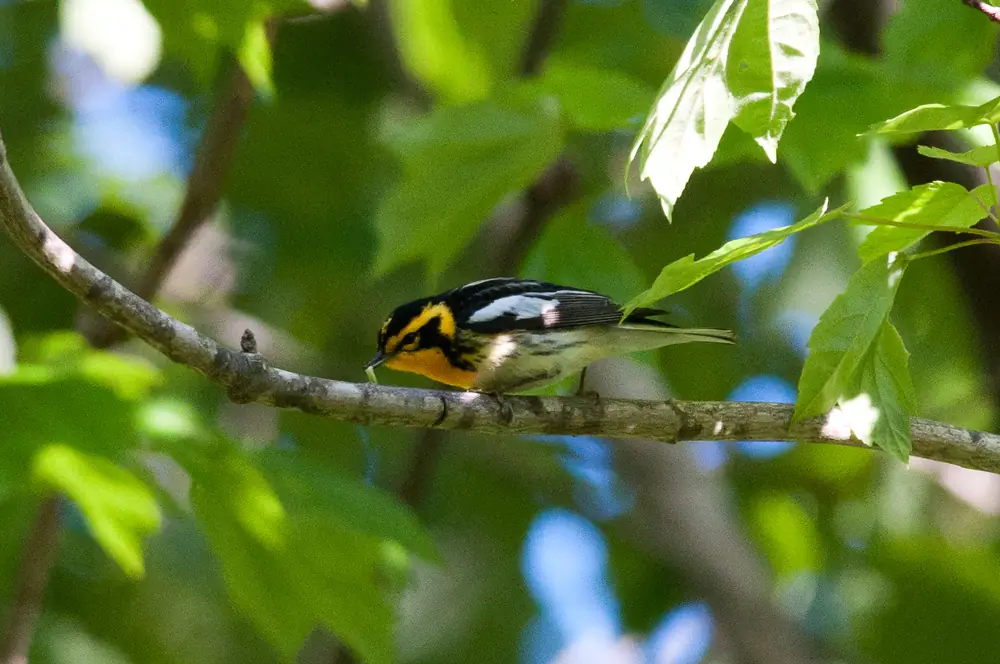
The second and third weeks of May, with the best mornings often in the middle of the month. Mount Auburn Cemetery in Cambridge, one of the best-known land-bird stops in the eastern part of the state, calls May the time of peak abundance for migrants and publishes a week-by-week guide to the likely arrivals. It also warns that the schedule is informal: a cold front can hold birds back for days, and a warm south wind can bring a whole wave in overnight. Foliage thickens as the month goes on, so the first birds of any species are the easiest ones to see.
-
The week-by-week cast at Mount Auburn
First week of May through the fourth week · Mount Auburn Cemetery in Cambridge, with similar wooded edges and parks statewide
By the first days of May the cemetery's guide expects flickers, phoebes, kinglets, hermit thrushes and the early yellow-rumped, pine, palm and black-and-white warblers already present. The first week adds parula, Nashville, yellow and black-throated green warblers, ovenbirds and waterthrushes, plus Baltimore orioles. In the second week come chestnut-sided, magnolia, black-throated blue and Blackburnian warblers, redstarts and yellowthroats, with veeries, scarlet tanagers and rose-breasted grosbeaks. The third week is the richest: the guide says close to 100 species may be seen in the cemetery in that single week, with Tennessee, bay-breasted, blackpoll and Wilson's warblers, cuckoos and the first bobolinks. Canada and mourning warblers and the late flycatchers come in the last week.
-
Where the birds are in the morning
Dawn to about 10 a.m., especially early in the month · Auburn Lake, Halcyon Lake, Willow Pond and Consecration Dell
Mount Auburn's guide says early morning is best because everything is singing, and that the areas around the lakes and Willow Pond are best at first light, with the Dell often better later in the morning. By ten o'clock the birds tend to quiet down and feed. It is an active burial ground, so keep to the paths and give mourners privacy. During the peak weeks it opens at 6 a.m., and groups of ten or more are asked to register.
-
How the Atlas dates the main waves
Mid to late May for many woodland species · Mature woods and moist hardwood forests statewide
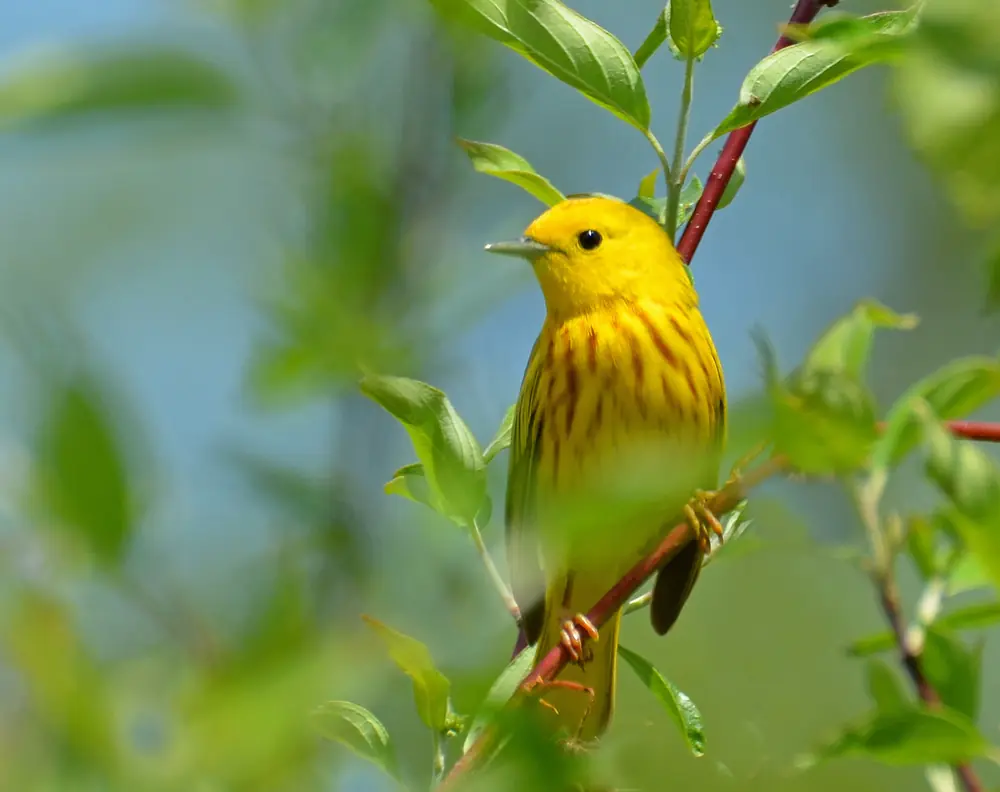
Mass Audubon's first Breeding Bird Atlas puts the peak movement of wood thrushes in the middle fortnight of May, adds that males start singing as soon as they arrive, and notes that the flutelike song is given most at dawn and dusk. It says ovenbirds begin to appear in late April but the peak of spring migration comes in the second half of May, and describes the loud teacher, teacher, teacher song. Yellow warblers reach Massachusetts in the first week of May in general, with the largest numbers, many of them birds passing through, in the second and third weeks.
Go early, stand still near a flowering tree or water, and keep a list. The Naturalist's Field Journal has plates for birds seen and for a map of sounds.
Which colorful birds arrive in Massachusetts in early May?
Orioles first, then tanagers, grosbeaks and buntings. Mass Audubon's first Breeding Bird Atlas, based on fieldwork from the 1970s, says that soon after the first of May people look for the first truly colorful spring migrants, and it names the Baltimore oriole, scarlet tanager, indigo bunting and rose-breasted grosbeak. The arrivals below are the usual ones from that older survey, and the birds track the weather more than the date, so a cold week delays them.
-
Baltimore orioles
First week of May for the first wave; stragglers all month · Tall trees near open ground, riverbanks, farms, parks and suburbs
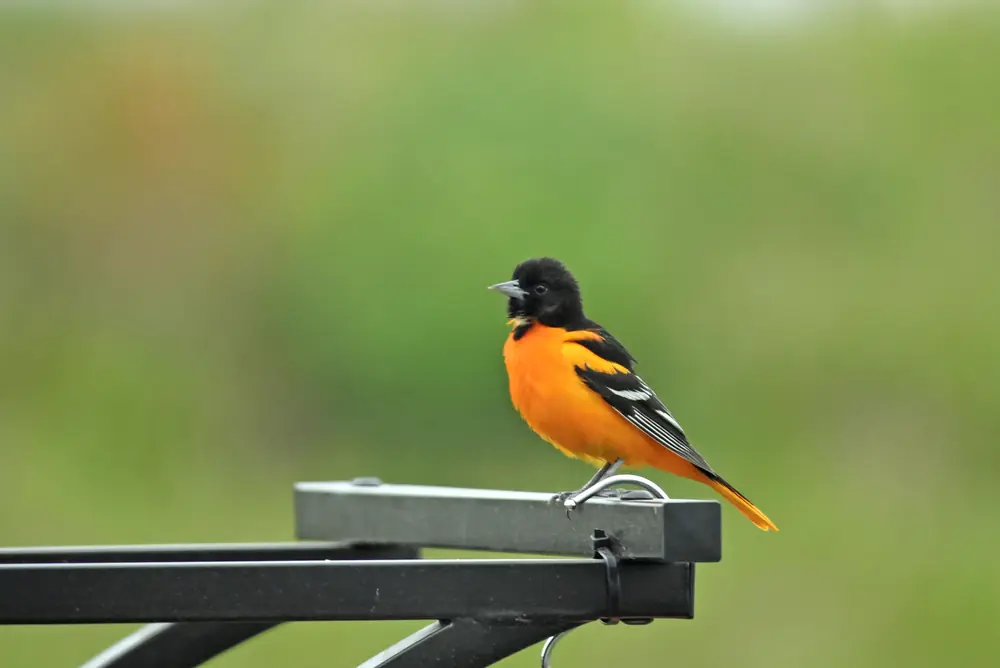
The Atlas says orioles normally arrive during the first week of May, almost together across the state, and that later birds, mostly young ones, keep appearing through the month. The whistled song carries from sparse foliage where males hold territory, and egg dates run from May 23 to July 4.
-
Ruby-throated hummingbirds
Usually May; feeders out in the last week of April or the first week of May · Flowering trees, gardens and feeders, most common in the Berkshires and the Connecticut Valley
The Atlas says males precede females and that the birds typically arrive in Massachusetts in May, after flying 500 miles or more over the Gulf of Mexico in some cases. It describes migrants moving along the outer coast, low over grasses and shrubs. Mass Audubon's feeder advice: mix refined white sugar and water at 1 to 4, let it cool, skip the red dye, and wash the feeder weekly. Journey North collects sightings and keeps maps of the birds' progress north, which are a good way to judge when your own first one is due.
-
Scarlet tanagers and rose-breasted grosbeaks
Mid-May for most tanagers; the last two weeks of May for grosbeaks passing through · Oak and pine woods for tanagers; woodland edges and shade trees for grosbeaks
The Atlas says most scarlet tanagers arrive in mid-May and reveal themselves more by song than by movement, since they are sluggish and hard to find in the canopy even though the male is bright scarlet. Rose-breasted grosbeaks pass through during the last two weeks of May, while resident males hold territory by mid-May, and the song is longer and more musical than a robin's. Both have egg dates that begin in the final third of May.
-
Indigo buntings and bobolinks
Mid-May and later · Brushy field edges and power lines for buntings; hay fields and upland meadows for bobolinks
Indigo buntings do not begin arriving until mid-May, with the males first, singing from high exposed perches. Bobolinks arrive in May, flocks of males first, and a few settle to nest in suitable fields. The Atlas points to a hazard for them: grass in many hayfields is cut in June before the young have left the nest, which is one reason the species has gone from common to uncommon in the state. If you own or manage a meadow, ask a local land trust about delaying the first cut.
-
Whip-poor-wills and nighthawks
Whip-poor-wills widely from the first week of May; nighthawks mostly the last week of May and early June · Pine and oak woodlands on the southeast coastal plain and Cape Cod; flat gravel roofs in cities and towns
The Atlas says the first whip-poor-wills are usually heard in the last week of April, with a more widespread arrival in early May, and that they sing for a couple of hours after sunset and again for two to three hours before dawn. It is common only on the southeastern coastal plain, Cape Cod and the Islands. Nighthawks usually arrive by mid-May, but the bulk of the spring movement is in the last week of May and early June; listen for the abrupt peent over Boston, Cambridge, Worcester, Springfield and Pittsfield at dusk.
Record the day each species first shows up in your yard. The Atlas gives May 3 as the average arrival of territorial house wrens at one Ipswich site from 1974 to 1985, and a log like that gains value with every added spring.
What is happening on Massachusetts beaches and marshes in May?
Horseshoe crabs come ashore, least terns settle into their colonies, and shorebirds from the far south stop to feed on their way to the Arctic. The coast changes character in May: fences and signs mark nesting areas, tide flats fill with feeding birds, and the human season begins. The Cape Cod National Seashore asks visitors to share its beaches from April through July with the birds that nest on them.
-
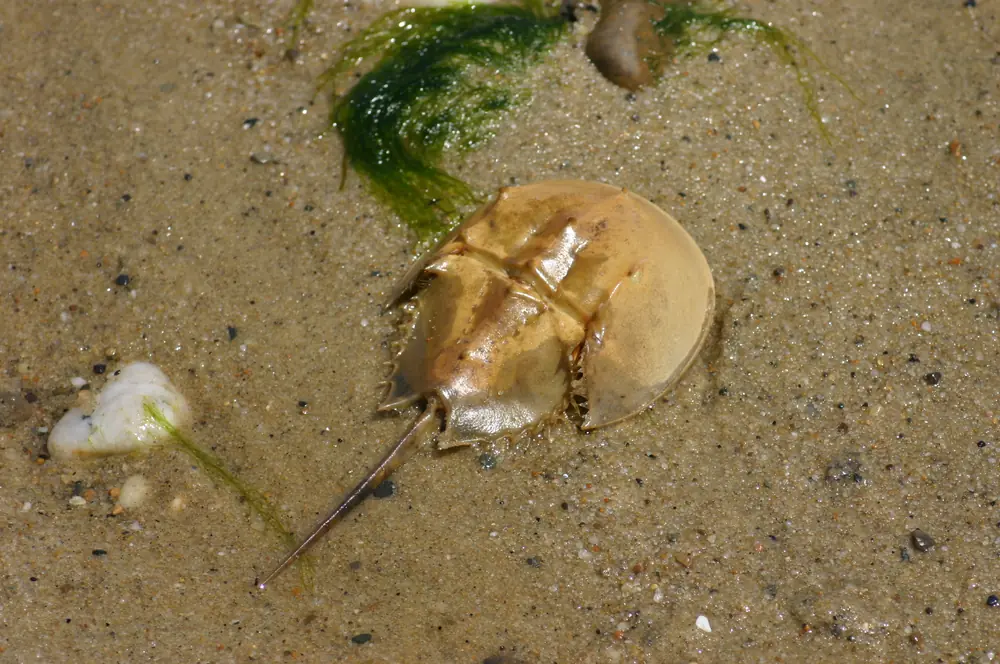
Horseshoe crab spawning
Peak in May and June, on evening high tides around the new and full moons · Pleasant Bay, Nauset Marsh, Great Island and East Harbor in Cape Cod National Seashore, and protected sandy beaches elsewhere
The Park Service says you are most likely to see abundant crabs in May and June, when females come ashore on protected sandy beaches at evening high tides around the full and new moons. Males, about a third the size of females, clasp them with modified claws, so you may see several males crowding around one pair. In 2027 the new moon is May 6 and the full moon is May 20 (see the sky section), so the weeks around those dates are good times to check a calm shoreline at high tide. The eggs matter beyond the crabs: they are a critical food for migrating shorebirds such as the red knot. Harvesting horseshoe crabs inside the National Seashore is prohibited, and the Park Service asks people to report tagged crabs.
-
Least terns arrive
Early May · Coastal beaches and islands statewide, with the largest numbers on Cape Cod and the Islands
The Park Service says least terns arrive in Massachusetts to nest at coastal sites in early May, and that 4,289 pairs were documented in the state in 2019. They nest in colonies on bare sand and shell, so a fenced area with small, pale, black-capped birds hovering and diving nearby is a colony. In 2022, according to the Seashore, 16 colonies on 12 of its beaches held about 195 nesting pairs. Disturbance by people, coyotes and crows is among the threats it lists.
-
Red knots and other shorebirds
May and June · Outer Cape beaches, West Cape Cod Bay beaches, the Monomoy islands and Chatham
The Park Service says thousands of red knots were once recorded along the Massachusetts shore in spring and fall, that spring numbers (May and June) have decreased, and that the larger stopover is now in late summer and fall. The rufa subspecies has been federally threatened since December 2014. Some of these birds fly more than 9,000 miles each way, and the Service estimates that about 80 percent of the New World's red knots and whimbrels pass through the North Atlantic region each spring. Whimbrels are uncommon in Massachusetts in spring, with Monomoy and South Beach in Chatham the hot spots. Monomoy National Wildlife Refuge protects habitat for migratory shorebirds, horseshoe crabs, tiger beetles and gray seals, and the Fish and Wildlife Service warns that parts of the Morris Island Trail are intertidal and may not be passable at high tide.
If you want to see whales from a boat, the sanctuary at Stellwagen Bank is described by NOAA as a premier whale-watching destination, and it points to the WHALESENSE program for finding responsible companies. Ask any operator what is in the area before you book a trip so early in the season.
What wildflowers and flowering trees are out in Massachusetts in May?
May is when the forest floor reaches its fullest bloom, before the canopy shades it. Mass Audubon's wildflower guide says the season usually starts in late April but can shift a week or two with snow cover, elevation, temperature and slope, and it suggests walking every two weeks from mid-April to early June to catch the whole sequence. Eastern and central Massachusetts forests are mostly acidic and share most of their flowers, while the Berkshires and the land west of the Connecticut Valley have richer, less acidic soils and more variety.
-
The first week and the middle of May
First week of May for the ephemerals; mid-May for the greatest variety · Rich woods in the Berkshires and the valley; forest floors statewide
The guide lists Dutchman's breeches, squirrel corn, spring beauty, bloodroot, trout lily and Canada violet for the first week of May, trailing arbutus and early saxifrage on dry ledges through the month, and hepatica and yellow violets on rich forest floors. By mid-May it expects the peak of diversity: red trillium, marsh marigold, wild columbine on rocky outcrops, foamflower, miterwort, white baneberry, blue cohosh, jack-in-the-pulpit and swamp saxifrage in wet places. Drumlin Farm in Lincoln publishes a guide to spring ephemerals.
-
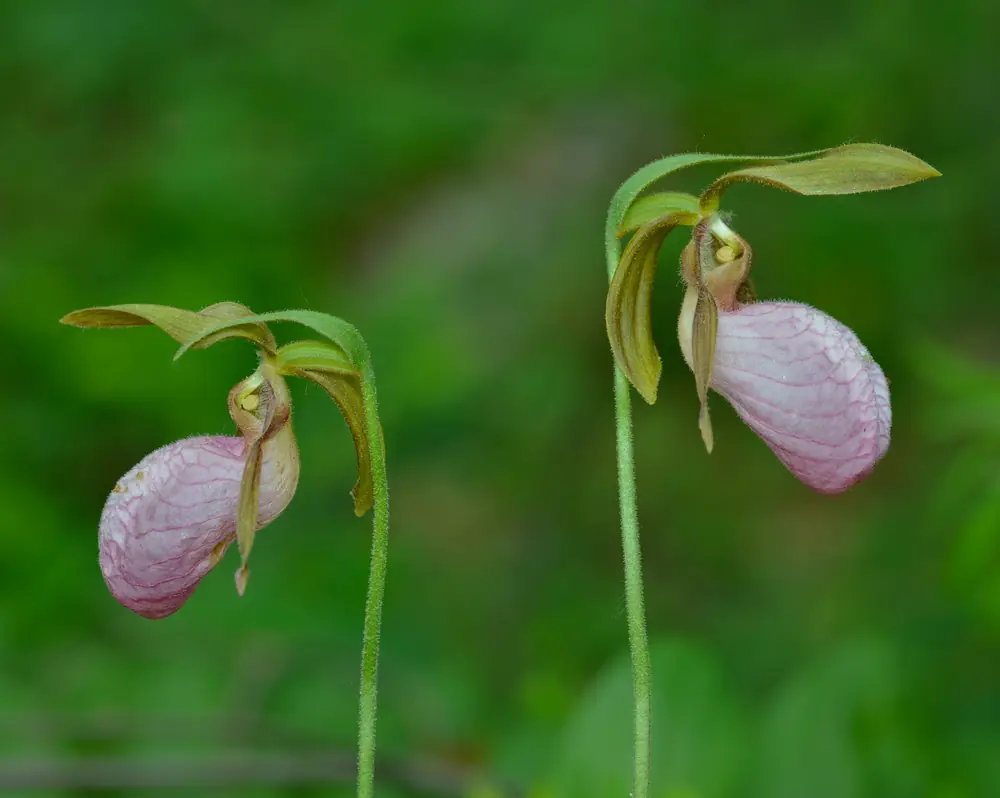
Lady's slippers around Memorial Day
Late May, in the lily-family and orchid stretch of the season · Pine and oak woods for pink lady's slippers; rich, pocketed woods for yellow lady's slippers and showy orchis
The same guide places the late-May show around Memorial Day: Canada mayflower, painted trillium, Solomon's seal, sessile bellwort and Indian cucumber, with pink lady's slippers under pines and oaks more common than most people expect. The Native Plant Trust's Go Botany lists May to July for its flowers, says it prefers acidic soils, and says bumblebees pollinate it by entering through a slit in the pouch. Go Botany also notes that contact with the floral bract can irritate the skin, one more reason to look and not touch. Yellow lady's slipper and showy orchis are less common and occur in pockets.
-
Lilacs at the Arnold Arboretum
Usually mid-May; the 2027 Lilac Sunday date was not posted in early October 2026 · Arnold Arboretum, Jamaica Plain, Boston
The Arboretum held its 2026 Lilac Sunday on May 10 from 10 a.m. to 3 p.m., free, with tours, art and family activities, and said picnicking is allowed on that day only. Registration is not required but helps with planning. Parking is described as extremely limited, so the Arboretum recommends walking, biking or public transit. The event runs rain or shine unless travel is unsafe. Check the Arboretum's calendar closer to spring for the 2027 date, and note that Mother's Day falls on May 9, 2027.
Admire the flowers without picking them, as Mass Audubon asks. Pollinators depend on them, and many of the plants are rare and fragile. Last month's flowers and trees are on the April page.
What are toads, frogs, turtles and bats doing in Massachusetts in May?
The pools of March have mostly emptied, but the louder, later calling frogs take over and the turtles begin to move. Warm nights bring out bats that have spent the winter in caves and attics, and the roads become hazardous for slow animals heading to nest sites.
-
American toads and bullfrogs
Toads in spring and summer; bullfrogs late spring and summer · Ponds, ditches and the edges of permanent water statewide
Mass Audubon's frog guide says the American toad trills in spring and summer and lives everywhere in the state except Nantucket. The American bullfrog, the largest frog in Massachusetts, has a deep jug-a-rum call heard in late spring and summer, and lays its eggs as a film on the water's surface. A warm evening beside a pond in late May may have both.
-
Eastern spadefoot toads
After heavy rain in the warm months · Temporary pools in the Connecticut River Valley and eastern Massachusetts
This rarely seen toad has yellow stripes and catlike pupils, spends much of its life underground and breeds in shallow temporary pools after a strong rainfall in the warm months. Mass Audubon says it is the only frog in Massachusetts listed as Threatened under the state's endangered species act, so treat any you encounter as a protected animal, leave it where it is and keep a pet away.
-
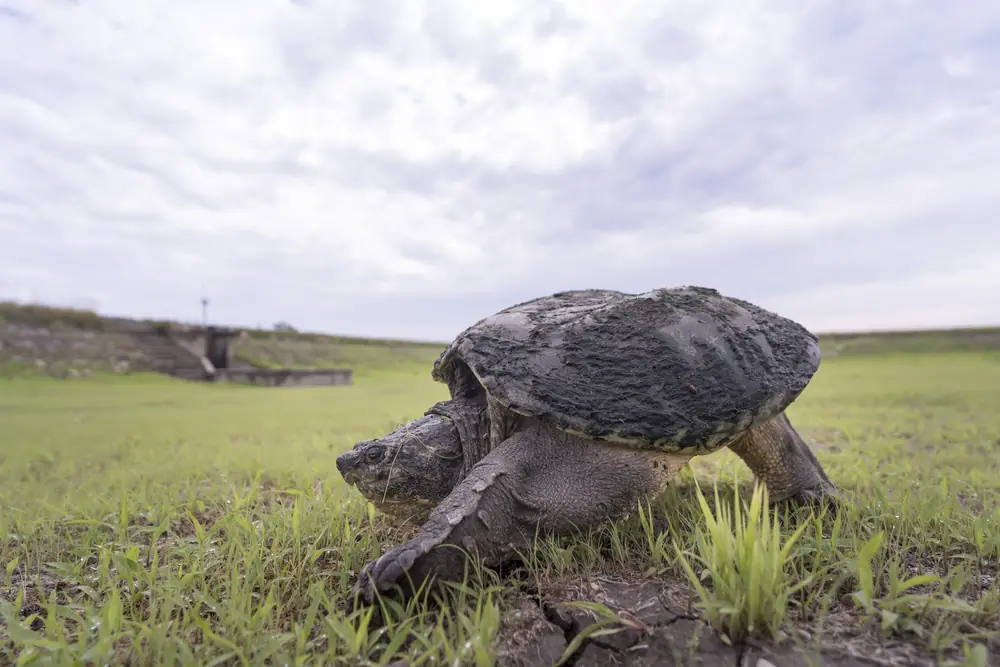
Turtles on the move
Late spring and early summer for females; nests dug in June or July · Roadsides, sandy lawns, tilled fields and the edges of ponds and rivers
Mass Audubon says female turtles cross roads in late spring and early summer looking for nest sites, and usually dig their nests in June or July in sandy or loose soil. Its advice is to leave a turtle alone, because it is probably heading for a site it has used for years. A small turtle in real danger from traffic may be moved over the road and set down facing the way it was traveling; never carry it to water or take it home. Snapping turtles are the exception: do not handle them, since they can reach back about a shell's length, and never lift one by the tail. The Fish and Wildlife Service has described a program that raises young Blanding's turtles at Great Meadows and releases them.
-
Bats come out of hibernation
Spring warmth through June, when nursery colonies form · Evening skies over ponds, rivers and fields
Mass Audubon notes that all of the state's bats eat insects and that one can eat 600 insects per hour. Nine species have historically lived here, and the little brown bat, once the state's commonest, is now endangered because of white-nose syndrome. Females gather in nursery colonies in attics, barns and other warm places in June or early July, which is a good reason to avoid sealing a building before the end of summer without checking for a colony.
How much daylight does Massachusetts gain in May?
About an hour, with a little less on the islands. Boston goes from 14 h 04 m of daylight on May 1 to 15 h 03 m on May 31, a gain of 59 minutes, or about 2 minutes a day, and Nantucket, the southernmost city in the table, gains 56 minutes and ends the month at 14 h 56 m, four minutes short of 15 hours. The gains keep slowing toward the June 21 solstice, and the table lists day length, which daylight time does not change.
| City | May 1 | May 31 | Gained | Per day |
|---|---|---|---|---|
| Pittsfield | 14 h 05 m | 15 h 04 m | 59 min | 2.0 min |
| Springfield | 14 h 03 m | 15 h 01 m | 58 min | 1.9 min |
| Worcester | 14 h 03 m | 15 h 02 m | 59 min | 2.0 min |
| Lowell | 14 h 05 m | 15 h 05 m | 60 min | 2.0 min |
| Boston | 14 h 04 m | 15 h 03 m | 59 min | 2.0 min |
| Plymouth | 14 h 02 m | 15 h 01 m | 59 min | 2.0 min |
| Provincetown | 14 h 03 m | 15 h 01 m | 58 min | 1.9 min |
| Nantucket | 14 h 00 m | 14 h 56 m | 56 min | 1.9 min |
Clocks have stayed on daylight time since March 14 and will until November, so sunrise and sunset times slide smoothly through May. For any other town, use the daylight tool.
Is the last spring freeze over in Massachusetts by May?
On the coast, yes; in the hills and the valley, only by the middle of May. The table gives NOAA 1991 to 2020 normals at each area's main station. Median last-freeze dates run from April 4 at Boston Logan to May 5 at Pittsfield and Amherst, and the cautious right-hand column stretches into the third week of May at both inland stations. In those places a freeze after the middle of May is not unusual, so the blossoms described above can still be frosted in a late year, and tender plants are safer in the ground after the right-hand date. The Massachusetts frost page lists towns across the state.
| Station | One year in ten | Median | Nine years in ten |
|---|---|---|---|
| Pittsfield Municipal Airport (Berkshires) | Apr 23 | May 5 | May 21 |
| Amherst (Pioneer Valley) | Apr 23 | May 5 | May 19 |
| Worcester Regional Airport (central hilltop) | Apr 11 | Apr 23 | May 5 |
| Bedford Hanscom Field (MetroWest) | Apr 13 | Apr 28 | May 12 |
| Boston Logan International Airport | Mar 25 | Apr 4 | Apr 17 |
| Taunton Municipal Airport (Southeast) | Apr 19 | May 2 | May 16 |
| Hyannis Barnstable Municipal Airport (Cape Cod) | Apr 9 | Apr 22 | May 5 |
| Nantucket Memorial Airport | Apr 2 | Apr 13 | Apr 27 |
A station table describes the average spot in an area. Low ground in a valley and the tops of exposed hills are the cold exceptions, so check a thermometer on the nights when clear skies and light wind are forecast.
What is May weather like in Massachusetts, and what hazards come with it?
Warm inland and cool on the water. NOAA's 1991 to 2020 normals put the typical May high at 66 to 69 °F at most stations, with 69.5 °F at Amherst, but only 59.7 °F at Chatham and 60.7 °F at Nantucket, where chilly seawater keeps afternoons cooler. Overnight lows range from 44.4 °F at Pittsfield to 50.3 °F at Boston Logan. Normal precipitation runs from 2.98 inches at Nantucket to 4.05 inches at Ashfield, and the snow that fell in April is nearly gone: Ashfield's May normal is 0.1 inch, and every other station with a snowfall normal shows zero.
-
Thunderstorms and dry spells
Increasingly through the month · Statewide
Showers and thunderstorms become more likely as the air warms, and the National Weather Service Boston office issues the forecasts and warnings. Dry, breezy days can still dry out last year's grass and leaves, and the office also posts a fire weather page. Ask your local fire department before you burn anything, since permit rules are local.
-
Warm days and cold water
Late May · Ponds, rivers and the ocean
The first hot days of the year can feel warmer than they are because bodies have not adjusted. The National Weather Service's heat safety pages recommend drinking water and taking breaks. Water in ponds and the ocean remains cold, so keep early-season swimming brief.
| Station | Average high | Average low | Precipitation | May snowfall |
|---|---|---|---|---|
| Pittsfield Municipal Airport (Berkshires) | 67.0 °F | 44.4 °F | 3.79 in | no normal |
| Ashfield (Hilltowns, 1,340 ft) | no normal | no normal | 4.05 in | 0.1 in |
| Amherst (Pioneer Valley) | 69.5 °F | 45.4 °F | 3.71 in | 0.0 in |
| Worcester Regional Airport (central hills) | 66.6 °F | 46.8 °F | 3.56 in | 0.0 in |
| Blue Hill, Milton (south of Boston, 625 ft) | 66.8 °F | 48.2 °F | 3.82 in | 0.0 in |
| Boston Logan International Airport | 66.5 °F | 50.3 °F | 3.25 in | 0.0 in |
| Plymouth-Kingston (South Shore) | 69.1 °F | 47.9 °F | 3.71 in | 0.0 in |
| Chatham (Cape Cod) | 59.7 °F | 48.1 °F | 3.30 in | 0.0 in |
| Nantucket Memorial Airport | 60.7 °F | 47.0 °F | 2.98 in | no normal |
The Climate Prediction Center posts its monthly and 90-day outlooks around mid-month; the latest are on the CPC outlook page, to read next to the local forecast. Our cloud guide helps you read the sky between forecasts.
What can you see in the Massachusetts night sky in May 2027?
Halley's comet leaves meteors in the first week, the full Moon carries two names, and Mercury has a good late-month run after dusk. Clock times are Eastern Daylight Time throughout.
-
Eta Aquariid meteors under a new moon
Mornings of May 5, 6 and 7, in the last hours before dawn; new moon May 6 · Any dark place with a low eastern horizon
SeaSky rates the shower excellent this year because there is almost no moonlight, credits it to debris from Halley's comet, and says up to 60 an hour is possible, mostly in the Southern Hemisphere, with around 30 an hour in northern latitudes. Massachusetts sits far north for this shower: Aquarius, the source of the streaks, rises only shortly before sunrise, so you get a narrow window and fewer meteors than southern states. Bundle up, face east and give it an hour.
-
A Flower Moon, and a seasonal Blue Moon
Full at 6:59 a.m. EDT on Thursday, May 20; the evening of Wednesday, May 19 is best · East-southeast horizon after sunset
SeaSky links the name Flower Moon to tribes who watched blossoms appear in abundance, and also records Corn Planting Moon and Milk Moon. It counts four full moons in this astronomical spring and tags the third as a Blue Moon, which is the seasonal reading; no month in 2027 holds two. Since the exact full moment is just before breakfast, the best rise is the evening before: about 7:46 p.m. in Boston on May 19, by our calculation.
-
Mercury after dusk
Farthest from the Sun on Friday, May 28 (9:14 a.m. EDT); best evenings roughly May 12 to June 5 · Low in the west-northwest, 45 to 90 minutes after sunset
At about 22.8 degrees east of the Sun, Mercury is as far from sunset's glow as it gets. The peak falls in the morning, so Thursday and Friday evenings, May 27 and 28, are about equal. By our calculation this is the planet's finest evening showing of 2027 for the northern states. Find an open western horizon, such as a beach, a hilltop or a lake shore, and use binoculars to start.
-
Jupiter, Mars, Venus and Saturn
Jupiter with the Moon on May 12; Venus near Saturn on the mornings of May 6 to 8 · Jupiter high in the south after dark; Venus and Saturn just above the eastern horizon before sunrise
Jupiter stays out roughly seven hours past sunset on May 1 (our calculation), and on May 12 a nearly first-quarter Moon sits 1.2 degrees from it, closest at 5:52 p.m. EDT, so look once it gets dark. Mars lies about three degrees from the Moon on May 13. Before sunrise, Venus and Saturn are 0.6 degree apart at their closest, at 2:44 p.m. EDT on May 7, in daylight, so the mornings around it show them about a degree apart. They are very low, which makes this a challenge that needs a clear eastern horizon.
-
Dark windows for the Milky Way
Around May 1 to 14 and May 25 to 31 · Dark country sites with a clear southern horizon, before dawn
For 40 degrees north, our calculation finds the Milky Way's bright core above the horizon in full darkness, with no Moon, in those two stretches. May nights are short at Massachusetts latitudes, so expect a couple of hours at most. Let your eyes adjust for 15 minutes, and use a red light.
| Phase | Date | Time |
|---|---|---|
| New moon | Thursday, May 6 | 6:58 a.m. EDT |
| First quarter | Thursday, May 13 | 12:44 a.m. EDT |
| Full moon, the Flower Moon | Thursday, May 20 | 6:59 a.m. EDT |
| Last quarter | Friday, May 28 | 9:58 a.m. EDT |
The new and full moons also set the rhythm of the horseshoe crab tides, so the sky calendar and the shore calendar line up. For other dates, use the moon phases page.
What can Massachusetts families do outdoors in May?
- Early-morning bird walk. Mount Auburn Cemetery in Cambridge opens at 6 a.m. during the peak of spring migration and keeps a chalkboard of recent sightings at its entrance gate. It has a bird checklist and an introductory guide at the visitors center. Bring a pair of binoculars and quiet voices.
- World Migratory Bird Day. The official page ties the U.S. and Canadian celebration to a Saturday in the middle of May, yet it listed no 2027 date or theme in October 2026, so look before you plan around a day. Mass Audubon sanctuaries and local birding groups often hold events around the date; check with them.
- City Nature Challenge. Observations are made April 30 to May 3, 2027, and identifications continue from May 4 to 16, with results announced on May 20. Look at the challenge site for the Massachusetts regions that take part, and use iNaturalist.
- Hummingbird tracking. Hang a freshly washed feeder between late April and the first week of May, then report your first visitor to Journey North.
- Lady's slipper hunt. Around Memorial Day (Monday, May 31), check pine and oak woods for pink lady's slippers, staying on the path.
- A shorebird morning. At Parker River National Wildlife Refuge the day pass is free on foot or bike and $5 by car (fees can change), and the Seashore's Salt Pond Visitor Center stocks checklists and field guides.
The April page covers the herring runs and the early wildflowers. The nature calendar opens onto every other place and month, and the Naturalist's Field Journal has pages for the day's list, the same place twice and the nest you find.
Safety notes for May in Massachusetts
- Ticks. They are active in May. The University of Rhode Island's TickEncounter program has a tick finder map and tips under the name TickSmart. Walk in the middle of trails, use repellent, and check clothing, skin and pets after any outing in brush or woods.
- Spring turkey season. MassWildlife sets the spring turkey season each year, and it usually begins in late April and runs into May. No 2027 dates were confirmed in early October 2026, so check the agency's season page before walking wildlife management land. If any season is open, wear something bright, and keep dogs close.
- Nesting shorebirds. The Seashore asks visitors to keep out of fenced nesting areas from April through July, and to ask at a visitor center where birds are nesting and what rules are in place.
- Turtles and snapping turtles. Slow down on roads near wetlands in late spring, help only small turtles that are in danger, and never pick up a snapper.
- Cold water. The ocean and ponds are still cold in May; keep children close and wear a life jacket in a boat.
- Sun and the first hot days. The National Weather Service's heat safety page recommends water, shade and breaks, and early May can already feel hot when it follows a cold spring.
- Wildflowers. Do not pick or dig them; a pink lady's slipper's bract can irritate skin.
Sources (44)
- Mount Auburn Cemetery: a timetable of migration at Mount Auburn in May
- Mount Auburn Cemetery: birds and birding (hours, etiquette, peak weeks)
- Mount Auburn Cemetery: tips for beginning birders
- Mass Audubon Breeding Bird Atlas 1: Wood Thrush
- Mass Audubon Breeding Bird Atlas 1: Ovenbird
- Mass Audubon Breeding Bird Atlas 1: Yellow Warbler
- Mass Audubon Breeding Bird Atlas 1: Baltimore (Northern) Oriole
- Mass Audubon Breeding Bird Atlas 1: Ruby-throated Hummingbird
- Mass Audubon Breeding Bird Atlas 1: Scarlet Tanager
- Mass Audubon Breeding Bird Atlas 1: Rose-breasted Grosbeak
- Mass Audubon Breeding Bird Atlas 1: Indigo Bunting
- Mass Audubon Breeding Bird Atlas 1: Bobolink
- Mass Audubon Breeding Bird Atlas 1: Whip-poor-will
- Mass Audubon Breeding Bird Atlas 1: Common Nighthawk
- Mass Audubon Breeding Bird Atlas 1: House Wren
- Mass Audubon Breeding Bird Atlas 1: Broad-winged Hawk
- Mass Audubon: ruby-throated hummingbirds (feeder advice)
- Journey North: hummingbird migration maps and sightings
- Mass Audubon: how to hawk watch (Pilgrim Heights and Parker River)
- Mass Audubon: take a walk on the wildflower side
- Native Plant Trust Go Botany: pink lady's-slipper
- Arnold Arboretum: Lilac Sunday
- National Park Service: horseshoe crabs at Cape Cod National Seashore
- National Park Service: least tern at Cape Cod National Seashore
- National Park Service: red knot at Cape Cod National Seashore
- National Park Service: whimbrel at Cape Cod National Seashore
- National Park Service: birds of Cape Cod National Seashore
- U.S. Fish and Wildlife Service: Parker River National Wildlife Refuge
- U.S. Fish and Wildlife Service: Monomoy National Wildlife Refuge
- U.S. Fish and Wildlife Service: Great Meadows National Wildlife Refuge
- NOAA: Stellwagen Bank National Marine Sanctuary
- Mass Audubon: frogs in Massachusetts
- Mass Audubon: turtles (nesting and road crossings)
- Mass Audubon: bats in Massachusetts
- World Migratory Bird Day
- City Nature Challenge: 2027 dates
- NOAA NCEI: 1991-2020 monthly normals for nine Massachusetts stations
- National Weather Service Boston/Norton: fire weather
- National Weather Service: heat safety
- NOAA Climate Prediction Center: 90-day outlooks
- University of Rhode Island TickEncounter
- U.S. Naval Observatory: moon phases from May 1, 2027
- SeaSky: astronomy calendar 2027 (Eta Aquariids, Flower Moon)
- Photos via Wikimedia Commons; licenses and photographers are credited under each picture
