What to look for in nature in Massachusetts this October
Massachusetts packs a lot of October into a small state. Bogs in Carver and Wareham flood and turn crimson with floating berries, red-tailed hawks ride cold northwest winds past Wachusett Mountain, humpbacks still feed on Stellwagen Bank, and white sharks hunt gray seals off the Outer Cape in their busiest month. Frost reaches the Berkshire hollows around the first of the month but usually holds off until November at Logan Airport and on Nantucket. What follows is arranged by region and theme, with a source for every date.
Start here
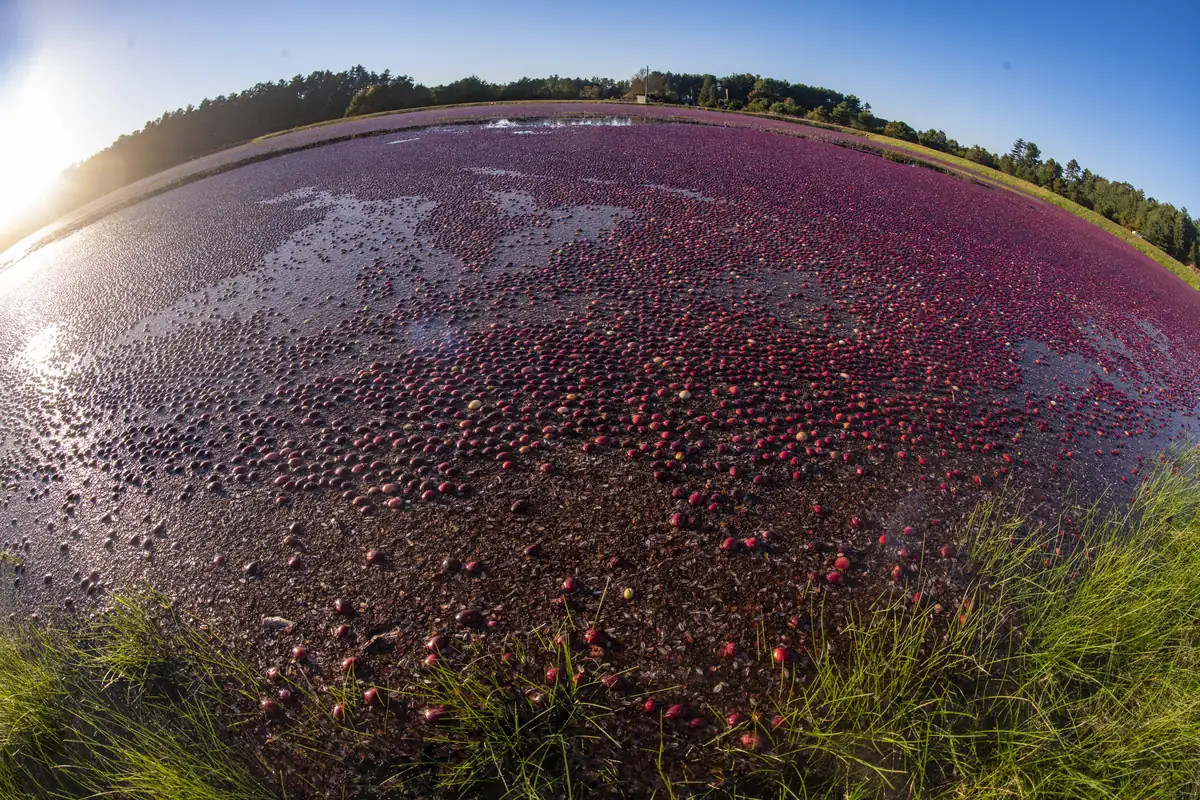
- Red water in cranberry country. Growers pick from mid-September into early November, and most of the crop comes in during October. On a wet-harvest day a bog in Carver, Plymouth or Wareham is flooded, the berries are shaken loose and float up, and the whole basin turns deep red. Many bogs sit beside public roads, so you can watch from the shoulder.
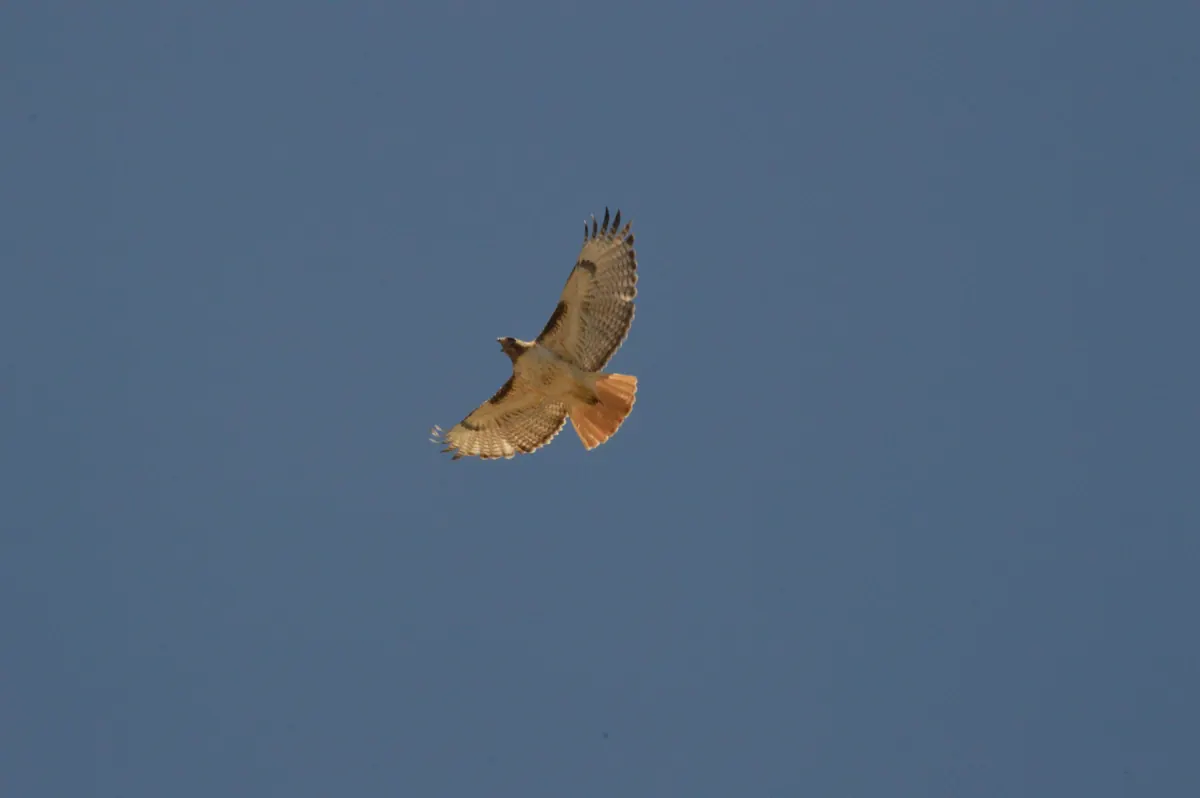
- Hawks on a north wind. October is when red-tailed and red-shouldered hawks take over from the broad-wings at Wachusett Mountain in Princeton and Mount Watatic in Ashburnham. Go on the first crisp, clear day after a cold front, between 10 a.m. and 4 p.m. Volunteer counters staff Wachusett daily through Sunday, October 25.
- Jupiter disappears behind the moon. Jupiter will be hidden by the moon for about an hour before dawn on Tuesday, October 6. From Boston the planet vanishes at about 4:27 a.m. EDT and returns at about 5:30 a.m., more than an hour before sunrise, with the moon well up in the east.
For your notes: the Naturalist’s Field Journal has a dusk and dawn watch plate that suits the morning of October 6, a birds I have seen page for your first junco and first raft of eiders, a seeds, pods and cones page for an emptied witch hazel capsule, and a map of sounds for a night of geese honking overhead. Put the date and the wind direction on every entry.
Regions used below: The Berkshires and the Hilltowns; The Pioneer Valley; Central Massachusetts and Worcester County; Greater Boston, the North Shore and Merrimack Valley; The South Shore and South Coast; Cape Cod and the Islands.
When is the cranberry harvest in Massachusetts, and where can you see it?
Cranberries are a native bog plant here, and southeastern Massachusetts has grown them as a farm crop since the 1800s. The growers’ association says the harvest runs from mid-September into early November, with the bulk of it in October. Its members farm more than 11,500 acres of bog and hold about 60,000 acres of surrounding upland, wetland and ponds as open space, mostly in Plymouth County and on the Upper Cape, in towns such as Carver, Wareham, Middleborough, Plympton, Rochester and Plymouth.
-
The wet harvest
Mostly October; a single bog is usually picked in a day or two · Plymouth County and the Upper Cape
Most berries here go to juice and sauce and are wet-harvested. The grower floods the bog from an adjoining pond or reservoir, drives a water reel through the vines to knock the fruit loose, and lets the berries bob to the surface. Workers in waders then pull floating booms to gather the red mat toward a pump or conveyor that lifts it into a truck, and the water goes back to the pond for reuse.
-
The dry harvest
Late September into October · Bogs that sell fresh fruit
Berries sold fresh in bags are picked dry, with walk-behind machines whose metal teeth comb fruit off the vines.
-
Frost nights on the bogs
Any clear, calm night from late September on · Low bogs in cold hollows
Bogs lie in low, sandy ground where cold air pools, so they often frost before the towns around them. The UMass Cranberry Station calls frost the one hazard that can take a whole crop in a single night. Growers run sprinklers on cold nights; as the water film freezes it gives off heat that keeps the berries themselves from freezing. Ripe fruit becomes more tender to cold late in October, one reason growers aim to finish by early November.
For a closer look, the Massachusetts Cranberries growers’ association lists member farms with tours and farm stands. In 2025 it ran public bog tours from a barn in Carver on Saturday mornings in October; check its site for the 2026 schedule, and note that public tours stay on the bog edge rather than in the water. The long-running harvest festival that A.D. Makepeace held in Wareham ended in 2018, so ignore old listings that still show it.
When do the leaves peak in Massachusetts this year?
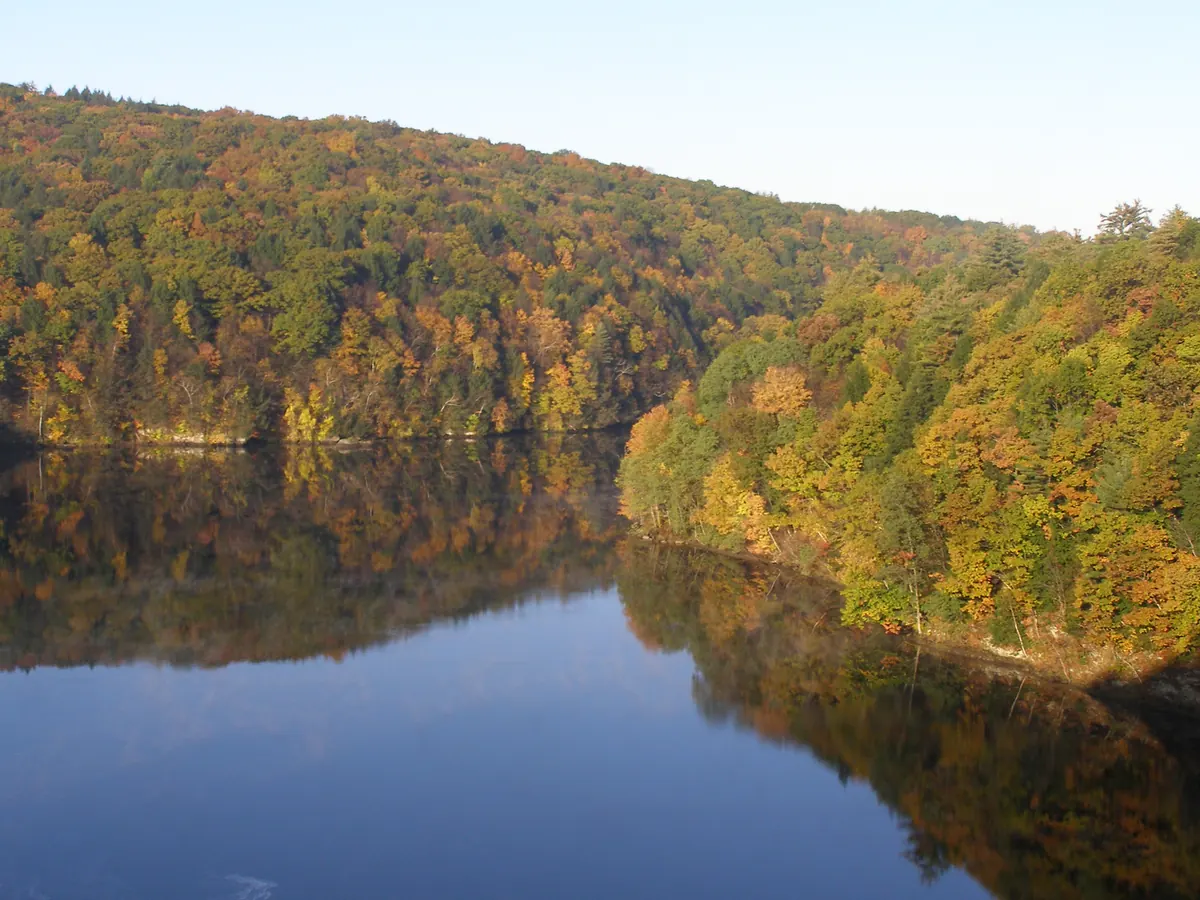
The Department of Conservation and Recreation has brought back its interactive fall foliage map for 2026, with park-by-park forecasts and staff photos. DCR expects much of the state to peak around mid-October, with the western counties first. Color usually works down from the high ground of Berkshire and Franklin counties to the coastal plain, and Cape Cod and the Islands turn last.
| Region | Reference places | Typical peak |
|---|---|---|
| The Berkshires and the Hilltowns | Mount Greylock, Savoy, the Mohawk Trail (Route 2), Windsor, Otis | First half of October |
| The Pioneer Valley | Mount Sugarloaf, Mount Holyoke, the French King Gorge, Quabbin | Mid-October |
| Central Massachusetts and Worcester County | Wachusett Mountain, Leominster State Forest, Purgatory Chasm | Mid-October |
| Greater Boston, the North Shore and Merrimack Valley | Middlesex Fells, Blue Hills, Bradley Palmer, Harold Parker | Mid-to-late October |
| The South Shore and South Coast | Myles Standish, Borderland, Freetown-Fall River State Forest | Late October |
| Cape Cod and the Islands | Nickerson State Park, the Province Lands, Manuel F. Correllus | Late October into early November |
Dryness is the wild card this year. The U.S. Drought Monitor for September 22 had about 16 percent of Massachusetts in moderate or severe drought and more than half abnormally dry, after an August with almost an inch less rain than normal. Thirsty maples and birches may brown and drop early. Swamp red maples usually give the first scarlet, sugar maples on the hill farms the orange, and the Cape’s pitch pine and scrub oak woods finish in rust and bronze. The Field almanac estimates green-up and leaf drop from satellite data for any address; pick one tree near home, photograph it every weekend, and note the first day it is bare.
Where can you watch hawks and other migrating birds in Massachusetts in October?
The big broad-winged hawk flights of mid-September are over, but the season is far from finished. The Eastern Massachusetts Hawk Watch, an all-volunteer count, says most red-tailed and red-shouldered hawks, with the odd northern goshawk and golden eagle, pass between mid-October and mid-November. On the coast, sparrows and juncos crowd the thickets and the first big rafts of sea ducks settle offshore.
-
Wachusett Mountain
Counters present daily through Sunday, October 25 · Wachusett Mountain State Reservation, Princeton
The state’s best-known hawk watch has averaged about 11,000 raptors a season since 1977, most of them in September. October brings fewer, perhaps a hundred or more on a strong day, but bigger birds and a wider mix: red-tails, red-shoulders, sharp-shins, Cooper’s hawks, harriers and the occasional eagle. The best day follows a cold front that has cleared out the rain, with cool air and a north or northwest wind of 10 to 25 mph.
-
Mount Watatic and Pinnacle Rock
Through October into November · Ashburnham; Middlesex Fells Reservation, Malden
Mount Watatic, a short, steep climb on the New Hampshire line, has averaged about 6,000 hawks a year since 1987 and stays productive later in the fall than Wachusett. Near Boston, Pinnacle Rock in the Fells is watched from the last week of September to mid-November; totals are lower, but on a strong west or northwest wind the birds can pass close and low.
-
Plum Island and the Great Marsh
All month · Parker River National Wildlife Refuge, Newbury and Rowley
The refuge covers about three-quarters of Plum Island, an eight-mile barrier beach, and more than 300 bird species have been recorded there since it was set aside for migrating birds in 1942. In October look for white-throated, song and savannah sparrows and yellow-rumped warblers in the bayberry along the road, northern harriers coursing over the salt marsh, and ducks building up in the refuge pools. The refuge also holds waterfowl hunts in marked areas in October, so keep to the open trails. Late in the month snow buntings and horned larks start to appear on the upper beach. A few late monarchs still nectar on seaside goldenrod here in early October, though Monarch Watch puts the main passage at this latitude in the first half of September.
-
Sea ducks, gannets and seabirds
Building through October · Race Point in Provincetown, First Encounter Beach in Eastham, Cape Ann
Race Point, at the tip of the Cape with water on three sides, is among the best places in the state to watch ocean birds from land. On an onshore wind, northern gannets plunge-dive past the surf while long lines of common eiders, scoters of all three kinds and long-tailed ducks stream by. Bring a scope and dress for wind.
A clearing northwest wind is what hawk watchers hope for; check wind and cloud on Today’s sky before you drive out.
What is happening off Cape Cod and the Massachusetts coast in October?
The ocean holds its summer warmth longer than the land, so the coast stays busy after the beach umbrellas are gone. Whales are still feeding, gray seals crowd the Outer Cape sandbars, sharks follow the seals, and bluefish, bonito and false albacore are still inshore.
-
Humpbacks on Stellwagen Bank
Most boats run through the end of October · Trips from Boston, Gloucester, Newburyport, Plymouth, Barnstable and Provincetown
The Stellwagen Bank National Marine Sanctuary, an underwater plateau between Cape Ann and Cape Cod, says most whale-watch companies sail from the beginning of May to the end of October, a few longer. Humpbacks are the main attraction, often with fin and minke whales nearby, and many local boats take part in NOAA’s Whale SENSE program for responsible viewing.
-
Gray seals and white sharks
October is the busiest month for sharks · Monomoy, Chatham, Orleans and the Outer Cape beaches
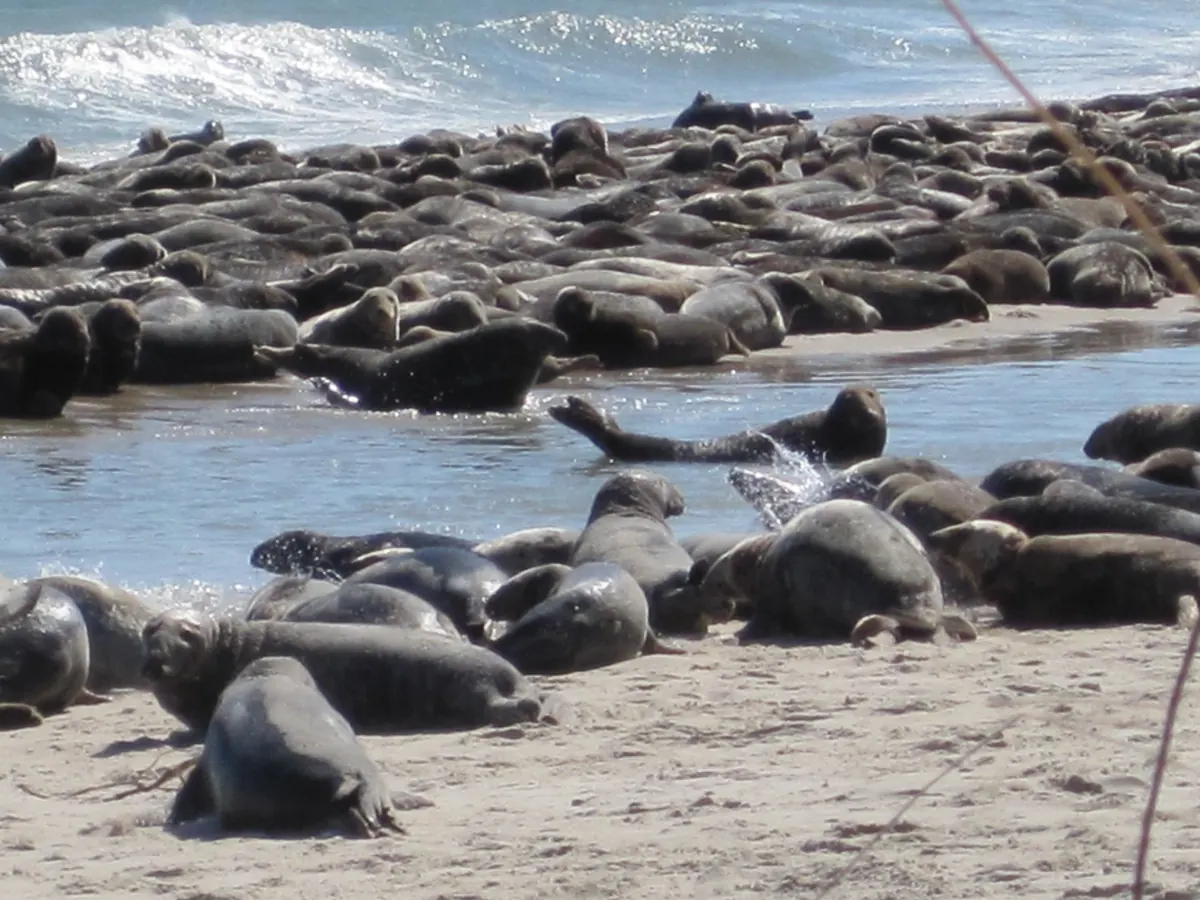
Gray seals, scarce here for much of the last century, now haul out by the thousands on the sandbars off Chatham and Monomoy, and white sharks have returned with them. In 2024 the receivers that the Atlantic White Shark Conservancy and the state Division of Marine Fisheries keep along the Cape logged more white shark detections in October, about 55,000, than in any other month. The busiest spots were South Shark Cove off Monomoy, Nauset North in Orleans, the Chatham Harbor inlet and Nauset Light.
-
The Martha’s Vineyard Derby
Weigh-ins through Saturday, October 17 · Derby headquarters on Dock Street, Edgartown
The 81st Striped Bass and Bluefish Derby awards prizes for bluefish, bonito and false albacore caught from boat or shore; despite the name, striped bass are not among the fish it weighs. The awards ceremony is set for Sunday, October 18. Confirm the final day with the organizers, since published listings disagree.
The Cape Cod National Seashore keeps boat and foot restrictions on its shorebird staging areas, such as Coast Guard Spit, Jeremy Point and the Hatches Harbor flats, through October 15. Inland, MassWildlife is stocking more than 70,000 trout this fall, about 43,500 of them rainbows longer than 14 inches, and posts each day’s stockings on its online trout report.
When is the first frost and freeze in Massachusetts?
Few states pack such a wide spread of freeze dates into so short a drive. In the table, the median is the date by which half of past autumns had recorded their first 32 °F night; one year in ten it came earlier than the first date, and nine years in ten it had arrived by the last.
| Station | One year in ten | Median | Nine years in ten |
|---|---|---|---|
| Pittsfield Municipal Airport (Berkshires) | Sep 23 | Oct 5 | Oct 22 |
| Amherst (Pioneer Valley) | Sep 28 | Oct 8 | Oct 23 |
| Barre Falls Dam (central hills, valley floor) | Sep 18 | Oct 1 | Oct 15 |
| Worcester Regional Airport (central hilltop) | Oct 6 | Oct 21 | Nov 3 |
| Bedford Hanscom Field (MetroWest) | Sep 28 | Oct 10 | Oct 28 |
| Boston Logan International Airport | Oct 29 | Nov 9 | Nov 22 |
| Taunton Municipal Airport (Southeast) | Sep 25 | Oct 8 | Oct 25 |
| Hyannis Barnstable Municipal Airport (Cape Cod) | Oct 13 | Oct 28 | Nov 11 |
| Nantucket Mem Airport | Oct 25 | Nov 8 | Nov 23 |
Two lessons hide in those rows. Cold air drains downhill: Worcester’s airport sits on a hilltop and typically freezes around October 21, while Barre Falls Dam, in a valley about 13 miles to the northwest, has usually frozen by October 1. And the ocean is a heater. Logan, surrounded by harbor water, has a median of November 9 and Nantucket November 8, a month after Pittsfield and Taunton. For more stations and last spring freezes, see Massachusetts frost dates by town. Bring in basil and tender pots when a clear, still night is forecast to drop into the mid-30s, since frost forms on the ground before the official thermometer, five feet up, reaches 32 °F.
How much daylight does Massachusetts lose in October?
Every town in the state gives up about an hour and twenty minutes of daylight between October 1 and 31, close to three minutes a day. The Islands lose a minute or two less than the Berkshires because they lie farther south. The loss is lopsided: in Boston the sun comes up 35 minutes later by the end of the month and goes down 47 minutes earlier.
| City | Oct 1 | Oct 31 | Lost | Per day |
|---|---|---|---|---|
| Pittsfield | 11 h 44 m | 10 h 22 m | 82 min | 2.7 min |
| Springfield | 11 h 45 m | 10 h 23 m | 82 min | 2.7 min |
| Worcester | 11 h 45 m | 10 h 23 m | 82 min | 2.7 min |
| Lowell | 11 h 43 m | 10 h 21 m | 82 min | 2.7 min |
| Boston | 11 h 45 m | 10 h 23 m | 82 min | 2.7 min |
| Plymouth | 11 h 44 m | 10 h 24 m | 80 min | 2.7 min |
| Provincetown | 11 h 44 m | 10 h 24 m | 80 min | 2.7 min |
| Nantucket | 11 h 45 m | 10 h 26 m | 79 min | 2.6 min |
Then the clocks jump back an hour at 2 a.m. on Sunday, November 1, when daylight saving time ends. On Halloween, Boston’s sun sets at 5:39 p.m. EDT; the next evening it sets at 4:37 p.m. EST, and the drive home is suddenly in the dark, just as deer collisions climb. Look up your own town on the daylight calculator.
What is October weather like in Massachusetts, and what might El Niño mean for the winter?
October is usually a clear, bright month here, with more rain than people remember. NOAA’s 1991–2020 normals give Boston an average high of 62.1 °F, a low of 47.5 °F and 4.03 inches of rain. Worcester, about a thousand feet up, averages 58.9 and 42.2 °F with 4.84 inches, and Pittsfield has the coldest nights of the stations here at 38.5 °F. Hyannis averages 63.4 and 45.7 °F and Nantucket 61.9 and 48.6 °F, the mildest nights in the state.
Snow is unusual but possible: the October normal is 1.1 inches at Worcester and 0.2 inch at Logan. The nor’easter of October 29–30, 2011, left 14.6 inches at Worcester’s airport and about an inch in Boston, and the heavy snow on leafy trees cut power to hundreds of thousands of homes.
Winter is another matter. On September 10 the federal Climate Prediction Center judged a very strong El Niño nearly a sure thing for the cold season, with a probability above nine in ten, and gave a 75 percent chance of a record-setting event. NOAA forecasters describe El Niño’s hold on Northeast winters as weak, but Boston’s own record from the biggest events is lopsided. Logan averages about 49 inches of snow a winter; it had 32.7 inches in 1982–83, 25.6 in 1997–98 and 36.1 in 2015–16, the three historic El Niño winters, and only 9.8 in the strong event of 2023–24. Storms still came, but many fell as rain near the coast. The hill towns, with colder air aloft, have the best chance of an ordinary snow year. October itself will feel little of this. Watch for the next ENSO update on October 8 and the official NOAA seasonal outlook around the middle of the month.
Today’s forecast and radar are on the local weather page.
What can you see in the Massachusetts night sky in October?
-
The moon covers Jupiter
Tuesday, October 6, about 4:27 to 5:30 a.m. EDT · East, moon about 23 to 35 degrees high
This is the sky event of the month, and it happens in full darkness. A thin crescent, lit 18 percent, comes up over Boston at 2:07 a.m., with Jupiter hugging it. By IOTA’s reckoning, Jupiter goes behind the sunlit limb at about 4:27 a.m. in Boston and emerges from the dark limb at about 5:30 a.m. Sunrise is not until 6:47. In binoculars or a small telescope, Jupiter’s disk takes several seconds to fade, not the instant wink of a star.
-
Draconid meteors
Evening of Thursday, October 8 · High in the north after dark
The Draconids peak in the early evening, which suits children, and this year the moon stays down until 4:32 a.m. Most years give only a few slow meteors an hour from near the head of Draco, though the shower has surprised observers before.
-
Orionid meteors
Active October 2 to November 7; best before dawn October 21 and 22 · A dark sky; face south or east
These quick meteors are debris from Halley’s Comet, a steady trickle of perhaps one every few minutes from a dark site at the broad peak. The gibbous moon sets in Boston at 1:52 a.m. on the 21st and 2:59 a.m. on the 22nd, and the sun rises just after 7:00, so use the hours in between.
-
The Hunter’s Moon
Sunday, October 25 and Monday, October 26, at dusk · Low in the east-northeast
Exact full moon comes at 12:12 a.m. EDT on Monday the 26th, so both evenings show a full disk. Boston’s moonrise is 5:11 p.m. on Sunday, some 36 minutes ahead of sunset, and 5:42 p.m. on Monday, just before the sun goes down. It is not a supermoon. A rising moon over the harbor, a reservoir or a flooded bog is the picture to aim for.
-
Saturn all night, planets at dawn
Saturn at opposition October 4; moon near Saturn October 23–24; Mars at the Beehive October 11 · Saturn in the southeast at dusk; Jupiter and Mars in the east before sunrise
Saturn, opposite the sun on Sunday, October 4, stays above the horizon all night as a calm, butter-colored light in a starless stretch of the southeast; look for it beside the waxing gibbous moon on the 23rd and 24th. Venus shows only as a low spark in the west for the first few evenings, then sinks into the glare and moves to the morning side of the sun on October 23. Jupiter rules the eastern sky before sunrise. Early on October 11, Mars, orange-red and much fainter, shares that part of the sky, parked in front of the Beehive star cluster and best in binoculars, with no moon in the way.
| Phase | Date | Time |
|---|---|---|
| Last quarter | Saturday, Oct 3 | 9:25 a.m. EDT |
| New moon | Saturday, Oct 10 | 11:50 a.m. EDT |
| First quarter | Sunday, Oct 18 | 12:12 p.m. EDT |
| Full moon, the Hunter’s Moon | Monday, Oct 26 | 12:12 a.m. EDT (looks full on the evenings of Oct 25 and 26) |
| Last quarter | Sunday, Nov 1 | 3:28 p.m. EST |
Before you set a 4 a.m. alarm, check the cloud forecast on Today’s sky. The moon phase calendar gives the moon’s rising and setting for your own town.
What is blooming, ripening and dropping in Massachusetts in October?
Most wildflowers are done by mid-October, but a few plants save their show for the end of the year, and the fruit and seed crop is at its height.
-
Witch hazel
Blooms October into November · Woods, stream banks and rocky slopes statewide
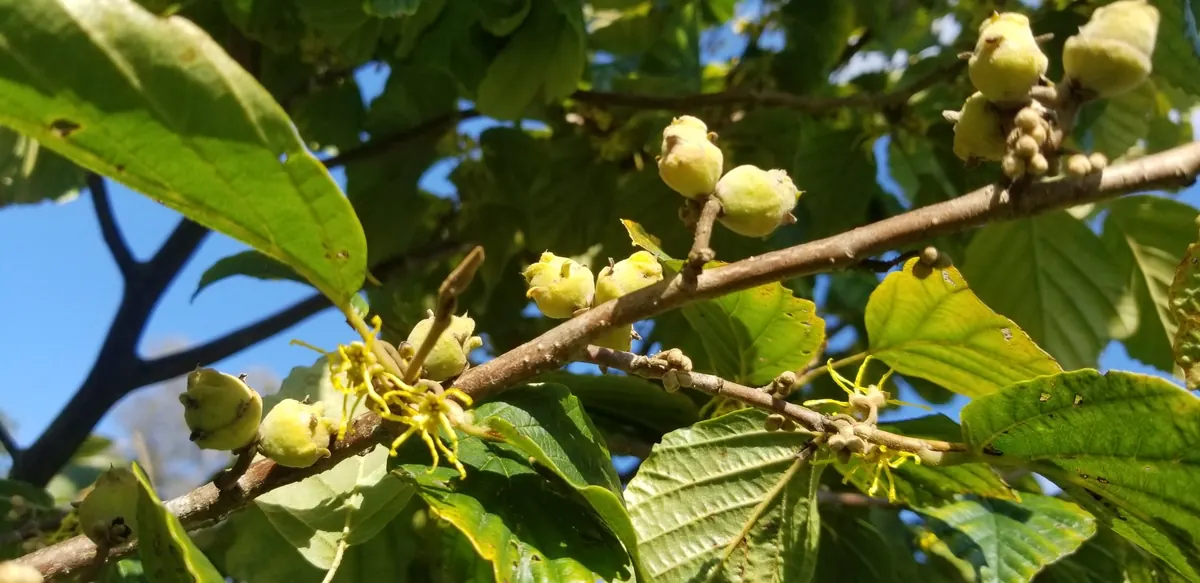
American witch hazel flowers as its leaves turn yellow, sometimes after they fall, with crinkled yellow petals like narrow ribbons. Native Plant Trust ranks it common across the state. Last year’s woody capsules split at the same season and can throw their black seeds about 30 feet; on a quiet, dry day near a big shrub, listen for the snap.
-
Asters and goldenrods
Early to mid-October · Roadsides, old fields and dunes
Deep purple New England aster and the small white heath and calico asters feed the last bees. On dunes and salt-marsh edges, seaside goldenrod blooms later than its inland cousins; its fleshy, waxy leaves hold water against salt spray.
-
Beach plums, rose hips and bayberries
Last plums early in the month; hips and bayberries all month · Coastal dunes from Plum Island to the Cape and Islands
Beach plum, a low, tangled dune shrub, ripens dusky purple plums from late summer, and the last of them go early in October. Rose hips redden along the same paths, and bayberry holds its waxy gray berries, a fall staple for yellow-rumped warblers. Pick only where it is allowed, and stay off protected dunes.
-
Acorns and bittersweet
Through October · Oak woods and roadsides
Acorns fall all month, and blue jays carry them off to bury, often far from the parent tree, which is how oaks spread. Oriental bittersweet, an invasive vine, shows orange-and-yellow berries along roadsides; for a fall wreath choose native winterberry instead, since bittersweet seeds sprout wherever the wreath is thrown out.
Oaks keep their leaves longest, going deep red and brown at month’s end, and the Cape’s salt marshes fade from green to tawny gold. A tree-through-the-seasons page is a good home for one oak you pass every day.
What are Massachusetts moose, bears and deer doing in October?
For large mammals, October is about breeding and fattening up, and both put animals on the move and across roads.
-
Moose in the rut
September and October · Central and western Massachusetts, especially north Worcester County and the Berkshires
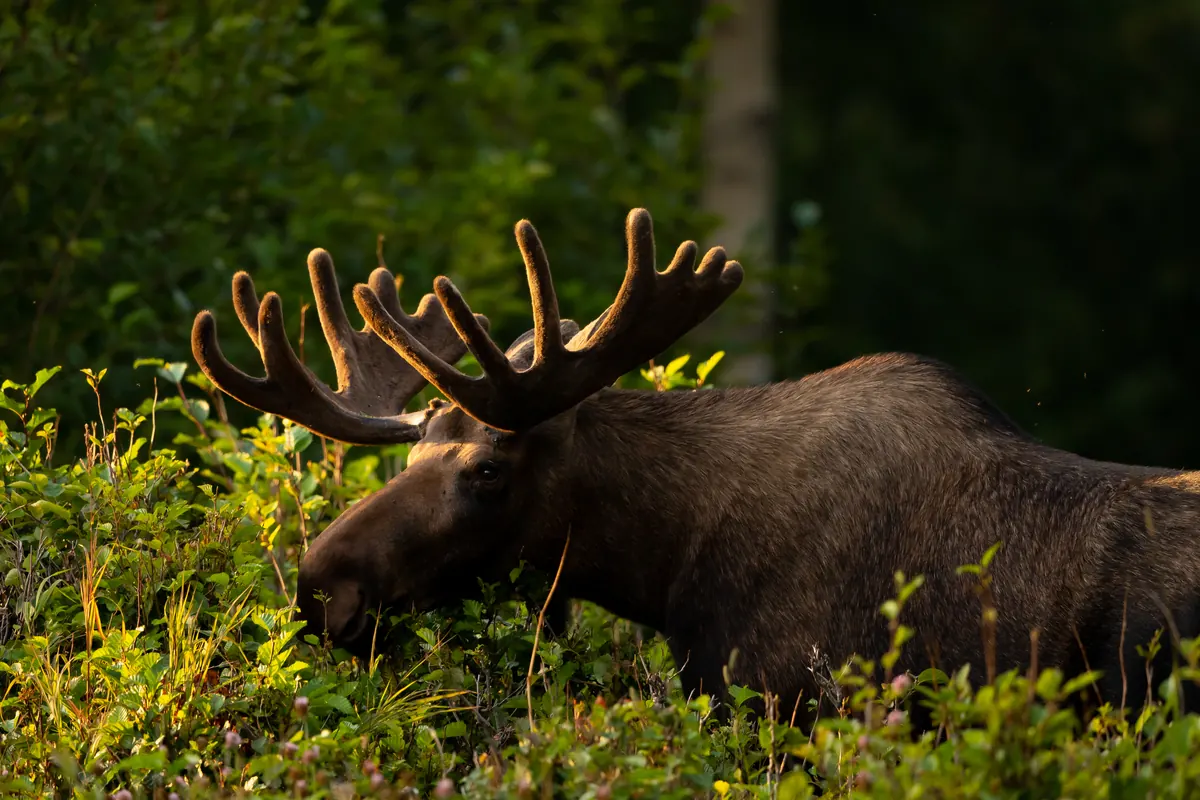
MassWildlife puts the state’s moose at 800 to 1,000, possibly fewer as winter ticks and brainworm take a toll. The breeding season runs through September and October, when young bulls wander widely and sometimes end up in town: on September 22 one crossed Route 2 and spent part of the day in downtown Gardner. A rutting bull can be bold and unpredictable, so watch from a car or far away. Moose are tall and dark, and their eyes sit above headlight level, so they rarely shine back on a dark road.
-
Black bears in fall feeding mode
Until they den in November or December · Mostly central and western Massachusetts, spreading east
MassWildlife estimates more than 4,500 black bears in the state, a number still rising as bears move into the suburbs west of Boston. Autumn hunger drives them to acorn ridges and anywhere else fat is easy to find: orchards, dumpsters and bird feeders. Take feeders down until bears have denned, and keep trash and pet food inside.
-
Deer and small animals
Deer rut builds late October into November · Statewide
Bucks rub saplings bare and paw scrapes in the leaves. Chipmunks stuff their cheek pouches and disappear underground as nights cool, woolly bear caterpillars cross paths looking for a leaf pile to winter in, and field crickets chirp more slowly each evening, the last good week for the cricket thermometer.
Report a collision with a deer or moose to the Massachusetts Environmental Police at 1-800-632-8075. On muddy trails, the tracks-to-know plate helps sort moose, deer, bear and coyote prints.
What are the best outdoor outings for Massachusetts families in October?
Most dates below were taken from the organizer’s page at the end of September. Plans change, so check again the day before.
-
Giant pumpkins at the Topsfield Fair
Fair runs Friday, October 2 through Monday, October 12; weigh-off Friday, October 2, from 4 p.m. · Topsfield Fairgrounds, Topsfield
The 42nd All New England Giant Pumpkin Weigh-Off opens the fair on its first afternoon. Children love watching a forklift ease each giant onto the scale.
-
Free programs at the Arnold Arboretum
Fall leaf color, Saturday, October 3, 12:30–3 p.m.; mushroom hunt, Saturday, October 17, noon–2 p.m.; Wicked Plants, Saturday, October 31, noon–3 p.m. · Arnold Arboretum, Jamaica Plain, Boston
Harvard’s arboretum has dozens of free October events, including bird walks, oak and maple identification and a family Halloween program on poisonous plants.
-
National Wildlife Refuge Week
Saturday, October 10 through Saturday, October 17; free entry Sunday, October 11 · Parker River, Great Meadows, Assabet River, Monomoy and other refuges
Parker River normally charges an entrance fee, so October 11 is a good day to bring the family to Plum Island. Walk the boardwalks to the beach, watch harriers over the marsh, and check the refuge page for guided walks, which need registration.
-
An hour on a hawk watch
Daily through Sunday, October 25 · Wachusett Mountain State Reservation, Princeton
The summit can be reached by a moderate hike, or by the summit road when DCR has it open, and volunteers are glad to show beginners how to tell a red-tail from a Cooper’s hawk. Pack binoculars, a warm hat and lunch.
-
Citizen science
All month; eBird’s October Big Day is usually the second Saturday, October 10 this year if the pattern holds · Anywhere
Count birds for as little as ten minutes and submit an eBird checklist, especially on the October Big Day. Photograph fungi, fruits and insects for iNaturalist, upload a confirmed white shark sighting on the Cape through the Sharktivity app, and report bear sightings to MassWildlife, which uses them to follow the eastward spread.
A quieter idea: stand at the edge of a cranberry bog on a harvest morning with a thermos. Browse other states on the nature this month hub, and bring the Naturalist’s Field Journal along to write down what you find.
Safety notes for October in Massachusetts
- Hunting seasons and orange. Archery deer season runs statewide from Monday, October 5 to Saturday, November 28. Pheasant season opens Saturday, October 17 and runs to December 31, with birds stocked on many wildlife management areas. Shotgun deer season is November 30 to December 12, and primitive firearms season December 14 to 31. Massachusetts allows no hunting on Sundays, so Sunday is the calmest day in the woods. During pheasant and quail season every hunter on a stocked WMA, archers included, must wear a blaze orange hat, and 500 square inches of orange on the chest, back and head is required of hunters in shotgun deer season and of deer hunters in primitive firearms season. Hikers and dog walkers should wear orange on state forests and WMAs from mid-October on. Check MassWildlife’s current guide for zone details.
- Moose and deer on the roads. Slow down at dawn and dusk, especially on Route 2, Route 202 and the back roads of Worcester and Berkshire counties. If an animal is in the road, brake hard and stay in your lane.
- Sharks and cold water. Cape lifeguards are off duty. The National Park Service asks swimmers, surfers and paddlers to stay near shore and in groups, keep away from seals and schools of fish, and avoid murky water. Since 2012 there have been three shark bites off Truro and Wellfleet, one fatal in 2018. Water is now cold enough to cause cold shock, so wear a life jacket in a kayak or canoe.
- Bears. Do not feed them on purpose or by accident. If one appears, stay calm, talk loudly, and back off slowly; keep dogs leashed.
- Dry woods, slick leaves. With part of the state in drought, follow local burn rules and take care with campfires. Wet leaves on ledges and boardwalks are slippery, and early wet snow on trees in leaf can snap branches and power lines.
- Ticks and mushrooms. Adult deer ticks stay active through fall whenever it is above freezing; check yourself, children and dogs after each walk. Do not eat any wild mushroom you cannot identify with certainty.
Sources
- Massachusetts Cranberries: fresh fruit and bog tours (harvest timing)
- Massachusetts Cranberries: public harvest tours
- UMass Cranberry Station: frost management best practices
- Wareham Week: the last A.D. Makepeace Cranberry Harvest Celebration (2018)
- Massachusetts DCR: 2026 interactive fall foliage map
- DCR fall foliage viewing map
- Massachusetts Office of Travel and Tourism: fall foliage guide
- Drought.gov: Massachusetts conditions, U.S. Drought Monitor for September 22, 2026
- Eastern Massachusetts Hawk Watch: when to hawk watch
- Eastern Massachusetts Hawk Watch: where to go hawk watching
- U.S. Fish and Wildlife Service: Parker River National Wildlife Refuge
- U.S. Fish and Wildlife Service: Parker River events and programs
- Parker River National Wildlife Refuge (overview)
- U.S. Fish and Wildlife Service: National Wildlife Refuge Week 2026
- U.S. Fish and Wildlife Service: fee-free day, October 11, 2026
- National Park Service: birds of Cape Cod National Seashore (fall staging areas and closures)
- Birding Hotspots: Race Point Beach, Provincetown
- Monarch Watch: peak migration dates by latitude
- Journey North: monarch migration news, fall 2026
- NOAA Stellwagen Bank National Marine Sanctuary: whale watching
- Phys.org: Cape Cod white shark detections by month and hotspot (2024 season)
- National Park Service: shark safety at Cape Cod
- Martha’s Vineyard Striped Bass and Bluefish Derby
- Martha’s Vineyard Derby 2026 events calendar
- The Fisherman: Massachusetts to stock over 70,000 trout this fall (October 2026)
- MassWildlife: trout stocking report
- NOAA NCEI: U.S. Climate Normals 1991–2020 (first freeze dates, as on the site’s frost page)
- NOAA Regional Climate Centers ACIS: Boston, Worcester, Pittsfield, Hyannis and Nantucket normals and seasonal snowfall
- National Weather Service Boston/Norton: NOWData climate records
- Climate Prediction Center: ENSO diagnostic discussion, September 10, 2026
- NOAA Climate.gov: United States El Niño impacts (Northeast signal)
- Climate Prediction Center: seasonal outlook discussion
- U.S. Naval Observatory: sunrise, sunset, moonrise and moonset (data API; Boston, October 6)
- U.S. Naval Observatory: moon phases 2026
- International Occultation Timing Association: lunar occultation of Jupiter, October 6, 2026
- Native Plant Trust Go Botany: American witch hazel
- Native Plant Trust Go Botany: seaside goldenrod
- Native Plant Trust Go Botany: beach plum
- MassWildlife: preventing conflicts with moose
- Yahoo News: MassWildlife on the moose rut and population estimate
- Boston’s Rock 92.9: moose crosses Route 2 in Gardner, September 22, 2026
- MassWildlife: living with black bears fact sheet
- Topsfield Fair: 42nd All New England Giant Pumpkin Weigh-Off, October 2, 2026
- Arnold Arboretum of Harvard University: events
- eBird: October Big Day 2026
- iNaturalist
- MassWildlife: deer hunting regulations (2026 season dates)
- MassWildlife: general hunting regulations (blaze orange and Sunday hunting)
- HuntingSeason.com: Massachusetts 2026–27 season summary (cross-check of MassWildlife dates)
- Photos via Wikimedia Commons; licenses and photographers are credited under each picture
