What to look for in nature in Massachusetts this March
March in Massachusetts is a month of firsts that depend on the weather. Sap still runs on cold nights and mild days, wood frogs start to quack from woodland pools, and American woodcocks spiral over old fields at dusk. Right whales gather in Cape Cod Bay, killdeer and bluebirds return, and on the first warm, rainy night thousands of spotted salamanders cross the roads. Boston gains nearly an hour and a half of daylight between March 1 and March 31, and clocks spring forward on March 14. Each date below is a typical window with a source; where an organizer had not posted 2027 dates, check with them.
Other months in Massachusetts: October, November, December, January, February, April.
Start here
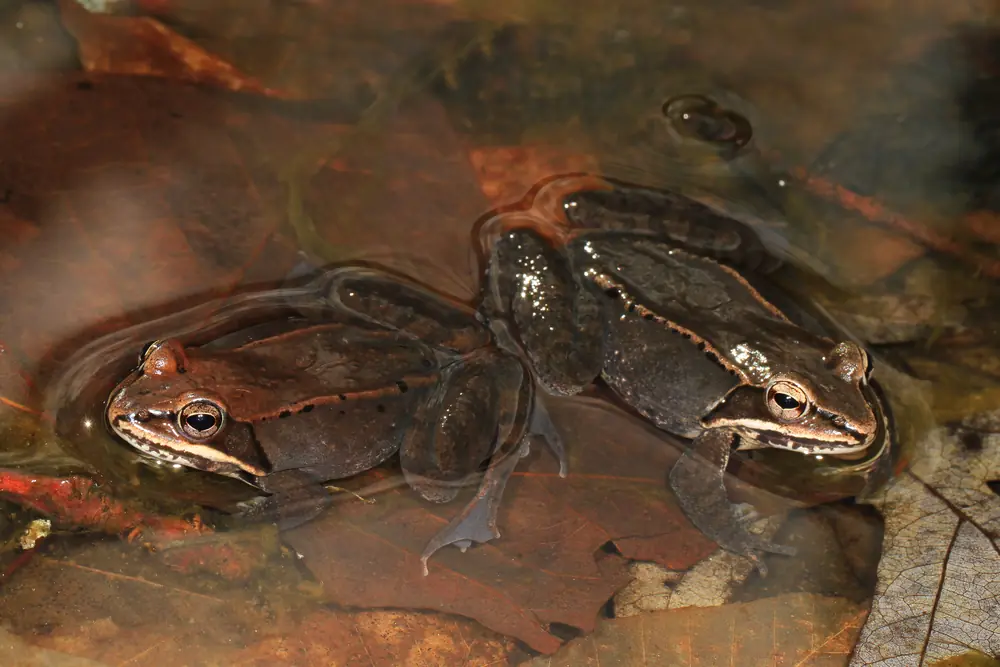
- Listen at a vernal pool. On a mild afternoon, stand quietly at the edge of a woodland pool and listen for wood frogs quacking. Go at dusk after rain for the salamanders, and drive slowly on the way.
- Watch a woodcock at dusk. Find an old field next to wet woods, arrive before twilight and listen for the buzzy peent. The sky dance lasts only minutes, so be there early and keep still.
- Visit a sugarhouse. Look for steam above a sugarhouse on a cold, bright morning, and ask the Massachusetts Maple Producers Association about Maple Weekend dates.
Several March sightings belong in the Naturalist’s Field Journal. The year’s first killdeer or phoebe has a place on “birds I have seen,” while the evening the frogs strike up suits your daily field log. Sketch red maple flowers under “a tree through the seasons,” give the woodcock’s twilight show a page of its own under “dusk and dawn watch,” and pair two visits to one pond, early and late in the month, under “the same place twice.”
Regions used below: The Berkshires and the Hilltowns; The Pioneer Valley; Central Massachusetts and Worcester County; Greater Boston, the North Shore and Merrimack Valley; The South Shore and South Coast; Cape Cod and the Islands.
Is maple sugaring over in Massachusetts by March?
Not yet, and for visitors March is the best month to see it. Mass Audubon puts the sap season at mid-February to mid-March, driven by nights below 25 °F followed by days of 40 °F or more, and March is promoted as Massachusetts Maple Month. Sugarhouses that tapped in February are still boiling, and many open their doors to the public. A thaw that lasts too long ends the season quickly, so the best steam-filled days are often the cold, bright ones in the first half of the month.
-
Maple Month and the open-house weekend
A weekend in March; no 2027 date was posted in early October 2026 · Sugarhouses statewide, most of them in the western hills
In 2026 the producers held a statewide Maple Weekend on March 7 and 8, with pancake breakfasts, sugar-on-snow, maple cocoa and tours, and the Maple Month kickoff was a ceremonial tapping in Buckland on February 27. For 2027, check with the Massachusetts Maple Producers Association for the date and a map of participating sugarhouses before you drive; each farm sets its own hours, and a mild week can end boiling early.
-
What a big operation looks like
Boiling days through the sap season · Western Massachusetts
Mass Audubon says Massachusetts makes 50,000 to 60,000 gallons of syrup a year. One of the larger farms, Ioka Valley Farm in Hancock, says on its website that it taps 14,000 trees and makes over 7,000 gallons a year; call ahead for hours. Smaller backyard operations may boil only on the evenings after a good run.
-
Why the flow stops
The week the nights stop freezing · Any sugar maple stand
The producers’ association explains that the flow depends on repeating freeze and thaw cycles, and that it ceases entirely once those cycles end. Mass Audubon adds that earlier, less predictable thaws are already producing lower yields and more poor sugaring seasons. The same warm spell that quiets the buckets is the one that sets red maple flowers and the first butterflies moving, so a single walk can show both sides of the change.
-
Where to watch it done
Mid-February to mid-March, weekends and school vacations · Moose Hill in Sharon, Drumlin Farm in Lincoln, Ipswich River in Topsfield, Boston Nature Center in Mattapan
Mass Audubon lists these four sanctuaries for maple sugaring programs. Program calendars for 2027 were not out in early October 2026, so look at each sanctuary’s schedule early, since popular programs may ask you to register.
When do salamanders and wood frogs cross Massachusetts roads?
On the first warm, rainy nights of spring. Mass Audubon calls it Big Night: on the first warm rainy nights, when the air is above 40 °F, hundreds of thousands of spotted salamanders, Jefferson salamanders, wood frogs and spring peepers leave their winter burrows and head for the vernal pool where they were born. It can happen in March or April, and in a cold spring it waits until April. It is the single best reason to go outdoors after dark in March, and the main reason to drive slowly on wet nights.
-
Spotted salamanders on the move
The first rainy nights above 40 °F, usually late March into April · Forest roads and woodland edges near vernal pools, statewide
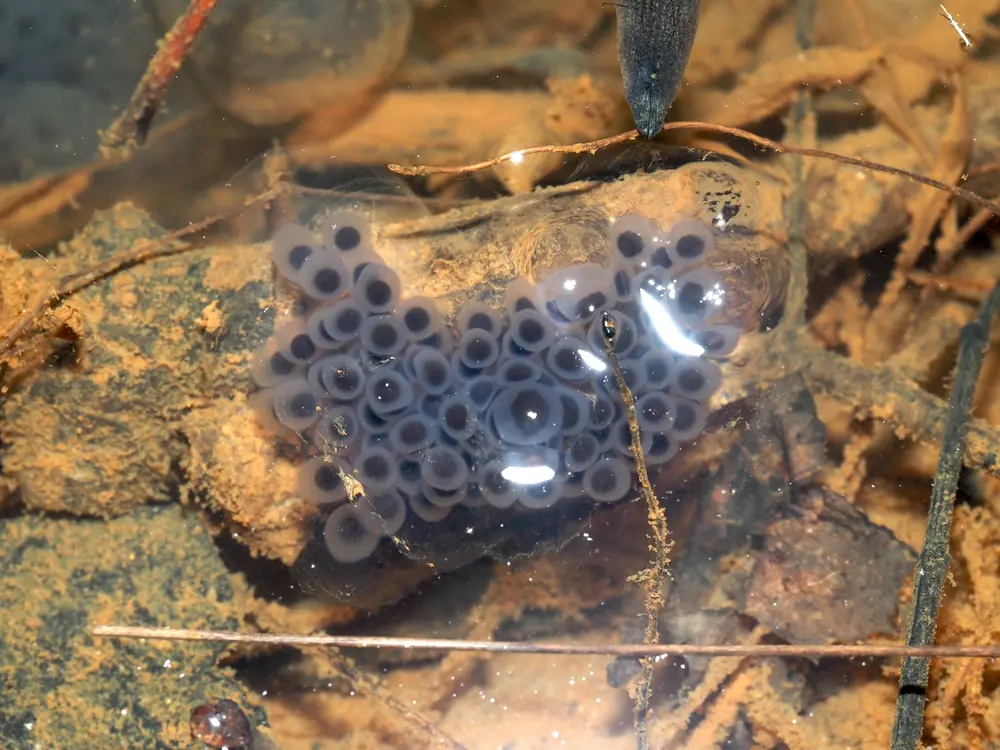
A spotted salamander can reach 9 inches and live more than 20 years, and it spends nearly the whole year hidden under logs, leaf litter or old mammal burrows. Mass Audubon notes that it returns to the pool where it hatched, travelling up to half a mile to reach it, and lays jelly-like egg masses on submerged twigs. Roads lie between many of them and their pools, and Mass Audubon describes people stopping traffic on these nights to let the animals cross safely.
-
Wood frogs: the first voices
Emerging in March and April, often while ice is still on the ground · Vernal pools in woodland, across the state
Mass Audubon says wood frogs emerge while ice may still lie on the ground. They survive winter by freezing and thawing in the leaf litter, protected by antifreeze-like chemicals, and the males call with a quacking sound often compared to a duck. Listen for a chorus from a pool in the woods on a sunny afternoon, and stand well back so you do not trample the edge.
-
Spring peepers join in
Soon after the wood frogs, as pools warm · Wooded areas near wetlands and ponds
The peeper is about an inch long, often carries a brown X on its back, and sings a loud, high-pitched peep that carries for a quarter mile. For the best listening, go to a pond edge around dusk on a mild night, and expect a deafening chorus once the peepers start.
-
What else lives in a vernal pool
Pools hold water from snowmelt into early summer · Woodland hollows, kettle holes and swales
Besides amphibians, Mass Audubon lists fairy shrimp and caddisfly larvae as pool specialists. Anyone can help certify a pool by gathering information and submitting it to the state’s Natural Heritage and Endangered Species Program, which gives it the strongest protection under the Wetlands Protection Act. Ask a landowner for permission before you visit a pool on private land.
-
Big Night programs
Typically late March to April; check with the host · Arcadia in Easthampton, Ipswich River in Topsfield
In 2026 Mass Audubon scheduled Big Night events for April 11 at Arcadia and Ipswich River. No dates for 2027 were posted in early October 2026, and because the migration follows the weather, a program on a fixed evening is a bet on a warm rain. Ask the sanctuary what it does if the night is cold or dry.
Where can I see the American woodcock sky dance in Massachusetts?
At dusk, in an old field next to wet woods. The American woodcock, a stout, long-billed bird of damp woods and fields, is among the first migrants to return. Mass Audubon’s Breeding Bird Atlas says woodcocks reach central Massachusetts by mid-March, often with snow still on the ground, and that February records are frequent. That is why the display begins in the cold.
-
The peent and the spiral
From early March, most intense around sunset · Old pastures and the margins of wooded wetlands
A male walks a patch of open ground giving a buzzy, nasal peent, then flutters high, circles and comes down, with air whistling through his wings, and lands on the same spot to start again. Arrive before twilight, stand still at the field edge and listen. Mass Audubon says the displays are most intense around sunset and describes the courtship across the state, from the Berkshires to Nantucket.
-
Where programs go
Evenings in late March and early April; check dates · Wachusett Meadow in Princeton
Mass Audubon’s equinox guide points to the fields at Wachusett Meadow as a place to watch woodcock courtship. Sanctuaries often run guided woodcock walks at dusk, but no 2027 dates were posted in early October 2026, so check the program listings in winter. If you go on your own, stay on the paths and leave the field to the birds.
-
What comes next
Late March to June · Alder swales and young forest
The Atlas gives woodcock egg dates of March 20 to June 15, with the peak in mid- to late April, and says nests sit within about 150 feet of a singing ground. A hen on a nest is almost invisible, so stay on the trail.
Are right whales in Cape Cod Bay in March?
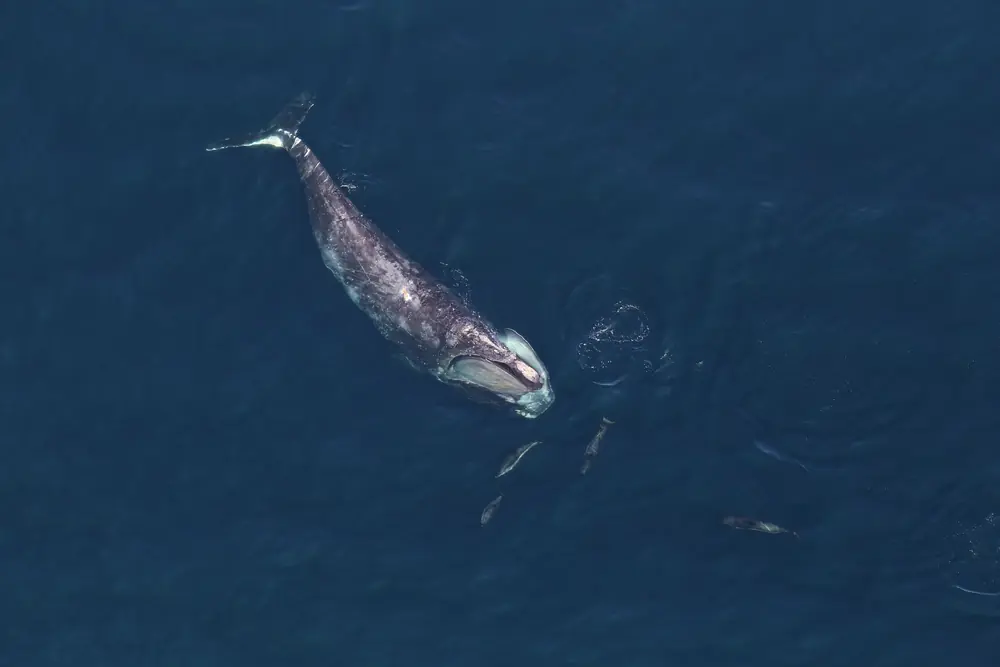
Yes, and March is the early part of their spring stay. The Center for Coastal Studies says the whales use the bay in spring to feed on zooplankton and names April through June as the best viewing, so numbers usually build through March and April. In some years the feeding groups can be seen from shore between Wellfleet and Provincetown.
-
A rare animal close to land
Building through March and April · Cape Cod Bay, off Wellfleet, Brewster, Barnstable and Provincetown
NOAA Fisheries estimated about 384 whales in October 2025, among them only about 70 reproductively active females. Cape Cod Bay is one of the few places where people on land or on a licensed whale watch may see several at the surface, filtering plankton with their mouths open.
-
Rules that protect them
March and April · Cape Cod Bay and boaters everywhere
NOAA Fisheries says Massachusetts requires all vessels, including those under 65 feet, to stay at 10 knots or less in Cape Cod Bay at specific times of year (check the dates with the state), and that federal rules hold larger vessels (65 feet and up) to 10 knots in seasonal management areas. Federal rules also forbid approaching within 500 yards of a right whale, about five football fields. The Center for Coastal Studies lists an entanglement hotline at (800) 900-3622.
-
Watching from shore or by boat
Check with each company for sailing dates · Beaches and bluffs from Wellfleet to Provincetown
Whale-watch boats are run by private companies on their own calendars, so confirm any March or April sailing with them. From shore, bring binoculars and windproof layers, and scan for a low blow or a dark back at the surface.
Which birds come back to Massachusetts in March?
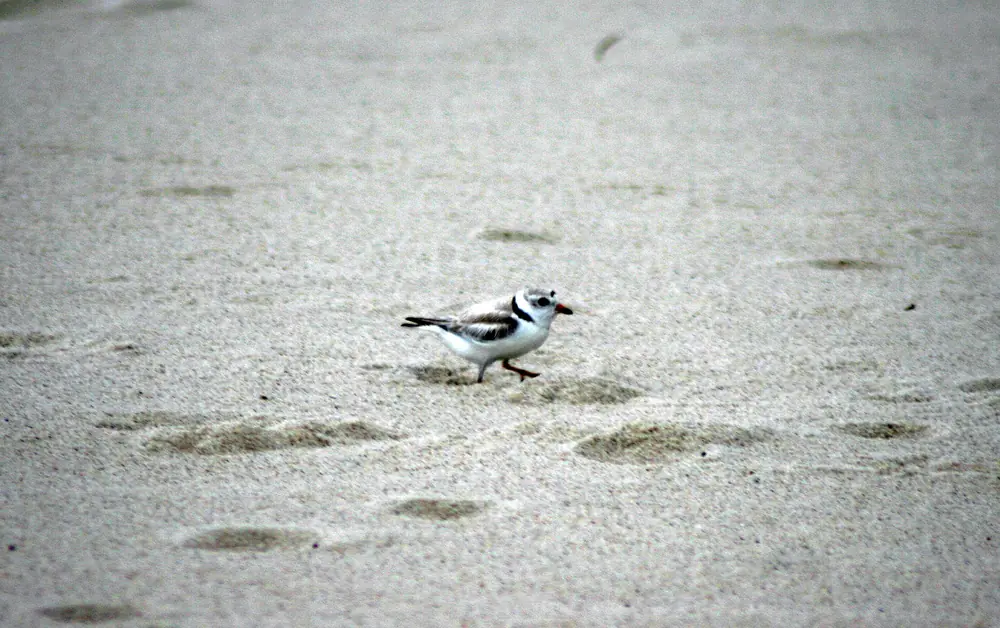
Early migrants arrive in a loose order. The red-winged blackbirds that returned in late February are joined by killdeer, bluebirds and, toward the end of the month, eastern phoebes, ospreys and the first piping plovers. Black-capped chickadees are already singing their two-note spring song, and Mass Audubon notes that it gets more frequent as pairs form.
-
Killdeer
Usually early to mid-March · Fields, golf courses, gravel lots, even gravel rooftops
Mass Audubon says killdeer are among the earliest spring migrants, usually arriving in the first half of March and claiming territories by mid-April. Listen for the loud, repeated kill-deer over open ground. Nests are scrapes in gravel, and a parent that drags a wing is guiding you away.
-
Eastern bluebirds
The first migrants appear around mid-March, arrival continuing into April · Open fields with nest boxes
The Breeding Bird Atlas gives mid-March for the first bluebirds and April 1 to August 7 for egg dates. The Atlas notes that bluebirds declined by about 90 percent in the twentieth century and recovered with the help of nest-box trails. If you want to host a pair, Mass Audubon recommends putting boxes up in fall or winter, so a box placed in March is already late but still worth trying.
-
Eastern phoebes
Late March and early April · Bridges, barns and porches near water
The Atlas calls the phoebe one of the earliest passerine migrants, appearing in late March and early April. Atlas nest records in Massachusetts were mostly mud-and-moss cups under bridges, on houses and in barns, so check those spots.
-
Ospreys
Arrivals through March on Cape Cod · Tall poles, platforms and dead trees near water
The U.S. Fish and Wildlife Service says Cape Cod ospreys arrive in March from Central and South America, and pairs usually reuse and add to their old nest. Mass Audubon notes that DDT’s ban in 1972 started the species’ recovery. Check the platforms you pass on coastal roads; a bulky stick nest with a bird standing on it means the season has begun.
-
Piping plovers
Late March into April, then nesting for a couple of months · Outer beaches from Plum Island to Cape Cod and the islands
WBUR reports that plovers return between late March and early April, and that Massachusetts now hosts about 1,200 breeding pairs, about ten times the number of the 1980s. On the outer beaches, nesting areas are fenced or closed for the season, so follow the signs and the posted rules for dogs.
Spring hawk watching at Pilgrim Heights and Parker River peaks from mid-April to mid-May, according to Mass Audubon, so March raptors are few. Parker River National Wildlife Refuge in Newburyport charges nothing for walkers and cyclists and $5 for a car (check current fees). Pick one field, pond or beach and walk it weekly, writing down what arrives and when. A habit like that turns scattered sightings into a record, and the Naturalist’s Field Journal has pages built for it.
What wakes up on a mild March day in Massachusetts?
Much of what you see in March happens on a few mild days between cold ones. Sap runs, flowers open without leaves, and insects and mammals appear that were hidden since fall. Watch the thermometer: when the ground has thawed and the air is above freezing, even a snowy day may bring something out.
-
Red maple flowers
Early March in a warm year; later after a cold winter · Swamps, wet woods and streets with red maples
The Arnold Arboretum in Boston reports that red and silver maples are the first maples to flower, in late winter and far ahead of leaves. In the warm spring of 2020 their flowers appeared in the first week of March, a haze of red on bare branches. Leaves follow about five weeks after the flowers, a longer gap than in other maples. Walk under one and look up.
-
Skunk cabbage
Late winter into spring, and in March in the wetter woods · Streamsides, swamps and floodplains
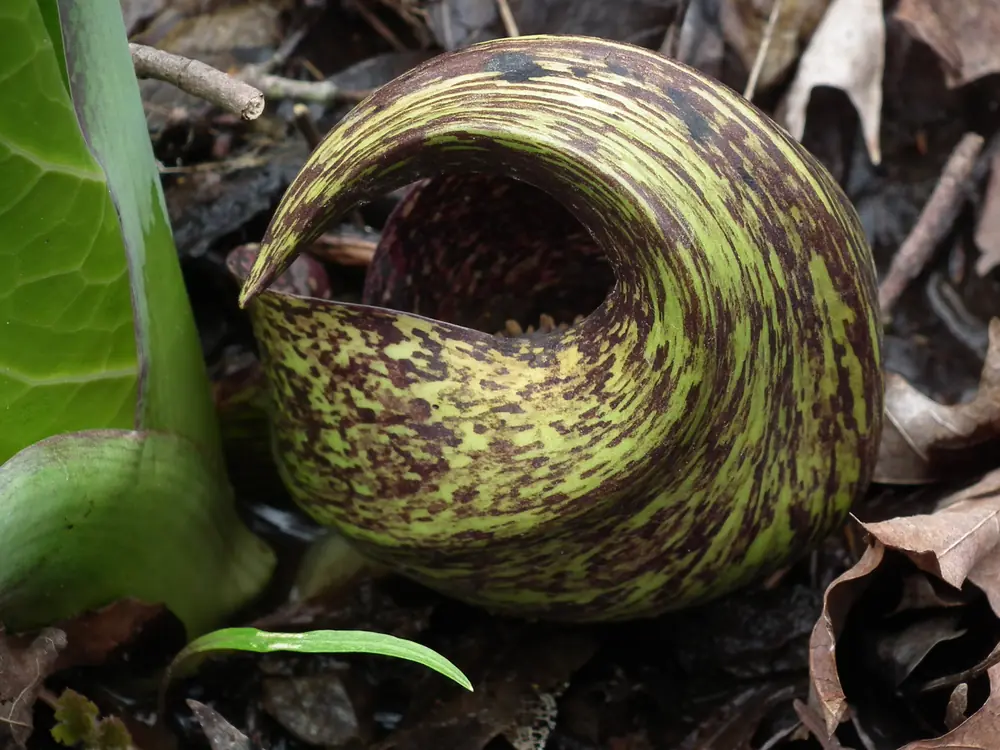
Go Botany, from the Native Plant Trust, lists skunk cabbage among the earliest spring wildflowers and describes a flower spike that makes its own heat and a carrion odor that draws flies. Mass Audubon notes it can melt snow around it. Mass Audubon notes that big, bright green leaves emerge after the flower, so a March hood is the first stage.
-
Mourning cloaks and Compton tortoiseshells
Warm, sunny days from mid-March · Wooded roads, clearings and sap-oozing trees
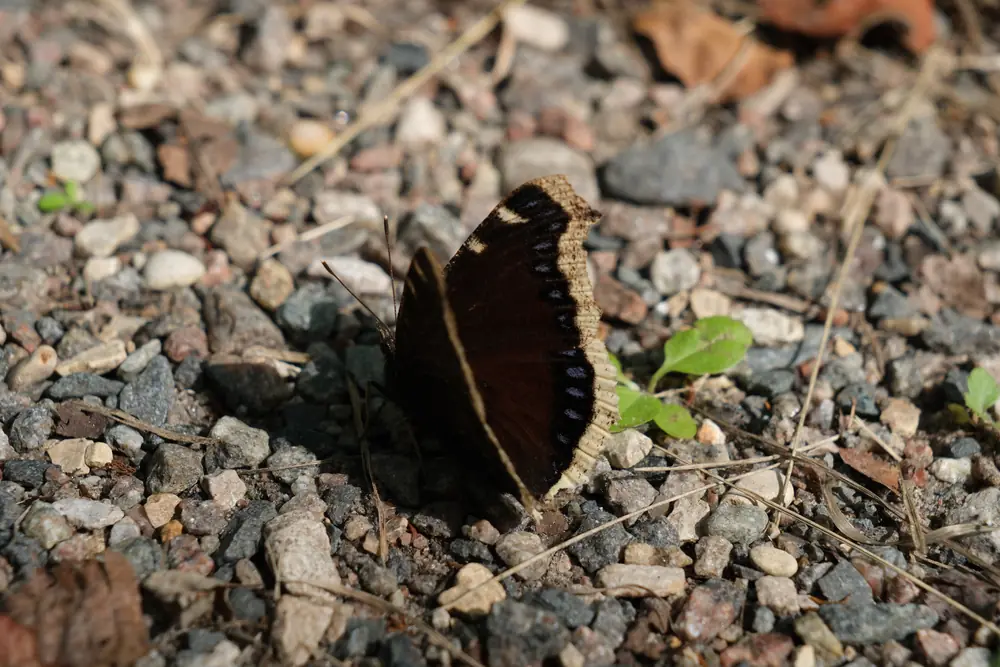
Mass Audubon lists the mourning cloak as one of the first butterflies of the spring, flying through bare forest after overwintering as an adult under bark. The Massachusetts Butterfly Atlas says its relative the Compton tortoiseshell has one of the longest flight periods of any butterfly in the state, regularly emerging in March before the cloak, and lists an extreme record as early as February 12. The Atlas notes the tortoiseshell’s fondness for sap and fruit juices and sightings on willow catkins in early spring.
-
Black bears out of the den
March · Western and central hills, expanding east toward Route 495 and the South Shore
CBS Boston, quoting MassWildlife, counts over 4,500 bears across Massachusetts and says March is when they come out of hibernation looking for food. MassWildlife’s bear project manager says bird feeders train bears to visit yards. Take feeders down, secure trash and keep dogs leashed.
How much daylight does Massachusetts gain in March?
Nearly an hour and a half in Boston, among the fastest gains of the year. Astronomical spring starts with the equinox late on Saturday afternoon, March 20, when day and night are close to equal. One hour disappears from Saturday night, March 13, when daylight time begins. The clock times of sunrise and sunset shift with it, though the length of the day does not: in Boston the sunset moves from about 5:48 p.m. on March 13 to about 6:49 p.m. on March 14, and the evening sun reaches 7 p.m. around March 23. The table gives day length, which is not changed by daylight time.
| City | Mar 1 | Mar 31 | Gained | Per day |
|---|---|---|---|---|
| Pittsfield | 11 h 14 m | 12 h 41 m | 87 min | 2.9 min |
| Springfield | 11 h 14 m | 12 h 40 m | 86 min | 2.9 min |
| Worcester | 11 h 14 m | 12 h 40 m | 86 min | 2.9 min |
| Lowell | 11 h 14 m | 12 h 40 m | 86 min | 2.9 min |
| Boston | 11 h 14 m | 12 h 40 m | 86 min | 2.9 min |
| Plymouth | 11 h 15 m | 12 h 40 m | 85 min | 2.8 min |
| Provincetown | 11 h 15 m | 12 h 40 m | 85 min | 2.8 min |
| Nantucket | 11 h 16 m | 12 h 38 m | 82 min | 2.7 min |
Day length changes fastest around the equinox, so the gains are steady all month. Use the daylight tool for your town, and the cloud guide for spring weather patterns.
When is the last spring freeze in Massachusetts?
Much later than March ends. Normals from NOAA for 1991–2020, at each area’s main station, are in the table. Boston Logan’s median last 32 °F day is April 4, while Pittsfield in the Berkshires does not reach its median until May 5. March is therefore a month when plants that open early, like red maple flowers and skunk cabbage, are tested by freezes that can return for weeks. Seed starting and planting guidance depends on where you live: use the Massachusetts frost dates page for your own town.
| Station | One year in ten | Median | Nine years in ten |
|---|---|---|---|
| Pittsfield Municipal Airport (Berkshires) | Apr 23 | May 5 | May 21 |
| Amherst (Pioneer Valley) | Apr 23 | May 5 | May 19 |
| Worcester Regional Airport (central hilltop) | Apr 11 | Apr 23 | May 5 |
| Bedford Hanscom Field (MetroWest) | Apr 13 | Apr 28 | May 12 |
| Boston Logan International Airport | Mar 25 | Apr 4 | Apr 17 |
| Taunton Municipal Airport (Southeast) | Apr 19 | May 2 | May 16 |
| Hyannis Barnstable Municipal Airport (Cape Cod) | Apr 9 | Apr 22 | May 5 |
| Nantucket Memorial Airport | Apr 2 | Apr 13 | Apr 27 |
What is March weather like in Massachusetts, and what hazards come with it?
March is a month of swings. Average highs run from about 42 °F in the Berkshires to about 49 °F in Plymouth-Kingston, and snow is far from finished. Ashfield in the Hilltowns averages 18.0 inches in March, about the same as February’s 17.9, and Blue Hill in Milton gets 15.0 inches. Boston’s normal drops to 9.0 inches, and Chatham on Cape Cod receives only 3.8. Precipitation is above 4 inches at six of the nine stations.
-
Late-winter nor’easters
Any week in March · Coast, Cape and Islands first
NOAA Climate.gov describes a run of nor’easters from the end of February into early March 2018, with a storm on March 2–3 that gusted to 93 mph at Barnstable and pushed Boston’s water level to the third highest on record, and another within a week with up to two feet of snow in parts of New England. That is not a forecast for 2027, only a reminder that March can bring coastal flooding. The National Weather Service Boston office issues coastal flood watches and warnings in winter and spring; check before parking near a seawall.
-
Dry days and brush fires
Mid-March to May · Dry fields and brushland statewide
The open burning season runs from January 15 to May 1; local fire departments issue permits, allow burning only from 10 a.m. to 4 p.m., weather permitting, and require the fire to stay at least 75 feet from buildings, an adult tending it and water on hand, according to the state's open burning safety page and the town of Sudbury. Dry grass and last year’s leaves burn fast on a windy day before the green-up.
-
Mud and meltwater
As frost leaves the ground · Dirt roads, trails and brooks
Rain on snow can swell small rivers, and thawing trails turn to mud. Stay on the center of a muddy trail rather than widening it, and keep clear of fast brooks.
| Station | Average high | Average low | Precipitation | March snowfall | February snowfall |
|---|---|---|---|---|---|
| Pittsfield Municipal Airport (Berkshires) | 41.7 °F | 23.1 °F | 3.08 in | no normal | no normal |
| Ashfield (Hilltowns, 1,340 ft) | no normal | no normal | 4.02 in | 18.0 in | 17.9 in |
| Amherst (Pioneer Valley) | 45.2 °F | 24.1 °F | 3.47 in | 7.3 in | 11.0 in |
| Worcester Regional Airport (central hills) | 43.0 °F | 26.0 °F | 4.19 in | 13.7 in | 21.2 in |
| Blue Hill, Milton (south of Boston, 625 ft) | 44.1 °F | 26.9 °F | 5.52 in | 15.0 in | 18.2 in |
| Boston Logan International Airport | 45.5 °F | 31.1 °F | 4.17 in | 9.0 in | 14.4 in |
| Plymouth-Kingston (South Shore) | 49.1 °F | 29.0 °F | 5.80 in | 8.5 in | 11.5 in |
| Chatham (Cape Cod) | 43.1 °F | 30.7 °F | 4.71 in | 3.8 in | 9.9 in |
| Nantucket Memorial Airport | 44.2 °F | 31.5 °F | 3.84 in | no normal | no normal |
The Climate Prediction Center releases its monthly and 90-day outlooks around mid-month; see the latest at the CPC outlook page and compare it with the local forecast. Table: NOAA NCEI 1991–2020 normals.
What can you see in the Massachusetts night sky in March 2027?
The Worm Moon, the equinox, a bright Jupiter and a shallow but real chance to see Mercury before dawn. The table is in Eastern Time: standard time for the Mar 8 new moon, daylight time for the rest, after the clocks change on March 14.
-
The Worm Moon
Full at 6:44 a.m. EDT on Monday, March 22; best the evening of Sunday, March 21 · Any clear east horizon
Because the full moment comes shortly before sunrise on March 22, the Moon looks full on both the evening of March 21 and the morning of March 22. The U.S. Naval Observatory gives the phase time, and our calculation, checked against the U.S. Naval Observatory, puts Boston’s moonrise on the 21st at about 6:24 p.m. The name Worm Moon, which Sea and Sky traces to early Native American tribes watching the ground soften, is one of several traditional names for March’s full moon.
-
The equinox
Saturday, March 20, 4:25 p.m. EDT · Everywhere
This is the moment the Sun passes over the equator on its way north, which the Naval Observatory lists at 20:25 Universal Time, or 4:25 p.m. EDT in Massachusetts.
-
Jupiter and the Moon
Jupiter is high in the evening sky all month; the Moon passes near it on the evenings of March 18 and 19 · South to southeast after dark
Jupiter, in the Leo and Cancer region, was at opposition in February and stays easy to find in the evening all spring; the Moon passes about a degree from it on March 18 and 19 (our calculation). On the night of March 30 a fading Mars passes below Jupiter at a gap of several finger-widths, again by our own calculation.
-
Mercury and Venus before dawn
Mercury is best from about March 8 to 25, at greatest elongation on March 17 · Low in the east-southeast, about an hour before sunrise
Mercury is at greatest western elongation on March 17, 27.6 degrees from the Sun, according to the sky almanacs; look low in the east-southeast before sunrise. Venus is the very bright morning star well above it. Saturn is sinking into the Sun’s glare, with its last evening views in early March.
| Phase | Date | Time |
|---|---|---|
| New moon | Monday, Mar 8 | 4:29 a.m. EST |
| First quarter | Monday, Mar 15 | 12:25 p.m. EDT |
| Full moon, the Worm Moon | Monday, Mar 22 | 6:44 a.m. EDT |
| Last quarter | Monday, Mar 29 | 8:54 p.m. EDT |
Stargazers get the darkest evenings in the days around the March 8 new moon. See the moon phases page for dates in your time zone.
What can Massachusetts families do outdoors in March?
- Maple Month and Maple Weekend. The association’s 2026 weekend was March 7 and 8; no 2027 date was listed as of early October 2026, so check with the Massachusetts Maple Producers Association before planning a trip.
- Big Night and vernal pool visits. Mass Audubon held Big Night programs on April 11 in 2026; look for 2027 listings from Arcadia and Ipswich River, and for local volunteer crossing brigades on rainy nights.
- Woodcock evenings. Look for guided dusk walks at Mass Audubon sanctuaries such as Wachusett Meadow; no 2027 dates were posted in early October 2026. Dusk, a quiet field and a warm jacket are all you need.
- Signs of Spring at Joppa Flats. Mass Audubon held a family day on March 21, 2026, with microscopes and games. Ask the Newburyport sanctuary whether a 2027 day is planned.
- Citizen science. Log first-of-year killdeer, phoebes and ospreys on eBird; photograph wood frogs, mourning cloaks and skunk cabbage for iNaturalist; and sign up for NestWatch to follow a bluebird or chickadee box once nesting starts. Project FeederWatch began on November 1; its site gives the end of the season.
- Equinox walk. On March 20, mark where the Sun rises and sets against a fence line or hill, then check the same marks in June.
February’s guide is here. Every state and month sits together on the nature calendar. For notes on what you find, the Naturalist’s Field Journal offers pages for new arrivals and for revisiting one spot.
Safety notes for March in Massachusetts
- Ticks on warm days. The University of Rhode Island’s TickEncounter says adult blacklegged ticks can be active whenever the ground is thawed and the air is above freezing. Check yourself and pets after walks in leaf litter, and treat clothing with permethrin.
- Road-crossing amphibians. On warm, rainy nights, drive slowly where roads cross woodland. Should you stop to ferry a salamander over the pavement, dampen your hands first and release it on the far side, pointed the way it was going.
- Bears. Take feeders down by March, secure trash, leash dogs outdoors, and never approach a bear or cub.
- Hunting. Sunday hunting is not allowed in Massachusetts. Season listings show coyote and bobcat hunting open to March 8, 2027, and crows on Mondays, Fridays and Saturdays to April 10; confirm with MassWildlife’s current season summary. Spring turkey season starts in late April, outside this month. If you walk wildlife management land while any season is open, put something blaze-bright on yourself and your dog.
- Brush fires. Open burning needs a local permit and is allowed from 10 a.m. to 4 p.m. until May 1.
- Marine mammals and the shore. Stay 500 yards from right whales, and follow the posted dog rules near plover areas.
- Cold water and ice. Spring ice is weak. Pond and river water is still cold enough to shock a swimmer, so keep back from the banks of fast, swollen streams.
Sources (46)
- Mass Audubon: the art of maple sugaring (sap season timing, temperature thresholds, sanctuary programs)
- Massachusetts Maple Producers Association: how sugar maple trees work
- Massachusetts Maple Producers Association (homepage; Maple Weekend dates not posted for 2027)
- WBUR: Maple Month and Maple Weekend 2026
- The Recorder: Massachusetts Maple Month kickoff 2026
- Mass Audubon: Big Night, amazing amphibian migrations in Massachusetts
- Mass Audubon: Go Wild for Spotted Salamanders
- Mass Audubon: vernal pools
- Mass Audubon: frogs in Massachusetts (wood frog, spring peeper)
- Mass Audubon: four early signs of spring
- Mass Audubon: 10 ways to celebrate the spring equinox (2026 events)
- Mass Audubon: the courtship sky dance of the American woodcock
- Mass Audubon Breeding Bird Atlas 1: American woodcock
- Mass Audubon Breeding Bird Atlas 1: eastern phoebe
- Mass Audubon Breeding Bird Atlas 1: eastern bluebird
- Mass Audubon: killdeer
- Mass Audubon: ospreys
- Mass Audubon: your guide to birdhouses
- Mass Audubon: how to hawk watch (spring hawk watching sites)
- Mass Audubon Butterfly Atlas: Compton tortoiseshell
- U.S. Fish and Wildlife Service: a bird's-eye view of Cape Cod ospreys
- WBUR: piping plovers return to Massachusetts beaches (2025)
- National Park Service: birds of Cape Cod National Seashore
- U.S. Fish and Wildlife Service: Parker River National Wildlife Refuge
- Center for Coastal Studies: right whale research
- NOAA Fisheries: North Atlantic right whale
- Arnold Arboretum: spring comes to the maples
- Native Plant Trust Go Botany: skunk cabbage
- CBS Boston: black bears emerging from dens in Massachusetts
- NOAA NCEI: monthly climate normals 1991–2020 for the Massachusetts stations in the weather table
- NOAA Climate.gov: nor'easters pummel the Northeast in late winter 2018
- National Weather Service Boston: winter weather safety
- Climate Prediction Center: 90-day seasonal outlooks
- Town of Sudbury Fire Department: open burning season (January 15 to May 1)
- University of Rhode Island TickEncounter: winter tick activity
- U.S. Naval Observatory: moon phases, March 2027
- U.S. Naval Observatory: 2027 equinoxes and solstices
- Project FeederWatch
- NestWatch, Cornell Lab of Ornithology
- MassWildlife: coyote hunting regulations (check current season dates)
- MassWildlife: bobcat hunting regulations (check current season dates)
- MassWildlife: crow hunting regulations (check current season dates)
- Mass.gov: open burning safety (permit, hours and season; check current rules)
- Ioka Valley Farm (taps and syrup output)
- Sea and Sky: astronomy calendar of celestial events, 2027
- Photos via Wikimedia Commons; licenses and photographers are credited under each picture
