What to look for in nature in Massachusetts this February
February is the hinge of the Massachusetts winter. Snow often piles up deepest now, yet the light is plainly returning: Boston gains more than an hour of daylight between the first of the month and the last, and its sunset reaches 5 p.m. on February 3. Sugar makers watch for the first nights below freezing followed by days in the forties, when sap starts to drip. Bald eagle pairs are tumbling through courtship flights and stacking sticks on their nests, black bear cubs a few weeks old are nursing in their dens, and in the final days of February the first male red-winged blackbirds gurgle from the treetops. Below are the places and the timing, each date backed by a source.
Other months in Massachusetts: October, November, December, January.
Start here
- Find a tapped maple. Look for buckets or blue tubing on roadside sugar maples after a frosty night and a sunny, mild afternoon. Mass Audubon puts the usual sap season from mid-February to mid-March.
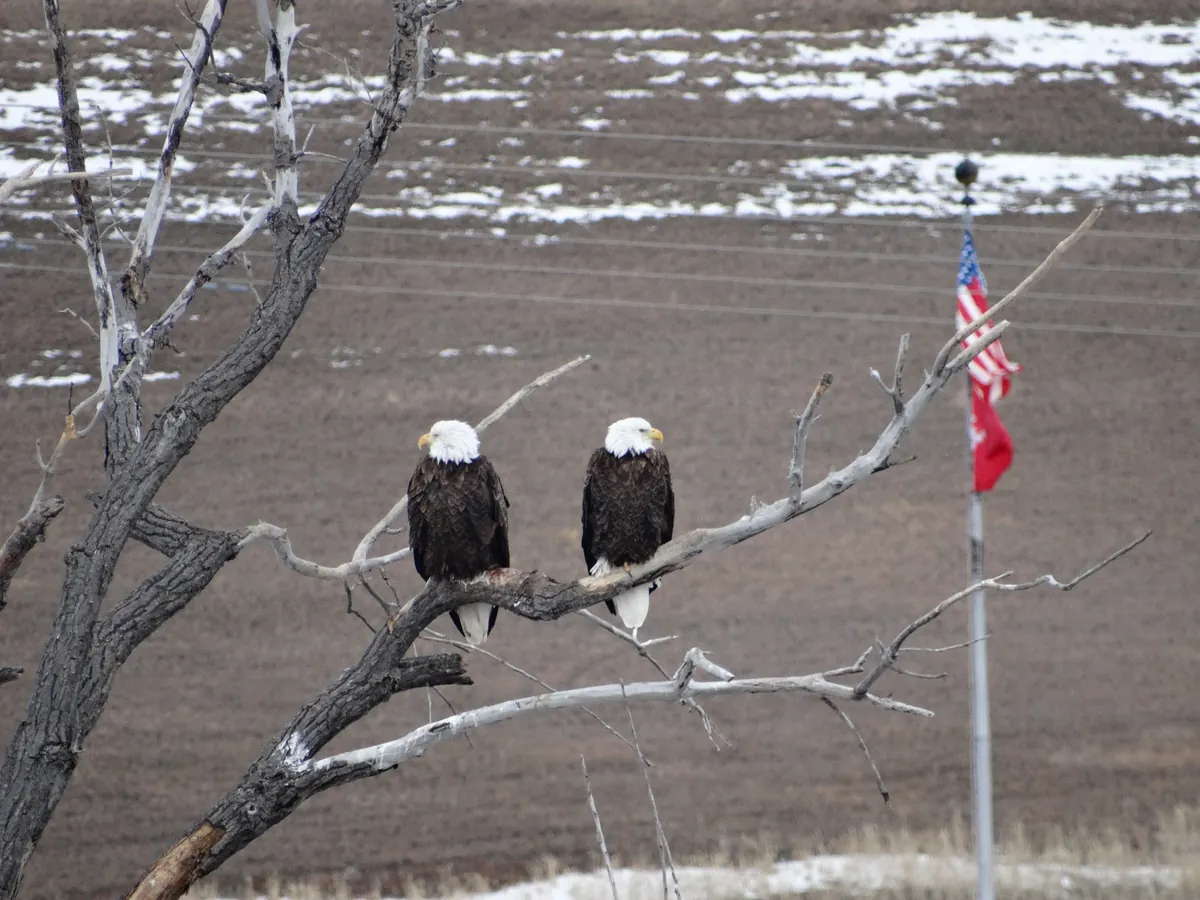
- Watch eagles court over open water. Spend a cold morning on the lower Merrimack in Newburyport or Amesbury, or at Quabbin Park, and watch for pairs flying close together, diving at each other or locking feet in the air.
- Count birds for the Great Backyard Bird Count. The four-day count runs February 12–15, 2027. Choose any day in that window, give it a quarter hour or more, and log the birds in eBird or Merlin.
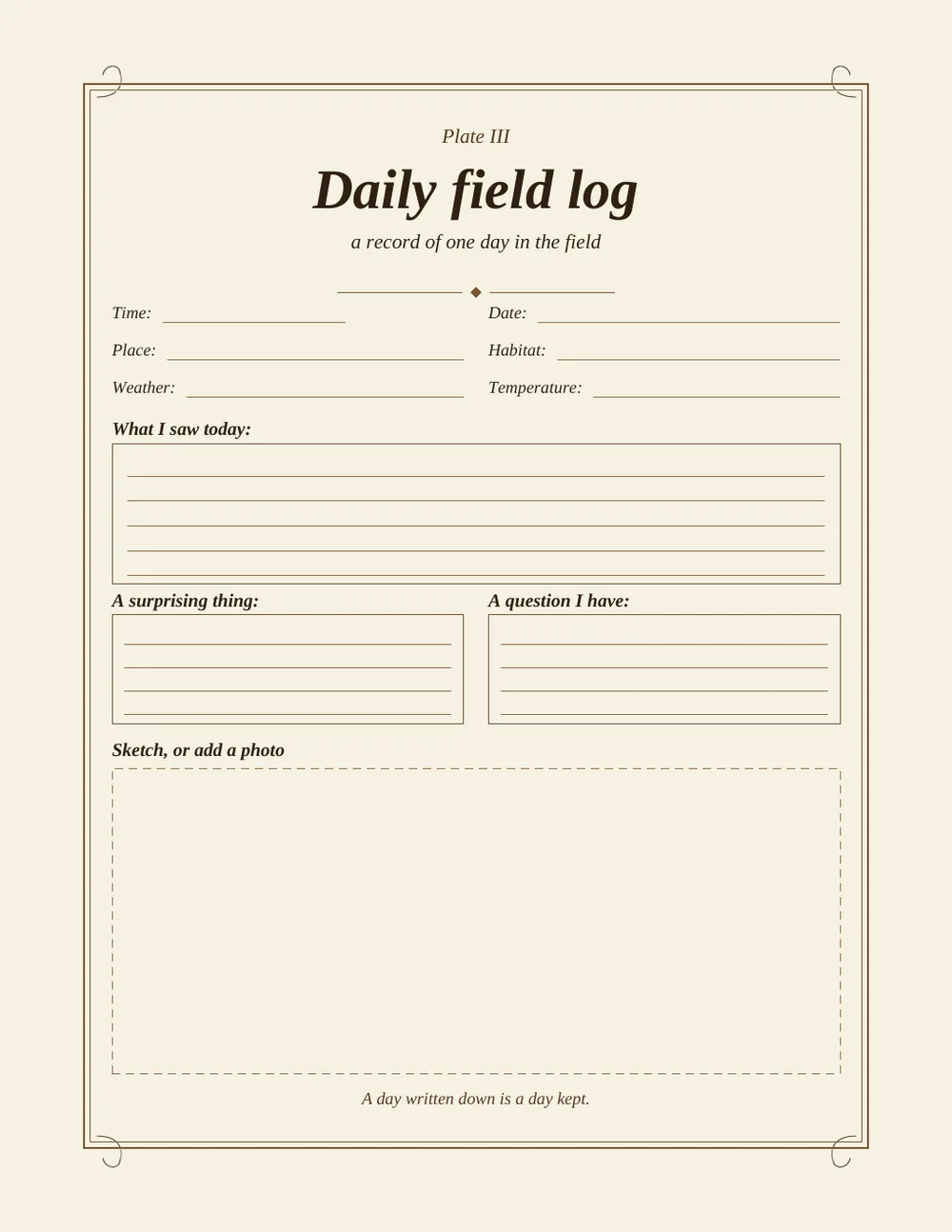
February gives the Naturalist’s Field Journal plenty to hold. Enter the year’s first red-winged blackbird under “birds I have seen”; the day the nearest sugarhouse starts steaming goes in the daily field log. Sketch a skunk cabbage hood melting through snow under “reading the signs,” draw a distant eagle nest on “nest observed,” and use “dusk and dawn watch” to note how much later the sun sets on February 28 than on February 1.
Regions used below: The Berkshires and the Hilltowns; The Pioneer Valley; Central Massachusetts and Worcester County; Greater Boston, the North Shore and Merrimack Valley; The South Shore and South Coast; Cape Cod and the Islands.
When does maple sugaring season start in Massachusetts?
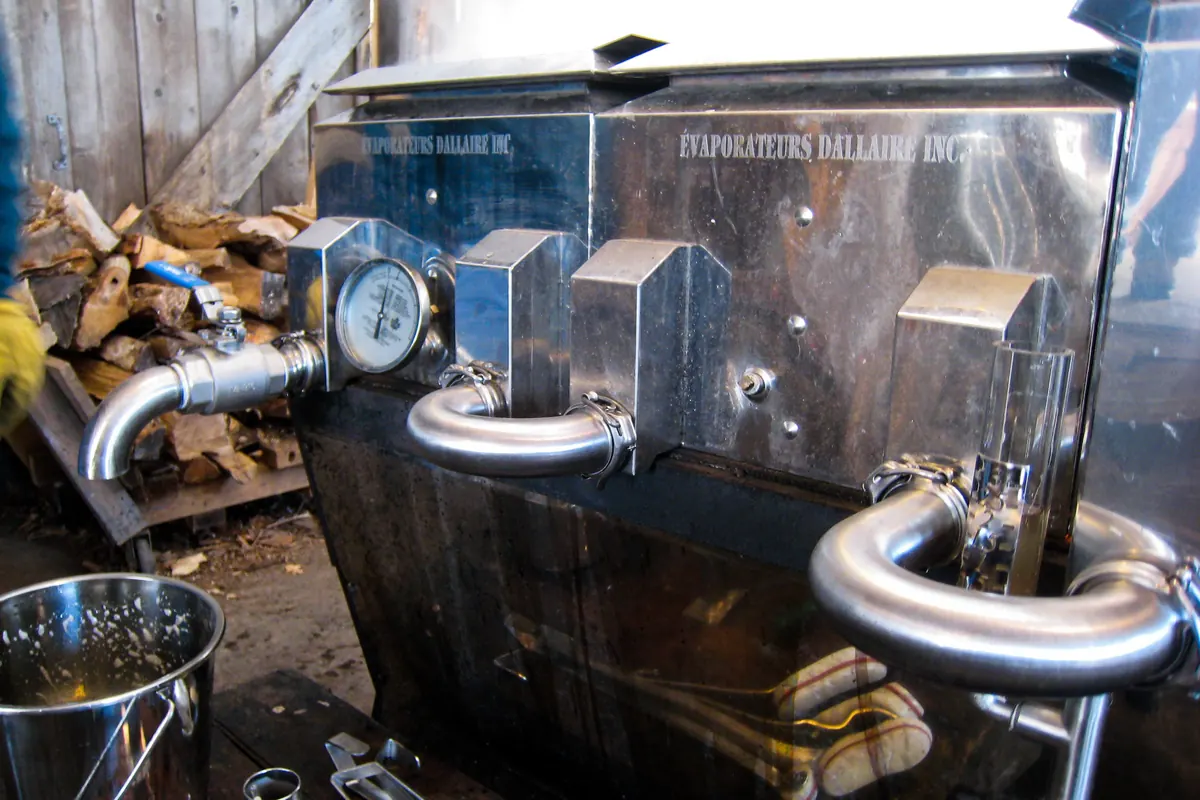
Sugaring needs a particular kind of late-winter weather, and in Massachusetts it usually begins in February. Mass Audubon says sap normally runs from mid-February to mid-March, when nights drop below 25 °F and days climb to 40 °F or more. The producers’ association describes its visitor season as March and April, but the first buckets often go up weeks earlier.
-
Why freezing nights and thawing days matter
Any stretch of cold nights and mild afternoons, most often mid-February to mid-March · Sugar maples statewide; most producers are west of Interstate 91
The Massachusetts Maple Producers Association explains the pump: once the sapwood warms above 32 °F, pressure builds inside the trunk and pushes sap out of any wound, including a taphole, sometimes at 25 to 40 pounds per square inch. A hard freeze reverses it, drawing water up from the roots to refill the tree for the next warm day. When the nights stop freezing, the flow stops too, and the season is over.
-
Forty gallons for one
Boiling days through the sap season · Sugarhouses, from backyard rigs to large farms
Sugar maple sap is only about 2 percent sugar, so Mass Audubon says it takes 40 to 50 gallons of it to make a single gallon of syrup. That is why a sugarhouse in full boil sends up such a cloud of steam. The association counts more than 300 maple producers in the state, over 80 percent of them west of I-91, making more than 60,000 gallons of syrup in a typical year and ranking Massachusetts ninth among maple states.
-
A season getting harder to predict
Increasingly variable from year to year · Statewide
Mass Audubon warns that milder winters and earlier, less predictable thaws are already cutting yields and bringing more poor sugaring seasons, and that the sugar content of sap has been falling over time. A mild El Niño winter could bring early runs, or stall them in a long warm spell; note the first day you see buckets near home.
Mass Audubon teaches tapping and boiling at Moose Hill in Sharon, Drumlin Farm in Lincoln, Ipswich River in Topsfield and the Boston Nature Center in Mattapan, and DCR has run maple days at state parks such as Blackstone River and Canal Heritage State Park in Uxbridge, the Blue Hills and Waquoit Bay in late February and early March. Neither had posted 2027 dates by October 2, 2026. The statewide open-house weekend at sugarhouses, Maple Weekend, comes in March; check massmaple.org once the 2027 date is set.
Are bald eagles nesting in Massachusetts in February?
Yes, or nearly. In January the eagle story was about crowds at open water. In February it turns to pairs. MassWildlife says courtship runs through mid to late winter, nest building through December to February, and egg laying from early March to early April. By 2024 the agency knew of 88 or more pairs on territory, a remarkable rebound from the 41 young eagles released at Quabbin from 1982 to 1988 to bring the species back.
-
Courtship in the air
Clear, breezy days through February · Over Quabbin, the Connecticut and Merrimack rivers and the Assawompset Pond complex
MassWildlife describes the display as loops, cartwheels and dives that can end with two eagles grabbing each other’s talons and spinning down together for hundreds of feet before letting go. Pairs mate for life and reuse one nest site season after season, so a pair that seems to be idling near one stretch of shore in February is likely tending a nest you have not yet spotted.
-
Sticks, then pine sprigs
Nest work through February; first eggs usually early March · Tall trees near big water, 30 to 120 feet up
The male brings most of the material and the female does most of the building, MassWildlife says, weaving large sticks and lining the cup with soft pine sprigs and grasses. Old nests grow each season and can reach 12 feet tall and hundreds of pounds. Incubation, mostly by the female, takes about 35 days, so a nest started now should have downy chicks by mid-April.
-
The Merrimack River Eagle Festival
Annual, on a Saturday in mid-February; in 2026 it was Saturday, February 14 · Newburyport and Amesbury, with information centers at Joppa Flats, Parker River refuge and riverside viewing spots
The Newburyport center run by Mass Audubon at Joppa Flats teams up with the Plum Island refuge for this one-day event. In 2026, its 20th year, it offered free family activities, live hawk and owl presentations, volunteer naturalists with telescopes at Andrews Boat Shop in Amesbury and at Cashman Park and the Mersen plant in Newburyport, and paid van tours with birding guides that needed advance registration. The 2027 date had not been posted on October 2, 2026; watch Mass Audubon’s Joppa Flats pages.
If you find a nest, enjoy it from far away. Federal management guidelines from the U.S. Fish and Wildlife Service recommend keeping hikers, birders and paddlers at least 330 feet from an active nest, and an eagle that keeps flushing from its eggs can lose them to the cold. MassWildlife would still like to know about new nests; report the town and location.
Are black bear cubs born in Massachusetts in winter?
They are, and February is when the newest bears in the state are smallest. MassWildlife says a female black bear gives birth in her den in mid to late January, usually to two or three cubs, that are born blind and helpless. The bear population, estimated at over 4,500 animals, has been growing since the 1970s, and its range now reaches east of Interstate 495.
-
Cubs nursing under the snow
All of February; families leave the den between early March and mid-April · Brush piles, hollow logs, rock crevices and mountain laurel thickets, mostly from Worcester County west
Most denning bears go about five months without eating, drinking or passing waste, MassWildlife notes, and a mother nurses her cubs on stored fat alone. The cubs will stay with her for about 17 months, denning beside her again next winter before striking out on their own as yearlings the following spring.
-
Biologists at the den
Den visits run through the winter; dens with newborns are checked from the end of February · Dens of radio-collared females across the bear range
Every winter MassWildlife biologists track collared females to their dens, sedate them, weigh them, and count and sex the cubs, keeping the newborns warm before tucking them back in. To give mothers time to bond with their cubs, the agency waits until the end of February to visit dens with newborns. In the 2024 season the team checked 30 dens and found an average litter of 2.3 newborn cubs, with three females nursing four cubs each; one den was beneath an unused bucket truck in a construction yard.
-
What a mild winter changes
Warm spells late in the winter · Statewide, especially near homes with feeders
The same 2024 report noted that a string of warm days in early March woke even mothers with newborns earlier than usual. Bears that are not pregnant may skip a long sleep entirely when food is easy to find. MassWildlife’s advice is blunt: no time of day or year is safe for a bird feeder in bear country, so take feeders down at the first sign of a bear and keep trash locked away.
Save the “mammal watch” plate for spring bear sign: claw-scarred beech bark and torn-open stumps.
When do red-winged blackbirds come back to Massachusetts?
Most songbird migrants are still far to the south, but a few hardy ones start back before winter is over. The first Massachusetts Breeding Bird Atlas, Mass Audubon’s survey of the state’s nesting birds, gives the timing for each.
-
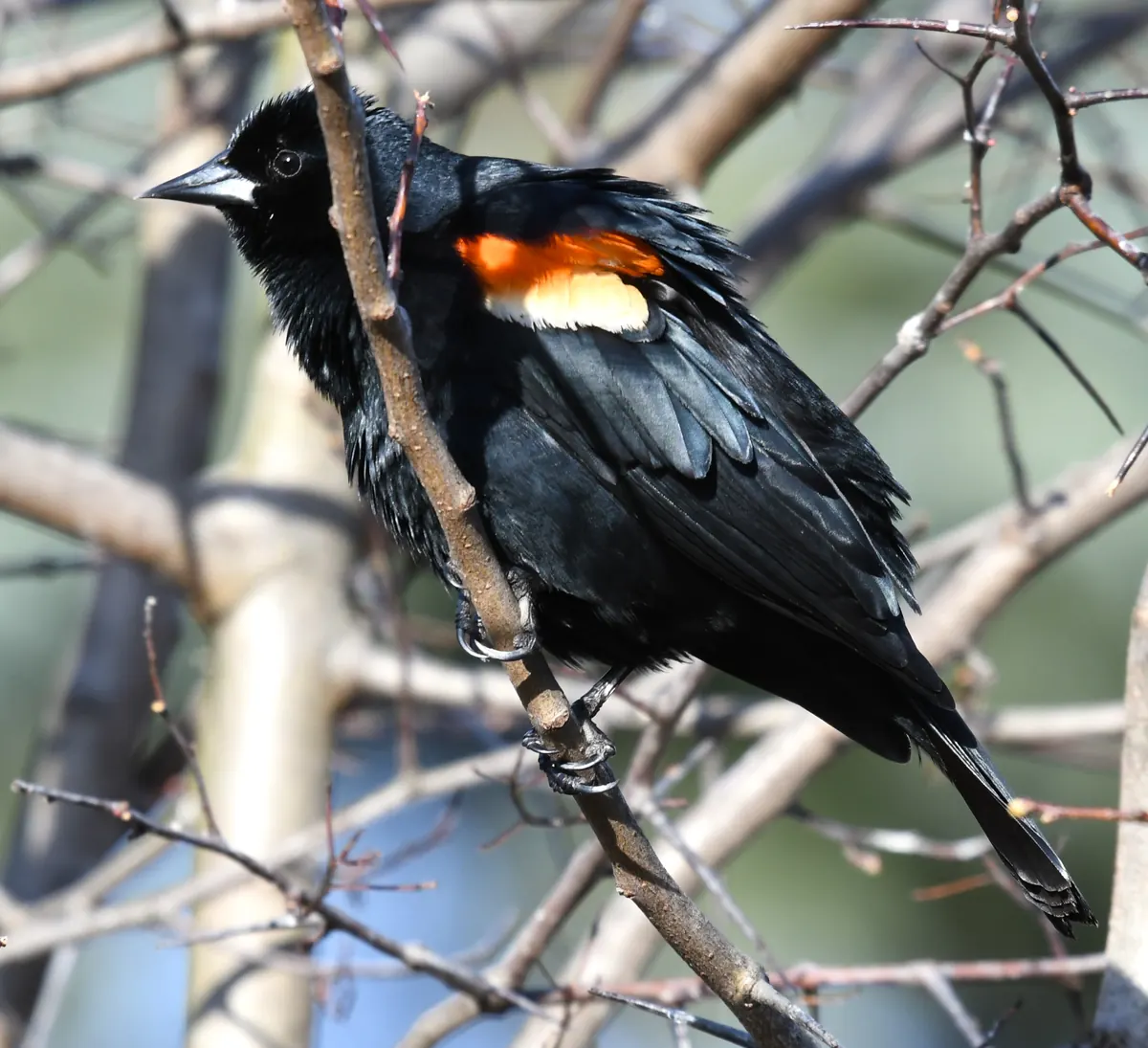
Red-winged blackbirds
First flocks often in the last week of February · Treetops near marshes, swamps and farm fields
According to the atlas, the earliest flocks are almost all adult males. They land together in the top of a tree and break into a loud, bubbling, gurgling chorus. Migration builds through March into early April, males do not settle onto territories until around mid-March, and females follow a few weeks later. Listen for the male’s conk-a-ree and watch him flash his red shoulder patches.
-
Common grackles and horned larks
Grackles in late February or early March; horned larks from late February · Grackles in fields, parks and lawns; horned larks on beaches, airports and bare fields
Grackles, glossy and long-tailed, often turn up in the same late-February window, males first. Horned larks that nest in the state return as early as late February, the atlas says, but go largely unnoticed because they mix with flocks of northern horned larks that spent the winter here.
-
American woodcock, maybe
Usually mid-March in central Massachusetts, with February records not unusual · Old fields, wet thickets and alder swales at dusk
Woodcock often come back while snow still covers the ground. The atlas says they reach central Massachusetts by mid-March in most years, though birds have frequently been recorded in February. On a mild evening late in the month, stand near a brushy field at dusk and listen for a nasal peent on the ground, then a twittering spiral climbing overhead.
-
Hawks courting, owls already on eggs
Through February · Woodlots, farm edges and suburbs
Red-tailed hawks soar in slow circles over their territories and sometimes dive at each other or grapple in midair during courtship; most Massachusetts pairs are settled on territory by March. Great horned owls are a step ahead: the atlas’s egg dates begin as early as February 15, with most clutches laid between about February 20 and March 25, so some females are sitting in a borrowed hawk nest before the month is out.
A few years of first-arrival dates show how your own patch is changing.
What is the first wildflower to bloom in Massachusetts?
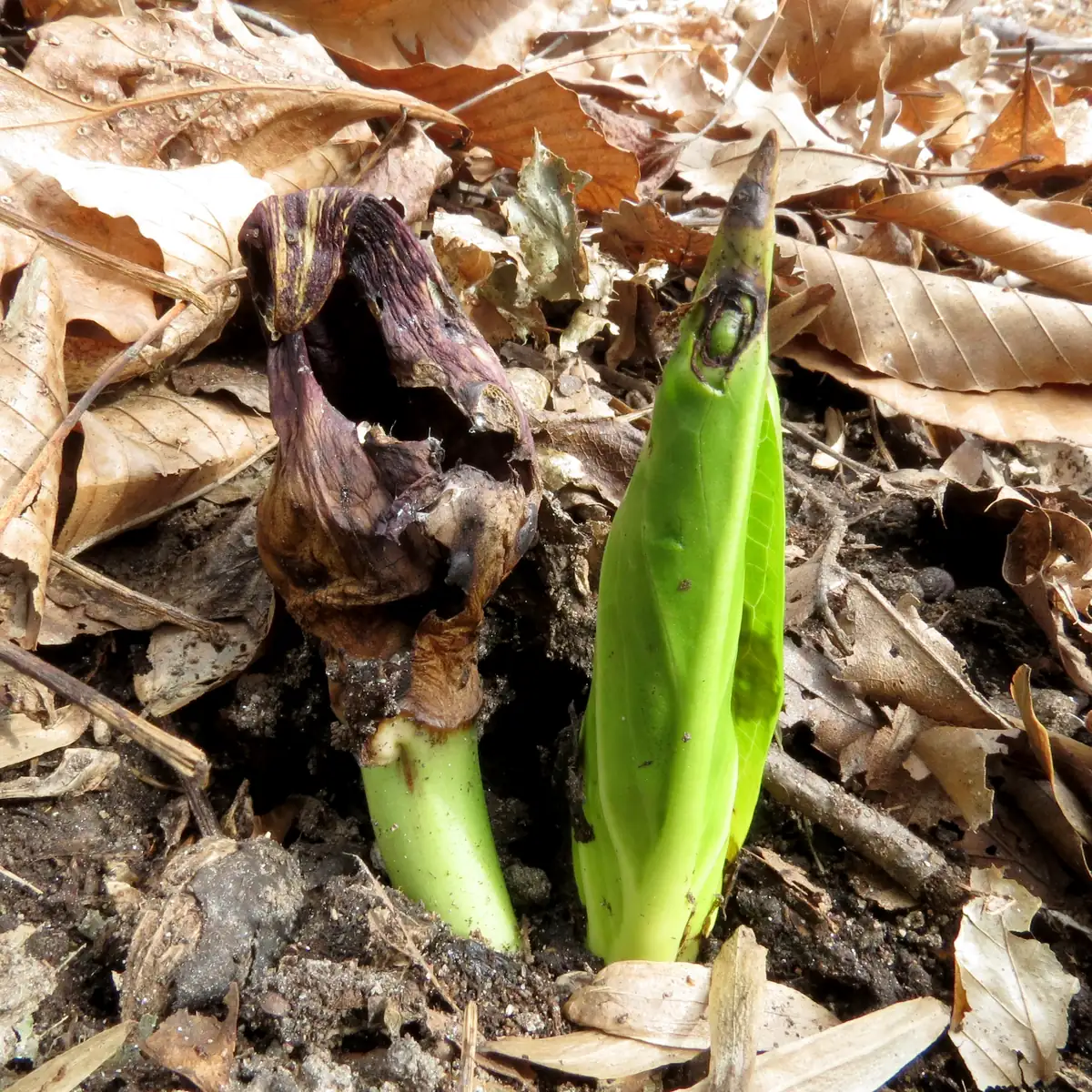
Skunk cabbage, a wetland plant that makes its own heat. Native Plant Trust’s Go Botany calls it one of the earliest wildflowers to bloom in spring and rates it widespread across Massachusetts. Smith College’s botanic garden in Northampton says it can flower as early as March in southern New England, and the Marblehead Conservancy, which watches it on the North Shore, says the hoods appear between February and April, so the first ones may show in a mild late February.
-
A hood in the snow
Late February in mild spells; mostly March · Wooded swamps, seeps, stream banks and floodplains
The first thing to show is a spathe, a pointed, hood-shaped sheath 2 to 7 inches tall, maroon and often streaked or mottled with yellow. Inside sits the spadix, a knob covered in tiny flowers. The big green leaves come later, after the flowers.
-
A flower that makes its own heat
For about two weeks while flowering · Inside the hood
The spadix burns starch stored in the plant’s large roots and, according to the Smith College garden, can stay up to 36 °F warmer than the outside air for 12 to 14 days. That warmth melts a ring of snow around the plant and, together with its carrion smell, draws the flies and other early insects that pollinate it.
-
Looking without trampling
Any thawed afternoon · Boardwalks and trail edges along wet woods
Wetland soils are soft in late winter, so look from a boardwalk or the trail edge. A thermometer set beside a hood on a frosty morning makes a good family experiment.
Mark the plant’s spot and return each week; the journal’s “the same place twice” plate is made for watching one hood become a clump of leaves.
What stirs on a mild February day in Massachusetts?
A February thaw brings out animals that spend the cold snaps asleep or out of sight.
-
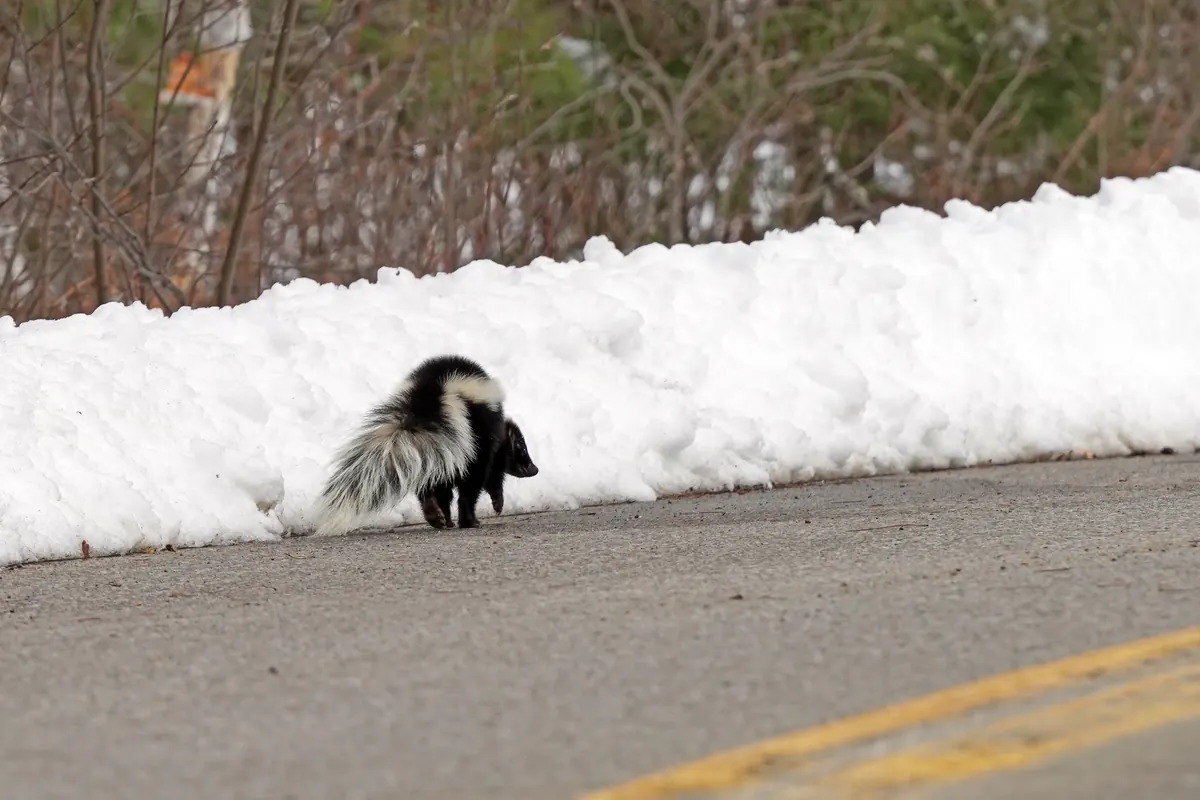
Striped skunks looking for mates
Breeding season February through March; out on nights above about 30 °F · Most of the state, but not Nantucket or the Elizabeth Islands
Skunks are not true hibernators. MassWildlife says they sleep through freezing weather but wake and wander whenever night temperatures rise above about 30 °F, and their breeding season runs from February into March. That is why February is when many people first smell one again, and why the agency warns dog owners to be careful on unusually warm winter nights.
-
Snow fleas
Sunny, melting days in late winter · Snow at the bases of trees, in footprints and along woods edges
Look for what looks like a sprinkle of pepper on the snow that suddenly moves. These are springtails, often called snow fleas, which University of Minnesota entomologists describe as about a tenth of an inch long and dark blue-gray. They are harmless and feed on fungi, algae and decaying leaves, and they jump by snapping a forked tail-like part held under the body. A special antifreeze protein lets them stay active at temperatures that would stop most small creatures.
-
An early amphibian night, in a mild year
Only if the ground thaws and a warm rain falls at night · Roads between woods and vernal pools in lower, milder parts of the state
Salamanders and wood frogs usually wait for March. But they move on the first warm, rainy nights once the ground has thawed, and in a mild winter with little snow that can come early in the low-lying, warmer parts of the state. MassWildlife asks drivers to stay off small wooded roads on rainy nights of 40 °F or more whenever amphibians are moving. If one comes in late February, drive slowly, or not at all, on small roads near wetlands.
Note the temperature each time on the daily field log.
What can you see on the Massachusetts coast in February?
The shore stays busy in the last weeks of winter, with seals that come south for the cold months and Arctic raptors not yet gone. Out in Cape Cod Bay, right whale numbers usually build toward spring, the Center for Coastal Studies reports.
-
Harbor seals, winter visitors
Seasonal residents from September to May · Remote beaches, sandbars and rocks on Cape Cod and around the Islands
NOAA Fisheries says adult harbor seals, 100 to 300 pounds, spend September through May on Cape Cod, then most head north to Maine and beyond to have their pups. They are smaller than the gray seals that live here year-round, with a short, dog-like face instead of a gray seal’s long horse-like head. Harbor seals tend to haul out on remote sand and rocks, so a sandy point at low tide is the place to scan with binoculars.
-
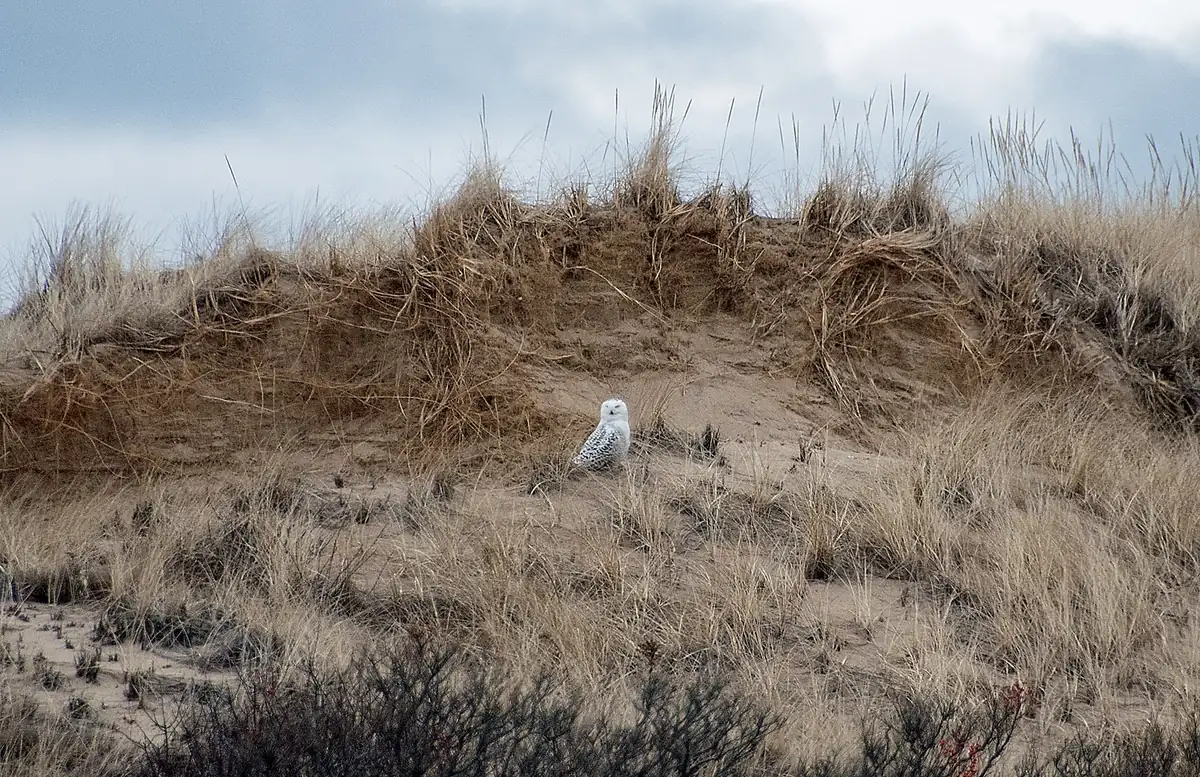
Snowy owls and rough-legged hawks
Through February · Parker River National Wildlife Refuge on Plum Island; also coastal marshes and dunes
The refuge’s bird list gives December through February as the season for its two signature winter raptors, both best found in open grassland and dunes. Late February is your last good chance before they head back north.
Give hauled-out seals 50 yards or more and keep each visit under half an hour, NOAA advises; if a seal raises its head to watch you, back off.
How much daylight does Massachusetts gain in February?
More than in either of the other winter months: from 68 minutes on Nantucket to 72 in Boston and Worcester, an average of 2.5 to 2.7 minutes a day, with the gains still speeding up as March approaches. Boston’s sunset reaches 5 p.m. on February 3, the same week as Groundhog Day on Tuesday, February 2, and with winter’s astronomical midpoint, February 3–4, when the sun has covered half its track from the solstice toward the equinox.
| City | Feb 1 | Feb 28 | Gained | Per day |
|---|---|---|---|---|
| Pittsfield | 10 h 00 m | 11 h 11 m | 71 min | 2.6 min |
| Springfield | 10 h 01 m | 11 h 12 m | 71 min | 2.6 min |
| Worcester | 10 h 00 m | 11 h 12 m | 72 min | 2.7 min |
| Lowell | 9 h 59 m | 11 h 10 m | 71 min | 2.6 min |
| Boston | 10 h 00 m | 11 h 12 m | 72 min | 2.7 min |
| Plymouth | 10 h 01 m | 11 h 11 m | 70 min | 2.6 min |
| Provincetown | 10 h 01 m | 11 h 11 m | 70 min | 2.6 min |
| Nantucket | 10 h 05 m | 11 h 13 m | 68 min | 2.5 min |
Clocks spring forward on Sunday, March 14, 2027, and will shift sunset an hour later overnight. Until then, check your own town’s sunrise and sunset on the daylight calculator, and if the lengthening days have you planning a garden, see the last spring frost dates for Massachusetts towns.
Is February the snowiest month in Massachusetts, and what could El Niño bring?
In much of the state, yes. NOAA’s 1991–2020 normals give Worcester 21.2 inches of snow in February, more than in any other month, and February edges out January at Amherst, Plymouth and Chatham as well. At Logan Airport the two months are a dead heat, 14.4 inches against 14.3. The hills follow a different pattern: Ashfield, in the Hilltowns, and Blue Hill in Milton both average a little more in January. Temperatures start to climb, too; Boston’s average high goes from 36.8 °F in January to 39.0 °F in February.
| Station | Average high | Average low | Precipitation | February snowfall | January snowfall |
|---|---|---|---|---|---|
| Pittsfield Municipal Airport (Berkshires) | 33.1 °F | 15.0 °F | 2.52 in | no normal | no normal |
| Ashfield (Hilltowns, 1,340 ft) | no normal | no normal | 3.17 in | 17.9 in | 22.3 in |
| Amherst (Pioneer Valley) | 37.0 °F | 15.3 °F | 2.93 in | 11.0 in | 8.1 in |
| Worcester Regional Airport (central hills) | 35.1 °F | 18.9 °F | 3.26 in | 21.2 in | 18.2 in |
| Blue Hill, Milton (south of Boston, 625 ft) | 37.0 °F | 19.5 °F | 4.00 in | 18.2 in | 18.6 in |
| Boston Logan International Airport | 39.0 °F | 24.6 °F | 3.21 in | 14.4 in | 14.3 in |
| Plymouth-Kingston (South Shore) | 42.8 °F | 23.3 °F | 4.24 in | 11.5 in | 10.1 in |
| Chatham (Cape Cod) | 38.9 °F | 25.0 °F | 3.84 in | 9.9 in | 7.5 in |
| Nantucket Memorial Airport | 40.1 °F | 27.0 °F | 2.84 in | no normal | no normal |
El Niño and the late-winter storm track. CPC’s September 10, 2026, discussion gave better than 90 percent odds that El Niño, at very strong levels, carries on through this winter. Its first winter outlook comes out October 15, with updates each month, on CPC’s outlook maps. Past events point two ways for Massachusetts. A regional El Niño briefing prepared by NOAA with the Cornell-based climate center for the Northeast reports that El Niño winters average about two additional coast-hugging storms of the Hatteras-to-New England type, with strong events showing the biggest jump, and lists the February 2003 Presidents’ Day storm among the big El Niño snowstorms. Yet the same summary found that New England had below-normal snowfall in the record 2015–16 event, and NOAA Climate.gov’s analysis of January-to-March snowfall shows El Niño winters usually coming up short in interior New England. Read together, the record leans toward a milder, less snowy late winter, yet it leaves room for a big coastal storm, with the line between rain and snow possibly running right across the state. For this week’s weather, use the local forecast.
What can you see in the Massachusetts night sky in February 2027?
February 2027 is a month for planets. Jupiter (February 10) and Mars (February 19) each reach opposition among the stars of Leo, and the Snow Moon of February 20 lands in the same patch of sky. All times are Eastern Standard Time.
-
Mercury at dusk
Best from late January to about February 10; farthest from the sun on February 3 · Low in the west-southwest, 30 to 45 minutes after sunset
Of all its winter evening showings, this one is Mercury’s best, with the planet standing 18 degrees from the sun early on February 3 before sinking back into the glow. On Sunday, February 7, a very young crescent moon sits near it in twilight. A low, open western view helps, from a Cape Cod Bay beach or a Berkshire hilltop.
-
Jupiter at opposition
Wednesday, February 10, 7:21 p.m. · Rising in the east at sunset, high in the south around midnight
Jupiter now sits opposite the sun in our sky. It rises in the east as daylight fades, stands highest around midnight and sets near dawn, at its brightest for 2027. Its distance from us bottoms out the same day, near 405 million miles. Held steady against a tree trunk, binoculars show its four largest moons as specks in a row beside it.
-
Mars at opposition
Friday, February 19; closest to Earth February 20 · In Leo, east of Jupiter, rising at dusk
Mars shines orange-red at about magnitude −1.2, bright but less dazzling than at some oppositions, because Mars reaches the outermost part of its orbit, aphelion, in early March. At closest approach it is still about 63 million miles away, so a small telescope shows only a small disk.
-
The Snow Moon and a faint eclipse
Full at 6:23 p.m. Saturday, February 20; eclipse deepest at 6:13 p.m. · Rising in the east around 5:18 p.m. in Boston
Earth’s pale outer shadow is already touching the moon when it clears the Boston horizon. This penumbral eclipse starts at 4:12 p.m., before the moon is up, is deepest at 6:13 p.m. and is over by 8:13 p.m. Even at its deepest it adds only a faint gray dimming to one edge of the moon, barely above the horizon in a bright sky; casual watchers are unlikely to spot any change. The night is still worth a look: On Friday night, February 19, the nearly full moon passes close to Jupiter, and on Saturday it sits near Mars and the star Regulus in Leo. Some almanacs call this moon a supermoon; others say it falls just short.
| Phase | Date | Time |
|---|---|---|
| New moon | Saturday, Feb 6 | 10:56 a.m. EST |
| First quarter | Sunday, Feb 14 | 2:58 a.m. EST |
| Full moon, the Snow Moon | Saturday, Feb 20 | 6:23 p.m. EST |
| Last quarter | Sunday, Feb 28 | 12:16 a.m. EST |
The February 6 solar eclipse, an annular or ring eclipse, belongs to Chile, Argentina and the South Atlantic; Massachusetts sees none of it. Moonless evenings for faint stars fall in the week or so around that new moon. Nightly phases are on the moon calendar, and the cloud outlook tells you whether the drive to a dark sky will pay off.
What can Massachusetts families do outdoors in February?
- February 12–15, 2027: the Great Backyard Bird Count. National Audubon and Birds Canada, partners with the Cornell Lab in running it, give these dates for the 30th count, which ends on Presidents’ Day. A quarter hour of watching from a window or a park counts.
- Mid-February: the Merrimack River Eagle Festival. A free Saturday of raptor shows, crafts and guided eagle watching in Newburyport and Amesbury; the 2027 date was not yet posted on October 2, 2026, so check with Mass Audubon’s Joppa Flats.
- Late February: maple programs. Mass Audubon sanctuaries and DCR parks usually hold tree-tapping and sugaring programs as the sap starts to run, sometimes during the February school vacation week. Watch their event calendars for 2027 listings, and register early, since sugaring programs fill fast.
- Groundhog Day, Tuesday, February 2. Make your own forecast: walk a sunny south-facing slope and a shady north one and compare the snow, then check the first sap buckets and blackbirds against the groundhog’s call.
- Citizen science. Project FeederWatch runs until the end of April; add first-of-year blackbirds and woodcock to eBird, post skunk cabbage and tracks to iNaturalist, and report eagle nests to MassWildlife.
A storm can cancel any outing, so call ahead. Last month’s guide is at Massachusetts in January, the nature calendar collects every state and month, and the Naturalist’s Field Journal has plates for first arrivals, nests and the same spot revisited.
Safety notes for February in Massachusetts
- Hunting seasons still open. On the Islands (deer zones 13 and 14), MassWildlife’s new Winter Deer Season for bows and muzzleloaders lasts through Saturday, February 13, 2027. Hunters may take red and gray fox, cottontails, snowshoe hares and gray squirrels until Saturday, February 27; coyote, and bobcat in zones 1 to 8, stay open to March 8; crow is open on Mondays, Fridays and Saturdays. MassWildlife’s final 2026–27 migratory bird regulations keep late Canada goose and late snow goose seasons open to February 13 in the Central and North Coastal zones, and the Berkshire zone’s late Canada goose season closes that same day. Massachusetts never allows hunting on a Sunday, so a weekend walk on the marsh is quietest then.
- Blaze orange. Island deer hunters this winter wear the full 500-square-inch orange outfit (hat plus chest and back) whether they carry a bow or a muzzleloader. Walkers on the Islands through February 13, and on wildlife management areas anywhere, should wear an orange hat or vest and put orange on their dog.
- Late-season ice. MassWildlife’s warning fits February exactly: new ice is stronger than old, and while four inches of clear, newly formed ice may hold one person on foot, old ice that has been thawing can give way even at a foot thick. White or snowy ice has only about half the strength of clear ice, and currents make rivers, streams and spring holes unpredictable. Stay off anything two inches thick or less, carry ice picks and a rope, wear a life jacket, and never follow a pet onto the ice; go for help.
- Snowstorms and nor’easters. February is the snowiest month in much of the state. After heavy snow, watch for falling branches and roof slides, and stay off jetties and seawalls during coastal storms.
- Cold and wind. Midday sun can feel warm while the wind on Mount Greylock, Wachusett or an open beach still bites. Layer up, cover your face and hands, and turn back if anyone gets too cold.
Sources
- Mass Audubon: the art of maple sugaring (sap season timing, temperatures, sanctuaries)
- Mass Audubon: Sweet dreams are made of trees (sugar content, climate change, Bird-Friendly Maple)
- Massachusetts Maple Producers Association: facts and figures
- Massachusetts Maple Producers Association: how sugar maple trees work
- Massachusetts Maple Producers Association
- Massachusetts DCR: maple sugaring at DCR (2025 program flyer)
- MassWildlife Natural Heritage and Endangered Species Program: bald eagle (life cycle, nesting, 2024 pairs)
- Mass Audubon: Merrimack River Eagle Festival 2026 brochure
- U.S. Fish and Wildlife Service: National Bald Eagle Management Guidelines
- MassWildlife: learn about black bears
- MassWildlife: winter black bear research
- MassWildlife: researching black bears in a mild winter (2024 den season)
- MassWildlife: researching black bears in winter dens (2022)
- MassWildlife Monthly, March 2025: bears leaving dens, amphibians on roads
- Mass Audubon Breeding Bird Atlas 1: red-winged blackbird
- Mass Audubon Breeding Bird Atlas 1: common grackle
- Mass Audubon Breeding Bird Atlas 1: horned lark
- Mass Audubon Breeding Bird Atlas 1: American woodcock
- Mass Audubon Breeding Bird Atlas 1: red-tailed hawk
- Mass Audubon Breeding Bird Atlas 1: great horned owl
- Native Plant Trust Go Botany: skunk cabbage
- Smith College Botanic Garden: plant pick, skunk cabbage
- Marblehead Conservancy: plant watch, skunk cabbage
- MassWildlife: learn about skunks
- University of Minnesota Department of Entomology: snow flea
- NOAA Fisheries: Cape Cod seals and sharks, shared traits and top 10 facts
- NOAA Fisheries: harbor seal (viewing guidelines)
- U.S. Fish and Wildlife Service: Parker River National Wildlife Refuge bird list
- Center for Coastal Studies: right whale ecology program
- NOAA NCEI: monthly climate normals 1991–2020 for the Massachusetts stations in the February table
- Climate Prediction Center: ENSO diagnostic discussion, September 10, 2026
- Climate Prediction Center: 90-day seasonal outlooks (winter outlook issued October 15, 2026)
- NOAA and Northeast Regional Climate Center: El Niño impacts and outlook, Northeast region (October 2018)
- NOAA Climate.gov: how does El Niño affect snowfall over North America? (2023)
- U.S. Naval Observatory: moon phases, December 2026 to 2027
- U.S. Naval Observatory: 2027 solstices and equinoxes
- U.S. Naval Observatory: sunrise, sunset and moonrise data
- Fred Espenak: Sky Event Almanac 2027
- NASA eclipse website: lunar eclipses 2021–2030
- NASA eclipse website: solar eclipses 2021–2030
- EarthSky: Jupiter at opposition
- SEDS: Mars opposition 2027
- Sea and Sky: astronomy calendar 2027
- Old Farmer’s Almanac: eclipses
- National Audubon Society: Great Backyard Bird Count (February 12–15, 2027)
- Birds Canada: Great Backyard Bird Count (February 12–15, 2027)
- Project FeederWatch
- eBird
- iNaturalist
- MassWildlife: deer hunting regulations (2027 Winter Deer Season, blaze orange)
- MassWildlife: 2026 hunting and freshwater fishing season summary
- MassWildlife: general hunting regulations (blaze orange, Sunday hunting)
- MassWildlife: ice strength and safety
- MassWildlife: Migratory game bird hunting regulations, 2026–2027
- Photos via Wikimedia Commons; licenses and photographers are credited under each picture
