What to look for in nature in Massachusetts this December
Meteorological winter opens on December 1, and Massachusetts settles into it fast. The first North Atlantic right whales slip into Cape Cod Bay to feed, gray seals give birth to white-coated pups on the sand of Muskeget and Monomoy, and bald eagles gather wherever water stays open. In the woods, bears are denned and great horned owls hoot at dusk. Sunset comes by about 4:30 p.m. everywhere in the state, and earliest of all around December 8 and 9, nearly two weeks before the solstice on December 21. Here is where and when to look, with a source for each date.
Other months in Massachusetts: October, November.
Start here
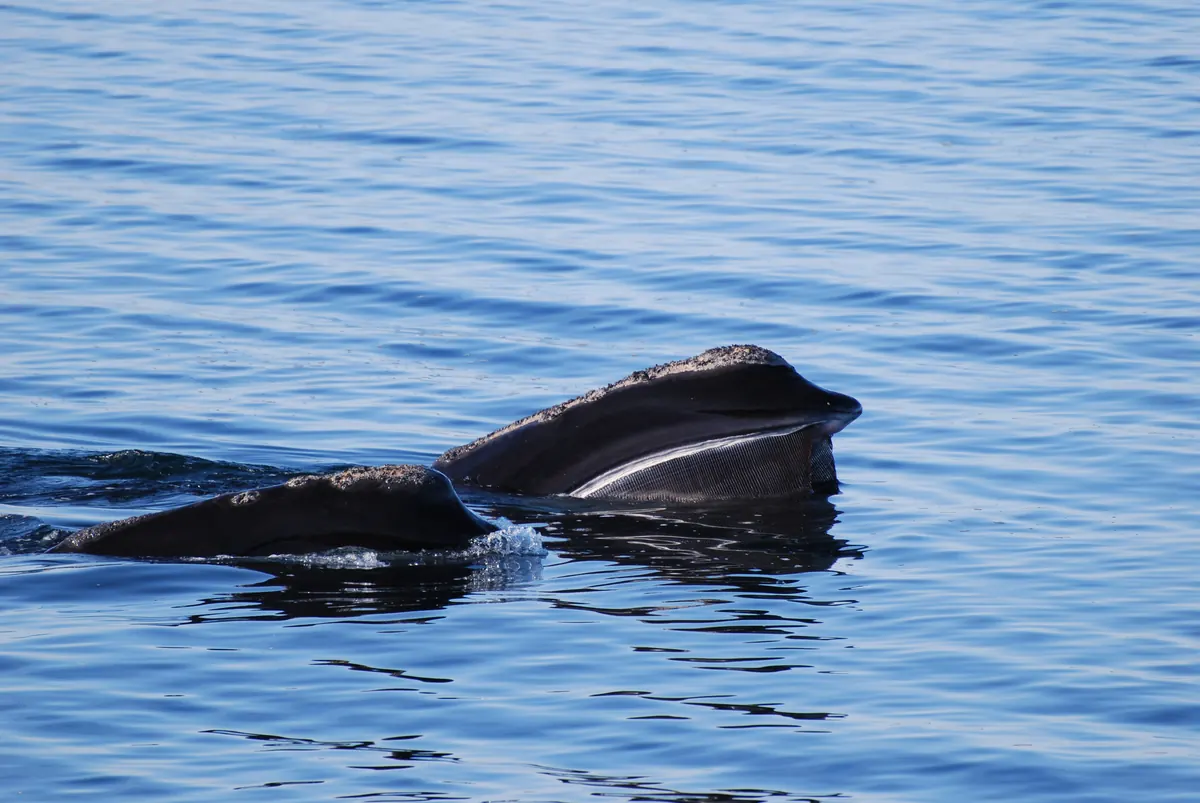
- Scan Cape Cod Bay for right whales. Right whales begin arriving in the bay in December; last winter the first ten were seen on December 5. On a calm day, look out from the bayside beaches of Provincetown for a V-shaped blow or a broad black back. Watch only from shore; boats must stay 500 yards away.
- Stay up for the Geminids. The Geminids, the strongest shower of 2026, are best from Sunday night, December 13, until dawn on Monday. A young crescent moon is down by mid-evening. Wrap up in a sleeping bag on a lawn chair away from streetlights and let your night vision build.
- Count birds for science. The Christmas Bird Count runs December 14 through January 5. Massachusetts has 35 count circles; newcomers can tag along with a team, and people within a circle may tally their feeders. Find your nearest count on Audubon’s map and contact the compiler.
For December entries in the Naturalist’s Field Journal: use “tracks to know” for the first clean prints in new snow, “birds I have seen” for a day spent with a count team, the “dusk and dawn watch” for meteor night or the solstice sunset, and “seeds, pods and cones” for a pitch pine cone or a sprig of holly berries. On the daily field log, note the first morning your local pond is skimmed with ice.
Regions used below: The Berkshires and the Hilltowns; The Pioneer Valley; Central Massachusetts and Worcester County; Greater Boston, the North Shore and Merrimack Valley; The South Shore and South Coast; Cape Cod and the Islands.
When do right whales come to Cape Cod Bay?
The rarest large whale on the Atlantic coast spends part of every winter in the shallow bowl of Cape Cod Bay. North Atlantic right whales come to feed on dense swarms of copepods, rice-sized crustaceans such as the oil-rich Calanus, which bloom in the bay as the water cools. NOAA Fisheries now puts the whole population at about 380 animals, up roughly 20 since 2020. The Center for Coastal Studies in Provincetown, which has surveyed the bay every winter since 1998 together with the state Division of Marine Fisheries, says the whales usually arrive in early winter and many stay until mid-May.
-
The first arrivals
Late November through December, building in January · Cape Cod Bay, from Plymouth to Wellfleet and Provincetown
Early sightings have been creeping earlier. In 2024 the center’s team found two young males in the bay on November 18, one off Pilgrim Beach in Plymouth and one seven miles west of Wellfleet. Last season the first whales turned up on December 5, ten of them at once, and by January 10 an aerial survey counted 33 in a single day, possibly the most the center has ever logged on one January day. In December the center mostly saw whales in surface-active groups, rolling and jostling at the surface, rather than feeding.
-
How to know one
Any calm day · From the beaches and bluffs of the Outer Cape
Right whales are broad and black, with a V-shaped double blow and rough white patches on the head called callosities, which researchers use like fingerprints to tell individuals apart. The center notes that the whales often feed close to shore, so walkers on the bay beaches of the Outer Cape sometimes see them without a boat.
-
Rules that protect them
Speed limits from January 1; gear rules from February 1 · Cape Cod Bay and Massachusetts waters
Federal law bars anyone without a research permit from approaching closer than 500 yards, and the rule covers boats of every size, kayaks included, as well as aircraft. Starting January 1, ships and boats of 65 feet or more are held to a 10-knot limit there, and further limits on smaller boats and fixed fishing gear follow on February 1. Ship strikes and entanglement are the species’ main killers.
Pick a bright, still morning and check our weather page before the drive.
Where are gray seal pups born in Massachusetts?
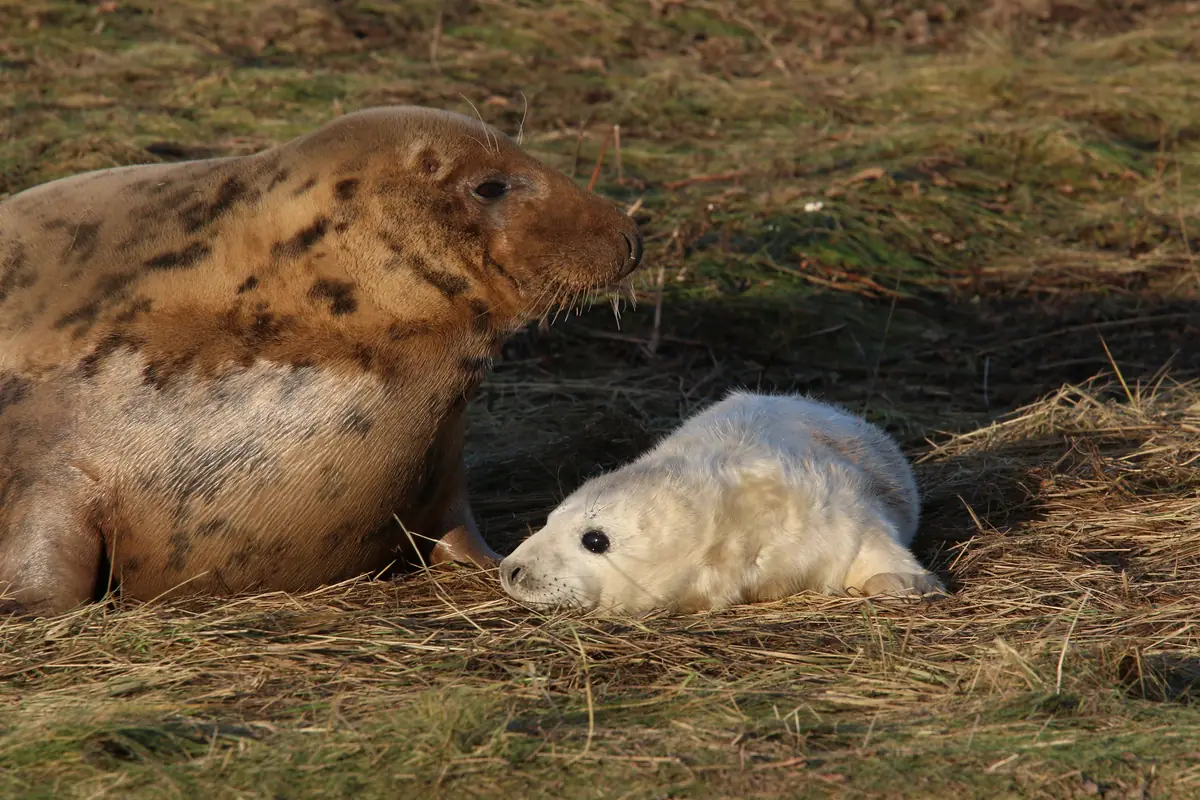
In October the story off the Outer Cape was gray seals as prey. By December it turns to birth. Gray seals in the western Atlantic give birth from December to February, and NOAA researchers who study the colonies put the peak in mid-January, with pupping running from about mid-December to early February. The pups are born on land, on remote beaches where the mothers can haul out away from people.
-
Muskeget and Monomoy
Mid-December to early February · Muskeget Island west of Nantucket; Monomoy off Chatham; Nomans Land and Great Point
NOAA calls Muskeget, a low sand island between Nantucket and Martha’s Vineyard, the largest gray seal pupping colony in the United States. Monomoy, off Chatham, is the other big Massachusetts nursery, and federal biologists also watch pups on Nomans Land and at Great Point on Nantucket. NOAA has flown aerial surveys during the pupping season and counted the pups in the photographs, which is how scientists track a population that was nearly wiped out of U.S. waters by the middle of the last century.
-
White pups that grow fast
About three weeks of nursing · On the beach above the tide
A newborn gray seal wears a coat of white fur called lanugo, which soaks up sunlight and holds in heat. The mother nurses it for roughly three weeks on milk so rich that the pup gains about three pounds a day. Then she leaves, and the weaned pup stays ashore alone until it molts its white coat. NOAA notes that the pups are noisy, with cries that can sound like a human baby.
-
If you meet one on a beach
All winter · Cape and Islands beaches
A young seal resting alone on a beach is usually normal. NOAA asks people to stay at least 50 yards away, keep the visit to 30 minutes or less, and keep dogs leashed. If a seal looks sick, injured or tangled in line, report it through NOAA’s marine mammal reporting page rather than trying to help it yourself; seals are protected by federal law.
The pupping islands are remote and hard to reach in winter, so most people will see only the adults, hauled out on outer sandbars around Chatham and the Islands. Use binoculars or a spotting scope from shore, and leave the pups to the researchers.
When is the 2026 Christmas Bird Count in Massachusetts, and how do you join?
This winter brings the 127th count, with Massachusetts compilers free to choose any one day from mid-December 2026 to January 5, 2027. National Audubon began it on Christmas Day in 1900 as a census to replace a holiday hunting contest. MassWildlife counts 35 circles in the state, from the Northern Berkshire count to Nantucket and the Stellwagen Bank count at sea.
-
Concord, one of the biggest counts in the country
Sunday, January 3, 2027 · A circle of 7.5-mile radius centered where Concord, Acton, Maynard and Sudbury meet
The Concord count, started in 1960, now draws about 280 volunteers, which its organizers say puts it among the largest count circles in the United States by number of people. Its website lists the 2026–27 count for January 3, with a coordinator for each of its 18 towns and a checklist for people who would rather count from their kitchen window.
-
Last season’s schedule as a guide
Most counts keep the same weekend each year · Every region of the state
A public list for the 2025–26 season had Greater Boston, Cape Cod, Cape Ann and Northampton counting on the opening Sunday, Worcester and Springfield the next Saturday, Quabbin and the Islands between Christmas and New Year’s, and the Berkshire circles into early January. Expect a similar pattern in 2026, but confirm each date with its compiler.
-
How a beginner helps
One day, at any pace · In the field or at a feeder inside a circle
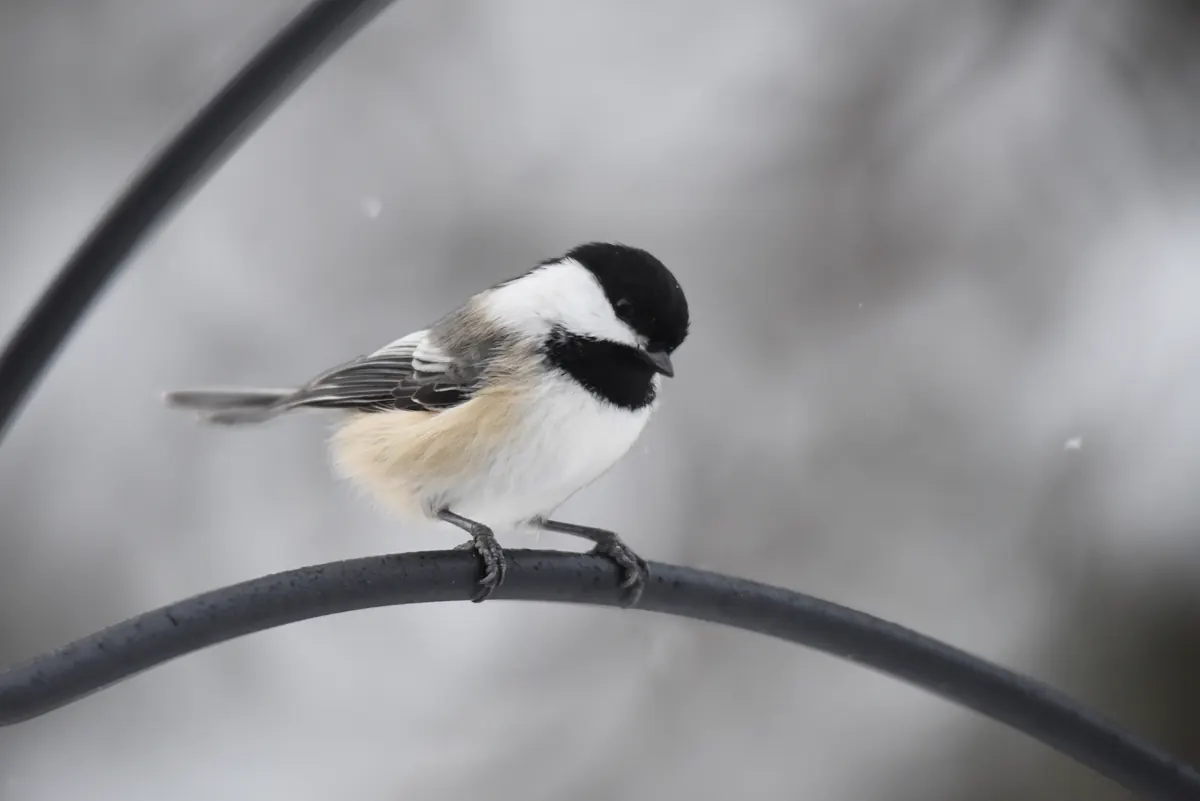
Compilers usually team newcomers with experienced counters, so you do not need to know every bird. Each party covers a sector and tallies every bird it sees or hears. Feeder watchers whose homes lie within a circle may report their yard birds for the day. Birds seen in the three days before or after a count, but missed on the day itself, still go on the list as count-week birds.
Typical finds are chickadees, titmice, woodpeckers, Carolina wrens and kinglets, with sea ducks on the coastal counts; in irruption years, crossbills and evening grosbeaks are the prizes.
Where can you see bald eagles and hear owls in Massachusetts in December?
As ponds and lakes start to freeze, the birds that hunt open water have fewer places to go, which makes them easier to find. December is also the month when the state’s resident eagles and great horned owls begin their breeding season, long before any songbird thinks about nesting.
-
Bald eagles at open water
December through March · Quabbin Reservoir, the larger rivers, and the coast
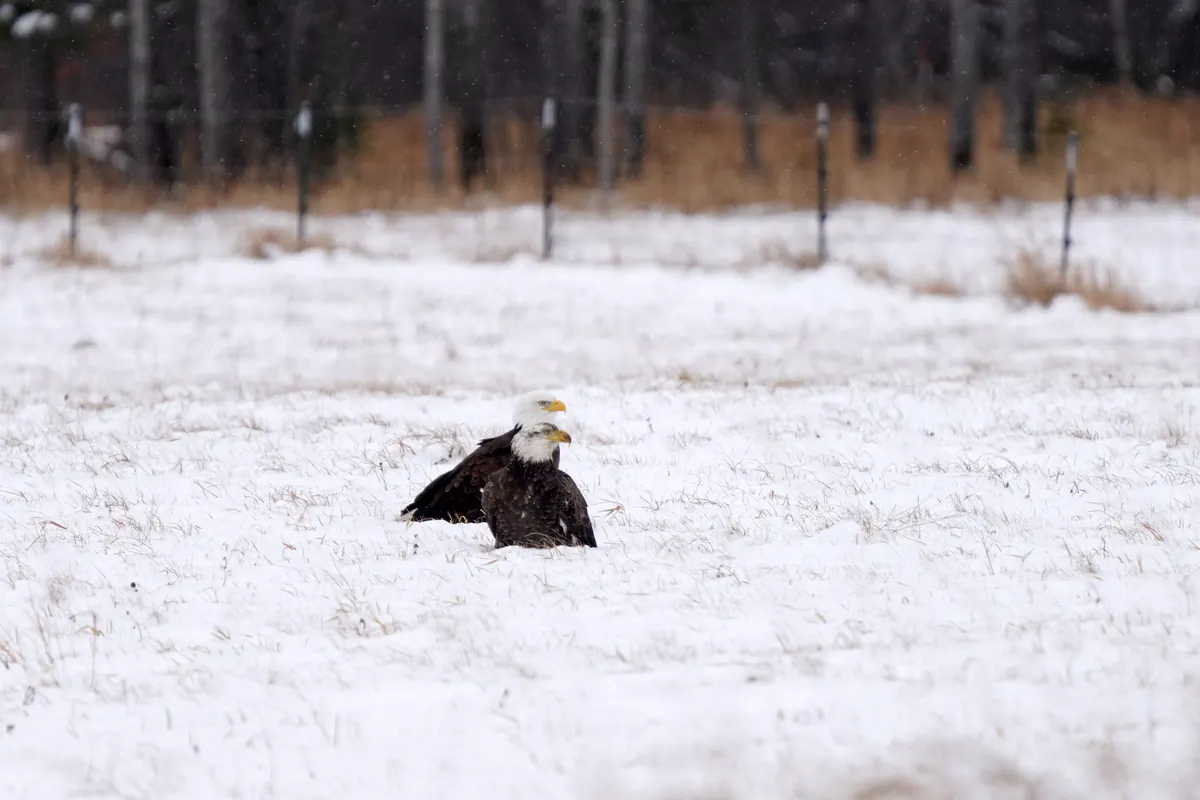
Breeding eagles disappeared from Massachusetts in the early 1900s. Between 1982 and 1988, MassWildlife brought 41 young eagles from Michigan and Canada to a site overlooking Quabbin Reservoir, and by 1989 the first pair nested. In 2024 at least 88 pairs held breeding territories, and more than 750 chicks have fledged since the restoration. In winter, eagles of all ages gather where open water offers fish and waterfowl; MassWildlife suggests looking below dams that are releasing water, and coming back to any spot where you have seen one, since eagles return to the same shoreline, even the same tree.
-
Eagles building nests
Nest building December to February; eggs early March to early April · Tall trees near large lakes and rivers
Mated pairs add sticks to their nests through midwinter, with the male bringing most of the material and the female doing most of the building. Courtship flights include loops and dives that can end with two birds locking talons and tumbling. If you find an active nest, watch from far away and report it to MassWildlife, which uses the reports to track new territories.
-
Great horned owls calling
Dusk, December into February · Woodlots and field edges statewide
Mass Audubon says great horned owls are at their most vocal in winter, calling around dusk while they court and pair up ahead of nesting, which begins in the depths of winter. Listen for a deep, soft run of hoots, often a pair answering each other. Calm, moonlit nights are best, so the week around the full Cold Moon is ideal. Leave the flashlight off and do not play recorded calls.
MassWildlife’s own tip: watch from inside a parked car, which keeps the bird calm and you warm.
How do Massachusetts animals get through the winter?
MassWildlife’s advice to anyone worried about animals in the cold is to let them be: native wildlife has handled New England winters for thousands of years, each species in its own way.
-
Sleepers and true hibernators
Bears den by mid-December; woodchucks until March · Brush piles, laurel thickets, burrows
Black bears usually enter their dens between November and mid-December and come out in March or April, often under brush piles, fallen trees or mountain laurel, with snow adding insulation. A bear that is not pregnant may stay active if food is easy, so keep feeders in until midwinter. Woodchucks are true hibernators whose heart rate and body temperature drop for months.
-
Under the ice and under the snow
Once ponds freeze and snow settles · Beaver ponds, pond mud, meadows
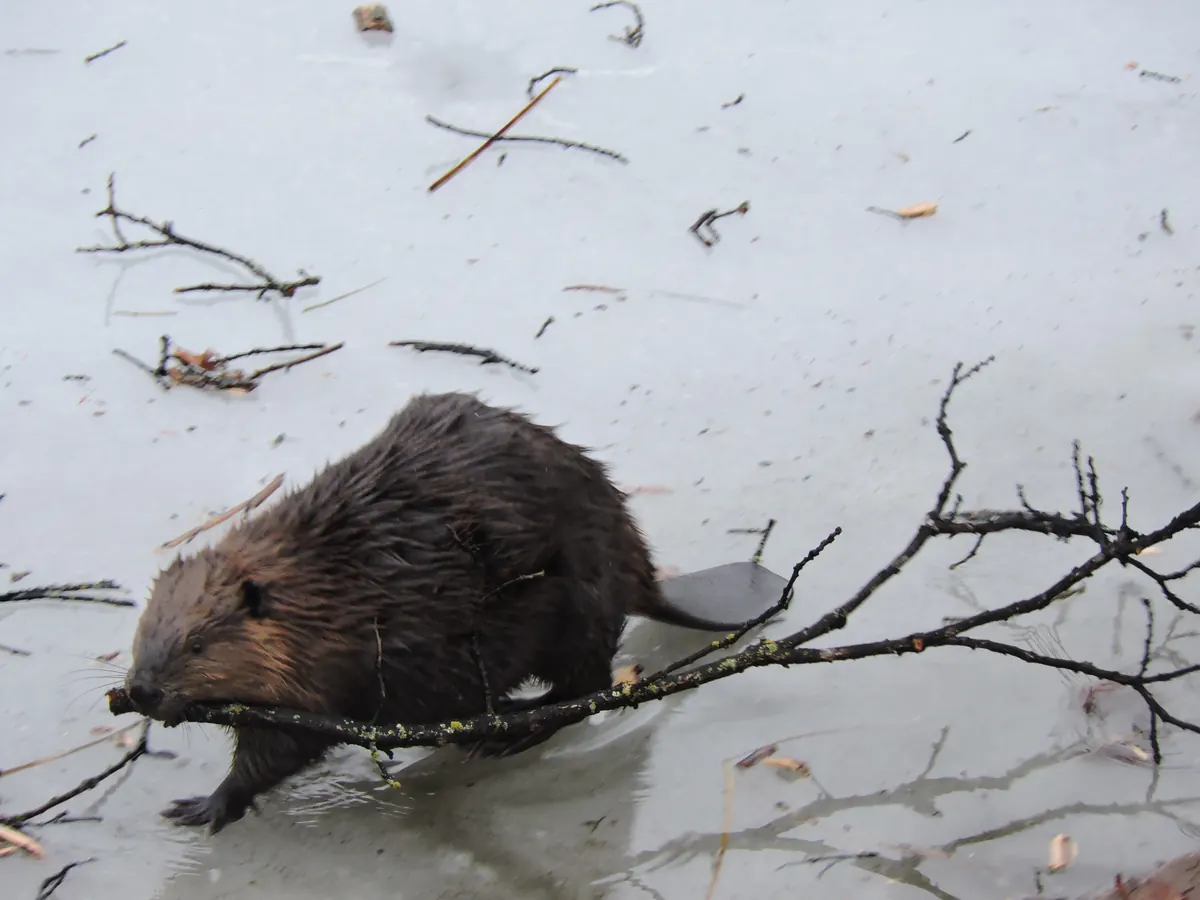
In fall, beavers sink a pile of cut branches beside the lodge as a winter pantry; once the pond ices over, they swim out through an underwater entrance to fetch bark to eat. Frogs and turtles settle into pond mud and can partly freeze, then thaw in spring. Mice and voles run tunnels under the snow, and ruffed grouse roost overnight in tunnels they dig in soft snow.
-
Bats in the old mines
Hibernation from late fall into spring · Caves and mines, mostly in the western counties
Four of the state’s nine bat species spend the winter in caves or mines, and all four have been listed as endangered in Massachusetts since 2012 because of white-nose syndrome, a fungus that wakes hibernating bats and burns their fat. The little brown bat, once the most common bat in the state, fell by more than 99 percent. MassWildlife has closed the five most important hibernation sites to visitors and fitted two mines it owns with gates that let bats fly through but keep people out.
-
Tracks and trails
The morning after any snowfall · Trail edges, stone walls, stream banks
Coyotes, fishers and bobcats hunt all winter, while deer and moose shift to twigs, buds and bark. After a light snow, look for trails crossing the woods and browsed twig tips, and notice snow resting unmelted on a deer’s back, insulated by hollow hairs.
The “tracks to know” and “mammal watch” plates in the journal are made for this: sketch the print, measure it against your glove, and note the date and how fresh the snow was.
Which evergreens and winter berries can you find in Massachusetts in December?
Bare maples and oaks leave the stage to conifers, laurel and a few berry-laden shrubs; it is an easy season to learn them.
-
American holly and the Ashumet collection
Berries red from late fall through winter · Coastal plain woods; Ashumet Holly Wildlife Sanctuary, East Falmouth
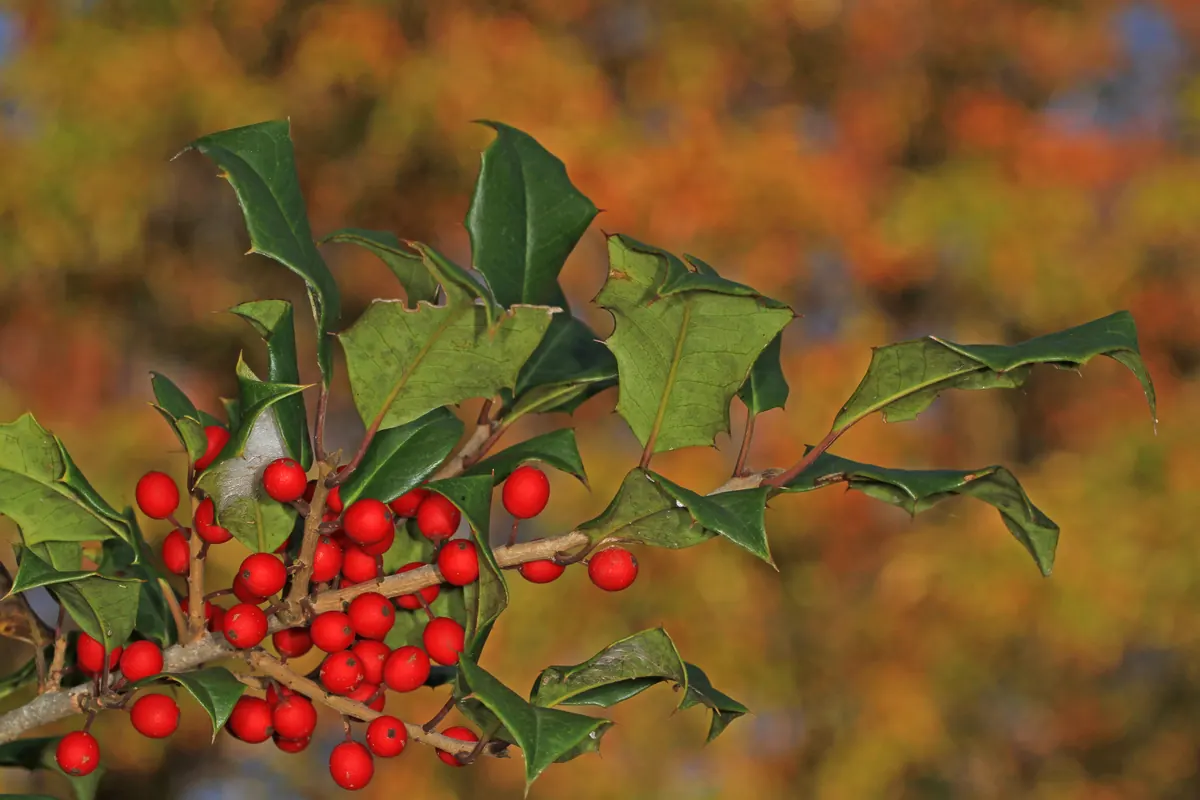
American holly reaches the northern edge of its natural range along the New England coast, and Massachusetts is close to the end of the line. Native Plant Trust describes the classic Christmas holly: leathery, spiny evergreen leaves and red berries ripening in late fall, on a tree that tolerates salt spray. Mass Audubon’s Ashumet Holly sanctuary keeps about 1,000 holly trees of 65 kinds along 1.5 miles of trails, open free from dawn to dusk. Local accounts credit Wilfrid Wheeler, who began growing hollies on his Falmouth farm out of worry that the tree might vanish from the Cape.
-
Winterberry
Red fruit on bare branches into midwinter · Swamp edges, pond shores and around vernal pools
This native holly drops its leaves in fall, so its shiny red berries stand out on bare twigs. Native Plant Trust calls the berries critical winter food for birds.
-
Eastern hemlock
Green all year · Cool, moist ravines and north-facing slopes statewide
Short, flat needles with two pale lines underneath, and small cones at the twig tips, mark the hemlock. Old trees in sheltered ravines can live up to 800 years, and deer bed down under their thick boughs in winter. Native Plant Trust warns that the hemlock woolly adelgid, a tiny white sap-sucking insect from Asia, is killing stands across the region.
-
Pitch pine and mountain laurel
Green all year · Sandy barrens, the Cape, the Islands and rocky woods
Pitch pine carries stiff needles in bundles of three and thick-scaled cones, and it is the only pine in New England with moderate tolerance of salt; it grows mostly in sandy barrens and on the coastal plain and depends on fire to clear room for its seedlings. In rocky upland woods, mountain laurel keeps its glossy, leathery leaves green all winter, an easy evergreen shrub to learn.
Pick one evergreen near home for the “a tree through the seasons” plate and note it each week; on sunny winter days, compare it with a deciduous tree beside it.
When is the earliest sunset in Massachusetts this year?
Between December 1 and the solstice, every town in the table gives up about another quarter hour of daylight. Boston drops from 9 h 19 m to 9 h 05 m; Lowell, the northernmost city here, bottoms out at 9 h 03 m, while Nantucket, the farthest south, still has 9 h 11 m. After December 21 the days lengthen again, though only by two to four minutes by New Year’s Eve, too little to notice.
| City | Dec 1 | Dec 21 | Dec 31 | Earliest sunset |
|---|---|---|---|---|
| Pittsfield | 9 h 18 m | 9 h 04 m | 9 h 08 m | 4:20 p.m., Dec 9 |
| Springfield | 9 h 20 m | 9 h 07 m | 9 h 09 m | 4:18 p.m., Dec 8 |
| Worcester | 9 h 19 m | 9 h 05 m | 9 h 09 m | 4:15 p.m., Dec 9 |
| Lowell | 9 h 17 m | 9 h 03 m | 9 h 07 m | 4:12 p.m., Dec 8 |
| Boston | 9 h 19 m | 9 h 05 m | 9 h 08 m | 4:12 p.m., Dec 9 |
| Plymouth | 9 h 21 m | 9 h 07 m | 9 h 11 m | 4:11 p.m., Dec 8 |
| Provincetown | 9 h 21 m | 9 h 06 m | 9 h 10 m | 4:09 p.m., Dec 9 |
| Nantucket | 9 h 25 m | 9 h 11 m | 9 h 15 m | 4:11 p.m., Dec 8 |
The surprise is the last column. Massachusetts sees its earliest sunsets on about the 8th or 9th of December, twelve or thirteen days ahead of the solstice; because Boston’s sunset reads 4:12 p.m. on every evening from December 2 to 15, the table lists the middle of each town’s run. Provincetown’s sun goes down at 4:09 p.m. around December 9, the earliest in the table, and Boston’s and Lowell’s at 4:12 p.m. around December 9 and 8; Pittsfield, farther west and so later on the clock, holds out until 4:20 p.m. The cause is the tilt of Earth’s axis together with its slightly oval orbit, which make solar noon drift later on the clock through December. The same drift keeps mornings getting darker after the solstice: Boston’s latest sunrise, about 7:14 a.m., is not until around January 3. Find your own town’s numbers with the daylight calculator.
How cold and snowy is a Massachusetts December, and what might El Niño do this winter?
For meteorologists, winter begins December 1: they group December, January and February as the cold quarter of the year, while the solstice on December 21 marks the astronomers’ version. The NOAA normals below, for 1991–2020, show how much the state changes over a two-hour drive. Logan Airport averages a high of 42.2 °F and a low of 29.2 °F with 9.0 inches of snow, while Pittsfield’s nights average 20.9 °F. The Cape and Islands stay just around freezing at night, with Nantucket’s average low at 32.2 °F, and Chatham normally sees only 2.6 inches of snow all month. Up in the Hilltowns, Ashfield’s December snowfall normal is 18.8 inches. In nine years out of ten, even Logan and Nantucket have had their first freeze by late November; for spring’s last-frost dates, see frost dates for Massachusetts towns.
| Station | Average high | Average low | Precipitation | Snowfall |
|---|---|---|---|---|
| Pittsfield Municipal Airport (Berkshires) | 35.5 °F | 20.9 °F | 3.63 in | no normal |
| Ashfield (Hilltowns, 1,340 ft) | no normal | no normal | 4.71 in | 18.8 in |
| Amherst (Pioneer Valley) | 39.2 °F | 20.8 °F | 3.89 in | 7.5 in |
| Worcester Regional Airport (central hills) | 37.5 °F | 23.4 °F | 4.28 in | 14.9 in |
| Blue Hill, Milton (south of Boston, 625 ft) | 40.2 °F | 24.9 °F | 5.39 in | 12.6 in |
| Boston Logan International Airport | 42.2 °F | 29.2 °F | 4.30 in | 9.0 in |
| Plymouth-Kingston (South Shore) | 45.9 °F | 28.3 °F | 4.93 in | 6.7 in |
| Chatham (Cape Cod) | 44.0 °F | 31.2 °F | 4.72 in | 2.6 in |
| Nantucket Memorial Airport | 45.1 °F | 32.2 °F | 3.93 in | no normal |
Height matters: Blue Hill, about ten miles from downtown but 625 feet up, averages more December snow than Logan, and Worcester, near 1,000 feet, more still. The ocean keeps the Cape mild, so a storm that buries Worcester can bring rain to Chatham.
The El Niño factor. The September 10 ENSO update from NOAA’s Climate Prediction Center left little doubt, putting the probability of a very strong event at over 90 percent by the heart of the snow season. The government’s own December-to-February outlook is due October 15, which is later than this guide was finished; the maps will appear on CPC’s 90-day outlook page.
NOAA’s 2018 El Niño fact sheet for the Northeast, written with the regional climate center at Cornell, describes the usual setup: the polar jet stream stays farther north than normal while a Pacific jet runs across the southern states, and storms often move up the coast, so the Eastern Seaboard tends to be wetter than normal. During 2015–16, the strongest event on record, every part of the Northeast was mild, and New England came up short on snow. That December was extraordinary: Climate.gov noted a Christmas Eve high of 65 °F at Worcester, 31 degrees above normal, and Boston’s month averaged 45.4 °F, its warmest December since records began in 1872, according to the National Weather Service. Yet the same fact sheet lists the January 2016 blizzard and October 1991’s “Perfect Storm,” which sent 15- to 30-foot waves onto the New England coast, among the storms that struck during strong El Niños, and notes that eight of the ten Northeast snowstorms rated “crippling” on the regional snowfall impact scale came in El Niño winters. In short: lean mild, but one coastal storm can still decide the season.
For the week ahead, see the local forecast and radar.
What can you see in the Massachusetts night sky in December 2026?
With the longest nights of the year, December is the easiest month for stargazing with children, as long as everyone dresses for the cold.
-
The Geminid meteor shower
Night of Sunday, December 13, into Monday, December 14 · Any dark place; the radiant near Castor and Pollux climbs high after midnight
Its theoretical peak rate is about 150 an hour under a flawless rural sky; town skies cut that sharply, yet it remains worth a cold night. This year conditions are close to ideal. Only a slim crescent is up in early evening, and once it sets the rest of the night is moonless. Counts usually improve after midnight as Gemini climbs, so a nap first and a 1 a.m. start pay off.
-
The Cold Moon, the closest full moon of 2026
Full at 8:28 p.m. EST, Wednesday, December 23 · Rising in the northeast near sunset
Perigee follows the full phase by roughly seven hours, making this full moon the nearest of 2026 and the largest to the eye. It looks round on both December 23 and Christmas Eve, riding high enough to cast shadows on snow.
-
Venus at dawn, Saturn after dark
All month · Venus in the southeast before sunrise; Saturn in the south and southwest in the evening
Venus is a brilliant morning star all month, and a waning crescent sits near it before sunrise on December 4 and 5, with Spica in between. After dark, Saturn is alone among bright planets in the south and southwest, setting about four hours after sunset by month’s end. Jupiter, in Leo, rises in the middle of the evening by late December and shines high in the south by dawn.
-
The solstice and the Quadrantids
Monday, December 21, 3:50 p.m. EST; Quadrantids night of January 3, 2027 · The sunset point on the southwest horizon
The sun reaches its southernmost point at 3:50 p.m. EST on the solstice, less than half an hour before Boston’s sunset. Next up are the Quadrantids, peaking late on January 3, 2027, a few days before new moon.
| Phase | Date | Time |
|---|---|---|
| Last quarter | Tuesday, Dec 1 | 1:08 a.m. EST |
| New moon | Tuesday, Dec 8 | 7:52 p.m. EST |
| First quarter | Thursday, Dec 17 | 12:42 a.m. EST |
| Full moon, the Cold Moon (a supermoon) | Wednesday, Dec 23 | 8:28 p.m. EST |
| Last quarter | Wednesday, Dec 30 | 1:59 p.m. EST |
Your town’s moon times are listed on the moon calendar, and a glance at tonight’s cloud cover will tell you whether to set an alarm for the Geminids.
What can Massachusetts families do outdoors in December?
Dates below come from each organizer’s own 2026 listing. Mass Audubon programs charge a fee and often fill; register ahead.
-
Owl Prowl at Broadmoor
Saturday, December 5, 5–7 p.m. · Mass Audubon Broadmoor Wildlife Sanctuary, Natick
An adult program: handle owl wings, skulls and talons at the visitor center, then walk into the fields and woods at dusk to listen for barred, great horned and eastern screech-owls.
-
Starlight Owl and Wildlife Prowl
Friday, December 18, 4:30–6 p.m. · Mass Audubon Pleasant Valley Wildlife Sanctuary, Lenox
A family program for ages 5 to 17 with an adult. It begins indoors with the owls of the Berkshires and continues on up to a mile of trail, learning owl and mammal calls in the dark.
-
Winter Solstice Walk
Monday, December 21, 4–6 p.m. · Mass Audubon Boston Nature Center, Mattapan
Mark the longest night with an evening stroll on flat trails that are navigable with mobility devices, looking for tracks, listening for owls and learning which wild plants hold on through winter.
-
First Day Hikes
Friday, January 1, 2027 (locations announced in December) · DCR parks statewide
The nationwide New Year’s Day hikes began in Massachusetts: on January 1, 1992, 380 people walked at the Blue Hills Reservation, and now every state offers them. DCR publishes its list of guided hikes, some with warming fires and hot chocolate, shortly before New Year’s Day; check its page late in December.
-
Citizen science
All month · Anywhere
Join a Christmas Bird Count, keep up your Project FeederWatch counts, report bald eagle nests to MassWildlife, and post track photos to iNaturalist.
A low-key idea for the solstice: watch the sunset from the same spot on December 1 and December 21 and draw the horizon both times in the Naturalist’s Field Journal. Every state’s guide lives on the nature calendar; for last month see Massachusetts in November.
Safety notes for December in Massachusetts
- Hunting seasons. MassWildlife’s 2026 schedule has shotgun deer season from Monday, November 30 through Saturday, December 12, and black bear season ending the same day. Primitive firearms deer season follows from Monday, December 14 through Thursday, December 31. Pheasant and quail run to December 31, though, like most small-game seasons, they close during the shotgun weeks. Coyote, fox, cottontail and snowshoe hare seasons stay open, and bobcat season opens December 21 in zones 1 through 8. Duck hunters use the coastal marshes too. Hunting is never allowed on Sundays in Massachusetts, so Sunday is the quietest day for a woods walk.
- Blaze orange. During shotgun deer season every hunter must show 500 square inches or more of orange on head, chest and back combined; duck and goose hunters on the coast need it too until they settle into a blind or boat. In primitive firearms season the same 500-square-inch rule applies to all deer hunters, and on stocked wildlife management areas pheasant and quail hunters must wear an orange hat. Hikers on state forests and WMAs should add an orange hat or vest, and dress dogs in orange too.
- First ice. MassWildlife’s guidance is to stay off ice two inches thick or less, and that four inches of clear, new ice may hold one person on foot. White or snowy ice is only about half as strong. Ice over moving water, streams and spring holes is unpredictable, so stay off rivers. Carry ice picks and a rope and tell someone your plans. Never go onto the ice after a dog; go for help.
- Short days and cold. Sunset comes no later than about 4:30 p.m. anywhere in the state this month. Start hikes early, carry a headlamp, extra layers and a warm drink, and know your turnaround time.
- Nor’easters. Winter storms bring high surf and coastal flooding; stay off jetties and seawalls in big waves.
Sources
- Center for Coastal Studies: first right whale sightings of the 2024–25 season, November 18, 2024
- Center for Coastal Studies: 33 right whales sighted in Cape Cod Bay (January 12, 2026)
- Center for Coastal Studies: right whale ecology program
- NOAA Fisheries: North Atlantic right whale (population, 500-yard rule, identification)
- NOAA Fisheries: gray seal (pupping season, pups, viewing distance)
- NOAA Fisheries: researchers return to study gray seal pups in New England (2020)
- NOAA Fisheries: aerial surveys monitor growing gray seal populations (2021)
- NOAA Fisheries: report a stranded or injured marine animal
- National Audubon Society: Christmas Bird Count
- MassWildlife Monthly, December 2025: counting birds and the Christmas Bird Count regions
- Concord Christmas Bird Count: about the count (2026–27 date)
- Brookline Bird Club: Christmas bird counts and count week
- Massachusetts Christmas Bird Count list, 2025–26 season (compiled by Jon Skinner)
- MassWildlife: learn about bald eagles (restoration, pairs, nesting)
- MassWildlife: bald eagle species account (winter gatherings, 2024 pairs)
- MassWildlife: watch for bald eagles this winter
- Mass Audubon: Owling 101
- MassWildlife: how wildlife handle winter
- MassWildlife: bats of Massachusetts (white-nose syndrome, hibernacula)
- Mass Audubon: Ashumet Holly Wildlife Sanctuary
- WBSM: the Falmouth sanctuary that helped keep holly in Massachusetts
- Native Plant Trust Go Botany: American holly
- Native Plant Trust Go Botany: winterberry
- Native Plant Trust Go Botany: eastern hemlock
- Native Plant Trust Go Botany: pitch pine
- Native Plant Trust Go Botany: mountain laurel
- NOAA NCEI: monthly climate normals 1991–2020 for the Massachusetts stations in the December table
- NOAA NCEI: U.S. Climate Normals
- Climate Prediction Center: ENSO diagnostic discussion, September 10, 2026
- Climate Prediction Center: 90-day seasonal outlooks (winter outlook issued October 15, 2026)
- NOAA and Northeast Regional Climate Center: El Niño impacts and outlook, Northeast region (October 2018)
- NOAA Climate.gov: dissecting 2015’s warm and wet December
- Boston Globe: Boston’s warmest December on record, National Weather Service figures (December 31, 2015)
- U.S. Naval Observatory: moon phases, November 2026 to January 2027
- U.S. Naval Observatory: 2026 solstices and equinoxes
- U.S. Naval Observatory: sunrise and sunset data
- International Meteor Organization: 2026 meteor shower calendar (archived copy)
- EarthSky: what is a supermoon? (2026 full supermoons)
- BBC Sky at Night Magazine: supermoons in 2026
- EarthSky: best stargazing of 2026
- Mass Audubon: Owl Prowl at Broadmoor, December 5, 2026
- Mass Audubon: Starlight Owl and Wildlife Prowl at Pleasant Valley, December 18, 2026
- Mass Audubon: Winter Solstice Walk at Boston Nature Center, December 21, 2026
- Massachusetts DCR: First Day Hikes (history and annual list)
- Project FeederWatch
- iNaturalist
- MassWildlife: 2026 hunting and freshwater fishing season summary
- MassWildlife: general hunting regulations (blaze orange, Sunday hunting)
- MassWildlife: deer hunting regulations
- MassWildlife: migratory game bird hunting regulations
- MassWildlife: ice strength and safety
- Photos via Wikimedia Commons; licenses and photographers are credited under each picture
