What to look for in nature in Massachusetts this January
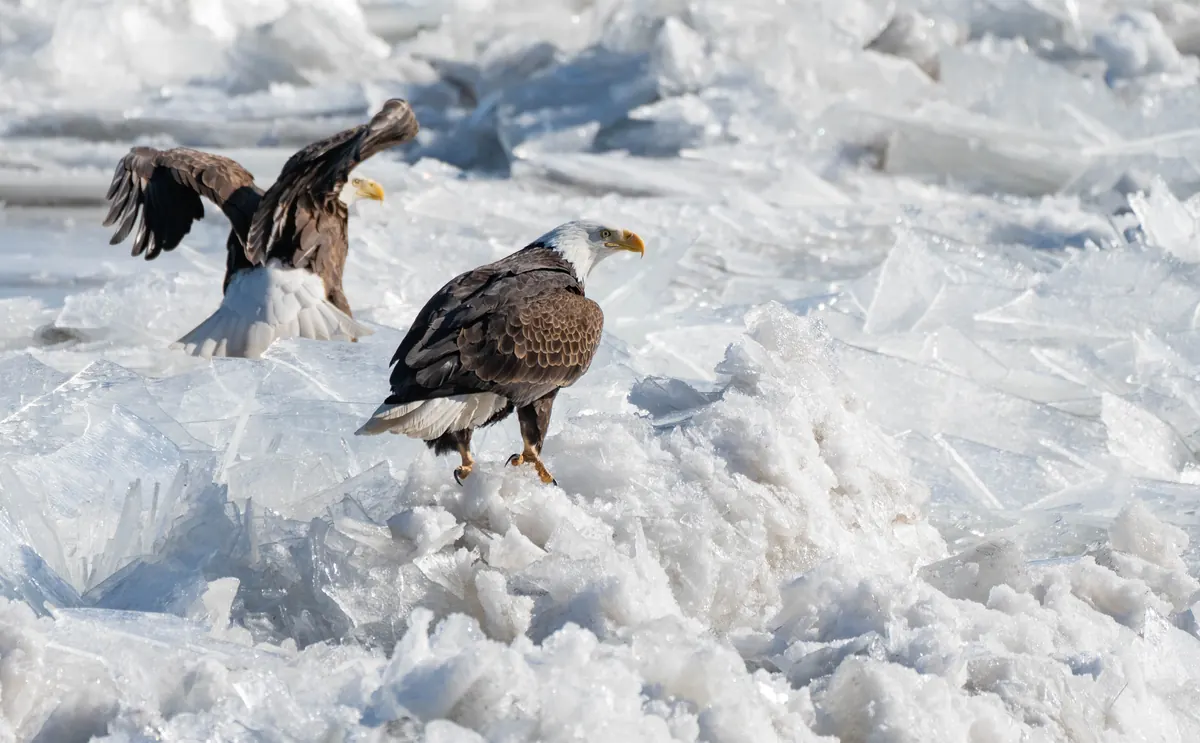
January is the deep end of the Massachusetts winter. By NOAA’s 1991–2020 daily normals, the coldest stretch of the year at Logan Airport and in Worcester runs from about January 19 to 27, and ponds in the hills lock up under ice. That squeezes the bald eagles onto whatever water stays open, at Quabbin, on the lower Merrimack and on the big ponds around Lakeville, just as the yearly eagle census gets under way. Great horned owls hoot loudest now, a month before they lay eggs, and coyotes and red foxes start courting at night. Each day gains a little light, though sunset in Boston stays before 5 p.m. until early February. Below are the places, the timing and a source for every date.
Other months in Massachusetts: October, November, December, February.
Start here
- Scan the ice at Quabbin for eagles. Go on a windy morning to Enfield Lookout or Winsor Dam in Quabbin Park with binoculars. In a hard winter, eagles from Canada and northern New England swell the reservoir’s 15 to 20 residents to as many as 50.
- Listen for owls at dusk. Great horned owls are at their noisiest from late December through January. On a windless evening, stand at the edge of any woods and listen for deep, five-note hoots, often two birds trading calls, a male low and a female higher.
- Catch the Quadrantids. Peak Quadrantid activity is due late Sunday, January 3, or in the small hours of Monday. A slim, late-rising crescent leaves the sky dark, and since the peak is brief, a pre-dawn alarm on the 4th gives the best odds.
January fits several plates in the Naturalist’s Field Journal. Put an eagle on the ice, or an owl heard but never seen, on “birds I have seen”; the night calls of owls, foxes and coyotes on “a map of sounds”; a line of prints in fresh snow on “tracks to know”; and a birch, hickory or maple drawn from its bark and buds on “a tree through the seasons.” On the daily field log, note the coldest morning of the month and the day your nearest pond froze across.
Regions used below: The Berkshires and the Hilltowns; The Pioneer Valley; Central Massachusetts and Worcester County; Greater Boston, the North Shore and Merrimack Valley; The South Shore and South Coast; Cape Cod and the Islands.
Where can you see bald eagles in Massachusetts in January?
When lakes and ponds freeze, a bald eagle needs open water to fish, and in January there is less of it every week. MassWildlife names four places that eagles use all year, both to nest and to winter: Quabbin Reservoir, the Connecticut River, the Merrimack River and the Assawompset Pond complex around Lakeville and Middleborough. Wintering birds also turn up along Cape Cod, Buzzards Bay, Martha’s Vineyard and Nantucket. December’s guide told the story of how eagles came back to the state; January is when they are easiest to find.
-
Quabbin Reservoir
All winter; best on windy mornings, and before the reservoir freezes over · Quabbin Park off Route 9 in Belchertown and Ware: Enfield Lookout, Winsor Dam, Goodnough Dike and Gate 52
The state water-supply agency, DCR, says Quabbin has 15 to 20 resident eagles that can be seen in any season. When cold weather grips Canada and northern New England, northern eagles move down to the reservoir for open water and fish, and the winter count can reach about 50. In a mild winter, its poster adds, fewer northern birds make the trip. DCR’s tips are to arrive early, bring a scope or binoculars, and choose a breezy day, when eagles ride the updrafts while hunting. Once the water freezes, check the ice for a deer carcass left by another predator; eagles will gather to scavenge it, and now and then a rare golden eagle joins them.
-
The lower Merrimack River
January into March · Amesbury and Newburyport: Andrews Boat Shop on Main Street in Amesbury, Cashman Park and the Mersen plant on Merrimac Street in Newburyport, and Joppa Flats
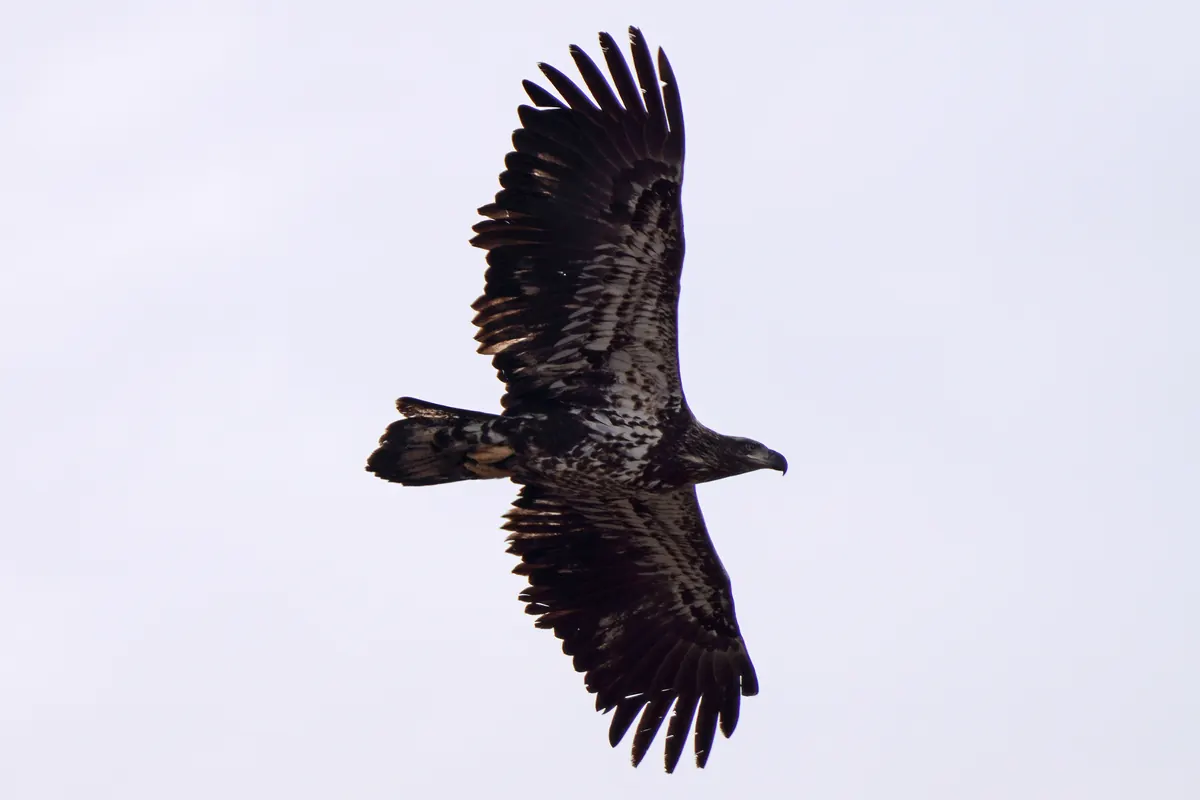
Mass Audubon’s Joppa Flats Education Center and Parker River refuge hold an eagle festival on the lower Merrimack every February, with volunteer guides posted at the riverside spots listed here. You do not need to wait for the festival: the same pull-offs work on any cold weekday, wherever the river stays open. Look for immatures too, mottled brown and white; DCR says the white head takes about five years.
-
The Lakeville ponds and the South Shore
January, especially after the smaller ponds freeze · Assawompset, Long and Great Quittacas ponds in Lakeville and Middleborough; ponds in Plymouth
MassWildlife counts the Assawompset Pond complex among the four places eagles use all year, for nesting and for winter. When the smaller ponds around it lock up, scan the big open stretches and the dead trees along the shore, and check any deer carcass on the ice, which can draw several raptors at once.
-
The Midwinter Eagle Survey
First half of January; the 2026 window was January 7 to 21 · Rivers, reservoirs and coasts statewide
Every January since 1979, biologists and volunteers across the country have counted wintering eagles over the same short window, coordinated nationally since 1992 by federal scientists, first at a U.S. Geological Survey field station and now at the U.S. Army Corps of Engineers. Each state has a coordinator who organizes the local routes, and the same ponds, rivers and reservoirs listed above are where Massachusetts eagles get counted. Many of the eagles they tally are local birds: by MassWildlife’s species account, the state had a minimum of 88 territorial pairs in 2024, and those pairs court and build nests from early winter into February. MassWildlife also asks anyone who sees an eagle carrying sticks this winter to report the place and date, which helps it map new nests.
Watch from your car when you can. An eagle flushed off a carcass in January wastes energy it cannot spare, and the vehicle doubles as a blind and a heater.
When do great horned owls start nesting in Massachusetts?
Long before any songbird sings, great horned owls are choosing nest sites. The first Massachusetts Breeding Bird Atlas, an early Mass Audubon survey, calls this the earliest nester among the state’s native birds.
-
The loudest weeks of the year
Late December through January, building toward February · Woodlots, swamp edges and farm fields statewide, except Martha’s Vineyard and Nantucket
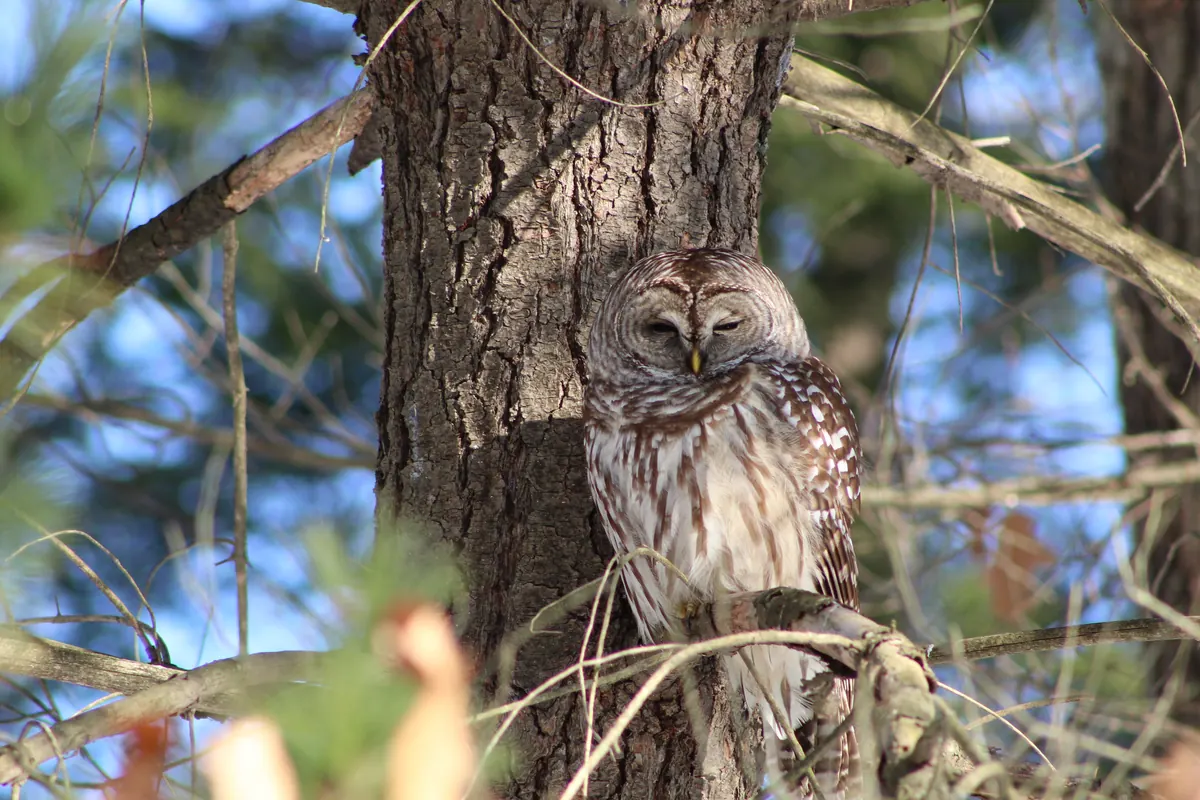
The atlas says great horned owls are most vocal from late December through January and right up to the start of nesting in February. Their hoot carries for miles on a still night and usually comes in five notes, a rhythmic whooo, whooo-whoooooo, whoo, whooo. When two owls answer each other, Mass Audubon says it is likely a courting pair, and you can tell them apart by pitch: the female’s hoots are higher than her mate’s baritone.
-
Borrowed nests, laid in snow
Eggs mostly from about February 20 to March 25 · Old hawk, heron or crow nests, often high in white pines
Great horned owls build nothing of their own. They take over a nest from a previous year, most often a red-tailed hawk’s, and the atlas found most of the Massachusetts nests it measured in white pines 40 to 70 feet up, with others in pitch pines. Two eggs is the norm; she sits on them alone for 28 to 30 days and will not budge in a storm, sometimes ending up dusted with snow. A pair that is hooting from the same patch of woods every evening in January is probably settling on a nest nearby.
-
Other owls to listen for
After dark all month · Barred owls in most of the state except the southeast; screech-owls in towns and suburbs
Mass Audubon lists barred owls, which call even by day with their famous “who cooks for you,” and eastern screech-owls, small and tough enough to nest in Boston backyards.
Pick a night with little wind and look at the cloud forecast; a clear, calm sky carries owl calls farthest, and it is also when the cold bites hardest.
Why are coyotes and foxes so active in Massachusetts in January?
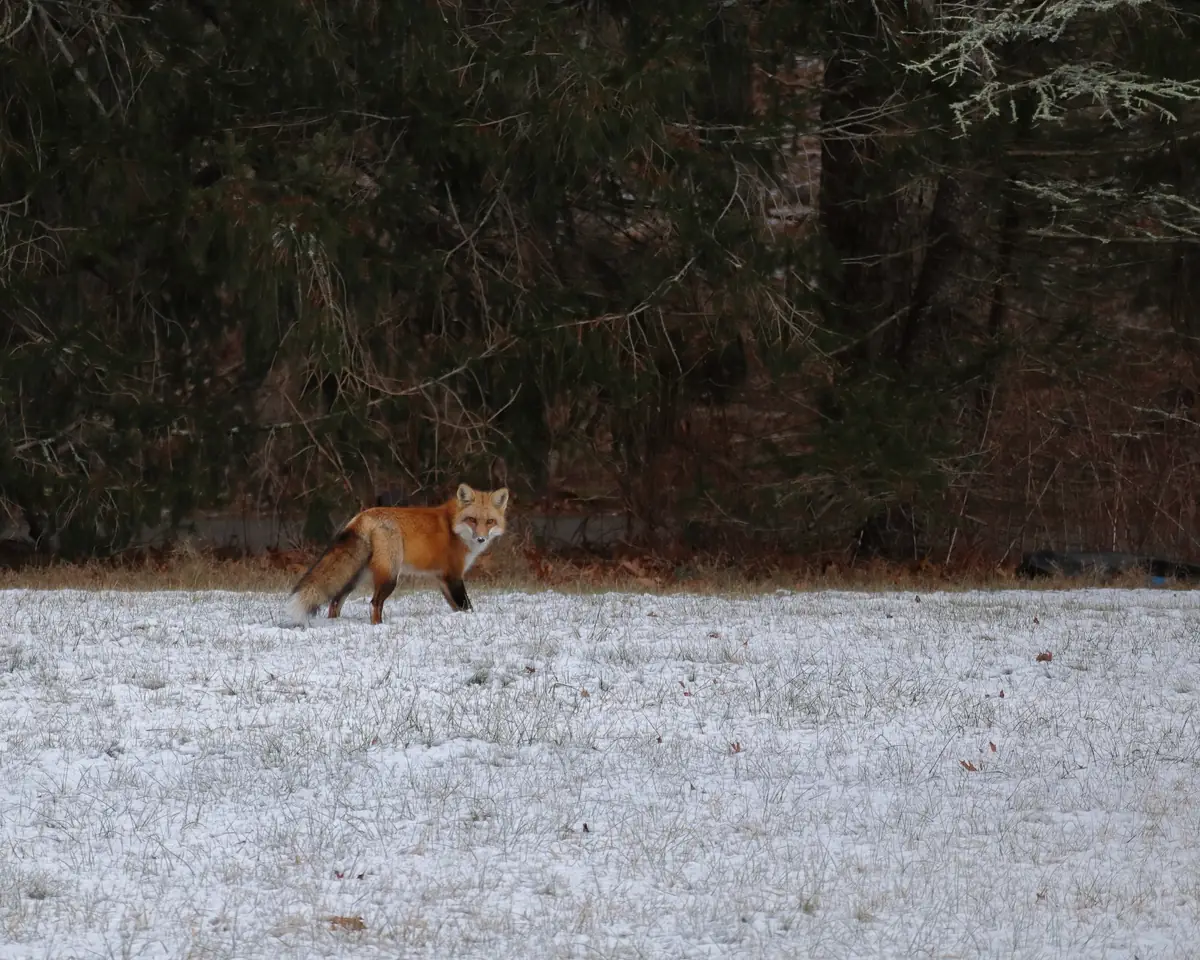
Midwinter is mating season for the state’s wild dogs. MassWildlife says coyotes breed from late January through early March and red foxes from January into February, so both are on the move and calling more than they were in the fall, sometimes even by day.
-
Coyotes courting and holding ground
Late January through early March · Every mainland city and town
Coyotes live in every city and town on the Massachusetts mainland, and in winter they are busy pairing up and defending territories. Simply seeing one is no cause for alarm, MassWildlife says, but it asks people to keep pets on a leash and close by, since a coyote may treat a small dog or cat as prey and a large dog as a rival. Remove bird seed spills, garbage and pet food that bring coyotes into yards, and if one lingers, scare it off with noise and waving arms until it leaves.
-
Red foxes screaming at night
January and February; kits born in March and April · Field edges, golf courses, suburbs and farmland
MassWildlife warns that a red fox in breeding season can let out a high, unsettling scream that people sometimes take for a person in trouble or for a fisher. It is a normal part of courtship. The kits arrive in March or April and peek out of their dens four or five weeks later.
-
Reading the tracks
The morning after a light, wet snow · Trail edges, stream banks and your own yard
MassWildlife’s quick rule is to count toes. A 4/4 print (four toes front and back) points to the dog, cat, rabbit or hare family; 4/5, with five behind, to a rodent, from mice to porcupines and muskrats; 5/5 to a weasel, skunk, raccoon, opossum, bear or beaver; and a split two-toed heart is a deer or moose. Pattern helps too: foxes, coyotes and bobcats place each hind foot in the front print, leaving a neat single line, while otters, fishers and minks bound in pairs. Old, half-melted snow blurs prints, and deep powder holds no detail at all.
Photograph a clear print beside a glove for scale.
Can a cold January save Cape Cod’s pitch pines from the southern pine beetle?
For pitch pine woods on the Cape and Islands, a properly cold January is good news. The southern pine beetle, a rice-sized bark beetle native to the Southeast, has pushed north as the coldest winter nights have warmed, and in 2023, according to MassWildlife, it killed pines across Martha’s Vineyard and Nantucket. Winter cold is the main brake on its spread.
-
How the beetle reached Massachusetts
First trapped in 2015; outbreaks since 2023 · Martha’s Vineyard, Nantucket and Cape Cod, with traps statewide
UMass Extension reports that state traps caught the beetle in 2015 from Southwick to the Cape and the Vineyard, and that DCR found the first two infested pitch pines in August 2022. MassWildlife writes that the 2023 surge overwhelmed the trees’ resin defenses, and that the beetles kill in spreading clusters that can grow by up to 10 feet a day. It has since found them on two wildlife management areas on Cape Cod and is cutting infested trees with a buffer around them.
-
Why the coldest night matters
The coldest nights of winter · Pine bark, where the larvae spend the winter
A 2017 study in the journal Nature Climate Change by scientists at Columbia University, summarized by Columbia’s climate school, tied the beetle’s northern edge to where winter bark temperatures fall to 14 °F; and the summary notes that the coldest night of the year has warmed by roughly 6 to 7 °F over 50 years at many U.S. weather stations, far faster than average temperatures. A winter without that deep cold lets more larvae survive to spring. That makes this year’s strong El Niño, which usually means a milder Northeast winter, a worry for the pines.
-
What to look for
Any time, but easiest in winter · Pitch and white pines in sandy woods
UMass Extension describes popcorn-sized blobs of resin, white to reddish, on the bark from the ground up into the crown; tiny exit holes; reddish-brown sawdust in bark crevices; and S-shaped galleries under loose bark. By the time the needles fade to yellow and brown, the attack is well along. Report suspect trees through DCR’s online form, linked from the UMass fact sheet.
MassWildlife’s longer answer is thinning, prescribed fire and open, varied pine barrens; it has restored about 3,000 acres of barrens on its wildlife lands and counts more than 100,000 acres still at risk.
What wildlife is on the Massachusetts coast in January?
The shore is busier than the woods in midwinter. Sea ducks crowd the rocks, raptors from the Arctic hunt the marshes, and out in Cape Cod Bay the right whales that arrived in December keep feeding.
-
Arctic raptors on Plum Island
December through February · Parker River National Wildlife Refuge, Newburyport and Newbury
The refuge’s official bird list names snowy owls and rough-legged hawks as its two winter specialties, usually in the grasslands and other open country, and says northern shrikes, robin-sized songbirds that hunt like small hawks, are most often found in trees and shrubs along the refuge road. Drive the 6.3-mile road slowly, use the pull-offs, and scan fence posts and dune tops. Roadside parking is not allowed.
-
Sea ducks at Emerson Rocks
Winter, around the tides · Parking lot 7 at the south end of the refuge
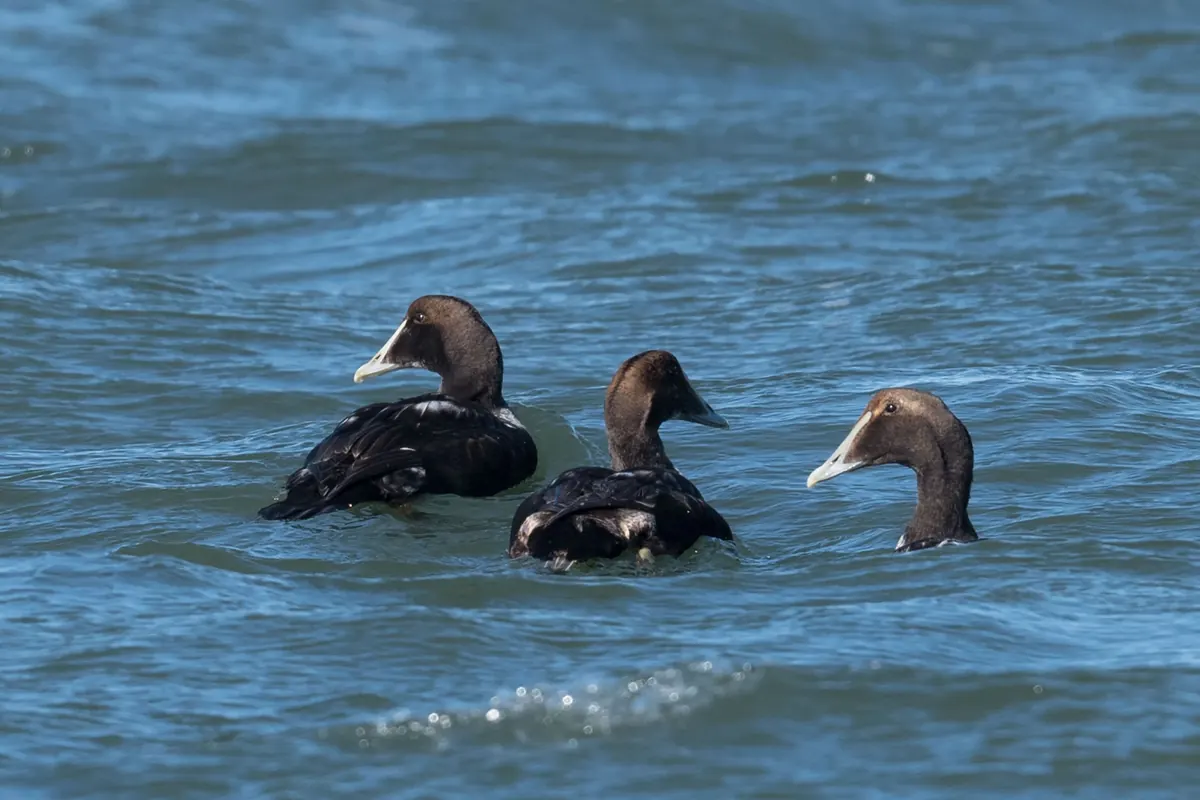
Also on the list: wintering loons, grebes and sea ducks off Emerson Rocks, among them common eiders, white-winged scoters and long-tailed ducks, with purple sandpipers sometimes picking over the exposed rocks at low tide.
-
Right whales feeding in the bay
January, with numbers usually rising into spring · Cape Cod Bay, seen from the bayside beaches of the Outer Cape
The Provincetown-based Center for Coastal Studies, which flies surveys over the bay, says right whales come to Cape Cod Bay and the Great South Channel to feed on zooplankton as spring approaches, while pregnant females are far to the south, off the southeastern states, giving birth between December and March. Its observers noted last January that the whales had turned from social groups at the surface to feeding just below it.
On the outer beaches of Monomoy and the Islands, NOAA says western Atlantic gray seals give birth from December to February, so pupping is in full swing in January; give any seal on the sand a wide berth, and see Massachusetts in December for more on the pups.
How can you identify Massachusetts trees in winter?
With the leaves gone, the shape of the twig, the buds and the bark do the work. Native Plant Trust’s Go Botany key starts with one question: how many leaf scars, the small marks where last year’s leaves fell, sit at each node on the twig?
-
Maples: buds in pairs
All winter · Red maple in swamps and woods everywhere; sugar maple in upland woods and along old roads
Maples carry two leaf scars per node, set opposite each other, which already rules out most other trees. Red maple, named partly for its red buds, has smooth gray bark on younger trunks and grows largest near swamps; Go Botany notes it is becoming more common as sugar maple suffers from a changing climate. Sugar maple has sharp, lance-shaped buds and, on old roadside trees planted generations ago, thick, deeply furrowed bark.
-
Paper birch: white bark that peels
All winter · Woods across the state
One leaf scar per node, alternate along the twig, and bark that is chalk white and peels off in big papery curls, pink on the inside. Go Botany adds that young birches are springy enough to bend to the ground under ice, the habit Robert Frost wrote about in “Birches.”
-
Shagbark hickory: bark in long strips
All winter · Woods and old farm edges
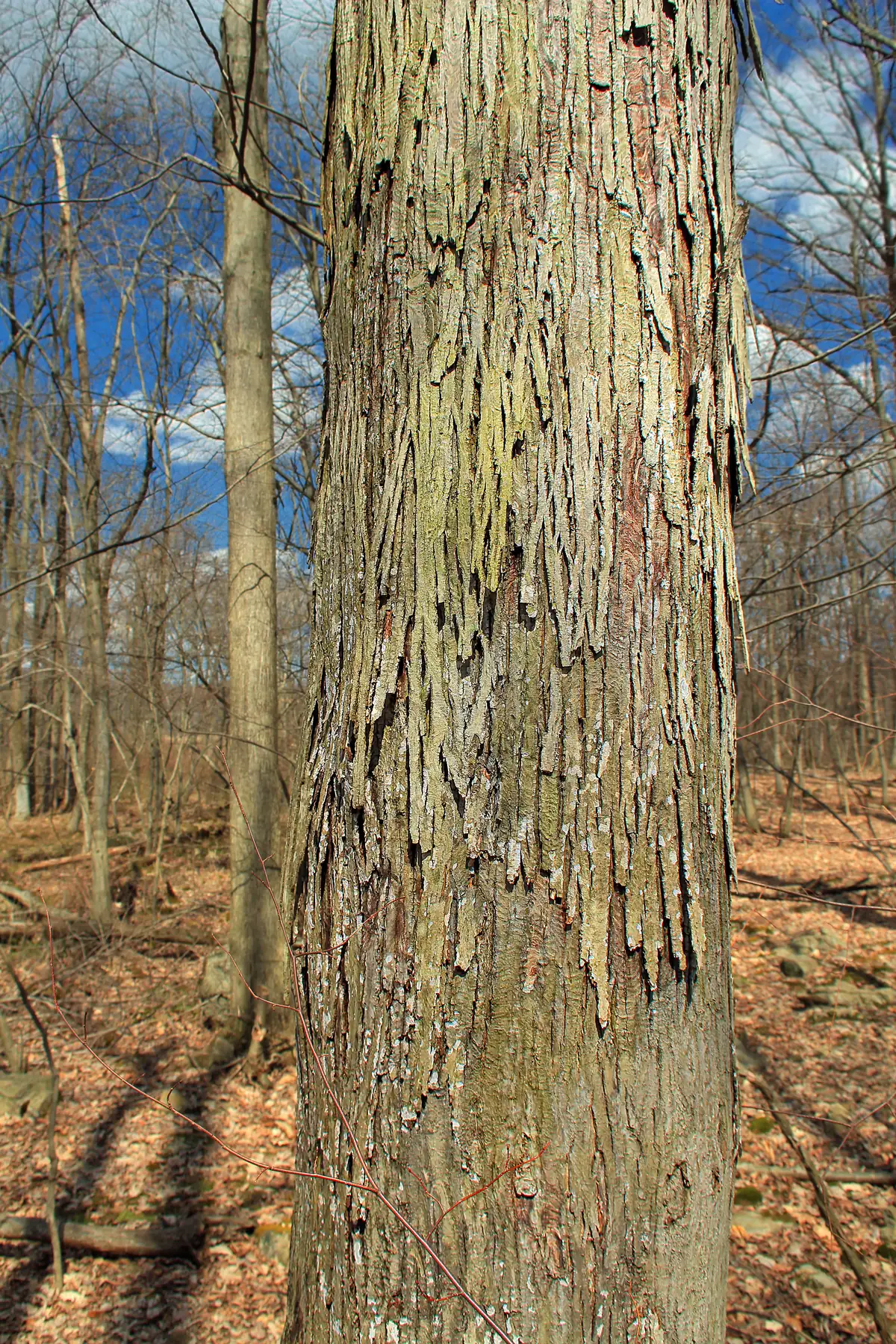
The name says it: gray bark that splits into long, curling plates loose at both ends, as if the trunk needs a haircut. Buds are big and scaly, and leaf scars are single and alternate. Look under the tree for split husks from last fall’s sweet nuts, which wildlife and people both eat.
Sketch one twig with its buds and scars now, then revisit it when the buds break in spring.
How much daylight does Massachusetts gain in January?
Close to fifty minutes, though it does not feel like it at first. On January 1 the gain is less than one minute; by the final week it is closer to two minutes each day. Sunrise holds near its latest, about 7:13 a.m. in Boston, into the first week of January, so the early gains all come at the end of the afternoon; by month’s end the mornings are brightening too.
| City | Jan 1 | Jan 31 | Gained | Per day |
|---|---|---|---|---|
| Pittsfield | 9 h 08 m | 9 h 57 m | 49 min | 1.6 min |
| Springfield | 9 h 10 m | 9 h 59 m | 49 min | 1.6 min |
| Worcester | 9 h 10 m | 9 h 58 m | 48 min | 1.6 min |
| Lowell | 9 h 07 m | 9 h 56 m | 49 min | 1.6 min |
| Boston | 9 h 09 m | 9 h 58 m | 49 min | 1.6 min |
| Plymouth | 9 h 11 m | 9 h 59 m | 48 min | 1.6 min |
| Provincetown | 9 h 11 m | 9 h 59 m | 48 min | 1.6 min |
| Nantucket | 9 h 16 m | 10 h 02 m | 46 min | 1.5 min |
Boston’s sun sets at 4:22 p.m. on New Year’s Day and not until February 3 does it set at 5 p.m. or later; towns on the western side of the state cross that line a few days sooner. To look up the minute for your town, try the sunrise and sunset calculator, and to see when the last spring freeze usually comes, open Massachusetts frost dates by town.
How cold and snowy is a Massachusetts January, and what could El Niño change?
January is the state’s coldest month. In NOAA’s daily normals for 1991–2020, Logan Airport’s average daily temperature bottoms out at 29.3 °F from January 19 through 27, with an average low near 22 °F, and Worcester’s bottoms out at 24.1 °F from January 19 through 26, with lows around 16 °F. The monthly normals below show the spread: Pittsfield’s average January low is 13.9 °F, while Nantucket’s is 26.6 °F. In the Hilltowns, Ashfield averages 22.3 inches of snow in January, and Worcester 18.2.
| Station | Average high | Average low | Precipitation | Snowfall |
|---|---|---|---|---|
| Pittsfield Municipal Airport (Berkshires) | 30.1 °F | 13.9 °F | 2.67 in | no normal |
| Ashfield (Hilltowns, 1,340 ft) | no normal | no normal | 3.55 in | 22.3 in |
| Amherst (Pioneer Valley) | 34.0 °F | 13.8 °F | 3.36 in | 8.1 in |
| Worcester Regional Airport (central hills) | 32.3 °F | 17.1 °F | 3.52 in | 18.2 in |
| Blue Hill, Milton (south of Boston, 625 ft) | 34.7 °F | 18.3 °F | 4.50 in | 18.6 in |
| Boston Logan International Airport | 36.8 °F | 23.1 °F | 3.39 in | 14.3 in |
| Plymouth-Kingston (South Shore) | 41.0 °F | 21.8 °F | 4.79 in | 10.1 in |
| Chatham (Cape Cod) | 38.6 °F | 24.9 °F | 3.97 in | 7.5 in |
| Nantucket Memorial Airport | 39.5 °F | 26.6 °F | 3.18 in | no normal |
Amherst, in the valley, has nights as cold as Pittsfield’s but far less snow than the hills, and sea-warmed Chatham averages about half of Logan’s snowfall.
A strong El Niño winter. How strong will it get? NOAA’s September 10 bulletin rated a top-tier, very strong event as better than a 9-in-10 bet for the months from fall through winter. The government’s winter outlook comes out October 15, too late for this guide, with monthly updates after that; the newest maps are on CPC’s three-month outlook page. For the late-winter months, NOAA Climate.gov’s analysis of snowfall from 1959 to 2023 is the useful guide: during El Niño, January-to-March snowfall tends to come in below average in interior New England, and the shortfall gets stronger in moderate-to-strong events. The same article cautions that averages hide big swings from one winter to the next. Two local side effects follow from a mild winter: DCR expects fewer northern eagles to come to Quabbin, and fewer bitter nights means less cold to kill overwintering pine beetles. For the next few days, use the weather page.
What can you see in the Massachusetts night sky in January 2027?
A strong meteor shower with little moonlight starts the month, and 2027’s nearest full moon follows in the third week. All times are Eastern Standard Time.
-
The Quadrantid meteor shower
Night of Sunday, January 3, into the dawn of Monday, January 4 · Face northeast; the radiant, near the end of the Big Dipper’s handle, climbs through the night
On paper the Quadrantids rank with the year’s richest showers, yet that burst is over in roughly six hours. The American Meteor Society expects it around 10:30 p.m. on January 3 and EarthSky near 12:47 a.m. on the 4th; both fall in a Massachusetts night. Because the radiant starts low and rises, the last dark hours before Monday’s dawn usually deliver the most. Moonlight is no problem: only a sliver of waning crescent, coming up late. From a dark field in the Berkshires, on Quabbin’s edge or on the outer Cape, several dozen in an hour is realistic; town skies show far fewer.
-
Earth closest to the sun
Saturday, January 2, 9:33 p.m. · Everywhere
At 9:33 that Saturday night the gap between Earth and sun shrinks to its 2027 minimum, roughly 91.4 million miles. Massachusetts shivers anyway, because the tilted axis keeps the noon sun low over New England and the days short.
-
Venus at dawn, planets at dusk
All month; Venus farthest from the sun on January 3 · Venus in the southeast before sunrise; Saturn in the southwest after dark
Venus is the brightest thing in the morning sky and on January 3 hangs farthest out from the sun’s glare, a full 47 degrees, when a small telescope shows it half lit. After sunset, Saturn hangs in the southwest, losing height week by week. As January closes, Mercury edges up from the glow low in the west-southwest, ahead of its best evening show of the winter in early February.
-
The Wolf Moon, a supermoon
Full at 7:17 a.m. Friday, January 22 · Rises in the east-northeast around sunset on Thursday, January 21
Perigee, the moon’s closest approach, comes about 14 and a half hours before the moment of full, making this the nearest full moon of 2027, about 222,000 miles away. Because full moon falls just after Friday’s sunrise, Thursday night is the one to watch, with the moon up from dusk to dawn over snow-covered fields. On Saturday evening, January 23, bright Jupiter sits just beside the moon.
| Phase | Date | Time |
|---|---|---|
| New moon | Thursday, Jan 7 | 3:24 p.m. EST |
| First quarter | Friday, Jan 15 | 3:34 p.m. EST |
| Full moon, the Wolf Moon (a supermoon) | Friday, Jan 22 | 7:17 a.m. EST |
| Last quarter | Friday, Jan 29 | 5:55 a.m. EST |
With the new moon on the 7th, the week or so on either side gives Massachusetts its darkest January evenings. Moonrise times for Springfield, Hyannis or anywhere else are on the lunar calendar. Northern lights are a long shot this far south, though the declining solar cycle can still throw a big storm; the federal space weather office runs an aurora forecast page.
What can Massachusetts families do outdoors in January?
- Friday, January 1: First Day Hikes. DCR leads free New Year’s Day walks at state parks and forests, a custom that began in Massachusetts and has spread to all 50 states. The 2027 list goes up in late December; some hikes need registration, and DCR recommends traction spikes and warm layers.
- Early January: late Christmas Bird Counts. National Audubon’s window runs out on Tuesday, January 5, and some Massachusetts circles schedule their single count day after New Year’s; Audubon’s map shows each circle’s compiler.
- Early January: the Midwinter Eagle Survey. While survey teams count eagles around the state, make your own family count at Quabbin, on the Merrimack or at the Lakeville ponds, and tally adults and brown immatures separately.
- From January 2027: year-long nature series for adults. Mass Audubon’s calendar lists new monthly series starting in January: A Nature Year at Wellfleet Bay Wildlife Sanctuary, A Birding Year at Long Pasture in Barnstable, and A Nature Journaling Year at Pleasant Valley in Lenox. Fees apply, and a three-month trial option is offered.
- Owl prowls and tracking walks. Mass Audubon sanctuaries offer them each winter; January 2027 dates were not yet posted on October 2, 2026.
- Coming in February: the Merrimack River Eagle Festival. Joppa Flats and Parker River refuge hold it every year on a Saturday in mid-February (in 2026 it fell on February 14), with free family activities and live raptors. Watch massaudubon.org/eaglefestival for the 2027 date.
- Citizen science. Stay with your Project FeederWatch counts, enter owls and eagles in eBird, post tracks to iNaturalist, report eagles carrying nest sticks to MassWildlife, and report beetle-killed pines to DCR. Mid-February brings the Great Backyard Bird Count; Audubon’s listing runs it Friday the 12th to Monday the 15th, so save a quarter hour for the Quabbin feeders.
Storms can cancel winter outings, so call ahead. Every state’s monthly guide is listed on the nature calendar, and the Naturalist’s Field Journal leaves room for prints, night sounds and bare twigs.
Safety notes for January in Massachusetts
- A bigger winter deer season. MassWildlife’s Winter Deer Season, held only on the Islands last winter, now reaches the mainland too: January 1 to 30, 2027, in wildlife management zones 9, 10 and 11, and January 1 to February 13, 2027, in zones 13 and 14, Martha’s Vineyard and Nantucket. Every hunter in this season, bow or muzzleloader, must wear 500 square inches of blaze orange on head, chest and back. Check MassWildlife’s zone map for where you walk.
- Other seasons open in January. MassWildlife’s schedule keeps coyote hunting open to March 8, 2027, and bobcat (zones 1 to 8) from December 21, 2026 to March 8, 2027. Fox, cottontail, snowshoe hare and gray squirrel run to February 27, 2027; raccoon and opossum to January 30; crow on Mondays, Fridays and Saturdays. Under MassWildlife’s 2026–27 migratory game bird regulations, duck and sea duck hunting in the coastal zone runs to January 27, and the late Canada goose season opens on different days by zone (Berkshire Dec 15, Central Jan 16, North Coastal Jan 28) and closes everywhere on Feb 13. Sunday hunting is not allowed in Massachusetts.
- Dress for visibility. On state forests and wildlife management areas, wear an orange hat or vest, give your dog an orange collar or coat, especially in the eastern zones and on the Islands this month.
- Ice. MassWildlife says no ice is guaranteed safe: thickness alone cannot tell you, and depth, currents, snow cover and the age of the ice all matter. Its guidelines, below, are for clear, new ice on lakes and ponds; white or snowy ice holds only about half as much. Avoid rivers, streams and spring holes. Carry ice picks, a rope and a phone, wear a life jacket, and if someone falls in, remember “Preach, Reach, Throw, Go”: call 911, reach or throw from shore, and never walk out after a person or a pet.
- Cold and wind. This is the coldest stretch of the year. Layer up under a wind-stopping jacket, protect face and fingers, and turn back early when the wind picks up on summits like Greylock or on open beaches.
- Coastal storms. January nor’easters bring heavy surf and flooding at high tide; keep off jetties and seawalls when waves are big.
| Ice thickness | What it may hold |
|---|---|
| 2 inches or less | Stay off |
| 4 inches | Ice fishing or other activities on foot |
| 5 inches | Snowmobile or ATV |
| 8 to 12 inches | Car or small pickup truck |
| 12 to 15 inches | Medium truck |
Even with these numbers, check the ice often as you go; MassWildlife notes that it never freezes evenly across a pond.
Sources
- MassWildlife: bald eagle species account (wintering areas, nesting season, 88 territorial pairs in 2024)
- MassWildlife: watch for bald eagles this winter (in MassWildlife Monthly, February 2022)
- DCR Quabbin Reservoir: bald eagles at Quabbin (visitor poster)
- Mass Audubon: Merrimack River Eagle Festival 2026 brochure (viewing locations)
- U.S. Army Corps of Engineers: National Midwinter Bald Eagle Survey (history, state coordinators, 2026 window)
- Mass Audubon: Breeding Bird Atlas 1, great horned owl (calling, egg dates, nests)
- Mass Audubon: Owling 101
- MassWildlife Monthly, February 2026: coyote mating season, animal tracks, red foxes
- MassWildlife: learn about coyotes
- MassWildlife Monthly, January 2026: southern pine beetles in Massachusetts
- UMass Amherst Extension: southern pine beetle fact sheet
- Columbia Climate School: climate may quickly drive forest-eating beetles north (2017)
- NASA GISS: Lesk et al. 2017, Threats to North American forests from southern pine beetle with warming winters
- U.S. Fish and Wildlife Service: Parker River National Wildlife Refuge bird list
- Center for Coastal Studies: right whale ecology program
- Center for Coastal Studies: 33 right whales sighted in Cape Cod Bay (January 2026)
- NOAA Fisheries: North Atlantic right whale
- NOAA Fisheries: gray seal
- Native Plant Trust Go Botany: red maple
- Native Plant Trust Go Botany: sugar maple
- Native Plant Trust Go Botany: paper birch
- Native Plant Trust Go Botany: shagbark hickory
- NOAA NCEI: monthly climate normals 1991–2020 for the Massachusetts stations in the January table
- NOAA NCEI: daily climate normals 1991–2020, Boston Logan and Worcester, January and February
- Climate Prediction Center: ENSO diagnostic discussion, September 10, 2026
- Climate Prediction Center: 90-day seasonal outlooks (winter outlook issued October 15, 2026)
- NOAA Climate.gov: how does El Niño affect snowfall over North America? (2023)
- U.S. Naval Observatory: moon phases, December 2026 to 2027
- U.S. Naval Observatory: 2027 perihelion, solstices and equinoxes
- U.S. Naval Observatory: sunrise and sunset data
- Fred Espenak: Sky Event Almanac 2027
- American Meteor Society: meteor shower calendar
- EarthSky: Quadrantid meteor shower
- EarthSky: what is a supermoon?
- NOAA Space Weather Prediction Center: aurora 30-minute forecast
- Massachusetts DCR: First Day Hikes
- National Audubon Society: Christmas Bird Count
- Mass Audubon: A Nature Year, A Birding Year and A Nature Journaling Year
- Project FeederWatch
- eBird
- iNaturalist
- MassWildlife: deer hunting regulations (2027 Winter Deer Season)
- MassWildlife: 2026 hunting and freshwater fishing season summary
- MassWildlife: migratory game bird hunting regulations
- MassWildlife: general hunting regulations (blaze orange, Sunday hunting)
- MassWildlife: ice strength and safety
- National Audubon Society: Great Backyard Bird Count (February 12–15, 2027)
- Photos via Wikimedia Commons; licenses and photographers are credited under each picture
