What to look for in nature in Michigan this March
March is the month Michigan changes its mind. One week the snow is deep in the Upper Peninsula and Lake Superior still holds its ice; the next, a rain after dark sends spotted salamanders across a road in the southern counties. At the Straits of Mackinac, hawk counters begin their daily tally of eagles and hawks, among them some of the largest spring numbers of golden eagles recorded east of the Mississippi. At Sault Ste. Marie, the first freighter of the year goes through the Soo Locks. In the south, sandhill cranes pair off in wet fields, tundra swans stop on the Saginaw Bay flats, and male woodcock climb out of forest openings after sunset, spiraling a couple of hundred feet up before they tumble back down. Clocks in Michigan move ahead on March 14, the equinox follows on March 20, and the full Worm Moon sets near sunrise on March 22. March can also turn violent: a tornado outbreak struck southwest Michigan on March 6, 2026, and a heavy snowstorm crossed the north a little over a week later.
Other months in Michigan: October, November, December, January, February, April.
Start here

- Stand at a forest edge after sunset for a woodcock. Pick a brushy clearing or the grassy rim of a young woodlot on a mild, calm evening, face the afterglow and wait. A nasal "peent" from the ground means a male is about to climb into the sky. Metropark nature centers have led guided woodcock walks in March; check their calendars for 2027.
- Go out on the first mild, rainy night. On a rainy evening that stays above freezing, woods and ditches near southern Michigan swamps can come alive with tiny chorus frogs, and with salamanders heading for their pools. Walk slowly with a flashlight, step around anything small, and slow down in the car.
- Look up over the Straits of Mackinac. Choose a sunny day for the hawk watch at Mackinaw City or on Mackinac Island. Golden eagles are the early prize, and the counters on site will help you tell a hawk from an eagle in the sky.
Keep a record: put the dates of the year's first returning birds under birds I have seen, and note in your daily field log the day you first hear a chorus frog or a woodcock peent. Log the woodcock hour where dusk meets night, a map of sounds suits a frog chorus, and the same place twice shows how fast one patch of woods changes from snow and mud to the first green. Trace a deer or bear track on tracks to know.
Regions used below: Western Upper Peninsula; Eastern Upper Peninsula; Northern Lower Peninsula; West Michigan and the Lake Michigan shore; The Thumb and Saginaw Bay; Southeast Michigan and Metro Detroit; Southwest Michigan.
Where can you watch golden eagles and thousands of hawks cross the Straits of Mackinac in March?
The place is the narrow gap between Michigan's two peninsulas. Hawks and eagles avoid long flights over open water, because they ride rising warm air, and there are no thermals over a lake. In spring they gather along the northern tip of the Lower Peninsula, wait for good weather, then cross the Straits, which are only about five miles wide at the narrowest point. The Mackinac Straits Raptor Watch, a research and education group, counts them every day. Its website lists a spring count from March 5 to June 5, so March opens the season, with golden eagles among the first big birds to go through.
-
The daily count at Mackinaw City and on Mackinac Island
March 5 to June 5; the watch lists about 10 a.m. to 4 p.m. as the March hours, when sun-warmed ground makes updrafts · Behind the Mackinaw City Recreation Complex (a gravel-pit field about a mile west is the back-up site); Fort Holmes on Mackinac Island
The group posts its watch hours by month and explains why: hawks fly around midday, after sunshine has heated the ground enough to create thermals. In March and early April, it says, most raptors fly between treetop height and 500 feet, so you can see them with your own eyes. The site advises dressing for weather 20 to 30 degrees colder, with wind-proof layers. A second count runs at Fort Holmes on Mackinac Island, where the island's tourism office says several thousand birds are recorded each spring. The public is welcome at both.
-
Golden eagles, the early prize
Golden Eagle Weekend was held March 14 and 15 in 2026, ahead of the red-tail and broad-wing weekends in April; the 2027 schedule had not been posted · Mackinaw City count site
The Raptor Watch says it holds the record for the largest seasonal count of golden eagles east of the Mississippi, 381 birds in 2024. Golden eagles are large, dark birds that hold their wings flat as they soar, and the ones passing here are headed north to breeding areas. Specialty weekends bring experts and loaner binoculars; check the events page for 2027.
-
Red-tailed hawks come in force in April
Mostly April; the first arrive in March · Straits of Mackinac
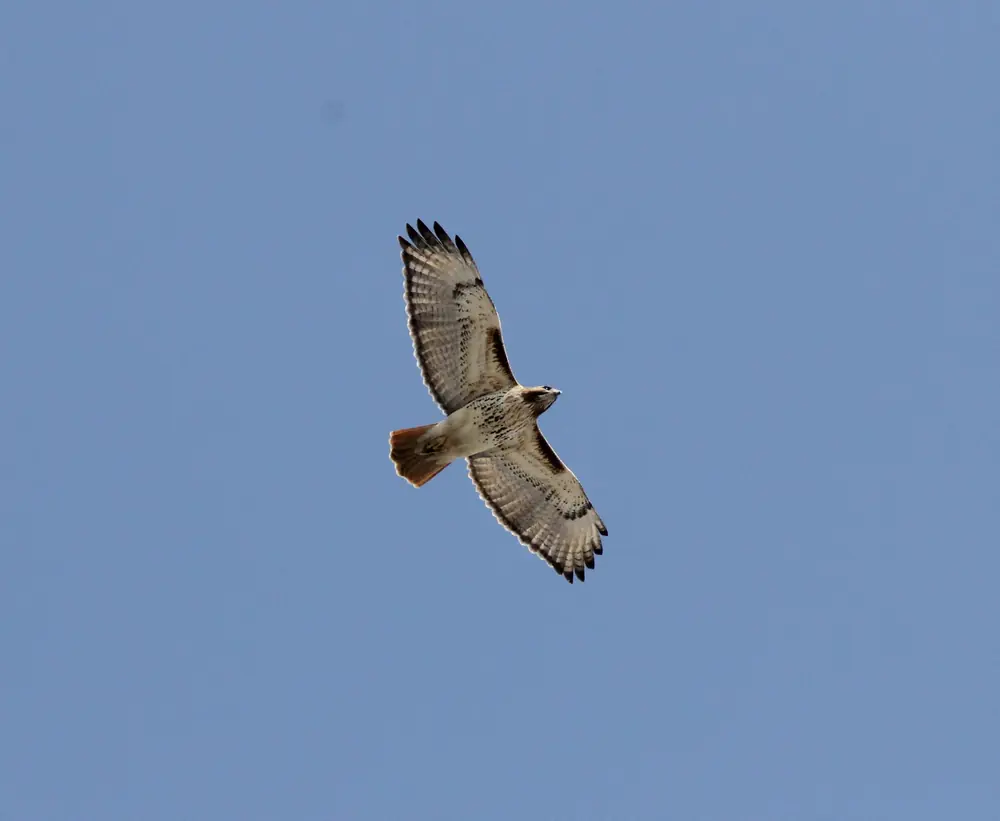
In 2026, the group's Red-tailed Hawk Weekend was April 11 and 12, which shows where the red-tail rush falls compared with the eagles. The group reports a nationwide record for a spring count of red-tailed hawks, 22,420 in 2019. Those are records; a March day brings far fewer birds.
You can follow along from home. The count is logged to the Hawk Migration Association of North America's hawkcount.org database, and the Raptor Watch runs a spring waterbird count from March 20 to May 15, alternating between McGulpin Point in Mackinaw City and Graham Point in St. Ignace.
When do the Soo Locks open for the shipping season, and how fast does the ice go?
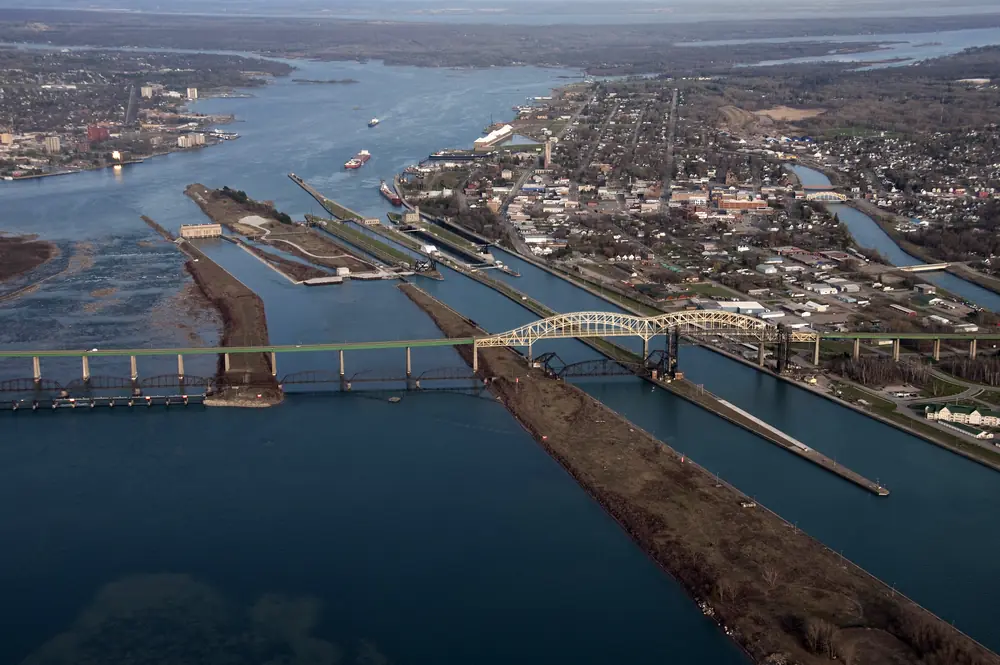
In the Upper Peninsula, a sure sign of spring is a ship. The Soo Locks at Sault Ste. Marie close for about ten weeks each winter for maintenance, and the Army Corps of Engineers reopens them on March 25. It describes the operating season as fixed by federal regulation and tied to what vessels can manage in typical Great Lakes ice.
-
Opening day at the Soo Locks
March 25, the date the Corps gives each year; the 2022 and 2026 announcements both used it · Soo Locks, Sault Ste. Marie
In 2026 the Poe Lock opened to all marine traffic at 12:01 a.m. on March 25. The park and viewing platform opened at 11:30 p.m. the night before so spectators could see the first ship, a visitor center open house that day ran 9 a.m. until 3 p.m., while the Corps streamed the event live. Those details belong to 2026, so check the Corps' Soo Locks page for 2027 hours. In 2022 the smaller MacArthur Lock stayed closed longer, reopening in late April.
-
Ice leaves the harbors
Mid to late March in the south; later in the north · Harbors, rivers and bays
The Michigan DNR's weekly fishing reports track the breakup. By March 18, 2026, the ice had gone from the harbors and the St. Clair River, and anglers were taking coho salmon and steelhead along the boardwalk near the Blue Water Bridge. The same report found the St. Joseph River very high and very dirty, a reminder that open water in March means fast, cold, rising water. NOAA's Great Lakes Environmental Research Laboratory tracks the ice and notes that the amount and duration differ greatly between one winter and the next.
-
Walleye begin their run up the Detroit River
Spawning starts near 40 °F and the run peaks at 44 to 48 °F, usually in April; a few early fish show up in late March · Lower Detroit River, from Lake Erie toward Lake St. Clair
Bridge Michigan reported on March 28, 2025 that about 14 million of the roughly 77 million walleye wintering in Lake Erie would run up the river after spawning, that the water was still in the 30s, and that only a few boats were out. The DNR estimated the peak that year near April 15.
Winter and spring overlap through March. Michigan's ice shanty deadline in the Upper Peninsula is March 31, and a warm day can be followed by a hard freeze. Treat remaining ice as unsafe, and see the safety notes below.
When do sandhill cranes and swans return to Michigan?
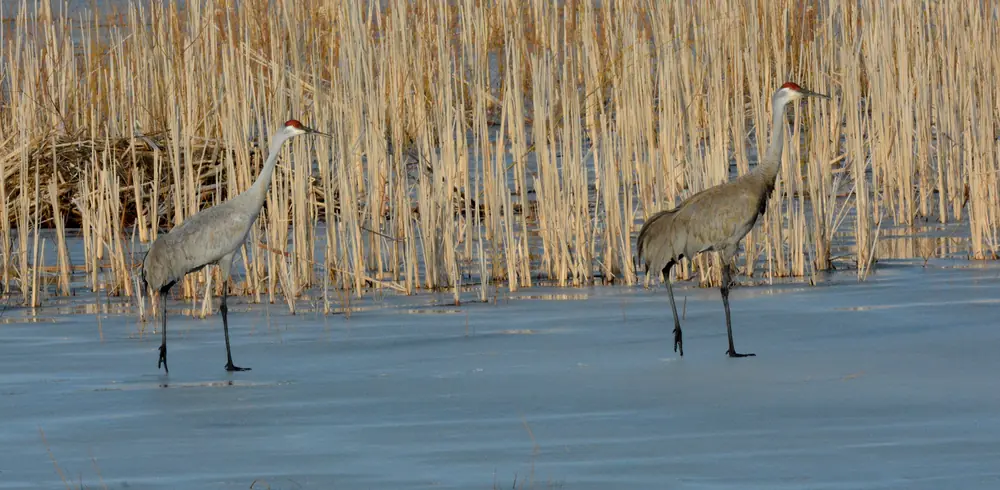
Some of the state's biggest birds are back before the snow is gone. Jackson Audubon, which runs Haehnle Sanctuary, describes the greater sandhill crane as the tallest bird in Michigan, standing roughly 4 feet with wings spanning 6 feet, a red forehead and a trumpeting call that can carry more than a mile. They winter far to the south and return in spring to wet fields and marsh edges to pair up and nest.
-
Sandhill cranes pair off
Late March to early April in the Upper Peninsula, according to a 2020 Marquette television report; Fish and Wildlife Service photographers have photographed cranes in southern Michigan on March 8 (2016) and March 11 (2024) · Wet fields and marsh edges. The DNR's crane page names Baker Sanctuary, Kensington Metropark, and the Waterloo and Haehnle area
A 2020 report from Upper Michigan's TV6, quoting the DNR, said cranes begin to appear in wetlands there around late March to early April, where they nest in water and feed along roadsides or in fields clear of snow. Jackson Audubon notes that cranes are considered the most accomplished dancers in the animal kingdom, bowing, leaping as high as 20 feet and tossing sticks to form and keep pair bonds. Citing the U.S. Fish and Wildlife Service, the group lists 107,140 cranes in the Eastern Population in 2023, including 17,047 in Michigan, up from roughly 4,000 statewide in a 1986 survey. The DNR's crane page frames its viewing places around the autumn gathering at dusk, so in March expect pairs and small groups in fields, not a thousand birds at a roost.
-
Tundra swans on the Saginaw Bay flats
A spring stopover each year; timing varies with the thaw · Fish Point State Wildlife Area near Unionville; fields around the Shiawassee Flats near Saginaw
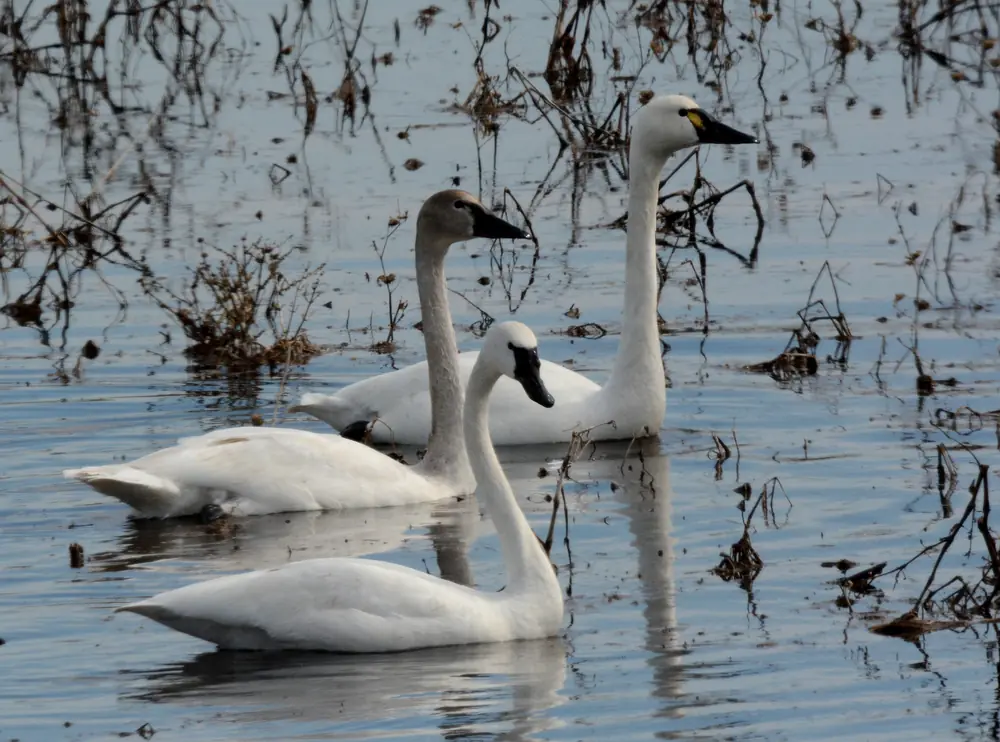
The Saginaw Basin Land Conservancy's birding trail calls Fish Point a popular place to watch thousands of tundra swans and Canada geese each spring, and advises driving the roads to find big feeding flocks in last year's corn stubble, because the food fields change from year to year. The DNR calls Fish Point the "Chesapeake of the Midwest" for its waterfowl numbers and adds that snowy owls winter there. The Fish and Wildlife Service describes the Shiawassee National Wildlife Refuge as a wintering ground for Canada geese and tundra swans, and one of its photographers recorded tundra swans there on March 23, 2017. Stay on the roads and use binoculars.
-
Trumpeter swans and the Seney marshes
Spring return; the refuge visitor center and Marshland Wildlife Drive normally open in mid-May · Seney National Wildlife Refuge, Schoolcraft County
The refuge's wildlife calendar says that in spring trumpeter swans, Canada geese and common loons return to raise their families, and that visitors may see the mating dance of sandhill cranes or sharp-tailed grouse. Its 2025 notice listed the visitor center and Marshland Wildlife Drive as open from May 15 to October 20, so in March you are limited to public roads. Confirm access with the refuge first.
In the southeast, the Detroit River International Wildlife Refuge notes that migrating canvasbacks rest and feed on wild celery beds in the lower river, on a route used by more than three million waterfowl a year. Its visitor center in Trenton lends binoculars; posted hours are Thursday to Sunday and can change.
What can you hear and see at dusk on a mild March night in Michigan?
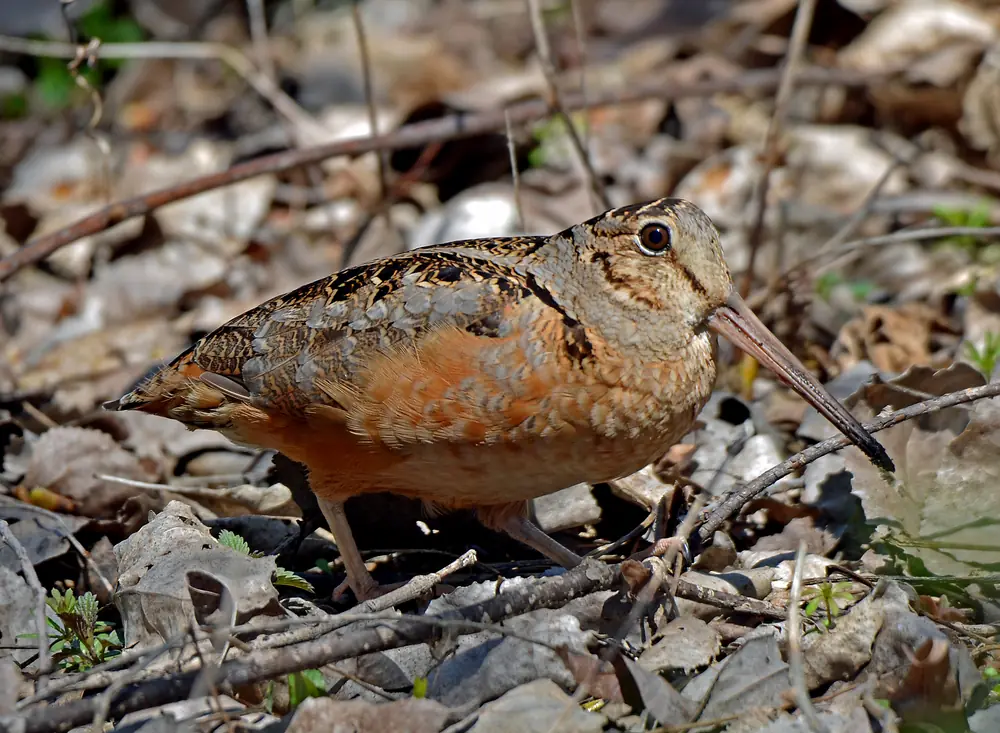
Three things: a woodcock, a chorus of tiny frogs, and, on the right wet night, a stream of salamanders on the move. Erin Parker, interpretive services supervisor at the Huron-Clinton Metroparks, calls March an in-between season, with weather that swings between spring-like and wintry, but she says there is still plenty to see before the big pulses of April and May.
-
American woodcock sky dances
Birds return in early to mid March; the evening display continues into spring · Brushy openings, old fields and young forest edges; Metropark nature centers have guided walks
Metroparks naturalists write that woodcock return in early to mid March from the Gulf and East Coasts. The male's show begins just after sunset, when he marches on the ground giving a loud "peent," then flies up 200 to 300 feet, the wind in his wings making a whistling sound, and spirals back down chirping to land near his takeoff point. In 2026 the Metroparks led woodcock walks at Stony Creek and Oakwoods on several March evenings; 2027 programs were not yet posted. The DNR adds that Michigan leads the nation in woodcock hunters and harvest, and that the continent's singing-ground survey method was developed here.
-
The first frogs
Chorus frogs often start calling in March; peepers and wood frogs follow; in the southern Upper Peninsula peepers usually start in early April · Vernal pools, flooded fields and wet ditches
Friends of the Rouge write that the midland chorus frog, a tiny striped frog whose trill sounds like a thumb run along a comb, is the earliest species to call in Michigan and is often heard in March. The Metroparks add that the first rainy night of the season, usually in March, starts the frog breeding season, and that there may still be ice on a vernal pool when spring peepers begin to sing. Retired MSU Extension forester Bill Cook wrote that in the southern Upper Peninsula the peepers begin with a few peeps in early April, rarely in late March, and that wood frogs, which sound like quacking ducks, follow soon after.
-
Salamander nights
The first rainy night in the mid-30s to 40s, from March into April · Woods near vernal pools and swamps; road crossings in the south
The Metroparks describe a first night of rain at 35 to 40 degrees as the trigger for a short, frantic breeding season in woods flooded by snowmelt. Spotted salamanders, blue-spotted salamanders and wood frogs leave the uplands where they spent winter and head for temporary pools. Spotted salamanders return to the same pond each year. Because the pools dry in summer, they hold no fish, so eggs and tadpoles survive. In a 2014 DNR feature, the state's herptile biologist said spring is when people run into salamanders most, because they are moving over land to breeding pools, and suggested a warm April evening, a flashlight and a curious child rather than collecting. Shiawassee refuge staff add that snakes leave their hibernation sites and cross roads toward wetlands in early spring.
Drive slowly near woods and wetlands on warm, rainy nights, and stay out of vernal pools. If you want to help scientists, the DNR runs a statewide Frog and Toad Survey that volunteers have carried out since the 1990s; see the families section.
What wakes up first: bears, skunk cabbage, butterflies and maple trees?
Michigan's winter sleepers do not all wake on the same day. A warm spell in March teases some of them out, and the next cold snap sends them back.
-
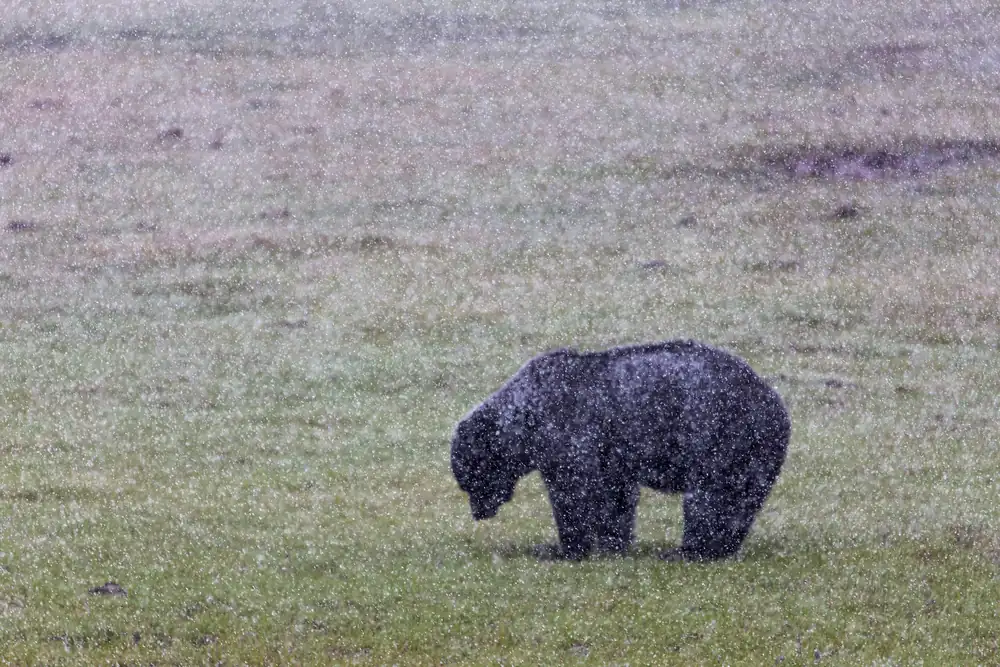
Black bears
Some bears leave their dens for good in March; others walk around and return · Upper Peninsula (about 10,350 bears) and northern Lower Peninsula (about 2,100)
The DNR's March 2026 release put Michigan at about 12,450 black bears in a 2024 survey, 10,350 in the Upper Peninsula and 2,100 in the Lower. It says some bears leave their dens in March to stretch their legs and go back to sleep, while others leave for good. Drowsy and slow, they eat lightly at first, mostly old berries, rose hips, acorns and winter-killed deer. Sows give birth to two or three cubs in January or February and many emerge with new cubs. The DNR's advice is direct: take bird feeders down for at least two weeks if a bear visits, clean grills, keep pet food inside and put trash out only on collection day. If you see a cub, do not approach it, since its mother is usually foraging nearby.
-
Skunk cabbage
Open in southern wetlands since February · Wooded swamps and seeps; Minnie Skwarek Nature Preserve in Spring Lake; Stony Creek Metropark
The Land Conservancy of West Michigan explains that skunk cabbage converts starch from its roots into heat, enough to melt frozen ground around its purple-flecked flower hood. Look for the purplish-red hoods in wet woods where the snow has gone.
-
Mourning cloaks and the maple run
Mourning cloaks fly on the first warm days; sap runs on days above freezing after freezing nights · Woodland edges; sugarbushes
The mourning cloak, a dark brown butterfly with yellow edges, is one of the few Michigan butterflies that spend winter as adults, tucked under bark; the Metroparks say it emerges early in spring. For maple, the Michigan Maple Syrup Association lists open-house weekends by region, and its site showed the southern Lower Peninsula, northern Lower Peninsula and Upper Michigan on three weekends from March 21 to April 12 in 2026. The 2027 weekends had not been posted, so check michiganmaple.org. Promote Michigan reported that Michigan ranked fifth in the nation in maple production, 200,000 gallons from 650,000 taps in 2024. Sap needs warm days and cold nights, and the season ends when nights stop freezing and buds swell, the Metroparks explain. Wear boots.
None of these keeps a calendar. Each follows the weather of the week.
How cold, snowy and stormy is March in Michigan?
Changeable. Average highs reach the mid-40s in the south and only the mid-30s in the Upper Peninsula, where Marquette still averages about 29 inches of snow in March. NOAA's 1991 to 2020 normals are in the table below. A single March can be very different, as the National Weather Service's own reports show. In March 2026 the NWS office at Gaylord reported surges of well-above-normal and even record warmth early in the month, including 69 °F at Alpena on March 9, then a high-end winter storm on the 15th and 16th. Traverse City recorded 33.5 inches of snow for the month, 21.2 inches above normal, with 13.3 inches on March 15, and Sault Ste. Marie recorded 32.2 inches.
| Station | Average high | Average low | Precipitation | Snowfall |
|---|---|---|---|---|
| Marquette (NWS office, Negaunee Township) | 34.9 °F | 15.1 °F | 2.67 in | 29.4 in |
| Sault Ste. Marie | 35.5 °F | 17.9 °F | 1.81 in | 13.0 in |
| Alpena | 39.4 °F | 19.1 °F | 1.81 in | 10.6 in |
| Traverse City | 41.2 °F | 23.2 °F | 1.55 in | not published |
| Grand Rapids | 44.5 °F | 26.9 °F | 2.39 in | 7.6 in |
| Saginaw (MBS Airport) | 42.3 °F | 25.7 °F | 2.02 in | 6.0 in |
| Flint | 43.3 °F | 25.1 °F | 1.97 in | 6.6 in |
| Lansing | 44.4 °F | 26.0 °F | 2.13 in | 5.9 in |
| Detroit (Metro Airport) | 45.9 °F | 28.6 °F | 2.43 in | 6.2 in |
Severe weather starts early. On March 6, 2026, one supercell crossed Cass, St. Joseph, Branch and Calhoun counties and produced four tornadoes, rated EF-0 to EF-3, which killed four people. The National Weather Service said the Union City EF-3 was the earliest EF-3 or stronger in any calendar year in Michigan, ahead of one north of Ann Arbor on March 15, 2012. Governor Whitmer declared March 15 to 21, 2026 as Severe Weather Awareness Week, with a voluntary statewide tornado drill at 1 p.m. on Wednesday, March 18. The 2027 dates are not announced; look for them in early March.
Thaw and mud. When frozen ground thaws from the top down, melted snow saturates the soil and the roadbed gets soft. The Michigan Department of Transportation and local road agencies impose seasonal weight restrictions each spring while the roadbed is soft, and the start date follows the thaw, so check with the road agency before hauling a heavy load.
NOAA's Climate Prediction Center issues a fresh 90-day outlook every month at cpc.ncep.noaa.gov; check there in March for the spring map. For forecasts and radar, see our weather page.
How much daylight does Michigan gain in March, and when do the clocks change?
Day length grows fastest around the March 20 equinox, which arrives at 4:25 p.m. EDT, or 3:25 p.m. in the four Central-time counties, when the Sun stands directly over the equator. From March 1 to March 31 Michigan's days lengthen by roughly 85 to 100 minutes, with the biggest gains in the north, as the table shows.
| City | Mar 1 | Mar 31 | Gained | Per day |
|---|---|---|---|---|
| Ironwood | 11 h 07 m | 12 h 46 m | 99 min | 3.3 min |
| Marquette | 11 h 06 m | 12 h 46 m | 100 min | 3.3 min |
| Sault Ste. Marie | 11 h 06 m | 12 h 46 m | 100 min | 3.3 min |
| Traverse City | 11 h 10 m | 12 h 44 m | 94 min | 3.1 min |
| Alpena | 11 h 09 m | 12 h 44 m | 95 min | 3.2 min |
| Grand Rapids | 11 h 13 m | 12 h 41 m | 88 min | 2.9 min |
| Lansing | 11 h 14 m | 12 h 41 m | 87 min | 2.9 min |
| Detroit | 11 h 14 m | 12 h 40 m | 86 min | 2.9 min |
Set clocks ahead before bed on Saturday, March 13. Under federal law the change comes on the second Sunday in March, which in 2027 is March 14, and the four Central-time counties of the western Upper Peninsula switch the same night. After that date the hawk watch, the woodcock hour and every sunset arrive an hour later by the clock. Our daylight calendar gives sunrise and sunset for your own town, and the February page covers the late-winter lead-up.
What can you see in Michigan's night sky in March 2027?
The headline is the full Worm Moon at 6:44 a.m. on March 22, a name the Sea and Sky almanac traces to early Native American tribes, who watched the ground soften and earthworms reappear. Mercury makes its best morning appearance of the season, and Jupiter rules the evening. All times are Eastern; for the four Central-time counties of the western Upper Peninsula (Gogebic, Iron, Dickinson and Menominee), subtract one hour. Times before March 14 are standard time; after it, daylight time.
-
The Worm Moon
Full at 6:44 a.m. EDT on Monday, March 22 · Rising in the east on the evenings of March 21 and 22
The Moon is exactly full in the early morning, so it sets in the west around sunrise on March 22. For the best views of a full-looking Moon, watch it rise in the east after sunset on March 21 or 22.
-
Mercury at its best before dawn
Greatest western elongation 12:20 a.m. EDT on March 17; best viewing roughly March 8 to 25 · Low in the east-southeast before sunrise
On March 17 Mercury lies 27.6 degrees from the Sun in the dawn sky, its widest gap in this morning apparition. A spring morning appearance is shallow for the Northern Hemisphere, so find a clear eastern horizon and bring binoculars; Venus, much brighter and higher, is your guide in the dawn sky.
-
Jupiter, the Moon and Mars
The Moon passes close to Jupiter on the evenings of March 18 and 19; Mars lies about four degrees from Jupiter on the evening of March 30 (our own calculation; no second source) · High in the evening sky
Jupiter was at opposition in February and stays in the evening sky all spring, near the Cancer-Leo border. A bright, waxing gibbous Moon sits close to it on March 18 and 19. These pairings come from our own calculation of positions rather than a published list, so treat the nights as approximate and use the moon calendar to see the Moon's phase on any evening.
| Phase | Date | Time |
|---|---|---|
| New moon | Monday, Mar 8 | 4:29 a.m. EST |
| First quarter | Monday, Mar 15 | 12:25 p.m. EDT |
| Full moon, the Worm Moon | Monday, Mar 22 | 6:44 a.m. EDT |
| Last quarter | Monday, Mar 29 | 8:54 p.m. EDT |
| New moon | Tuesday, Apr 6 | 7:51 p.m. EDT |
Northern lights are possible on any clear, dark night in the Upper Peninsula and northern Lower Peninsula, and geomagnetic storms cluster a little around the March and September equinoxes; check NOAA's aurora forecast on the night. Lake clouds hide many March skies, and our cloud cover forecast shows which nights will be clear before any long drive.
When is the last spring freeze in Michigan?
Later than most people hope. The median last freeze is in late April at Detroit, Lansing and Grand Rapids and in May across the north and the Upper Peninsula. A warm March is not a promise: even the earliest tenth of years finish only by the dates in the first column. Start seeds indoors in March and set out tender plants only after your own area's nine-in-ten date.
| Station | One year in ten | Median | Nine years in ten |
|---|---|---|---|
| Marquette | Apr 26 | May 8 | May 23 |
| Sault Ste. Marie | May 5 | May 22 | Jun 4 |
| Traverse City | Apr 26 | May 9 | May 23 |
| Alpena | Apr 21 | May 5 | May 21 |
| Grand Rapids | Apr 14 | Apr 29 | May 15 |
| Lansing (East Lansing) | Apr 13 | Apr 28 | May 16 |
| Flint | Apr 20 | May 3 | May 20 |
| Detroit (City Airport) | Apr 7 | Apr 21 | May 6 |
These are NOAA normals at the main station for each city; a frost pocket or a spot far from a lake can differ by several degrees. Find a town near you on the Michigan frost dates page.
What can Michigan families do outdoors in March?
Mud boots and a flashlight. Most of March's best nature is local and free.
-
Listen for frogs and join the survey
The DNR survey runs from spring into early summer · A wetland within a short drive
The DNR's Frog and Toad Survey is carried out by volunteers who drive a route of ten stops, listen for five minutes at each, and score each species' calling from zero to three. The department describes the survey as largely volunteer-run; look on its wildlife pages for how to sign up. Learn the voices first: the Metroparks list recordings of Michigan frog calls, and the free Merlin Bird ID app can identify birdsong from your phone's microphone.
-
Take a woodcock, vernal pool or sugarbush program
Weekends in March; 2027 dates not yet posted · Metroparks such as Stony Creek and Oakwoods; nature centers statewide; maple farms
In 2026 the Metroparks held woodcock walks, vernal pool programs and a salamanders-and-frogs evening in March; check each park's event calendar for 2027. Maple farms open for tours on weekends listed at michiganmaple.org.
-
Count birds and send in sightings
FeederWatch runs through April 30 · Your yard or a local park
The FeederWatch season ends April 30, which leaves March counts still useful. Journey North takes sighting reports from the public, and its maps show spring advancing northward week by week.
Record what you find in a Naturalist's Field Journal, browse other states on our nature pages, and see the February page for the Black Lake sturgeon season and shelf ice.
Safety notes for March in Michigan
- Seasons still open. Under the DNR's 2026 regulation summaries, cottontail rabbit, snowshoe hare, and fox and gray squirrel hunting are open until March 31, crow hunting runs February 1 to March 31, and raccoon hunting is open until March 31. Beaver trapping runs to April 23 in all three management units. Regular coyote and fox seasons close March 1, and bobcat hunting in Units A, B and C closes March 1. The 2026 furbearer rules also list management seasons for coyotes, raccoons and beavers that open after the regular seasons close; check Michigan.gov/DNRDigests to learn what applies in 2027.
- Hunter orange. From August 15 through April 30, small-game hunters (crow-only hunters are exempt) need an outer layer of hunter orange that shows from every side; hat, vest, jacket, cap or orange rain gear all count.
- Fishing changes mid-month. In the 2026 guide, which is in force through March 31, 2027, walleye and northern pike seasons on Lower Peninsula inland waters run from the last Saturday in April to March 15, and May 15 to March 15 in the Upper Peninsula, so they close after March 15. Lower Peninsula Great Lakes waters, Lake St. Clair and the St. Clair and Detroit rivers stay open for walleye all year. A new guide takes effect April 1.
- Turkey season. The 2026 spring turkey seasons began April 18. The 2027 dates and license quotas are not out; watch the DNR's spring turkey page.
- Ice. The DNR says there is no reliable inch-thickness for safe ice. Ice covered by snow is unsafe, slush ice is only half as strong as clear ice, and ice weakens with age. Be extra cautious where open water rims the shore, and stay off Great Lakes shelf ice entirely.
- Bears. Take down bird feeders when bears are out, and never get between a sow and her cubs.
- Ticks. Michigan's health department lists March through November as the season for blacklegged ticks and says the adults are out in spring. Wear light-colored clothing and check for ticks after walks through leaf litter and brush, even in March.
- Tornadoes and storms. Learn the terms: under a watch, storms could spawn tornadoes; under a warning, a tornado has been spotted or shown on radar, so take shelter at once. Pick a shelter spot ahead of time.
- Roads. Mud, frost heaves and sudden lake-effect snow combine in March. Never drive through water over a road.
Sources (56)
- Mackinac Straits Raptor Watch: home page
- Mackinac Straits Raptor Watch: what to expect (spring count hours, March 5 to June 5)
- Mackinac Straits Raptor Watch: count sites (spring raptor and waterbird counts)
- Mackinac Straits Raptor Watch: events (2026 specialty weekends, golden eagle and red-tailed hawk records)
- Mackinac Straits Raptor Watch: site count data (hawkcount.org links)
- Mackinac Island Tourism Bureau: migrating raptors on Mackinac Island in spring
- 9&10 News: Mackinac Straits Raptor Watch begins 2026 spring hawk count
- U.S. Army Corps of Engineers (Army.mil): Soo Locks to open March 25 for 2022 shipping season
- News report of the Corps announcement: Soo Locks set to re-open March 25 for 2026 shipping season
- Michigan DNR Weekly Fishing Report, March 18, 2026
- Bridge Michigan: millions of walleye will soon head up the Detroit River
- NOAA GLERL: Great Lakes ice cover
- Michigan DNR: sandhill crane migration
- Jackson Audubon Society: all about cranes
- Upper Michigan's Source (TV6): sandhill cranes return to Upper Michigan
- Michigan DNR: Fish Point State Wildlife Area
- Saginaw Basin Land Conservancy: Tuscola and Huron counties birding trail
- U.S. Fish and Wildlife Service: Shiawassee National Wildlife Refuge, seasons of wildlife
- U.S. Fish and Wildlife Service: Seney National Wildlife Refuge
- U.S. Fish and Wildlife Service: Seney National Wildlife Refuge, seasons of wildlife
- U.S. Fish and Wildlife Service: Detroit River International Wildlife Refuge
- BirdNote: Detroit River International Wildlife Refuge
- Huron-Clinton Metroparks: 12 months of the Metroparks, March (woodcock, vernal pools)
- Huron-Clinton Metroparks: 12 months of the Metroparks, April (mourning cloak, ephemerals)
- Huron-Clinton Metroparks: 12 months of the Metroparks, February (skunk cabbage, maple sap)
- Huron-Clinton Metroparks: sounds of spring in your Metroparks (frogs, killdeer, Merlin)
- Michigan DNR: American woodcock, Michigan's leading the nation (2017)
- Michigan DNR: a pair of spring wildlife surveys is under way (woodcock, 2018)
- Michigan DNR: spring is the time to spot salamanders
- Michigan DNR: volunteers set to begin annual frog and toad survey (2012)
- Friends of the Rouge: midland chorus frog
- Newberry News: the frogs in the forest (Bill Cook, retired MSU Extension)
- Michigan DNR: Michigan is bear country, and here they come (March 12, 2026)
- Land Conservancy of West Michigan: spring's earliest bloomer (skunk cabbage)
- Promote Michigan: Michigan maple syrup weekends and production figures
- Michigan Maple Syrup Association
- NOAA NCEI: 1991–2020 monthly normals for ten Michigan stations (data API)
- National Weather Service Gaylord: March 2026 climate summary (PDF)
- National Weather Service Northern Indiana: March 6, 2026 severe weather and tornadoes in southern Lower Michigan
- National Weather Service Detroit/Pontiac: Michigan Severe Weather Awareness Week
- Michigan State Police: statewide tornado drill scheduled for March 18 (2026)
- Climate Prediction Center: seasonal outlooks (updated monthly)
- Michigan DNR: 2026 small game hunting regulations summary (seasons and hunter orange)
- Michigan DNR: 2026 furbearer harvest regulations summary (seasons and management seasons)
- Michigan DNR: March hunting and trapping opportunities (March 1, 2026)
- Michigan DNR: spring turkey regulations summary
- Michigan DNR: 2026 Michigan Fishing Regulations, in force April 1, 2026 to March 31, 2027 (PDF)
- Michigan DNR: ice safety
- Michigan Department of Health and Human Services: ticks and your health (PDF)
- U.S. Naval Observatory: moon phases, 2027 (data API)
- U.S. Naval Observatory: Earth's seasons and apsides, 2027 (data API)
- Sea and Sky: astronomy calendar of celestial events, 2027
- Cornell Legal Information Institute: 15 U.S. Code 260a, daylight saving time
- Project FeederWatch: how to participate
- Journey North: tracking migrations and seasons
- Photos via Wikimedia Commons; licenses and photographers are credited under each picture