What to look for in nature in Michigan this October
October is Michigan’s fastest month. Color that peaks in the Porcupine Mountains as the month opens reaches Detroit by its last week; Chinook and coho salmon push up the rivers; thousands of sandhill cranes drop into the marshes at dusk; the Upper Peninsula usually sees its first snow; and before dawn on the 6th the Moon hides Jupiter. The dates below, region by region, tell you when and where to go.
Start here

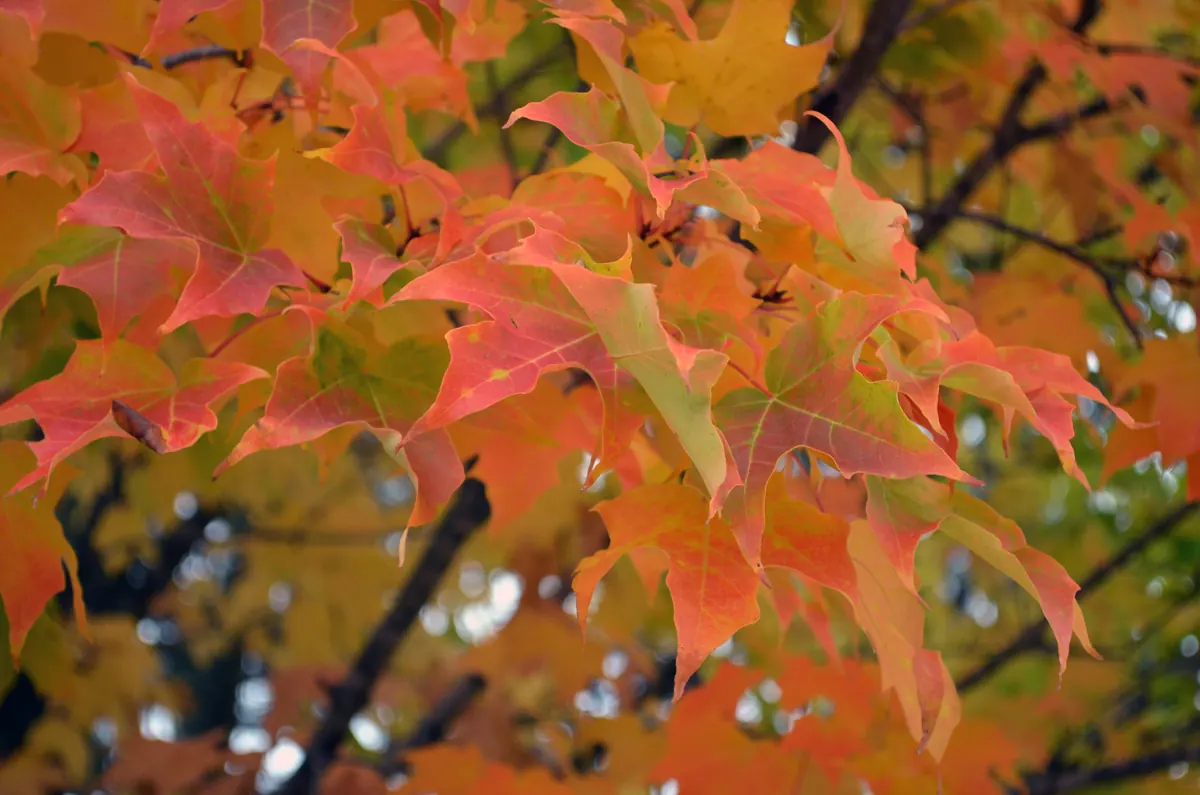
- Fall color, north to south. The western Upper Peninsula peaks from late September to about October 12, the eastern U.P. and the northern Lower Peninsula through the third week, West Michigan and the Thumb around the middle of the month, and Southeast and Southwest Michigan in the last two weeks. Trees on the Great Lakes shorelines run about a week behind the inland woods.
- Salmon in the rivers. Chinook spawn in the Pere Marquette, Manistee and Betsie systems into early October and coho follow in the second half of the month. The DNR usually takes Chinook eggs at the Little Manistee weir in the first days of October and coho eggs at the Platte River weir later; the fish ladders at Grand Rapids, Lansing and Berrien Springs let you watch from a sidewalk.
- Sandhill cranes at dusk. Thousands roost at the Haehnle Sanctuary near Jackson and at Big Marsh Lake near Bellevue, and the numbers build through October to a peak in late October and November. CraneFest is October 10 and 11. The best hour anywhere is the one before sunset.
Keep a record: the Naturalist’s Field Journal gives you a map-of-sounds plate for the cranes, the geese and the bugling elk, a dusk-and-dawn watch page for the fly-in at Haehnle or an elk meadow in the Pigeon River Country, and a seeds, pods and cones plate for tamarack cones, witch hazel pods and the acorn crop. One observation at a time.
Regions used below: Western Upper Peninsula; Eastern Upper Peninsula; Northern Lower Peninsula; West Michigan and the Lake Michigan shore; The Thumb and Saginaw Bay; Southeast Michigan and Metro Detroit; Southwest Michigan.
When does fall color peak in Michigan?
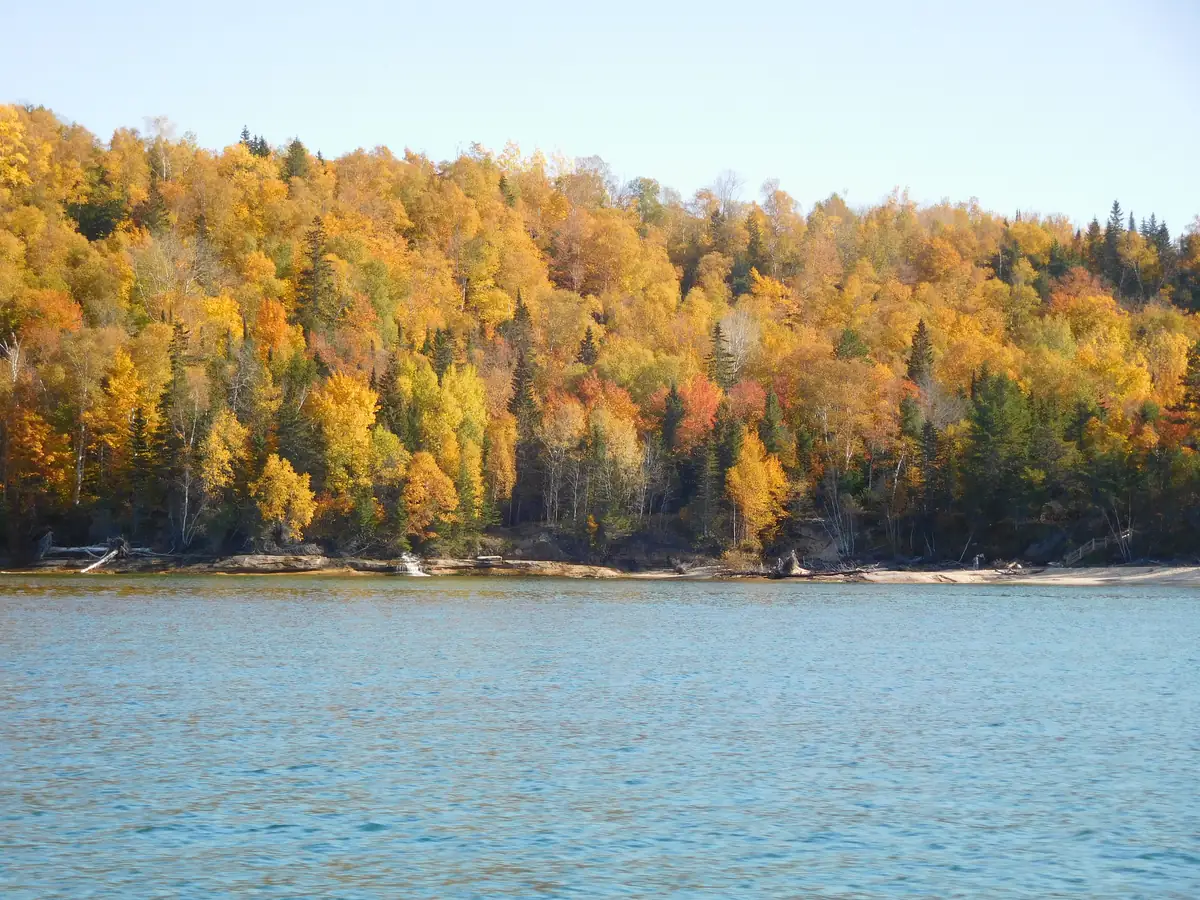
Color crosses Michigan from northwest to southeast over about five weeks, from the Porcupine Mountains and the Keweenaw around the turn of the month to the southern counties, Detroit included, at its end. Seney National Wildlife Refuge says the first two weeks of October are usually its best. Shoreline trees run about a week behind the inland woods of the same region, because the lakes are still warm. The windows below are typical, not promised: a warm, wet September holds color back, a dry one hurries it, and one hard wind can strip a ridge in a night. Pure Michigan updates its color map weekly; for the green-up and leaf-drop timing that satellites record at your own location, open the Field almanac.
| Region | Reference places | Typical peak |
|---|---|---|
| Western Upper Peninsula | Porcupine Mountains, Keweenaw, Ironwood, Iron Mountain | Sept 27 – Oct 12 |
| Eastern Upper Peninsula | Tahquamenon Falls, Seney, Pictured Rocks, Sault Ste. Marie | Oct 5 – 20 |
| Northern Lower Peninsula | Gaylord, Petoskey, Traverse City, Alpena | Oct 8 – 23 |
| West Michigan and the Lake Michigan shore | Grand Rapids, Muskegon, Ludington | Oct 10 – 25; the shoreline about a week later |
| The Thumb and Saginaw Bay | Saginaw, Bay City, Port Austin | Oct 10 – 25 |
| Southeast Michigan and Metro Detroit | Flint, Ann Arbor, Detroit | Oct 15 – 30 |
| Southwest Michigan | Kalamazoo, St. Joseph, Warren Dunes | Oct 15 – 30; the dunes into early November |
Two closings to plan around: Seney’s Marshland Wildlife Drive shuts for the year after October 20, and Isle Royale National Park closes on November 1. Sugar and red maples carry the reds and oranges, aspen and birch the yellows, and the bog tamaracks go gold last.
Where can I watch the salmon run in Michigan?
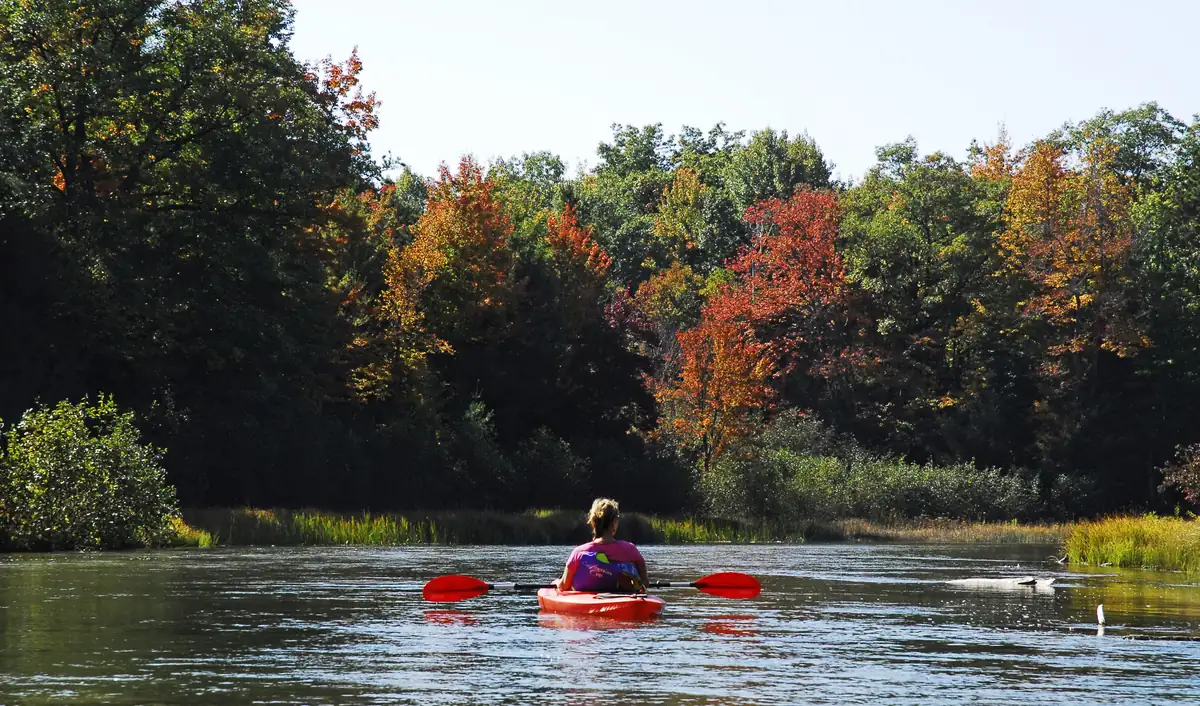
Coho and Chinook are Pacific salmon that Michigan planted in 1966 and 1967, and their fall runs are now one of the state’s great spectacles. Chinook start up the rivers in late summer and spawn from late September into October; coho follow, and the DNR says their spawning runs come “from early September to November” depending on the tributary. Both species die after spawning, so by mid-month the riffles hold dark, battered fish over pale gravel nests, and the carcasses feed eagles, gulls and the river itself. Michigan Sea Grant’s advice is to look for clear, shallow water below a barrier; more than 1,400 small Type 1 trout streams close to fishing after September 30, which makes them quiet places to stand on a bridge and watch.
| River or site | Species | Typical timing | Notes |
|---|---|---|---|
| Little Manistee River weir, near Stronach | Chinook | Egg take in the first half of October (Sept 29 – Oct 8 in 2025) | DNR egg-take facility; call the hotline, 231-775-9727, ext. 6072, before visiting |
| Platte River weir, near Honor | Coho | Mid to late October (Oct 16 – 28 in 2025) | The first Great Lakes coho stream; nearly 6 million eggs in 2025 |
| Boardman (Ottaway) River weir, Traverse City | Chinook, coho | September into October | A weir in the middle of town |
| Big Manistee River at Tippy Dam | Chinook, then coho | Chinook September to mid October; coho late October | Fish stack up below the dam; public access |
| Pere Marquette River | Chinook, then coho | Late August through October | Clear water and public forest trails |
| Betsie River at Homestead Dam, near Benzonia | Coho, Chinook | Coho peak mid October | Watchable from the bank |
| Grand River fish ladders, Grand Rapids and Lansing | Chinook, coho, then steelhead | September into October | Fish Ladder Park at the Sixth Street Dam; the Brenke ladder in Lansing |
| St. Joseph River at Berrien Springs | Coho, Chinook, steelhead | October into December | The DNR notes migrating coho caught as late as Christmas |
| Anna River, Munising | Coho | Fall | The Upper Peninsula’s coho river, into Lake Superior |
Stay on the bank and off the gravel, because every pale patch is a nest, and give anglers room. The weirs give the closest look; the DNR has opened the Little Manistee facility to visitors during the Chinook egg take in past years, but 2026 visiting days are not posted, so call first.
When do sandhill cranes gather in Michigan, and where can I see them?
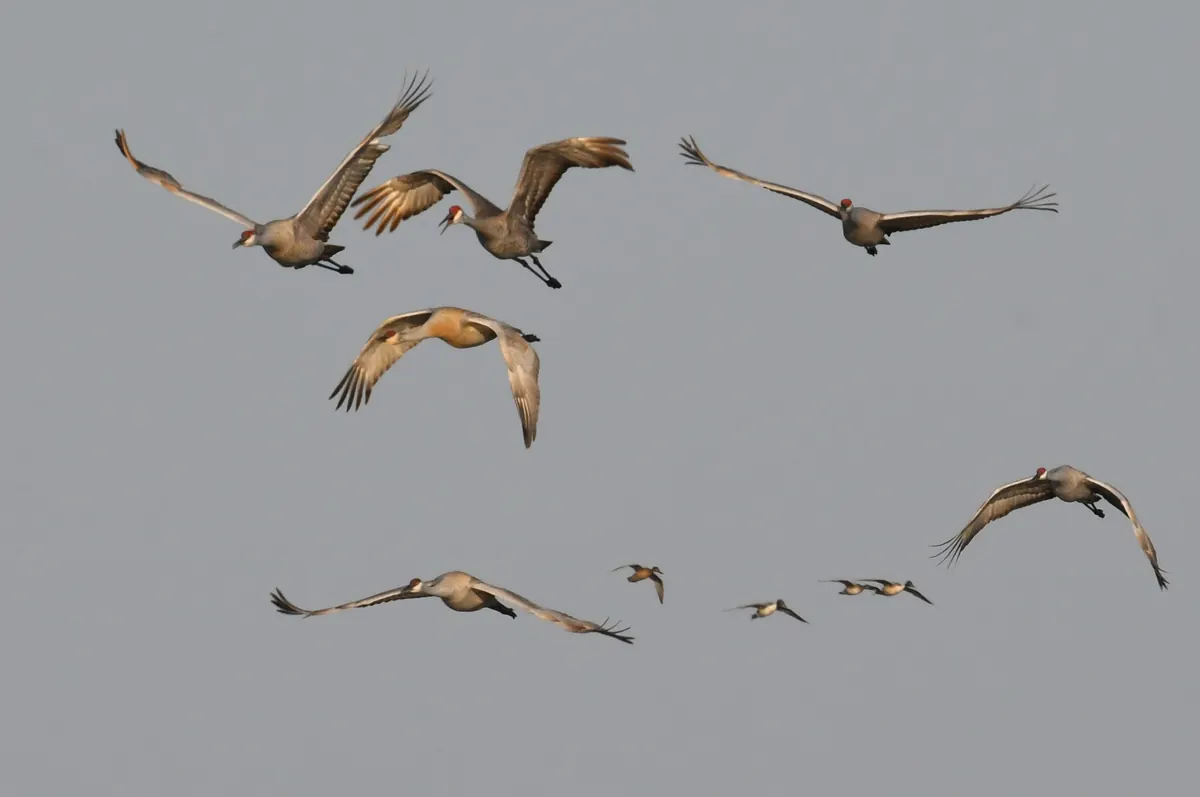
Every fall the sandhill cranes that nested across Michigan and Ontario gather in the marshes of the southern Lower Peninsula before they go south. The DNR points people to Jackson and Washtenaw counties, where the cranes “spend the months of October and early November.” They feed in harvested corn and soybean fields by day and fly into a shallow marsh to roost at dusk, calling the whole way, so the hour before sunset is the hour to be there.
-
Haehnle Sanctuary, Jackson County
Peak late October to mid-November; counts on Monday evenings · Seymour Road, six miles northeast of Jackson
Michigan Audubon’s sanctuary, where the Jackson Audubon Society has counted cranes every fall since 1969, peaks from late October to mid-November; the record is 8,177 on November 19, 2012. Volunteers count from the overlook above Mud Lake Marsh on Monday evenings and are on hand on weekend afternoons. The count records the birds that spend the night; many more pass over. Bring a scope and a warm coat.
-
CraneFest and Big Marsh Lake, Bellevue
Oct 10–11, noon to dusk; viewing weekends Oct 17–18, 24–25, 31–Nov 1 and Nov 7–8 · Kiwanis Youth Conservation Area, 22300 15 Mile Road, Bellevue
Michigan Audubon’s Bernard W. Baker Sanctuary holds the roost at Big Marsh Lake, and the Kiwanis Club of Battle Creek hosts CraneFest XXXI at the Kiwanis Youth Conservation Area on its shore on October 10 and 11: trails, art and exhibits by day and the fly-in at dusk. Parking is $10 a vehicle and covers admission for both days. The park then opens for crane viewing on the four following weekends, and Michigan Audubon’s annual Baker Sanctuary crane count is Saturday, October 24, from 4:30 p.m. to dusk; the 2025 count found 889 cranes on the roost.
-
Shiawassee National Wildlife Refuge, Saginaw
Peak in late October · Ferguson Bayou Trail, west end of Curtis Road
The Flats south of Saginaw are the state’s great waterfowl stage: the refuge brochure gives peak populations in late October of up to 25,000 Canada geese and 40,000 ducks, with tundra swans and cranes among them and bald eagles following. The Ferguson Bayou Trail runs along the dikes past three observation decks, two with spotting scopes.
In the Upper Peninsula, Seney National Wildlife Refuge calls September and October its best months for migrating birds. Michigan has no sandhill crane hunting season, so the only thing pointed at the birds is a lens. Note how many minutes after sunset the last flock lands; week after week, that is a migration chart of your own.
What else is migrating over Michigan in October?
Michigan sits between two funnels. Raptors leaving Ontario refuse to cross open Lake Erie, follow its north shore west and cross the Detroit River where it is narrowest; loons, grebes, ducks and geese leaving the boreal north cross the eastern end of Lake Superior and round Whitefish Point. October is the month of variety at both.
-
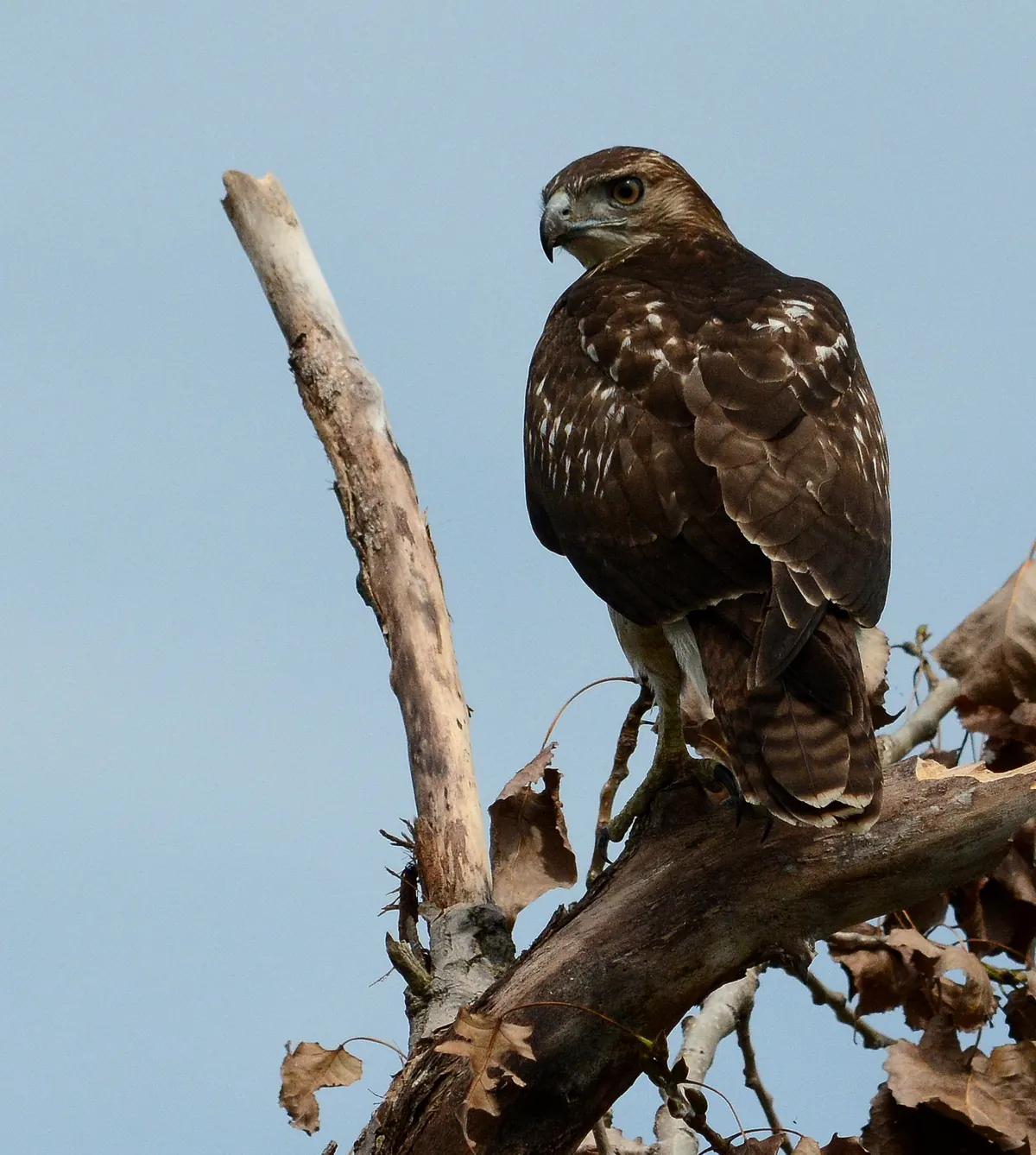
Detroit River Hawk Watch
Daily, Sept 1 – Nov 30; turkey vultures peak in the second week of October, red-tailed hawks at the end · Boat launch, Lake Erie Metropark, Brownstown Township
The count, a project of the Detroit River International Wildlife Refuge and its partners, averages about 120,000 raptors of 16 species a season, the largest total of any watch in eastern North America. September is the broad-winged flood; in October, in the counters’ words, “huge numbers are unlikely, but species variety increases.” Peregrines peak in the first week and turkey vultures in the second, when a single day can bring thousands; red-tailed hawks peak at the end of the month, and golden eagles, goshawks and rough-legged hawks follow into November. Go on the first clear day after a cold front, with light north winds and rising pressure.
-
Whitefish Point
Waterbird count into mid-November; owl banding into late October · Whitefish Point, Chippewa County
The observatory, founded in 1978, runs what it describes as one of only two full-time fall waterbird counts in eastern North America. Audubon has reported 18,000 to 21,000 red-necked grebes passing each fall, a quarter or more of the continent’s population, and October brings some of the year’s biggest flights of loons, geese and ducks. Saw-whet owl banding has run into late October in recent years, with evening public visits; check the schedule first.
-
Canvasbacks and black ducks on the Detroit River
Building from late October · Detroit River International Wildlife Refuge; Lake Erie Metropark; Pointe Mouillee
More than three million waterfowl cross the Great Lakes each year; migrating canvasbacks stop on the lower Detroit River to feed on wild celery beds, and American black ducks gather in the marshes of western Lake Erie before finishing the trip south. The Refuge Gateway in Trenton and Humbug Marsh are the refuge’s public windows.
After a front, spend the morning on the hawks and the lakeshore; ahead of one, warm south winds keep the birds where they are. Check the pressure trend for your town on the Weather now page.
Are there still monarchs in Michigan in October?
A few, and they are the tail of a migration that peaked in September. Monarch Watch’s peak windows by latitude run from August 24 to September 5 on the Keweenaw to about September 8 to 20 at the Ohio line, with Grand Rapids and Lansing at September 3 to 15. Journey North’s fall news had roost reports picking up across the Great Lakes on September 10 and the first roosts in Texas, Oklahoma and Colorado by September 24. The state’s famous staging ground, the cedars around the Peninsula Point lighthouse south of Escanaba, has been watched since the mid-1990s: monarchs pile up there until a north wind behind a cool front carries them across Green Bay, and in the best years more than 3,000 have been reported at once; at least 21 tagged there have been recovered in Mexico.
In the first half of October a warm, southerly afternoon can still send a few monarchs down the Lake Michigan dunes to the New England aster and the last goldenrod, fewer each week and almost none after the first hard freeze. Report every one to Journey North; late sightings are its thinnest data.
What are the elk, deer, bears and bugs doing?
-
Elk bugling in the Pigeon River Country
Rut peaks about Sept 20; bugling fades through October; dawn and dusk · Pigeon River Country State Forest, northeast of Gaylord
About a thousand elk live in the elk range of southern Cheboygan, Otsego and Montmorency counties, centered on the 109,000-acre Pigeon River Country State Forest. The DNR calls September and October the most popular viewing season, when bulls bugle and herds feed in open meadows at dawn and dusk; with the rut peaking around September 20, early October brings the last of the bugling. Use the DNR’s designated viewing areas, sit still and stay out of the fields.
-
Deer: the pre-rut
Rut peaks in the first two to three weeks of November · Statewide, and on every road
A DNR wildlife technician puts most white-tailed breeding in the first two or three weeks of November, which makes October the pre-rut: bucks rub the bark off saplings, paw scrapes under low branches and start moving by day, which is why October and November are the worst months for deer crashes. The archery season opens October 1.
-
Black bears fattening and denning
Hyperphagia now; dens from mid-October into December · Upper Peninsula and the northern Lower Peninsula
Bears are in the season biologists call hyperphagia, eating 15,000 to 20,000 calories a day of acorns, beechnuts, late berries and whatever a campsite offers. Michigan bears begin denning from mid-October, later in a good mast year, and are mostly in by December. Bear seasons run to October 21 or 26 in the U.P. units, and a second Lower Peninsula hunt runs October 2 to 8. Keep food in the car, not the tent.
-
Lady beetles on the south wall
The first warm days after the first cold snap · Houses statewide
Multicolored Asian lady beetles, stink bugs and boxelder bugs gather on sunlit south and west walls on the first warm days after the first cold snap, usually late September or early October, and squeeze into cracks to overwinter. MSU Extension says the beetles can pinch but do no harm; crush one and it stains. Carry them out.
When is the first freeze and the first snow in Michigan, and what will El Niño do to winter?
For most of Michigan, October is the month of the first freeze, and for the Upper Peninsula it is also the month of the first snow. Detroit, warmed by the city and Lake St. Clair, is the exception, with a median first freeze on Halloween. Sault Ste. Marie and Flint sit in cold hollows and freeze early; Traverse City and Grand Rapids, downwind of a warm Lake Michigan, freeze later than their latitude suggests. Bring in the tender plants in the first week of October in the north and by mid-month in the south.
| Station | One year in ten | Median | Nine years in ten |
|---|---|---|---|
| Marquette | Oct 6 | Oct 21 | Nov 5 |
| Sault Ste. Marie | Sep 22 | Oct 4 | Oct 18 |
| Traverse City | Oct 1 | Oct 15 | Nov 1 |
| Alpena | Sep 30 | Oct 17 | Nov 1 |
| Grand Rapids | Oct 4 | Oct 20 | Nov 2 |
| Lansing (East Lansing) | Oct 1 | Oct 17 | Nov 1 |
| Flint | Sep 30 | Oct 13 | Oct 27 |
| Detroit (City Airport) | Oct 17 | Oct 31 | Nov 11 |
For a town not listed, look it up on the Michigan frost dates page. Snow follows the freeze north to south. The National Weather Service office at Marquette, on the hills of Negaunee Township, sees its first measurable snow around the third week of October on average; its 1991–2020 normals are 5.3 inches of snow in October and 24.2 in November, against 1.7 and 16 at Sault Ste. Marie, 0.3 and 7.1 at Grand Rapids, and essentially none in October and 1.9 in November at Detroit Metro. Normal October highs run from the low 60s in the south to 52 °F on the Marquette hills.
The gales come with the snow. Late October and November are Lake Superior’s storm season, when cold air pours over lakes still holding summer heat; a University of Minnesota Duluth scientist puts the average date of the big fall storm near November 10, the day the Edmund Fitzgerald sank in 1975, and the strongest raise waves over 25 feet. Watch from the bluffs, not the breakwall.
The coming winter belongs to El Niño. The Climate Prediction Center’s September 10 update put the odds of a very strong event this fall and winter above 90 percent, with a 75 percent chance that it tops every El Niño on record since 1950. Michigan’s state climatologist, Jeff Andresen of Michigan State University, expects milder than normal weather for the rest of fall and the winter, says the warm, dry signal is strongest late in the winter, and notes that history points to lower snowfall than usual; “generally milder and drier is the theme.” Each El Niño plays out differently, and its grip on October weather is slight. CPC issues its winter outlook on October 15, and we will explain what it means for Michigan once it is out.
How much daylight will Michigan lose this October?
About an hour and a half, and more the farther north you are: the Upper Peninsula loses 95 minutes over the month, about three a day, and Detroit 81. Sunrise in Detroit slips from 7:29 to 8:04 a.m. and sunset from 7:13 to 6:27 p.m.; in Marquette the sun rises at 7:48 a.m. on October 1 and 8:30 by Halloween, when it sets at 6:36 p.m. The four western U.P. counties along the Wisconsin line, Gogebic, Iron, Dickinson and Menominee, keep Central time, so their clocks read an hour earlier for the same sky. Daylight saving time ends at 2:00 a.m. on Sunday, November 1, and the evenings get an hour darker at a stroke.
| City | Oct 1 | Oct 31 | Lost | Per day |
|---|---|---|---|---|
| Marquette | 11 h 41 m | 10 h 06 m | 95 min | 3.2 min |
| Sault Ste. Marie | 11 h 41 m | 10 h 06 m | 95 min | 3.2 min |
| Traverse City | 11 h 42 m | 10 h 13 m | 89 min | 3.0 min |
| Alpena | 11 h 42 m | 10 h 12 m | 90 min | 3.0 min |
| Grand Rapids | 11 h 44 m | 10 h 20 m | 84 min | 2.8 min |
| Lansing | 11 h 43 m | 10 h 21 m | 82 min | 2.7 min |
| Flint | 11 h 44 m | 10 h 20 m | 84 min | 2.8 min |
| Detroit | 11 h 44 m | 10 h 23 m | 81 min | 2.7 min |
For your own sunrise, sunset and twilight times, and how many minutes this week takes away, use the Field almanac.
What can you see in Michigan’s October sky?
-
The Moon hides Jupiter
Tuesday, October 6, about 4:23 to 5:20 a.m. EDT · Low in the east; any open horizon
Michigan sees both halves of this one in a dark sky. The waning crescent, about a fifth lit, rises around 3 a.m. with Jupiter beside it. Jupiter slides behind the Moon’s bright edge at 4:23 a.m. in Detroit, 4:24 in Lansing and Grand Rapids and 4:30 or 4:31 at Sault Ste. Marie and Marquette, with the Moon 12 to 14 degrees up, and reappears at the dark edge 45 to 57 minutes later: 5:16 a.m. at Marquette, 5:18 at Grand Rapids, 5:19 at Lansing and 5:20 at Detroit. In the Central-time counties, expect roughly 3:30 and 4:14 a.m.
-
The Hunter’s Moon
Sunday, October 25, rising before sunset · Everywhere; find a low eastern horizon
The full moon after the Harvest Moon rises at 6:00 p.m. in Detroit, 35 minutes before sunset, and at 6:08 in Marquette, then a little later on the 26th; the exact moment of full moon is 12:12 a.m. that morning. Some calendars call it a supermoon; it is not close enough to perigee to qualify. Headlands International Dark Sky Park at Mackinaw City lists a guided full-moon hike at 8 p.m. on October 26.
-
Orionid meteors
Pre-dawn, October 21 and 22 · Anywhere dark; face south
The shower runs from early October into early November and peaks broadly on October 21–22, with 10 to 20 meteors an hour under a dark sky. On the 21st the waxing gibbous Moon is down by 2:42 a.m. in Detroit, and on the 22nd by 3:49 a.m. (3:59 in Grand Rapids, 4:03 in Marquette), which leaves a dark window until twilight around 7:25 (7:46 in Marquette). On the 23rd it hangs on until nearly 5 a.m.
-
Draconid meteors
Evening of Thursday, October 8 · Look north after dark
Expect only a trickle, five to ten slow meteors an hour, but this is an evening shower: its radiant is highest at nightfall, and the predicted peak, 1:00 UTC on the 9th, is 9 p.m. Eastern on the 8th. Two days before new moon, the sky is dark; good for children.
-
Saturn all night
At opposition October 4; the Moon passes it Oct 23–24 · Rising in the east at sunset
On October 4 Saturn reaches opposition, as near and as bright as it gets this year. It comes up in the east around sunset, stands due south in the small hours, and outshines everything in the faint star fields of Pisces and Cetus. The gibbous Moon keeps it company on the 23rd and 24th.
-
Venus bows out; Jupiter and Mars rule the dawn
Venus only in the first few evenings; Jupiter and Mars before sunrise · West at dusk; east at dawn
Catch Venus in the first few evenings of October, if at all, very low in the western twilight; it reaches inferior conjunction, between us and the Sun, on October 23–24. The morning sky belongs to Jupiter, bright in the east above Regulus, with Mars nearby; on the morning of the 11th, binoculars show Mars crossing in front of the Beehive cluster in Cancer.
-
Northern lights
Any dark night; best Oct 3–17, when the Moon is out of the way · The Lake Superior shore, the Keweenaw, the Headlands
Solar Cycle 25 is just past the maximum NOAA predicted for mid-2025, and the Space Weather Prediction Center notes that big geomagnetic storms tend to cluster near the equinoxes. At Kp 6 or 7 the aurora can show along Michigan’s northern edge; at 8 or 9 it can stand overhead. Get away from town lights and face north over open water during the moonless stretch around the October 10 new moon.
| Phase | Date | Time |
|---|---|---|
| Last quarter | Saturday, Oct 3 | 9:25 a.m. |
| New moon | Saturday, Oct 10 | 11:50 a.m. |
| First quarter | Sunday, Oct 18 | 12:12 p.m. |
| Full moon, the Hunter’s Moon | Monday, Oct 26 | 12:12 a.m. (looks full the evenings of Oct 25 and 26) |
| Last quarter | Sunday, Nov 1 | 3:28 p.m. EST |
Check tonight’s cloud forecast on the Today’s sky page before you set an alarm, and find moonrise and moonset for your town on the moon page.
What is blooming, turning and dropping?
-
Witch hazel, the last flower
October and November · Oak-hickory woods of the Lower Peninsula and the western U.P.
Common witch hazel is the last native woody plant in Michigan to bloom, opening four strappy yellow petals in October and November as its leaves turn lemon-yellow and fall. Last year’s seed capsules ripen at the same time and fire their seeds several feet with a snap. Look for it in dry, open oak woods; MSU Extension recommends it as a native yard shrub.
-
Asters, goldenrods and the fringed gentian
Into mid-October, then frost · Roadsides, prairies, fens
New England aster, purple with a gold eye, and the goldenrods carry the pollinators through the first half of the month; the fringed gentian, four-petaled and impossibly blue, blooms in September and October in wet, limey meadows and fens. After the first hard freeze the show is over, and the seed heads become bird food.
-
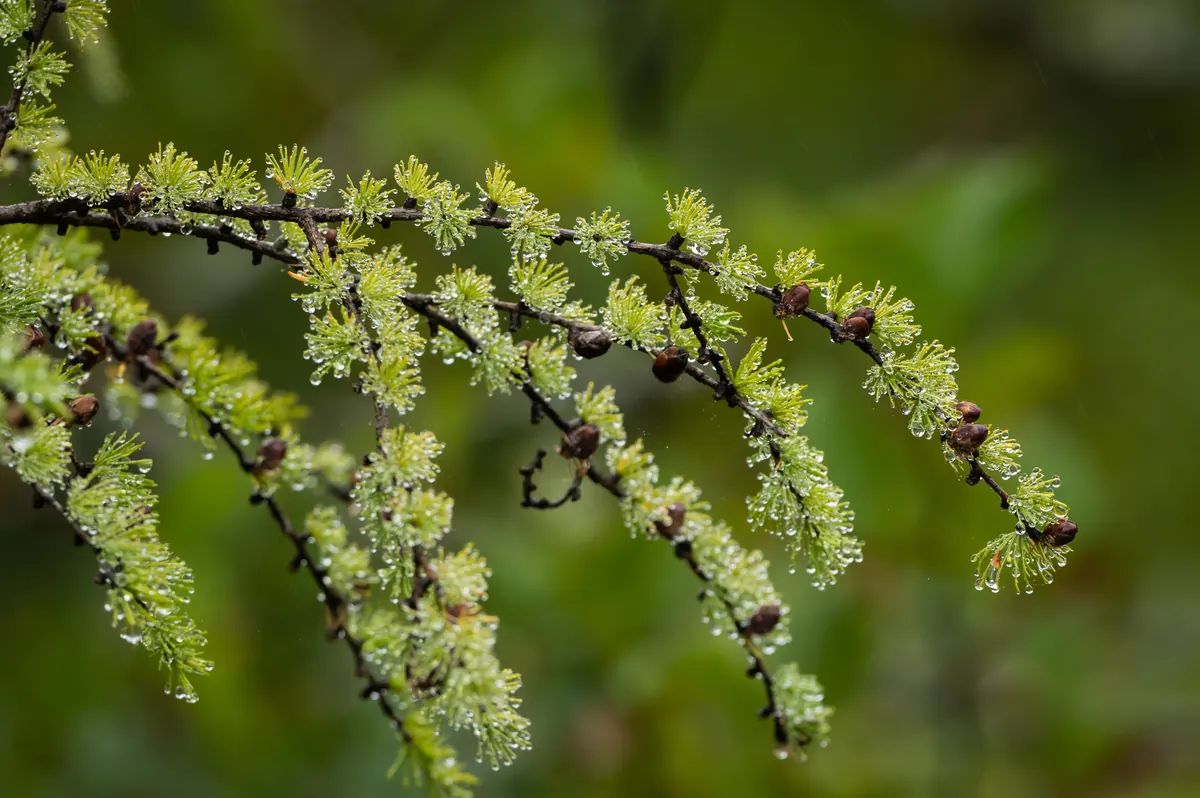
Tamarack, the gold conifer
Mid to late October · Bogs and swamp edges statewide, most in the north
Tamarack is Michigan’s only native conifer that drops all its needles. It turns a smoky gold after the maples are done and sheds in the second half of the month; Minnesota records put full color near October 10 and first needle-fall near October 18 on average, and Michigan’s northern bogs likely run on a similar schedule. At dawn it looks lit from inside.
-
Acorns, beechnuts and the oaks
Dropping now; oaks color last · Woodlots and yards
This is mast season: acorns and beechnuts feed bears, deer, turkeys, jays and squirrels, and a heavy crop keeps bears out of their dens longer. The oaks turn last, bronze and russet in the final week of October in the south, and hold their leaves into winter. Count the acorns under one tree; mast years are worth knowing.
-
Apples and cider
Through October · Orchards from Southwest Michigan up the Lake Michigan shore
Michigan grows more than a billion pounds of apples a year, and October is the middle of harvest. The Michigan Apple Committee’s 2026 schedule has Ambrosia from October 5, EverCrisp from October 26 and Cripps Pink from November 2. A windfall under a tree draws yellowjackets by day and deer after dark.
What can Michigan families do outdoors in October?
- Go to CraneFest, October 10 and 11, near Bellevue, and stay for the dusk fly-in; or come on one of the viewing weekends that follow, or visit the Haehnle overlook on a weekend afternoon, when volunteers are there.
- Visit a weir or a fish ladder. Call the Little Manistee hotline before driving up for the egg take; Fish Ladder Park in Grand Rapids and the Brenke ladder in Lansing are right in town.
- Count for science. eBird’s October Big Day is Saturday, October 10; report any late monarch to Journey North; Project FeederWatch’s new season opens November 1, so sign up now; and if you find a tick, Michigan will identify it from a photo.
- Set the alarm for October 6 to watch the Moon swallow Jupiter, or for the Orionids on the 21st or 22nd; the Headlands full-moon hike is the 26th at 8 p.m.
- Camp for a harvest festival. Most state-park Halloween weekends for campers fall on October 2–4, including Proud Lake, Seven Lakes, South Higgins Lake, Port Crescent, Mitchell, Sleepy Hollow, Sleeper, Lakeport and Algonac; W.J. Hayes follows October 9–11. Check each park’s DNR calendar listing and book the site first.
- Listen for elk at dawn in the Pigeon River Country in the first week or two.
Safety notes for October in Michigan
- Deer on the roads. In 2024 October and November accounted for a third of Michigan’s 58,324 deer crashes; about a quarter came between 6 and 9 a.m. and another quarter between 6 and 9 p.m., and more than half happened on unlit roads. Slow down at dawn and dusk, scan the shoulders, and if a deer steps out, brake in a straight line rather than swerve.
- Cold water and the gales. Lake Superior’s surface averages roughly 54 °F at the start of October and the mid-40s by the end; Lake Michigan drops from about 61 to 52 °F. The National Weather Service warns that cold shock in 50-to-60-degree water is as dangerous as in near-freezing water, and that a life jacket is the difference. Stay off piers and breakwalls when a gale warning is up.
- Hunting seasons and hunter orange. Archery deer runs October 1 to November 14; the Independence Hunt for hunters with disabilities is a firearm season on private and some public land October 15–18; regular firearm deer season opens November 15. Ruffed grouse, squirrel, rabbit and fall turkey are open, woodcock runs to October 29, pheasant opens October 10 in Zone 1 (the U.P.) and October 20 in the Lower Peninsula, coyote opens October 15, and ducks open September 26 in the North Zone, October 3 in the Middle Zone and October 17 in the South Zone. Michigan requires hunter orange (a cap, hat, vest, jacket or rain gear worn as the outermost layer and visible from all sides; orange camouflage counts only if it is at least half orange) of small-game hunters other than crow hunters from August 15 to April 30, of firearm deer hunters, and of everyone in the Independence Hunt; archery deer hunters are exempt during the archery seasons. The DNR’s advice to everyone else near hunting land, hikers and dog-walkers included: wear it.
- Early snow. Carry a scraper, a blanket and boots by mid-month in the north; the first slick roads come on the same dark mornings as the deer.
- Ticks. Adult blacklegged ticks hunt for hosts from fall through spring on any day above about 40 °F; treat clothing, stay on trails and check after every walk. At northern campgrounds, keep food and trash locked in the vehicle while the bears are feeding hard.
Sources
- Michigan DNR: wildlife viewing (sandhill cranes, elk)
- Michigan DNR: elk viewing in the Pigeon River Country
- Michigan DNR: Pigeon River Country State Forest
- Pigeon River Discovery Center: elk viewing and the rut
- Michigan DNR: 2026–27 hunting season calendar
- Michigan DNR: 2026 deer hunting regulations summary (hunter orange, Independence Hunt)
- Michigan DNR: 2026 small game regulations summary (hunter orange, woodcock)
- Michigan DNR: 2026 waterfowl regulations summary (zone dates)
- Michigan DNR: hunting safety and hunter orange
- Michigan DNR: Little Manistee River weir
- Michigan DNR: coho salmon and Chinook salmon species pages
- Michigan DNR: fall 2025 trout and salmon egg collections
- Michigan Sea Grant / MSU Extension: where to watch the salmon run
- Michigan DNR: state park events calendar (harvest festivals)
- Michigan Audubon: fall migration, viewing sandhill cranes in Michigan 2026 (CraneFest)
- Jackson Audubon Society: Haehnle Sanctuary and its crane counts
- Detroit River Hawk Watch: migration brief
- Huron-Clinton Metroparks: fall migration, raptors on the move
- U.S. Fish and Wildlife Service: Detroit River International Wildlife Refuge
- U.S. Fish and Wildlife Service: Seney National Wildlife Refuge, visit us
- U.S. Fish and Wildlife Service: Shiawassee National Wildlife Refuge brochure (PDF)
- Whitefish Point Bird Observatory: visit (fall counts and owl banding)
- Wikipedia: Whitefish Point Bird Observatory (red-necked grebe counts)
- Monarch Watch: peak migration dates by latitude
- Journey North: monarch migration news, fall 2026
- Visit Escanaba: the monarch migration at Peninsula Point
- NOAA NCEI: U.S. climate normals 1991–2020 (first-freeze probabilities)
- NOAA NCEI: 1991–2020 monthly temperature, precipitation and snowfall normals (data API)
- NWS Marquette, via Radio Results Network: average first measurable snow at the Marquette office
- MPR News: why Lake Superior’s gales blow hardest in November (NWS Duluth, UMD)
- Barbara Boustead, Wilder Weather: the Gales of November
- NOAA GLERL CoastWatch: Lake Superior and Lake Michigan average surface water temperature, 1995–2023 (PDF charts)
- National Weather Service: cold water safety
- Climate Prediction Center: ENSO diagnostic discussion, September 10, 2026
- WKAR: El Niño could bring a milder, less snowy winter to Michigan (state climatologist Jeff Andresen)
- U.S. Naval Observatory: moon phases 2026 and sunrise, sunset, moonrise and moonset (data API)
- International Occultation Timing Association: lunar occultation of Jupiter, October 6, 2026
- EarthSky: meteor shower guide; visible planets (Saturn at opposition, Venus, Jupiter and Mars)
- Fred Espenak: full moons at perigee, 2001–2100
- NOAA Space Weather Prediction Center: tips on viewing the aurora
- NOAA Space Weather Prediction Center: solar cycle progression
- Emmet County: Headlands International Dark Sky Park programs and events
- National Park Service: Isle Royale operating hours and seasons
- Wikipedia: time in Michigan (the four Central-time counties)
- Michigan Traffic Crash Facts 2024: motor vehicle-deer crashes (PDF)
- TV6 (Upper Michigan’s Source): AAA and the DNR on fall deer activity and the November rut
- North American Bear Center: the five stages of activity and hibernation
- MSU Extension: what you need to know about Michigan’s ticks
- District Health Department No. 4: Michigan’s tick season (PDF)
- MSU Extension: multicolored Asian lady beetles out and about
- MSU Extension: native shrubs for Michigan landscapes (witch hazel)
- AnnArbor.com: witch hazel, Michigan’s late bloomer
- Lady Bird Johnson Wildflower Center: native plant database (New England aster and fringed gentian bloom times)
- University of Minnesota Season Watch: American tamarack phenology
- Michigan Apple Committee: 2026 harvest schedule (PDF)
- Awesome Mitten / ExploreFall: 2026 Michigan fall color peak predictions by region
- Pure Michigan: fall and the weekly fall color report
- Project FeederWatch: how to participate
- eBird: October Big Day, 10 October 2026
- Photos via Wikimedia Commons; licenses and photographers are credited under each picture
