What to look for in nature in Michigan this February
February is the month Michigan winter starts to crack. The Upper Peninsula is still deep in snow and the Great Lakes ice nears its yearly peak, yet great horned owls sit on eggs, coyotes and wolves pair off, and black bear cubs only weeks old nurse in their dens. On Black Lake, anglers wait over the ice for a lake sturgeon that may be a century old. By the last week, male red-wings are back shouting over southern marshes, skunk cabbage warms a hole for itself in the snow, and maple sap begins to drip. After dark, Jupiter and Mars take turns at opposition nine days apart, and the full Snow Moon of February 20 lifts over the horizon already brushed by Earth’s outer shadow.
Other months in Michigan: October, November, December, January.
Start here

- Find skunk cabbage in the snow. On a mild afternoon late in the month, walk a wooded swamp or seep in southern Michigan and look for purple-brown hoods poking up through the snow, each in its own little melted bowl. Stony Creek Metropark and Minnie Skwarek Nature Preserve in Spring Lake are two places naturalists suggest.
- Listen for owls and coyotes at dusk. Stand at the edge of a woodlot as the light fades. Great horned owls are incubating now and still call, screech owls are calling too, and coyotes are in their breeding season, when they are heard and seen most.
- See Jupiter at its best on February 10. Jupiter rises at sunset and stays up all night at opposition. Brace binoculars and look for its moons; nine days later, Mars reaches opposition nearby in the same constellation, Leo.
Keep a record: start a dated list of the season’s first arrivals, red-winged blackbird, sandhill crane and skunk cabbage among them, under birds I have seen and the daily field log. Draw a mantis egg case or cecropia cocoon for the same place twice, then go back in spring to see whether it has hatched. Log the Snow Moon rising on February 20 in the dusk and dawn watch, and draw a pair of coyote or fox trails on tracks to know.
Regions used below: Western Upper Peninsula; Eastern Upper Peninsula; Northern Lower Peninsula; West Michigan and the Lake Michigan shore; The Thumb and Saginaw Bay; Southeast Michigan and Metro Detroit; Southwest Michigan.
When is the Black Lake sturgeon season in 2027, and why does it end so fast?
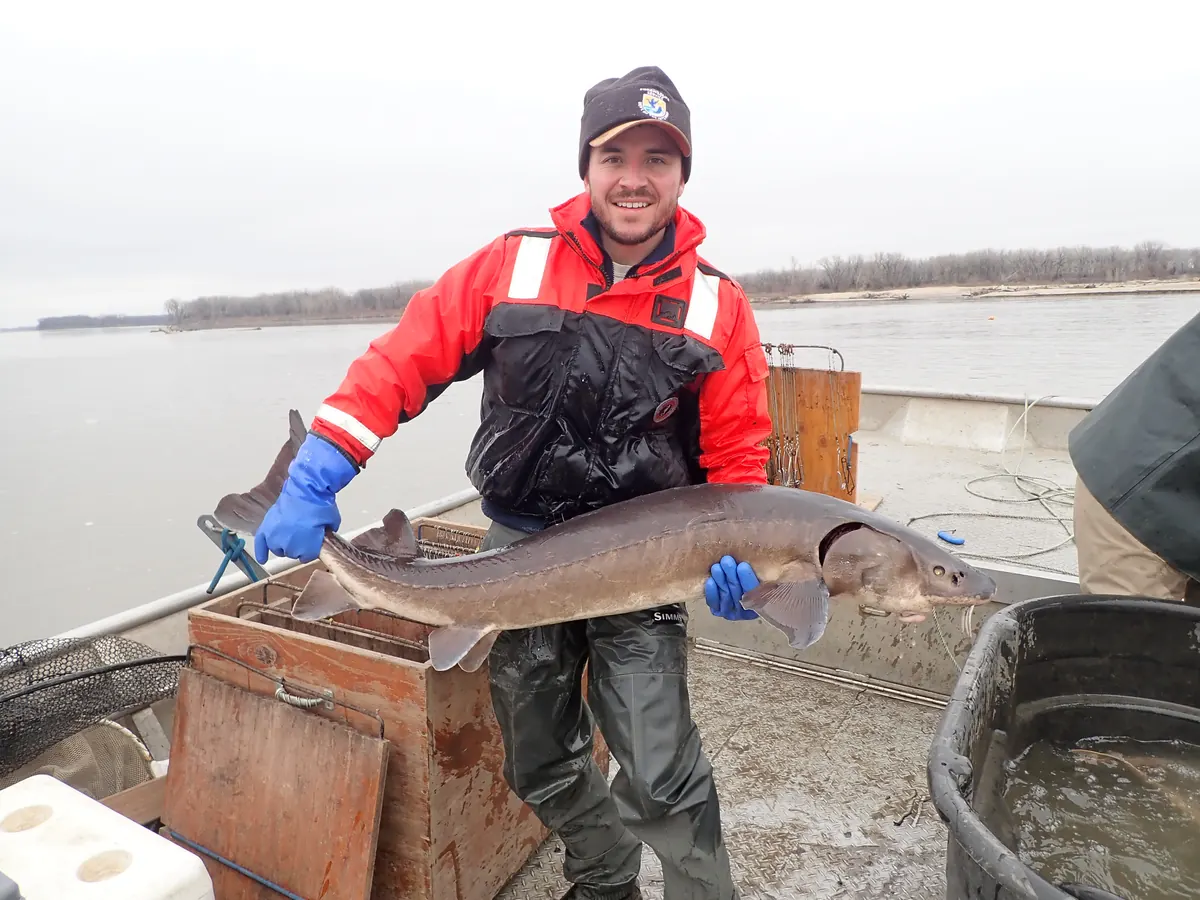
Early each February, hundreds of anglers sit over holes in the ice of Black Lake, in Cheboygan and Presque Isle counties, waiting for a fish that may be older than their grandparents. Lake sturgeon are a threatened species in Michigan, and Black Lake is the only place in the state where they may be speared, during one short winter season that in each of the last two years ended in less than an hour.
-
The 2027 season
Dates and quota set by the DNR each winter; the 2026 season was scheduled for February 7 to 11, or until the quota was filled · Black Lake, Cheboygan and Presque Isle counties
The fishing guide in force until March 31, 2027, allows spearing for lake sturgeon only at Black Lake, during a special winter season with pre-registration required; the DNR sets each year’s dates and quota and posts them on its Black Lake sturgeon page. In 2026 the season was scheduled for February 7 to 11, or until the quota of six fish was reached, with no size limit. Anglers must register online in advance, fly a red flag at least a foot across from their shanty, and bring any fish straight to DNR staff on the ice. The 2027 dates and quota had not been posted by October 3, 2026; check in January.
-
Six fish in 48 minutes
Saturday, February 7, 2026 · Black Lake
In 2026, 679 people registered, and the six-fish limit was reached at 8:48 a.m., 48 minutes after the 8 a.m. start. The fish ran from 52.9 to 67.2 inches long and 40.4 to 79.4 pounds. In 2025 it took just 17 minutes, ending at 8:17 a.m. on February 1 with seven fish taken. Five of the six 2026 fish already carried tags, which biologists read as a sign that their population estimate is close to the truth.
-
A fish that lives a century
Year-round; spawning runs from mid-April to late May · Black Lake and the upper Black River
The DNR says a lake sturgeon typically lives 55 years and some pass 100. Females usually mature between 24 and 26 years old and spawn only once every three to seven years, on gravel and stream rapids in spring. That is why the yearly harvest is held to about 1.2 percent of the estimated adult population, a figure the DNR’s fisheries biologist explained to Michigan State University student reporters. The count comes from tagged and untagged adults moving up the Black River to spawn each spring.
You do not need a spear to share the day. Onlookers gather at the sturgeon pole, where harvested fish are displayed, and the rehabilitation work behind them is shared by the DNR, Michigan State University, the volunteer group Sturgeon for Tomorrow and five tribal governments. Keep off any ice you have not checked yourself.
Which Michigan birds are already sitting on eggs in February?
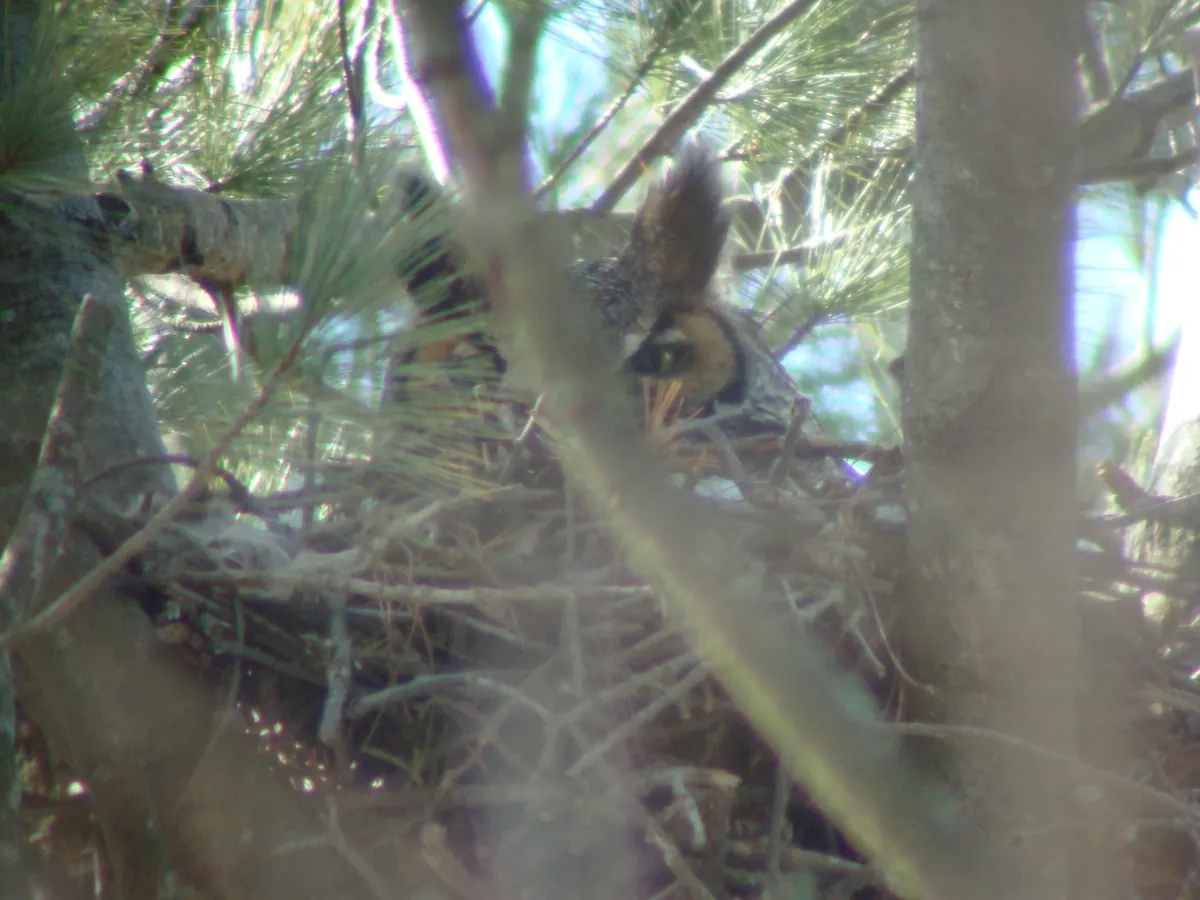
The owls. Great horned owls hatch their young earlier than almost any bird in the state, so the pairs that duetted in December and January are now incubating, often with snow on their backs. Huron-Clinton Metroparks naturalists write that this species starts nesting as early as late January in Michigan, and that smaller owls follow over the next few weeks.
-
Great horned owls on the nest
Incubating through February and into March · Old hawk and crow nests, broken snags, baskets and buckets put up for them, statewide
Scan bare treetops for a big stick nest with two feathered tufts showing above its edge; the female does the sitting while the male hunts. At up to 25 inches tall, this is southeast Michigan’s largest resident owl, and one of the few predators that regularly eats skunks, since it has a poor sense of smell. Crows mobbing a tree in daylight often give a roosting owl away.
-
Eastern screech owls begin
Calling now; nesting follows in spring · Tree cavities and nest boxes, including in towns and backyards
Only 6 to 10 inches tall, screech owls come in gray and rufous forms and lay their eggs on whatever lines the cavity, from wood chips to the leftovers of the last tenant. Pairs usually stay together for life and reuse the same hole year after year. Listen at dusk for a soft, descending whinny or a long level trill.
-
Barred owls tune up
Calling now; nesting starts in March · Wet woods and river bottoms
Barred owls, which also use nest boxes, hoot through late winter and lay eggs in March. They give great horned owls a wide berth, since the bigger owl preys on them.
Never play recordings, knock on boxes or flush a sitting owl for a picture: a chilled egg can die in minutes. If a bird is staring at you, fluffing up or shifting about, back away.
Why are coyotes so noisy in February, and what are Michigan’s wolves and bears doing?
Late winter is mating season for Michigan’s wild dogs, and denning season for its bears. The snow records it all: paired tracks along a field edge, a scent post marked by two animals, and, in the north, the quiet holes where mother bears are nursing cubs a few weeks old.
-
Coyotes court
Breeding January through March · Farmland, woodlots, river corridors and the edges of cities statewide
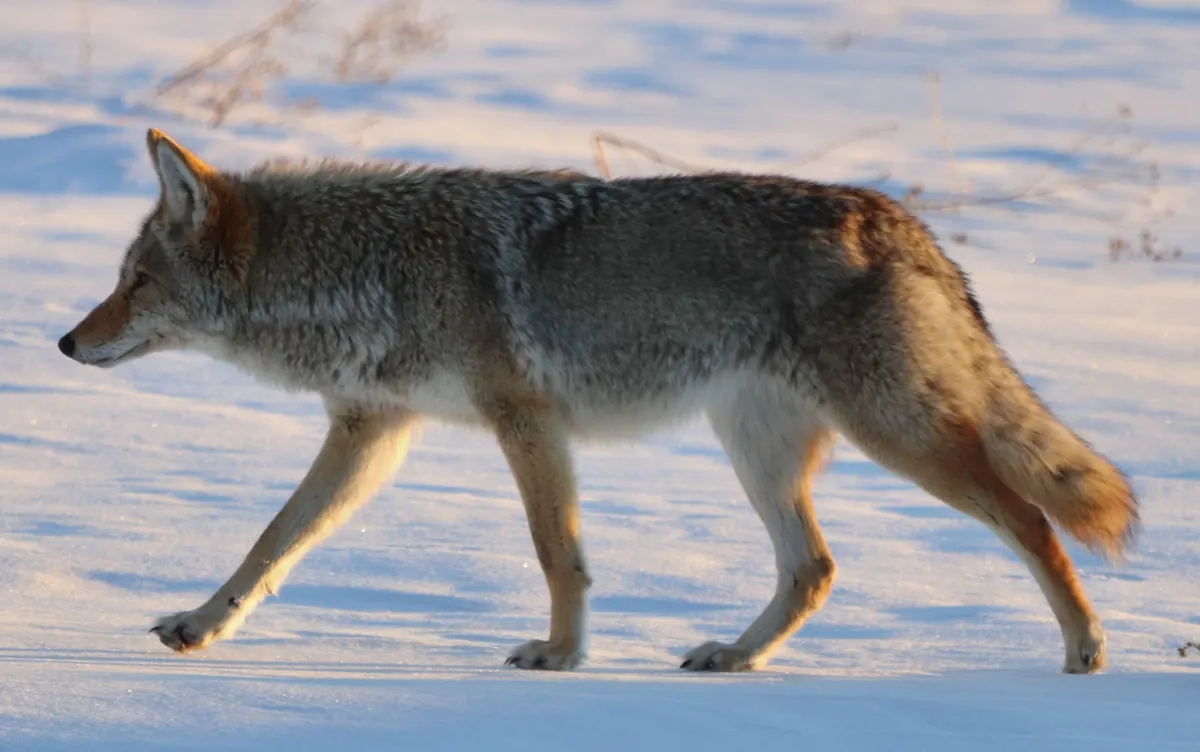
The DNR notes that coyotes breed from January into March, and that people are more likely to see and hear them during these weeks. Their yips and howls at dusk are pairs and family groups keeping in touch. A coyote home range usually covers 8 to 12 square miles, but only 2 to 5 in urban areas. Keep cats indoors and small dogs on a leash, and never feed them.
-
Wolves breed
February and March; pups follow in April and May · The Upper Peninsula and Isle Royale
In a wolf pack, usually only the dominant female breeds, with the dominant male, the National Park Service at Isle Royale explains. Litters of four to seven pups are born in spring and stay in the den for their first six to eight weeks.
-
Bear cubs in the den
Born in January or early February; out with their mother from late March or April · Northern Lower Peninsula and the Upper Peninsula
A newborn black bear cub is blind, hairless and about half a pound, according to Sleeping Bear Dunes National Lakeshore, and grows fast on rich milk while its mother sleeps. The DNR says females usually give birth every other year to two or three cubs; its staff make routine winter den checks, as they did near Cadillac on February 27, 2026. Bears are not deep hibernators and can wake quickly, so leave any den you find alone.
Michigan held an estimated 12,450 black bears in the DNR’s 2024 survey, about 10,350 of them in the Upper Peninsula.
What are the first signs of spring in Michigan in February?
They start in the south and in the wetlands. While the U.P. is still deep in snow, the first migrants reach the southern Lower Peninsula in the last week or so of the month, and one odd plant pushes up through frozen mud by making its own heat.
-
Skunk cabbage melts through
From February in southern Michigan wetlands · Swamps, seeps and wet woods; Stony Creek Metropark’s Reflection Trail is one place naturalists point to
Skunk cabbage is thermogenic. It burns starch stored in a deep, wide root system to warm its flower bud, enough to melt a ring in the snow around a mottled, purple-brown hood. The flower draws the earliest insects of the year, including the flies that pollinate it. The big green leaves come weeks later. The Land Conservancy of West Michigan sends visitors to Minnie Skwarek Nature Preserve in Spring Lake to see it.
-
Red-winged blackbirds return
Usually toward the end of February · Cattail marshes and wet fields, starting in the south
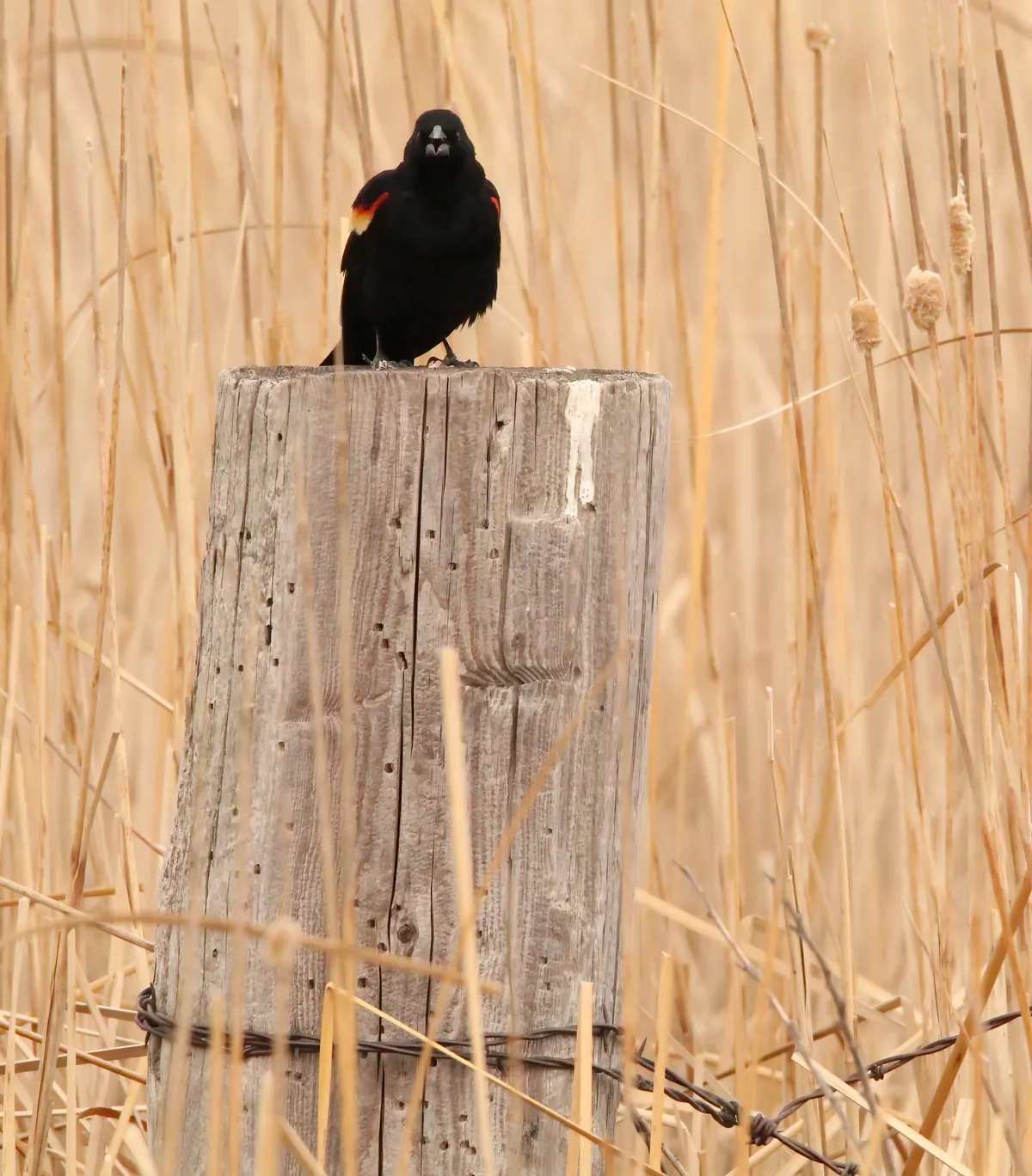
Metroparks naturalists at Kensington call the male red-wing a truer herald of spring than the robin, because he is back by late February. Males arrive first to claim territories and call loudly from the tops of last year’s cattails, flashing their red shoulder patches. Females follow weeks later.
-
Sandhill cranes head home
Usually late February or early March · Marshes and farm fields in southern Michigan
Cranes from southern Michigan spend the winter in Florida, the Jackson Audubon Society writes, and come back in late February or early March, riding thermals and tailwinds at up to 50 miles an hour. A warm spell with south winds can bring the first rattling calls overhead before the snow is gone.
Keep the dates of these firsts year after year, and the notebook becomes a record of how early or late each spring arrives.
When does the maple sap start running in Michigan?
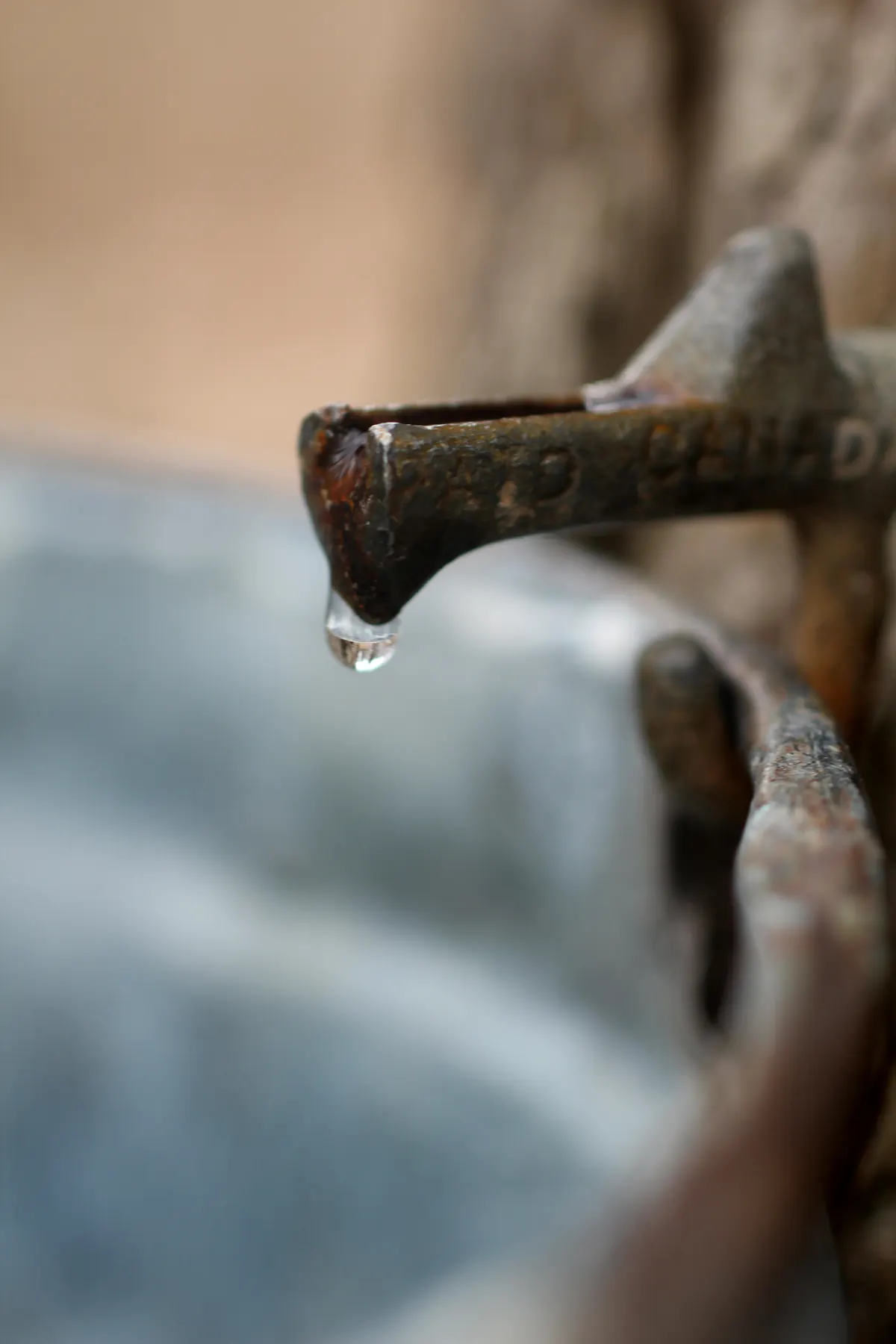
In late February in the south, if the weather cooperates. Sap runs on days that climb above 32 °F after a night below freezing. Michigan State University Extension forester Bill Cook writes that the start is hard to pin to a date, but for much of Michigan the season opens in the last week of February, and MSU Extension’s Michigan Fresh guide to maple syrup says sap collection can begin as early as February in southern Michigan and last into April in the north.
-
Which trees
Tapping season · Woodlots and big yard trees
MSU Extension’s Michigan Fresh guide says syrup is typically made from sugar maple and black maple, which give the sweetest sap, and that a tree should be about 40 years old and at least 32 inches around at 4½ feet before it is tapped. Cook adds that red maple and even paper birch can be used, but sugar maple needs the least sap per gallon: about 40 gallons, more or less. Boiling is done when the syrup reaches 66 to 68 percent sugar, which most producers check with a hydrometer.
-
A season that is shifting
Late February to March, lasting a few weeks · Southern sugarbushes first
Metroparks interpreters note that warm spells arriving earlier in Great Lakes winters can shorten the sugaring season or lower the quality of the syrup. Once nights stop freezing, the trees begin to bud, the sap changes and the run is over. A thaw in February can start the season early; a bitter one can delay it into March. The same Metroparks article, citing the Michigan Maple Syrup Association, counts more than a hundred licensed sugarbushes in the state.
On a sunny February walk, look for icicles hanging from a broken maple branch. Taste one: if it is faintly sweet, the sap is moving. The Metroparks have offered sugaring programs in March at Kensington, Oakwoods, Stony Creek and Wolcott Mill; check their events calendar for 2027.
Where are Michigan’s insects in February?
Waiting, mostly in plain sight. With the leaves down and snow for contrast, February is a good month to find the egg cases and cocoons insects leave to carry the next generation through winter.
-
Mantis egg cases
All winter, hatching in spring · Stalks and stems along the edges of unmowed fields
A hard, foamy-looking tan lump shaped like a rounded triangle is the egg case of the Chinese mantis, the largest and most common mantis in Michigan and a species brought from Asia. Each holds 50 to 200 eggs that all hatch at once in spring. Metroparks naturalists point out that this mantis may eat enough native insects to do more harm than good, and they suggest removing cases from gardens.
-
Giant silk moth cocoons
All winter; adults emerge in spring · Twigs, tree trunks, woodpiles and sheds; many more lie in the leaf litter
The cecropia, Michigan’s largest silk moth, spins a cocoon that can look like a dead leaf stuck to a branch; one was found on a basswood at Willow Metropark. Promethea and luna moths overwinter in cocoons too. The adults that come out in spring live only a few days, and most never eat at all.
Leave native cocoons in place, and check on one again in May.
Is the shelf ice on the Great Lakes safe, and when do ice shanties have to come off?
The federal Great Lakes lab in Ann Arbor puts the usual yearly ice maximum between mid-February and month’s end on Lake Erie, and from late February into early March on Lake Superior, and February is when the biggest ridges of shoreline ice build along Lake Michigan and Lake Superior. They are some of the most striking sights of a Michigan winter, and among the most dangerous.
-
Shelf ice
Cold spells with onshore waves, all winter · Lake Michigan and Lake Superior beaches, including Sleeping Bear Dunes
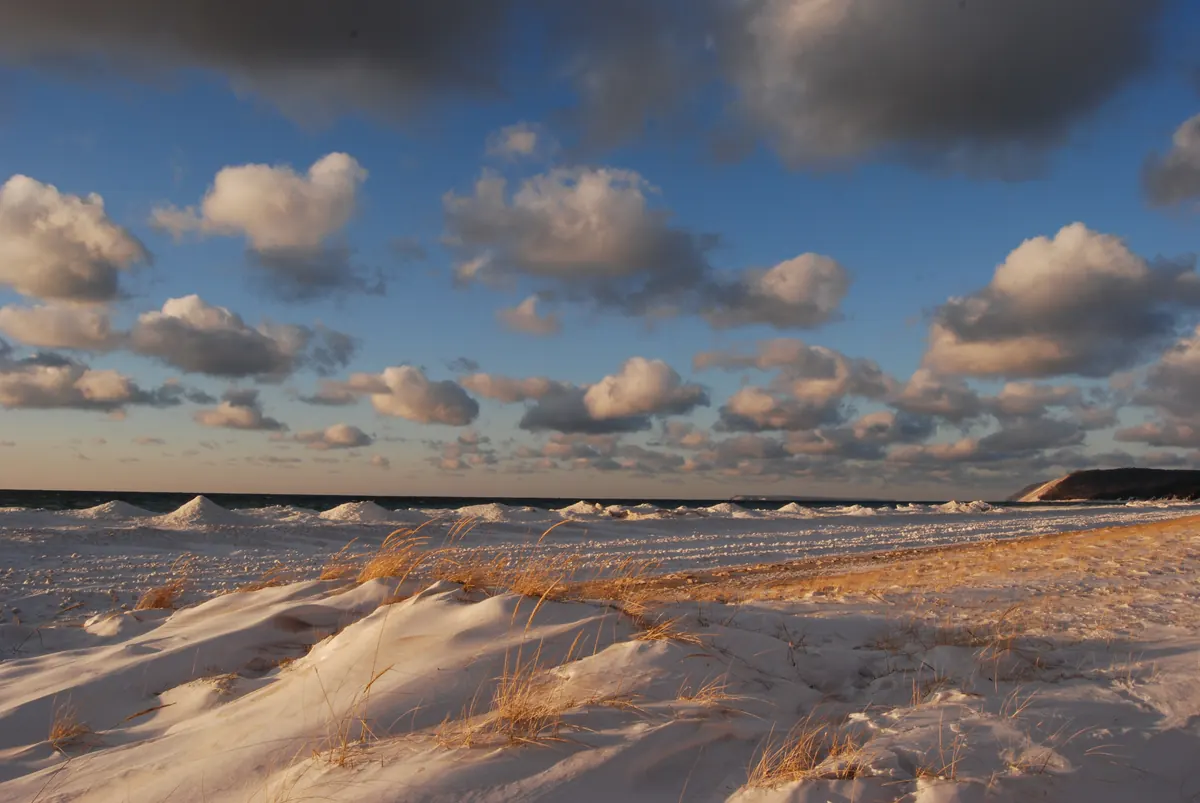
Shelf ice forms when breaking waves and spray freeze, building a lumpy ledge out from the beach that is full of cracks, crevices and holes and is not frozen to the lake bottom. The National Park Service at Sleeping Bear Dunes warns that it can give way like a trapdoor into water that causes shock and hypothermia within minutes, with rescue nearly impossible. Under snow, even regulars cannot tell where the beach stops; rangers advise staying on solid ground no closer than the foot of the first dune.
-
Shanty deadlines
February 21 to March 31, 2027, by area · Inland lakes and Great Lakes bays statewide
Michigan’s fishing guide sets dates for taking permanent ice shanties off the ice. On Lake St. Clair they must be off before sunset on the first Sunday after February 20, which in 2027 is February 21. The rest of the southern Lower Peninsula follows on March 1, 33 counties across the northern half of the Lower Peninsula and the Wisconsin boundary waters on March 15, and the U.P. on March 31. Whatever the date, a shanty has to come off as soon as the ice is unsafe.
For inland lakes, the DNR’s advice holds all season: no ice is ever safe, so test it as you go with a spud or auger, carry ice picks and a phone, and avoid moving water, river mouths and pressure ridges. February thaws make old ice gray, soft and honeycombed. NOAA maps the cover on the lakes every day on its Great Lakes ice page.
How cold and snowy is February in Michigan, and what could El Niño change?
February is usually a little milder and a lot less snowy than January in the southern half of the state, yet it is no thaw. Under NOAA’s 1991–2020 normals, Detroit Metro averages 12.5 inches of February snow and a high of about 35 °F. In the Upper Peninsula, February still bites hardest: the normal February low at the weather service office near Marquette, 6.8 °F, is a shade colder than its January low, and the office averages close to 37 inches of snow in the shortest month.
| Station | Average high | Average low | Precipitation | Snowfall |
|---|---|---|---|---|
| Marquette (NWS office, Negaunee Township) | 24.9 °F | 6.8 °F | 2.24 in | 36.8 in |
| Sault Ste. Marie | 26.4 °F | 9.3 °F | 1.51 in | 20.7 in |
| Alpena | 30.2 °F | 11.2 °F | 1.52 in | 17.0 in |
| Traverse City | 31.4 °F | 16.3 °F | 1.02 in | not published |
| Grand Rapids | 33.7 °F | 19.5 °F | 2.12 in | 17.2 in |
| Saginaw (MBS Airport) | 31.8 °F | 17.3 °F | 1.77 in | 11.4 in |
| Flint | 32.8 °F | 16.7 °F | 1.68 in | 13.0 in |
| Lansing | 33.5 °F | 18.3 °F | 1.71 in | 12.9 in |
| Detroit (Metro Airport) | 35.2 °F | 20.8 °F | 2.08 in | 12.5 in |
Lake Michigan still feeds Grand Rapids more February snow than Lansing gets. As the lakes freeze over, lake-effect bands weaken, and February snow depends more on storms tracking across the Midwest. That is where this winter’s El Niño comes in. In its September 10, 2026 update, NOAA’s Climate Prediction Center put the chance that the warm Pacific event ends up very strong this winter at above 90 percent. The National Weather Service in Gaylord found that El Niño winters have averaged warmer and drier than normal around Gaylord, with less snow, and that every one of the three very strong events ran more than 7 °F above normal for December to February. Sault Ste. Marie behaves differently: hemmed in by cold lake water, it has averaged slightly below normal temperatures across all El Niño winters on record, even as its snowfall usually comes in short. The Gaylord office adds that its March and April temperatures have averaged above normal after El Niño winters (good news, perhaps, for an early sugaring season), yet May snow showed up in 11 of those 25 springs. None of this is a forecast. NOAA’s seasonal outlook, issued October 15 and revised monthly, is on the CPC outlook page. For a trip north this month, look at our seven-day weather first, and our Michigan frost dates say when it will be safe to plant.
How much daylight does Michigan gain in February?
Between 72 and 83 minutes, more than in January. Detroit opens the month with exactly 10 hours from sunrise to sunset and closes it with 11 hours 12 minutes. Marquette and Sault Ste. Marie start February 20 minutes behind Detroit, at 9 hours 40 minutes, but gain 83 minutes, an average of 3.1 a day, and end the month only 9 minutes short of it. Traverse City and Alpena fall in between, adding 78 and 79 minutes.
| City | Feb 1 | Feb 28 | Gained | Per day |
|---|---|---|---|---|
| Ironwood | 9 h 41 m | 11 h 03 m | 82 min | 3.0 min |
| Marquette | 9 h 40 m | 11 h 03 m | 83 min | 3.1 min |
| Sault Ste. Marie | 9 h 40 m | 11 h 03 m | 83 min | 3.1 min |
| Traverse City | 9 h 49 m | 11 h 07 m | 78 min | 2.9 min |
| Alpena | 9 h 47 m | 11 h 06 m | 79 min | 2.9 min |
| Grand Rapids | 9 h 57 m | 11 h 11 m | 74 min | 2.7 min |
| Lansing | 9 h 58 m | 11 h 10 m | 72 min | 2.7 min |
| Detroit | 10 h 00 m | 11 h 12 m | 72 min | 2.7 min |
Northern towns lengthen their days fastest, and every city’s daily gain will keep speeding up until late March. Ironwood, on Central time, gains 82 minutes, though its clocks read an hour earlier than Marquette’s for the same sunlight. Daylight saving time begins March 14. Type any Michigan town into our sunrise and sunset calculator for its exact times.
What can you see in Michigan’s night sky in February 2027?
Two bright planets line up opposite the Sun this month, nine days apart and both in Leo, while Mercury makes its best showing of the season after sunset and the Snow Moon rises partly in Earth’s pale outer shadow. Times given are Eastern Standard; for the Central-time corner of the western U.P. (Gogebic, Iron, Dickinson and Menominee), read each one an hour earlier.
-
Groundhog Day and the true middle of winter
Tuesday, February 2; midpoint February 3 to 4 · Anywhere
Halfway from the solstice to the equinox comes on February 3 or 4 in 2027, a day or two after the groundhog’s forecast. From here on, Michigan is closer to spring than to the darkest days.
-
Mercury at its best
Greatest elongation February 3; look from late January to about February 10 · Low in the west-southwest, 30 to 45 minutes after sunset
Mercury stands 18 degrees from the Sun on February 3, its best evening showing of the winter. A Lake Michigan beach gives an open view west; sweep binoculars low over the afterglow. On Sunday, February 7, the slimmest sliver of a day-old Moon hangs just beside Mercury after sundown.
-
Jupiter at opposition
Wednesday, February 10 (7:21 p.m.; 6:21 p.m. Central) · Rising in the east at sunset, up all night in Leo
Jupiter is opposite the Sun and at its brightest, about magnitude −2.5, and some 405 million miles away. Steady binoculars will pick out its Galilean moons, tiny sparks lined up on either side. Late on February 19 the Moon, almost round, drifts right up beside the planet.
-
Mars at opposition
Friday, February 19; nearest Earth on February 20 · Leo, rising at dusk, reddish and steady
Mars reaches opposition close to its farthest point from the Sun this time, so it stays about 63 million miles away and looks small in a telescope. It still glows at magnitude −1.2, and no closer approach comes before 2029. Look for it near Regulus, the brightest star of Leo, with Jupiter not far off.
-
The Snow Moon and a faint eclipse
Full at 6:23 p.m. Saturday, February 20 (5:23 p.m. Central); eclipse ends 8:13 p.m. (7:13 p.m. Central) · Rising in the east-northeast at dusk
Almanacs disagree over whether it qualifies as a supermoon; call it nearly one. It rises during a penumbral eclipse, when the Moon dips into the outer, pale part of Earth’s shadow. In Eastern time the greatest eclipse, at 6:13 p.m., comes about when the Moon clears the horizon in twilight; in the Central counties it rises just after. Expect, at the very most, a smudge of gray along one limb; most people will spot nothing unusual. On the same night the Moon sits in Leo near Jupiter, Mars and Regulus, which is worth a look by itself. The ring-of-fire eclipse of the Sun on February 6 is a Southern Hemisphere event; Michiganders will see nothing of it.
-
Venus, Saturn and the aurora
All month · Venus in the southeast before dawn; Saturn low in the west-southwest after dusk
Before sunrise, Venus blazes in the southeast throughout February. Saturn drops lower in the dusk each week, on its way to disappearing behind the Sun in April. Solar activity is past its maximum, yet big geomagnetic storms can still happen, so on any clear night by Lake Superior, pull up NOAA’s aurora outlook before bed. The darkest evenings fall between about February 2 and 11, around the new moon.
| Phase | Date | Time |
|---|---|---|
| New moon | Saturday, Feb 6 | 10:56 a.m. |
| First quarter | Sunday, Feb 14 | 2:58 a.m. |
| Full moon, the Snow Moon | Saturday, Feb 20 | 6:23 p.m. |
| Last quarter | Sunday, Feb 28 | 12:16 a.m. |
| New moon | Monday, Mar 8 | 4:29 a.m. |
Lake clouds hide many February nights, so check our cloud cover forecast before driving to a dark site, and the moon calendar shows which nights stay dark longest.
What can Michigan families do outdoors in February?
- Join the Great Backyard Bird Count on February 12–15, 2027. Give it fifteen minutes or more on one or several of the four days, at the kitchen window or a local park, and report your tally through Merlin or eBird. This will be the 30th year of the count, which the Cornell Lab shares with Audubon and Birds Canada.
- Fish free on Free Fishing Weekend. The DNR waives license fees for two days each February on its winter Free Fishing Weekend, and no Recreation Passport is needed at state parks and boat launches that weekend, though every other fishing rule applies. The 2027 dates had not been posted by October 3, 2026; check the DNR’s Free Fishing Weekend page.
- Go on an owl prowl. Metroparks naturalists lead night walks for owls at Lake Erie, Oakwoods, Lake St. Clair and Stony Creek; check their calendar for 2027 dates.
- Hunt for skunk cabbage in a wetland on the first mild day, and feel whether the snow around it has melted.
- Keep counting at the feeder for Project FeederWatch, which runs to April 30.
- See a sturgeon up close at Black Lake on opening morning, once the DNR posts the 2027 date, when the harvested fish are brought to the DNR’s registration site and shown on the sturgeon pole.
Start a page for the year’s first red-winged blackbird. Our Naturalist’s Field Journal has room for it, and the nature guides for other states and months show what comes next. Last month’s January guide for Michigan covers the eagles and the Isle Royale winter study.
Safety notes for February in Michigan
- Seasons still open. Hunters may take cottontails, snowshoe hares, fox and gray squirrels and raccoons until March 31. Coyotes and red and gray foxes may be hunted or trapped until March 1. Bobcat hunting closes February 1 in Unit D, while Units A, B and C stay open until the first of March. Beaver trapping runs to April 23 and otter trapping to March 31 in its units.
- Crows and geese. The early crow season opens February 1 and runs to March 31. In the South Zone, a late goose season runs February 6 to 15, and the Allegan County goose unit stays open through February 14.
- Hunter orange. Between August 15 and April 30, anyone hunting small game or furbearers by day needs an outermost garment in hunter orange (a hat or cap, vest, jacket or rain gear) that shows from every side; camouflage counts only if at least half of it is orange. Crow hunters, furbearer hunters at night and stationary bobcat, coyote and fox hunters are exempt.
- Shelf ice and thawing lakes. Stay off shoreline ice on the Great Lakes entirely. On inland lakes, a thaw can rot the ice from below while the surface still looks solid.
- Cold. February lows still average below 10 °F at Marquette and Sault Ste. Marie. Dress in layers, cover faces in wind, and watch children for the pale, numb skin of frostbite.
- Storms and driving. Late-winter storms can bring heavy wet snow or ice to the south. Keep a blanket, shovel and water in the car.
- Bears and coyotes. A bear woken by a February thaw is groggy and hungry; take feeders in if one visits. Keep pets close at dusk.
Sources
- Michigan DNR: Black Lake sturgeon season (registration, rules and the 2026 season)
- Michigan DNR: 2026 Black Lake sturgeon season results announced (February 9, 2026)
- Michigan DNR: 2026 Michigan Fishing Regulations, in force April 1, 2026, to March 31, 2027 (lake sturgeon seasons, ice shanty removal dates) (PDF)
- Michigan DNR: lake sturgeon
- Spartan Newsroom, Michigan State University: conservation, research and community collaboration aid in successful 2026 Black Lake sturgeon season
- Michigan DNR: 2025 Black Lake sturgeon season results announced (February 4, 2025)
- Huron-Clinton Metroparks: creatures of the night, owls
- Michigan DNR: coyote
- National Park Service: wolves, Isle Royale National Park
- Michigan DNR: Michigan is bear country, and here they come (March 12, 2026)
- National Park Service: black bear, Sleeping Bear Dunes National Lakeshore
- Huron-Clinton Metroparks: 12 months of the Metroparks, February (insects, skunk cabbage, maple sap)
- Land Conservancy of West Michigan: spring’s earliest bloomer (skunk cabbage)
- Huron-Clinton Metroparks: bird of the week, red-winged blackbird
- Jackson Audubon Society: all about cranes
- Huron-Clinton Metroparks: syrup season and climate change
- National Park Service: safety, Sleeping Bear Dunes National Lakeshore (shelf ice)
- NOAA GLERL: Great Lakes ice cover data and records
- NOAA GLERL: Great Lakes ice cover near average for the 2025 season
- Michigan DNR: ice safety
- NOAA NCEI: 1991–2020 monthly normals for ten Michigan stations (data API)
- NOAA NCEI: U.S. climate normals 1991–2020
- National Weather Service Gaylord: Northern Michigan winter outlook with El Niño statistics for Gaylord and Sault Ste. Marie (PDF)
- Climate Prediction Center: ENSO diagnostic discussion, September 10, 2026
- Climate Prediction Center: seasonal outlooks (winter outlook issued October 15, updated monthly)
- U.S. Naval Observatory: moon phases from December 30, 2026 (data API)
- U.S. Naval Observatory: Earth’s seasons and apsides, 2027 (data API)
- Fred Espenak: Sky Event Almanac 2027 (GMT)
- NASA: lunar eclipses, 2021–2030
- NASA: solar eclipses, 2021–2030
- Old Farmer’s Almanac: eclipses (February 20, 2027, penumbral eclipse visibility)
- EarthSky: Jupiter at opposition
- SEDS: Mars opposition of 2027
- Sea and Sky: astronomy calendar of celestial events, 2027
- NOAA Space Weather Prediction Center: aurora 30-minute forecast
- National Audubon Society: about the Great Backyard Bird Count (February 12–15, 2027)
- Birds Canada: Great Backyard Bird Count, February 12–15, 2027
- Michigan DNR: Free Fishing Weekend
- Project FeederWatch: how to participate
- Michigan DNR: hunting season calendar (2026–27 small game, crow and waterfowl dates)
- Michigan DNR: 2026 furbearer harvest regulations summary (seasons and hunter orange)
- Michigan DNR: 2026 small game hunting regulations summary (hunter orange)
- Wikipedia: time in Michigan (the four Central-time counties)
- Michigan State University Extension: On tapping maples (Bill Cook, 2019)
- Michigan State University Extension: Michigan Fresh, maple syrup (bulletin E3251)
- Photos via Wikimedia Commons; licenses and photographers are credited under each picture
