What to look for in nature in Michigan this January
From Detroit to the Keweenaw, no month runs colder on average than January, and this is when the Great Lakes begin to lock up in earnest. Yet the year is already turning in the woods: great horned owls and bald eagles settle onto nests, foxes pair up, and a Michigan Tech team flies over Isle Royale to count wolves and moose. Canvasbacks raft on the Detroit River, ice curtains grow on the cliffs near Munising, and evenings gain half an hour of light. Quadrantid meteors streak across the sky after dark on January 3, and the January 22 Wolf Moon is a supermoon, the year’s biggest.
Other months in Michigan: October, November, December, February.
Start here

- Look for a nesting eagle or owl. Both great horned owls and bald eagles begin nesting in January in southern Michigan. Huron-Clinton Metroparks has pointed visitors to an eagle nest visible from the hike-bike path near the entrance of Lake St. Clair Metropark, and another at Stony Creek seen best with a spotting scope; ask at the nature center which nests are active this year, and keep your distance.
- Watch the Quadrantids before dawn on January 4. The shower peaks in the late evening of Sunday, January 3, or just after midnight, depending on the forecast you read, and the radiant climbs highest before dawn on Monday. With just a sliver of Moon coming up late, a dark rural spot could deliver dozens of meteors an hour.
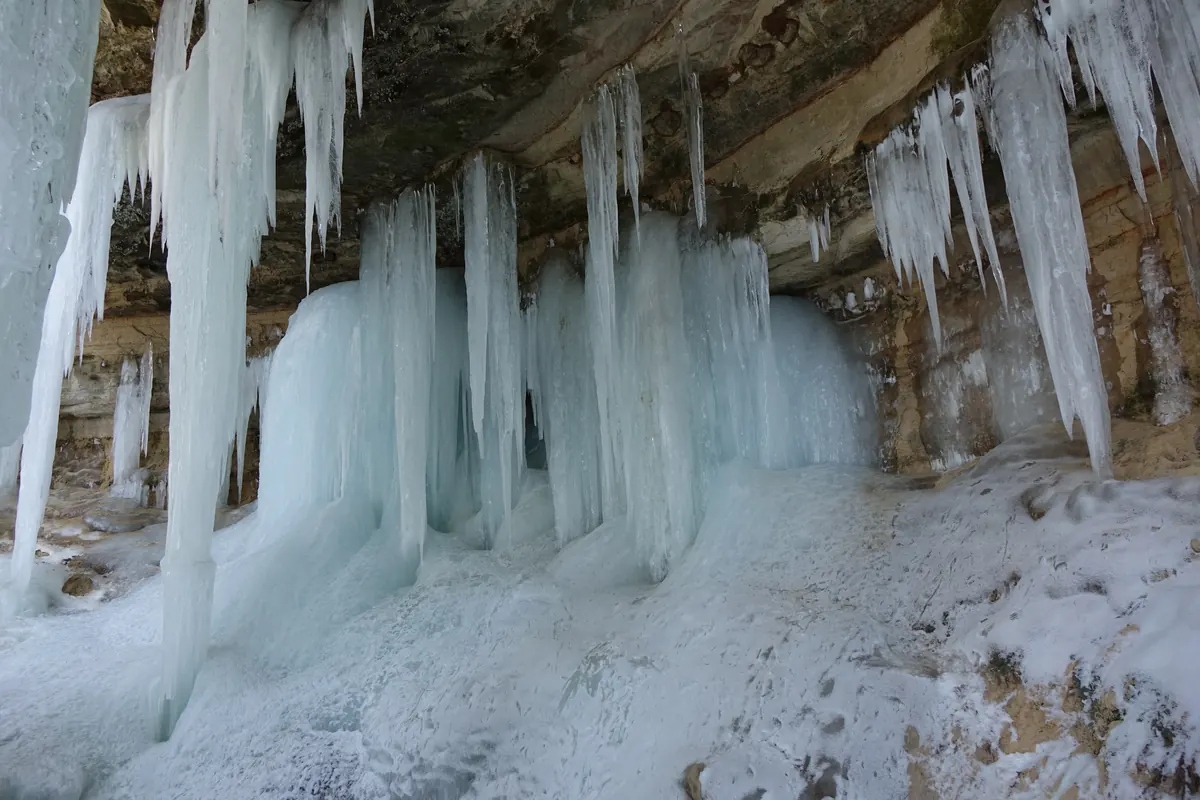
- Walk the ice curtains near Munising. Along Sand Point Road in Pictured Rocks National Lakeshore, water seeping from the sandstone freezes into blue, green and gold columns 20 to 50 feet tall. Park at Sand Point Beach and walk back a quarter to half a mile; wear ice cleats.
Keep a record: give each eagle its own line under birds I have seen, noting white head and tail for an adult or blotchy brown for a young bird. Sketch a fox trail on tracks to know, and draw the buds of a maple twig next to an oak twig beside the seeds, pods and cones plate. Log sunset on January 1 and January 31 in the dusk and dawn watch, and revisit one frozen pond after a snowfall for the same place twice.
Regions used below: Western Upper Peninsula; Eastern Upper Peninsula; Northern Lower Peninsula; West Michigan and the Lake Michigan shore; The Thumb and Saginaw Bay; Southeast Michigan and Metro Detroit; Southwest Michigan.
Where can you see bald eagles in Michigan in January, and which birds are already nesting?
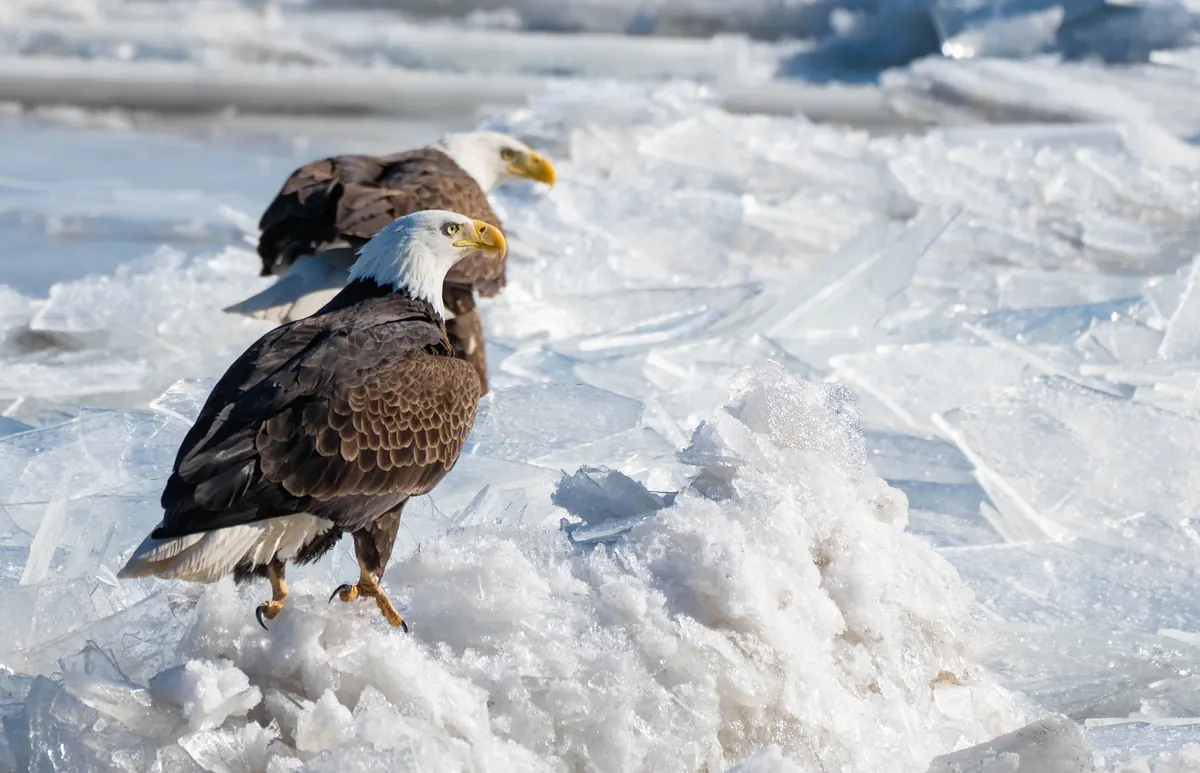
Once the inland lakes freeze hard, Michigan’s eagles have few places left to fish, and January concentrates them along whatever water the cold cannot close: the Detroit and St. Clair rivers, river mouths on the Great Lakes, and the churning tailwaters below dams. It is also, surprisingly, the start of the nesting year. Huron-Clinton Metroparks notes that both bald eagles and great horned owls begin nesting in January in southeast Michigan.
-
The Midwinter Bald Eagle Survey
Counts fall in the first half of January; in 2026 the window ran January 7 to 21, with target dates of January 9 and 10 · Standard routes in most of the lower 48 states
Every January since 1979, several hundred observers have driven, boated or flown the same routes to count wintering bald eagles, adults and immatures separately. The U.S. Army Corps of Engineers now coordinates the count nationally, with a coordinator in each state. The 2027 dates are not yet posted, but anyone can add to the picture by reporting eagles on eBird.
-
Eagles on their nests in the southeast
Nest repair and egg laying from January · In recent winters, Lake St. Clair Metropark (hike-bike path near the entrance) and Stony Creek Metropark (Inwood Trails, with a spotting scope); ask staff which nests are active
Bald eagles lay one to three eggs, which take about five weeks to hatch, and the young leave the nest three to four months after that, the Metroparks naturalists write. Unlike owls, eagles build their own big stick nests. Watch from the trail with binoculars or a scope, never from the base of the tree.
-
Great horned owls duetting after dark
Calling peaks in January; nesting begins this month · Woodlots, river corridors and older suburbs statewide
Great horned owls don’t build nests. They borrow an old hawk or crow nest, a hollow snag or a platform people put up, and Lake St. Clair Metropark has kept a nesting bucket that owls have used in past seasons. Paired birds hoot back and forth after dark to talk to each other and defend their territory, a habit called duetting. Stand quietly at the edge of a woodlot on a calm night and you may hear both birds answer.
Nest trees are easy to spot with the leaves down, and eagle nests are protected by federal law, so watch briefly and quietly from the trail.
What do wolves, moose and foxes do in a Michigan January?
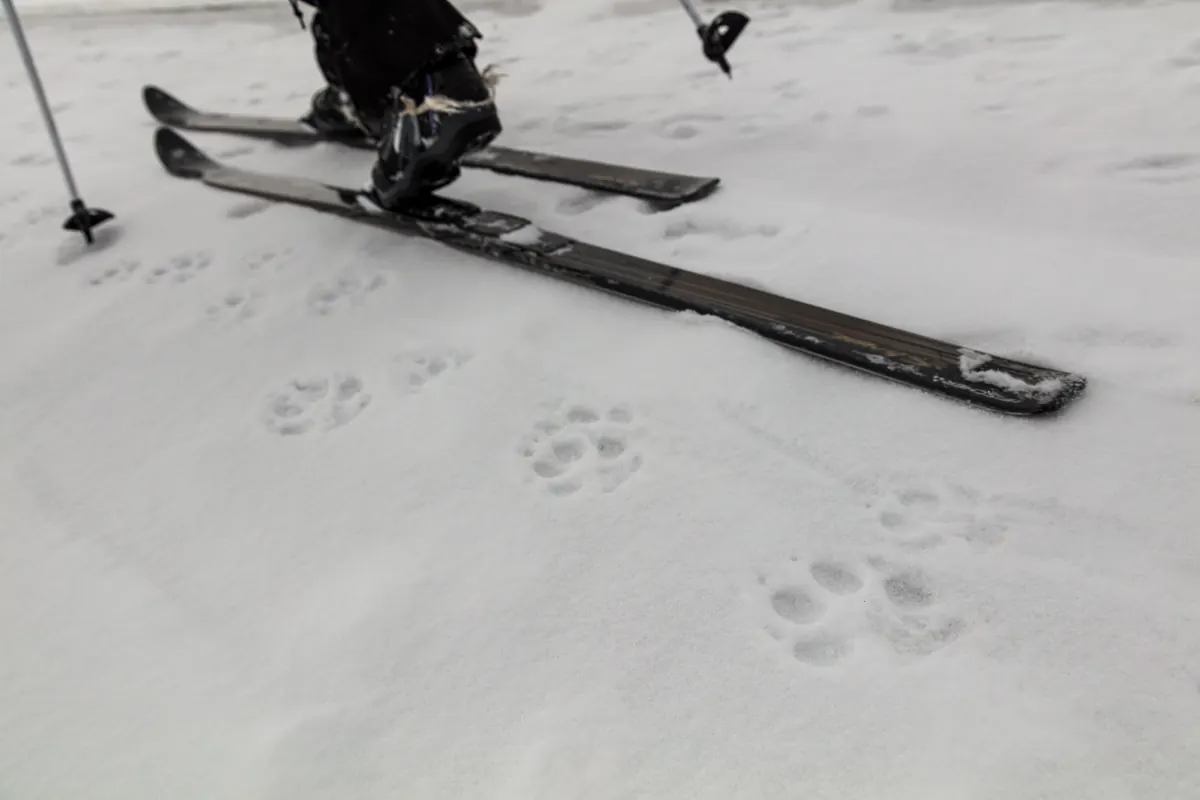
Snow turns the north woods into a written record, and January is when Michigan’s large carnivores are easiest to study. It is also the month wild canids start courting. Look for tracks the morning after a light snowfall, when every crossing is fresh and sharp.
-
The Isle Royale winter study
Usually late January into early March; in 2026, January 22 to March 3 · Isle Royale National Park, Lake Superior (closed to visitors November 1 to April 15)
This study of wolves and moose began in 1958 at Purdue University and moved to Michigan Technological University in 1975. Each winter researchers count both species from a ski plane. In 2026 they found about 37 wolves, the most since the late 1970s, in three packs, and about 524 moose, down 75 percent from roughly 2,000 in 2019. For the first time in 68 years the team saw no moose calves, and it estimated that wolves had killed about 24 percent of the moose in a year. An ice bridge to the mainland held from late January to mid-February. The island is closed in winter, so follow this one from home; Michigan Tech usually reports in spring.
-
Wolf tracks on the mainland
Late winter, in snow · Secondary roads and trails across the Upper Peninsula
The DNR has long estimated the U.P. wolf population from tracks in snow along back roads, every other winter since 2014, when numbers are at their yearly low, so the count is a minimum. The 2026 survey found at least 792 wolves. Snow decides how well it works: the DNR’s large carnivore specialist said 2024 was too mild, while in 2026 near-daily snow kept covering the tracks. Remote trail cameras, run with Michigan State University, now add a second estimate that does not depend on snow.
-
Red foxes pair up
Mating late January through February · Field edges, farm country and the edges of towns statewide
The National Park Service at Isle Royale puts red fox mating from late January through February, with pups born about 51 to 53 days later. The park notes that a fox uses its long tail against the winter wind, wrapping it over the bare skin of its nose and foot pads. In new snow its trail is a tidy straight row of small prints along a field edge.
Metroparks naturalists add that cardinals and chickadees start singing again in mid to late January as the days stretch.
Where do ducks and swans spend the winter in Michigan?
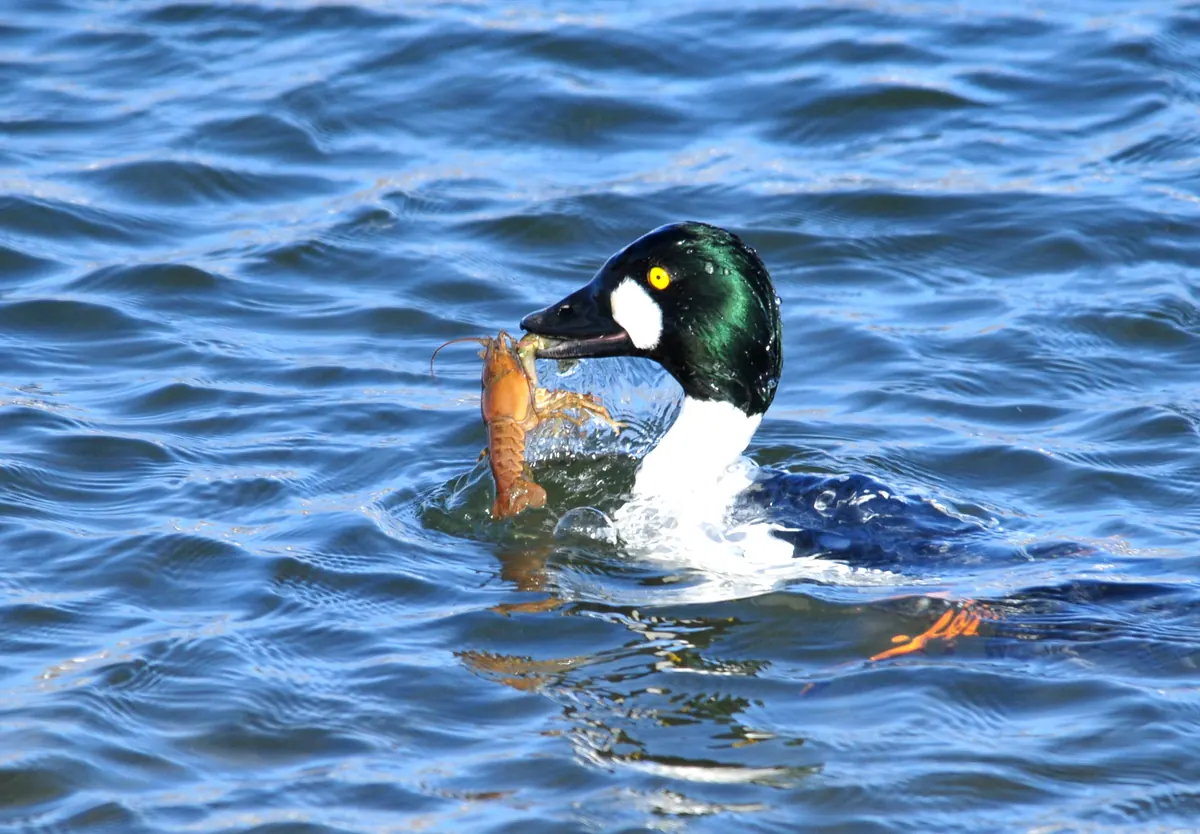
On whatever water stays open, and in southeast Michigan that means above all the lower Detroit River, where the moving current keeps lanes of water open when inland lakes are frozen. The river is a globally recognized Important Bird Area, and it regularly holds more than 1 percent of the world’s canvasbacks, the long-billed diving duck with a rusty head and a pale back.
-
Canvasbacks on the lower Detroit River
All winter; largest rafts in cold spells · Detroit River International Wildlife Refuge (Humbug Marsh and Refuge Gateway units); Lake Erie Metropark
The refuge describes canvasbacks resting and feeding on the river’s beds of wild celery, which they reach by diving. Look for big, tight rafts of white-backed drakes riding the current, often mixed with redheads, scaup, common goldeneyes and common mergansers. A DNR bulletin on the Important Bird Area cites early-winter surveys that recorded 79,300 canvasbacks, more than 1,900 tundra swans, 10,000 mallards and 3,500 common mergansers. Refuge trails are open sunrise to sunset every day with no fee, though the visitor center is open only Thursday through Sunday.
-
Count them yourself
Saturday mornings from January into March · Survey sites along the lower Detroit River
Detroit Audubon began covering the U.S. side of the river in 2018, and today the Detroit Bird Alliance runs these winter waterfowl counts on Saturdays between January and March, starting at 9 a.m. and finishing between noon and 2 p.m. depending on how busy the birds are. Volunteers help measure how important the river is to these flocks and watch for changes that could signal trouble. The 2027 schedule isn’t posted yet; contact the alliance to join.
When a hard freeze closes smaller rivers, ducks crowd into the last open holes, and the eagles follow.
Which northern birds are visiting Michigan this January?
In late September 2026 Tyler Hoar of the Finch Research Network forecast poor seed crops in the central boreal forest to push finches toward the Great Lakes, while heavy crops of white pine, northern white cedar and spruce seed in the east would hold many of them in the forest rather than at feeders. By January the picture is usually clearer: birds that came south are settled where the food is.
-
Red crossbills and white-winged crossbills
All winter, wherever cones are heavy · Pine and spruce stands, especially in the U.P. and northern Lower Peninsula
Type 2 red crossbills moved across the continent from west to east in 2026, and observers at Whitefish Point in Chippewa County reported larger numbers than usual from August on. White-winged crossbills were expected to roam the region in scattered flocks, sometimes into towns, wherever cones hang heavy. Listen for their hard, repeated flight calls overhead.
-
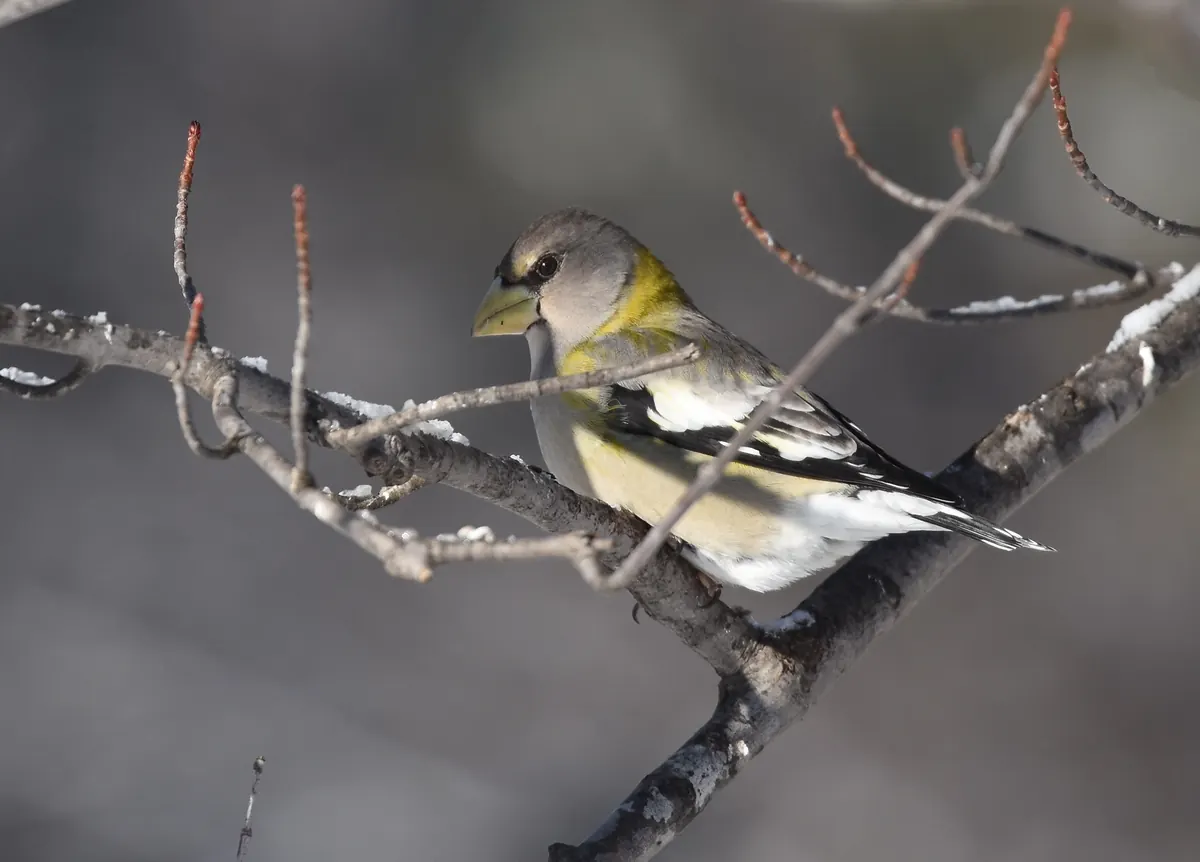
Pine siskins and evening grosbeaks
Through winter; feeder visits rise in snowy spells · Northern feeders, cedar swamps and hemlock stands
A sizable siskin irruption was predicted, fed by good cedar and hemlock crops, and some evening grosbeak flocks were expected around the Great Lakes. Pine grosbeaks and Bohemian waxwings were expected to stay mostly in the north because of a strong mountain-ash crop there, and the forecast did not expect a big redpoll flight.
-
Snowy owls and snow buntings
Settled on their winter territories by January · Big open fields, airports, shorelines
The DNR lists snowy owls, bald eagles and snow buntings as Michigan’s regular winter specialties for anyone willing to drive. Snowy owls come south only when food runs short in the Arctic, so their numbers vary widely, and the DNR advises checking whether airport security allows you near an owl on airport grounds before you go.
January tallies count for Project FeederWatch, which the Cornell Lab runs through April 30. A crossbill’s type can be told only by its call, so a short phone recording added to an eBird list is worth making.
How much of the Great Lakes freezes, and when is the ice safe?
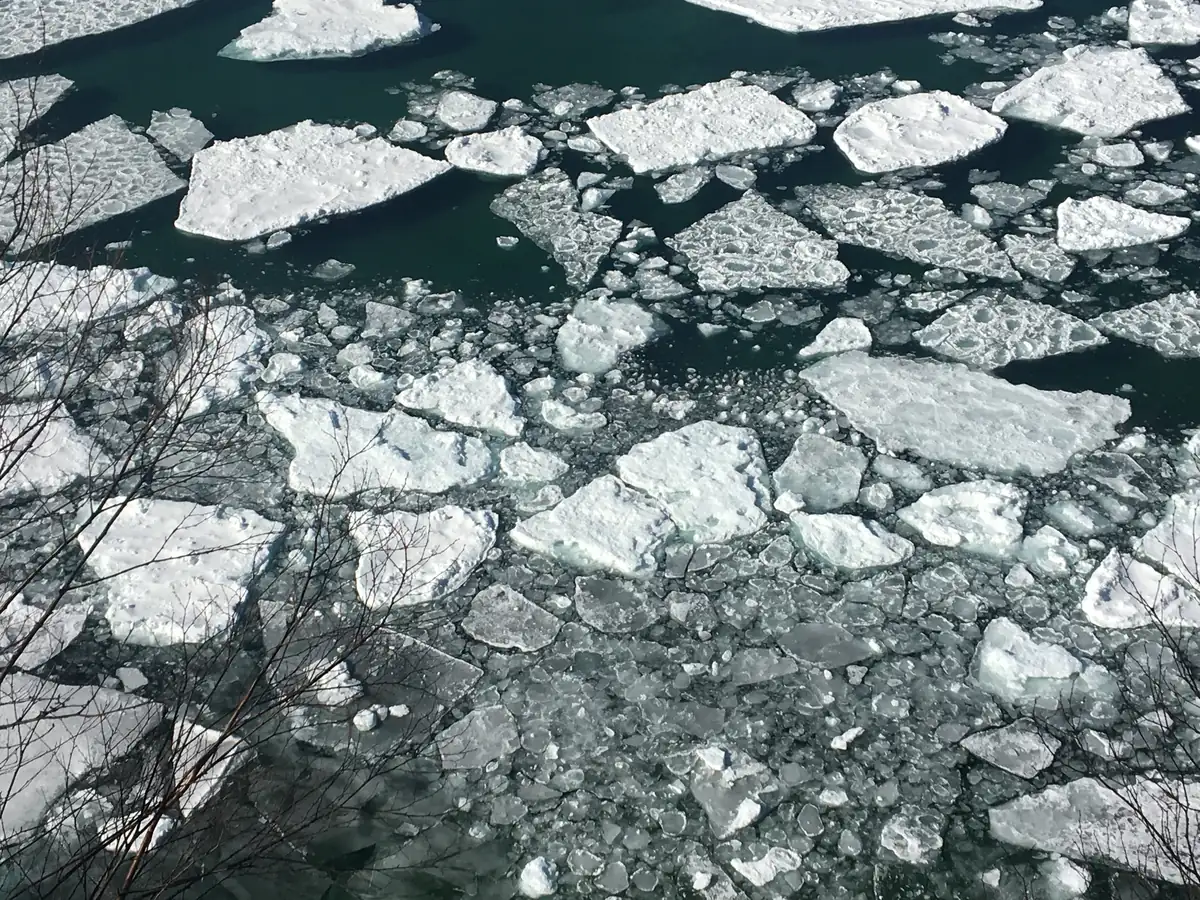
January is when Great Lakes ice usually starts to grow fast. NOAA’s Great Lakes lab in Ann Arbor says the ice normally tops out on shallow Lake Erie in the second half of February, and on deep Lake Superior from late February into early March; Erie, the shallowest, loses its heat first. A bitter January speeds things up: after Arctic air settled over the region in January 2026, GLERL’s daily record shows ice on 50.6 percent of the Great Lakes by February 2, with Lake Erie at 95.3 percent and Lake Huron at 77.5.
| Lake | Highest maximum | Lowest maximum | Feb 2, 2026 |
|---|---|---|---|
| Superior | 100% (1996) | 8.5% (2012) | 34.3% |
| Michigan | 93.1% (2014) | 12.4% (2002) | 33.3% |
| Huron | 98.2% (1994) | 22.8% (2012) | 77.5% |
| Erie | 100% (1978, 1979, 1996) | 5.4% (1998) | 95.3% |
| All five Great Lakes | 94.7% (1979) | 11.9% (2002) | 50.6% |
Lake Erie’s record low, 5.4 percent, came in 1998, during one of the strongest El Niño winters on record. On inland lakes, the DNR warns that no rule of thumb for thickness makes ice safe: check it every few steps with a spud, needle bar or auger, and bring ice picks, a life jacket and a phone or radio with signal. Blue-tinted clear ice holds best; cloudy white ice formed from melted snow is far weaker, and slush means the sheet is not growing from below. Stay away from current, logs frozen into the surface and any shore with open water. Should you fall in, face back the way you walked, kick, slide out flat and roll clear. NOAA’s GLERL ice page maps the cover daily.
Where can you see ice caves and frozen waterfalls in Michigan?
In Alger County, water seeping out of porous sandstone cliffs freezes as it drips, growing icicles that reach the ground and then spread into curtains, columns and shields. The National Park Service says the ice generally begins to form by mid-December and lasts until early April, which makes January a dependable month to see it.
-
Sand Point Road, Pictured Rocks
Mid-December to early April · Inland cliffs between Munising Falls and Sand Point, Pictured Rocks National Lakeshore
Sand Point Road is the only park road plowed in winter. Walk back a quarter to half a mile from Sand Point Beach to ice the park describes as white tinged with blue, green or yellow, 20 to 50 feet high, and scan Grand Island across Munising Bay with binoculars for more. Munising Falls is the one waterfall in the park that is easy to reach in winter; climbing it is prohibited. Munising averages about 140 inches of snow a year, and near town the park grooms 10.4 miles of ski trail and marks a 2.65-mile snowshoe loop.
-
Eben Ice Caves
Whenever the ice is in; February is usually the busiest month · Rock River Canyon Wilderness, Hiawatha National Forest, about 15 miles west of Munising
Water dripping from overhanging sandstone ledges builds a curtain of ice that changes through the season. There is no official trail, only a packed route of less than a mile each way with steep, slippery pitches. The Forest Service counted 11,446 visits in 2024–25, more than double the year before, and nine search-and-rescue calls from 2020 to 2025. A private, plowed parking area near Ice Cave Road has vault toilets. Climate normals for nearby Chatham give January 45.6 inches of snow. Chunks of ice can fall without warning.
Bring ice cleats, poles and a headlamp. Eben lies in federal wilderness, so no motors or bikes past the boundary.
How can you tell Michigan’s trees apart in winter?
With the leaves gone, you identify a hardwood by its twigs, buds, leaf scars, bark, branching and shape. Michigan Forests Forever, a teaching guide from Michigan Technological University’s forestry school, points out that you rarely need every feature; one or two well-chosen clues usually settle it. January, with the trees bare and the light low, is a good time to practice.
-
Check the branching first
Any time the leaves are off · Any woodlot or street
Look at how the twigs and buds sit on a branch. If they come off in matched pairs, opposite one another, the tree is almost certainly a maple or an ash (in the U.P., the guide says, opposite branching occurs only in those two; a few shrubs, such as dogwoods, branch the same way). Almost everything else in the woods is alternate.
-
Then the buds and scars
All winter · Twig tips at eye level
Sugar maple has sharp, pointed buds; oaks cluster several buds at each twig tip; boxelder’s new twigs are purplish. Leaf scars, where last year’s leaves fell, are big and readable on ash, walnut, butternut and hickory: on white ash the top of the scar curves like a smile, on green ash it runs straight. Split a walnut or butternut twig and the pith is chambered, tan in black walnut and dark in butternut.
-
Bark and form
All winter · Older trees
Most bark changes as a tree ages, but a few are giveaways: the birches and aspens, and the vase-shaped American elm. Michigan Tech’s guide notes that a paper birch crown can look purple from a distance. Balsam fir has a sharply pointed crown. Notice the company, too: where sugar maple grows, basswood, beech and ironwood are likely nearby.
Compare a mystery twig at home with one from a tree you already know, and by spring you will know your street by its silhouettes.
How cold and snowy is January in Michigan, and what could El Niño change?
January is Michigan’s coldest month. Under NOAA’s 1991–2020 normals, a January night bottoms out around 19 °F at Detroit Metro and about 7 °F at the weather service office in Negaunee Township near Marquette, which also averages 42.1 inches of January snow, three times Detroit’s 14. The cold comes in waves: an Arctic outbreak, a thaw, another outbreak. Lake-effect snow keeps falling on the snowbelts as long as the open lakes give up moisture, and slackens once the ice puts a lid on them.
| Station | Average high | Average low | Precipitation | Snowfall |
|---|---|---|---|---|
| Marquette (NWS office, Negaunee Township) | 21.5 °F | 7.2 °F | 2.33 in | 42.1 in |
| Sault Ste. Marie | 24.0 °F | 8.4 °F | 2.21 in | 30.3 in |
| Alpena | 28.1 °F | 11.9 °F | 1.81 in | 19.3 in |
| Traverse City | 29.3 °F | 17.0 °F | 1.67 in | not published |
| Grand Rapids | 31.0 °F | 18.6 °F | 2.52 in | 22.6 in |
| Saginaw (MBS Airport) | 29.5 °F | 16.4 °F | 1.92 in | 13.9 in |
| Flint | 29.9 °F | 16.0 °F | 1.99 in | 15.1 in |
| Lansing | 30.6 °F | 17.2 °F | 2.06 in | 14.3 in |
| Detroit (Metro Airport) | 32.3 °F | 19.2 °F | 2.23 in | 14.0 in |
Grand Rapids, downwind of Lake Michigan, outsnows Lansing, Flint and Detroit. Out in the tropical Pacific, warm water is stacking the deck: according to the federal forecasters’ El Niño update dated September 10, 2026, a very strong event this winter now looks better than nine times in ten. The National Weather Service office in Gaylord, reviewing northern Michigan’s past El Niño winters, found that in the three very strong events of 1982–83, 1997–98 and 2015–16 Gaylord’s December-to-February temperature ran more than 7 °F above normal, and that its snowfall for those months came in 41.2 inches below normal in 1997–98 and 38.2 inches below in 1982–83. The office cautions that past winters are not a forecast; El Niño only tilts the odds. NOAA’s winter outlook comes out October 15 and is refreshed every month on the CPC’s seasonal outlook page, which is where to look for the latest. Before a drive north, check the forecast for your route; if you are already planning a garden, our frost dates for Michigan towns show when spring planting becomes safe.
How much daylight does Michigan gain in January?
From 49 minutes in Detroit to 58 in Marquette and Sault Ste. Marie, most of it at the end of the day. Mornings barely change at first. Detroit’s sun rises at 8:01 a.m. on New Year’s Day and is still rising at 8:01 a week later, then begins to come up earlier only slowly; by January 31 sunrise is 7:47. Sunset, meanwhile, moves from 5:10 p.m. to 5:45 p.m. Marquette, farther north and farther west in the same time zone, goes from an 8:34 a.m. sunrise and a 5:13 p.m. sunset on January 1 to 8:15 a.m. and 5:52 p.m. on January 31. In the four Upper Peninsula counties on Central time (Gogebic, Iron, Dickinson and Menominee), clocks read an hour earlier: Ironwood’s sun sets at 4:24 p.m. on New Year’s Day and first reaches 5:00 p.m. on January 29.
| City | Jan 1 | Jan 31 | Gained | Per day |
|---|---|---|---|---|
| Marquette | 8 h 39 m | 9 h 37 m | 58 min | 1.9 min |
| Sault Ste. Marie | 8 h 40 m | 9 h 38 m | 58 min | 1.9 min |
| Traverse City | 8 h 52 m | 9 h 46 m | 54 min | 1.8 min |
| Alpena | 8 h 51 m | 9 h 45 m | 54 min | 1.8 min |
| Grand Rapids | 9 h 05 m | 9 h 55 m | 50 min | 1.7 min |
| Lansing | 9 h 06 m | 9 h 56 m | 50 min | 1.7 min |
| Flint | 9 h 05 m | 9 h 55 m | 50 min | 1.7 min |
| Detroit | 9 h 09 m | 9 h 58 m | 49 min | 1.6 min |
The northern cities start with the least light and gain it fastest. Our daylight tool gives the times for any address in the state.
What can you see in Michigan’s night sky in January 2027?
January opens with a strong run of sky events in its first week, and the long nights give plenty of time to see them when the lake clouds break. Times below are Eastern Standard Time; Gogebic, Iron, Dickinson and Menominee counties, on Central time, should subtract one hour.
-
Perihelion
Saturday, January 2, 9:33 p.m. · Nothing to see; a fact worth knowing
Our planet swings nearest the Sun, about 91.4 million miles out, in the middle of a Michigan winter, a reminder that tilt, not distance, makes the seasons.
-
The Quadrantids
Active December 28 to January 12; peak on the night of Sunday, January 3, into Monday, January 4 · A dark site facing northeast; best in the hours before dawn
The peak is short, only about six hours, and forecasters disagree on its timing: one set of predictions puts it near 10:30 p.m. on January 3, another at 12:47 a.m. on January 4. Either way it falls during the Michigan night. The radiant, between the handle of the Big Dipper and Boötes, sits near the horizon at nightfall and rides higher hour by hour, which makes the predawn darkness of Monday the prime time. Only a slim waning crescent, up a few hours before sunrise, competes with them. From a truly dark place you might count dozens of meteors an hour; in town, far fewer. Dress as for ice fishing.
-
Venus at its greatest elongation
Sunday, January 3; morning sky all month · Low in the southeast before sunrise
Venus hits greatest elongation on January 3, a 47-degree gap from the Sun that is its widest of this dawn apparition, and it gleams near magnitude −4.3. A small telescope shows a half-lit disk.
-
The Wolf Moon, the year’s closest full moon
Full at 7:17 a.m. Friday, January 22 (6:17 a.m. Central) · Rising in the east-northeast at dusk on Thursday, January 21
Perigee comes roughly half a day before full, which makes this supermoon, about 222,229 miles away, the biggest-looking full moon of 2027. Catch moonrise on Thursday evening, January 21; the disk still looks round on Friday night. On the evening of Saturday the 23rd, about a day and a half after full, look for Jupiter shining just beside the Moon, with Regulus close by.
-
Evening planets and the aurora
All month · Saturn in the southwest after dusk; Jupiter in the east; Mercury low in the west-southwest at month’s end
Saturn sinks lower each evening. Jupiter rises earlier every night ahead of its February opposition, with reddish Mars nearby in Leo, and toward the end of January Mercury shows briefly low in the west-southwest after sunset. Solar activity has passed its 11-year maximum yet strong storms still happen, so look north from the Lake Superior shore on clear nights, and pick the dark early-January evenings, before the waxing Moon brightens after the 12th.
| Phase | Date | Time |
|---|---|---|
| New moon | Thursday, Jan 7 | 3:24 p.m. |
| First quarter | Friday, Jan 15 | 3:34 p.m. |
| Full moon, the Wolf Moon | Friday, Jan 22 | 7:17 a.m. |
| Last quarter | Friday, Jan 29 | 5:55 a.m. |
| New moon | Saturday, Feb 6 | 10:56 a.m. |
Our cloud outlook shows whether the lake clouds will part tonight, and the monthly moon calendar lists moonrise where you live.
What can Michigan families do outdoors in January?
- Hike on New Year’s Day. Michigan’s DNR has offered First Day Hikes on January 1 in past years; watch for the 2027 list in December and check with the park before you go.
- Finish a Christmas Bird Count. Audubon’s 127th count closes January 5, 2027, and each circle picks its own day, so a few may still be ahead after New Year’s.
- Walk a lantern-lit trail. In recent Januaries the DNR has lit snowshoe and hiking trails at Mitchell State Park near Cadillac, Van Riper near Negaunee, Sleeper near Caseville and Island Lake near Brighton. The 2027 dates are not posted yet, so check with each park.
- Learn to ice fish at the DNR’s Hard Water School in Cadillac, held in January in recent years; check with the DNR’s Outdoor Skills Academy for 2027 dates.
- Sled, skate or try luge at the Muskegon Luge Adventure Sports Park in Muskegon State Park: a quarter-mile skating trail through the woods, a family sledding hill and one of only four kunstbahn-style luge tracks in the country.
- Count birds with the Detroit Bird Alliance on the Detroit River, or for Project FeederWatch at home.
- Look for eagle and owl nests on a Metroparks walk, after asking the nature center which ones are in use this winter.
Pack a thermos, hand warmers and spare mittens for the children; small hands get cold long before small legs get tired.
Safety notes for January in Michigan
- Deer seasons end January 1. Archery deer season runs December 1, 2026, to January 1, 2027, and the late antlerless firearm season, open only in parts of the Lower Peninsula, ends the same day. The late grouse season and the December pheasant hunt close then too.
- Small game and furbearers. Rabbit, snowshoe hare and squirrel run to March 31; coyote and fox hunting and trapping to March 1; raccoon to March 31. Bobcat hunting opens January 1 (to March 1 in Units A, B and C, February 1 in Unit D, January 20 in Unit G and January 11 in Unit H), and bobcat trapping in Units A and B runs to January 18.
- Geese. The South Zone has a late goose season December 26 to January 3 and February 6 to 15; the Allegan County unit runs December 19 to February 14.
- Hunter orange. Anyone deer hunting with a firearm, and any bowhunter out during a firearm deer season, must wear a hat, cap, vest, jacket or rain gear of hunter orange worn on top where it shows from front, back and sides; camouflage qualifies only when orange makes up half or more of it. Small-game hunters (crow hunters excepted) and daytime furbearer hunters need it from August 15 to April 30, except stationary bobcat, coyote and fox hunters. For hikers near hunting land, an orange hat or vest is sensible too.
- Ice. No ice is guaranteed safe. Go with a partner, carry picks, and keep children and dogs off river ice and away from inlets and outlets.
- Cold. January lows average in the single digits in the U.P. and the teens in the south. Cover skin, check children’s cheeks and fingers for the waxy white patches of frostbite, and head indoors at the first uncontrolled shivering.
- Snowbelt driving. A lake-effect squall can close a highway in one county while the next is clear. Keep a winter kit in the car.
- Ice caves. Wear cleats and stay out from under hanging ice.
Sources
- Huron-Clinton Metroparks: 12 months of Metroparks, January (eagle and owl nests, singing cardinals and chickadees)
- U.S. Army Corps of Engineers: National Midwinter Bald Eagle Survey
- Michigan DNR: winter birding opportunities
- Michigan Technological University: Isle Royale wolf population nears historic high as moose numbers plummet (April 2026)
- National Park Service: Isle Royale operating hours and seasons
- National Park Service: red fox, Isle Royale National Park
- Michigan DNR: wolf population research (track survey and camera survey)
- Michigan DNR: Showcasing the DNR, Michigan estimates U.P. wolf population from remote camera images (August 2026)
- Michigan DNR bulletin: wolf camera survey estimates and the 2026 track survey
- U.S. Fish and Wildlife Service: Detroit River International Wildlife Refuge, visit us
- Detroit Bird Alliance: winter waterfowl counts on the lower Detroit River
- Michigan DNR bulletin: cabin fever? Help MI Birds partners count birds this winter (Detroit River waterfowl counts)
- Finch Research Network: Winter Finch Forecast 2026–2027 (Tyler Hoar)
- Project FeederWatch: how to participate
- NOAA GLERL: Great Lakes ice cover data and records
- NOAA GLERL: Great Lakes ice cover near average for the 2025 season
- NOAA GLERL: daily Great Lakes basin ice cover, 1973 to present (data file)
- Michigan DNR: ice safety
- National Park Service: winter activities, Pictured Rocks National Lakeshore
- National Park Service: viewing ice formations near Sand Point
- National Park Service: Munising Falls in winter
- USDA Forest Service: sustainable recreation strategy, Rock River Canyon Wilderness and Eben Ice Caves
- Michigan Technological University, Michigan Forests Forever: tree identification basics (PDF)
- NOAA NCEI: 1991–2020 monthly normals for ten Michigan stations (data API)
- NOAA NCEI: U.S. climate normals 1991–2020
- National Weather Service Gaylord: Northern Michigan winter outlook with El Niño winter statistics (PDF)
- Climate Prediction Center: ENSO diagnostic discussion, September 10, 2026
- Climate Prediction Center: seasonal outlooks (winter outlook issued October 15, updated monthly)
- U.S. Naval Observatory: moon phases from December 30, 2026 (data API)
- U.S. Naval Observatory: Earth’s seasons and apsides, 2027 (data API)
- Fred Espenak: Sky Event Almanac 2027 (GMT)
- American Meteor Society: meteor shower calendar
- EarthSky: Quadrantid meteor shower
- EarthSky: what is a supermoon?
- Sea and Sky: astronomy calendar of celestial events, 2027
- NOAA Space Weather Prediction Center: aurora 30-minute forecast
- America’s State Parks: First Day Hikes
- National Audubon Society: Christmas Bird Count, find a circle and join
- Michigan DNR bulletin: events and ways to get involved, January 2026 (lantern-lit nights, Hard Water School)
- Michigan DNR: Muskegon Luge Adventure Sports Park
- Michigan DNR: hunting season calendar
- Michigan DNR: 2026 deer hunting regulations summary (late antlerless season, hunter orange)
- Michigan DNR: 2026 small game hunting regulations summary (hunter orange)
- Michigan DNR: 2026 furbearer harvest regulations summary (bobcat, coyote, fox, otter, beaver seasons; hunter orange)
- Wikipedia: time in Michigan (the four Central-time counties)
- Michigan Public: half of the Great Lakes are covered in ice (February 3, 2026)
- NOAA NCEI: 1991–2020 monthly normals, Chatham Experiment Farm 2, Michigan (January snowfall)
- Photos via Wikimedia Commons; licenses and photographers are credited under each picture
