What to look for in nature in Minnesota this April
April is when the north of Minnesota starts to catch up with the south. In the Twin Cities the last freeze is nearly past, while along the North Shore and in the border lakes winter has weeks left. The first warm rain sets wood frogs and chorus frogs calling, red-tailed hawks stream past Duluth, sharp-tailed grouse stamp out their dances on the northwestern prairies and loons arrive as soon as a lake opens. In the maple and basswood woods of the southeast, a flower that grows nowhere else on Earth, the Minnesota dwarf trout lily, opens in the leaf litter. The month can still deliver a blizzard, and every April the National Weather Service asks Minnesotans to rehearse a tornado plan. A date appears below only when an agency or organizer has published it; the rest are typical windows, so measure them against what you see outside.
Other months in Minnesota: October, November, December, January, February, March.
Start here
- Find a hawk watch on a south wind. Hawk Ridge Bird Observatory says south or southwest winds bring the biggest northbound raptor flights, with red-tailed and sharp-shinned hawks peaking April 10 to 20. Choose a day after a warm front and bring a chair.
- Visit a woodland boardwalk for the dwarf trout lily. Per the U.S. Fish and Wildlife Service, the Minnesota dwarf trout lily flowers from late April to mid-May. Nerstrand Big Woods State Park has a boardwalk for viewing it, and the DNR asks visitors to check the park for bloom times each spring.
- Log the day wood frogs start to quack. Season Watch records put the first wood frog calls around mid-April in Carlton, Itasca and Marshall counties. Visit a woodland pool on a mild, damp evening and jot down the date and the temperature.
Keep a record: enter each first (loon, turkey vulture, wood frog chorus, painted turtle) on the birds plate and the sounds map; give every hawk-watch hour a line in dusk and dawn watch, with the wind direction; visit one wetland edge weekly for the same place twice; follow a single twig through the month in a tree through the seasons; and note each snow squall, thaw and freeze under reading the signs. If you find a dwarf trout lily or another spring ephemeral, sketch it rather than picking it.
Regions used below: Arrowhead and the North Shore; Northwest and the Red River Valley; North-central lakes and bogs; Twin Cities and central Minnesota; Southwest prairie; Southeast bluffs and the Mississippi.
What is passing over Hawk Ridge in Duluth in April?
March belongs to eagles at Hawk Ridge, and April belongs to the hawks. The observatory’s spring count runs March 1 to May 31 at two sites on West Skyline Parkway in Duluth, where counters tally every migrating bird they can identify. The eagle story that came first is in our March guide.
-
The April hawk push
Typically April 10 to 20 for the main peaks; broad-winged hawks May 1 to 10 · West Skyline Parkway, Duluth (Enger Tower or Thompson Hill)
The observatory’s spring guide lists three April peaks, all April 10 to 20: rough-legged hawks up to 75 a day, sharp-shinned hawks up to 450 and red-tailed hawks 1,000 to 2,000. Broad-winged hawks follow from May 1 to 10, at 3,000 to 4,000 a day. The guide says south or southwest winds are best, with west winds also good, and that weak spring thermals keep the birds low enough to see within about 40 feet. Parking along the road is limited and not guaranteed, so the guide suggests Twin Ponds or Enger Park Golf Course and a short walk. There are no restrooms on site, so dress in layers and bring your own binoculars and chair.
-
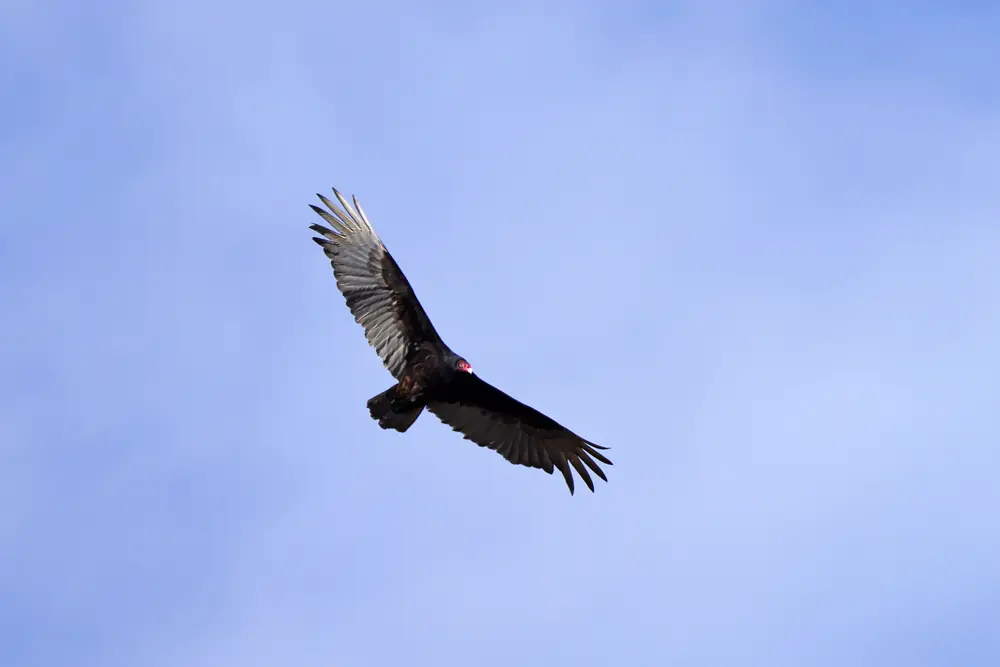
Turkey vultures return
Average first sighting April 5 in Sherburne County (earliest March 8, latest May 14) · Open country and river valleys, then farther north
Season Watch’s Sherburne County calendar, built from 26 volunteer records between 1982 and 2013, puts the average turkey vulture arrival at April 5. The spread is wide, so an early-April vulture over a ditch is a good sign but no promise that spring has settled. Note the date you first see one.
Where can you watch sharp-tailed grouse dance in April?
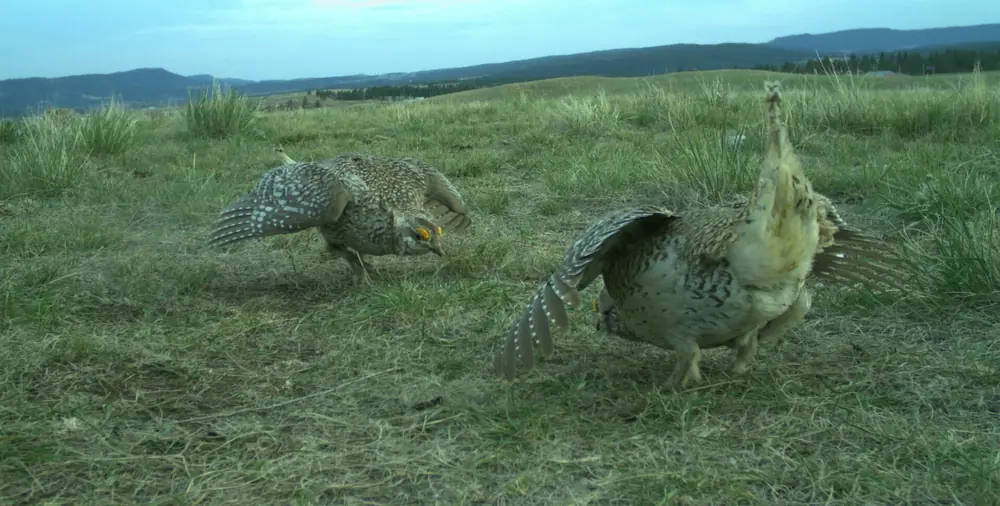
April is the sharp-tailed grouse’s showcase month. The DNR says males gather on a traditional grassy dancing ground, a lek, where they stomp, click their tail feathers, coo and cluck, with throat sacks that turn lavender when inflated. The birds live in open country with grass, brush and a few trees in northwestern and east-central Minnesota.
-
Dancing grounds at first light
Lek attendance usually peaks in the latter half of April and the first week of May · Northwest (Roseau and Thief River Falls areas) and the east-central Aitkin area
The DNR’s 2025 survey says lek attendance usually peaks in the latter half of April and the first week of May, and asks counters to visit within 2.5 hours of sunrise on clear, calm mornings. That year, surveyors counted 2,027 birds at 169 leks, an average of 12.0 per lek statewide. The east-central region held only 25 leks, compared with 70 as recently as 2010. Since the DNR attributes the long decline to lost grassland and brushland, watch from a vehicle or blind and never walk onto a lek.
-
Public blinds near Baudette
Spring mornings; ask the DNR area office · Baudette area, Lake of the Woods County
The DNR’s Baudette area wildlife office lists two public sharp-tailed grouse observation blinds among its annual work. The agency page gives no dates, rules or fees, so call the area office at 218-395-6033, or the DNR information line at 888-646-6367, to ask about reservations. Expect to settle in before daylight and stay quiet until the birds finish.
-
Ruffed grouse drumming
The DNR counts drumming at sunrise in April or May · The forested regions of the state
The DNR’s 2026 ruffed grouse survey describes drumming as a low sound males make by beating their wings faster and faster, which also draws females. Observers listen for four minutes at each of 10 stops about a mile apart. The 2026 statewide mean was 1.7 drums per stop (a 95 percent interval of 1.5 to 2.0), down from the year before and consistent with a peak in 2024. The agency notes that populations cycle over roughly 10 years.
Where and when do woodland wildflowers bloom in southern Minnesota?
The hardwood forests of the south and southeast flower first, in the short weeks before the canopy closes. The headline flower is one you can see in only three counties.
-
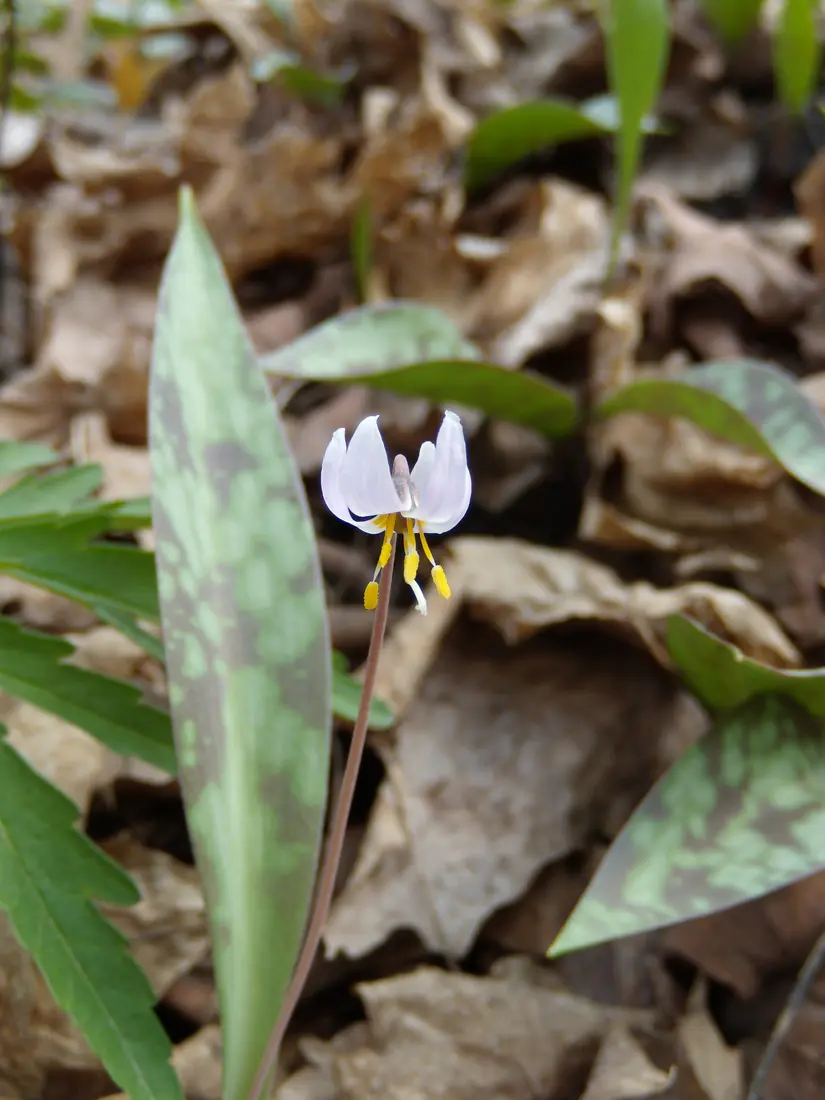
Minnesota dwarf trout lily
Late April to mid-May according to the U.S. Fish and Wildlife Service; a USFWS photo shows one in flower April 14, 2010 · Nerstrand Big Woods State Park (Rice County) and a few sites in Goodhue and Steele counties
This tiny lily grows nowhere else on Earth. The Fish and Wildlife Service says it occurs only in Goodhue, Rice and Steele counties, on fewer than 600 acres of woodland, and has been federally endangered since 1986. Its flowers are about the size of a dime or less, and it spreads mostly by underground stems. The DNR’s Nerstrand Big Woods State Park has a Trout Lily Boardwalk where the plant can be seen, and tells visitors to check the park website or office for bloom times each spring, since more than 200 wildflower species grow there. Bloom follows the weather, so a warm spring can bring flowers before the usual window. A volunteer program, Wildflower Ambassadors, helps visitors in the park. Stay on the boardwalk.
-
Interstate State Park and Curtain Falls
Early spring, before the canopy closes · Taylors Falls, Chisago County
A 2026 Minnesota Conservation Volunteer feature on Interstate State Park names trillium, Dutchman’s breeches and trout lily, and describes Curtain Falls as a waterfall that runs only after snowmelt or heavy rain, best seen before the leaves emerge. It advises staying on the trail to avoid ticks and protect fragile flowers.
-
Spring ephemerals on the Minnesota River
Spring, soon after the woods thaw · Minnesota Valley National Wildlife Refuge, Bloomington and southwest
The refuge lists bloodroot, Dutchman’s breeches, jack-in-the-pulpit and nodding trillium among its spring ephemerals, plus the state-threatened kittentails in oak savanna. On the prairie, Season Watch’s Hennepin County records (collected 1959 to 1985) put the average first pasqueflower bloom at April 17, ranging from April 3 to May 1.
When do steelhead and stream trout get moving in April?
April is when cold water wakes the fish of the North Shore and the southeast’s spring-fed streams. Two dates matter: when steelhead enter Lake Superior’s tributaries and when inland stream trout fishing opens.
-
Steelhead on the Knife River
Spring run typically in April; the DNR trap opened April 6 in 2024 (historic average April 8) · Knife River and other North Shore streams, Lake County
Steelhead are rainbow trout that grow in Lake Superior and return to their home streams to spawn. The DNR’s 2024 Knife River fish trap report says the adult trap opened April 6, against an average opening of April 8, and captured 204 unclipped (wild-produced) adult steelhead that spring. About 88 percent were caught in April, 12 percent in May and one in June. Females averaged 25 inches and 5.8 pounds, males 23 inches and 4.3 pounds, and about 40 percent of the wild fish carried a tag from an earlier year, which the report takes as a sign that catch-and-release rules adopted in 1997 are working. That is one year, and run timing moves with the thaw and river flow, so treat the dates as an example.
-
Stream trout opener
The DNR lists Saturday, April 10, 2027, for statewide inland streams · Southeast bluff country, the North Shore and other trout streams
The DNR’s fishing seasons page lists April 10, 2027, as the opening of stream trout fishing on inland streams statewide, and May 15, 2027, as the general fishing opener, next month. Rules differ in the southeast and on Lake Superior tributaries, so check the current regulations booklet first. April water is cold and often high with snowmelt: wade only where you can judge the current, and tell someone your plan.
When do loons come back, and what else is on the open water?
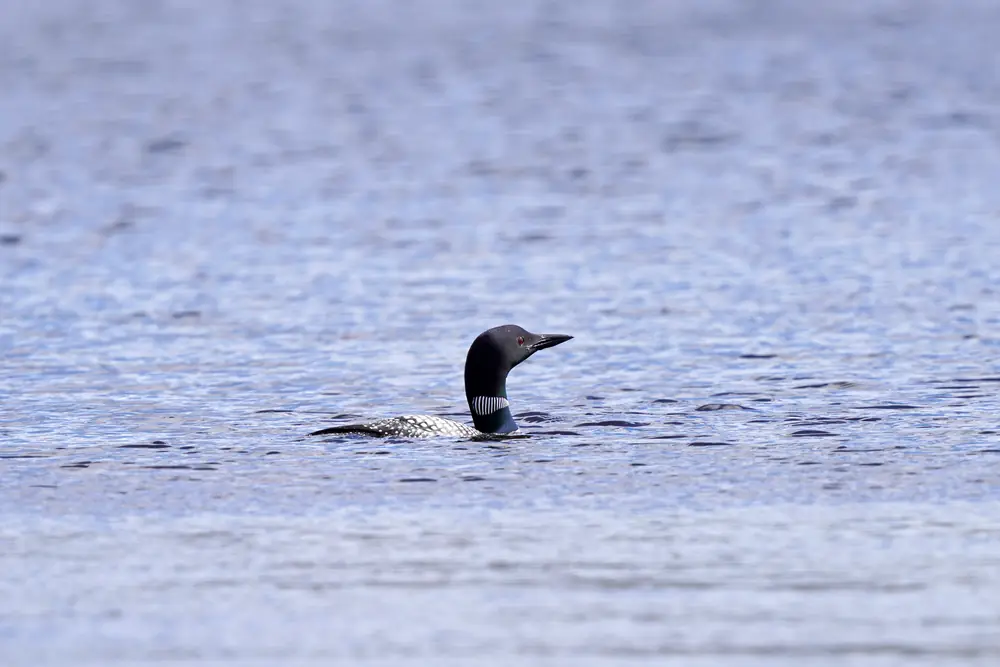
Open water is the signal that matters to waterbirds in April. The DNR puts Minnesota’s loon population at roughly 12,000, a total beaten only by Alaska, and Season Watch says early-season loon sightings typically come in late March or early April.
-
Common loons
Typically late March to late April, depending on ice-out · Lakes statewide, the south and east first
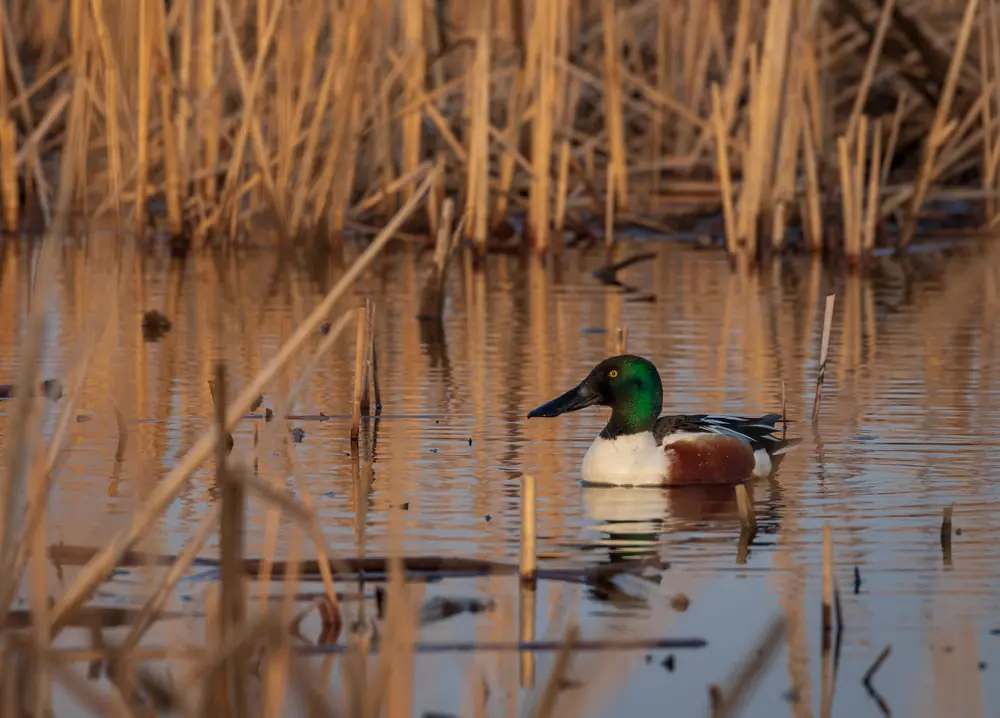
Season Watch’s Hubbard County records give an average first loon of April 10 (range March 24 to April 25, 18 records from 1997 to 2014). In Itasca County the average first loon heard is April 22 (April 12 to May 21), and in Sherburne County the average first sighting is April 7 (March 12 to April 30). The DNR’s ice-out records explain the northern lag: median ice-out is April 22 on Itasca, April 26 on Bemidji and Winnibigoshish, April 28 on Leech, and May 3 and 4 on Lake of the Woods and Rainy Lake. The DNR counts human disturbance among the threats to loons, which nest in reeds and grasses at the water’s edge, so keep your distance from any pair. Loons lay one to two eggs that take 28 to 30 days to hatch.
-
Ducks, swans, gulls and pelicans
April, as marshes open · Agassiz National Wildlife Refuge near Middle River; Minnesota Valley National Wildlife Refuge near Bloomington
Agassiz refuge describes Canada geese and trumpeter swans as the first northbound waterfowl, arriving in late March ahead of mallards, northern pintails and diving ducks. Later in spring come phalaropes, sandpipers and plovers, and up to 20,000 pairs of Franklin’s gulls establish colonies. Minnesota Valley refuge lists wood ducks, mallards, northern pintails, northern shovelers, blue-winged teal, tundra swans and American white pelicans. A DNR spring bulletin says songbird migration peaks in early to mid-May, and Season Watch puts the average first rose-breasted grosbeak in Sherburne County at May 11, so April is the opening act.
Which frogs, turtles and trees wake up in Minnesota in April?
The DNR’s calling table for Minnesota’s 14 frog and toad species lists four species calling in April (wood frog, boreal chorus frog, spring peeper and northern leopard frog), while pickerel frogs and American toads wait for May and gray treefrogs for late May. The table compares Season Watch averages from different counties and years, so compare events, not places.
-
Wood frogs and chorus frogs
Typically early to late April; Carlton County average first calling April 14 · Fishless woodland pools and flooded fields
Carlton County’s calendar gives April 14 as the average first wood frog calling date (March 29 to May 5, 14 records from 1997 to 2013) and April 23 for the first eggs. Itasca County’s average first wood frog heard is April 15, and Marshall County’s is April 10 (March 31 to April 19). The DNR’s FrogWatch program, formerly the frog and toad calling survey, asks volunteers to listen after dark, starting 30 minutes past sunset, every two to four weeks from March or April through August. The agency is not yet taking 2027 applications and points people to its Community Science Bulletin for updates.
-
Painted turtles, buds and Arbor Day
Painted turtles average April 21 in Carlton County; tamarack buds break around April 23 in Itasca County · Sunny logs and pond edges; boreal forest in the north
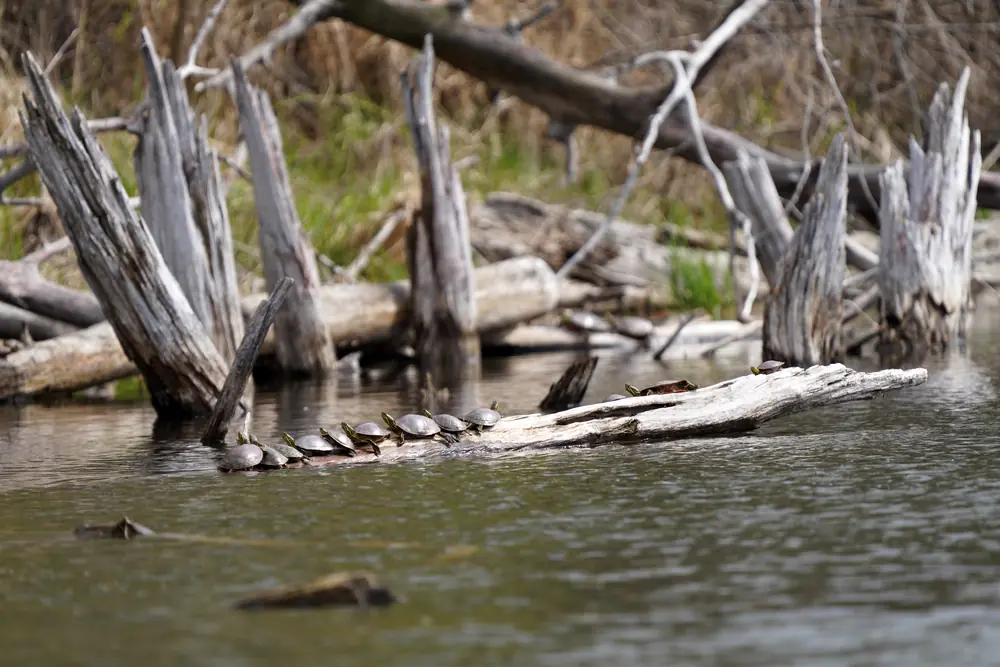
Painted turtles crawl onto sunny logs once the water warms, averaging April 21 in Carlton County (March 28 to June 1). In Itasca County, tamarack buds average April 23 and quaking aspen buds May 1; in Hubbard County aspen buds average April 28. Arbor Day in Minnesota comes on April 30 in 2027, the final Friday of the month, and the DNR has made May Arbor Month since 1978 because warm weather helps new trees settle in.
-
Morels
Late April through May in southern Minnesota, into June in the north · Woodlands with dying elm, ash, poplar and apple; burned or logged ground
The University of Minnesota Extension says morels usually emerge in spring after adequate rain, and warns of a poisonous false morel: when in doubt, throw it out. It advises pinching or cutting the stem just above the soil. If someone becomes sick, call Poison Control at 1-800-222-1222 and save an uncooked sample. Gathering rules differ on public land, so check them first.
| Event | County | Average date | Earliest on record | Latest on record |
|---|---|---|---|---|
| Mourning cloak first seen | Hubbard | Apr 6 | Mar 5 | Apr 28 |
| Common loon first seen | Hubbard | Apr 10 | Mar 24 | Apr 25 |
| Wood frogs calling | Carlton | Apr 14 | Mar 29 | May 5 |
| Pasqueflower flowering | Hennepin | Apr 17 | Apr 3 | May 1 |
| Painted turtles first seen | Carlton | Apr 21 | Mar 28 | Jun 1 |
| Tamarack leaf buds breaking | Itasca | Apr 23 | Mar 28 | May 12 |
| Quaking aspen leaf buds break | Hubbard | Apr 28 | Apr 5 | May 20 |
| American toads calling | Carlton | May 8 | Apr 4 | May 29 |
How warm is April in Minnesota, and what can the weather do?
NOAA’s 1991–2020 normals show a month of wide swings. Duluth’s normal April high is 49.2 °F and International Falls averages 22.6 nights at or below freezing, while Minneapolis/St. Paul reaches 56.6 °F and freezes on about 9 nights. NOAA’s Climate Prediction Center issues new seasonal maps each month (see its seasonal outlook pages), and we leave their contents to them. Our weather page has the day’s forecast for your town.
-
April snowstorms
April; rare but real · Statewide
Three April storms appear among the DNR’s 25 biggest Twin Cities snowfalls since 1884: the “Thunder Blizzard” of April 13 to 16, 2018 (15.8 inches), April 14, 1983 (13.6 inches) and April 27 and 28, 1907 (13.0 inches). They are exceptions, which is why the freeze table below is better guidance than one warm week.
-
Severe weather season stirs
Statewide drills come during Severe Weather Awareness Week each April · Statewide
The State Climatology Office’s 1991 to 2020 statistics show April averaging 0.9 tornadoes, 2.1 percent of an annual average of 46, against 5.7 in May. Severe Weather Awareness Week ran April 13 to 17 in 2026, with statewide drills on Thursday, April 16, at 1:45 p.m. and 6:45 p.m. Counties and cities own the sirens and decide when to sound them. The National Weather Service has not posted a 2027 date, so look for it in early spring, and use the week to choose your safest room.
-
Red River and snowmelt flooding
Crests typically occur in April · Red River Valley (Moorhead, Breckenridge and north)
The National Weather Service in Grand Forks explains that the Red River flows north, so thaw starts upstream while ice still blocks the channel downstream, and the flat valley lets water back up into tributaries. Crests typically occur in April: Fargo crested April 3 in 1994 and April 16 in 1996. Severity depends on snow depth, water content, freeze-thaw cycles, rain timing and soil moisture, none of which is knowable months ahead.
-
Fire danger before green-up
After the snow melts and before vegetation greens up · Statewide, especially grass and brush country
The DNR says the stretch between snowmelt and green-up can be a dangerous time for wildfire. Check statewide fire danger and burning restrictions, and apply online for a burning permit where one is required. Keep campfires to 3 feet in width and height at most.
| Station | Average high | Average low | Precipitation | Snowfall | Nights at or below 32 °F |
|---|---|---|---|---|---|
| INTL FALLS INTL AP | 50.1 °F | 26.1 °F | 1.64 in | 7.0 in | 22.6 |
| DULUTH | 49.2 °F | 29.9 °F | 2.53 in | 9.1 in | 19.0 |
| ST CLOUD RGNL AP | 54.3 °F | 32.4 °F | 2.61 in | 4.7 in | 15.5 |
| MINNEAPOLIS/ST PAUL AP | 56.6 °F | 37.5 °F | 2.91 in | 3.5 in | 9.0 |
| ROCHESTER INTL AP | 55.3 °F | 35.1 °F | 3.52 in | 3.3 in | 10.7 |
When is the last spring freeze in Minnesota?
The date of the last freeze decides when tomatoes can go outside, and in Minnesota it varies by more than a month between south and north. In the table, the median falls on April 23 at Minneapolis and April 30 at Rochester, but on May 20 at Grand Marais and May 29 at International Falls. “One year in ten” is the early end, and “nine years in ten” the late one: Minneapolis still sees a freeze as late as May 7 in the worst tenth of springs, and International Falls as late as June 16. Our Minnesota frost chart covers more stations.
| Station | One year in ten | Median | Nine years in ten |
|---|---|---|---|
| International Falls | May 13 | May 29 | Jun 16 |
| Moorhead | Apr 23 | May 5 | May 20 |
| Duluth | Apr 29 | May 13 | May 29 |
| Grand Marais | May 3 | May 20 | Jun 6 |
| St. Cloud | Apr 24 | May 7 | May 23 |
| Minneapolis | Apr 8 | Apr 23 | May 7 |
| Rochester | Apr 15 | Apr 30 | May 13 |
| Worthington | Apr 19 | May 3 | May 15 |
How much daylight does Minnesota gain in April?
April adds a little less daylight than March did, about 3 minutes a day, and the gain is biggest in the north, where the month ends with the longest days. Every clock reading is daylight time, since the change came on March 14. The Naval Observatory’s tables have Minneapolis sunsets arriving at 8:00 p.m. by April 16. For any Minnesota town, try our daylight calculator.
| City | Apr 1 | Apr 30 | Gained | Per day |
|---|---|---|---|---|
| International Falls | 12 h 52 m | 14 h 31 m | 99 min | 3.4 min |
| Grand Marais | 12 h 51 m | 14 h 26 m | 95 min | 3.3 min |
| Bemidji | 12 h 51 m | 14 h 25 m | 94 min | 3.2 min |
| Moorhead | 12 h 49 m | 14 h 22 m | 93 min | 3.2 min |
| Duluth | 12 h 49 m | 14 h 22 m | 93 min | 3.2 min |
| Minneapolis | 12 h 47 m | 14 h 13 m | 86 min | 3.0 min |
| Rochester | 12 h 46 m | 14 h 09 m | 83 min | 2.9 min |
| Worthington | 12 h 45 m | 14 h 08 m | 83 min | 2.9 min |
What can you see in the Minnesota sky in April?
The Moon dominates April, and the extras are modest: a bright planet at dusk, another before dawn, and a meteor shower the Moon spoils. All times are Central Daylight Time, from the Naval Observatory’s 2027 moon table and our own planet computations. Check our cloud climate page for how often skies are clear, and the moon phase calendar for other months.
-
The Pink Moon
Full Tuesday, April 20, at 5:27 p.m. CDT · Rising in the east-southeast at dusk
Pink Moon is the traditional almanac name for April’s full moon, not a color. It becomes full before it rises; Minneapolis moonrise on April 20 is 8:21 p.m., the best moment to watch it climb, and it looks round the evenings before and after.
-
The Lyrids, a poor year
Peak about 8:41 p.m. CDT Thursday, April 22; active about April 14 to 30 · Northeast and high, away from city lights
The Lyrids peak about 8:41 p.m. CDT on April 22 according to the International Meteor Organization, and our own calculation agrees within about 15 minutes. The Moon is nearly full and rises near 10:44 p.m. in Minneapolis that night, leaving just a short dark window at dusk when Lyra, where the meteors seem to start, is still climbing in the northeast. The shower’s rate under ideal skies is about 18 to 20 an hour; this year expect only a few.
-
Venus before dawn, Jupiter at dusk
All month · Venus low in the east before sunrise; Jupiter high in the evening
Venus shines in the morning twilight, clearing the eastern horizon about 75 minutes before sunup on April 1 at 40 degrees north (the time shifts by up to half an hour at other latitudes), and, by the same calculation, the thin, 9 percent crescent Moon hangs close by on the April 3 and April 4 mornings. Jupiter, the brightest evening planet, stands in Leo near the Cancer border. By our calculation, a gibbous Moon, 68 percent illuminated, pairs with it on April 14 and 15, and Mars, a faint orange dot, floats near the Moon the night of April 15. Saturn is hidden by the Sun until later in spring, since it passes conjunction on April 7.
| Phase | Date | Time |
|---|---|---|
| New moon | Tuesday, Apr 6 | 6:51 p.m. |
| First quarter | Tuesday, Apr 13 | 5:56 p.m. |
| Full moon, the Pink Moon | Tuesday, Apr 20 | 5:27 p.m. |
| Last quarter | Wednesday, Apr 28 | 3:18 p.m. |
What can Minnesota families do outside in April?
An agency, organizer or the calendar has published each date below; everything else is a season, so confirm before you drive.
- Saturday, April 10: inland stream trout fishing opens, per the DNR.
- Wednesday, April 14: spring turkey season opens with youth and archery hunting; Season A runs through April 20. Wear something bright on trails.
- April 10 to 20, typically: the busiest days for sharp-shinned and red-tailed hawks at Hawk Ridge, where the count runs daily through May 31.
- Tuesday, April 20: full Pink Moon at 5:27 p.m. CDT, rising in Minneapolis at 8:21 p.m.
- Thursday, April 22: Earth Day, and the Lyrid meteor peak at about 8:41 p.m. CDT before moonrise spoils the sky.
- Friday, April 30: Arbor Day in Minnesota. Plant or adopt a tree and log its bud break.
- May 20 to 22: Detroit Lakes Festival of Birds, whose organizer lists these dates for its 30th annual festival, with trips to watch greater prairie-chickens boom on leks. It falls next month, so plan ahead.
- Any mild evening: listen at a woodland pool for frogs. FrogWatch is not recruiting for 2027 yet.
- Any weekend: record turkey vultures, loons and painted turtles on Season Watch; Journey North takes migration sightings, and BirdCast’s maps show what flew overnight.
- National Eagle Center: its schedule lists no April or May 2027 trips, since eagle trips run November through March, so call before visiting.
Weather can cancel programs, so call first. Other months and states are on our nature index, and the Naturalist’s Field Journal offers a log page for each thing named above.
Safety notes for April in Minnesota
Spring hides a few hazards in plain sight: cold water, weak ice, early ticks and hunters sharing the trail.
-
Spring turkey season
Season A April 14 to 20, B April 21 to 27, C April 28 to May 4, 2027; youth and archery April 14 to May 31 · Statewide
The DNR’s 2027 table lists six firearm seasons: A (April 14 to 20), B (April 21 to 27), C (April 28 to May 4), D (May 5 to 11), E (May 12 to 18) and F (May 19 to 31), plus youth and archery seasons from April 14 to May 31, and a February 12, 2027, deadline for the wildlife management area lottery. Check the regulations for licenses and hours. On public land at dawn, expect hunters in camouflage and announce yourself.
-
Blaze orange
Not required for turkey · Statewide
The DNR’s blaze clothing page lists turkey hunting as an exception when no firearms or muzzleloader deer season is open. Other game, such as small game, follows its own rules. A bright hat is cheap insurance for walkers.
-
Late ice and cold water
All month · Northern lakes
The DNR’s advice: no ice is 100 percent safe, fresh clear ice outperforms old rotting ice, and cold water kills. Median ice-out on Lake of the Woods and Rainy Lake is not until May, so far-northern lakes stay frozen for much of the month. Carry ice claws near any edge.
-
Ticks
Adults emerge right after snowmelt; peak spring activity in May · Wooded and brushy areas
Per the Minnesota Department of Health, adult blacklegged ticks emerge right after the snow melts and peak in May. It advises staying on the mowed trail, checking yourself and removing ticks promptly.
-
Storms and flood water
Any time · Statewide
Know where you would shelter if a warning sounded on a hike or fishing trip, and never drive through flooded roads.
Sources (52)
- Hawk Ridge Bird Observatory: spring visitor’s guide
- Season Watch (University of Minnesota and Northern Community Radio): Sherburne County phenology calendar
- Season Watch: Hubbard County phenology calendar
- Season Watch: Carlton County phenology calendar
- Season Watch: Itasca County phenology calendar
- Season Watch: Marshall County phenology calendar
- Season Watch: Hennepin County phenology calendar
- Season Watch: common loon
- Season Watch: painted turtle
- Minnesota DNR: sharp-tailed grouse
- Minnesota DNR: 2025 Minnesota sharp-tailed grouse survey (PDF)
- Minnesota DNR: Baudette area wildlife
- Minnesota DNR: 2026 Minnesota ruffed grouse survey (PDF)
- U.S. Fish and Wildlife Service: Minnesota fawnlily (dwarf trout lily)
- Minnesota Wildflowers: dwarf trout lily
- Minnesota DNR: Nerstrand Big Woods State Park, Trout Lily Boardwalk
- Minnesota DNR: Nerstrand Big Woods State Park, Wildflower Ambassadors
- Minnesota Conservation Volunteer: Discover Interstate State Park in spring (2026)
- U.S. Fish and Wildlife Service: Minnesota Valley NWR, species
- U.S. Fish and Wildlife Service: Agassiz NWR, species
- Minnesota DNR: Knife River fish trap report, 2024 (PDF)
- Minnesota DNR: fishing seasons
- Minnesota DNR: Look Up! spring birding starts now (April 2026 bulletin)
- Minnesota DNR: common loon
- Minnesota DNR State Climatology Office: lake ice-out records for selected lakes
- Minnesota DNR: frog and toad breeding calendar
- Minnesota DNR: Minnesota Statewide FrogWatch
- Minnesota DNR: Arbor Day and Arbor Month history
- University of Minnesota Extension: harvesting morel mushrooms
- NOAA NCEI: 1991–2020 monthly normals, International Falls station file
- NOAA NCEI: 1991–2020 monthly normals, Duluth station file
- NOAA NCEI: 1991–2020 monthly normals, St. Cloud station file
- NOAA NCEI: 1991–2020 monthly normals, Minneapolis/St. Paul station file
- NOAA NCEI: 1991–2020 monthly normals, Rochester station file
- Minnesota frost dates (NOAA 1991–2020 normals)
- Minnesota DNR: top 25 snowfalls in the Twin Cities
- Minnesota DNR State Climatology Office: Minnesota tornado history and statistics
- National Weather Service Twin Cities: Severe Weather Awareness Week
- National Weather Service Grand Forks: anatomy of a Red River spring flood
- Minnesota DNR: wildfire
- NOAA Climate Prediction Center: seasonal (90-day) outlooks
- U.S. Naval Observatory: phases of the moon, 2027
- Minnesota DNR: upland bird, crow and turkey season dates
- Minnesota DNR: blaze orange and pink requirements
- Minnesota DNR: ice safety
- Minnesota Department of Health: ticks
- Detroit Lakes Festival of Birds
- National Eagle Center: eagle viewing field trips
- Minnesota DNR: Fish and Wildlife Almanac, April 6, 2026
- Journey North
- BirdCast: live migration maps
- Photos via Wikimedia Commons; licenses and photographers are credited under each picture