What to look for in nature in Minnesota this February
Meteorologists count February as winter’s final month, and in Minnesota it rarely feels like an ending. Lakes still hold shelters and trucks, and the north can post its deepest cold of the season. Look closer, though, and the year is turning. Bald eagles settle onto eggs in nests six feet across, horned larks reappear along gravel shoulders, foxes and coyotes pair off, and by month’s end sugarbush owners in the south have their taps in. On Lake Superior, the ice is usually near its widest. The days lengthen fastest of any winter month, and by February 28 Minneapolis has more than eleven hours of daylight. The sections below follow the month across the state’s regions, and they give a date only when a source does.
Other months in Minnesota: October, November, December, January.

Start here

- Count birds for the Great Backyard Bird Count. Audubon, one of the sponsors, lists the 30th count as a four-day event, Friday the 12th through Monday the 15th. Even a 15-minute count from one window qualifies; confirm the details with Audubon and enter your list through Merlin or eBird.
- Watch an eagle nest from home. The DNR’s EagleCam streams a bald eagle nest near the Mississippi in the Twin Cities. By mid-February the pair usually has eggs, and the two adults trade places on them through snow and wind.
- Find Jupiter at opposition. Look east as the sun goes down on Wednesday the 10th: opposite the sunset, giant Jupiter lifts over the horizon and outshines every star until dawn. Hold binoculars against a post and you may catch its four big moons, tiny dots lined up beside it.
Keep a record: on the nest observed page, log each day the EagleCam eagles swap places on the eggs; add horned larks to birds I have seen with the road and the date; jot each Sunday’s sunset time in the dusk and dawn watch pages to see the evenings lengthen; sketch fox or coyote trails that travel in pairs on tracks to know; and note the first snow fleas, sap drip or skunk scent on reading the signs. Add the morning low to every daily field log entry.
Regions used below: Arrowhead and the North Shore; Northwest and the Red River Valley; North-central lakes and bogs; Twin Cities and central Minnesota; Southwest prairie; Southeast bluffs and the Mississippi.
When do bald eagles lay eggs in Minnesota?
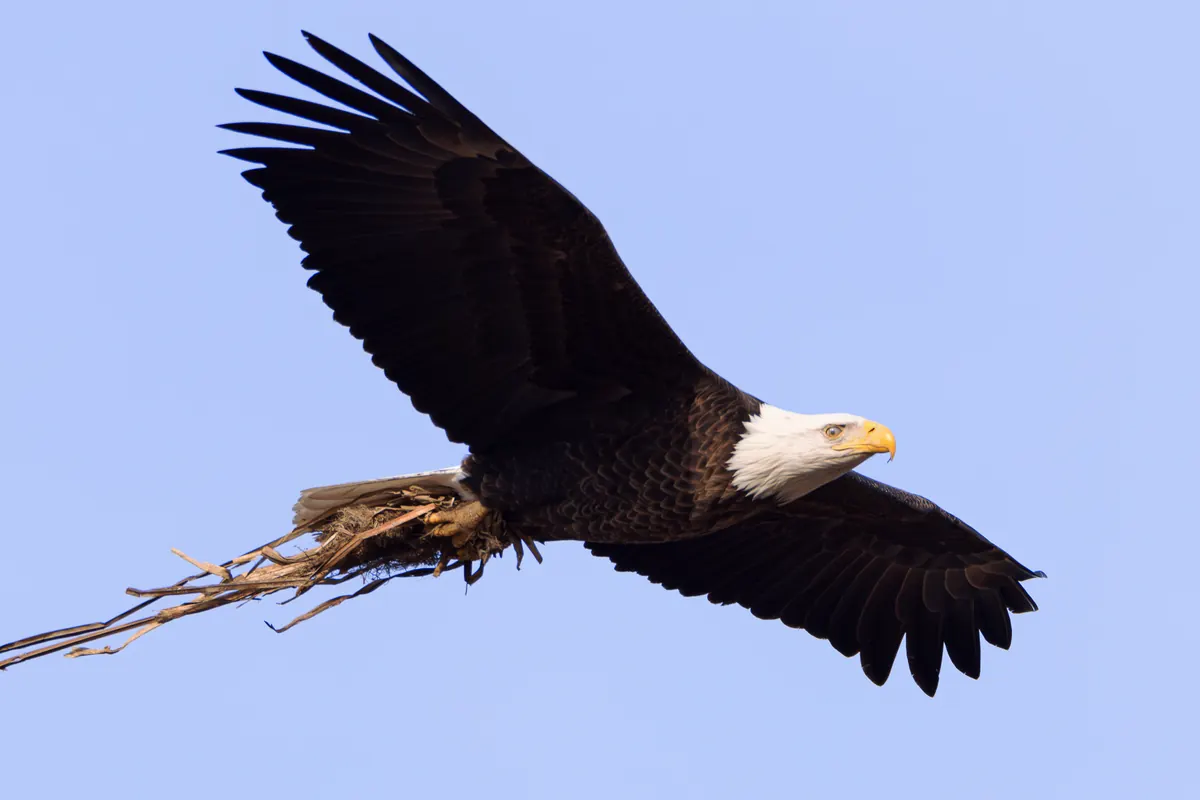
Bald eagles nest while the snow is still deep. Pairs that stayed near open water all winter, or that drifted back early, have spent weeks adding sticks to a nest they may have used for years, and through February many of them begin to incubate. The DNR’s answer on timing is a range: its EagleCam questions page says the one to three eggs usually come in January, while its news release on the camera’s pair says that pair usually has two or three eggs by mid-February. Either way, by February many Minnesota nests have one adult lying low in the bowl.
-
The DNR EagleCam
Streaming all winter; eggs expected by mid-February · A nest near the Mississippi River in the Twin Cities area (online)
The Nongame Wildlife Program has run a public eagle camera for more than a decade. The original nest, filmed for ten years, fell in April 2023; a new camera installed in October 2024 looks into the nest of a pair that had used it for at least four years and fledged two eaglets in 2025. Incubation lasts about 35 days from the last egg, and both adults take turns, though the female usually takes the night shift. If eggs appear in mid-February, watch for the first pip around the third week of March. The camera is paid for largely by donations to the Nongame Wildlife Fund, including the checkoff on the state income tax form.
-
Reading a nest from the road
February and March · Big cottonwoods and pines near rivers and lakes statewide, especially the Mississippi, Minnesota and St. Croix valleys
The DNR says eagle nests are commonly 6 to 8 feet across and weigh several hundred pounds, so they stand out in bare winter crowns. In February, the clue is behavior: if a white head shows above the rim day after day and the mate perches nearby, the pair is probably incubating. Stay well back. Eggs left uncovered in subzero air can chill quickly, so watch from a vehicle or from the far side of a field with binoculars. The DNR’s last statewide survey, in 2005, counted more than 800 active nests, and the number has very likely grown since.
-
Owlets before eagles
Late February into March · Old hawk and crow nests in woodlots and river bottoms
Great horned owls start a few weeks ahead of the eagles. The DNR gives their eggs 30 to 37 days to hatch, so nests begun in January can hold downy white owlets by the end of February, tucked under the hen while the male hunts. Check the same old stick nests you found last month, from a distance.
Golden eagles have not left yet. The National Eagle Center in Wabasha runs golden eagle field trips into the southeast blufflands on Saturdays, February 6, 13, 20 and 27, plus Thursday, February 18, each from 12:30 to 3:30 p.m. ($60, or $50 for members, with center admission included).
How much of Lake Superior freezes, and when is the ice at its peak?
Lake Superior is the last big water in Minnesota to freeze and the one least likely to freeze completely. NOAA’s Great Lakes Environmental Research Laboratory, which has mapped Great Lakes ice since 1973, says the upper lakes normally hit their greatest ice extent in late February or the first days of March. That makes late February the time to see the North Shore at its iciest: plates of lake ice stacked on the rocks, frozen spray coating shoreline trees and, on calm cold days, open water far out beyond a white rim.
-
Ice that comes and goes
Peak usually late February to early March · Duluth harbor, Park Point, Two Harbors, Grand Marais harbor
The yearly maximum swings wildly. In GLERL’s record the lake was 100 percent covered on March 8, 1996, and nearly so in 2014 and 2019, but only 8.2 percent at its peak in 2012. Wind matters as much as cold: a northeast gale can push loose pack ice against the Minnesota shore and pile it into high ridges, then a shift in wind can clear it away within a day.
-
Stacked ice on the shore
After strong onshore winds · Cobble beaches and harbors from Duluth to Grand Marais
When pans of thin lake ice are driven ashore, they break, slide over one another and freeze into heaps of glassy plates. These are fun to photograph and dangerous to climb: the piles shift and can hide open water between plates. Enjoy them from the beach.
| Winter ending | Maximum ice cover | Date of maximum |
|---|---|---|
| 1979 | 97.1% | Feb 25 |
| 1983* | 20.2% | Feb 7 |
| 1987* | 14.5% | Jan 25 |
| 1992* | 73.3% | Mar 23 |
| 1996 | 100.0% | Mar 8 |
| 1998* | 11.1% | Jan 16 |
| 2012 | 8.2% | Jan 22 |
| 2014 | 95.8% | Mar 3 |
| 2016* | 22.7% | Feb 14 |
| 2019 | 94.9% | Mar 8 |
| 2024* | 12.0% | Feb 19 |
| 2025 | 45.6% | Feb 21 |
| 2026 | 62.5% | Mar 2 |
GLERL posts daily ice charts all winter, so you can check before driving up the shore. Treat Lake Superior ice as off limits: wind and waves can break it up and carry it away with little warning.
Which birds and small creatures are the first signs of spring in Minnesota?
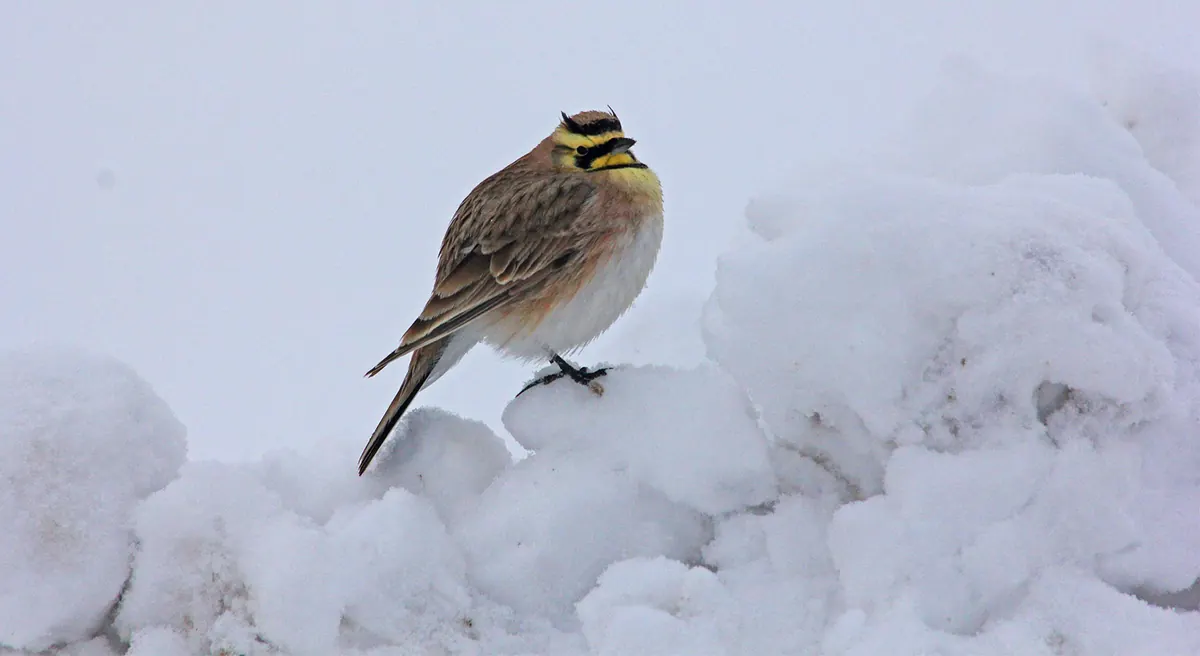
Robins get the credit, but in Minnesota the first returning migrants are usually horned larks, small brown birds of bare fields that are back while every lake is still frozen. Some never leave the southern counties at all, which makes the true arrivals hard to separate from winter residents.
-
Horned larks on the gravel
Early February into late March · Gravel roads, plowed field edges and manure-spread fields, especially in the southwest prairie, Red River Valley and farm country statewide
The Saint Paul Bird Alliance, the local Audubon chapter, notes that the larks that went south start moving back into Minnesota in early February and keep coming through late March. The Minnesota Breeding Bird Atlas adds that northern birds drift south in December and January and that a few stay through the winter, so the first flocks of February are a mix of travelers and residents. Look for small flocks that flush from a road shoulder ahead of the car with a thin, tinkling call and black tail feathers, then land again just ahead. Up close the male shows a black mask, a yellow face and two tiny feather horns. Before long the males sing their faint, tinkling song high over the fields. The atlas describes horned larks as birds of cropland, pasture and roadsides with lots of bare ground.
-
Spring songs from winter birds
Mild, sunny mornings · Yards, parks and woods statewide
Residents start singing before any migrant arrives. On the first bright mornings of the month, listen for the clear two-note whistle of a black-capped chickadee, the long whistled phrases of northern cardinals in the south and the steady drumming of woodpeckers on resonant dead limbs. Write the date of the first one you hear; a dated first song is worth comparing year to year.
-
Snow fleas
Mild, sunny days in late winter and early spring · Snow around tree bases and in woods statewide
Look at the snow around a tree trunk on a sunny afternoon: if the sooty specks are hopping, they are springtails (Hypogastrura nivicola), each about an eighth of an inch long, not fleas at all. The University of Minnesota Extension says they appear on top of the snow in late winter, often in large numbers near the bases of trees, and that they do not bite people, harm plants or damage buildings. Extension’s gardeners count them as helpers, since they break down decaying plant material in the soil. A hand lens turns a sooty patch of snow into a crowd of tiny animals.
Drive slowly on gravel roads in larks’ country and pull fully onto the shoulder to look; farm traffic uses these roads all winter.
When do you tap maple trees in Minnesota?
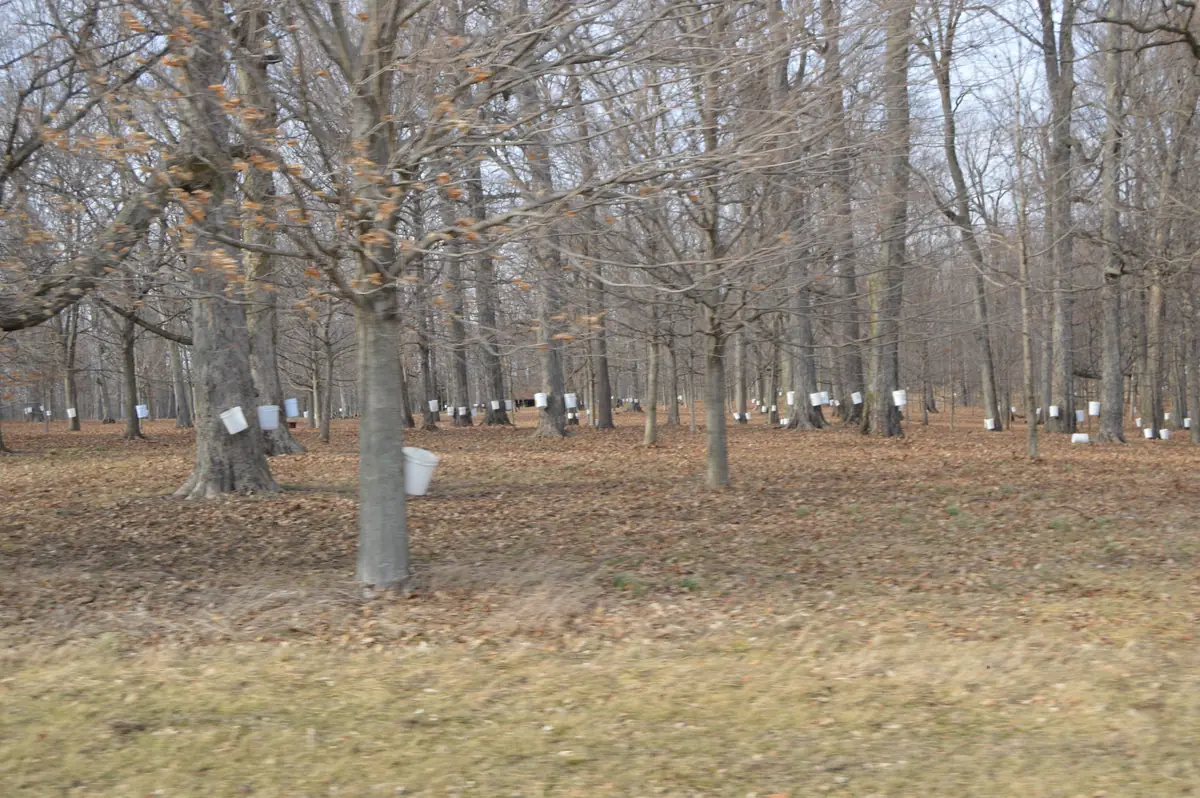
Sap runs on the swing between freezing nights and thawing days, and that swing usually arrives in March. February is setup month. The University of Minnesota Extension advises finishing tapping by mid-February in central and southern Minnesota and by the second week of March in the north, so that the first good run is not missed. The DNR’s state park guide to syrup is a little more patient: it says the right conditions normally come in March, though in some years trees can be tapped as early as mid-February or as late as April.
-
When sap flows
Nights below freezing, days in the 40s · Sugarbushes, woodlots and yard maples in the southeast, center and north
Extension explains that sap flows when the morning warms quickly after a night below freezing. A day that stays below freezing stops the flow, and so does a stretch of warm nights. The DNR adds that the season is over once temperatures stay above freezing and the leaf buds appear.
-
Which trees to tap
Any time before the first run · Statewide
Sugar maple is the favorite, with the sweetest sap; red maple, silver maple and box elder also work. A tree needs a trunk at least 10 inches across, measured 4 feet up, before it gets a single tap, according to Extension. Sugar maple sap is about 2 percent sugar, so it takes roughly 40 to 43 gallons boiled down to make a gallon of syrup, and the DNR’s guide notes that box elder may need 60. A single tap hole gives about 10 to 12 gallons in a season.
Winter twig skills from January pay off here: maples, including box elder, are among the few Minnesota trees with buds in opposite pairs. Mark the trees you want while you can still tell them apart, and come back with a drill once the forecast shows a thaw.
When do foxes, coyotes and skunks mate in Minnesota?
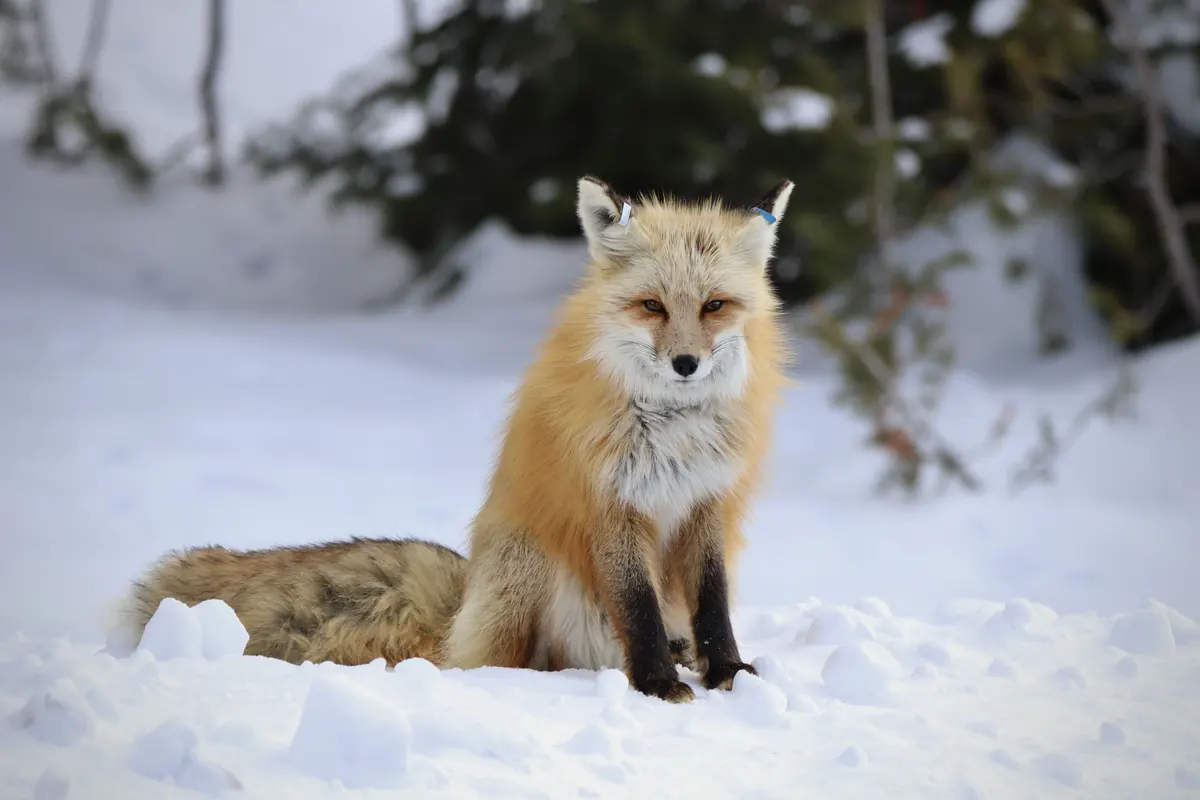
For several Minnesota mammals, February is courtship season. Pups and kits born in spring are being started now, so tracks, scent and sounds change in the snow.
-
Red foxes
January and February · Farmland, suburbs and woods edges statewide
The University of Minnesota Duluth’s Mammals of Minnesota says red foxes mate in January and February and the kits, three to seven of them, are born about 52 days later. Look for two sets of fox tracks traveling together, and for urine marks on snowbanks and stumps where the pair has paused. At night, listen for sharp, barking calls.
-
Coyotes
Mating January through February · Statewide, including the metro
According to the DNR, the coyote mating season begins in January and runs through February, and adults usually mate for life once they start breeding at about two years old. Five to seven pups follow in April. A pair’s trails often run side by side for miles across a frozen marsh or field. Coyotes live in the metro as well, so keep small dogs leashed on winter walks.
-
Striped skunks
Breeding late February and March · Field edges, farmyards and towns, mostly in the south and center
The DNR’s Minnesota Conservation Volunteer says skunks den up for the winter but come out on warm spells, and that breeding begins in late February and runs into March, with young born in May. A whiff of skunk on a thawing February night, or a line of small, flat-footed tracks between buildings, usually means a male out searching.
Wolves reach the peak of their own breeding season this month in the northern forest, so the marking and howling that build through January continue. Keep any dog close where wolves live.
Do Minnesota woodchucks come out on Groundhog Day?
Not here. Groundhog Day falls on Tuesday, February 2, and Minnesota’s woodchucks will sleep straight through it. The DNR’s Minnesota Conservation Volunteer says they hibernate from fall until spring, below the frost line, and start waking and moving about in March. Their body temperature drops from about 90 degrees to about 40, the heart slows from about 100 beats a minute to just five, and the animal breathes only about twice a minute.
-
The real midpoint of winter
February 3 and 4 · Everywhere
The old cross-quarter day that Groundhog Day grew from sits at the middle of astronomical winter, with the solstice six weeks behind and the equinox six weeks ahead. In Central time the sun reaches that point on the evening of Wednesday, February 3, and the exact halfway point in time between the solstice and the equinox falls in the small hours of Thursday, February 4. So the folklore is a day or two early.
-
Who wakes first
March · Field edges, road banks and yards
The male woodchuck surfaces first, sometime in March, and checks the burrows of the females whose ranges overlap his. If snow still covers the ground, he lives on what is left of his fall fat. Mark a burrow you know now, and check it after the first warm spell.
How hard is late winter on Minnesota deer?
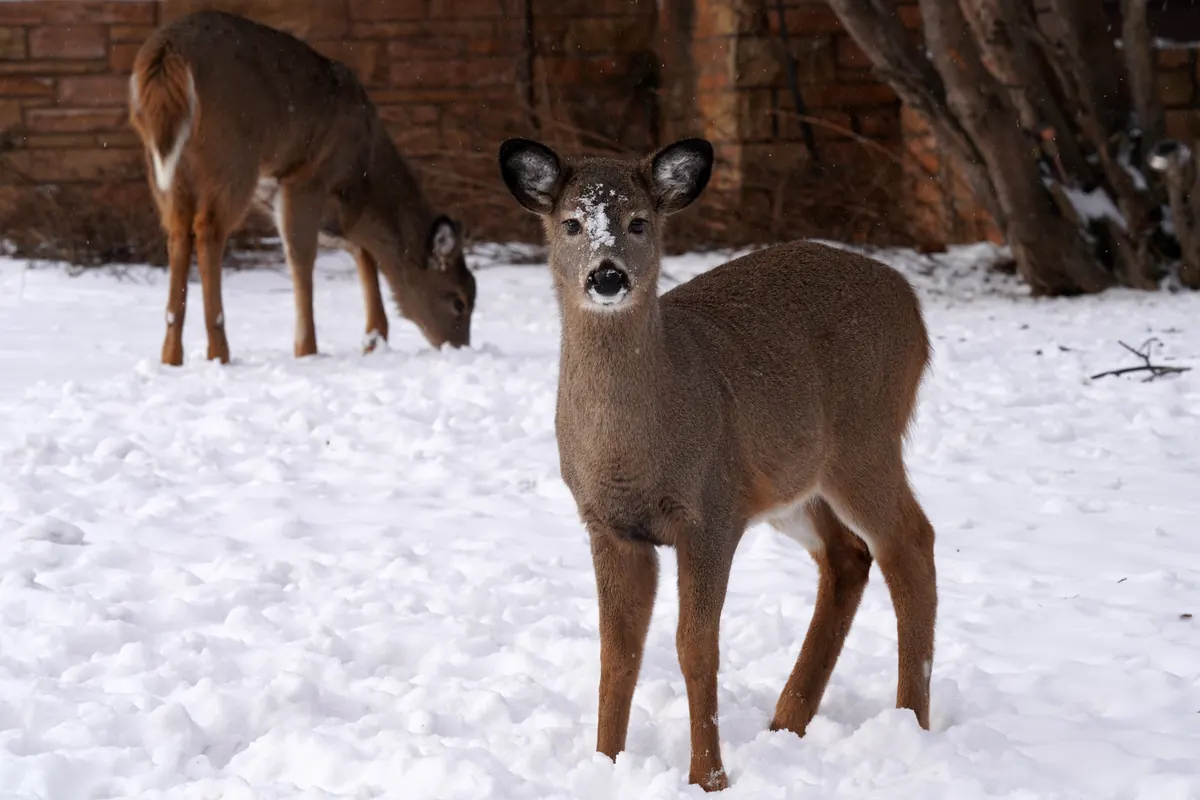
For white-tailed deer, the end of winter is the hardest stretch. Fat stored in fall is nearly gone, and every foot of deep snow costs energy. The DNR tracks the pressure with its winter severity index, figured weekly from November 1 to May 31.
-
How the index works
Updated weekly through the winter · Mainly the northern forest
The index adds one point for every day at or below 0 °F and another for every day with 15 inches of snow or more on the ground. Under the DNR’s current categories, a season total of 50 or less is mild, 51 to 119 moderate and 120 or more severe. The agency stresses that depth matters more than temperature, because deer burn reserves plowing through snow. Fawns are most at risk in a hard winter, then bucks worn down by the rut, then does.
-
Deer in the conifers
Deep-snow periods · Cedar swamps and dense spruce and fir stands in the north
In deep snow, northern deer bunch up under thick evergreen cover close to food; the DNR describes a canopy of 70 percent or more as ideal. Look for packed trails, beds and browse lines where every reachable twig of cedar and maple has been nipped. Leave yarded deer alone, since each flight burns energy they cannot replace until green-up.
Deer herds bounce back well; the DNR says they typically recover within three to four years of normal winters, thanks to high reproduction.
How cold and snowy is February in Minnesota, and what might El Niño do?
Across the state February runs a few degrees warmer than January, yet the north still averages about two weeks of subzero nights. At most northern and metro stations it brings less snow than January, but it can surprise: in February 2019 the Twin Cities measured 39.0 inches, smashing the 1962 February record of 26.5 inches, Rochester had 40.0 and Duluth 36.4. The State Climatology Office counted new February records at 47 of the state’s long-running cooperative stations that month.
| Station | Average high | Average low | Nights at or below 0 °F | Average snowfall |
|---|---|---|---|---|
| International Falls (far north) | 21.7 °F | -2.6 °F | 15.6 | 12.6 in |
| Moorhead (Red River Valley) | 22.6 °F | 3.9 °F | 11.3 | 7.7 in |
| Duluth (airport, above the lake) | 24.8 °F | 6.0 °F | 10.5 | 15.1 in |
| Grand Marais (North Shore) | 24.7 °F | 7.7 °F | 9.2 | 8.7 in |
| St. Cloud (central) | 25.7 °F | 6.5 °F | 9.9 | 8.9 in |
| Minneapolis/St. Paul (metro) | 28.5 °F | 12.7 °F | 5.9 | 9.5 in |
| Rochester (southeast) | 26.7 °F | 10.7 °F | 6.9 | 10.7 in |
| Worthington (southwest) | 27.3 °F | 9.6 °F | 8.0 | 10.9 in |
This winter, the tropical Pacific is the big wildcard. Early in the fall, the outlook for the Pacific looked lopsided: NOAA’s ENSO team, in its September 10 discussion, figured that an El Niño of very strong intensity had upward of nine-in-ten odds of lasting into Minnesota’s ice season. The agency’s cold-season outlook appeared October 15, with a fresh issue every month; find the newest version on CPC’s long-range outlook pages. Looking back, the State Climatology Office’s September 29 review found that the state’s El Niño winters since 1950 have tended to be mild and short on snow, with Twin Cities seasonal snowfall about 13.7 inches lower on average. It also offered a warning that fits February well: the weak El Niño of 2018 to 2019 opened with a warm, nearly snowless stretch into mid-January and then turned into an onslaught, the same winter that produced that record February. Lake Superior’s ice in the table above shows the same spread: the strong El Niño winters of 1998 and 2016 peaked at 11 and 23 percent cover, while 1992 still reached 73 percent. Plan for anything, and check the weather forecast for your town before a long day out; our guide to cloud types explains the lowering sheets that usually come before a storm.
How much daylight does Minnesota gain in February?
Of the three winter months, February adds light the quickest, and they keep accelerating toward the March equinox. Minneapolis adds 78 minutes between February 1 and February 28, ending the month with more than eleven hours between sunrise and sunset, and the far north gains even more. Sunsets that came before 5 p.m. in mid-January are pushing toward 6 by month’s end.
| City | Feb 1 | Feb 28 | Gained | Per day |
|---|---|---|---|---|
| International Falls | 9 h 29 m | 10 h 59 m | 90 min | 3.3 min |
| Grand Marais | 9 h 34 m | 11 h 00 m | 86 min | 3.2 min |
| Bemidji | 9 h 35 m | 11 h 01 m | 86 min | 3.2 min |
| Moorhead | 9 h 38 m | 11 h 02 m | 84 min | 3.1 min |
| Duluth | 9 h 39 m | 11 h 02 m | 83 min | 3.1 min |
| Minneapolis | 9 h 48 m | 11 h 06 m | 78 min | 2.9 min |
| Rochester | 9 h 53 m | 11 h 08 m | 75 min | 2.8 min |
| Worthington | 9 h 54 m | 11 h 09 m | 75 min | 2.8 min |
Our sunrise and sunset calculator gives times for any Minnesota town, and see how January compared in the Minnesota January guide.
What can you see in the Minnesota night sky in February?
Two bright planets steal this month’s show. Jupiter reaches opposition on February 10 and Mars follows nine days later, both among the stars of Leo, while the evenings from about the 2nd through the 11th are free of moonlight. Sunspots are fewer than at the 2024 peak, yet a strong solar outburst remains possible, and northern Minnesota gets the best chance at aurora; NOAA’s Space Weather Prediction Center posts short-term forecasts.
-
Mercury low in the west
Around February 2 to 3, best from late January to about February 10; thin moon nearby on Sunday, February 7 · West-southwest, 30 to 45 minutes after sunset
The innermost planet stands farthest from the solar glare, a bit over 18 degrees out, at about the stroke of midnight Central time between Tuesday the 2nd and Wednesday the 3rd. No evening appearance this winter is better. On Sunday evening, February 7, a day-old crescent moon sits close to it; bring binoculars and find a spot with an open western horizon.
-
Jupiter at opposition
Wednesday, February 10 · Rising in the east at sunset, high in the south around midnight
Earth passes between the sun and Jupiter at 6:21 p.m. CST on the 10th, putting the planet opposite the sun: up at sunset, highest around midnight and still up at dawn. It shines at magnitude -2.5 and is about 405 million miles away. Rest binoculars on a car roof and look for its moons strung out on either side.
-
Mars at opposition
Friday, February 19, closest the next day · East in the evening, near Jupiter and the star Regulus
Opposition for Mars comes on Friday morning, the 19th; on Saturday the planet is at its nearest, some 63 million miles off. Mars is near the far end of its orbit, so this pass is a modest one, and the planet looks like a steady orange star rather than a blazing beacon, but it is the closest Mars comes until 2029.
-
The Snow Moon and a faint eclipse
Saturday, February 20, full at 5:23 p.m. CST · Rising in the east-northeast at dusk
Almanac writers split over calling this one a supermoon, since it misses or meets the cutoff depending on the rule. It also comes up already inside Earth’s pale outer shadow, a penumbral eclipse. In Minneapolis the moon comes up at 5:48 p.m., after the deepest point (5:13 p.m.), and the eclipse ends at 7:13 p.m. At most you might notice a faint gray dimming along one side of the moon while it is still low in the twilight; most people will see nothing unusual. Whatever you see, the full moon that night shares Leo with Jupiter, Regulus and Mars, and a night earlier the moon slides right past Jupiter.
-
Venus before dawn
All month · Southeast before sunrise
Venus is still the morning star, blazing low in the southeast as dawn begins to gray the sky, though it is slowly sinking toward the sun after its January elongation.
| Phase | Date | Time |
|---|---|---|
| New moon | Saturday, Feb 6 | 9:56 a.m. |
| First quarter | Sunday, Feb 14 | 1:58 a.m. |
| Full moon, the Snow Moon | Saturday, Feb 20 | 5:23 p.m. |
| Last quarter | Saturday, Feb 27 | 11:16 p.m. |
The annular solar eclipse at the February 6 new moon can be seen only far to the south, in South America and parts of Africa; none of it reaches Minnesota. Check the moon before any night out on our moon phase calendar.
What can Minnesota families do outside in February?
- Tuesday, February 2: a Groundhog Day check. Find a woodchuck burrow on a road bank or field edge and look for tracks. There will not be any, and that is the lesson: Minnesota woodchucks sleep until March.
- Saturdays, February 6, 13, 20 and 27, and Thursday, February 18: golden eagle trips from the National Eagle Center in Wabasha, 12:30 to 3:30 p.m. (fee; register ahead).
- Wednesday, February 10: Jupiter night. Step out after supper and find the brightest point in the east; a pair of binoculars shows its moons.
- Friday, February 12, to Monday, February 15: the Great Backyard Bird Count. These are the 2027 dates on Audubon’s page; spend 15 minutes or longer counting and enter the list through Merlin or eBird. A feeder, a schoolyard or a gravel road with horned larks all count.
- Saturday, February 20: Snow Moon rise. Watch from a spot with a clear eastern horizon around 5:45 p.m. and try to pick out Mars and Jupiter nearby once it is dark.
- Any weekend: the International Wolf Center in Ely (Fridays and Saturdays 10 a.m. to 5 p.m., Sundays 10 to 2) or Sax-Zim Bog’s Welcome Center on Owl Avenue, open every day from 10 to 3 through mid-March.
- Late February: a snow flea and sap hunt. On the first sunny thaw, look for snow fleas around tree trunks and check whether any broken maple twig is dripping.
- From home: the EagleCam and Project FeederWatch. Keep a family log of when the eagles switch places, and keep counting feeder birds for FeederWatch, whose season runs through April.
No candlelight evenings in state parks were posted for February when we wrote this; the DNR adds events through the winter, so look at its calendar. Programs can be called off when it is bitterly cold or the snow is thin, so call ahead. Other states and months are in our seasonal nature guides, and there are pages for nest notes, tracks and first-of-year birds in the Naturalist’s Field Journal.
Safety notes for February in Minnesota
- Seasons open in February. Cottontail, snowshoe hare, jackrabbit and gray and fox squirrel seasons close on Sunday, February 28, as do mink and muskrat trapping. Fox, raccoon, badger and opossum hunting and trapping run to March 15, and beaver and otter trapping to May 15. Crow season is closed all of February and reopens March 1.
- Blaze orange or pink. With no deer season open, the DNR says small-game hunters need one visible piece of blaze orange or blaze pink clothing worn above the waist. Trappers and people hunting predators, raccoons or migratory birds are among those exempt. Skiers and hikers on public land should still wear something bright.
- Late-season ice. The DNR calls no ice completely safe. February ice is usually thick, but heavy snow insulates and weakens it, and sunny days start to rot it near shore, around springs and inlets and over moving water. Its guide for new clear ice is at least 4 inches to walk on and 5 to 7 for a snowmobile; double that for white ice. Ice shelters must be off inland lakes by early March on lakes south of the DNR’s dividing line and by mid-March on lakes north of it; the DNR posts each year’s exact dates and the line.
- Cold, wind and blizzards. International Falls still averages about 16 subzero nights in February, and blowing snow can close roads on the open prairie and in the Red River Valley within an hour. Keep a winter kit, shovel and charged phone in the car.
- Lake Superior. Shore ice heaps and ice shelves can collapse into deep, moving water. Stay off them, and keep children off them too.
When you start planning seeds, last-frost dates for every Minnesota station are on our Minnesota frost chart.
Sources
- Minnesota DNR: EagleCam
- Minnesota DNR: frequently asked questions about the EagleCam and bald eagles
- Minnesota DNR: EagleCam goes live on GivingTuesday (December 2, 2025)
- Minnesota DNR: past EagleCam seasons
- Minnesota DNR: great horned owl
- National Eagle Center: eagle viewing field trips, 2026–27 schedule
- NOAA Great Lakes Environmental Research Laboratory: Great Lakes ice cover
- NOAA GLERL: annual maximum ice cover by lake, with dates (1973–2026)
- Saint Paul Bird Alliance: horned larks coming through
- Minnesota Breeding Bird Atlas: horned lark
- University of Minnesota Extension: homemade maple syrup
- Minnesota DNR state parks: how to tap and make maple syrup (PDF)
- University of Minnesota Duluth, Mammals of Minnesota: red fox
- Minnesota DNR: coyote
- University of Minnesota Duluth, Mammals of Minnesota: striped skunk
- Minnesota Conservation Volunteer: Minnesota profile, striped skunk (March–April 2024)
- University of Minnesota Duluth, Mammals of Minnesota: wolf
- Minnesota Conservation Volunteer, Young Naturalists: born to dig (woodchucks, March–April 2023)
- Minnesota Conservation Volunteer: woodchuck story (PDF)
- Minnesota DNR: how winter impacts deer survival (winter severity index)
- University of Minnesota Extension: snow fleas
- University of Minnesota Extension: springtails
- NOAA NCEI: U.S. climate normals 1991–2020, monthly data for Minnesota stations
- Minnesota State Climatology Office: record snows of February 2019
- Minnesota State Climatology Office: “El Niño” is coming (September 29, 2026)
- NOAA Climate Prediction Center: ENSO diagnostic discussion, September 10, 2026
- NOAA Climate Prediction Center: seasonal (90-day) outlooks
- U.S. Naval Observatory: phases of the moon, December 2026 to 2027
- U.S. Naval Observatory: sun and moon rise and set data
- U.S. Naval Observatory: earth’s seasons and apsides, 2027
- Fred Espenak, AstroPixels: sky event almanac 2027
- NASA Goddard: lunar eclipses 2021–2030
- NASA Goddard: solar eclipses 2021–2030
- EarthSky: Jupiter at opposition
- Sea and Sky: astronomy calendar 2027
- Old Farmer’s Almanac: eclipses
- NOAA Space Weather Prediction Center: aurora 30-minute forecast
- National Audubon Society: Great Backyard Bird Count
- Project FeederWatch: how to participate
- International Wolf Center: plan your visit
- Friends of Sax-Zim Bog: plan your visit
- Minnesota DNR: candlelight events
- Minnesota DNR: hunting season dates
- Minnesota DNR: trapping season dates
- Minnesota DNR: upland bird and crow season dates
- Minnesota DNR: blaze clothing requirements
- Minnesota DNR: ice safety
- Minnesota DNR: general ice thickness guidelines
- Minnesota DNR: ice fishing shelters and removal deadlines
- Minnesota frost dates (NOAA 1991–2020 normals)
- Photos via Wikimedia Commons; licenses and photographers are credited under each picture
