What to look for in nature in Minnesota this January
January is the floor of the Minnesota year. Average temperatures stop falling somewhere between January 20 and 26, depending on the town, and lakes that were risky in December now carry anglers, shelters and trucks. Yet a lot of the state’s wildlife is starting next year already. Mother black bears give birth in their dens, a great horned owl hen may already be incubating in an old stick nest, and wolf packs mark their borders more often as the breeding season approaches. Biologists use the snow too: helicopter crews count moose over the Arrowhead, and volunteers fan out across the southeast blufflands to count golden eagles. Below, Minnesota’s January unfolds region by region, with a date given only when a source supplies it.
Other months in Minnesota: October, November, December, February.
Start here

- Ride along for golden eagles. The National Eagle Center in Wabasha runs its first golden eagle field trip of the winter on Saturday, January 30, 2027, leaving at 12:30 p.m. and returning around 3:30. Guides teach how to separate a golden eagle from a young bald eagle; registration and a fee are required.
- Walk a lantern-lit trail. Two state parks already list January candlelight evenings: Itasca on January 9 and Lac qui Parle on January 23, and the DNR may add more. They are free with a park vehicle permit, and if snow is thin they go ahead as hikes.
- Get up early for the Quadrantids. The shower peaks overnight Sunday, January 3, into Monday, January 4, and the old moon is a sliver that lifts above the trees just a few hours before sunup. Dress for subzero air, lie back on a sled or pad and watch the northeast sky in the last dark hours before dawn on Monday.
Keep a record: this month in the field journal, draw a wolf or fox trail on tracks to know, sketch a box elder or hickory twig with its buds on reading the signs, write the minute of each sunset on the dusk and dawn watch page as it slips past 5 p.m., note each owl you hear on a map of sounds, and add the golden eagles you see to birds I have seen. Log the morning low beside every entry.
Regions used below: Arrowhead and the North Shore; Northwest and the Red River Valley; North-central lakes and bogs; Twin Cities and central Minnesota; Southwest prairie; Southeast bluffs and the Mississippi.
Where can you see golden eagles in Minnesota in January, and how are they counted?
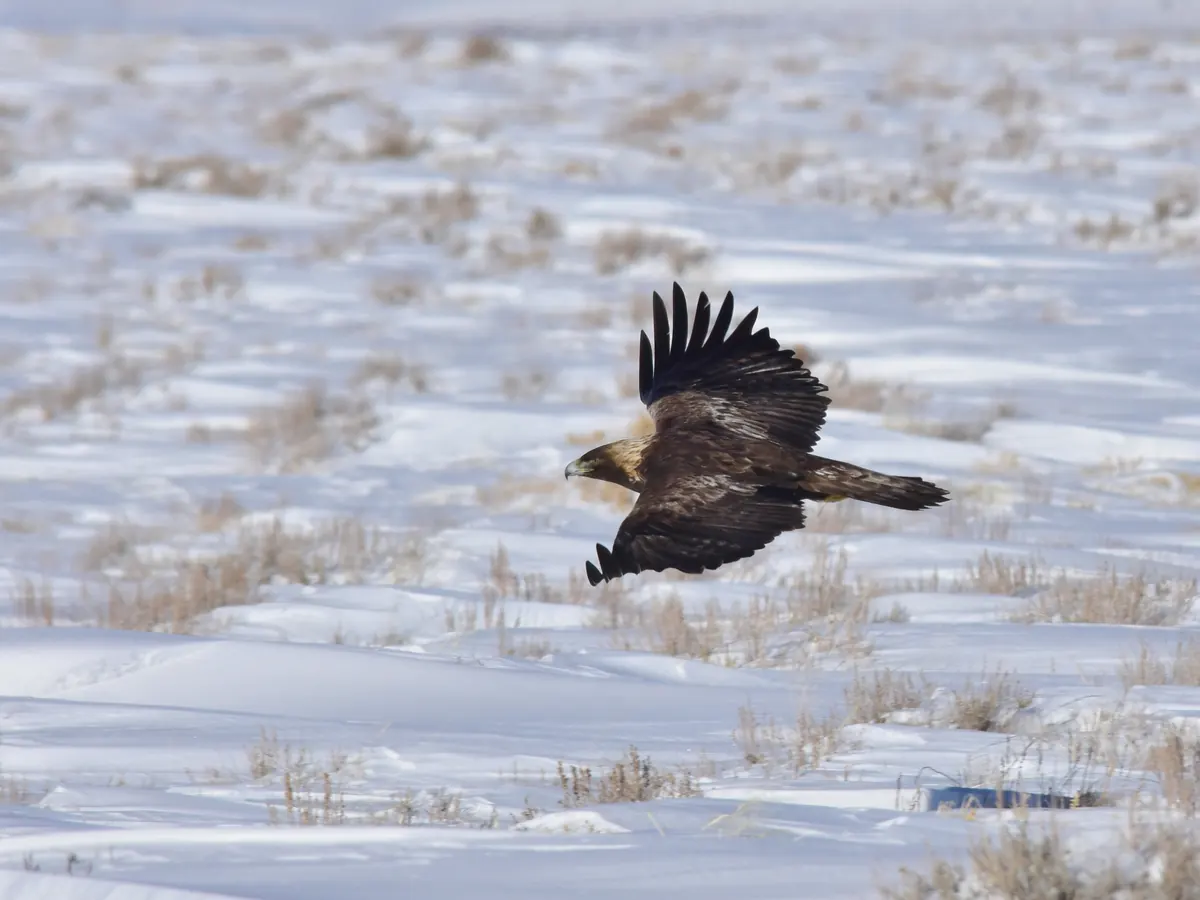
By January the southeast corner holds two eagle populations in the same valleys. Bald eagles crowd the open river; golden eagles, far fewer and much harder to find, hunt the steep blufflands away from the water. January is when both get counted.
-
The Golden Eagle Survey
Usually the third Saturday of January · Blufflands of southeast Minnesota, western Wisconsin, northeast Iowa and beyond
The survey grew out of the Golden Eagle Project, which joins Audubon Minnesota and the Wabasha eagle center with the Minnesota DNR’s nongame program. On the 22nd survey, held January 17, 2026, the center says 227 volunteers drove 97 routes covering about 25,000 square miles, and the tally came to 111 golden eagles. The birds that winter here nest as far as 2,000 miles away in northern Canada. The 2027 date is not posted yet, so if you would like a route, write to the center well before mid-January.
-
Telling the two eagles apart
November through March · Coulees, goat prairies and wooded bluff slopes above the Mississippi
A young bald eagle is dark brown with untidy white blotches, and it is the bird most often mistaken for a golden. The National Eagle Center’s field trips are built around telling the two apart, and the center offers a free sheet of golden eagle ID pointers for the Upper Midwest. Search where open prairie meets forested bluff, the hunting ground these eagles prefer, rather than along the river. Both species have wingspans of roughly 6 to 7.5 feet.
-
The Midwinter Bald Eagle Survey
Early to mid-January (January 7 to 21 in 2026) · Standard routes along rivers and reservoirs
Nationwide eagle counts began in 1979, and volunteers and agency staff still drive fixed routes each January to track wintering bald eagles across the lower 48 states; the U.S. Army Corps of Engineers posts the national survey dates. The 2026 window ran from January 7 to 21, with January 9 and 10 as target days. Along the Mississippi below Red Wing, check shoreline cottonwoods beside any stretch the current keeps open.
The National Eagle Center offers a bald eagle field trip on Saturday, January 2, and golden eagle trips on January 30 and through February; each costs $60, or $50 for members, and begins at 12:30 p.m.
How does Minnesota count its moose each January?
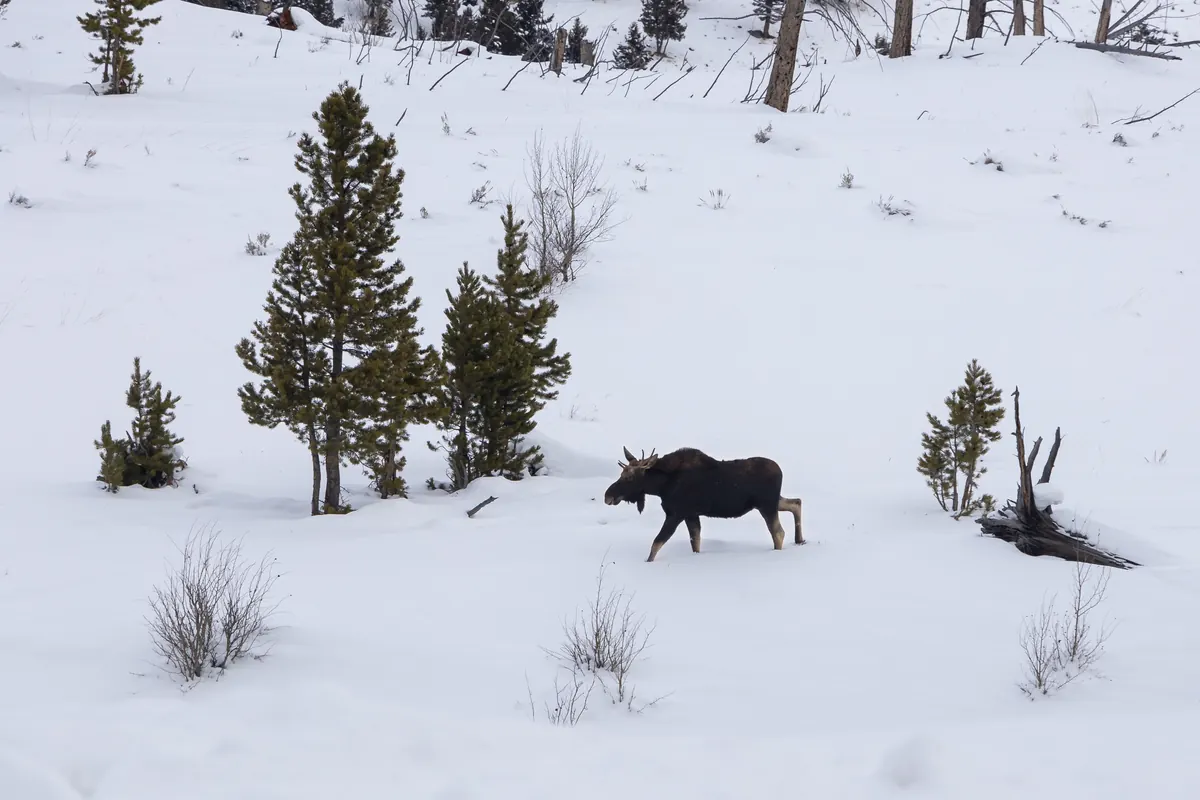
Every winter a pair of helicopters flies slow east to west lines over the moose range of northeastern Minnesota, an area of about 5,945 square miles that includes the Boundary Waters. The DNR runs the survey with the Fond du Lac Band of Lake Superior Chippewa and the 1854 Treaty Authority. Snow is the reason it happens now: crews generally need at least 8 inches of it so that dark moose stand out, and in 2026 they flew 12 days between January 7 and January 29.
-
What the 2026 survey found
Flown in January, reported in March · The Arrowhead and the Boundary Waters
Observers saw 385 moose: 163 bulls, 143 cows, 63 calves and 16 adults they could not classify. Adjusted for the moose they could not see, the estimate came to 4,470, up 11 percent from 2025. The report warns that the margin is wide (3,354 to 6,173), and it describes a population that fell steeply from 2009 to 2013 and has more or less held steady since.
-
Moose in deep snow
All winter · Young aspen stands, old burns and cutovers
Moose browse twigs all winter, and the DNR lists quaking aspen among their important foods. Calves face their hardest stretch now: DNR researchers note that calf survival can drop sharply between January and April. Look for clipped twig ends at moose height, beds melted into the snow and long-legged tracks that plow straight through drifts a deer would go around.
| Survey year | Population estimate | 95% confidence interval | Calves per cow |
|---|---|---|---|
| 2005 | 8,160 | 5,738 – 12,131 | 0.52 |
| 2009 | 7,840 | 6,001 – 10,508 | 0.32 |
| 2013 | 2,760 | 2,055 – 3,841 | 0.33 |
| 2016 | 4,020 | 3,089 – 5,427 | 0.42 |
| 2020 | 3,150 | 2,268 – 4,579 | 0.36 |
| 2022 | 4,700 | 3,234 – 7,242 | 0.45 |
| 2023 | 3,290 | 2,345 – 4,845 | 0.38 |
| 2024 | 3,470 | 2,422 – 5,271 | 0.51 |
| 2025 | 4,040 | 2,978 – 5,687 | 0.41 |
| 2026 | 4,470 | 3,354 – 6,173 | 0.44 |
Moose are seldom seen from a car, and a dark moose on a dark road is nearly invisible. If you drive the Arrowhead after sunset, slow down and watch the ditches.
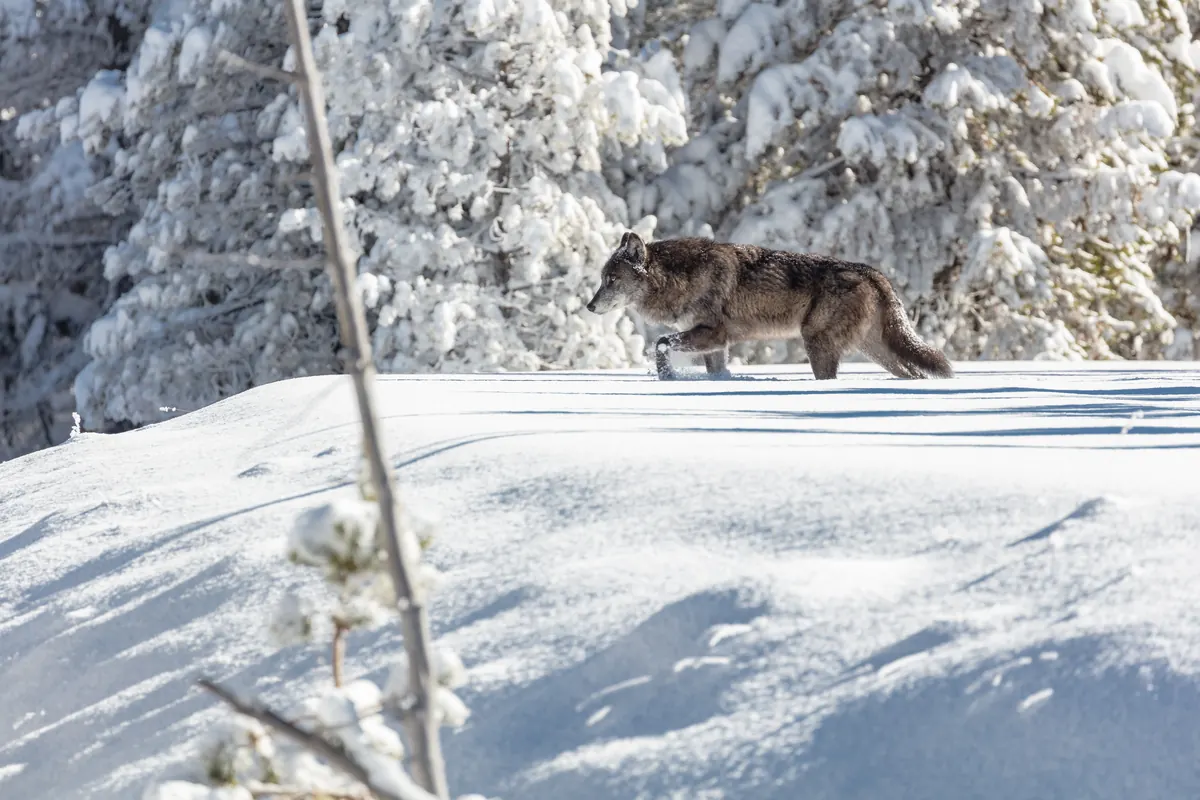
When do wolves breed in Minnesota, and where can you hear them?
The DNR’s survey for the winter of 2025 to 2026 estimated about 461 packs and 2,431 wolves in Minnesota (a 90 percent confidence range of 2,028 to 2,884), with an average midwinter pack of about four or five animals. The population, the report concludes, has not changed significantly in recent years.
-
Courtship and scent marking
Building through January toward a peak in February · Wolf range across the northern forest, from the Arrowhead to the northwest
Sources differ a little on timing: the University of Minnesota Duluth puts mating in February, Voyageurs National Park says February and March, and the Voyageurs Conservancy says the season starts in late January. Wolves mark their territories with urine and scat, and biologists describe more marking and more defense of territory as breeding approaches, so January trails are a good place to find it on snowbanks and at trail junctions. Pups follow about 63 days after mating, in an underground den.
-
Howling
Calm evenings and nights, most often in midwinter · Remote lakes and forest roads in the north
Wolves howl to announce where they are and to keep neighbors out. A U.S. Geological Survey study in the Superior National Forest found that packs answered human howls more often in midwinter, a rise tied to the breeding season, especially in groups with a breeding pair. Stand on a frozen lake on a windless night, keep quiet and listen; sound travels a long way over snow and ice.
-
Tracks on the lakes
After any fresh snow · Frozen lakes, shorelines and plowed park roads
Voyageurs National Park says six to nine packs hold territory in or around the park, and wolves are often seen crossing its entrance roads or trotting the shorelines of the big lakes. A wolf print runs about 4.5 inches long by 3.5 inches wide, clearly bigger than a coyote’s, and a pack on the move often steps in one shared trail.
The International Wolf Center in Ely keeps its winter schedule through May 27, 2027: open Fridays and Saturdays from 10 a.m. to 5 p.m. and Sundays from 10 a.m. to 2 p.m., with daily programs about its resident wolves.
When are black bear cubs born in Minnesota?
The month with the year’s lowest temperatures is the month black bears give birth. Deep in her winter den, a mother that has not eaten since fall wakes enough to deliver and tend her cubs, then settles back into hibernation while she nurses them.
-
Birth in the den
Usually January, sometimes early February · Dens across the northern forest
According to the DNR, cubs are usually born in January, and Minnesota litters most often hold three (an average of 2.6). The North American Bear Center in Ely says a newborn weighs half a pound to a pound, and the mother licks the cubs clean and answers each cry for warmth and milk. The cubs themselves do not hibernate. They reach five or six pounds by mid-March, and mother and cubs usually walk out in early April.
-
How the mother gets through
Late fall to spring · The same den
A hibernating bear lives on stored fat, and in the far north the sleep can last more than seven months. It neither eats nor drinks, recycles its body wastes, and wakes in spring with little loss of muscle. The Bear Center notes that its body temperature stays above 88 °F, within about 12 degrees of normal, while its metabolic rate drops by half.
If you come across a den, back away quietly and leave it alone.
Which owls and northern birds can you find in Minnesota in January?
For birders, January means owls and northern specialties, and the first nests of the year.
-
Great horned owls on eggs
Eggs laid from January into early February · Woodlots, river bottoms, farm groves and city parks statewide
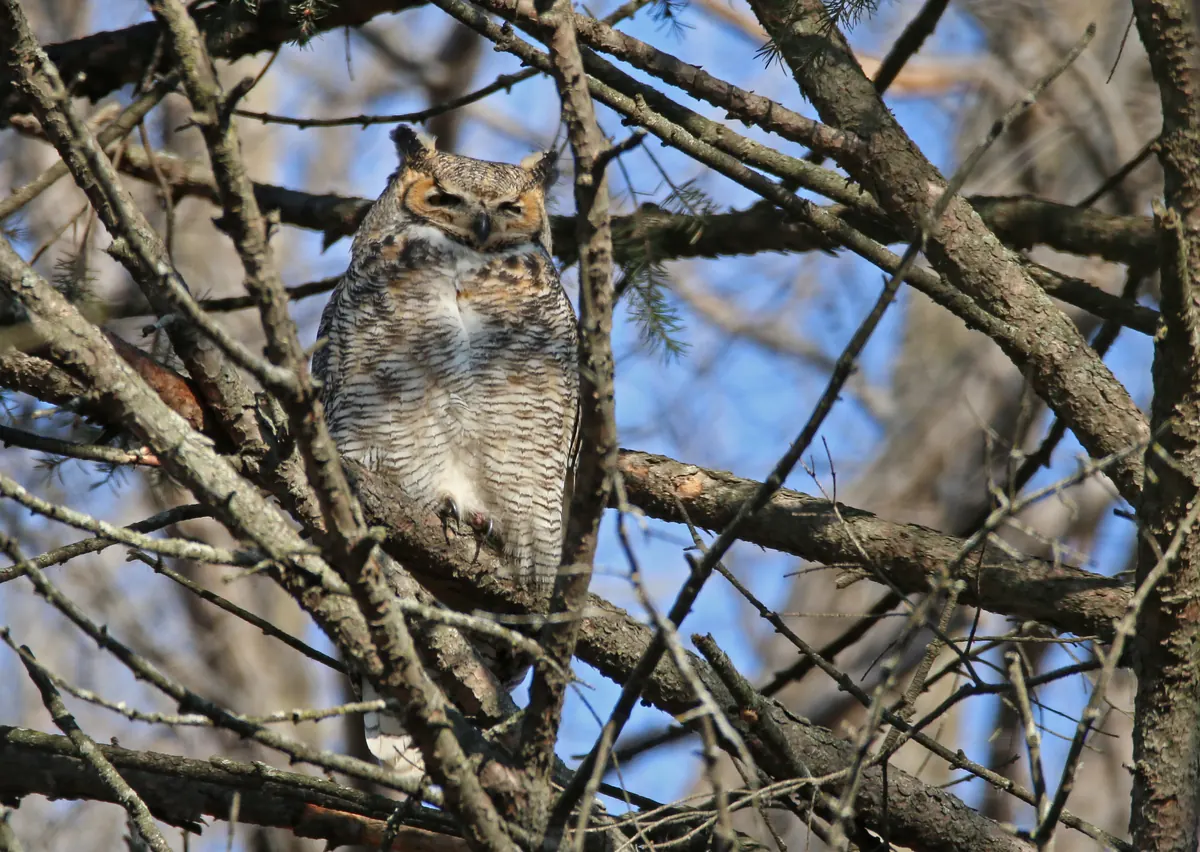
The DNR says these owls begin nesting in January or February, usually taking over a stick nest that hawks, crows or squirrels left behind. The female lays one to five eggs, which hatch in 30 to 37 days, and the male feeds her while she sits. The University of Minnesota’s Raptor Center points out that she incubates through subarctic cold. An incubating owl often shows only two feathery horns above a crow or hawk nest, so check old nests with binoculars from a distance.
-
Northern owls and boreal birds at Sax-Zim Bog
Most reliable from early December to the beginning of March · Sax-Zim Bog, northwest of Duluth
The Friends of Sax-Zim Bog list great gray and northern hawk owls, black-backed woodpeckers and boreal chickadees among January’s specialties, along with pine and evening grosbeaks and redpolls. Their Welcome Center on Owl Avenue welcomes visitors every day, 10 a.m. until 3 p.m., into mid-March, and public feeders there and on Admiral Road make an easy start. Stay on the roads unless the land is public, and pull over for local traffic.
-
Finches in the north woods
All winter · Conifer and birch stands of the Arrowhead and north-central lakes
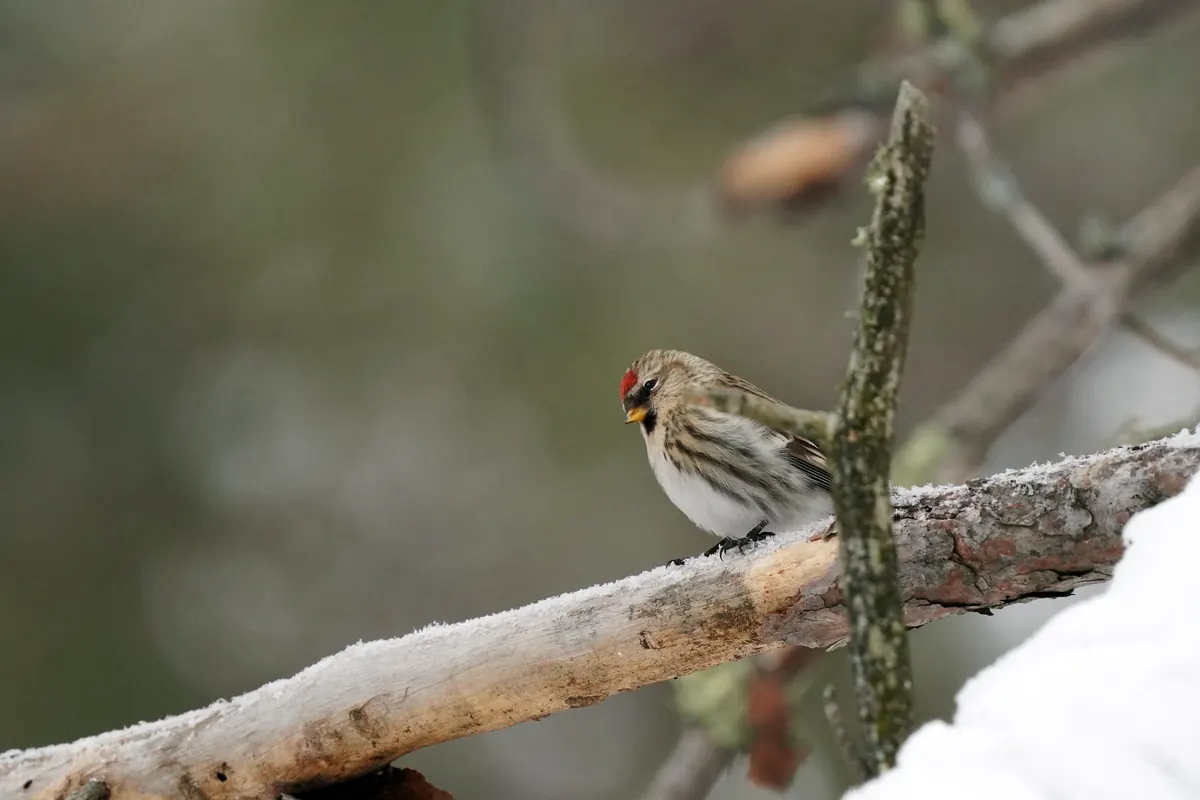
The Finch Research Network’s 2026 to 2027 forecast predicted that thin seed crops in the middle of the boreal belt would send finches toward the Great Lakes, but it also expected heavy cone crops in northeastern conifers to hold many birds out in the forest, away from backyard feeders. Listen for redpolls and siskins in birch and alder tops, and look for crossbills working cones high in spruce and pine.
Watch owls from the road or the car, and skip recorded calls: a bird spooked in January wastes energy it badly needs.
Why do Minnesota lakes boom in January, and what lives under the ice?
Midwinter ice talks. On a cold, clear night or the first sunny morning after one, a frozen lake can boom, ping and groan for hours. The DNR explains that this only means the ice sheet is expanding and contracting as the temperature changes, and that booming on its own is not a sign of danger.

-
Pressure ridges and heaves
After big swings in temperature · Big lakes such as Lake of the Woods
When ice contracts in hard cold, it cracks, and lake water fills the cracks and freezes. When the air warms again, the sheet has nowhere to expand, so it buckles into ridges, and a big swing from below zero to near freezing is the usual trigger. Where one side heaves up, the ice nearby can split and open water can appear. Treat every ridge as unsafe: check the ice yourself going out and again coming back, travel along a heave rather than over it, and keep well away from any ridge that is still moving.
-
Burbot spawning in the dark
Midwinter into early spring, before ice-out · Shallow sand and gravel bars in northern lakes and rivers, and Lake Superior
The burbot, known around the state as eelpout, is the cold-water oddity of Minnesota fish. The DNR describes how it spawns under the ice, in pairs or in writhing groups of dozens or even hundreds, and how one female can carry up to a million eggs that hatch in four to five weeks. It looks more like an eel than most freshwater fish, with mottled brown skin and a single whisker on its chin. The state record, 19 pounds 3 ounces, came from Lake of the Woods.
Fish can change the ice, too: the DNR notes that a moving school can stir warmer water up from the bottom and has opened holes that swallowed snowmobiles and cars. Ice above a fishing hotspot is not automatically the strongest on the lake.
How can you identify Minnesota trees in winter?
Without leaves, trees are told apart by their twigs, buds and bark, and January’s low light shows bark texture well. Start with one question: are the buds and side twigs paired across from each other, or staggered? In Minnesota only the maples, ashes and dogwoods have opposite buds (add the buckeyes in the southeast), so a paired twig narrows the choice right away.
-
Box elder, the bent maple
All winter · River bottoms, yards and fencerows statewide
Box elder is a maple, so its buds and twigs come in pairs. A DNR lesson for teachers notes that its trunks are often bowed and rarely straight, that forest trees may grow several trunks, and that the twigs can be green. Sugar maple, by contrast, grows a straight trunk that often carries dark sap stains, and ash twigs are stouter than maple twigs.
-
Paper birch and quaking aspen
All winter · North and central forests, lakeshores and cutovers
Both are pale, but the DNR describes paper birch bark as white with many pores, peeling in thin curls, while the aspen’s bark is greenish white to gray, almost smooth, with black patches below the branches. Paper birch twigs are dull orange or red in their first winter, and its inch-long catkins hang on into the cold months, dropping tiny seeds onto the snow.
-
Oak, elm, hickory and cottonwood
All winter · Woodlots, savannas and river bottoms of the south and center
Oaks have thick twigs and fat buds, which is why deer and rabbits browse young ones so hard; bur oak bark is deeply furrowed into ridged plates. Elm bark shows a diamond pattern. Bitternut hickory has bright yellow winter buds that look painted on. Cottonwood buds are covered in shiny, chestnut-brown, resinous scales.
One more trick from the same lesson: each ring of bud scale scars marks a winter, so a twig showing three rings is three years old.
How cold is January in Minnesota, and what might El Niño bring?
January is Minnesota’s coldest month. International Falls averages 19 nights a month at or below zero, and even the Twin Cities average about 10. The bottom usually comes in the third or fourth week: using 1981 to 2010 data, retired Extension climatologist Mark Seeley found that average daily temperatures start to rise again around January 20 at International Falls, January 22 at Duluth, January 23 at Moorhead and January 24 in the Twin Cities and Rochester. The state record, 60 below zero, was set at Tower on February 2, 1996.
| Station | Average high | Average low | Nights at or below 0 °F | Average snowfall |
|---|---|---|---|---|
| International Falls (far north) | 15.7 °F | -5.8 °F | 19.0 | 15.7 in |
| Moorhead (Red River Valley) | 17.2 °F | -0.3 °F | 16.9 | 12.2 in |
| Duluth (airport, above the lake) | 19.9 °F | 2.4 °F | 14.4 | 16.8 in |
| Grand Marais (North Shore) | 21.4 °F | 5.7 °F | 11.8 | 15.6 in |
| St. Cloud (central) | 20.7 °F | 2.9 °F | 13.9 | 8.8 in |
| Minneapolis/St. Paul (metro) | 23.6 °F | 8.8 °F | 10.0 | 11.0 in |
| Rochester (southeast) | 22.5 °F | 7.0 °F | 10.7 | 12.2 in |
| Worthington (southwest) | 22.6 °F | 5.3 °F | 11.9 | 9.8 in |
Wind makes any of these numbers worse. The State Climatology Office reports a wind chill of 63 below at the Grand Marais airport on January 6, 2014, the coldest reading statewide during that month’s cold outbreaks.
Minnesota heads into this winter with El Niño in charge. Writing on September 10, NOAA’s tropical Pacific team rated a very strong event across fall and winter 2026 to 2027 a better than nine-in-ten chance. NOAA’s seasonal outlook, first issued October 15 and refreshed every month, can be read, in its latest monthly version, at NOAA’s three-month outlook maps. A September 29 analysis by the State Climatology Office found that winters with strong or very strong El Niños averaged 16.2 °F statewide for December through February, against 11.1 °F in winters without one; five strong or very strong El Niño winters it names (1982 to 1983, 1986 to 1987, 1991 to 1992, 1997 to 1998 and 2015 to 2016) all stand among Minnesota’s ten warmest. The most recent example, January 2024, averaged 16.4 °F statewide, about 5 degrees above normal, and Lake Waconia did not freeze over until January 4, a record late date for a lake watched since 1940. Even so, a season that runs warm overall can still throw a week of brutal cold at the state. Before a long ski or ice outing, look at the hour-by-hour local weather forecast, and our cloud identification guide shows the thin, high veils that often thicken ahead of snow.
How much daylight does Minnesota gain in January?
The lengthening is easy to feel in the evenings. Minneapolis sunsets reach 5:00 p.m. on January 17, and over the month the city gains 54 minutes of daylight. Mornings lag behind: the late sunrises of New Year’s week barely budge at first and only start creeping earlier as the month goes on. The daily gain grows week by week, and the north pulls ahead: International Falls adds 63 minutes in January, Worthington 52.
| City | Jan 1 | Jan 31 | Gained | Per day |
|---|---|---|---|---|
| International Falls | 8 h 23 m | 9 h 26 m | 63 min | 2.1 min |
| Grand Marais | 8 h 30 m | 9 h 30 m | 60 min | 2.0 min |
| Bemidji | 8 h 32 m | 9 h 32 m | 60 min | 2.0 min |
| Moorhead | 8 h 37 m | 9 h 36 m | 59 min | 2.0 min |
| Duluth | 8 h 38 m | 9 h 36 m | 58 min | 1.9 min |
| Minneapolis | 8 h 51 m | 9 h 45 m | 54 min | 1.8 min |
| Rochester | 8 h 57 m | 9 h 50 m | 53 min | 1.8 min |
| Worthington | 9 h 00 m | 9 h 52 m | 52 min | 1.7 min |
Get exact times for any Minnesota town from our daylight calculator, or compare with the shortest days in the Minnesota December guide.
What can you see in the Minnesota night sky in January?
Cold, dry air makes January nights some of the clearest of the year, and the evenings from about January 3 through 12 are free of moonlight. Sunspot counts are drifting down from the 2024 solar peak, but Minnesota still gets green and red auroral glows when a big storm arrives, and the north sees them most; NOAA’s Space Weather Prediction Center posts short-range aurora forecasts.
-
Earth closest to the sun
Saturday, January 2, 8:33 p.m. CST · Everywhere
Perihelion, Earth’s nearest point to the sun, arrives on one of the year’s coldest weekends, at about 91.4 million miles. Cold January days are the work of the tilted axis and a low noon sun, not of distance.
-
The Quadrantids
Night of Sunday, January 3, into dawn Monday, January 4 · Anywhere dark; meteors come from the northeast
Predictions put the peak at about 9:30 p.m. CST on Sunday, with one forecast nearer midnight, and the burst is short, only a few hours. Early in the night the radiant hugs the horizon; it rises higher hour by hour, which is why Monday’s predawn usually rewards watchers most. Only 15 to 18 percent of the moon is lit, a dim sliver hanging low in the east toward Monday’s dawn. The American Meteor Society suggests about 25 an hour under dark skies; a sharp peak can briefly give more.
-
Venus at its greatest morning elongation
Sunday, January 3, and all month · Southeast before sunrise
Venus hits greatest western elongation on Sunday the 3rd, standing 47 degrees out from the sun, and it outshines everything in the dawn sky through the month. Through a backyard telescope that week, the planet looks like a tiny half moon.
-
The Wolf Moon, a supermoon
Friday, January 22, 6:17 a.m. CST · Rising in the east at dusk on the 21st
No full moon of 2027 comes nearer: it lies about 222,229 miles off, with perigee roughly 14 hours earlier. Because the exact moment of full falls in Friday’s predawn hours, Thursday night gives the classic show of a round moon rising at dusk and setting at sunrise; Friday evening it still looks complete.
-
Jupiter, Saturn and Mercury
All month; moon beside Jupiter Saturday evening, January 23 · Jupiter east in the evening; Saturn low in the southwest; Mercury low west-southwest in the last days of the month
Jupiter rises earlier each night ahead of its February opposition. Saturday the 23rd brings a pretty pairing after dark, when the moon, one day past full, passes about 1.5 degrees from the planet, with the star Regulus close to the moon before dawn. Saturn is sinking into the evening twilight. Mercury, the shy one, starts showing near the west-southwest horizon in twilight during the last few evenings of the month, ahead of its best evenings in early February.
| Phase | Date | Time |
|---|---|---|
| New moon | Thursday, Jan 7 | 2:24 p.m. |
| First quarter | Friday, Jan 15 | 2:34 p.m. |
| Full moon, the Wolf Moon | Friday, Jan 22 | 6:17 a.m. (Jan 21 night best) |
| Last quarter | Friday, Jan 29 | 4:55 a.m. |
Plan a night out around the dark week after the new moon with our moon phase calendar.
What can Minnesota families do outside in January?
- Friday, January 1: a First Day Hike. Fort Snelling State Park is the only 2027 hike posted so far; for New Year’s Day 2026 the DNR listed more than a dozen parks, so check back in December. The hikes are free; bring a park vehicle permit ($7 a day or $35 a year).
- Saturday, January 2: bald eagles by shuttle bus. The National Eagle Center’s winter bald eagle trip leaves Wabasha at 12:30 p.m. (fee, registration).
- Up to Tuesday, January 5: final CBC days. The 127th Christmas Bird Count season closes on the 5th. The Minnesota Ornithologists’ Union lists every count circle and its compiler.
- Saturday, January 9: Candlelight and Constellations at Itasca State Park. A lantern-lit trail near the Mississippi headwaters, with the moonless sky overhead.
- Mid-January: the Golden Eagle Survey. Usually the third Saturday; ask the National Eagle Center about joining a route as a family.
- Saturday, January 23: a candlelight hike at Lac qui Parle State Park in the west.
- Saturday, January 30: golden eagle field trip from Wabasha, 12:30 p.m. (fee, registration).
- Weekends: the International Wolf Center in Ely (Friday to Sunday) and the Sax-Zim Bog Welcome Center (daily, 10 a.m. to 3 p.m.).
- From home: Project FeederWatch. From November through April, watch your feeder for a two-day stretch (weekly at most) and log each species’ peak count seen at a single moment (there is a participation fee).
Winter events can be canceled for extreme cold or poor snow, so check before you drive. More states and months are in our nature guide collection, and our Naturalist’s Field Journal gives you pages to draw twigs, prints and owl sounds.
Safety notes for January in Minnesota
- Seasons still open. The last legal day for pheasants, ruffed and spruce grouse and Hungarian partridge is Sunday, January 3, and south zone Canada goose hunting ends January 6. Crows may be hunted January 1 to 15. Small game (cottontails, snowshoe hares, jackrabbits and gray and fox squirrels) runs until February 28, the same day mink and muskrat trapping closes. Bobcat season in the north furbearer zone ends January 17. Fox, raccoon, badger and opossum stay open until March 15, and beaver and otter until May 15.
- Blaze orange or pink. No firearms deer season is open in January, so the rule is lighter: small-game hunters need at least one piece of outer clothing above the waist in visible blaze orange or pink. The DNR exempts predator and raccoon hunters, trappers, migratory bird hunters and a few others. If you ski or snowshoe where people hunt, a bright hat or vest is still wise.
- Ice. The DNR does not measure ice anywhere and calls no ice completely safe. Its guide for new, clear ice asks for at least 4 inches on foot, 5 to 7 for a snowmobile, 9 to 10 for a small car or SUV and 11 to 12 for a medium SUV or small truck; double those figures on white ice. Park cars at least 50 feet apart and move them every two hours, and keep away from springs, inlets, bridges and pressure ridges.
- Deep cold. Average January lows fall below zero at International Falls and Moorhead, and wind turns ordinary cold into dangerous cold within minutes. Cover every inch of skin, swap wet mittens for dry, and head inside if a child goes pale, numb or unusually quiet.
- Storms and short days. Blowing snow on the open prairie of the west and the Red River Valley can close roads quickly. Carry a winter kit, a shovel and a charged phone, start hikes early, and keep a headlamp in your pocket.
Planning next spring’s garden? Typical last-frost dates for towns statewide are on our Minnesota frost page.
Sources
- National Eagle Center: eagle viewing field trips, 2026–27 schedule
- National Eagle Center: golden eagles and the Golden Eagle Survey
- National Eagle Center: 2026 Golden Eagle Survey report (PDF)
- Phys.org: what’s Minnesota’s largest raptor? (February 2026)
- Minnesota DNR: monitoring Minnesota’s golden eagles
- U.S. Army Corps of Engineers: National Midwinter Bald Eagle Survey
- Minnesota DNR: 2026 aerial moose survey (PDF)
- Minnesota DNR: quaking aspen
- Minnesota DNR: Minnesota wolf population update 2026 (PDF)
- Minnesota DNR: wolf management
- University of Minnesota Duluth, Mammals of Minnesota: wolf
- National Park Service, Voyageurs National Park: gray wolf
- Voyageurs Conservancy: where are Voyageurs wildlife in winter?
- U.S. Geological Survey: wolf howling and its role in territory maintenance
- International Wolf Center: plan your visit
- Minnesota DNR: black bear
- North American Bear Center: quick black bear facts
- Minnesota DNR: great horned owl
- University of Minnesota Raptor Center: the earliest of early birds
- Friends of Sax-Zim Bog: plan your visit
- Finch Research Network: winter finch forecast 2026–2027
- Minnesota DNR: ice safety
- Minnesota DNR: general ice thickness guidelines
- Minnesota DNR MinnAqua: burbot species profile
- Minnesota DNR: paper birch
- Minnesota DNR: bur oak
- Minnesota DNR: bitternut hickory
- Minnesota DNR: cottonwood
- Minnesota DNR Project Learning Tree: teach winter deciduous tree observation (PDF)
- NOAA NCEI: U.S. climate normals 1991–2020, monthly data for Minnesota stations
- University of Minnesota Extension, Minnesota WeatherTalk: patterns of cold temperatures in January
- Minnesota State Climatology Office: historic wind chill temperatures in Minnesota
- Minnesota State Climatology Office: Minnesota’s all-time record low, 60 below near Tower (February 2, 1996)
- Minnesota State Climatology Office: “El Niño” is coming (September 29, 2026)
- Minnesota DNR: HydroClim Minnesota for early February 2024 (January 2024)
- NOAA Climate Prediction Center: ENSO diagnostic discussion, September 10, 2026
- NOAA Climate Prediction Center: seasonal (90-day) outlooks
- U.S. Naval Observatory: phases of the moon, December 2026 to 2027
- U.S. Naval Observatory: earth’s seasons and apsides, 2027
- U.S. Naval Observatory: sun and moon rise and set data
- American Meteor Society: meteor shower calendar
- Fred Espenak, AstroPixels: sky event almanac 2027
- EarthSky: what is a supermoon?
- NOAA Space Weather Prediction Center: aurora 30-minute forecast
- Minnesota DNR: First Day Hikes
- Minnesota DNR: candlelight events
- National Audubon Society: Christmas Bird Count
- Minnesota Ornithologists’ Union: Minnesota Christmas Bird Count
- Project FeederWatch: how to participate
- Minnesota DNR: hunting season dates
- Minnesota DNR: upland bird and crow season dates
- Minnesota DNR: trapping season dates
- Minnesota DNR: waterfowl hunting (2026 goose seasons)
- Minnesota DNR: blaze clothing requirements
- Minnesota frost dates (NOAA 1991–2020 normals)
- Photos via Wikimedia Commons; licenses and photographers are credited under each picture
