What to look for in nature in Minnesota this March
Meteorologists count March as the first month of spring, and in Minnesota that is a promise more than a description. Snow can still bury the state in a single weekend, yet the first red-winged blackbirds are back, sandhill cranes drift in over the marshes, and bald eagles pour north along the big waters. Woodcock begin their dusk sky dances on thawing ground, maple sap flows on the swing between frosty nights and mild afternoons, and a few wood frogs and chorus frogs may call in warm spells. Clocks go forward an hour on Sunday, March 14, the equinox follows on Saturday the 20th, and by the 31st Minneapolis has nearly twelve and three-quarter hours of daylight. Region by region, the sections below name a date only where an organizer or agency has published one.
Other months in Minnesota: October, November, December, January, February, April.
Start here

- Ride along with the eagle watchers in Wabasha. The National Eagle Center lists bald eagle field trips for Saturday, March 6, Sunday, March 21 and Saturday, March 27, each from 12:30 to 3:30 p.m. They book through the center, and it needs at least two tickets sold a day ahead, so reserve early.
- Log the first returning birds. Write down the date you first hear a red-winged blackbird, see a robin or hear a sandhill crane’s rattling call. Season Watch, run by the University of Minnesota, shows how those dates have wandered over decades.
- Stand in an open field at dusk for a woodcock. The DNR says woodcock begin arriving in mid-March, often before the snow is gone. Listen for a buzzy peent from a brushy clearing, then watch the sky for a small bird spiraling up.
Keep a record: log each dated first (blackbird, kestrel, crane, frog chorus) in birds I have seen and the map of sounds; write each woodcock evening into dusk and dawn watch with the time the first peent starts; record each sap-run day, thaw and snow squall in reading the signs; revisit one wetland every week in the same place twice; and add the overnight low to every daily field log entry. If you watch an eagle nest, nest observed is the plate for it.
Regions used below: Arrowhead and the North Shore; Northwest and the Red River Valley; North-central lakes and bogs; Twin Cities and central Minnesota; Southwest prairie; Southeast bluffs and the Mississippi.
Where do bald eagles gather in Minnesota in March?
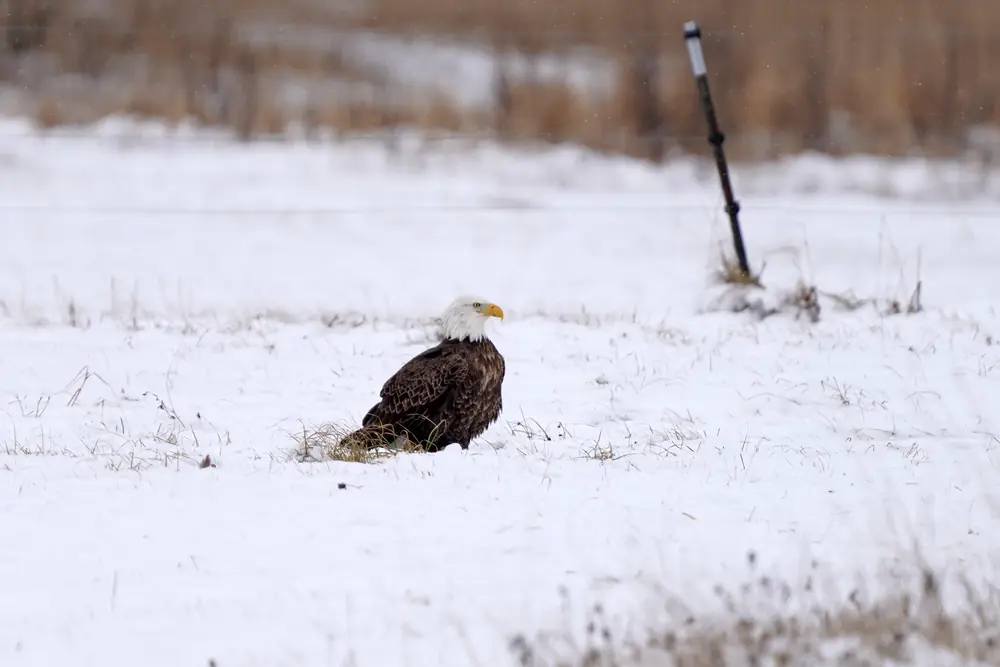
March is the month when eagles move. A DNR regional nongame specialist said in a 2015 interview that eagles typically come through in mid-to-late March, as waters open and snow melts. Coverage of her remarks named the Minnesota River corridor, the North Shore of Lake Superior and Lake Pepin as hotspots, though the DNR says exactly where they appear is unpredictable. Timing follows the weather: a cold March holds them back and a warm one releases them early.
-
Hawk Ridge spring count
Counted daily, March 1 through May 31; bald eagles usually peak around March 25 · West Skyline Parkway, Duluth (Enger Tower or Thompson Hill, depending on wind)
Hawk Ridge Bird Observatory tallies every migrating bird it can identify from two pull-offs on West Skyline Parkway. Counters use Enger Tower in southerly, northerly and westerly winds and Thompson Hill when the wind blows from the northeast or east. The observatory’s spring guide lists March as the month for bald and golden eagles and rough-legged hawks, and gives bald eagles a typical peak of 400 to 500 a day around March 25, with about ten golden eagles a day at best. Rough-legged hawks peak later, April 10 to 20, at up to 75 a day. Red-tailed hawks follow soon after, and broad-winged and sharp-shinned hawks begin showing up in April. The guide says the birds are on a mission to reach nesting territories, so even rough weather can bring a flight.
-
National Eagle Center field trips
Saturday, March 6; Sunday, March 21; Saturday, March 27, 2027, 12:30 to 3:30 p.m. · Meets in Wabasha; the bus visits scouted spots in the Upper Mississippi valley
The center’s own schedule lists these three March dates for bald eagle trips, priced at $60, or $50 for members, and including admission that day. At least two tickets must be sold 24 hours before a trip, and there is a waiting list if a date sells out. The center does not recommend the trips for young children, who may struggle with a long bus ride, and it advises dressing for the weather.
-
A chick on the DNR EagleCam
Last year’s first chick hatched on March 26; the new season’s camera returns this fall · A nest near the Mississippi River in the Twin Cities area (online)
The DNR’s update for the 2025–26 season says staff believed the first chick hatched Thursday, March 26, and confirmed three chicks on Monday, March 30. Newly hatched eaglets weigh about three ounces, roughly the size of a tennis ball, and an adult is almost always on the nest keeping them warm. The agency’s February note said chicks usually hatch after 34 to 39 days of incubation, so signs of one could appear as early as March 21. Each pair keeps its own schedule, so treat any date as a window.
Stay on the road or the far edge of a field when you find a nest. Adults that are flushed from eggs or chicks in cold, windy weather can lose them, and a long lens does the same job as a close step.
Which birds come back to Minnesota first in March?
Season Watch is a University of Minnesota and Northern Community Radio project that gathers volunteer records of when plants and animals do things, county by county. The table gives each record’s earliest, average and latest date, so treat the average as the middle of a wide range, not a deadline.
-
Red-winged blackbirds
Average mid-to-late March; males come first · Cattail marshes, ditches and wet pastures statewide
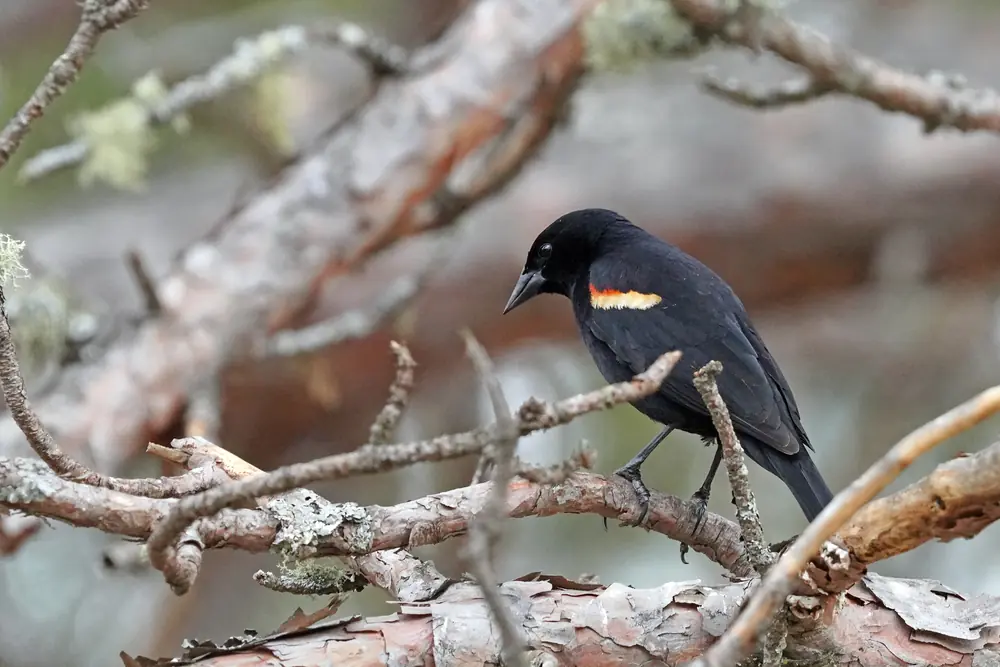
In Sherburne County the average arrival is March 14, with records from January 27 to March 31 (36 records, 1977 to 2013). In Hubbard County, farther north, the average first sighting is March 24, and the earliest is March 6.
-
Kestrels, bluebirds and wood ducks
Averages near March 16 to 17 in Sherburne County · Utility wires, open fields with nest boxes, and wooded wetlands in the central counties
Sherburne County’s average arrival is March 16 for American kestrels, March 17 for eastern bluebirds and March 17 for wood ducks, though early birds show up in mid-February. The DNR’s seasonal wildlife guide lists both among the March and April arrivals. Farther north the dates slide later: Hubbard County’s average first bluebird is April 1, and Marshall County’s first wood duck is April 4.
-
American robins
Average March 22 in Hubbard County, March 28 in Marshall County · Lawns, thawing field edges and shrubs with berries
Robins are the bird everyone says is first, but Season Watch shows them in Hubbard County as early as February 13 in one year and as late as April 2 in another. The first robin you see may be a wintering bird, so the record to keep is the first one you hear singing from a treetop.
-
What is heading out
First two weeks of March · Sax-Zim Bog and the northern forest
The Friends of Sax-Zim Bog say most winter birds head back north in the first two weeks of March, while wintering raptors, especially rough-legged hawks and northern shrikes, can linger into April. The bog’s Owl Avenue Welcome Center closes in mid-March and stays closed through spring, so plan a visit early in the month if you want it open.
| Event | County | Earliest | Average | Latest |
|---|---|---|---|---|
| Red-winged blackbird, arrival | Sherburne | Jan 27 | Mar 14 | Mar 31 |
| Red-winged blackbird, first seen | Hubbard | Mar 6 | Mar 24 | Apr 8 |
| American kestrel, arrival | Sherburne | Feb 14 | Mar 16 | Apr 3 |
| Eastern bluebird, arrival | Sherburne | Feb 16 | Mar 17 | Apr 3 |
| Wood duck, arrival | Sherburne | Feb 13 | Mar 17 | Mar 31 |
| Sandhill crane, arrival | Sherburne | Mar 4 | Mar 18 | Mar 31 |
| American robin, first seen | Hubbard | Feb 13 | Mar 22 | Apr 2 |
| American robin, first seen | Marshall | Mar 18 | Mar 28 | Apr 9 |
| Turkey vulture, arrival | Sherburne | Mar 8 | Apr 5 | May 14 |
| Wood frog, first heard | Itasca | Mar 21 | Apr 15 | May 6 |
| Boreal chorus frog, first heard | Itasca | Mar 21 | Apr 13 | Apr 30 |
Add your own dates to the record. Season Watch’s pages point to Nature’s Notebook for standardized reporting, and Journey North takes sightings of migrating species for its maps.
Where can you watch cranes, swans and geese in March?
The DNR’s seasonal guide puts the peak of waterfowl migration at state and federal refuges from mid-March through mid-April. Ice is the controlling factor: ducks and geese stack up at the first open water, and a warm week can empty a lake of birds by the weekend. A call to the refuge before a long drive is cheap insurance.
-
Sandhill cranes
Sherburne County average arrival March 18 (records March 4 to March 31) · Sherburne National Wildlife Refuge near Princeton, and open wetlands across the central and northern counties
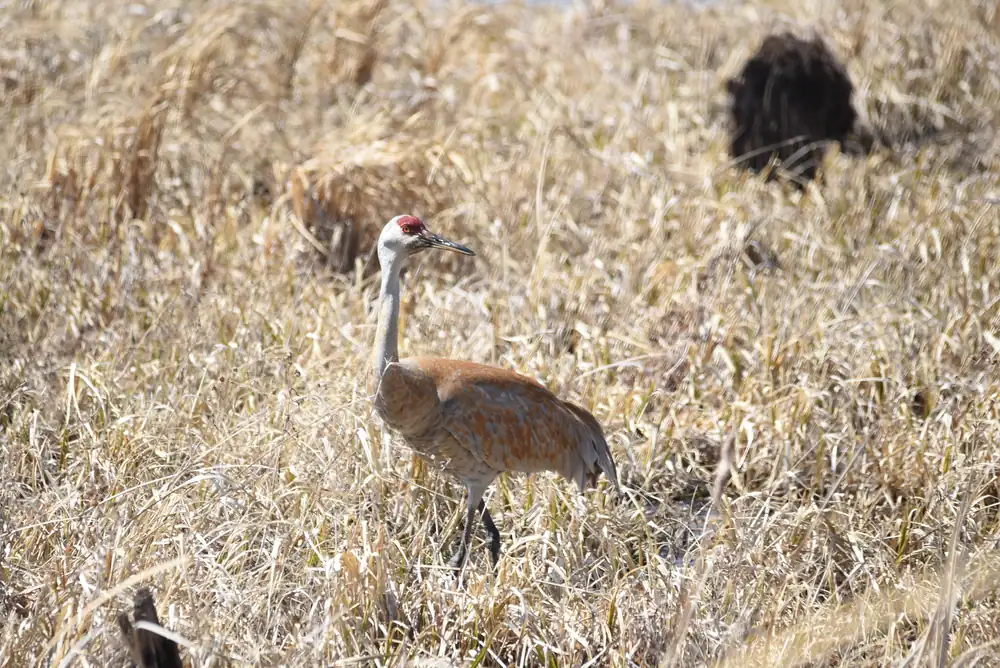
Season Watch lists 33 arrival records for Sherburne County from 1980 to 2013, with the earliest on March 4 and the latest on March 31. You will likely hear them first: a rolling, rattling call carries for a mile over still marshes. Cranes are tall, gray and crowned in red, and they feed in stubble or stand in shallow water, often in pairs.
-
Geese and swans in the northwest
Late March, as the first open water appears · Agassiz National Wildlife Refuge, Marshall County
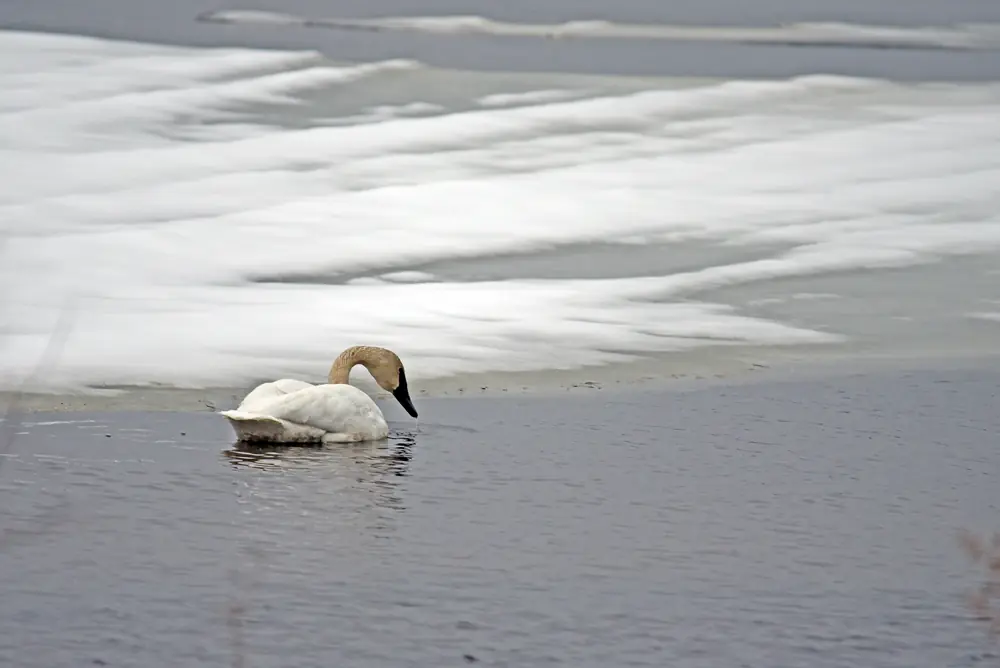
The refuge’s own species page says Canada geese and trumpeter swans typically lead the northward flight in late March, followed shortly by mallards, northern pintails and a variety of diving ducks. Trumpeter swans, nearly extinct in the 1930s, have been restored and now breed in Minnesota state parks, according to a DNR roundup.
-
The Minnesota River valley
Mid-March through mid-April · Bass Ponds, Old Cedar Avenue and the Rapids Lake Unit, Minnesota Valley National Wildlife Refuge
The refuge’s own account of the waterfowl migration lists Canada geese, trumpeter swans and a long roster of ducks, from wood ducks and mallards to gadwalls, canvasbacks, buffleheads and hooded mergansers. Binoculars and field guides can be borrowed at the visitor centers on days they are open, and the Minnesota River Valley Audubon chapter has offered beginner walks. The refuge also lists tundra swans, white pelicans and sandhill cranes among its spring sightings.
-
State parks to try for geese and ducks
March and April · Lac qui Parle, Rice Lake and Big Stone Lake state parks
A DNR spring-birding roundup points to Lac qui Parle State Park for migrating Canada geese and to Rice Lake and Big Stone Lake state parks for waterfowl. Each park keeps a bird checklist by season, and free birding kits are available at state parks.
When a lake is mostly ice, look at the edges, the inlets and the open patch below a bridge: that is where swans and geese will be.
Where can you see woodcock and prairie chicken courtship in March?
Two ground birds turn the thaw into theater. One performs in the air above a brushy clearing at dusk; the other dances on a grassy rise at dawn. Both begin in March and both reward people who arrive early, stand still and keep their distance.
-
American woodcock
Arrives mid-March; displays at first and last light · Brushy openings next to young aspen, alder and hazel
The DNR says woodcock begin arriving in Minnesota in mid-March, often well before the winter snow is gone, and that most of the state’s breeders winter in central and southern Louisiana. A male defends a small clearing, the singing ground, and performs for 30 to 60 minutes at the start and end of the day. He gives nasal peents on the ground, then spirals up 100 to 300 feet with a twittering of wing feathers, chirps on the way down and lands near where he began. Each flight lasts about a minute and he repeats it a dozen times or more. Only one male in three or four in an area takes part, which explains the bachelors lurking at the edge. On Minneapolis clocks, sunset is at 6:16 p.m. before the clock change on March 13 and 7:18 p.m. after it on March 14, so the evening show moves an hour later on the clock overnight.
-
Greater prairie-chickens
Mornings, mid-March to mid-May; best viewing usually April into early May · Beach ridges of glacial Lake Agassiz, from the Crookston area south toward Fergus Falls
A Minnesota Conservation Volunteer feature says males gather on leks every morning from mid-March to mid-May. Their low boom carries more than a mile, according to the DNR. The agency’s 2026 survey found 102 booming grounds and 853 males, counting areas outside its survey blocks, and said counts from year to year are a rough index shaped by weather and observer ability. The U.S. Fish and Wildlife Service has offered a free, reservation-only viewing blind at Hamden Slough National Wildlife Refuge near Detroit Lakes, and it says the best time is April into early May. Reserve with the refuge; leks are private performance halls, so do not walk onto one.
Binoculars, a dark coat and a car parked well away are all you need. Stay in the vehicle or blind, and do not use recordings to lure birds.
What wakes up on the ground in March: frogs, salamanders, bears and the first flowers?
The first warm, wet week of March sets off a quiet scramble in woods and wetlands.
-
Wood frogs and chorus frogs
Late March in the earliest or southern springs; usually April in the north · Fishless woodland pools, ditches and the edges of marshes
The DNR’s breeding calendar groups wood frogs, boreal chorus frogs, spring peepers and northern leopard frogs together as the early breeders, calling from late March into early April. Season Watch’s northern records show how that slides: wood frogs were first heard in Itasca County on March 21 in the earliest year and on an average of April 15, and boreal chorus frogs were first heard on average April 13. Wood frogs are explosive breeders that gather for only a few days, and Season Watch describes their call as a repeated “racket.”
-
Salamanders on the move
Early spring, on heavy-rain nights · Hardwood and mixed woods with woodland ponds, mainly in the north and east
The DNR’s magazine notes that blue-spotted salamanders breed in early spring, sometimes with snow on the ground and ice on the pond, and that adults migrate to woodland pools during heavy rains.
-
Black bears stir
Some adults late March; most bears usually early April · Northern forests, and anywhere near them with an easy food source
The DNR says bears usually leave their dens in early April, and its March 23, 2026 release noted that females with cubs were still near their dens while some full-grown bears were already out searching. Cubs are usually born in January. The agency’s main advice: bring feeders in while bears are about, because birdseed and suet are a quick, high-calorie snack, and bears can smell a meal from more than a mile away.
-
Pasqueflower and hepatica
March into May, depending on the snow and the slope · South-facing prairie slopes with dry sandy soil, and hardwood forest floors
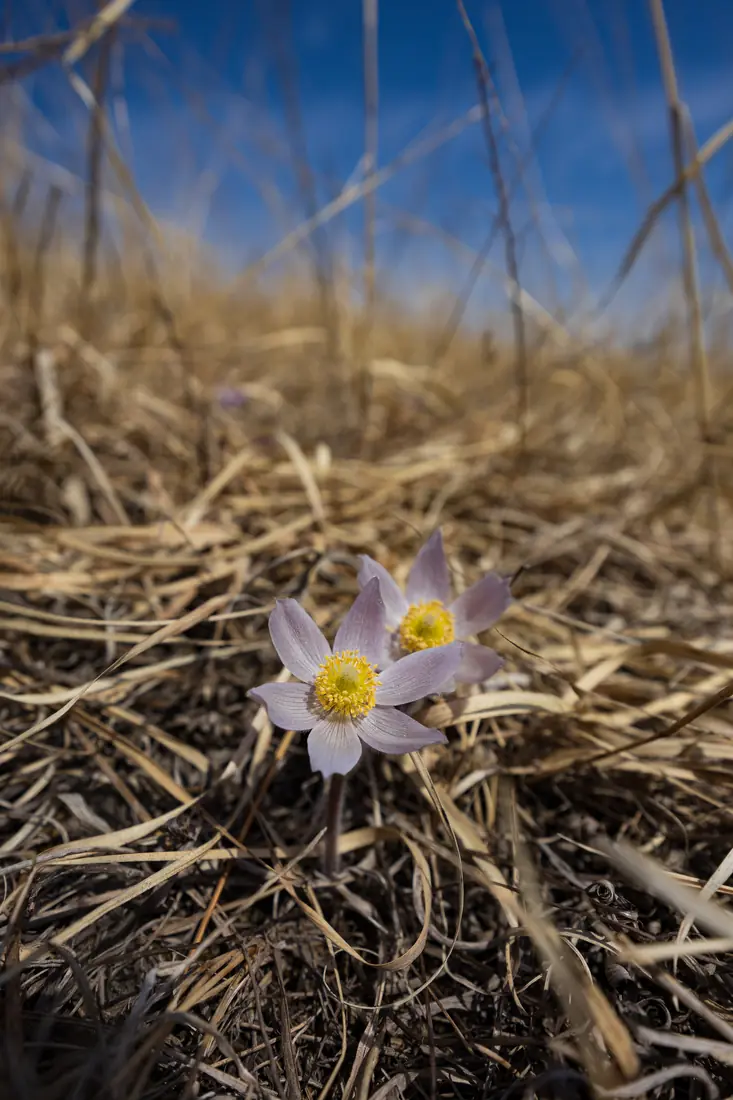
The DNR’s state park wildflower guide gives both a March to May bloom. Pasqueflowers, often among the first prairie flowers after snowmelt, appear at places like Glendalough, Glacial Lakes and Camden state parks; sharp-lobed hepatica, whose stem has fuzzy hairs against the cold, shows up in woods at Sakatah Lake State Park. A Sustainable Farming Association column says pasqueflowers typically bloom around Easter and are a vital early pollen source for bumble bee queens. Easter is March 28 in 2027, but bloom follows the weather, not the calendar.
Minnesota Statewide FrogWatch asks volunteers to visit a wetland site at night, at least 30 minutes after sunset, from March or April through August. The DNR says sign-ups for 2027 have not opened, and it invites people to join its Community Science Bulletin.
When does maple sap run best, and when does the season end?
For sugarmakers, March is the main event. The DNR’s state park guide says sap usually runs from about March 15 to April 20, though it can start as early as January or last into May, and that the best days have highs in the high 30s to mid-40s and nights below freezing.
-
A run is a day, not a season
Warm mornings after freezing nights · Sugarbushes and backyard maples, southeast to the Arrowhead
University of Minnesota Extension says sap does not flow every day: it runs when a rapid warming trend in early to mid-morning follows a night below freezing. A tap hole may give between a quart and a gallon in one flow, which can last a few hours or a day or more. Cold days stop the run, and so do long warm nights.
-
Keep it cold, boil it soon
During the run · Backyards, sugar shacks and state park programs
Extension recommends collecting at least every two to three days, and sooner in warm spells, because warm sap makes dark, off-flavored syrup. Cold sap kept in good storage holds for a day or two with little loss. Finished syrup boils about 7 °F above the boiling point of water, or about 219 °F, and should be filtered hot and packed in food-grade containers above 185 °F. Boil outdoors or with ventilation, since the process releases large amounts of steam over several hours.
-
How the season ends
Late March to April · Everywhere maples grow
By the DNR’s dates the run usually winds down around April 20, though it has lasted into May in some years, so March is the heart of it and April the tail. The DNR’s maple page listed no state park sugaring programs for March when we wrote this, so check with a park or nature center.
The cloud guide helps with the forecast: a clear, cold night followed by a sunny morning matches the pattern Extension describes for a good run.
When does the ice go out on Minnesota lakes?
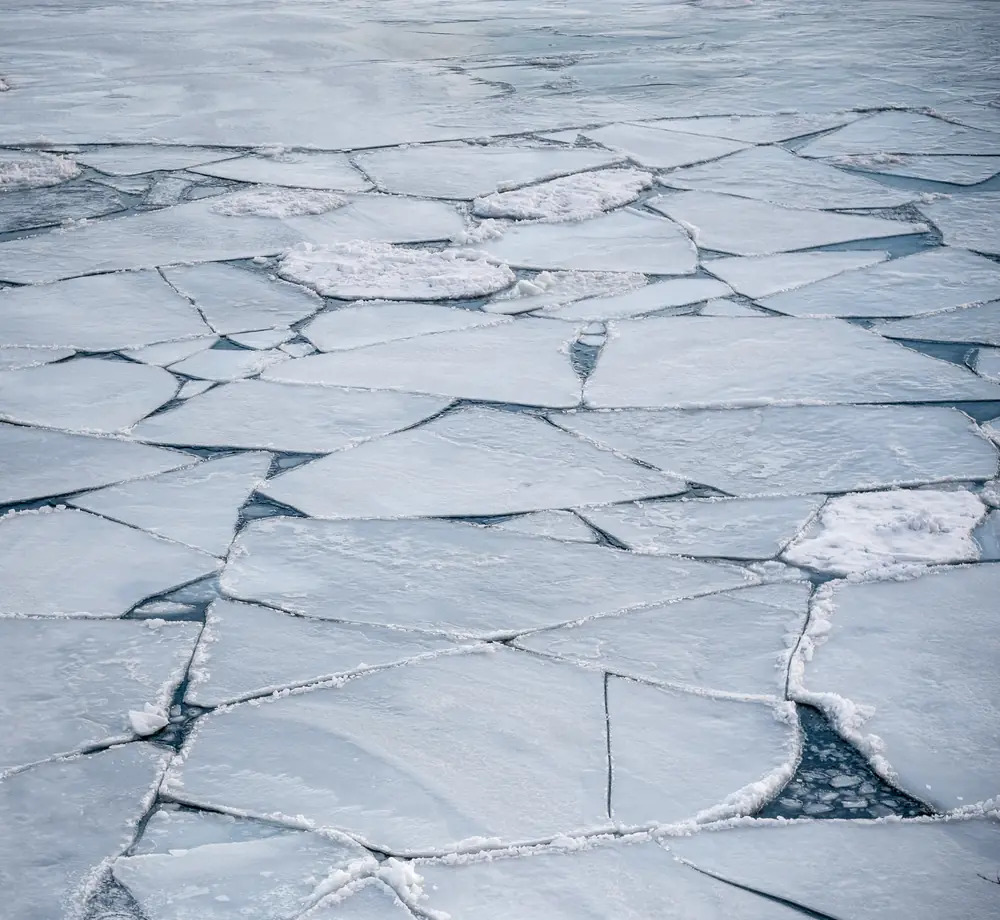
Lake ice, not the calendar, sets the pace for water birds, anglers and boaters. The DNR’s State Climatology Office keeps ice-out records for hundreds of lakes; in the table, the median date comes from records since 1950, while earliest and latest dates reach back much farther for the longest-kept lakes. The page was last updated in 2018, so a newer record may exist, and the DNR’s ice-out map has each year.
-
A March of a kind: 2012
March 2012 · Statewide
The State Climatology Office called March 2012 astoundingly warm, with monthly means 10 to 17 degrees above the historical average across Minnesota; the Twin Cities averaged 48.3 °F, beating the record of 45.0 set in 1910. Lakes lost their ice weeks early: Iowa and Hall lakes in Martin County were first, on March 12, and many larger lakes set records. Warmth advanced signs of spring such as perennial plant growth and ice-out by three to four weeks. A cool-down over the north in the last week of March, with a modest snowstorm, kept nearly every lake from going out in March, and the last lakes lost ice in the second week of April.
-
Lake Superior and the shipping season
The Soo Locks reopened March 25 in 2026 · Duluth harbor and the Soo Locks, Michigan
Shipping on Lake Superior restarts as the ice and the locks allow. The U.S. Army Corps of Engineers scheduled the Poe Lock to reopen at 12:01 a.m. on March 25 in 2026, according to a local news report, and it opened on March 25 in 2022 too; the Corps says the operating season is fixed by federal regulation. The Corps announces each year’s details; look for them in March.
-
Ice shelters come off
2026 deadlines were March 2 (south) and March 16 (north) · Inland lakes, divided by a line formed by U.S. highways 10, 34, 200 and 2
The DNR’s removal deadlines for 2026 were March 2 on inland waters south of the dividing line and March 16 north of it, with border waters on other dates through March 31. After a deadline, a shelter may stay between midnight and an hour before sunrise only when it is occupied or attended. The DNR had not posted 2027 dates when we wrote this, so check its page before you leave a shelter out.
| Lake | Earliest ice-out | Median | Latest ice-out |
|---|---|---|---|
| Pepin (Goodhue) | Feb 29, 2000 | Mar 31 | May 10, 1843 |
| Clear (Waseca) | Mar 6, 1987 | Apr 3 | Apr 27, 1951 |
| Nokomis (Hennepin) | Mar 7, 2017 | Apr 4 | Apr 25, 1965 |
| White Bear Lake (Ramsey and Washington) | Mar 16, 2016 | Apr 13 | May 4, 1950 |
| Minnetonka (Hennepin) | Mar 11, 1878 | Apr 13 | May 5, 1857 |
| Otter Tail (Otter Tail) | Mar 24, 2012 | Apr 15 | May 13, 2013 |
| Mille Lacs (Mille Lacs) | Mar 26, 2012 | Apr 25 | May 16, 2013 |
| Leech (Cass) | Apr 2, 2012 | Apr 28 | May 23, 1950 |
| Vermilion (St. Louis) | Mar 28, 2012 | Apr 30 | May 23, 1950 |
| Lake of the Woods | Apr 8, 2012 | May 3 | May 21, 2014 |
| Rainy Lake (Koochiching) | Apr 6, 2012 | May 4 | May 22, 1950 |
Ice in March can look solid long after it has stopped being safe, which is why the last section of this page is so blunt about it.
How cold and snowy is March in Minnesota, and when is the last spring freeze?
NOAA’s 1991–2020 normals show how much of winter lingers in March. Average highs run from the mid-30s in the far north to the low 40s in the Twin Cities, and lows sit at or below freezing on most nights. At International Falls the normal March high is 35.4 °F and the low is 11.8 °F, with 7.0 nights at or below 0 °F, 29.0 nights at or below 32 °F and 7.9 inches of snow. Duluth’s normals are 36.2 °F and 17.8 °F, 3.3 subzero nights, 27.9 freezing nights and 12.8 inches of snow. St. Cloud has 38.5 °F and 19.8 °F, 2.9 subzero nights and 8.2 inches. Minneapolis/St. Paul has 41.7 °F and 24.9 °F, 1.2 subzero nights, 23.8 freezing nights and 8.2 inches of snow. Rochester has 39.9 °F and 23.4 °F, 1.7 subzero nights, 24.4 freezing nights and 8.6 inches of snow. The table below gives the other end of spring: when the last freeze usually comes, which is the date to remember for tomatoes and tender seedlings. Our Minnesota frost chart has every station.
-
Big snows in March
March · Statewide
The DNR’s list of the 25 largest Twin Cities snowfalls back to 1884 includes seven March storms: 16.7 inches on March 3 and 4, 1985; 16.7 inches on March 11 to 14, 1940; 16.0 inches on March 8 and 9, 1999; 14.7 inches on March 31, 1985; 14.1 inches on March 22 and 23, 1952; 14.0 inches on March 10 to 12, 1899; and 13.6 inches on March 22 and 23, 1966. A recent example came on March 12 to 16, 2026. The State Climatology Office describes a first storm with gusts above 60 mph and blizzard conditions along the North Shore, then a second with 6 to 18 inches across the southern half of the state.
-
Thunderstorms and tornadoes
Rare, but they have happened · Southern and central Minnesota
The National Weather Service says the earliest tornado in Minnesota history struck on March 6, 2017, beating the previous mark of March 18, 1968, when three EF-1 tornadoes hit Bricelyn, Clarks Grove and Zimmerman. The worst March tornado outbreak in state history came on Sunday, March 29, 1998, with 14 tornadoes, including an F4 that traveled 67 miles from Murray County to Nicollet County and an F3 that struck St. Peter. A State Climatology Office article from 2018 counted only ten tornado days in March in Minnesota history, so the lesson is not to expect storms but to know the plan: warnings can be issued for the first warm, humid afternoon.
-
Snowmelt and river flooding
Mid-March into April · Red River Valley, the Minnesota, Mississippi and St. Croix rivers, and the North Shore streams
The National Weather Service’s spring flood outlooks weigh frost depth, soil moisture, snowpack and the rate of melt. In its 2026 outlook issued March 12, NWS Grand Forks said frost depth was running 25 to 35 inches basin-wide and that rain on a thawing snowpack is among the most important flood risk factors, and noted that another outlook might be issued March 26. NWS Duluth publishes its own outlook for northeastern Minnesota; look for the newest versions of each. For the season’s climate outlook, see NOAA’s Climate Prediction Center page, which is updated mid-month.
-
Fire danger after the melt
After the snow goes and before the grass greens · Grasslands, brush and woodlots
The DNR says the time after the snow melts and before vegetation greens up can be a dangerous time for wildfire, and that conditions change quickly, so it asks people to check the statewide fire danger and burning restrictions before burning anything. Its campfire guidance is a ring of no more than 3 feet across and 3 feet high.
| Station | One year in ten | Median | Nine years in ten |
|---|---|---|---|
| International Falls International Airport (far north) | May 13 | May 29 | Jun 16 |
| Moorhead (Red River Valley) | Apr 23 | May 5 | May 20 |
| Duluth (on the hill) | Apr 29 | May 13 | May 29 |
| Duluth Harbor Station (lakeshore) | Apr 24 | May 14 | Jun 1 |
| Grand Marais (North Shore) | May 3 | May 20 | Jun 6 |
| St Cloud Regional Airport (central) | Apr 24 | May 7 | May 23 |
| Minneapolis/St Paul Airport (metro) | Apr 8 | Apr 23 | May 7 |
| Worthington 2 NNE (southwest) | Apr 19 | May 3 | May 15 |
| Rochester International Airport (southeast) | Apr 15 | Apr 30 | May 13 |
For storms, a weather tool lists the forecast and active alerts for any town, and the cloud guide shows the lowering sheets that often come before snow.
How much daylight does Minnesota gain in March?
March is one of the two fastest months for daylight. Minneapolis adds about an hour and a half between March 1 and March 31, and the far north adds even more, until the day passes twelve hours near the equinox. Clock time changes overnight: on Sunday, March 14, 2:00 a.m. becomes 3:00 a.m., which moves sunrise and sunset an hour later on the clock. On Saturday, March 13, the Minneapolis sun sets at 6:16 p.m. standard time; a day later, on daylight time, it sets at 7:18 p.m. By our calculation, Minneapolis sunset reaches 8:00 p.m. on April 16. The March equinox arrives at 3:25 in the afternoon (CDT) on the 20th, a Saturday, when the sun crosses the equator; day and night stay close to equal for days either side. Use our sunrise and sunset calculator for any Minnesota town, and see the February guide for what came before.
| City | Mar 1 | Mar 31 | Gained | Per day |
|---|---|---|---|---|
| International Falls | 11 h 02 m | 12 h 49 m | 107 min | 3.6 min |
| Grand Marais | 11 h 04 m | 12 h 48 m | 104 min | 3.5 min |
| Bemidji | 11 h 04 m | 12 h 48 m | 104 min | 3.5 min |
| Moorhead | 11 h 06 m | 12 h 47 m | 101 min | 3.4 min |
| Duluth | 11 h 06 m | 12 h 46 m | 100 min | 3.3 min |
| Minneapolis | 11 h 09 m | 12 h 43 m | 94 min | 3.1 min |
| Rochester | 11 h 11 m | 12 h 43 m | 92 min | 3.1 min |
| Worthington | 11 h 12 m | 12 h 42 m | 90 min | 3.0 min |
What can you see in the Minnesota sky in March?
March has no meteor shower or eclipse worth planning around. It does have a long moonlit stretch in the middle of the month, the equinox, an easy Mercury sighting for early risers, and Jupiter high in the evening. All times are Central. The March 8 new moon happens before the clocks change, so it is given in standard time, and the later entries are in daylight time.
-
The Worm Moon
Full on Monday, March 22, at 5:44 a.m. CDT; best evening Sunday, March 21 · Rising in the east around 7 p.m.
Of the traditional names for this full moon, Worm Moon is the best known. It becomes full before dawn on Monday, so the evenings of Sunday and Monday both show a full-looking disk. By our calculation, on Sunday, March 21, the moon rises in Minneapolis at about 6:58 p.m. CDT, about half an hour before the 7:27 p.m. sunset, so it is easiest to spot as the sky darkens. Plan to watch from an open eastern horizon.
-
Mercury before dawn
Best from about March 8 to 25; greatest elongation at 11:20 p.m. CDT, Tuesday, March 16 · Low in the east-southeast, about an hour before sunrise
Mercury stands 27.6 degrees west of the sun, its widest swing of the morning apparition, late on Tuesday, March 16. For several weeks around that night it is up roughly an hour before dawn; look for a modest point low down, with brilliant Venus well above it. Spring mornings are a hard angle for northern observers, so use binoculars and a flat horizon.
-
Jupiter and the moon
Evenings of March 18 and 19 · High in the evening sky
By our own calculation, Jupiter and the moon are closest, just under one degree apart, on March 19, with the moon about 88 percent lit and Jupiter one of the brightest points in the evening sky. By our own calculation, as darkness falls on Saturday, March 13, a slim crescent moon hangs near the Pleiades. By the same calculation, late on March 30 into March 31, rust-colored Mars hangs roughly four degrees from Jupiter high in the evening sky, a wide but easy pairing.
-
Aurora
Any clear, dark night · Northern Minnesota has the best odds
Strong storms remain possible, and they tend to cluster around the equinoxes. NOAA’s Space Weather Prediction Center posts a short-term aurora forecast updated every 30 to 90 minutes. Our moon phase page shows the dark nights around the new moon.
| Phase | Date | Time |
|---|---|---|
| New moon | Monday, Mar 8 | 3:29 a.m. CST |
| First quarter | Monday, Mar 15 | 11:25 a.m. CDT |
| Full moon (Worm Moon) | Monday, Mar 22 | 5:44 a.m. CDT |
| Last quarter | Monday, Mar 29 | 7:54 p.m. CDT |
What can Minnesota families do outside in March?
Dated items below are ones an organizer or the calendar has published; everything else is a season, so check before you go.
- Saturday, March 6; Sunday, March 21; Saturday, March 27: eagle trips run by the National Eagle Center in Wabasha, starting at 12:30 p.m. and ending about 3:30 (there is a fee, and booking is required).
- Sunday, March 14: clocks jump ahead. Try a family sunset check: write down the clock time of sunset the day before and the day after.
- Saturday, March 20: equinox at 3:25 p.m. CDT. Pick a fence post or tree line, note where the sun sets over it, and do it again at the June solstice.
- Sunday, March 21: Worm Moon rise at about 6:58 p.m. in Minneapolis (our calculation), with Monday’s full moon at 5:44 a.m.
- All month: Hawk Ridge’s spring count in Duluth, March 1 to May 31, usually peaks for bald eagles around March 25.
- Any clear dusk: stake out a brushy clearing for woodcock.
- Mornings from mid-March: prairie chicken leks, with the best viewing in April (reserve a blind).
- From home: Project FeederWatch runs through April 30, and BirdCast’s live migration maps show where birds are flying overnight.
- Journals: track the first returning birds on Season Watch or Journey North; the DNR also lists free birding kits at state parks.
Programs can be cancelled when weather is bad, so call ahead. For other months and states, see our seasonal nature guides at /nature, and the Naturalist’s Field Journal offers plates for logging each observation named here.
Safety notes for March in Minnesota
Winter does not quite let go in March, and the dangers shift: weak ice, high water, mud, fire and an early tick.
-
Seasons that run into March
March 2027 · Statewide
The DNR lists crow season for March 1 through March 31, 2027, statewide. Fox and raccoon trapping in both zones run through March 15, 2027, and beaver and otter trapping through May 15. The DNR’s fishing page shows the statewide stream trout opener on April 10, 2027, and the general opener on May 15, 2027. The DNR’s 2027 spring turkey seasons begin April 14, after this month; check its hunting seasons page for the permit details.
-
Blaze orange
When no firearms deer season is open · Public and private land
The DNR’s rule says a person taking small game must wear at least one visible article of blaze orange or blaze pink above the waist when no firearms deer season is open. People hunting raccoons and predators such as coyote, fox and bobcat, hunting turkey or migratory birds, hunting bear or trapping furbearers are exempt. No rule covers hikers or birders, though a bright jacket still helps others see you.
-
Rotten ice and cold water
All March · Lakes, rivers, culverts and inlets
In the DNR’s words, completely safe ice does not exist; ice over flowing water is often dangerous and outside river bends are weaker. It does not measure ice thickness on lakes, so check often. The agency’s rule of thumb is that four inches of new clear ice might carry a walker, whereas old ice that has partly thawed can fail even at a foot thick. Spring ice is the old kind. Keep pets and children off it, and stay clear of river edges as the melt raises water levels.
-
Ticks and roads
As the snow goes · Woods and brush edges
According to state health officials, adult blacklegged ticks usually emerge right after snowmelt and peak in May, and that on a warm day with little snow a hungry adult can be found even in winter. Check yourself after a woods walk.
-
Bears and wind
Late March · The north and anywhere near the woods
Remove bird feeders and keep trash, pet food and grills out of reach as bears wake. The March 2026 storms brought gusts of 60 mph or more to the Twin Cities and 69 to 71 mph at Rochester and Redwood Falls, so before a long drive, check forecasts and carry a winter kit.
For ice and water rules, see the DNR’s ice safety pages. When you start planning seeds, our Minnesota frost chart shows last-frost dates for every station.
Sources (68)
- Hawk Ridge Bird Observatory: spring visitor’s guide
- National Eagle Center: eagle viewing field trips, 2026–27 schedule
- Minnesota DNR: EagleCam (2025–26 season updates)
- Minnesota DNR: frequently asked questions about the EagleCam and bald eagles
- CBS Minnesota: Bald eagles migrating back to Minnesota as waters open up (quotes DNR nongame specialist)
- Minnesota DNR: wildlife viewing in a theater of seasons
- Season Watch (University of Minnesota and Northern Community Radio): Sherburne County phenology calendar
- Season Watch: sandhill crane
- Season Watch: red-winged blackbird
- Season Watch: eastern bluebird
- Season Watch: wood duck
- Season Watch: American robin
- Season Watch: wood frog
- Season Watch: boreal chorus frog
- Friends of Sax-Zim Bog: plan your visit
- U.S. Fish and Wildlife Service: Agassiz National Wildlife Refuge, seasons of wildlife
- U.S. Fish and Wildlife Service: Minnesota Valley NWR, experience the waterfowl migration
- U.S. Fish and Wildlife Service: Minnesota Valley NWR, seasons of wildlife
- Minnesota DNR: Look Up! spring birding starts now (April 2026 bulletin)
- Minnesota DNR: managing your land for woodcock (PDF)
- Minnesota DNR: 2026 Minnesota prairie-chicken population survey (PDF)
- Minnesota Conservation Volunteer: dueling chickens (May–June 2022)
- U.S. Fish and Wildlife Service: Hamden Slough NWR prairie chicken viewing blind (February 2024 news release)
- Minnesota DNR: frog and toad breeding calendar
- Minnesota Conservation Volunteer: blue-spotted salamander (May–June 2018)
- Minnesota DNR: Minnesota Statewide FrogWatch
- Minnesota DNR: black bear
- Minnesota DNR: prevent conflicts with bears this spring by being BearWise (March 23, 2026)
- Minnesota DNR: early spring wildflowers in state parks (bulletin)
- Sustainable Farming Association: Beyond your backyard, the first signs of spring (April 2022)
- Minnesota DNR state parks: maple syruping
- University of Minnesota Extension: homemade maple syrup
- Minnesota DNR: lake ice out records for selected lakes
- Minnesota DNR: lake ice-out database and map
- Minnesota DNR State Climatology Office: recap of 2012 ice out
- Minnesota DNR State Climatology Office: HydroClim Minnesota, April 2012
- The Sault News via Yahoo: Soo Locks set to re-open March 25 for 2026 shipping season
- U.S. Army Corps of Engineers (Army.mil): Soo Locks to open March 25 for 2022 shipping season
- Minnesota DNR: ice fishing shelters and removal deadlines
- Minnesota DNR: ice safety
- NOAA NCEI: 1991–2020 monthly normals, International Falls station file
- NOAA NCEI: 1991–2020 monthly normals, Duluth station file
- NOAA NCEI: 1991–2020 monthly normals, St. Cloud station file
- NOAA NCEI: 1991–2020 monthly normals, Minneapolis/St. Paul station file
- NOAA NCEI: 1991–2020 monthly normals, Rochester station file
- Minnesota frost dates (NOAA 1991–2020 normals)
- Minnesota DNR: top 25 snowfalls in the Twin Cities, 1884–2025
- Minnesota WeatherTalk (University of Minnesota Extension and State Climatology Office): back-to-back snowstorms with high winds (March 20, 2026)
- National Weather Service Twin Cities: summary of the March 6, 2017 severe weather outbreak
- Minnesota WeatherTalk: 20 year anniversary of the historical March tornado outbreak (March 29, 2018)
- NWS Grand Forks: Red River and Devils Lake basins spring flood outlook briefing, March 12, 2026
- NWS Duluth: spring flood outlook for northeast Minnesota and northwest Wisconsin
- NOAA Climate Prediction Center: seasonal (90-day) outlooks
- Minnesota DNR: wildfire
- Minnesota Department of Health: ticks
- U.S. Naval Observatory: phases of the moon, 2027
- U.S. Naval Observatory: earth’s seasons, 2027
- U.S. Naval Observatory: sun and moon rise and set data
- NOAA Space Weather Prediction Center: aurora 30-minute forecast
- Journey North
- Project FeederWatch: how to participate
- BirdCast: live migration maps
- Minnesota DNR: trapping season dates
- Minnesota DNR: upland bird, crow and turkey season dates
- Minnesota DNR: hunting season dates
- Minnesota DNR: fishing season dates
- Minnesota DNR: blaze orange and pink requirements
- Photos via Wikimedia Commons; licenses and photographers are credited under each picture