What to look for in nature in Mississippi this March
In Mississippi, March is when spring stops being a rumor. Mississippi sandhill cranes sit on their eggs in the wet pine savanna, wild turkeys begin to gobble just as the spring season opens, and the first ruby-throated hummingbirds and swallow-tailed kites return to the Gulf Coast. On warm rainy nights, salamanders and frogs cross the roads to their breeding pools, red maples drop their seeds and dogwood buds swell, and crappie slide into the shallows. Days lengthen by an hour or more, the clocks go ahead on Sunday the 14th, and the Worm Moon turns full before sunrise on the 22nd. It is also a month for wildfire and tornado watch.
Other months in Mississippi: October, November, December, January, February, April.
Start here
- Listen for turkeys at a still, dry dawn. Stand at the edge of a field or pine woods before sunrise on a calm morning after the rain has passed. Mississippi State researchers found that gobbling is far more likely on dry days than on damp ones. Wear something bright if it is turkey season.
- Check one dogwood or red maple each week. Choose a tree near home and note the day its flowers open. At the Crosby Arboretum in the south, dogwood buds are swelling in March while red maple flowers and seeds are already out.
- Look up on the evening of March 21. The Moon is full at 5:44 a.m. CDT on the 22nd, so it rises about sunset the evening before, looking full. Earlier, on the 18th and 19th, it passes close to bright Jupiter.
In the Naturalist's Field Journal, a turkey's gobble and a frog chorus belong on the map of sounds, and your first hummingbird or swallow-tailed kite goes on birds I have seen. A red maple or dogwood fits a tree through the seasons, a burned savanna fits the same place twice, scratched ground and tracks in the mud suit reading the signs, and the Worm Moon with Jupiter belongs on the dusk and dawn watch.
Regions used below: The Delta; North Mississippi hills and Tupelo; Central Mississippi and Jackson; The Pine Belt; Southwest Mississippi and Natchez; The Gulf Coast.
What are Mississippi's rare sandhill cranes doing in March?
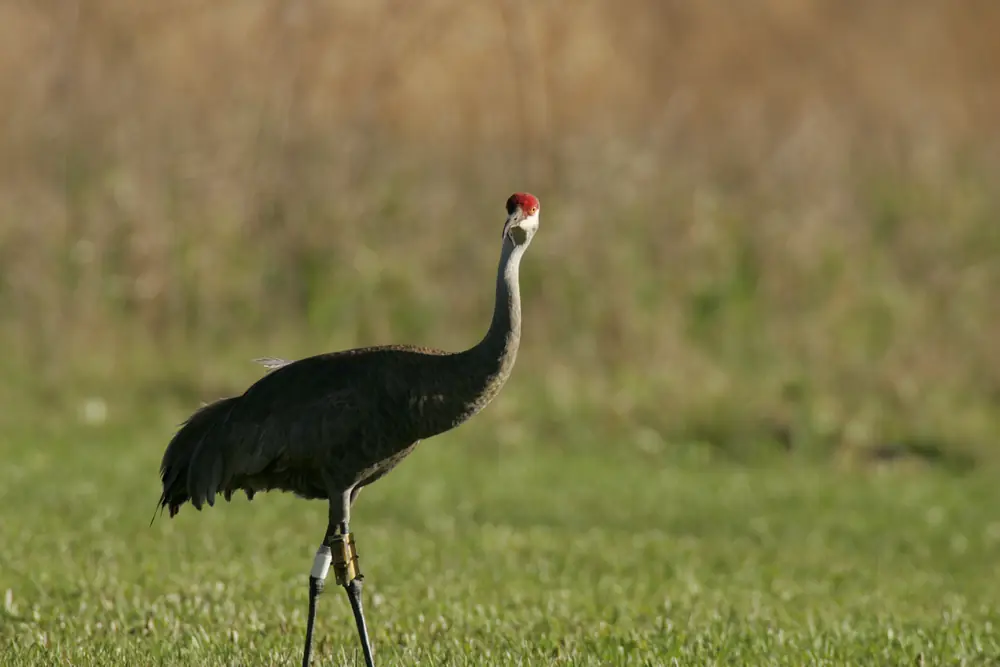
Nesting, or getting ready to. Few birds anywhere are rarer than the Mississippi sandhill crane, and unlike its migratory cousins it never leaves the Gulf Coast. According to the federal wildlife service, the wild population has grown from 30 to 35 birds in 1975, when the refuge was founded, to roughly 200 today, helped by captive rearing and by wild pairs nesting in the savannas. Refuge staff say pairs generally lay two eggs in late winter or early spring and take turns sitting on them for about a month, a precarious time because many predators want a meal of eggs. The chicks, called colts, hatch in spring and are walking soon after birth.
-
Cranes in the wet pine savanna
Eggs in late winter to early spring, colts in spring · Mississippi Sandhill Crane National Wildlife Refuge, Jackson County, with its headquarters in Gautier
Cranes are shy, and a nest is not something to look for. The refuge says its guided crane tours generally run from late fall to late winter, depending on staffing, so by March the better plan is to walk the 3/4-mile C.L. Dees Trail or the 1-mile Fontainebleau Trail, scan the savanna from the visitor center's observation deck, and ask at the desk what is being seen. An adult stands about four feet tall and is all gray with a bald red forehead, unlike the great blue herons that share the wet ground. Listen for the loud, clattering call.
-
Green shoots after the fire
February burns, March regrowth · Refuge savannas and the Crosby Arboretum's bogs in Picayune
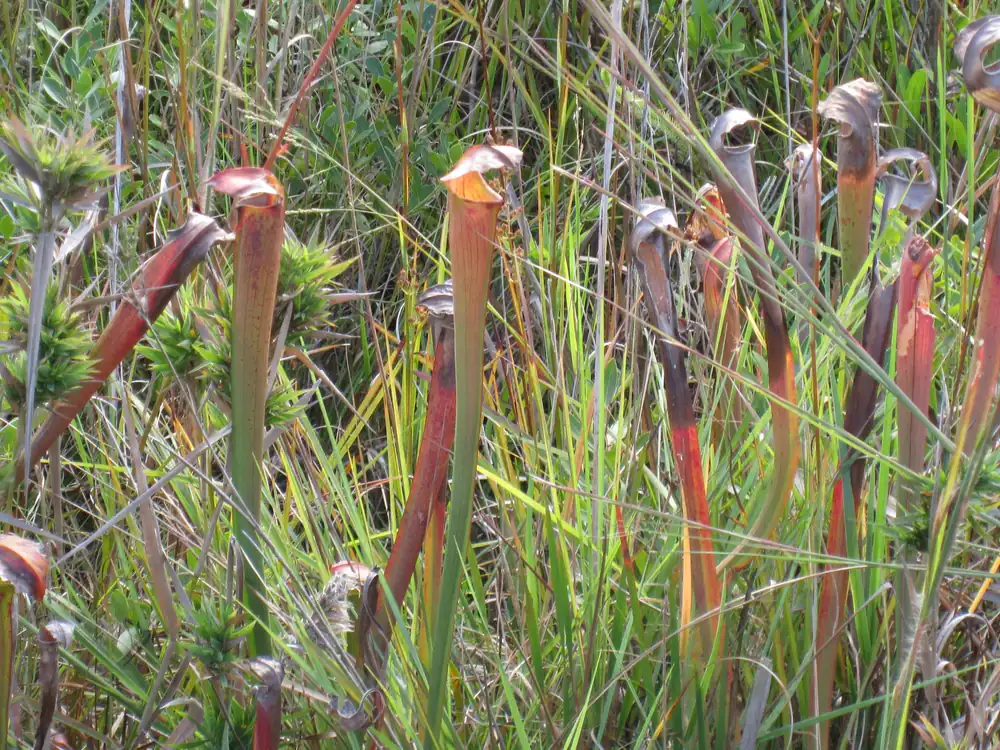
The refuge restores and protects the last large expanses of wet pine savanna, mainly by prescribed fire, and the habitat packs more than 30 plant species into a single square meter. A past column by Crosby Arboretum staff describes what follows a burn: pitcher plant flowers unfold among the blackened grass tufts, candyroot (a milkwort) sends up yellow, orange and purple blooms along the pathway edges, and sundew rosettes, ruby red and about the size of a quarter, are easiest to spot in early spring before taller plants hide them. The Arboretum says it burns on its grounds and natural areas three years out of five.
Walk a burned savanna now and again once the grasses close over, then set the two visits side by side on a same place twice page of the Field Journal.
What are wild turkeys doing when spring season opens in Mississippi?
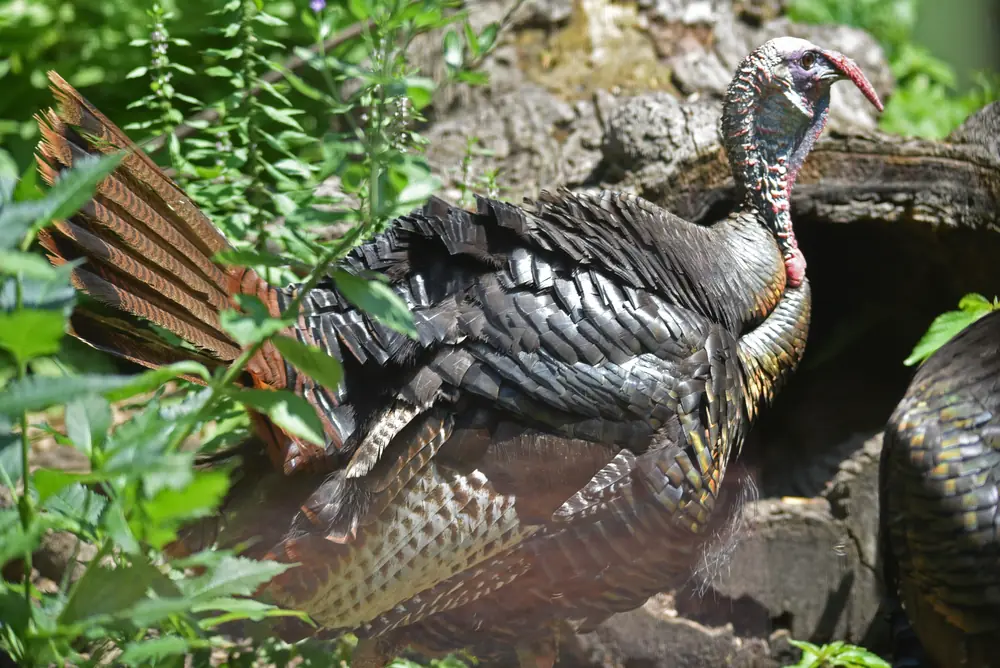
Courting, in the week or two on either side of the opening day. Mississippi has about a quarter of a million wild turkeys, according to its wildlife agency, and its hunters have chased spring gobblers for generations. Toms and hens begin pairing off in late February and early March, a Mississippi newspaper report on the state's turkeys explains, and the hens start to nest as the spring green-up arrives. You need not hunt to enjoy it: dawn in a March woodlot is one of the loudest wildlife shows in the state.
-
The gobbling calendar
Early March through April, a week or two earlier in the south · Mixed pine and hardwood woods and field edges statewide
Scientists at Mississippi State University and MDWFP tracked gobbling in the northern and southern parts of the state and found a 10 to 14 day difference in peak activity between the two, with the south peaking first, which fits the idea that increasing day length drives the breeding season. Most of the gobbling in both regions still fell inside the spring season the agency sets. They were surprised by one thing: the odds of hearing a gobble on dry days were far greater than on moist or transitional days, so a still, dry dawn after a stormy night is the one to pick.
-
Hens turn to nests
Nesting with the spring green-up; incubation from mid-April to mid-May · Thick, shrubby cover on the ground
A report in the Daily Leader, quoting the Mississippi State University Extension Service, gives the incubation window as mid-April to mid-May, about four weeks per clutch. Once hens are sitting, gobbling tapers off, which is one reason a March morning can be louder than a May one.
Gobbles and frog choruses make good entries for the sound map in the Field Journal. Season dates, the new stamp rules and advice for walkers follow in the safety notes.
Who is arriving first on the coast in March: hummingbirds, kites and martins?
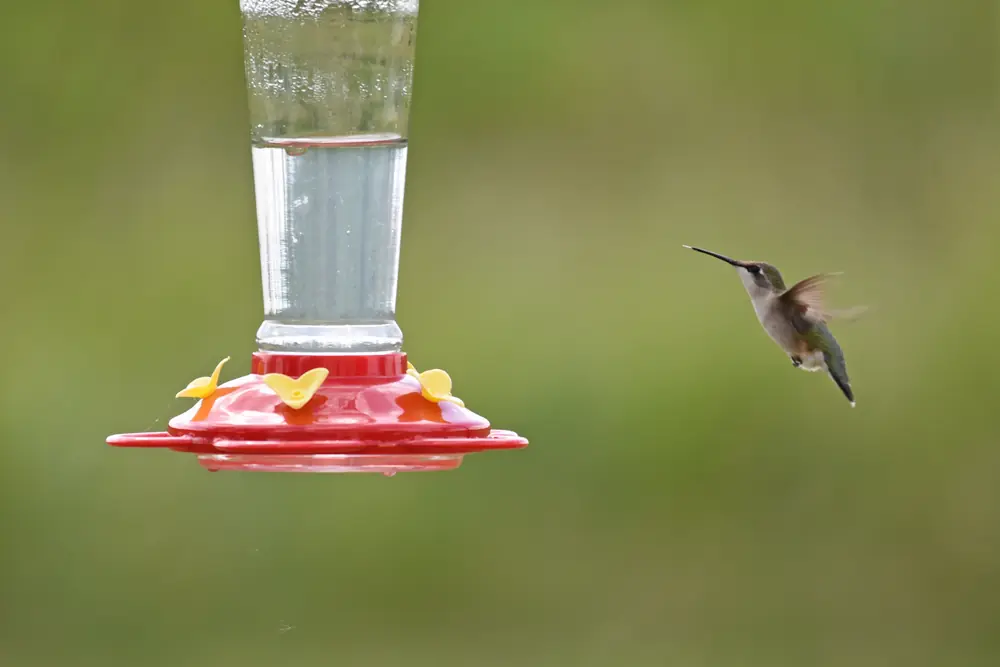
The Gulf Coast gets the first tropical travelers, and March is the month they begin to show up. Journey North, the citizen-science program that maps migrations, says ruby-throated hummingbirds reach the Gulf Coast in late February or early March, with males leaving the Yucatan first and the first females coming about ten days behind. The bigger waves of warblers, vireos and tanagers come later, in April and early May, so March is the month of scouts.
-
Ruby-throated hummingbirds
Late February and March on the coast, later inland · Gardens with nectar flowers in Gautier, Ocean Springs, Gulfport and Pascagoula, then northward
The crossing of about 500 miles of open Gulf takes around 18 hours in good weather, so arrivals are hungry. Journey North's archive includes a March 4, 2020 report from Gautier of a first hummingbird at a feeder and then at trumpet honeysuckle. The program says feeders do not keep migrants from moving on, so a feeder up in early March costs them nothing. Report your first sighting on its map.
-
Swallow-tailed kites return
Usually late February and March into the Gulf states; Mississippi arrival dates vary · The lower Pearl and Pascagoula river basins, with a small central Mississippi population
These graceful black-and-white raptors, with deeply forked tails, spend the winter in southern Brazil. A Florida extension agent describes them returning to the Gulf states in late February and March, and MDWFP says surveys found nests along the lower Pearl and Pascagoula rivers plus a small, newly found group in central Mississippi. The state lists the species as a Species of Greatest Conservation Need. Watch a river corridor on a warm afternoon for one gliding and snatching insects from the air.
-
Purple martin scouts and early migrants at Davis Bayou
Martin scouts from late January, migrant songbirds mostly from April · Martin houses statewide; Davis Bayou in Ocean Springs
The Purple Martin Conservation Association's volunteer Scout-Arrival Study logged the first Mississippi martin of 2024 in Greenwood on January 30, so a martin house in your town may already be busy by March. On the coast, Audubon's birding guide to Mississippi calls the Davis Bayou area of Gulf Islands National Seashore, in Ocean Springs, especially good in spring migration, and describes the Ansley Road site in Hancock County as peaking in April and early May after storms with northerly winds. A March visit gives early arrivals and a good look at what is coming.
Write down the day you see a first hummingbird or kite, and where, in your Field Journal. Dates from your own yard are worth more than any average.
Where do frogs and salamanders go on rainy March nights?
To the nearest fishless pool. In Mississippi the amphibian breeding season stretches from late fall into early spring, and a warm, rainy night in March can put hundreds of animals on the move. The National Park Service says that on rainy nights from November through March many species leave their woodland homes to lay eggs and look for food, and the Vicksburg park reports that on warm nights after rain more than 20 species of frogs and toads can be heard calling in Warren County.
-
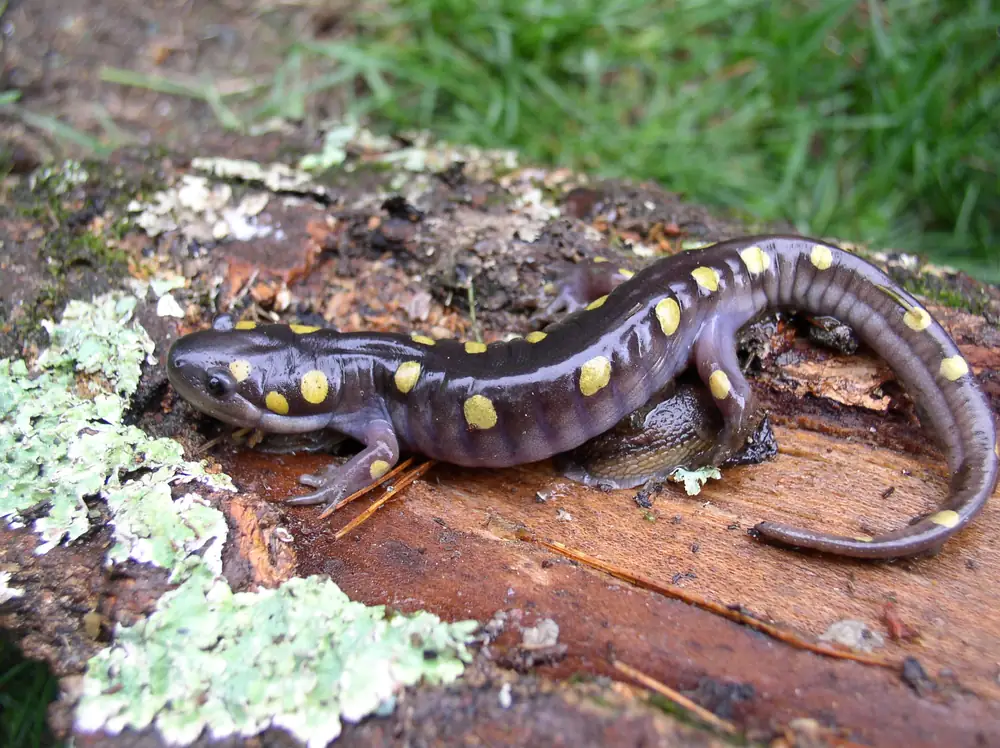
Salamanders crossing the Natchez Trace
Rainy nights, November through early spring · Natchez Trace Parkway, mileposts 85 to 87, south of Interstate 20 in Hinds County
Limestone outcrops and seasonal pools in this stretch give salamanders and frogs breeding and feeding habitat, including the state-imperiled Webster's salamander, which is known from only 16 widely separated sites in Mississippi. The Parkway has posted a temporary night speed limit of 35 mph there when it is raining, with flashing signs, from November to April, because dozens of animals were being killed by cars every night. That Park Service page was last updated in 2015, so check with the Parkway before counting on the signs. A spotted salamander, which Mississippi State's Extension Service describes as a slippery, shiny amphibian of shallow hardwood-forest pools, is one of the animals you might see crossing.
-
The snoring frog of the De Soto
Breeding season, whenever rain fills the ponds · A few ephemeral ponds in the De Soto National Forest
The dusky gopher frog is one of the rarest frogs in North America. The Fish and Wildlife Service explains that it breeds in ephemeral ponds, temporary pools that exist for a few weeks or months and that need rain to fill. A low snoring call from one small pond led biologists to it, and Forest Service partners have since cleared overgrown ponds to restore their open, fire-maintained condition. Most people will never see one, and the breeding sites are not places to visit.
If you hear a chorus, stand still for a few minutes and the calls may start again. FrogWatch USA, a national citizen-science program run through zoos, aquariums and nature centers, teaches volunteers to identify local frogs and toads by ear, and its chapters list local training sessions.
What blooms in Mississippi in March?
More every week, and the south leads the north. The Natchez Trace Parkway keeps a week-by-week list of typical bloom along its Mississippi miles, and it notes that blooms at the Natchez end come about two weeks to a month ahead of the Nashville end. It also warns that the calendar bends to the weather: a warm winter pushes bloom early and a cold one holds it back.
-
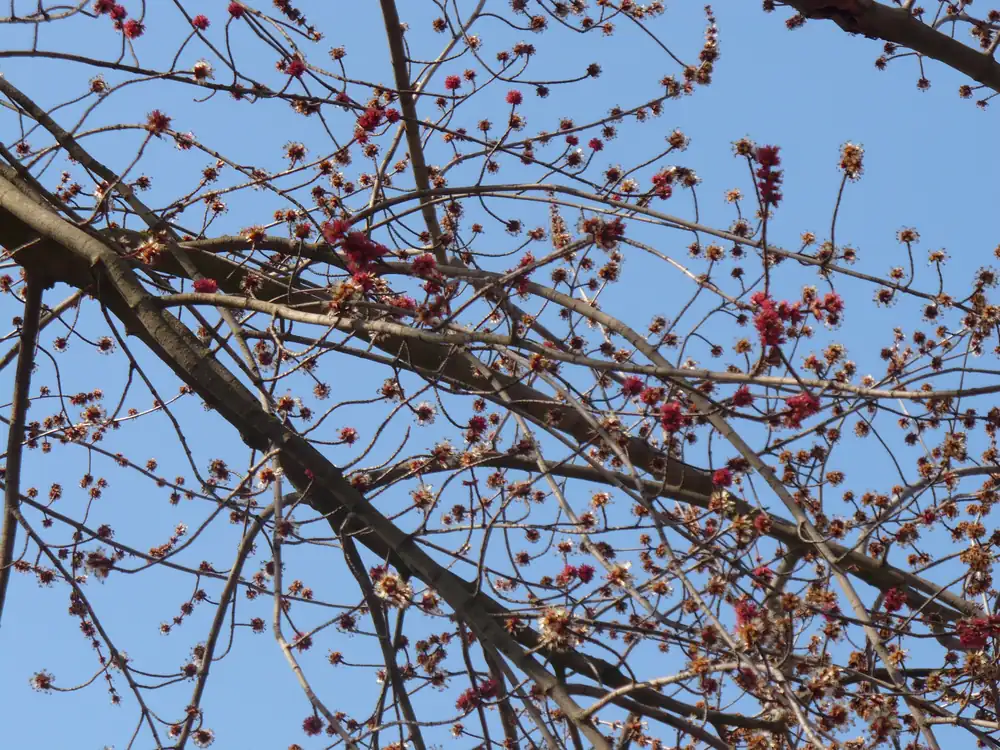
Redbud, dogwood and plum along the Natchez Trace
Natchez to Jackson from the first week of March; Jackson to Tupelo a week or two later · Natchez Trace Parkway, milepost 0 to 266 (Natchez to Tupelo)
The Park Service's list for the first week of March shows red maple, serviceberry, Chickasaw plum, redbud and dogwood already flowering between Natchez and Jackson, with Carolina jessamine, bluets and violets underneath. From Jackson to Tupelo the list has redbud and red maple in that first week, and flowering dogwood just starting in the second. Between Tupelo and the Tennessee line, redbud is just starting in the first two weeks of March, with Chickasaw plum and red maple ahead of it. By the third week the southern list adds black locust, blue phlox and daisy fleabane to the dogwood and redbud.
-
Red maple, mayhaw and the wet savannas
March · Pine savannas, swamp forests and pond edges in south Mississippi; Crosby Arboretum, Picayune
The Crosby Arboretum's one-page March list adds mayhaw, with pinkish flowers in clusters, and flowering dogwood, whose grayish-white buds are present during the month. It also lists fragrant yellow jessamine, Elliott's blueberry with small pink to white bells, buckwheat tree with upright white-to-pink clusters, sunbonnets, daisy fleabane, and in the water golden club and yellow cow lily. Red maples carry crimson-red to pink flowers, and some trees already hold bright red, winged seeds. Native azaleas tend to peak a little later: a Mississippi State columnist described them in full show in early April 2025.
-
Gardens in Natchez
Spring Pilgrimage tours begin March 11, 2027 · Natchez, Adams County
Natchez's Spring Pilgrimage is mainly historic house tours, with gardens in the mix. The Pilgrimage Garden Club lists tours from March 11 to April 10, 2027, and Living History Natchez shows 2027 tours on March 18 to 21 and March 25 to 28. Visit Natchez says the Natchez Garden Club still has its March and April dates to announce. Check with the organizers for tickets and times.
Pick one red maple or dogwood near home, check it once a week, and record the date of first flower in the Naturalist's Field Journal, using a tree through the seasons page.
What stirs in Mississippi's lakes and bayous in March?
Fish, mostly. As the water warms through the upper 50s, crappie begin to move to the shallows, and for many Mississippi anglers that is the real start of spring. The state's flood-control reservoirs in the north, Grenada, Enid, Sardis and Arkabutla, draw about 1.7 million hours of fishing a year, mostly for crappie, according to MDWFP's 2026 fishing forecast.
-
The crappie spawn
March through May, once water reaches about 58 to 65 degrees · Brush piles, stumps and shallow banks of lakes and reservoirs
MDWFP's fish guide says white crappie spawn from March through May at those water temperatures, and the males darken on the throat and head, which can make them look like black crappie. Black crappie also spawn in early spring in the same range of temperatures. The statewide limit is 30 crappie a day, black and white combined, but the 2024 rules cut the limit to 10 per angler on Grenada, Enid, Sardis and Arkabutla, with a 25-fish boat limit when three or more anglers share a boat, and to 20 per angler at Lake Washington. Check the current limits for your lake before you go.
-
Geese still on the move
Through March 31 for the permit-only conservation order · Delta fields and wetlands
MDWFP's 2026 to 2027 seasons list a light goose conservation order, which needs a free permit number, through March 31, a tool meant to reduce the numbers of overabundant snow, blue and Ross's geese when no other waterfowl season is open. Delta fields can still hold white flocks early in the month.
Alligators live all across Mississippi, according to MDWFP, and it is illegal to feed them, which teaches them to associate people with food. Give any alligator you see on a bank plenty of room.
When is the last spring freeze in Mississippi?
Earlier on the coast, later in the northern hills, and with a wide spread in any one place. Each row below is one main weather station for a region of the state, using NOAA's 30-year normals for 1991 to 2020. The median is the middle date: in half of all years the last freeze comes earlier, in half later. The other two columns bracket the range. Planting tender tomatoes or peppers on the median date is a gamble; waiting for the later column is the careful approach.
| Station | One year in ten | Median | Nine years in ten |
|---|---|---|---|
| Tupelo | Feb 28 | Mar 21 | Apr 6 |
| Columbus | Feb 19 | Mar 13 | Apr 2 |
| Greenville | Feb 24 | Mar 13 | Mar 31 |
| Jackson | Feb 22 | Mar 14 | Apr 2 |
| Meridian | Feb 22 | Mar 14 | Apr 1 |
| Hattiesburg | Feb 16 | Mar 8 | Mar 28 |
| Gulfport | Jan 25 | Feb 23 | Mar 16 |
Hattiesburg's median last freeze falls in the second week of March, while the northeastern hills near Iuka wait until the second week of April, and on the coast a freeze after mid-March happens only about one year in ten. For your own town, our Mississippi frost dates page lists many more stations. A freeze in the first days of March matters most for flowers that opened early, such as red maple blooms and early fruit blossoms.
How much daylight does Mississippi gain in March?
More than an hour, and faster each week than in February. From March 1 to March 31 the day grows by 56 to 66 minutes across the state, and around the March 20 equinox the Sun is up for close to twelve hours everywhere in Mississippi. Sunrise slides earlier while sunset slides later, so the change is felt at both ends of the day.
| City | Mar 1 | Mar 31 | Gained | Per day |
|---|---|---|---|---|
| Southaven | 11 h 26 m | 12 h 32 m | 66 min | 2.2 min |
| Tupelo | 11 h 27 m | 12 h 31 m | 64 min | 2.1 min |
| Columbus | 11 h 28 m | 12 h 30 m | 62 min | 2.1 min |
| Greenville | 11 h 28 m | 12 h 31 m | 63 min | 2.1 min |
| Jackson | 11 h 30 m | 12 h 30 m | 60 min | 2.0 min |
| Meridian | 11 h 30 m | 12 h 30 m | 60 min | 2.0 min |
| Hattiesburg | 11 h 31 m | 12 h 29 m | 58 min | 1.9 min |
| Gulfport | 11 h 32 m | 12 h 28 m | 56 min | 1.9 min |
Southaven, near the Tennessee line, gains 66 minutes over the month, about 2.2 minutes a day, and Gulfport on the coast gains 56, about 1.9 minutes a day, so the north pulls ahead a little. Day length is the same on either side of the March 14 clock change; what moves is the clock. Sunrise and sunset both jump an hour later on the clock overnight, so mornings are darker for a few weeks and evenings stretch toward bedtime. To find sunrise and sunset where you live, open the daylight page.
Is March tornado, flood and wildfire season in Mississippi?
All three can show up in the same month. The National Weather Service office in Jackson has counted an average of 33 tornadoes a year in Mississippi between 1950 and 2020, and its annual counts show how widely March can swing: 3 tornadoes in March 2017, 8 in 2018, 4 in 2019, 3 in 2020 and 18 in 2021. The weather office in Birmingham describes the outbreak of March 24 to 27, 2023, which produced a deadly EF4 and two EF3 tornadoes in Mississippi, starting along the Mississippi River at Rolling Fork.
Rain is the second hazard: March normals run from about 4.7 to 5.7 inches at the stations below, enough to raise creeks after a wet week. The Jackson weather office posts river forecasts, so check a stream before you head out.
| Station | Average high | Average low | Rain and melted snow | Freezing nights |
|---|---|---|---|---|
| Tupelo | 66.4 °F | 43.7 °F | 5.37 in | 5.1 |
| Greenville | 66.0 °F | 45.2 °F | 4.71 in | 2.6 |
| Jackson | 69.4 °F | 46.4 °F | 5.68 in | 3.0 |
| Meridian | 71.2 °F | 45.9 °F | 5.66 in | 3.9 |
| Hattiesburg | 71.5 °F | 48.1 °F | 5.57 in | 2.2 |
| Gulfport | 70.4 °F | 51.8 °F | 5.22 in | 0.7 |
The third hazard is wildfire. The Mississippi Forestry Commission says March typically brings more wildfires as vegetation is dry and winds are up, and in 2025 the governor proclaimed March Wildfire Prevention Month. In 2024 the Commission's firefighters responded to more than 2,502 wildfires that burned over 51,982 acres, and most were accidents, with escaped debris burns the leading cause. County boards ask the Commission to approve burn bans when conditions get dangerous. NOAA updates its seasonal outlooks every month at the Climate Prediction Center. For frost, see our frost page, and for the clouds that go with spring storms, the cloud guide and our weather guide help.
What can you see in the night sky over Mississippi in March?
At 2 a.m. on March 14 the clocks leap ahead, and the moon table below changes from standard to daylight time to match.
-
Venus and Mercury before dawn
Venus all month; Mercury best from about March 8 to 25 · Low in the east or southeast before sunrise
Venus is the brightest point in the dawn sky all month, climbing out of the east-southeast well before sunrise. Around dawn on the 4th and 5th a thin old Moon floats beside it, by our calculation. Mercury, a fainter companion, reaches its widest angle from the Sun in the morning sky on the 17th (the Sea and Sky calendar gives 27.6°) and is worth hunting for between about the 8th and the 25th. Rise early, pick a flat horizon and aim below Venus.
-
Jupiter and Mars, with the Moon beside Jupiter
All month; Moon beside Jupiter March 18 and 19; Mars and Jupiter closest on March 30 · High in the east at nightfall, setting earlier each week
Both planets are easy to find: face east after dark. Both were at opposition last month and now set a little earlier each week. Jupiter, the brighter, has the gibbous Moon beside it on the 18th and 19th, and our calculation puts the two under a degree apart on the 19th. On Tuesday evening the 30th, Mars and Jupiter stand a little over four finger-widths apart at arm's length, both high in the sky at 8 p.m.
-
Saturn's last evenings
First days of March · Low in the west after dusk
Saturn is fading out of the evening sky. Look low in the west just after dusk in the first days of March. It vanishes into the Sun's glare during early April and reaches solar conjunction on the 7th.
-
The equinox and the Worm Moon
Equinox Saturday, March 20, 3:25 p.m. CDT; full Moon Monday, March 22, 5:44 a.m. CDT · Anywhere with a clear eastern horizon
The March equinox arrives at 20:25 universal time, which is 3:25 p.m. CDT, and the full Moon follows less than two days later. The full moment lands before sunrise on Monday the 22nd, which makes the round Moon rising near sunset on the 21st the one to watch. Sea and Sky writes that early peoples called this the Worm Moon because the ground was softening and earthworms were reappearing. No eclipses fall in March 2027.
-
A March Milky Way
Best around the March 8 new Moon · A dark site with a clear southeast sky before dawn
Before dawn the galactic center, the glowing heart of our galaxy, is back above the southeastern horizon. By our calculation for 30 degrees north, the darkest mornings run from about March 3 to 17 and again on March 31, with up to roughly two and a half hours when the core is up and the Moon is safely below the horizon. The coast gets the clearest low southern view.
| Phase | Date | Time |
|---|---|---|
| New moon | Monday, Mar 8 | 3:29 a.m. CST |
| First quarter | Monday, Mar 15 | 11:25 a.m. CDT |
| Full moon, the Worm Moon | Monday, Mar 22 | 5:44 a.m. CDT |
| Last quarter | Monday, Mar 29 | 7:54 p.m. CDT |
| New moon | Tuesday, Apr 6 | 6:51 p.m. CDT |
The moon phase calendar lists each night, and the cloud guide explains what is hiding the view when skies turn gray.
What can Mississippi families do outside in March 2027?
- Natchez Spring Pilgrimage, March 11 to April 10 and beyond. The Pilgrimage Garden Club's 2027 page lists tours from March 11 to April 10, and Living History Natchez shows tours March 18 to 21 and March 25 to 28. Gardens are in bloom, but these are paid house tours, so confirm times and tickets with the organizers.
- Ship Island ferry, typically mid-March to October. The operator, Ship Island Excursions, says its boats run typically from mid-March through October from Gulfport, about 11 miles across the Mississippi Sound, and that seasonal fort tours are offered by the National Park Service. Check the operator's schedule for 2027 dates and times.
- Mississippi Sandhill Crane National Wildlife Refuge, Gautier. The visitor center has interactive exhibits and a 12-minute film, an observation deck, and the two short trails. Ask at the desk for the schedule.
- Crosby Arboretum, Picayune, and the Pascagoula River Audubon Center, Moss Point. The Arboretum's bloom sheets list what flowers each month, and the Audubon center has bayou walkways and observation decks. Hours change, so check before driving.
- All month: Journey North and the Purple Martin Scout-Arrival Study. Report your first hummingbird or martin of the year and watch the maps.
- All month: FrogWatch USA and CoCoRaHS. Learn frog calls through a local FrogWatch chapter, or join CoCoRaHS, the network of volunteers who measure rain, hail and snow.
Dates shift and storms cancel events, so confirm with each host. The nature hub links every state, and the February page for Mississippi covers the late-winter ducks, woodcock and burns.
Safety notes for March in Mississippi
- Spring turkey season. MDWFP's 2026 to 2027 seasons list a youth season (15 and under) from March 8 to 14 and the regular spring season from March 15 to May 2, with one gobbler or one gobbler with a beard of 6 inches or more a day for residents and three a season (nonresidents get two, only one before April 1, and cannot hunt public land before April 1 unless drawn). Hunters 16 and older need the new Wild Turkey Stamp unless exempt (lifetime license holders, youth under 16 and residents 65 and older are among the exemptions). Turkey hunting is limited to shotguns with no shot larger than No. 2 and to archery gear, with no dogs, and only between 30 minutes before sunrise and 30 minutes after sunset.
- Orange. The state's 2025 to 2026 WMA rules require fluorescent orange or pink when hunting deer or hogs during firearm seasons and for quail or rabbit, and they do not mention turkey. Horse riders on WMAs where horses are allowed must wear 500 square inches of orange or pink during any open hunting season. Check the 2026 to 2027 edition for the area you plan to use. If you walk in the woods at dawn in turkey season, wear a bright cap or vest: hunters are camouflaged and calling.
- Other seasons. Quail runs through March 7. Opossum, raccoon and bobcat hunting and trapping run through March 15. The light goose conservation order runs through March 31 with a free permit. Deer, rabbit and squirrel seasons are over.
- Kite nests. Swallow-tailed kites are most sensitive to disturbance in courtship and nest building, according to MDWFP, which suggests a 750-foot buffer around known nests from March 15 through May 31 for timber work. Anglers and boaters should watch for roosts along streams and oxbows and keep their distance.
- Ticks. Lone star ticks, among Mississippi's most common, are especially active from early spring through fall, says the Extension Service. Use repellent and check yourself fully, especially behind the knees, around the waist and on the scalp.
- Snakes. Six of Mississippi's 55 kinds of snakes are venomous. Mind your hands and feet around brush piles and woodpiles as the days warm.
- Fire and smoke. Check the burn-ban list before burning debris, which is the leading cause of wildfires, and slow down where smoke crosses a road.
- Tornadoes, day and night. Keep phone alerts on at night, pick your shelter spot ahead of time, and get out of any mobile home or car for a solid building when a warning is issued.
- Flooded roads and cold water. Turn around at a flooded road, and put on a life jacket before heading onto a cold lake.
- Alligators. Never feed them. For one in an unavoidable place, such as a highway or garage, MDWFP's hotline is 1-800-BE-SMART.
Sources (60)
- MDWFP: 2026-2027 hunting seasons (PDF)
- MDWFP: Wild Turkey Program
- MDWFP: Wild Turkey Stamp FAQ
- MDWFP: The 2025-2026 wild turkey season extended (stamp exemptions)
- MDWFP: General hunting rules and regulations
- MDWFP: 2025-2026 WMA regulations (fluorescent orange rules)
- Mississippi State University Forest Resources: Peak gobbling activity study
- Daily Leader: Work to create habitat for the hatch
- USFWS: Mississippi Sandhill Crane National Wildlife Refuge
- USFWS: Mississippi Sandhill Crane refuge, Seasons of wildlife
- USFWS: Mississippi Sandhill Crane refuge, Visit us
- USFWS: Mississippi Sandhill Crane refuge, About us
- Audubon: Birding in Mississippi
- Crosby Arboretum, Mississippi State University: Bloom times
- Crosby Arboretum: March blooms (PDF)
- Crosby Arboretum: Prescribed burns
- Picayune Item, Crosby Arboretum column: Native plants at home in the bog
- MSU Extension: Native azaleas' spring blooms are peak of year-round charm
- National Park Service: Natchez Trace Parkway wildflowers
- National Park Service: Natchez Trace Parkway, Slow down for salamanders
- MSU Extension: Meet the spotted salamander
- National Park Service: Amphibian monitoring in Vicksburg National Military Park
- USFWS: A Program with Legs (dusky gopher frog)
- FrogWatch USA
- Journey North: All about ruby-throated hummingbird migration
- Journey North: Ruby-throated hummingbird migration FAQs
- Journey North: More arriving each day (March 5, 2020)
- MDWFP: Swallow-tailed Kite conservation in Mississippi (brochure)
- UF/IFAS Extension Escambia County: The swallow-tailed kites are back
- The Panolian: Purple martins return to Mississippi
- Ship Island Excursions: The Ship Island ferry
- Pascagoula River Audubon Center: Visit
- MDWFP: White crappie
- MDWFP: Black crappie
- MDWFP: New crappie regulations
- MDWFP: Statewide creel limits (PDF)
- MDWFP: 2026 fishing forecasts for Mississippi lakes
- MDWFP: Alligator program
- MSU Extension: Venomous snakes, how can you tell
- MSU Extension: Species spotlight, ticks
- Mississippi Forestry Commission: Governor declares March Wildfire Prevention Month
- NWS Jackson: General tornado statistics for Mississippi
- NWS Jackson: 2021 Mississippi tornado count
- NWS Jackson: 2017 Mississippi tornado count
- NWS Jackson: 2018 Mississippi tornado count
- NWS Jackson: 2019 Mississippi tornado count
- NWS Jackson: 2020 Mississippi tornado count
- NWS Birmingham: Extended severe event of March 24-27, 2023
- Mississippi State Climatologist: Mississippi climate
- NOAA NCEI: U.S. climate normals 1991-2020, monthly (Tupelo, Greenville, Jackson, Meridian, Hattiesburg, Gulfport)
- NOAA NCEI: U.S. climate normals (freeze and frost dates)
- NOAA Climate Prediction Center: Seasonal outlooks
- U.S. Naval Observatory: Moon phases 2027
- U.S. Naval Observatory: Seasons 2027
- Sea and Sky: Astronomy calendar 2027
- Natchez Pilgrimage Tours (Pilgrimage Garden Club): Spring Pilgrimage 2027
- Living History Natchez: 2027 spring tours
- Visit Natchez: Spring Pilgrimage
- CoCoRaHS: Community Collaborative Rain, Hail and Snow Network
- Photos via Wikimedia Commons; licenses and photographers are listed on each file page