What to look for in nature in Mississippi this October
Mississippi’s October begins on the water. Oyster boats head for the reefs at sunrise on the 1st, monarchs drift down to the goldenrod and groundsel along the Sound, and the first white pelicans settle onto Barnett Reservoir, Sardis Lake and the Delta catfish ponds. Inland, a dry late summer has left three-quarters of the state in drought, which will shape both the color on the Natchez Trace and the fire danger in the pinewoods. A freeze before Halloween is a real chance only in the northeastern hills; most of the state waits until November, and the coast until December. What follows is organized by place and by week, and every date carries its source.
Start here

- Oyster season and the last Ship Island boats. The Mississippi Department of Marine Resources opens the 2026–27 oyster season at legal sunrise on Thursday, October 1, on four reef areas from Waveland to Biloxi Bay. The Ship Island ferry keeps its fall schedule through Sunday, November 1, so October is the last month to cross the Sound to the barrier island this year.
- Monarchs along the Sound. Decades of Monarch Watch tagging data place the busiest monarch days over southern Mississippi in early October, with the coast’s turn coming around mid-month. Pass Christian holds its free Butterflies in the Pass festival on Saturday, October 3, and some monarchs linger on the barrier islands into November.
- Jupiter disappears behind the Moon. Around 3:15 a.m. Central time on Tuesday the 6th, the waning crescent Moon slides in front of Jupiter, and it lets the planet go again about an hour later, near 4:13 in Jackson. The Moon is barely above the horizon at the start, so find an open view east. The full Hunter’s Moon comes up round at sunset on Sunday the 25th and again, a little later, on Monday the 26th.
For the journal: the pollinator watch plate in the Naturalist’s Field Journal is made for monarchs working a groundsel bush, your first white pelicans of the season belong under “birds I have seen,” a sweetgum ball and a longleaf cone fill the seeds, pods and cones page, and the 3 a.m. Jupiter occultation belongs on the dusk and dawn watch page. Note how dry the ground is beside each entry; this is a drought autumn.
Regions used below: The Delta; North Mississippi hills and Tupelo; Central Mississippi and Jackson; The Pine Belt; Southwest Mississippi and Natchez; The Gulf Coast.
What is happening on the Mississippi Gulf Coast in October?
October turns the coast from summer to fall. The Sound starts to cool, the excursion boats make their last runs, oyster tongers go back to work, and the first strong front of the season usually arrives on a north wind that drains the bays and clears the air. All dates below are for 2026.
-
The oyster season opens
Legal sunrise, Thursday, October 1; in October, harvest ends at a noon check-out, and Sundays are closed · St. Joe, Waveland and St. Stanislaus, Henderson Point and Biloxi Bay reefs
MDMR is opening four reef areas: Area I “B” (the St. Joe reefs), Area II “B” (Waveland and St. Stanislaus, tonging only), Area II “E” (Henderson Point) and Area V “A” (Biloxi Bay Reef, tonging only). Commercial boats may take 15 sacks a day when tonging and 20 when dredging; licensed residents harvesting for themselves are limited to three sacks in any seven days. During October, boats may start at legal sunrise and must check out by noon. If you are on the water early that Thursday, the small boats clustered over the reefs off Hancock and Harrison counties are the opening of one of the coast’s oldest fisheries.
-
Last weeks to reach Ship Island
Fall ferry schedule through Sunday, November 1 · Gulfport Yacht Harbor to West Ship Island, Gulf Islands National Seashore
Ship Island Excursions, the only authorized public ferry, runs Wednesday through Friday at 9 a.m. (returning at 2:30 p.m.) and on weekends at 9 a.m. and noon (returning at 2:30 and 5 p.m.) until November 1. The crossing to the island, about 11 miles south of Gulfport, takes about an hour, and the operator says passengers are almost sure to see Atlantic bottlenose dolphins on the way. On the island, a boardwalk crosses from Fort Massachusetts to the Gulf-side beach, which in October is quiet, warm and good for shelling and watching birds rest on the sand after a front.
-
Beach and barrier island cleanups
Friday, October 9 (Ship Island) and Saturday, October 17, 8–10 a.m. (mainland beaches) · Point Cadet Marina, Biloxi, and sites along all three coastal counties
The Mississippi Coastal Cleanup Program, run through Mississippi State University’s coastal extension, takes volunteers by boat to clean Ship Island on October 9, meeting at Point Cadet Marina at 8:30 a.m. and returning by 1 p.m. The annual mainland cleanup is on the morning of October 17; volunteers register online, choose a beach, and meet there. Either one is a good way to learn the wrack line: what the tide leaves, what is natural, and what is not.
Hurricane season lasts through November 30, and the weather section below explains why an October storm still deserves attention on this coast.
When do monarchs migrate through Mississippi?
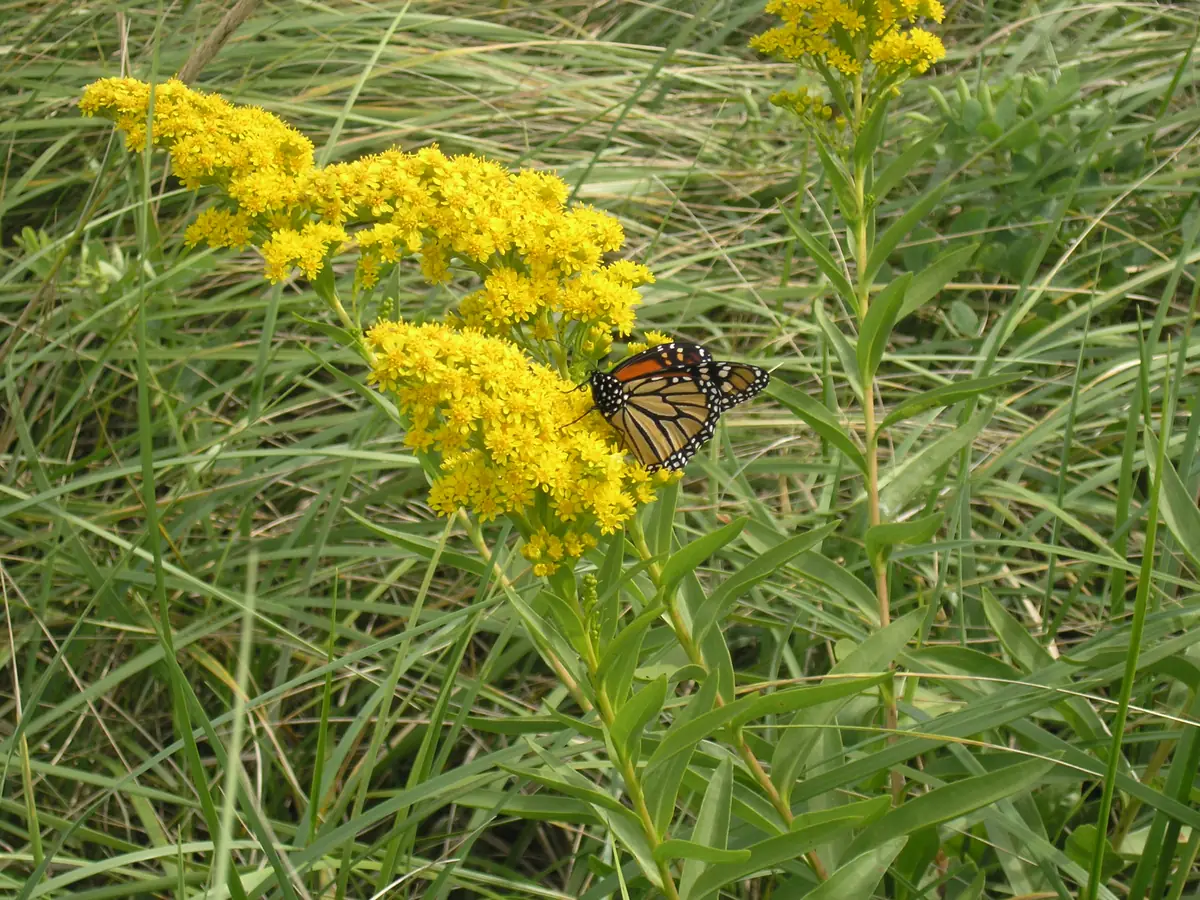
Mostly in October, a little later each week as you go south. Monarch Watch, which has tagged migrating monarchs for decades, publishes peak windows for latitude bands two degrees apart: September 24 to October 6 at 35° N, along the Tennessee line; September 29 to October 11 at 33° N, the latitude of Greenville and Starkville; October 4 to 16 at 31° N, around McComb and just south of Hattiesburg; and October 10 to 22 at 29° N, out in the Gulf. The coast, at about 30.4° N, falls between the last two. Fronts from the northwest speed the flight, strong southwest winds stall it, and storms can pile butterflies up along the shore.
-
Butterflies in the Pass
Saturday, October 3, 10 a.m. to 1 p.m. · War Memorial Park, Pass Christian (rain site: the Pass Christian Public Library)
A free festival put on by the Pass Christian Public Library for monarchs and other pollinators: a costumed butterfly parade at 10 a.m. (pets welcome), short talks on native plants and wildlife identification apps from 10:30 to 11:30, and exhibits from a dozen or more conservation groups. It falls right at the start of the coast’s monarch weeks.
-
Monarchs that stay on the islands
October into November · Cat Island and the coastal marshes
In the fall of 2025, a Mississippi State University team found hundreds of monarchs lingering on Cat Island instead of flying on to Mexico, drawn by groundsel trees, which keep flowering after most other nectar is gone. The researchers net and tag the butterflies each week and check them for parasites, trying to learn whether some now spend the winter on the barrier islands and marshes. On the mainland, a flowering groundsel bush beside a marsh is the best place to look for a late monarch.
-
Tagging and waystations
Through the migration · Mississippi Aquarium, Gulfport; the Master Naturalist office, Biloxi
The Mississippi Aquarium’s butterfly garden is a certified Monarch Waystation where staff catch and tag migrating monarchs with Monarch Watch tags, and the Coastal Chapter of the Mississippi Master Naturalists keeps its own waystation at its Biloxi office. Anyone can report monarchs and overnight roosts to Journey North, whose live map shows the migration moving south in real time.
If you plant for pollinators, the plants section lists what flowers late enough to feed them.
When do the leaves change color in Mississippi, and will the drought dull them?
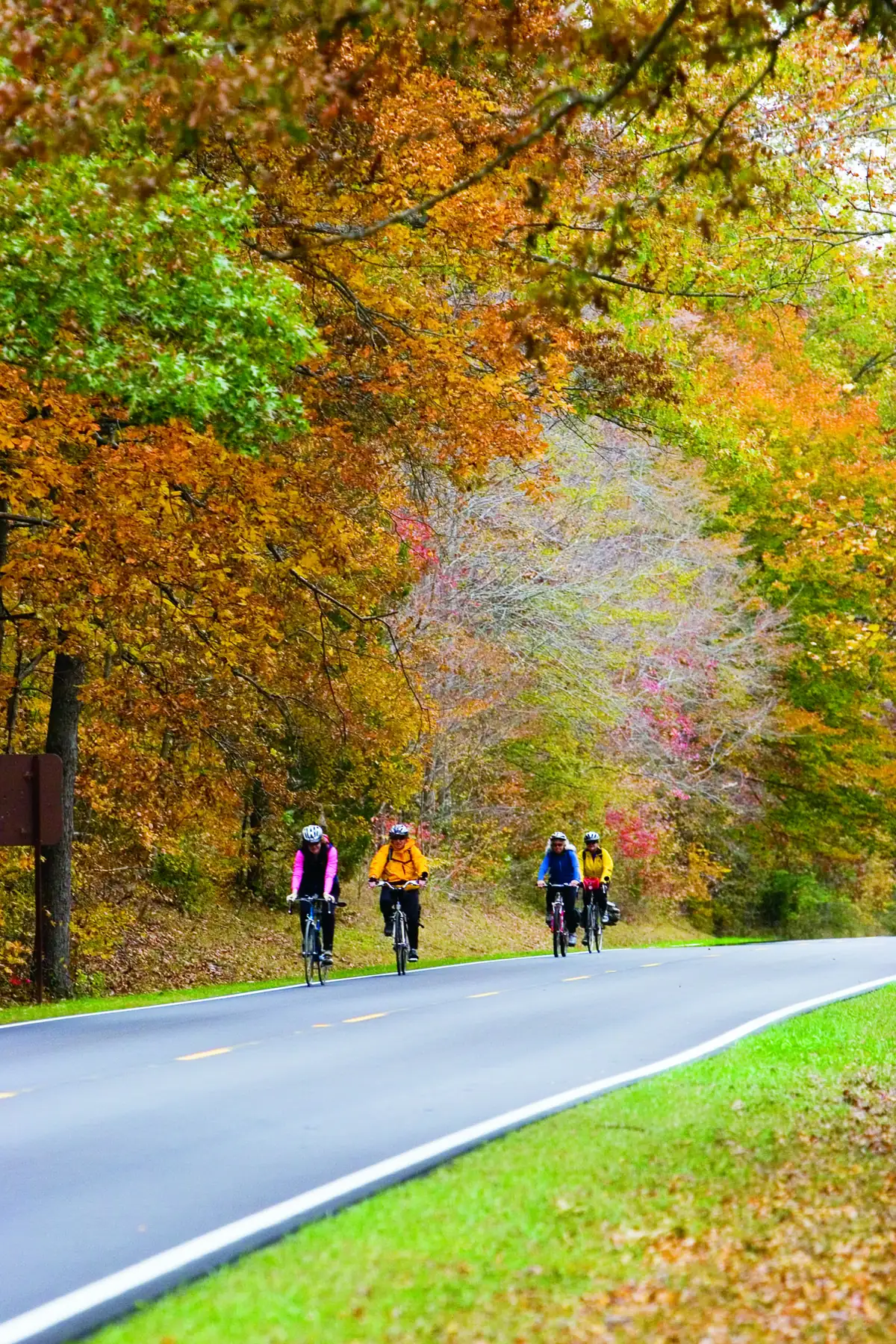
Mississippi’s color comes late and runs from the northeast hills south. Visit Mississippi puts the Natchez Trace at its best in November, and the tallest color on the state’s side of the parkway is in the hills around Tishomingo. This year the weather is the story. On the U.S. Drought Monitor’s September 22 map, every part of the state at least abnormally dry, 76 percent was in moderate drought or worse, and about 7 percent was in extreme drought. The National Park Service’s 2026 color reports for the Trace say warm nights and dry soils are delaying the change in northern Mississippi and causing some early leaf drop, while the southern end near Natchez shows the first faint color. Drought-stressed trees often skip their brightest reds and go straight to brown, so a few good rains and cool, clear nights over the next three weeks would make a large difference.
-
Tishomingo State Park
Late October into November; guided hikes every Sunday in October · Tishomingo County, where the Natchez Trace crosses the park
MDWFP describes the park as the foothills of the Appalachians, with massive moss-covered boulders and fern-filled crevices found nowhere else in the state. Bear Creek runs through sandstone bluffs under mixed hardwoods and pines, and the Civilian Conservation Corps built the swinging bridge across it in 1938. The Friends of Tishomingo State Park lead a free hike each Sunday in October from 2 to 4 p.m. (park entry is $2.14 a person); check in at the park office before two to learn that week’s trail.
-
The Natchez Trace in Mississippi
Weekly color reports every Friday through the fall · Jeff Busby Park (milepost 193.1), the Old Town Overlook (263.9) and Beech Springs (266.0) trailheads near Tupelo, the Cypress Swamp (milepost 122)
The Park Service suggests the Little Mountain overlook in the Jeff Busby campground for a quick view over the hardwoods and the Old Town Overlook and Beech Springs trailheads for walks on the Natchez Trace National Scenic Trail. The Parkway Visitor Center near Tupelo is open from 9 a.m. to 4:30 p.m. every day. Farther south, the boardwalk at the Cypress Swamp, north of Jackson, is where bald cypress needles turn a rusty orange late in the season.
The Field almanac estimates leaf-off for your own address from satellite greenness, which is a useful check in an odd year.
Which birds arrive in Mississippi in October, and where can you see sandhill cranes?
October swaps the state’s summer birds for its winter ones. Hummingbirds and most warblers pass through and leave, while sparrows, kinglets, white pelicans and the first ducks settle in. The Mississippi Flyway funnels a large share of the continent’s waterfowl down the Delta, although the big duck flights usually come after cold weather in November and December, which is why the regular duck season does not open until November 27.
-
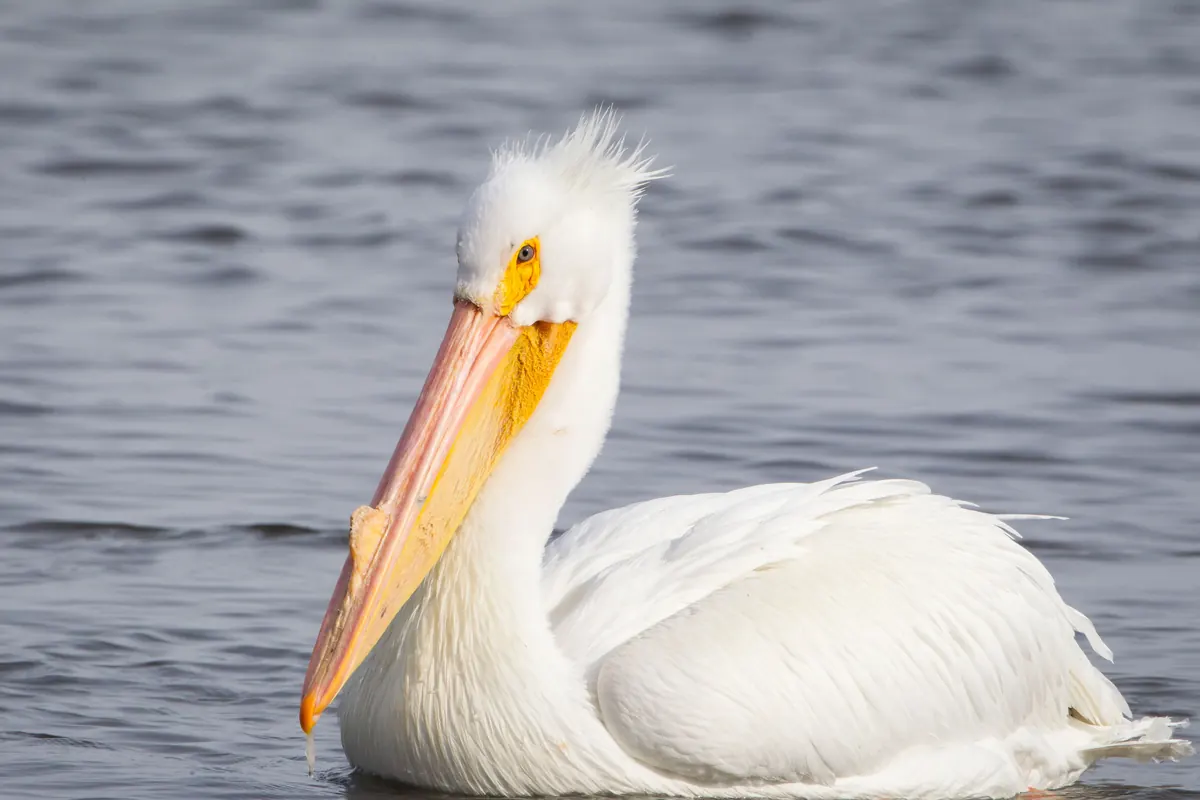
White pelicans on the reservoirs
The bulk arrive in October and November and stay until February or March · Ross Barnett Reservoir (Pelahatchie Bay), Sardis Lake, the Delta catfish ponds, the Tenn-Tom, the coast
An ornithologist at the Mississippi Museum of Natural Science told WLBT that most American white pelicans come into the state in October and November and leave in February and March. In that account a flock of several hundred had taken over a sandy point in Pelahatchie Bay near the north end of the Barnett causeway, and he said Sardis Lake in the north can hold thousands. With wings spanning up to about nine feet, they are among the largest birds in North America; watch for flocks circling high on a warm afternoon, flashing white and black as they turn.
-
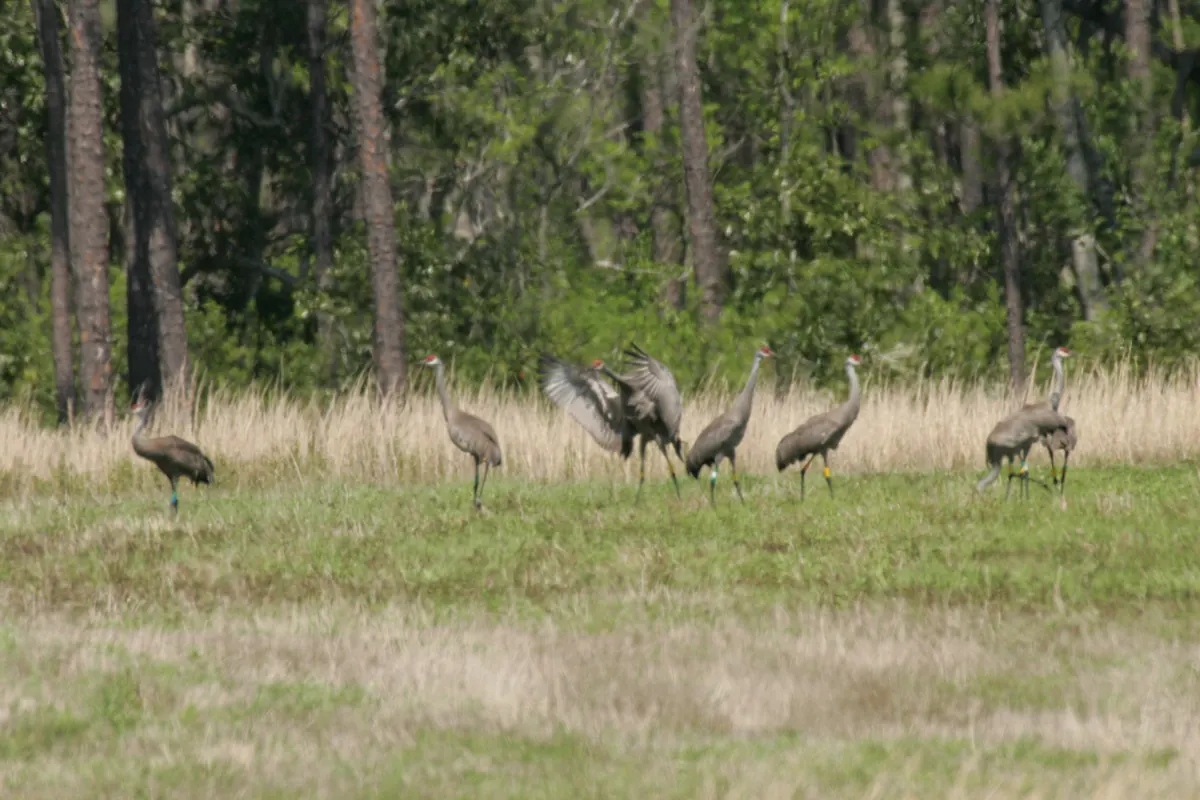
Mississippi sandhill cranes
Year-round; guided crane tours usually late fall to late winter, depending on staffing · Mississippi Sandhill Crane National Wildlife Refuge, 7200 Crane Lane, Gautier
These cranes do not migrate. They are a distinct, critically endangered subspecies that lives only in the wet pine savannas of Jackson County. When the refuge opened in 1975 there were 30 to 35 left; USFWS now puts the population at about 200, raised through captive rearing, releases and wild nesting. The trails are open daily from sunrise to sunset: the C.L. Dees Trail (three-quarters of a mile) and the Fontainebleau Trail (one mile) cross savanna, pitcher plant bogs and cypress. The visitor center, with its observation deck and short film, is open Thursday and Friday mornings from 9 to noon. Ask there whether guided tours have started.
-
The Delta refuges
Ducks and geese build through November; October is quiet and uncrowded · Yazoo National Wildlife Refuge south of Greenville; Theodore Roosevelt NWR near Onward
Yazoo, 25 miles south of Greenville and five air miles east of the Mississippi River, is the oldest national wildlife refuge in the state, one of a chain set up for wintering ducks and geese in the flyway, and home to alligators and wading birds. The Theodore Roosevelt refuge visitor center, off Highway 61 near Onward, is open Wednesdays from 9 a.m. to 2 p.m. Check the 2026–27 public use brochure before you go, because tracts, roads and hunting days differ.
For a guided start, the Jackson Audubon Society leads a walk at LeFleur’s Bluff State Park every Saturday morning this month (details in the families section).
What is blooming and ripening in Mississippi in October?
Fall is a flowering season in south Mississippi. The wet pine savannas, which the Sandhill Crane refuge calls one of the most species-rich plant communities in North America with more than 30 kinds of plants in a square meter, put on their late show of yellows and purples, and the roadside ditches fill with sunflowers. The Crosby Arboretum in Picayune, Mississippi State University’s native plant conservatory, has a savanna exhibit among its displays of the Pearl River basin and is open Tuesday through Saturday, 9 a.m. to 5 p.m. Bloom months below are from the Lady Bird Johnson Wildflower Center’s plant database.
-
Groundsel tree
Flowers August into October · Salt marsh edges, ditches, disturbed wet ground, mainly in the south
A bushy shrub that turns white in fall; the female plants are covered in silky, feathery seed heads that look like snow from a distance. Its flowers feed bees, moths and late butterflies, and the MSU monarch study on Cat Island points to groundsel as the reason some monarchs linger.
-
Swamp sunflower and seaside goldenrod
Swamp sunflower August to November; seaside goldenrod August to October · Wet ditches and bottomlands (sunflower); salty ground along the coast (goldenrod)
Swamp sunflower grows head-high in wet roadside ditches and savannas and opens hundreds of small yellow daisies at once, a favorite of native bees. Seaside goldenrod, with thick, waxy leaves, lines the edges of the coastal marshes and beaches; both are nectar stops for migrating monarchs.
-
Gulf muhly
October · Sandy pine openings and dry, open ground
A native grass whose flower heads form a pink-purple haze in October, most striking when lit from behind in the late afternoon. It is widely planted in Gulf Coast gardens, but the wild plants grow in sunny, sandy openings among the pines.
-
Beautyberry, persimmons and muscadines
Fruit through October and beyond · Woods edges and fencerows statewide
American beautyberry carries clusters of glossy magenta fruit along its stems, and they stay after the leaves drop, food for birds into winter. Wild persimmons soften and sweeten on the tree; the Wildflower Center notes they were the native fruit most prized by the Southeast’s indigenous peoples. Muscadines hang in the tops of the vines, and the last ones fall to raccoons, deer and foxes.
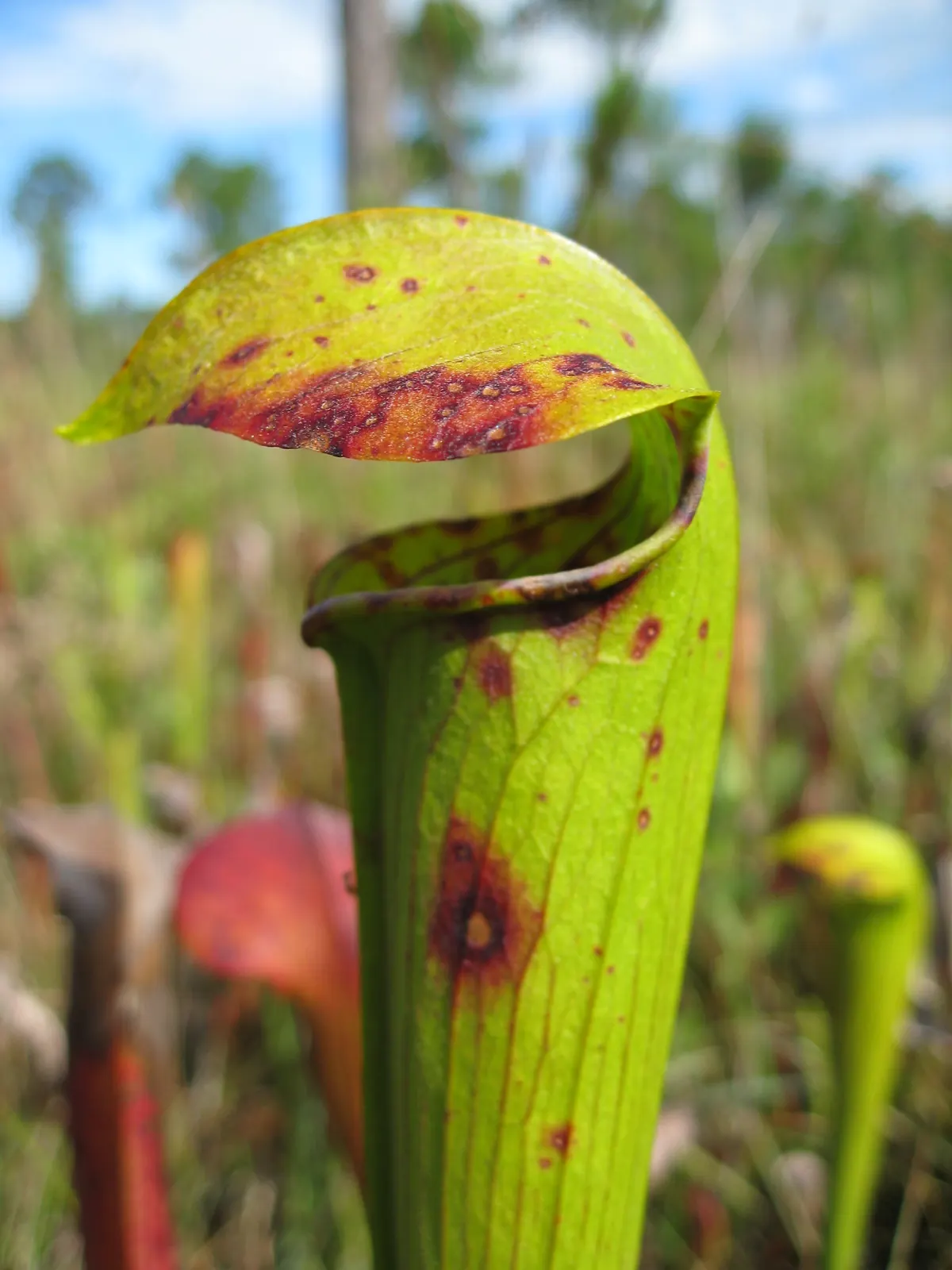
Pitcher plants in the savannas do not flower in fall, but their tall, hooded pitchers stay standing among the browning grasses. The refuge trails at Gautier are the easiest place to see them.
If you would rather sketch than photograph, the Naturalist’s Field Journal has a seeds, pods and cones plate that suits a persimmon or a beautyberry sprig.
What are deer and black bears doing in Mississippi in October?
For most animals, October is a month for eating. The acorn drop is under way, and squirrels, deer, turkeys and bears all follow it. The white-tailed deer’s breeding season is the exception, and in Mississippi it comes unusually late.
-
Deer: rubs now, rut later
Breeding mostly in winter, up to five weeks later in the far southeast than in parts of the Delta · Statewide
MDWFP has recorded conception dates at deer health checks for more than twenty years and found that the average breeding date in far southeast Mississippi can be five weeks later than in parts of the Delta. It advises that the rutting activity hunters can see peaks about two weeks before the mean conception date for an area. In October, look for fresh rubs where bucks have scraped velvet and bark from small trees, the first sign that the season is turning.
-
Black bears
Active through fall · Three breeding populations, with wandering bears reported statewide
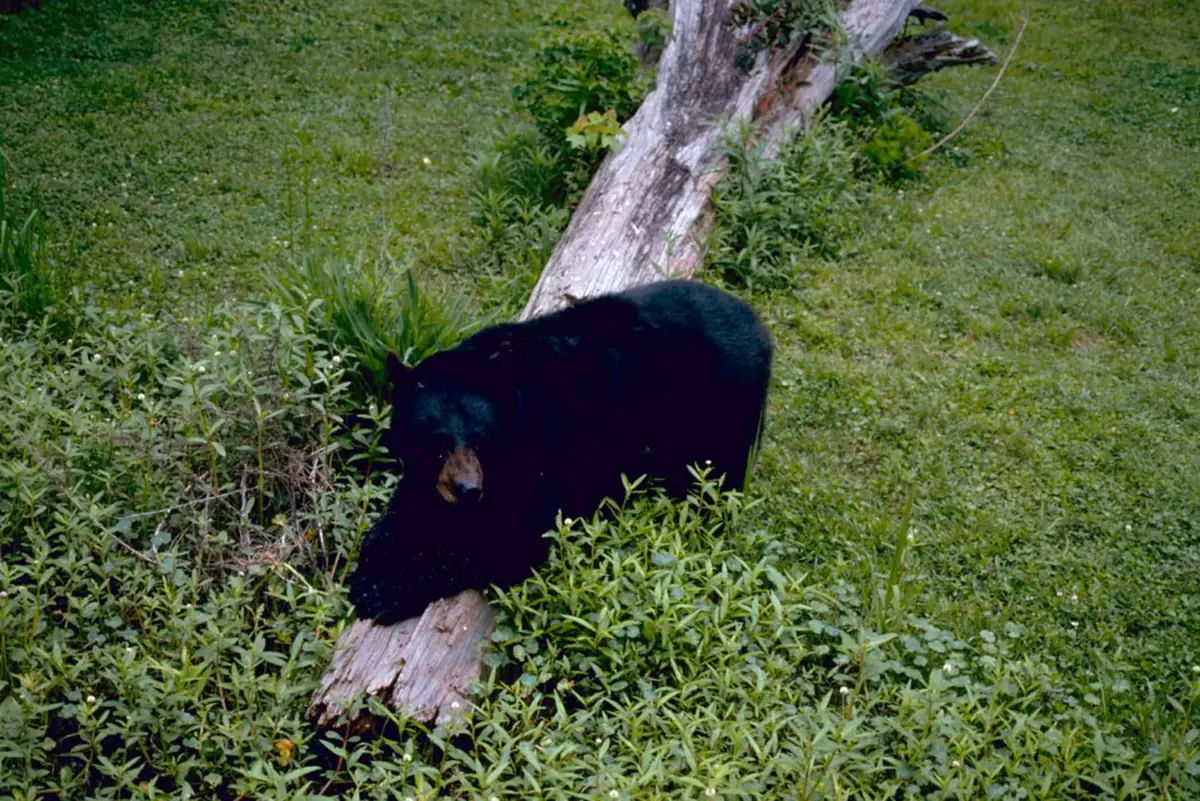
Two subspecies live in the state: the American black bear in the northern third and the Louisiana black bear in the southern two-thirds; to the eye they are identical, and both are listed as endangered under Mississippi law. When MDWFP’s bear program began in 2002 there were thought to be fewer than 50; the estimate has since more than tripled. Mississippi has no documented case of a bear attacking a person. If you see one, report it to MDWFP at (601) 432-2199, and never leave food out where a bear can find it.
-
The teddy bear’s home
The hunt was November 14, 1902 · Southwestern Sharkey County, near today’s Theodore Roosevelt NWR
In November 1902 President Theodore Roosevelt hunted Delta bears here with Holt Collier, a formerly enslaved man MDWFP calls the most accomplished bear hunter in the nation’s history. Roosevelt refused to shoot a bear not taken in fair chase, and a toy maker soon asked to call his stuffed bears “Teddy’s bear.”
Alligators are still basking on warm afternoons, most often south of U.S. 82, according to MDWFP; feeding them is illegal, so keep children and dogs back from the water’s edge. Squirrel season opened October 1, and the safety section has the rest of the hunting dates.
When is the first frost and freeze in Mississippi?
For most of Mississippi, not in October. Among the stations below, only the northern hills reach their median first freeze before Halloween: Iuka and Hickory Flat on October 28. Tupelo’s airport waits until November 10, Columbus November 12, Jackson’s airport November 14 and Greenville November 15. Natchez, on its bluff, has a median of November 9, and Hattiesburg November 15. On the coast the Gulfport–Biloxi airport’s median is December 3, and Biloxi’s is December 14. A white roof on the car usually shows up several days to two weeks ahead of a genuine 32-degree reading, and open bottomland ices over before a town on a hill.
| Station | One year in ten | Median | Nine years in ten |
|---|---|---|---|
| Iuka (northeast hills) | Oct 15 | Oct 28 | Nov 9 |
| Hickory Flat (north-central hills) | Oct 14 | Oct 28 | Nov 11 |
| Tupelo Regional Airport | Oct 29 | Nov 10 | Nov 28 |
| Columbus (Golden Triangle) | Oct 30 | Nov 12 | Dec 1 |
| Greenville (Delta) | Nov 2 | Nov 15 | Dec 1 |
| Jackson International Airport | Oct 31 | Nov 14 | Dec 4 |
| Natchez (southwest) | Oct 27 | Nov 9 | Nov 27 |
| Hattiesburg Chain Municipal Airport (Pine Belt) | Nov 1 | Nov 15 | Dec 4 |
| Gulfport - Biloxi Airport (coast) | Nov 12 | Dec 3 | Jan 5 |
Find the station closest to your garden on the Mississippi frost dates page. Greens, turnips and cabbage shrug off a light frost; peppers, basil, okra and sweet potatoes do not, so harvest them when a calm, clear night in the upper 30s is in the forecast.
How much daylight does Mississippi lose in October?
Close to an hour along the Tennessee line, nearer fifty minutes at the Gulf. Southaven and Tupelo each give up 62 minutes of daylight over the month, Jackson and Meridian 56, and Gulfport 53. In Jackson the sunrise slips from 6:55 to 7:17 a.m. while sunset moves from 6:45 to 6:11 p.m., so the evening loses about half an hour and the morning a bit over twenty minutes. Standard time returns overnight into Sunday, November 1 (at 2 a.m.), and by suppertime that day Jackson’s sun is down shortly after 5:10.
| City | Oct 1 | Oct 31 | Lost | Per day |
|---|---|---|---|---|
| Southaven | 11 h 49 m | 10 h 47 m | 62 min | 2.1 min |
| Tupelo | 11 h 50 m | 10 h 48 m | 62 min | 2.1 min |
| Columbus | 11 h 50 m | 10 h 50 m | 60 min | 2.0 min |
| Greenville | 11 h 50 m | 10 h 51 m | 59 min | 2.0 min |
| Jackson | 11 h 50 m | 10 h 54 m | 56 min | 1.9 min |
| Meridian | 11 h 50 m | 10 h 54 m | 56 min | 1.9 min |
| Hattiesburg | 11 h 51 m | 10 h 57 m | 54 min | 1.8 min |
| Gulfport | 11 h 52 m | 10 h 59 m | 53 min | 1.8 min |
For your own town’s sunrise, sunset and twilight, and the minutes lost this week, open the Field almanac.
What is October weather like in Mississippi, and what will El Niño do this winter?
Usually warm afternoons, cooler nights and long dry spells between fronts. From NOAA station records for 1991–2020, October afternoons average about 78 °F in Jackson and Meridian, 76 °F in Tupelo and 80 °F in Gulfport, with nights near 54 °F in Jackson, 52 °F in Tupelo and 60 °F on the coast. October rainfall averages about 3.8 inches at Jackson and 4.0 at Tupelo, but on the coast it is the dry season: Gulfport averages 3.5 inches in October against 5.6 in September.
This year starts drier than that. With most of the state in drought, the Mississippi Forestry Commission has warned that the fall wildfire season is arriving with parched fuels. In August its drought index readings were above 600 across most of the state, on a scale where 800 is the driest possible. Counties request burn bans and the Commission approves them, so check its current list before burning anything.
The tropics are not finished either. Hurricane season runs through November 30, and late on October 28, 2020, Hurricane Zeta struck southeast Louisiana and then tore across the Mississippi coast. The New Orleans weather office recorded an 83-knot gust, about 95 mph, at the Gulfport airport, a storm tide of about 8 feet above normal high water at Waveland and 8.6 feet at Pascagoula, and damage to thousands of homes in Harrison County.
What happens in the Pacific shows up here in winter. The September 10 ENSO discussion from the Climate Prediction Center makes a very strong El Niño this cool season all but certain (above 90 percent) and gives three chances in four that the October–December reading tops every warm event measured since 1950. The Jackson weather office describes El Niño winters in the Deep South as generally wetter and cooler, with a southern jet stream pulling Gulf moisture over the state, and it adds that El Niño years usually bring fewer Atlantic hurricanes. The state’s own records strongly support the wet part. Averaging Jackson’s three very strong El Niño winters (1982–83, 1997–98 and 2015–16), December through February brought about 23.6 inches of precipitation against a 1991–2020 average of 15.5; Gulfport, Meridian and Tupelo were all wetter too. The cool part is weaker: those same Jackson winters averaged 49.5 °F, a shade above the normal 48.9. October itself is only weakly tied to El Niño, and a single front or tropical storm decides it. NOAA’s winter outlook is due in mid-October.
Before a trip to the coast or the woods, the Weather now page shows the forecast and radar for the spot you pick.
What can you see in the night sky over Mississippi in October?
Mississippi sits in Central time, five hours behind Universal Time until daylight saving ends on November 1. Times below are for Jackson unless noted, from the U.S. Naval Observatory.
-
The Moon covers Jupiter
Tuesday, October 6, about 3:15 to 4:15 a.m. CDT · Very low in the east; a flat horizon is essential
The waning crescent rises at 2:47 a.m. in Jackson with Jupiter beside it. Predictions from the International Occultation Timing Association have the planet slipping behind the Moon’s bright edge at about 3:15 a.m. in Jackson, Greenwood, Meridian and Biloxi, while the Moon is only 4 to 6 degrees above the horizon. It comes back out from the dark edge at 4:13 in Jackson, 4:14 in Greenwood and Meridian and 4:12 in Biloxi, by which time the Moon has climbed to 16 to 18 degrees. Memphis times, 3:16 and 4:15, suit DeSoto County. Dawn does not begin to brighten until well after five, so both moments happen in full darkness. Pick a lake shore, a levee, a beach or an open field facing east.
-
The Hunter’s Moon
Sunday, October 25, and Monday, October 26, at dusk · Eastern horizon
Full at 11:12 p.m. on the 25th, the Moon looks round both evenings. In Jackson it rises at 5:47 p.m. on Sunday, half an hour before the 6:17 sunset, and at 6:26 p.m. on Monday, ten minutes after the Sun goes down; Gulfport’s times are 5:46 and 6:26. It is not a supermoon this year.
-
Orionid meteors
Active October 2 to November 7; broad peak before dawn on October 21 and 22 · Anywhere dark, facing south and east
These are crumbs of Halley’s Comet hitting the air at high speed, so they tend to be quick and bright; far from town, expect perhaps a dozen or two per hour when the shower is strongest. The waxing gibbous Moon spoils the evening but sets at 3:27 a.m. on the 22nd in Jackson and 3:23 in Gulfport, leaving over two hours of real darkness before dawn. Lie back on a blanket at 4 a.m. and give your eyes twenty minutes.
-
Draconid meteors
Evening of Thursday, October 8 · High in the north after dark
An erratic shower, and unlike most, it is better at 8 p.m. than at 4 a.m. The Moon stays down until nearly 6 the next morning. Most years bring only a few an hour.
-
Saturn all night; Jupiter and Mars before dawn
Saturn opposite the Sun October 4; the Moon near Saturn October 23–24; Mars at the Beehive the morning of October 11 · Saturn in the east at dusk; Jupiter and Mars in the east before sunrise
Saturn reaches opposition on Sunday the 4th: up at sunset, down at sunrise, and as bright as it will be this year, and the waxing Moon parks beside it on the 23rd and again the 24th. Venus can be glimpsed low in the west at dusk during the opening days of October, then drops into the twilight; its inferior conjunction, when it lines up between us and the Sun, falls on October 23. Before sunup the eastern sky belongs to Jupiter, far outshining ruddy Mars nearby. In the predawn of Sunday the 11th, binoculars show Mars sitting inside the Beehive star cluster.
| Phase | Date | Time |
|---|---|---|
| Last quarter | Saturday, Oct 3 | 8:25 a.m. CDT |
| New moon | Saturday, Oct 10 | 10:50 a.m. CDT |
| First quarter | Sunday, Oct 18 | 11:12 a.m. CDT |
| Full moon, the Hunter’s Moon | Sunday, Oct 25 | 11:12 p.m. CDT (looks full the evenings of Oct 25 and 26) |
| Last quarter | Sunday, Nov 1 | 2:28 p.m. CST |
Before a drive to dark skies, see whether clouds are coming on Today’s sky. For moonrise and moonset where you are, use the moon phases page.
What can Mississippi families do outside this October?
- Every Saturday (October 3, 10, 17, 24 and 31), 8 a.m. to noon: birding at LeFleur’s Bluff State Park in Jackson with the Jackson Audubon Society. All ages; $2 a person, children 5 and under free.
- Saturday, October 3: Butterflies in the Pass in Pass Christian, 10 a.m. to 1 p.m., free. The same afternoon, at 2 p.m., Magnolia Wildlife Rehabilitation brings an eastern screech owl and a Mississippi kite to the Bob Tyler Fish Hatchery Visitor Education Center near Enid.
- Every Sunday (October 4, 11, 18 and 25), 2 to 4 p.m.: Trekking the Trails at Tishomingo State Park, free with park entry. Pets on a six-foot leash are welcome.
- Tuesday, October 6, 3 to 4:15 a.m.: the Moon hides Jupiter. One very early alarm for a sight most people never see.
- Saturday, October 10: tree identification twice. A ranger-led session at Trace State Park near Pontotoc (10 a.m. to noon; the series ends October 17 with a lesson on using identification keys), and an MSU Extension forester’s presentation and field walk at the Bob Tyler hatchery, 2 to 4 p.m., included with admission.
- Friday, October 16, 9 a.m. to noon: Fall Into Science at the Mississippi Museum of Natural Science in Jackson, with hands-on experiments and an outdoor maze; included with museum admission.
- Saturday, October 17, 8 to 10 a.m.: the Mississippi Coastal Cleanup on beaches in all three coastal counties; register ahead.
- Friday, October 23, 5:30 to 8:30 p.m.: Park After Dark, a costumed evening shared by the Museum of Natural Science and the Mississippi Children’s Museum, $15 for both.
- Saturday, October 31: Halloween at the Hatchery, 9 a.m. to 3 p.m. at Bob Tyler, with a fish-skeleton scavenger hunt, “ghostly gyotaku” fish printing and a carnivore feeding at 3; children in costume get free fish food.
- Citizen science. Send monarch and roost sightings to Journey North and bird checklists to eBird, report black bear sightings to MDWFP, and log first dates (first white-throated sparrow, first frost, first bare tree) in a notebook you keep year to year.
Several state parks also hold Halloween nights and fall festivals on October 24 and 31; MDWFP’s events calendar lists them all. Every state’s page for the month is linked from the nature hub.
Safety notes for October in Mississippi
- Hunting seasons. Deer archery season opened October 1 in the Delta, North Central and Hills units and opens October 15 in the Southeast unit (south of U.S. 84 and east of Mississippi 35); it runs to November 20. Squirrel season opened October 1, rabbit opens October 17, and the second dove split runs October 24 to November 22. The youth deer season begins November 7, and the first gun season with dogs on November 21. Wildlife management areas and national forests have their own dates, so check before hiking on them.
- Fluorescent orange or pink. During any firearms season for deer, a deer hunter has to show at least 500 square inches of solid, unbroken fluorescent orange or pink, unless they are in a stand at least 12 feet up or in a fully enclosed stand or blind, and the orange or pink goes on again for the walk in and out. No deer gun season is open in October, so bowhunters in the woods this month will usually be in camouflage. Hikers should wear a bright color anyway and keep dogs close.
- Wildfire and burn bans. Check the Forestry Commission’s current burn ban list before burning leaves or building a campfire; during a ban, anything with an open flame that throws embers is prohibited. Never park over dry grass, and drown charcoal until the ashes are cold.
- Hurricanes. The season lasts until November 30. Coastal families should keep a go-bag packed and know their evacuation zone.
- Alligators and bears. Do not feed either one; a fed alligator must be removed. Report an alligator in a road, garage or parking lot to the MDWFP hotline, 1-800-BE-SMART. Store food, trash and pet food where bears cannot reach them.
- Snakes and ticks. Cottonmouths, copperheads and rattlesnakes are active on warm fall days, so step onto logs rather than over them, and check for ticks after every walk in the woods or tall grass.
- Warm water. The Sound is still warm in early October. People with open cuts, liver disease or weak immune systems should keep wounds out of brackish water and cook oysters thoroughly, because Vibrio bacteria thrive in warm coastal water.
Sources
- Mississippi Department of Marine Resources: Mississippi oyster season to open October 1 (2026–27 season)
- Ship Island Excursions: 2026 ferry seasons and fall schedule
- Mississippi Coastal Cleanup Program (MSU Coastal Research and Extension): annual cleanup, October 17, 2026
- MSU Coastal Research and Extension: events, including the October 9 Ship Island cleanup
- Coastal Mississippi: Butterflies in the Pass Monarch Festival, October 3, 2026
- Monarch Watch: when to tag and peak migration dates by latitude
- WLOX: monarch butterflies linger on Cat Island instead of migrating to Mexico (November 2025)
- Mississippi Aquarium: monarch butterflies and the Monarch Waystation
- MSU Extension Mississippi Master Naturalist: monarch monitoring
- Journey North: monarch sightings and fall roost reports
- National Park Service: Natchez Trace Parkway fall colors and 2026 color reports
- Visit Mississippi: fall foliage along the Natchez Trace
- U.S. Drought Monitor: Mississippi (map for September 22, 2026)
- MDWFP: Tishomingo State Park
- MDWFP: Tishomingo State Park Trekking the Trails, Sundays in October 2026
- WLBT: white pelicans at Ross Barnett Reservoir (Mississippi Museum of Natural Science ornithologist)
- U.S. Fish and Wildlife Service: Mississippi Sandhill Crane National Wildlife Refuge
- U.S. Fish and Wildlife Service: Mississippi Sandhill Crane NWR, visit us (hours, trails, crane tours)
- U.S. Fish and Wildlife Service: Yazoo National Wildlife Refuge
- U.S. Fish and Wildlife Service: Theodore Roosevelt National Wildlife Refuge
- eBird: Mississippi region, species and bar charts
- Lady Bird Johnson Wildflower Center: Baccharis halimifolia (groundsel tree)
- Lady Bird Johnson Wildflower Center: Helianthus angustifolius (swamp sunflower)
- Lady Bird Johnson Wildflower Center: Solidago sempervirens (seaside goldenrod)
- Lady Bird Johnson Wildflower Center: Muhlenbergia capillaris (Gulf muhly)
- Lady Bird Johnson Wildflower Center: Callicarpa americana (American beautyberry)
- Lady Bird Johnson Wildflower Center: Diospyros virginiana (common persimmon)
- Lady Bird Johnson Wildflower Center: Vitis rotundifolia (muscadine)
- Lady Bird Johnson Wildflower Center: Taxodium distichum (bald cypress)
- Mississippi State University: The Crosby Arboretum
- MDWFP: deer breeding date map
- MDWFP: black bear program (subspecies, status, history, sightings)
- MDWFP: alligator program
- NOAA NCEI: U.S. climate normals, 1991–2020
- NOAA Regional Climate Centers: SC-ACIS station data (Jackson, Tupelo, Meridian, Greenville, Gulfport monthly records)
- Mississippi Forestry Commission: outdoor burn bans
- Mississippi Forestry Commission: Stay wildfire aware (August 2026)
- NWS New Orleans/Baton Rouge: Hurricane Zeta post-tropical cyclone report, October 28, 2020
- Climate Prediction Center: ENSO diagnostic discussion, September 10, 2026
- NWS Jackson, MS: El Niño and La Niña in the Lower Mississippi Valley
- Climate Prediction Center: seasonal outlooks
- U.S. Naval Observatory: sun and moon rise and set (data API; Jackson, October 2026)
- U.S. Naval Observatory: moon phases 2026
- International Occultation Timing Association: occultation of Jupiter, October 6, 2026 (Jackson, Greenwood, Meridian, Biloxi, Memphis)
- American Meteor Society: meteor shower calendar
- NIST: daylight saving time
- MDWFP: events calendar, October 2026
- MDWFP: LeFleur’s Bluff State Park guided birdwatching with Jackson Audubon
- MDWFP: Wildlife Rehabilitation Program, Bob Tyler Fish Hatchery, October 3
- MDWFP: Tree ID Seminar, Bob Tyler Fish Hatchery, October 10
- MDWFP: Trace State Park Tree I.D. series
- Mississippi Museum of Natural Science: Fall Into Science, October 16
- Mississippi Museum of Natural Science: Park After Dark, October 23
- MDWFP: Halloween at the Hatchery, October 31
- MDWFP: 2026–2027 hunting seasons and bag limits
- MDWFP: white-tailed deer regulations (fluorescent orange and pink)
- CDC: Vibrio infection
- Photos via Wikimedia Commons; licenses and photographers are credited under each picture
