What to look for in nature in Mississippi this January
January is the heart of winter in Mississippi and the month the Delta holds the most ducks. State biologists fly their midwinter survey while waterfowl numbers are near their yearly high, and the Corps of Engineers counts bald eagles on the big north Mississippi lakes. On the first warm, soaking rain, spotted salamanders walk to fishless pools to breed, and in a hollow cypress somewhere a black bear gives birth to half-pound cubs. Swamp red maples redden the bottoms with some of the year’s earliest flowers. The coldest nights of the year usually fall now, and the last two Januaries brought a Gulf Coast snowstorm and a crippling Delta ice storm, so watch the forecast as closely as the birds.
Other months in Mississippi: October, November, December, February.
Start here

- Look for the January duck peak. MDWFP says Mississippi’s wintering ducks usually peak in January; the agency’s early January 2026 flight estimated about 603,000 in the Delta. Watch from public roads near refuges and managed wetlands at sunrise, and give hunters room until the season closes January 31.
- Count eagles at a north Mississippi lake. The national midwinter eagle survey runs in the first half of January. Arkabutla Lake has invited the public to help on an early-January Saturday morning, so ask the lake’s field office whether it will repeat the event in 2027.
- Quadrantids, then the Wolf supermoon. On the night of January 3, a thin crescent Moon leaves the sky dark for the Quadrantid meteors, with the highest rates toward first light on the 4th. Eighteen days later the year’s nearest full moon shines all night from the 21st to the 22nd.
In the Naturalist’s Field Journal, a duck flock on a flooded field belongs in the daily field log, and each eagle you count goes on “birds I have seen.” Sketch swamp red maple flowers or sycamore bark for a tree through the seasons, note a rainy-night salamander walk on the map of sounds, a sweetgum ball fits seeds, pods and cones, and you can give the Quadrantids and the Wolf Moon a night each on the dusk and dawn watch.
Regions used below: The Delta; North Mississippi hills and Tupelo; Central Mississippi and Jackson; The Pine Belt; Southwest Mississippi and Natchez; The Gulf Coast.
When do duck numbers peak in the Mississippi Delta?
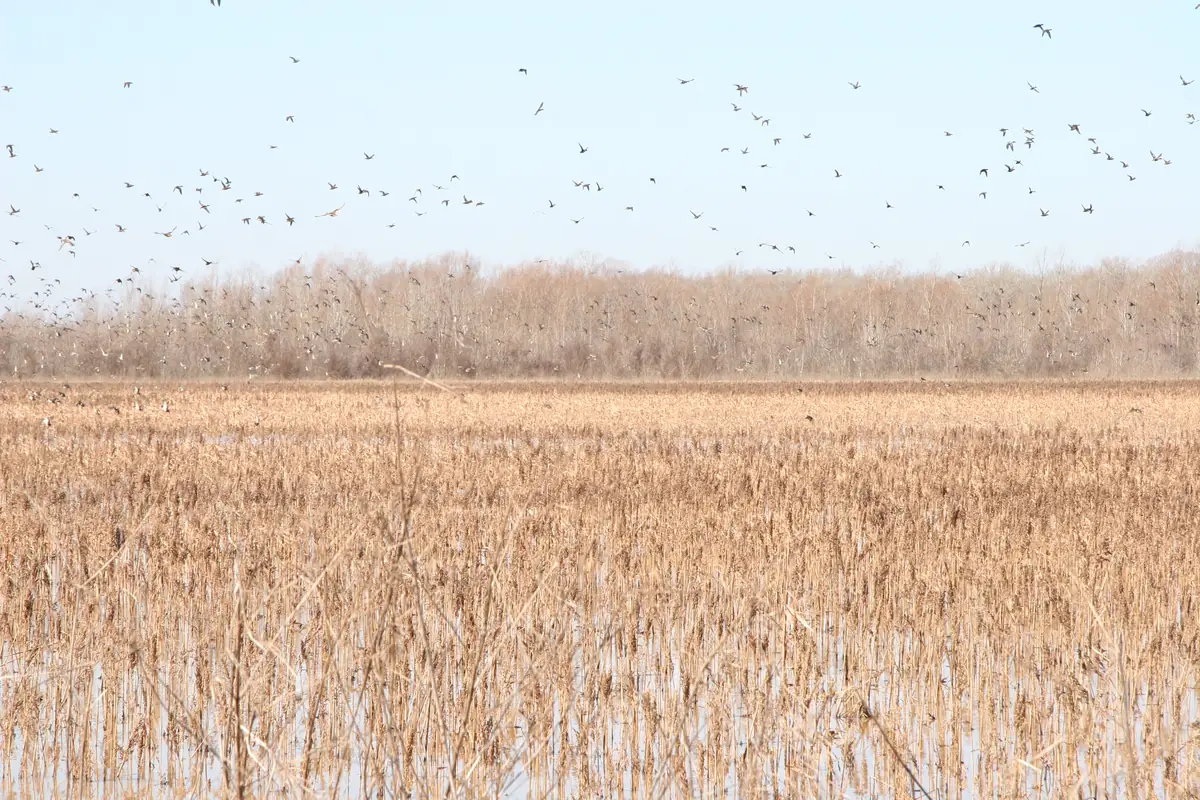
Usually in January. MDWFP’s waterfowl biologists fly east-west transects across the Delta from the river to the hill line four times a season, and the January flights are the ones most likely to catch the season’s high point. The agency’s own reports repeat the same line every winter: Mississippi typically sees its peak of wintering waterfowl this month. In the 2025–26 season the early January flight, stretched from January 5 to 20 by delays, estimated 603,165 ducks, up sharply from December and only about 8 percent below the long-term average for that survey.
-
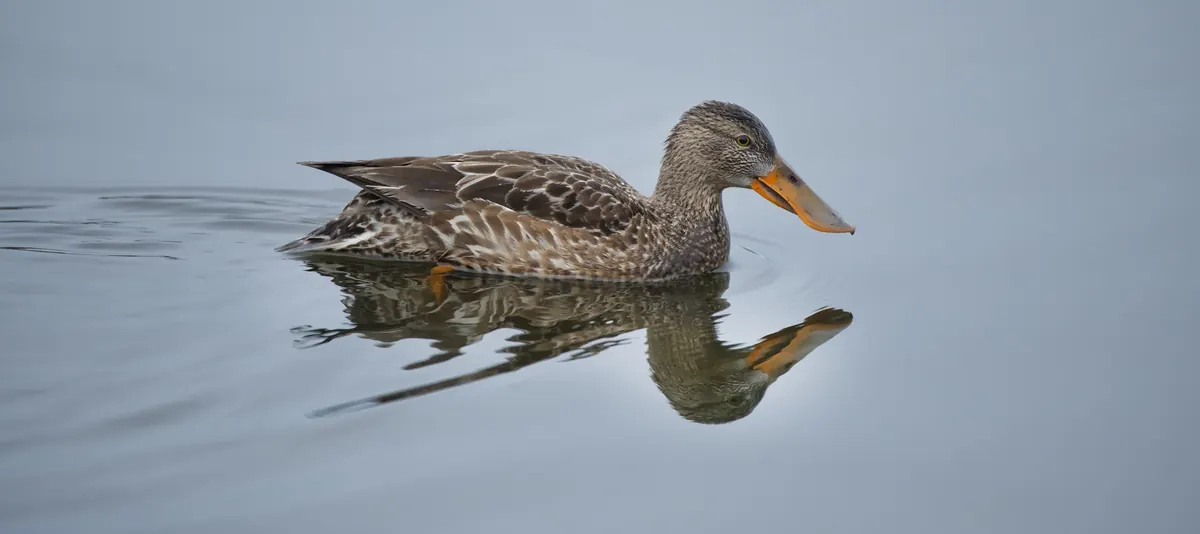
Gadwall, shovelers and teal lead the count
Early to late January · Moist-soil wetlands and flooded fields, densest in the northeastern Delta
In both of the last two early January reports, MDWFP wrote that dabbling ducks other than mallards made up nearly 70 percent of all the ducks the plane saw. Gadwall, northern shovelers and green-winged teal were the commonest dabblers, northern pintails gathered in good numbers in places, and ring-necked ducks and scaup led the divers. Mallards climbed steeply from December but stayed well under their long-term January average, 140,042 in 2026 against an average near 210,000. Divers favored the aquaculture ponds, as they usually do, and the northeastern Delta held the most birds of every type because it had the most water.
-
Snow geese and specklebellies stay through the month
All January · Harvested rice and soybean country across the Delta
Both January 2026 and January 2025 reports describe large concentrations of snow, blue and Ross’s geese mixed with many greater white-fronted geese, the bird hunters call the specklebelly. The two are easy to tell apart at a distance: light geese show as a white sheet with black wingtips, while white-fronts are gray-brown, with a pinkish bill, a white patch at its base and dark barring across the belly. Watch from the road shoulder, since nearly all of this land is private.
-
What hard freezes do to the flocks
During and after Arctic outbreaks · Open water: deep oxbows, reservoirs, catfish ponds
The late January 2025 flight was flown while daytime highs barely cleared freezing. MDWFP found mallards packed into the few fields with open water, needing high-energy grain to stay warm, while biologists suspected many less ice-tolerant ducks had left the Delta for a while for big lakes and reservoirs. Once shallow wetlands thaw, the birds spread back out. After a cold snap, scan large open water near you; that is where the displaced ducks go.
| Early January survey | Mallards | Other dabblers | Diving ducks | Total ducks |
|---|---|---|---|---|
| 2017 | 678,235 | 620,432 | 143,739 | 1,442,406 |
| 2018 | 484,121 | 595,303 | 49,488 | 1,128,912 |
| 2019 | 111,787 | 186,633 | 69,791 | 368,211 |
| 2020 | 173,834 | 367,714 | 58,875 | 600,423 |
| 2021 | 73,724 | 381,903 | 34,315 | 489,942 |
| 2022 | 195,533 | 379,391 | 113,217 | 688,141 |
| 2023 | 125,221 | 156,929 | 80,177 | 362,327 |
| 2024 | 20,869 | 82,800 | 51,401 | 155,070 |
| 2025 (Jan 7–13) | 91,865 | 380,573 | 87,833 | 560,204 |
| 2026 (Jan 5–20) | 140,042 | 414,947 | 48,175 | 603,165 |
| Average, 2008–2026 | 209,984 | 358,284 | 90,333 | 656,868 |
The range is enormous: 1.44 million ducks in January 2017, about 155,000 in January 2024. Water decides most of it. In January 2026 the biologists found Delta wetlands well below average, with landowners pumping groundwater to keep impoundments wet and no natural overflow from the river. If El Niño delivers the wet winter it often brings, January 2027 could look very different.
Where can you see bald eagles in Mississippi in January?
Every January, volunteers and agency staff across the lower 48 count wintering eagles. Organized through the Corps of Engineers with the U.S. Geological Survey, the survey asks observers to drive, boat or fly the same standard routes in the first two weeks of January each year, usually on one of two target days, to track wintering numbers and the share of adults and young birds. In Mississippi the big Corps reservoirs in the north are the classic places to look.
-
The midwinter count on Arkabutla, Sardis, Enid and Grenada
First half of January · Corps of Engineers lakes in DeSoto, Tate, Panola, Yalobusha and Grenada counties
The Corps’ Vicksburg District runs its annual count on all four lakes. In January 2021 its staff tallied 50 eagles across them, a mix of white-headed adults and mottled brown immatures, and the district notes that the lakes have both the fish and the nest sites eagles need, so some birds live there all year. Arkabutla Lake has opened its count to the public: in 2025 anyone could meet rangers at the field office on Arkabutla Dam Road at 7 a.m. on Saturday, January 4, for a four-hour search. Expect something similar on an early-January Saturday, but confirm the 2027 date with the Arkabutla Lake field office before you go. Look along shorelines for big birds perched in snags over open water near the dams.
-
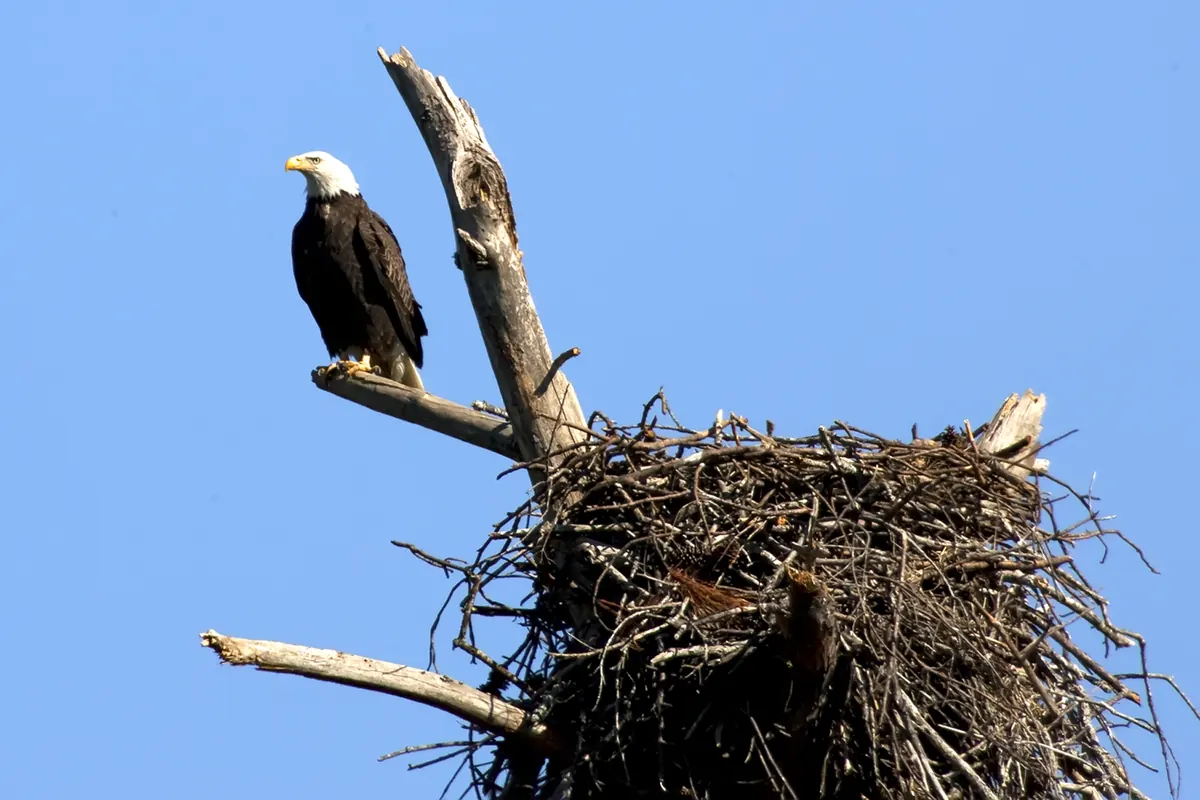
Nests with eggs or chicks
Eggs in fall and early winter; young leave the nest late January into February · Tall trees near lakes, rivers and refuges statewide, including Noxubee NWR
Southern eagles keep a different calendar from northern ones. The Fish and Wildlife Service says that in the Southeast bald eagles lay their eggs in October or November and the young fledge in late January or February, so a Mississippi nest in January may hold large, dark chicks nearly ready to fly. The same agency calls January National Bald Eagle Watch Month and points to refuges as good places to look. A nest is a pile of sticks several feet across near the top of a tall pine or cypress. Watch with binoculars from a long way off; eagles are protected under federal law, and an adult flushed from the nest leaves the chicks exposed.
Note the age of each eagle you see: white head and tail means an adult, while younger birds are brown with patchy white.
Why do salamanders cross Mississippi roads on rainy January nights?
They are walking to their breeding pools. Mole salamanders spend almost the whole year underground or under logs and come to the surface in numbers only in winter, on dark, rainy nights, to mate and lay eggs in shallow, fishless water: woodland ponds, flooded ditches, the low spots in a bottomland forest. The same cold-season rains that fill those pools trigger the march.
-
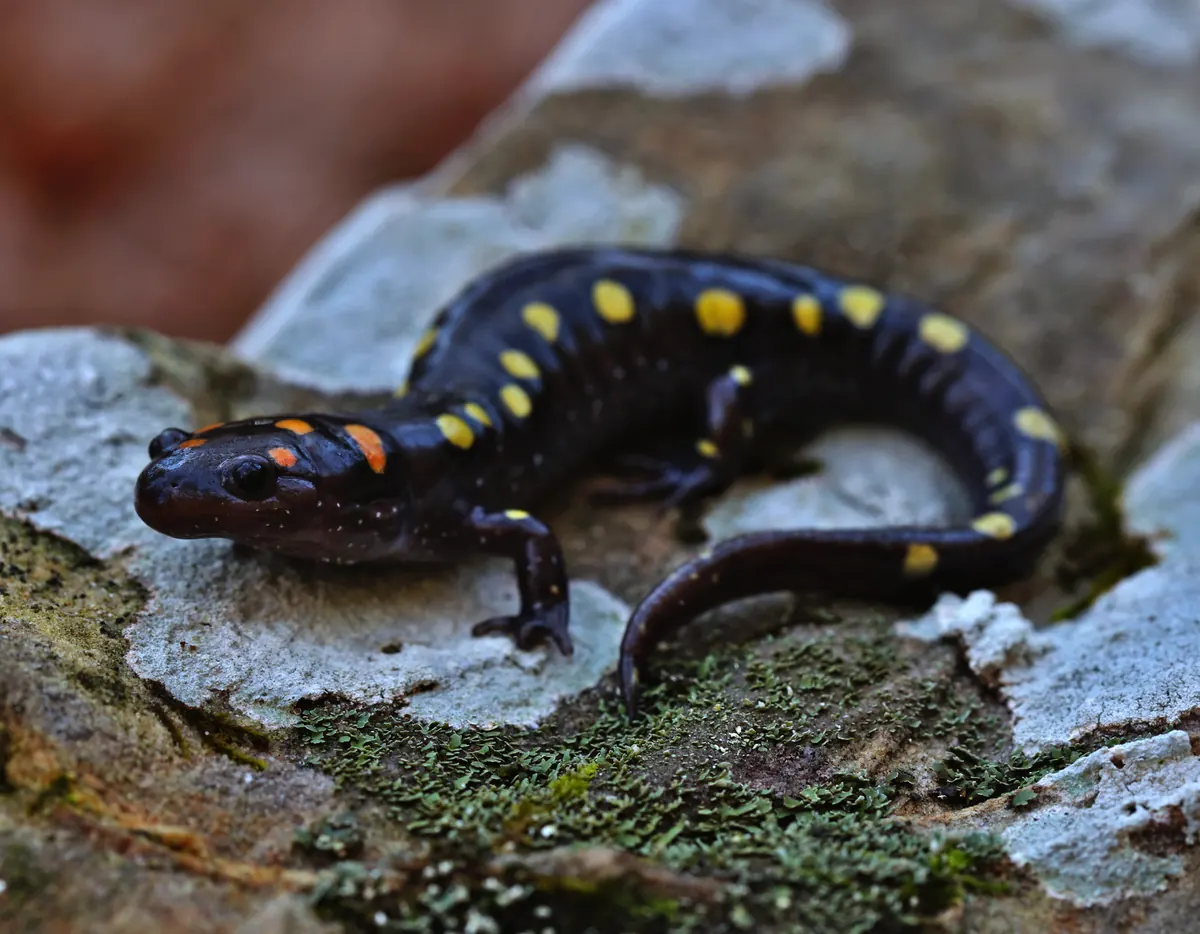
Spotted salamander
Rainy winter nights; in neighboring Alabama, breeding has been recorded from late December into early February · Hardwood forests near seasonal pools; found across the state
A chunky black or gray salamander with two rows of round yellow spots, often orange on the head. The Mississippi herpetology site msherps.com describes it as a winter breeder found statewide and shows adults, females and egg masses from a large breeding event in Forrest County. Alabama’s wildlife agency says heavy rain at night sends the adults to newly flooded pools, sometimes from 300 yards away, and that they return to the same pools year after year. The egg masses are firm balls of jelly fixed to sunken twigs, each holding 200 or more eggs, and many turn green as an alga grows inside.
-
Marbled salamander
Larvae in winter pools after fall rains; adults move on rainy nights · Bottomland and upland woods across most of the state
Black with bold white or silvery bands, the marbled salamander works on a different schedule. Next door in Alabama, the state agency records breeding in October and November, and the courtship happens on dry ground. A female tucks her eggs, up to a couple of hundred, into a damp dip in an empty pool basin and wraps herself around them; once rain floods the spot, they hatch almost at once. After a wet fall, the small, gilled larvae are already swimming in the pools by the time spotted salamanders arrive.
On a mild, rainy night, drive slowly near wet woods and watch for small shapes on the road; frogs and salamanders both move then. If you stop to help one across, wet your hands first and carry it the way it was heading. Leave egg masses in the water, and log the night’s weather on the map of sounds page of the Naturalist’s Field Journal.
When are black bear cubs born in Mississippi?
In January, inside the den. MDWFP’s Black Bear Program, run from the Mississippi Museum of Natural Science, gives the timing: bears mate in summer, mostly in July, the fertilized egg waits about five months before it implants, and after six to eight weeks of growth the cubs are born in the winter den during January. Litters run from one to five.
-
Half-pound cubs in the den
Born in January; leave the den around April · Tree hollows in bald cypress and oak, ground nests and brush piles in the Delta, the loess bluffs and the coastal counties
A newborn cub weighs about 8 ounces, blind and nearly hairless, and nurses while its mother stays in the den. By the time the family comes out in April the cubs weigh 4 to 5 pounds. They stay with her for about 18 months, which is why a female breeds only every other year. MDWFP points out that this slow pace makes every adult female precious: the state had perhaps 40 bears in 2002 and has about 150 now, in three main areas (the Gulf Coast, the loess bluffs of southwest Mississippi and the Mississippi River Delta), and the agency has documented more than 30 cubs born in the state since 2005, after 40 years with none on record.
-
Bears that stay awake
All winter, especially males · Farm edges and bottomland woods near the river and the coast
Only pregnant females truly must den. Males may spend just a few weeks inside, and bears in farm country eat surprisingly ordinary winter food: MDWFP says wheat and oats can make up as much as 60 percent of a bear’s winter diet there. Report a sighting or a set of tracks to MDWFP, which maps them for its research.
If you find a den, back away quietly and do not return to check on it; a disturbed mother may abandon her cubs.
Which birds spend the winter on the Mississippi Gulf Coast?
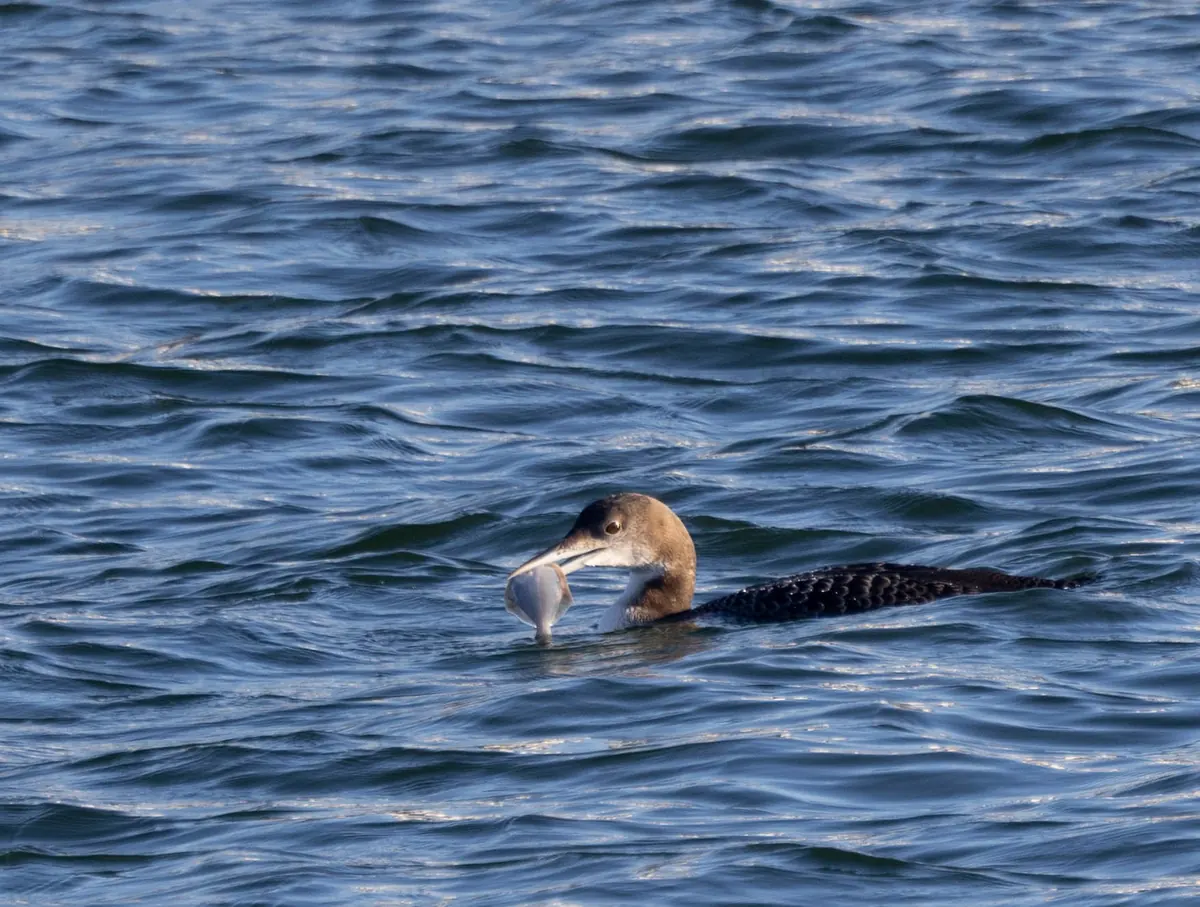
Waterbirds from the north settle on the Mississippi Sound and the coastal bayous for the cold months, and a calm, clear January morning is the best time to scan for them from a pier or the seawall.
-
Loons and grebes on the Sound
Late fall through early spring · Open water off Bay St. Louis, Long Beach, Biloxi and Ocean Springs
The Mississippi Department of Marine Resources’ coastal bird guide says common loons winter on the coast, mostly out on the Sound, in pale gray plumage with a thick, pointed bill; the yodeling call people know from northern lakes is rarely heard here. Horned grebes, small, gray and white, dive just off the beach, and pied-billed grebes keep to the bayous. The same guide lists the red-breasted merganser, a shaggy-crested fish-eating duck with a thin, saw-edged bill, as most common on the coast in winter.
-
Hooded mergansers at Davis Bayou
Winter · Davis Bayou area of Gulf Islands National Seashore, Ocean Springs
Audubon’s Mississippi Coastal Birding Trail singles out the sheltered water at Davis Bayou for its winter mix of waterbirds, including good numbers of hooded mergansers, which are hard to find on public land along the immediate coast. Males raise a white, black-edged fan of a crest. The two-mile Davis Bayou Trail runs through maritime forest, swamp and tidal marsh, where seaside sparrows live all year.
-
Mississippi sandhill cranes in their best season
Fall and winter are the easiest months · Mississippi Sandhill Crane National Wildlife Refuge, Gautier
The refuge itself says fall and winter offer the best chance of seeing its critically endangered, non-migratory cranes, which grow secretive once nesting starts in spring. The population is about 200 birds. Ask at the visitor center desk whether any guided programs are on the January schedule.
Ferries to Ship Island do not run in winter, so plan coast birding from the mainland.
How do you identify Mississippi trees in winter, and which one flowers first?
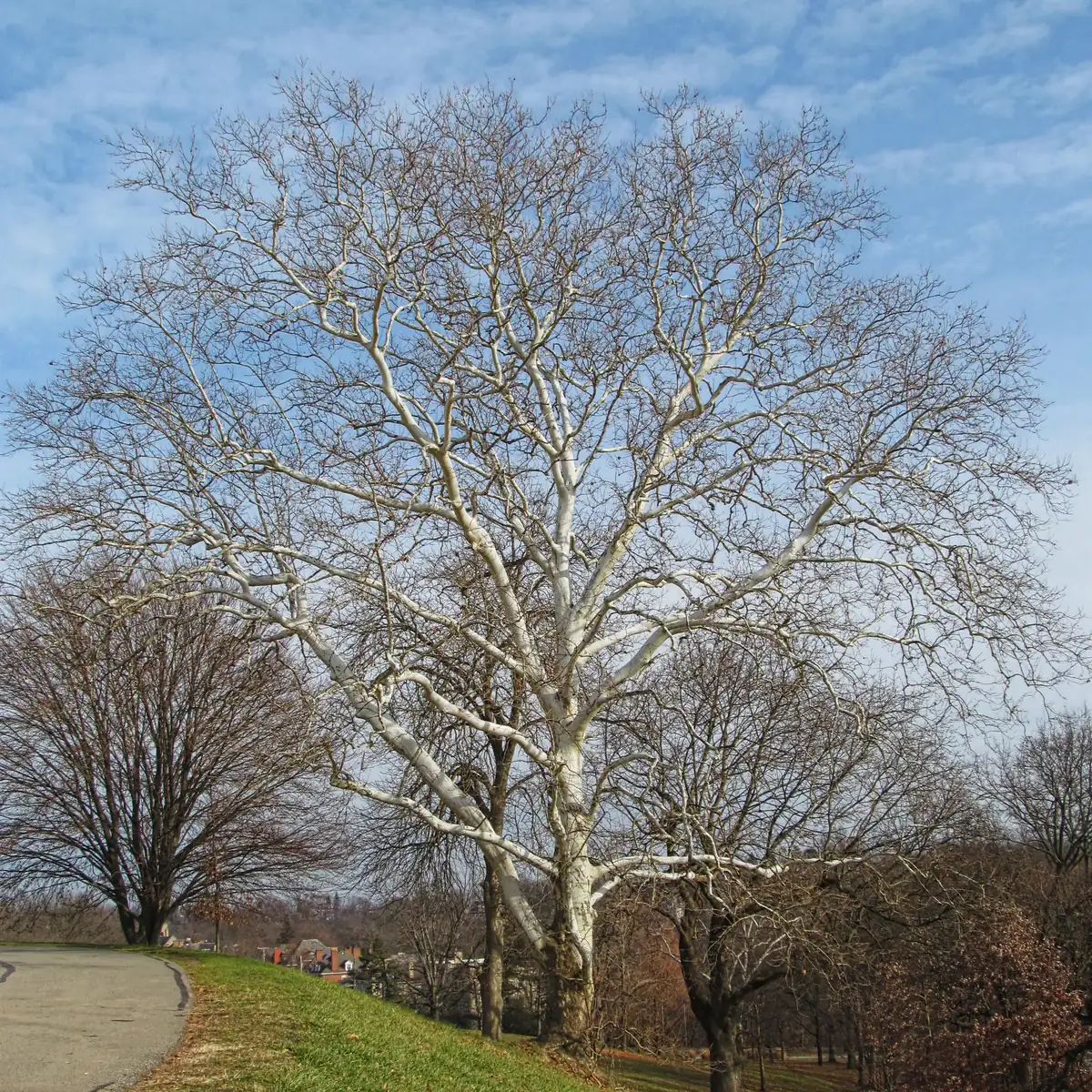
With the leaves down, bark, buds, fruit and branching are what you have to go on, and a few Mississippi trees make it easy. One of them is already blooming.
-
Swamp red maple in flower
January through February · Wet, alluvial soils, swamp edges and river bottoms
MSU Extension’s guide to native trees lists swamp red maple, the southern variety of red maple, as a winter-flowering tree whose red flowers appear from January through February, followed immediately by red winged seeds. From a distance a grove of them looks like a red haze over a gray swamp. Up close, the tiny flowers crowd bare twigs weeks before any leaf.
-
Sweetgum: gumballs and early flower spikes
Fruits hang all winter; male flower spikes form in late winter · Woods, old fields and yards statewide
The spiny, golf-ball-sized fruits are the giveaway, dangling from bare twigs and littering the ground. MSU Extension notes that the tree’s male flower spikes show in late winter, so by late winter look for upright green clusters at the branch tips.
-
Sycamore, beech and winged elm by their bark
All winter · Creek and river banks (sycamore); rich, moist slopes (beech); fencerows and dry woods (winged elm)
The Wildflower Center in Austin notes that on old sycamores the outer bark flakes off in plates to leave smooth, whitish inner bark, so the upper limbs glow white against a winter sky. American beech keeps smooth, light gray bark all its life and holds many of its dry, copper-colored leaves through the winter. Winged elm is named for the broad, corky wings that run along some of its twigs in pairs, easy to feel even in the dark.
Pick one of these near home and sketch its bark and a twig now on the tree through the seasons page; come back in April when it leafs out. A sweetgum ball, a sycamore seed ball or a maple seed belongs on the seeds, pods and cones plate.
How much daylight does Mississippi gain in January?
About half an hour or more, depending on where you live. The solstice on December 21 brought the shortest day, yet sunrise keeps slipping later into early January; nearly all the new light arrives at the evening end.
| City | Jan 1 | Jan 31 | Gained | Per day |
|---|---|---|---|---|
| Southaven | 9 h 51 m | 10 h 28 m | 37 min | 1.2 min |
| Tupelo | 9 h 55 m | 10 h 31 m | 36 min | 1.2 min |
| Columbus | 9 h 59 m | 10 h 33 m | 34 min | 1.1 min |
| Greenville | 10 h 00 m | 10 h 34 m | 34 min | 1.1 min |
| Jackson | 10 h 05 m | 10 h 37 m | 32 min | 1.1 min |
| Meridian | 10 h 05 m | 10 h 37 m | 32 min | 1.1 min |
| Hattiesburg | 10 h 09 m | 10 h 41 m | 32 min | 1.1 min |
| Gulfport | 10 h 14 m | 10 h 44 m | 30 min | 1.0 min |
The north gains faster than the coast because it lost more on the way down. The daily gain keeps growing until the March equinox. Check sunrise and sunset for your own town in our daylight calculator.
How cold does January get in Mississippi, and will El Niño change it?
At all six airports in the table below, NOAA’s normals make January colder, by day and by night, than either December or February. NOAA’s 1991–2020 normals put Jackson’s average January high at 57.4 °F and its low at 36.6 °F, both a couple of degrees below December, with about 12 nights at or below freezing. Tupelo averages 16 freezing nights and the most snow of these stations, six-tenths of an inch; Gulfport has about seven. The coldest reading on record at Jackson is −5 °F, on January 27, 1940. Our frost page for Mississippi lists typical last-freeze dates by station.
Averages hide how wild the month can be. On January 21, 2025, a historic snowstorm buried the northern Gulf Coast: the Mobile weather office logged 5.5 inches near Evanston in George County, 5 inches near Basin and near Perkinston, and 4 inches at Leakesville, and NOAA’s climate.gov reported 10 inches or more at some places across Louisiana, Mississippi, Alabama and Florida. Lows the next morning fell to 8 °F at Agricola and 11 °F near Waynesboro. A year later, on January 24 and 25, 2026, the Jackson weather office recorded a historically damaging ice storm, with up to an inch of ice from Sharkey and Issaquena counties through Humphreys, Holmes, Leflore, Carroll and Grenada, and up to 5 inches of sleet near Duncan in Bolivar County. More than 189,000 Mississippi customers lost power, some for over two weeks; temperatures stayed at or below freezing for 92 hours at Cleveland, and wind chills fell below zero at Greenville.
The tropical Pacific is running hot. As of September 10, NOAA saw over a 90 percent chance that this El Niño, on course to rank as very strong, carries on through January and beyond. For the Deep South, the forecasters in Jackson explain, such winters have tended to be chillier and rainier than normal, because the jet stream dips south and pulls extra Gulf moisture inland. It adds two cautions. The North Atlantic Oscillation, which forecasters can only see a few weeks ahead, often matters more for any given week than El Niño does. And cold-season tornado outbreaks lean the other way: of the top 15 Deep South outbreaks in the office’s study, only one came during an El Niño. NOAA’s official seasonal outlooks are updated each month at cpc.ncep.noaa.gov.
| Station | Average high | Average low | Rain and melted snow | Freezing nights | Snowfall |
|---|---|---|---|---|---|
| Tupelo | 53.2 °F | 33.6 °F | 4.82 in | 16.2 | 0.6 in |
| Greenville | 53.0 °F | 35.1 °F | 4.49 in | 13.8 | – |
| Jackson | 57.4 °F | 36.6 °F | 5.42 in | 12.4 | 0.2 in |
| Meridian | 59.0 °F | 36.4 °F | 5.61 in | 14.4 | 0.2 in |
| Hattiesburg | 60.0 °F | 38.1 °F | 5.82 in | 11.5 | – |
| Gulfport | 61.3 °F | 42.4 °F | 4.87 in | 7.0 | – |
When a winter storm is in the forecast, the hour-by-hour temperatures on our weather page show whether rain will fall on frozen ground.
What can you see in the night sky over Mississippi in January?
A good meteor shower, a supermoon and a bright morning planet, with a dark first half of the month. Times are Central Standard Time.
-
The Quadrantid meteors
Late evening of Sunday, January 3, into the pre-dawn of Monday, January 4 · Anywhere dark; the radiant climbs in the northeast through the night
The Quadrantid maximum is brief, around six hours, and forecasters place it between late evening on the 3rd and about midnight. Their radiant lies between Boötes and Draco and starts out close to the horizon and gains height all night, which is why counts tend to improve toward dawn. A slim crescent that rises late leaves the sky dark. Under truly dark skies, such as a Delta farm road or a clearing in the De Soto National Forest, you may count a few dozen an hour around the peak, but town lights cut that to a handful.
-
Earth closest to the Sun
Saturday, January 2, 8:33 p.m. CST · Everywhere
Perihelion, the point in Earth’s slightly oval orbit nearest the Sun, comes in the middle of our winter, which shows that distance does not make the seasons; the tilt of Earth’s axis does. We are about 91.4 million miles from the Sun that night.
-
Venus, the morning star
All month; farthest from the Sun on January 3 · Southeast before sunrise
On the 3rd Venus swings out to 47 degrees from the Sun, the most it gets on this morning run, and outshines everything else at dawn all month. Through a small telescope you can see that only half its disk is lit.
-
The Wolf Moon, closest full moon of 2027
Full at 6:17 a.m. Friday, January 22; best the night of January 21 · Rising in the east-northeast around sunset on the 21st and setting near sunrise on the 22nd
The Moon passes perigee, its closest point, about 14 hours before it is full, so this is the year’s biggest and brightest full moon. Watch it come up over the tree line on the evening of Thursday the 21st. Two evenings later, after dark on Saturday, January 23, look for bright Jupiter just beside the waning Moon, with the star Regulus close by.
-
Mercury after sunset
Last week of January into early February · Low in the west-southwest, 30 to 45 minutes after sunset
The smallest planet appears in dusk during the final week of January and is best placed for the whole winter on February 3. You will need a flat western horizon. Saturn shines higher in the southwest after dark.
| Phase | Date | Time |
|---|---|---|
| New moon | Thursday, Jan 7 | 2:24 p.m. CST |
| First quarter | Friday, Jan 15 | 2:34 p.m. CST |
| Full moon, the Wolf Moon | Friday, Jan 22 | 6:17 a.m. CST (a supermoon; looks full the nights of Jan 21 and 22) |
| Last quarter | Friday, Jan 29 | 4:55 a.m. CST |
| New moon | Saturday, Feb 6 | 9:56 a.m. CST |
With the Moon out of the evening sky from about January 3 to 12, that stretch is the best for faint stars. Our moon calendar has nightly rise and set times, and the cloud forecast map tells you whether a clear sky is coming.
What can Mississippi families do outside in January 2027?
- Friday, January 1: a First Day Hike. Buccaneer State Park in Waveland invites walkers, runners, cyclists and paddlers to start 2027 on its Pirate’s Alley Nature Trail; it is included with park admission. MDWFP says you can take a First Day Hike at any state park, and last year several, from John Kyle to Percy Quin, added guided walks; MDWFP’s First Day Hikes page will name this year’s hosts.
- Until January 5: Christmas Bird Count season closes. Counts may be held through Tuesday the 5th. A few Mississippi circles may hold their count in the first days of January; Audubon’s online map lists the compiler for each circle, and the Mississippi Coast Audubon Society posts its coastal dates.
- Early January: a public eagle survey. Arkabutla Lake’s annual count has welcomed families on an early-January Saturday, with Junior Ranger badges for children and a live bird program. Confirm the 2027 date with the lake’s field office.
- January 15 to February 15: Audubon Climate Watch. Families can sign up to run short counts in a set area for target birds such as eastern bluebirds, brown-headed and white-breasted nuthatches, American goldfinches and eastern towhees, all of which winter in Mississippi.
- All month: eBird and Project FeederWatch. Log backyard birds in eBird, and keep counting at your feeder if you joined FeederWatch in the fall. Audubon’s Great Backyard Bird Count is the next big tally: four days over Presidents’ Day weekend in February, the 12th through the 15th.
- A rainy, mild night: a salamander drive. With an adult driving slowly and a flashlight in the passenger seat, look for salamanders and frogs on a quiet road beside wet woods. Help them across in the direction they were going.
- January 21: watch the Wolf Moon rise at sunset, the largest full moon of the year.
Events can change with weather, so check with each organizer before you go. Our nature guides cover every state and month, and the December page tells the story leading into this one.
Safety notes for January in Mississippi
- Deer hunting continues all January. Statewide, hunters may use dogs with guns until January 20; from the 21st to the 31st the season switches to archery and primitive weapons. In the Southeast unit, archery and primitive weapon seasons for legal bucks continue February 1 to 15.
- Blaze orange or pink. MDWFP’s rule for every firearms deer season calls for a minimum of 500 square inches of fluorescent orange or pink, solid and visible, worn on the way in and out as well. A hunter seated 12 or more feet off the ground, or inside a completely enclosed blind, is excused. Primitive weapon season includes muzzleloaders, so the woods hold firearms hunters through the 31st. Hikers and birders should wear orange all month too.
- Waterfowl, small game and trapping. Duck and goose hunting ends January 31, and legal shooting starts 30 minutes ahead of sunrise; the youth, veterans and active military days are February 6 and 7. Woodcock season runs to January 31 and the last dove segment to January 24. Squirrel, rabbit and snipe seasons are open through February, quail to March 7, and trapping and opossum, raccoon and bobcat hunting to March 15. Each WMA and refuge keeps its own hunt calendar, so look it up before a walk.
- Cold and wind chill. Arctic air can follow a wet front within hours. In January 2026, several people in the Jackson forecast area died from cold exposure, and others in fires started while trying to keep warm. Dress in layers, keep a space heater well clear of anything that burns, and never run a generator indoors.
- Ice on roads and bridges. Freezing rain glazes bridges and overpasses first. When ice is forecast, stay home; downed trees and power lines blocked roads for days after the 2026 storm.
- Cold water. Lakes and rivers are at their coldest. A fall from a duck boat or kayak can disable a swimmer in minutes, so wear a life jacket rather than stowing it.
- Short days. Night still comes early. Carry a light on afternoon hikes, and expect deer crossing highways around sundown.
Sources
- MDWFP: aerial waterfowl survey reports
- MDWFP: Aerial Waterfowl Survey Report, January 5 to 20, 2026 (PDF)
- MDWFP: Aerial Waterfowl Survey Report, January 7 to 13, 2025 (PDF)
- MDWFP: Aerial Waterfowl Survey Report, January 21 to 24, 2025 (PDF)
- U.S. Army Corps of Engineers: National Midwinter Bald Eagle Survey
- USACE Vicksburg District: bald eagle surveys at Mississippi lakes (2021 count)
- USACE Vicksburg District: Arkabutla Lake bald eagle survey, January 4, 2025
- U.S. Fish and Wildlife Service: Eagles across America
- U.S. Fish and Wildlife Service: National Bald Eagle Management Guidelines (PDF)
- Mississippi Herps (msherps.com): spotted salamander
- Mississippi Herps (msherps.com): marbled salamander
- Alabama Department of Conservation and Natural Resources: spotted salamander
- Alabama Department of Conservation and Natural Resources: marbled salamander
- MDWFP: black bear program (reproduction, denning, range)
- Mississippi Department of Marine Resources: Coastal Birds (PDF)
- Mississippi Coastal Birding Trail (Audubon): Gulf Islands National Seashore, Davis Bayou
- U.S. Fish and Wildlife Service: Mississippi Sandhill Crane National Wildlife Refuge
- U.S. Fish and Wildlife Service: Mississippi Sandhill Crane NWR, activities (best seasons to see cranes)
- MSU Extension: Native Trees for Mississippi Landscapes (P2330, PDF)
- Lady Bird Johnson Wildflower Center: Platanus occidentalis (American sycamore)
- Lady Bird Johnson Wildflower Center: Fagus grandifolia (American beech)
- Lady Bird Johnson Wildflower Center: Ulmus alata (winged elm)
- NOAA NCEI: U.S. climate normals 1991–2020, monthly (Tupelo, Greenville, Jackson, Meridian, Hattiesburg, Gulfport)
- NWS Jackson, MS: Jackson climate records
- NWS Mobile/Pensacola: historic January 21, 2025 snowstorm
- NOAA Climate.gov: historic January 2025 snowstorm in the southern U.S.
- NWS Jackson, MS: January 23–25, 2026 ice storm
- Climate Prediction Center: ENSO diagnostic discussion, September 10, 2026
- NWS Jackson, MS: El Niño and La Niña
- Climate Prediction Center: seasonal outlooks
- U.S. Naval Observatory: phases of the Moon, December 2026 to 2027
- U.S. Naval Observatory: Earth's seasons and perihelion, 2027
- Fred Espenak: Sky Event Almanac 2027
- American Meteor Society: meteor shower calendar
- EarthSky: what is a supermoon?
- EarthSky: Venus at greatest western elongation
- MDWFP: Buccaneer State Park First Day Hike, January 1, 2027
- MDWFP: First Day Hikes
- Audubon: Christmas Bird Count (December 14 to January 5)
- Audubon: join or start a Christmas Bird Count (circle map)
- Mississippi Coast Audubon Society: Christmas Bird Count
- Audubon: Climate Watch
- eBird: Mississippi
- Project FeederWatch
- MDWFP: 2026–2027 hunting seasons and bag limits
- MDWFP: white-tailed deer regulations (fluorescent orange and pink)
- National Audubon Society: Great Backyard Bird Count (February 12–15, 2027)
- Photos via Wikimedia Commons; licenses and photographers are credited under each picture
