What to look for in nature in Mississippi this May
In Mississippi, May is when the green tops out and the young appear. Brood XXII, a 13-year cicada brood, is due in 2027 and may emerge in the southwest corner of the state. Terns and plovers sit on the sand of the barrier islands, swallow-tailed kites tend nests high in river-bottom trees, and the bog at the Crosby Arboretum opens parrot pitcher plants and rose pogonia while magnolias flower along the Natchez Trace. Crane colts follow their parents across the pine savanna, bluegill defend their beds and young alligators wander. Freezes are over, the days gain 37 to 44 minutes, and the Eta Aquariid meteors peak around May 5 to 7 under a new Moon before the Flower Moon, a seasonal Blue Moon, turns full on the 20th.
Other months in Mississippi: October, November, December, January, February, March, April.
Start here
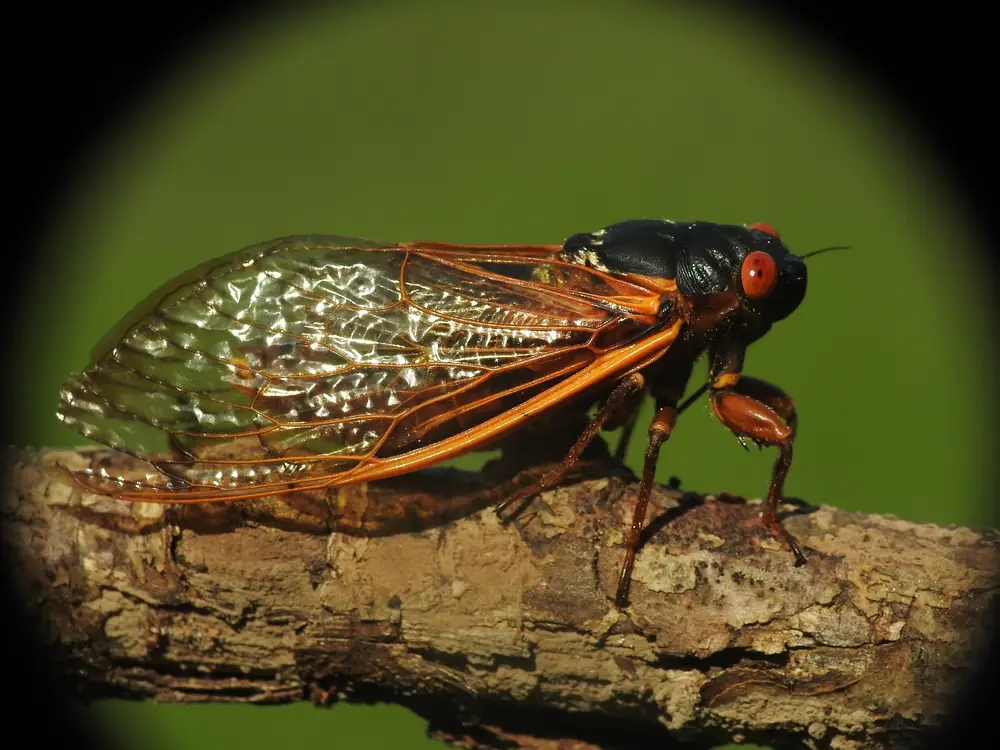
- Check the Cicada Safari map in early May. If periodical cicadas appear near you, walk under trees in the evening and look for holes and shed shells. The brood is expected in the southwest, and sources do not list counties.
- Walk a bog boardwalk on a May morning. At the Crosby Arboretum in Picayune, the May bloom sheet lists parrot pitcher plant, orange candyroot and rose pogonia in the bog, with magnolias around Beaver Pond.
- Watch for Eta Aquariid meteors before dawn. Mornings of May 5, 6 and 7 are the target, in the final two hours before sunrise, when no moonlight interferes.
A cicada chorus can fill a page of the Naturalist's Field Journal's map of sounds. A first kite or bunting sighting belongs under birds I have seen, a magnolia fits a tree through the seasons, a sandy nest fits nest observed, the bog suits the same place twice, and the May moonrise suits the dusk and dawn watch.
Regions used below: The Delta; North Mississippi hills and Tupelo; Central Mississippi and Jackson; The Pine Belt; Southwest Mississippi and Natchez; The Gulf Coast.
Will 13-year cicadas emerge in southwest Mississippi in May 2027?
Possibly, and it would be the biggest insect event of the year. Periodical cicadas spend 13 or 17 years underground as nymphs, then climb out together. The University of Connecticut's cicada site lists Brood XXII, a 13-year brood, with emergence years of 1988, 2001, 2014 and 2027, and names Mississippi among its states. The Connecticut site's brood table lists Louisiana, Mississippi, Ohio and Kentucky for it and calls it the Baton Rouge Brood. Cicada Safari, the citizen-science project that maps the broods, calls Brood XXII a small one and says its Louisiana and Mississippi population was first recognized in 1845.
None of the agency or university pages we read lists the Mississippi counties, so treat your own town as unknown until the map says otherwise. Cicada Safari says the 2027 emergence will begin around the turn from April to May, and the Connecticut site explains the trigger: the soil about 7 to 8 inches down has to warm to roughly 64 degrees Fahrenheit. A cool spring pushes the date later, a warm one earlier.
-
What the emergence looks like
Late April into May, once the soil is warm enough · Wooded neighborhoods and bottomland in the southwest corner of the state
The first sign is a scatter of small holes in bare ground under trees, then nymphs climbing trunks. They split their skins and leave shells behind. Connecticut's site says new adults spend four to six days soft and pale before they harden and begin adult life, so the brown shells and the first flights come before the loud choruses.
-
Listening for the chorus
Within days to a couple of weeks of emergence · Anywhere the brood is thick
Males gather in choruses to call to females, and each species has its own song, so listening is a way to tell them apart. Connecticut's site notes that a male held in the hand buzzes loudly, which can startle you but is harmless. The adults mate, lay eggs in twigs and die before the young hatch.
-
Help map them
From the first sighting · Anywhere you see one
Cicada Safari asks people to photograph periodical cicadas with its free phone app, then posts verified photos on a live map. The project was created by Dr. Gene Kritsky with Mount St. Joseph University in Cincinnati.
Brood XXII is not a sure thing for every county, and a pocket of cicadas can sit right beside a street with none. Our weather guide explains how spring warm spells work.
Which birds nest on Mississippi's beaches and barrier islands in May?
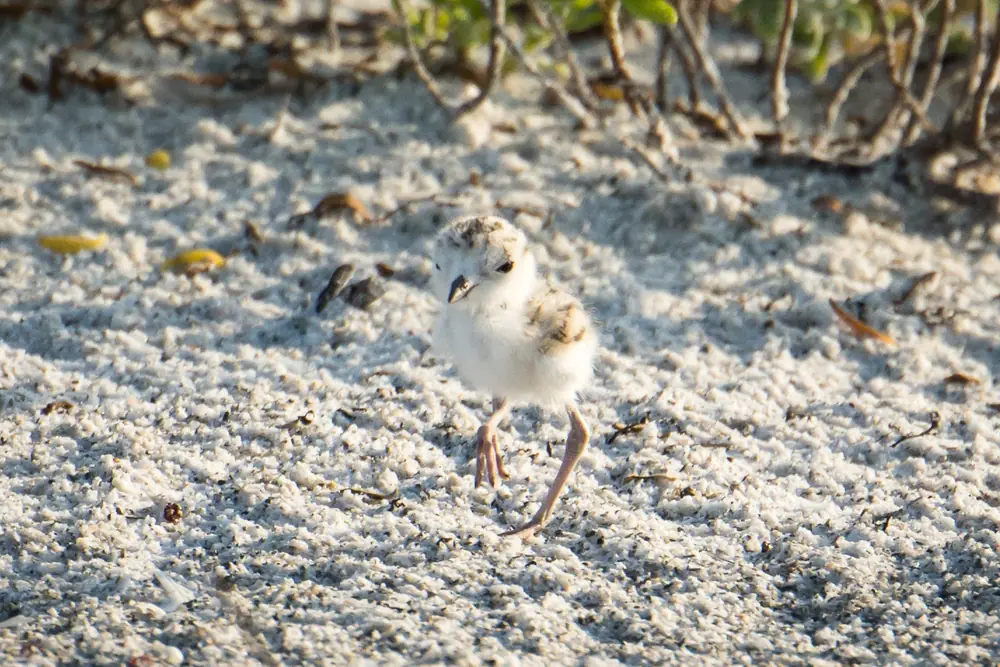
Four species scrape their nests straight into the sand. According to the Park Service, black skimmers, Wilson's plovers, least terns and snowy plovers all nest on the beaches of Gulf Islands National Seashore, and its shorebird season lasts from February into late summer. Eggs and chicks blend into the sand, and a nest is often only a shallow dip. The Park Service posts temporary closures for nesting areas on the Mississippi islands: Ship, Cat, Horn, Petit Bois and West Petit Bois.
-
Least terns and Wilson's plovers
Nesting season from spring into summer · Sandy beaches, including Hancock County Beach and Grand Bay
Audubon's Mississippi guide lists least terns among the nesting birds at the Grand Bay National Estuarine Research Reserve and among the birds of the sandy beach at Hancock County Beach. It also notes that Hancock County Beach is a busy summer recreation area and suggests visiting from fall through spring, so May sits at the edge of the quiet season. The Park Service says that if birds swoop around you, you are probably close to a nest or chicks. Leave by the way you came, because the small eggs are well camouflaged.
-
The rules on the islands
All season · Gulf Islands National Seashore, Mississippi district
Stay out of roped or signed areas, never pick up eggs or young shorebirds, and put trash in the dumpsters. The Park Service says pets are not allowed on the beach or in the water anywhere in the park.
-
Getting to Ship Island
Boats run typically from mid-March through October · Ship Island, about 12 miles off the coast
The island has a swim beach, a concession store, a historic fort and, in the Park Service's words, very limited cell service. The ferry operator describes its season as typically mid-March to October and sells a fort tour ticket from $35. The May sailing days and times were not posted on the operator's page, and we found no 2027 schedule, so call the operator on (228) 864-1014 before planning a day around it. The Park Service lists restrooms open March through October from 10 a.m. to 3:30 p.m.
A lone chick is probably watched by parents nearby. For tide timing and wind, our weather guide helps with the crossing.
Where are kites and painted buntings nesting in Mississippi in May?
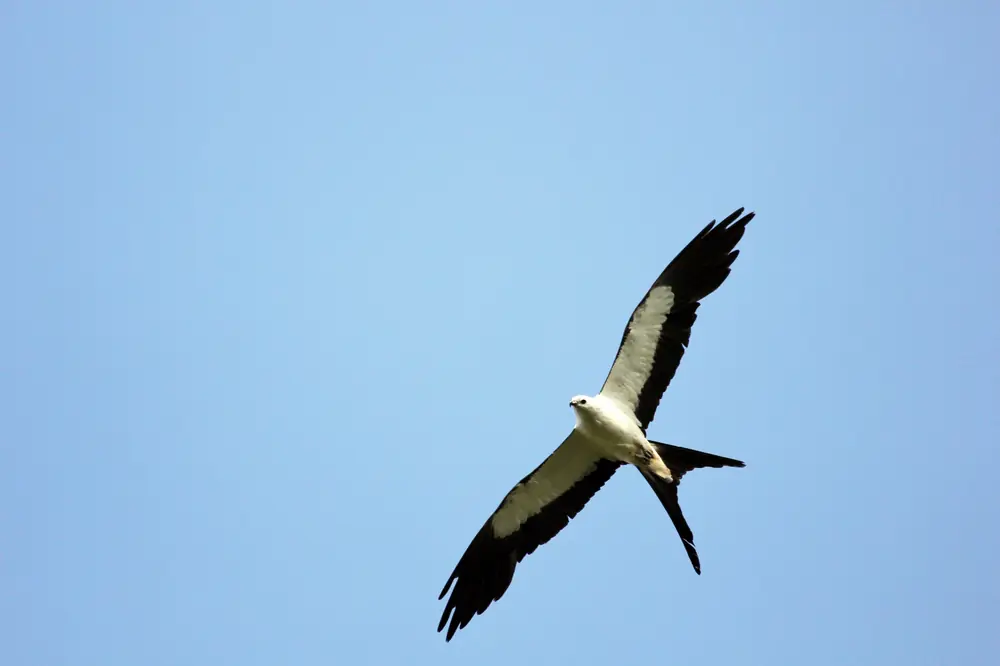
Mississippi's river bottoms are home to two very different kites in summer. The Department of Wildlife, Fisheries, and Parks (MDWFP) says swallow-tailed kites are found nesting by the lower Pearl and Pascagoula rivers and in a small, newly discovered group farther inland, and spend spring and summer here before flying to southern Brazil. Audubon's guide lists Mississippi kites as nesting at the Pearl River Wildlife Management Area and at Yazoo and St. Catherine Creek National Wildlife Refuges. May is the middle of the nest season for both, which makes it a month to look up and a month to keep your distance.
-
Swallow-tailed kites
Courtship and nest-building early, young in the nest through the season · Bottomland hardwood forest on the Pearl and Pascagoula rivers
MDWFP's conservation brochure says nests sit in the upper 10 to 15 percent of a tall tree, often a sweetgum or oak at a forest edge, in a stick platform about 1.5 to 2 feet across that is decorated with Spanish moss and lichen. Pairs nest in neighborhoods of two to seven pairs within about half a square mile. They feed on flying insects and, according to the brochure, may specialize in paper wasp larvae, snapping a wasp nest off its twig and flying away fast. Audubon marks the species as scarce at the Ansley Preserve.
-
Keeping your distance
All season · Any nest or roost near a river
The brochure asks people to stay about 300 feet from an active nest, avoid standing under it, and keep drones away. It names helicopters or aircraft within 800 feet and heavy machinery as other threats. If kites call continuously or fly over you calling, you may be disturbing a nest and should leave. MDWFP asks for sighting reports to the Mississippi Museum of Natural Science at 601-576-6000.
-
Mississippi kites and other nesters
Summer breeding season · Noxubee boardwalks, Pearl River WMA, Yazoo and St. Catherine Creek refuges
Audubon says Mississippi kites can be seen from the boardwalks at Noxubee, a refuge that the U.S. Fish and Wildlife Service reports is an Important Bird Area. The same guide lists painted buntings as nesting at the Ansley Preserve, Yazoo and St. Catherine Creek refuges, and brown-headed nuthatches at Grand Bay and along the C.L. Dees and Fontainebleau trails of the sandhill crane refuge. Bachman's sparrow is possible on the C.L. Dees Trail, though the guide does not say it nests there.
For clouds that build into afternoon storms, the cloud guide shows what to watch for.
What blooms in Mississippi's pitcher plant bogs and wet savannas in May?
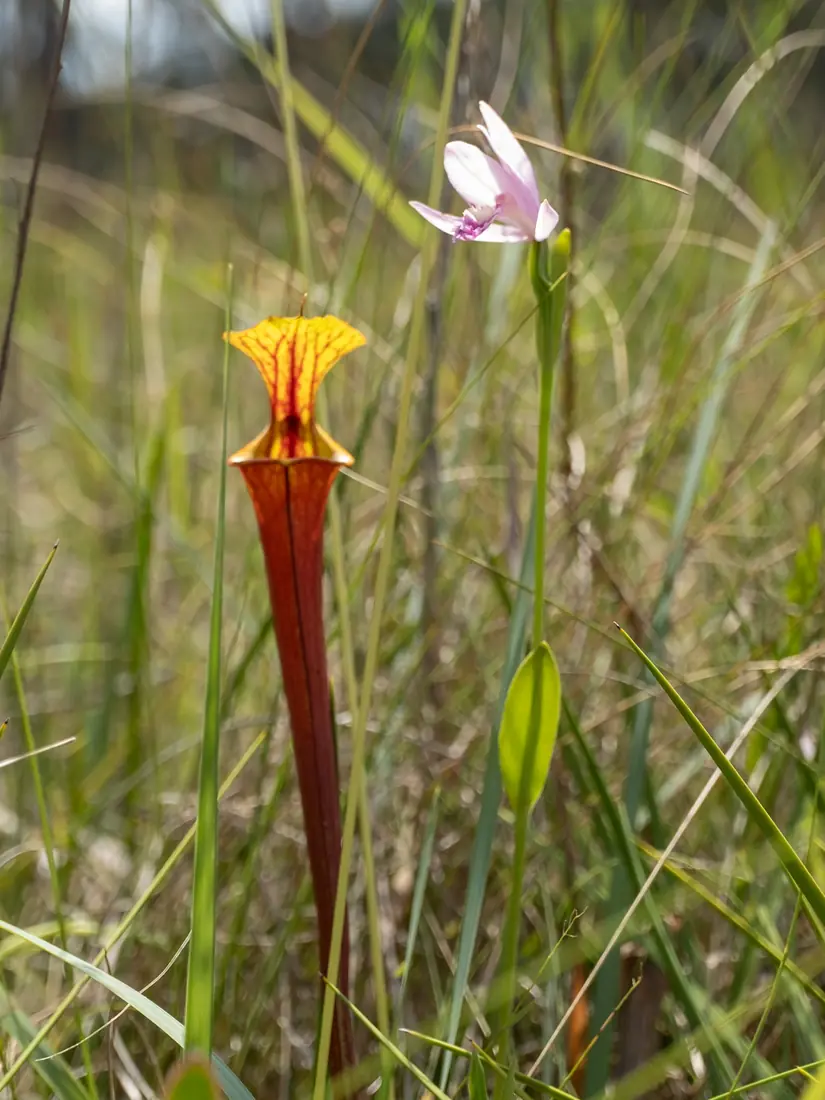
The April show of butterwort and grasspink gives way to a different cast. The Crosby Arboretum in Picayune publishes a bloom sheet for each month, and its May sheet lists three plants in and around the bog: the parrot pitcher plant, orange candyroot and rose pogonia. Mississippi State University Extension adds that Osceola's plume, a perennial with a plume of small cream-colored flowers, opens in April, May or June and tends to flower in the season following a burn.
-
The bog at the Crosby Arboretum
May, per the Arboretum's May bloom sheet · The bog at the Crosby Arboretum, Picayune
The sheet describes the parrot pitcher plant (Sarracenia psittacina) as having solitary, nodding red flowers, with leaves lying along the ground, green with red veins. Orange candyroot (Polygala lutea) is a small plant with a cluster of small orange flowers, and rose pogonia (Pogonia ophioglossoides) is an orchid with one of its three terminal flowers pink to white, with a fringed lip, and fragrant.
-
Around Beaver Pond
May · Beaver Pond, Crosby Arboretum
The same sheet lists mountain laurel, bigleaf magnolia, southern magnolia, tulip poplar, persimmon, snowbell, white water lily, yellow cow lily and titi for the pond. It describes mountain laurel as pink umbrella-shaped clusters whose stamens spring out as the flower matures, and bigleaf magnolia as having very large leaves and large, showy, fragrant flowers. Titi is a shrub to small tree with drooping clusters of small white flowers.
-
The sandhill crane refuge trails
Open from sunrise to sunset all year · Mississippi Sandhill Crane National Wildlife Refuge
The refuge says its trails and grounds are open every day, and the C.L. Dees route is 0.75 mile and Fontainebleau is a full mile, and together they cross pine savanna and pitcher plant bogs. The visitor center is open Thursday and Friday mornings, so call ahead. Guided crane tours are a cold-season offering, so May is a self-guided visit. Wear boots; the ground is wet.
Entrance fees at the Arboretum are posted on its events page: $5 for adults, $4 for seniors and military, and $2 for children 12 and under, with members free. The gates are open Tuesdays through Saturdays, nine to five, and the last ticket sells at four.
Which trees and wildflowers bloom along the Natchez Trace Parkway in May?
The National Park Service's wildflower page for the parkway lists bloom months for each of its three Mississippi segments, and May moves from spring trees to summer roadside flowers. The southern magnolia flowers in May and June, with single, very fragrant white blossoms among shiny evergreen leaves. Yellow poplar, also called tulip poplar, blooms in May with cup-shaped flowers, and oak-leaf hydrangea opens white clusters in May and June.
-
Natchez to Jackson
May · Mileposts 0 to 105
The Park Service lists verbena in May here, with dense flat-topped clusters of small purple tubular flowers, along with spiderwort (purple, three petals) and daisy fleabane (light purple with yellow centers), both in May from Natchez to Tupelo. Black-eyed Susan blooms from May through June along the whole route, and evening primrose, which the page says opens late in the day, blooms in May and June.
-
Jackson to Tupelo
May · Mileposts 105 to 266
Blackberry blooms in May on this stretch, white flowers on thorny stems that promise fruit in summer. Queen Anne's lace, oxeye daisy, ragwort and vetch join the roadside in May and June. The page also lists the pink to white mimosa and Japanese honeysuckle as May bloomers and flags privet as invasive.
-
North of Tupelo
May · From milepost 266 to the Tennessee line
Water parsnip, yellow clover and multiflora rose bloom in May in the northern segment, and mountain ash waits until June. Water parsnip grows in wet, shaded spots, so look for it near seeps and creek crossings.
A field journal page lets you log which flowers open in which week, so your own dates are ready next spring.
Which young animals are growing up in Mississippi in May?
May is when many of the year's offspring are on the move, and some are in the wrong place. A few have clear timing from agency sources, and those are given below. The advice for all of them is the same: admire from far away and leave the young where they are.
-
Sandhill crane colts
Hatched in spring, flying after about 70 to 80 days · Pine savanna at the sandhill crane refuge
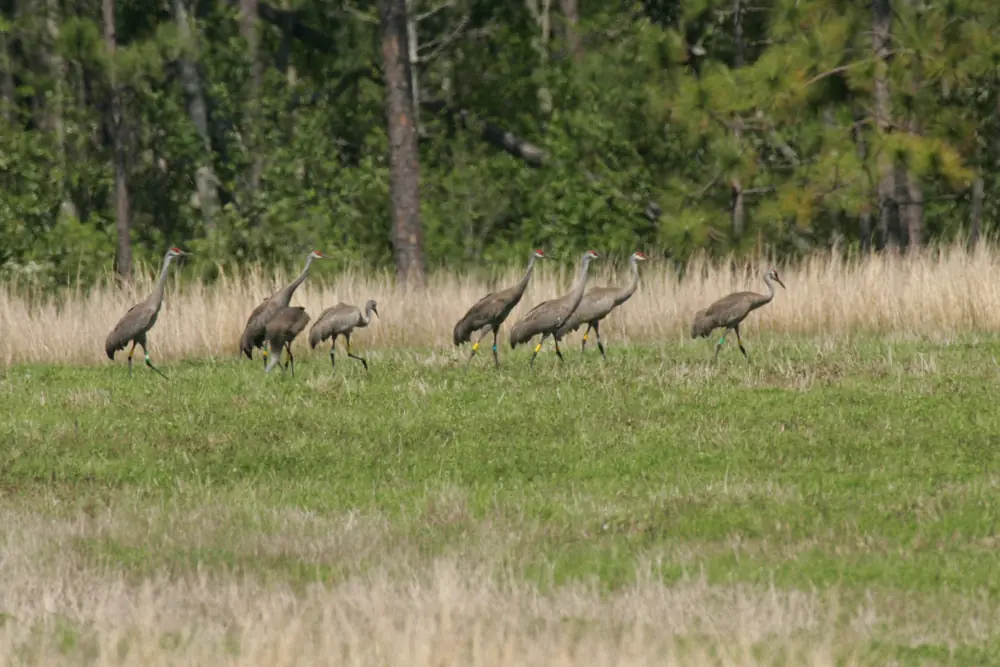
The refuge says colts are feathered and walk soon after hatching, young cranes fly after about 70 to 80 days, and the young remain with their parents for about ten months. The population is currently about 200 birds, up from 30 to 35 when the refuge was created in 1975. Audubon notes that much of the refuge is closed to avoid disturbing the cranes, so a distant view from the open trails is the right way to look.
-
Turkey hens settling in
Most hens begin incubating in the weeks on either side of May 1 · Fields, forest edges and pine plantations
The MDWFP and MSU Extension guide to turkey ecology says the hatch must coincide with midsummer's insect abundance, so incubation begins about a month earlier. Its studies of radio-tagged hens show that most do not start sitting until the weeks around May 1, and very little happens before mid-April.
-
Bluegill and redear on their beds
Bluegill when water reaches about 65 degrees, redear near 70 · Farm ponds, lakes and shallow shorelines
MDWFP says bluegill nest in tight colonies, where males sweep sand away to expose coarse gravel, and spawn several times through the summer. Redear sunfish, which crush snails and clams, spawn in spring and early summer. Both build nests close together. Crickets, earthworms and small spinners take bluegill, according to the agency. Mississippi's rod and reel records are 3.45 pounds for bluegill, caught in a farm pond in 1995, and 3.33 pounds for redear, at Tippah County Lake in 1991.
-
Young alligators on the move
As spring ends and summer begins · South of Highway 82 mostly, but found statewide
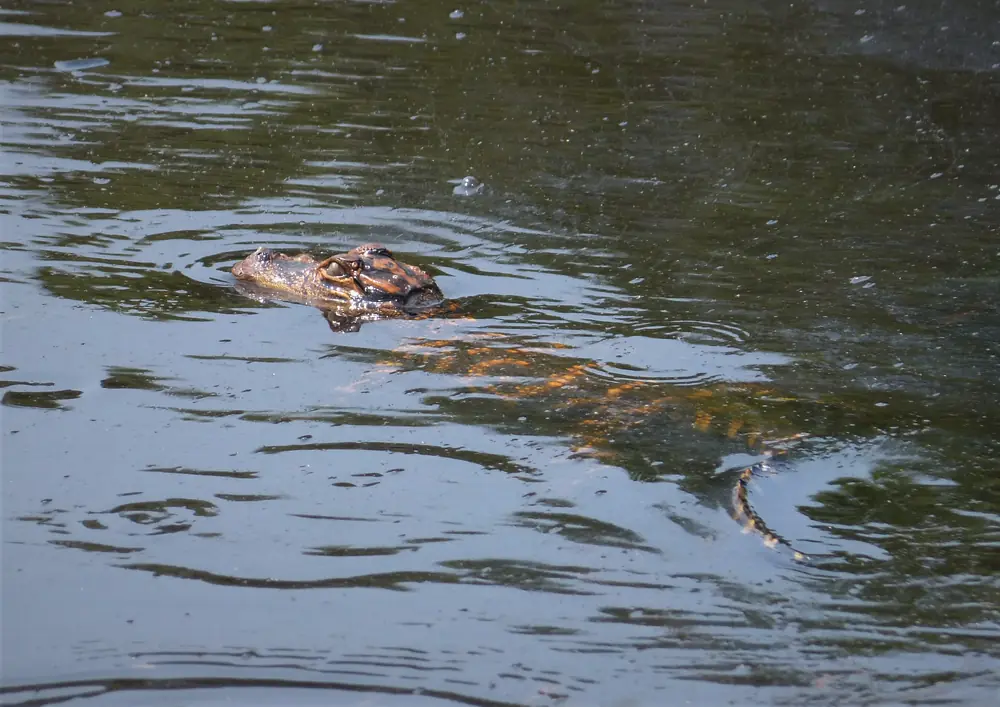
MDWFP reports that young alligators scatter into new territory once spring is ending, and some wind up in farm ponds, road ditches, parking lots, yards and swimming pools. The agency says alligators are most common in the southern two-thirds of the state, south of Highway 82. For an emergency, such as one in a garage or on a highway, call 1-800-BE-SMART. Otherwise call your regional MDWFP office.
If you find a young bird or mammal that looks abandoned, wait and watch from a distance before doing anything. The April page covers the woodpecker, turkey and dolphin stories that come just before these.
Is a freeze still possible in Mississippi in May?
Almost never. At every station in the table below, even the late nine-years-in-ten date comes before May: April 24 at Iuka, April 6 at Tupelo and Natchez, April 2 at Jackson, and March 31 or earlier elsewhere. The NOAA monthly normals for May show an average of 0.0 nights at or below 32 degrees at all six stations in the weather table. The risk now is the reverse: heat and thunderstorms.
| Station | One year in ten | Median | Nine years in ten |
|---|---|---|---|
| Iuka (northeast hills) | Mar 23 | Apr 9 | Apr 24 |
| Tupelo Regional Airport | Feb 28 | Mar 21 | Apr 6 |
| Greenville (Delta) | Feb 24 | Mar 13 | Mar 31 |
| Jackson International Airport | Feb 22 | Mar 14 | Apr 2 |
| Natchez (southwest) | Feb 25 | Mar 16 | Apr 6 |
| Hattiesburg (Pine Belt) | Feb 16 | Mar 8 | Mar 28 |
| Gulfport (coast) | Jan 25 | Feb 23 | Mar 16 |
You can look up a town near you on the Mississippi frost page.
How much daylight does Mississippi gain in May?
Another 37 to 44 minutes, and the pace slows as the solstice approaches. The table lists sunrise-to-sunset day length for the first and last days of May at eight cities across the state. The day is already about 13 hours 20 minutes on the coast and 13 hours 36 minutes in the far north by May 1, and the daily gain keeps shrinking toward the end of the month.
| City | May 1 | May 31 | Gained | Per day |
|---|---|---|---|---|
| Southaven | 13 h 36 m | 14 h 20 m | 44 min | 1.5 min |
| Tupelo | 13 h 34 m | 14 h 17 m | 43 min | 1.4 min |
| Columbus | 13 h 31 m | 14 h 13 m | 42 min | 1.4 min |
| Greenville | 13 h 31 m | 14 h 12 m | 41 min | 1.4 min |
| Jackson | 13 h 28 m | 14 h 07 m | 39 min | 1.3 min |
| Meridian | 13 h 28 m | 14 h 07 m | 39 min | 1.3 min |
| Hattiesburg | 13 h 25 m | 14 h 02 m | 37 min | 1.2 min |
| Gulfport | 13 h 21 m | 13 h 58 m | 37 min | 1.2 min |
Our daylight page has your own town. The longest day, June 21, is only a few weeks off.
Is May still tornado season in Mississippi, and when does hurricane season start?
May is usually quieter than April, but not always. The National Weather Service office in Jackson lists tornadoes by month for each year, and the May counts for Mississippi are 0 in 2017, 0 in 2018, 2 in 2019, 0 in 2020 and 27 in 2021. The 2021 page footnotes that count as the highest May total since 1950. In 2019, by contrast, a record 115 tornadoes for the year included 67 in April alone. One calm May says little about the next.
Normals at six stations, below, show warm, humid weather: highs in the low to mid 80s and lows around 61 to 66 degrees, with 3.8 to 5.2 inches of rain. The National Hurricane Center dates the start of the Atlantic hurricane season to June 1. For 1991 to 2020 it counts an average of 14 named storms a year, 7 of them hurricanes and 3 major, and says the first named storm typically forms in mid to late June.
| Station | Average high | Average low | Rain and melted snow | Freezing nights |
|---|---|---|---|---|
| Tupelo | 82.7 °F | 60.9 °F | 5.22 in | 0.0 |
| Greenville | 82.7 °F | 62.4 °F | 3.79 in | 0.0 |
| Jackson | 83.8 °F | 62.1 °F | 4.36 in | 0.0 |
| Meridian | 85.3 °F | 61.3 °F | 4.20 in | 0.0 |
| Hattiesburg | 84.6 °F | 62.3 °F | 4.44 in | 0.0 |
| Gulfport | 83.6 °F | 66.4 °F | 4.74 in | 0.0 |
Plan for storms and heat together. The National Weather Service warns that children can die in a hot car in 10 minutes, and that young children, older adults and people with chronic conditions are most at risk in heat. NOAA updates its seasonal outlook every month; read the current one on the Climate Prediction Center's 90-day maps, since this page does not repeat it. How afternoon storms build is covered in our cloud guide and weather guide.
What can you see in the night sky over Mississippi in May?
Every time below is Central Daylight Time (CDT), as in the moon table, because the clocks went forward in March. There is no eclipse this month, and with sunset coming late in the evening, the dusk sights begin well after supper.
-
Eta Aquariid meteors
Best mornings of May 5, 6 and 7, before dawn · Any dark site with a clear eastern sky
The shower is active from late April to late May, with a peak around May 5 to 7, and the new Moon on May 6 means no moonlight to wash it out. The American Meteor Society expects a medium rate, somewhere between 10 and 30 meteors per hour, shortly before sunrise. Sea and Sky rates 2027 an excellent year, with moonlight almost absent. Meteors fan out from Aquarius, which clears the horizon only an hour or two before sunrise, so rates drop the farther north you go.
-
The Flower Moon, a seasonal Blue Moon
Full on Thursday, May 20, at 5:59 a.m. CDT · Rising in the east about sunset on May 19
The Moon is full at dawn on the 20th, so the best evening is Wednesday the 19th, when it rises at about 7:50 p.m. in Houston and 8:15 p.m. in Atlanta by our calculation, close to the sunsets. Sea and Sky says early tribes named it the Flower Moon for the spring flowers that appeared in abundance. The same calendar labels it a blue moon too. Spring 2027 holds four full moons, running from March 22 to June 19, and under the older seasonal rule the third of the four earns the name. By the newer rule, two in one calendar month, 2027 has none.
-
Mercury after sunset
Best from about May 12 to June 5, closest to its farthest point on May 27 and 28 · Low in the west-northwest, 45 to 90 minutes after sunset
The planet swings farthest from the Sun, 22.9 degrees to its east, on May 28 at 8:14 a.m. CDT, which makes the two evenings before that the prime ones. Our calculation at 40 degrees north has it dropping below the horizon roughly an hour and a half after sunset in mid-May, brighter than most stars. Farther south, as in Mississippi, those figures may differ by as much as thirty minutes. Find an open view toward the west-northwest.
-
Jupiter and Mars with the Moon
All month; the Moon is near Jupiter on May 12 and Mars on May 13 · High in the south and southwest at dusk
Jupiter has been an evening object since winter and is still up deep into the night, with a setting time near 2 a.m. at the start of May. By our calculation the first-quarter Moon passes within about 1.2 degrees of Jupiter on May 12, at 4:52 p.m. CDT while it is still daytime, so the evening of the 12th shows the pair still very close. On the 13th the Moon sits roughly 3 degrees from Mars, which keeps dimming as it slides toward Virgo.
-
Venus and Saturn before dawn
Closest on the morning of May 7, 0.6 degrees apart · Low in the east before sunrise
Venus, a brilliant morning star, and much fainter Saturn sit about a degree apart on the 6th and 8th and 0.6 degrees apart on the 7th. Neither climbs far above the horizon before the sky brightens, so bring binoculars and find a clear view east. It is a difficult target, and a pretty reward if you catch it.
-
The Milky Way before dawn and after dark
The first two weeks and the last week of May · A dark site with a clear southern sky
Sagittarius, home of the galaxy's bright core, hugs the southern horizon and the nights are brief. Our calculation, done for 40 degrees north and 95 degrees west, finds moonless windows in the opening two weeks (through the 14th) and again from the 25th to the end of the month, offering up to about 3.8 hours of core in a dark sky. Mississippi is farther south, so expect similar dates.
| Phase | Date | Time |
|---|---|---|
| New moon | Thursday, May 6 | 5:58 a.m. CDT |
| First quarter | Wednesday, May 12 | 11:44 p.m. CDT |
| Full moon, the Flower Moon | Thursday, May 20 | 5:59 a.m. CDT |
| Last quarter | Friday, May 28 | 8:58 a.m. CDT |
| New moon | Friday, Jun 4 | 2:40 p.m. CDT |
The moon phase calendar lists every night. Check our cloud guide too, because May skies are often hazy and stormy.
What can Mississippi families do outside in May 2027?
- Map the cicadas. If Brood XXII shows up near you, photograph a cicada, a shed skin or a hole with the free Cicada Safari app. Check the live map in early May to see where reports are coming in.
- Crosby Arboretum, Picayune. Visit on a weekday or Saturday morning. The events page lists nothing recurring in May and shows no 2027 dates yet. The Arboretum was a 2026 Blue Star Museum (free admission for military personnel and their families from May 16 to September 7, 2026); no 2027 program had been posted.
- World Migratory Bird Day. It falls on two days a year, one in spring and one in fall. The organizers had listed nothing beyond 2026, when the days were May 9 and October 10, so look for the 2027 dates at worldmigratorybirdday.org.
- Memorial Day, Monday, May 31. Bring bug spray to any holiday cookout outdoors.
- Ship Island. Boats run typically from mid-March through October. Ask the operator for May times.
- Pascagoula River Audubon Center. Its page said the building was closed for repairs that could take up to 12 months, and the hours showed it closed every day. Call (228) 475-0825 before driving there.
- Count frogs by ear and measure rain. FrogWatch USA, run through the Akron Zoo, teaches volunteers to count frog calls. CoCoRaHS is the volunteer rain, hail and snow network.
Hosts sometimes move dates, so confirm before you drive. Our nature hub leads to every state, and the April page for Mississippi covers songbird waves and savanna blooms.
Safety notes for May in Mississippi
- Spring turkey season. The regular spring gobbler season in the state's 2026 to 2027 table closes on May 2 (it opened March 15), so just May 1 and 2 fall inside the month. Walkers near woods at dawn should wear something bright.
- Spring squirrel. The same table lists a spring squirrel season from May 15 to June 1, with a daily limit of 4. Read the rules for the area before you go.
- Frog season. Frogs stay open through September 30, at 25 a night, according to the table. Check MDWFP for license and method rules.
- Blaze orange. Fluorescent orange rules vary by season and by wildlife management area, so check the current MDWFP regulations for any area you visit.
- Alligators. Do not feed one, and call MDWFP at 1-800-BE-SMART if one is in a spot people cannot avoid, such as a highway, garage or parking lot.
- Nests. Stay out of roped beach areas, keep dogs out of the island beaches, and stay about 300 feet from a swallow-tailed kite nest.
- Ticks. MSU Extension says lone star ticks are active from early spring through fall and Gulf Coast ticks are most common from late spring through fall, especially in July and August. Keep to the middle of paths, dress in long light layers with pants tucked into socks, apply repellent, and check yourself after a hike.
- Beach water. The National Weather Service points out that a rip current can form under a sunny, flat-looking sea. It advises swimming only where lifeguards are on duty.
- Heat and storms. Take water, shade and a plan to get indoors when thunder is heard. Never leave a child or pet in a parked car.
Sources (43)
- Cicada Safari: Mapping Brood XXII in 2027
- University of Connecticut: Periodical cicadas
- University of Connecticut: Periodical cicada broods
- University of Connecticut: Brood XXII
- National Park Service, Gulf Islands National Seashore: Sharing the shore with birds
- National Park Service, Gulf Islands National Seashore: Birds
- National Park Service, Gulf Islands National Seashore: Ship Island
- Ship Island Excursions: The Ship Island ferry
- Audubon: Birding in Mississippi
- Audubon: Pascagoula River Audubon Center
- MDWFP: Swallow-tailed Kite conservation in Mississippi (brochure)
- U.S. Fish and Wildlife Service: Sam D. Hamilton Noxubee National Wildlife Refuge
- Crosby Arboretum: May blooms (PDF)
- Crosby Arboretum: Bloom times
- Crosby Arboretum: Recurring events and hours
- MSU Extension: Wet pine savannas are popping off in coastal Miss. (May 2026)
- U.S. Fish and Wildlife Service: Mississippi Sandhill Crane refuge, Seasons of wildlife
- U.S. Fish and Wildlife Service: Mississippi Sandhill Crane refuge, Visit us
- National Park Service: Natchez Trace Parkway wildflowers
- MDWFP and MSU Extension: Wild turkey ecology and management (PDF)
- MDWFP: Bluegill
- MDWFP: Redear sunfish
- MDWFP: Alligator program
- MDWFP: 2026-2027 hunting seasons (PDF)
- NWS Jackson: General tornado statistics for Mississippi
- NWS Jackson: 2017 Mississippi tornado count
- NWS Jackson: 2018 Mississippi tornado count
- NWS Jackson: 2019 Mississippi tornado count
- NWS Jackson: 2020 Mississippi tornado count
- NWS Jackson: 2021 Mississippi tornado count
- NOAA NCEI: U.S. climate normals 1991-2020, monthly (Tupelo, Greenville, Jackson, Meridian, Hattiesburg, Gulfport)
- NOAA NCEI: U.S. climate normals (freeze and frost dates)
- NOAA National Hurricane Center: Climatology
- NOAA Climate Prediction Center: Seasonal outlooks
- National Weather Service: Heat safety
- National Weather Service: Rip current safety
- MSU Extension: Species spotlight, ticks
- U.S. Naval Observatory: Moon phases 2027
- Sea and Sky: Astronomy calendar 2027
- World Migratory Bird Day
- FrogWatch USA
- CoCoRaHS: Community Collaborative Rain, Hail and Snow Network
- Photos via Wikimedia Commons; licenses and photographers are listed on each file page