What to look for in nature in Mississippi this November
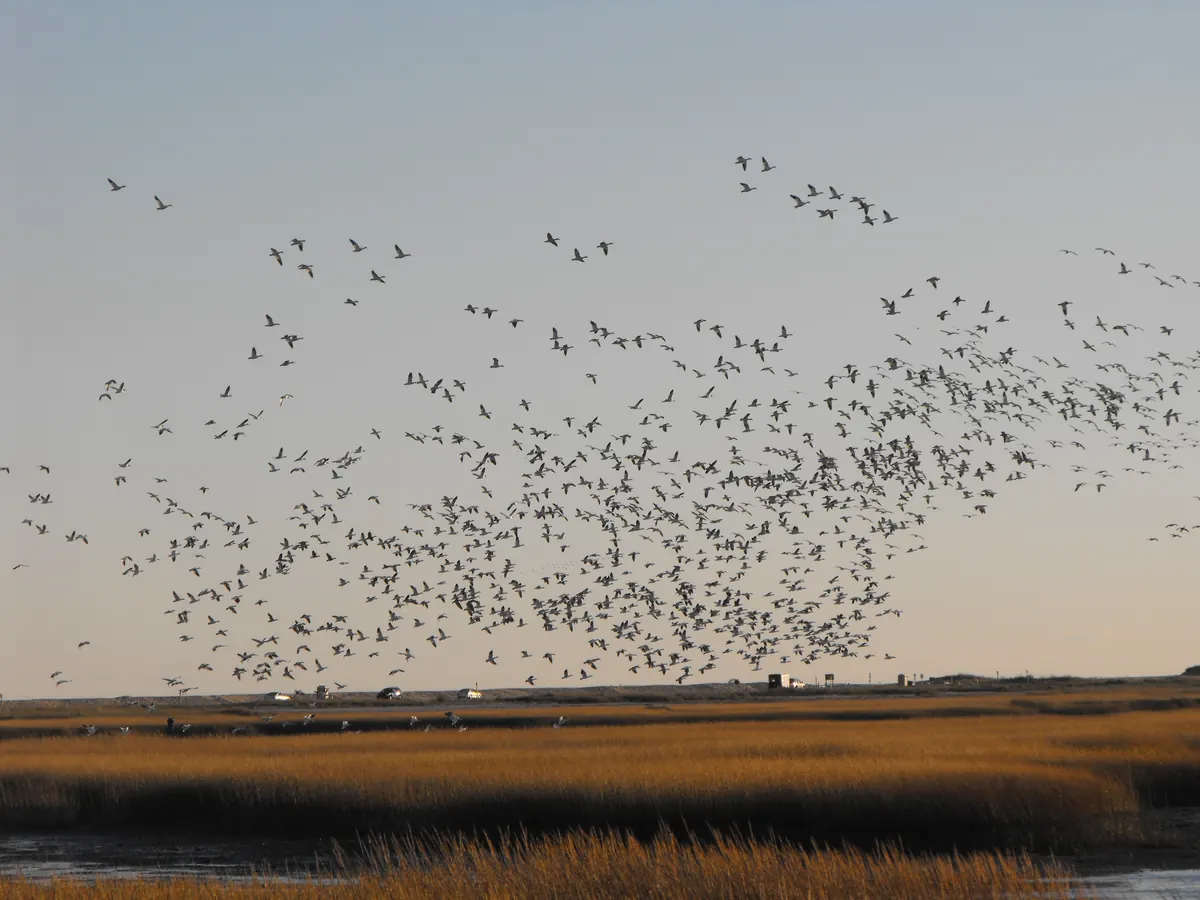
November is when Mississippi trades one set of residents for another. Gadwall, shovelers and pintails drop onto flooded Delta fields, snow geese begin streaming over the rice country, and wintering bald eagles settle onto the lakes at Noxubee. The northern hills put on their last color while witch hazel opens odd yellow flowers in the bare understory. On the coast a few monarchs stay behind on the barrier islands, and western hummingbirds find backyard feeders. The first freeze reaches most counties this month, and evenings go dark an hour sooner on the 1st.
Other months in Mississippi: October, December.
Start here

- Watch the ducks come in. State biologists usually fly their first aerial duck survey of the season over the Delta in mid-November. Last year that count came to roughly 306,000 ducks, about a quarter above the long-term November average. Flooded fields near Delta wildlife management areas and refuges are the places to scan at sunrise; the regular duck season opens November 27.
- Find witch hazel in flower. American witch hazel blooms from September into December, after most other woody plants have finished. Look along shady creek banks in the hill country for a shrub with thin, crinkled yellow petals, often hanging on twigs that have already lost their gold leaves.
- The Leonids, then the Beaver Moon. Go out for the Leonids in the dark hours of Wednesday, November 18, after moonset, with Leo high in the southeast. The following week, the full Beaver Moon (8:53 a.m. Central, Tuesday the 24th) lifts over the eastern trees at dusk on both Monday and Tuesday.
Naturalist’s Field Journal ideas: the first snow geese you hear overhead go in the daily field log, with the time and wind, and add each new duck to “birds I have seen.” A witch hazel sprig or blackgum leaf suits the colours of the day plate, an acorn cap the seeds, pods and cones page, and a deer rub reading the signs. Count Leonids on the dusk and dawn watch plate.
Regions used below: The Delta; North Mississippi hills and Tupelo; Central Mississippi and Jackson; The Pine Belt; Southwest Mississippi and Natchez; The Gulf Coast.
When do ducks and snow geese arrive in the Mississippi Delta?
Mostly in November, with the numbers still climbing into December and January. The Delta sits in the middle of the Mississippi Flyway, and every fall its rice stubble, catfish ponds, oxbow lakes and cypress brakes catch a large share of the continent’s migrating waterfowl. How many stop, and when, depends on two things the birds cannot control: cold fronts pushing them south from the Midwest, and how much shallow water is waiting when they arrive.
-
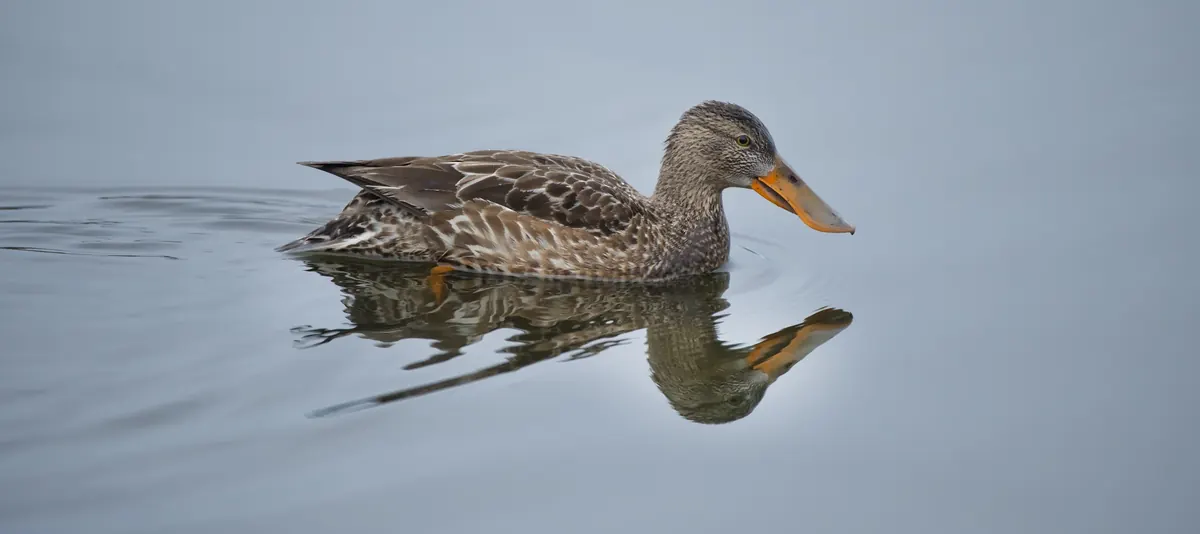
The state’s November duck count
Usually mid-November; the 2025 survey ran November 12 to 17 · East-west transects from the Mississippi River to the hill line
MDWFP waterfowl biologists fly aerial surveys over the Delta from November to January, counting every duck within a 250-meter strip beneath the plane and turning the tally into an estimate for the whole region. The November 2025 flight came a few days after two nights of below-freezing temperatures across much of the state, and it put the Delta at about 305,900 ducks, 25 percent above the November average since 2007. Mallards were below normal; northern shovelers and gadwall were the most numerous dabblers, and scaup and ring-necked ducks led the divers. The year before, after a mild, dry fall, the same survey found only about 87,000. The biologists caution that a November count says little about how high numbers will climb later in the winter, and they post each report on the MDWFP waterfowl pages.
-
Snow geese and specklebellies
Small flocks by mid-November; big concentrations usually from December · Harvested rice and soybean fields across the Delta
In last year’s November survey the pilots saw very few light geese (snow, blue and Ross’s) or greater white-fronted geese, which hunters call specklebellies, though field reports said both were starting to build. An MSU Extension writer described the big flocks of snow geese settling on open Delta farm fields as a December and January spectacle. Listen for them at night, too: a flock passing over in the dark gives itself away with a constant, high-pitched yelping.
-
Where to look without a duck blind
Sunrise and the last hour before dark · Delta wildlife management areas, Yazoo and Theodore Roosevelt refuges, Leroy Percy State Park near Hollandale, catfish pond levees from public roads
The 2025 survey found ducks crowded onto public lands that can pump groundwater into their impoundments, because the surrounding fields were dry, and it noted that diving ducks favor aquaculture ponds. That pattern makes refuge and WMA overlooks the easiest places to see big rafts of birds early in the season. Hunting is heavy on many of these lands from late November, so check each area’s rules before you walk in and give blinds a wide berth.
The regular duck season runs November 27 to 29, then reopens in December; the safety section lists the other dates that matter for anyone walking in the Delta this month.
Where can you see wintering bald eagles in Mississippi in November?
One reliable answer is Sam D. Hamilton Noxubee National Wildlife Refuge, which spreads across Noxubee, Oktibbeha and Winston counties south of Starkville. The refuge’s own month-by-month wildlife calendar reads like a summary of November in the hills: the end of the flowering season, the peak of fall color, the first killing frost, woodcock flights arriving from the north, wintering bald eagles and ospreys turning up on the lakes, and waterfowl numbers building.
-
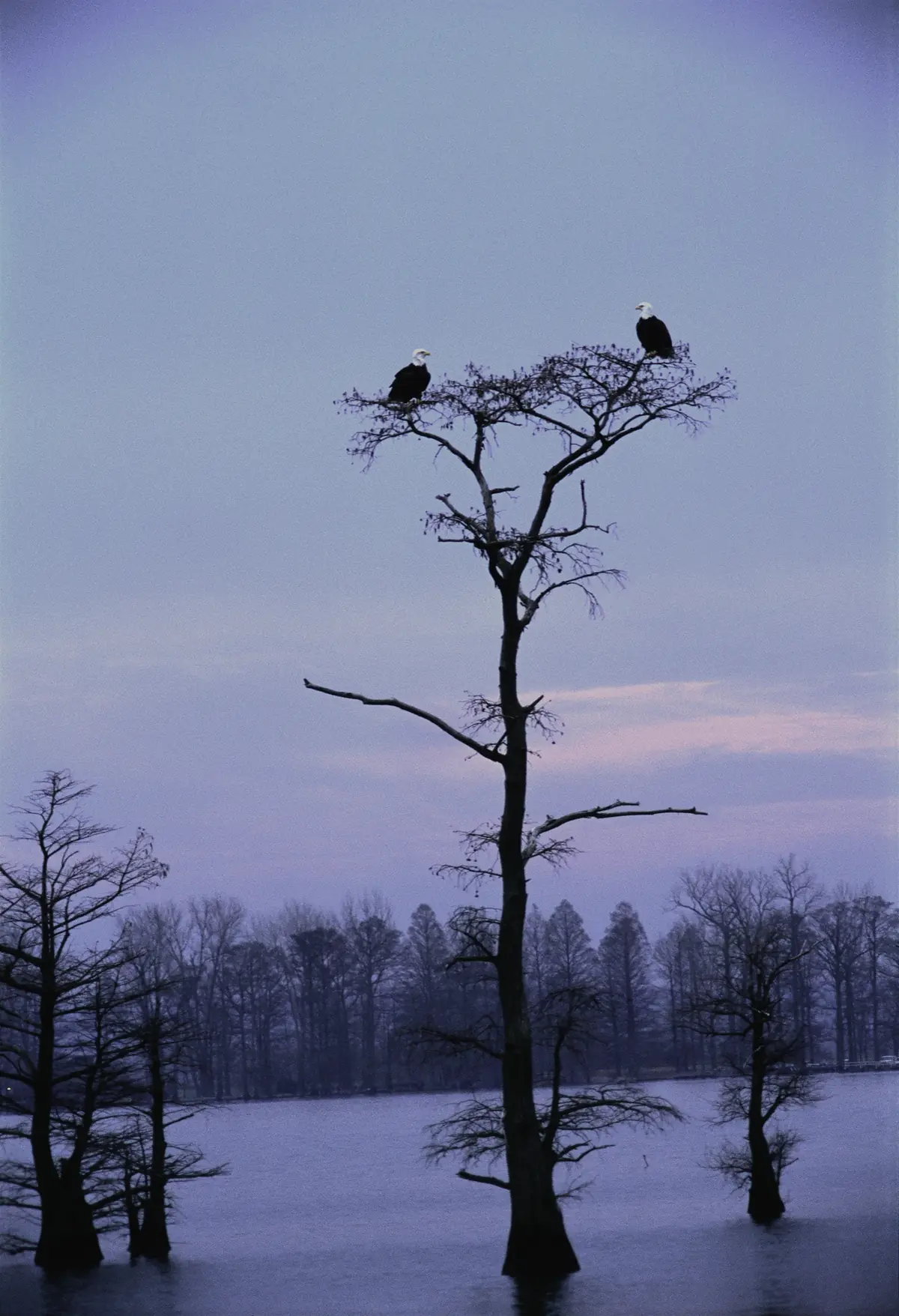
Eagles and ospreys on Bluff Lake
Arriving in November and present through December · Bluff Lake and Loakfoma Lake, Sam D. Hamilton Noxubee NWR, 13723 Bluff Lake Road, Brooksville
Scan the dead snags along the shoreline and the tops of the tallest cypresses; an adult eagle’s white head shows at a surprising distance. Trails are open in daylight only, and the refuge closes after dark. The visitor center keeps weekday hours, 7:30 a.m. to 4 p.m., and is closed on weekends, so pick up the trail guide and bird checklist on a weekday or download them before you go.
-
Woodcock and red-cockaded woodpeckers
Woodcock from November; woodpeckers year-round · Moist thickets and field edges (woodcock); open, mature pine stands (woodpeckers)
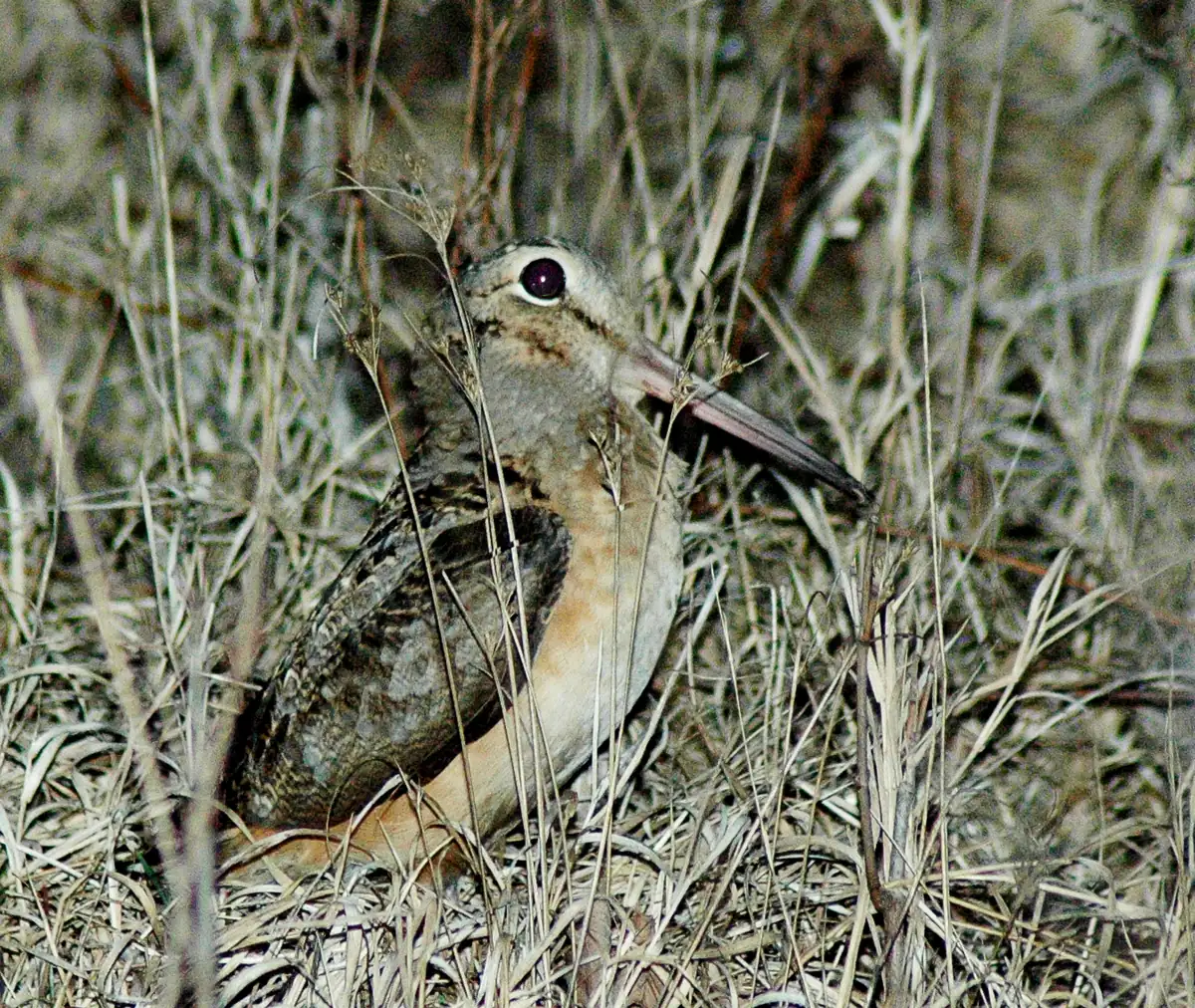
American woodcock are plump, long-billed shorebirds that live in the woods. Many are pushed south by strong cold fronts, and the birds that reach Noxubee in November spend the winter probing soft ground for earthworms and burrowing insect larvae. Flush one and it rises with a twittering of its wings. The refuge also protects the endangered red-cockaded woodpecker, which excavates its nest cavities in living pines; the birds keep the bark around each hole oozing, so look for trunks glazed with sticky, pale resin.
Southern bald eagles nest in the cool months, so a pair you see carrying sticks this month may be starting a family. Admire them from a distance: the Fish and Wildlife Service’s national eagle guidelines recommend buffers of roughly 330 to 660 feet between people’s activities and an active nest.
Where are the leaves still turning in Mississippi in November?
In most years November is Mississippi’s color month, starting in the northeast hills and drifting south through Thanksgiving; Noxubee’s wildlife calendar puts the peak of fall color in November, and Visit Mississippi sends leaf-peepers to the Natchez Trace then. This fall the drought is the wild card. As of the U.S. Drought Monitor’s September 29 map, about 76 percent of the state was in moderate drought or worse and close to a third in severe drought, and the Park Service’s early reports from the Trace described stressed trees dropping leaves early. Expect patchier, browner color unless October brings rain.
-
The Natchez Trace in Mississippi
Early to late November, north to south · Jeff Busby’s Little Mountain Overlook (milepost 193.1), Old Town Overlook and Beech Springs trailheads (263.9 and 266.0), the Cypress Swamp (122)
On the Mississippi side, the parkway’s staff recommend Jeff Busby’s Little Mountain viewpoint for a fast look over the hardwoods and a day hike on the scenic trail from the Beech Springs or Old Town Overlook trailheads near Tupelo. Just over the Alabama line, Freedom Hills Overlook and the Rock Spring Nature Trail are its other picks, and the parkway updates its color report on Fridays through the fall. By mid-November the farther south you drive, the more the color shifts from maples and hickories to oaks, sweetgums and the rusty copper of bald cypress, whose feathery needles turn and fall each autumn.
-
Blackgum, sweetgum and the oaks
Through November · Bottomlands, upland woods and old fields statewide
Blackgum is among the most brilliant trees in a Mississippi woods, and the Wildflower Center lists its fall shades as fluorescent yellow, orange, scarlet and purple. Sweetgum turns purple and red even in a warm fall, which makes it the most dependable color in south Mississippi, and its spiky seed balls start to rain down on lawns. The oaks come last, in russet and brown, and many keep their dead leaves well into winter.
-
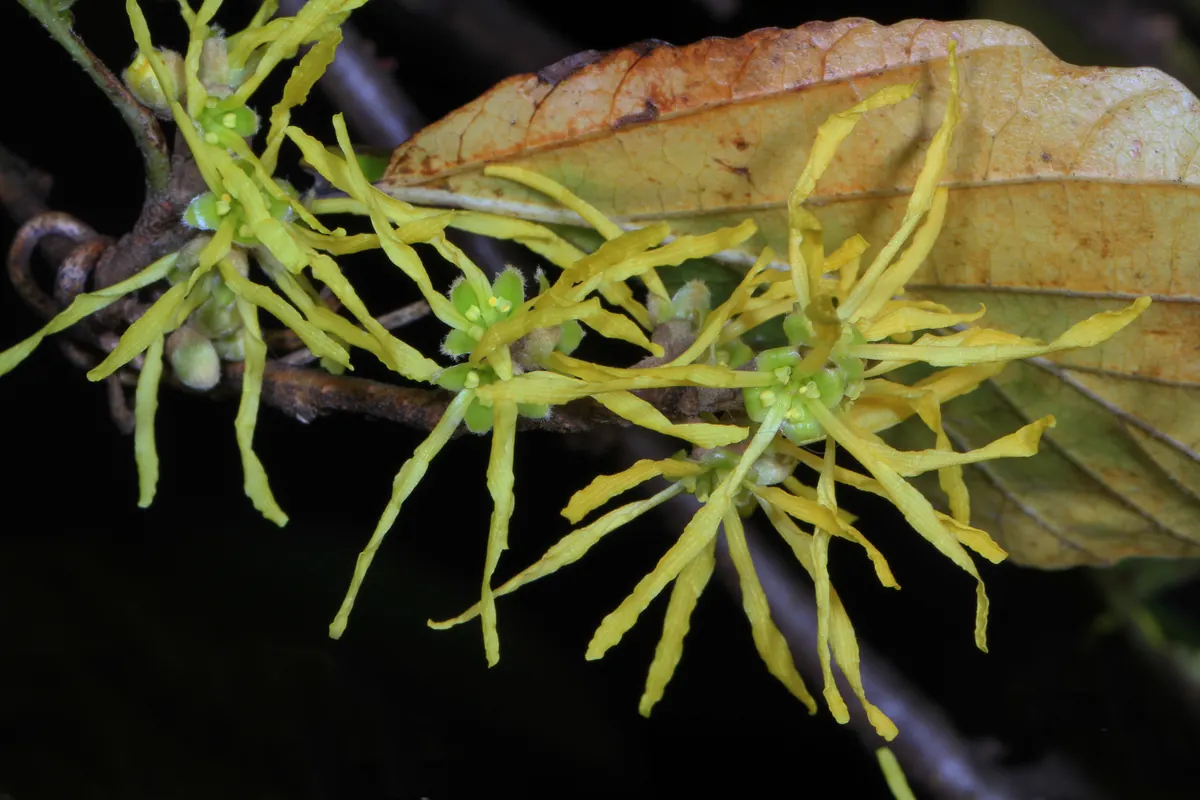
Witch hazel in bloom
Flowers September through December · Shaded slopes and stream banks, especially in the northern and central hills
American witch hazel is a large shrub or small tree that saves its flowering for the end of the year. Each flower is a small tuft of four narrow, wrinkled yellow petals, and the Wildflower Center notes they often linger after the leaves, which turn gold, have dropped. The woody seed pods from the previous year often hang nearby, and once dry they burst and throw their black seeds clear of the parent plant.
-
Red berries for winter birds
Ripe from late fall · Woods edges, fencerows and floodplains
Possumhaw, a deciduous holly of wet ground, stands out once its leaves drop, its bare gray twigs dotted with small red fruit. Yaupon keeps its glossy leaves; the Wildflower Center notes that birds often leave its berries until late winter, after a few freezes and thaws.
Tishomingo State Park, where the Trace crosses the Appalachian foothills, is the other classic color drive; the October page describes its trails and boulders.
What is happening on the Mississippi Gulf Coast in November?
The coast quiets down in November. The excursion boats stop, the last tropical threats fade, and the marshes and pine savannas fill with wintering birds. A few summer visitors hang on longer here than anywhere else in the state, and a few unexpected winter visitors arrive from the West.
-
The last boat to Ship Island
Sunday, November 1 · Gulfport Yacht Harbor to West Ship Island
Ship Island Excursions runs its fall schedule from August 12 through November 1, so the 1st is the final chance this year to ride out to the island, with a 9 a.m. or noon departure from Gulfport. After that, the barrier islands of Gulf Islands National Seashore are reachable only by private boat until the ferry season resumes in spring.
-
Monarchs that stay
Through November · Cat Island, coastal marshes and mainland groundsel bushes
In November 2025 a Mississippi State University team led by Dr. Holley Muraco went out to Cat Island every week to net and tag monarchs that had stopped there instead of continuing to Mexico. The butterflies were feeding on groundsel trees, which keep flowering after other nectar runs out. The researchers think some monarchs may now spend the whole winter on the islands and marshes. A monarch on the mainland after mid-November is worth photographing and reporting to Journey North.
-
Western hummingbirds at winter feeders
Late fall through winter · Backyard feeders and gardens, mostly near the coast
Most ruby-throated hummingbirds have left by November, but rufous, black-chinned, broad-tailed and even calliope hummingbirds from the West turn up in Gulf Coast yards in winter. In December 2024 the Clarion Ledger reported a young male calliope wintering in Gulfport, and Audubon Delta’s conservation science director described these strays as pioneers exploring the Southeast. Leaving one clean feeder up does not keep a hummingbird from migrating, since daylight, not food, triggers the urge to move. If one appears, photograph it and enter it in eBird; a bander may be able to identify and band it.
-
Crane tours begin
Late fall to late winter, as staffing allows · Mississippi Sandhill Crane National Wildlife Refuge, Gautier, off I-10 at exit 61
The refuge offers guided tours to see its critically endangered, non-migratory sandhill cranes in the cooler months; ask at the visitor center desk which days they are running. The savanna trails are open daily during daylight, and the visitor center is closed on federal holidays, including Thanksgiving.
Officially, the Atlantic hurricane season closes on November 30; a late storm is rare but not unheard of.
Which winter birds come to Mississippi feeders in November?
By the middle of the month the winter regulars are back: white-throated and chipping sparrows scratching under the feeders, yellow-rumped warblers in the wax myrtles, ruby-crowned kinglets flicking through the shrubs, and dark-eyed juncos in the northern counties. American goldfinches, now in dull winter plumage, arrive in loose flocks and stay until spring.
-
Project FeederWatch starts
Sunday, November 1, through April · Any yard, schoolyard, park or nature center
Run by Cornell’s ornithology lab with Birds Canada, this count lasts all winter. Participants pick a spot, choose their own count days, and send in what they see. You do not even need a feeder, and counting once a week or once all winter is fine. U.S. participants pay a small annual fee, and the counts help scientists track how winter bird populations shift over time.
-
A quiet year for northern finches
Forecast for winter 2026–27 · Statewide
The Finch Research Network’s winter forecast, posted September 25, finds good cone crops in eastern Canada and the northeastern states and sees no sign of a major southward finch invasion reaching the Southeast. Red-breasted nuthatches should mostly stay north, and any purple finch flight south would probably be small and late. Pine siskins are the one possibility: the forecast allows for a small to moderate flight to the Southeast. If streaky little finches with yellow wing flashes crowd your thistle feeder, report them.
Not every newcomer comes to the feeder: woodcock slip into damp thickets this month and feed by night. To draw in more birds, leave seed heads standing and plant yaupon or possumhaw, then sketch the visitors in the Naturalist’s Field Journal.
When is the deer rut in Mississippi, and what are other animals doing in November?
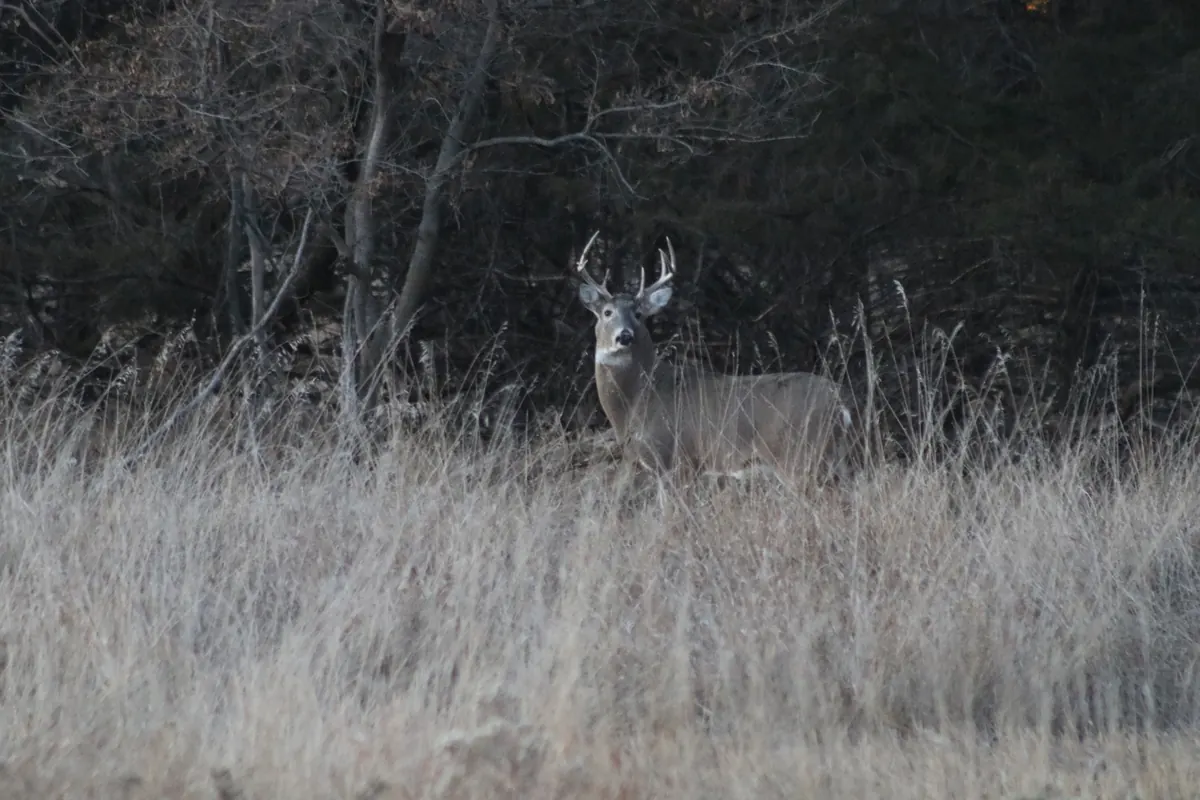
Mississippi’s deer breed late compared with most of the country, and the timing varies more inside this one state than almost anywhere else. MSU’s Deer Lab says peak breeding runs from late November in the northwestern counties to mid-February in the southeastern ones, with most does in any one area bred within a three-week window around that local peak. MDWFP adds that the chasing, scraping and daytime wandering hunters notice comes roughly two weeks ahead of the average conception date, and its breeding-date map lets you look up your own area.
-
Rubs, scrapes and bucks on the move
Building through November in the Delta and north; weeks later in the south · Field edges, logging roads and creek crossings
In the northwest Delta, November is pre-rut and the start of the main event. Look for saplings rubbed raw at knee to waist height and pawed-out scrapes under low branches, often with a broken twig overhead that bucks have chewed and marked. A buck trailing a doe will cross a highway without a glance, so drive slowly at dawn and dusk on rural highways, especially in the Delta and the north-central hills.
-
Black bears fattening up
Until they den in winter · Three breeding populations, with young bears wandering into new counties
MDWFP describes fall as the season of greatest weight gain for black bears, which gorge on acorns and other hard mast to build the fat that will carry them through the denning months. In farm country they also eat crops, including winter wheat once it sprouts. A bear raiding a deer feeder or trash can in November is doing exactly what its body tells it to; the fix is to put the food away.
Holt Collier guided Theodore Roosevelt on the Delta bear hunt that gave the teddy bear its name on November 14, 1902, near what is now Theodore Roosevelt National Wildlife Refuge. MDWFP still asks the public to report bear sightings.
When does Mississippi usually get its first freeze?
For most of the state, sometime in November. By the start of the month the northern hills have usually had theirs already: Iuka and Hickory Flat reach their median first freeze on October 28. Next come Natchez (November 9), Tupelo (November 10), Columbus (November 12), Jackson (November 14), and Greenville and Hattiesburg (both November 15). By the last days of the month, in nine years of ten, Tupelo and Natchez have frozen as well. The coast is the exception. The Gulfport–Biloxi airport’s median first freeze is December 3, and in about one year of every ten the coast stays frost-free into January. Low, open fields and river bottoms freeze first on calm, clear nights, often a week or more ahead of the nearest airport thermometer.
| Station | One year in ten | Median | Nine years in ten |
|---|---|---|---|
| Iuka (northeast hills) | Oct 15 | Oct 28 | Nov 9 |
| Hickory Flat (north-central hills) | Oct 14 | Oct 28 | Nov 11 |
| Tupelo Regional Airport | Oct 29 | Nov 10 | Nov 28 |
| Columbus (Golden Triangle) | Oct 30 | Nov 12 | Dec 1 |
| Greenville (Delta) | Nov 2 | Nov 15 | Dec 1 |
| Jackson International Airport | Oct 31 | Nov 14 | Dec 4 |
| Natchez (southwest) | Oct 27 | Nov 9 | Nov 27 |
| Hattiesburg Chain Municipal Airport (Pine Belt) | Nov 1 | Nov 15 | Dec 4 |
| Gulfport - Biloxi Airport (coast) | Nov 12 | Dec 3 | Jan 5 |
Find your nearest station on the Mississippi frost dates page. Collards, mustard, turnips and cabbage get sweeter after a light frost; bring in potted tropicals and cover tender citrus on the coast when the forecast drops into the upper 20s.
How much daylight does Mississippi lose in November?
Between 38 and 45 minutes, more the farther north you are. Southaven, at the Tennessee line, goes from 10 h 45 m of daylight on November 1 to exactly 10 hours on the 30th; Jackson drops by 40 minutes and Gulfport by 38. The change people notice, though, is the clock. In Jackson the Sun sets at 6:11 p.m. on Saturday, October 31, and at 5:10 p.m. on Sunday, November 1, once standard time returns. On the 30th, sunset is at 4:55 in both Jackson and Gulfport, and Southaven’s is at 4:49. Mornings move the other way: Jackson’s sunrise jumps back to 6:18 a.m. on the 1st and drifts only to 6:43 by month’s end, so early risers get several weeks of light walks while the after-work hour turns dark.
| City | Nov 1 | Nov 30 | Lost | Per day |
|---|---|---|---|---|
| Southaven | 10 h 45 m | 10 h 00 m | 45 min | 1.6 min |
| Tupelo | 10 h 46 m | 10 h 03 m | 43 min | 1.5 min |
| Columbus | 10 h 49 m | 10 h 07 m | 42 min | 1.4 min |
| Greenville | 10 h 49 m | 10 h 07 m | 42 min | 1.4 min |
| Jackson | 10 h 52 m | 10 h 12 m | 40 min | 1.4 min |
| Meridian | 10 h 52 m | 10 h 11 m | 41 min | 1.4 min |
| Hattiesburg | 10 h 55 m | 10 h 16 m | 39 min | 1.3 min |
| Gulfport | 10 h 58 m | 10 h 20 m | 38 min | 1.3 min |
Enter any Mississippi town in the Field almanac and it lists that town’s daily sunrise, sunset and twilight times, from Southaven down to Pascagoula.
What is November weather like in Mississippi, and what could El Niño bring this winter?
Cooler and fairly wet. NOAA’s 1991–2020 normals give Jackson a typical November afternoon of 67 °F, a morning low of 44 °F and about 4.4 inches of rain. Tupelo runs a few degrees cooler (64 and 42 °F) and Gulfport milder (70 and 49 °F), and the main stations all average roughly 3.7 to 4.5 inches. This year that rain is badly needed by parched soils, ponds and duck impoundments.
November also opens Mississippi’s second severe-weather season, when humid Gulf air meets strong autumn fronts. On November 21 and 22, 1992, the Jackson weather office counts 15 deaths in the state, 10 in Rankin County, and one F4 tornado stayed on the ground for 128 miles from near Hopewell to near Mathiston. Leave phone warnings switched on over the Thanksgiving weekend, and know where you would shelter at a deer camp.
The Climate Prediction Center’s ENSO discussion of September 10 makes a very strong El Niño more than 90 percent likely this winter and gives three-in-four odds that October to December beats every El Niño measured since 1950. The Jackson weather office says El Niño typically pushes the jet stream south and pipes extra Gulf moisture over the Deep South, tilting winter and spring toward wetter, cooler weather here. It adds two cautions: no two events behave alike, and the North Atlantic Oscillation, visible only a week or two ahead, often matters more for any given cold snap. It also notes that the worst cold-season tornado outbreaks in the Deep South line up more often with La Niña. Mid-October brings NOAA’s formal winter forecast (due on the 15th), and the maps will be posted at the Climate Prediction Center.
Planning a hike or a morning on a deer stand? Check the forecast and radar for that exact spot on our Weather now page.
What can you see in the night sky over Mississippi in November?
When the clocks go back on the first Sunday of the month (2 a.m., November 1), Mississippi switches to Central Standard Time, six hours behind Universal Time; every time below is CST. And with the new moon on the 9th, mid-month nights are moonless.
-
The Leonid meteors
Before dawn on Wednesday, November 18; the mornings of the 17th and 19th are worth a look too · High in the east and south after midnight
The International Meteor Organization expects a modest shower this year, around 15 meteors an hour under a perfectly dark sky; no outburst is predicted. The Moon, just past first quarter, sets a little after midnight, and the radiant in Leo climbs higher until first light, so the best window runs from about 1 a.m. until dawn. Leonids are the fastest meteors of the year; bright ones can leave a glowing trail that hangs for a second or two.
-
Taurid fireballs
Southern Taurids peak around November 5, Northern Taurids around November 12 · Anywhere in the sky, most of the night
Both streams are debris shed by Comet Encke. They are thin showers, but Taurids enter the air slowly, and now and then one brightens into a fireball that lights the ground. The new moon of November 9 falls neatly between the two peaks.
-
The Beaver Moon, a supermoon
Monday, November 23, and Tuesday, November 24, at moonrise · East-northeast around sunset
The Moon is full at 8:53 a.m. CST on the 24th and comes nearest to Earth (perigee) a day and a quarter afterward, enough to count as a modest supermoon. During the night of the 23rd it drifts in front of the Pleiades region, but its glare will swamp the little cluster. December’s Cold Moon will be closer yet.
-
Planets before sunrise
All month; Mars and Jupiter closest before dawn on November 15 and 16 · East and south before dawn; Saturn in the south after dusk
Venus, now a morning planet, gains height every day and is at its most dazzling from about the 24th to the 27th. Jupiter and Mars share the constellation Leo and pull within roughly a degree of one another on the 15th and 16th, an hour before sunup. Low in the east-southeast, Mercury shows best from roughly November 18 to 25. Evening skies offer a single bright planet: Saturn, well up in the south at dusk. With binoculars, a chart and a dark site, you can also hunt for Uranus, at opposition on November 25 among the stars near the Pleiades.
| Phase | Date | Time |
|---|---|---|
| Last quarter | Sunday, Nov 1 | 2:28 p.m. CST |
| New moon | Monday, Nov 9 | 1:02 a.m. CST |
| First quarter | Tuesday, Nov 17 | 5:48 a.m. CST |
| Full moon, the Beaver Moon | Tuesday, Nov 24 | 8:53 a.m. CST (looks full the evenings of Nov 23 and 24) |
| Last quarter | Tuesday, Dec 1 | 12:08 a.m. CST |
Fronts can bring days of overcast, so look at tonight’s cloud cover before a late drive, and get moonrise for your town from the moon phase calendar.
What can Mississippi families do outside in November 2026?
- Sunday, November 1: last Ship Island ferry of the year from Gulfport, and the first day of Project FeederWatch.
- Saturday, November 7, 10 a.m. to noon: Make Ink from the Forest at Jackson’s Museum of Natural Science. Make a turkey-feather quill and ink from oak galls and walnut hulls. Ages 12 and up; space is limited and registration is required.
- Saturday, November 14, 11 a.m. to 3 p.m.: GIS Day at the museum with exhibits on how digital maps are used across the state.
- Tuesday, November 17, 9 a.m. to noon: a five-mile guided hike at Lake Lowndes State Park near Columbus for National Hiking Day. All ages; leashed pets welcome; included with park admission.
- Wednesday, November 18, before dawn: the Leonids. Bundle up in sleeping bags in the yard after 1 a.m.
- Tuesday, November 24, 10 a.m. to noon: Let’s Talk Turkey at the Museum of Natural Science, with turkey science, games, a craft and live turkeys; included with museum admission. That evening, watch the full Beaver Moon rise.
- Friday, November 27: the day after Thanksgiving. A morning walk on a refuge trail or the Natchez Trace makes a good tradition; duck season opens that day, so stay on marked trails near wetlands.
- Citizen science all month. Count birds for FeederWatch, enter checklists in eBird, report late monarchs to Journey North, and send black bear sightings to MDWFP.
MDWFP lists state park and museum programs on its events calendar, and more may be added during the month. The nature guides link to every state’s page for November.
Safety notes for November in Mississippi
- Deer seasons. Archery runs through November 20. The youth season opens November 7, and outside the Southeast unit, private land also opens to antlerless deer with primitive weapons from November 9 to 20. On Saturday, November 21, gun season with dogs opens in every unit and runs through December 1, bringing more hunters, trucks on back roads and dogs crossing highways.
- Fluorescent orange or pink. During every firearms deer season, a deer hunter must display at least 500 square inches of unbroken fluorescent orange or pink in full view, including on the walk to and from the stand; the exceptions are hunters sitting at least 12 feet off the ground or inside a closed blind. Hikers, birders and dog walkers in the woods should wear the same colors from November 7 on.
- Waterfowl and small game. Goose season opens November 13 and duck season November 27 (through the 29th), so expect gunfire at dawn around Delta wetlands, reservoirs and refuges. Dove season’s second split ends November 22 and quail opens November 26. Wildlife management areas and refuges set their own hunt days; check before you walk in.
- Short days. Once the clocks change, Jackson’s sunset comes near 5:10 p.m., and by Thanksgiving week it is a few minutes before five. Start hikes early and carry a headlamp.
- Fronts and cold water. A November front can bring afternoon tornadoes and a frost the next morning. Dress anyone headed for a stand or a boat in layers; lake water this month is cold enough to cause hypothermia.
- Drought. Until soaking rains arrive, check the Mississippi Forestry Commission’s burn ban list before burning leaves or brush.
Sources
- MDWFP: aerial waterfowl survey reports (Delta surveys, November to January)
- MDWFP: Aerial Waterfowl Survey Report, November 12 to 17, 2025 (PDF)
- MDWFP: Aerial Waterfowl Survey Report, November 12 to 15, 2024 (PDF)
- MDWFP: waterfowl program and weekly waterfowl reports
- MSU Extension: Wings over the Flyway, Mississippi’s winter waterfowl (December 2025)
- U.S. Fish and Wildlife Service: Yazoo National Wildlife Refuge
- U.S. Fish and Wildlife Service: Theodore Roosevelt National Wildlife Refuge
- U.S. Fish and Wildlife Service: Sam D. Hamilton Noxubee NWR, species and seasonal wildlife calendar
- U.S. Fish and Wildlife Service: Sam D. Hamilton Noxubee NWR, visit us
- U.S. Fish and Wildlife Service: National Bald Eagle Management Guidelines (PDF)
- National Audubon Society: American woodcock field guide
- National Audubon Society: yellow-bellied sapsucker field guide
- National Park Service: Natchez Trace Parkway fall colors and weekly color reports, 2026
- Visit Mississippi: fall foliage along the Natchez Trace
- U.S. Drought Monitor: Mississippi statistics, map of September 29, 2026
- Lady Bird Johnson Wildflower Center: Hamamelis virginiana (American witch hazel)
- Lady Bird Johnson Wildflower Center: Nyssa sylvatica (blackgum)
- Lady Bird Johnson Wildflower Center: Liquidambar styraciflua (sweetgum)
- Lady Bird Johnson Wildflower Center: Taxodium distichum (bald cypress)
- Lady Bird Johnson Wildflower Center: Ilex decidua (possumhaw)
- Lady Bird Johnson Wildflower Center: Ilex vomitoria (yaupon)
- Ship Island Excursions: 2026 ferry seasons and fall schedule
- WLOX: monarch butterflies linger on Mississippi’s Cat Island instead of migrating to Mexico (November 2025)
- Journey North: monarch butterfly sightings
- Mississippi Clarion Ledger (via Yahoo News): hummingbirds in winter, a Gulfport yard attracts unusual species (December 2024)
- U.S. Fish and Wildlife Service: Mississippi Sandhill Crane NWR, visit us (crane tours, hours)
- National Hurricane Center: tropical cyclone climatology (season dates)
- Project FeederWatch: project overview
- Finch Research Network: Winter Finch Forecast 2026–2027
- eBird: Mississippi region, species and bar charts
- MSU Deer Lab: ecology of the rut
- MDWFP: deer breeding date map
- MDWFP: black bear program
- NOAA NCEI: U.S. climate normals, 1991–2020
- NOAA Regional Climate Centers: SC-ACIS (1991–2020 November normals for Jackson, Tupelo, Meridian, Greenville, Hattiesburg and Gulfport)
- NWS Jackson, MS: November 21 to 22, 1992 tornado outbreak
- Climate Prediction Center: ENSO diagnostic discussion, September 10, 2026
- NWS Jackson, MS: El Niño and La Niña
- Climate Prediction Center: seasonal outlooks
- U.S. Naval Observatory: moon phases, November 2026
- International Meteor Organization: 2026 meteor shower calendar (PDF)
- EarthSky: what is a supermoon (2026 dates)
- EarthSky: Uranus at opposition
- NIST: daylight saving time
- MDWFP: events calendar, November 2026
- Mississippi Museum of Natural Science: Make Ink from the Forest Workshop, November 7
- Mississippi Museum of Natural Science: GIS Day, November 14
- MDWFP: Lake Lowndes State Park guided hike for National Hiking Day, November 17
- Mississippi Museum of Natural Science: Let’s Talk Turkey, November 24
- MDWFP: 2026–2027 hunting seasons and bag limits
- MDWFP: white-tailed deer regulations (fluorescent orange and pink)
- Mississippi Forestry Commission: outdoor burn bans
- Photos via Wikimedia Commons; licenses and photographers are credited under each picture
.jpg)