What to look for in nature in Mississippi this February
In Mississippi, February closes out meteorological winter, and in the southern half of the state it often feels like spring. While bucks in the northern counties shed their antlers, the deer rut in the southeast is only now reaching its peak. Fire crews burn the longleaf woods to keep them open, and blackened savannas quickly turn green again. At dusk, male woodcock spiral over damp fields, and the first purple martins may be back from South America. In the Delta, the ducks and snow geese begin to slip away north, while mayhaw and Carolina jessamine bloom in the south. Days grow by most of an hour, Jupiter and Mars reach opposition, and the full Snow Moon comes up on the 20th in a barely visible eclipse. It is also a month to watch the sky for storms.
Other months in Mississippi: October, November, December, January.
Start here

- Listen for a woodcock at sunset. On a mild, still evening, stand beside a brushy field or power-line cut at dusk and wait for a nasal peent from the ground, then the twittering climb of the male’s sky dance. Southern woodcock court as early as January, and most leave by mid-February.
- Find the first blooms in a south Mississippi swamp edge. Mayhaw opens its white flower clusters in February, and yellow Carolina jessamine climbs the roadside pines. Note the date you see each one.
- Watch Jupiter and Mars come up at sunset. Jupiter has its opposition on February 10, Mars on the 19th, so each comes up in the east around sunset. The full Moon sits beside them in Leo on the 20th.
In the Naturalist’s Field Journal, a woodcock’s peent and wing-twitter belong on the map of sounds, and the first purple martin or migrating goose flock goes on “birds I have seen.” A shed antler or a fresh rub fits reading the signs, mayhaw or red maple flowers start a tree through the seasons, a walk through a blackened savanna makes a good entry for the same place twice, and the Snow Moon rising with Jupiter and Mars deserves a night on the dusk and dawn watch.
Regions used below: The Delta; North Mississippi hills and Tupelo; Central Mississippi and Jackson; The Pine Belt; Southwest Mississippi and Natchez; The Gulf Coast.
Why are deer still breeding in south Mississippi in February?
Because the whitetail calendar in this state is stretched across almost three months. Mississippi State University’s Deer Ecology and Management Lab reports that peak breeding comes in late November in the northwestern counties but not until mid-February in the southeastern ones. MDWFP, which has collected conception dates from mature does at its deer health checks for over two decades, says the average breeding date in the state’s far southeast can fall five weeks after that of parts of the Delta. So while bucks in Tunica County are long past the rut, bucks in the Pine Belt may be at their busiest of the year this month.
-
Chasing season in the Pine Belt
Late January to mid-February in the southeastern counties · Pine and hardwood country south of U.S. 84 and east of Highway 35, from Hattiesburg and Laurel to the coast counties
The MSU lab says breeding in any one area lasts roughly 30 to 45 days, with most does bred within about three weeks of the local peak, and a second, much smaller round three or four weeks later as does that were missed come back into heat. According to MDWFP, the visible chasing peaks roughly a fortnight before a herd’s mean conception date; subtract two weeks from the date on the agency’s statewide map to estimate your local peak. So in the southeast, February is the month to expect bucks on the move in daylight, and to watch for deer on the highways. The lab is blunt about one common belief: weather does not change the timing of breeding at all. Day length sets the season, while genetics, the ratio of bucks to does, buck ages and food quality help explain why herds 30 miles apart can peak a month apart.
-
Antlers start to drop in the north
Weeks after the local breeding season ends · Field edges, creek crossings and trails near feeding areas in the Delta and the northern hills
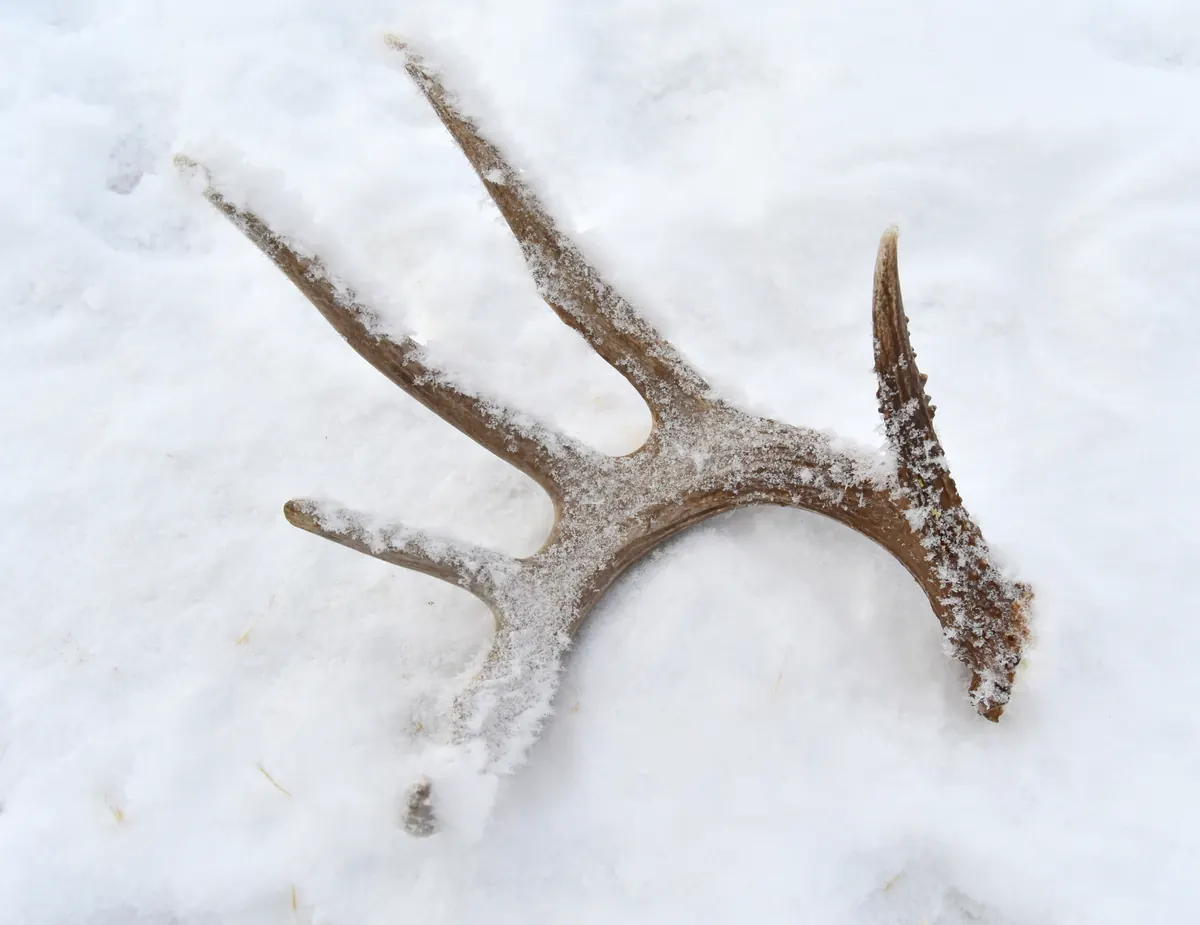
A buck can breed from the time he rubs off his velvet in early fall until shortly after he loses his antlers. MSU’s deer lab describes how the antler comes loose: well after the breeding season, bone-dissolving cells eat away a thin line where the antler meets its bony base, and the weight of the antler does the rest. The scab over the base heals within about a month, and new velvet growth begins soon after. Since the northwest finishes breeding about two months ahead of the southeast, it follows that bucks there are the first in the state to go bare-headed, and late winter is a sensible time to scan Delta field edges and creek crossings for a dropped antler.
If you find a shed, note the date and place on the reading the signs page in the Naturalist’s Field Journal; also check whether shed hunting is allowed before collecting on any public land.
Why are Mississippi’s pine forests set on fire in late winter?
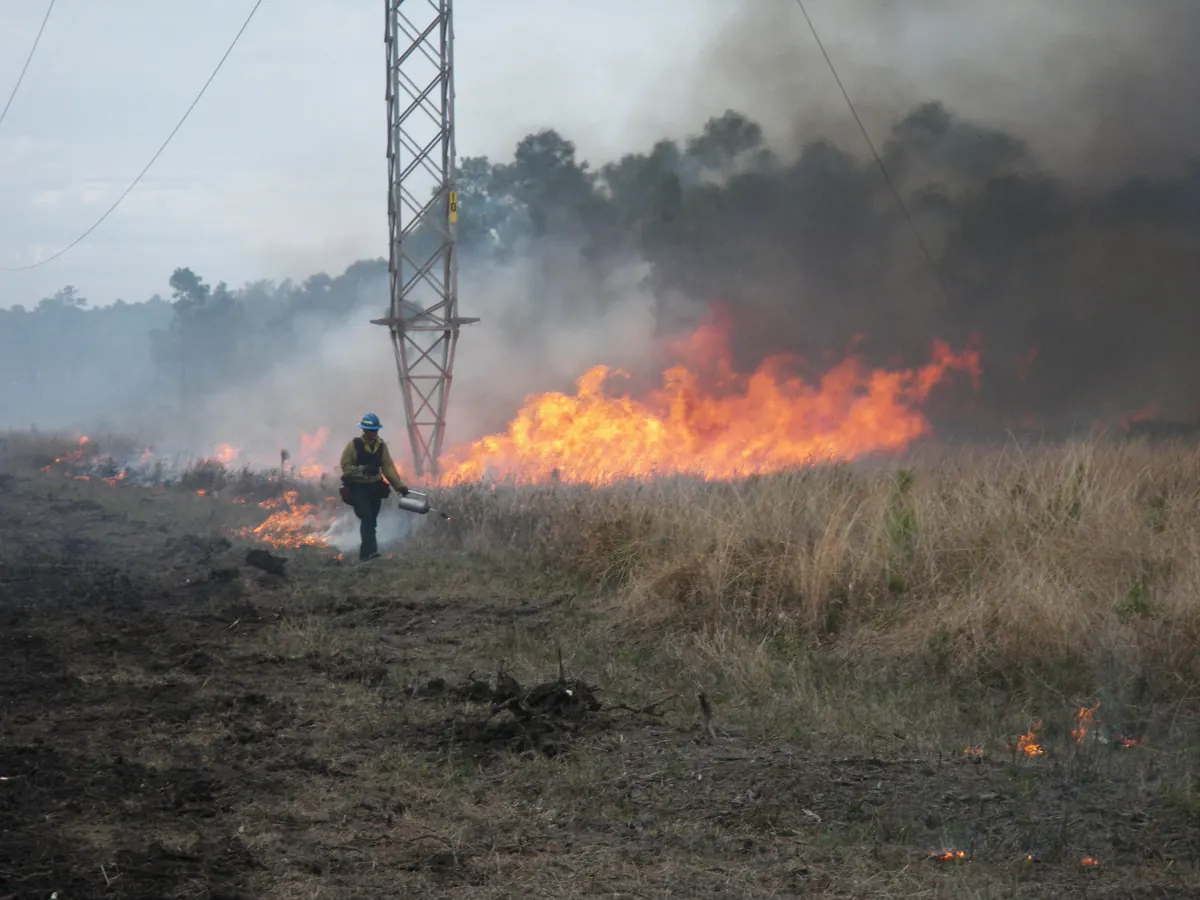
Because the longleaf pine country of south Mississippi grew up with fire and falls apart without it. The Longleaf Alliance writes that frequent, low, creeping surface fires were the dominant force that shaped longleaf forests, and recommends burning them every two to ten years. Late winter is one of the main burning windows; the Crosby Arboretum in Picayune, for one, does its burning in January and February. A column of smoke over the De Soto National Forest on a dry February afternoon is often a planned burn.
-
Smoke over the national forests
Burn days scattered through late winter and spring when weather allows · De Soto, Homochitto, Bienville, Chickasawhay and Delta ranger districts
The National Forests in Mississippi publish a daily map of their planned burns, so you can check before a hike. Fire crews pick days by temperature, humidity, wind and how the smoke will spread, so a burn planned for one day may wait weeks for the right weather. The Mississippi Forestry Commission lists the payoff on private land too: fewer dangerous fuels, more wildlife food and cover, fewer pests and more kinds of plants. The difference between dormant-season and growing-season burns matters to managers. The Longleaf Alliance notes that winter fires top-kill hardwoods but can leave more small stems behind, while growing-season fires do more to thin them, and it recommends combining or alternating the two.
-
The Crosby Arboretum’s savanna burn
Usually January and February, when conditions are right · Crosby Arboretum, Picayune (Pearl River County)
MSU’s Crosby Arboretum burns parts of its 20-acre wet pine savanna each winter and its south pitcher plant bog every year, weather permitting. Its staff describe how fast the black ground greens again: sundews, woolly sunbonnets and bog violets push up through the ash, and the low sunbonnets often come through a burn almost untouched because the flames ride the dry grass above them. In the savanna, the white, dandelion-like sunbonnet heads turn to track the Sun and close on gray days. A visit a week or two after a burn shows the whole cycle in one walk, from charred grass curls to fresh green rosettes.
-
Longleaf seedlings in the grass stage
All year; easiest to see on freshly burned ground · Longleaf stands across the Pine Belt and the coastal counties
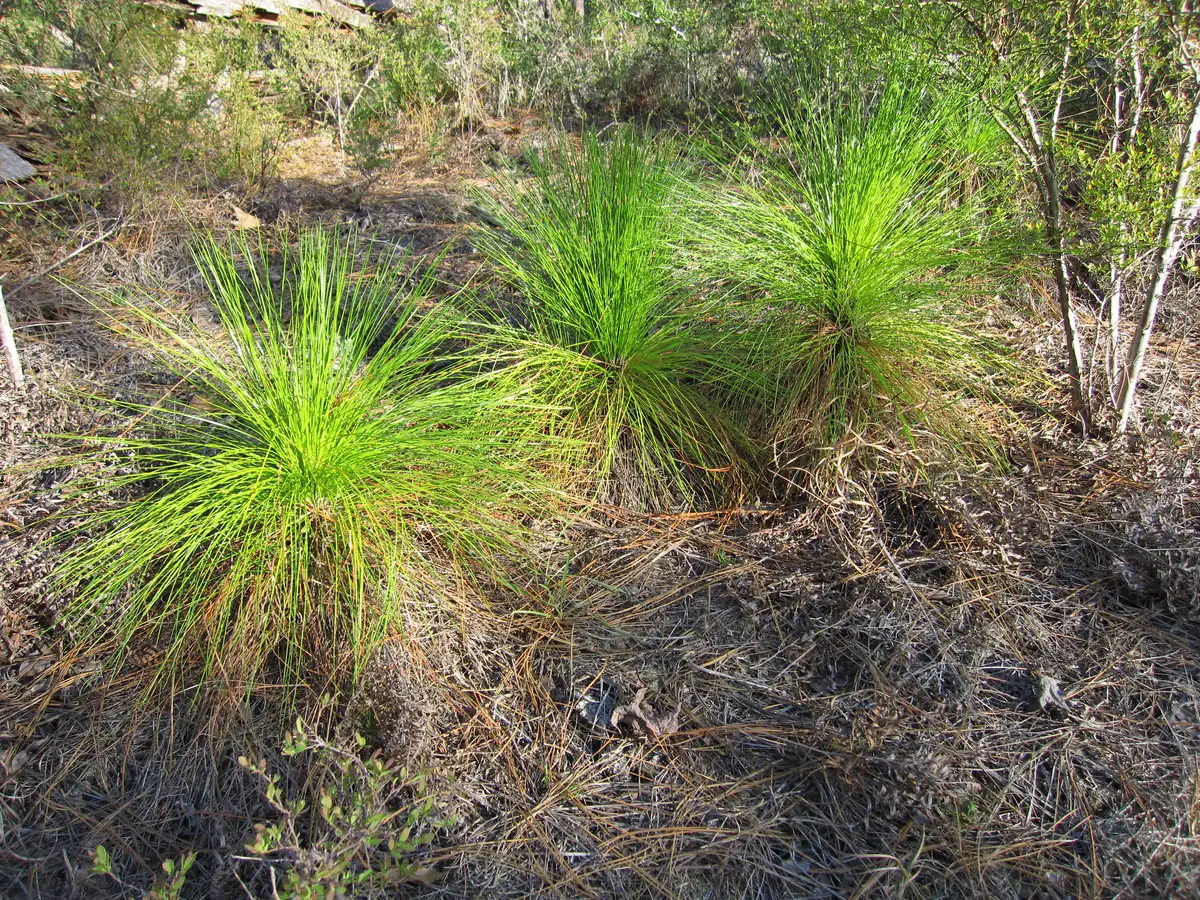
MSU Extension describes how a young longleaf pine spends its first years in a grass stage, a tuft of long needles hugging the ground while it builds roots, and it identifies the tree by its long needles and silvery winter buds. On blackened ground the green tufts stand out clearly.
Burns help the rare animals of these forests as well, from red-cockaded woodpeckers to the dusky gopher frog of the December page. If smoke crosses a highway, slow down and turn on your low beams.
When can you see woodcock display and the first purple martins in Mississippi?
The first courtship of the year is happening in fields at dusk, and the first spring migrants from South America may already be scouting backyard birdhouses.
-
The woodcock’s sky dance
Mild evenings from January into February; the minutes after sunset and before sunrise · Damp thickets beside open fields, pastures, power-line cuts and young clearcuts statewide
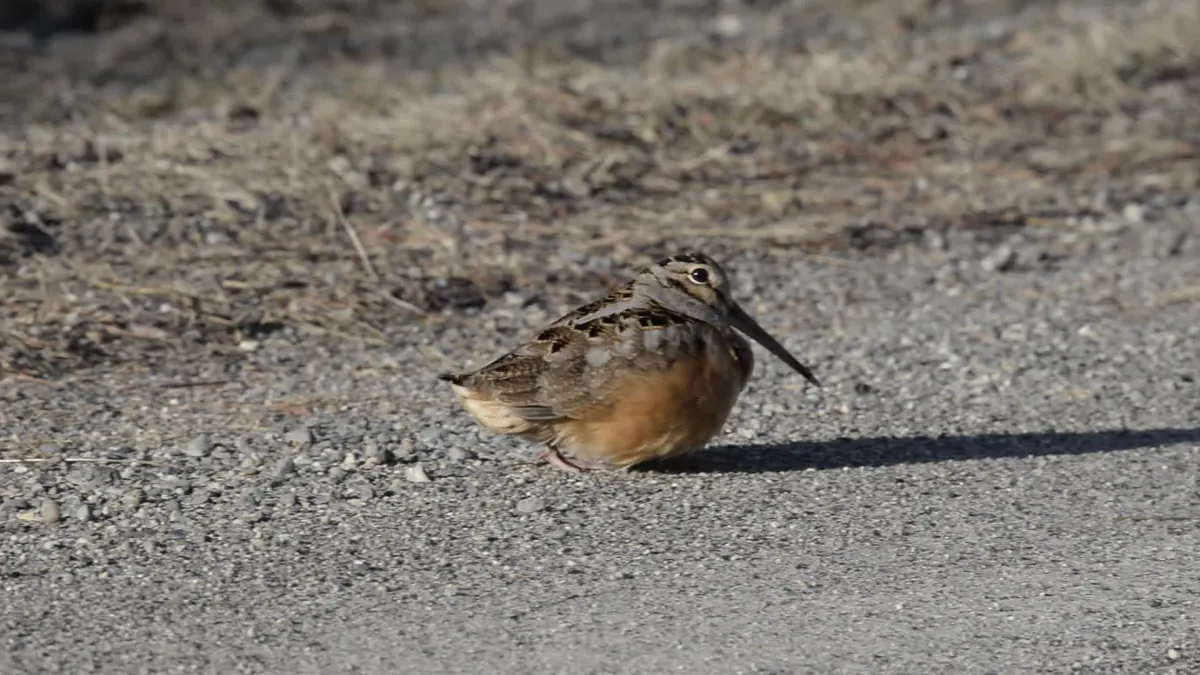
Woodcock that spent the winter probing for earthworms in Mississippi bottoms begin courting before they leave. A Forest Service review of the species says males may display on their wintering grounds as early as December in warm spells, that courtship begins in January in the South, and that southern nesting starts in late January and February, while most of the wintering birds have moved north by mid-February. Pick a brushy opening near damp ground, arrive as the Sun sets, and listen for a buzzy, nasal beep from the ground, the call birders write as peent. Audubon describes what follows: the male rises in a high, twisting flight while special wing feathers twitter, then comes down with a run of chirping notes. The same review adds that woodcock still in the South after early March are probably breeding there.
-
Purple martin scouts
First arrivals possible from late January; most martins reach Mississippi in March · Martin houses and gourd racks on poles in open yards, often near water
Purple martins, North America’s largest swallow, winter in South America, and the first adults back each spring are called scouts. MSU Extension notes that most arrive in Mississippi in March, but the earliest come much sooner: a Purple Martin Conservation Association volunteer reported the state’s first martins of 2024 at Greenwood on January 30. East of the Rockies, martins now depend almost entirely on human-built housing. The association advises keeping houses and gourds closed until martins are due, and MSU suggests poles 15 to 20 feet high, set in open lawn away from trees where owls can hunt.
Log what you hear on the dusk and dawn watch page.
Where do the Delta’s ducks and geese go in February?
North, a little at a time. MDWFP flies its fourth and final Delta survey of the winter in the second half of January, and that count is the last official picture of the flocks before they begin to drift up the flyway. Duck season ends January 31, leaving February’s fields to birders.
-
The last count of the winter
Flown in late January; reports posted soon after · Flooded fields, moist-soil units, oxbows and catfish ponds from the river to the hills
The late January totals in the table below swing widely, from about 438,000 ducks in 2021 to nearly a million in 2016, against an average of about 666,000 since 2008. Cold up north is what fills them. In 2024 a mid-January freeze pushed birds south and the late-January estimate came in more than four times higher than any earlier count that season, close to the long-term average; in 2025 a hard freeze during the flight packed mallards into the few fields with open water while other ducks left for big lakes. The biologists also note a late-season habit: in late January ducks spread out more evenly and move into flooded forest, so check green-tree reservoirs and wooded sloughs as well as open fields.
-
Light geese and the conservation order
February 1 to 5 and February 8 to March 31, 2027 · Rice and soybean stubble across the Delta
Big mixed flocks of snow, blue and Ross’s geese with white-fronted geese stayed in the Delta through late January in each of the last three survey reports. Separate from duck season, a light goose conservation order reopens in February with no daily limit for hunters holding the special permit. For a watcher, that means white flocks in the sky and some shooting in the fields well after the duck blinds are empty. Look from public roads, and expect the flocks to thin as February goes on.
-
Wood ducks start nesting
Nesting can begin in January; peaks in April or May · Tree cavities and nest boxes within about half a mile of water
The wood duck is Mississippi’s state duck and one of only three waterfowl that nest here every year. MSU Extension says nesting in the state can start as early as January, and that, unlike most ducks, the hen lays her eggs in a hollow tree or a nest box rather than on the ground. A pair flying in and out of a box on a farm pond in February is a sign the season has started. Many of the wood ducks seen in winter are migrants from farther north, so not every pair you see will stay.
| Year | Mallards | Other dabblers | Diving ducks | Total ducks |
|---|---|---|---|---|
| 2016 | 307,177 | 482,843 | 206,983 | 997,003 |
| 2017 | 267,078 | 483,037 | 106,419 | 815,903 |
| 2018 | 334,140 | 516,240 | 45,587 | 895,968 |
| 2019 | 151,742 | 309,696 | 74,525 | 532,413 |
| 2020 | 252,276 | 507,754 | 106,770 | 839,005 |
| 2021 | 183,868 | 209,731 | 44,407 | 438,006 |
| 2022 | 138,551 | 222,967 | 99,631 | 461,149 |
| 2023 | 182,649 | 307,643 | 25,942 | 516,153 |
| 2024 | 152,099 | 450,950 | 64,056 | 667,105 |
| 2025 | 136,688 | 257,872 | 58,814 | 446,817 |
| Average, 2008–2025 | 208,760 | 359,174 | 107,657 | 666,326 |
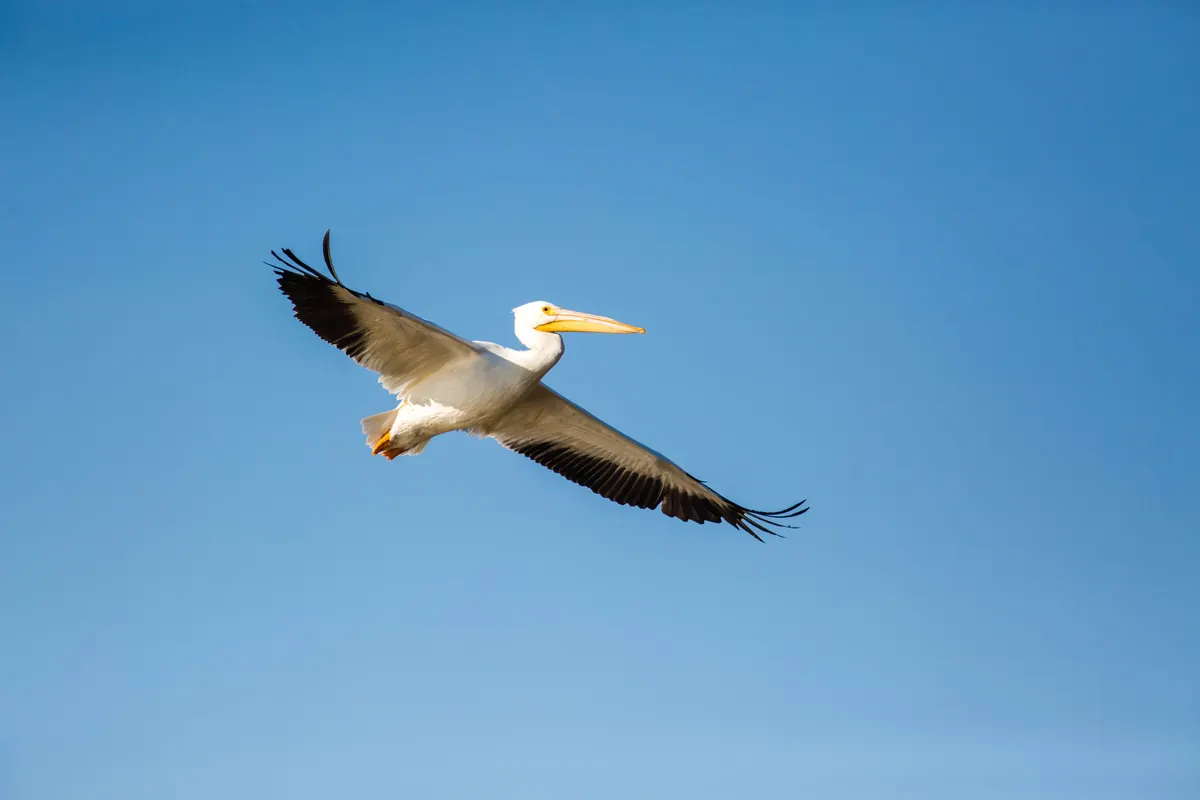
American white pelicans start leaving the big reservoirs in February and March too, so a raft of them on Ross Barnett Reservoir late in the month may be one of the last of the season.
What blooms first in Mississippi at the end of winter?
In the southern half of the state, February is when the woods start to flower. The first blooms are small and easy to walk past, but they come from some of the state’s best-loved native plants.
-
Mayhaw in the swamps
February; red fruit follows in April · Swamps, creek banks and river bottoms, especially in south Mississippi
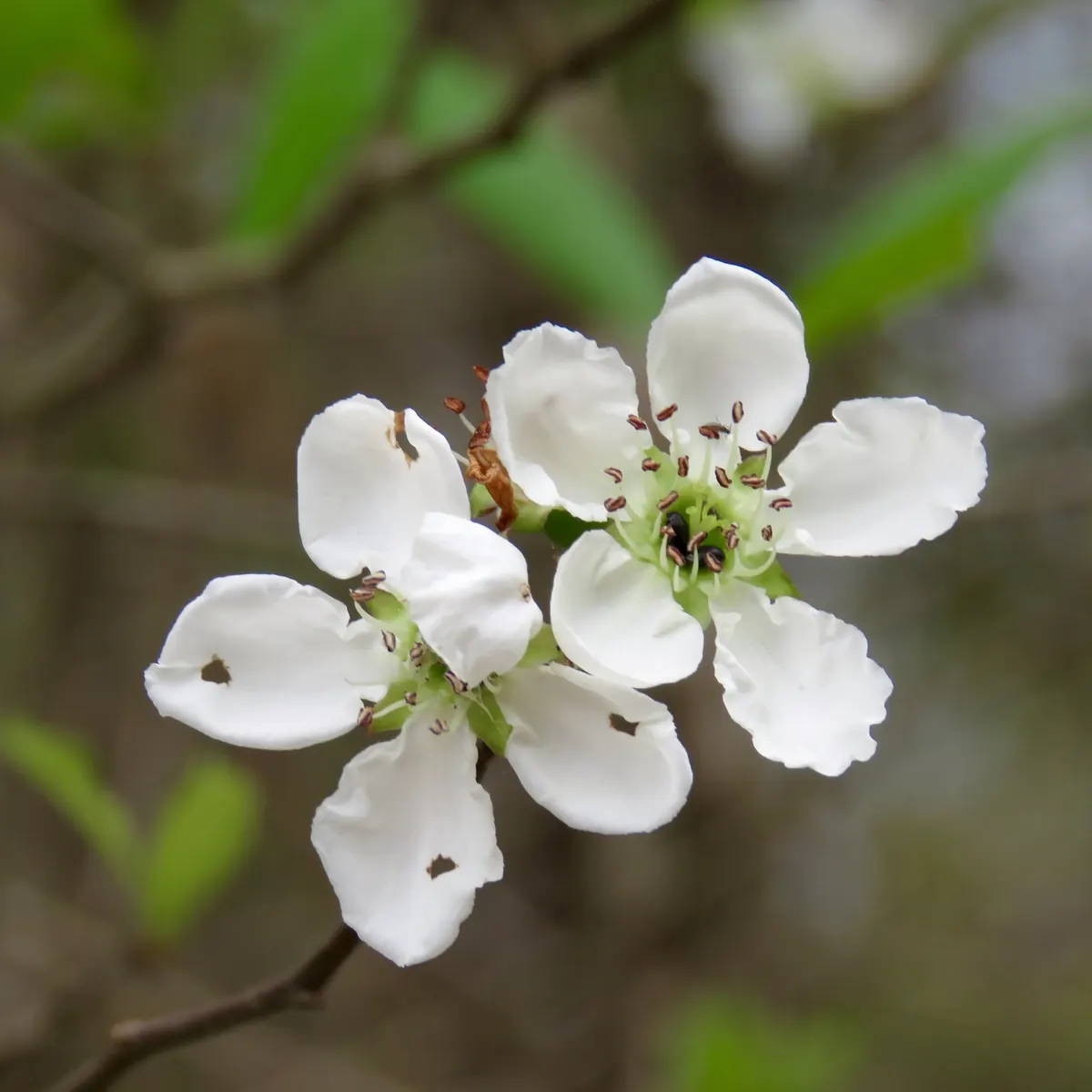
MSU Extension’s guide to native trees puts the mayhaw’s showy white flower clusters in February, ahead of the red April fruit that makes the famous jelly. The Crosby Arboretum’s director suggests that a wisp of white glimpsed through bare trees in a low spot may well be a mayhaw coming into bloom. Look closely at one flower and you may see the resemblance she points out to a blackberry blossom; both belong to the rose family. The branches carry thorns, so admire from the edge.
-
Carolina jessamine
Late winter into early spring · Roadside thickets, fencerows and the trunks of pines, mostly in the southern counties
Bright yellow, trumpet-shaped flowers hang from evergreen vines that scramble over shrubs and climb pines along the roadsides. In 2024 the Crosby Arboretum’s director noticed the first fallen blossoms around its Arbor Day plant sale in mid-February, and MSU Extension calls it one of the easiest native vines to grow, often turning up in yards where a bird dropped the seed. Enjoy it by eye: the Wildflower Center warns that its flowers, leaves and roots are poisonous.
-
Red maple in the uplands
February through March · Old fields, woods edges and yards across the state
Swamp red maple in the bottoms bloomed first, in January. The ordinary red maple follows, and MSU Extension lists its flowers from February through March, chased right away by red, winged seeds. A tree that looks red now may be in flower or already in fruit; the Crosby Arboretum suggests looking closely to tell which. You can even tap a red maple for syrup, though it takes far more sap than a sugar maple to make a gallon.
-
Elliott’s blueberry
February · South Mississippi woods and gardens; blooming at the Crosby Arboretum in Picayune
This lacy native shrub, sometimes called huckleberry, has tiny leaves, green twigs that stand out in winter and small shell-pink bells that the Crosby Arboretum has found blooming throughout its grounds in February. Its staff recommend the berries in pancakes and muffins.
Daffodils in old homesites and ditches bloom now too; they are garden escapes rather than natives, but MSU Extension treats them as a dependable sign that winter is ending. Sketch one native bloom on the tree through the seasons page, and come back to the same plant in April.
How much daylight does Mississippi gain in February?
More than in January, and faster every week. Across the state a February day grows by roughly three-quarters of an hour between the 1st and the 28th, and the morning end finally joins in: sunrise, which held stubbornly late through early January, now comes noticeably earlier as the month goes on, while sunset keeps sliding later.
| City | Feb 1 | Feb 28 | Gained | Per day |
|---|---|---|---|---|
| Southaven | 10 h 30 m | 11 h 24 m | 54 min | 2.0 min |
| Tupelo | 10 h 33 m | 11 h 25 m | 52 min | 1.9 min |
| Columbus | 10 h 35 m | 11 h 27 m | 52 min | 1.9 min |
| Greenville | 10 h 36 m | 11 h 26 m | 50 min | 1.9 min |
| Jackson | 10 h 39 m | 11 h 27 m | 48 min | 1.8 min |
| Meridian | 10 h 39 m | 11 h 27 m | 48 min | 1.8 min |
| Hattiesburg | 10 h 42 m | 11 h 30 m | 48 min | 1.8 min |
| Gulfport | 10 h 46 m | 11 h 30 m | 44 min | 1.6 min |
Southaven, near the Tennessee line, picks up 54 minutes over the month and Gulfport 44, so the north gains about two minutes a day. The rate itself climbs until the equinox in March, and clocks jump ahead an hour on Sunday, March 14, when daylight saving time begins. Your own town’s sunrise and sunset are in our daylight calculator.
Does February bring tornadoes and floods to Mississippi, and how could El Niño shape it?
It can bring both. The Jackson weather office places the main tornado season in March through May, but February has produced some of the state’s worst days, and long soaking rains in a wet late winter can send rivers out of their banks.
Three February dates stand out in the office’s records. The Delta tornado outbreak of February 21, 1971 is still its yardstick for loss of life: the Rolling Fork tornado of March 2023 was the deadliest since that day. On February 5, 2008, a regional outbreak that killed more than 50 people across the South and Ohio Valley sent 12 tornadoes through north and central Mississippi, the strongest an EF3 in Lafayette County. And on February 10, 2013, on a day forecasters did not consider primed for violent storms, a long-track EF4 formed in Lamar County and crossed Hattiesburg into Perry County. The office also notes a seasonal shift: Mississippi’s December and January tornadoes lean toward nighttime, while by February they become more likely in daylight, though night tornadoes remain a real danger here.
Floods are the quieter February threat. After a soggy January in 2020, the U.S. Geological Survey measured 8.2 and 8.6 inches of rain at two gauges in the Pearl River basin from February 10 to 13. The Pearl at Jackson crested at 36.67 feet on February 17, the highest since 1983 and fourth highest since records began in 1901, after the city had ordered residents near the river in northeast Jackson to evacuate.
In its discussion dated September 10, NOAA judged it better than nine chances in ten that today’s warm Pacific event, which it expects to reach very strong status, carries on through the cold months. The Jackson office points out that El Niño events usually reach their peak between December and April, so February falls in the heart of this one’s influence. Its summary for the Lower Mississippi Valley is that El Niño usually brings a cooler, wetter late winter and spring to the Deep South because the jet stream sags south and feeds Gulf moisture into passing storms. More rain on saturated ground would help the Delta’s thirsty wetlands but raises the flood risk on the Pearl, the Big Black and the Yazoo. On tornadoes the office is reassuring but careful: the strongest cold-season outbreaks in its study came mostly in La Niña or neutral years, with just one of the top 15 during El Niño, and the link is not clear cut. The latest official outlooks are posted each month on the Climate Prediction Center’s seasonal page. For your own week, the forecast page shows rain, wind and temperature hour by hour, and our Mississippi frost guide gives the usual last-freeze dates before you plant.
What can you see in the night sky over Mississippi in February?
Jupiter and Mars both peak this month, Mercury gives its best dusk showing of the winter, and the Snow Moon comes up partly dimmed by Earth’s outer shadow. Times below are CST.
-
Mercury at dusk
Late January to about February 10; farthest from the Sun on February 3 · Low in the west-southwest, 30 to 45 minutes after sunset
No other evening this winter puts the smallest planet so high. Pick a spot with nothing blocking the western sky, such as a Delta field or the beach at Biloxi, and look low over the place the Sun went down. After sunset on Sunday, February 7, the slimmest crescent of the month hangs beside Mercury, a pretty pair in binoculars.
-
Jupiter at opposition
Evening of Wednesday, February 10; good all month · Rises in the east at sunset, high in the south around midnight, among the stars of Leo
That night our planet lines up between the Sun and the giant planet, which therefore rises at dusk, sets at dawn and looks its brightest of 2027. Shining at magnitude −2.5, it outshines every star, and it passes closest to Earth that day at about 405 million miles. The almost-full Moon slides past it during the night of the 19th.
-
Mars at opposition
Friday, February 19; nearest Earth on the 20th · Rises at sunset in the east, in Leo near the star Regulus
Mars reaches opposition nine days after Jupiter, glowing orange and brighter than any star near it. This opposition comes with Mars near the far point of its orbit, leaving roughly 63 million miles between us; a telescope reveals just a small orange disk.
-
The Snow Moon and a faint eclipse
Full at 5:23 p.m. Saturday, February 20; the eclipse ends at 7:13 p.m. · Rising in the east around sunset
Almanacs split on calling it a supermoon, since it falls just short of the closest full moons. A penumbral eclipse is under way as it comes up. The deepest point, 5:13 p.m., comes before the Moon clears the horizon in Mississippi, and the Moon then slides out of Earth’s pale outer shadow until 7:13. Sharp eyes might catch a subtle darkening on one limb; most people will spot no change. Look nearby that evening for Jupiter, Mars and the star Regulus, all within Leo.
-
Venus at dawn and Saturn going
All month · Venus in the southeast before sunrise; Saturn low in the southwest after dusk
Venus continues as a brilliant morning star. Saturn is on its way out, a little lower in the southwestern dusk every week until it passes behind the Sun in April.
| Phase | Date | Time |
|---|---|---|
| New moon | Saturday, Feb 6 | 9:56 a.m. CST (an annular solar eclipse, seen only from the Southern Hemisphere) |
| First quarter | Sunday, Feb 14 | 1:58 a.m. CST |
| Full moon, the Snow Moon | Saturday, Feb 20 | 5:23 p.m. CST (faint penumbral eclipse at moonrise) |
| Last quarter | Saturday, Feb 27 | 11:16 p.m. CST |
| New moon | Monday, Mar 8 | 3:29 a.m. CST |
February 6 brings a ring-of-fire eclipse of the Sun, but only over southern South America, the far South Atlantic and West Africa; it cannot be seen from anywhere in this country. The Moon stays out of the early evening from roughly February 2 to 11, so that is the darkest stretch for stargazing; check nightly moonrise times on our moon phase calendar and the cloud cover forecast before you head out. Groundhog Day, Tuesday the 2nd, comes slightly early: the Sun reaches the halfway point between solstice and equinox on February 3 to 4.
What can Mississippi families do outside in February 2027?
- Mississippi birders, count for science over Presidents’ Day weekend (Feb. 12 to 15). It is the Great Backyard Bird Count’s 30th year. Audubon, one of the organizers, already lists these dates. Even 15 minutes of counting in a school yard or state park helps; Audubon’s page explains how to enter a list through Merlin or eBird.
- Arbor Day, usually in February. The governor proclaims it each year; in 2026, for example, it was Friday, February 13, followed by a Tree Planting Week, and the Mississippi Forestry Commission listed tree giveaways around the state. No 2027 proclamation was out in early October 2026; the Forestry Commission posts it, along with seedling giveaways near you, so check with the Commission. The Crosby Arboretum in Picayune has held an Arbor Day plant sale in mid-February in recent years; check with the arboretum.
- Severe weather awareness week, usually in February. The National Weather Service and MEMA hold Mississippi’s spring awareness week each year; in 2026, as an example, it ran February 8 to 14, with a statewide tornado drill on the Wednesday morning. The 2027 dates were not yet posted, so check with the Jackson weather office, and use the drill to rehearse your family’s plan.
- Until February 15: Audubon Climate Watch. The winter survey window runs January 15 to February 15, with a set of short point counts for target species in a square near you.
- A woodcock evening. On a calm, mild evening, stand at a brushy field edge just after sunset and listen for the peent.
- All month: FeederWatch and eBird. Project FeederWatch keeps counting through the winter, and any outing can go into eBird.
Weather cancels plans, so confirm with the host first. Our seasonal nature guides have a page for every state, and the January page covers the season’s duck peak and eagle counts.
Safety notes for February in Mississippi
- Deer hunting in the Southeast unit only. In the Southeast Deer Management Unit, the corner of the state below U.S. 84 and east of Highway 35, archery and primitive weapon season for legal bucks runs February 1 to 15 on private and open public land, and a hunter on private land with the right license may use a weapon of choice. Youth hunters in that unit may also take legal bucks through the 15th. Deer seasons elsewhere closed January 31.
- Orange or pink. MDWFP requires deer hunters in any firearms season to display 500 square inches or more of unbroken orange or pink in a fluorescent shade, walking to and from the stand included; the only exceptions are a stand 12 or more feet high and a completely enclosed blind. Since muzzleloaders and, on private land, other guns are legal through February 15 in the southeast, hikers there should wear bright orange too.
- Other seasons. The youth, veterans and active military waterfowl days are February 6 and 7. The light goose conservation order runs February 1 to 5 and February 8 to March 31. Squirrel, rabbit, snipe and crow seasons run through February 28, quail to March 7, and opossum, raccoon and bobcat hunting and trapping to March 15. Youth spring turkey season opens March 8. WMAs and refuges set their own dates, so check before a walk.
- Fire and smoke. The Forestry Commission says nine of ten wildfires are caused by people, with escaped debris burns the leading cause, and that wildfires typically increase in March as vegetation dries and winds pick up. Check the burn ban list before burning anything, and slow down where smoke from a planned burn crosses a road.
- Tornadoes, day or night. Leave phone alerts or a weather radio switched on at night, and know where you would shelter: an interior room on the lowest floor, with a helmet or cushions for your head. Leave a mobile home or car for a sturdy building.
- Flooded roads. After heavy rain, never drive into water over a road; it takes very little moving water to float a car.
- Cold water. Lakes stay cold enough to disable a swimmer fast, so put the life jacket on, not under the seat.
Sources
- MSU Deer Ecology and Management Lab: Ecology of the rut
- MSU Deer Ecology and Management Lab: Antler growth cycle
- MDWFP: Deer breeding date map
- The Longleaf Alliance: Prescribed fire
- National Forests in Mississippi: Fire information and daily prescribed burns map
- Mississippi Forestry Commission: Prescribed burning
- Picayune Item, Crosby Arboretum column: Prescribed fire season begins this month (January 2026)
- Picayune Item, Crosby Arboretum column: A bevy of winter blooms (February 2022)
- Picayune Item, Crosby Arboretum column: Mississippi’s native blooms (February 2024)
- Crosby Arboretum, Mississippi State University
- MSU Extension: Native Trees for Mississippi Landscapes (P2330)
- MSU Extension: Add spring-blooming native plants to home landscapes
- MSU Extension: Daffodils are reliable sign of end of winter
- USDA Forest Service Fire Effects Information System: Scolopax minor
- Audubon Guide to North American Birds: American woodcock
- MSU Extension: How to attract purple martins to your landscape
- Purple Martin Conservation Association: Timing
- Oxford Eagle: America’s beloved purple martins return to Mississippi (February 2024)
- MDWFP: Aerial survey reports
- MDWFP: Late January 2025 aerial waterfowl survey report
- MDWFP: Late January 2024 aerial survey report
- MDWFP: Late January 2023 aerial survey report
- WLBT: White pelicans at Ross Barnett Reservoir
- NWS Jackson: Tornado safety and climatology (Severe Weather Preparedness Week)
- NWS Jackson: Fall tornado climatology and notable events
- NWS Jackson: Spring Severe Weather Preparedness Week 2026
- USGS: Flood inundation maps for the February 17, 2020 flood of the Pearl River at Jackson
- NOAA CPC: ENSO diagnostic discussion, September 10, 2026
- NWS Jackson: El Niño and La Niña
- NOAA CPC: Seasonal outlooks
- U.S. Naval Observatory: Moon phases
- U.S. Naval Observatory: Seasons 2027
- Fred Espenak: Sky Event Almanac 2027
- NASA: Lunar eclipses 2021–2030
- NASA: Solar eclipses 2021–2030
- EarthSky: Jupiter at opposition
- SEDS: Mars opposition 2027
- Old Farmer’s Almanac: Eclipses
- Audubon: Great Backyard Bird Count
- Mississippi Forestry Commission: Arbor Day and Tree Planting Week 2026
- Mississippi Forestry Commission: Wildfire Prevention Month 2025
- Mississippi Forestry Commission: Burn bans
- Audubon: Climate Watch
- Project FeederWatch
- eBird: Mississippi
- MDWFP: 2026–2027 hunting seasons and bag limits
- Jackson Free Press: City orders flood evacuation near the Pearl River (February 2020)
- Lady Bird Johnson Wildflower Center: Gelsemium sempervirens
- MSU Extension: Wood Ducks in Mississippi
- MDWFP: White-tailed deer regulations (fluorescent orange and pink)
- Photos via Wikimedia Commons; licenses and photographers are credited under each picture
